




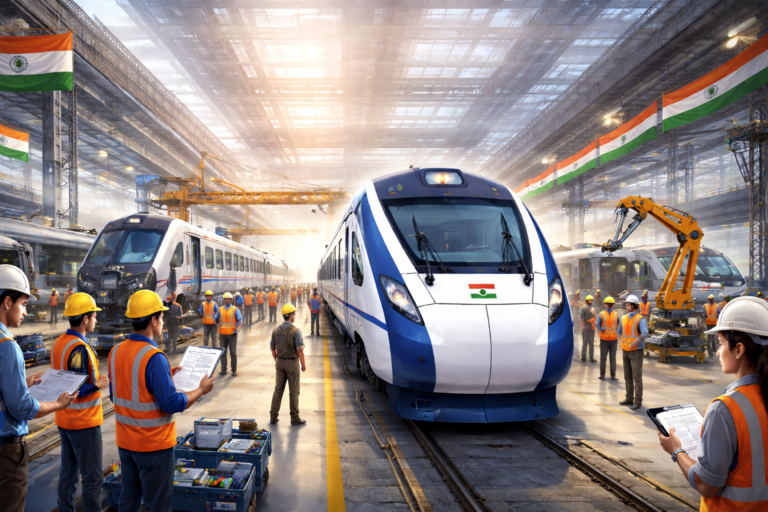
There is a moment in the industrial history of most major economies when ambition finally catches up with capability. For India’s railway manufacturing sector, that moment has not arrived all at once, but it has been building, component by component, factory by factory, train by train, across more than a decade of deliberate policy, foreign investment, and indigenous engineering. The result is visible today in the form of some of the indigenous trains including Namo Bharat, Vande Bharat, in WAG12B Prima locomotives manufactured in Bihar that haul six thousand tonnes of freight across the Dedicated Freight Corridors, in hydrogen-powered test trains rolling through Haryana, and in a growing ecosystem of domestic suppliers that are supplying critical components to one of the most ambitious rail programmes anywhere in the world.
This is the story of India’s railway manufacturing localisation. A structural shift that is remodelling not just how India builds trains, but how it positions itself in the global rail supply chain. It is also, inevitably, a story with unresolved tensions. Between the pace of foreign technology transfer and the readiness of domestic suppliers to absorb it. Between the ambition of Atmanirbhar Bharat and the reality of a sector where import dependency in some components remains deep. And between the interests of large joint venture manufacturers and the fragmented base of MSMEs that form the backbone of India’s component supply ecosystem.
The primary objective of this study is to bring light to India’s progress in localising rail components and how India is positioning itself in the global rail market, where it is not only a buyer but a supplier. The paper also focuses on the impact of localisation on domestic suppliers and how well-equipped they are to take the edge while competing with international manufacturers who are establishing their ecosystem in India.
The Policy Foundation: From Import Dependence to Atmanirbhar Bharat
For most of its history, Indian Railways has been an importer of technology. Locomotive designs came from Germany, the United Kingdom, and later the United States. Coach technology arrived through transfer agreements from Switzerland and Germany. Signalling systems were sourced from Europe. Even the LHB coaches that replaced ICF designs in the early 2000s were licensed from Linke-Hofmann-Busch of Germany. The institutional assumption, for decades, was that India could manufacture at scale but could not design or engineer at the front end.
Get the Daily Metro & Rail Brief
Join 125,000+ metro and rail professionals. Project updates, new tenders and contract awards from across India, in your inbox every day.
Make in India: A Key Pillar in Achieving Independence in Rail Manufacturing
That assumption began to crack after 2014, when the government launched the Make in India initiative and identified railways as one of its priority sectors. The policy framework that followed was not merely aspirational, it was structural. Foreign Direct Investment in the railway sector was opened up to 100 % on the automatic route for greenfield projects. Local content requirements were embedded in procurement contracts. Public sector production units were tasked with designing, not just assembling. And a new generation of PPP structures allowed global manufacturers to set up world-class facilities in India but with explicit obligations to localise.
The result, a decade later, was an 18-fold increase in coach production compared to the decade before 2014. FDI inflows in railway-related components stood at Rs 9,163 crore between April 2000 and June 2025, with the bulk concentrated in the years after 2015.
Railway exports coaches, bogies, propulsion systems, and locomotives reached USD 315 million in FY2024, up from USD 173 million in FY2021. India is now exporting railway equipment to over 16 countries, including Australia, Canada, Germany, Brazil, and Saudi Arabia.
The Madhepura Model: One of the Largest Foreign Direct Investment (FDI) projects in the Indian Railways sector
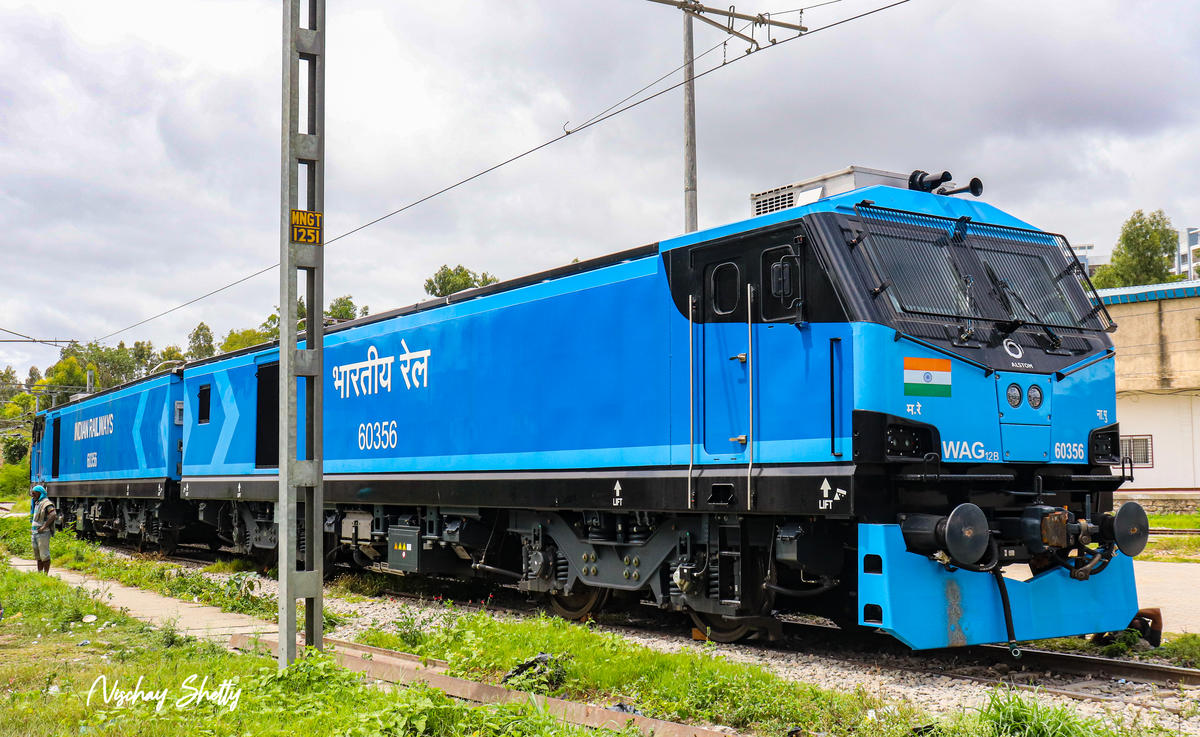
No single project better illustrates India’s railway manufacturing reformation than the Electric Locomotive Factory at Madhepura, Bihar. In 2015, the Indian Railways awarded Alstoma contract worth EUR 3.5 billion to manufacture 800 high-powered double-section electric locomotives of 12,000 HP under a joint venture structure. The Ministry of Railways holds a 26 % stake; Alstom holds 74 %.
What makes Madhepura more than just a large contract is what has happened inside the factory over the past decade. When production began, a large share of components was imported. Today, Alstom has progressively achieved near 90 % localisation, meaning nearly nine out of every ten components in a WAG-12B locomotive are sourced from within India.
India’s Entry in the Global Club: Producing the Most Powerful Freight Locomotives
The WAG-12B is equipped with Insulated Gate Bipolar Transistor (IGBT) based propulsion technology and regenerative braking; each locomotive can haul 6,000-tonne freight rakes at up to 120 km/h, making India just the sixth nation in the world capable of indigenously producing such high-horsepower locomotives.
Vande Bharat: A New Dimension in Indigenous Rail Manufacturing
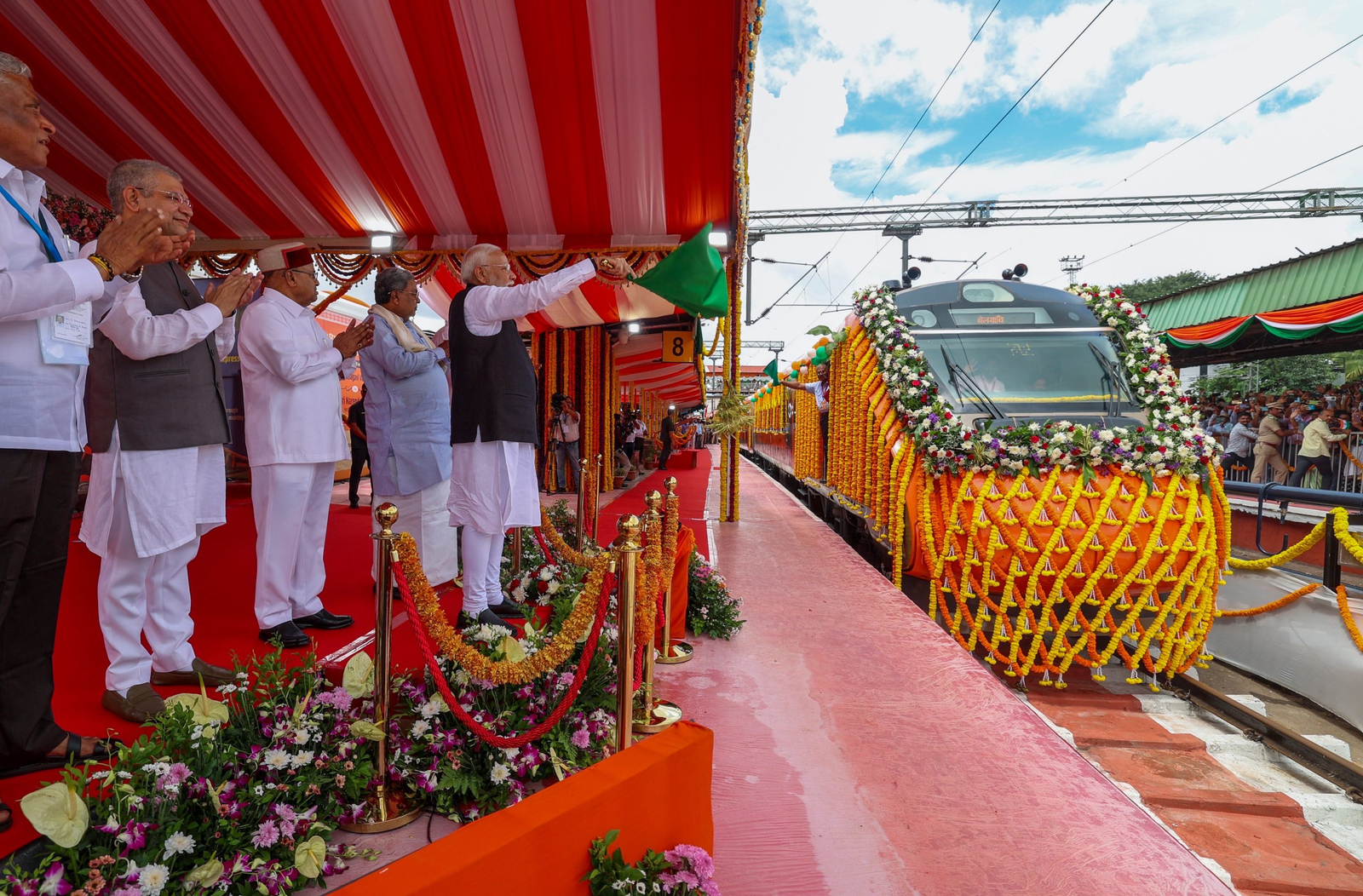
If Madhepura represents the FDI-led model of localisation, Vande Bharat represents the indigenous design-led model, and its significance to India’s manufacturing narrative cannot be overstated. When the Integral Coach Factory in Chennai developed Train 18 in 2017-18, it did so with a specific ambition: to build a semi-high-speed trainset at half the imported cost, using Indian design and engineering, in 18 months. The result was a 16-coach self-propelled EMU with automatic doors, GPS-based passenger information, Wi-Fi, and regenerative braking with 80 % indigenous components built for Rs 97 crore.
That figure, 80 % indigenous content, rising to 90 % in subsequent versions, is the number that defines the Vande Bharat story for India’s manufacturing ecosystem. Every component that is not imported is a supply chain opportunity for a domestic manufacturer. ICF’s General Manager, U. Subba Rao, has confirmed that Vande Bharat trains are now 90 % indigenous, with the remaining 10 % covering specific advanced components where domestic capability is still being developed.
The scale of deployment underscores what localised manufacturing at this level means in practice. By March 2026, over 160 Vande Bharat services were operational across 274 districts, carrying more than 7.5 crore passengers.
The strengthening of local manufacturing units has led the government to scale up the Vande Bharat deployment. The government plans to roll out 800 Vande Bharat trains by 2030 and over 4,000 Vande Bharat trainsets by 2047. This vision to transform the railway would never have been possible if India had depended on foreign suppliers.
NaMo Bharat Trains: A New Benchmark with 80% Localisation
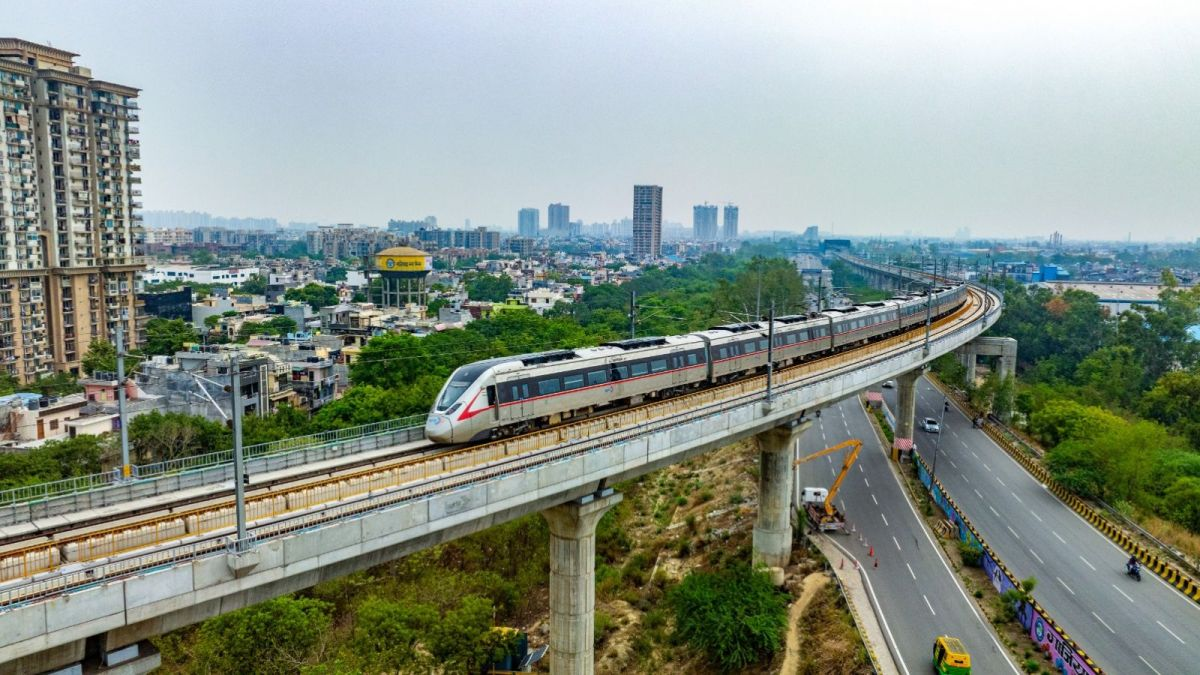
The NaMo Bharat rapid rail, operating on the Delhi-Meerut RRTS corridor, represents a different dimension of India’s rail manufacturing evolution, one that combines indigenous project delivery with international technology deployed on Indian soil for the first time globally.
The 210 regional trainsets supplied by Alstom for the RRTS corridor were manufactured at the company’s Savli plant in Gujarat and feature ETCS Level 2 signalling, a system that had never before been operationally deployed on a regional rail system anywhere in the world. The Namo Bharat trains, in accordance with India’s ‘Aatmanirbhar Bharat’ vision and the Make in India guidelines, are 100% indigenously manufactured, with over 80% localisation.
The project has demonstrated that India can not only build world-class regional rail infrastructure but can do so as a proving ground for global technology firsts. For the domestic manufacturing ecosystem, the RRTS has generated supply chain activity across civil works, electrification, station equipment, and systems integration, much of it performed by Indian firms.
The Hydrogen Train
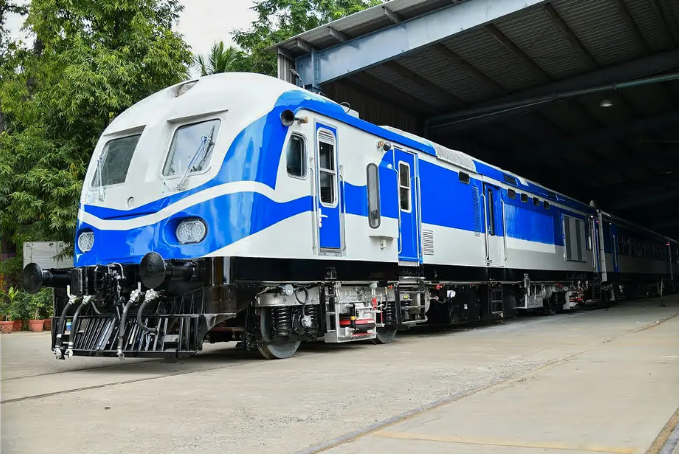
The development of India’s first hydrogen-powered train is perhaps the most tangible expression of where Indian railway manufacturing ambition is heading. Designed by RDSO in Lucknow and manufactured by the Integral Coach Factory in Chennai, the hydrogen train completed load tests in August 2025 and conducted its inaugural test run on March 2, 2026, reaching a top speed of 70 km/h on the Jind-Sonipat section of the Northern Railway zone in Haryana.
The train consists of eight coaches and has a power capacity of 2,400 kW, which makes it one of the most powerful hydrogen-powered trains globally, exceeding the 500-600 HP capacity of most international hydrogen trains.
However, hydrogen technology is new for India, and it will take time to evolve. Taken together, these programmes represent a supply chain development opportunity for Indian manufacturers in fuel cells, hydrogen storage, power electronics, and related systems technologies with applications well beyond railways.
The Domestic Supplier Ecosystem: Opportunities and Pressure
Uneven Ground Realities
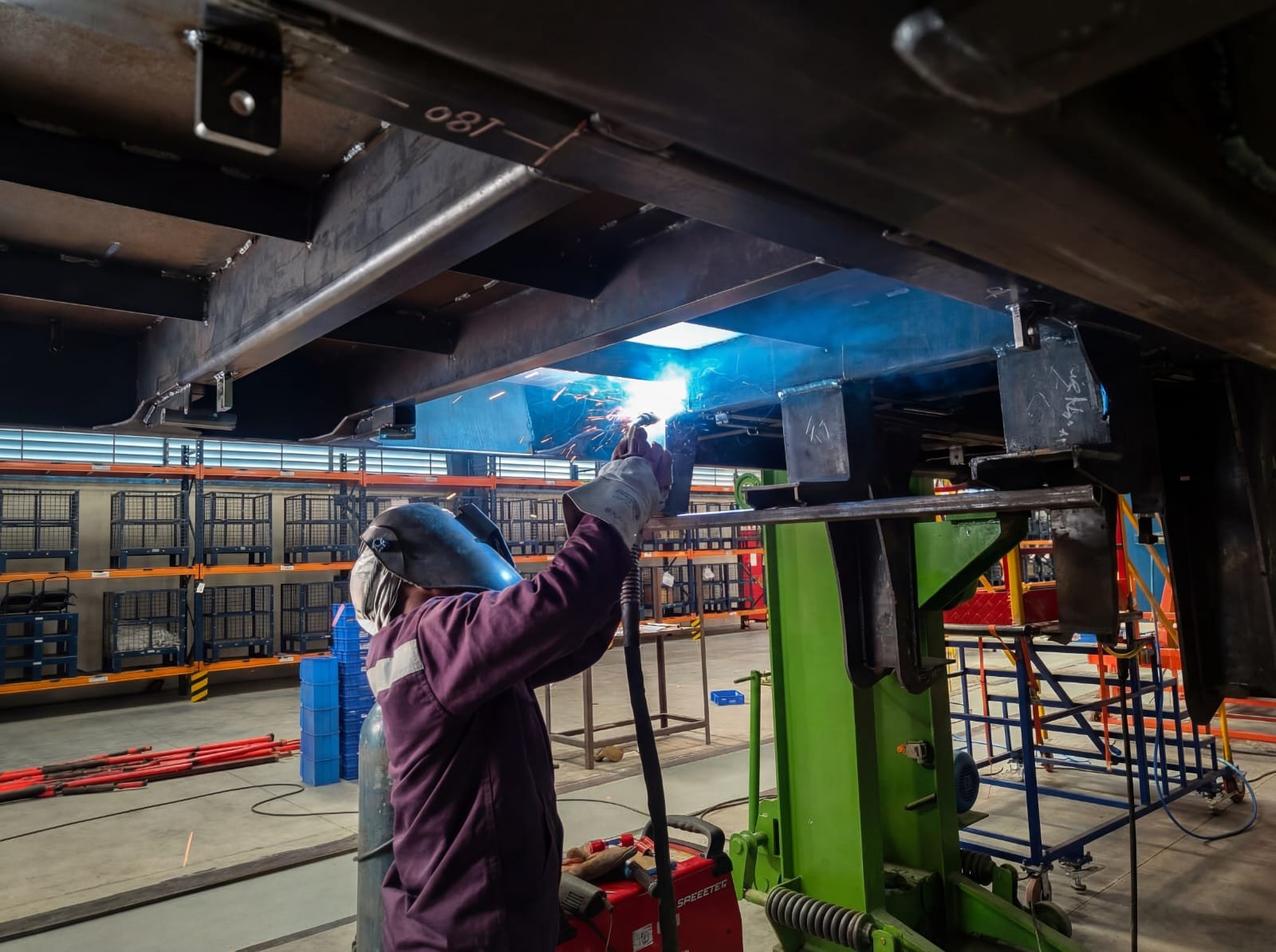
The narrative of India’s railway manufacturing localisation, world-class factories, indigenous trains, and export ambitions sits alongside a more complex reality for the domestic supplier ecosystem that underpins it. The localisation of programmes like Vande Bharat and the WAG-12B does create supply chain opportunities. But the question of whether Indian MSMEs and mid-sized manufacturers are able to capture these opportunities at scale and at the quality and cost standards required is one that the sector is still working through. Some domestic manufacturers have made an advancement in this. Titagarh Rail Systems Limited is building coaches, propulsion systems, and aluminium-bodied trains under the Vande Bharat programme from state-of-the-art facilities in West Bengal and Maharashtra.
Component Manufacturing: Gains, But Not Uniform
At the component level, progress is evident but uneven. Taural India partnered with Indian Railways to supply aluminium casting solutions for the Amrit Bharat Express, replacing imported German components. Uniproducts India collaborated with ICF to supply sound and thermal insulation materials for Vande Bharat. These examples illustrate the depth of localisation that is possible, but they are the successful cases. For every domestic supplier that has made the quality and scale transition, there are others that have struggled to meet the technical specifications or delivery timelines demanded by large-scale rail programmes.
The Missing Middle in Supplier Readiness
The pressure on domestic suppliers comes from multiple directions. Global joint venture manufacturers like Alstom, Wabtec, and TMH bring with them established international supply chains that they are accustomed to drawing upon. The pace of technology upgrade from Vande Bharat 1.0 to 2.0 to 3.0 has been rapid, and domestic component suppliers must continuously invest in retooling and recertification to remain relevant.
Policy Push vs Ground-Level Impact
The government has attempted to address this through procurement policy. Local content requirements in railway tenders, the Aatmanirbhar Bharat provisions in procurement guidelines. But the effectiveness of these interventions varies, and there is no comprehensive public data on what percentage of railway component value, as opposed to assembly or integration, is truly sourced from Indian manufacturers.
From Importer to Exporter: India’s Growing Rail Trade Footprint
One of the most consequential implications of India’s railway manufacturing development is its emerging export capability. Since 2016, Indian Railways and its manufacturing ecosystem have exported over 1,000 rail cars, 3,800 bogies, 4,000 flatpacks, and 5,000 propulsion systems to countries including Australia, Canada, Germany, Egypt, Sweden, Brazil, the UK, and Saudi Arabia.
The Marhowra Diesel Locomotive Factory in Bihar, a joint venture between Indian Railways and Wabtec (formerly GE), secured a Rs 3,000 crore deal to export 150 Evolution Series ES43ACmi locomotives to Guinea’s Simandou iron ore project, a transaction that will create over 2,100 jobs and establish India as a credible exporter of heavy-haul locomotive technology to Africa.
The Union Budget 2026-27, which allocated a record Rs 2,78,000 crore for the Indian railway sector, the highest in history, signals the continued scale of domestic investment that will sustain this manufacturing ecosystem. Seven new high-speed rail corridors have been announced as ‘growth connectors’, each of which will generate significant rolling stock, signalling, and infrastructure procurement.
The Gaps That Remain: An Assessment of Localisation
India’s railway manufacturing localisation story, for all its genuine achievements, is not complete. Several strategic gaps remain that must be acknowledged.
Manufacturing vs Technology Localisation
Localisation, as it is currently structured in India’s railway sector, is primarily a manufacturing localisation; the fabrication, assembly, and supply of components is increasingly done in India. But technology localisation, the ability to design, modify, certify, and independently produce the most critical systems without reference to the foreign licensor, remains largely aspirational.
The Three Pillars of Independence
The path to rail manufacturing independence runs through three areas where investment remains insufficient.
- Indigenous R&D: India must fund and develop proprietary traction, signalling, and control systems that are designed and owned domestically, as demonstrated, to an extent, by Kavach.
- Technology absorption with ownership: Joint venture agreements must evolve to include clear provisions for IP transfer and domestic ownership of key systems over defined timelines, rather than focusing solely on localisation percentages.
- Competitive domestic OEMs: India needs firms that can compete globally on technology, not just cost. At present, companies like BEML and Titagarh operate largely in the assembly and fabrication tier.
Signalling Technology
In signalling, the picture is more balanced. Kavach, India’s indigenous Automatic Train Protection system, represents a genuine technological milestone. However, high-end systems such as CBTC for driverless metro operations and ETCS Level 2 deployed on RRTS corridors continue to be sourced from global vendors. These systems represent the most valuable segment of the railway technology stack.
Workforce Challenge
Finally, the workforce transition that manufacturing localisation requires has not always been adequately addressed. The shift from importing assembled equipment to building it domestically requires not just factory capacity but deep engineering skills in design, in quality systems, in testing, and certification. India’s engineering talent is abundant, but the specific, applied skills required for railway manufacturing in propulsion engineering, in signalling systems, and in materials testing require sustained investment in vocational training that has not yet materialised at the scale required.
Conclusion
India’s railway manufacturing localisation has delivered real results over the past decade in locomotives, coaches, rolling stock, and supporting infrastructure. The combination of ambitious government policy, large-scale foreign investment, indigenous design capability demonstrated through Vande Bharat, and emerging competitiveness in exports has created a foundation that did not exist in 2014.
But a foundation is not a destination. The work of the next decade is to deepen localisation into the technology-intensive layers of the supply chain, where import dependency remains structural. It is to build a domestic MSME supplier base that is capable of meeting the quality and scale demands of world-class rail programmes, not just in benign conditions but consistently and reliably.
The hydrogen train, NaMo Bharat trains, and Vande Bharat are not isolated achievements. They are data points in a larger industrial story that India is writing in real time. The question is whether the policy discipline, the supply chain investment, and the institutional commitment that got India this far can be sustained and deepened as the programme scales.
Project Overview