Home Blog Page 825

Nagpur Metro | Head Hardened Rail for Majhi Metro reaches Nagpur from Russia

Nagpur: The ambitious project of Nagpur, Majhi Metro, got further momentum as 550 tonnes of Head Hardened Rail reached the city from Russia. Head hardened rails are typically used in metro rail projects and high speed freight corridors. Head hardening technology entails a special heat treatment process which requires precise temperature control to achieve nearly 50 per cent higher hardness as compared to a normal rail.

Maha Metro will be using stone ballast, concrete sleepers and 1080 Grade Head Hardened Rails for running the metro rail on centrally built pillars. The Research, Development and Standards Organisation (RDSO) has made it compulsory to use of 60-kg 1080 HH Rail for Metro Rail work. The Head Hardened Rail has been used in all the metro projects in India. The length of the these HH rails is 18 meters.

However, Nagpur Metro is the first Metro which will using 25-meter rail on an experimental basis. Majhi Metro has imported rail from Russia which has arrived in Mumbai by ship. From Mumbai, the rails were transported to Nagpur by long trailers. At present, 550 tonnes of Head Hardened Rail has reached Nagpur and the remaining will soon reach the city.

Source: Nagpur Today

Delhi Metro | Delhi High Court orders DMRC to pay Rs.60 Crore to Reliance Infra

New Delhi: The Delhi High Court ordered the Delhi Metro Rail Corporation (DMRC) to pay Rs 60 crore to Reliance Infrastructure Ltd.’s lenders as part of an arbitral award that the Anil Ambani-led company won earlier this month.

The interim order was passed by Justice Vibhu Bhakru who is hearing an appeal filed by the DMRC against the Rs 2,950-crore arbitral award.

The amount will be paid to Axis Bank Ltd., the lead lender in the Delhi airport metro project, on behalf Reliance Infrastructure. The Anil Ambani-promoted company will have to furnish a bank guarantee of Rs 65 crore though.

Under the Cabinet Committee on Economic Affairs-approved guidelines issued by NITI Aayog last year, even if public sector companies challenge an arbitral award, they are expected to pay 75 percent of the amount against a bank guarantee.

The case will be next heard on July 19.

The arbitral tribunal had held the decision of Reliance Infrastructure’s subsidiary Delhi Airport Metro Express Pvt. Ltd. to terminate its concession agreement for the project four years ago as valid, the company had said in a media statement. It intended to pay back Rs 1,900 crore to its lenders from the award.

A three-member tribunal bench, chosen from a DMRC-nominated panel, had unanimously ruled in favour of Reliance Infrastructure after hearing the case for about three-and-a-half years, the statement had said.

Bangalore Metro | BMRCL to use 12 tunnel borers in phase-II

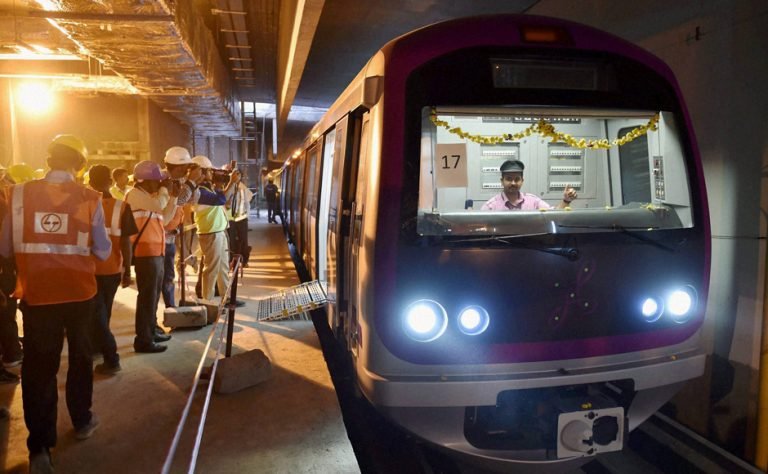
Bengaluru: During construction of Phase-I, the Bangalore Metro Rail Corporation Limited (BMRCL) struggled to tunnel the 9-km underground stretch. Back then, it deployed six tunnel boring machines (TBMs) and the average time taken for tunnelling one kilometre was about seven months.

The underground section remained a bottleneck all through, rendering the metro corridor in South Bengaluru unusable although it was ready for three and half years. The BMRCL blamed complex geology and dense population for the delay .

Learning from this experience, the BMRCL plans to double the number of TBMs in Namma Metro Phase-II.The 13.79-km underground line, which is part of the 21.25-km Gottigere-Nagawara corridor, is a crucial segment that connects the South, Central and North Bengaluru, and continues further to link the Kempegowda international airport.This section will meet the east-west corridor at the MG Road interchanging station.

“Civil work on the underground stretch will be divided into four packages. As many as 12 tunnel boring machines will be put to use. The idea is to complete tunnelling in less than two years,“ BMRCL managing director Pradeep Singh Kharola said. Civil bids for the underground line will be floated aft e r t h e E uropean Investment Bank (EIB) approves funding, he added.

The 13.79-km underground line includes tunnelling double the length.

In reality , each of the twelve TBMs will have to tunnel a distance of a little more than two kilometres.

“Using 12 TBMs is a good decision,“ Sanjeev V Dyamannavar, founding member of Praja RAAG, an advocacy group, said. “The fact that the tender for civil work is not yet floated is an indication that the metro work on this corridor will not start till 2018end. This is in spite of the Government of India approving the project way back in 2014,“ he added.

Land acquisition is another major challenge for BMRCL. The corporation has identified 50 hectares of land for acquisition. The Karnataka Industrial Area Development Board said it would take at least a year to acquire the land.

Kochi Metro | KMRL metro trains get on track with hi-tech CBTC system

Kochi: Kochi will come closer to ushering in driver-less rides when its first Metro train gets on track in June with a communication-based train control (CBTC) system, the first in India. To begin with, seven trains with CBTC technology will run on the 14-km Aluva-Palarivattom corridor. A total of nine trains are equipped with the technology, provided by French company Alstom. The technology controls the movement of trains, allowing them to run at higher frequencies and speeds with greater safety, a Kochi Metro spokesperson said.

With the introduction of the CBTC system, the position of a train will be known more accurately than with the traditional signalling systems. It is also a more efficient way of managing rail traffic. “CBTC will be used for the first time on the trains of the Kochi Metro. It’s more efficient than the traditional signalling system. Trains can communicate with each other using software, minimising man-made errors,” Reshmi CR, senior spokesperson of the Kochi Metro Rail Ltd (KMRL), said.

The advantage of the CBTC technology – being tried out in the Delhi Metro — is that it will help calculate the distance and time taken to travel by trains. The spokesperson also said it was a step towards trains with driver-less engines. “We are going to start with drivers at first and in the future we will be implementing the unattended train operation system (UTO). Certain modifications will have to be done on the technical side for this,” Reshmi told PTI.

The Delhi Metro Rail Corporation (DMRC) has embraced the UTO system, but it is not functional yet. It is expected to go driverless after trying the technology out with drivers for a year.

India expanding metro rail projects very fast in various its urban cities

When metro trains of Indian Tier I cities are expanding their routes, Tier II cities are getting their own.

A metro train is always considered a prized possession of a city, which promises its inhabitants a fast and convenient commutation, and by 2020 most cities will possess this asset.

Here are the proposed metros in India that are under construction and in fast transition:

Kochi Metro

The Kochi Metro is being built at a cost of Rs 5,181 crores and has started its trial on May 10, 2017. The metro line will cover 25 km from Aluva to Pettah across 22 stations. E. Sreedharan, popularly known as Metro Man, is on board to provide the city with its metro at the earliest. A 13.4 km route from Aluva to Palarivattom is ready to be operational. Another 5 km line from Palarivattom up to Maharaja’s College is proposed to be made operational by August 2017.

Lucknow Metro

The under construction Lucknow Metro will provide the city an environment-friendly atmosphere. The work for the metro line started in September 2014. The total cost of phase 1 and 2 has been earmarked at Rs 6,928 Cr. The first phase is expected to be operational by June 2017. Phase 2 will be started in 2018. In next 25 years, Lucknow Metro plans to cover 140km.

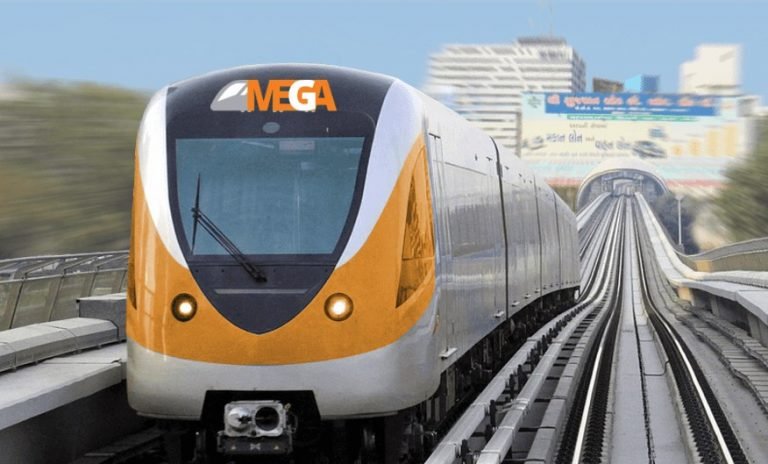
Ahmedabad Metro

Ahmedabad to Gandhinagar Metro (phase-1) was approved in October 2014. The construction started in March 2015 and is expected to be completed by 2020.

Hyderabad Metro

Hyderabad Metro Rail project (Phase-1) is proposed to span 66.5 km, costing 14,132 Cr. The deadline for completion of the three corridors ends on July 31.

Nagpur Metro

The Nagpur Metro Rail Project will consist of a 38.215 Km-metro corridor having 36 stations and 2 Depots. It is estimated to cost 8,680 Cr. Its construction began in May 2015, and trial is expected by the mid of 2017 and partial commercial operation on line 1 by end of 2018.

Noida Metro

The Noida-Greater Noida Metro, of 29.7 km metro corridor, is likely to go on a trial in December this year and the link will be operational by April 2018. It is expected to have a ridership of 1.2 lakh a day. The line is estimated to cost Rs 5,064 Cr.

Navi Mumbai Metro

Navi Mumbai Metro that extends for 23.40 km line, consisting of 20 metro stations from Belapur to Khandeshwar, is expected to cost Rs 4,163 crore. Its first line is projected to open in May 2018 but is considerably delayed.  

Kanpur Metro

The 33 km long Kanpur Metro is estimated at 13,721 Cr, and is likely to be completed around 2020. Kanpur Metro rail has two proposed routes, one is IIT Kanpur to Naubasta and other is Chandra Shekher Azad Agriculture university to Barra-8.

If bullet trains are for the future, metro trains will be dotting the google map of India with their existence in short run.

Underwater Metro | India’s first underwater tunnel (Howrah-Kolkata Metro) to be completed soon

Kolkata: The tunnelling work under the Hooghly river, the first such underwater project in the country, to provide metro connectivity between Howrah and Kolkata is slated to be completed next week.

The underwater tunnel is a crucial link for the railways’ 16.6-km long East-West Metro project in Kolkata.

The 520-metre twin tunnel, one east-bound and the other west-bound, is built 30 metre below the riverbed. Commuters between Howrah and Mahakaran metro stations will be under the river for only about a minute when the metro train will pass through the tunnel at a speed of 80 km per hour. Of the 16.6-km route of the East-West Metro project, the tunneling covers 10.6 km, of which 520 metre is under the river.

The underwater tunnel is being built at a cost of Rs60 crore while the total cost of the East-West Metro project is estimated to be around Rs9,000 crore. The tunneling work started in April last year and likely to be completed in the river section shortly, a senior railway ministry official said.

The East-West Metro is scheduled to be operational by August 2019. The diameter of each tunnel is 5.55 metre and the thickness of the wall is 275 milimetre. The distance between the two tunnels is 16.1 metre.

There will be walkways in the tunnels for evacuation of passengers in case of emergency, the official said, adding it was a challenging task to dig a tunnel under the river.

For the railways, besides the tunnel under the Hooghly river, drilling work is going on for the seven-km-long under- sea route of the Mumbai-Ahmedabad rail corridor to ascertain soil condition for India’s first bullet train path.

Passengers will get the thrill of travelling under the sea at a maximum speed of 350 km/hour, another first in the country, near Thane in the upcoming high-speed train project connecting the two metropolis.

About the project:

  • The total length of the entire metro project is 16.6 km long, out of which 10.8 km runs under the ground. Of this 10.8 km, 502 metres is under the water.
  • The metro rail project connects Howrah to the west and Salt Lake to the east.
  • Afcons Transtonnelstroy is responsible for building the project while KMRCL will implement it.
  • The stretch of 16.6 km will have 12 stations, six of which will be under the ground, while the remaining six metro stations will be on elevated tracks.
  • The final commissioning of the project is scheduled by December 2019, following which it will be operational.
  • The total project cost is USD 750 million.

Kochi Metro | KMRL to launch dedicated metro police stations soon

Kochi: Taking cue from dedicated police units for metro rail projects in other Indian cities, the Kochi City Police will soon be opening a metro rail police station to handle crime and law and order on the metro rail stretch between Aluva and Pettah.

The State Cabinet has already sanctioned 29 posts for the station to be headed by a Circle Inspector. It will have jurisdiction over the entire corridor, including the Aluva-Pettah viaduct, stations, and the coach depot at Muttom.

According to City Police Commissioner M.P. Dinesh, the proposed police station, which will come up near Cusat Junction at Kalamassery, will function in tandem with the other planned exclusive force comprising SISF personnel who will be in charge of the security of metro stations.

“We wanted to activate the new police station keeping in mind the possible criminal acts in the metro corridor and stations. Since this is a prestigious project, having been executed at a high cost, and thousands of passengers are apparently going to use it on a daily basis, security is of paramount importance,” the Commissioner said.

The city police, through the metro rail police station, will be involved in routine crime prevention, and crime detection, besides handling other possible law and order situations.

“Since the personnel of law and order police stations will be saddled with their regular duties, it was proposed to create a dedicated police station for the metro,” he added.

The police station apart, the State government has decided to train and deploy 138 policemen from the KAP Battalion (SISF personnel) to address pressing security concerns. “You need an agency to handle exclusive areas like access control, anti-sabotage checks, protection of metro rail properties, and CCTV monitoring, as the city police will not have the resources and manpower to handle such responsibilities,” explained a senior officer.

The trained officers will be manning the 24 stations in the Aluva-Pettah corridor, providing the second layer of security after private security guards to be positioned at the gates and parking lots. While the sanction for SISF personnel was accorded on condition of the KMRL paying their salaries, the metro agency appears not in a position to bear the expenditure.

“We need clarity on the matter. Besides, the security of metro rail is a State subject in cities elsewhere,” said a KMRL spokesperson.

High-speed rail to link 80% of major Chinese cities by 2020

China will increase the distance covered by its high-speed railway tracks, planning by 2020 to connect more than 80 percent of the country’s major cities by high-speed rail.

The country has earmarked over 15 trillion RMB ($2.2 trillion) to develop domestic transportation from 2016 to 2020, according to Minister of Transport Li Xiaopeng at the 2017 China Civil Aviation Development Forum on May 25.

Railways, highways and airports will almost fully cover Chinese cities with populations of over 200,000 people by 2020, Li disclosed. China’s transportation network had reached 5 million kilometers by the end of 2016, with 22,000 kilometers of high-speed rail and 130,000 kilometers of expressways.

Li Xiaopeng further noted that certain weaknesses in facilities and technical management can be bolstered as the country carries out supply-side structural reform in its transportation industry.

Source: People’s Daily

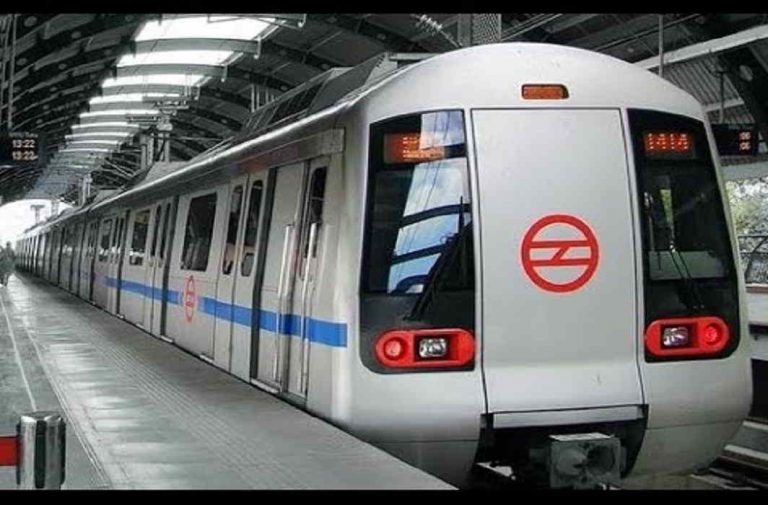
Delhi Metro | ITO – Kashmere Gate (Heritage Line) flagged off for passenger service

New Delhi: The ITO – Kashmere Gate corridor of the Delhi Metro was formally flagged off for passenger services today by the Union Minister of Urban Development, Sh. M. Venkaiah Naidu and the Chief Minister of Delhi, Sh. Arvind Kejriwal in the presence of Union Minister for Science and Technology, Environment, Forest, Climate Change and Earth Sciences, Dr. Harsh Vardhan and many senior dignitaries.

The 5.17 km long underground corridor is an extension of the already operational Escorts Mujesar (Faridabad) – ITO Violet Line. About 90,000 additional commuters are expected to use this new section comprising of four new stations.

Speaking on the occasion, Sh. Naidu complimented Delhi Metro for the opening of the line and said, “providing world class connectivity to the old Delhi areas has been one of our priorities and this new corridor will connect old Delhi –  the heart of the capital city, with many new areas including the satellite city of Faridabad in Haryana.

“Old Delhi is the tourism and cultural hub of the city. Many monuments of great historical importance are located here. This new Metro connection will bring many more people to these monuments as now the visitors will not have to worry about traffic jams and parking hassles”

Union Minister for Science and Technology, Environment, Forest, Climate Change and Earth Sciences, Dr. Harsh Vardhan, who also is the Member of Parliament from the Chandni Chowk area, said,”I have traveled by many Metros across the world, but whenever we compare we find that our Delhi Metro is better than most.”

The Chief Minister of Delhi, Sh. Arvind Kejriwal said, ”Delhi Metro, today is the pride of not only Delhi but entire India. There are many countries now which are looking up to Delhi Metro and DMRC is providing consultancy to many towns and cities. From the point of view of environment protection, time management and economy, Delhi Metro has emerged as a very suitable mode of travel”

Delhi Metro’s Managing Director, Dr. Mangu Singh thanked the people along the ITO-Kashmere Gate corridor for their continuous support and cooperation. The occasion was also attended by MLA Sh. Praveen Kumar and Chairman, DMRC, Sh. Rajiv Gauba.

With the opening of this section, the Escorts Mujesar (Faridabad) – Kashmere Gate corridor has become 43 kilometres long. This section is also called the heritage corridor since it will bring Metro connectivity to many monuments of historical importance such as the Jama Masjid and Red Fort. All the four stations of this section have also received platinum rating for meeting green building norms from the Indian Green Building Council.

On this section, trains will be available at a frequency of three minutes and 20 seconds during peak hours. This section will ease commuting from areas along Delhi Metro’s Red Line (Rithala – Dilshad Garden) to south Delhi and Faridabad since passengers now will have to change trains only once at Kashmere Gate, which has been transformed into a mega interchange facility for three different corridors (red, yellow and violet lines). Delhi Metro’s total network length has now increased to 218 kilometres with 164 stations.

Source: DMRC Press Release.

India Bullet Train Project | Mumbai-Ahmedabad bullet train will be on tracks by 2023

Last month, Achal Khare was appointed managing director of the National High Speed Rail Corporation, which is executing the ambitious Mumbai-Ahmedabad bullet train project. In an interview with Media, he says the project will be completed by December 2023. Excerpts :

What is the progress on the project?
We appointed a general consultant in December to do the complete design, including areas that have difficult structures which may take more time…We have co-mpleted the ground survey. The next step is social impact assessment. We have invited tenders and shortlisted the parties. By next month, we will be able to appoint the agency.

What are the unique features of the corridor?
It will have a 21-km underground tunnel of which 7 km will be under the sea. This is a first in India. The entire line will be elevated which will reduce land acquisition…There are locations between Ahmedabad and Sabarmati where there are rail overbridges, under construction Metro lin-es, so we have to take our alignment quite high, maybe at 20m.

In Ahmedabad, Vadodara and Sabarmati, we are trying to bring it close to the existing stations…In Mumbai, we are entering at BKC.

It will have a 21-km underground tunnel of which 7 km will be under the sea. This is a first in India. The entire line will be elevated which will reduce land acquisition…There are locations between Ahmedabad and Sabarmati where there are rail overbridges, under construction Metro lin-es, so we have to take our alignment quite high, maybe at 20m. In Ahmedabad, Vadodara and Sabarmati, we are trying to bring it close to the existing stations…In Mumbai, we are entering at BKC. The target is December 2023. We are working on Rs 1.10 lakh crore as completion cost.

When do you expect to complete the project?
The target is December 2023. We are working on Rs 1.10 lakh crore as completion cost.

When will you start work?
Ground work is in two parts— one is for the training institute. We will have an exclusive training institute in Gandhinagar. We have already invited tenders and work will start next year and be completed by December 2020.

Have you identified the vendors?
All contracts will be through open tenders. We have decided with the Japanese about the areas that are open fully to Indian contractors. In civil works, except for tunnelling and two critical areas—Ahmedabad and Vadodara—all are open to Indian contractors without any condition.

Out of 508 km, around 450 km is open to the Indian side. In electrical system, certain areas have been identified which will be done by the Japanese only. Track is for Japanese firms as it will be ballastless track which we don’t have.

Many experts say the project is financially unviable?
Only time will tell… Once the system is operational, the usage will tell whether it is really effective or not. The global experience is 70% switchover to high speed. If that takes place in India, probably these apprehensions about financial viability may remain apprehensions only.

But fare could be an issue?
It could be an issue. Of course, we have to be less than what airlines are offering.

What is the total cost of the project?
We are working on Rs 1.10 lakh crore. This is the completion cost.

Will NHSRC take up other bullet train projects?
Our mandate is to do Mumbai-Ahmedabad and other projects which come in future. But that will depend on the government.

Source: TNN