New Delhi: After the Jat protestors decided to limit their protests only in Haryana, following the understanding they arrived at with the Haryana CM, the commuters might be confused about the information required for their Monday commute schedule. This story will provide the latest key traffic and Delhi Metro updates to ease the headache of the commuters.
Metro Rail News | 2nd UITP seminar outlines vital role of ITS in public transportation
Bengaluru: The 2nd UITP India Seminar on IT Solutions for Public Transport held recently in Bangalore reflected the huge potential available to develop advanced ITS technology for improving the country’s public transportation system. Ably organized by UITP India under the leadership of Dr. Ekroop Kaur, Managing Director, Bangalore Metropolitan Transport Corporation, and Head, UITP India Board, the Seminar was hosted by Bangalore Metropolitan Transport Corporation (BMTC) and attracted luminaries from the transport sector across the globe. Metro Rail News was official Media Partner for this mega seminar on public transport.
In his opening remarks, Mr. Jerome Pourbaix, Director of Regions, UITP Brussels, said Bangalore is one of the most dynamic cities in the world which is why UITP decided to set up its Indian operations 10 years back in the Silicon Valley of India. Since the population in India is growing very fast, there is great potential for increase in public transportation system. There are three major trends which can drive transport systems in India, namely, use of ITS in public transport, funding of transport systems through various methods and focus on urbanization.
buy premarin online https://www.ecladent.co.uk/wp-content/themes/twentyseventeen/inc/en/premarin.html no prescription
In her welcome address, Dr. Ekroop Kaur said after the success of first UITP India seminar on IT solutions a year ago, they were hosting the second such event in Bangalore. Today, ITS has become a buzzword with number of solutions offered including automatic signaling, channelizing traffic, counting ticket fares, etc., and is spreading into several new areas. IT solutions also offer number of benefits to optimize the operations of transport companies. BMTC, with a fleet strength of around 6,500 buses, has become a trendsetter in offering right solutions with GPS, sign boards for departure and arrival, mobile apps, which will help to find the bus routes, etc.
Delhi Metro | No metro train services to NCR Regions from Sunday due to Jat protest
New Delhi: Monday may prove to be difficult for office-goers in the NCR as the Delhi Metro Rail Corporation (DMRC) has decided to shut all stations outside Delhi from Sunday night till further orders.
With Jats threatening to intensify their protest demanding reservations in jobs and education on Monday, Delhi Police have asked DMRC to terminate all trains at the last station on all lines in Delhi from 11.30 pm on Sunday.
Apart from this, 12 stations in central Delhi will be closed from 8pm on Sunday. The restrictions will be there till further orders of Delhi Police, which means Monday is going to be troublesome for commuters.
“DMRC has been directed by the Delhi Police to terminate all trains at Delhi border w.e.f 11.30 pm on March 19. It is therefore requested that necessary arrangements may kindly be made for maintenance of law and order at these stations. All entry gates of all Metro stations outside Delhi shall remain closed from 11.
buy cymbalta online https://healthcoachmichelle.com/wp-content/themes/twentytwentyone/inc/en/cymbalta.html no prescription
30 pm on March 19 till closure of arrangements by Delhi Police,” said the letter written by the DMRC to the police chief of Noida, Ghaziabad, Gurgaon and Faridabad.
Adequate security arrangement will be made at the closed stations since chaos is expected on Monday morning. The Central Industrial Security Force (CISF) has been asked to stay on alert and deploy quick reaction teams at the closed stations. The DMRC staff has been asked not to sell tickets.
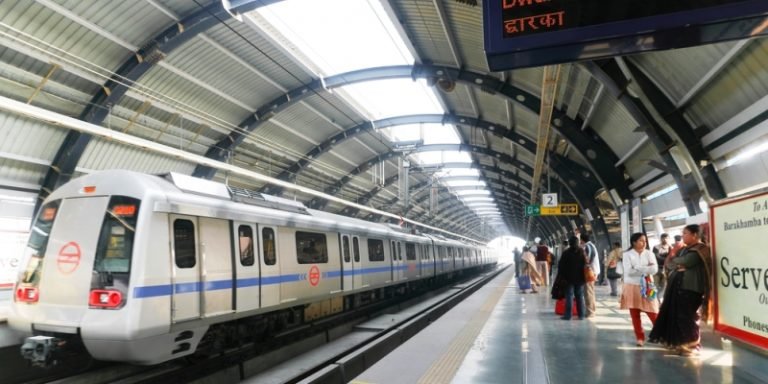
The Delhi stations that will be affected are: Rajiv Chowk, Patel Chwok, Central Secretariat, Udyog Bhawan, Lok kalyan Marg, Janpath, Mandi House, Barakhamba Road, RK Ashram Marg, Pragati Maidan, Khan market and Shivaji stadium.
The interchange facility will, however, be available as usual at Rajiv Chowk and Central Secretariat.
Commuters are worried about the how they will travel in the absence of Metro services.
Whenever protests happen, Metro is the best and safest option to travel. If they shut the Metro, how will we commute? There will be violence and traffic jam on the roads and Metro too will not be available,” said Neha Singh, who travels to her office in Gurgaon from Preeti Vihar every morning.
Passengers coming from airport will also be affected and won’t be able to exit from Shivaji Stadium station.
“I usually return in the evening from airport and take an auto from Shivaji Stadium to go to my house in Gole Market. Now, I will have to go all the way to New Delhi station and come from there. The roads will be closed so I think I will have to skip my work on Monday,” said Rakesh Singh, who works for an airline at Delhi airport.
(This news story has not been edited by Metro Rail News editorial team and is auto-generated from a syndicated feed.)
Delhi Metro | DMRC installs PSD to avoid suicides in Phase-III metro stations
New Delhi: There were 50 cases of suicide reported in Delhi Metro premises last year, of which 18 were on the HUDA City Centre-Samaypur Badli line.
With Phase-III corridors scheduled to open soon and the decision to install platform screen doors (PSD) at all stations underway, authorities hope that the number will come down drastically. These 1.5m-long doors will not be of full length like the ones on Airport Express line but will ensure that the access to the track is completely cut off — even on elevated stations.
Delhi Metro Rail Corporation (DMRC) spokesman Anuj Dayal said, “The primary reason for the PSDs is safety. Only controlled access will be possible through the platform-end doors that will be only allowed to Delhi Metro staff.”
These doors will cover the entire 140m-long platform. Also, the platform doors will open before the train’s. While closing, the train doors will close first.
These doors can withstand a significant amount of weight. “It can take up to 2.8 kilonewton of weight and can withstand mass of 280 kg per metre,” added an official. This would include factors like impact or shock as well as wind speed.
The doors, which are tamper proof and fire resistant, will be put up at all 59 stations on the two new corridors. It will also help in crowd control, the official added.
The distance between the edge of the platform and the PSD is 25mm, while the gap between the train door and the PSD is 300mm.
The PSDs on line 7 and 8 will be different from the ones on Yellow line. While the Yellow line (HUDA City Centre-Samaypur Badli) has 1.7m-long doors — an international norm — on line 7 (Majlis Park-Shiv Vihar) and line 8 (Janakpuri west-Botanical Garden) these are 1.
buy ventolin online https://sextherapyhawaii.com/wp-content/themes/twentytwentyone/inc/en/ventolin.html no prescription
5m-long. The reason being the shorter height of Indians as compared to other nations, the official said.
“The full length doors are 2.2m-long. The ones being installed on line 2 are also higher than those on line 7 and 8. The height of 1.5m is sufficient for the purpose,” the official added. The only other line to have PSDs is the Airport Express line.
Driverless Metro | DIAL to operate UTO Metro for transit at IGI Airport New Delhi
New Delhi: The Indira Gandhi International (IGI) Airport here will have a driverless metro which will help travellers transit from one terminal to another.
The Automated People Mover (APM) is expected to be made available by 2020 as per the recommendation of Master Plan, 2016, Minister of State for Civil Aviation Jayant Sinha said in a written reply in Lok Sabha on yesterday.
Delhi International Airport Limited, the GMR-led joint venture consortium which manages IGI, has already taken steps to explore all technical possibilities with Delhi Metro Rail Corporation, Sinha said. The design, project cost and other details have been finalised, he added.
“The total length of the proposed APM alignment is 5.
buy cialis super active online https://www.mydentalplace.com/wp-content/themes/twentytwelve/inc/en/cialis-super-active.html no prescription
5 km out of which 1.5 km is underground and 4 km is elevated,” added Sinha.
This service will bring IGI on a par with some of the swankiest airports across the world, such as Hong Kong, Changi Paris, Munich, London, which also provide this facility.
(This news story has not been edited by Metro Rail News editorial team and is auto-generated from a syndicated feed.)
Metro Rail News becomes Official Media Partner for World MetroRail Congress 2017
London, UK: Once again, the 13th annual World Metrorail Congress will bring together worldwide rail urban experts to deliver the latest insights into ground-breaking strategies and topics set to revolutionize your day-to-day activities. The World MetroRail Congress will be organised in Business Design Center, London, UK from 25 – 26 April 2017.
On yesterday, our Managing Editor Mrs. Mamta Shah signed a Media Partnership agreement with event organiser Terrapinn B2B Media.
In 2017, the event continues to grow and attract C-level executives from metros, urban rail projects and light rail systems from around the world. This event helps rail operators and transport authorities plan, develop and improve their public transport systems and assess which suppliers can aid them in doing so.
We are sticking to our tradition of keeping the big picture premium conference lead by some of the leading senior executives in the urban rail industry. However, our Rail Power, Rail Tel and Light Rail streams will continue to grow and develop so every aspect of urban mobility is covered.
The premium conferences cover highly strategic topics and are attended by CEO’s and decision makers from the global rail industry.
- Learn about a wide range of issues and challenges
- Discover future upgrade plans
- Share and unveil new ideas
The conferences open the door to fantastic opportunities to form lucrative partnerships with operators and their contractors.
If you can help rail operators improve capacity, efficiency and reliability then you need to be here. Book now to secure your place at the #1 World MetroRail Congress.
Delhi Metro | DMRC to open Botanical Garden-Kalkaji Section (Line-8) in April 2017
New Delhi: The 3.9-km Metro link between Delhi’s Kalindi Kunj and Noida’s Botanical Garden is on track to open next month. This, following with the model code of conductceasing to be effective.
While the Noida Authority has written to the chief commissioner of railway safety (CCRS) — working under the administrative control of the ministry of civil aviation — to expedite inspections, the Delhi Metro Rail Corporation (DMRC) is leaving no stone unturned in commissioning the track after completing successful trials.
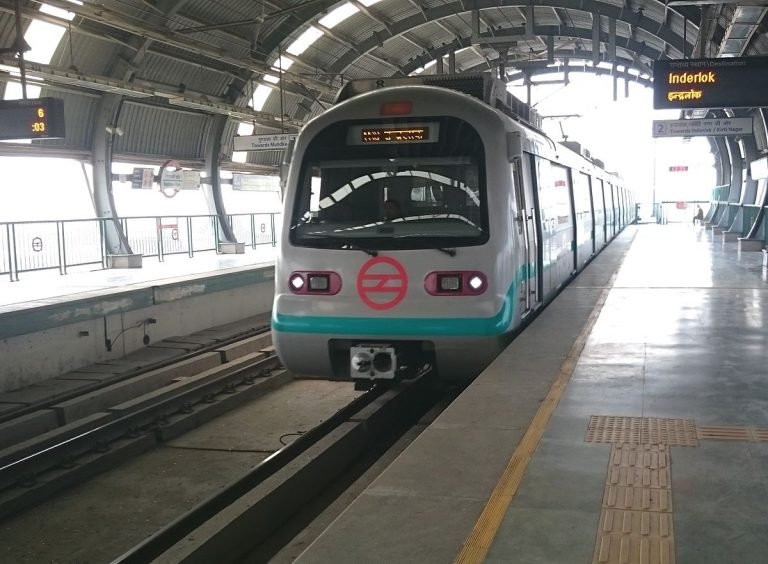
According to DMRC officials, rigorous trials are being undertaken for the Metro link. During trials, the interface of the Metro train, which will later be driverless, is being checked to ensure that there is no physical infringement on civil infrastructure during the movement of the train on the track. Testing of various subsystems of coaches is also being done. “Our new UTO (Unattended Train Operations)-enabled trains will operate on this corridor,” said Anuj Dayal, executive director, corporate communications, DMRC.
Dayal said that the new trains, with extremely high levels of automation, were undergoing meticulous trials between these stations to ensure that they are ready for smooth operations after the commissioning of the corridor. “Initially, train operators will run the trains, but gradually, driverless operations (on the UTO mode) will be possible,” Dayal said.
According to officials, normally for trains operated by drivers, it takes about two months for trials to be completed, but with the new technology, trials along this route are expected to be completed in about five months. Currently, synchronisation of coaches with signalling and track circuiting is being carried out.
buy fluoxetine online https://myhst.com/wp-content/themes/twentytwentytwo/inc/patterns/en/fluoxetine.html no prescription
The response of the train at different speeds, braking of the train and the interconnection with the operations control centre (OCC) is also being monitored. The behaviour of the track system and the over head electrification (OHE) is also being checked repeatedly. Trials for this link started at the end of October 2016. Once trials are completed, the CCRS will carry out an inspection of the track, before giving the green light for it to roll, officials said.
This particular section from Botanical Garden till Kalkaji Mandir consists of nine elevated stations — Okhla Bird Sanctuary, Kalindi Kunj, Jasola Vihar, Shaheen Bagh, Okhla Vihar, Jamia Milia Islamia, Sukhdev Vihar, Okhla NSIC and Kalkaji Mandir.
(This news story has not been edited by Metro Rail News editorial team and is auto-generated from a syndicated feed.)
Delhi Metro | DMRC fails to reach deadline to open ITO-Kashmiri Gate Heritage Line
New Delhi: The Delhi Metro Rail Corporation has again booked a disappointment for the Delhiites as the Heritage Metro line has failed to reach its deadline owing to incomplete construction. The agency, which had announced to start the operation from mid -March, now hinted that it may not to throw it open before April.
The work of corridor was expected to be done before October 2016 after its original deadline of December 2015. This project has missed several deadlines till now. “The work on the line is almost complete. The final touches will be completed by March end. Hopefully, we will get fire safety certificates soon,” said a source.
Moreover, “the Corporation is also seeking final approval from Chief Metro Rail Safety Commission which is likely to be sanctioned by this month,” he added. However, the heritage line that is expected to run from Delhi Gate – Jama Masjid, had its tunnel constructed beneath the road but now it runs beneath the heavily populated residential area.
“The alignment has been changed twice. Once it was done to adhere to the guidelines of Archaeological Survey of India (ASI) and second time owing to the discovery of an old buried mosque, now called Akbarabadi Mosque,” said DMRC spokesperson.
“Change in alignment is a problem as the tunnel had to be constructed beneath extremely congested areas of Daryaganj. Over 2,000 people had to be evacuated during the construction process,” he added.
The entire underground section comprises four stations – Delhi Gate, Jama Masjid, Lal Quila and Kashmere Gate. The Kashmere Gate station will become the first ever interchange facility of Delhi Metro system to provide inter-connectivity between three corridors of the network (Violet Line with Red and Yellow Lines).
Also, it will provide the ideal opportunity to explore Walled City. The Delhi Gate station, in particular will take people closer to Ambedkar and Feroz Shah Kotla stadiums, Daryaganj, LNJP Hospital and GB Pant Hospitals. Delhi Gate will be the first station which will have five entry and exits that will open up to Daryaganj, LNJP Hospital, Ambedkar and Ferozeshah Kotla stadiums and Bahadur Shah Zafar Marg.
After commissioning of this section, residents of Faridabad and various south Delhi areas such as Govindpuri, Kalkaji, Nehru Place, East of Kailash etc will now directly reach Old Delhi. Commuters of the yellow line between Central Secretariat and Kashmere Gate will have an alternate way of using Violet line for reaching the same destinations.
The Heritage Line will connect ITO in central Delhi to Kashmere Gate in the North. The trials on the 5.17 km ITO–Kashmere Gate section of Violet Line started on August 10, 2016. The stretch is an extension of currently operational Escorts Mujesar (Faridabad)–ITO corridor.
(This news story has not been edited by Metro Rail News editorial team and is auto-generated from a syndicated feed.)
Bhopal & Indore Metro | JICA refuses to fund two metro rail projects in Madhya Pardesh
Bhopal: In a written reply in Madhya Pradesh Assembly, state’s Urban Administration and Development Minister Maya Singh said JICA has refused to fund the metro projects of Bhopal and Indore after expressing the initial interest.
The minister gave this written reply to a question asked by former chief minister and MLA Babulal Gaur.
“After the JICA’s refusal to fund the metro projects of Bhopal and Indore, the state government has sent a proposal to the Centre to get the funding from the bilateral/multilateral financial institutions,” said Singh.
“The proposal is currently pending with the Department of Expenditure of the Union Finance Ministry. The detailed project report (DPR) was also sent to 11 agencies including NITI Ayog and Railways Board for further approval,” Singh added.
buy premarin online http://padstyle.com/wp-content/languages/new/premarin.html no prescription
According to proposal, two Metro corridors of 27.87 km are to be laid in Bhopal. Of these, the first corridor of 14.99 km would be laid from Karond to AIIMS (Saket Nagar). The second corridor of 12.88 km would be from Bhadbhada Square to Ratnagiri.
In Indore, there would be one corridor of 31.55 km from Rajwada to Nainod.
(This news story has not been edited by Metro Rail News editorial team and is auto-generated from a syndicated feed.)
Lucknow Metro | LMRC project may miss its opening deadline of March 26, 2017
Lucknow: With barely 12 days left to the scheduled public opening of Lucknow Metro as promised by the Akhilesh Government, it is highly unlikely for the Lucknow Metro Rail Corporation (LMRC) to follow all the lengthy procedures and take the necessary approvals in the limited time frame.
Though officials are keeping mum over the possible delay, there is a high likelihood of Metro missing its March 26 deadline to commence commercial operations because of two reasons — seeking approval of RDSO and that of the commissioner of Metro Railway Safety and the team has to wait till the new government is in place to take the chief minister’s approval.
Though RDSO (Research Designs & Standards Organisation) is done with the testing part, preparation of draft report, getting feedback on same and preparing final speed certificate of Lucknow Metro would take at least 14 days, that too only if the RDSO team bucks up. A senior RDSO official told, “There is so much data to tabulate that it will not take less than a week. Around 200 types of data is recorded every second and we have to prepare a second-wise data analysis of almost 30 sensors installed at different places.”
Once the data analysis is over, RDSO will prepare a draft report and submit it to various directorates for feedback. “A week’s time is given to the directorates for approving the report which may take longer in case they find a problem. Once we receive feedback, we would take about 4-5 days to compile inputs and furnish a final speed certificate to the LMRC,” the RDSO official added. After RDSO, LMRC’s major task will be to seek approval from the commissioner of Metro Railway Safety.
Generally, the commissioner takes around 15 days to 2 months for approval, depending on the preparedness of the project. An LMRC official said, “We are trying our best to meet the deadline, but the impact of the changes in current political scenario cannot be ruled out. We are pushing the RDSO to prepare the certificate soon.”
LMRC said it had invited the chief commissioner of Railway Safety once during trials to see the project’s readiness so that he didn’t take much time during actual inspection. Officials said, “Since he is already introduced to the project, he might take 5-6 days for handing us approval.”
(This story has not been edited by Metro Rail News editorial team and is auto-generated from a syndicated feed.)