


Vande Bharat Trains to be Operational on Five New Routes
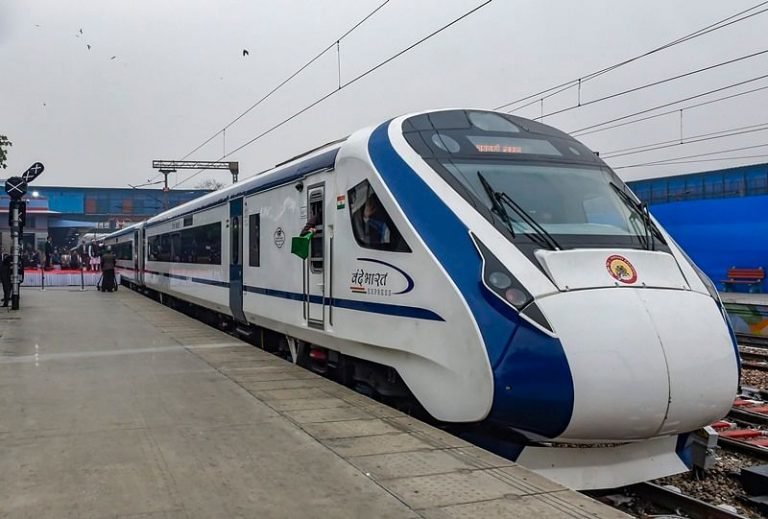
NEW DELHI (Metro Rail News): The Indian Railways is all set to introduce Vande Bharat trains on five new routes on June 26. Honourable Prime Minister, Shri Narendra Modi, will launch these semi-high-speed trains through a video conference. A total of 23 Vande Bharat trains will be operational, covering more than 22 states and Union Territories across India by the end of June.The five new train routes are:Bengaluru-Hubbali-Dharwad Vande Bharat: Karnataka will soon have another Vande Bharat Express train connecting Bengaluru, Hubballi, and Dharwad. This will be the second Vande Bharat train in the state, in addition to the one connecting Chennai, Mysuru, and Bengaluru. The train will run in the South Western Railway zone and is expected to stop at Yeswantpur, Hubballi and Davangere stations. It will significantly reduce the travel time between Hubballi and Dharwad from 7 hours to around 5 hours.Mumbai-Goa Vande Bharat Express: Previously, the launch of the Mumbai-Goa Vande Bharat Express was cancelled due to the Balasore train tragedy. However, it will now be launched to enhance connectivity between the cities. The train will make stops at Dadar, Panvel, Thane, Roha, Ratnagiri, Khed, Thivim, Kankavli, and Madgaon during its journey. The train will reduce travel time and complete a journey of 586 kilometres in 7 hours and 50 minutes.Patna-Ranchi Vande Bharat Express: Bihar will have its first Vande Bharat train connecting Patna and Ranchi. The train will travel a distance of about 410 kilometres while stopping in Gaya, Koderma, Parasnath, Hazaribagh Road, and Bokaro Steel City. Commuters can look forward to reduced travel time between these cities.Bhopal-Indore Vande Bharat Express: This will be the 2nd train running in the state of Madhya Pradesh, originating from Bhopal. This train will connect multiple cities in the state, although specific details regarding the stops are not yet available.Bhopal-Jabalpur Vande Bharat Express: The Bhopal-Jabalpur Vande Bharat Express will be the third train of its kind in India and the third one departing from Bhopal’s Rani Kamlapati railway station.This is the first time that five Vande Bharat trains will begin operations simultaneously. However, due to the recent accident in Odisha, the inauguration event will be relatively low-key compared to previous launches.
NHSRCL Completes Second River Bridge on MAHSR Corridor
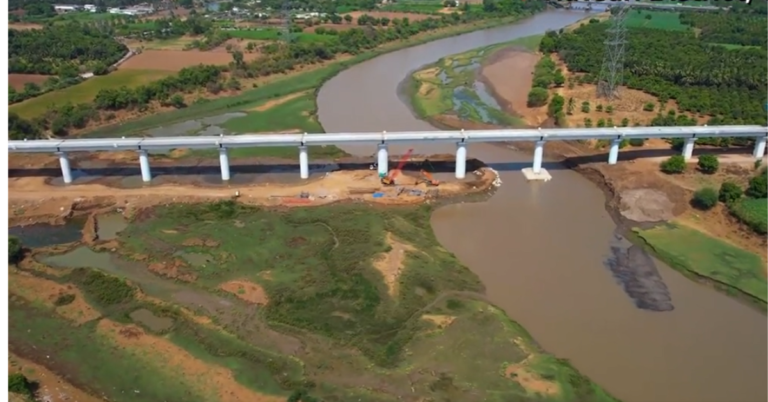
AHMEDABAD (Metro Rail News ): The construction of the second river bridge on the Mumbai-Ahmedabad High-Speed Rail (MAHSR) corridor has been successfully completed, marking a significant milestone in the project. The bridge, spanning 360 meters over the Purna River between Bilimora and Surat stations in Gujarat, posed several challenges for the National High-Speed Rail Corporation Limited.A total of 24 river bridges are proposed for construction along the high-speed rail corridor, with 20 planned for Gujarat and four for Maharashtra. The completion of the Purna River bridge represents the second accomplishment in this regard. The foundation construction was particularly difficult, according to NHSRCL officials, because of the river’s strong tides, which caused water levels to climb by five to six metres every two weeks. Throughout construction, the Arabian Sea tides were continuously monitored.The bridge comprises nine full span girders, each measuring 40 meters, supported by piers ranging from 10 to 20 meters in height. The circular piers have a diameter of four to five meters. The first river bridge in the Valsad area, which crosses the Par River between the Vapi and Bilimore stations, was finished in January 2023.Officials disclosed that construction activities are progressing on a 1.2-kilometre-long bridge over the Narmada River in Bharuch, which will be the longest bridge in Gujarat. Work is also underway on bridges over the Sabarmati, Mahi, Narmada, Tape, and other rivers in various districts of Gujarat.Officials estimate that the bullet train service will commence operations by 2026, providing a high-speed rail connection between Mumbai and Ahmedabad.
NMRC Introduces Mobile App for Seamless Commuter Experience in Noida and Greater Noida
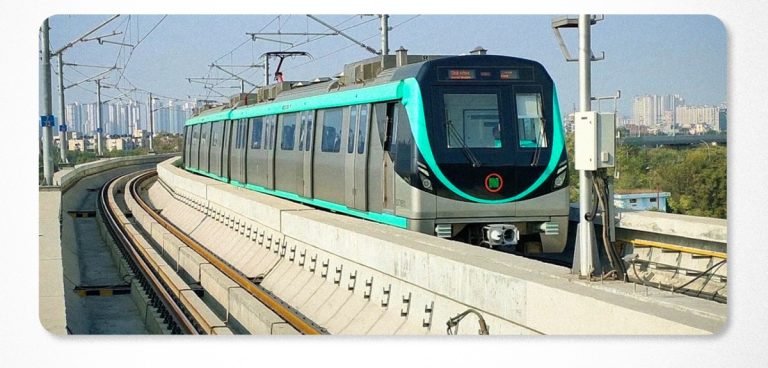
NOIDA (Metro Rail News): The Noida Metro Rail Corporation (NMRC) has recently been designated as the nodal authority for mobility services, which includes buses and intermediate public transport in Noida and Greater Noida.NMRC has unveiled a mobile application that allows users to book rides on multiple forms of transport, including cycle rickshaws, auto rickshaws, battery rickshaws and cabs, to improve commuter travelling experiences.This will improve the first and last-mile connectivity of the metro commuters and make the overall travel experience more convenient, seamless, time-saving and economical.The app features a strong SOS function that seamlessly synchronizes with police servers. This feature allows app users to share their location and driver details with their family, friends, and emergency contacts, ensuring enhanced safety during their travels.NMRC has initiated a comprehensive feedback process. A questionnaire, accessible via a QR code link, was launched on May 25, 2023. This questionnaire aims to gather insights regarding commuters’ and service providers’ concerns, priorities, preferences, and suggestions. The overwhelming response received by NMRC has led to an extension of the questionnaire’s validity.Commuters can access the questionnaire link through the NMRC website and at three major metro stations: Knowledge Park, Pari Chowk, and Sector 51. Additionally, the link will be made available within the metro coaches. The questionnaire will remain active from May 25, 2023 (12:00 a.m.) to July 1, 2023 (11:59 p.m.). Hard copies of the questionnaire are available at Knowledge Park, Pari Chowk, and Sector 51 metro stations in Noida and Greater Noida.
TRSL & BHEL Consortium Wins Contract for Manufacturing 80 Vande Bharat Sleeper Train Sets
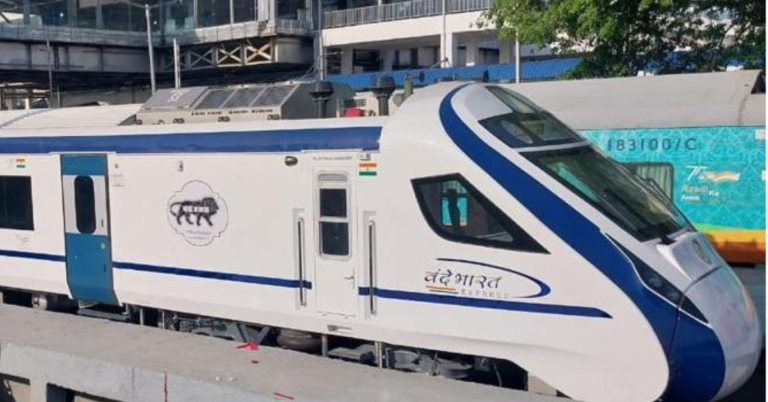
NEW DELHI (Metro Rail News): On 14 June 2023, Indian Railways awarded a contract to the consortium of Bharat Heavy Electricals Limited (BHEL) and Titagarh Rail Systems Limited (TRSL) for the manufacturing and supply of 80 fully assembled Vande Bharat sleeper train sets by the year 2029 and their maintenance for 35 years at the cost of Rs.24, 000 crore (excluding GST). The BHEL-TRSL consortium was the only AatmaNirbhar consortium participating in the tender process, lately being awarded the project.Following the Contract, Umesh Chowdhary, Vice Chairman & Managing Director of Titagarh Rail Systems Limited (TRSL), stated that the company is dedicated to becoming a modest contributor to the Prime Minister’s AatmaNirbhar goal. The Vande Bharat trains have transformed how we travel, and we are pleased to support the government’s Make in India initiative. We will be able to produce cutting-edge railway trainsets on par with international standards thanks to our focus on embracing the most recent technologies to strengthen our engineering progress. He further stated that the order should be carried out over a period of six years, with the prototype being delivered within the first two years, followed by the rest of the deliveries.The Vande Bharat sleeper trains will be assembled, tested, and commissioned at the Indian Railways’ Chennai facilities. Each train will have 16 carriages, each of which can hold more than 880 passengers. The trains will travel at up to 160 kph (kmph).
RKFL & TRSL Consortium Bags ₹12,226.5 Crore Contract for Forged Wheels

KOLKATA (Metro Rail News): The Ministry of Railways, Government of India, has granted a contract under the Aatma Nirbhar Bharat Initiative to a consortium of Ramkrishna Forgings Limited (RKFL) and Titagarh Rail Systems Limited (TRSL). The consortium will be responsible for manufacturing and supplying 1,540,000 forged wheels over a period of 20 years.The consortium of RKFL and TRSL will supply 40,000 forged wheels in the 1st year and 60,000 wheels in the 2nd year. Subsequently, in each subsequent year, they will supply 80,000 wheels as per the contract. The total value of the contract is estimated to be ₹12,226.5 crores.The Aatma Nirbhar Bharat Initiative, aimed at reducing India’s reliance on imported wheels, has opened up manufacturing opportunities for Indian companies to produce and supply high-quality forged wheels to the Indian Railways. This initiative aligns with the government’s vision of making India self-reliant, with the goal of achieving complete localization of wheel production through private Indian entities. By catering to various platforms such as LHB coaches, WAG9 locomotives, and Vande Bharat Express trains, the wheels manufactured under this agreement will meet the diverse requirements of the railways.To fulfill this project, the RKFL-TRSL consortium plans to establish a state-of-the-art manufacturing facility capable of producing 200,000 wheels annually when fully operational. The facility will not only cater to the domestic railway sector but also tap into latent demand from the private sector and export markets. It will necessitate a capital expenditure ranging from ₹1,000 to ₹1,200 crores in order to execute this project successfully. To meet the financial requirements, both companies will contribute equal equity, ensuring a robust funding structure for the project’s capital expenditure needs.Mr. Naresh Jalan, the Managing Director of Ramkrishna Forgings Limited (RKFL), expressed his gratitude for being chosen by the Ministry of Railways for this remarkable opportunity. He stated that the selection of their consortium for this project serves as a testament to their unwavering commitment to promoting indigenous manufacturing and fostering self-reliance. He further emphasized that by leveraging their collective capabilities and vast experience, they are determined to deliver unmatched products that will significantly improve the performance and safety of the Indian rail network. the consortium eagerly looks forward to establishing a long-term partnership with the Ministry of Railways with a resolute vision to contribute to the growth of the Indian railways and foster self-sufficiency.Mr. Umesh Chowdhary, the Vice Chairman & Managing Director of Titagarh Rail Systems Limited (TRSL), expressed his joy at being awarded this landmark contract and expressed his eagerness to begin production at the earliest. As a partner in the winning consortium, TRSL is fully committed to realizing the vision of an Aatmanirbhar Bharat, as envisioned by the Honourable Prime Minister. They will steadfastly work towards localizing the production of forged wheels in India. With this contract, the Titagarh group aims to uphold its motto of delivering high-quality mobility solutions and aims to establish itself as a world-class service provider in the infrastructure sector.The contract awarded to the RKFL – TRSL consortium marks a significant step in promoting self-reliance and indigenous manufacturing, as the consortium undertakes the responsibility of supplying a large number of forged wheels to the Indian Railways for 20 years.
Hyderabad Airport Metro Express Project Set to Begin in September

HYDERABAD (Metro Rail News): In a recent pre-bid meeting, the managing director of Hyderabad Airport Metro Limited (HAML), N.V.S. Reddy, confirmed that the groundwork for the highly expected Hyderabad Airport Metro Express project is scheduled to commence in September. The project, estimated to cost ₹6,250 crores, is expected to be completed within three years.N.V.S Reddy also revealed that the Telangana government would be the primary funding source for the project. The HMDA and GMR Hyderabad International Airport will each contribute 10% towards the project’s total cost.The meeting, held to discuss selecting an Engineering, Procurement, and Construction (EPC) contractor for the project, saw the participation of technical teams from 13 renowned national and global companies.Among the attendees were prominent firms such as L&T, Alstom, Siemens, Tata Projects, IRCON, RVNL, BEML, PANDROL Rahee Technologies, and others.Mr. Reddy emphasized the direct involvement of Chief Minister K. Chandrasekhar Rao and Minister for Municipal Administration K.T. Rama Rao in monitoring the project’s progress.Furthermore, important preliminary work has already been completed, including surveys, peg marking, and alignment fixation.Updated surveys and alignment fixation indicate that the project will comprise an elevated portion of 29.3 km and an underground section of 1.7 km, stretching from the Raidurg metro station to the airport terminal station.The metro project will feature nine stations, including one underground metro station adjacent to the airport terminal. According to an official spokesperson, the technical team involved in the project includes Subodh Jain, adviser (civil engineering); D.V.S. Raju, chief electrical engineer; B. Anand Mohan, chief project manager; M. Vishnuvardhan Reddy, general manager; Y. Sayapa Reddy, SE; J.N. Gupta, deputy chief engineer (Railway); and the General Consultants team.
Mobility Solutions Ltd Secures Rs 100 Cr Contract for Vande Bharat Components
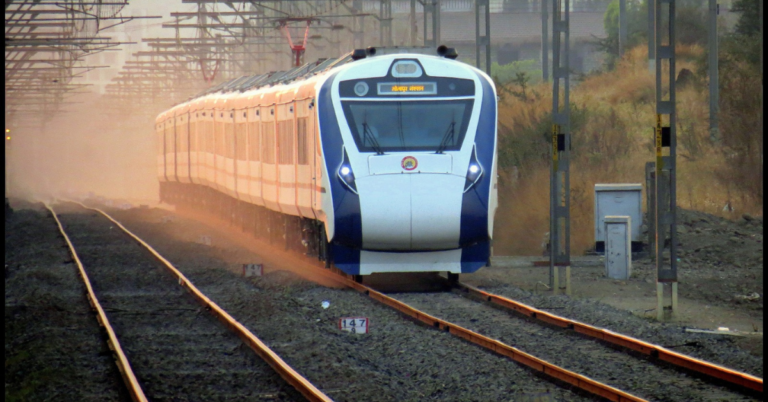
NEW DELHI (Metro Rail News): Mobility Solutions Limited (MSL), a leading manufacturer of interior railway solutions and a part of the JCBL Group, announced that it had secured a significant contract at Rs 100 crore from Indian Railways on 14 May 2023. The contract entails delivering and installing vital components for the prestigious Vande Bharat Express.MSL owns extensive expertise in manufacturing a wide range of products which includes FRP (fibre-reinforced plastic), GRP (glass-reinforced plastic), and sheet metal.According to the contract, MSL will provide eight nose cones, 16 rakes of interior panelling equipped with toilets, and 16 coaches per rake. The company’s scope of work contains developing, supplying, and installing FRP interior panels for the roof, side walls, partitions, and toilets with doors.Additionally, MSL will deliver essential accessories, roller blinds, and other critical equipment needed for the Vande Bharat Express.To meet the required timeline, MSL’s production units are operating at full capacity, aiming to complete the delivery within the current financial year. The manufacturing process is set to take place at the Integral Coach Factory (ICF) in Chennai, ensuring seamless coordination and adherence to quality standards.Mr. Rishi Aggarwal, Managing Director of JCBL Group, emphasized the urgency of delivering high-quality components. MSL has plans to provide OEMs and government organizations with customized solutions, offering replacements for conventional materials.
HFCL Wins Rs 80.92 Crore Contract for Delhi Metro’s FOTS
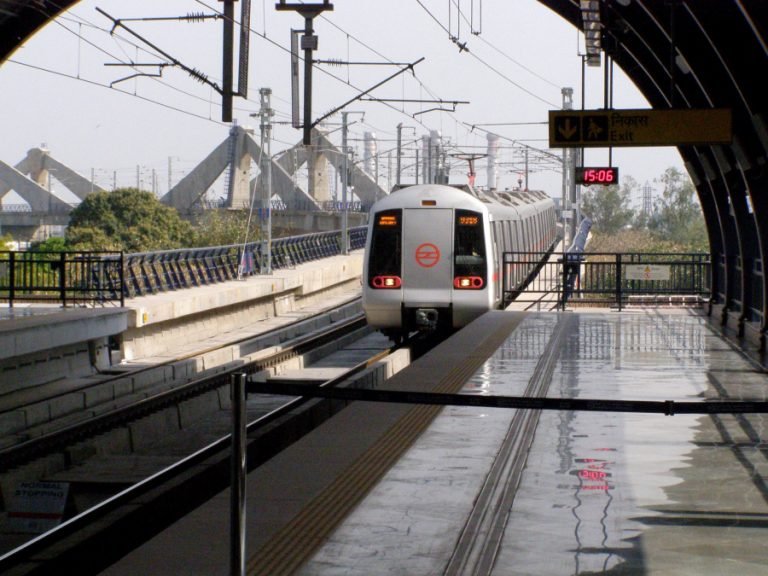
NEW DELHI (Metro Rail News): HFCL, a leading telecommunications company, has won a significant contract worth Rs 80.92 crore from the Delhi Metro Rail Corporation (DMRC) Limited. This contract is part of Phase IV of the Delhi Metro Rail Project and involves the establishment of a cutting-edge Fibre Optics Transmission System (FOTS).In accordance with the contract, HFCL will be in charge of the complete design, manufacturing, supply, installation, testing, and commissioning of the FOTS for three priority corridors of the Delhi Metro Rail Project. In addition, HFCL will provide warranty support for 104 weeks after completing the project. From the date of the notice to proceed (NTP), 156 weeks are allotted for the order’s execution.The company has successfully implemented similar projects for the Mauritius Metro, Dhaka Metro, Gujarat Metro, and Kanpur-Agra metro rail. HFCL’s impressive track record in deploying communication networks for railway projects, both in India and abroad has played a crucial role in securing this contract.
New 5.8 Km Metro Extension Proposal: GDA to Connect Vaishali and Electronic City

GHAZIABAD (Metro Rail News): The Ghaziabad Development Authority (GDA) and Delhi Metro have collaborated on a new proposal for a metro route that will link two ends of the Blue Line. This initiative comes after the Uttar Pradesh government rejected funding proposals for the Electronic City to Sahibabad and Vaishali to Mohan Nagar metro extension projects.Under the new plan, trains will run between Vaishali and Electronic City, allowing passengers from Noida and Ghaziabad to access both legs of the Blue Line. Currently, Blue Line trains from Delhi follow a common route until Yamuna Bank, after which they split into the Vaishali and Electronic City lines.The 5.8-kilometre proposed route from Vaishali to Electronic City will pass over NH-9 and go around the CISF camp and Indirapuram. After making a turn close to the Ramlila Ground, it will continue on to Vaishali, going past Niti Khand, Gyan Khand, and Ramprastha Greens.Compared to the previously proposed routes, the estimated cost for this route is significantly lower, at approximately Rs 1,166 crore, as opposed to Rs 3,325 crore. The earlier projects included the Vaishali to Mohan Nagar extension, estimated at Rs 1,808 crore, and the Electronic City to Sahibabad route, expected to cost Rs 1,517 crore.
Funding has been a major obstacle for the GDA since 2018. The state government did not approve the proposed funding ratio suggested by the GDA, which sought 50% of the project cost from the state government, 20% from the Centre, and the remaining portion through rolling stocks shared by the DMRC, GDA, GMC, Housing Board, and UPSIDC.Considering the diminished utility of the Vaishali to Mohan Nagar extension due to the proximity of the RapidX corridor, the GDA has opted for a single route instead of two. The Sahibabad RapidX station on the 17km priority line is only a kilometre away from Vaishali metro station, and a skywalk has already been constructed by the NCR Transport Corporation for multimodal integration.The GDA and Delhi Metro will conduct a joint inspection of the proposed Vaishali-Electronic City route, followed by the preparation of a Detailed Project Report (DPR) by the metro corporation. The proposed funding pattern involves 50% of the project cost being borne by the Centre, 30% by the state, and the remaining 20% shared by agencies such as GDA, UP State Industrial Development Authority, and the Housing Board, according to RK Singh, the district magistrate and GDA vice-chairperson.
MMRDA Invites Bids to Buy 108 Coaches for Mumbai Metro Line 6
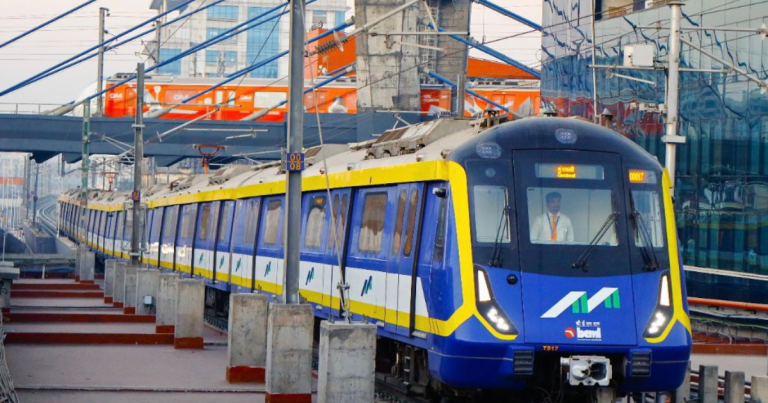
MUMBAI (Metro Rail News): The MMRDA (Mumbai Metropolitan Region Development Authority) has issued tenders to acquire 108 standard gauge cars ( coaches) for the Mumbai Metro Line 6, which connects Swami Samarth Nagar to Vikhroli Eastern Express Highway.The MMRDA released the tender for the elevated Metro Line 6 coaches’ design, production, testing, and commissioning. Additionally, training on how to operate these metro trains will also be provided by the chosen agency. The total estimated cost for procuring the coaches and providing training, excluding taxes, is approximately Rs 989.87 crore, and the contract period is 159 weeks. Covering a distance of 15.31 kilometers, the line will traverse from Swami Samarth Nagar to Vikhroli (EEH) via Jogeshwari, WEH, and Powai.The Metro Line 6 project, with an approximate budget of Rs 6,700 crore, is expected to be completed in the next few years. Four additional metro lines will also be integrated with the network. This comprises the Line 2A and Line 7 of the Mumbai Metro, which are now in service.
DMRC Invites EOI for manpower, outsourcing & contracting services for Operation and Maintenance of Mumbai Metro Line-3
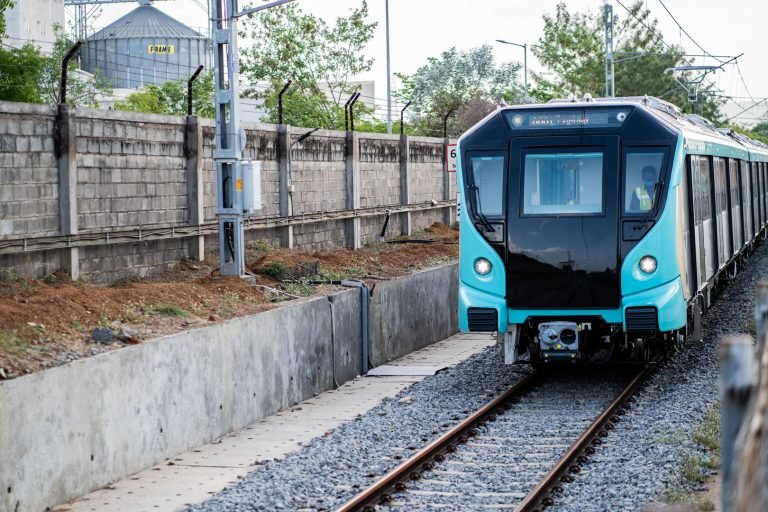
MUMBAI (Metro Rail News): The Delhi Metro Rail Corporation Limited (DMRC) has issued an Expression of Interest (EOI) to select agencies to provide human resources, outsourcing, and contracting services for the operation and maintenance of Mumbai Metro Line-3.
The document publication and download begin on 07.06.2023, and the last date of Submission of EOI is 20.06.2023 up to 15:00 hrs. The EOI Opening Date is 21.06.2023 by 15:30 hrs.
The EOI (EOI Number- EOI/02/Sr.GM/BD/2023-24) has opened at the cost of INR 23,600/- (inclusive of 18% GST)with a bid validity of 90 days at a completion period of 1825 Days.
Interested bidders can download the EOI document and submit their bids online through the CPP Portal, and be made only by RTGS, NEFT & IMPS in favour of DMRC.The bidders must upload scanned copies of the transaction of payment of EOI document cost, including e-receipt, at the time of online EOI submission). (Copy of GST registration no. to be provided along with Tender document cost/ tender fee).
Bengaluru Metro’s Baiyappanahalli – K R Puram Segment Set to Begin Operations by Mid-July
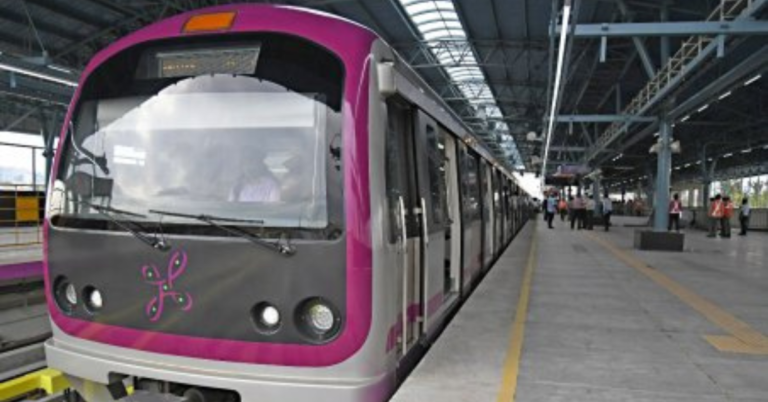
BENGALURU (Metro Rail News): The most awaited Baiyappanahalli-K R Puram Metro segment in Bengaluru is expected to commence operations by mid-July, bringing enhanced connectivity to the city. The Bengaluru Metro Rail Corporation (BMRCL) has drafted its plans to conduct trial runs on the 2-km stretch from the first week of July.The delayed stretch on the Purple Line faced obstacles during its construction phase, primarily due to installing an open web girder above the Indian Railways tracks near Baiyappanahalli. The BMRCL Managing Director Anjum Parvez mentioned, “We are targeting to start the trial runs from July’s first week and planning to start the operations by mid-July. Although the track work is completed, the major signalling and other parallel works are pending. Following this, the metro rail safety commissioner should inspect the stretch.”This upcoming link will feature a single stop at Jyothinagar. It will connect the Kengeri-Byappanahalli corridor (25.7 km) to the Whitefield-K R Puram stretch (13.7 km), inaugurated by Prime Minister Narendra Modi in March. The current ridership on the Whitefield-K R Puram stretch averages around 28,000 passengers per day. However, with the missing link connected, the BMRCL anticipates a significant increase in daily ridership, projecting numbers to rise from 75,000 to 1 lakh passengers. Once the missing link is operational, commuters can expect a travel time of approximately 60-70 minutes between Kengeri and Whitefield.
HMRTC Evaluates Bids to Appoint Design Consultant For Gurugram Metro Project
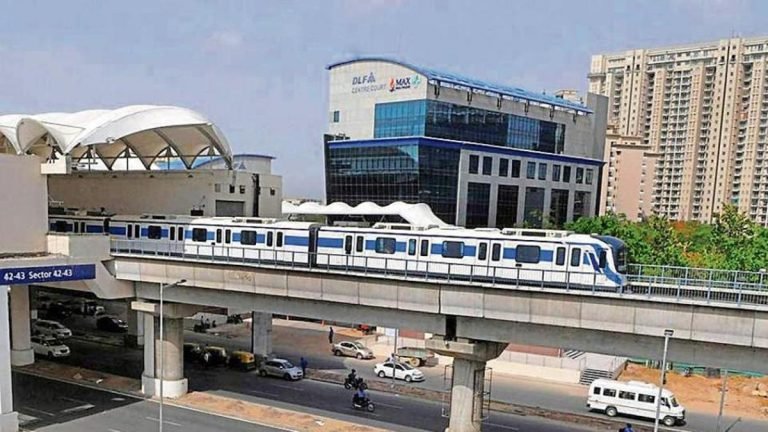
GURUGRAM (Metro Rail News): For the Gurugram Metro project, the Haryana Mass Rapid Transport Corporation (HMRTC) evaluates bids to appoint a detailed design consultant. The consultant will be essential in developing a thorough strategy for the complete Metro system, including a conceptual design for the 27 elevated stations.According to the Officials, the consultant will create detailed structural designs for the viaducts, great spans, foot overbridges, and culverts. Additionally, they will develop detailed layout plans for the stations, ensuring a well-designed and efficient Metro network.The Gurugram Metro project, recently approved by the Union cabinet, aims to extend the Metro line from Huda City Centre to Cyber Hub via Old Gurugram, covering a total distance of 28.5 kilometres. The project, estimated to cost ₹5,452 crore, will consist of 27 elevated stations.The consultant will have 48 weeks to complete the assigned tasks, and the anticipated Design cost for the Gurugram Metro project is 17.68 crores.Furthermore, The Gurugram Metro project aims for a design speed of 80 kmph and an average speed of 34 kmph. The total cost of the project is ₹5,452.72 crore, with the Union government contributing ₹896.19 crore and the Haryana government contributing ₹1,432.49 crore. Local bodies will contribute ₹300 crores, while the pass-through assistance loan is expected to amount to ₹2,688.57 crore. According to officials, the public-private partnership (PPP) component will be ₹135.47 crore.
Afcons Bags Rs 6,397 Crores Contract for Building India’s First 7 Km Long Undersea Rail Tunnel
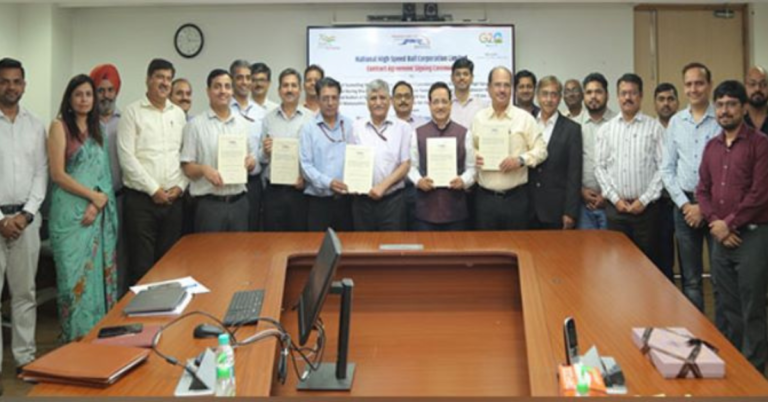
MUMBAI (Metro Rail News): On 7 June 2023, NHSRCL and Afcons Infrastructure Limited signed a Contract for the construction of a 21-kilometre-long rail tunnel which includes a 7-kilometre undersea tunnel at a cost of Rs6,397 crores in Maharashtra for the Mumbai- Ahmedabad-high-speed rail corridor under the MAHSR C-2 Package.According to the information, the technical and financial bids for the project opened on 9 February 2023 and 6 April 2023, respectively.
Following the contract, the managing director of NHSRCL, Rajendra Prasad, informed that the construction of a 21 km long rail tunnel is the most challenging and significant contract for the Mumbai– Ahmedabad-high-speed rail corridor as it includes the country’s first twin-track 7 km undersea tunnel construction at Thane Creek (Intertidal Zone).Three TBM (Tunnel Boring Machine) and the New Austrian Tunneling Method (NATM) will be used to construct this tunnel to make it successful. The tunnel track will extend between the underground station at the Bandra-Kurla complex and the Shilphata station. The 16 Km tunnelling will be done through the three TBMs at BKC (under package C1), Vikhroli, and Sawli with an approximate depth of 36, 56, and 39 Metre, respectively and for the rest 5 km NATM will be used at Shilphata. TBMs with a Cutter head of 13.1 metres in diameter will be used because the tunnel will be a single tube to accommodate twin tracks for both up and down tracks. As part of the agreement, 39 equipment rooms will also be built at 37 locations adjacent to tunnel locations.As per the NHSRCL official information, the agreement was signed on 20 March 2023 for Mumbai HSR station (MAHSR Package C1), and the construction of the double line of Tunnel between Mumbai HSR station to Shilphata signed on 8 May 2023.
 TBMs with a Cutter head of 13.1 metres in diameter will be used because the tunnel will be a single tube to accommodate twin tracks for both up and down tracks. As part of the agreement, 39 equipment rooms will also be built at 37 locations adjacent to tunnel locations.As per the NHSRCL official information, the agreement was signed on 20 March 2023 for Mumbai HSR station (MAHSR Package C1), and the construction of the double line of Tunnel between Mumbai HSR station to Shilphata signed on 8 May 2023.