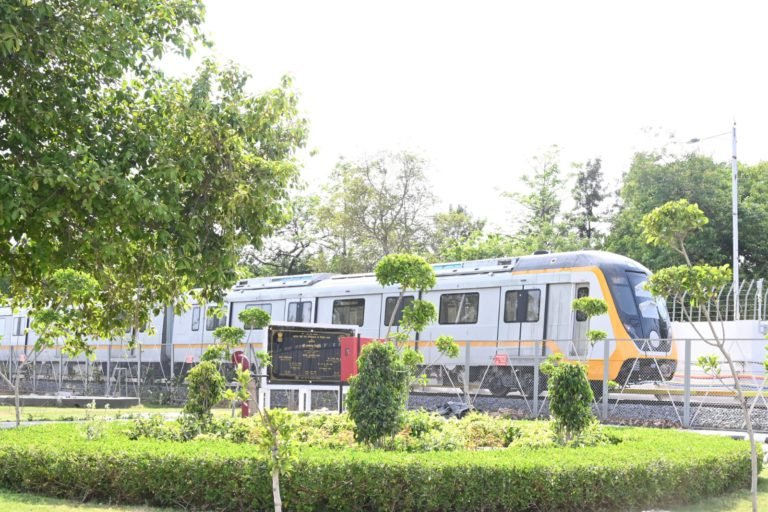
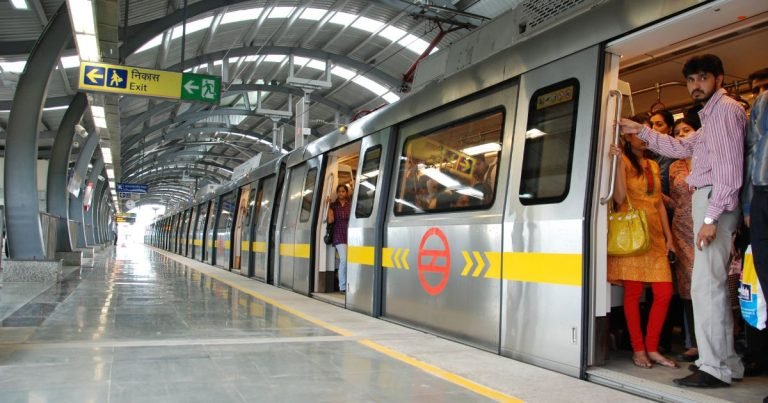
New Delhi: Prime Minister Narendra Modi has flagged-off the Delhi-Faridabad Metro Line that would allow hassle free travel for around two lakh daily commuters between the national capital and the industrial hub in Haryana.The extension of the Delhi Metro connects Badarpur to Escorts Mujesar in Faridabad.The total cost of the project from Badarpur to Escorts Mujesar is nearly Rs. 2,500 crore. Out of this, Rs. 1,557 crore was borne by the Haryana Government, the Centre contributed Rs. 537 crore, while the Delhi Metro provided Rs. 400 crore.The nine stations in this section include, Sarai, NHPC Chowk, Mewala Maharajpur, Sector 28, Badkal Mor, Old Faridabad, Neelam Chowk Ajronda, Bata Chowk and Escorts Mujesar. buy kamagra polo online https://lasernailtherapy.com/wp-content/themes/twentytwentytwo/inc/patterns/en/kamagra-polo.html no prescription
All these are elevated and located on either side of the Delhi-Mathura Road (NH-2).“The nine-station metro corridor which was 95 per cent indigenously built will provide people a safe, affordable, quick, comfortable, reliable, environment-friendly and sustainable transport facility,” a Haryana government spokesperson said.Haryana Chief Minister ML Khattar, addressing a press conference on Saturday, had thanked the Prime Minister for “gifting” the Metro service which would take the city to “another level of progress” with better connectivity with other NCR towns.He had also said that the Prime Minister would be announcing the go-ahead for connecting Gurgaon with Faridabad by Metro.
CHENNAI (Metro Rail News):RVNL (Rail Vikas Nigam Ltd ) has announced the acquisition of three contracts worth Rs 11,256 crore from Chennai Metro Rail Ltd (CMRL) to construct underground stations in the phase-ii project.First Contract: Construction of Five Underground Stations and Other WorksThe initial contract is for the construction of five underground stations at Sterling Road Jn, KMC (Kilpauk), Nungambakkam, Gemini (Anna Flyover), Thousand Lights, and Thousand Lights Cross Over Box. The contract includes other associated works and the diaphragm wall of two underground stations at Royapettah Government Hospital (Royapettah) and Chetpet Metro in Corridor 3 of the CMRL phase-II project. The contract is valued at Rs 1,730 crore and spans 1,725 days.Second Contract: Construction of Four Underground Stations and Additional Works
The second contract focuses on constructing 4 underground stations at Dr Radhakrishnan Salai, Mandaneli, Thirumayilai, and Adyar Junction. The contract also encompasses the construction of two cross-passage shafts, one emergency escape shaft, and other related works, apart from the diaphragm wall of one underground station at Greenways Road Metro in Corridor 3 of the phase-II project of CMRL. Valued at Rs 1,461 crore, this contract is scheduled for completion within 1,725 days.Third Contract: Construction of Three Underground Stations and a Ramp
The final contract involves the construction of 3 underground stations at Indira Nagar, Adyar Depot, and Taramani Road Junction (Taramani), along with the construction of a ramp and other related works, apart from the diaphragm wall of the underground station at Thiruvanmiyur Metro in Corridor 3 of the phase-II project of CMRL. With a duration of 1,630 days, this contract amounts to Rs 8,065 crore.Implementing these contracts will greatly contribute to the expansion of Chennai’s metro network, providing residents with improved transportation options and supporting the city’s ongoing development initiatives.
CHENNAI (Metro Rail News): Chennai Metro Rail is gearing up to address the surging service demand by introducing 28 six-coach trains in the 54 km phase I and phase I extension network. The metro authorities have proposed a comprehensive plan that includes additional facilities and infrastructure upgrades, amounting to a total cost of approximately ₹2,800 crores to improve frequency, ease congestion during peak hours, and enhance the passenger experience,Increasing Passenger Numbers Demand Enhanced ServicesA recent study conducted by a consultant for Chennai Metro Rail shed light on the pressing need for additional six-coach trains and strategies to improve frequency. The study revealed a staggering 156% passenger increase between January and December 2022. The daily ridership during weekdays has reached around 2.5 lakh passengers, with most congestion occurring during peak hours. To accommodate the growing demand and alleviate overcrowding, it is imperative to introduce more trains.Overcoming Existing Limitations and Ensuring Future ScalabilityChennai Metro Rail operates 52 trains for phase I operations, with 45 dedicated to passenger service and the rest as backups. However, increasing the frequency and reducing congestion during peak hours requires additional trains. The study emphasized the criticality of addressing this issue before the commencement of phase II operations to prevent overcrowding, inconvenience to commuters, and a potential decline in patronage. The proposal suggests utilizing six-coach trains during peak hours and deploying four-coach trains during off-peak periods.Infrastructure Upgrades and Additional FacilitiesSeveral key facilities and infrastructure upgrades need to be implemented to support the integration of the new trains and optimize the metro system. These include expanding the depot with additional stabling lines to accommodate more trains, augmenting platform screen doors for improved safety, extending platform lengths at stations such as Sir Theagaraya College and Tondiarpet, and implementing passenger information systems, announcement systems, and signages. Additionally, the construction of approximately 15 stabling lines, test track lines, heavy washing lines, and an automatic train wash plant may be necessary.Approval Process and Project TimelineOfficials from Chennai Metro Rail Limited have stated that the project requires approval from a high-level State government committee before being forwarded to the Department of Economic Affairs for funding. Although an international bank has shown informal interest, the official process is yet to begin. It is estimated that obtaining clearances, initiating the tender process, and receiving the trains will take approximately three years.
Comprehensive Study Informs Decision-MakingThe study conducted by Chennai Metro Rail extensively analyzed traffic volumes, public and private transport patterns, and modes of transportation with high passenger volumes. Experts conducted field-level surveys at ten locations to gather data and insights crucial for making informed decisions regarding the expansion and enhancement of the metro system.
CHENNAI (Metro Rail News): The completion of the 4-kilometre elevated stretch between St. Thomas Mount and Adambakkam in the Chennai Metro Rail Ltd. (CMRL) phase II project is anticipated in 2027. This stretch is part of corridor 5, one of the three corridors in the project, which aims to enhance transportation across the city.CMRL officials emphasize the importance of promptly finishing this stretch since it will serve a large number of people in the area. However, constructing this short stretch poses challenges due to narrow and congested roads, as well as the presence of structures in close proximity to the alignment.The construction efforts will be coordinated with the Southern Railway, as the proposed extension line of the Mass Rapid Transit System (MRTS) and the Metro Rail line share a common alignment for this segment. Although it is expected to be time-consuming, the authorities aim to complete the construction within the next four years.Among the elevated stretches in the phase II project, the section from Poonamallee to Porur will be the first to be opened to the public after three years. Conversely, the St. Thomas Mount to Adambakkam stretch will be the last to be completed, with the target year being 2027.
HYDERABAD (Metro Rail News): On Monday, CM K Chandrashekar Rao revealed that the Hyderabad Metro Rail network would be extended to more areas in the capital region. Speaking at the launch of Haritha Haram Phase-9 in Tumuluru village, Rangareddy, he announced that the expansion would include the long-awaited extension of the Metro Rail up to the Shamshabad airport, with plans for further extension to Kandukur in the Maheshwaram constituency.After Education Minister P Sabitha Indra Reddy’s request to extend the Metro Rail to Kandukur, Chief Minister Rao acknowledged the genuine demand and emphasized the need for immediate consideration. He expressed his dissatisfaction with the exclusion of the Shamshabad airport in the initial phases of the Metro Rail line, labeling it a major blunder that needed rectification. The tenders were also called for connecting the missing link to the airport, with an estimated cost of Rs. 6000 crore. Furthermore, he took personal responsibility for extending the Metro Rail network to Maheshwaram constituency in the near future.Chief Minister Rao emphasized the importance of Metro Rail connectivity along the LB Nagar-BHEL stretch and highlighted the need to complete the implementation towards BHEL. Although the network has been extended to the LB Nagar end, further efforts are underway to ensure complete coverage.The extension of the Hyderabad Metro Rail network, inclusion of the Shamshabad airport, and proposed connectivity to Kandukur reflect the government’s commitment to improving public transportation and infrastructure in the region. These developments are expected to bring immense convenience and accessibility to the residents while boosting economic growth and connectivity in the capital region.
NEW DELHI (Metro Rail News): The Delhi Metro Rail Corporation (DMRC) has announced its plan to extend co-branding rights to 165 stations across nine lines of the Delhi Metro in a bid to generate additional revenue. This strategic move follows a successful stakeholder interaction session aimed at exploring innovative ways to raise funds for the transportation giant.Under this initiative, the chosen licensee’s brand will be integrated with the metro station’s name, either as a prefix or suffix, while station walls may also be adorned with the brand’s distinct colors. Renowned stations such as New Delhi, Nehru Place, Kashmere Gate, Ashram, Khan Market, Vasant Vihar, Hauz Khas, Janpath, Greater Kailash, Dilli Haat, and RK Puram are among the prominent locations available for co-branding. Notably, DMRC has already granted branding rights to more than 40 stations on its network in recent years.The licensee will be granted up to 4,000 square feet of branding space within the station premises, including the external facade. This space may accommodate canopies, retail kiosks, and other branding elements, contingent upon the station’s category. DMRC is also considering the possibility of featuring the co-branded station names in announcements made inside trains, taking into account the feedback from stakeholders.Mr. Vikas Kumar, Managing Director of DMRC, expressed enthusiasm about the unique opportunity, stating, “This initiative provides a platform for brands to align themselves with Delhi’s lifeline and engage with passengers, who collectively make nearly half a million journeys each day.”According to Auctus-StudioPOD, consultants to DMRC, the licensing of co-branding rights aligns with global best practices observed in stadiums, bus terminals, trams, cable cars, and metro networks in the Middle East, Southeast Asia, Europe, and America. This approach enables the monetization of commercial potential while keeping passenger fares affordable.With a daily ridership of approximately 4.6 million passenger journeys across its 10 operational lines, including the Airport Express Line, the DMRC network stands as a vital lifeline for the capital. As part of its Phase IV expansion, an additional 46 stations are under construction, which will further extend the reach of the network across the breadth of the national capital, presenting even greater branding opportunities.The DMRC’s co-branding initiative not only offers a unique chance for businesses to connect with a massive audience but also provides DMRC with a sustainable avenue for generating additional revenue to enhance its services and infrastructure.
NEW DELHI (Metro Rail News): In response to the tragic triple train accident in Odisha, the Railways has taken a significant step to ensure track safety. The railway authorities have allocated Rs 370 crore for deep screening of all the tracks in the South Eastern Railway. The project aims to thoroughly examine all types of mainline tracks on the broad-gauge routes of the South Eastern Railway zone.To carry out this inspection, over 150 ballast cleaning machines (BCM) will be deployed. These machines play a crucial role in improving track resilience and restoring proper drainage. Following the deep screening process, dynamic track stabilizers and ballast regulating machines will be utilized to restore track stability and redistribute track ballast. Additional tasks, such as lubricating fish-plated rail joints and reattaching joggled fish plates, will also be completed.According to a railway official, this project is a routine maintenance and safety measure undertaken by the Indian Railways to ensure the tracks are safe and well-maintained. However, the timing of this initiative in the South Eastern Railway zone holds significance due to the recent Balasore accident, which has raised concerns about rail safety.
NEW DELHI (Metro Rail News): Shanghai Tunnel Engineering Co. Ltd. (STEC) achieved a significant milestone last week by recording the first cross-passage breakthrough for Package 4 of the Delhi-Meerut RAPIDX (RRTS) project.Cross-passages are crucial in ensuring passenger safety and enabling efficient maintenance procedures. These reinforced concrete structures are strategically placed at regular intervals, ranging from 250 to 400 meters, depending on tunnel length and soil characteristics between adjacent stations.STEC achieves 1st cross-passage breakthrough for Delhi-Meerut RAPIDX projectThey serve as emergency escape routes connecting parallel tunnels, allowing passengers to evacuate in case of unforeseen circumstances. Traditionally, cross-passage construction begins after tunnel construction, aiming to enhance working conditions and maximize efficiency.In December 2020, the National Capital Region Transport Corporation (NCRTC) awarded the controversial contract for Package 4 of the Delhi-RapidX project to Shanghai Tunnel Engineering Co. Ltd.This 5.6 km package involves building twin tunnels between New Ashok Nagar DN Ramp – Anand Vihar – Sahibabad UP Ramp and constructing a new station at Anand Vihar.According to estimates, STEC plans to construct approximately 4-5 cross-passages between Anand Vihar and Sahibabad UP Ramp at Vaishali, with an additional 7-9 cross-passages between Anand Vihar and Ashok Nagar DN Ramp at Khichripur.NCRTC) awarded the controversial contract for Package 4 of the Delhi-RapidX project to Shanghai Tunnel Engineering Co. Ltd.Route Map New Ashok Nagar DN Ramp – Anand Vihar- Sahibabad UP RampThe company utilizes hydraulic drill machines and occasionally low-grade explosives to facilitate excavation.With this recent achievement, STEC has accomplished 6 out of 8 planned tunnel breakthroughs on the main line. The most recent breakthrough occurred at Sahibabad UP Ramp in May 2023, achieved by Sudarshan 4.3.
LUCKNOW (Metro Rail News): On 17 June 2023, the Chief Secretary, Durga Shankar Mishra, inspected the ongoing metro construction and expressed satisfaction with the accurate execution of the project by the Uttar Pradesh Metro Rail Corporation (UPMRC).Chief Secretary Mishra visited the Taj East Gate station along with MD UPMRC Sushil Kumar, Director Rolling Stock Atul Garg, and Project Director Agra Arvind Rai to consider the finishing works, design, along with track work on the concourse and platform area.“Agra, a city flourishing with national and international tourists, is on the verge of getting a world-class metro rail system, and the UPMRC team is actively working towards its realization,” stated Mishra. He further emphasized that the Agra Metro Rail Project aligns with the ‘Atmanirbhar Bharat‘ mission of the Government of India, and the trains for the project have been manufactured as part of the Make in India initiative in Savli, Gujarat.MD UPMRC Sushil Kumar provided an update on the project’s progress, stating, “Chief Secretary Mishra’s visit to the Agra Metro Rail Project was encouraging. “Three elevated stations on the first corridor have been completed, with finishing work nearly finalized, including electrical work.”He added that the civil work for underground stations has also been completed. Despite the usual four-year timeline for constructing underground metro stations, the construction of three underground stations in Agra, which began in March 2022, is projected to be finished by February 2024.The Agra Metro Rail Project holds immense promise for enhancing transportation infrastructure and facilitating seamless connectivity in one of India’s most visited cities.AGRA METRO PROGRESS:UPMRC has completed the civil works on the 3 km long elevated section of the Priority Corridor (Taj East gate to Jama Masjid), and the finishing work is in the advanced stages. The ramp area is also ready, and the cut and cover area (the third site where the TBM will be launched) is also in full swing. Civil work is underway in the underground section at all 7 underground stations from the Taj Mahal to RBS College.TBM ‘Ganga’ and ‘Yamuna‘ are currently working on a 3 km underground section of priority corridors for up and down lines, and tunnelling work is progressing rapidly towards completion. Mr Sushil Kumar informed us that testing of the metro train is being done by UP Metro on depot premises. A high-speed test of the train will be conducted soon on the mainline (viaduct).TBM ‘Yamuna’ was launched on 6 February 2023 by the Hon’ble Chief Minister of Uttar Pradesh, Yogi Adityanath. After this, TBM Ganga set the record by making the first breakthrough in just 48 days and TBM Yamuna in a record time of 72 days. Both TBMs are constructing a tunnel toward the Taj Mahal from Agra Fort. After this, both the TBMs will be removed from near the Taj Mahal Metro Station.The 29.4 km long two-corridor metro network in Tajnagari will have 27 stations. Construction of the 14 km long first corridor between Taj East Gate and Sikandar is in full swing. The 13 stations will be constructed in this corridor. It will have 6 elevated and 7 underground stations. A depot is being constructed in the PAC premises for this corridor. Also, the distance between Agra Cantt and Kalindi Vihar is about 16 km. A longer second corridor will be constructed, with 14 elevated stations.
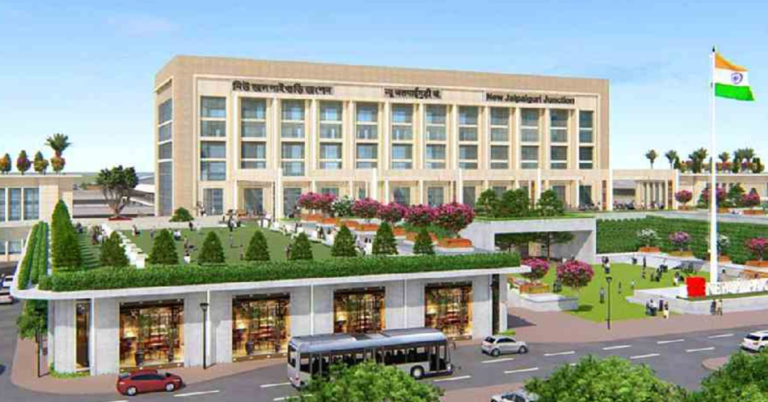
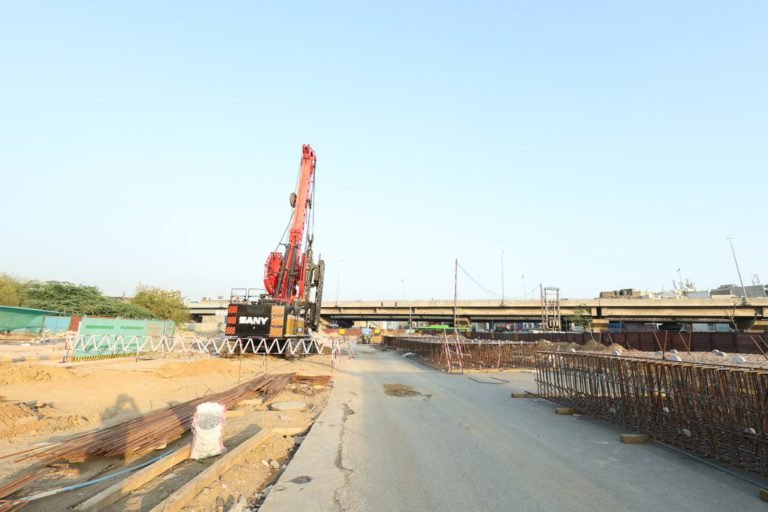
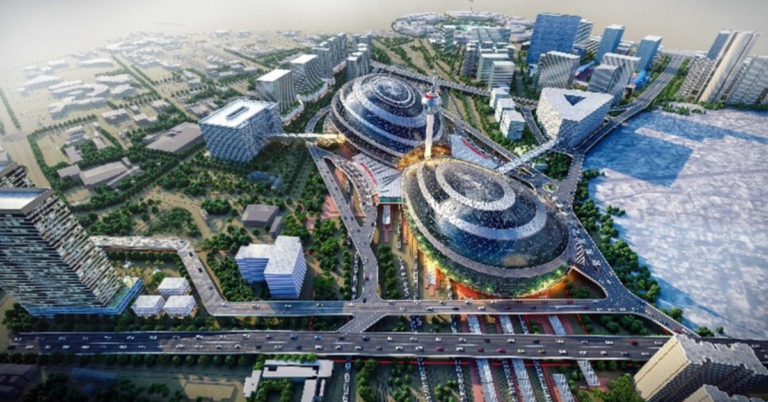
JALPAIGURI (Metro Rail News): The New Jalpaiguri railway station is set to undergo a major transformation, emphasizing enhancing passenger amenities and providing a world-class experience. The redevelopment project, estimated to cost Rs 334.72 crore, has already commenced, aiming to complete all upgrades by 2025.Significant infrastructural works have already been completed at the New Jalpaiguri (NJP) railway station, including the foundation of the Secondary Station and Arrival-1 building, the relocation of the UTS cum Passenger Reservation System (PRS) and MCO office, the casting of test piles for the elevated road, and the establishment of a site office and conference room. The expected transformation of NJP station aims to create an ambience similar to an airport, providing passengers with a seamless and comfortable experience.To prioritize accessibility and inclusivity, the station will be made Divyang-friendly, equipped with 12 escalators and 10 lifts. Furthermore, CCTV cameras will be strategically installed throughout the premises to maintain security measures, enhancing surveillance and ensuring passenger safety.It will become the country’s first international terminal station, facilitating seamless cross-border connectivity. Additionally, the station will house a terminal for the renowned World Heritage Darjeeling Himalayan Railway (DHR), adding to its cultural significance. Once completed, the upgraded NJP station is expected to handle traffic efficiently for the next 45 years.
DELHI (Metro Rail News): Delhi Metro Rail Corporation (DMRC) has announced that the new Aerocity – Tughlakabad Silver Line corridor platform, part of phase 4 of the metro expansion project, will accommodate the longest of all phase 4 stations.According to DMRC, the basic length of the underground metro stations of phase 4 is 225 metres, whereas the new platform Aerocity metro station on Aerocity- Tughlakabad Silver line will be featured as the longest, with a length of 289 metres and at a depth of 23 metres.They added that the station’s extensive length is designed with precautions to accommodate the expected passenger traffic since it will be a significant triple interchange facility with connectivity among the Airport Express Line, The RRTS Corridor- Gurugram, Manesar and Alwar and the Silver Line.Functioning as a terminal station, it will provide direct connectivity from Faridabad in the NCR City, South Delhi, and West Delhi, particularly facilitating travel to the Indira Gandhi International Airport.The DMRC highlighted that the station would have three entry and exit points, one connecting to the business hub of Aerocity and the other two links to NH-8 and the nearby locality of Mahipalpur via a pedestrian subway. This infrastructure enhancement will significantly improve accessibility to the airport.According to the DMRC, the Tughlakabad – Aerocity Corridor represents a significant addition to Delhi’s Metro network, addressing the increasing transportation demands on Mehrauli-Badarpur Road, Chhattarpur Extension, and Mahipal Pur area.Furthermore, it will greatly benefit South Delhi, Faridabad, and Noida residents by enabling faster travel and seamless access to the airport.
NEW DELHI (Metro Rail News): Indian Railway will allow a mix of Public-Private partnership (PPP) and Engineering Procurement and construction (EPC) modes to redevelop Stations.According to the official statement, Coimbatore and Vijayawada stations may be the first to undergo PPP redevelopment, while Delhi and CST would undergo EPC redevelopment.Furthermore, approval for the redevelopment of these stations will be sought in the next two months. The stations which are on the list for redevelopment through PPP mode include Anand Vihar, Tambram, Andheri, Dadar, Pune, Kalyan, Chennai Central, Vadodra, The Bangalore City, Bhopal, Hazrat Nizamuddin and Avadi stations.As per the official information, the railway board called off the bid to redevelop the New Delhi Railway Station in EPC mode; earlier, the PPP mode also failed.In September last year, the cabinet approved Rs. 10,000 crores to redevelop New Delhi, Mumbai (CST) & Ahmedabad railway stations. In which the lowest bid submitted was Rs.8,000 crore for the redevelopment of New Delhi Railway station, which was higher than the estimated value of Rs. 5,000 crores by the government.Following the National Monetisation Pipeline (NMP), station redevelopment comes under the front-runner asset classes contributing approximately Rs. 76,250 crores for nearly 5% of the total stations in the country.
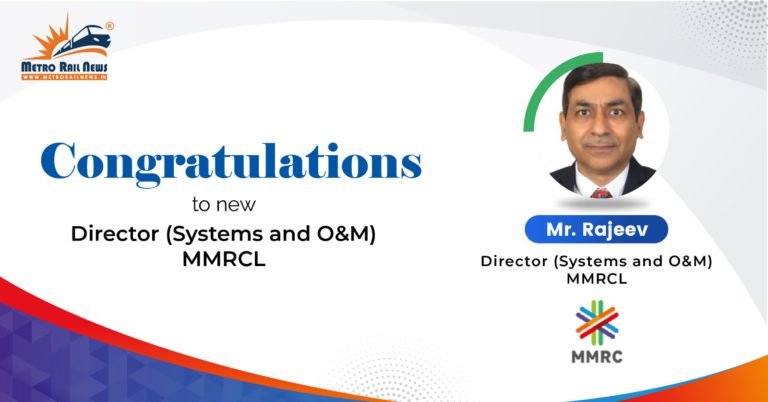
MUMBAI (Metro Rail News): Mumbai Metro Rail Corporation Limited (MMRCL) has recently announced the appointment of Shri Rajeev as the new Director (Systems and O&M).With an illustrious career spanning over 20 years with the Indian Railways and extensive expertise in the Metro Rail System, Rajeev is ready to make significant contributions to the development and operation of Mumbai’s metro network.In the year 1995, Mr. Rajeev began his career with Indian Railways and held various pivotal positions for over 20 years until February 2016. His extensive experience in Rolling Stock, Overhead Traction, Power Supply, E&M, and other vital areas has earned him a commendable reputation in the industry.Moreover, Rajeev also served as Central Railway’s Deputy Chief Vigilance Officer (Electrical) for five years. Later, joining MMRC in March 2016 as General Manager (Rolling Stock), Rajeev swiftly ascended to Executive Director (Rolling Stock). During his tenure, he successfully oversaw the operations of the Rolling Stock, Depot Plant & Equipment, and other key departments at MMRC, showcasing his exceptional leadership and management skills.With his latest appointment as the Director (Systems and O&M), Rajeev will spearhead the strategic planning and execution of Mumbai Metro’s systems and operations.
CHENNAI (Metro Rail News):Chennai Metro Rail Limited (CMRL) has opened opportunities for businesses and entrepreneurs to set up shop or establish office spaces within CMRL-owned premises.In a recent meeting organized by CMRL, the Director (Finance), Dr Prasanna Kumar Acharya, along with Thiru. R.M. Krishnan, CGM (P & BD), and the Empanelled Business Development Consultant discussed collaborating to provide transaction advisory and bid process management services for retail spaces and land parcels across Chennai Metro Rail Stations.Following the meeting, the primary objective of this partnership is to boost CMRL’s non-fare box revenue by identifying potential commercial retail operators and office seekers interested in the available commercial spaces within CMRL’s portfolio.The other Business Development Consultants, leveraging their market expertise and deep real estate industry knowledge, will act as a bridge for Public-Private Partnerships (PPPs) and help CMRL attract investors and occupiers for its land parcels.The commercial spaces, ranging from 3000 Sqm to 10,000 Sqm, are strategically located near prominent Metro Stations, including Nehru Park, Saidapet, Arumbakkam, Pachaiyappa’s College, Central Square, Mannadi, Wimco Nagar, and Koyambedu.These locations offer a prime opportunity for businesses across various sectors, such as retail, hospitality, healthcare, warehousing, and industrial, to establish a strong presence within Chennai’s thriving metro network.Interested individuals and organizations can obtain further information by contacting CMRL’s business development wing or the CMRL Empanelled Business Development Consultant. The consultant’s contact details can be found on CMRL’s official website.CMRL’s initiative to provide commercial and office spaces within their premises aims to generate additional revenue and fosters a conducive environment for businesses to thrive. This collaboration presents a unique opportunity for entrepreneurs, retailers, and organizations seeking well-connected and strategically located spaces to establish their presence in the bustling city of Chennai.
MUMBAI (Metro Rail News): Larsen & Toubro (L&T) has been declared as the lowest bidder for the construction of Package C-3 of the Mumbai-Ahmedabad High-Speed Rail (MAHSR) project as per the National High-Speed Rail Corporation Ltd. (NHSRCL) statement for designing and constructing civil and building works, including testing and commissioning, for the double-line high-speed railway. This section will have three elevated stations, namely Thane, Virar, and Boisar, enhancing connectivity and accessibility for commuters. The Thane Depot will be built separately under the civil construction contract, Package D1, for which bids were accepted earlier this year.The NHSRCL began the bidding process for the building of Package C3 in November 2022, with the expected project cost remaining unknown.The completion date for this segment has been set as 1704 days (about 4.66 years). The technical bids were opened in April, revealing that four firms, including a consortium of three, had submitted their offers.The bidders, NCC – J Kumar JV, offered a significant discount of 10.50% on schedules 1-8 of the financial bid sheet. On the other hand, Afcons – KPTL JV presented a multi-currency bid and extended a substantial discount of 16.45% on their entire bid value. However, Larsen & Toubro emerged with its bid of Rs. 15,697.00 crores, ensuring the lowest net price after applying the necessary discounts.The project spans from Shilphata in Maharashtra to Zaroli at the Maharashtra-Gujarat border, covering a distance of approximately 135.45 km (from MAHSR Km 21.150 to MAHSR Km 156.600), excluding the Thane Depot.







 This 5.6 km package involves building twin tunnels between New Ashok Nagar DN Ramp – Anand Vihar – Sahibabad UP Ramp and constructing a new station at Anand Vihar.According to estimates, STEC plans to construct approximately 4-5 cross-passages between Anand Vihar and Sahibabad UP Ramp at Vaishali, with an additional 7-9 cross-passages between Anand Vihar and Ashok Nagar DN Ramp at Khichripur.


 This 5.6 km package involves building twin tunnels between New Ashok Nagar DN Ramp – Anand Vihar – Sahibabad UP Ramp and constructing a new station at Anand Vihar.According to estimates, STEC plans to construct approximately 4-5 cross-passages between Anand Vihar and Sahibabad UP Ramp at Vaishali, with an additional 7-9 cross-passages between Anand Vihar and Ashok Nagar DN Ramp at Khichripur.