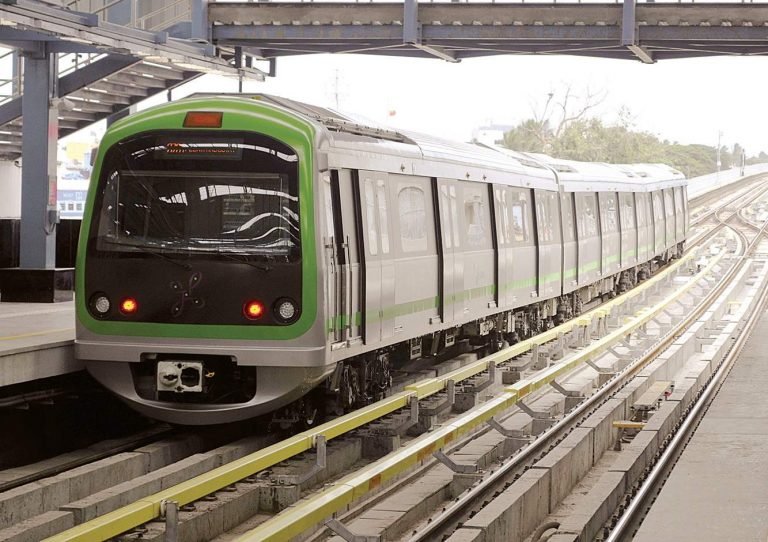
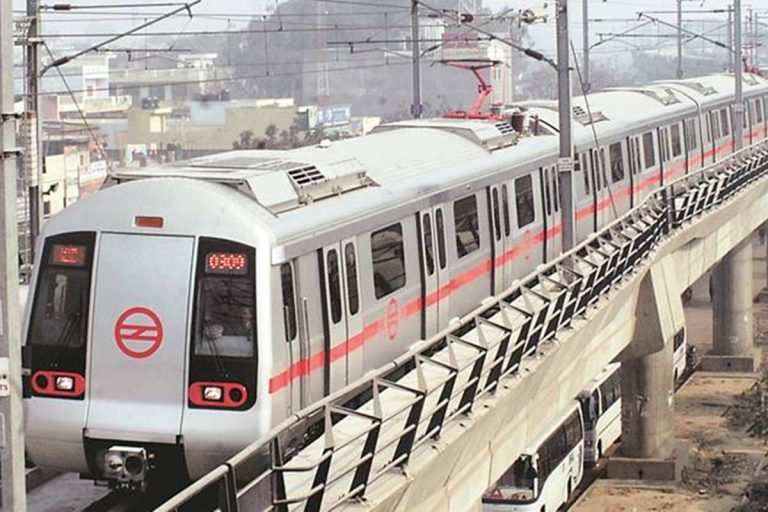
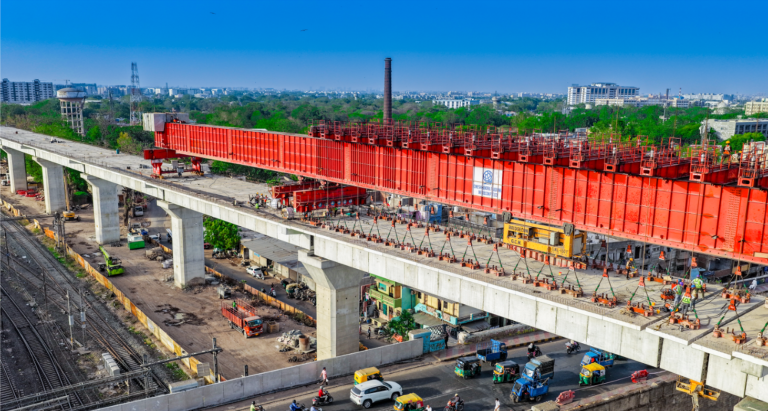
New Delhi: Prime Minister Narendra Modi has flagged-off the Delhi-Faridabad Metro Line that would allow hassle free travel for around two lakh daily commuters between the national capital and the industrial hub in Haryana.The extension of the Delhi Metro connects Badarpur to Escorts Mujesar in Faridabad.The total cost of the project from Badarpur to Escorts Mujesar is nearly Rs. 2,500 crore. Out of this, Rs. 1,557 crore was borne by the Haryana Government, the Centre contributed Rs. 537 crore, while the Delhi Metro provided Rs. 400 crore.The nine stations in this section include, Sarai, NHPC Chowk, Mewala Maharajpur, Sector 28, Badkal Mor, Old Faridabad, Neelam Chowk Ajronda, Bata Chowk and Escorts Mujesar. buy kamagra polo online https://lasernailtherapy.com/wp-content/themes/twentytwentytwo/inc/patterns/en/kamagra-polo.html no prescription
All these are elevated and located on either side of the Delhi-Mathura Road (NH-2).“The nine-station metro corridor which was 95 per cent indigenously built will provide people a safe, affordable, quick, comfortable, reliable, environment-friendly and sustainable transport facility,” a Haryana government spokesperson said.Haryana Chief Minister ML Khattar, addressing a press conference on Saturday, had thanked the Prime Minister for “gifting” the Metro service which would take the city to “another level of progress” with better connectivity with other NCR towns.He had also said that the Prime Minister would be announcing the go-ahead for connecting Gurgaon with Faridabad by Metro.
IntroductionIn Jaipur, rising population and rapid motorisation have placed sustained pressure on the city’s transport network. The city records an estimated daily travel demand...
DELHI (Metro Rail News): Metro Rail News conducted an exclusive interview with Shri Manoj Kumar Dubey, Chairman & Managing Director (CMD) and CEO of...
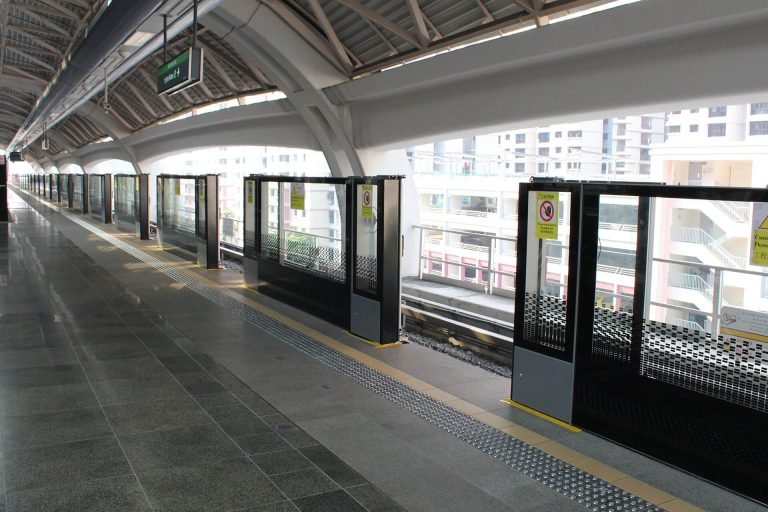
Chennai (Metro Rail News): The joint venture between Panasonic Manufacturing (Beijing) Co. Ltd. and Pioneer Fil-Med Pvt. Ltd. has secured a 146.95 crore contract from Chennai Metro. The contract involves supplying and installing Platform Screen Doors for Chennai Metro’s Line 3 and Line 5.
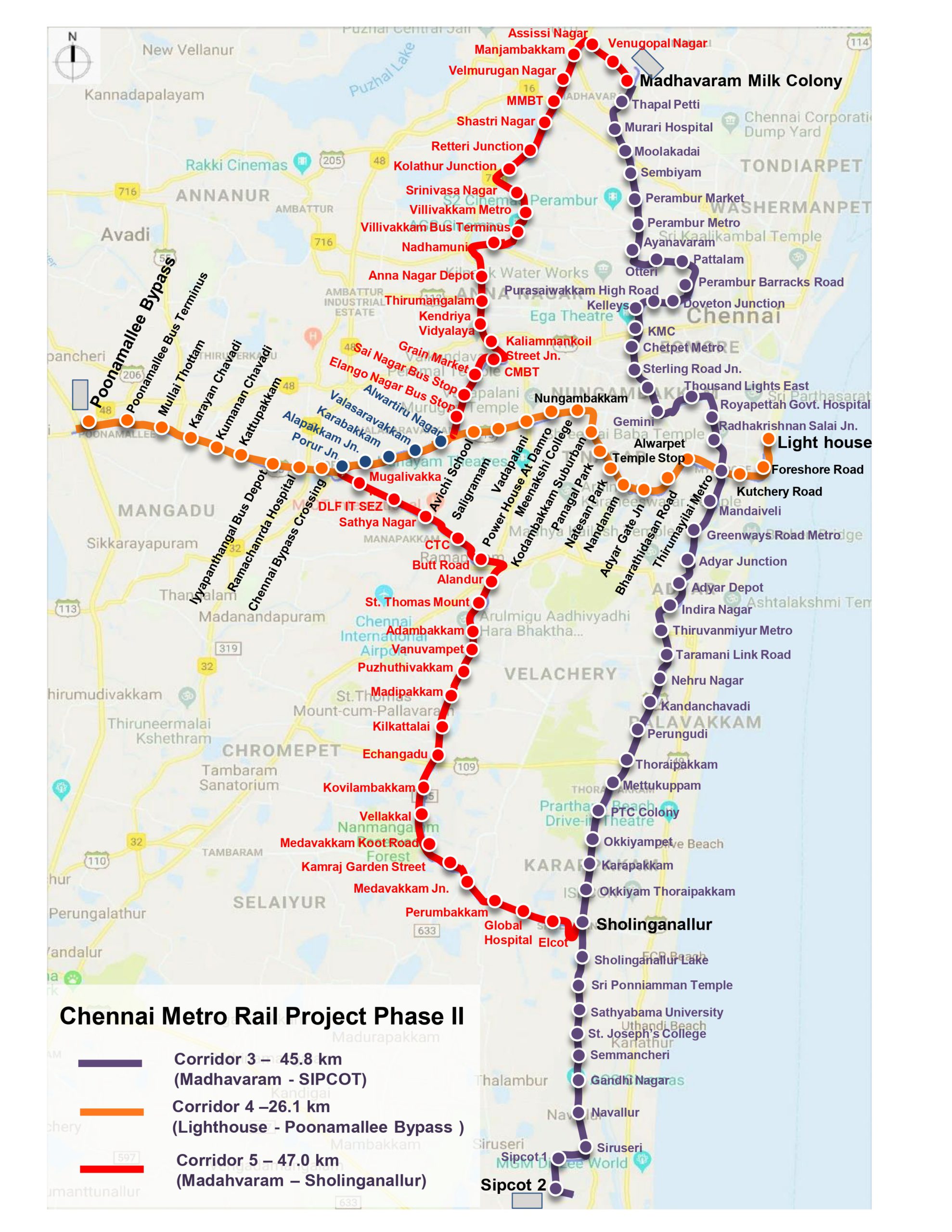
Chennai Metro Phase 2 Map
Line -3 and Line-5 of Chennai Metro will operate in a North-South orientation to link Madhavaram – SIPCOT (45.4 km Line-3) and Madhavaram – Sholinganallur (44.6 km Line-5), Respectively, through both elevated and underground stations.
The contract’s scope includes the design, manufacture, supply, installation, testing, and commissioning of Platform Screen Doors.
In Corridor-3, the contractor will install PSDs at 29 underground stations between Madhavaram Depot Station and Tharamani Station.
In Corridor 5, PSDs will be installed at 5 underground stations falling between Kolathur Junction Station and Nathamuni Station.
Final Contract Value: INR 85,36,03,003 + USD 7,392,013 (approx. INR 146,95,66,140.67 or 146.95 crore)
Deadline for the contract: 1465 Days ( approximately four years )
Other contracts for Platform Screen Doors
Another 2 packages by CMRL for installing platform screen doors:
Package ASA12A: In November 2023, ST Engineering Urban Solutions Ltd. secured this package. Under this contract, ST Engineering is responsible for installing Platform Screen Doors at 10 elevated stations of Line 3 (Sholinganallur Lake – SIPCOT 2). Additionally, they will install PSDs at 29 stations of Line 5 (Grain Market – Elcot).
Package ASA09: The work under this package includes the PSDs at 10 elevated stations of Line-3 (Nehru Nagar – Sholinganallur) and 10 elevated stations of Line-5 (Assissi Nagar – Koyambedu). Currently, the bids are under technical evaluation for this package.
Ongoing development On Line 3 & 5 of Chennai Metro
Line-3’s 29 stations are under construction by DRA – Soma JV Tata Projects Ltd. and Rail Vikas Nigam Ltd.
Line-5’s five underground stations are under construction by Tata Projects Ltd.
To celebrate International Women’s Day, our Managing Editor Mr. Narendra Shah had a conversation with Ms Sophie Moochhala – Managing Director – Fluid Controls Private Limited. In which she speaks about the Company business strategy, Atmanirbhar Bharat Policy and Growth in a Post-COVID Situation.
Tell our readers about various innovative products recently developed for Metro & Railway Industries? Fluid Controls Private Limited was established in 1974 by Dr. Y.E. Moochhala, a Ph.D. from Northwestern University, the USA with a vision to deliver high quality & high-performance products which delight customers. Fluid Controls offers customers comprehensive end-to-end “Make in India” solutions for Rail & Metro brake piping arrangements – from design & engineering services to supply of high-performance products and installation services. From its inception in 1974, Fluid Controls has engaged in original R&D and also has had an ethos of developing indigenous replacements for imported products. Our founder, Dr. Y E Moochhala, after a successful career in the USA decided to return to India because he was a strong believer in a self-reliant India. His idea was to develop high quality, high-performance products to suit local prototype climatic and performance expectations. Today, Fluid Controls is approved as an “In-House R&D unit” by the Department of Scientific & Industrial Research (DSIR), Government of India. Since 2011, we have developed more than 25 new products, which is very much in line with the Fluid Controls vision statement. Adding to our strength in innovating, Fluid Controls has filed its first Global Patent and is in the process of filing two more patents. Particularly for the Rail & Metro Industry Fluid Controls has developed Across Frame Connectors for connection of pipelines between the shell and bogie for high-speed electric locomotives. These connectors eliminate welding processes and allow for seamless connection of pipes between the shell and bogie. Across Frame connectors also, reduce component parts required to be purchased as they are integrated fitting assemblies. Fluid Controls has also developed an entire range of FlexiGripTM connectors to provide zero-leakage and vibration resistant connections Here are the excerpts from the interview:- “Success is a multi-faceted word! Professionally, for me, success is to build a brand which is trusted by customers and which delights customers.” Sophie Moochhala Managing Director Fluid Controls Pvt. Ltd. between misaligned pipes or between pipes of different materials. The triple sealing action of the split ring, washer and O ring provides for a completely leak-proof connection. The split ring also provides superior vibration resistance by ensuring the joint remains in a springing condition. As an ongoing part of product development, Fluid Controls also customizes standard products to suit specific customer requirements.
How do you see the Govt of India’s Atmanirbhar Bharat policy? Fluid Controls is a “Vocal for Local” MSME organization and we whole-heartedly support the Atmanirbhar Bharat initiative. Domestic manufacturers have the capability – be it in manufacturing, quality, or R&D – to cater to domestic requirements across sectors. In the past, legacy international vendors and lack of firm procurement policies constrained the effective implementation of “Make in India”. Atmanirbhar Bharat, which clearly outlines procurement policies, will go a long way to boost domestic manufacturers, especially in the MSME sector. With our manufacturing and R&D capabilities, Fluid Controls can contribute immensely to provide high quality, high-performance products to all sectors in the move to localize supplies.
Please share some of your value-added, problem-solving product and services offered by Fluid Controls? A good example of a product we developed is the Fluid Controls Hydraulic Swaging Unit (HSU), which is a tool to ensure that twin ferrule connectors are installed correctly at the site. The unique feature of our HSU is that there is no need for manual intervention in the process. We also offer design and engineering services and have completed conversion projects (from one connector system to another) for several customers.
How Covid-19 outburst the Fluid Control’ business and the step you have taken to overcome it? During the onset of the Pandemic COVID-19, our primary focus was to ensure the health and safety of our employees, their families, our customers and our business partners. And we had changed the way we approach every task and every activity. We had to adapt our model of operation since face-to-face meetings and interaction were not possible for some months (and we are still work-from-home at our Mumbai office!). We have invested in ERP and Microsoft Teams software to ensure the ease of teamwork and connectivity. To ensure seamless day-to-day operation, each department head would hold a daily telephonic meeting to discuss tasks and the way ahead. We also had to change the way we conducted our external business. During the lockdown period, Fluid Controls engaged with customers via video conferencing and calls. And, to ensure the least disruption in schedules, we have provided regular updates on our business status and order status to them. As many of our customers still do not allow business visits, we continue to have a virtual engagement with them. Once our plant became operational in May 2020, we provided our employees with a safe working environment. Whilst a major part of our staff is still working from home, “Operational Safety” being the primary parameter for the health and safety of people at work in the plant, we have planned our manufacturing with a system and process-focused approach. At Fluid Controls, we “Engineer Connections every day”. And in the time of the COVID-19 pandemic, we learnt how to “Adapt Everyday”!
What is your view on Business Growth in a Post COVID Situation? I am very optimistic about the post-COVID growth situation and increased Union Budget allocations this year for railways will definitely lead to more business for companies such as ours. In addition, we are very positive that the focus on freight, Metros and RRTS/LRTS networks will result in an increasing demand for rolling stock.
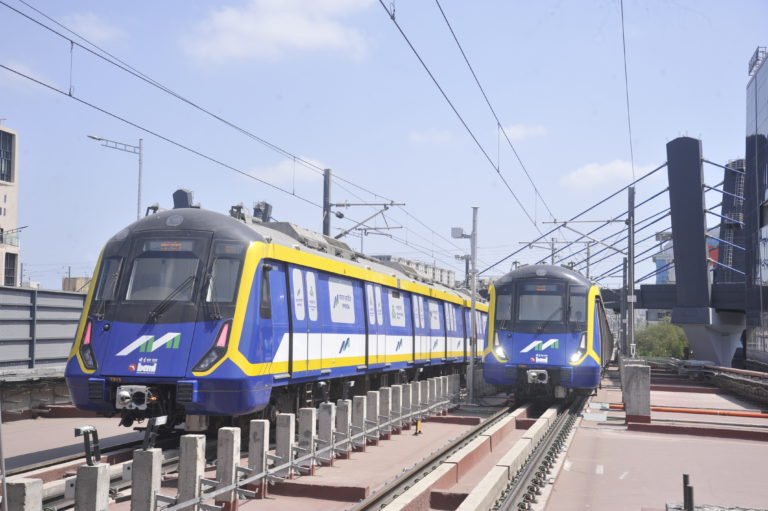
What are the Metro Projects in which Fluid Controls currently associated? We are currently associated with projects for Mumbai Metro, Pune Metro, Delhi Metro and Chennai Metro. BEML suppled the First Driverless Metro Train developed in India form Mumbai Metro Line 2A.
What is the role of fluid Controls in the development of this true Atma Nirbhar product? We are very happy to have been associated with BEML for Mumbai Metro. The Metro cars supplied by BEML have Fluid Controls DIN Single Ferrule connectors installed in the brake piping system. This is a very big achievement for Fluid Controls and we are very proud to have been approved by BEML for this project. Coming from a non-technical background,
how do you manage the most senior management position of an innovative product engineering company? “Success” is a multi-faceted word! Professionally, for me, success is to build a brand that is trusted by customers and delights customers. At an organizational level, it is to build a team that is motivated, innovative and performs to high expectations. In this context, my having or not having an engineering background doesn’t really matter as I am supported by a team that has stellar engineering credentials.
What are the company’s business strategy and future expansion plan concerning the Metro & Railway market? Over the years, Fluid Controls has developed comprehensive expertise for manufacturing, by identifying the right materials and ensuring “fit and forget” assembly. For Rail & Metro applications, we offer complete fitment of brake piping components, engineering and site installation services, pre-piped assemblies for easy site fitment, double ferrule fittings, DIN single ferrule fittings, threaded adaptors, Across Frame connectors, FlexiGripTM connectors, quick release connectors, isolation valves and clamps. A key part of our future plans is to tap into the brake piping business for the emerging high-speed train operations and to offer integrated solutions and hose assemblies to our current customer base. We are also focusing on global supplies to Europe, North America and SE Asia
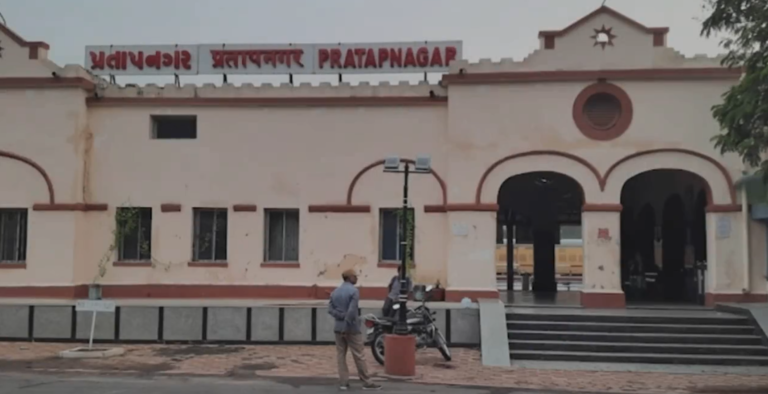
VADODARA (Metro Rail News): Pratapnagar Railway Station is Vadodara’s one of the oldest railway stations. It has received a major upgrade under the Amrit Bharat Scheme. Indian Railways spent Rs 71.58 crore on the project to improve passenger facilities while retaining the station’s historic image.
The redevelopment aims to make Pratapnagar a key satellite station for Vadodara Junction. The upgraded station will also help in reducing congestion at Vadodara Junction and support train operations in the years ahead.
Pratapnagar Railway Station enters a new Phase
Pratapnagar station handled passengers from 1880 and played an important role in the region’s narrow-gauge railway network. It is also home to a railway workshop that started operations in 1922. Railway officials now want the station to handle a bigger share of passenger and train operations. The station is also expected to support passengers travelling to the Statue of Unity. Vadodara Divisional Railway Manager (DRM) Raju Bhadke said, “Pratapnagar Railway Station holds immense historical significance for Vadodara and Indian Railways. Through this redevelopment, we have created modern passenger facilities while preserving its heritage value.”
New facilities added across the station
Indian Railways upgraded passenger facilities on Platforms 1, 2 and 3. It has built a new Platform 4 as part of the project. Some of the major improvements include,
Extended and resurfaced high-level platforms
New platform shelters
Better seating arrangements
Additional toilets
Improved signage
New administrative building
Accessible ticket counters for persons with disabilities
Two new lifts
Indian Railways also developed a new station building at the second entrance and created a commercial area around it.
Better access and passenger moment
Officials redesigned the second-entry side of the station to make movement easier for passengers and vehicles. The upgraded area now includes:
Organised traffic circulation
Dedicated parking facilities
Clearly marked entry and exit routes
Other supporting infrastructure
The station concourse has also received new flooring, wall cladding, improved lighting and murals that showcase the station’s railway history.
Focus on accessibility
Accessibility remained a key part of the redevelopment. Indian Railways installed accessible booking counters and connected lifts to the foot overbridge to make travel easier for senior citizens, persons with disabilities and passengers carrying luggage. One of the biggest additions is a 12-metre-wide foot overbridge, which connects all station platforms and links both sides of the city. The bridge includes ramps and lift access to ensure smooth movement across the station.
Vadodara Division Public Relations Officer Anubhav Saxena said, “A major highlight of the redevelopment is the construction of a 12-metre-wide foot overbridge connecting both sides of the city and all station platforms. Ramps and lift connectivity have been provided to ensure smooth barrier-free access for passengers.” He also mentioned that, “The redevelopment was designed to transform Pratapnagar into a modern, passenger-centric railway facility while strengthening its role in the region’s transport network.”
MUMBAI (Metro Rail News): The Mumbai Metropolitan Region Development Authority will build 7 foot over bridges (FOBs) along the Metro Line 9 corridor. It will improve pedestrian safety and make it easier for people to reach metro stations in Mira-Bhayandar.
The bridges form part of MMRDA’s Multi-Modal Integration (MMI) plan, which focuses on improving connectivity between metro services and other modes of transport while making daily travel more convenient. Metro Line 9 runs between Dahisar East and Mira-Bhayandar. The 11-km corridor has 8 stations and is about to be completed. To improve access to stations and help pedestrians cross busy roads safely, MMRDA has planned 7 foot over bridges under Package 1 of the project.
Location of the proposed FOBs
Western Express Highway
Dahisar Toll Naka – 145 metres
Miragaon – 87 metres
Mira-Bhayandar Road
Kashigaon – 92 metres
Shivar Garden – 80 metres
Maxus Mall – 83 metres
Veg Sagar Hotel – 88 metres
Sai Baba Nagar – 80 metres
Designed for safety and easy access
The bridges will help people cross two of the busiest roads in the area, the Western Express Highway and Mira-Bhayandar Road. These roads carry heavy traffic and range from 30 to 60 metres in width. Each bridge will be three metres wide and include:
Staircases
Lifts for easier access
CCTV cameras for security
The lifts will help senior citizens, people with disabilities and passengers carrying luggage reach metro stations more comfortably.
Part of larger connectivity plan
MMRDA has already introduced similar multi-modal integration facilities on Metro Lines 2A and 7. The authority now plans to extend the same model to Metro Line 9. According to MMRDA, the new bridges will,
Improve access to Metro Line 9 stations
Make road crossings safer for pedestrians
Reduce the chances of accidents
Help commuters move more easily during rush hours
Improve last-mile connectivity
Strengthen links between metro services and other transport options
Encourage more people to use public transport
The bridges will also reduce dependence on signal-controlled pedestrian crossings, which could help improve traffic flow at busy junctions.
Metro Line 9 moves towards full operations
MMRDA, in their press release also mentioned that civil construction on Metro Line 9 is almost complete. The authority opened the first phase of the corridor on April 7, 2026, and now wants the pedestrian infrastructure ready before full operations begin. To carry out the work, MMRDA has appointed Speco Infrastructure JV and PRS Infraprojects LLP. The contract for the seven bridges is worth about Rs 82.09 crore.
Officials’ statements
Chief Minister Devendra Fadnavis said, “While expanding Mumbai’s metro network, it is equally important to ensure that commuters can access and use these systems safely, conveniently, and seamlessly. Multi-Modal Integration plays a critical role in connecting people from their homes, workplaces, and surrounding neighbourhoods to metro stations through well-planned pedestrian and transport infrastructure. Maharashtra is witnessing rapid growth in metro connectivity, with nearly 50 kilometres of metro lines being added every year. Our objective is not only to build metro corridors but also to create an efficient and commuter-friendly transport ecosystem where people can travel effortlessly across Mumbai. The Foot Over Bridges being developed along Metro Line 9 are an important step towards achieving this vision by enhancing safety, accessibility, and overall commuter convenience.”
MMRDA Metropolitan Commissioner Dr. Sanjay Mukherjee also said that, “Multi-Modal Integration is a critical component of modern urban mobility planning. The proposed Foot Over Bridges along Metro Line 9 have been carefully planned to improve pedestrian movement, enhance station accessibility, and support efficient dispersal of commuters within station influence areas. By integrating these facilities with the metro corridor, MMRDA is working towards providing a safer, more convenient, and seamless travel experience for citizens while strengthening the overall public transport network of the Mumbai Metropolitan Region.”
UTTAR PRADESH (Metro Rail News): Northeast Railway has invited bids for the construction of two Road Over Bridges (ROBs) in Uttar Pradesh. The estimated cost of the project is around Rs 93.8 crore. It will replace two level crossings in the Lucknow Division and improve both road and rail movement in the region.
The project includes a two lane ROB with a Limited Height Subway (LHS) between Sarju and Jawahal road stations and another two lane ROB between Chauka Ghar and Burhawl stations. Once completed, the bridges will help reduce traffic congestion and improve safety at railway crossings.
Tender Information
Tender
Information
Tendur Number
NER-LJNRSP-2026-15
Tender Type
Open
Bidding System
Two Packet System
Estimated Cost
Rs 93.8 crore
EMD
1.88 crore
Bidding Start Date
12 June 2026
Tender Closing Date
26 June 2026, (15:00)
Completion period
24 months
Scope of Work
The contractor will construct a two-lane Road Over Bridge along with a Limited Height Subway in place of Level Crossing No. 295/A between Sarju and Jarwal Road stations. The project also includes a two-lane Road Over Bridge in place of Level Crossing No. 300/Spl between Chauka Ghat and Burhwal stations. The project aims to improve safety, reduce waiting time at level crossings, and ensure smoother movement of road traffic and trains.
About the Project
The two level crossings lie on important railway routes in Uttar Pradesh and handle regular rail and road traffic. Vehicles often face delays when trains pass through these crossings. The new Road Over Bridges will allow vehicles to cross the railway line without interruption, improving connectivity for local residents and reducing congestion. The project will also enhance safety by removing direct interaction between road traffic and train operations.
MUMBAI (Metro Rail News): Mumbai Metropolitan Region Development Authority has invited bids for track works at the Kasheli Depot of Mumbai Metro Line 5. The project is worth around Rs 84.35 crore. It includes the design, supply, installation, testing, and commissioning of standard gauge tracks required for depot operations.
Tender Information
Information
Details
Tender Number
MMRDA/MPIU/ML5/CA-303
Project
Kasheli Depot Track works for Mumbai Metro Line 5
Estimated Cost
Rs 84.35crore
EMD
Rs 42.17 lakh
Tender Fee
Rs 3000 + 18% GST
Bid Submission Deadline
30 June 2026, (18:00 hrs)
Pre-Bidding Meeting
10 June 2026, (15:00 hrs)
Completion Period
20 months
Scope of Work
The scope of work includes Design, Development, Supply, Installation, Testing & Commissioning of Standard Gauge Trackworks (Ballasted and Ballastless) in Kasheli Depot Track Work for Line 5 Corridor of Mumbai Metro Rail Project.
About the Project
Mumbai Metro Line 5, also known as the Orange Line, will connect Thane, Bhiwandi, and Kalyan. The corridor aims to provide a faster and more reliable public transport option for commuters travelling between these growing urban centers. Kesheli Depot will serve as the operations and maintenance hub for the corridor.
DELHI (Metro Rail News): East Coast Railway has invited bids for the redevelopment of Brahmapur Railway Station under Phase-1. The project aims to upgrade passenger facilities and transform the station into a modern transport hub. The work falls under the Khurda Road division and will be executed through the Engineering, Procurement and Construction (EPC) model.
Brahmapur is one of the major railway stations in Odisha and serves thousands of passengers travelling across eastern and southern India. The redevelopment project forms parts of Indian Railways broader station modernisation programme.
Tender Information
Information
Details
Tender Number
EPC-CECONIIBBS2026022
Project
Brahmapur Railway Station Redevelopment (Phase-1)
Tender Type
Open Tender
Bidding System
Two Packet System
Estimated Cost
Rs 182.57 crore
EMD
Rs 3.65 crore
Pre-Bidding Meeting
25 June 2026, 11:00
Bid Submission Start Date
18 July 2026
Tender Submission Deadline
1 August 2026
Completion Period
20 months
Scope of Work
The contractor will redevelop Brahmapur Railway Station under Phase-1 of the project. The work will include construction and upgradation of the station infrastructure. The project aims to improve passenger movement, accessibility, and overall station experience. The contractor will execute the entire package under the EPC model.
About the project
Brahmapur Railway Station is an important station on the Howrah-Chennai main line and serves as a key gateway to southern Odisha. The station handles a large number of passengers every day and provides connectivity to major cities across the country. Through the redevelopment project, Indian Railways aims to improve passenger amenities, and create a more efficient and comfortable travel experience.
DELHI (Metro Rail News): The Mumbai-Ahmedabad Bullet Train project has achieved another major milestone with the breakthrough of its third mountain tunnel in Maharashtra. Engineers completed the excavation of the tunnel at Ambesari village in Dahanu taluka of Palghar district.
The breakthrough marks significant growth on one of the most challenging stretches of India’s first high-speed rail corridor, where the alignment passes through hilly terrain between Maharashtra and Gujarat.
Third tunnel completed in Palghar district
The newly completed tunnel, known as MT- 07 meters, is 417 meters long and 14.4 meters wide. It will carry both up and down bullet train tracks. Construction teams excavated the tunnel from both ends using the controlled drilling and blasting method. Throughout the work, engineers closely monitored the tunnel and surrounding area to ensure safety and stability.
Project teams installed several monitoring instruments to track tunnel behaviour and ground movement in real time. These include,
Surface settlement points
3D targets
Strain gauges
Seismographs
These systems helped engineers monitor vibrations, tunnel performance and nearby structures during excavation. Teams also focused on worker safety by maintaining proper ventilation inside the tunnel, fire safety arrangement, controlled entry systems and continuous geotechnical monitoring.
Three mountain tunnels completed in five months
The latest breakthrough comes as construction gathers pace in Maharashtra. Over the last five months, engineers have completed excavation of three mountain tunnels.
Tunnel
Length
Breakthrough Date
MT-05
1.5 km
2 January 2026
MT-06
454 m
3 February 2026
MT-07
417 m
1 June 2026
Earlier, MT-08, which is 350 metres long, achieved a breakthrough on 5 October 2023. With the completion of MT-07, the project has now excavated three mountain tunnels in Maharashtra within a span of 5 months.
Status of remaining mountain tunnels
The Mumbai-Ahmedabad Bullet Train project includes eight mountain tunnels in total.
Seven tunnels are located in Palghar district of Maharashtra
One tunnel is located in Valsad district of Gujarat
Construction progress on the remaining tunnels stands at:
MT-01
Work progressing gradually
MT-02
Work progressing gradually
MT-03
More than 80% excavation completed
MT-04
Nearly 60% excavation completed
Boisar-Vapi section records major progress
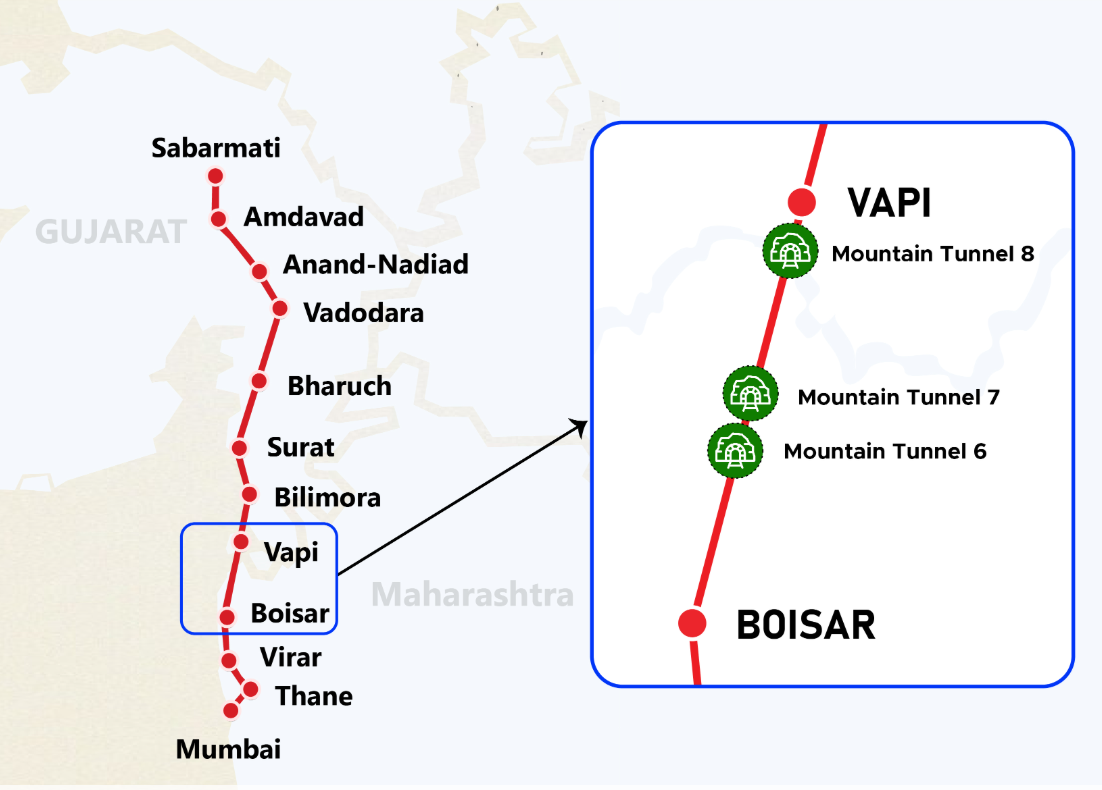
The route between Boisar in Maharashtra and Vapi in Gujarat passes through a major industrial belt. It includes three mountain tunnels (MT-08, MT-07, MT-06). With the latest breakthrough, all 3 tunnels on this section have now been fully excavated. This marks significant progress on a key stretch of the Mumbai-Ahmedabad Bullet train corridor, where construction activity has gathered pace in recent months.
Railways are the circulatory system of modern economies. In India, where Indian Railways operates one of the world’s largest rail networks running approximately 25,000 trains daily across 69,439 route kilometres and serving over eight billion passengers annually, the stakes of operational efficiency are not merely commercial. They are national. Yet for decades, the gap between the scale of India’s rail network and the sophistication of its operational infrastructure has been wide and consequential. Delayed trains, manual signalling systems, fragmented passenger information, and reactive maintenance have been persistent features of a network that was largely built in the 19th century and expanded through the 20th.
That calculus is now changing. India has achieved one of the world’s fastest electrification drives as of January 2026; 99.4 per cent of its broad-gauge network stands electrified, covering 69,744 route kilometres, making it the operator of the world’s largest electrified rail system. Metro systems now operate across 26 cities, with a total operational network of approximately 1,095 kilometres, the third-largest in the world. But electrification and network expansion, for all their significance, are enablers, not a transformation. The next frontier is digitalisation. If electrification is about where the energy comes from, digitalisation is about how smartly it is used.
The global digital railway market is estimated at USD 82.76 billion in 2025 and is projected to reach USD 127.54 billion by 2030, growing at a CAGR of 9 per cent. India, with its massive network and growing urban metro ecosystem, stands at the intersection of this global shift with meaningful progress already made, significant gaps still to be bridged, and a policy framework that is, for the first time, beginning to treat digital infrastructure with the same urgency as physical infrastructure.
The Case for Digital Infrastructure in Railways
The business case for digitising railway and metro operations is not theoretical it is grounded in measurable outcomes across three dimensions: operational efficiency, passenger experience, and financial sustainability.
On the operations side, digital systems enable real-time monitoring of train locations, predictive maintenance of assets, automated signalling, and data-driven scheduling all of which reduce delays, lower maintenance costs, and improve network reliability. On the passenger side, digital infrastructure enables accurate real-time information, seamless ticketing across modes, and personalised journey planning, reducing friction and improving the perceived quality of service. On the financial side, digital systems reduce waste, enable non-fare box revenue through data monetisation and targeted commercial offerings, and extend the operational life of assets through condition-based rather than time-based maintenance.
The Internet of Things in Railways market is expected to grow at a CAGR of 9.1 per cent, reaching USD 50.58 billion by the end of 2030, driven by the rising adoption of IoT in railways and advancements in communication technology. The shift is no longer a question of whether to invest in digital infrastructure; it is a question of how fast, and whether the institutional capacity exists to absorb and leverage it effectively.
What India Has Built: The Government’s Digital Push
The Indian government’s investment in digital railway infrastructure has accelerated significantly in the 2025-26 period, spanning safety systems, communication backbone, passenger information, and ticketing platforms.
Communication Backbone
A key development has been the enhancement of the Unified Telecom Backbone Infrastructure through Internet Protocol Multi-Protocol Label Switching (IP MPLS) technology. This high-capacity network is being developed to meet present and future bandwidth requirements of mission-critical railway applications, enabling centralised accessibility of video surveillance and supporting core systems such as Mobile Train Radio Communication, the Passenger Reservation System, the Unreserved Ticketing System, and the Freight Operations Information System. The IP MPLS backbone has been commissioned at 1,396 stations, providing a resilient digital foundation across the network.
This is not incidental infrastructure; it is the nervous system upon which every other digital application depends. Without a high-bandwidth, low-latency communication backbone, real-time train control, AI surveillance, and passenger information systems cannot function reliably at scale.
AI-Enabled Safety and Surveillance
AI-enabled video surveillance systems have been deployed across 1,874 stations. Equipped with advanced analytics, these systems can automatically detect suspicious activities such as intrusion and loitering, while facial recognition technology enables real-time monitoring and identification. The scale of deployment nearly 1,900 stations, makes this one of the largest AI surveillance rollouts on any railway network globally.
Real-Time Passenger Information
Automatic train announcements are now operational at 1,405 railway stations, integrated with the National Train Enquiry System, ensuring timely and accurate updates for passengers through electronic display boards, coach guidance systems, and public address networks. For a network that has historically been criticised for poor passenger communication, particularly during delays, this represents a structural improvement in the passenger information ecosystem.
Kavach 4.0: Digital Safety at the Train Level
Perhaps the most strategically significant digital infrastructure investment is Kavach, India’s indigenously developed Automatic Train Protection system. As of early 2026, Kavach 4.0 the latest version, has been formally commissioned on 1,452 route kilometres, covering the high-density Delhi-Mumbai and Delhi-Howrah corridors. In March 2026, it was further commissioned on the Prayagraj-Kanpur section of the Delhi-Howrah corridor, covering an additional 190 route kilometres.
The broader rollout picture is more extensive. Trackside Kavach implementation work has been taken up on 24,427 route kilometres covering the Golden Quadrilateral, Golden Diagonal, and other high-density segments. Supporting infrastructure already in place includes 8,570 kilometres of optical fibre cable, 1,100 telecom towers, 767 station data centres, and onboard Kavach devices fitted on 4,154 locomotives. Bids have been issued to equip a further 9,069 locomotives. The safety impact is already visible: consequential train accidents declined from 135 in 2014-15 to just 14 in 2025-26 a reduction of nearly 90 per cent.
Kavach uses a combination of Radio Frequency Identification, GPS, and ultra-high frequency radio communication to automatically apply brakes if a driver fails to respond to a signal. It is the digital layer at the train-track interface, translating sensor data into real-time safety actions without human intervention. The challenge now is scale: with the broad-gauge network exceeding 70,000 km, the gap between what is commissioned and what remains to be covered is still substantial.
The RailOne App and Digital Ticketing
In July 2025, Indian Railways launched the RailOne App, which consolidated ticketing, enquiries, and grievance redressal into a single platform, while over 30.4 million suspicious user accounts were removed to promote fair access. The consolidation of previously fragmented digital touchpoints, the IRCTC app, UTS app, and various enquiry platforms into a unified interface is a significant step toward a seamless passenger digital experience.
Rail Tech Policy 2026
At the policy level, the Rail Tech Policy 2026 is a comprehensive framework designed to bring cutting-edge technology into Indian Railways’ operations at scale. Under this policy, the railways will actively engage with startups, innovators, industry experts, and academic institutions to adopt advanced technologies, including Artificial Intelligence and drone-based monitoring systems. A major highlight is the dedicated Rail Tech Portal, a 24×7 digital platform that allows innovators and startups to submit proposals online, interact with railway departments, and pilot innovative solutions directly with the railways. This institutionalisation of technology adoption, moving from ad hoc procurement to a structured innovation pipeline, is arguably the most important structural development in India’s railway digital transformation agenda.
Operational Impact: Punctuality as a Metric
The operational impact of digital investment is beginning to show in punctuality data. In financial year 2025-26, the railway network recorded an overall punctuality of more than 77 per cent, with several divisions crossing 90 per cent. Systems such as the Integrated Coaching Management System, the Control Office Application, and the National Train Enquiry System enable a continuous flow of information on train movements, allowing controllers to monitor delays and quickly adjust timetables. Real-Time Train Information System devices, based on GPS technology, enable a train’s location to be transmitted to the central control system automatically, a fundamental shift from the manual train charting that long defined Indian railway operations.
Global Example
Deutsche Bahn and Europe’s Shift2Rail Programme
DB Netz, a major subsidiary of Deutsche Bahn, has been digitalising its train control systems through a research programme on digital control command and signalling technology. The broader European Shift2Rail public-private partnership has examined the potential of digital applications across multiple railway subsystems: X2Rail for control, command and signalling, Pivot for rolling stock, In2Track for infrastructure, and In2Stempo for energy, with Research and Innovation activities contributing to more efficient ways to predict and control the performance of rail assets.
The Shift2Rail model is significant not just for its technological output, but for its governance structure: a formal public-private partnership that pools funding from both European Union Horizon 2020 grants and industry members, creating a shared incentive structure for innovation. India’s Rail Tech Policy 2026 draws conceptual parallels with this model, but lacks the structured co-funding mechanism that gives Shift2Rail its durability.
The Gaps: What Still Needs to Be Addressed
For all the progress made, India’s digital railway transformation has significant structural gaps that must be acknowledged.
Fragmented Implementation Across Zones
Indian Railways operates across 18 zonal railways and numerous metro corporations, each at different stages of digital maturity. The IP MPLS backbone reaching 1,396 stations is meaningful, but India has over 7,000 stations. AI surveillance deployed at 1,874 stations leaves thousands of smaller stations unmonitored. The risk is that digital investment concentrates on high-visibility urban and trunk routes while leaving the vast secondary network which serves the majority of the population underserved.
Kavach Rollout Speed vs. Network Scale
Kavach 4.0 has been commissioned on 1,452 route kilometres, with trackside work taken up on 24,427 kilometres but India’s broad-gauge network spans over 70,000 kilometres. The December 2025 deadline for completing the Delhi-Mumbai and Delhi-Howrah corridors was missed. While the rollout is accelerating with bids issued for 9,069 additional locomotives and the number of approved installation vendors growing beyond five the constraint remains supply chain capacity and the speed at which the OFC backbone can be laid to support Kavach’s communication requirements. Every kilometre without Kavach is a kilometre operating on the assumption of human infallibility.
Data Integration and Interoperability
India’s railway digital systems have grown organically the Passenger Reservation System, the Freight Operations Information System, the National Train Enquiry System, and metro AFC systems across 26 cities each operate on different technology stacks with limited interoperability. A passenger travelling from a suburban metro station to an intercity train cannot yet access a unified journey planner, book an end-to-end ticket, or receive integrated real-time updates across modes. This is not a technology problem it is an integration and governance problem that requires deliberate cross-institutional architecture.
Cybersecurity
As railway systems become more digitally integrated, their attack surface expands. The use of passenger data to improve service and comfort must be balanced with strict protocols and laws. Anonymisation techniques and increased data usage controls are needed to protect passenger privacy, and robust safeguards are essential to address data handling concerns. Indian Railways has not yet articulated a comprehensive public cybersecurity framework for its growing digital infrastructure, a gap that becomes more consequential with every new system commissioned.
Human Capital and Digital Literacy
Technology cannot transform railways on its own. Engineers, drivers, and operators must be trained to use automation tools effectively. Indian Railways has trained over 40,000 personnel, including 30,000 loco pilots and assistant loco pilots, on Kavach systems in collaboration with IRISET. However, this is a narrow slice of a workforce that numbers in the millions. The International Transport Forum emphasises that digital literacy is essential for resilient rail systems in fast-growing economies, and India must invest as much in people as in platforms.
Conclusion
India’s railway and metro digital transformation is real, accelerating, and consequential. The investments made in 2025-26 in communication backbone, AI surveillance, real-time passenger information, Kavach 4.0 deployment across 1,452 route kilometres, and the unified RailOne platform represent the most substantive digital infrastructure push in the network’s history. With 99.4 per cent electrification achieved, a 69,439-kilometre network, and metro systems operational across 26 cities, India has built a foundation that digital systems can now leverage.
But the gap between what has been built and what a fully digitised, interoperable, data-driven railway network looks like remains large. India’s urban population is set to grow by 270 million by 2040. Building new tracks and trains alone cannot meet this demand in a sustainable way. What the railways need is a digital nervous system, one that helps existing infrastructure deliver more, faster, and better.
The global railway digital market is growing at 9 per cent annually. The technology exists, the policy intent is declared, and the business case is unambiguous. The constraint now is execution the speed at which India can close the gap between its most digitally advanced corridors and its vast secondary network, and the discipline with which it integrates fragmented systems into a coherent, interoperable whole. That is the work of the next decade, and it will determine whether Indian Railways becomes a global model for digital transformation in large, complex public infrastructure.
BANGALORE (Metro Rail News): Bangalore Metro Rail Corporation Limited (BMRCL) has invited bids for the extension of Namma Metro beyond Whitefield Metro Station in Bangalore. The project carries an estimated cost of Rs 62.51 crore and will add 482.80 metres of metro line beyond the existing station under Reach-1B of Phase 2. The extension forms part of BMRCL’s efforts to strengthen metro infrastructure in the eastern part of the city and support future operational requirements on the corridor.
Tender Information
Information
Details
Tender Number
BMRCL/Phase-2/Reach-1B Extn./Via/2026/150
Tender Type
Open e-Tender
Bidding System
Single Stage – Two Cover System
Estimated Cost
Rs 62.51 crore
EMD
Rs 62.51 lakh
Tender Fee
Rs 59,000
Completion Period
18 Months
Tender Documents Available
1 June 2026 to 29 June 2026 up to 3:00 PM (IST)
Pre-Bid Meeting
16 June 2026, (11:30 AM)
Bid Submission Period
23 June 2026, (10:00 AM) to 29 June 2026, (3:00 PM)
Technical Bid Opening
30 June 2026, (3:30 PM)
Financial Bid Opening
To be announced after technical evaluation
Scope of Work
The contractor will construct a 482.80-metre extension beyond Whitefield Metro Station in Reach-1B of Bengaluru Metro Phase 2. The contractor will complete all associated infrastructure works needed for the extended section. The project aims to support future metro operations and corridor expansion requirements. BMRCL has set the completion period at 18 months.
About the Project
Whitefield is one of Bangalore’s fastest-growing residential and IT hubs. The metro corridor serves thousands of daily commuters travelling between Whitefield and other parts of the city. Through this extension, Bangalore Metro Rail Corporation Limited aims to strengthen infrastructure at the end of the corridor and support future development plans for the metro network.
Indian Railways has maintained its freight growth momentum by loading 145 million tonnes of freight in May 2026 despite ongoing geopolitical tensions in West Asia. A 1.3% increase was also seen in freight growth over the previous year.
The growth was driven by high performance in Iron Ore, Steel, Fertilisers and Balance Other Goods segments. This growth was recorded despite the global market turbulence in West Asia, which indirectly impacted the growth and supply chain.
Across major commodities, Balance Other Goods recorded a solid growth of 16%, while Iron Ore loading increased by 4.8% and Pig Iron & Finished Steel loading grew by 3.5% over the corresponding period of the previous year. Loading of fertilizers also recorded a healthy growth of 6.2%, reflecting the Railways’ commitment towards supporting key sectors of the economy.
Coal, which is the backbone of railway freight traffic, was seen maintaining steady growth with loading increasing by nearly 1% over 2025. Indian Railways accorded priority to coal movement and closely monitored its transit across the network to meet the requirements of thermal power plants, and ensure energy security.
Indian Railways took clear measures to sustain freight growth and maintain supply chain efficiency under challenging circumstances through intense monitoring of both domestic and EXIM container traffic to facilitate seamless freight movement and support economic activity across regions.
With sustained growth in freight loading, strong performance across key commodity segments, Indian Railways continues to strengthen its role as the backbone of the nation’s transportation network, facilitating economic activity and connecting people across the country.
DELHI (Metro Rail News): Delhi Metro Rail Corporation (DMRC) is planning to expand its presence in global metro projects. The corporation has created a new company, Delhi Metro International Limited (DMIL), to pursue opportunities in foreign countries and generate additional revenue. The move comes at a time when DMRC needs funds to upgrade parts of the Delhi Metro Network, which has been operating for more than two decades.
Several Countries showed interest in working with DMRC
DMRC Managing Director Dr. Vikas Kumar said a number of countries have approached the corporation for possible metro collaborations. These include,
Israel
Egypt
Kenya and other African countries
While discussions with some countries are still at an early stage, DMRC now plans to actively bid for projects outside India through its newly formed international arm. Kumar said DMIL will focus on securing contracts related to metro planning, consultancy, project execution, operations and maintenance.
DMRC’s association with Dhaka Metro
DMRC is currently involved in Metro projects in Dhaka, Bangladesh. The corporation is providing consultancy services, helping with project execution and supporting operations and maintenance activities. According to Kumar, the Dhaka assignment has given DMRC valuable international experience that can help it expand into other markets.
Need for additional revenue
Kumar said Delhi Metro now needs significant investment for modernization and refurbishment work. The network started operations in 2002, and many stations, systems and trains have aged over time. DMRC wants to generate additional income beyond passenger fares to support these upgrades. He said revenue from overseas projects can help fund mid-life refurbishment of infrastructures across the Delhi Metro network.
DMRC believes its experience in operating driverless metro trains can help it compete for international contracts. According to Kumar, more than 90 km of the Delhi Metro network currently operates with driverless technology. This experience makes DMRC one of the few metro operators with large scale driverless operations. As more cities adopt advanced metro systems, DMRC sees this expertise as an important advantage.
Expanding across India as well
Along with its international ambitions, DMRC continues to expand its presence in other Indian cities. The corporation has secured long-term operations and maintenance contracts for
Mumbai Metro
Chennai Metro
It also provides operational support in:
Patna
Noida
Gurugram
Jaipur
DMRC is also exploring partnerships with foreign companies and plans to work more closely with embassies and international organizations to strengthen its position in the global urban mobility sector. As Delhi Metro enters its third decade of operations, DMRC is looking beyond the national capital for future growth. Through its new international arm, the corporation hopes to win overseas projects, earn additional revenue and use that income to modernize one of India’s largest metro networks.
DELHI (Metro Rail News): Kalpataru Projects International Limited (KPIL) has secured new orders worth around Rs 2,002 crore across its power, railway and construction businesses. The fresh contracts will add to the company’s growing order book in India and overseas markets. The latest wins include projects in the power transmission and distribution sector, buildings and factories segment, and the railway business.
Where the new orders came from
KPIL said the new contracts include,
Power Transmission and Distribution (T&D) projects in overseas markets
Buildings and Factories (B&F) projects in India
A railway sector project in India
The company did not disclose the individual value of each contract.
Focus on Rail and Metro projects
Commenting on the order wins, Managing Director and CEO Manish Mohnot said the company continues to see opportunities across its core business segments. He said the overseas T&D orders strengthen KPIL’s presence in high-growth regions such as the Middle East and Nordic countries. He also noted that the buildings and factories business secured repeat orders from existing clients, while the railway business expanded its presence in the metro rail sector. The latest railway order adds to KPIL’s growing portfolio of urban transport and rail infrastructure projects in India.
About KPIL
KPIL is one of India’s leading engineering, procurement and construction (EPC) companies. The company works across several infrastructure sectors, including:
Power Transmission and Distribution
Railways
Metro Rail and Urban Mobility Projects
Buildings and Factories
Highways
Airports
Water Supply and Irrigation
Oil and Gas Pipelines
The company is currently executing projects in more than 30 countries and has a presence in 75 countries worldwide. The latest Rs 2,002 crore order win gives KPIL additional business visibility and strengthens its position across key infrastructure sectors, including power, construction and rail transport.
MUMBAI (Metro Rail News): Mumbai Metropolitan Region Development Authority (MMRDA) has invited bids for a major contract worth Rs 4,882 crore for Mumbai Metro Line 12. The contract includes rolling stock, CBTC signalling, telecom networks, power supply systems, depot equipment, lifts, escalators and other systems required to operate the metro corridor.
The tender represents one of the largest system packages for the corridor. Along with supplying trains and installing systems, the selected contractor will also maintain them for 5 years after the completion of a 2 year defect liability maintenance period.
Tender Information
Information
Details
Tender Number
MMRDA/ML-12/MMRP/CA-315
Project
Mumbai Metro Line 12
Estimated Cost
Rs 4,882 crore
EMD
Rs 24.40 crore
Tender Type
Open Tender
Cost of Tender Document
Rs 10,000+18% GST
Pre-Bid Meeting
5 June 2026, (11:00 hrs)
Bid Submission Deadline
25 June 2026, (15:00 hrs)
Scope of Work
The scope includes design, manufacture, supply, installation, integration, testing and commissioning of rolling stock, communication based signalling and train control, telecommunication systems, depot machinery and plant, power supply and traction, electrical and mechanical, lifts and escalators, including 5 years of comprehensive maintenance after 2 years of defect liability maintenance period of Metro Line 12 of Mumbai Metro Rail project.
About Mumbai Metro Line 12
Mumbai Metro Line 12 forms part of MMRDA’s wider plan to expand the metro network across the Mumbai Metropolitan Region. The corridor will improve public transport connectivity and provide faster travel options for commuters in growing residential and commercial areas. Once operational, the line will help reduce dependence on road transport and strengthen Mumbai’s urban transit network.
BENGALURU (Metro Rail News): The Karnataka government has invited bids for construction of a 5.2 km elevated corridor connecting Old Madras Road and Electronic City flyover in Bengaluru. The project has an estimated cost of Rs 852 crore and aims to improve connectivity between key residential, commercial and IT hubs while reducing traffic congestion on some of the city’s busiest roads.
The Proposed corridor will pass through Swami Vivekananda Metro Station, Indiranagar, Old Airport road, Hosur road and Silk Board Junction. Authorities are planning to execute the project under the Engineering, Procurement and Construction (EPC) model.
Tender Information
Information
Details
Tender Number
B-SMILE/PE-01/TEND/ 04 /2026-27
Tender Type
Open EPC Tender
Project Cost
Rs 852 crore
EMD
Rs 8.52 crore
Construction Period
18 months
Maintenance Period
10 years
Pre Bidding Meeting
5 June 2026, (14:30 hrs)
Tender Submission Deadline
24 June 2026, (16:00 hrs)
Technical Bid Opening
25 June 2026, (16:30 hrs)
Scope of Work
The contractor will construct a 5.2 km elevated corridor between Old Madras Road and Electronic City flyover. The project will follow the EPC mode on a lump-sum turnkey basis. The contractor will use Ultra High-Performance Fiber Reinforced Concrete (UHPFRC) based structures. The work includes design, engineering, procurement, and construction of the corridor. The contractor will also maintain the completed infrastructure for 10 years. The project includes construction of major elevated structures with spans of 15 meters or more.
About the Project
The proposed corridor will connect eastern and southern Bengaluru through a direct elevated route. The alignment will pass through major traffic bottlenecks such as Indiranagar, Old Airport Road, Hosur Road, and Silk Board Junction. Officials expect the project to improve travel times and provide a faster road connection between key parts of the city.
AHMEDABAD (Metro Rail News): The Mumbai-Ahmedabad Bullet Train project has achieved another major construction milestone in Gujarat. Engineers have completed the launch of a 45 meter long viaduct span over busy Kalupur Flyover in Ahmedabad, helping the High-Speed rail corridor move closer to completion. The viaduct runs parallel to the existing Mumbai-Sabarmati railway line of Western Railway. Project teams completed the bridge launch on May 25, 2026.
Bridge Installed over key Ahmedabad flyover
The new span crosses the Kalupur flyover, a railway overbridge that carries thousands of vehicles every day. The flyover connects Shahibaug, Asarwa and Kalupur and serves as an important route for daily commuters. Engineers used the Span-by-Span (SBS) construction method to place the bridge segment above the flyover.
Key details of the structure
Length of span: 45 meters
Height from ground level to rail level: 19.5 meters
Number of segments used: 19
Total weight of span: 1,200 metric tonnes
Teams finished the work in three nights
The construction team carried out the work between May 22 and May 25 after receiving permission from the Ahmedabad Traffic Department for night traffic blocks. To ensure safety, authorities closed entry and exit points within the work zone between midnight and 6 am. During this limited time, engineers completed all major activities, including,
Transportation of segments
Auto-launching operations
Span erection
Dry matching
Gluing works
The team completed the entire operation in just three nights and reopened the area for normal traffic during the daytime.
Traffic management plan reduced disruptions
Project officials put several measures in place to reduce inconvenience to the public during construction. These included,
Barricading around the work area
Traffic diversion signs
Advance public information about route changes
Deployment of traffic marshals during day and night shifts
Additional lighting for night-time work
These arrangements helped maintain traffic movement while construction continued above the flyover.
Progress continues across Ahmedabad section
The Ahmedabad section of the bullet train corridor includes several complex crossings over railway lines, roads, canals and bridges. The corridor passes through 31 crossings in Ahmedabad district, including:
8 Indian Railways crossings
16 canal crossings
1 crossing over the Sabarmati River
Road flyovers, roads and underpasses
6 steel bridges
So far, project teams have completed work at 23 of these 31 crossings. The latest achievement at Kalupur Flyover adds another important link to the Mumbai-Ahmedabad Bullet Train corridor, which remains India’s first high-speed rail project.