Ranjit Buildcon wins the bid for the civil work of Lucknow Metro Phase-1B

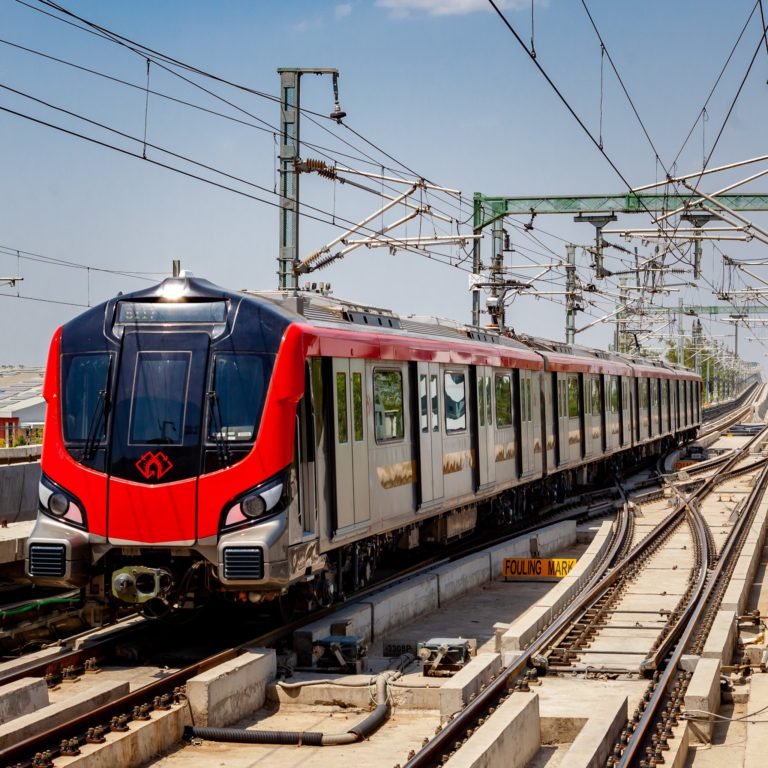
LUCKNOW (Metro Rail News):  Uttar Pradesh Metro Rail Corporation Limited has announced Ranjit Buildcon Limited as the lowest bidder for the civil contract of Lucknow Metro Phase 1B. The contact is worth ₹ 3,83,98,13,629. 

The bids received for the tender are: 

BiddersValue
Ranjit Buildcon Limited₹ 383.9 Cr.
LCC Projects LimitedRejected-Technical
PNC Infratech Ltd₹ 442.5 Cr.

Lucknow Metro is the fastest constructed metro Project in India. The bids invited in January were for the Design and Construction of Main Line Elevated Viaduct from ThakurGanj Metro Station to Vasantkunj Metro Station (approx. 4.6 kms including station length) including construction of ramp (Approx. 740.00m) to connect viaduct & Depot Entry/Exit  and 5 nos. of Elevated Metro Stations i.e., Thakurganj, Balaganj, Sarfarajganj, Musabagh & Vasantkunj, including Civil, Associated Ancillary Structures, PEB structures, Architectural work, Water Supply, Sanitary Installation, Drainage, External Development, Fire Fighting arrangement, and E&M works. 

The contract period for this agreement is 2738 Days. 

The Lucknow Metro Phase 1A is fully operational (Red Line) and Phase-1B is under construction. The Groundwork and the construction for phase-1B is set to begin in June 2026. The second corridor spans 11.16 km from Charbagh to Vasant Kunj, consisting 4.286 km of elevated track and 6.879 km underground, with 12 stations – seven underground and five elevated. The Execution of this contract will result in better connectivity and seamless travel across the city. 

Also Read: DMRC invites bids for E&M systems work on Delhi Metro Phase 5(A) Line-8 extension

InnoMetro Wraps Up 6th Edition: One Shared Vision for the Future of Rail Mobility

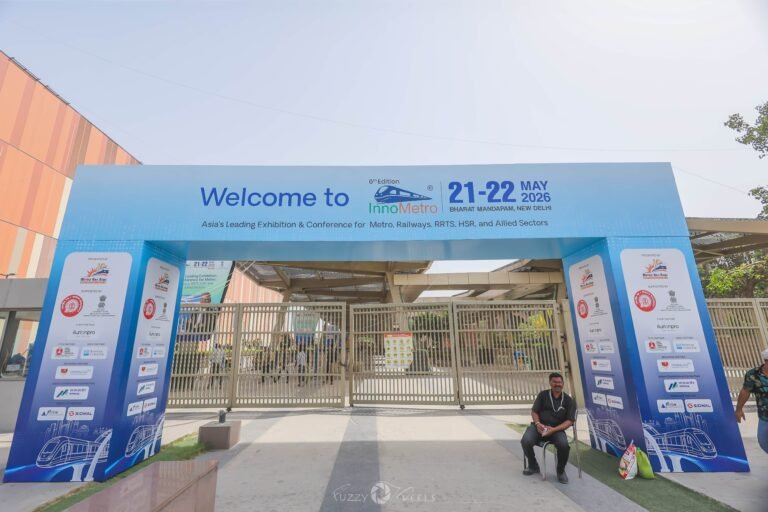
DELHI (Metro Rail News): For two days, InnoMetro – Asia’s leading expo and conference became a convergence point for the people restructuring the future of India’s rail mobility ecosystem. The event brought government leaders, metro rail corporations, manufacturers, technology providers, financiers, urban planners, and startups all under one roof.

The scale was bigger. The conversations were sharper. And the energy across the exhibition floor made one thing clear: India’s rail and urban transit sector is moving into a defining decade.

From breakthrough technologies and indigenous manufacturing solutions to financing models, digital transformation, sustainability, and future-ready transit systems, the discussions throughout the event reflected an industry that is evolving rapidly and confidently.

But beyond the numbers, what truly defined InnoMetro 2026 was participation. Every conference session, every networking conversation in the aisles, every exhibitor showcasing innovation together, they created the spirit of this edition.

InnoMetro 2026 would not have been possible without the organisations that believed in the platform and supported its vision. InnoMetro 2026 is grateful to the Indian Railways and the Ministry of MSME for their long-standing support for the event.

To Aurionpro, our Event Partner, thank you for bringing innovation, indigenous technology, and innovative thinking to the forefront of this year’s edition.

A sincere thank you to the Indian Railway Finance Corporation (IRFC), our Title Partner, whose presence brought immense depth to conversations around infrastructure financing and long-term rail development in India.

A heartfelt appreciation to our valued partners, Bahwan CyberTek, our Gold Partner; Hindalco, our Branding Partner; MMRDA, our Urban Transformation Partner; and Sidwal, our Associate Partner, for believing in the vision of InnoMetro and contributing immensely to making InnoMetro 2026 a grand success. 

To our speakers, thank you for making the conference meaningful. More than 60 industry leaders and experts shared their time, experience, and insights across two days of discussions that went far beyond presentations and formal panels. The conversations were honest and deeply relevant to the challenges and opportunities facing the sector today.

To our exhibitors, thank you for bringing the expo floor to life. The technologies, systems, products, and innovations showcased during the event demonstrated the scale of progress happening across India’s rail ecosystem today. From established global players to emerging Indian companies, the exhibition reflected confidence, capability, and ambition.

Six editions later, InnoMetro has evolved into something much larger than a conference and exhibition. It has become a platform where the industry gathers not only to showcase progress, but to collectively think about what comes next.

Because the future of mobility is not built in isolation. It is built through collaboration. Through dialogue. Through partnerships. Through difficult questions and ambitious ideas shared across the same room.

And while the exhibition halls may now be quieter, the momentum created during InnoMetro 2026 will continue far beyond these two days into future projects, partnerships, policy discussions, innovations, and infrastructure developments across the country.

To everyone who was part of this journey, thank you for making InnoMetro 2026 a success. We look forward to welcoming you again at the 7th Edition of InnoMetro.


Delhi Government approves renaming of various metro Stations 

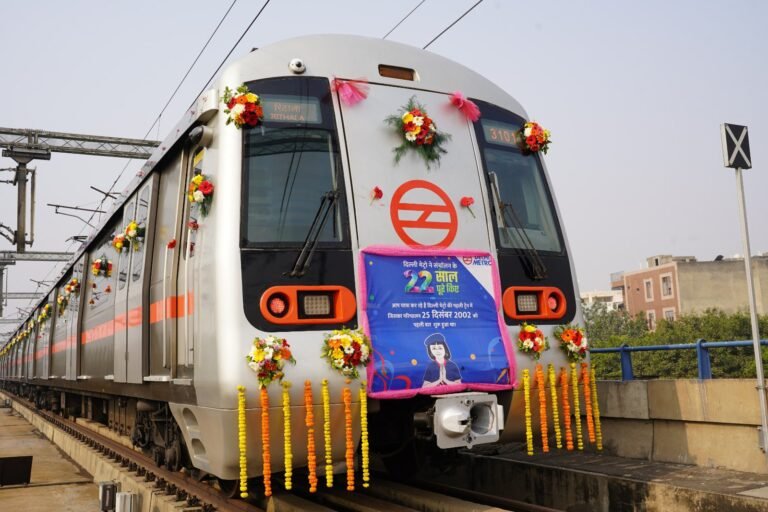
DELHI (Metro Rail News): In a decision to pay tribute to Indian personalities who made remarkable changes for the development and contributions for society, the Delhi Government has decided to rename Dwarka and Rohini Metro Stations, a sports complex, a hospital and a chowk in Shakurpur.

In a meeting of the State Names Authority (SNA) chaired by Delhi CM Rekha Gupta in Delhi Secretariat these proposals about the name changes were approved unanimously. It was attended by various Senior officials, including the Chief Secretary of Delhi, the Secretary of the Urban Development Department, the Managing Director of Delhi Metro Rail Corporation (DMRC) and the Director of the Delhi Development Authority (DDA).   

It was officially stated that the Rohini West Metro Station will be renamed as “Dr Baba Saheb Ambedkar Hospital Metro Station”, whereas, the Rohini East Metro Station will be renamed to “Rohini Metro Station”. Dwarka Metro station is also to be renamed as “Dwarka-Kakrola metro station”. 

The under-construction sports complex in Begampur, Rohini will be named as “Atal Khel Parisar” paying tribute to former Prime Minister Atal Bihari Vajpayee. A statue of Atal Bihari Vajpayee is also set to be installed at the complex according to the officials. 

The Government has also approved the proposal of naming the under-construction hospital in Jwalapuri as “Baba Ramdevji Maharaj Hospital”. The Britannia Chowk in Shakurpur will be renamed as “Ashwini Chopra (Minna) Chow” after the former Cricketer, MP and senior Journalist. 

Pressing on the importance of the renaming, CM Gupta said, “Honouring personalities who have made significant contributions to society and public life is among the government’s priorities. Such decisions help strengthen collective public memory. Delhi represents the nation’s cultural, social and historical consciousness.”

Also Read: ₹13,527 Crore Loan agreement signed by IRFC with L&T Metro Rail (Hyderabad)

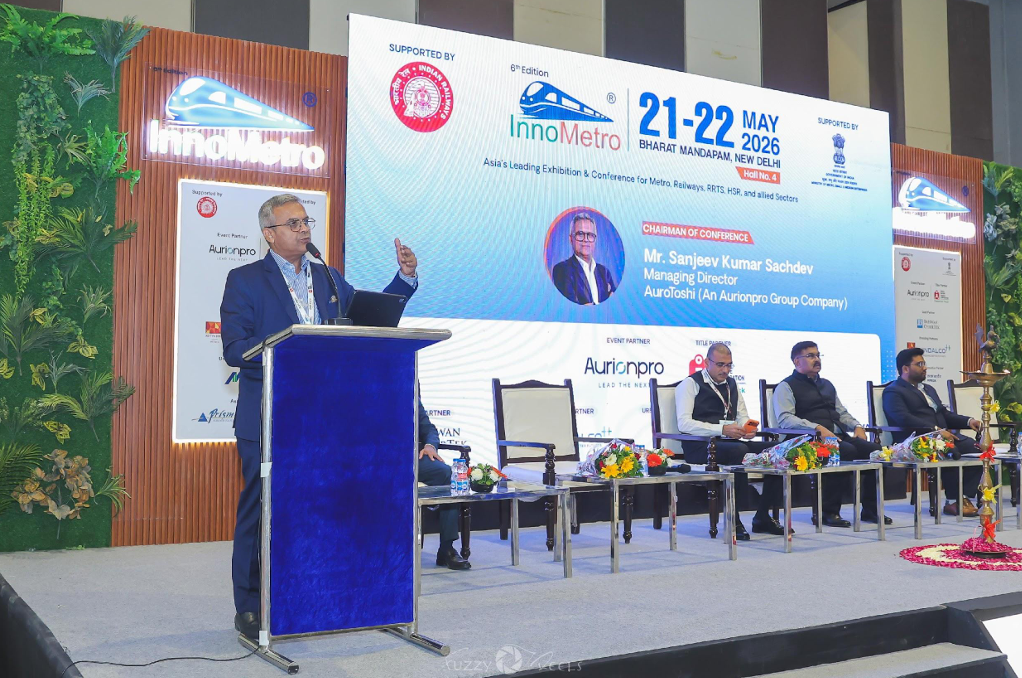
Aurotoshi Launches Indigenous Platform Screen Door System at InnoMetro 2026 as Managing Director, Sanjeev Sachdev Chairs Industry Forum

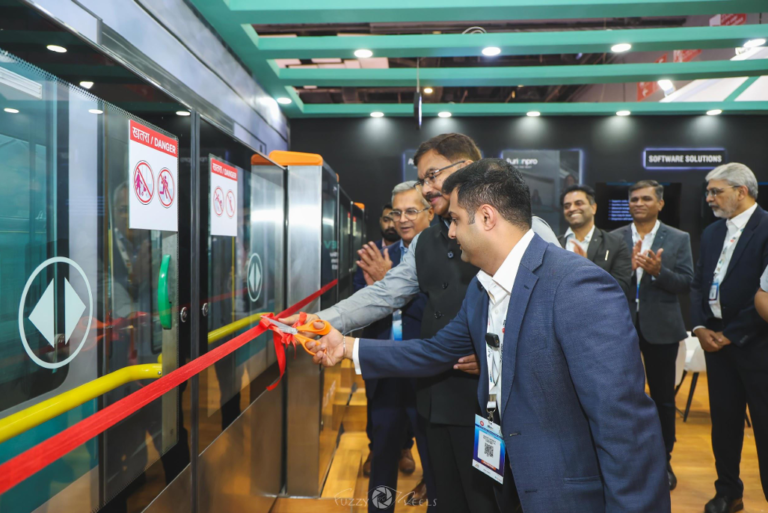
NEW DELHI (Metro Rail News): Aurotoshi, an Aurionpro Group company, participated in the 6th edition of InnoMetro 2026 at Bharat Mandapam, New Delhi, on May 21 and 22, 2026. Led on the ground by Executive Director Mr. Siddhant Sachdev, the company’s booth at Hall 4 (A7 & A8) became one of the most visited stops at the exhibition, drawing metro authorities, procurement heads, and transit consultants over both days. Aurotoshi’s first-ever Half Height Platform Screen Door served as the centrepiece of a fully indigenised transit technology display.

PRODUCT LAUNCH: PLATFORM SCREEN DOOR SYSTEM

The centrepiece of Aurotoshi’s display was the official launch of its Half-Height Platform Screen Door (PSD) system, the first Make in India prototype of its kind, currently under SIL2 certification. The system is engineered to open in alignment with train doors once safety conditions are met, automatically reopen if an obstruction is detected, and achieve SIL4 integration between signalling and PSD. Fixed panels, automatic sliding gates, and emergency exit doors make up the full assembly.

The launch builds on a significant milestone: in April 2026, Aurotoshi successfully launched Platform Screen Gates at Mumbai Metro Line 2B-the company’s first PSD project in India, executed as a sub-contractor to Zhuzhou CRRC Times Electric Co., Ltd. That project marks Aurotoshi’s entry into this product category not just as an installation partner, but as a manufacturer.

FULL TRANSIT PORTFOLIO ON DISPLAY

Three additional products from Aurotoshi’s Smart Transit range were demonstrated live. A Wall-Mounted Cashless TVM supported single journey, return, and group ticket purchase via UPI and QR. Two AFC Gate variants, the Flap Gate and the Swing Gate (designed for Chennai Metro, with servo motor drive and 16-sensor tailgating detection), were both operational, running on NCMC, closed-loop, and QR protocols. The AFC gate system has crossed 80% indigenization at Aurotoshi’s Ghaziabad plants. All hardware integrates with Aurionpro’s proprietary fare collection devices and software stack, including NCMC and ECR-One payments capability- making Aurotoshi the only Indian organisation with an end-to-end solution across hardware, software, and payments for Automatic Fare Collection in smart transit.

“Every product at our booth this year was built in India. Not assembled from imported components, but engineered from the ground up. We are not just a hardware company anymore. We are a transit technology company.” — Siddhant Sachdev, Executive Director, Aurotoshi

Screenshot 2026 05 28 100738

Managing Director Mr. Sanjeev Sachdev chaired the InnoMetro 2026 conference, addressing delegates on the role of MSMEs in India’s infrastructure build-out. He drew from Aurotoshi’s own trajectory, starting with the Ahmedabad BRTS project in 2009-10, to make the case for procurement systems that reward quality alongside price, and for deeper collaboration between Indian OEMs rather than repetition of effort.“One right opportunity does not build just a company. Sometimes it builds an industry. India has the talent, the skill, and the entrepreneurial spirit. What we need now is an ecosystem that lets us innovate, scale, and lead.”

— Sanjeev Sachdev, Managing Director (Aurotoshi) & Conference Chairman (Innometro)        

ABOUT AUROTOSHI

Aurionpro Toshi Automatic Systems Pvt. Ltd. (Aurotoshi) is India’s original OEM and ODM for Entrance Automation and Loading Bay Technology products, established in 1992. An Aurionpro Group company since 2021, Aurotoshi serves three verticals: Industrial Automation, Public Safety Automation, and Travel and Mobility. The company operates three manufacturing units in Ghaziabad and is launching a smart plant in Aligarh in 2026. With 10,000+ customers and a Pan-India sales and support network, Aurotoshi proudly defines itself as Make in India, Make for the World.

DMRC invites bids for E&M systems work on Delhi Metro Phase 5(A) Line-8 extension

DELHI (Metro Rail News): Delhi Metro Rail Corporation has invited international bids for electrical and mechanical system works for four underground stations under Delhi Metro Phase 5(A). The estimated cost of the tender is around Rs 189.32 crore. The package covers the Line-8 extension corridor between Rama Krishna Ashram Marg and Indraprastha. The contract includes electrical systems, tunnel ventilation, DG sets, and building management systems for underground stations between Shivaji Stadium and Kartavya Bhawan. DMRC plans to complete the work in 30 months. The project will likely receive funding support from the Japan International Cooperation Agency (JICA) under Japanese ODA loans.

Tender Information

Details Information
Tender NumberContract Package EE-01
ProjectDelhi Metro Phase 5(A)
Estimated CostRs 189.32 Crore
Tender TypeInternational Competitive Bidding
Bid SystemSingle-Stage Two-Envelope
Bid SecurityRs 2.10 crore
Tender FeeRs 23,600
Pre-Bid Meeting12 June 2026, (15:00 hrs) 
Bid Submission Window6 July 2026, (09:00 hrs) to 13 July 2026, (1500 hrs) 
Technical Bid Opening14 July 2026 (15:00 hrs)
Completion Period30 Months

Scope of Work

The contractor will handle design verification and detailed engineering for the package.

The work includes supply, installation, testing, and commissioning of electrical and mechanical systems. The scope also covers DG sets, environment control systems, and tunnel ventilation systems. The contractor will install building management systems for four underground stations.

The package covers stations between Shivaji Stadium and Kartavya Bhawan. The entire work will form part of the Line-8 extension under Delhi Metro Phase 5(A).

About the Project

The Rama Krishna Ashram Marg to Indraprastha corridor forms part of Delhi Metro’s Phase 5(A) expansion plan. The Line-8 extension will improve metro connectivity in central Delhi and strengthen links between important commercial and administrative areas. The project will also add modern underground station systems and advanced ventilation infrastructure for safer operations.

Also Read: Indian Railway’s Ahmedabad-Dholera corridor to deliver faster trains at lower construction cost

Also Read: Indian Railways to float fresh tenders for Vijayawada Station redevelopment

Indian Railway’s Ahmedabad-Dholera corridor to deliver faster trains at lower construction cost

DELHI (Metro Rail News): According to the railway official, the upcoming Ahmedabad–Dholera semi high-speed rail corridor in Gujarat will cost much less than the Delhi-Meerut Namo Bharat corridor. Interestingly, trains on the Gujarat route will run at higher speeds. Earlier this month, the Union Cabinet approved the 134-km Sarkhej–Dholera semi high-speed double rail line at an estimated cost of Rs 20,667 crore. The project will become Indian Railways’ first semi high-speed rail corridor. 

Project will support 220 kmph speed

Railway officials said the Ahmedabad–Dholera corridor will support train speeds up to 220 kmph. Trains will run at an operational speed of 200 kmph. The project will cost around Rs 154 crore per kilometre. In comparison:

  • Delhi-Meerut RRTS costs around Rs 336 crore per kilometre
  • Mumbai-Ahmedabad Bullet Train costs around Rs 358 crore per kilometre

Officials said the Gujarat project offers higher speed than the Delhi-Meerut RRTS but still costs less than half.

It will use broad gauge track 

The Ahmedabad–Dholera corridor will run on the 1676 mm broad gauge system used by Indian Railways. Meanwhile:

  • Delhi-Meerut RRTS uses 1435 mm standard gauge
  • Mumbai-Ahmedabad Bullet Train also uses standard gauge

Railway officials explained that a normal railway line capable of handling speeds up to 160 kmph on broad gauge usually costs around Rs 50 crore per kilometre, excluding trains and rolling stock. The Ahmedabad-Dholera line costs more because it needs infrastructure for much higher speeds.

Why the project costs less

Officials said several factors helped reduce the overall project cost. Main Reasons are,

  • No tunnel construction
  • Lower land acquisition cost
  • Use of India’s Kavach safety system
  • Cheaper signalling technology

The Delhi-Meerut RRTS uses the European Train Control System (ETCS) Level-II technology. Officials said this signalling system costs around Rs 17.74 crore per kilometre. In comparison, the indigenous Kavach train protection system costs around Rs 4.53 crore per kilometre. Officials said this difference plays a major role in lowering the total project cost.

71 Km stretch to run on viaducts

According to the current plan, around 71 km of the 134-km corridor will run on viaducts. The corridor will connect Ahmedabad with Dholera Special Investment Region (SIR), the upcoming Dholera airport and the Lothal National Maritime Heritage Complex. Railway officials believe  that the project could become a model for future semi high-speed rail corridors in India. If the project succeeds, it could become a model for building faster rail networks at a much lower cost than bullet trains or rapid rail systems.

Also Read: Indian Railways approved country’s first Hydrogen Train for Jind–Sonipat Route

Also Read: Indian Railways to float fresh tenders for Vijayawada Station redevelopment

Indian Railways to float fresh tenders for Vijayawada Station redevelopment

DELHI (Metro Rail News): Indian Railways will soon invite fresh bids for the redevelopment of Vijayawada railway station after the project received a weak response from contractors in the first round. The Rs 946.60 crore project aims to give Vijayawada station a modern airport style upgrade with bigger passenger facilities, better connectivity and improved crowd management. 

Project to come up under the PPP model

Indian Railways is planning to develop the station through the Design, Build, Finance, Operate and Transfer (DBFOT) model, which works under the Public Private Partnership (PPP) system. Out of the total project cost, around Rs 661.11 crore covers mandatory development work under the PPP model. Railway officials said that many developers wanted more time to study the project conditions and understand the PPP guidelines before submitting bids. A consultant linked to the stakeholder meeting said that this is one of the first railway station redevelopment projects in the region under the PPP model, so companies are taking extra time before participating. 

RLDA to handle the project

Indian Railways has given project execution responsibility to the Rail Land Development Authority (RLDA). The Ministry of Railways has selected Vijayawada among 15 railway stations across the country for redevelopment under the PPP model. At the same time, Indian Railways has already started or completed redevelopment work at several stations in Andhra Pradesh under the Amrit Bharat Station Scheme, including: 

  • Visakhapatnam Junction railway station
  • Nellore railway station
  • Tirupati railway station

Key features

The redevelopment plan includes major upgrades for passengers and station infrastructure. 

  • New terminal buildings on both the east and west sides
  • A wider foot over the bridge connecting all platforms 
  • Multi-level car parking
  • Modern passenger areas and waiting spaces
  • Revamp of all 10 platforms
  • Facilities designed to handle around 20,000 passengers during peak hours

Indian Railways wants to improve passenger movement and reduce congestion at the busy station.

Also Read: Indian Railways moves closer to launch Country’s first Hydrogen Train for operations on Jind–Sonipat route

Also Read: HMRTC plans second power line for Rapid Metro after Gurgaon blackout

Indian Railways approved country’s first Hydrogen Train for Jind–Sonipat Route

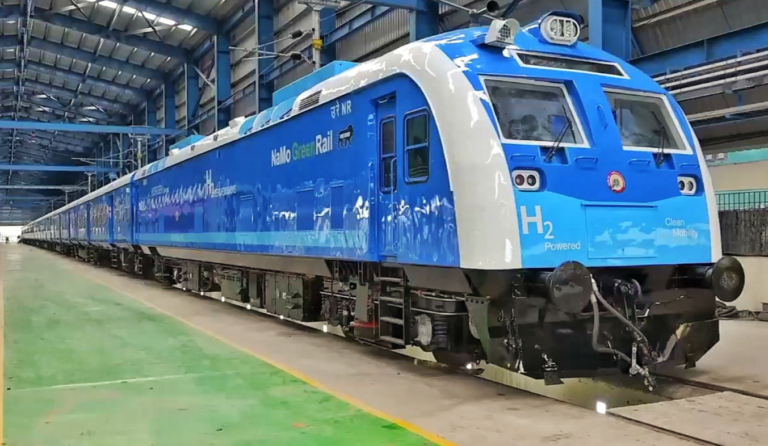
DELHI (Metro Rail News): Indian Railways has approved the country’s first hydrogen-powered train for operations between Jind and Sonipat in Haryana. The 10-coach DEMU train will run under Northern Railway at a top speed of 75 kmph. The project marks a major step towards cleaner railway transport as the train will run using hydrogen fuel cells instead of diesel.

How the Hydrogen Train will work

The train will generate power through hydrogen fuel cells. It will produce 1,200 kilowatts of power and use Distributed Power Rolling Stock (DPRS) technology. Under this system, power equipment stays spread across the train instead of using one separate locomotive. Indian Railways cleared the project after technical approval from the Research Designs and Standards Organisation and safety testing by the Commissioner of Railway Safety.

Operations will start after final clearances

Railway officials said the approval does not mean the train will start carrying passengers immediately. Northern Railway still needs to complete several safety checks and submit compliance reports related to different agencies, including:

  • RDSO
  • Commissioner of Railway Safety
  • Petroleum and Explosives Safety Organisation (PESO)
  • International safety inspection agencies

PESO has already given permission for storage and filling of compressed hydrogen gas at Jind in Haryana.

Special safety measures in place

The Railway Ministry asked officials to regularly inspect leak detectors, flame detectors and other hydrogen safety systems. Officials said dust can affect these sensors, so teams must clean and maintain them properly for safe operations. Indian Railways will also train staff working at hydrogen refuelling stations and onboard operations. Staff members will receive competency certificates before deployment.

Train maintenance plan

The hydrogen train will only run between Jind and Sonipat. However, Railways has set up maintenance facilities at Shakurbasti in Delhi. For maintenance work, railway teams will switch off the hydrogen system completely. A diesel locomotive will then pull the train between Jind and Shakurbasti. Railway officials said this arrangement follows existing safety rules for hydrogen-powered systems.

Technical Staff to Travel With Train Initially

For the first three months, trained technical staff will travel with the train during operations. These teams will handle any technical issues that may come up during the journey. The hydrogen train project moves Indian Railways closer to using cleaner and greener technology. While final checks still remain, the latest approval brings the country nearer to launching its first hydrogen-powered passenger train service.

Also Read: HMRTC plans second power line for Rapid Metro after Gurgaon blackout

Also Read: CMRL invites bids for civil maintenance works on Corridor-I of Phase 1

HMRTC plans second power line for Rapid Metro after Gurgaon blackout

DELHI (Metro Rail News): Haryana Mass Rapid Transport Corporation (HMRTC) has started work on a backup power system for Gurgaon’s Rapid Metro after Friday’s grid failure stopped metro services for hours. The agency now wants to add a second electricity source so trains can continue running even if one feeder fails. Right now, Rapid Metro depends only on the Sector 56 substation for power. Because of this, the entire corridor shuts down whenever the line faces a technical problem. In comparison, the Delhi Metro Yellow Line uses two separate power sources, which helps services continue during outages.

HMRTC officials said the new setup will allow automatic switching between two feeders. If one power line develops a fault, the system will immediately shift operations to the second line without affecting train movement. “The move aims to ensure that metro operations never halt again due to grid failures,” an official said.

What HMRTC plans to do

  • Add a dedicated alternate power supply line for Rapid Metro
  • Create a parallel feeder system for uninterrupted operations
  • Install automatic switching technology between power sources
  • Strengthen safety and backup systems for traction power

Officials expect the new system to become operational within four months. HMRTC discussed the backup plan last year, but Friday’s disruption forced the agency to speed up the process. HMRTC Managing Director Chander Shekhar Khare said the project has already received approval. “The enhanced arrangement will secure continuous metro operations and reassure commuters who depend on the service daily,” Khare said.

How the blackout happened

The disruption started after a fire and explosion at a 220 kV substation of Haryana Vidyut Prasaran Nigam in Sector 72 on Friday. Officials said extreme heat and thermal stress damaged a current transformer, leading to oil leakage and a fire. The explosion damaged nearby equipment and affected electricity supply across several substations in Gurgaon. The fault disrupted power supply to:

  • 220 kV substations in Sectors 52 and 56
  • 66 kV substations in Sectors 15, 38, 44 and 46
  • Maruti industrial area

The outage also affected Rapid Metro operations, leaving many commuters stranded during peak hours. Once the second feeder becomes operational, HMRTC expects Rapid Metro services to remain stable even during major grid failures.

Also Read: CMRL invites bids for civil maintenance works on Corridor-I of Phase 1

Also Read: DMRC Floats Rs 4.7 crore tender for structural repair works on pink line

CMRL invites bids for civil maintenance works on Corridor-I of Phase 1

CHENNAI (Metro Rail News): Chennai Metro Rail Limited has invited open e-tenders for civil maintenance and associated works in Section-2 of Corridor-1 under Chennai Metro Phase 1 and Phase 1 Extension. The contract covers the stretch from High Court Metro Station to Wimco Nagar Depot Station. CMRL has estimated the cost of the work at around ₹7.69 crore.

Tender Information

ParticularsDetails
Tender NumberCMRL/O&M/Phase-I/Maintenance/ZT-06/C1/Sec-II/2026
Tender TypeNational Competitive Bidding (NCB)
Bid SystemSingle Stage Two Envelope
Estimated CostRs 7.69 crore
EMDRs 7.69 lakh
Contract Duration1095 Days + 365 Days DLP
Bid Validity120 Days
Bid Submission Deadline24 June 2026 (11:00 hrs)
Technical Bid Opening24 June 2026 (15:00 hrs)
Pre Bidding Meeting29 May 2026  (11:00 hrs)

Scope of Work

The contract includes civil maintenance and other associated works for Section-II of Corridor-I. The maintenance stretch runs from High Court Metro Station to Wimco Nagar Depot Station.

The contractor will carry out repair and upkeep works for metro infrastructure assets. The scope also includes maintenance of station structures and related civil components. The contractor will ensure smooth functioning and upkeep of metro facilities in the section. The contract includes a defect liability period of 365 days after completion of work.

About the Project

Chennai Metro Phase 1 Corridor-I connects key parts of the city and extends up to Wimco Nagar in North Chennai. The corridor plays an important role in daily urban transit and connects residential, commercial, and industrial areas. The maintenance contract aims to support safe and efficient metro operations across the corridor.

Also Read: DMRC Floats Rs 4.7 crore tender for structural repair works on pink line

DMRC Floats Rs 4.7 crore tender for structural repair works on pink line

DELHI (Metro Rail News): Delhi Metro Rail Corporation (DMRC) has invited limited e-tenders for structural repair and maintenance works on a section of Delhi Metro’s Pink Line. The contract covers repair, retrofitting and maintenance of piers, viaducts, station buildings and related structures between Jagatpur Wazirabad and Mayur Vihar Phase-1. The project aims to strengthen and maintain key metro infrastructure on one of Delhi Metro’s important corridors over the next 30 months.

Project Snapshot

DetailsInformation
ProjectStructural repair and retrofitting works on Pink Line
Tender NumberOCM-2221
Estimated CostRs 4.70 crore
Tender TypeLimited e-tender
Tender Opening Date15 June 2026
Tender Security (EMD)Rs 1.88 lakh
Tender Document CostRs 23,600
Bid submission window 5 June 2026 (09:00Hrs) to 12 June 2026 (14:00 Hrs)
Completion Period30 months

Scope of Work

The tender comes under Contract OCM-2221. DMRC plans to carry out:

  • Structural repair works
  • Retrofitting of existing structures
  • Maintenance of piers and viaducts
  • Repair of station buildings
  • Other miscellaneous civil maintenance works

The work will cover stations and associated structures on Line-7, also known as the Pink Line, from Jagatpur Wazirabad to Mayur Vihar Phase-I, excluding certain sections. DMRC has kept the bid validity period at 120 days from the last date of tender submission.

About the project

Delhi Metro regularly carries out structural inspections and repair works across its network to maintain safety and operational reliability. The latest tender focuses on preventive maintenance and strengthening of elevated structures on the Pink Line corridor. The project is expected to improve long-term durability of metro infrastructure and support smoother operations on one of the busiest parts of the Delhi Metro network.

Also Read: Railway Wagon stocks jump as Indian Railways plans Rs 40,000 crore Freight Wagon tender

Also Read: Kolkata Metro finishes Chingrighata work early, Orange Line construction picks up pace

Railway Wagon stocks jump as Indian Railways plans Rs 40,000 crore Freight Wagon tender

DELHI (Metro Rail News): Shares of railway wagon companies saw a sharp rise on May 25 after reports said Indian Railways is preparing a huge Rs 40,000 crore tender to buy around 1 lakh freight wagons over the next few years. The expected order pushed railway manufacturing stocks higher as investors looked at strong future business opportunities for the sector.

Shares of Wagon Companies rise

After the reports came out, shares of major railway companies moved up during trading:

  • Jupiter Wagons jumped nearly 10% to around ₹304
  • Titagarh Rail Systems rose around 8-9% to about ₹823
  • Texmaco Rail & Engineering gained more than 6%

The rally came after reports suggested Indian Railways may soon launch one of its biggest freight wagon procurement plans. According to reports, Indian Railways plans to buy nearly 1 lakh freight wagons over the next three to four years.

Key Details

  • Total tender value: Around ₹40,000 crore
  • Total wagons planned: 1 lakh
  • Annual target: 35,000 to 40,000 wagons
  • First set of orders likely between July and September this year

Reports also said Railways has started discussions with manufacturers to check their production capacity before issuing the tender.

Industry expects fresh business boost

Most wagon makers are currently finishing orders from the previous large Railway tender issued in 2022. Companies now expect fresh long-term orders to keep factories running at full capacity.

Speaking to Mint, Texmaco Rail & Engineering Managing Director Sudipta Mukherjee said the company supplied nearly one-third of the annual wagon requirement under the earlier Railway order. He added that Texmaco can manufacture more than 15,000 wagons every year.

Why Freight Wagons matter

Indian Railways uses freight wagons to transport goods across the country. These wagons carry coal, cement, steel, food grains, and Industrial products. More wagons can improve freight movement and help Railways handle rising cargo demand more efficiently.

Indian Railways is expected to complete discussions with manufacturers before releasing the tender in phases. If the plan moves ahead on schedule, it could give a major boost to India’s railway manufacturing industry over the next few years.

Also Read:Kolkata Metro finishes Chingrighata work early, Orange Line construction picks up pace

Also Read: ₹13,527 Crore Loan agreement signed by IRFC with L&T Metro Rail (Hyderabad)

Kolkata Metro finishes Chingrighata work early, Orange Line construction picks up pace

KOLKATA (Metro Rail News): Kolkata Metro has completed the long-pending girder launching work at Chingrighata ahead of schedule. The work is an important part of the Orange Line that will connect New Garia, Sector V and the airport. Metro authorities restored normal traffic on EM Bypass early Sunday morning after completing the work before the planned deadline.

Major construction work completed

Kolkata Metro carried out the work over two weekends,

  • May 15 to May 18
  • May 22 to May 25

Teams worked on a 366-metre section near the busy Chingrighata crossing. Metro officials said they completed the girder launching work successfully at around 5 am on Sunday. Authorities removed the traffic block on EM Bypass much earlier than expected and reopened the road for normal movement. Officials also arranged special safety measures during the construction work because Chingrighata remains one of the busiest traffic points in the city.

Why this work matters

The Chingrighata section had slowed down progress on the Orange Line for a long time. Earlier, officials faced problems related to traffic diversion and pending clearances. Railway Minister Ashwini Vaishnaw had earlier informed the Rajya Sabha that these issues delayed work between Beleghata and Gour Kishore Ghosh stations. With the girder work now complete, construction on the remaining stretch can move faster.

About the Orange Line

The Orange Line runs from Kavi Subhash to Jai Hind Airport. Right now, metro services operate between Kavi Subhash and Beleghata. This operational section includes 9 stations. The remaining 22.28-km stretch from Beleghata to the airport is still under construction. Beleghata station is located around 2 km from the Chingrighata crossing.

Metro services till IT Centre by 2026

Speaking to Indianexpress, Kolkata Metro Chief Public Relations Officer SS Kannan said officials are targeting metro operations up to the IT Centre by December 2026. Once complete, the Orange Line will improve travel between South Kolkata, Salt Lake Sector V and the airport. The corridor is also expected to reduce road traffic pressure on EM Bypass and nearby areas.

Also Read:₹13,527 Crore Loan agreement signed by IRFC with L&T Metro Rail (Hyderabad)

Also Read: DMRC floats DDC tender for 3 elevated stations of Phase 5(A)

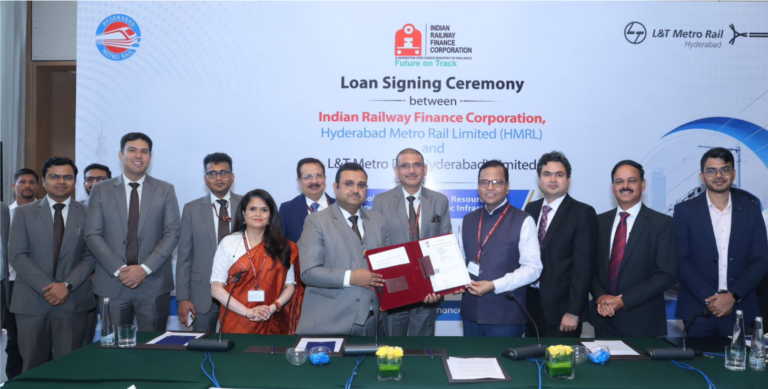
₹13,527 Crore Loan agreement signed by IRFC with L&T Metro Rail (Hyderabad)

HYDERABAD (Metro Rail News): In a significant drive for urban rail financing the Indian Rail Finance Corporation (IRFC) has signed a term loan agreement with L&T Metro Rail (Hyderabad) Limited for ₹13,527 crore to refinance the debt obligations of the Hyderabad Metro Rail project. This marks a major refinancing transaction in India’s urban transit sector. 

This agreement follows the transfer of 100 per cent ownership of L&T Metro Rail (Hyderabad) Limited from Larsen & Toubro Limited to the Government of Telangana through Hyderabad Metro Rail Limited. This contract will refinance existing debt obligations, including non-convertible (NCDs), commercial papers and term loans, enabling an orderly exit for existing lenders while improving the project’s long-term financial sustainability.

The agreement was signed in the presence of IRFC CMD and CEO Manoj Kumar Dubey and Telangana Chief Secretary K.Ramakrishna Rao. Mr. Manoj Kumar, CMD & CEO, IRFC said that, this transaction reinforces IRFC’s growing capability to structure innovative, long-tenor financing solutions for nationally significant infrastructure assets. It also reinforces our commitment to supporting sustainable urban mobility through efficient capital mobilisation.

This contract is structured over a 20-year tenure with quarterly repayments, the refinancing replaces higher-cost debt with competitively priced long-term rupee financing. The facility carries no processing fees, commitment charges or prepayment penalties, making it an efficient and borrower-friendly refinancing mechanism. This move is set to materially strengthen the project’s financial flexibility, enabling the Government of Telangana to accelerate the planned expansion of Hyderabad’s metro network, including new corridors and enhanced connectivity. 

This transaction is supported by a robust credit enhancement framework, including an unconditional and irrevocable undertaking by the Government of Telangana for servicing all dues payable to IRFC, a state government guarantee, and an RBI-backed direct debit mandate.

Dubey further added: “This transaction demonstrates that large-scale urban infrastructure can be financed domestically through efficient, long-tenor funding structures aligned to project cash flows. IRFC stands ready to serve as a trusted domestic financing partner, channeling Indian savings into India’s infrastructure on Indian terms.

The Hyderabad metro Phase-1 is the world’s largest metro rail project developed under the public-private partnership (PPP) model, spanning around 69.2 kilometers across 3 metro corridors and serves more than 5 lakh passengers on a daily basis. This agreement marks as a crucial step towards a more sustainable, seamless and efficient travel across the city.

Also Read: DMRC floats DDC tender for 3 elevated stations of Phase 5(A)