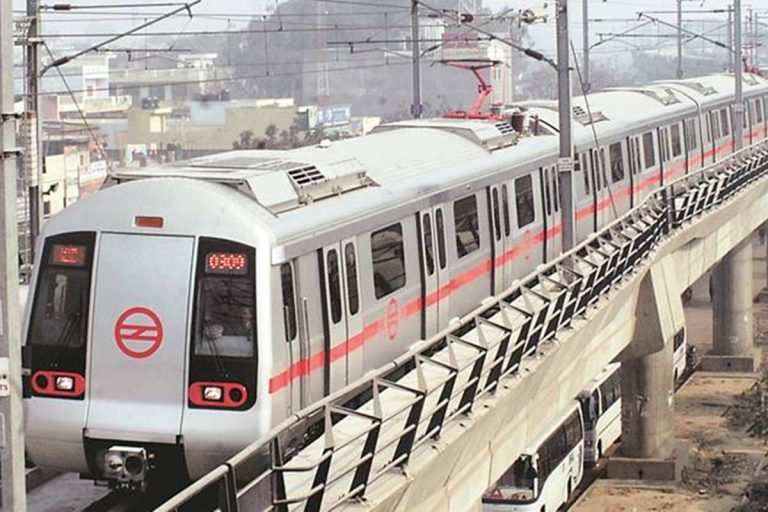
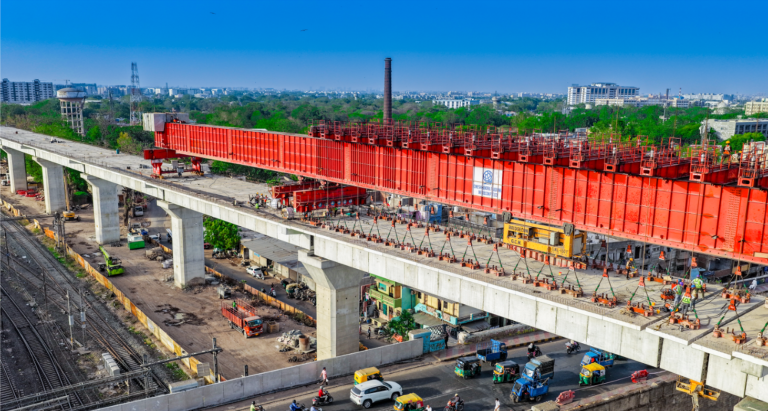
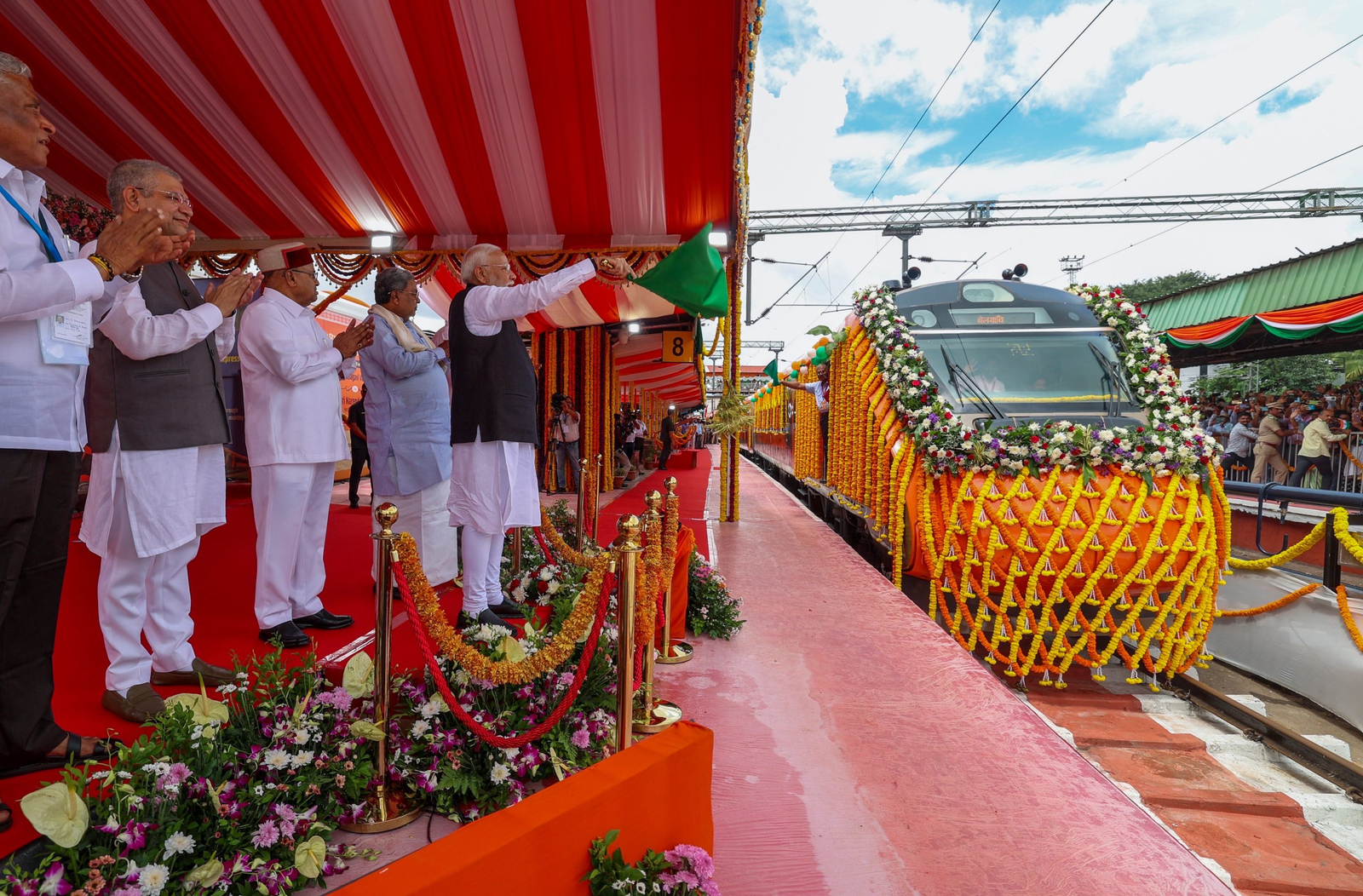
New Delhi: Prime Minister Narendra Modi has flagged-off the Delhi-Faridabad Metro Line that would allow hassle free travel for around two lakh daily commuters between the national capital and the industrial hub in Haryana.The extension of the Delhi Metro connects Badarpur to Escorts Mujesar in Faridabad.The total cost of the project from Badarpur to Escorts Mujesar is nearly Rs. 2,500 crore. Out of this, Rs. 1,557 crore was borne by the Haryana Government, the Centre contributed Rs. 537 crore, while the Delhi Metro provided Rs. 400 crore.The nine stations in this section include, Sarai, NHPC Chowk, Mewala Maharajpur, Sector 28, Badkal Mor, Old Faridabad, Neelam Chowk Ajronda, Bata Chowk and Escorts Mujesar. buy kamagra polo online https://lasernailtherapy.com/wp-content/themes/twentytwentytwo/inc/patterns/en/kamagra-polo.html no prescription
All these are elevated and located on either side of the Delhi-Mathura Road (NH-2).“The nine-station metro corridor which was 95 per cent indigenously built will provide people a safe, affordable, quick, comfortable, reliable, environment-friendly and sustainable transport facility,” a Haryana government spokesperson said.Haryana Chief Minister ML Khattar, addressing a press conference on Saturday, had thanked the Prime Minister for “gifting” the Metro service which would take the city to “another level of progress” with better connectivity with other NCR towns.He had also said that the Prime Minister would be announcing the go-ahead for connecting Gurgaon with Faridabad by Metro.
Indian Railways has maintained its freight growth momentum by loading 145 million tonnes of freight in May 2026 despite ongoing geopolitical tensions in West Asia. A 1.3% increase was also seen in freight growth over the previous year.
The growth was driven by high performance in Iron Ore, Steel, Fertilisers and Balance Other Goods segments. This growth was recorded despite the global market turbulence in West Asia, which indirectly impacted the growth and supply chain.
Across major commodities, Balance Other Goods recorded a solid growth of 16%, while Iron Ore loading increased by 4.8% and Pig Iron & Finished Steel loading grew by 3.5% over the corresponding period of the previous year. Loading of fertilizers also recorded a healthy growth of 6.2%, reflecting the Railways’ commitment towards supporting key sectors of the economy.
Coal, which is the backbone of railway freight traffic, was seen maintaining steady growth with loading increasing by nearly 1% over 2025. Indian Railways accorded priority to coal movement and closely monitored its transit across the network to meet the requirements of thermal power plants, and ensure energy security.
Indian Railways took clear measures to sustain freight growth and maintain supply chain efficiency under challenging circumstances through intense monitoring of both domestic and EXIM container traffic to facilitate seamless freight movement and support economic activity across regions.
With sustained growth in freight loading, strong performance across key commodity segments, Indian Railways continues to strengthen its role as the backbone of the nation’s transportation network, facilitating economic activity and connecting people across the country.
DELHI (Metro Rail News): Delhi Metro Rail Corporation (DMRC) is planning to expand its presence in global metro projects. The corporation has created a new company, Delhi Metro International Limited (DMIL), to pursue opportunities in foreign countries and generate additional revenue. The move comes at a time when DMRC needs funds to upgrade parts of the Delhi Metro Network, which has been operating for more than two decades.
Several Countries showed interest in working with DMRC
DMRC Managing Director Dr. Vikas Kumar said a number of countries have approached the corporation for possible metro collaborations. These include,
Israel
Egypt
Kenya and other African countries
While discussions with some countries are still at an early stage, DMRC now plans to actively bid for projects outside India through its newly formed international arm. Kumar said DMIL will focus on securing contracts related to metro planning, consultancy, project execution, operations and maintenance.
DMRC’s association with Dhaka Metro
DMRC is currently involved in Metro projects in Dhaka, Bangladesh. The corporation is providing consultancy services, helping with project execution and supporting operations and maintenance activities. According to Kumar, the Dhaka assignment has given DMRC valuable international experience that can help it expand into other markets.
Need for additional revenue
Kumar said Delhi Metro now needs significant investment for modernization and refurbishment work. The network started operations in 2002, and many stations, systems and trains have aged over time. DMRC wants to generate additional income beyond passenger fares to support these upgrades. He said revenue from overseas projects can help fund mid-life refurbishment of infrastructures across the Delhi Metro network.
DMRC believes its experience in operating driverless metro trains can help it compete for international contracts. According to Kumar, more than 90 km of the Delhi Metro network currently operates with driverless technology. This experience makes DMRC one of the few metro operators with large scale driverless operations. As more cities adopt advanced metro systems, DMRC sees this expertise as an important advantage.
Expanding across India as well
Along with its international ambitions, DMRC continues to expand its presence in other Indian cities. The corporation has secured long-term operations and maintenance contracts for
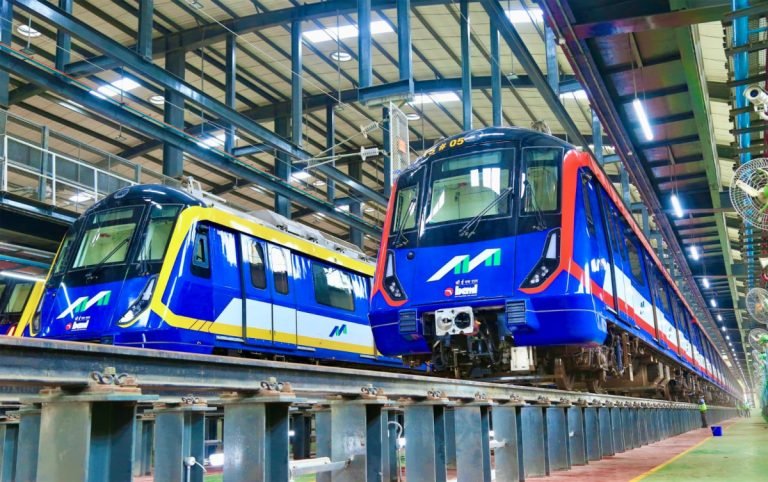
Mumbai Metro
Chennai Metro
It also provides operational support in:
Patna
Noida
Gurugram
Jaipur
DMRC is also exploring partnerships with foreign companies and plans to work more closely with embassies and international organizations to strengthen its position in the global urban mobility sector. As Delhi Metro enters its third decade of operations, DMRC is looking beyond the national capital for future growth. Through its new international arm, the corporation hopes to win overseas projects, earn additional revenue and use that income to modernize one of India’s largest metro networks.
DELHI (Metro Rail News): Kalpataru Projects International Limited (KPIL) has secured new orders worth around Rs 2,002 crore across its power, railway and construction businesses. The fresh contracts will add to the company’s growing order book in India and overseas markets. The latest wins include projects in the power transmission and distribution sector, buildings and factories segment, and the railway business.
Where the new orders came from
KPIL said the new contracts include,
Power Transmission and Distribution (T&D) projects in overseas markets
Buildings and Factories (B&F) projects in India
A railway sector project in India
The company did not disclose the individual value of each contract.
Focus on Rail and Metro projects
Commenting on the order wins, Managing Director and CEO Manish Mohnot said the company continues to see opportunities across its core business segments. He said the overseas T&D orders strengthen KPIL’s presence in high-growth regions such as the Middle East and Nordic countries. He also noted that the buildings and factories business secured repeat orders from existing clients, while the railway business expanded its presence in the metro rail sector. The latest railway order adds to KPIL’s growing portfolio of urban transport and rail infrastructure projects in India.
About KPIL
KPIL is one of India’s leading engineering, procurement and construction (EPC) companies. The company works across several infrastructure sectors, including:
Power Transmission and Distribution
Railways
Metro Rail and Urban Mobility Projects
Buildings and Factories
Highways
Airports
Water Supply and Irrigation
Oil and Gas Pipelines
The company is currently executing projects in more than 30 countries and has a presence in 75 countries worldwide. The latest Rs 2,002 crore order win gives KPIL additional business visibility and strengthens its position across key infrastructure sectors, including power, construction and rail transport.
MUMBAI (Metro Rail News): Mumbai Metropolitan Region Development Authority (MMRDA) has invited bids for a major contract worth Rs 4,882 crore for Mumbai Metro Line 12. The contract includes rolling stock, CBTC signalling, telecom networks, power supply systems, depot equipment, lifts, escalators and other systems required to operate the metro corridor.
The tender represents one of the largest system packages for the corridor. Along with supplying trains and installing systems, the selected contractor will also maintain them for 5 years after the completion of a 2 year defect liability maintenance period.
Tender Information
Information
Details
Tender Number
MMRDA/ML-12/MMRP/CA-315
Project
Mumbai Metro Line 12
Estimated Cost
Rs 4,882 crore
EMD
Rs 24.40 crore
Tender Type
Open Tender
Cost of Tender Document
Rs 10,000+18% GST
Pre-Bid Meeting
5 June 2026, (11:00 hrs)
Bid Submission Deadline
25 June 2026, (15:00 hrs)
Scope of Work
The scope includes design, manufacture, supply, installation, integration, testing and commissioning of rolling stock, communication based signalling and train control, telecommunication systems, depot machinery and plant, power supply and traction, electrical and mechanical, lifts and escalators, including 5 years of comprehensive maintenance after 2 years of defect liability maintenance period of Metro Line 12 of Mumbai Metro Rail project.
About Mumbai Metro Line 12
Mumbai Metro Line 12 forms part of MMRDA’s wider plan to expand the metro network across the Mumbai Metropolitan Region. The corridor will improve public transport connectivity and provide faster travel options for commuters in growing residential and commercial areas. Once operational, the line will help reduce dependence on road transport and strengthen Mumbai’s urban transit network.
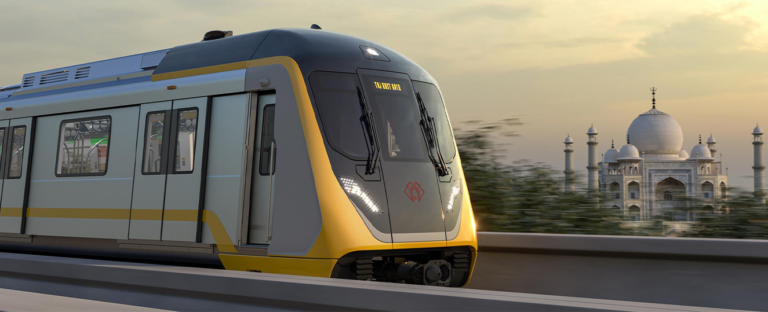
Agra is one of India’s most visited cities, with over 6 million tourists each year visiting its UNESCO World Heritage Sites, including the Taj Mahal, Agra Fort, and Fatehpur Sikri. Due to this reason, the city also faces the pressures of urban growth. It has a population of about 2.6 million, and vehicle density has increased sharply over the past decade. Agra now deals with persistent traffic congestion, poor air quality, and a public transport system that depends largely on diesel buses, auto-rickshaws, and private vehicles.
The Agra Metro project emerged in response to these conditions. It serves not only as a transit system for daily commuters but also as an infrastructure investment that is linked to the city’s tourism economy. The project carries environmental significance as well. Air pollution in Agra has remained under the scrutiny of the Supreme Court of India because of its impact on the Taj Mahal.
This article reviews the development of the Agra Metro from the proposal stage to partial operations. It examines construction progress and financial structure, and it evaluates the business case for a metro system in a city with high historical sensitivity.
Agra Metro Project: From DPR to Delayed Start
The conceptualisation of the Agra Metro dates back to 2016, when RITES submitted the Detailed Project Report to the Uttar Pradesh state government. The path from that submission to construction commencement was anything but smooth. In September 2017, the central government rejected the DPR as it did not conform to the newly introduced Metro Rail Policy 2017. A revised DPR was prepared and resubmitted, and central government approval finally came in February 2019, followed by the foundation stone being laid by Prime Minister Narendra Modi in March of the same year.
Even after approval, construction could not begin. Agra’s location within the Taj Trapezium Zone, which is a 10,400 sq km environmentally protected area around the Taj Mahal, meant that clearances from the Supreme Court, the Taj Trapezium Zone Authority, the Archaeological Survey of India, the Forest Department, and the National Monument Authority were all required before ground could be broken. These approvals were pending as late as January 2020. The Supreme Court’s Central Empowered Committee examined the project and recommended conditional clearance in July 2020, with 11 specific conditions that UPMRC was required to adhere to throughout construction.
After all the struggle, the construction formally commenced on 7 December 2020 when Prime Minister Modi inaugurated works virtually. The project was assigned to Uttar Pradesh Metro Rail Corporation Limited (UPMRCL), a joint venture between the Government of India and the Government of Uttar Pradesh, which also operates the Lucknow Metro and oversees the Kanpur Metro.
The Metro Network in Agra: Two Corridors, One Vision
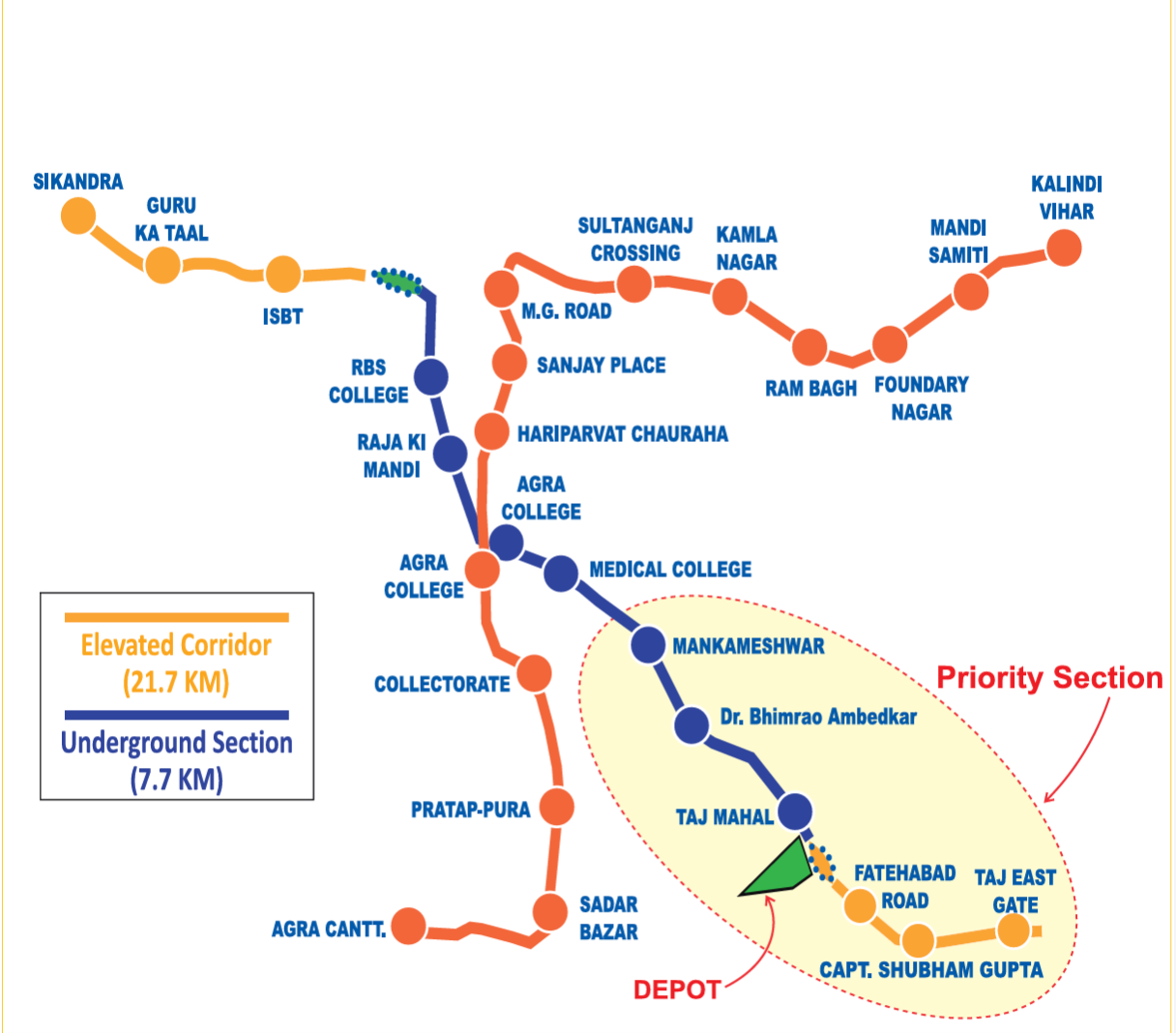
The Agra Metro Phase 1 comprises two corridors that cover a total of 29.4 kilometres with 27 stations, designed to connect the city’s key residential, commercial, and tourism nodes.
Corridor 1 – Yellow Line: Sikandra to Taj East Gate
Detail
Information
Length
14.25 km
Type
Partly elevated (6.569 km) and partly underground (7.681 km)
Stations
14 (6 elevated, 7 underground, 1 interchange)
Station Names
Sikandra, Guru Ka Taal, ISBT, Shastri Nagar, RBS College, Raja Ki Mandi, St. John’s (Agra University), Medical College, Mankameshwar (Jama Masjid), Agra Fort, Taj Mahal (Purani Mandi), Fatehabad Road, Basai, Taj East Gate
Operational Section
Taj East Gate to Mankameshwar 6 km, 6 stations (inaugurated March 6, 2024)
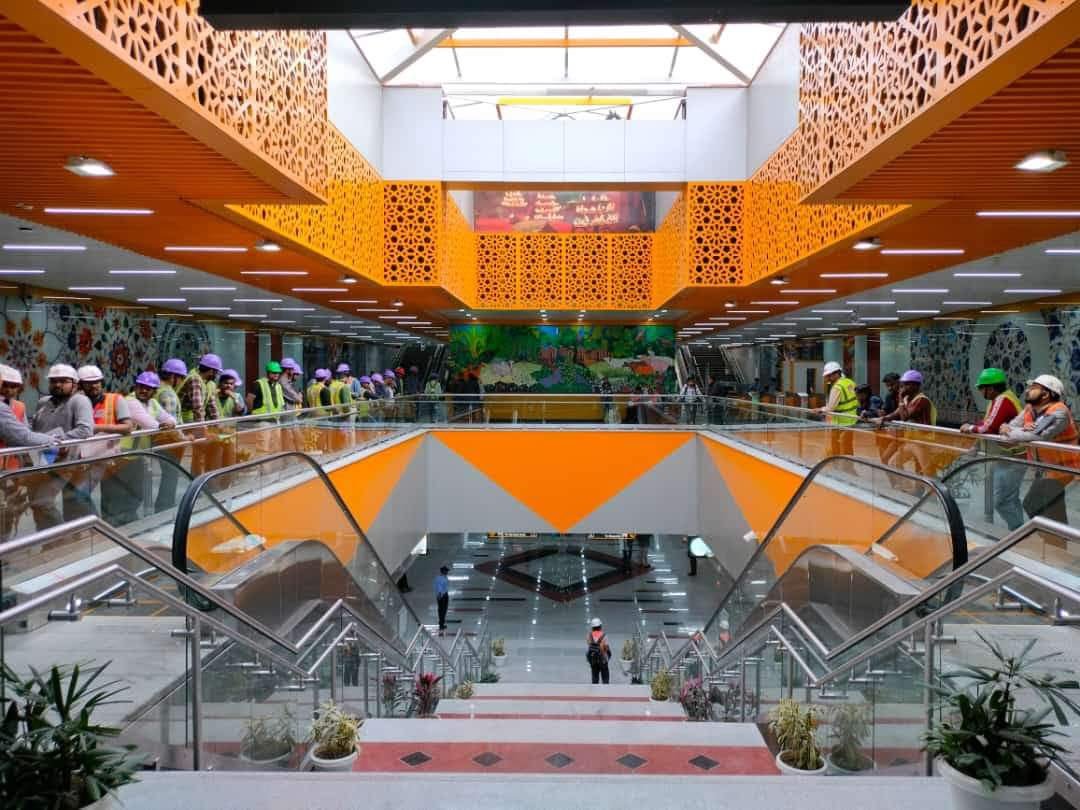
The priority corridor of the Yellow Line, a 6-kilometre stretch from Taj East Gate to Mankameshwar covering six stations, was inaugurated by Prime Minister Modi on March 6, 2024. What made this milestone historic was not just the opening itself but the speed of delivery. The underground section was completed in just 23 months, and tunnel construction was wrapped up in 11 months from the date of inauguration, six months ahead of schedule. In its first year of operations, the priority corridor ferried over 17 lakh passengers.
Progress on Line 1
Trial Runs on ISBT-Mankameshwar Stretch
The progress on Corridor 1 has continued through 2025 and into 2026, with trial runs conducted on the upline between ISBT and Mankameshwar. The section covers stations including SN Medical College, Agra College, Raja Ki Mandi, and RBS College.
Civil Works Completed up to Khandari Ramp
Construction between RBS College and the Khandari Ramp has been completed.
Final Phase Targets June 2026 Completion
The remaining stretch of Corridor 1 has entered its final stage of construction, with overall completion expected by June 2026.
Progress on Line 2
Pier and Station Construction Underway
On Corridor 2, work on piers and station structures is in progress across 14 elevated stations.
Priority Section Scheduled for December 2026
The priority stretch between Agra Cantt and Agra College is planned for completion by December 2026.
Trial Runs Planned Between August and November 2026
Testing and trial runs on the priority section are proposed between August and November 2026.
Full Corridor Targeted for June 2027
Completion of the entire Corridor 2 is now targeted for June 2027.
Financial Architecture
The Agra Metro Phase 1 carries a total estimated project cost of Rs 12,899 crore, funded through a combination of central and state government equity and multilateral financing. The Government of India and the Government of Uttar Pradesh contribute in equal measure on the equity side, consistent with the Metro Rail Policy 2017 framework. A 450 million Euro loan from the European Investment Bank, approved in December 2021, forms a crucial component of the financing structure.
Agra Metro’s Regenerative Braking Yields ₹5 Million in Annual Cost Savings
Agra Metro has recorded measurable financial gains from the use of regenerative braking systems, which enable trains to recover energy during braking and feed it back into the network. The system deployed in Agra uses IGBT-based inverter technology, supplied by Sécheron SA, to capture and reuse this energy either within the metro network or through the wider grid.
Data from the first year of operations indicates that a single inverter unit helped Agra Metro save approximately Rs 5 million (USD 58,000) in electricity costs in its first year. The projected payback period for the inverter-transformer system is less than five years, and over its 30-year operational lifetime, the system is expected to generate a total net return of USD 1.4 million. For a project of this scale and one where long-term financial sustainability is a central concern, these figures signals a meaningful contribution to reducing the total cost of ownership of the fleet
Business and Economic Impact of the Agra Metro Project
Tourism Economy Integration
The Agra Metro’s most distinctive business proposition lies in its deliberate routing through the city’s tourism spine. No other metro project in India’s mid-sized cities can claim direct station connectivity to UNESCO World Heritage Sites on the scale of the Taj Mahal and Agra Fort. The Yellow Line’s underground stations at Taj Mahal and Agra Fort position the metro as a premium, pollution-free last-mile solution for tourists arriving at Agra Cantt railway station or the ISBT, both of which will be served by the full network once complete. The city receives over 6 million tourists annually, a figure that, even with modest conversion to metro ridership, can meaningfully supplement daily commuter numbers and increase fare-box revenue in manifold.
Real Estate and Urban Development
As with metro projects elsewhere in India, the Agra Metro is already generating a real estate premium along its corridors. Areas near planned and operational stations on Fatehabad Road, Sikandra, and the MG Road stretch of Corridor 2 have seen increased developer interest and rising property inquiries. The metro’s progression toward full network completion is expected to drive further appreciation, particularly in the Sikandra and Agra Cantt catchment areas.
Employment and Commercial Activity
Beyond construction employment, the metro’s operational phase is expected to generate sustained employment across operations, maintenance, station retail, and security. The network’s connectivity to key commercial nodes, such as Sanjay Place, MG Road, the Collectorate, and ISBT make it a viable commuter solution for Agra’s working population, not just its tourist visitors.
Environmental Sustainability
The metro’s environmental case is inseparable from Agra’s unique context. The city’s air quality has been under Supreme Court monitoring for decades, and the Taj Trapezium Zone restrictions that once delayed the project are also the reason the metro matters so much here. A shift of even a fraction of Agra’s private vehicle trips to metro transit would have a measurable impact on air quality, one that directly serves the long-term preservation of the Taj Mahal itself.
Operational and Financial Challenges That Remain Unresolved
Ridership and the Viability Question
The Agra Metro’s DPR projected daily ridership of 5.7 lakh passengers by 2024, rising to 8.7 lakh by 2041. The reality in the first year is comparatively more modest; the 6-km priority corridor carried approximately 17 lakh passengers in its first twelve months, an average of around 46,000 passengers per day. This must be contextualised: the operational section covers barely a 5th of the planned network and does not yet connect the major residential or commercial hubs that will drive commuter ridership.
The broader question of whether mid-sized Indian cities generate sufficient ridership to justify metro infrastructure has been raised repeatedly. A Parliamentary Standing Committee report in 2022 noted that almost all metro networks in India are running at a loss. The experience of Jaipur Metro, which despite years of operation, carries around 55,000-60,000 passengers daily on a comparable corridor, offers both a cautionary reference and a realistic near-term benchmark for Agra.
The Heritage Construction Constraint
Building a metro infrastructure in Agra is not like building one anywhere else. The route of Corridor 1 passes within proximity of 12 heritage monuments, with four falling within 100 metres of the alignment. Every phase of underground construction near Agra Fort and Jama Masjid required archaeological oversight, vibration monitoring, and compliance with Supreme Court-mandated conditions. These are not one-time clearances; they are ongoing obligations that add cost, time, and institutional complexity to every phase of the project.
Last-Mile Connectivity
The metro station at Taj East Gate offers no onward connection to hotels, markets, or the railway station, and for this reason, it will quickly lose its relevance. The same applies to daily commuters: Corridor 2’s MG Road alignment will struggle to attract passengers without a reliable feeder bus network. The DPR envisions multimodal integration with railway stations, BRT stops, and feeder networks of buses and intermediate public transport, but delivering this ecosystem requires coordination across multiple agencies and sustained investment well beyond the metro itself.
Financial Sustainability
Like most metro projects in India, the Agra Metro is not expected to achieve operational profitability from fare box revenue alone in its early years. With a total project cost of Rs 12,899 crore and an initial ridership base that is a fraction of projections, the financial gap will need to be bridged through non-fare box revenue streams, such as advertising, commercial space leasing, transit-oriented development, and value capture financing. UPMRCL has acknowledged this in the project’s DPR, which explicitly identifies transit-oriented development and transfer of development rights as part of the long-term revenue strategy.
Conclusion
The Agra Metro is a project carrying a weight of expectation for a city of tourists and residents alike, for the environmental protection of one of the world’s most iconic monuments, and for Uttar Pradesh’s ambition to build a metro ecosystem across its major cities. Its progress so far, against extraordinary regulatory and heritage constraints, is more than merely creditable.
Yet the distance between what has been built and what was promised remains substantial. The full 29.4-kilometre network is the minimum viable product that the Agra Metro needs to demonstrate its real worth both as a commuter solution and as a tourism infrastructure asset. Half a network, however well-engineered, cannot generate the ridership volumes or the economic multipliers that justify the investment.
The next two years are critical. If Corridor 1 reaches Sikandra by June 2026 and Corridor 2 opens fully by June 2027, the Agra Metro will cross the threshold from an interesting demonstration project to a genuinely city-scale transit network. If this transition materialises, the system will establish a viable rapid transit model in one of the world’s most regulated and historically sensitive urban environments. It will demonstrate the ability to balance heritage conservation requirements with modern infrastructure delivery, while serving both daily commuters and the city’s large tourist base in a reliable and sustainable manner.
BENGALURU (Metro Rail News): The Karnataka government has invited bids for construction of a 5.2 km elevated corridor connecting Old Madras Road and Electronic City flyover in Bengaluru. The project has an estimated cost of Rs 852 crore and aims to improve connectivity between key residential, commercial and IT hubs while reducing traffic congestion on some of the city’s busiest roads.
The Proposed corridor will pass through Swami Vivekananda Metro Station, Indiranagar, Old Airport road, Hosur road and Silk Board Junction. Authorities are planning to execute the project under the Engineering, Procurement and Construction (EPC) model.
Tender Information
Information
Details
Tender Number
B-SMILE/PE-01/TEND/ 04 /2026-27
Tender Type
Open EPC Tender
Project Cost
Rs 852 crore
EMD
Rs 8.52 crore
Construction Period
18 months
Maintenance Period
10 years
Pre Bidding Meeting
5 June 2026, (14:30 hrs)
Tender Submission Deadline
24 June 2026, (16:00 hrs)
Technical Bid Opening
25 June 2026, (16:30 hrs)
Scope of Work
The contractor will construct a 5.2 km elevated corridor between Old Madras Road and Electronic City flyover. The project will follow the EPC mode on a lump-sum turnkey basis. The contractor will use Ultra High-Performance Fiber Reinforced Concrete (UHPFRC) based structures. The work includes design, engineering, procurement, and construction of the corridor. The contractor will also maintain the completed infrastructure for 10 years. The project includes construction of major elevated structures with spans of 15 meters or more.
About the Project
The proposed corridor will connect eastern and southern Bengaluru through a direct elevated route. The alignment will pass through major traffic bottlenecks such as Indiranagar, Old Airport Road, Hosur Road, and Silk Board Junction. Officials expect the project to improve travel times and provide a faster road connection between key parts of the city.
AHMEDABAD (Metro Rail News): The Mumbai-Ahmedabad Bullet Train project has achieved another major construction milestone in Gujarat. Engineers have completed the launch of a 45 meter long viaduct span over busy Kalupur Flyover in Ahmedabad, helping the High-Speed rail corridor move closer to completion. The viaduct runs parallel to the existing Mumbai-Sabarmati railway line of Western Railway. Project teams completed the bridge launch on May 25, 2026.
Bridge Installed over key Ahmedabad flyover
The new span crosses the Kalupur flyover, a railway overbridge that carries thousands of vehicles every day. The flyover connects Shahibaug, Asarwa and Kalupur and serves as an important route for daily commuters. Engineers used the Span-by-Span (SBS) construction method to place the bridge segment above the flyover.
Key details of the structure
Length of span: 45 meters
Height from ground level to rail level: 19.5 meters
Number of segments used: 19
Total weight of span: 1,200 metric tonnes
Teams finished the work in three nights
The construction team carried out the work between May 22 and May 25 after receiving permission from the Ahmedabad Traffic Department for night traffic blocks. To ensure safety, authorities closed entry and exit points within the work zone between midnight and 6 am. During this limited time, engineers completed all major activities, including,
Transportation of segments
Auto-launching operations
Span erection
Dry matching
Gluing works
The team completed the entire operation in just three nights and reopened the area for normal traffic during the daytime.
Traffic management plan reduced disruptions
Project officials put several measures in place to reduce inconvenience to the public during construction. These included,
Barricading around the work area
Traffic diversion signs
Advance public information about route changes
Deployment of traffic marshals during day and night shifts
Additional lighting for night-time work
These arrangements helped maintain traffic movement while construction continued above the flyover.
Progress continues across Ahmedabad section
The Ahmedabad section of the bullet train corridor includes several complex crossings over railway lines, roads, canals and bridges. The corridor passes through 31 crossings in Ahmedabad district, including:
8 Indian Railways crossings
16 canal crossings
1 crossing over the Sabarmati River
Road flyovers, roads and underpasses
6 steel bridges
So far, project teams have completed work at 23 of these 31 crossings. The latest achievement at Kalupur Flyover adds another important link to the Mumbai-Ahmedabad Bullet Train corridor, which remains India’s first high-speed rail project.
There is a moment in the industrial history of most major economies when ambition finally catches up with capability. For India’s railway manufacturing sector, that moment has not arrived all at once, but it has been building, component by component, factory by factory, train by train, across more than a decade of deliberate policy, foreign investment, and indigenous engineering. The result is visible today in the form of some of the indigenous trains including Namo Bharat, Vande Bharat, in WAG12B Prima locomotives manufactured in Bihar that haul six thousand tonnes of freight across the Dedicated Freight Corridors, in hydrogen-powered test trains rolling through Haryana, and in a growing ecosystem of domestic suppliers that are supplying critical components to one of the most ambitious rail programmes anywhere in the world.
This is the story of India’s railway manufacturing localisation. A structural shift that is remodelling not just how India builds trains, but how it positions itself in the global rail supply chain. It is also, inevitably, a story with unresolved tensions. Between the pace of foreign technology transfer and the readiness of domestic suppliers to absorb it. Between the ambition of Atmanirbhar Bharat and the reality of a sector where import dependency in some components remains deep. And between the interests of large joint venture manufacturers and the fragmented base of MSMEs that form the backbone of India’s component supply ecosystem.
The primary objective of this study is to bring light to India’s progress in localising rail components and how India is positioning itself in the global rail market, where it is not only a buyer but a supplier. The paper also focuses on the impact of localisation on domestic suppliers and how well-equipped they are to take the edge while competing with international manufacturers who are establishing their ecosystem in India.
The Policy Foundation: From Import Dependence to Atmanirbhar Bharat
For most of its history, Indian Railways has been an importer of technology. Locomotive designs came from Germany, the United Kingdom, and later the United States. Coach technology arrived through transfer agreements from Switzerland and Germany. Signalling systems were sourced from Europe. Even the LHB coaches that replaced ICF designs in the early 2000s were licensed from Linke-Hofmann-Busch of Germany. The institutional assumption, for decades, was that India could manufacture at scale but could not design or engineer at the front end.
Make in India: A Key Pillar in Achieving Independence in Rail Manufacturing
That assumption began to crack after 2014, when the government launched the Make in India initiative and identified railways as one of its priority sectors. The policy framework that followed was not merely aspirational, it was structural. Foreign Direct Investment in the railway sector was opened up to 100 % on the automatic route for greenfield projects. Local content requirements were embedded in procurement contracts. Public sector production units were tasked with designing, not just assembling. And a new generation of PPP structures allowed global manufacturers to set up world-class facilities in India but with explicit obligations to localise.
The result, a decade later, was an 18-fold increase in coach production compared to the decade before 2014. FDI inflows in railway-related components stood at Rs 9,163 crore between April 2000 and June 2025, with the bulk concentrated in the years after 2015.
Railway exports coaches, bogies, propulsion systems, and locomotives reached USD 315 million in FY2024, up from USD 173 million in FY2021. India is now exporting railway equipment to over 16 countries, including Australia, Canada, Germany, Brazil, and Saudi Arabia.
The Madhepura Model: One of the Largest Foreign Direct Investment (FDI) projects in the Indian Railways sector
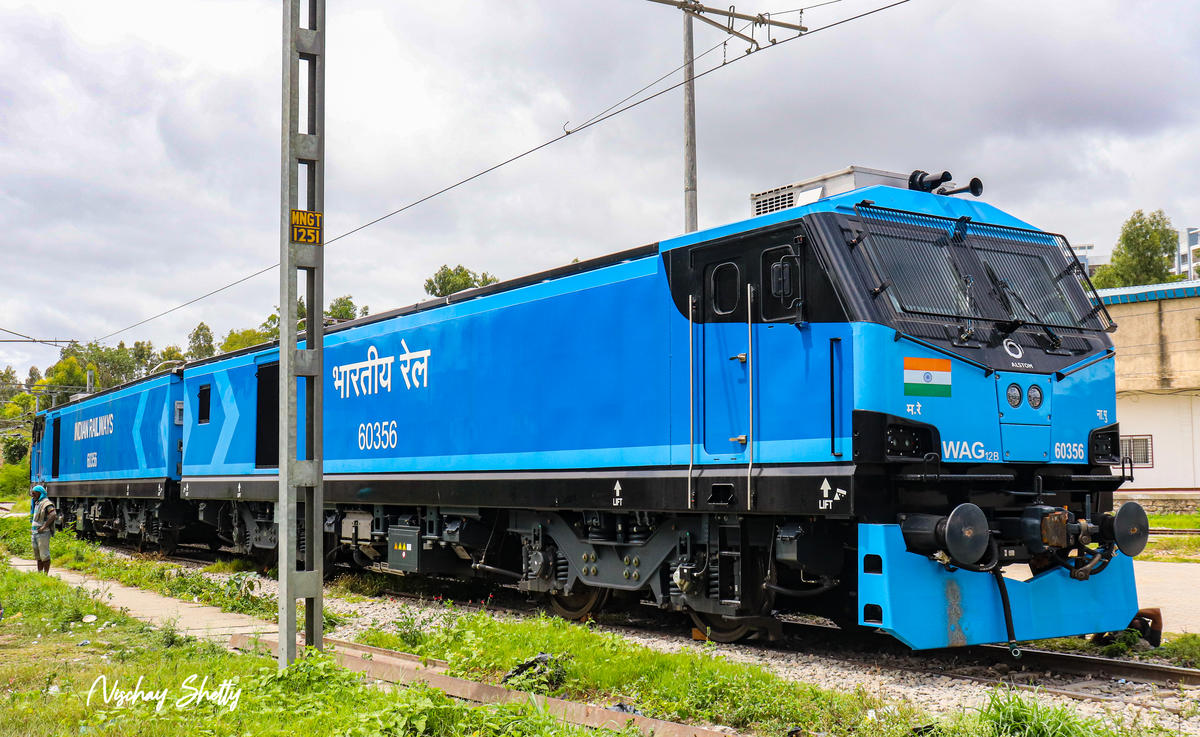
No single project better illustrates India’s railway manufacturing reformation than the Electric Locomotive Factory at Madhepura, Bihar. In 2015, the Indian Railways awarded Alstoma contract worth EUR 3.5 billion to manufacture 800 high-powered double-section electric locomotives of 12,000 HP under a joint venture structure. The Ministry of Railways holds a 26 % stake; Alstom holds 74 %.
What makes Madhepura more than just a large contract is what has happened inside the factory over the past decade. When production began, a large share of components was imported. Today, Alstom has progressively achieved near 90 % localisation, meaning nearly nine out of every ten components in a WAG-12B locomotive are sourced from within India.
India’s Entry in the Global Club: Producing the Most Powerful Freight Locomotives
The WAG-12B is equipped with Insulated Gate Bipolar Transistor (IGBT) based propulsion technology and regenerative braking; each locomotive can haul 6,000-tonne freight rakes at up to 120 km/h, making India just the sixth nation in the world capable of indigenously producing such high-horsepower locomotives.
Vande Bharat: A New Dimension in Indigenous Rail Manufacturing
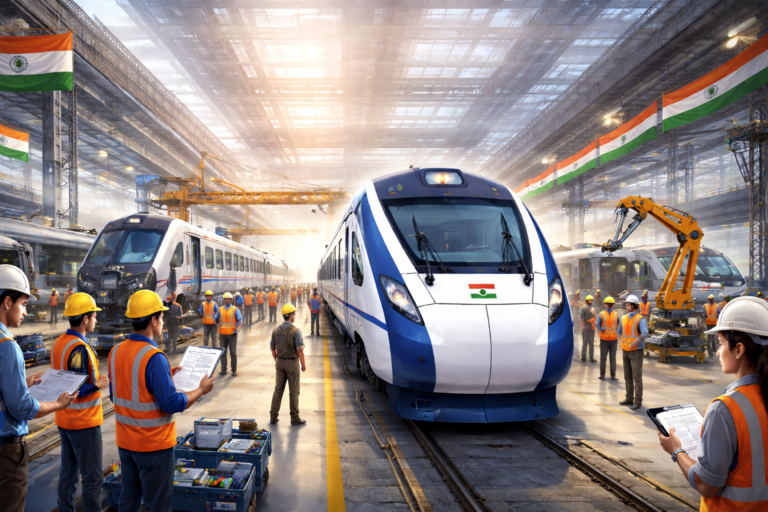
If Madhepura represents the FDI-led model of localisation, Vande Bharat represents the indigenous design-led model, and its significance to India’s manufacturing narrative cannot be overstated. When the Integral Coach Factory in Chennai developed Train 18 in 2017-18, it did so with a specific ambition: to build a semi-high-speed trainset at half the imported cost, using Indian design and engineering, in 18 months. The result was a 16-coach self-propelled EMU with automatic doors, GPS-based passenger information, Wi-Fi, and regenerative braking with 80 % indigenous components built for Rs 97 crore.
That figure, 80 % indigenous content, rising to 90 % in subsequent versions, is the number that defines the Vande Bharat story for India’s manufacturing ecosystem. Every component that is not imported is a supply chain opportunity for a domestic manufacturer. ICF’s General Manager, U. Subba Rao, has confirmed that Vande Bharat trains are now 90 % indigenous, with the remaining 10 % covering specific advanced components where domestic capability is still being developed.
The scale of deployment underscores what localised manufacturing at this level means in practice. By March 2026, over 160 Vande Bharat services were operational across 274 districts, carrying more than 7.5 crore passengers.
The strengthening of local manufacturing units has led the government to scale up the Vande Bharat deployment. The government plans to roll out 800 Vande Bharat trains by 2030 and over 4,000 Vande Bharat trainsets by 2047. This vision to transform the railway would never have been possible if India had depended on foreign suppliers.
NaMo Bharat Trains: A New Benchmark with 80% Localisation
The NaMo Bharat rapid rail, operating on the Delhi-Meerut RRTS corridor, represents a different dimension of India’s rail manufacturing evolution, one that combines indigenous project delivery with international technology deployed on Indian soil for the first time globally.
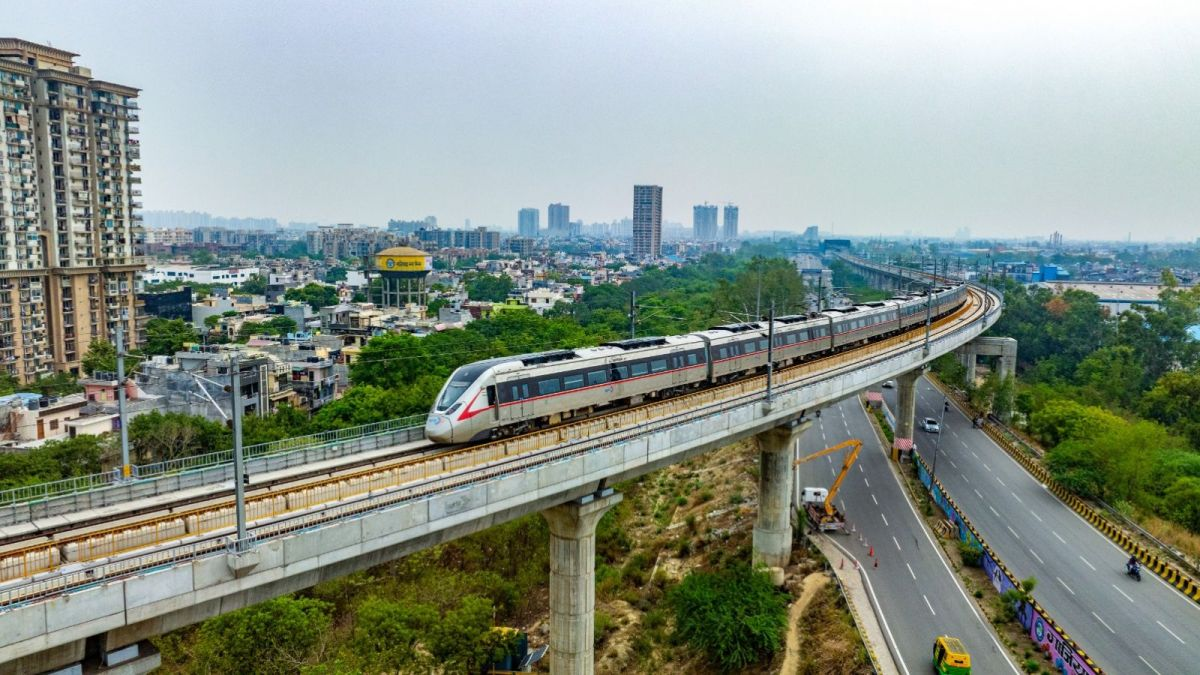
The 210 regional trainsets supplied by Alstom for the RRTS corridor were manufactured at the company’s Savli plant in Gujarat and feature ETCS Level 2 signalling, a system that had never before been operationally deployed on a regional rail system anywhere in the world. The Namo Bharat trains, in accordance with India’s ‘Aatmanirbhar Bharat’ vision and the Make in India guidelines, are 100% indigenously manufactured, with over 80% localisation.
The project has demonstrated that India can not only build world-class regional rail infrastructure but can do so as a proving ground for global technology firsts. For the domestic manufacturing ecosystem, the RRTS has generated supply chain activity across civil works, electrification, station equipment, and systems integration, much of it performed by Indian firms.
The Hydrogen Train
The development of India’s first hydrogen-powered train is perhaps the most tangible expression of where Indian railway manufacturing ambition is heading. Designed by RDSO in Lucknow and manufactured by the Integral Coach Factory in Chennai, the hydrogen train completed load tests in August 2025 and conducted its inaugural test run on March 2, 2026, reaching a top speed of 70 km/h on the Jind-Sonipat section of the Northern Railway zone in Haryana.
The train consists of eight coaches and has a power capacity of 2,400 kW, which makes it one of the most powerful hydrogen-powered trains globally, exceeding the 500-600 HP capacity of most international hydrogen trains.
However, hydrogen technology is new for India, and it will take time to evolve. Taken together, these programmes represent a supply chain development opportunity for Indian manufacturers in fuel cells, hydrogen storage, power electronics, and related systems technologies with applications well beyond railways.
The Domestic Supplier Ecosystem: Opportunities and Pressure
Uneven Ground Realities
The narrative of India’s railway manufacturing localisation, world-class factories, indigenous trains, and export ambitions sits alongside a more complex reality for the domestic supplier ecosystem that underpins it. The localisation of programmes like Vande Bharat and the WAG-12B does create supply chain opportunities. But the question of whether Indian MSMEs and mid-sized manufacturers are able to capture these opportunities at scale and at the quality and cost standards required is one that the sector is still working through. Some domestic manufacturers have made an advancement in this. Titagarh Rail Systems Limited is building coaches, propulsion systems, and aluminium-bodied trains under the Vande Bharat programme from state-of-the-art facilities in West Bengal and Maharashtra.
Component Manufacturing: Gains, But Not Uniform
At the component level, progress is evident but uneven. Taural India partnered with Indian Railways to supply aluminium casting solutions for the Amrit Bharat Express, replacing imported German components. Uniproducts India collaborated with ICF to supply sound and thermal insulation materials for Vande Bharat. These examples illustrate the depth of localisation that is possible, but they are the successful cases. For every domestic supplier that has made the quality and scale transition, there are others that have struggled to meet the technical specifications or delivery timelines demanded by large-scale rail programmes.
The Missing Middle in Supplier Readiness
The pressure on domestic suppliers comes from multiple directions. Global joint venture manufacturers like Alstom, Wabtec, and TMH bring with them established international supply chains that they are accustomed to drawing upon. The pace of technology upgrade from Vande Bharat 1.0 to 2.0 to 3.0 has been rapid, and domestic component suppliers must continuously invest in retooling and recertification to remain relevant.
Policy Push vs Ground-Level Impact
The government has attempted to address this through procurement policy. Local content requirements in railway tenders, the Aatmanirbhar Bharat provisions in procurement guidelines. But the effectiveness of these interventions varies, and there is no comprehensive public data on what percentage of railway component value, as opposed to assembly or integration, is truly sourced from Indian manufacturers.
From Importer to Exporter: India’s Growing Rail Trade Footprint
One of the most consequential implications of India’s railway manufacturing development is its emerging export capability. Since 2016, Indian Railways and its manufacturing ecosystem have exported over 1,000 rail cars, 3,800 bogies, 4,000 flatpacks, and 5,000 propulsion systems to countries including Australia, Canada, Germany, Egypt, Sweden, Brazil, the UK, and Saudi Arabia.
The Marhowra Diesel Locomotive Factory in Bihar, a joint venture between Indian Railways and Wabtec (formerly GE), secured a Rs 3,000 crore deal to export 150 Evolution Series ES43ACmi locomotives to Guinea’s Simandou iron ore project, a transaction that will create over 2,100 jobs and establish India as a credible exporter of heavy-haul locomotive technology to Africa.
The Union Budget 2026-27, which allocated a record Rs 2,78,000 crore for the Indian railway sector, the highest in history, signals the continued scale of domestic investment that will sustain this manufacturing ecosystem. Seven new high-speed rail corridors have been announced as ‘growth connectors’, each of which will generate significant rolling stock, signalling, and infrastructure procurement.
The Gaps That Remain: An Assessment of Localisation
India’s railway manufacturing localisation story, for all its genuine achievements, is not complete. Several strategic gaps remain that must be acknowledged.
Manufacturing vs Technology Localisation
Localisation, as it is currently structured in India’s railway sector, is primarily a manufacturing localisation; the fabrication, assembly, and supply of components is increasingly done in India. But technology localisation, the ability to design, modify, certify, and independently produce the most critical systems without reference to the foreign licensor, remains largely aspirational.
The Three Pillars of Independence
The path to rail manufacturing independence runs through three areas where investment remains insufficient.
Indigenous R&D: India must fund and develop proprietary traction, signalling, and control systems that are designed and owned domestically, as demonstrated, to an extent, by Kavach.
Technology absorption with ownership: Joint venture agreements must evolve to include clear provisions for IP transfer and domestic ownership of key systems over defined timelines, rather than focusing solely on localisation percentages.
Competitive domestic OEMs: India needs firms that can compete globally on technology, not just cost. At present, companies like BEML and Titagarh operate largely in the assembly and fabrication tier.
Signalling Technology
In signalling, the picture is more balanced. Kavach, India’s indigenous Automatic Train Protection system, represents a genuine technological milestone. However, high-end systems such as CBTC for driverless metro operations and ETCS Level 2 deployed on RRTS corridors continue to be sourced from global vendors. These systems represent the most valuable segment of the railway technology stack.
Workforce Challenge
Finally, the workforce transition that manufacturing localisation requires has not always been adequately addressed. The shift from importing assembled equipment to building it domestically requires not just factory capacity but deep engineering skills in design, in quality systems, in testing, and certification. India’s engineering talent is abundant, but the specific, applied skills required for railway manufacturing in propulsion engineering, in signalling systems, and in materials testing require sustained investment in vocational training that has not yet materialised at the scale required.
Conclusion
India’s railway manufacturing localisation has delivered real results over the past decade in locomotives, coaches, rolling stock, and supporting infrastructure. The combination of ambitious government policy, large-scale foreign investment, indigenous design capability demonstrated through Vande Bharat, and emerging competitiveness in exports has created a foundation that did not exist in 2014.
But a foundation is not a destination. The work of the next decade is to deepen localisation into the technology-intensive layers of the supply chain, where import dependency remains structural. It is to build a domestic MSME supplier base that is capable of meeting the quality and scale demands of world-class rail programmes, not just in benign conditions but consistently and reliably.
The hydrogen train, NaMo Bharat trains, and Vande Bharat are not isolated achievements. They are data points in a larger industrial story that India is writing in real time. The question is whether the policy discipline, the supply chain investment, and the institutional commitment that got India this far can be sustained and deepened as the programme scales.
MUMBAI (Metro Rail News): Mumbai Metro Line 5 has become one of the longest metro corridors in the Mumbai Metropolitan Region (MMR) after authorities approved its latest extension. The project now stretches 34.21 km and will connect key areas such as Thane, Bhiwandi, Kalyan, Dombivali and Ulhasnagar.
At the same time, work on the first phase has entered an important stage. The project team is now preparing for the Commissioner of Metro Rail Safety (CMRS) inspection, which is required before passenger services can begin.
Corridor length increases after new extension
Metro Line 5 originally covered 22.38 km between Thane and Kalyan. With the approval of the new Metro Line 5A extension, the corridor will gain another 11.83 km, taking the total length to 34.21 km. The expanded project will cost around Rs 18,130 crore and will improve connectivity across some of the fastest growing parts of the MMR.
Chief Minister Devendra Fadnavis said the corridor will play a major role in improving travel for people living in Bhiwandi and the Kalyan-Dombivali region. He also mentioned that Bhiwandi is one of Asia’s largest textile and warehousing hubs, which requires better transport infrastructure to support its economic activity. The Kalyan-Dombivli region is also home to more than 35 lakh people. It is also expected to benefit from faster and more reliable public transport. Fadnavis expressed confidence that phase 1 could open for commuters by the end of this year.
Phase 1 nears safety inspection
The first Phase of Metro Line 5 runs between Thane and Dhamaknagar Naka and covers 11.9 km.
Phase-1 station
Balkhum
Kasheli
Kalher
Purna
Anjurphata
Dhamankar Naka
Construction teams are also making progress at the Kasheli Metro Depot. Work includes ground improvement, inspection facilities and the Depot Control Centre. MMRDA Metropolitan commissioner Dr. Sanjay Mukherjee said station construction has reached an advanced stage and officials are preparing for the CMRS inspection and the line will play an important role in the agency’s “Mumbai in Minutes” mobility vision once operational.
Project Snapshot
Phase
Route
Length
Stations
Cost
Phase-1
Thane to Dhamankar Naka
11.9 km
6
Rs 6,741 crore
Phase-2
Dhamankar Naka to Durgadi
10.48 km
6 (1 underground, 5 elevated)
Rs 7,326 crore
Phase 5A
Durgadi to Kalyan with Ulhasnagar Spur
11.83 km
7
Rs 4,063 crore
The phase 2 section will include an underground station at Bhiwandi and Five elevated stations extending towards Durgadi. The newly approved Phase 5A extension will add stations at Durgadi, Khadakpada, Bhoirwadi, Chhatrapati Shivaji Maharaj Path, Shanti Nagar, Chhatrapati Shivaji Maharaj Chowk and Ulhasnagar. A dedicated spur from Bhoirwadi will provide direct metro access to Ulhasnagar.
Designed as an Integrated Transport Corridor
Metro Line 5 has been planned with multiple interchange and connectivity points to support seamless travel across the region. Key integration points include,
Interchange with Metro Line 4 at Balkhum (Kapurbawadi)
Interchange with Metro Line 12 at Kalyan Junction
Connectivity to suburban railway stations at Thane, Kalyan, Vitthalwadi and Ulhasnagar
Feeder bus services planned across stations
Access to major highways including NH-160, NH-61 and NH-848
Deputy Chief Minister and MMRDA Chairman Eknath Shinde said the corridor will strengthen links between Bhiwandi’s textile and warehousing sector and the rapidly growing Kalyan-Dombivli urban belt, creating a major mobility spine in eastern MMR.
Expected Benefits
According to project estimates, the corridor could cut travel times by 40-50% compared to road journeys on several stretches. Other expected benefits include,
Reduced traffic congestion on key roads and highways
Better access to industrial and logistics hubs in Bhiwandi
Improved connectivity between residential and employment centres
Stronger links with suburban rail and future metro corridors
MUMBAI (Metro Rail News): Mumbai monorail is set to return with upgraded connectivity, while the upcoming Chembur Metro Station is emerging as a key interchange hub in eastern Mumbai. Together, the two projects could significantly improve connectivity and make travel faster for lakhs of commuters across the city’s eastern suburbs.
According to an official update shared by Maha Mumbai Metro Operation Corporation Ltd (MMMOCL), authorities are working to create a seamless connection between the Metro and Monorail networks as part of Mumbai’s larger public transport expansion plan. Metropolitan Commissioner of the Mumbai Metropolitan Region Development Authority (MMRDA), Dr. Sanjay Mukherjee, recently inspected the upcoming Chembur Metro Station along with MMMOCL Managing director Kanhuraj Bagade. During the visit, the officials also walked to the nearby V.N. Purav Monorail Station to review passenger connectivity between the two systems.
Metro Monorail integration takes shape
The new Chembur Metro Station will serve as the sixth station on Metro Metro Line 2B and extend metro connectivity up to the busy Sion-Trombay Road corridor. A key feature of the project is its connection with the Mumbai Monorail network. The metro station is located about 100 meters from V.N. Purav Monorail Station. It will allow passengers to switch between the two systems with minimal walking distance. Officials believe this interchange will significantly improve travel options for people living in Mumbai’s eastern suburbs.
What the project includes
Chembur Metro Station on Metro Line 2B
Direct interchange with V.N. Purav Monorail Station
Around 100 meters between the two stations
Faster access to South-Central Mumbai
Easier transfers between Metro and Monorail services
Mumbai Monorail nears relaunch
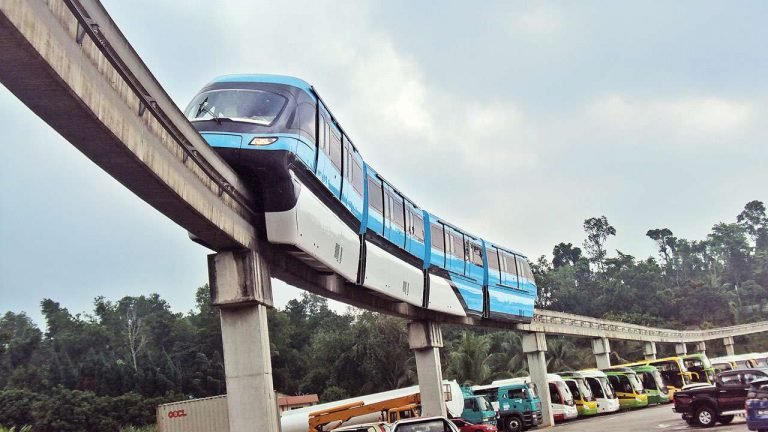
MMMOCL said preparations for the relaunch of the Mumbai Monorail are in the final stages. While authorities have not announced an official launch date, they indicated that services could resume soon. The Mumbai Monorail runs on a 20 km corridor connecting Chembur, Wadala and Sant Gadge Maharaj Chowk. The project opened in two phases,
Phase-1 (Chembur – Wadala): 8.8 kn, opened on February 2, 2014.
Phase-2 (Wadala – Sant Gadge Maharaj Chowk): 11.2 km, opened in March 4, 2019
This Monorail project was first conceived in 2008 and developed with support from international partners.
Once the Chembur Metro Station becomes operational and the Monorail returns to service, commuters will get quicker access to different parts of Mumbai through a single connected transport network. The interchange is expected to reduce travel time, improve last-mile connectivity and make daily journeys smoother for thousands of passengers.
KOLKATA (Metro Rail News): Metro Railways Kolkata has invited bids for rehabilitation works on parts of the Blue Line viaduct in Kolkata. The project carries an estimated cost of Rs 43.36 crore and aims to strengthen ageing metro structures and improve the long term reliability of the corridor. The work will cover viaduct sections between Dakshineswar (KDSW) and Dum Dum (KDMI), as well as stretches between Mahanaya Uttam Kumar and Kavi Subhas stations. Metro Railway plans to complete the project within 18 months.
Tender Information
Details
Information
Tender Number
Civil2572-2026
Tender Type
Open Tender
Bidding System
Two Pocket System
Estimated Cost
Rs 43.36 crore
EMD
Rs 86.73 lakh
Bid Submission Start Date
2 June 2026
Tender Submission Deadline
16 June 2026 (12:00)
Completion Period
18 months
Scope of work
The contractor will repair and strengthen various structural elements of the Blue Line viaduct. The work will cover metro viaduct sections from Dakshineswar to Dum Dum and from Mahanayak Uttam Kumar to Kavi Subhash. The project includes rehabilitation of aging structures and damaged components. The contractor will carry out civil engineering works required to improve structural stability and durability. The work will help maintain safe and reliable metro options on the corridor, The entire project will be completed within 18 months.
About the project
The Blue Line is Kolkata’s first metro corridor and one of the busiest urban transit routes in the city. Thousands of passengers use the line every day to travel across north and south Kolkata. Over the years, several sections of the viaduct have required maintenance and strengthening work due to age and continuous operations. Through this project, Metro Railway Kolkata aims to improve the condition of key structures, extend their service life, and ensure smooth metro operations for passengers in the years ahead.
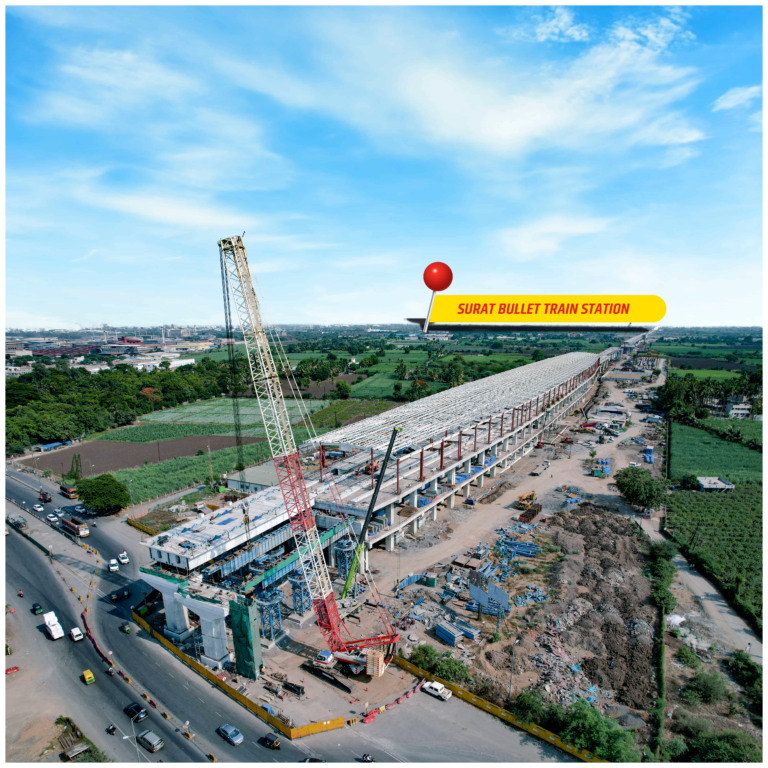
Gujarat Metro Rail Corporation (GMRC) has proposed three new metro stations and an extension of the existing metro station to connect to the highly awaited Mumbai-Ahmedabad Bullet Train corridor.
The suggested stretch will link Saroli station under Corridor-II (Green Line) Phase-1 to the Surat Bullet Train Station at Antroli. This expansion will be an addition to the underdeveloped Phase 1 of GMRC, which consists of 2 metro corridors with 38 stations stretching 40.35 km. The first section of the metro (8.5 km elevated section of the Diamond Corridor between Dream City and Althan) is expected to open to the public by mid-2026.
The proposed 4.4 km-long extension will include three new stations: Kalpataru Metro Station, Ambaba College Metro Station, and Surat HSR Metro Station. This expansion will connect the metro network to areas such as Chedcha, Vedchha, and Antroli, enhancing connectivity to the bullet train corridor.
The estimated cost for the proposed project is over ₹1,400 crore, and the approval from the Union Cabinet is currently awaited. The Gujarat government has earmarked ₹40 crore as capital assistance and ₹40 crore as a loan to support this strategic expansion of Corridor-II to the HSR network.
Saroli Metro Station is the last station of the Green Line originating from Bhesan Station, and will be the interchange station for this project. The Red Line starts from Dream City Depot and ends at Sarthana Metro Station. The green and red lines meet at an interchange station at Maujar Gate Metro Station.
According to sources, a Detailed Project Report (DPR) for this project has been prepared and submitted to the Cabinet. Once approved, this project will serve as a direct point of connection between the metro station and the High-Speed Rail (HSR) stations.
DELHI (Metro Rail News): Northeast Railway has invited bids for automatic block signalling and associated telecom works in the Varanasi Division. The project has an estimated cost of Rs 128.72 crore and aims to improve train operations, safety, and line capacity on busy routes in eastern Uttar Pradesh. The work will cover the Aunrihar junction-Varanasi City and Banaras-Prayagraj Rambag sections. Northeast Railway plans to install Automatic Block Signalling (ABS) and other modern systems to help trains run more efficiently.
Tender Information
Information
Details
Tender Number
NER_SnT_Proj_BSB_02_2026
Tender Type
Open Tender
Bidding System
Two Pocket System
Estimated Cost
Rs 128.72 crore
Earnest Money Deposit (EMD)
Rs 2.57 crore
Pre Bidding Meeting
5 June 2026, (11:30)
Bid Submission start date
18 June 2026,
Bid Submission Deadline
2 July 2026, (15:00 hrs)
Completion Period
18 months
Scope of Work
The contractor will carry out survey, design, supply, installation, testing, and commissioning of Automatic Block Signalling systems. The project will use Multi-Section Digital Axle Counters (MSDAC) for continuous track circulating. The scope also includes 4×48 Optical Fibre Cable (OFC) works on both railway sections. The contractor will execute signalling and telecom works as adjoining stations. The package includes Electronic interlocking indoor works at Sarnath, Kadipur, and Rajwari railway station.The entire work will be completed within 18 months.
About the project
The project will cover the Aurnihat junction -Varanashi city and Banaras – Prayagraj Rambag sections in the Varanasi Division of Northeast Railway. Automatic Block Signalling allows railway authorities to reduce the gap between trains while maintaining safety. This helps improve line capacity and allows more trains to run on the same route. The installation of MSDAC, OFC network, and Electronic Interlocking systems will strengthen signalling infrastructure and improve reliability on these stations.
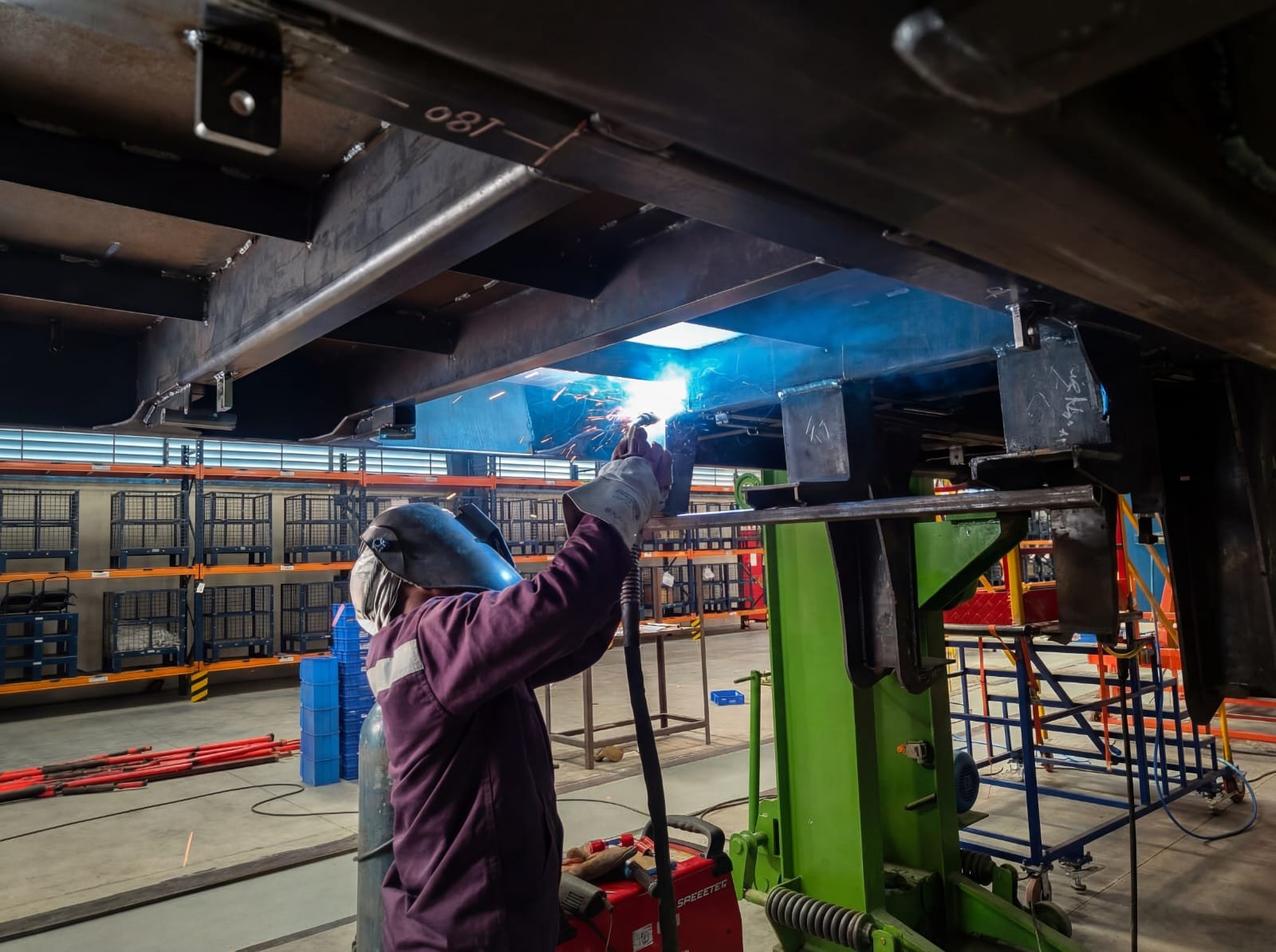
In a revolutionary step towards bridging a gap between India’s freight capacity the Kazipet Rail Manufacturing Unit whose foundation stone was laid by PM Modi virtually onJuly 8, 2023 is on the verge of its completion. The facility was visited by The Union Minister of Railways, Ashwini Vaishnaw, and Union Minister of State for Railways, Ravneet Singh Bittu, where they reviewed the plans to operationalise the Kazipet Rail Manufacturing Unit on 28th May along with other senior officials.
Kazipet Rail Manufacturing Unit is a versatile railway rolling stock manufacturing unit and is set to manufacture 200 intercity trains in the next 5 years.
These short distance trains are set to be deployed throughout the country for short distance travel and will run for about 300 km and are designed for affordable travel and will be equipped with modern features like automatic door closing, superior ventilation and a safe coach design with a 20-coach configuration.
The trains will also have regenerative braking, meaning that when the train applies brakes, it will become a generator of electricity & feed the regenerated electricity back into the grid. It is, therefore, energy efficient. These short distance trains are a greener mode of transport and will have significantly less carbon emissions vis-à-vis road transport.
The introduction of such a large fleet by Railways will increase the green and clean transport capacity across the country.