33.1 C
Delhi
Sunday, April 12, 2026
spot_img
spot_imgspot_img
Home Blog Page 750

Delhi Metro | DMRC inaugurates first section of Line 7 (Pink Line) for public

0
Delhi Metro Passed Through Highest Point at Dhaula Kuan

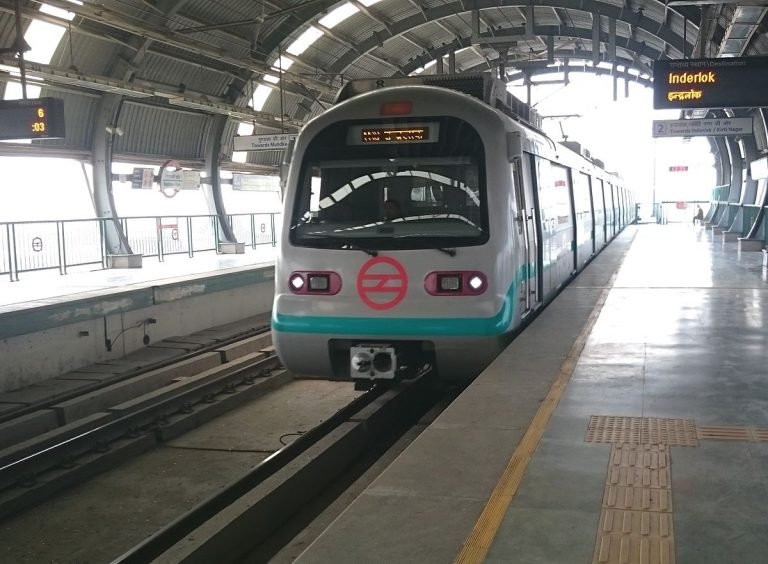
New Delhi: The Delhi Metro Rail Corporation (DMRC) launched 21.56 km stretch of Pink Line between Majlis Park-Durgabai Deshmukh South Campus on Wednesday. Union Minister of Housing & Urban Affairs Hardeep Singh Puri, Delhi Chief Minister Arvind Kejriwal along with Delhi Government Chief Secretary flagged off this section at 4 pm today from Metro Bhawan. Passenger services will begin from 6 pm.

While addressing the Media in Metro Bhawan Arvind Kejriwal said, “We want Delhi Metro to expand. Delhi government will clear Phase IV shortly. We are committed for expanding of Delhi Metro and no one should have the slightest doubt about that. Some routes of Delhi Metro’s Phase IV not financially viable. The project can be divided in two parts and the viable routes can be approved immediately.”

“Delhi Metro’s fare is a bit high. I request we should all work together to bring a solution,” he added.

3
Inauguration of section of Line 7 (Pink Line) of the Delhi Metro by MoS H&UA Hardeep Singh Puri and Delhi Chief Minister Arvind Kejriwal in the august presence of Dr. Harsh Vardhan, Meenakshi Lekhi, Parvesh Sahib Singh and H.E. Mr. Kenji Hiramatsu, Ambassador of Japan to India.

After opening of this section DMRC has completed nearly 250 km routes. This section has total 12 stations namely Majlis Park, Azadpur, Shalimar Bagh, Netaji Subhash Place, Shakurpur, Punjabi Bagh West, ESI Hospital, Rajouri Garden, Mayapuri, Naraina Vihar, Delhi Cantt and Durgabai Deshmukh South Campus. Out of the 12 stations, eight are elevated and the rest underground.

Here are some highlights of Delhi Metro’s Pink Line: 

  • The Pink Line is a 59-km line connecting Majlis Park to Shiv Vihar under Delhi Metro’s Phase III project.
  • This is the longest metro line till date and is expected to be fully operational by June 2018.
  • Interchange stations at Azadpur, Netaji Subhash Place and Rajouri Garden will connect the Yellow, Red, and Blue lines, respectively, to the Pink Line. The line will also bring Delhi University’s South Campus under the Metro system.
  • The new corridor will also, for the first time, connect the north and south campuses of the Delhi University, on the metro network, which can be covered in 40 minutes.
  • The average speed of the train on the line is 34 kmph and the line will have only six-coach trains, with a frequency of 90-100 seconds.
  • Total 19 trains will be in service on the line. Trains will also run on two shorter routes — between Durgabai Deshmukh South Campus and Shakurpur, and Majlis Park and Shakurpur stations.
  • The trains will be driverless, with multi-coloured seats (orange, blue, pink and red), darker shades for reserved seats, a special demarcated area for persons on wheelchairs, USB and three-pin recharge ports and three-handle poles for those who commute standing.
  • This section (first stretch) will also reduce metro travel time between Dwarka 21 (Blue Line) and Rithala (Red Line) by over 16 minutes; and Rajouri Garden and Azadpur by nearly 23 minutes.
Advertisement1
InnoMetro_2026

Getzner provides mass-spring systems to reduce vibrations in metro rail system

0

Pune: Urban train operations generate vibrations and noise, which affect the people living and working in its surroundings. The mass-spring system from Getzner efficiently mitigates such vibrations and the secondary air-borne noise. Getzner’s mass-spring system is installed in over forty cities worldwide – amongst them are the Indian cities of Bangalore, Delhi, Lucknow and Mumbai.

The train operations generate vibration energy at the track superstructure because of high dynamic loads. This vibration energy propagates through the ground and once it reaches a building, depending on the dynamic characteristics of the building, it can be perceived as vibrations or can be heard as secondary air-borne noise, adversely impacting the lives of people in the vicinity of the metro corridor. “The effect of vibration and noise is different in every building depending on it structural characteristics. That is why we aim to control the vibrations at the source itself – the metro railway track”, explains Sanjay Risbood, CEO and Resident Director of Getzner India. “The goal of mass-spring systems is to elastically decouple the track superstructure from its surrounding in order to reduce the transmission of vibrations.” The Austrian company Getzner is the world technology leader in the field of vibration isolation in the railway, construction and industry sectors.

Getzner mass-spring system
Installation of the Getzner mass-spring system at the Delhi Metro

The mass-spring system from Getzner uses the high quality micro-cellular polyurethane materials Sylomer® and Sylodyn®. Risbood: “These high-quality PU materials guarantee the long-term performance of the mass-spring system. This is of utmost importance because the maintenance or replacement of a mass-spring system after the installation and the start of train operations is very expensive, time consuming and sometimes not feasible, too. Hence, the mass-spring system should necessarily perform throughout the life of the track”. Until today, Getzner has supplied more than 450 mass-spring systems worldwide. They all are performing effectively from the last 40 years without a need of maintenance or replacement.

Full surface mass-spring systems in India

Depending on the economic and technical requirements of the customers, Getzner offers three types of mass-spring systems: Full surface, strip bearing and point (discrete) bearing. Sanjay Risbood: “We have supplied full surface mass-spring systems for projects in cities of India like Delhi, Bangalore, Lucknow and Mumbai. The full surface mass-spring system is the most cost effective, it is easy to construct and gives the desired long-term performance.” With a full surface mass-spring system, the natural frequency in the range of 14 to 25 Hz can be achieved.

Mr. Risbood explains: “Getzner has already supplied several point and strip type mass-spring system solutions to various urban, mainline and high-speed train systems worldwide, wherever there is a need for lower natural frequency.”

Advertisement1
InnoMetro_2026

Chennai Metro | CMRL starts trial run between Saidapet and AG-DMS

0

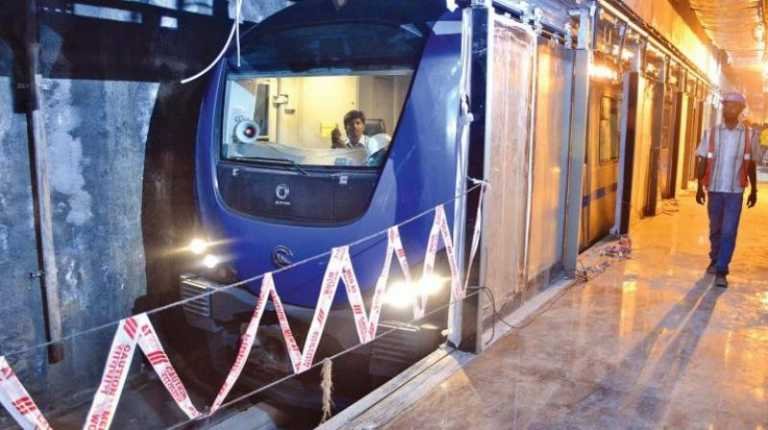
Chennai: The Chennai Metro Rail Limited (CMRL) started metro trial run in the underground line between Saidapet and AG-DMS stations on this Monday. During trial run, trains are operated back and forth to test the working of various systems of the train and the route.

After opening of commercial run on this stretch, commuters can take a direct ride from AG-DMS station to the Chennai airport.

This 4-km stretch from Saidapet station (located near Directorate of Medical and Rural Health Services, Teynampet) to AG-DMS station (located near Panagal Maaligai) covers four stations — Saidapet, Nandanam, Teynampet and AG-DMS.

According to a CMRL official, “Around 1 p.m., the train that departed from Little Mount station (which is already operational) went underground through a ramp to the Saidapet station. It moved at a speed of 35 km per hour and reached AG-DMS in half an hour, officials said. “It will take less than half hour when the services start in May. Today, it took half hour since we stopped at every station to check for any possible issues.”

Sources said that the trial run was carried out only on downward track. While officials claim the other track (upward track) is also ready, it is not clear why the trial run was not carried out. Various systems including, tunnel ventilation, signalling, platform screen doors and automatic fare collection have been installed.

Eight months ago, for the first time, Chennai Metro Rail tested a locomotive on this stretch. After completion of electrical and signalling work and integration of these systems, trial run with a train started on Monday. This exercise will continue till the operations begin on this stretch in May.

Before this stretch is thrown open to public, one last inspection by Commissioner of Metro Rail Safety will be done in late April or early May and after they give their approval, the operations will start.

According to CMRL official, construction of stations is almost completed.

Work on this stretch faced a severe disruption three years ago. Gammon India and Russian firm Mosmetrostroy got a joint contract to carry out the work but the Russian firm walked out of the project owing to funds crunch and later Gammon India’s contract was terminated.

Another contractor Afcons Infrastructure Limited took up this work.

Advertisement1
InnoMetro_2026

Chennai Metro | CMRL releases map of Phase 2 metro project

8
Chennai Metro Rail Project
Chennai Metro/ Image for representation purpose only

Chennai: Chennai Metro Rail Limited has officially released a route map for its ambitious phase 2 metro project that will connect far-flung areas of the city through three corridors.

In February, Metro Rail floated nine tenders for detailed design consultants and for soil tests. In one of the tenders, it has released a map of phase 2 with 104 stations, covering 107km. The estimated cost of the project is Rs 85,047 crore.

CMRL Phase II Network Map
Chennai Metro Phase II Network Map (PC: CMRL)

However, after a review of the alignment, CMRL officials said they had increased the number of stations to 116 covering a total 107.55km along three corridors.

The tenders CMRL has floated are also for corridor 3 (Madhavaram Milk Colony to Siruseri SIPCOT) that covers the IT hub on the OMR and corridor 5 (Madhavaram to Sholinganallur).

Corridor 4 that connect Light House to CMBT is likely to be extended up to Poonamallee at an additional cost of Rs 3,850 crore.

A feasibility study is at present underway following which a detailed project report will be submitted to both the central and the state governments for approval.
buy cialis oral jelly online https://herbalshifa.co.uk/wp-content/themes/twentytwentytwo/inc/patterns/en/cialis-oral-jelly.html no prescription

“We will then decide whether to include it in phase 2 or to take it up as a separate project like phase-1 extension,” said a CMRL official.

Nearly 80% of the phase 2 project will be underground. The elevated sections is expected to have cantilevered stations that will be built in the middle of the road to reduce consumption of space and time.

Advertisement1
InnoMetro_2026

Indian Railways to showcase $140 billion worth of rail projects at Middle East Rail 2018

0

Dubai, UAE: Indian Railways, India’s national railway system operated by the Ministry of Railways, has announced participation at Middle East Rail 2018, to talk about $140 billion worth of current and future rail projects that the government is building to upgrade country’s urban transportation network.

Under the patronage of His Highness Sheikh Mansour Bin Zayed Al Nahyan, Deputy Prime Minister, Minister of Presidential Affairs, UAE and in partnership with the Ministry of Infrastructure Development and the Federal Transport Authority – Land & Maritime, the show will be held on March 12 & 13 at Dubai International Convention Centre.

railway
Indian Railways

Shri Mahesh Kumar Gupta, Member Engineering – Indian Railway Board, Indian Railways will lead a high-profile delegation of railway officials and experts to share more details about the region’s largest railway network’s expansion plans and future growth prospects, besides outlining a buddle of opportunities that the industry offers in the segments of metro, tram, monorail, long-distance freight and passenger train, and high speed rail.

Commenting, Shri Gupta, said: “We will highlight some of our achievements, growth prospects and future projections during this two-day event. This kind of events helps in creating awareness about gigantic organisations like Indian Railways, which deals in mega projects such as high speed trains, dedicated freight corridors, electrification, capacity expansion and tech development.”

Indian Railways will also be represented by two of its overseas arms – RITES and IRCON International Limited. While RITES deals in consultancy of transport and infrastructure and export packages of rolling stock, the IRCON is mainly into construction of railway projects.

“These are exciting times for railway industry. There are serious challenges in the road and air transportation sector, hence, the upgradation of the railway infrastructure is the need of the hour. Indian Railways has realised that accumulated backlog investment is the root cause of its inability to improve the market share or quality of services,” said Sri Gupta, adding that major investments are now being made through budgetary allocation of INR8.56 lakh crore in the financial year 2015-16, with contribution from gross budgetary support (INR2.56 lakh crore), internal generation (INR1.00 lakh crore), JV/cost sharing (INR1.20 lakh crore), PPP/partnerships (INR1.30 lakh crore), debt (INR2.50 lakh crore), rolling stock lease (INR1.00 lakh crore) and institutional funding (1.50 lakh crore). 

Indian railways aims to concentrate on major investment projects in the areas of dedicated freight corridor, high speed rail, modernization of signalling system, track and rolling stock maintenance with major emphasis on safety. 

“Our future plan is to focus on electrification, 100% use of LED lights, ETCS level II of signalling and high speed technologies.”

On the day one of conference, Indian Railways’ Chief Engineer Ankala Saibaba will talk about one of India’s mega railway project, costing USD$1.7-billion, involving over 45 tunnels and 125 major bridges. He will share various challenges associated with designing and constructing the world’s tallest railway bridge, besides showcasing state-of-the-art technology adopted by Indian Railways. He will also highlight some of the forthcoming major railway projects and the vast opportunities that are up for grab for the international companies.

Jayanth Pandey, Assistant General Manager, Metro Link Express for Gandhinagar and Ahmedabad, will share more details about Ahmedabad Metro Phase 1 during a roundtable interactive session on day one. 

While, on day two, Sanjay Kumar, Chief Engineer – Signalling & Telecommunications, Kolkata Metro Rail Corporation, will take part in a panel discussion titled Asset management 4.0: to outthink, outcompete and outperform. He along with other experts from UAE, Singapore and South Africa will deliberate upon how to implement a robust rail asset management strategy in the age of digitalisation.

Middle East Rail recorded 64% repeat exhibitor bookings for 2018 edition, bringing over 290 regional and international railway operators, suppliers and contractors to present their services to potential buyers and nurture professional networks. Keeping up with the industry trends and to accommodate increased interest, the show has expanded in scope for the 2018 edition. The organising committee has introduced two new streams that will feature Passenger Information Systems and Transport Ticketing Systems that cater for the needs of modern passengers.

A series of interactive sessions have been designed to introduce technological disruptions and provide updates on rail contracts worth $16 billion planned to be awarded in 2018 in the MENA region – according to MEED Rail Report 2018. 

Industry experts from Europe, Middle East and Asia will share insights on privatisation, digitalization, modernisation and pioneering the future of Mobility 4.0. throughout two days of keynotes, open discussions and research sharing sessions.

Metro Rail News is official Media Partner of Middle East Rail 2018.

Advertisement1
InnoMetro_2026

Alstom completes most powerful all-electric Make-In-India locomotive from Madhepura

0
Make in India Electric Locomotive by Alstom from Madhepura Facility

Alstom announced the completion of its first all-electric locomotive from its state-of-the-art locomotive facility at Madhepura in the State of Bihar, on schedule. In line with the Government’s and Indian Railways’ target towards 100% electrification and towards sustainable mobility, these new locomotives will not only bring down operating costs for the Railways but will significantly cut down greenhouse gas emissions as well.

This first locomotive is part of a €3.5 billion order comprising 800 electric double-section locomotives signed in 2015 which contributes to the Ministry of Railways’ public-private partnership programme to modernise the country’s rail infrastructure. This agreement remains the largest Foreign Direct Investment in the railways sector to date and has a strategic role in creating a multiplier effect on the economy. This contract is also one of the biggest contracts in the history of Alstom.

“Our operations in India are paramount to our business globally and we continue to stay committed to developing India’s infrastructure needs, improving the quality of services to citizens and investing in the nation’s economy,” said Henri-Poupart Lafarge, Chairman and CEO, Alstom.

Further commenting on the completion of the first electric locomotive, he added, “This project stands as a shining example of Alstom’s commitment to ‘Make in India’. Apart from creating thousands of jobs directly and indirectly, we have created a strong localised supply chain for this project, with 90% of the components for the prototype sourced locally.”

Thanks to its 12,000 horsepower, each double section locomotive, part of Alstom’s Prima locomotives family, has a hauling capacity of 6,000 tonnes and speed of 120km/hr, allowing faster and safer movement of heavier freight trains across the country, thereby reducing congestion for passenger train services and freight. Equipped with IGBT based propulsion technology, these locomotives will be compliant with Indian standards of freight transport and will have the ability to endure tough Indian climate and conditions. The locomotives were developed with the support of 6 Alstom sites in France: Belfort for the 6 first car bodyshells, and Ornans for the motors, Tarbes for the traction, Le Creusot for bogies, Villeurbanne for the train control monitoring systems and Saint-Ouen for the design.

In another significant development, Alstom announced three new contracts worth approximately €75 million – power supply contract from the Mumbai Metro Rail Corporation Ltd (MMRCL), contract for new train sets from Chennai Metro Rail Corporation and another power supply contract from Jaipur Metro Rail Corporation. This development shows Alstom’s growing footprint in the country, in both the urban space as well as the mainline space.

Additionally, phase 1 in the construction of the electric locomotive facility at Madhepura and the depot at Saharanpur is complete and work is progressing as per the contractual timelines. To give skilling and local hiring an impetus, focused efforts towards nurturing young minds in communities in and around Madhepura have been initiated. With the help of local NGOs, Alstom Foundation is working to foster better health care, education and dignified livelihood in the area.

Advertisement1
InnoMetro_2026

Indian Railways to invest $11bn into signalling and communication system project

0
Indian Railways/Representational Image
Representational Image

New Delhi: Indian Railways plans to invest $11bn into a signalling system project across the country to improve the safety of journeys.

“We will bring the most modern technology of European Train Control System (ETCS) in India and it will be implemented across the country”, Union Minister of Railways Piyush Goyal said.

The South Western Railway division of the Indian Railways has produced a pre-feasibility report for the 160km Bengaluru suburban railway in the southern state of Karnataka, which was approved in 2014 but no work has been completed. This railway would require an investment of $1.8bn.

According to Goyal, 68km of the suburban railway network will be raised.

Indian Railways also plans to invest $7.6bn to modernise the stations and deliver advanced rail coaches. The company has also proposed an equal cost-sharing arrangement between itself and Karnataka.

Advertisement1
InnoMetro_2026

Bangalore Metro | BMRC employees to go on indefinite strike, authority may invoke ESMA

0
BMRC employees on strike demanding pay revision.

Bengaluru: Around 900 employees affiliated with Bangalore Metro Rail Employees Union have decided to go on indefinite strike from March 22 seeking various demands from the management. The union has given a notice the BMRCL management in this regard. The Metro employees demand perks and salary on par with Delhi and Jaipur metro employees.

The BMRCL Employees Union said though it is registered and affiliated to the Indian National Trade Union Congress, it has not yet been recognised. The Metro management warned that it would invoke provisions of the Essential Services Maintenance Act (ESMA) and action would be taken if anyone resorts to disrupting metro services. The BMRCL managing director Mahendra Jain told media that the Metro service has been declared as essential services under Essential Services Maintenance Act and stringent action would be taken if anyone resorts to disrupting metro services.

What are their demands?

  • Recognition of Bengaluru Metro Rail Employees Union Immediate implementation of 3RD PRC ( implemented by Delhi Metro) and arrears in a single instalment to be implemented from 01.01.2017.
  • As per 3rd, PRC gives 35 per cent perks. Also to obey the order of Central Public Enterprises.
  • Immediate implementation of Standing Orders Revise the BMRCL Employees’ Promotion Rules.
  • Removal of officers of other states from Office and Management positions and immediate removal of corrupt officials.
  • A delegation of Officers from the Deputy Commissioner for 5 years up to the parent company.
  • Stop harassment of employees, memo, letter, an apology on a day-to-day basis.

Requesting anonymity an employee said the management cannot implement ESMA on striking employees as the matter is sub-judice.
buy tadacip online https://myhst.com/wp-content/themes/twentytwentytwo/inc/patterns/en/tadacip.html no prescription

Employees have planned to protest in three locations:-

  • Front of BMTC Complex
  • BMRCL Corporate Office in Shantinagar and
  • Baiyappanahalli BMRCL office.

In a press release issued, the union alleged that the management harassed office bearers and active workers on false pretexts in all conceivable manner by resorting anti-union and anti-labour policies to suppress the union.

Advertisement1
InnoMetro_2026

Delhi Metro | DMRC all sets to open pink line metro corridor for public in next week

0
Driverless Metro Train in India

New Delhi: According to inputs received from Ministry of Housing & Urban Affairs the 20 km Majlis Park-Durgabhai Deshmukh South Campus section of Delhi Metro Rail Corporation (DMRC) will open next week.

In last week of February month, the Commissioner for Metro Rail Safety (CMRS) inspected the stretch. The DMRC has successfully completed testing on the said stretch, a part of the Phase-III project.

“The Majlis Park-South Campus section of the Pink Line of the metro network will be opened next week,” Urban Affairs Secretary DS Mishra said on the sidelines of an event at the Metro Bhawan in Delhi.

The 59-km Majlis Park-Shiv Vihar corridor (Line 7) of the metro network, also known as the Pink Line, is part of the Phase-III project. Starting last year, trial runs on its other stretches have also been conducted.

The entire corridor will open by June 2018.

The Majlis Park-Durgabhai Deshmukh South Campus section has 12 stations, including three interchange stations at Azadpur, Netaji Subhash Place and Rajouri Garden.

“The metro train on this stretch will also cross Dhaula Kuan at a height of 23.6 m (as high as a seven-storey building) to reach South Campus from Majlis Park,” the DMRC said.

On February 7, trial runs began on the over 10-km elevated stretch (IP Extension-Maujpur) of the Majlis Park-Shiv Vihar corridor, on which the new signalling technology, Communication Based Train Control (CBTC), will be “rigorously tested”.

Advertisement1
InnoMetro_2026

Indian Railways plans Rs 10 lakh-crore pan-India high speed bullet train network

0
Image for representation purpose only copyright: respective Authority

New Delhi: One of Prime Minister Narendra Modi’s key electoral promises was a high speed rail network. And this is a promise he intends to keep. Over the past couple of years, concrete steps have been taken in that direction. If the rail budget in 2016 laid further groundwork necessary for the ambitious bullet train project, Budget 2017 did one better: Rs 18,000 crore was allocated to upgrade the Delhi-Mumbai and Delhi-Howrah corridors to allow trains to run at 160 kmph, against 70-90 kmph currently.

But the best is apparently to come. A top rail ministry official has told that the Indian Railways is set to announce a massive Rs 10 lakh-crore plan to construct high-speed train corridors connecting all the major cities next month. Covering almost 10,000 kilometres, the new rail lines will allow trains to run at 200 kmph. The Railways is reportedly also exploring options such as building single pillar, two track elevated corridors on top of existing/upcoming national highways or building the new rail lines parallel to existing rail routes on railway land to reduce the cost of construction. In fact, the aim is to halve it from Rs 200 crore per km to Rs 100 crore per km. Railway minister Piyush Goyal has asked his officials to work on speed, scale and skill to achieve early implementation of these projects.
buy temovate online https://www.ecladent.co.uk/wp-content/themes/twentyseventeen/inc/en/temovate.html no prescription

The upcoming announcement will not only unveil the routes to be connected but also the funding mechanism. According to the report, loans from financial institutions and multilateral agencies along with monetising land bank will likely take care of that. The Indian Railways is also expected to roll out large tenders, inviting global majors.

Of course, high speed rail lines also need new trains. Currently, the fastest train in India is Gatiman Express, which runs at a speed of 160 kmph between Delhi and Agra. Coming soon – as early as June according to media reports – is the first Train 18 that will run just as fast. This set eventually aims to replace the Shatabdi trains and will pack ‘world-class’ passenger amenities such as GPS-based passenger information system, on-board Wi-Fi and infotainment, automatic sliding doors and zero discharge vacuum-based bio-toilets. Another train set called Train 20 is expected to follow in 2020, to replace the Rajdhani trains plying on longer routes.

The only difference between these new trains is that Train 20 will have an aluminium body while Train 18 will have stainless steel body. Then there is India’s first bullet train between Mumbai and Ahmedabad that is scheduled for 2022.

All this is great news for world’s fourth largest railways, long bogged down by adjectives like slow, tardy, dirty, and worse.

Advertisement1
InnoMetro_2026