Home Blog Page 649

Systra Submits revise feasibility report for Thiruvananthapuram- Kasaragod Semi HSR line

Kerala (Metro Rail News): The State government demand to lay the third and fourth railway line parallel to the existing double line and as per their request the Kerala Railway Development Corporation Ltd. (KRDCL) revised the alignment of the 531-km semi-high-speed railway line from Thiruvananthapuram to Kasaragod.

The initial 300 km of the third and fourth railway line from Kochuveli in the capital to Thrissur will also be mostly parallel to the existing railway track.
buy furosemide online https://healthcoachmichelle.com/wp-content/themes/twentytwentyone/inc/en/furosemide.html no prescription

The feasibility report submitted by the Paris-based engineering and consulting group Systra, general consultant of the KRDCL proposed in the report from Thirunavaya to Kasaragod, it will be parallel to the existing line with railway bypasses at Vadakara and Thalassery.

The new alignment proposed will be 80% parallel to the existing tracks up to Thrissur and 90% from Thirunavaya to Kasaragod. Minister for Public Works G. Sudhakaran had suggested the revision of the alignment when the feasibility report was submitted. The curves in the intial 300-km corridor will have to be straightened to lay the high speed railway line.

KRDCL, the special purpose vehicle set up to execute ‘viable’ projects on a cost-sharing basis between the State and Railways, has submitted the revised alignment to the government for approval.

Official sources told that the approval of the government is awaited for the alignment to go ahead with the preparation of the Detailed Project Report (DPR). The KRDCL board had already approved the feasibility report prepared by Systra that had found the semi-high-speed railway line traversing through 11 districts ‘feasible and financially viable’. The report has put the estimated cost of the project at ₹56,000 crore, including cost of land acquisition.

Sources said, “The revised alignment does not make much changes in the extent of land (1200 hectares) to be acquired. But, the cost of land acquisition will go up as developed areas will have to be acquired again.”

Once government approval is received, the KRDCL can forward the feasibility report to Railways and go ahead with the detailed traffic study, soil investigation and environment impact assessment study, sources said.

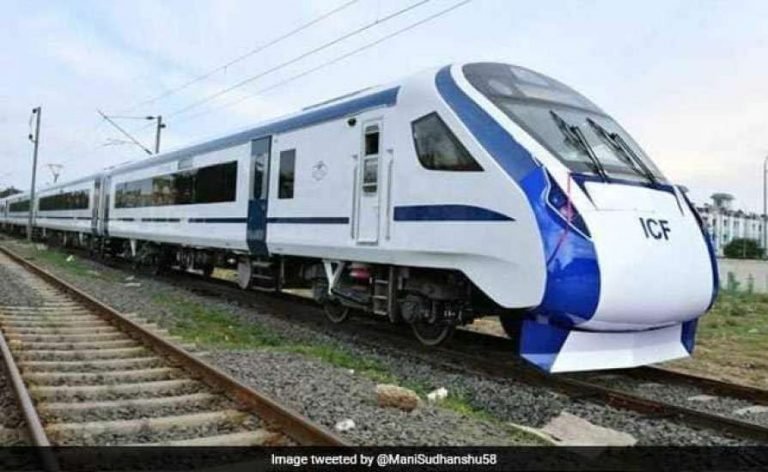
Semi-high-speed trains will move at 130-180 km per hour to cover the north-south rail corridor from Kochuveli to Kasaragod in four hours. Air-conditioned train sets on the lines of the newly introduced Train 18 have been proposed.
Biometric Ticketing – Is it just a buzz or the need of the hour?

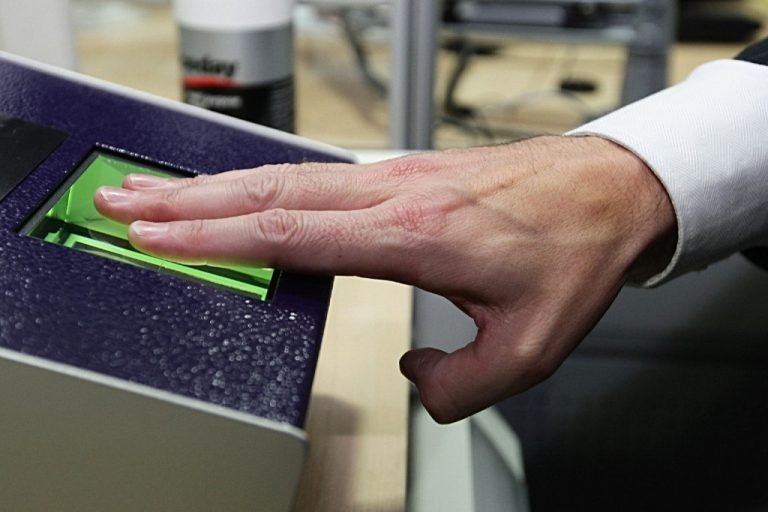
Use of biometric devices for identification, authentication, and access control (security) has been prevalent for a long time. The biometric devices use physiological or behavioral uniqueness of a living human being to identify and then automate a particular task for him or her. The most widely used biometric devices are fingerprint scanners, iris scanners, voice recognition engines, and off late facial recognition. Of all these biometric devices, fingerprints are the ones that have been in use for the longest time.  Finger-prints have been used as an acceptance or authorization of a transaction the world over. They have also been used for record keeping and identification of people with criminal history by the law enforcement agencies.   During the last few years, an increase in reliability of the finger scan readers coupled with the drop in per unit cost has resulted in the adoption of the finger scan technology for various use cases. 

In recent years, the finger scanning is being used for making quick ticket payments less the frills of carrying plastic money and remembering the security PIN. Popularly known as biometric ticketing, the finger scan readers have started appearing on fare revenue collection devices in the transportation environment. Rightly so, we are witnessing a significant shift to Biometric Ticketing with the global Biometrics market forecasted to reach $23.54 billion by 2020.

Advantages:

  • The identity trace is infallible. Each biometric can be traced back to the right person with almost 100% accuracy thus eliminating the scope of any fraud related to ticketing or the use of a physical ticket many times over by different users.
  • Ticketing concessions for specific demographic groups, e.g. students, senior citizens, armed forces, etc., can be linked to the eligible person. The biometric identity is linked to the user’s bank account facilitating easy deposit of cash backs through concessions as against direct concession provided on a contemporary ticketing media.
  • Only the digital representation of the biometric scan extracted (minutiae) with the help of biometric algorithms is stored; the actual scan is not stored or transmitted across the network thus maintaining user privacy. This ensures complete security of the scanned data.
  • People disallowed from entering particular premises can be kept at bay right at the ticket issuing stage and restricted from entering the said premises; e.g. restricted access zones such as hospital visitor access, airports and stadiums vis-à-vis anti-social elements, etc.

Disadvantages:

  • Very high-resolution scanners are required for biometric scanning, including finger, face, iris, etc.
  • Biometrics are sometimes not readable; e.g. unreadable fingerprints due to damage or age; iris scans, which are obstructed by eye lens, cornea reflections, eyelids, and eyelashes; face obscured by hair, hats, glasses, etc.; face not recognized due to change in ambient light and changing facial expressions

Workarounds towards optimized use at the current maturity level:

  • Biometric ticketing with two-factor authentication, wherein one is a contemporary option and the second one is a biometric is the way ahead. It is instrumental in building Strong Customer Authentication (SCA) paradigm, a new regulation for making payments currently under implementation in Europe.
  • Biometric ticketing gets strengthened through repeated usage as the algorithms are current and up to date with the smallest biological change happening as a natural process of aging.

In summary:

Biometric authentication has made inroads into the Identification of individuals for various use cases across the spectrum including automated ticketing and fare collection. Currently, Biometric authentication is on the slope of enlightenment of the Gartner’s hype cycle. Biometric ticketing, which is a direct use case of this technology, is making to the mainstream mode related to payments. It is a fool-proof ticketing method with a majority of pros; albeit with a few cons. The technology has naturally found a foothold through two-factor authentication, with one of the factors predominantly being biometric. It is definitely a strong step towards building a fail-safe and robust mode of ticketing for a heterogeneous society and eliminating social evils.

Authored by

Amarbahadur Singh, Manager – Engineering Solutions, Datamatics Global Services Ltd.

This Article will be published in July 2019 issue. Click here to subscribe

To know more about Automated Fare Collection systems, visit www.datamatics.com 

Munnar likely to get the monorail once more soon

Munnar (Metro rail news): The new project is aiming at drawing tourists to Munnar but earlier the Kundala Valley Light railway was for moving tea leaves and transportation of people.

The train will be modelled on the monorail, Kundala Valley Light Railway, introduced by the Britishers long ago, and if everything goes well, the chugging sound of a toy train will soon fill the sir in the hilly station of Munnar.
buy female viagra online no prescription

A preliminary study has been conducted by a team from Munnar to top station, the route of the monorail introduced nearly a century ago, as part of the project. The rail was washed away in the devasting floods of 1924 and portions of the rail could be seen decorating the entrance gate of some landmark buildings of the British era.

Heritage value

The top station of the monorail has now become the name of the place. A wheel of the train is kept ta at the Kanan Devan Hills Plantation’s (KDHP) Tea Museum in Munnar. The Kundala Valley Light Railway was for moving tea leaves and transportation of people but the new project is aimed at drawing tourists to Munnar.

The KDHP official Ajoy and Idukki District Tourism Promotion Council secretary Jayan P. Vijayan has done the preliminary study. It is learnt that the KDHP has show interested in the project to be implemented in public- private partnership (PPP) mode.

The primary study report would be submitted to Railways and their officials would conduct a useful study. The project would be implemented based on their report said by the MLA, S. Rjendran.

People Protesting against BMRCL’s tree-felling plan

Bangalore (Metro Rail News): Guruprasad member of the Church of South India Association accused the Bangalore Metro Rail Corporation Limited (BMRCL) of trying to cut the trees without the necessary permission. “The work on the underground metro line will happen below the church,” he reasoned.

Members of the All Saints Church joined hands with environmentalists on Sunday to stage a protest against “damage to be caused on trees on church land” by Namma Metro’s Gottigere-Nagavara line.

Guruprasad said, “We won’t allow the forests to get destroyed in the name of development, but BMRCL officials have decided to cut 100 trees without getting any clearance from the forest officials.”

They will move the high court of Karnataka against the BMRCL’s “unscientific” plan, said Joseph Hoover of the United Conservation Movement.

Hoover said, “A building can be rebuilt, but trees can’t and some of the trees are more than 100 years old and we don’t want to lose them they are part of the sacred grove.” The metro project has so far affected Fatima Bakery and the adjacent building on the church land.

 Hoover stated that, “The distance between the Vellara and Langford stations is only 877 metres. Metro officials should redesign the stretch to maintain an ideal distance of 1 km between the stations.”

BMRCL is refusing to look at the wide space on the government-owned area near the junction and is in fact, forcing the church officials to provide the land the protesters said.

The protesters said, “BMRCL has sought 40,000 square metres of church premises where differently abled children attend school. We have appealed to the chief minister to help us.”

Pune Metro to save more than Nagpur Metro: Brijesh Dixit

Pune (Metro Rail News): Maha Metro aims to increase that cost saving figure and believes it can do for Pune.

The Maharashtra metro Rail Corporation Ltd (Maha -Metro) declares it has the Nagpur Metro up and running with the total project cost seven percent lower than its budget.

Brijesh Dixit the Managing Director of Maha Metro says that “Nagpur metro got commissioned before time and the same will happen in Pune. The Nagpur metro is the first mega project completed in less than its estimated cost. The total project cost was ~8,680 crore and Maha Metro was able to save at least Rs 600 crore on the project.”

Maha Metro is the only public sector organisation in the country that has been able to accomplish this cost saving, as far as Dixit is concerned.

Maha – Metro is carrying out the two mega metro projects in Pune and Nagpur and is the special purpose vehicle (SPV).

The Nagpur metro is already engaged on an 11km route with commercial operations in place. 

Pune metro is scheduled to be lunch by December 2019 or January 2020.

“As per a recent survey, all mega projects in the country with a budget more than Rs. 1000 crore are delayed and there are cost escalations,” said by Dixit.

After State government announced a transit-oriented development policy in 500- meter radius around the metro stations in Pune on March8, it has fixed the maximum permissible floor space index (FSI) to four.

However, not all owners will get the benefit of four FSI under the transit- oriented development zone as it depends on the size of the plot.

How Nagpur was saved by Maha metro

Total project cost – Rs 8.680 crore

Cost saving – at least Rs 600 crore

Global tenders

Saving – Rs 200 crore

– Rakes and wagons order go to China.

– Other material being imported from Japan and other countries too be assembled in China.

Tie-ups

Saving – Rs 200 crore

Ticketing system – contract with the State Bank of India (SBI) for multi-mobility card.

– SBI bears cost of installing ticket machines and entry exit points at all metro stations.

Pune forecast

 “The same will happen in Pune. Pune metro will save even more cost.”

Said by – Brijesh Dixit, MD, Mahametro

Swargate-Katraj was delayed due to “route suggestions”

 The Pune’s Swargate to Katraj metro rail extension will miss its deadline and now only be completed as part of the second phase of the Pune Metro.

Pune metro’s first phase is expected to go live in 2021 and is on track to meet the deadline.

Maha Metro managing director Brijesh Dixit said that, “the route will be finalised, but now it will happen in the second phase of the Pune metro implying phase one will not be delayed for any reason.”

Political interference is being quoted by Maha-Metro authorities as being the cause of Pune’s Swargate to Katraj.

 “Maha-Metro has asked for the financial report on the route between Swargate and Katraj. Maha-Metro has prepared three options, including an underground metro, an elevated track on Satara road, and a third option that runs via market yard and Gangadham chowk,” metro rail extension being delayed said by Dixit.

MahaMetro was asked by the Pune Municipal Corporation (PMC) to prepare a development project report (DPR) for the Swargate to Katraj route, but local leaders are suggesting various route options, instead of opting for the straight route, on Satara road.

Maha-Metro is not able to finalise the DPR and the final route will now be delayed.

On the other hand, the Chinchwad to Nigdi metro extension is expected to be granted the central government’s permission before the onset of the state assembly elections, three months from now.

The Pimpri Chinchwad Municipal Corporation’s DPR request for the Chinchwad to Nigdi line has been submitted by Maha-Metro and has the state government’s nod.

E Sreedharan resigns as Principal Advisor to Lucknow Metro

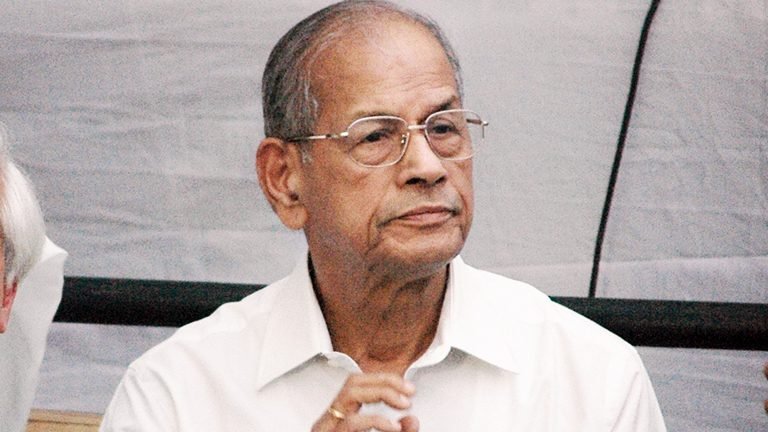
Lucknow (Metro Rail News): Padma Vibhushan E Sreedharan known as Metro Man has submitted his resignation as the Principal Advisor to Lucknow Metro Rail Corporation (LMRC) on Monday.

The former Chief of Delhi Metro handed his resignation citing health issues. The LMRC has forwarded the resignation letter to the state government for approval. Another senior officer of LMRC, Mahender Kumar, who is currently the Director of Rolling Stock, is also set to leave the LMRC on June 30, 2019.

Sreedharan was appointed as LMRC’s Principal Advisor on February 2014 is known for his experience in handling big Metro projects in the country. He is a retired Indian Engineering Service (IES) officer who has served as the managing director of Delhi Metro from 1995 to 2012.

“Sreedharan personally monitored the construction work of the North-South Corridor. His valuable guidance was crucial in the construction of the underground section. I requested him not to resign but he said his health was not supporting him at this point of time,” said LMRC Managing Director Kumar Keshav.

The former Chief of Delhi Metro advised Chief Engineers to implement austerity measures and cut expenses on maintenance and operations.  

Sreedharan is known for supervising the construction work of elevated tracks on the East-West Corridor to be built on a single pillar using lightweight technology. It brought down the total budget of the project by 15.9 per cent from Rs 5,396 crore to Rs 4,538 crore.

Separately, following Delhi CM’s proposal of giving free rides to women on Delhi Metro, Sreedharan wrote to PM Modi and made it clear that he was not in favour of such a proposal. In his letter to the Prime Minister on June 10, Sreedharan wrote, “One shareholder cannot take a unilateral decision to give concession to one section of community and push Delhi Metro in to inefficiency and bankruptcy.”

NHSRCL to acquire Most of the land for Bullet Train project by Dec 2019

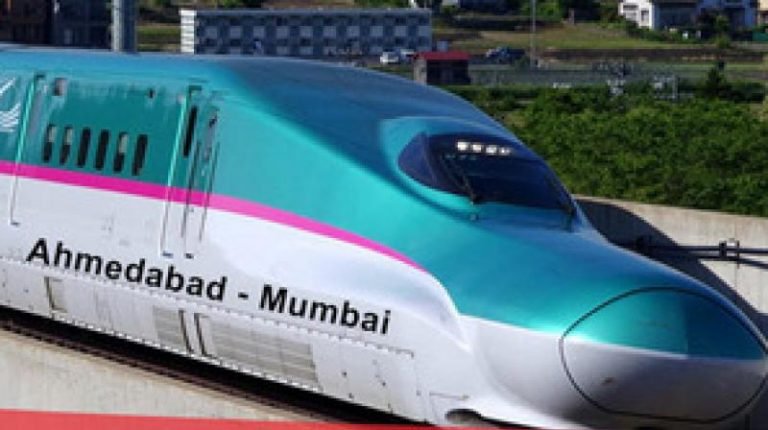
New Delhi (Metro Rail News): – A major chunk of land is required for the 508-km-long Mumbai-Ahmedabad Bullet train project to be hopefully acquired by The National High-Speed Rail Corp Ltd (NHSRCL) by the end of this year.

“The land will be taken over once the tenders for the project were finalized,” Said the spokesperson Sushma Gaur of NHSRCL.

She also added that “major chunk of the land acquisition is likely to be completed by December 2019.
buy flexeril online https://herbalshifa.co.uk/wp-content/themes/twentytwentytwo/inc/patterns/en/flexeril.html no prescription

A train travelling on the route takes over seven hours to travel the distance while planes take about an hour of flying time.  In comparison now, the bullet trains are expected to run at 320 km per hour covering the 508 km stretch in about two hours.

The National High-Speed Rail Corp Ltd has acquired 39% of the 1,380 hectares of land till date.

This comes to 537 hectares: 471 of 940 hectares required in Dadra and Nagar Haveli. “The bullet train project was progressing at a good place,” said Sushma Gaur.

She said, “Two or three months back the total land acquired was 33%. And within 90 days we were able to acquire over 6% more land.”

Prime Ministers Narendra Modi of India and Shinzo Abe of Japan on September 14, 2017, laid the foundation stone for the ambitious ₹1.08 lakh crore ($17 billion) high-speed rail project.

A MoU was signed by The Japan International Cooperation Agency (JICA) and the Railway Ministry with Japan to partially fund the project.

“The railways had floated tenders for tunnelling work, including testing and commissioning of the double line high-speed railway using tunnel boring machine (TBM) and New Austrian Tunnelling Method (NATM) between the underground station at the Bandra-Kurla Complex in Mumbai and Shilphata in Maharashtra,” said by Gaur.

“A 21-km tunnel will be dug between Boisar in Maharashtra and the Bandra-Kurla Complex, 7 km of which will be under the sea,” according to the official.

“The design and construction of civil and building works, including testing and commissioning of 237 km of length of rail line corridor between Zaroli village on the Maharashtra-Gujarat border and Vadodara in Gujarat, have been floated,” said by Sushma Gaur.

This accounts for 47% of the total length of the project and will include a mountain tunnel of about 280 metres, 24 river crossings and 30 road and canal crossings.

She also stated that the tenders to construct the stations in Gujarat’s Vapi, Bilimora, Surat and Bharuch had also been floated.

The construction of the Sabarmati hub in Ahmedabad to be linked to the bullet train station has started.

New MRT-3 Rails to arrive from Japan By August 2019

MANILA (Metro Rail News): On Friday the Department of Transportation (DOTr) said, the new rails from Japan are expected to arrive in the Philippines within July-August this year amongst the current rehabilitation of the Metro Rail Transit 3 (MRT-3).

The Nippon Steel-made rails after arriving at the Port of Manila will be delivered and prepared for installation at the tracks’ laydown yard near the Parañaque Integrated Transport Exchange.

The DOTr said,“Over 50 percent of the rails are ready for shipment from Japan, and are expected to arrive in the Philippines in the third quarter of this year (July – August 2019) — several months earlier than its arranged date of delivery,”

The DOTr said it expects the MRT-3 trains to be running smoothly with the repair of its wheel lathe machine last March and the future replacement of all its mainline tracks.

Last Thursday the DOTr’s Factory Acceptance Test team headed by MRT Director for Operations Michael Capati, accompanied by Asian Development Bank rail expert Peter Raeside and TES Philippines chairman Kiyoshi Morita, visited Japanese steel firm Nippon Steel in Fukuoka, Japan to inspect the new rails that will be installed on the MRT tracks.

In a statement the DOTr said, “With the repair of MRT-3’s wheel lathe machine last March and the future replacement of all of MRT-3’s mainline tracks, MRT-3’s will be running smoother and with less vibration. Vibration has been one of the enemies of any mechanical and electrical equipment, and is one of the causes of MRT-3’s breakdowns in the past.”

Parts of the light rail vehicles for the railway system will arrive early in July while tracks and signaling components are set to be delivered in August, stated The consortium of Sumitomo, Mitsubishi Heavy Industries and TES Philippines (Sumitomo-MHI-TESP)

Sumitomo-MHI-TESP will undertake the overhaul of all 72 light rail vehicles of the MRT-3, replace all mainline tracks, rehabilitate power and overhead catenary systems, upgrade the signaling system, communications and CCTV systems, and all the escalators and elevators will be repaired, and repair other system for improvements.

The MRT rehabilitation project is seen to increase the number of operating trains from 15 to 20 at peak hours, double the train operating speed from 30 to 60 kilometers per hour, reduce by half the headway or waiting time from 7-10 minutes to just 3.5 minutes and increase train capacity from an average of 300,000 passengers per day to 650,000 passengers daily.

The Sumitomo-MHI-TESP took over the maintenance and rehabilitation of the MRT-3 last May from the MRT Maintenance Transition Team of the DOTr. The project is expected to last for 43 months with rehabilitation works slated for completion within the first 26 months.

Free Metro Rides for Women is a poll gimmick says E Sreedharan

NEW DELHI (Metro Rail News): Calling Delhi government’s plan to allow free travel to women in Delhi Metro an election gimmick, ‘Metro Man’ E Sreedharan has told deputy chief minister Manish Sisodia that if the government is flush with cash, it should help Delhi Metro Rail Corporation (DMRC) get more trains and build new lines instead of subsidizing free travel.

The former managing director of DMRC had earlier written to Prime Minister Narendra Modi urging him not to agree to the proposal. Reacting to that letter Sisodia had written to Sreedharan, stating that he was “surprised and pained” by the view. He also requested Sreedharan to reconsider his stand as DMRC was running 65% below its capacity.

D9kU3mKUYAAqa1l 2
Letter to Manish Sisodia by E Sreedharan (PART 1)


“Your letter dated 14.06.2019 addressed to me has not so far been received, but I got a copy from the media,” Sreedharan wrote in the letter to Sisodia dated June 20.


“Everybody knows this is an election gimmick to win votes of women in the next assembly election,” he wrote, adding that he is against the very idea of allowing free travel to any section till the loans taken by DMRC, of which Rs 35,000 crore is still outstanding, are paid back. “Your government may compensate DMRC but successor governments may not. DMRC will not then be able to reverse and charge women commuters.”


Sreedharan said the AAP government’s decision would set “alarming precedence” for other metro services, which also carry heavy debt burdens at a time when their growth rate was slow. “I am not opposing Delhi government’s proposal to bear the cost of free travel for women but objecting only to the concept of free travel in a metro.”

D9kU4O0UwAAXwsu 1
Letter to Manish Sisodia by E Sreedharan (PART 2)


If the Delhi government is so concerned about women, it can reimburse their cost of travel directly to them, suggested Sreedharan. The money that will be used as the subsidy is taxpayers’ money and they have a right to question why only women are being given free travel, he added. “If we allow free travel for women, what about more deserving categories such as students, disabled persons, senior citizens?” Dismissing Sisodia’s claim that the metro is utilizing only 65% of its capacity, Sreedharan wrote that the system was so heavily crowded during the peak hours hat even with trains running every two minutes, commuters found it difficult to board for lack of space.

Allowing free travel to women will only worsen the situation, he pointed out.

Prashant Pawar claims Maha Metro for favoring L&T

NAGPUR (Metro Rail News): Prashant Pawar leader of Jai Jawan Jai Kisan alleged that Maha Metro had favored L&T which runs Hyderabad Metro, in leasing coaches. However, Maha Metro trashed his claim citing directives of Commissioner of Metro Rail Safety (CMRS).

Quoting a preliminary audit report “Maha metro had leased six coaches from L&T for Rs.15 crore a year. Moreover, the coaches were leased for four years when they were required only for one year, “, Pawar said.

Brijesh Dixit, the MahaMetro managing director stated that the coaches have been leased for 3 years and not four. He also added that “After using them in Nagpur, we will take them to Pune and later maybe Thane if state Government awards the project to us. It takes weeks for new coaches to be tested and so the ones leased were vital for the trail run and inspections of Research Design and Standards Organization (RDSO) and Commissioner of Metro Rail Safety (CMRS).

He further added that,” We had earlier contacted Chennai Metro, a government owned one, for two trains. However, they are four coach trains and our platforms are not that long. Secondly, they have side evacuation facility against front evacuation of our coaches. CMRS asked us to lease only those trains that are similar to ours.”

The cost of Nagpur Metro train is around Rs. 30 crores, including taxes. However, L&T has charged Rs. 7.5 crore per train per year.  Brijesh Dixit said that, “Even Chennai Metro has asked for Rs.7.10 crore per train. The rent is on the higher side but it’s a suppliers market. We didn’t contact other Metros after CMRS directive.”

Dixit said that,” There was a delay of about four months in finalizing the contract as one of the bidders had approached High Court and then Supreme Court.” Pawar also claimed that there was a delay in delivery of coaches from China. Dixit responded it saying Nagpur Metro was the fastest in ordering the rolling stock.

“The cost of rolling stock as per the detailed project report (DPR) was Rs 9222 crore while Nagpur Metro had awarded the tender for Rs 718 crore thus leading to a saving of Rs 204 crore,” said buy the MD.

Jai Jawan Jai Kisan had earlier claimed that the contractor for Reach III had been awarded the contract for building some stations of Reach II without any tender. Dixit also added that the DPR nowhere mentioned that construction work had to be awarded  to different contractors,” Our contract for Reach III clearly states that work site means the places where the permanent works are to be executed and any other places as may be specified in the contract as forming part of the site. Our site in the entire city of Nagpur.”

Brijesh Dixit stated that they were held on the request of citizen who had endured a lot of inconvenience during construction work. The coaches from L&T were leased for trial run and not joyrides. Pawar also alleged Maha Metro for holding joyrides saying that there was no provision for it in DPR.

CMRS investigates Nagpur Metro

A team of Commissioner of Metro Rail Safety (CMRS) led by commission Janak Kumar Garg took stock of various works being done by Nagpur Metro in Reach I (Sitabuldi to Khapri).  KL Purthi and Varun Maurya were other members of the team. CMRS is here to sanction the second line of Reach I.

Garg first met Maha Metro managing director Dixit to learn about the progress of Reach I. he then held meetings with senior officials, including Mahesh Kumar, Sunil Mathur, S Sivamathan, Anil Kokate and others.

The commissioner then visited Sitabuldi interchange station. He inspected the security system and various facilities available at the station. They included smoke detection system, emergency lighting, fire safety equipment, scanner, automatic fare collection gates, escalators, etc.

CMRS team will travel by trolley from Sitabuldi to Khapri and inspect Airport and Khapri stations on the way. Morning services in Metro will be closed on Thursday.