Home Blog Page 648

CM Kamal Nath asks officials to expedite metro projects

BHOPAL (Metro Rail News): Chief minister Kamal Nath has directed the concerning authorities to prepare a tripartite memorandum of understanding (MoU) for the metro projects in Bhopal and Indore and implement it at the earliest, according to a press release here on Tuesday.

Nath also reviewed the progress of the metro projects along with the minister for urban development Jaivardhan Singh.

On June 13, reported about an MoU between the European Investment Bank and the Union government, pertaining to the Bhopal Metro, which could be inked soon. Nath asked officials to complete all the formalities for seeking loans from the Asian Development Bank and New Development Bank for the Indore Metro project and from the European Investment Bank for Bhopal Metro.

Given the intensive construction activities to be undertaken for the construction of both the metros, Nath directed that all measures should be taken to ensure that citizens do not face any inconvenience during the construction period and traffic remains undisturbed.

A time-bound program so that the projects gain momentum is likely to be set in place.
buy cipro online https://herbalshifa.co.uk/wp-content/themes/twentytwentytwo/inc/patterns/en/cipro.html no prescription
The chief minister said that issues concerning land acquisition must be addressed during the construction phase of the metro project.

He said information about the financial burden on the government must also be addressed.

Nath said that timelines for the construction work of different stages should be fixed and they should be completed within the decided time limit.

He also instructed that a report be prepared on underground and elevated sections of the project.
MMRDA spent 12,940 crores on six metro lines in Mumbai

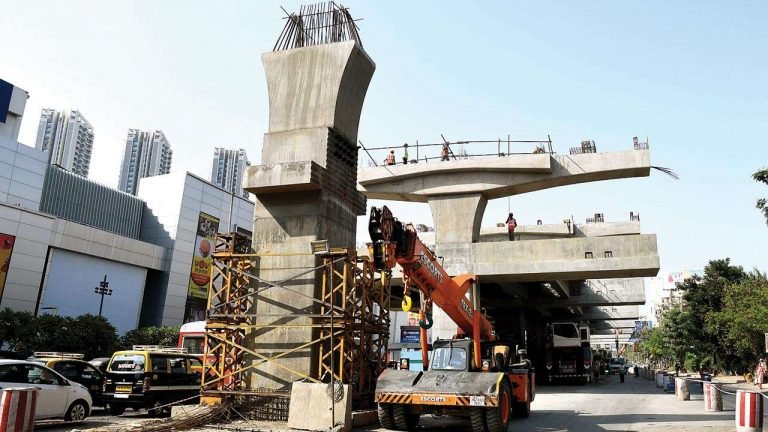
MUMBAI (Metro Rail News): The Maharashtra government has spent Rs. 12,940 crores on the on-going construction work of six metro corridors in the city from 2016 to the end of March 2019.

According to the state’s economic survey report 2018-19, the total expenditure amounts of 19% of Rs. 68,005 crores, the total cost of constructing the six metro lines.

While the Mumbai Metro Rail Corporation (MMRC) is building one, The Mumbai Metropolitan Region Development Authority (MMRDA) is currently working on constructing five Metro corridors in the city.

The largest chunk of the total expenditure was Rs. 9,402 crore- has already been spent on the fully – underground Metro-3 (Colaba-Seepz) corridor by the MMRC. The corporation recently has completed 50% of tunnelling works for the project. Which costs Rs. 23,136 crores.

The next big chunk was spent on lines 2A (Dahisar- DN Nagar) and 7 (Dahisar East-Andheri East), both of which are expected to be up and running by December 2020.

 The MMRDA has spent ₹1,561 crore on Metro-7, wherein 67% of the civil works have been completed, and ₹1,351 crore on Metro-2A, wherein 63% of the civil works have been finished, according to the economic survey report.

RA Rajeev, the metropolitan commissioner, MMRDA, said that the next big expenditure will be on the systems. “We have a system order of more than ₹3,000 crore, which includes rolling stock, signalling, telecommunications, etc. This expenditure is due in the next year,”

The Mumbai Metropolitan Rail Development Authority has also spent ₹201.30 crore on Metro-6 (Swami Samarth Nagar-Vikhroli); ₹227.98 crore on Metro-4 (Wadala-Kasarvadavali); and ₹196.31 crore on Metro-2B (DN Nagar-Mandale).

However, citizens, have been protesting against all the three routes.

Powai residents have demanded rerouting Metro line 6, citizens have been demanding underground routes for lines 2B and 4.

A transport expert from Mumbai Vikas Samiti, AV Shenoy, said the MMRDA should have conducted public consultations before starting work on these projects. He also added, “This is a serious lacuna with the authority…there were no public consultations or citizen committees set up to weigh the projects before they spend such a huge amount on it.”

Chennai Metro to put up more signages near stations

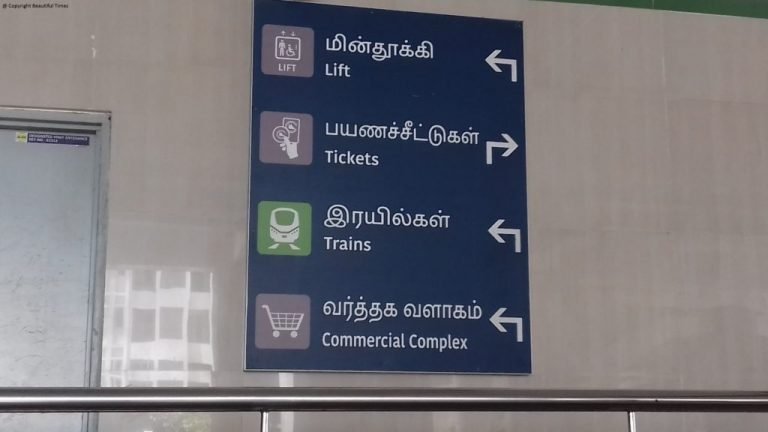
CHENNAI (Metro Rail News): To encourage more people to use the Metro Rail and guide them to the nearest station, Chennai Metro Rail plans to put up signages in areas near the stations.

According to officials of Chennai Metro Rail Limited (CMRL), they will start a survey to identify the spots where the signages have to be installed.

Stage by stage

“We will fix the signage in about 500 meters around the stations, giving directions to the nearest station. For example, if one is standing at Vadapalani, there will be signage showing they are about 400 meters away from the station and as they move closer, it will show 300 meters and so on.
buy neurontin online https://www.ecladent.co.uk/wp-content/themes/twentyseventeen/inc/en/neurontin.html no prescription
This will particularly help those who are new to the city and want to use public transport,” an official said.

At present, a handful of stations such as Koyambedu, Arumbakkam, and Ashok Nagar have signages near the stations but they are not well placed or clearly visible from a distance. The new ones may not be like the existing ones, the official said.

“We plan to put them up in all 32 stations in the 45-km network of phase I project. Also, the new signages will be more prominent and placed in such a way that any commuter will notice it. This is why, we are first carrying out a survey to see the location, instead of just fixing the signages,” the official added.

Inside stations

Chennai Metro Rail has begun putting up additional signages inside stations in the underground network. In stations like the Government Estate, they have already installed signages.

“In the other newly opened stations along Anna Salai and 19 other underground stations too, we are taking steps to put up signages,” he added.

Vande Bharat Express completes 1.35 Lakh Km and still counting

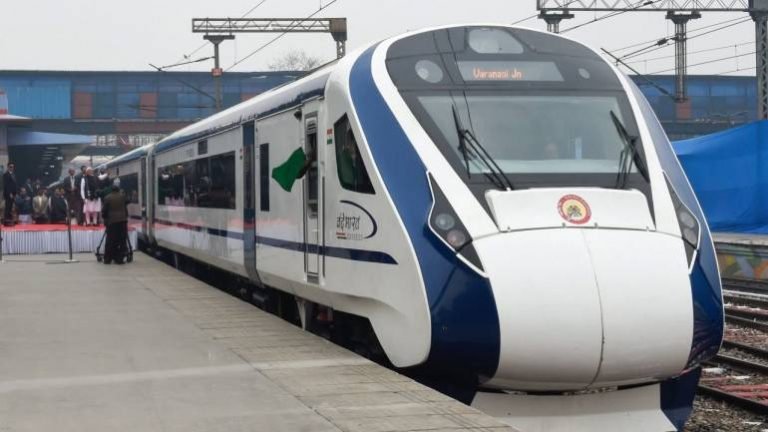
DELHI (Metro Rail News): Vande Bharat formerly known as Train 18, India’s first engine-less semi high-speed train, started its operation in mid-February and attained a great achievement. The train runs at a speed of 104 km/hour between Ghaziabad and Allahabad, which is termed to be the average highest speed in India.

The Vande Bharat Express was designed and built in Integral Coach Factory (ICF), Chennai under the Government of India’s Make in India initiative over a span of 18 months.

Two of the center compartments are first class compartments that have 52 seats each and the rest being the coach compartments which have 78 seats.
buy viagra capsules online no prescription
It has a driver cabin at both ends of the train. Prime Minister Narendra Modi had flagged off Vande Bharat train on February 15 from New Delhi railway station. 

The high-speed train has the best amenities including high-speed onboard WiFi, GPS based passenger based information system, touch-free bio vacuum, LED lightings, mobile charging points, and a climate control system that automatically adjusts the temperature.

In May 2019, the indigenously-built  Vande Bharat had completed one lakh kilometer run time without missing a single trip. 

Till now the train has covered at least 1.35 lakh kilometer and is still counting. To make sure that the train runs at a high-speed, the Indian Railway has done major changes. The Indian Railway has awarded the loco-pilot of the train for maintaining peak speed.

It began its operation in February 2019. The train runs through three different zones- Northern railway, Northern-central railway, and North-eastern railway. The train covers more than 600 km from Gautam Buddh Nagar’s Chipyana Buzurg to Allahabad Junction.

Vande Bharat Express operates five days a week and it’s departure time from New Delhi is 6 a.m. and the train reaches Varanasi at 2 p.m.

The Railway Ministry has initiated many changes in the train. According to the experience of passengers, toilet facility has markedly improved from other trains, for providing better catering services the ministry is also planning to provide a pantry car for the train. Even window glasses have also changed to prevent it from stone-pelting instances.

Paytm introduces Metro Route Search for commuters

Noida (Metro rail news): Paytm has announced the launch of Metro Route Search – a feature that can be used by commuters to plan their journey. The feature is available in all 10 cities that have metro rail facility including Delhi, Noida, Gurgaon, Bengaluru, Hyderabad, Kolkata, Mumbai, Chennai, Lucknow, Kochi, and Jaipur.

Features

The feature does not just suggest a route between origin and destination but also provides estimated travel time, fares, the number of stations to traverse and interchanging station for changing lines.

For scenarios where multiple routes are possible, it also recommends the best route, taking into account the travel time and the number of times the metro lines are to be changed during the journey.

Step to use the Metro Route Search feature on Paytm?

  1. Open Paytm app and click on the ‘Metro’ icon.
  2. Select your city and click on Route Search.
    buy doxycycline online https://gilbertroaddental.com/wp-content/themes/twentyseventeen/inc/en/doxycycline.html no prescription
  3. Select your origin and destination stations and click on the search button to view the routes.
  4. The feature would suggest the route and also show you the journey time between the selected stations.

“At Paytm, we constantly think of ways for improving the travel experience of our users. The Metro Route Search is yet another step towards offering a more convenient way for metro travellers to smartly plan their journey. We witnessed an overwhelming response to this feature within hours of making it live on the app. We have many more innovative features in the pipeline that will help improve our users’ journey experience across all modes of transport.” Said Abhishek Rajan, VP, Paytm.

Paytm has been a pioneer in launching innovative features for Flight, Bus, and Train travellers. Previously, they had launched FREE Cancellation that allows users to cancel their travel ticket without requiring to pay any cancellation charges. Other popular features include Live Train Tracking, Quick Book and Voice Search that were rolled out to make train ticket booking, seamless experience for users.

J&K Likely to get Light Metro, work may begin by Dec 2019

Jammu & Srinagar (Metro Rail News): Jammu and Srinagar likely to get Light Rail Transit System corridors. The detail projects reports (DPR) for both the place have been completed.

The government has formed the Metropolitan Regional Development Authority (MRDA) to manage the much-hyped project to expedite various schemes.

Rajeev Ranjan, the managing director of MRDA said that If everything goes according to plan, the work on these prestigious projects could begin by the end of this year and the report will be submitted before the Union Cabinet by the next month for the final approval,

He further said, “It is not an underground project because that is not feasible in J&K.”  He named the project as a light metro, which is different from the metro. It is an alleviated project in which an engine could be driving three coaches.

This project will require around Rs 10,000 crores for its completion. Rajeev Ranjan said that the project will help in facilitating the travel of people in two big cities of the state. The DPR for both Jammu and Srinagar project were prepared by the RITES- a consultancy service working for development of infrastructure in Urban transport.

Raghav Langer Chief Executive officer of Jammu and Kashmir said,” We got the project report prepared last year and now it is being handled by a separate authority.”

Srinagar corridor Details

Officials said the distance between the intersections will be around one kilometre. The Srinagar corridor will have 24 stations with 12 each in the two parts of the corridor. The corridor-I will be spread over 12.5km and will begin from HMT (Shalteng) till Indra Nagar, which is close to the Army’s 15 Corps headquarters. The corridor-II will cover a distance of 12.5km and will begin from Osmanabad till Hazuri Bagh in the heart of city.

Jammu Corridor Details

The Jammu city will also have a two-part corridor of 23km length. The Corridor-I will begin from Bantalab to Greater Kalash and will have 17 stations. It will pass through the heart of Jammu city.

Jammu Metro Route Map
Jammu Metro Rote Map

Both the corridors will have major depots. The Corridor II will start from Udheywala and end at Exhibition ground and will have six stations.

The Metro Man E Sreedharan, who was appointed as an advisor by the J&K government had also visited the sites of both the projects and given a go ahead.

Mumbai to Pune in less than 30 Minutes

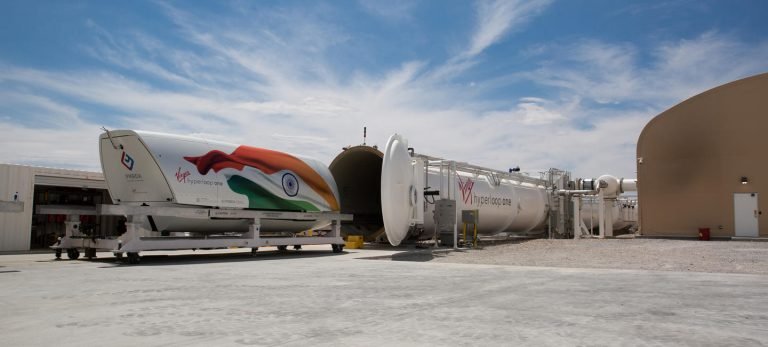
MUMBAI (Metro Rail News): There is hardly any doubt about the fact that hyperloop is probably the next big thing in transportation space. But, what if we told you that it can reduce travel time between Mumbai and Pune to under 30 minutes. Virgin Hyperloop One has proposed a plan that will help people to travel from Mumbai to Pune under 30 minutes. According to news reports, Virgin Hyperloop One will begin working on the project by December 2019. Virgin Hyperloop is an American transportation technology company that works to commercialize the high-speed technology concept called Hyperloop. 

An agreement to build a hyperloop route between Mumbai and Pune was signed in the presence of Prime Minister Narendra Modi, Maharashtra chief minister Devendra Fadnavis, and Virgin Chairman Sir Richard Branson. The full project is proposing to link Central Pune, the Navi Mumbai International Airport and Central Mumbai – with a potential commute time of 25 minutes.

Recently Hyperloop One officially tweeted: “Pune to Mumbai in under 30 minutes. Are you ready?”

The distance between Mumbai and Pune is around 150 km. By road, it takes more than 3 hours to reach Pune and by train, the scheduled time is 2.30 hours, however, the Hyperloop One promises to cover the same distance within 25 minutes. It is expected to benefit more than 25 million travellers and it would also connect Navi Mumbai International airport to Pune.

The company plans to take the technology to other routes as well. It believes that there are five viable routes between different Indian cities with estimated 55-minute commute for a Delhi-Jaipur-Indore-Mumbai system, 50-minute for a Mumbai-Bangalore-Chennai commute, 41-minute for a Bangalore-Thiruvananthapuram commute and 20-minute for a Bangalore-Chennai commute on the hyperloop system.

The first phase will be opened as a trial run which will cover 15 km initially and later it will be extended till Pune. The project is likely to be completed by 2023. Hyperloop One is expected to invest $500 million in the first phase of the development. 

Bullet train project to affect 54,000 mangroves on 13 hectares

Mumbai (Metro Rail News): The Mumbai-Ahmedabad high speed rail corridor will be affecting 54,000 mangroves spread over 13.36 hectares, this project is commonly called the bullet train project, said state transport minister Diwakar Raote on Monda

He replied to a question raised by Shiv Sena legislator Maneesha Kayande in the state Legislative Council.

He stated, “There will be no cutting of trees and there will no threat of flooding to some parts of Navi Mumbai and the pillars of the project will be high so that there is no damage caused to the environment.”

Raote informed in his written reply, “As per my information, farmers are keen on handing over their land for appropriate remuneration.” In this multi-billion dollar project the state government has suggested to plant five plants for each one tree that will be removed.

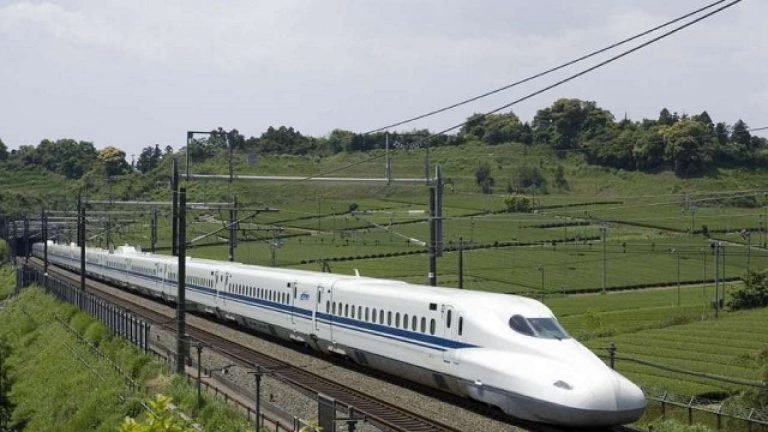
The project, expected to cost over ₹1 lakh crore, is funded by the Japan International Cooperation Agency (JICA).

Replying to another question raised by Congress MLC Sharad Ranpise, Raote said, “The proposed land acquisition for the bullet train project is 1,379 hectares of which 724.13 hectares is private land in Gujarat while 270.65 hectares is in Maharashtra.”

“In Palghar district 188 hectares of private land is going to be acquired of which 2.95 hectares has been purchased as per the ‘private negotiation’ policy of the state government. Due to the bullet train project 3,498 people from Palghar will be affected.” Said Raote.

Raote said, “84.81 hectares belonging to 6,589 farmers has been acquired in Thane district, of which 2.95 hectares has been purchased as per the private negotiation policy.”

Many years ago the state government introduced private negotiation as a policy in which the land is bought directly from the owner instead of following the land acquisition procedure which normally takes more time.

Namma Metro Purple Line at risk

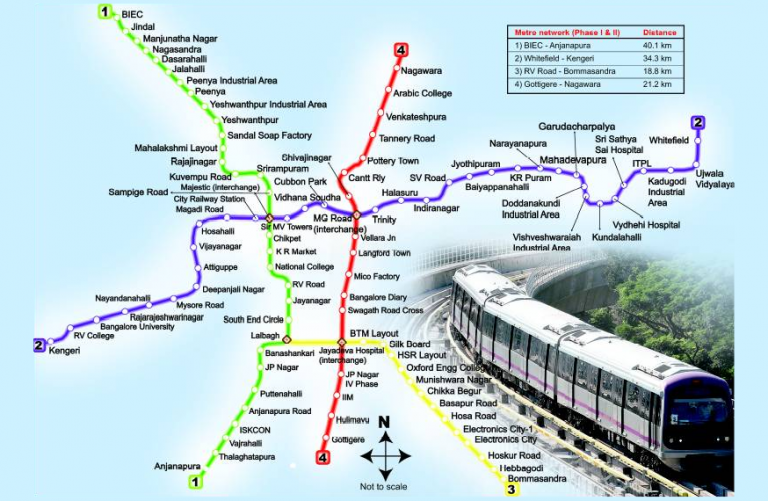
BENGALURU (Metro Rail News): Metro Rail operations on the Purple Line between Baiyappanahalli and Nayandahalli could have been pulverized any time in the 21-day period between May 15 and June 5 due to a glaring lack of security.

A whopping 1.225 tonnes of copper wires, valued at Rs 5 lakh and installed for earthing on the ‘third rail’ that electrically powers the Metro Rail, was found removed and missing — basically stolen.

Earthing is crucial to protect not only the system but also human life as it provides an alternative path for dangerous currents to flow so that accidents due to electric shock and damage to the equipment can be avoided. With copper, totally 490 meters in length, missing, the entire electrical system powering the trains on the line could have been destroyed, halting Namma Metro services for long hours until repaired.

KVST Raju, the BMRCL engineer who filed the complaint, told the police that 257 meters of copper conductor installed in the upline and 233 meters installed in the downline (totally 490 meters) had been stolen between May 15 and June 5. May 15 was the last confirmed report of the copper being in place.

The theft came to light only on June 5 and was detected, not by the track maintenance workers who are supposed to keep a check on it daily, but by a loco-pilot at the controls of a train moving between Baiyappanahalli and Swami Vivekananda stations.

Delhi Metro’s Violet line Operation to be affected for a week

NEW DELHI (Metro Rail News): Metro services on the Violet Line will be affected for a week starting Monday as Delhi Metro Rail Corporation (DMRC) undertakes track maintenance work.

The metro operator issued a Violet Line update on its official Twitter account which stated: “DMRC will be undertaking planned track maintenance work at one of the reversal sides of trains at Kashmere Gate station for a period of around one week starting today.”

“Due to this, frequency of trains may witness slight variation during this period,” it said.

DMRC is known for posting regular updates about delays in metro service in advance.