Home Blog Page 650

Only 39% of land acquired for Bullet train project

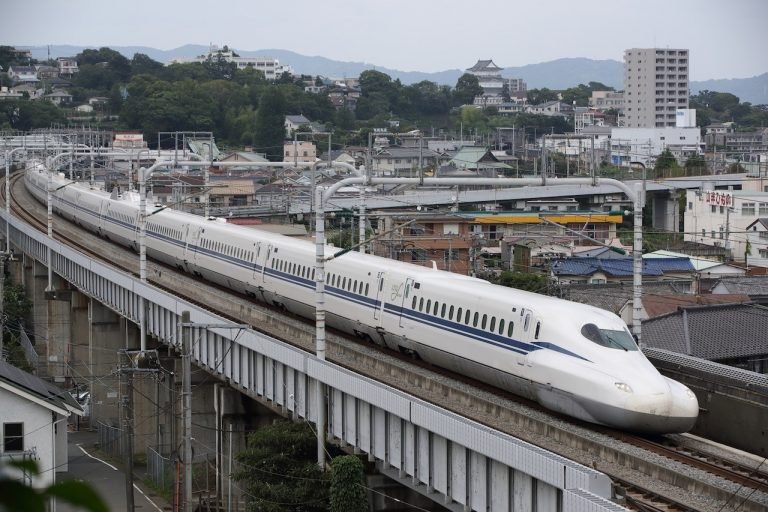
NEW DELHI (Metro Rail News): Mumbai-Ahmedabad bullet train project which is Prime Minister Narendra Modi’s ambitious project is missing on its deadline of land acquisition as till date only 39 percent of the 1,380 hectares of land required has been acquired.

“Till date, we have acquired about 39 percent of the land” said by a senior National High-Speed Rail Corporation Ltd. (NHSRCL) official requesting anonymity said. NHSRCL has acquired 537 of the 1,387 hectares land required in Maharashtra and Gujarat he said.

The NHSRCL has acquired 471 of 940 hectares of land, while in Maharashtra, it has acquired 66 of 431 hectares, in Gujarat. He said, “Of the nine hectares land required in Dadra and Nagar Haveli, the agency has been unable to acquire even a single piece of land”.

The government had set a deadline for December 2018 to clear the land acquisition roadblock.
buy viagra oral jelly online no prescription
Modi and his Japanese counterpart Shinzo Abe on September 14, 2017, laid the foundation stone of the ambitious Rs 1.08 lakh crore ($17 billion) 508-km long Ahmedabad-Mumbai high-speed rail project.

Japan International Cooperation Agency (JICA) and the Union Railway Ministry have inked a memorandum of understanding (MoU) for the 508-km corridor, with Japan to partially fund the project.

The railways have floated the tenders for the construction of tunneling works, including testing and commissioning for double line high-speed railway using tunnel boring machine (TBM) and New Austrian Tunnelling Method (NATM) between Mumbai underground station at Bandra-Kurla Complex and Shilphata in Maharashtra, the official said.

According to the official, a 21-km-long tunnel will be dug between Boisar and BKC in Mumbai, 7 km of which will be under the sea.

The NHSRCL official said that the design and construction of civil and building works including testing and commissioning of 237 km length of mainline for Mumbai-Ahmedabad High Speed Rail corridor between Zaroli village at Maharashtra-Gujarat border and Vadodara in Gujarat, which is 47 per cent of total length of the project, elevated except one mountain tunnel of about 280 metre, 24 river crossings and 30 road and canal crossings have been floated.

He said the tenders to construct the stations in Gujarat’s Vapi, Bilimora, Surat, and Bharuch have also been floated.

The official said that the work on utility diversions on various locations is progressing well while the work at Sabarmati hub in Ahmedabad has started.

The bullet trains are expected to run at 350 km per hour covering the 508 km stretch in about two hours.

In comparison, trains currently plying on the route take over seven hours to travel the distance, whereas flights take about an hour.


Delhi Metro services on all lines begin early on International Yoga Day

NEW DELHI (Metro Rail News): Traffic officials said, on Friday morning on the occasion of International Day of Yoga. The Delhi Police has asked commuters to avoid Rajpath and its connecting roads as nearly 30,000 people are expected to throng the Red Fort.

They said to ensure smooth flow of traffic in and around Red Fort, motorists are advised to avoid Rajpath and its connecting roads as on Friday up to 10 am huge public gathering is expected at Rajnath.

Traffic may be restricted and diverted on certain roads, according to the advisory.

Therefore, motorists and commuters are advised to avoid certain roads such as Netaji Subash Marg, Nishad Raj Marg, Rafi Marg, Janpath (between MLNP and Windsor), Man Singh Road (Between Q-point and Jaswant Singh Round About), Maulana Azad Road, Rajnath (Between Vijay Chowk and Man Singh crossing), Krishna Manon Marg, Rajender Prasad Marg during Yoga day celebrations from 5 am to 9.30 am.

Advisory stated commuters are advised to take alternate routes such as the Ring Road, Mathura Road, Bhairon Marg, Rajesh Pilot Marg, Dr. Abdul Kalam Road, Tuglak Road, Mother Teresa Crescent Marg to travel from south to north and vice versa and from east to west and vice versa the.

The advisory added, approximately 200 buses and 2,000 cars are expected to come at Red Fort. The buses will be parked in the parking lots at Sunheri Masjid, Parade Ground, and Tikona Park. The buses will be parked on the service road of the Ring Road behind Red Fort.

DMRC officials said seeking to facilitate maximum commuters on the International Day of Yoga, metro services will begin from the terminal stations of all lines on Friday from 4 am.

They said trains will run with a frequency of 30 minutes till 6 am and normal services will resume thereafter.

“Metro services will begin from the terminal stations of all lines from 4 am tomorrow (Friday) to facilitate the public in reaching various venues for the celebrations”, A senior DMRC official said.

The government and other agencies have hosted the activities that have been planned to mark the occasion in the national capital.

Fire at Delhi’s Kalindi Kunj, metro service affected

NEW DELHI (Metro Rail News): Metro service has been stopped temporarily as a major fire broke out at a furniture market in Kalindi Kunj close to the Delhi metro’s Magenta line on Friday morning. No injuries were reported in the incident.

The call was received at 5.55 a.m. regarding a fire in the market which covered an area of about 2,000 square yards. “A total of 17 fire tenders were pressed into service. The fire was doused around 9 a.m. said by the Delhi Fire Services Chief Atul Garg.

Magenta line, train movement has been stopped temporarily between Jasola Vihar Shaheen Bagh and Kalindi Kunj due to smoke and fire from a blaze underneath the section. “Short loops are being run between Janakpuri West and Jasola Vihar Shaheen Bagh. No service between Kalindi Kunj and Botanical Garden said by an official from The Delhi Metro Rail Corporation (DMRC).

DMRC officials said that “Metro services between Jasola Vihar and Botanical Garden resumed at around 10.30 a.m”. ANI reported a total of 15 fire tenders are present at the spot, and fire-fighting operation is still underway.

The Delhi Metro Rail Corporation, in a statement, said it was running short loops between Janakpuri West and Jasola Vihar Shaheen Bagh. “No service between Kalindi Kunj and Botanical Garden temporarily,” said the authority.


Here are some updates:


11.01 PM: The Metro train services have resumed between Botanical Garden and Jasola Vihar- Shaheen Bagh.
9.39 PM: DMRC said that “Passengers at Botanical Garden please use the blue line to continue with your journey”.
9.00 AM: DMRC said “The firefighters are still attending the fire near Kalindi Kunj. We shall keep you posted when train movement resumes between the affected section”.
7.30 AM: Train movement has been stopped temporarily between Jasola Vihar Shaheen Bagh and Kalindi Kunj due to smoke and fire from a fire underneath the section, says Delhi Metro.
8.12 AM: No service between Kalindi Kunj and Botanical Garden temporarily: Delhi Metro.

A Free Ride for Women in Metro Rail

DELHI (Metro Rail News): On June 3 the Arvind Kejriwal-led Aam Aadmi Party (AAP) government in Delhi announced that it was considering making Delhi Metro and Delhi Transport Corporation (DTC) buses free-to-ride for women. While most women’s organizations and women commuters, in general, welcomed the move, it has attracted criticism from the AAP’s political adversaries who have described it as an act of sheer populism with an eye to the Assembly election in Delhi, scheduled to be held early next year.

Hardeep Singh Puri Union Minister for Housing and Urban Affairs of the Bharatiya Janata Party (BJP) was among the first ones to denounce the proposal, calling it “disruptions”. “Mr. Kejriwal has confused people because this is not how you give schemes.

Central government needs to be on board. DMRC [Delhi Metro Rail Corporation] didn’t get any proposal from the Delhi government. Delhi government already is running out of funds; they are in debt. I don’t know how Kejriwal is planning to give Metro rides for free,” the Minister said, sharing the apprehensions of many people, including women, who are wondering whether the scheme is economically viable to implement.

The Delhi government has made it clear that it is not banking on the Centre to bear the budget deficit likely to arise from a drop in revenues of the DMRC, which early estimates put at anything between Rs.700 crore and Rs.1,100 crore a year.

The AAP vociferously justified the announcement, arguing that it would encourage more women to use the Metro and DTC buses, considered safer than shared autos or cabs.

“The safety of women is the most important for the AAP government. Keeping in mind the safety of women, the government has decided that in Delhi all Delhi Transport Corporation and cluster buses and the Delhi Metro will be free for women so that maximum number of women can use public transport.

Public transport is said to be the safest for women. Due to the increase in Metro prices, they are not able to use these services,” Kejriwal told the media recently.

Yet, economic concerns remain. The annual budget has been passed, with the funding for specific departments already earmarked. According to the Delhi government’s initial assessment, it will have to bear an additional expense of around Rs.800 crore to sponsor the fare waiver.

One of the options available to the Delhi government is to use the Consolidated Fund of Delhi for the additional expenditure, but that would require the approval of the Central government. It is improbable that the BJP, which registered a lead in 65 of 70 Assembly segments in the just concluded parliamentary election, would agree to what is likely to bring windfall electoral gains for its closest adversary in the Union territory.
buy azithromycin online https://www.parkviewortho.com/wp-content/languages/new/prescription/azithromycin.html no prescription

The Delhi government also faces a likely roadblock from the DMRC board, whose 13 directors take a call on matters pertaining to the Delhi Metro. In the past, the AAP has been unable to get the DMRC board to reduce the Metro fares. Delhi’s Deputy Chief Minister Manish Sisodia has stated on previous occasions that the AAP government wishes to slash Metro fares by 25 to 30 percent, but the DMRC board has seemingly given this a red light.

Several women’s organizations have welcomed the fare waiver proposal. Their argument is that women are not equal beneficiaries of economic development and are still struggling for equal pay for equal work.

Mariam Dhawale, general secretary of the All India Democratic Women’s Association, said that women were the “worst hit by economic policies” and they needed some incentives. “It is now official that the unemployment rate in our country is at a 45-year low. What has escaped notice is the fact that women are far more at the receiving end as a result of the loss of jobs. They have been pushed to the unorganized sector where exploitation is very high. In any case, the gender-based employment ratio is tilted heavily against women. In this scenario, any economic relief for women is always welcome,” Mariam Dhawale told Frontline.

Man held with bullets at Aqua Line metro station

NOIDA (Metro Rail News): Officials of the Noida Metro Rail Corporation said, On Wednesday a man was arrested at a metro station of the Aqua Line after he was allegedly found carrying two bullets.

They said the man, identified as Mohammed Shakir, a resident of Loni in Ghaziabad, was arrested at NSEZ metro station.

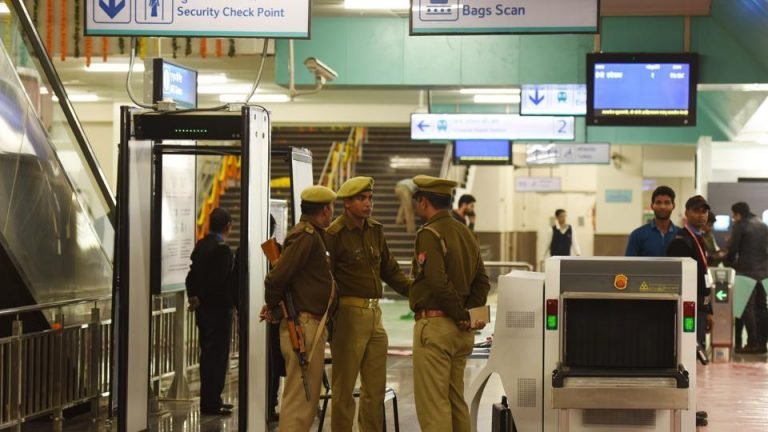
A senior NMRC official said “When his bag went inside the scanning machine, the bullets were identified and he was held by the security officials on duty. When asked for an explanation, the man had no clear answer”.

Provincial Armed Constabulary personnel, responsible for security of the Aqua Line, later handed him over to the local police and a case was registered against him at the Phase 2 police station, he said.

Carrying firearms and ammunition is prohibited on the Aqua Line, the officials said.

The Aqua Line, which runs between Noida and Greater Noida, began operations on January 26 this year.

For easy travel, Telangana to introduce common mobility card

HYDERABAD (Metro Rail News): For the ease of the citizens, the Telangana government is planning to introduce a common mobility card which enables citizens to travel across multiple modes of both public and private transport systems, like rental cabs, for commuters in Hyderabad and across the state. This card concept comprises the usage of a contact and Quick Response (QR) code based card, which will allow people to use it on any mode of public transport.

A senior official from the Telangana Information Technology department, who did not want to be quoted said that “The Hyderabad metro rail already has a contact-based card which people can use. Our question was whether the Telangana State Road Transport Corporation (TSRTC) can accept that too. So then the government eventually thought that it should create a card that will work with all modes of transport and can also act as a payment card. As of now, we are in the process of issuing tenders. The project will materialize in a few months that is done”.

He further added that the concept is on the lines of the National Common Mobility Card (NCMC) idea with regard to public transport that the government of India (GOI) has been pushing from some years.

Common Mobility Card

“The National Payments Corporation of India (NPCI) allows for cards to be either stored value cards and debit/credit cards. For example, (Hyderabad) metro cards fall under the former category, but the GOI wanted these mobility cards to have both types of payment modes. Hence the concept we came up with is also future proof, the official explained.

The official mentioned under the Telangana’s proposed common mobility card, citizens will be able to use the card to travel in the Hyderabad metro rail, state buses and even private transportation (cabs) across the state. The TSRCT buses are expected to be equipped with point of service (PoS) machines to enable a tap-and-go method of payment as well, and the cards will also have two-factor authentication to go along with the QR code with respect to private players. “It will be done following the Reserve bank of India guidelines,”

He further added Moreover, the state government is also pushing for the cards to be issued at no cost to users, with the caveat that they top it up with a nominal minimum amount while acquiring it. The card, however, will not include the Multi-Modal Transport. System (MMTS) which is operated in and around Hyderabad by the South Central Railways (SCR), the official informed. “Once the tender is issued to a company, the project will be ready in 3 to 4 months. It should be ready by the end of this year.

A Hyderabad-based independent researcher who works on data and the internet says that activists, however, remained skeptical about the concept. The proposal for a national common mobility card has been around since 2005. But every time a standard is agreed upon, newer standards are explored. A common mobility card may not be a reality unless it becomes a full-time payment card for all purposes, which is unlikely with current RBI rules.

Delhi-Mumbai, Delhi-Howrah train travel to come down by 5 hours

 Delhi (Metro Rail News): Indian Railways will be going to reduce Delhi- Mumbai, Delhi-Howrah travel time by 5 hours. Indian Railways network have two of the busiest routes – Delhi-Howrah and Delhi- Mumbai.  These two routes are set for a massive infrastructure upgrade in the coming year, with the speed being raised to 160 kmph on the important routes. According to the PM Narendra Modi’s instructions, 100-day plan document of the Indian Railways, the train travel time on the above-mentioned routes will come down by 5 hours. The 100- day plan document of the Railway Board, seen by Metro Rail News, envisages an investment of around Rs. 14,000 crores for this massive project.

The Railway Minister, Piyush Goyal plans to send the proposal to upgrade infrastructure on New Delhi-Howrah and New Delhi – Mumbai routes to the Cabinet Committee of Economic Affairs for approval. Once the project will get complete, it will reduce the train travel time between New Delhi-Howrah to 12 hours from the existing 17 hours. The train journey time between New Delhi- Mumbai may come down to as low as 5 hours.

Delhi-Mumbai and Delhi- Howrah routes account for nearly 30% of passenger traffic and 20% of freight traffic. While the upgradation of railway infrastructure on the New Delhi- Howrah (1,525km) will require an expenditure of Rs 6,684 crore, the New Delhi- Mumbai project (1,483km) will entail Rs 6,806 crore,” according to the national transporter.

The document articulate that the ambitious project will be undertaken in a fixed time, fixed cost EPC contract basis over a time span of 4 years from the date of approval. The national transporter is of the view that this format will help in reducing delays and cost overrun while also ensuring better coordination and economics of scale.

Train 19 is being planned for the Delhi-Mumbai route with the hope of bringing travel time down.  Indian Railways has been upgrading its rolling stock and one of the biggest technological leaps for it was the introduction of the self – propelled Vande Bharat Express on the Delhi- Varanasi route. Banking on the success of the Train 18 project, Indian Railways is now looking to manufacture Train 19, which will be Rajdhani Express – style sleeper variant of the Vande Bharat Express.

The identification of the Delhi-Mumbai, Delhi-Howrah routes for the 160 kmph upgrade is an important step in that direction as it brings its rolling stock up to world- standards, railway experts have time and again stressed on the need to invest in rail infrastructure such as tracks, signalling and fencing so that the average speed of the trains on the Golden Quadrilateral can be increased.

Delhi Metro’s Red Line services delayed from Shaheed Sthal Stn

Delhi (Metro Rail News): The services were delayed for a few minutes on Thursday, in Red Line from Shaheed Sthal towards Dilshad Garden, said the Delhi Metro Rail Corporation (DMRC).

Delhi Metro tweeted that, “Delay in service from Shaheed Sthal (New Bus Adda) towards Dilshad Garden (Red Line) normal service on all other lines.”

DMRC later tweeted to say that the services have resumed on the line and cause of the delay is not found yet as other lines of the Delhi Metro operated normally.

The Red Line, one of the six lines of the Delhi Metro, connects Rithala in Delhi to Ghaziabad’s Shahid Sthal. The entirely elevated line has 29 stations cover 34.4 kilometers.

The Red Line interchanges with the Yellow Line and Violet Line at Kashmere Gate and the Green Line at Inderlok. Red line is the most heavily used metro by the commuters, as it acts as a link for those, who reside in West and North Delhi, to travel towards East Delhi.

 Red Line was the first line of the Delhi Metro to be constructed and opened. First Segment of the red line  was constructed from Tis Hazari to Shahdara and opened on 25 December 2002. The Strategy worked in favour of DMRC. As part of Phase III plan, an eastward extension of 9.5  km from Dilshad Garden to Ghaziabad ISBT (New Bus Stand) which was approved by the DMRC and the government in January 2014.

Construction began in early 2015 and commercial operations started on 8 March 2019, thereby providing commuters another link to travel to Ghaziabad, as opposed to the Blue Line branch, that connects to Vaishali in Ghaziabad.

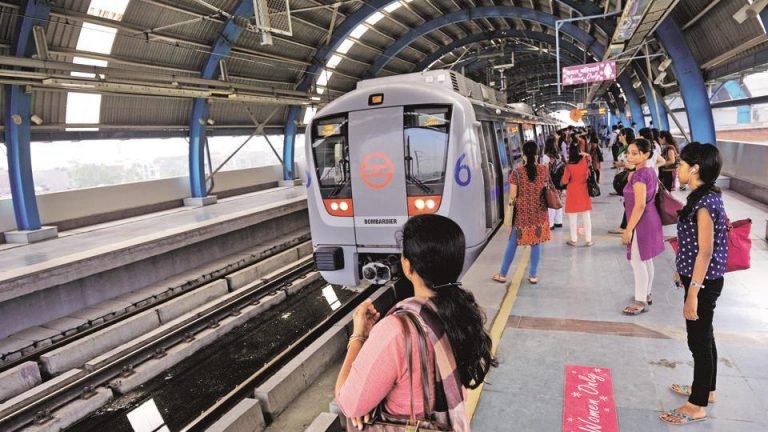
Delhi Metro keeps in mind the safety and security of Women Passengers. Delhi Metro has reserved a car, especially for lady passengers. In Yellow, Blue, Green, Violet, Pink & Magenta lines the first car of a train in moving direction is reserved for ladies and the common earmarked car in both direction movements in Redline. To indicate the area of the platform where the reserved car normally stops Signages have been provided.

Delhi Metro has made certain provisions for the safe and convenient travelling experience for Women Passengers,

  • Women only coach in every train.
  • Reserved seats for women in every coach.
  • Fine of Rs. 250/- for travelling in women coach for male passengers
  • Zero tolerance for drunkards and trouble makers.
  • CCTV surveillance at stations, platforms and in train coaches.
  • Patrolling of the platform after sunset hours have been intensified by security forces(CISF).
  • To nab the offenders, quick reaction teams have been deployed
  • For frisking of lady passengers, ladies CISF staff has been deployed.
  • To check male commuters travelling in Ladies Coach, teams are deployed 
  • In the first week of every month special drive has been launched.

Delhi metro has provided parking lots for the passengers travelling in metro to park their two wheeler or Four Wheeler at station and use metro service. The parking lots have been outsourced to the contractors who are solely responsible for the safety and security of all the vehicles parked in parking lot and is liable to pay compensation in case of theft of vehicles or damage to vehicles.

Metro harassment case filed based on the tweet on June 14, 2019

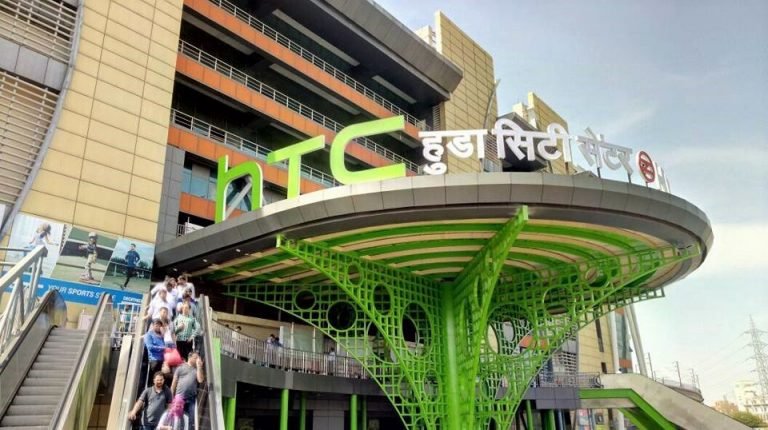
NEW DELHI (Metro Rail News): A day after a 29-year-old woman shared her ordeal on Twitter alleging that a man masturbated on her and flashed her when she was climbing down the escalator at the HUDA City Centre Metro station on the night of June 14, the police registered an FIR in the case.

On Tuesday, the police said they had taken cognizance of the matter and registered the case on the basis of the victim’s narration of the incident on social media.


On Tuesday, additional DGP law and order (Haryana) Navdeep Singh Virk replied on the thread shared by the victim on Twitter, saying, “The matter has been flagged with the police commissioner Gurugram and appropriate action will be taken at the earliest.”
The police said a team of senior police officers, including an assistant commissioner of police (ACP), a crime against women and station house officer of Sector 51 women’s police station, visited the crime spot on Tuesday and collected the CCTV footage.


A case was registered against the unidentified suspect, who can be seen in the footage, under sections 354-A (sexual harassment) and 509 (word, gesture or act intended to insult the modesty of a woman) of the Indian Penal Code at the Metro police station.
The incident took place on June 14 around 9.25 pm when the woman, an interior designer, had come out of a clothing store on the first floor of the Metro station. The woman had said that she was on the escalator when she felt something on her back.


“I turned and realized that a man had masturbated on me. I was shocked, scared and traumatized. I confronted him. He flashed me and said indecent words following which I slapped him.
buy actos generic myindianpharmacy.net/actos.html over the counter
The passersby stood still as he was hurling abuses at me. I shouted and called for help but there were no policemen around. He flashed me again before running away,” she had tweeted on Monday.


Metro station house officer Rajender Singh said the presence of the suspect could be established in the CCTV footage and efforts were on to identify him.
“We have contacted the victim and started a probe. We are coordinating with DMRC (Delhi Metro Rail Corporation) officials and collected the CCTV footage,” the SHO said.


On Tuesday, the woman said a senior police officer from the Metro police station had reached out to her, but she was yet to record her statement. “I am yet to decide about that (recording my statement). It was important for me to share the ordeal and to raise an alarm. There are many loopholes in our judicial system and it takes time and courage for a victim to come out and report. I feel scared,” she said.


The woman had earlier alleged that on June 14 night, shortly after the incident, she had reached out to Gurugram police on Facebook Messenger app, but did not receive a response.
She then reached out to the DMRC officials for assistance and received a response to identifying the culprit in the CCTV footage, which has now been shared with the Gurugram Police.

State Govt. to speed up Bengaluru metro project work

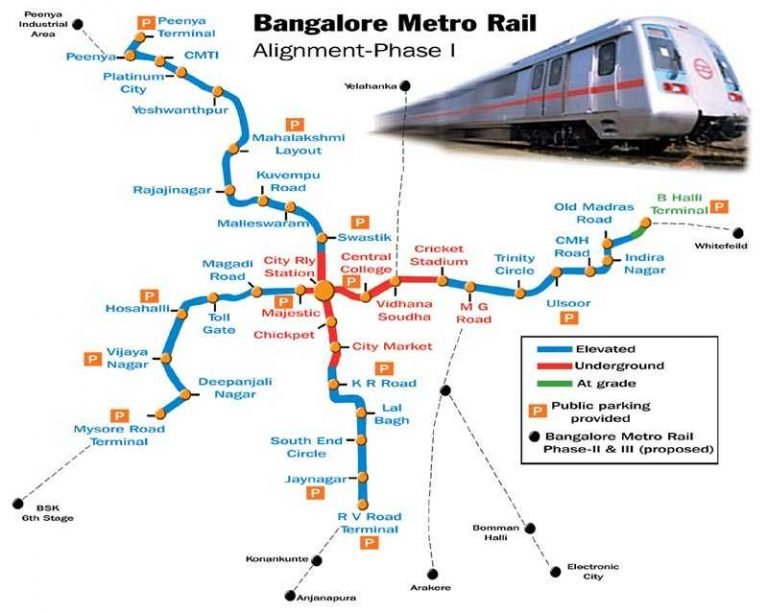
BENGALURU (Metro Rail News):  The State Government has formed a new high- power committee (HPC) of 10 IAS Officers to hasten the construction of metro projects in the city.  The committee will first meet now on June 21.

The HPC was approved between 2012 and 2019 will oversee phase II, phase II-A (KR Puram- Central Silk Board) and phase II-B (Airport link) metro projects. A High- power committee did not have a specific mandate to oversee the metro.

The cost of phase II project is over Rs. 26,000 crores. phase II was scheduled for completion by 2020-21 but it is seeing several hurdles and primarily related to land acquisition and shifting of utilities.

Managing director of Bangalore Metro rail Corporation Ajay Seth said that The process of getting government land from different departments has been simplified. The committee also has the scope of reviewing the metro project at a micro level.”


The chief secretary holds fortnightly meetings with different agencies to discuss issues and projects pertaining to Bengaluru. The new HPC was accorded administrative approval towards the end of May, and it will be held by the chief secretary.

10 IAS Officers from various agencies, including the Urban development department, finance, revenue, BBMP and the Directorate of urban land transport (DULT) will be part of the committee. They will meet once a month.

The High-Power Committee will have the instruction to sort out all the issues to metro projects, including the transfer of land, shifting of utilities and structures in the project alignment, rehabilitation of affected persons, coordinating with departments for smooth, efficient and expeditious shifting of various utilities simultaneously in one go and multimodal integration.


A senior official said,”. Be it land acquisition, shifting of utilities or even construction, we are always dependent on external factors. we, at times, have little say in the progress unless the government backs us in clearing hurdles. While the first phase was delayed for 4 years, the phase II is set to miss the 2021 deadline. It’s difficult to meet the target as the metro is being built in a living city and meeting the deadline requires cooperation from so many agencies.”


The project which completes on time has never been a forte of BMRCL ever since it was given the responsibilities to construct the 42- km phase.

FREELAND

A government order which was dated on may 25 stated that,” As the state government itself has to fund the cost of lands, no purpose will be served if the BMRCL is asked to pay the cost of the government land.” Different government department are entitled to give land free of cost to the Namma Metro.