Home Blog Page 328

KMRL to begin Kochi Water Metro services soon

KOCHI (Metro Rail News): The Kochi Metro Rail Limited (KMRL) is preparing to begin offering Water Metro services in September after the Cochin Shipyard delivered two more boats on July 30, 2022. A KMRL spokesman stated that although four electric hybrid boats have already been delivered, another one is most likely to follow soon.

“Now that we have the two boats we previously acquired, we can start the trial runs. We anticipate receiving all five of the boats needed to start operations before September, the KMRL representative stated.

Experts in public transportation have urged for affordable tariffs, stressing that, unlike metro trains, islanders will be relying on the Water Metro rather than metro trains. However, conversations regarding the fares are ongoing, a source stated. In addition, 14 terminals should be finished building by December.

“The terminals at Vypeen, Bolgatty, and High Court are almost finished with construction. If all goes according to plan, we will begin operations on the High Court-Bolgatty-Vypeen segment, stated KMRL official. 23 boats are being constructed at the Kakkanad terminals of the Cochin Shipyard for the Water Metro project.

DMRC to conduct Online Customer Satisfaction Survey from August

NEW DELHI (Metro Rail News): Customers of Delhi Metro Rail Corporation (DMRC) have the chance to provide feedback on several aspects of metro services and facilities. From Monday, August 1 to Sunday, August 28, the DMRC will be collecting feedback via an online survey. Beginning on Monday, August 1, riders of the Delhi Metro can take part in an online poll being undertaken by the urban transporter.

The eighth edition of the Online Customer Satisfaction Survey – 2022 would include thorough questionnaires and detailed input from commuters on many themes. Additionally, recommendations for enhancements will be sought.

One can take part in the survey by moving to the DMRC’s official website, delhimetrorail.com.

“The primary goal of the survey is to get commuter input on various aspects of metro services and facilities. A thorough questionnaire will be used to get in-depth responses on certain themes from participating commuters. Additionally, the survey will look for any suggestions for changes “DMRC made a statement about this.

The DMRC survey will cover seven themes and be available in both Hindi and English. The questionnaire will focus on crucial Metro operations, including:

Accessibility and Availability

Services provided to passengers

Information

The standard of services

Consumer Assistance

Beyond the Metro Area

Security, comfort, and safety

“On the DMRC website, participants will have four days to complete the survey links for one topic. The next topic will be made available for feedback after four days. The survey will be completed in 28 days due to the seven themes it covers “DRMC stated.

This survey is being carried out by the Delhi Metro to learn what passengers of its services think of it. The outcomes would help evaluate and implement necessary improvements in a variety of Delhi Metro systems and services, officials stated.

DMRC now manages the operations and upkeep of a network with a length of about 390 kilometres and 286 stations, including the Rapid Metro in Gurugram and the Aqua Line in Greater Noida. It is one of the biggest metro networks worldwide.

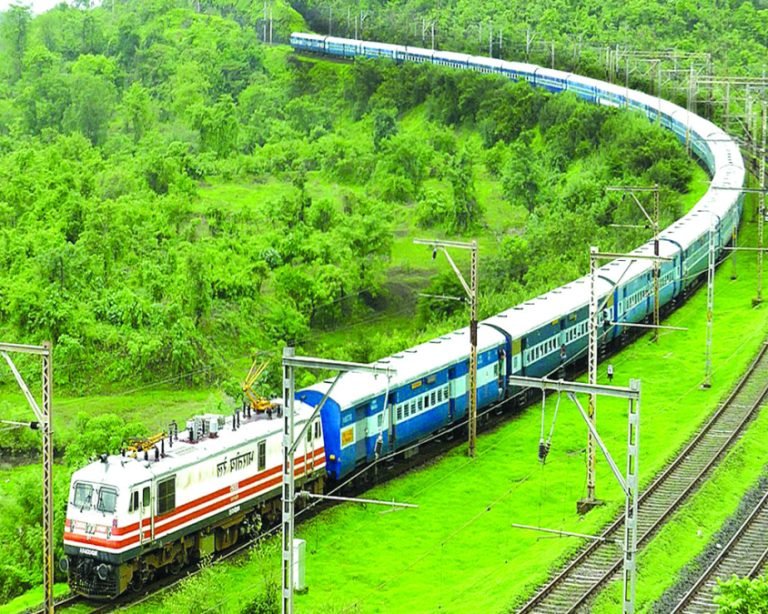
Indigenous Vande Bharat train to become faster by 2025

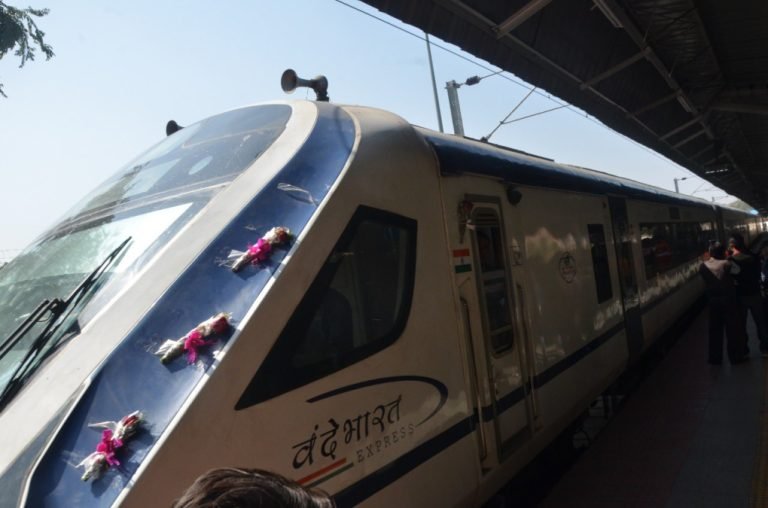
NEW DELHI (Metro Rail News): In order to match the speed of trains operating in European countries, Indian Railways is gradually boosting the speed of the locally produced Vande Bharat Express.

The Vande Bharat Express train’s new version will accelerate from 160 kilometres per hour (kmph) to 180 kilometres per hour (kmph) this year. By 2025, the train is anticipated to travel at 220 kph, then accelerate to 260 kmph, matching the average speed of high-speed trains in Europe.

The development of the Vande Bharat trains took a leaf out of Japan’s book, where bullet trains continuously increased their speed since their introduction in 1959. Currently, they travel at a speed of about 320 kmph, Railways minister Ashwani Vaishnaw stated.

Additionally, Vande Bharat would gradually raise its pace while also enhancing the security and safety of all passengers.

The Vande Bharat trains’ first version, which can travel at 160 kmph, was introduced in 2019 as part of the Make in India project. The second version, which will begin running this month, has increased this to 180kmph. By the 15th of August of next year, 75 of these trains will be deployed as part of the nation’s 75th-anniversary festivities.

Vaishnaw stated, Vande Bharat versions 3 and 4 will travel at speeds of around 220 and 260 kilometres per hour, respectively.

By December, the Vande Bharat 3 tender is anticipated to be completed, and the high-speed train is anticipated to join the Indian Railways fleet by 2025.

“Since train began operating in the nation in 2019, the India Vande Bharat trains have travelled 1.8 million kilometres. The trains will become the main source of high-speed transit in the nation because the technology is now proven, Vaishnaw stated.

The Vande Bharat 2 is an enhanced model of the original, offering a smoother ride thanks to the usage of air springs. Additionally, the train will have superior interiors and seating as well as an integrated anti-collision system. With the substantial usage of aluminium and better wheels for quick acceleration, Vande Bharat 3 would also be lighter.

The 163kmph-capable bullet train project in Japan began construction in 1959. Prior to attaining the present speed of 320kmph in 2013, this increased from 210kmph in 1964 to 270kmph in 1992 and 300kmph in 1997.

Over the next three years, Indian Railways has set a goal of producing 300 Vande Bharat train sets (2025). By 2028, this will rise to 500 trains. By August 2023—75 years after India gained independence—the Railways must have built at least 75 of these trains, added Prime Minister Narendra Modi. The idea is to use these trains to connect 75 significant Indian cities.

To fulfil the goal of 500 trains, the Integral Coach Factory in Chennai, Indian Railways, intends to produce approximately 10 Vande Bharat trains per month. Eventually, the Rail Coach Factory in Kapurthala and the Modern Coach Factory in Raebareli are also anticipated to begin producing these coaches.

On the Delhi-Katra and Delhi-Varanasi routes, there are two separate sets of Vande Bharat trains operating. By August, two more Vande Bharat semi-high-speed trains are anticipated to start running.

The new trains would be an improvement over the first version since they would be equipped with Kavach, the most recent train accident prevention system used by the railways. The coaches will also have contemporary fire alarms, emergency light systems, exits, and a seating arrangement similar to that of an aeroplane with a reinforced exterior to reduce damage.

A 16-coach Vande Bharat train costs around 130 crores to manufacture, making the Vande Bharat trains cost-competitive as well.

MoHUA to consider many MRTS project in Delhi-NCR

NEW DELHI (Metro Rail News): The housing and urban affairs ministry informs the Center has received bids for Metro and Rapid rail projects totalling over 329 km in length across the National Capital Region (NCR) that are expected to cost approximately Rs 91,700 crore to complete.

This week, the ministry informed the Lok Sabha that these ideas are through various phases of “appraisal/approval.” According to the project information given to the Lower House, the ministry has been contacted about the proposal for the final three corridors of Delhi Metro Phase-IV, having a total of 47 kilometres in length. These corridors are expected to cost Rs 12.587 crore.

Similar to this, the government of Uttar Pradesh submitted its proposal for extending the Noida-Greater Noida Metro Link by around 15 km, at an estimated cost of about Rs 2,456 crore. The Haryana government has also requested authorisation for a spur to the proposed Dwarka Expressway and a 285 km Metro route from Huda City Center to Cyber City. This would require investments of approximately Rs 5,960 crore.

The RRTS projects make up the largest portion of the mass rapid rail proposals from the NCR constituent states, and they would demand the largest investment. According to the initial estimate, merely the 106.5 km Delhi-Gurgaon-SNB (Shahjahanpur-Neemrana Behror urban complex corridor will cost about Rs 35 216 crores. A proposal for a 33 km RRTS link from the SNB Complex to the Rajasthani industrial sector of Sotanala RIICO has also been submitted to the ministry. This 33-kilometre link is expected to cost around Rs. 6,188 crores.

Officials stated the expenses are currently being revised before being submitted for evaluation and approval.

Similar to that, the anticipated cost of the 103-kilometre Delhi Sonipat RRTS corridor is about Rs 29.300 crore.

These two and the Delhi-Meerut RRTS corridor were identified as the UPA government’s priority stretches for the years 2012–2013.

MPMRCL floats tender for the supplying and laying of metro tracks

INDORE (Metro Rail News): The Madhya Pradesh Metro Rail Corporation Limited float two separate tenders that will be release within a fortnight for supplying metro rail tracks as well as their laying in both Indore and Bhopal.

For phase 1 of the Indore and Bhopal Metro, the MPMRCL need 18 m long head solidified rails for the metro track’s construction. Additionally, they require a committed company to lay these rails.

Both Jindal Steel and Power Ltd. (JSPL) and Mitsui & Co. Ltd. have submitted bids for the delivery of the tracks, department officials stated.

In February, the Madhya Pradesh Metro Rail Corporation Ltd. issued tenders for this contract with an unspecified price and a 1022-day (3-year) timeframe.
Four businesses are competing for the contract to install the rails. Rail Vikas Nigam Limited, Texmaco Rail & Engineering Limited, Larsen & Toubro, and Vijay Nirman Company Pvt. have all engaged in this contract, which is worth approximately Rs 240 crore.


Work on the Metro trains is done in two shifts around the clock, with maintenance after 11 p.m. increasing as the amount of traffic in the area decreases where work is being done.

SilverLine replacement for Indian Railways coming soon: Muraleedharan

THIRUVANANTHAPURAM (Metro Rail News): The railways will shortly present a scheme that will provide an alternative to the state’s proposal for the SilverLine semi-high speed rail system, Union Minister V Muraleedharan informed. The minister met with the state’s BJP leaders to arrange a meeting with the railway minister, Ashwini Vaishnaw, and then spoke to reporters in Delhi.

Muraleedharan informs that the Railways will soon introduce a substitute project that will provide high-speed rail travel without need for the widespread eviction of residents as with Silverline. The delegation encouraged the minister to call a meeting of state MPs so that elected officials may offer their opinions on the Railway’s alternate plan.

The minister stated, “The Railways is engaged in research to investigate the potential for rail travel at a speed of 130 kmph across the state.” Before the current Parliament session ends, a definitive decision on the SilverLine alternative project would be made after negotiations with state MPs, he added.

Muraleedharan informed that the LDF government’s Detailed Project Report (DPR) on SilverLine demonstrates that it is an unscientific, environmentally harmful, and economically unviable concept. The large-scale protest by those who would be relocated as a result of the project “will not be ignored by the Narendra Modi government,” he continued. Muraleedharan reported that the group encouraged the railway minister to start development on the proposed Nemom coaching terminal as soon as possible and not to abandon the project. Muraleedharan stated, “The Railway Minister informed us that directives will be issued in this regard soon.”

P K Krishnadas, K Surendran, P Sudheer, and V V Rajesh and the district president of Thiruvananthapuram, were all included in the BJP delegation from the state.

JICA crew examines the Metro cave-in zone of Kolkata

KOLKATA (Metro Rail News): On Thursday, July 28, a team from the Japan International Cooperation Agency (JICA) visited the Bowbazar construction site of the East-West Metro to examine the cave-in zone and its impact on the project’s advancement.

The Rs. 8,576 crore East-West Metro project, whose primary financing source is JICA, experiences numerous delays and expense overruns as a result of numerous setbacks. The most challenging hurdle is in Bowbazar’s Durga Pithuri Lane, where a tunneling disaster on August 31, 2019, led to houses collapsing and more than 700 people fleeing. Another 160 households were relocated from the same location on May 11 due to another subsidence this year. The region is now known as the “cave-in zone.”

The JICA crew, which included Koji Masuda, construction advisor, Ohguchi Rio, representative, and Vineet Sarin, chief development specialist, descended into the 25-meter-deep shaft at Durga Pithuri Lane. They asked about the safety precautions being taken for the nearby homes, several of which had developed cracks as a result of the subsidence on May 11.

The team also went to the Howrah Maidan and Mahakaran stations, which are near to the finishing status but can’t be operational due to the Bowbazar obstacle for the 2.45 km Esplanade-Sealdah part of the corridor. “This is JICA’s first visit to the Bowbazar cave-in zone”, an official informed.

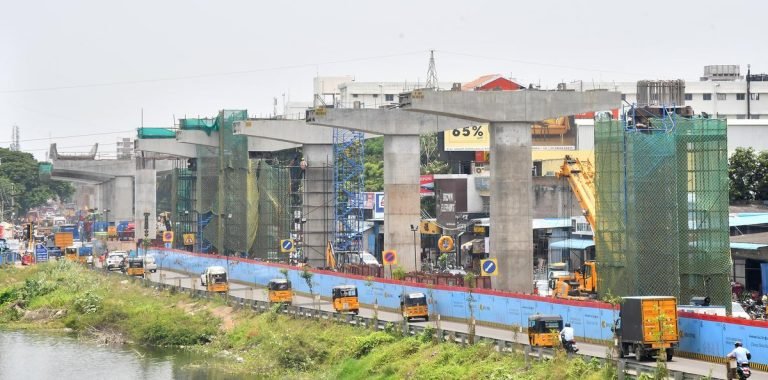
Poonamallee bypass traffic diverts for Metro Rail construction

CHENNAI(Metro RAIL News): The Avadi Police Commissionerate has declared a vehicular diversion from August 1 between Porur and Poonamallee bypass Chennai Metro Rail Ltd.’s (CMRL) Phase 2 Corridor-4 on Poonamallee Trunk Road.

In order to get to the Outer Ring Road from the Poonamallee Bypass, vehicles travelling in the direction of Minjur must turn left and travel down a service road for 200 metres.

Vehicles travelling from Vandalur to Poonamalle should turn left at the Poonamallee Bypass, cross the Clover Leaf Bridge, continue until the Kolappancheri Toll Plaza, and then make a right U-turn to get to Poonamallee. Between the Clover Leaf Bridge and the Kolappancheri Toll Plaza, left turns are no longer permitted.

Mumbai Metro grants Line 10 & 12’s General Consultancy to SYSTRA – DB

MUMBAI (Metro Rail News): On Monday, DB Engineering & Consulting JV was chosen as the preferred bidder for the 9.20 km Line-10 (Gaimukh-Shivaji Chowk) and 20.7 km Line-12 (Kalyan-Taloja) of the Mumbai Metro.

Through assistance with design, supervision, safety, quality control, and contract administration, the hiring of a committed general consultant to support the Mumbai Metropolitan Region Development Authority (MMRDA) is anticipated to pave the path for the swift execution of both lines.

MMRDA first requested global engineering and consulting firms to submit GC proposals for solely civil construction in July 2020. In December 2020, AECOM had been the preferred bidder, but the contract wasn’t granted.

In February 2022, the scope of the tenders was expanded to cover both civil and system integration work. After combining technical and financial scores, SYSTRA – DB JV was chosen as the preferred bidder on Monday using the Quality and Cost-Based Selection (QCBS) approach.

The GC-07A Appointment of General Consultant for Civil and System Works of Mumbai Metro Line 10 (Gaimukh–Shivaji Chowk (Mira Road) and Mumbai Metro Line 12 (Kalyan-Taloja) of the Mumbai Metro Rail Project of MMRDA, Mumbai are included in the brief scope of the project.

MMRDA/Metro- PIU/0002141 is the Tender Number of the project.

If SYSTRA – DB JV receives the contract, MMRDA will require them to remain on staff for the anticipated 54-month project period.

The 35.2 km Line-4/4A (Green Line) in Mumbai would be extended to the west as Line-10, with stops at Gaimukh Reti Bundar, Varsova Char Phata, Kashimira, and Shivaji Chowk.

With 17 stops at Ganesh Nagar, Pisvali Gaon, Golavali, Dombivli MIDC, Sagaon, Sonarpada, Manpada, Hedutane, Kolegaon, Nilaje Gaon, Vadavali, Bale, Waklan, Turbhe, Pisarve Depot, Pisarve, and Taloja, Line-12 will be constructed as a 20.75 km southern extension of the 24.95 km Line The depot for the route is slated at Pisarve.

PWD’s plans to built an elevated corridor in Indore has several obstacles

INDORE (Metro Rail News): The PWD has all the authorizations required to begin building the elevated corridor on the AB Road between Navlakha Square and LIG Square, but they are unable to do so since they do not own the BRTS corridor, stated PWD official.

The BRTS route may only be transferred to the PWD by the Mayor-in-Council of the IMC, who has not yet been appointed. It was resolved to begin work within a month during a recent meeting in Bhopal, which was presided over by the principal secretary of the PWD.

The elevated corridor project has a number of other difficulties in addition to the permission of MiC’s issue. The planned schedule states that, the stations and BRTS will be built over the elevated corridor. Senior PWD officials states that, the company that received the tender has limited resources and would only build the BRTS corridor. The IDA and IMC will have to launch separate tenders for the stations. Once more, the MiC will have final decision on this.

The PWD granted the contract around a year ago, and since then, costs have increased. Officials states that, the tender will need to be updated.

Both the elevated corridor and the Metro Rail will cross at the Palasia crossing. Although it has been suggested that the Metro Rail will cross the elevated route, there has been no official announcement, so this matter is unclear.