Home Blog Page 329

Pod hotel opens for passengers at the Chhatrapati Shivaji Maharaj Terminus

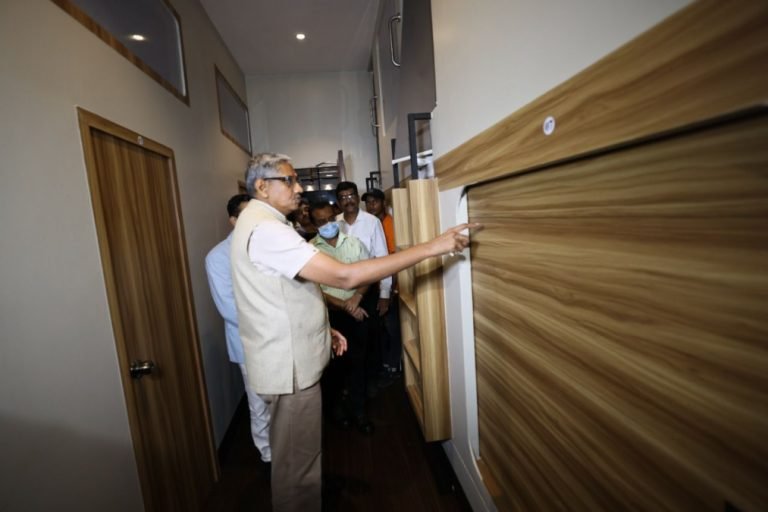
MUMBAI (Metro Rail News): Central Railway has brought in new initiatives through Non Fare Revenue. These are benefitting passengers and also fetching revenue for Railways. Adding in its endeavor now, a Pod hotel is opened for passengers at the Chhatrapati Shivaji Maharaj Terminus, Mumbai, Anil Kumar Lahoti, General Manager, Central Railway informed.

It is opened to give more comfort, affordable and cheaper stay options to the Passengers at CSMT, Mumbai, located near the waiting room on the Main line of Chhatrapati Shivaji Maharaj Terminus Railway station.

There are a total of 40 pods (capsules) including 30 single pods, 6 double pods and 4 family pods. This classy, air-conditioned accommodation will provide full privacy, mobile charging facility, locker room facility, fire alarm, intercom, deluxe toilet & bathroom etc.

Talgo and Bharat Forge Arm collaborates to manufacture High-Speed Rails

NEW DELHI (Metro Rail News): A joint venture between Talgo and BF Infrastructure, a fully owned subsidiary of Bharat Forge, has been established to produce high-speed passenger trains.

Talgo is a fully-owned subsidiary of Spain-based Patentes Talgo, a leader in the design, manufacture, and maintenance of high-speed passenger trains.

“The partnership between BF Infrastructure Ltd. and Talgo India Pvt Ltd. would significantly contribute to the Government of India’s initiative of Atmanirbhar Bharat” stated by company statement.

The joint venture would also take advantage of growing domestic requirements in the field and will also address large business opportunities in the Indian Railways sector.

The joint venture will concentrate on supplying the Indian Railways and other private operators who will work under the overarching self-reliant vision with state-of-the-art, high-speed rail technology and solutions.

The JV will also concentrate on establishing a hub for manufacturing, maintenance, and life cycle support for new generation, energy efficient lightweight aluminium, high speed rails.

The partnership between BF Infrastructure and Talgo should be noted in light of the Indian Railway’s recent tender for the manufacturing and maintenance of 100 new generation, light weight, energy-efficient trains.

Chennai Metro grants Line-4 deal of 78 coaches to Alstom

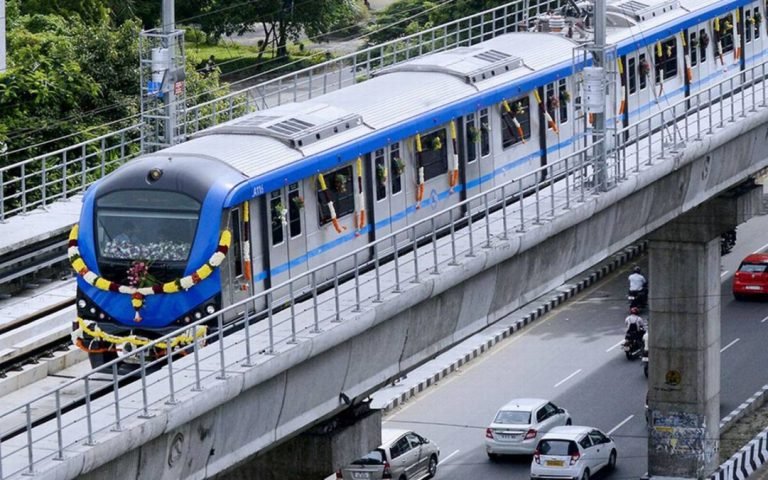
CHENNAI (Metro Rail News): On Tuesday, Chennai Metro Rail Ltd. awarded Alstom Transport India a contract worth Rs. 946.92 crore to produce and supply 78 coaches (Package ARE03A) for Chennai Metro’s Line-4 (CMRL).

The 118.9 km Phase 2 project’s route with 26 3-car trains will run between Poonamallee Bypass and Light House, stopping at 28 stations (18 elevated and 10 underground), and would be stabled and maintained at Poonamallee Depot in western Chennai.

In December 2020, CMRL issued a tender invitation for this package of rolling stock. The procurement procedure was abruptly terminated in November 2021 after receiving 3 offers in September for “administrative concerns.”

A short while later, bids were requested again with a deadline of 1960 days (5.37 years), and this time, CMRL received three offers from Alstom, BEML, and Titagarh. In April, financial bids were opened, with Alstom emerging as the lowest bidder.

Rs. 946,92,55,624.00 (INR 7,31,25,53,552 + EURO 2,36,01,312 + SEK 2,02,10,441) was the total amount paid for the contract.
Phase II / ARE03A package

Design, production, supply, testing, commissioning, and training of staff for Chennai Metro Project Phase II’s standard gauge metro rolling stock (electrical multiple units) are included in the brief scope of Chennai metro project.

CMRL intends to operate these trains in a DMC + TC + DMC configuration with the capability of operating at Grade of Automation level-4 for “driverless” Unattended Train Operations (UTO).

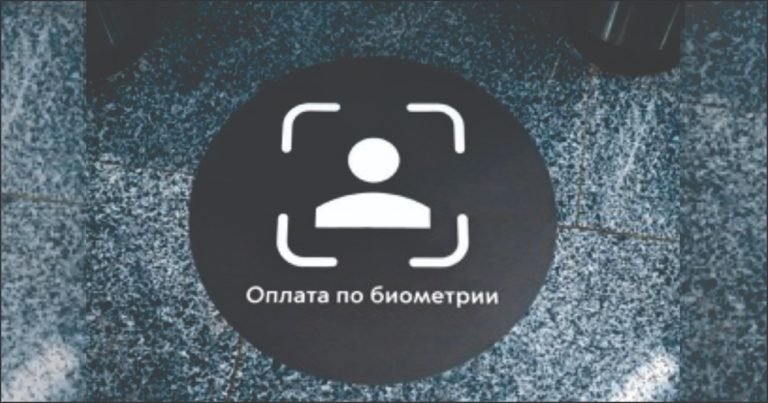
Face Pay biometric service to be available at all stations of the Moscow Central Circle soon

MOSCOW (Metro Rail News): Moscow will extend the Face Pay biometric fare payment system to more modes of transport in the city, declared the Deputy Mayor of Moscow for Transport Maksim Liksutov in his column. For instance, in September the service will be available at all stations of the Moscow Central Circle (MCC).

Maksim Liksutov outlined that the survey among the Face Pay users reveal high satisfaction rates: 88% of them appreciate the advantages of the technology and prefer this system to other payment methods. Users cited the following key benefits of the system: no need to carry a bank card (44%), innovativeness (42%), time saving – no need to stand in line to ticket offices or vending machines (38%), speed (37%). The disadvantages cited by users include a small number of turnstiles that accept the Face Pay. According to Maksim Liksutov, their number will increase by 200.

The majority of stations have 1-2 turnstiles, equipped with the Face Pay fare payment system, some stations have already increased their number at the request of users. For example, there are six turnstiles at Prospekt Mira station (Line 6) and five at Komsomolskaya station (the Circle Line). In total, 76 additional Face Pay turnstiles have already been installed. We see that this is not enough. However, after the upgrade of turnstiles in the underground, at least 200 more will be able to accept biometric payment. If necessary, we will further increase the number of such turnstiles, – Maksim Liksutov, the Deputy Mayor of Moscow for Transport.

Moreover, the technology will spread to more modes of transport: in September, all stations of the MCC will accept the Face Pay; the service will also become available at regular river transport this year. The technology is currently being tested at the surface transport and it is planned to launch the Face Pay on Aeroexpress (railway connection between city airports and railway terminals).

Maksim Liksutov noted that Moscow studies the possibility to link the Face Pay to social cards, including for students and schoolchildren. Another issue currently under consideration is selling season passes with biometric payment option to corporate clients: some companies purchase 30/90/365-day passes for their employees and would therefore benefit from the Face Pay access, rather than need to buy, distribute and give out tickets every time.

At present, more than 170 000 users are registered in the Face Pay system. More than 26 million trips have been made with biometrics since the service has been launched.

Using the Face Pay is completely voluntary. It is an additional way of paying fare. It is also the most technologically advanced and up-to-date. Biometric payment is a reliable and convenient alternative to the Apple Pay and the Google Pay. To speed up the operation of the turnstiles with the Face Pay, we are improving the software and have already upgraded the hardware – the turnstiles now open twice as fast, – said Maksim Liksutov, the Deputy Mayor of Moscow for Transport.

All of the equipment and software used is licensed and certified in full compliance with the laws of the Russian Federation. The Face Pay system has undergone the necessary certification and complies with the strictest Russian data protection requirements. Vendors and other participants in the biometric payment system have all the necessary certificates, from law enforcement to payment protocols.

We are confident in the security of the system. First, the storage of all the payment data of the Face Pay users is handled exclusively by a Russian bank. The data is protected according to the strict and generally accepted security protocol of the global payment card industry. For our part, we comply with all legal requirements. Secondly, the Face Pay is a Russian development and the property of the Government of Moscow. Bank card transactions are processed through the NSPK national payment system, to which the Russian acquiring bank VTB is also connected.

Thirdly, all servers are located exclusively in Russia. The entire complex system is under the full control of the Government of Moscow; it cannot be disconnected from abroad.

Fourthly, biometrics is safer and more reliable than paying fare with a bank card. For example, no one thinks about the risks when they pay for services and goods using their fingerprint. Facial recognition has long been used to unlock smartphones, and some major retailers are testing biometric payment. The Face Pay in transport has a bank-like level of protection, and outside interference is ruled out. Credit cards can be stolen or lost. Time will pass before a customer blocks it, and your face cannot be ‘stolen’, so the Face Pay is safer and more secure, – said Maksim Liksutov, the Deputy Mayor of Moscow for Transport.

The Face Pay is a part of the award-winning ticketing system of Moscow that has been recognised both in Russia and internationally on numerous occasions. For two years in a row, it has received the prestigious Transport Ticketing Award (2020, 2021). In October 2021, the Moscow Metro was the first in the world to introduce the facial recognition payment service at a huge scale.

Rake being taken to Kolkata’s Joka Terminal for metro trial

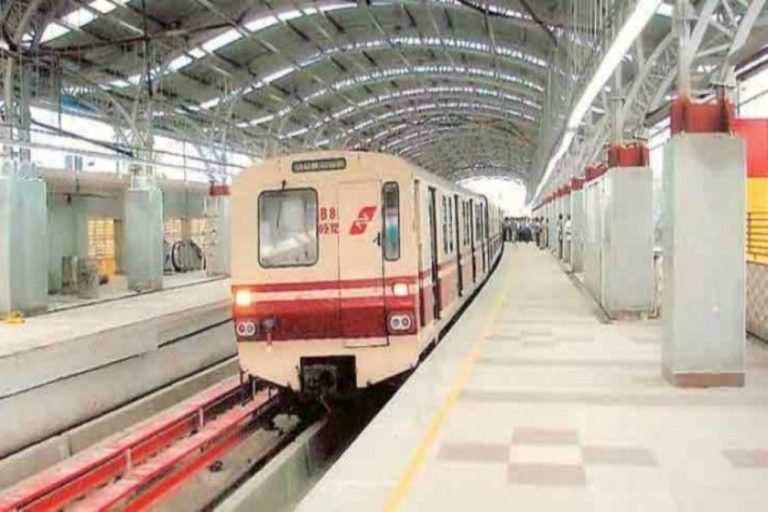
KOLKATA (Metro Rail News): A non-AC rake will be travelling on trailers from the Noapara carshed to the Joka terminal on Wednesday night for the trials of Phase 1 Joka Esplanade Metro corridor.

This month, train trials were supposed to begin along the elevated Joka-Taratala line, as stated by the implementation agency Rail Vikas Nigam Ltd (RVNL). But finding a rake, getting it ready, and planning the transfer took longer than expected. The procedure of transferring the non-AC rake—which will be used for the test runs—finally got underway on Wednesday.

For the next eight days, two of the eight coaches will be transported on alternating days.

An RVNL representative stated, “The trailers will return after unloading, reload, and go back the next day”. The trailers can travel at night only when traffic regulations are eased. The train trials will start along the viaduct with the assembled rake, which will undergo practice runs inside the depot.

“Only AC rakes are used for operations along the Kavi Subhas-Dakshineswar line after the phase-out of non-AC rakes.” the representative added.

According to a Metro Railway official, one of these non-AC rakes was chosen from the Noapara carshed and prepared for test runs for the Joka-Esplanade Metro’s Phase 1 trials.

The rake should roll out of the Joka depot in another fortnight, stated Metro officials. “It will be assembled and tested inside the depot. It will be put on the tracks once it is deemed ready for trials,” the RVNL representative said. The Joka-Taratala segment does not have the signals installed yet, therefore this testing will be different from those conducted on the city’s new Metro lines, the East-West and the Dakshineswar Metro.

For this project and the Kavi Subhas-Ruby section of the New Garia-Airport corridor, RVNL was only able to float tenders for the advanced communication-based train control (CBTC) signalling in January of this year. Due to this, only one train will operate on Phase 1 of both lines. One train will always be on the tracks at a time under the one-train-only arrangement, which operates on short terminal segments. Officials stated that in the absence of the signaling system, radars and microwaves will be used to conduct the train trials.

26 driverless trains will be produced by Alstom for Chennai Metro Rail

CHENNAI (Metro Rail News): Alstom Transport India Limited has been given a contract by Chennai Metro Rail Limited (CMRL) to build 26 three-car driverless trains at a cost of Rs 947 crore. These trains will run along metro corridors in phase two.

2024 will be the deadline for Alstom to deploy the first driverless train. They also built all the other 52 trains for CMRL in phase 1. The remaining trains will be delivered throughout the following year. The project will take around 40 months to complete.

The delivery of driverless trains (UTO- Unattended Train operation) is covered by the contract, which also covers the design, production, testing, and commissioning of standard gauge metro rolling stock, as well as the training of people, the provision of spare parts, and defect liability.

Kochi light metro project model is yet to be chosen by Centre

KOCHI (Metro Rail News): Kochi Metro Rail Limited (KMRL), which will merge with the special purpose vehicle (SPV) Kerala Rapid Transit Limited (KRTL), has yet to choose a metro model for the capital city, which will result in a delay to the Thiruvananthapuram Light Metro project.

The Center told the state government that one company is preferable to manage the metro projects in the state, and KMRL is now carrying out the project. The cabinet’s decision on the KMRL-KRTL merger is anticipated to be made in the upcoming week. The construction of flyovers at Sreekariyam under KRTL, however, is already underway and is anticipated to start this year.

The proposed metro concept for Thiruvananthapuram would only be communicated to the state government in a suitable manner by the federal government before the project can move further.

“We will move forward and approach the Center for additional steps, including the metro model, which is to be implemented after the state government releases an order following the cabinet decision on the merger,” as stated by Loknath Behera, MD of KMRL.

The Union government first suggested Metro Lite rather than Light Metro. Metro Lite hasn’t been used anywhere yet, making its implementation an experiment, so the state government is opposed to it.

“A decision will shortly be made regarding the merger. Even when a option has been decided, it still needs to be presented before the cabinet meeting and a formal order must be given. Therefore, we anticipate the decision in the upcoming cabinet meeting,” stated by MLA V K Prasanth, in-charge of the planned Pattom flyover project.

The Pattom flyover would be constructed under the direction of KMRL in three months, stated Prasanth. Phase I of the projected Light Metro, which would require building a 21.8 km route from Pallipuram to Karamana, would cost around $46.73 billion, according to estimates from the Public Works Department.

BEML along with Kolkata Metro scratches a new deal for 3 more rakes

KOLKATA (Metro Rail News): Bengaluru-based PSU Bharat Earth Movers Ltd (BEML) and Kolkata Metro Rail Corporation (KMRC) have signed a new agreement to buy additional rakes from each other, with Sealdah having opened and the full East-West Metro corridor anticipated to be operational by mid-2023.

Before the East-West Metro project took off, the two agencies agreed to their first agreement, which is called for 14 rakes. The new agreement calls for three rakes at first. Between October and December 2023, BEML must deliver them, bringing the East-West Metro fleet’s total to 17. This train’s manufacturing will begin in the upcoming month.

For trains to run at two-minute intervals, the East-West Metro is outfitted with the advanced automatic train control (ATC) system, communication-based train control (CBTC), and signaling system. The rakes made by BEML also have ATC and CBTC software installed. Two driving automobiles will be at each end of the six-car rakes. In order to save energy, the trains contain LED lights, CCTV cameras, and other high-tech features. The rakes have an 80 kmph top speed and can carry up to 2,068 passengers.

In April 2018, the first of the 14 trains—84 standard-gauge Metro cars—that BEML had agreed to provide to KMRC for Rs 900 crore arrived in the city. In July 2020, the last BEML rake was delivered.

DMRC MD Vikas Kumar visits Bangladesh

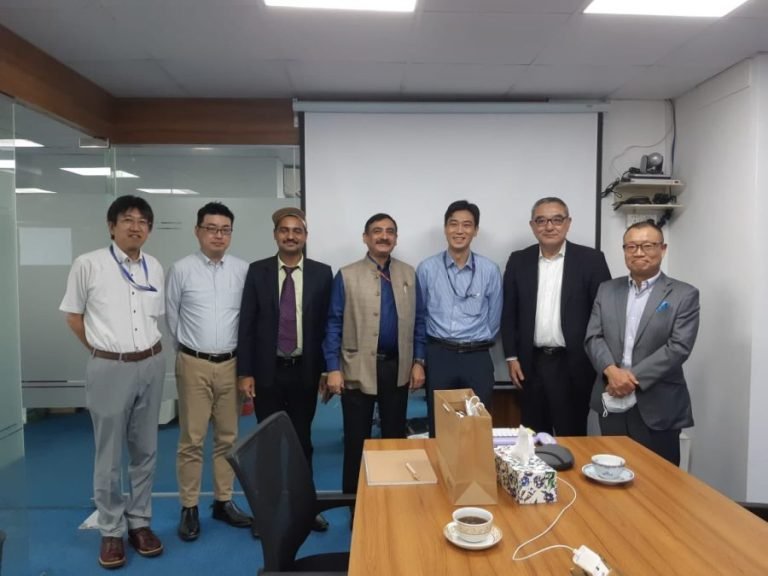
DHAKA (Metro Rail News): DMRC MD Vikas Kumar, who is now in Bangladesh, met with numerous senior Dhaka Metro executives on Monday.

The Delhi Metro Rail Corporation is consultant for the three-lines Dhaka Metro project DMRC official stated. Later that day, Delhi Metro tweeted about his trip to Dhaka, which was his first since becoming the MD of DMRC. “DMRC MD Vikas Kumar today met with several senior officials participating in the Dhaka Metro project, including Mr. M.A.N. Siddique, MD of Dhaka Mass Transit Company Limited.” Delhi Metro tweeted and posted images from Kumar’s visit to Dhaka, where DMRC is serving as a consultant for the metro project there (3 lines).

https://twitter.com/OfficialDMRC/status/1551581320525910017

The Patna Metro and other current projects in other Indian cities, including different metros, have received assistance from the Delhi Metro.

On July 16, during his visit to the Bihar capital, Kumar examined numerous Patna Metro construction sites, including Gandhi Maidan and PMCH. He conducted a review of the Patna Metro project’s development on July 15. The project is being carried out by the DMRC. The Patna Metro, a landmark project whose foundation stone was laid by Prime Minister Narendra Modi on February 17, 2019, is now under construction in the old city.

3 FOBs will be constructed by NCRTC at New Ashok Nagar

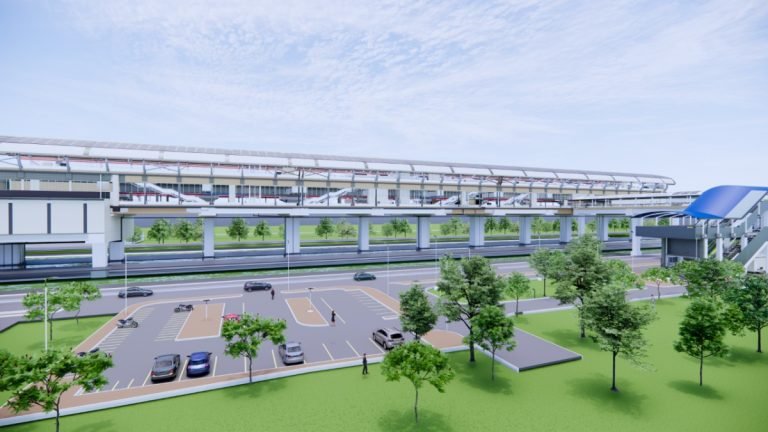
NEW DELHI (Metro Rail News): Multimodal integration is the guiding principle of NCRTC for the implementation of RRTS. It has planned the RRTS stations in such a way that they can be integrated with the already present public mode of transport wherever possible to facilitate seamless commuter travel. New Ashok Nagar RRTS station is one very pertinent example of this where connectivity is the key design aspect and will be showcased with three Foot-Over Bridges (FOBs) planned at this station for seamless convenience.

New Ashok Nagar RRTS station is being constructed in very close vicinity to the already operational New Ashok Nagar Metro Station, the distance between them being merely 100 meters. To integrate both modes, NCRTC will provide a 90-meter-long and 6-meter-wide FOB to connect the RRTS Station and Metro station. The height of the FOB will be around 8 meters from the ground.

This FOB will help the commuters to change and commute through either of these transport modes without exiting the station premises. This not only helps commuters travel seamlessly and stress-free but also helps prevent the overcrowding and traffic congestion caused by it, around the transport hubs. It will especially be a boon for women, the elderly and children and commuters travelling with sufficient luggage.

The height of the New Ashok Nagar RRTS station is about 22 meters. This FOB will connect the concourse level of the metro station to the floor below the concourse level of the RRTS station. The area between the AFC gate of the metro station and below the concourse level of the RRTS station where the FOB is connecting will be a non-paid area.

To provide better connectivity and access to the station with the adjoining areas, NCRTC is constructing two more FOBs at this station. On one side of the RRTS station, a 42 m long and 6.5 m wide FOB will be built to provide connectivity to the nearby areas of Chilla Village and the Mayur Vihar Extension. Apart from this, on the other side of the RRTS station, a 45-meter long and 8-meter-wide FOB will be provided near the Ancient Shiv Temple for ease of access to the people residing in the New Ashok Nagar area.

A large number of commuters are coming from Noida through the New Ashok Nagar metro station. They will be benefitted from the FOB between New Ashok Nagar RRTS and the metro station. Instead of going to Anand Vihar or Sarai Kale Khan, they will get the direct rapid rail to Meerut from New Ashok Nagar or to Airport, Gurugram or Panipat in future when all the three RRTS lines will be constructed. The interoperability of the RRTS corridors will allow commuters to travel from one corridor to another without the hassle of changing the train