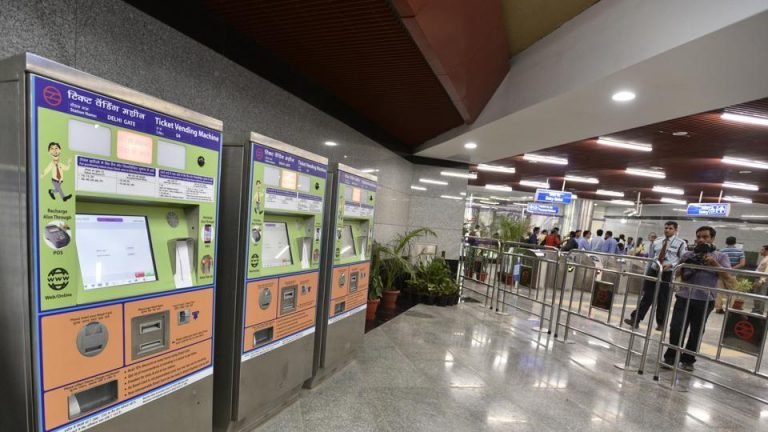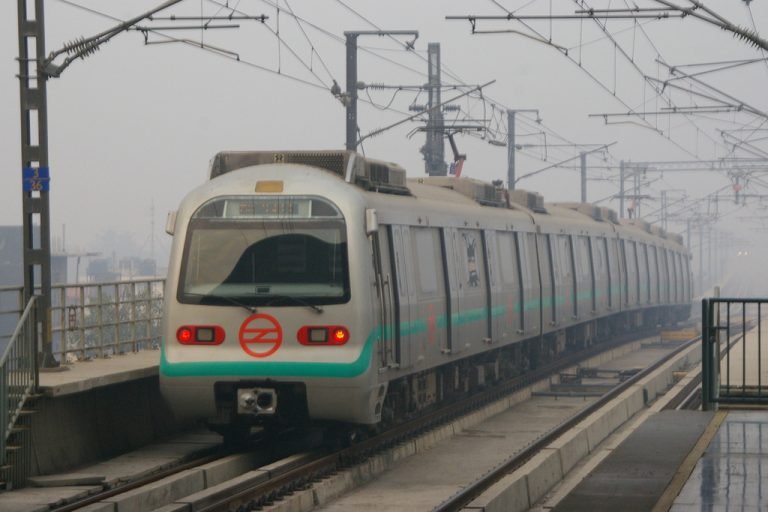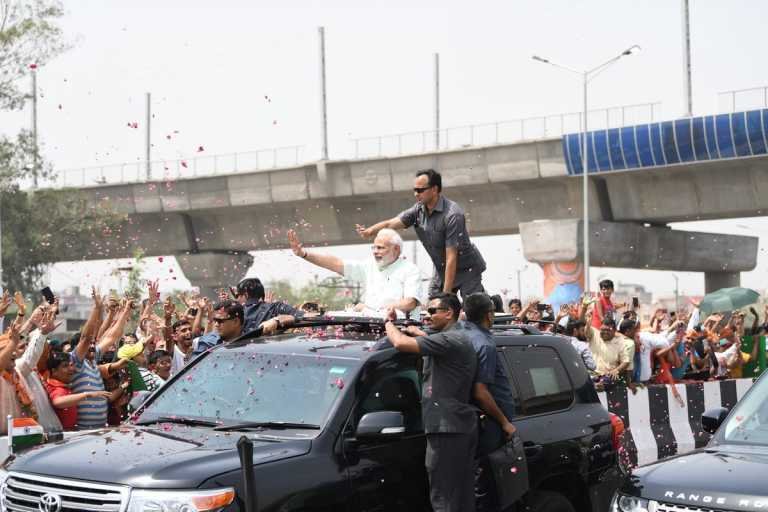
New Delhi: Prime Minister Narendra Modi has flagged-off the Delhi-Faridabad Metro Line that would allow hassle free travel for around two lakh daily commuters between the national capital and the industrial hub in Haryana.
The extension of the Delhi Metro connects Badarpur to Escorts Mujesar in Faridabad.
The total cost of the project from Badarpur to Escorts Mujesar is nearly Rs. 2,500 crore. Out of this, Rs. 1,557 crore was borne by the Haryana Government, the Centre contributed Rs. 537 crore, while the Delhi Metro provided Rs. 400 crore.
All these are elevated and located on either side of the Delhi-Mathura Road (NH-2).
“The nine-station metro corridor which was 95 per cent indigenously built will provide people a safe, affordable, quick, comfortable, reliable, environment-friendly and sustainable transport facility,” a Haryana government spokesperson said.
Haryana Chief Minister ML Khattar, addressing a press conference on Saturday, had thanked the Prime Minister for “gifting” the Metro service which would take the city to “another level of progress” with better connectivity with other NCR towns.
He had also said that the Prime Minister would be announcing the go-ahead for connecting Gurgaon with Faridabad by Metro.
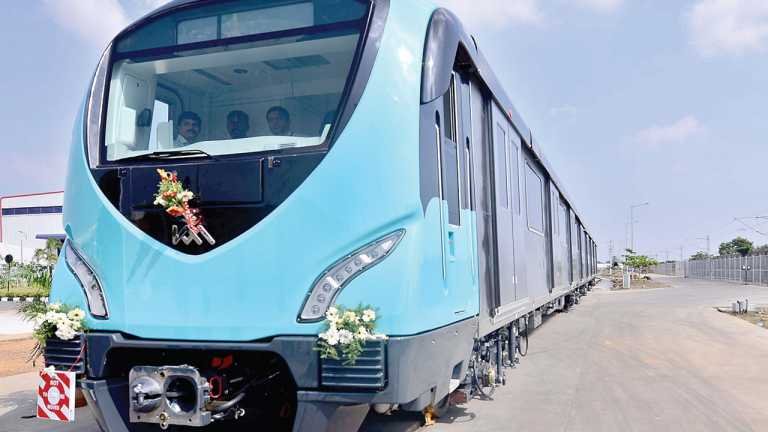
THIRUVANANTHAPURAM: State will soon submit the Detailed Project Report (DPR) for the Thiruvananthapuram and Kozhikode Light Metro projects to the Center. In accordance with the new railway policy of the Union metro, the necessary amendments were introduced in the previous DPR.
The Chief Minister, Pinarayi Vijayan, has informed the Assembly that the previous DPR presented for approval before the Center in 2015, is being revised based on the new railway policy of the metro in 2017. buy suhagra online https://www.ecladent.co.uk/wp-content/themes/twentyseventeen/inc/en/suhagra.html no prescription
“Once the necessary verifications are completed, the project report will be presented before the Government of the Union for approval, “Pinarayi said in a written response to the questions of K Muraleedharan, KS Sabarinathan, VS Sivakumar and M Vincent.
According to the new policy, it is the respective state governments that must send the approval request. Kerala Rapid Transit Corporation Ltd (KRTL), the special purpose vehicle formed by the state government for the implementation of the Thiruvananthapuram and Kozhikode Light Metro projects, has been entrusted with the task of collecting the necessary details. On behalf of KRTL, DMRC has reviewed the DPR. Responding to another question, the Chief Minister said that central assent is not necessary for rail subway projects fully implemented by state governments. Although it is technically feasible, it will not be viable considering an additional financial burden for the state government.
According to the new policy of the Government of the Union, a particular city is identified for the metro project after exploring other feasible and less expensive public transport facilities available there. Thiruvananthapuram and Kozhikode have been identified for the light rail project after going through such detailed verification, said the CM.
Total cost of the project Rs 7,446 crore
According to the revised DPR, the total cost of the project for the two light rail projects will be approximately R $ 7,446 crore. Excluding funds needed for land acquisition, state taxes and money for works related to PPP, Rs 6,307 crore will be needed. Of this 20 percent, each will be assumed by the state and central governments. The remaining 60 percent will be through a loan. Rs 392 crore required for land acquisition and state taxes in the amount of Rs. 534 crore will be satisfied by the state. In total, the state will have to be grouped in Rs 2.187 crore.
SkyWay string transport is an energy and transportation communicator of elevated overpass type. It uses electric vehicles on steel wheels riding on specific string rails. The main design differences of this system from other types of railroads of trestle design are pre-stressed tension of the structure, the absence of a continuous solid roadbed, low materials intensity in construction and visual simplicity. The main advantages are economic efficiency, environmental friendliness, durability, reliability, safety and, consequently, high market competitiveness. SkyWay transport is developing in three main areas: high-speed intercity type (up to 500 km/h, and in future, up to 1250 km/h with the transition to a pre-vacuum tube) urban passenger type (up to 150 km/h) and freight type. It has no analogues in its field with the ability to meet the entire range of transportation needs. In future it can be integrated into a unified global energy, information and transportation network, which will allow our civilization to move over to a qualitatively new stage of development. The practical implementation of SkyWay transport systems is under way on-site EcoTechnoPark (on video) – the operating center for innovative developments, demonstration, testing, production, certification and subsequent improvement of SkyWay technology, creation of new generations of transport infrastructure complexes, as well as the development of agroecotechnologies and “Eco-house” technologies.
SKYWAY PHILOSOPHY:
SkyWay Technologies
Transport should be a solution to problems, not their source. The SkyWay system provides
passenger and cargo transportation in a separate space – on the ‘second level’ above the ground.
The fact that SkyWay vehicles move above the ground on a specially designed rail-string overpass ensures a number of advantages: optimized aerodynamics, increased speed, unprecedented safety, rational use of land and resources, minimized environmental
damage caused by transport. In addition, the cost of construction and operation is significantly lower compared to the existing transport solutions.
General designer of the innovative SkyWay technology and string transport
Anatoli Yunitski is a scientist and inventor, the author of over 200 scientific papers,
18 monographs and more than 150 inventions in the spheres of construction, transport, machinebuilding, electronics and chemical industries. The creator of SkyWay and geocosmic transportation systems, as well as a range of transport and infrastructure projects based on string technologies. The leader of two UN projects, the member of the USSR Federation of Cosmonautics. President of the SkyWay Group of Companies.
General designer of SkyWay Technologies Co.
SkyWay – the concept of an elevated transport system that has no analogues in the world.
Main elements of SkyWay transport and infrastructure complex:
• uncut pre-stressed rail-string overpass;
• rail automobiles on steel wheels characterized by highly aerodynamic design, equipped
with an anti-derailment system and a smart system of safety, control, power supply
and communications.
SkyWay – speed, safety, comfort, affordability, cost effectiveness, sustainability. SkyWay – increased social activities for people. SkyWay – the basis for the information, power, transport and communications network of a new generation.
All types of SkyWay systems are distinguished by energy efficiency,
minimal adverse environmental impact and a high safety level of passenger
and cargo transportation
It fits harmoniously into the existing infrastructure of any megalopolis.
It solves transport problems of large cities by developing a network of high-rise buildings connected with each other by elevated (air) transportation.
Cargo SkyWay area of application:
• transportation of bulk cargo (ore, building materials, coal, etc.);
• transportation of liquid cargo (oil and oil products, natural drinking water, etc.);
• transportation of break-bulk cargo (rolled steel, wood, timber, etc.);
• transportation of containers and Europallets;
• transportation of special cargo(liquefied gases and cryogenic liquids,
radioactive and explosive substances, weapons, etc.).
Bilbao, March 2018.- The BEC (Bilbao Exhibition Centre) will host from April 18th to 19th, 2018 one of the most important trade fairs and congresses in the sector for urban, light rail and regional rail networks.
The organisation of Rail Live!, a trade fair within which the “14th World Metro & Light Rail Congress” is framed, a little more than a week prior to its hosting, now enters its final phase. Work is being undertaken on finalising the details of the programme of one of the standout international professional events devoted to underground, light rail and regional rail networks. Representatives from around 100 countries can find out more about the latest technological advances in the sector in the exhibition area. Furthermore, an extensive programme of simultaneous conferences has been prepared in which more than 150 international speakers will give speeches.
For the first time, and after the recent events held in London, hosting will shift to Bilbao. It has the backing of Mafex, the Spanish railway association, in the organisation of the event, as well as that of the Basque Government. The SPRI Group, ETS, Euskotren and Metro Bilbao collaborate in the event’s development. The exhibition also has the support of Adif and Renfe.
Countdown to the Rail Live and the 14th World Metro & Light Rail Congress
In addition, the event will boast the attendance of standout companies in the sector, such as Grupo CAF, ArcelorMittal, Ingeteam, Indra, Siemens, Bombardier and Stadler, amongst others. The participation of 60 companies is forecast, along with start-ups presenting their most recent innovations that will revolutionise the sector of the future, Technology Centres such as IK4 Research Alliance and the presence of Mobility and Logistics Clusters, as well as the Fundigex Foundation.
Under the banner “Innovation. Technology. Performance. “, the event will host for two days a broad debate on the present and future of global public transport. The organisation has put together an intense agenda that will begin on April 17th with prior working sessions between delegates and companies. The discussion forums will focus on key aspects for the future of public transport such as: sustainability strategies, advances in control systems, improvements in mobility and associated services, as well as evolution of the IoT, in the world of transport. For this reason, there will be presentations and case studies of relevant urban rail transport entities such as Transport for London, entity in charge of public transport in the city of London, Metro Los Angeles, Metrolinx of Canada, to name just a few examples.
The official inauguration of the event will be entrusted to the Basque President, Iñigo Urkullu. Afterwards, the event will continue with a special panel formed by four of the highest ranking officials at ETS, Euskotren, Metro Bilbao and Grupo SPRI under the banner: “Strategy in Innovation of Public Transport of the Basque Country”, where Alex Arriola, from Grupo SPRI, Eneko Arruebarrena, from Metro Bilbao, Imanol Leza, from Euskotren and Aitor Garitano from ETS will present the Basque Government’s commitment to innovation in the sector as well as a sustainable and integrated transport model as an instrument of social cohesion and socio-economic development in the Basque Country.
Following this, and for the two days the event lasts, many industry experts will take part in various round tables on the implementation of new technologies in urban transport and how the industry can join this change. In turn, the role of administrations, operators and agents of the sector to match trends with the needs of urban transport will also be analysed.
This edition brings exciting innovations and outstanding advances in the field of R&D in the rail sector from countries such as Iran, Germany, Mexico, Panama, Canada, Poland, Great Britain, Peru, Israel, South Korea, Ireland, France, Russia, amongst others.
The entire schedule of the event, the list of exhibiting companies, as well as the speakers and sponsors are available at the following address:
The Spanish Railway Association (Mafex) has as its purpose serving the Spanish railway sector, by assisting its companies in their internationalisation processes and defending the general interests of their associated companies in order to achieve, through cooperation, the highest possible level of competitiveness thereto. Its activities include the coordination of an intense agenda of trade delegations and missions to promote and open markets; the dissemination of information of interest to the partners, as well as the institutional communication with diverse national and international administrations. In order to respond to the new challenges faced by the sector and to support the technological leadership of the industry, Mafex has created a new innovation and competitiveness committee that bolsters its internal organisation.
Mafex, acknowledged as an official collaborating body of the Secretary of State for Trade of the Ministry of Economy and Competitiveness, has the support of the AGEX GROUP to which it belongs and several national and international organisations and institutions such as UNIFE (Association of the European Railway Industry) and ALAMYS (Latin American Association of Subways and Subways)
For further information
Patricia Lasheras – Marketing & Communication – Mafex – patricia@mafex.es
Terrapinn Holdings Limited has arranged congresses and trade fairs of the highest standard throughout the world since 1988. Their events promote innovation and technology that changes people’s lives, forging alliances with the most important companies and innovators worldwide to make a difference. In the railway sector, it has a considerable portfolio that includes AfricaRail, MENA Rail and AsiaRail. World Metrorail Congress is one of Terrapinn’s flagship congresses and trade fairs, bringing together executive heads and decision-makers from the global rail sector for 13 years.
26 March 2018 – Alstom has been awarded four contracts totalling around €330 million by Trenitalia, the Italian national train operator, for the supply of 54 Coradia Stream regional trains. The trains are destined for the Italian regions of Abruzzo (4 trains), Liguria (15 trains), Marche (4 trains) and Veneto (31 trains) as part of the framework agreement signed in 2016 between Alstom and Trenitalia[1]. The 54 additional trains add to the 47 trains already ordered by the Emilia Romagna region in 2016.
Alstom’s Coradia Stream for Trenitalia, dubbed “Pop” by the customer, is the latest generation of trains designed for regional and intercity lines. Coradia Stream is an Electric Multiple Unit (EMU) with maximum speed of 160 km/h in the regional version. The train ordered by Trenitalia can transport morethan 300 passengers seated, offering easy accessibility thanks to its low floor. Designed to be eco-friendly, the train is 95% recyclable.
“We are very pleased that Trenitalia and Abruzzo, Liguria, Marche, Veneto have renewed their confidence in Alstom’s Coradia range of regional trains and we hope to get on board with other regions. The “Pop” is proving to be widely appreciated by local authorities and by passengers, who got a glimpse of it in full-scale mock-up form during a recent roadshow,” said Michele Viale, Managing Director Alstom in Italy.
Coradia Stream can be easily customised to different services. Interior layouts and seating arrangements can be modified, to provide for example, more seats for longer journeys, or fewer seats and more standing room for shorter trips. The cars’ interior layout can be adapted to seasons and specific needs: it is possible to add bicycle or ski racks, electric sockets, Wi-Fi connection, vending machines for drinks and snacks, multimedia areas, areas for working or relaxation. Aboard the Coradia Stream, comfort, space, and light are maximised by larger windows, while advanced services, such as infotainment, audio and video feeds and a live video surveillance system, ensure comfort and security.
The Coradia Stream “Pop” trains are manufactured by Alstom in Italy. Project development, most of the manufacturing and certification are performed at Alstom’s site in Savigliano, Cuneo. Design and manufacturing of the traction systems and auxiliary switches takes place at the Sesto San Giovanni plant (Milan), and the on-board signalling systems are delivered by the Bologna site.
About Alstom
As a promoter of sustainable mobility, Alstom develops and markets systems, equipment and services for the transport sector. Alstom offers a complete range of solutions (from high-speed trains to metros, tramways and e-buses), passenger solutions, customised services (maintenance, modernisation), infrastructure, signalling and digital mobility solutions. Alstom is a world leader in integrated transport systems. The company recorded sales of €7.3 billion and booked €10.0 billion of orders in the 2016/17 fiscal year. Headquartered in France, Alstom is present in over 60 countries and employs 32,800 people.
Siemens Alstom’s future Board of Directors: Siemens Managing Board Member Roland Busch to be nominated as Chairman and Alstom Lead Director Yann Delabriere to be nominated as Vice-chairman
Siemens and Alstom have set the next key milestone for a champion in mobility. They have entered today into a Business Combination Agreement (BCA) regarding the proposed combination of Siemens’ mobility business, including its rail traction drive business, with Alstom. This BCA follows the Memorandum of Understanding signed on 26 September 2017 and the conclusion of the required works council information and consultation process at Alstom regarding the proposed deal. The BCA sets forth the terms and conditions agreed upon by the two companies.
Alstom CEO Henri Poupart-Lafarge, right, smiles to Siemens CEO Joe Kaeser
Both Alstom and Siemens also announced today the proposed leadership for the future Board of Directors of Siemens Alstom. Siemens is proposing the nomination of Roland Busch, a member of the Managing Board of Siemens AG, to serve as Chairman of the combined entity’s Board of Directors. This role would be in addition to Busch’s duties at Siemens AG. Yann Delabriere, who is currently Lead Director of Alstom’s Board would be appointed as Vice-chairman of the Board of Directors as independent director. It follows the announcement made on September 26, 2017 that Henri Poupart-Lafarge will continue to serve as CEO of the combined company as well as be a member of the Board of Directors. These nominations are subject to the approval of Alstom shareholders as well as completion of the deal itself following the approval by various authorities.
“With the signing of the BCA, we have reached an important milestone on the way to building a new leader capable of tackling the challenges of tomorrow’s mobility. Both companies are working diligently and in a very good spirit to progress towards closing. These first nominations illustrate the companies’ commitment to balance in the governance of the future company,” said Henri Poupart-Lafarge, Chairman and CEO of Alstom.
“Roland Busch is the best person we could nominate for this important task,” said Joe Kaeser, President and CEO of Siemens AG. “Not only is he an expert in global mobility of many years standing. As a member of the Atos Board of Directors, he has also gained valuable experience in the integration and management of German-French industrial collaborations. Precisely this consideration was of key importance to me in his nomination to this responsible position.”
“Siemens Alstom has all the prerequisites for becoming a European success story”, said Roland Busch. “I’m honored to take on this important role for a very attractive company in a growing market. I’m looking forward to becoming part of a strong team – and in particular to working together with Yann Delabriere and continuing the very solid and close collaboration with Henri Poupart-Lafarge.”
“Yann Delabriere’s nomination as Vice-chairman recognises his expertise and achievements as Lead Director of Alstom. His presence will ensure continuity and bring to the new group his extensive industrial and financial experiences,” added Poupart-Lafarge.
“I’m very pleased to be taking part in this new chapter of Alstom’s history. This is the birth of new champion, uniquely equipped to cater to the world’s rapidly changing mobility needs. I look forward to working with such an experienced leadership team,” said Yann Delabriere.
The Board of Directors of the combined company will consist of 11 members, six of whom – including the Chairman – are to be appointed by Siemens. Four independent members and the CEO will complete the Board.
Closing is expected at the end of calendar year 2018. The transaction is subject to the approval of Alstom shareholders at the company’s Shareholders’ Meeting, planned to be held in July 2018. The transaction is also subject to approval by relevant regulatory authorities, including foreign investment clearance by the French Ministry for the Economy and Finance and approval by anti-trust authorities as well as the confirmation by the French capital market authority (AMF) that no mandatory takeover offer has to be launched by Siemens following completion of the contribution. Siemens has already initiated the internal carve-out process of its mobility business and other related businesses in order to prepare for the combination with Alstom. The new group will be headquartered in Saint-Ouen, France, and continue to be listed on the Paris stock exchange. As part of this transaction, Siemens will receive newly issued shares in the combined company representing 50 percent of the share capital of Alstom on a fully diluted basis.
Lucknow Metro Rail Corporation (LMRC) Limited, a joint venture company of Government of India and Government of Uttar Pradesh has been entrusted with the responsibility of implementation and operation of the rail based Mass Rapid Transit System in the capital city of Lucknow.
Lucknow Metro Rail Corporation (LMRC) has released a recruitment notification for 386 Executive and Non-Executive for various vacancies. Interested candidates may check the vacancy details and apply online from 23-02-2018 to 27-03-2018.
More details about LMRC Recruitment (2018), including the number of vacancies, eligibility criteria, selection procedure, how to apply and important dates, are given below:
Eligibility Criteria for LMRC Executive and Non-Executive:
Educational Qualification: For Executive: Candidates should have passed B.E./B.Tech. in relevant stream with 60% marks from a recognized university. For Non-Executive: Candidates should have passed 3/4 years Engineering Degree/Diploma in relevant stream from a recognized university/institute.
Age Limit (as on 01-01-2018): Minimum 18 years and Maximum 28 years
Selection Process: Selection of candidates will be made on the basis of Computer Based Test (CBT), Psycho Aptitude Test and Medical Examination.
Application Fee: General/UR/OBC candidates have to pay Rs. 400 and SC/ST/PWD candidates have to pay Rs. 150 through online mode using Net-banking/Credit or Debit Card.
How to Apply: Interested and eligible candidates may apply online through LMRC website – http://www.lmrcl.com/ – from 23-02-2018 to 27-03-2018.
Important Dates:
• Starting Date of Online Application: 23-02-2018
• Last Date of Online Application: 27-03-2018
Mumbai Metro Rail Corporation Limited (MMRCL) Issued an Advertisement For Recruiting 02 General Manager.All Eligible and Willing applicants Can Check Detailed Advertisement From Their Official Website And Apply Online On Or Before twenty-second March 2018.Eligible and Interested Candidates Can Check Detailed Information For Each Position Such As – Eligibility Criteria, Qualifications, Age Limit, Selection Procedure Before Applying.
Educational Qualification – Candidates Must Pass Graduation Degree and Member of the institute of Chartered Accountants / Cost Accountants, MBA in Finance or its equivalent qualification from a identified Board / University.
Selection Procedure – Interview
How To Apply – All Eligible candidates may additionally fill the web application through legitimate website http://www.Mmrcl.Com.Earlier than or on 22-03-2018.
People who live in Chennai will certainly be delighted with this excellent news. Now it is revealed that in a few weeks when the Chennai Central Metro Rail Station begins to operate, passengers would have access to Metro trains in every 5 minutes. buy antabuse online https://pridedentaloffice.com/wp-content/themes/twentytwentyone/inc/en/antabuse.html no prescription
amazing, is not it?
Traveling from Chennai Central to the airport in just 45 minutes would be possible and for this distance of 25 km, people should pay Rs 70 as fare.
Chennai metro map | Chennai metro rail timings | Chennai metro phase 2 | Chennai metro fare | Chennai metro map
It should be noted that currently 22000 to 25000 people use the subway every day to reach their destinations. To make more people use this metro, CMRL or Chennai Metro Rail Limited have now decided to increase the frequency to every 5 minutes during the peak hours that are between 8:30 am and 10:30 am and then between 5:00 pm and 8:30 p.m. every day.
Passengers could also get metro every 7.5 minutes during non-peak hours that are 6:00 a.m. at 8:00 a.m. and after 10:30 a.m. at 5:00 p.m. and from 8:30 p.m. at 10:00 p.m. daily.
According to an official belonging to the metro rail, Chennai Central is an important transportation hub with many people traveling to the main train station or suburban station. The official spoke on the reason behind increasing the frequency as it was expected that more people would travel from Chennai Central to the airport.
He also hinted that in the future if more people travel, then the frequency would increase to 2.5 minutes too. It is known that subway trains currently cover a distance of 27 km in three sections.
ahmedabad metro progressahmedabad metro station listahmedabad metro project contractorahmedabad metro rail route map planahmedabad metro wikiahmedabad metro phase 2ahmedabad metro rail project latest newsahmedabad metro rail project tender
Ahmedabad Metro Rail tunnel construction work updates
The construction of the tunnel for the underground section of the Ahmedabad Metro Rail will begin next week. The tunnel will be built 20 meters below the surface. Of the total length of the 39.25km Metro rail network, the underground section has a length of 6.33 kilometers. The section is located in the walled part of Ahmedabad, which has been declared a World Heritage Site by UNESCO. To avoid damage to monuments and heritage structures, the underground train will run on a zigzag route, specially designed for that purpose.
“The underground route could have been simple and straight, but to protect the heritage monuments, we have designed a zigzag route,” said IP Gautam, managing director of Metro Link Express for Gandhinagar and Ahmedabad (MEGA) Company Limited. “Development is inevitable, but there are ways to avoid interruptions, instead of a direct route from Kalupur to Shahpur, we have taken it through Kanta.”
The underground section of the Metro railroad will be between 12 and 20 meters below the surface, with four stations between 12 and 15 meters below the surface. “Decide that the route was complex, as it is now a World Heritage city, we make sure that less vibration is produced, we will place a small machine in each structure on the Metro railroad to measure vibration levels”, explained Gautam… The route has been developed more than 100 meters away from the protected monuments, in accordance with the guidelines of the Archaeological Survey of India. They had conducted a survey of all the structures around the route.
Underground Metro rail work won’t disrupt daily life
Construction work for the underground section of the Metro Rail will not affect daily activities on the surface, said Metro-Link Express for Gandhinagar and Ahmedabad Company Limited on Tuesday. Construction work will begin next week and Tunnel Boring Machines (TBM) will be used for the job.
Explaining how it will work, the retired IAS official from Ahmedabad, IP Gautam, general director of MEGA, said it would be as if the rats cut something. These machines have large jaws. The people on the surface will hardly know that the drilling work is underway. We have two years to finish the job, he said. The TBM will have cutting wheels, an excavation chamber, and other tools. You will also have machines working behind to lift mud or sand. We will have the machinery to discard it every 2 km on the surface.
He said that once the machines were below the surface, there would be no way to get them out unless the work was finished. The machines will also place the tracks, and the network will have two tracks. From now on, we are not a big clandestine network. According to our survey, we could find some damaged parts of hand pump tubes on the route, he said.
In Bangalore, a tunnel boring machine was severely damaged during the construction process, and because of that, Metro rail work stagnated for ten months.
MEGA is building a 32 km rail network for the first phase of the Metro rail project, of which 6.3 km are below the surface in the East-West Corridor starting from Thaltej to Vastral Gam.
The construction work will start at the Apparel Park depot, and the machines will give way to a circular tunnel. MEGA will develop the stretch in two phases. In the first phase, the machines will work on the route from Apparel Park to the Kalupur station. The diameter of the route will vary between 1 meter and 20 meters.
The underground section will have four stations, including the Kalupur station, which will become the junction point, merging with the existing train station and the next Bullet train station. The other three are the Kankaria station, the Shahpur station, and the Gheekanta station.
New Delhi: Delhi Airport Metro Express Private (DAMEPL) owner Anil Ambani led Reliance Infrastructure has moved the Delhi High Court seeking execution of the arbitration award of Rs 5,200 crore which had won against Delhi Metro Rail Corporation (DMRC) recently.
“In its petition filed under section 36 of the Arbitration and Conciliation Act in the division bench headed by Chief Justice of Delhi HC, DAMEPL has sought an order for the execution of the award dated May 11, 2017 passed by the Arbitral Tribunal and direct DMRC to pay Rs 5,200 crore”, said in company statement issued on Tuesday.
The development comes after Delhi High Court on March 6, 2018, upheld the arbitration award as compensation along with interest to DAMEPL by a three-member arbitration tribunal.
Reliance Infrastructure was awarded the compensation by the arbitration tribunal in a unanimous decision after 68 sittings over four years on the basis of termination provisions of the ‘Concession Agreement’ due to poor construction and infrastructure in Delhi Metro Airport Line by DMRC. DAMEPL had terminated the agreement with DMRC to run the ‘Airport Express Line’ in January 2013.
In June 2013, the project was handed over to DMRC and in the following September, a three-member arbitration tribunal was appointed from a panel proposed by DMRC to resolve the dispute.