Home Blog Page 626

DMRC floats tenders of double-decker metro corridors for Phase IV Project

NEW DELHI (Metro Rail News): The Delhi Metro Rail Corporation (DMRC) has floated  four tenders for the construction of double-decker metro corridors for Phase IV Project. In this, tender process has also been started for the construction of elevated corridor and stations of Saket-Aerocity metro line. A double-decker corridor will be built on the elevated portion of this metro line. There will be a flyover on the same pillar and a metro corridor above it. Along with this, the underpass will also be made for vehicles slightly ahead of where the double-decker corridor ends. This corridor will be ready in about three years after the completion of the tender process.

Total length of the corridor: 20 km

The total length of the Saket-Aerocity Corridor will be 20 kilometers. This corridor will consist of 12 underground stations and 4 elevated stations. DMRC has started the tender process for the construction of the elevated portion. It will be constructed at a cost of about Rs 746.68 crore. Sangam Vihar, Khanpur, Ambedkar Nagar and Saket-G Block station will be constructed on this elevated corridor.

Interchange station: Saket-G Block

Saket G block will be the interchange station along the Lajpat Nagar-Saket metro line of phase IV of Delhi Metro project. Once it is ready, people can go to ITO and Old Delhi from Sangam Vihar and Khanpur and the will be able to reach ITO, Old Delhi and Kashmiri Gate of Violet Line by changing the metro at Saket-G Block and Lajpat Nagar station.

Six lane flyover to be built

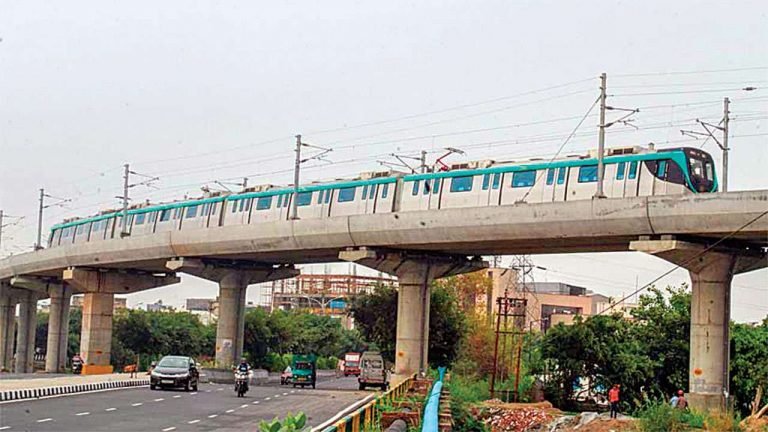
According to the plan, this corridor will be built between Sangam Vihar to Ambedkar Nagar on Mehrauli Badarpur Road and will have a 2.4 km double-decker on which a six-lane flyover will be built. A little ahead of the proposed Sangam Vihar metro station, this flyover will be the starting and the last end will be after Ambedkar number station. There will be a flyover at a height of 9.3 meters from the road and a metro corridor at an altitude of 18 meters. This corridor will also connect the old BRTS.

430-metre underpass will be built

According to the plan, a 430-meter underpass will be built near the Mandir road crossing in Saket. This will make traffic signal free from Sangam Vihar to Saket G Block. It is noteworthy that a double-decker elevated corridor is to be constructed on 1.40 km stretch of Majlis Park-Maujpur metro line corridor. The tender process for its construction has already started.

DMRC has also initiated the tender process for construction of the four elevated stations of the proposed Janakpuri West-RK Ashram Corridor in Phase IV and the Metro Corridor between it. Under this, Bhalswa, Majlis Park, Azadpur and Ashok Vihar metro stations will be built on this corridor. The total length of Janakpuri West-RK Ashram Corridor will be 28.89 km. DMRC has already issued tender process for construction of its 12.3 km stretch and 10 elevated stations. In this sequence, the tender process has been initiated for the construction of four more stations and the corridor between them.

for more information on tender, kindly contact editor@metrorailnews.in
RVNL Floated tender for Setting Up of Kolkata Metro New Train Depot

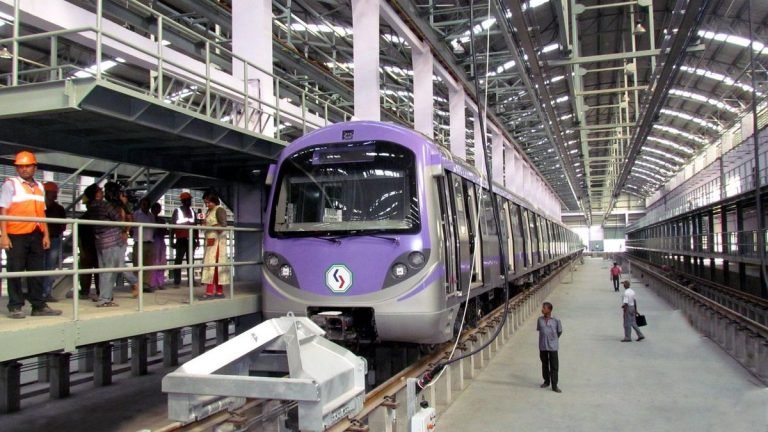
Kolkata (Metro Rail News): Kolkata Metro Rail Corporation invites tenders through Rail Vikas Nigam Limited for setting up of metro train depot at Kavi Subhas in connection with New Garia-Airport Metro Project of Kolkata Metro Rail project.

Work Details

Construction of PEB shed structures, water supply arrangement, drainage, sewerage, road works, track works, power supply & general electrical works and supply, installation and commissioning of machinery & plant for setting up of Metro Car Depot at Kavi Subhas in connection with New Garia-Airport Metro corrisor of Kolkata Metro Rail project at Kolkata, West Bengal, India

Important Details

  1. Sale of tender documents: From 14.08.2019 to 30.09.2019
  2. Tender Document Cost: INR 5000.00 (hard copy). However, bidding documents can be downloaded free of cost from the official website of RVNL website or e-Tendering portal.
  3. Pre-bid Meeting: 28.08.2019 at 11.30 hrs at Rail Vikas Nigam Limited, August Kranti Bhawan, Bhikaji Cama Place, New Delhi-110066, India.
  4. Last Date of Submission: 30.09.2019 till 11.00 hrs (The completed Bids must be submitted through e-tendering portal only)
  5. Tender Opening Date: 30.09.2019 at 11.30 hrs

Where to contact

Interested eligible Bidders may obtain further information from the office of the Chief Project Manager/KOL-I, Rail Vikas Nigam Limited, 24, Deshpran Shasmal Road, Kolkata-700033.

About Project

The Kavi Subhas depot is part of Line 6 of Kolkata Metro Rail project. Construction work of viaducts and stations are going on full swing. This corridor will connect New Garia with Netaji Subhas Chandra Bose International Airport via two satellite towns Salt Lake and New Town of the Kolkata. The total length of the corrdidor will be 29.87 km and it will serve a total of 24 stations. It is expecetd to open the first stretch of this corridor from Kavi Subhash to Hemanta Mukherjee in 2021.

Kolkata all set for first underwater metro services

KOLKATA (Metro Rail News): India’s first underwater river tunnel is almost ready. As part of the east-west corridor, Kolkata Metro Rail Corporation (KMRCL) has dug tunnels below the Hooghly River to lay train tracks.

Of the 16.6-km-long east-west stretch, 520 m will be under the river bed. Constructing the tunnels has been an engineering feat. The tunnels are built more than 33 meters below the riverbed and will connect Kolkata to Howrah. The fact that not one drop of water can enter the tunnel was the biggest challenge.

The time taken to cross the 520-m tunnel will be around 60 seconds. Using the ferry to cross the river takes 20-odd minutes. And crossing the Howrah Bridge may take hours if you are stuck in a traffic jam.

The metro tunnel has several other marvels. The structure is actually made of rings that are 1.4 m wide. A special gasket has been made which will swell five times if it comes in contact with water. In case of water ever enters the tunnel there are enough precautionary steps that have been taken.

This is the first big tunnel under any river in India. Within a few months, the metro will start running here. Here the width of the Ganga is 500 m and the tunnel is 13 m under the Ganga. The diameter of the tunnel is 5.8 m, B Dewanjee, chief engineer (civil ), KMRCL said.

Talking about the safety issue Dewanjee said: The tunnel is made of concrete and we have brought the entire composed concrete and put it over here. There are hydrophilic gaskets are kept in between these concretes so that if in any case water comes inside the tunnel, the gaskets will open up. Here four-stage safeties are used so that the water cannot enter the tunnel.

Around 150 trucks of mud have been taken out every day to ensure that this entire stretch was built very smoothly. More than 1,000 workers worked tirelessly 24×7 to complete the tunnels by the due date. So what if an emergency happens? Walkways have been built and enough fire alarms have been set up. There will be a smooth process for fire tenders to enter so that the passenger evacuation route does not collide with the route that is being taken by the fire workers who will be on duty round the clock.

There have been several other challenges. The cost of the project has been rising and is likely to touch Rs 8,500 crore by the time people are able to use the entire metro system in 2021. The twin tunnels will also ease movement of trains as at no pint will two trains cross each other.

One of the challenges faced by KMRCL was to keep the old building intact in the construction site. The area is dotted with centuries-old building dating back to the British period. The foundations of these buildings had to safeguarded so that they did not crumble.

As a precautionary measure, several buildings were evacuated before construction began more than 500 people were temporarily shifted and put up in hotels.

For the 1,000-odd workers too it was a huge challenge. In the tunnels the temperatures would rarely go below 50 degree Celsius, making the surroundings very hot and unbearable. The oxygen supply was also an issue.

The wait for the people of Kolkata and Howrah will soon be over. Seamless connectivity between Howrah railway station, one of the busiest in the country, and the eastern metropolis will help in saving travel time.

Astin John Designs New Hyperloop Terminal for Mumbai

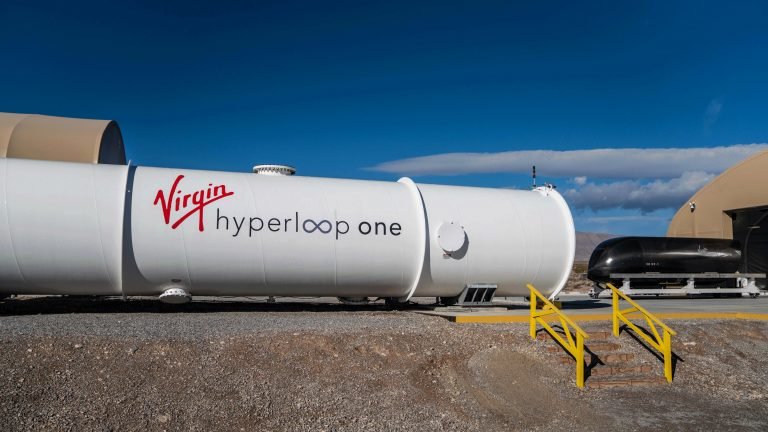
MUMBAI (Metro Rail News): Designer Astin John has created a proposal for a new hyperloop terminal in Mumbai, India. The project is intended to celebrate the new age of hyperloop transportation technology through architecture for the state-approved Mumbai – Pune hyperloop in Maharastra. The terminal acts as a transportation hub that connects other modes of transport in Mumbai to the hyperloop and is inspired by the aerodynamic free flow of air.

As John explains, new-age technology is represented in architecture through a modern design and state of the art facilities.
buy viagra soft online no prescription
The structure takes a parametric form to illustrate the concept of flow through different elements. The terminal’s main function is easy to flow of passengers and goods from one point to another, and from one mode of transport to another.

The building facade is designed with a responsive skin that automatically responds to the climate through sensors and an actuator. Every unit of the skin is mechanically controlled by the actuator by sensing external and internal conditions like heat and airflow through the sensors.

John’s project follows the news that the Government of Maharashtra has deemed Virgin Hyperloop One a public infrastructure project, setting it up to become the first hyperloop project in the world.

Chennai Metro rail gives a free ride to commuters due to server snag

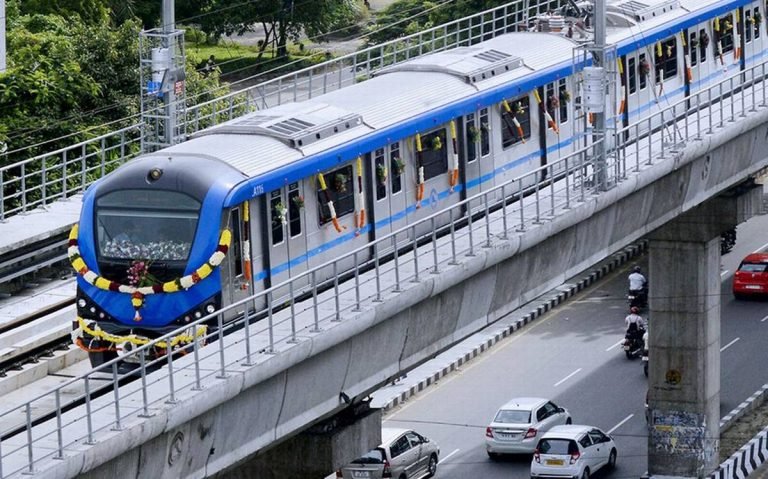
CHENNAI (Metro Rail News): Hit by a malfunction in its fare collection system for about two and half hours on Saturday morning, Chennai Metro Rail allowed commuters to use the services free of cost without tickets and smart cards.

When passengers could not be issued tokens (tickets) after fare collection due to the glitch, the authorities allowed passengers to proceed with their onward journey sans the usual tickets or smart cards. “First, it was thought that the malfunction was only in one station.

When we realized it has affected the system in all other stations as well, the passengers were allowed to use the services without tickets,” a Metro Rail official told. For sometime after the glitch was detected, paper tickets were issued and later it was dispensed with, he added.

Passengers said they welcomed the initiative, which has avoided inconvenience. The malfunction has since been rectified and commuters should use tokens and smart-cards for access, the official said.

Pune Metro to get aluminum-bodied coaches

PUNE (Metro Rail News): Pune Metro is set to get ultra-modern, state-of-the-art aluminum-bodied coaches. Thus far, Metros in the country have used stainless steel-bodied coaches.

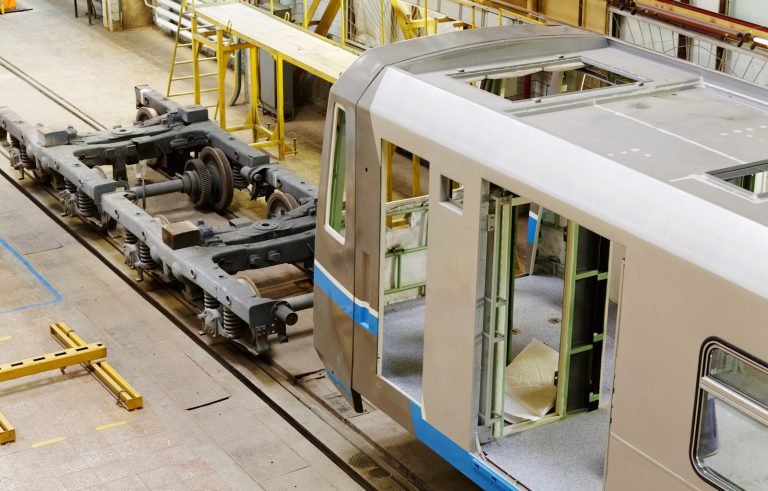
A consortium formed by Kolkata-based wagon manufacturer Titagarh Wagons with its wholly-owned subsidiary Titagarh Firema SPA recently won the international bid to supply 102 aluminum coaches to the Pune Metro project. The Maharashtra Metro Rail Corporation Ltd. (Maha Metro) had issued a tender for “design, manufacture, supply, testing, commissioning of passenger rolling stock (electrical multiple units) and training of personnel”.

This will be the first time that aluminum-bodied coaches, which are said to be lighter in weight, more energy-efficient and have better aesthetics, will be manufactured in India, Dr. Brijesh Dixit, managing director of Maha Metro, said.

“The company will manufacture 25% of the coaches at their plant in Italy and 75% will be produced and commissioned at the Maha Metro coach manufacturing plant in Nagpur,” Dr. Dixit said. He said the Pune Metro project had crossed “another important milestone” with this order for coach procurement.

Officials from the Pune Metro project said that initially, the trains will consist of three coaches, which will subsequently be converted into six as per requirement. They said these coaches would be fully air-conditioned with humidity control, provided with the digital route and station display and international standard interiors.

“The coaches will have 100% CCTV camera coverage. [Passengers with disabilities] will be able to travel seamlessly to/from the station entrance to the train with specially earmarked places for wheelchairs. Mobile and laptop charging facility will also be provided onboard,” a spokesperson with the project said.
buy cymbalta online https://calibudsman.com/wp-content/themes/twentytwentytwo/inc/patterns/en/cymbalta.html no prescription

The coaches are to be ergonomically and aerodynamically designed, with the coach exterior reflecting the history and cultural heritage of Pune and Pimpri-Chinchwad. They will have a maximum speed of 95 kmph and the capacity to accommodate more than 925 passengers.

“They are energy efficient and will be equipped with a regenerative braking system. They will also be capable of operating in driverless mode,” Dr. Dixit said. Pune Metro will begin operating with coaches being used by Maha Metro in Nagpur and will be augmented as and when the new coaches join the fleet.

The ₹11,420 crore- Pune Metro rail system has been projected by the Centre and the State government as a panacea to Pune’s traffic woes. In December 2016, Prime Minister Narendra Modi had laid the foundation stone for the project, just ahead of the elections to the Pune and Pimpri-Chinchwad municipal corporations.

An especially vital section in the project — comprising three lines with a total length of 54.58 km — is the elevated 23.3-km Line 3, which will bridge the city’s bustling Information Technology quarter in Hinjewadi with Shivajinagar.

KEC bags Rs 845-cr orders from NCRTC

KOCHI (Metro Rail News): KEC International Ltd, an infrastructure EPC company of the RPG Group, has secured its first orders of Rs. 845 crore in the emerging Regional Rapid Transit System (RRTS) and Metro sectors in India.

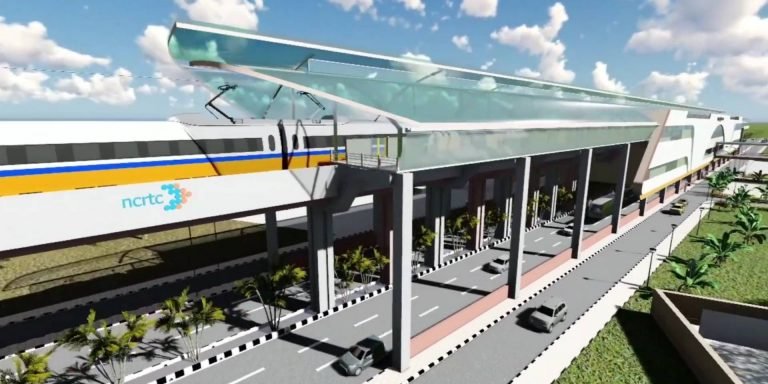
The RRTS order, for construction of elevated viaduct and stations of the Delhi – Meerut Regional Rapid Transit System (RRTS) corridor, from National Capital Region Transport Corporation (NCRTC), is for Rs. 580 crore.

KEC has also bagged order for construction of viaduct along with stations for the Phase 1 extension of Kochi metro rail project, from Kochi Metro Rail Ltd (KMRL) of Rs. 265 crore.

Vimal Kejriwal, MD & CEO, KEC International Ltd. commented, “ These orders mark our entry into the urban transport sector and further expands our client portfolio. This foray will also help us in building a robust executable order book, thus enabling us to scale up the business and achieve the desired growth plans.”

Officials could visit Japan for India’s bullet train project

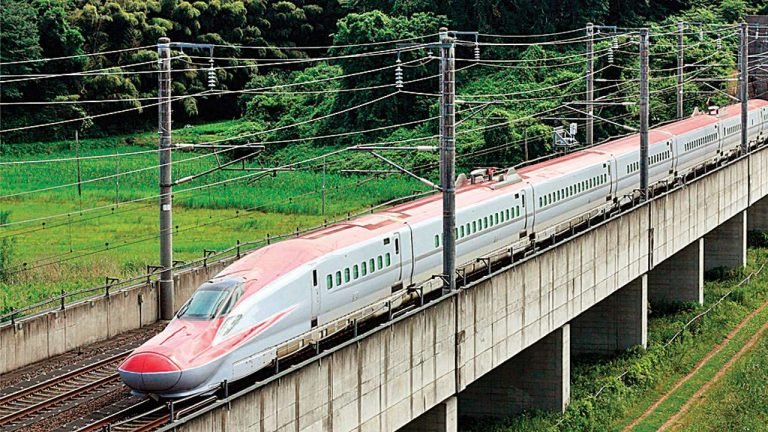
MUMBAI (Metro Rail News): The National High-Speed Rail Corporation Limited (NHSRCL) has sought the nomination of officers, who could be sent to Japan to prepare for certifications required for India’s first bullet train project, according to officials aware of the development. NHSRCL is executing the project that is expected to link Mumbai and Ahmedabad by 2023.

The Commission of Railway Safety (CRS), which certifies new rail tracks and trains in the country for safe operations, has no experience of certifying bullet trains and tracks, which are being introduced in India for the first time. This is the reason why officers are being sent to Japan, which is backing the project.

“Before offering trains and tracks for inspection to CRS, we will do a trial run.
buy vibramycin generic onlineandnewblo.com/vibramycin.html over the counter
We have requested the aviation and railway ministries to constitute a team so that in future we have resources to certify bullet train operations. We have already sent two CRS officials to Japan,” said NHSRCL managing director Achal Khare.

Khare added they have requested for creation of a dedicated CRS team as it will require training as much as any other staff.

Former Railway Board member Shri Prakash said something new is coming to the country and most of the things associated with the project will happen for the first time. “CRS has no experience related to high-speed train operations and training will help it identify the shortcoming, if any, regarding bullet trains operations in Indian conditions.”

The NHSRCL also plans to run a confirmation car daily just before the start of regular bullet train operations. “Since the trains will run at a very high speed, a confirmation car from both directions will help us in identifying if there are any foreign objects on the tracks. We will have eight to 10 confirmation cars for this purpose,” Khare added.

India is also working with Japan to make key technical changes to the bullet trains so that they can handle extreme heat and high levels of pollution.

NHSRCL believes the trains will have to be customized for Indian conditions so that they do not break down due to heat and dust.

The government has set a deadline for completing the project by August 15, 2022, when India would complete 75 years of independence. NHSRCL expects to open one portion of the network by then and complete the entire Mumbai-Ahmedabad stretch by December 2023.

Prime Minister Narendra Modi and his Japanese counterpart, Shinzo Abe, laid the foundation stone for the project in 2017. The project will mark India’s shift to an era of high-speed trains capable of hitting speeds of up to 350 km per hour.

State, Centre to ink MoU for Bhopal, Indore Metro rail

BHOPAL (Metro Rail News): The Madhya Pradesh government will sign a memorandum of understanding with the Union government in New Delhi on Monday for the development of Metro rail in Bhopal and Indore.

The move will officially pave the way for the Madhya Pradesh Metro Rail Company Limited’s to access loan from foreign funding agencies. The two projects are pegged at Rs 14,400 crore and likely to be completed in four years. MP urban development minister Jaivardhan Singh and senior state government officials would be present on the occasion.

“It is the official go-ahead for the project in Indore and Bhopal. Foreign funding agencies are on board,” said MP urban administration and housing development, principal secretary and MPMRCL MD, Sanjay Dubey

The projects will be part-funded by the central and state governments, besides loans from Asian Development Bank (ADB) and New Development Bank (NDB) for Indore Metro and European Investment Bank (EIB) for the Bhopal Metro.

The inking of MoU removes the final hurdle in the construction of the two projects. Both projects had to be reworked after the Centre announced a new Metro policy for 2017. It also opens a window for private investments in Metro operations by making private participation mandatory for availing central assistance on Metro projects.

The Union government’s financial support to the metro rail project is expected to be 20%. In October 2018, ahead of the state assembly elections, the Union Cabinet had given in-principle approval for the twin projects. Since then, the first civil work package which includes soil testing and laying of groundwork for Bhopal and Indore metro rail project has begun.

The Indore project will run along the Ring Line (Bengali Square – Vijay Nagar – Bhawarsala – Airport – Patasia – Bengali Square). The total number of stations on the line are 30. Bhopal project comprises two corridors of a total length 27.
buy zovirax online blackmenheal.org/wp-content/languages/new/zovirax.html no prescription
87 Km — Karond Circle to AIIMS (14.99 Km) and Bhadbhada Square to Ratnagiri Tiraha (12.88 Km).

Metro ‘Lite’ coming to Noida and Greater Noida

NOIDA (Metro Rail News): Travelling woes of thousands of commuters in Noida and Greater Noida may ease a lot soon with the introduction of a new mode of transport. So, you may have heard of ‘Lite’ versions of various things, including soft drinks and social media networks, but here we are talking about a new affordable version of the metro! The government is planning to run ‘Light Metro‘ in the city! Durga Shankar Mishra, Secretary, Ministry of Housing and Urban Affairs (MoHUA), said on Sunday that in near future, Light Metro will be introduced in Noida. Light Metro is less expensive.

The secretary has sought a proposal from the CEO of Greater Noida Authority for Light Metro between Sector 142 and Botanical Garden. According to Mishra, the per kilometer construction cost of elevated metro comes around Rs 250-Rs 350 crore at present. This price goes up to Rs 700 crore per km in case of underground metro. In contrast, the Light Metro will cost just Rs 100 crore. 

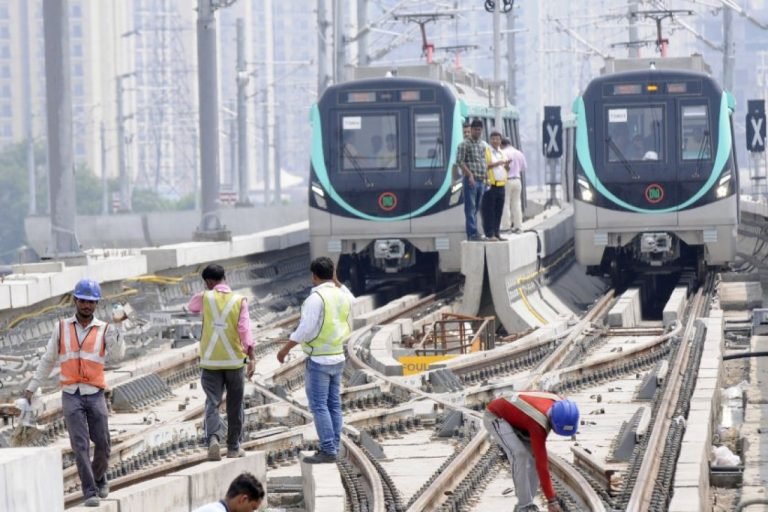
Mishra on Sunday also inaugurated a 300 meter-long walkway connecting Delhi Metro’s Blue Line with Aqua Line of Noida Metro. The walkway has been built by the Noida Metro Rail Corporation (NMRC), linking Sector 52 station of Blue Line with Sector 51 of Aqua Line. The walkway will give commuters seamless connectivity while traveling to Noida and Greater Noida from Delhi and other places and vice-versa.

“A 300m walkway between Sec-51 of NMRC`s Aqua Line & Sec-52 of DMRC`s Blue Line was inaugurated today by Shri Durga Shanker Mishra (Secretary MoHUA). The walkway built by Noida Metro Rail Corporation will facilitate those traveling to Greater Noida from various parts of Delhi,” the Delhi Metro Rail Corporation (DMRC) tweeted.

“NMRC has built the walkway connecting Sector 51 of Aqua Line & Sector 52 of DMRC`s Blue Line. Keeping in mind the comfort of passengers, NMRC had also provided free solar-powered E-rickshaw services in this stretch to facilitate connectivity between the two metro rail networks,” DMRC said in another tweet.