Home Blog Page 625

Delhi Govt. reserve Rs 150 crore for free ride for women in metro

NEW DELHI (Metro Rail News): The Delhi assembly on Monday passed the government’s demands for grants of Rs 290 crore for free travel to women passengers in buses and metro trains.

Supplementary Demand of Rs 142 Cr

Deputy Chief Minister Manish Sisodia also tabled a proposal of supplementary demands for grants of Rs 142 crore to fund deployment of marshals in buses and Rs 47 crore for the regional rapid transit system corridors, which were approved with a voice of votes.

According to the supplementary demands for grants tabled by Sisodia, the government has set aside Rs 140 crore for free travel for women in the Delhi Transport Corporation (DTC) buses and cluster buses, while Rs 150 crore in metro trains.
buy fluoxetine online https://pridedentaloffice.com/wp-content/themes/twentytwentyone/inc/en/fluoxetine.html no prescription

Free Rides for women from 29 October 2019

Chief Minister Arvind Kejriwal had, in his Independence Day address, announced that rides on DTC and cluster buses would be free for women from October 29.

Sisodia said the free-ride scheme would be implemented soon in the public transport buses, but it would take some time in case of metro trains as the Delhi Metro Rail Corporation (DMRC) had to make preparations for it.

Drone survey starts for Patna Metro Project

PATNA (Metro Rail News): Delhi Metro Rail corporation has started work on CM Shri Nitish Kumar’s dream project Patna Metro Project work start. For the first time, the work of Patna metro project is going to start on ground. 

It will start from the drone survey of the alignment of both the corridors of the metro. The Delhi Metro Rail Corporation (DMRC) team is going to start this work. Significantly, the land will be marked for the metro route only on the basis of drone survey.

According to source, the metro will run on two routes in Patna. The first corridor is from Danapur to Bailey Road, Patna Junction, Ithapur via Mithapur.
buy levaquin online https://blackmenheal.org/wp-content/themes/twentytwentytwo/inc/patterns/en/levaquin.html no prescription
 The second corridor is proposed from Patna Junction to Gandhi Maidan, Science College, Rajendra Nagar to Malahi Caught, Zero Mile to New ISBT.

In the board meeting of Patna Metro Rail Corporation Limited (PMRCL), it has been decided to give the work of construction of both the corridors of the Metro to DMRC. It has been sent to the cabinet for approval. DMRC has to complete the work in five years, so from today it is going to start a drone survey of both corridors. This work is to be completed between 23 August to 15 October.

Does India Really Need Hyperloop?

MAHARASHTRA (Metro Rail News): Developing effective transportation of the future is a key sector witnessing immense attention from several companies in recent times. And while futuristic ideas have always existed since the last century, a major leap forward is the concept of Hyperloop.

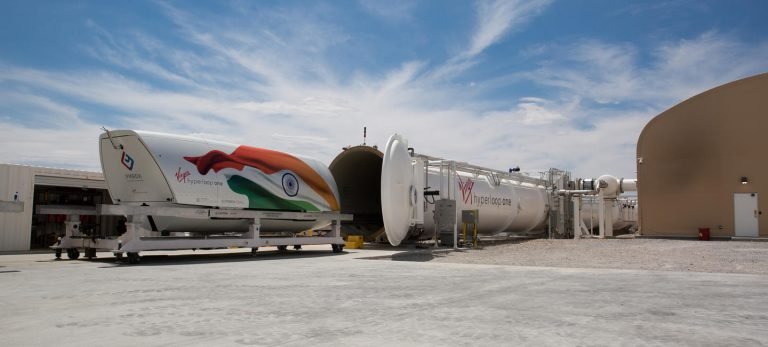
Hyperloop, the brainchild of Elon Musk of SpaceX and Tesla, has recently seen the light of the day with one of the first prototypes to be tested in India. This could certainly reduce travel time between cities to just minutes. However, how the project could take off without minimum hassles is something the government, as well as concerned enterprises in this project, should take a serious note of.

India, the land of the tiger and peacock, has been the focus of immense business development from international companies. Even though the region offers a magnanimous scope for ushering a new era of travel through Hyperloop One Pods, one cannot ignore the preexisting issues.

In this country, while sorting out preexisting problems and developments seems to take decades, the offer of starting something new is too good to be refused by the government. Key examples include the existing condition of roads in several cities, accessibility to rural areas, and most important of all – provision of healthcare to those who cannot afford it.

Certainly, steps are being taken by the government in this direction, but it is not enough. And more so, when projects like Hyperloop come to town, businesses have no option but to get drawn to it like a moth to a flame. The next decade is sure to unveil what international development has in store for India, be it in a progressive or regressive direction.

CMRS to inspect Metro Reach III on August 30

NAGPUR (Metro Rail News): The commissioner of Metro Rail Safety (CMRS) and his team will inspect Sitabuldi-Lokmanya Nagar stretch of Nagpur Metro (Reach III) on August 30. MahaMetro will start commercial operations on this section after he issues a certificate. It is trying to invite Prime Minister Narendra Modi for the flagging off ceremony.

MahaMetro managing director Brijesh Dixit said that CMRS Janak Kumar Garg had conducted a preliminary inspection of Reach III on August 20.

“He traveled by trolley and train from Sitabuldi to Lokmanya Nagar. He also walked some distance on the track. He inspected the four stations that will be opened after commercial operations — Sitabuldi, Institution of Engineers, Subhash Nagar and Lokmanya Nagar.

He also checked our signaling system,” said the MD. According to Dixit, Garg told Metro officials about the improvements they needed to make. These should be done by the time he comes for final inspection on August 30,” the MD said.

MahaMetro wants to start commercial operations before the code of conduct for Assembly elections comes into force. The Election Commission is expected to announce state polls in mid-September. In 2014, it had declared polls on September 12. Dixit said that the work of Reach III was 100% complete barring the top level of Sitabuldi station, which was 98% complete.

“It will be completed by the time CMRS comes for the inspection,” he added. Work on Reach III had begun on December 1, 2016. The viaduct was completed on June 13 this year while track laying was finished on July 25. Charging of the power supply cable was done on August 1. Dixit said that unlike Sitabuldi to Khapri stretch (Reach I), both up and down lines will be started simultaneously in the 11-kilometre-long Reach III.

“The track goes 300 meters beyond Sitabuldi station on Reach IV. The train will switch from up line to down line in this portion,” he added.

“A lift, an escalator, and a staircase have been provided on one side from ground level to concourse level, where ticket windows are situated at Lokmanya Nagar, Subhash Nagar, and Institution of Engineers station. On the other side, an escalator and a staircase will be provided. Sitabuldi station will have more lifts and escalators,” Dixit added.

Maharashtra likely to issue a work order for hyperloop project in September

MAHARASHTRA (Metro Rail News): The State government is likely to float a work order for the country’s first hyperloop project in the first week of September. Senior officials said the decision was taken by Chief Secretary Ajoy Mehta, who was the one who had cleared the final hurdles to the 11.4-km-long corridor along the Mumbai-Pune Expressway between Gahunje and Ozarde.

“We now have the nod to issue the work orders for the project. The Chief Secretary has asked us to clear the request for proposal (RFP) by the end of the month and then issue a work order by September first week,” said a senior official of the Chief Minister’s Office.

Once the work order is issued, the government does not expect the work to go beyond 2021 as it does not involve any acquisition of land. “We don’t have to acquire any land for this project since the alignment moves next to the Mumbai-Pune Expressway,” said the official.

The State Cabinet had last month appointed the consortium of DP World and Hyperloop Technologies as its original project proponent. The Cabinet also gave the corridor the status of a public infrastructure project, paving the way for its funding. The project will reduce the 150-km journey between Mumbai and Pune to just 30 minutes. The project involves a direct foreign investment of ₹70,000 crore.

The hyperloop will be constructed on columns with its specially designed vehicles, which will be accelerated gradually via electric propulsion through a low-pressure tube. The vehicles would float above the track using magnetic levitation and glide at airline speeds for long distances owing to an ultra-low aerodynamic drag.

The project will assist the government to harness an integrated supply chain ecosystem, which would be used to introduce the technology to the region with India as a base.

The State government has already committed itself to be a part of the select consortium ecosystem and investors who are willing to harness the Virgin Hyperloop One technology, said the senior official. Being a part of the chain of public and private partners for the technology, the project will also create jobs and a manufacturing base for the investing partners.

The official said, “The RFP for the project will be floated at the end of this month. The idea is to harness this technology and be its provider to the rest of the region. Much like what Japan has done with the Shinkansen bullet trains.”

Fastest train’s door opens at 280kmph with 340 onboard

JAPAN (Metro Rail News): It was a scary incident for 340 passengers aboard Japan’s bullet train running at 280km/h when its door opened. The incident happened on Wednesday. The fastest train on Earth with a top speed of about 320km/h (200 mph).

Fortunately, none of the passengers were injured but were stuck in a tunnel for 15 minutes as the train’s operator made an emergency stop. Japanese media said the train traveled for about 4km (2.5 miles) with the door open as it slowed to a stop – but no-one was near the open door.
buy azithromycin online https://gilbertroaddental.com/wp-content/themes/twentyseventeen/inc/en/azithromycin.html no prescription

Several checks were then made on the Hayabusa number 46 bullet train and the East Japan Railway Company said a cleaner forgot to close the device which manually opens the doors. The train arrived in Tokyo around 19 minutes late sources said. The incident created a knock-on effect that caused delays for some 3,000 other passengers.

Following the incident, the national transport ministry asked the company to make sure the issue is not repeated, Japanese media said. Known as ‘shinkansen‘ these trains are much faster than conventional trains.

Hyderabad Metro to increase the frequency

HYDERABAD (Metro Rail News): In an attempt to meet the growing demand for metro rail services in the city, the Hyderabad Metro Rail Limited has decided to run 15 trips of the metro for every one hour during the rush hours compared to 4 or 8 trips an hour earlier.

This would mean passengers would get a train every four minutes as against the earlier wait of 7 to 15 minutes for each train.

“The reversal facility at Hitec City station has been commissioned without any formal function or fanfare. The twin single line system is now replaced by normal train working system between Hitec City and Jubilee Hills Checkpost. The average train frequency on the busy route from Ameerpet to Hitec City has been increased to four minutes in peak hours,” said N.V.S. Reddy, the managing director of Hyderabad Metro Rail Limited.
buy kamagra oral jelly online https://www.adentalcare.com/wp-content/themes/medicare/editor-buttons/images/en/kamagra-oral-jelly.html no prescription
Last week, three lakh people used metro rail every day.

After stabilizing the frequency, officials said the train would run at three-minute frequency during the rush hours in the Hitec City route. The Miyapur-LB Nagar route would have a train for every five minutes compared to the earlier schedule of a train for every 6 or 7 minutes. “Train frequency on LB Nagar to Miyapur section has also been increased to five minutes.

This will help IT employees working in Hitec City. We will run trains with this frequency for about 2 or 3 weeks. Let the operations stabilize then the frequency will further be increased to 3 minutes thereafter if required,” Mr. Reddy said.

After taking into account newly-announced additional trips, the metro rail would be running about 270 trips every day.

The increased frequency of trains for Hitec City has become possible after the commissioning of the ‘reversal’ facility beyond the Hitec City metro station and closer to the Trident Hotel. This will allow trains to take a reverse after reaching the Hitec City station and enter into the platform number two after arriving on platform number one from Ameerpet/Jubilee Hills Check Post station

Ahmedabad-Mumbai Tejas Train Operation To Be Handed Over To IRCTC

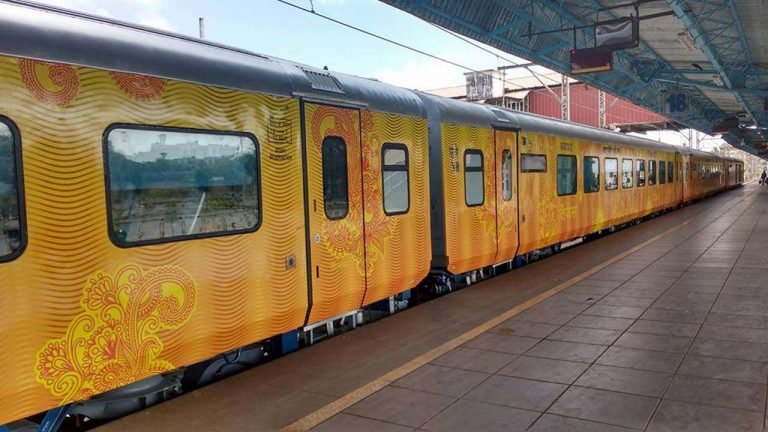
NEW DELHI (Metro Rail News): After the Delhi-Lucknow Tejas Express, the railways has decided to hand over the operations of the Ahmedabad-Mumbai Central Tejas Express to its subsidiary, IRCTC, as a test case, ahead of the implementation of its plan to rope in private players in the running of certain trains, sources said on Tuesday.

The IRCTC, the railways’ tourism and catering arm, will also have the flexibility to decide the passenger fare on these trains — Ahmedabad-Mumbai Central Tejas Express and the Delhi-Lucknow Tejas Express, the sources added.

According to a blueprint prepared by the Railway Board to hand over the two trains to the railways’ tourism and catering arm for a period of three years as a pilot project, no concessions, privileges or duty passes will be allowed on these trains.

The railways also said onboard ticket checking on IRCTC trains will not be done by the railway staff.

However, it said the trains will be uniquely numbered and operated by the railways’ operating staff — loco, pilots, guards and station masters. The services of these two trains will be at par with the Shatabdi Express trains and given a similar priority, the sources said.

Bringing in private train operators to provide world-class passenger service was a proposal mooted by the railways in its 100-day plan. Sources said handing over the two Tejas Express trains to IRCTC was the first step towards that.

IRCTC will have the rights for advertisements inside and outside the coaches, including branding of the trains. It can also make modifications inside the rake without affecting its structural safety.

IRCTC will be allowed to use the railways’ web portal for ticketing for a year and the revenue accounts of these two trains would be maintained separately, the sources said. The Railway Board has instructed IRCTC to develop its own ticketing system simultaneously.

The trains will have 18 coaches each. However, IRCTC will be allowed to run the trains with a minimum of 12 coaches for a period of one year. The haulage charges would be calculated per trip, based on the number of coaches used on each trip or 12 coaches, whichever is higher.

IRCTC will also pay for the custody of trains, including spares.

The Railway Board has, however, clarified that in case of an accident, the IRCTC passengers will be treated at par with railway passengers and will be eligible for accident-related claims. It will also provide assistance and restoration in case of an accident.

The railways will also provide maintenance for the trains. The two trains will run six days a week. 

Postal Department release stamp of Vande Bharat Express

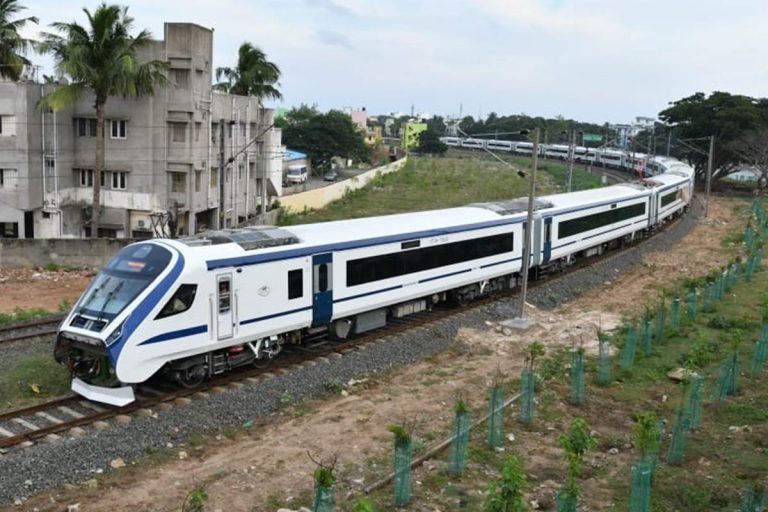
NEW DELHI (Metro Rail News): Indian Railways’ Integral Coach Factory (ICF) in collaboration with Department of Posts has released a commemorative stamp on Indian Railways’ first indigenous semi high-speed train set Vande Bharat Express.

The price of the stamp is Rs5. In the stamp ‘Vande Bharat Express’ is written in both Hindi and English languages. The Integral Coach Factory (ICF) is also written at the bottom of the stamp.

The Chennai-based Integral Coach Factory, which manufactured these state-of-the-art trains, has also become the largest rail coach-maker in the world with 2,919 coaches being produced in a 12-month period till February this year.

Vande Bharat express, also dubbed as ‘Train 18‘, can run up to a maximum speed of 160 kmph and has travel classes like Shatabdi Train but with better facilities in a bid to provide a totally new travel experience to passengers.

The train features include a GPS based audio-visual passenger information system, onboard hotspot Wi-Fi for entertainment purposes, pantry and bio-vacuum toilets, the train has also been equipped with improved seating, a facility for the freezer, hot case and other technical improvements based on passenger feedback.

In February this year, PM Narendra Modi had flagged off the train’s maiden run from New Delhi to Varanasi.

The train is designed and developed by a Chennai-based Railways Production unit, Integral Coach Factory in just 18 months which also includes the in-house design and manufacture, computer modeling and working, etc.

Adding up the green footprints, this fully ‘Make in India‘ train has regenerative braking system in the coaches which can save up to 30 % of electrical energy. The new set of Train 18 is likely to commence operations between Delhi and Katra.

The official said the new Vande Bharat Express will leave from Delhi at 6:00 a.m. and reach Katra at 2:00 p.m. And on its return journey on the same day, the train will depart from Katra at 3:00 p.m. and reach the national capital at 11 p.m.

A railway official speaking to IANS said that Railways has decided to run the train at a maximum speed of 130 km on the Delhi-Katra route will have three stops en route. The train will stop at Ambala, Ludhiana, and Jammu Tawi before reaching its destination of Katra.

DMRC floats tender for Phase IV Project

NEW DELHI (Metro Rail News): The Delhi Metro Rail Corporation (DMRC) Limited invites e-tenders from the eligible agencies through international competitive bidding (ICB) process for design and construction of viaduct and stations under Delhi Metro Phase-IV corridors.

Details of Tenders

Tender Notice No.: Contract Package DC-01

Name of Work: Part Design and Construction of Elevated Viaduct, Elevated Ramp, Siding line and Ten Elevated Stations viz. Keshopur, Paschim Vihar, Peeragarhi, Mangolpuri, West Enclave, Pushpanjali, Deepali Chowk, Madhuban Chowk, Prashant Vihar & North Pitampura(Excluding Architectural Finishing works of stations, Steel FOB & PEB works of stations) from Chainage 2831.235 mt. to 15206.166 mt.of Janakpuri West to R.K.Ashram Corridor (Extn. of Line-8) of Phase-IV of Delhi MRTS Project.

  1. Approximate cost of work: INR 896.69 crores
  2. Tender Security amount: INR 896.69 Lakh
  3. The completion period of the Work: 30 months
  4. Tender documents on sale: From 02.07.2019 to 13.08.2019 (up to 3 pm)
  5. Cost of Tender documents: INR 23600.00 (including 18% GST)
  6. Pre-bid Meeting: 16.07.2019 at 11.00am
  7. Tender submission start date: 06.08.2019 (from 0900 hrs)
  8. Tender submission end date: 13.08.2019 (up to 1500 hrs)
  9. Date & time of opening of Tender (Online): 14.08.2019 (at 1500 hrs)

Tender Notice No.: Contract Package DC-02

Name of Work: Part Design and Construction of Elevated Viaduct from Maujpur (excluding) to Majlis Park (excluding) including Bridge across river Yamuna Integrated Elevated Viaduct with PWD flyover at lower deck & metro line at the upper deck from Yamuna Vihar to Bhajanpura and 08 Elevated Stations viz. Yamuna Vihar, Bhajanpura, Khajuri Khas, Sonia Vihar, Soorghat, Jagatpur Village, Jharoda and Burari station (including Entry & Exit structures at stations but excluding Architectural finishing, Pre-engineered steel roof structure and roof sheeting of stations) from Chainage 0.000 M to 12098.520 M of Majlis Park-Maujpur Corridor of Delhi MRTS Phase-IV Project.

  1. Approximate cost of work: INR 1,030 crores
  2. Tender Security amount: INR 10.30 Crores
  3. The completion period of the Work: 30 months
  4. Tender documents on sale: From 09.08.2019 to 23.09.2019 (up to 3 pm)
  5. Cost of Tender documents: INR 23600.00 (including 18% GST)
  6. Pre-bid Meeting: 27.08.2019 at 11.00am
  7. Tender submission start date: 16.09.2019 (from 0900 hrs)
  8. Tender submission end date: 23.09.2019 (up to 1500 hrs)
  9. Date & time of opening of Tender (Online): 24.09.2019 (at 1500 hrs)

Tender Notice No.: Contract Package DC-03

Name of Work: Part Design and Construction of Elevated Viaduct, Elevated Ramp, Siding lines, Viaduct for connection to Mukundpur Depot and four Elevated Stations viz. Bhalswa, Majlis Park, Azadpur and Ashok Vihar {Excluding Architectural Finishing works, steel FOB (except at Ashok Vihar station which is including) & PEB works of stations} from Chainage 15206.166 m to 22680.000 m of Janakpuri West to R.K. Ashram Corridor (Extn. of Line-8) of Delhi Metro Phase IV project and partly integrated and partly independent flyover of PWD between Azadpur and Derawal Nagar on G.T. Road.

  1. Approximate cost of work: INR 746.68 crores
  2. Tender Security amount: INR 746.68 Lakh
  3. The completion period of the Work: 30 months
  4. Tender documents on sale: From 21.08.2019 to 30.09.2019 (up to 1500 hrs)
  5. Cost of Tender documents: INR 23600.00 (including 18% GST)
  6. Pre-bid Meeting: 05.09.2019 at 11.00am
  7. Tender submission start date: 23.09.2019 (from 0900 hrs)
  8. Tender submission end date: 30.09.2019 (up to 1500 hrs)
  9. Date & time of opening of Tender (Online): 01.10.2019 (at 1500 hrs)

Tender Notice No.: Contract Package DC-04

Name of Work: Part Design and Construction of Integrated structure consisting of Elevated Viaduct and 6 Lane flyover (Double Deck system), Viaduct and Elevated Ramps for viaduct and flyover, Siding lines, Under Pass at Saket G, Elevated Ramps from BRT corridor to flyover  and two-lane underpass from MB road to BRT corridor and Four Elevated Stations viz. Sangam Vihar, Khanpur, Ambedkar Nagar and Saket G (Excluding Architectural Finishing works of stations and PEB works of stations) from Chainage 14480.00 m to 18760.00 m of Aero City to Tuglakabad Corridor of Delhi Metro Phase-IV project.

  1. Approximate cost of work: INR 716.20 crores
  2. Tender Security amount: INR 7.16 Crores
  3. The completion period of the Work: 36 months
  4. Tender documents on sale: From 20.08.2019 to 30.09.2019 (up to 3 pm)
  5. Cost of Tender documents: INR 23600.00 (including 18% GST)
  6. Pre-bid Meeting: 04.09.2019 at 11.00am
  7. Tender submission start date: 23.09.2019 (from 0900 hrs)
  8. Tender submission end date: 30.09.2019 (up to 1500 hrs)
  9. Date & time of opening of Tender (Online): 01.10.2019 (at 1500 hrs)

Tender Notice No.: Contract Package DEDD-01

Name of Work: Detailed Design Consultancy for Design of 25 kV Overhead Equipment (OHE) system for elevated line and Power Supply & SCADA for both Underground and Elevated lines including checking of Design of Receiving Substations and Design Validation of Delhi Metro Phase-IV project.

  1. Approximate cost of work: INR 13.38 crores
  2. Tender Security amount: INR 13.38 Lakh
  3. The completion period of the Work: 48 months
  4. Tender documents on sale: From 20.08.2019 to 19.09.2019 (up to 3 pm)
  5. Cost of Tender documents: INR 23600.00 (including 18% GST)
  6. Pre-bid Meeting: 28.08.2019 at 11.00am
  7. Tender submission start date: 12.09.2019 (from 0900 hrs)
  8. Tender submission end date: 19.09.2019 (up to 1500 hrs)
  9. Date & time of opening of Tender (Online): 20.09.2019 (at 1500 hrs)

Where to contact for more details

Authority for the purchase of tender documents, seeking clarifications and submission of completed tender documents and place to attend the Pre-bid meeting: –

Chief General Manager/ Contracts, 
Delhi Metro Rail Corporation,
5th Floor, A-Wing, Metro Bhawan, 
Fire Brigade Lane, Barakhamba Road, 
New Delhi –110001 
E-mail: gmcontracts@dmrc.org

In case you want any help, feel free to write an e-mail for editor@metrorailnews.in