Home Blog Page 607

Newly launched Tejas Express passengers to be Compensated for 2-hour delay

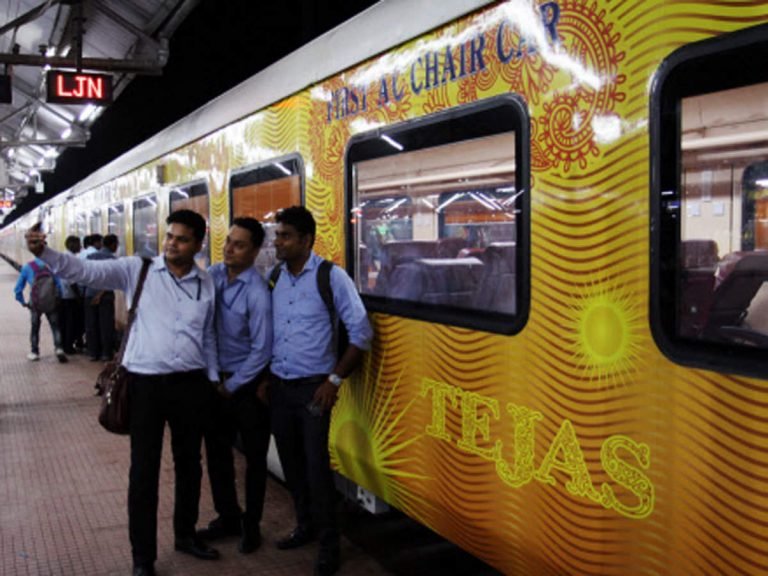
LUCKNOW (Metro Rail News): Passengers who travelled In-First Tejas Express on Saturday will be paid a compensation of Rs 250 each as the train was delayed for about two hours in both the directions.

There were about 451 passengers, who boarded the train from Lucknow, and another about 500 who took the train from New Delhi.

Chief Regional Manager (CRM), IRCTC, Lucknow, Ashwini Srivastava, said, “We have sent a link to all the passengers on their mobile phone clicking on which they can claim compensation. Those who do so will get the paid.

On 4 October Launched from Lucknow, Tejas is the First corporatised train of Indian Railway, operated by Indian Railway Catering and Tourism Corporation (IRCTC)

This will be the First time that passengers will be compensated for the delayed journey. The compensation is given when the train reaches its destination behind schedule. If the train could make up the loss of time despite departing behind schedule from the originating station passengers will not be compensated.
buy sinequan online medstaff.englewoodhealth.org/wp-content/languages/new/sinequan.html no prescription

The cause of the delay was delayed maintenance. Any train before departing on its routine journey has to undergo a primary maintenance. Tejas maintenance could start at around 4 am on Saturday morning as a coach had derailed in the maintenance yard at Lucknow station during shunting.

Haridwar to becomes podcars & ropeways for Rishikesh and Dehradun

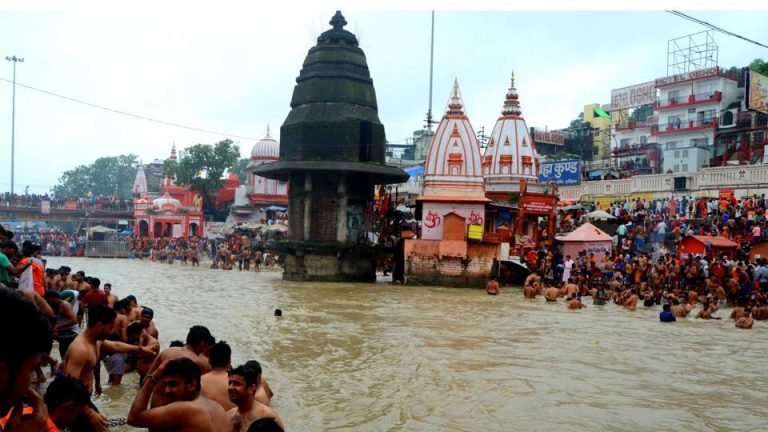
HARIDWAR (Metro Rail news): Haridwar to becomes podcars & Ropways for Rishikesh and Dehradun . The holy city of Haridwar will soon have laser-guided automated podcards in the country Ferrying Devotees & Tourists across the city while neighbouring Rishikesh and Dehradun will get ropways, making commute in the hilly terrains easier, this according to a memorandum of understanding signed by the Uttarakhand government with the Delhi Metro Rail Corporation. to be ideal by a state level committee.

According to the Delhi metro official Podcars & Ropeways systems save costs and space and are just right for cities like Haridwar and Rishikesh, situated on the banks of the Ganges and surrounded by hilly terrains and reserved forests.

Kaushik said “We assessed the viability and cost effectiveness of the Podcar & Ropeway system in the European countries and found them suitable for Haridwar. For different cities we will be opting for varied transport systems suiting local geographical and traffic needs”.

The personalised podcar corridor for Haridwar will be 8-km in length covering sanctum sanctorum of Brahamkund, Har-Ki-Pauri, to suburban Jwalapur and will have a total of 11 stations.

Som Dutt Sharma Director of DMRC for business development said a podcar is like a personal taxi that can accommodate six passengers at a time and is operated through a laser-guided system.

DMRC has been handed out a cheque for Rs 13.65 lakh to carry out onsite assessment and other modalities before it submits the detailed project report (DPR) to the state government in four months time.

The planned Ropeway project will ferry people from one side of the Ganges to the other, relieving the pressure on the suspension bridge, Ramjhula. Laxman Jhula, another popular 96- year-old suspension bridge was recently declared unsafe and closed down.

Rishikesh has two existing ropeways, both about four decades old, carrying people to the shrines of Mata Mansa Devi and Mata Chandi Devi, located on opposite sides of the river. A ropeway system will also be operated in Dehradun.

EPCA wants the structure to run 15000 e-autos from Delhi metro stations to last-mile connectivity

DELHI (Metro Rail News): The Environment Pollution Control Authority (EPCA) recently announced that it will submit a report before the Supreme Court, seeking approval on behalf of the Delhi Metro Rail Corporation (DMRC), for plying as many as 15,000 e-autos from Delhi Metro stations.

According to the report, this move has come after the Supreme Court had earlier capped the number of auto-rickshaws in the capital at just one lakh.
buy cialis super force online https://pridedentaloffice.com/wp-content/themes/twentytwentyone/inc/en/cialis-super-force.html no prescription
The court has now asked the panel to examine the issue of EPCA seeking to operate e-autos and to submit a report.

DMRC had filed an affidavit before the Supreme Court, seeking approval for the registration of 15,000 e-auto-rickshaws to provide the benefit of last-mile connectivity from its 184 Delhi metro stations across the city, as the existing e-rickshaws can only operate on a few selected routes, According to the report.

During a recent official meeting with stakeholders, including the DMRC, the transport department and the Union Ministry of road transport and highways, the apex court-appointed committee had asked them to provide a regulatory framework in order to operate e-autos, the management of its charging points and fares, as well as to submit a plan for the battery disposal.

According to the report, a member of the EPCA was quoted saying that while e-autos could be a suitable step for providing last-mile connectivity from the Delhi Metro stations, there must be a regulatory framework for those vehicles to operate in the city. There must also be a proper mechanism for the disposal of batteries so that the e-auto drivers do not end up with any domestic waste, further becoming a threat to cause an environmental hazard.

EPCA also emphasized that DMRC must provide guidelines on the monitoring of these vehicles and to set up a central control room for the same. Parking of the vehicles must also be decided through a planned process. According to DMRC officials who attended the official meeting, the e-autos will be introduced in a phased manner and will have sophisticated lithium-ion batteries installed in them, unlike the lead-acid batteries used in the e-rickshaws. It was also discussed in the meeting that the e-autos will be operated through concessionaires as well as GPS-based monitoring to ensure that they operate only in the designated areas. Charging facilities at depots as well as at stations will also be provided.

Delhi Metro gets DDA notice for Malviya Nagar project

NEW DELHI (Metro Rail News): The Delhi Development Authority (DDA) has asked the Delhi Metro Rail Corporation (DMRC) to stop construction for alleged commercial activities on a plot in Malviya Nagar as it falls under ‘mandatory’ green zone.  No commercial activity is permitted in the 12,219.75 sqm plot at Geetanjali Enclave, the DDA said. Originally, the plot was allotted for the ‘operation structure of Metro project’.

“You (DMRC) are once again directed to stop the ongoing construction work on the subjected land immediately till the matter is resolved, failing which action as deemed fit as per terms and conditions of allotment and lease will be initiated without giving any further opportunity,” reads an Oct 4 order by DDA deputy director (industrial land).

Construction went on allegedly despite repeated requests and show cause notices. Senior DDA officials said the DMRC was informed that any property development has to be in line with the Master Plan of Delhi and provisions of the land-lease deed but it did not pay heed. “In an August 14 meeting, it was decided that the construction work will be discontinued immediately. But during a joint inspection on September 5, it was found that construction was on. Construction is being done by a private developer. As the DMRC representatives refused to budge, the notice was issued,” said a DDA official.

But, DMRC spokesperson Anuj Dayal asserted all necessary statutory approvals were already taken by the Delhi Metro. “For carrying out construction work for a property development project at Malviya Nagar, all necessary statutory approvals have already been taken from the agencies concerned. DMRC has written to DDA with all the relevant details regarding this issue.”  

As per the DDA, the plot was allotted in June 2007 and its physical possession handed over to the DMRC a month later. The lease deed, however, was executed on May 2017. “The site is in close proximity to archaeologically important and protected site Qila Rai Pithora. Hence, the ASI was requested to be present during the joint inspection but no official turned up.

The issue was discussed at the top level to initiate proceedings to cancel the allotment, and it may be placed before L-G Anil Baijal (also DDA chairman) for his perusal. But the direction was issued to send a reminder to the DMRC again,” said the DDA official. However, a senior ASI official claimed that no request was received from the DDA with regard to a joint inspection in the recent past. 


New ticketing machines at Delhi metro stations

NEW DELHI (Metro Rail News): The Delhi Metro Rail Corporation (DMRC) has decided to augment ticketing infrastructure at its stations on three main corridors Blue, Red, and Yellow lines.

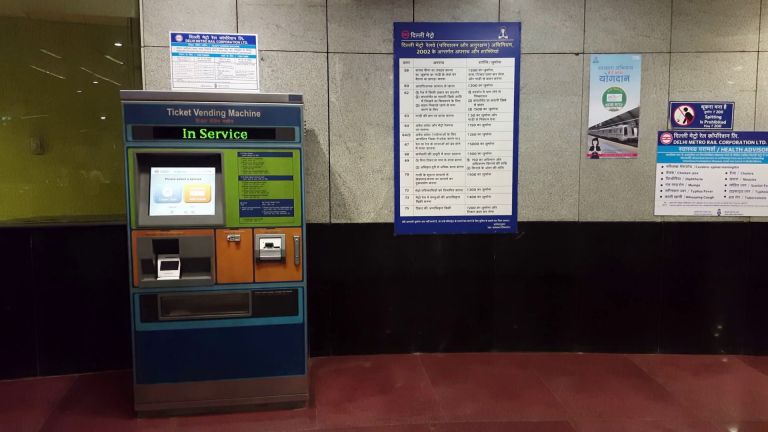
To reduce long queues at some of its busy stations, the Metro plans to install 100 token vending machines and 275 new automatic fare collection (AFC) gates.

The new AFC machines will be installed on stations such as Saket, Green Park, AIIMS, Malviya Nagar, INA, Hauz Khas, Subhash Nagar, Rajouri Garden, Nirman Vihar, etc.
buy amitriptyline online https://myhst.com/wp-content/themes/twentytwentytwo/inc/patterns/en/amitriptyline.html no prescription
Currently, there are 2700 AFC gates on all stations.

Anuj Dayal, executive director, corporate communication, DMRC said, “The new AFC gates will cover about 25 Metro stations of Phase-I and Phase-II. We will upgrade about 150 AFCs of stations on Phase-1 and Phase-2 stations”.

Dayal said DMRC plans to install 100 new token vending machines in addition to the exiting 1050 machines. “The entire process will be completed in six months’ time”.

Hyperloop project of Mumbai to Pune likely to begin in 2020

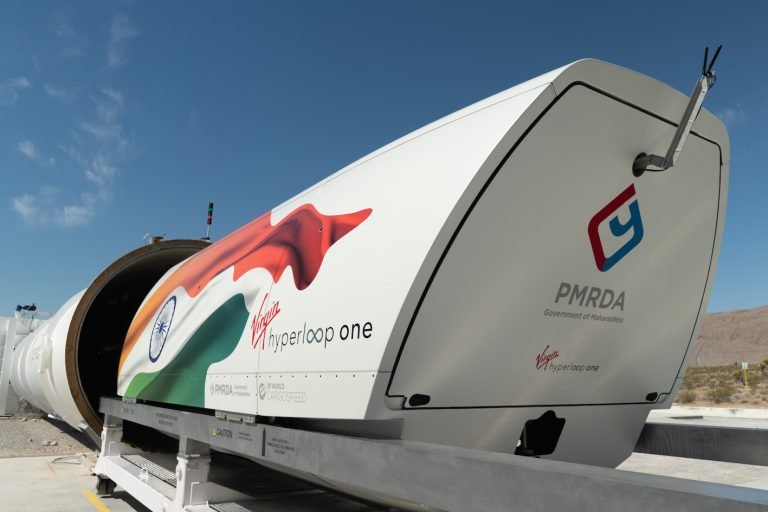
MUMBAI (Metro Rail News): Virgin Hyperloop One is likely to start construction of the ₹60,500-crore Mumbai-Pune hyperloop project in 2020. The ultramodern, superfast transport project aims to reduce the travel time between the two cities, located around 200 km apart, from four hours to about 25 minutes.

“We have been working here for the last two years and enjoyed quite a lot of success working with the government. The construction work is likely to start next year,” said Naushad Oomer, director (operations), India, Virgin Hyperloop One.

The project will be implemented in two phases. The first phase will be completed within four years and the second phase in another four years. The Maharashtra government has already accorded infrastructure status to the hyperloop project.

Mr. Oomer said, “In Mumbai, the project will be underground and will get elevated as soon as you head out of the city. You will reach Pune within 25 minutes against the average time of four hours now.”

The first phase of the project is 11.8-km-long and will cost $500 million or ₹3,550 crore. Virgin Hyperloop One will make the investment for the first phase with the backing of DP World, Dubai. The second phase will cost over $8 billion or ₹57,000 crores. The project is likely to be implemented in 60:40 debt-equity ratio.

The hyperloop will be able to transport people and goods at nearly 700 miles per hour in depressurized environments via magnetic levitation. It will be able to accommodate more people than a subway at the speed of an aircraft and with zero direct emissions, according to Virgin Hyperloop One.

“The Maharashtra government is likely to come out with a tender soon, in case any other bidder can match Virgin’s hyperloop offer,” a source in the know of the development.

Virgin Hyperloop One is also looking to connect other cities like Bengaluru with Chennai and Mysuru, Amaravati with Vijayawada and Chennai, and Delhi with Chandigarh and Amritsar through hyperloop projects.

Aarey Colony tree cuts impact on Mumbai enviroment|Opinions

Mumbai (Metro Rail News): As fascism was rising in Europe, German playwright and poet Bertolt Brecht lamented that conversations about trees would distract us from bigger things and blind us to injustices. But, today, it is crucial to discuss trees—and rivers, seas and mountains. Through their wanton destruction, our planet has been brought to the edge of a precipice. Temperatures are increasing, coastal cities are at risk, and extreme weather events are occurring more frequently. In India, heatwaves have become an expected feature. Cities like Chennai have witnessed floods while facing a water crisis.

Paradoxically, while environmental consciousness is rising globally, we are witnessing leaders who are beholden to lobbies and/or in denial. US President Donald Trump and Brazilian President Jair Bolsanaro are perfect examples, but some Indian politicians also belong here. Over the years, Indian policymakers have engaged in tokenism, halfhearted measures and blatant surrender to vested interests. The encroachment of Aarey Colony in Mumbai illustrates this well.

I encountered Aarey about a decade ago, while living in its vicinity and training for the Mumbai Marathon. With its lush green setting, Aarey occupied a place of pride among Mumbai runners. But, Aarey meant much more for us( runners, walkers, people in the neighborhood) a connection with nature, a place for camaraderie, and a site for charming stories about ghosts and leopards. Many of us appreciated its ecological importance, and still do so.

Located in the suburbs and described as Mumbai’s “ green lung” , Aarey is spread approximately over 1,280 hectares, with about 480,000 trees. It is home to leopards and different kinds of birds, reptiles, butterflies, and insects. Just in the past decade, six new species have been discovered, and one (a scorpion) has even been named after Aarey (Lychas Aareyensis). Leopards of the Sanjay Gandhi National Park and Aarey have been featured in National Geographic. Aarey should be preserved not just for its beauty and biodiversity, but also for other reasons: e.g., flood-control and water-table maintenance. Mumbai’s vulnerability to heavy rains and flooding is well-known, but this was reinforced by the 2005 cloudburst.

In a growing city with a powerful real estate lobby, it is no surprise that multiple attempts have been made to encroach on Aarey. The most recent one is Mumbai Metro Rail Corporation Limited (MMRCL) decision to locate a car-shed/depot of Line 3, to house, maintain and repair trains. The plan to fell more than 2,000 trees for this purpose started galvanizing people in 2014. I discovered this plan during one of my visits to Aarey. After moving to the US in 2015, I kept myself connected through social media, visits to Aarey, and conversations with activists Stalin Dayanand and Amrita Bhattacharjee.

The battle against tree-felling has been fought in courts, streets, cyberspace and the media. Initial protests forced the Maharashtra government to appoint an expert group to explore alternatives. Environmental experts in this group disagreed with the others, highlighting Aarey’s ecological importance and flooding risks (the metro site is in the floodplain of the Mithi river).
buy viagra capsules online no prescription
They suggested alternatives: Kanjurmarg and Backbay. Legal battles include petitions in Bombay high court, a submission to the National Green Tribunal to declare Aarey a forest, and challenge to the eviction of Adivasis living in Aarey for generations. Recently, the high court dismissed four petitions. The same night, the cutting of trees began, and protesting activists were arrested. Later, the Supreme Court ordered a pause in the cutting.

Commenting on Aarey, Maharashtra Chief Minister Devendra Fadnavis referred to the “balance between development and environment”. Has India even attempted such a balance? As studies (e.g., Churning The Earth by Aseem Shrivastava and Ashish Kothari) are welcome. But, why should they come at such a high environmental cost? Recent works on climate change, (e.g., The Uninhabitable Earth by David Wallace-Wells) have shown that even this vocabulary of balance and trade-offs is jaded and inadequate.

In a recent visit to Aarey, an individual told me, “Ped Nahin katana. Hawa Chalna Chaahiye” (Don’t cut trees. The breeze should blow). The Save Aarey movement has pushed this common sense into action, forcing the state and its agents to listen to ordinary citizens. I often remember a tough stretch in Aarey, and the grimaces of those running up and the smiles of those running down. The stretch was named “heartbreak hill” , after a portion of the Boston Marathon. Without multiple movements, this could become a metaphor for India’s ecology.


PM Narendra Modi assures infrastructure for improving connectivity

PUNE (Metro Rail News): Prime Minister Narendra Modi assured the people of Pune, Metro network, an upcoming highway to Pandharpur, improved trains, better air connectivity, and Maharashtra in general, that they could expect much better times in the future.

On Thursday Speaking at a rally on the S P College grounds, Modi said the government’s plan to invest Rs 100 lakh crore for national infrastructure over the next five years would benet cities like Pune.

He said, Connectivity is a big issue in many cities, including Pune, in the country. We are able to see the outcome of the pace with which work has been done in the last ve years. The development of a new Palki highway from Pune to Pandharpur is being done and other more highways would ease the connectivity to the city.

The Metro network is spreading fast in the city. There would be a big relief in traffic situations due to the metro rail. There has been tremendous improvement witnessed in railway service in the last ve years. From security to cleanliness to speed-efforts have been taken on all fronts.

PM Modi said, New special trains have been started in various parts of the country and it will also be started here soon. Pune city and Maharashtra state will benet from it.

Air connectivity has also improved tremendously in the last ve years, said the Prime Minister, adding that the Udaan scheme has ensured the beginning of air services in nine towns in Maharashtra. He said, “I am happy that one wearing Hawai chappal (oaters) is now also able to take Hawai Yatra (air travel)”.

Modi said his government was also focusing on building a robust digital infrastructure. “This country is going to be a global power in digital infrastructure. We are already strong in data and the work started for strengthening digital infrastructure would further strengthen our position.

He appealed to the youth to continue to repose their confidence in the BJP. “I urge the youth to not to follow those who are spreading a feeling of hopelessness. I assure that the coming years would be full of hope. The government will take favorable decisions for encouraging investment in the country.

PM Modi said “the government will achieve the target of becoming a ve trillion dollar economy with clear policy and good infrastructure. There are many who nd it difficult to accept this. They look at the numbers and say this is not possible. But I look at the track record of my government and the efforts of 130 crore people of this country. It took the Indian economy about 60 years to touch the one trillion dollar mark, and another eight years to reach the two trillion dollar mark. In the last ve years of our government, we have added nearly one trillion dollars to our economy, and that has given us the confidence to set higher goals for ourselves. The bigger our economy, the faster we can eradicate poverty”.

The world was changing fast and there were rapid changes in international relations and economics world over. Prime Minister Modi Said “There was a need for the confident and strong government for the country to face the rapidly-changing world scenario and the citizens of the country have given us that mandate in the Lok Sabha elections”.

Mukesh Kumar Singhal first non-IAS gets charge of MD of JMRC

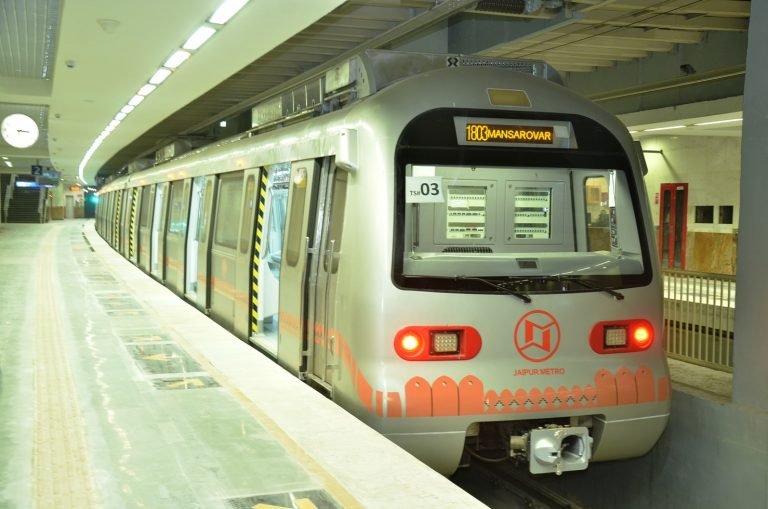
JAIPUR (Metro rail News): First a non-IAS person, Mukesh Kumar Singhal was given the charge of Managing director Of Jaipur Metro Rail Corporation (JMRC) on Thursday. Mukesh Kumar Singhal, an engineer, who was transferred from Delhi Metro Rail Corporation (DMRC), has been working on deputation in the JMRC for the last one year. Appointing an engineer or a technical person to the top position of the metro work has always been a trend in DMRC.

According to the Sources, This week that the post of managing director of Jaipur Metro rail Corporation (JMRC) is vacant, which has been affecting the efficiency of the metro. As per sources, no official was willing to fill the post of managing director. The reason for this was that JMRC did not seem to be a priority for the government after it became a loss-making entity. This has resulted in the delay of the phase IB project as well.

A new appointment is yet to be made and the charge has been given to Singhal so that the clearing of routine work orders won’t be an issue for now. However, officials in the department are not hopeful for any big changes through this decision.

Giving a charge to someone is temporary and an appointment should be made soon. The government can transfer him any time they want. The JMRC has to pay Rs 20 crore to the contractors. However, it does not have money in its account. Metro Officials Said, A speedy correspondence is required with the state government, for which a permanent appointee is required who could oversee the daily progress.

The metro is proving to be a white elephant for the state government as it failed to achieve target ridership on Phase-I Mansarovar-Chandpole in absence of Phase 1B Chandpole-Badi Chaupar corridor.
buy professional pack online https://nouvita.co.uk/wp-content/themes/twentynineteen/fonts/en/professional-pack.html no prescription
Wilbur Smith, an international firm, which conducted the ridership survey, estimates 1,21,000 commuters till 2018 on the entire stretch.

However, as Phase I B continues to miss several deadlines and the commercial operation has not started yet, the financial situation of the corporation remains bleak.

Piyush Goyal Invites Filmmekar to Encourage Cinema On Trains, Akshay Kumar Hails the idea

DELHI (Metro Rail News): Union Minister of Railways & Commerce Piyush Goyal has Compliment the novel idea of Indian Railways to invite filmmakers to promote their cinema projects on trains. The minister has also invited more filmmakers to use the medium of railways to reach out to the masses, using its Promotion of Wheels’ scheme.

Union Minister of Railways & Commerce Piyush Gogal tweeted his message on social media on Wednesday. Railway’s Novel Idea of Promotion on Wheels: A special train will be traveling from Mumbai to Delhi on 16th-17th October, to promote the upcoming film, Housefull 4, along with the film’s team.

This is a new idea, the Indian Railways has started this looking at our culture, to promote the culture. You can book the entire train and promote it throughout. I think it is a great idea. Sajid Nadiadwala and Fox Star Studios came up with an idea that we can do something like this and we got permission very fast and here we are. Akshay said in a statement. It’s a great idea, which is gonna be fun.

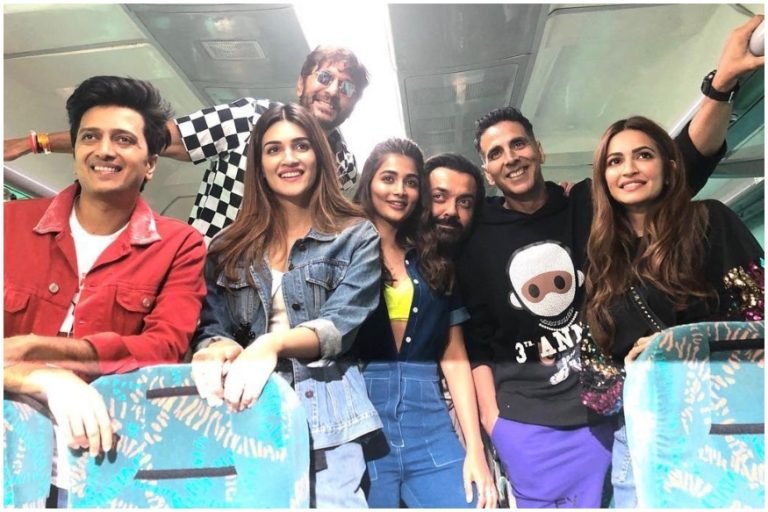
On October 16, the team of the upcoming comedy ‘Housefull 4’ became the first Bollywood film to travel from Mumbai to Delhi in a special promotional train called Housefull 4 Express. The stars of the film – Akshay Kumar, Riteish Deshmukh, Bobby Deol, Kriti Sanon, Kriti Kharbanda and Pooja Hegde – were accompanied by the film’s crew including producer Sajid Nadiadwala.

Housefull 4 will clash at the box office this Diwali with Rajkummar Rao-Starrer Made in China and Taapsee Pannu-Bhumi Pednekar-led Saand Ki Aankh.