Home Blog Page 606

Chennai metro soon to introduce wristwatches with electronic chips as new ticketing way

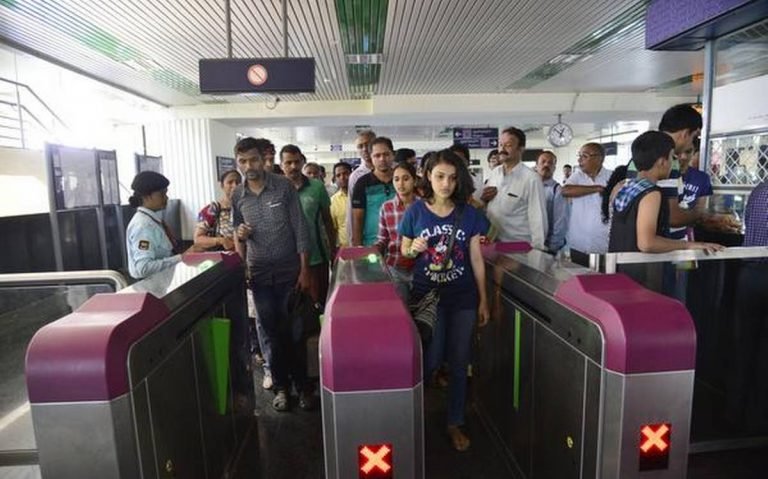
CHENNAI (Metro Rail News): In an effort to reduce time spent buying tickets or recharging smart cards, the Chennai Metro Rail is planning to introduce a line of watches that could be scanned instead to help you hop onto a coach.

The project is currently being planned in collaboration with watch and eyewear brand Titan, is likely to be rolled out in eight months.

Sources in Chennai Metro Rail Limited (CMRL) told that with these new watches, passengers could wave their wrist in front of the ticketing machines and gain entry. For now, the plan is to make the watches rechargeable through an online platform.

According to sources, there will be a range of men’s and women’s watches which are likely to be priced between Rs 1,000 and Rs 1,500.    

“The project is still in the research and development phase and we are examining prototypes,” a CMRL official said. 

“The plan is to introduce electronic chips in the watches that can be detected by a machine when flashed. But, we still have technicalities like recharging to be ironed out. It will take at least eight months to arrive at a final version,” the official added.

The official said, “People are moving technologically forward and no longer want to wait in lines to buy a ticket or recharge their cards. So, if we need to cater to them, we need to figure out ways to make things faster”. 

He added, “People would rather recharge their cards online than actually have to physically wait and spend time on it”.

In addition to watches, the source said that the CMRL is also planning to introduce a feature that can be installed in mobile phones to substitute regular tickets and cards.

“That way, people can just breeze through, wasting no time at all,” he said.

Delhi Metro takes over operations of Gurgaon Rapid Metro

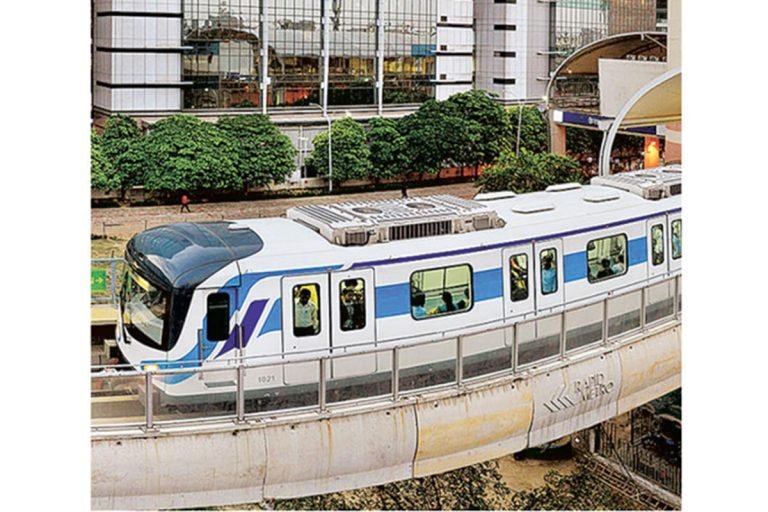
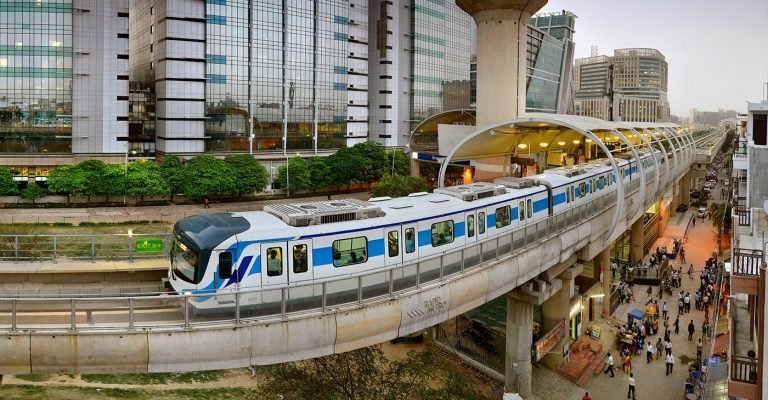
NEW DELHI (Metro Rail News): The Delhi Metro Rail Corporation (DMRC) has taken over the operations of the Rapid Metro Link, Gurugram from Tuesday night.

Services on the 11.6 km corridor, developed by Rapid Metro Rail Gurgaon Limited (RMGL) and Rapid Metro Rail Gurgaon South Limited (RMGSL), will continue to operate as per the normal time table as earlier. DMRC tweeted “The Delhi Metro Rail Corporation will take over the operations and maintenance of the Rapid Metro Link at Gurugram from tonight, 22 October 2019”.

The earlier concessionaire RMGL had expressed its inability to run the metro in Gurugram due to low footfall and high expenditure. According to the release, the DMRC has provided adequate staff to ensure that the commuters are not affected and the services continue smoothly.

A press release by the DMRC read that DMRC is committed to providing the best possible services. Therefore adequate staff has already been deployed to maintain a smooth and trouble-free transition of service.

DMRC tweeted, with this move, the operational metro network has now become 389 kilometers with 285 stations in total. “With the takeover of operations of Rapid Metro, the total operational metro network Delhi and NCR has now become 389 KM with 285 stations which includes the NOIDA-Greater NOIDA corridor”.

After the takeover of Gurugram Rapid Metro link by Delhi Metro, the stations which will now come under the DMRC include, Sector 55-56, Sector 54 Chowk, Sector 53-54, Sector 42-43, Phase -1, Sikanderpur, Phase-2, Phase-3, Moulsari Avenue, IndusInd Bank Cybercity, Vodafone Velvedere Towers.

The train services on the corridor start at 6 a.m. from Sector 55-56 and Sikenderpur stations with a frequency of 4.30 minutes during morning peak hours and 5.15 minutes during evening peak hours. The last revenue train service departs at 10 p.m. from Sector 55-56.

The rapid metro was constructed by IL&FS Infrastructure in two phases. In the first phase, the company built a 5.1 km elevated track, connecting National Highway No 8 at Shankar Chowk to Sikandarpur DMRC station, covering 6 stations.

Built-in three years at a cost of ₹1,450 crores, the service was opened for public in November 2013.

In another news, for an easy interchange between green and pink lines, the Delhi Metro Rail Corporation (DMRC) is constructing a walkway of 230 meters connecting green lines and pink lines.

Haryana govt may seek an extension of the deadline for Rapid Metro takeover by DMRC

GURUGRAM (Metro Rail News): On Tuesday, The Haryana government is likely to submit an application to the Punjab and Haryana High Court seeking an extension of the deadline for taking over Rapid Metro by the Delhi Metro Rail Corporation (DMRC) that has to be completed by Wednesday.

The government now wants an extension of the deadline from October 16 to October 23, counsel for the government said.

On Monday, a meeting was convened at the Haryana Bhawan in Delhi by justice (retd) Kailash Gambhir and Justice (retd) VK Gupta, who was appointed by the high court last month to supervise the handover process.

As per an official, who was present in the meeting, 52 contracts had been originally signed between the state government and the Rapid Metro Rail Gurgaon South Limited (RMRGSL), which needed time to be either transferred from RMRGSL to DMRC or signed afresh.

“Everything is proceeding amicably. The handover is taking time due to extensive documentation work. Hence, we are moving an application on Tuesday in the HC for extending the October 16 deadline till October 23. Both the parties (DMRC and RMRGSL) are cooperating and are unopposed to this proposition.

To ensure the transfer takes place smoothly, at least four-five days more is needed for completing documentation work as a lot of agreements need to be novated,” said senior advocate Chetan Mittal, who is representing the Haryana government in the case.

The official quoted above said that the applicants may also ask the deadline to be further extended till October 31, but a final call on the official extension will be decided by the HC bench. Both the DMRC and the RMRGSL officials confirmed the decision of the meeting but declined to comment on the matter.

On September 20, the high court had directed the RMRGSL to continue running the loss-making Rapid Metro service till October 16, and in the meantime initiate a gradual process of handing over the maintenance and running operations to the DMRC.

Prior to this, on September 6, IL&FS, which runs the Rapid Metro under RMRGSL, said it can no longer operate the service and had received legal permission for handing it over to Haryana Shahri Vikas Pradhikaran (HSVP) on September 9.

On September 9, the HC ordered the firm to run the service till September 17.

Rapid Metro, India’s first private metro system, commenced operation in November 2013, connecting Cyber City, DLF Phase 3, to Delhi Metro’s Yellow Line at Sikanderpur. In March 2017, the second phase of the Rapid Metro, covering the entire Golf Course Road, was opened taking the entire length of the service to 11 stations with an 11.7-kilometer track.

New arm for metro rail business sets up by Adani Enterprises

MUMBAI (Metro Rail Project): On Thursday Gautam Adani-led Adani Enterprises has set up a subsidiary to focus on Metro Rail Projects, the company informed the market.

The Adani group has earlier shown interest in metro rail projects, and setting up of this subsidiary solidifies its intent to enter and expand in this business.

The company said in a statement, the company has incorporated a wholly own subsidiary for the business of building, construction of transportation facilities like the metro and Monorail segment, Rapid Rail Transit System (RRTS), and engineering, procurement and construction, thereof.

The subsidiary, which is yet to start operations, has authorized share capital of Rs 5 lakh and paid-up share capital of Rs 1 lakh.

With many Indian cities taking up metro projects and other rapid transport projects for public transport, the sector is attracting infrastructure majors, both locally and abroad.

First set of trains for Chennai metro phase 1 extension flagged-off

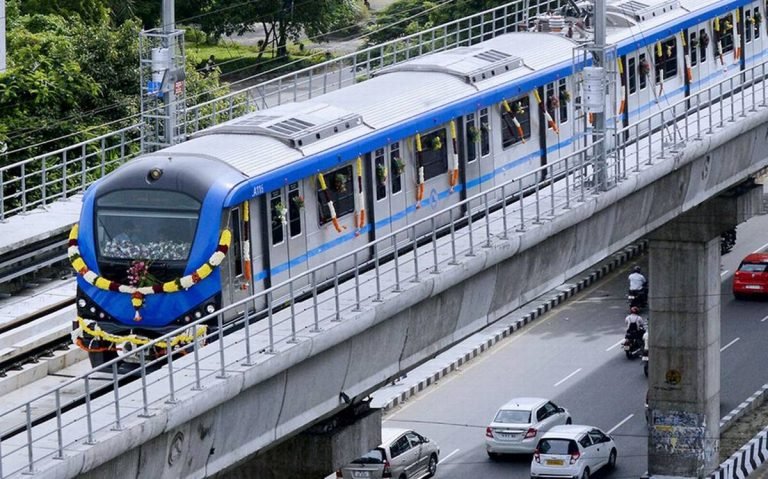
CHENNAI (Metro Rail News): The first set of trains for Chennai Metro’s Phase I extension project, from Washermenpet to Thiruvittiyur/Wimco Nagar in North Chennai, was flagged off on Saturday at the factory of Alstom Transport India Limited in Sri City, Tada, Andhra Pradesh.

Phase – I of the Chennai Metro Rail Project, which covers a distance of 45 km has been fully operational from February 2019.

A press release from Chennai Metro Rail Ltd (CMRL) said that the Phase-I extension project, of 9.051 km, is being implemented at an estimated completion cost of ₹3,770 crores.

The construction work, which was inaugurated by former Tamil Nadu Chief Minister J Jayalalalithaa on July 23, 2016, is underway. It is expected to be completed in June 2020.

CMRL awarded the contract, on March 2018, to the consortium of Alstom Transport (France) and Alstom Transport India Limited for the supply of ten train sets with the same configuration and specifications as supplied to Phase-I project.

The trainsets are being manufactured at Alstom’s factory in Sri City. The cost of supply is about ₹200 crores.

The manufacturing of the train sets commenced in February 2019. The trains have undergone various tests and inspections such as car body dimensional checks, water tightness checks, static routine traction, and brake tests, etc.

The first train set is now ready for dispatch from the Alstom factory to CMRL Depot at Koyambedu. It was flagged-off by Pankaj Kumar Bansal, Managing Director, CMRL, along with Godin Bruno, Managing Director for rolling stocks and components at the Alstom facility on Saturday.

On the arrival of the train sets, further tests such as slow speed and high-speed Routine tests at the Depot and mainline will be performed before deploying it to the passenger service.

The release said a press release said that the remaining nine train sets are under various stages of manufacturing and are expected to be delivered by the end of February 2020.

Tilak Raj Seth: Automation and digitalisation the way forward for Indian Railways; 4 pillars of Siemens Mobility in sync with vision

INDIA (Metro Rail News): Siemens Limited Mobility Head Tilak Raj Seth feels Digitalisation and automation are the way forward for Indian Railways. In an interview Tilak Raj Seth talks about the four pillars of Siemens Mobility and how they fit into Indian Railways ongoing and future plans.

What should be the major focus areas for Indian Railways and how will technology be an enabler in that?

Railways is the harbinger of technology in our country. Most kinds of heavy technology came through railways, and then any technological progress is also very visible in the field of railways. Advanced technological progress in automation, digitalization, intelligent solutions can make a lot of difference and Siemens is engaged in all of them. And with these technologies, we can also help Indian Railways or the railway sector, including metros. We can help them transform this sector. And they can achieve sustainability and reliability.

We have a pyramid, electrification is one level the second is automation. The top-notch is digitalization. This is where we can make a lot of difference for Indian Railways. On the infrastructure end, with the view to enhancing capacity, throughput, and also improving the efficiency, Indian Railways wants to convert the whole of the network into the electrified route. Indian Railways has a time-bound program and they want to upgrade the speed and improve the infrastructure to 160 kmph speeds. The existing network and the newer networks are being thought of with still higher speeds. This is naturally possible with advanced signalling and other methods of the electrical infrastructure. For signalling, we have our own India version of the European Train Control Systems. The first tenders have already been notified, and the industry is very keen to participate. So are we and we will whole-heartedly participate.

Are there any concerns of the private sector? With the government increasingly focusing on PPP in Indian Railways, how is the ease of doing business?

The announcement of PPP in the last budget is a very welcome step. But PPP demands a balance of making an equitable distribution of the risks. India still looks at putting their ridership risk on the private partner, which may be in some areas helps. If the ridership risk is on the government side, then it can be a game-changer for doing business. PPP is a very good step, and if ridership risks are taken by the public authority, then it will catalyse the private participation to an even greater extent.

Indian Railways, Siemens and TATA have together participated in a PPP project, the Pune Metro Line 3. Both Tatas and Siemens feel that this PPP project is also transformative in nature in terms of bringing enhanced mobility through this metro network.

What steps need to be taken in Indian Railways in terms of electrification and automation?

There are four strategic pillars of Siemens Mobility. One is enhanced passenger experience, which includes information or necessary infotainment or connectivity during the journey, food and other comforts. With technology, it is possible to keep the passenger connected at all points of time. Behind the simple man-machine interface of the infotainment, there is a large infrastructure network of communication, signalling, and availability. For example, in Gurgaon Metro, we were providing passengers 99% of the availability. And we are spread throughout the country in route relay interlocking and electronic interlocking.

The second pillar is guaranteed availability. Our service wing is providing the maintenance services to the Mumbai line. Mumbai trains are the lifeline of Mumbai city, and we are able to maintain them with a very high degree of availability.

The third pillar is to make trains and infrastructure intelligent. So, that means, whatever information you have on the moving stock like locomotives, you can bring that information to your control center. We are doing a pilot project with Indian Railways, Northern railways, to find out if there are breakages in the rail, which is called broken rail detection. We have solutions where we are able to provide intelligent information from the intersection of roads. So broadly, there is a need to make trains and infrastructure intelligent. And put sensors, get the data, evaluate that data, bring this analysis and insight from this data back to the customers to do predictive enhancements and proactive corrections.

period but also the entire life cycle is very critical. In India, we have just now equipped Indian Railways with a 9000 HP locomotive and we know that this is a sustainable system, which will not only reduce the unit cost for Indian Railways but also provide sustainability. We have electrification solutions, we have hotel load converter. A hotel load converter feeds the entire train power supply. If you energize the converter, you could de-energize the diesel engine in the power car. It will reduce a lot of noise and also save huge amounts of diesel and rupees. We are also are enhancing our engineering footprint in India. Our strategy has a great fit with the rail stakeholders.

Nearly 1.8 billion passengers per annum are being moved, which is like the whole planet moving on earth in India every once every year. Several metro projects are underway in major cities. Around 500 kilometers is under built-up, and another 500-600 is on the planning stage. This provides enough emphasis to both the authorities and the technology providers like us to see that the last-mile connectivity or multi-modal and integrated transport solutions are in place, which is critical for any nation naturally including India.

Would Siemens be interested in participating in the RRTS or Rapid Rail Transit projects?

We know about the RRTS projects, and the new organization called NCRTC has been formed. I am told that roughly 210 cars are needed for the first project. It’s a project which will boost the intercity transit or the local suburban travel. Siemens has done this kind of work for Mumbai city. Bombay trains are running with Siemens equipment and we are also very interested in this project. It’s a good step taken up by the government to enhance integrated mobility

What is your take on digitalization in Indian Railways?

The baby steps of digitalization have begun. But, we need to cover a lot of distance. Let’s take the example of REMMLOT remote monitoring. I think it’s a good step where the electrical data of the electrical machines is gathered from the locomotives. Going forward, we need to also get the mechanical data in advance. Siemens has, in its portfolio, the Vehicle Equipment Measurement System (VEMS). It works in the following way, the EME coach is scheduled to come to the depot and VEMS, which has an array of sensors, is at the entry point of the depot. By the time the train comes in we already have the data on the wheel profile, rail profile, brake pads etc. You can take corrective action in a very accelerated manner. For example, just to make a point, imagine if you had to work on the wheel after certain kilometers or days, but with VEMS you realize.

You can bring in digitalization through advanced video analytics on road intersections, where through artificial intelligence or progressive learning or advanced algorithms you could decongest the road intersections through economic and effective measures. We can, through a lot of digitalization methods, predict equipment failure far ahead and prevent the breakdowns. I believe digitalization has a way to go and Siemens is doing its first steps. And I believe with the rail stakeholders, whether they are in the field of mainline railways like Indian Railways or Metros or even the Road Authorities, we could great solutions.

What should be the top 3 priorities for the government over the next few years?

Augmenting infrastructure in terms of capacity throughput is very essential. A lot of steps to induct technology are being taken. A lot of kilometers are being added. If I look at 15 years ago, over the last one and a half-decade, we have come a long way. We were a country where the authority wanted to do everything themselves. From engineering, consultancy to monitoring, testing, commissioning. Today, Indian Railways is outsourcing engineering and consultancy and even testing, commissioning and inspection, operation, etc. So we have come a long way.

We have also come a long way in terms of the way contracts were framed. Earlier, they used to be absolutely one-sided, towards the government’s side. Today the contracts have become equitable. In the word, or in the letter, they are really equitable. The authorities don’t hold only the private sector responsible. But, in spirit, the change needs to come across the entire infrastructure domain in the country. We have a long distance to cover to make the spirit according to the letter, to share the risk equitably and not delay payments of a contractor. Automation and digitalization are the way to go.


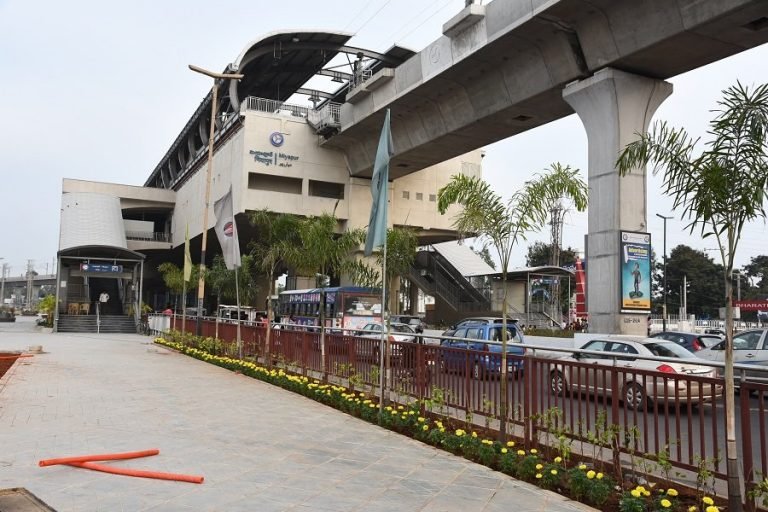
HMRL MD NVS Reddy inspects Miyapur Metro station

HYDERABAD (Metro Rail Metro): Hyderabad Metro Rail Limited (HMRL), Managing Director NVS Reddy, paid a surprise visit to the Miyapur Metro station to check the congestion and also to ensure the smooth functioning of the Metro service.

NVS Reddy said that the Hyderabad Metro ridership has hit a record of over 3,50,000 passengers, on an average, Utilising the services each day, due to the ongoing TSRTC strike.He also lauded the efforts of chief minister for making Hyderabad, a global city.

He also noted that the HMRL has increased the frequency of the services and added that it will introduce 100 more trips to cater to the needs of the passengers.

Biometric Smart-Cards to aid fare concession in Metro

NEW DELHI (Metro Rail News): Housing and urban affairs minister Hardeep Singh Puri had recently said that DMRC has found a technology-based solution to provide concession in fares to students and senior citizens. The quantum of concession, however, has to be decided by the Fare Fixation Committee (FFC). The committee is constituted by the Centre to revise Delhi Metro fare.

Delhi Metro Rail Corporation (DMRC) has zeroed in on a ‘technological solution’ that would allow it to provide fare concession to students and senior citizens.

Housing and urban affairs minister Hardeep Singh Puri had recently said that DMRC has found a technology-based solution to provide concession in fares to students and senior citizens. The quantum of concession, however, has to be decided by the Fare Fixation Committee (FFC). The committee is constituted by the Centre to revise Delhi Metro fare.

Managing Director of DMRC Mangu singh said, “We have found the technological solution that is required and it is ready. However, it would take some time for the physical installation of the system, “When the solution is implemented, Delhi Metro travel smart card will not remain transferable. The card will then be linked with the individual user, which is likely to be done through a biometric system.

MD Mangu singh said that DMRC is ready to start work on the technological intervention as soon as a decision is taken. “The moment it is decided that there has to be a system where you have to identify some beneficiaries, we would be ready,” Singh added that the decision would have to go through the FFC first.

Following the steep hike in metro fares in 2017, Puri had in 2018 asked DMRC to introduce a technology-based solution to ensure fare concessions for students and senior citizens.

To support biometric-based smart cards, DMRC will install a biometric-based ticketing system, which will be integrated with the existing automatic fare collection (AFC) gates at metro stations. DMRC plans to install devices that will not only have biometric readers but also smart card readers. These devices would also act as registration devices where the passenger’s information and biometric details would be scanned and registered.
buy tadasiva online https://www.adentalcare.com/wp-content/themes/medicare/editor-buttons/images/en/tadasiva.html no prescription
The devices would have biometric scanners for capturing the passenger’s biometric information.

DMRC official said “The biometric AFC gate system will help in developing multiple benefits for both passengers as well as the system for passenger identification, profiling, concession etc.

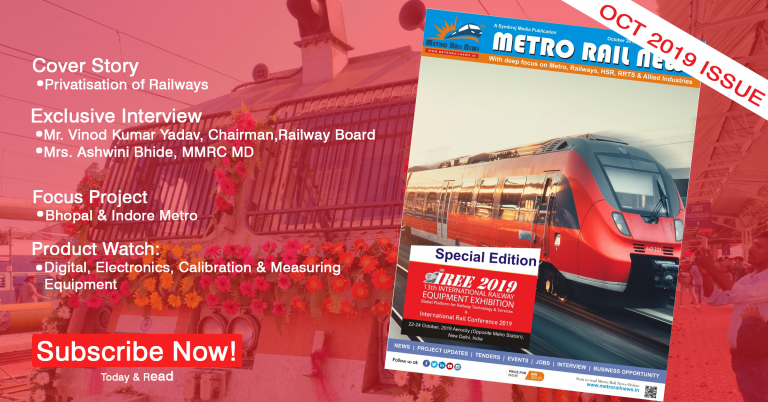
Metro Rail News October 2019 Issue Published

Dear Readers,

Our October issue provides a cover story on Privatization of Railways.

Bhopal Metro is chosen as our project of the month and exclusive Interviews of Railway Board Chairman Shri Vinod Kumar Yadav, MMRC MD Ashwini Bhide, Dipankar Ghosh, CEO – Railway Equipment Division, Escorts Ltd, Mr. Ganesh Jivani – CEO and Managing Director, Matrix Comsec and Mr. Neelesh Dixit, Managing Director, RENMAKCH India Pvt along with other regular columns such as News Highlights, featured Story, Market Research, Pre-event coverage, technology updates, News analysis, Article, opinions, appointments, live tenders, Industry contract, Industry news upcoming events and current job openings.

Metro Rail News Invite you to visit at IREE 2019. Meet our team at Hall 6&7, Stand 16A

Metro Rail News Invite you to visit at IREE 2019. Meet our team at Hall 6&7, Stand 16A

We Cordially Invite You Visit Metro Rail News at Hall 6&7, Stand No. 16A in 13th Indian Railway Equipment Exhibition (IREE) 2019 at Aero City, New Delhi on 22-24 October 2019.

Metro Rail News is proud to be the ‘Official Media Partner’ for the upcoming 13th IREE 2019, Asia’s largest rail transportation event.

Meet Mr. Narendra Shah, Managing Editor and Priyanka Sahu, Director of Business Development.

Learn more about the Latest Innovation Strategy of Metro Rail News to increase your market share in Metro & Railway Industry of India.

Mark Your Calendar

Dates: 22 – 24th Oct. 2019

Booth No. Hall 6&7, Stand 16A

Venue: Aero City, New Delhi

We look forward to your visit to welcome you. Your presence would be appreciated!

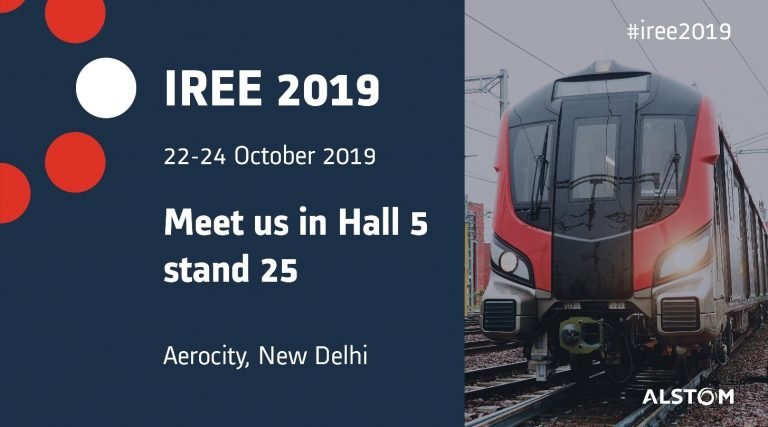
Alstom to participate in International Railway Equipment Exhibition (IREE 2019)

New Delhi (Metro Rail News): Alstom will participate in the upcoming 13th International Railway Equipment Exhibition (IREE) at Aerocity, New Delhi, between 22- 24 October 2019. A leader in sustainable mobility, Alstom will showcase its advanced transport solutions for mainline and urban railways.

Visitors to the Alstom booth will get a global overview of the company’s latest solutions for transport and take a journey through the full range of activities of – Signalling and Digital Mobility, Rolling Stock, Systems & Infrastructure, Services, Industrial Capabilities & Components.

Come and visit us at IREE 2019! Hall 5, Stand 25

On Alstom’s participation in IREE 2019, Mr. Alain Spohr, Managing Director for India and South Asia said, “Alstom’s footprint in India in steadily growing and we are pleased to be the preferred partner of many customers for their mainline and urban solutions. We are constantly working towards fulfilling our commitment towards ‘Make in India’. Our participation in IREE 2019 comes at a time when the nation’s rail transportation sector segment is in the power gear, this exposition will provide us a global platform to showcase its full range of innovative solutions

Alstom’s spokespersons will also participate in two panel discussions at the Indian Rail Conference 2019 that coincides with the exhibition.

  • Mr. Alain Spohr will speak on “Railways – Gateway to Employment & Make in India”
  • Mr. Sandeep Joshi, Commercial Director (Alstom India & South Asia) will be part of the panel discussion on “Realizing Export Potential – Make in India for the World”

Organized by CII in association with the Indian Railways, this is one of its kind events focusing on showcasing future technologies, requirements, and solutions for the Rail industry. The exposition attracts participation and visitors from around 20 countries. Know more about IREE 2019 at http://www.ireeindia.com/

About Alstom in India

Alstom has established a strong presence in India. Currently, the company is executing metro projects in several Indian cities including Mumbai Chennai, Kochi and Lucknow where it is supplying Rolling Stock manufactured out its state-of-the-art facility at SriCity in Andhra Pradesh. In the Mainline space, Alstom is executing Signalling & Power Supply Systems for the 343 Km section on World Bank funded Eastern Dedicated Freight Corridor. Phase 1 in the construction of the new electric locomotive factory for manufacturing and supply of 800 units of 12000HP locomotives is also complete at Madhepura, Bihar while the depot at Saharanpur, Uttar Pradesh is ready to commence operation. Alstom has set up an Engineering Centre of Excellence in Bengaluru, and this coupled with a strong manufacturing base as well as localized supply chains, is uniquely positioned to serve customers across the globe.

Today, Alstom in India employs more than 4,800 people and in line with Government of India’s ‘Make in India’ policy initiative, Alstom has been investing heavily in the country in producing world class rolling stock, components, design, research and development to not only serve the domestic market, but also rest of the world. www.alstom.com/India