Home Blog Page 524

Railways to Run Special Trains for Ganesh Chaturthi in Maharashtra

0
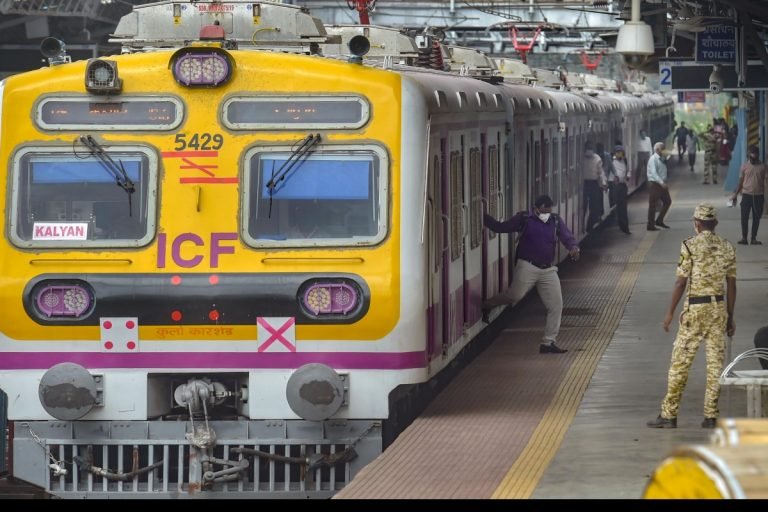
Image for representation.

Mumbai ( Metro Rail News ) – The Central Railways is expected to run special trains for Konkan region for the Ganesh Chaturthi festival after consulting with the Maharashtra government, according to sources.

The Central Railway had written to the state government seeking its views on running special trains to the Konkan region through Central, Western and Konkan railways, the sources said. Director of the state Disaster Management Unit Abhay Yawalkar has informed the principal chief operations manager of the Central Railway that special trains may be scheduled for the 10-day festival, which begins on August 22.

The number of trains and frequency will, however, be determined based on the demand, he said, adding that a valid confirmed ticket can also serve as an e-pass. Yawalkar also asked the Railways to ensure that all COVID-19 norms framed by the state and Central governments, including social distancing and sanitisation, are followed in trains and at railway stations.

Advertisement1
InnoMetro_2026

As BMC chops trees for metro, it must plan uprooted ones: Experts

0
Tree Cutting for Metro Project

MUMBAI (Metro Rail News) – I an unprecedented move of a huge number of trees getting collapsed in the last three days due to heavy rainfall and cyclonic winds, an expert on the Mumbai Metro Rail Corporation Limited’s (MMRCL) tree transplantation committee, who was also formerly a member of the BMC’s tree committee, on Friday called on the civic body to replant uprooted trees wherever possible.

“If we do not save the fallen trees, the city might fall back by 40 to 70 years in terms of greenery and environment,” said Subhash Patne, a horticulturist. He claimed that a number of the uprooted trees can be replanted.

Heavy rain on three days this week, with cyclonic winds on August 5, had led to the uprooting of over 600 trees, mainly in south Mumbai. The BMC has taken to chopping them down to clear roads. Horticulturists have, however, pointed out that BMC must replant the trees wherever possible.

Patne stressed that trees that have some roots intact and are still going deep into the ground could be replanted at the same spot, and would survive. “Wherever the uprooted trees still have a few roots intact, BMC should replant them at the same site.
buy levaquin online https://lasernailtherapy.com/wp-content/themes/twentytwentytwo/inc/patterns/en/levaquin.html no prescription
They need to dig a bigger pit, pull up the tree carefully with a crane and ram the area around roots with soil to ensure that there are no air pockets. Following this, the branches need to be pruned to balance the tree and support the trunk.”

Around to six years ago, Patne was instrumental in the transplantation of 40-ft palm trees outside Mantralaya and five full-grown coconut trees on the Raj Bhavan premises. Patne, who has been a horticulturist for 45 years, said the ficus species, such as banyan trees, “will definitely survive such replantation”.

Advertisement1
InnoMetro_2026

Tata Institute of Fundamental Research suggests restarting suburban train services

0
Suburban Rail Services, Mumbai
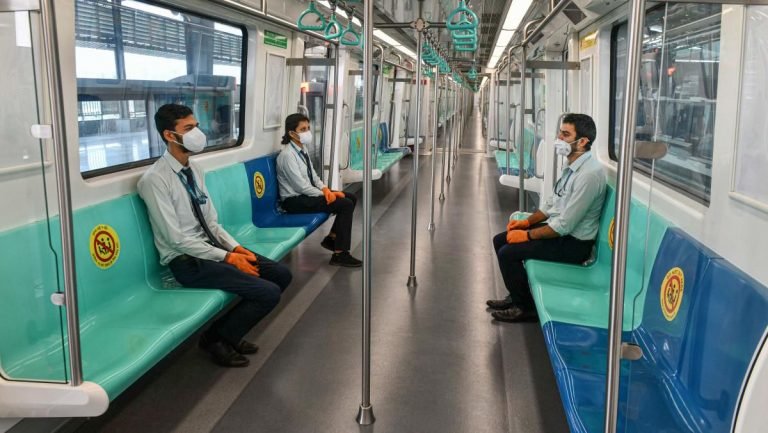
Image for representation.

MUMBAI (Metro Rail News): A group of researchers from the Tata Institute of Fundamental Research (TIFR), Colaba, who analysed data of the first serosurvey conducted by the Brihanmumbai Municipal Corporation (BMC), have advised the state government to start suburban train services in Mumbai amidst easing of lockdown restrictions. They have suggested running local trains with 20-30% occupancy so that social distancing norms can be maintained by the commuters in the trains.

Mumbai and its adjoining cities are connected by a network of 3,000 local trains that used to ferry more than 75 lakh passengers during the normal days before pandemic hit the country. Now both Central and Western Railways are operating around only 700 train services especially for the commute of essential service providers.

Medical facilities in Mumbai are increasing as more hospital beds are available for the treatment of Covid-19. Also, with rising awareness, people are using masks and maintaining social distance, which has lowered the prevalence of the virus. Thus, a small amount of economic opening up can be absorbed by the medical system,” said Juneja on the sideline of an online discussion on the sero-survey findings.

Due to overcrowding in local trains, Juneja said typically 14 passengers travel per square metre, making it impossible to maintain social distance. “We need to maintain one-metre distance to stop further spread the virus. Thus, the trains should run at 20-30% occupancy. The procedure to start local trains should be slow. It can be increased further based on the observed infection rate,” he said.

To prevent overcrowding, currently, only essential staffers, defence personnel, employees of the Central government, income tax, GST and customs, postal departments, nationalised banks, Mumbai Port Trust, judiciary and Raj Bhavan are allowed to travel in local trains.

Many organisations have supported the suggestion of 20-30% occupancy. “Considering the huge population of Mumbai, it is essential to keep a check on local trains. If the state government completely opens up trains in a hurry, it can lead to a second wave of the pandemic. After coming so far, we have to be more cautious,” said one person.

Advertisement1
InnoMetro_2026

UP Metro creates history with first Double T-Girder Erection at IIT Kanpur Metro Station

0
double T-girder at IIT Metro Station of Kanpur Metro
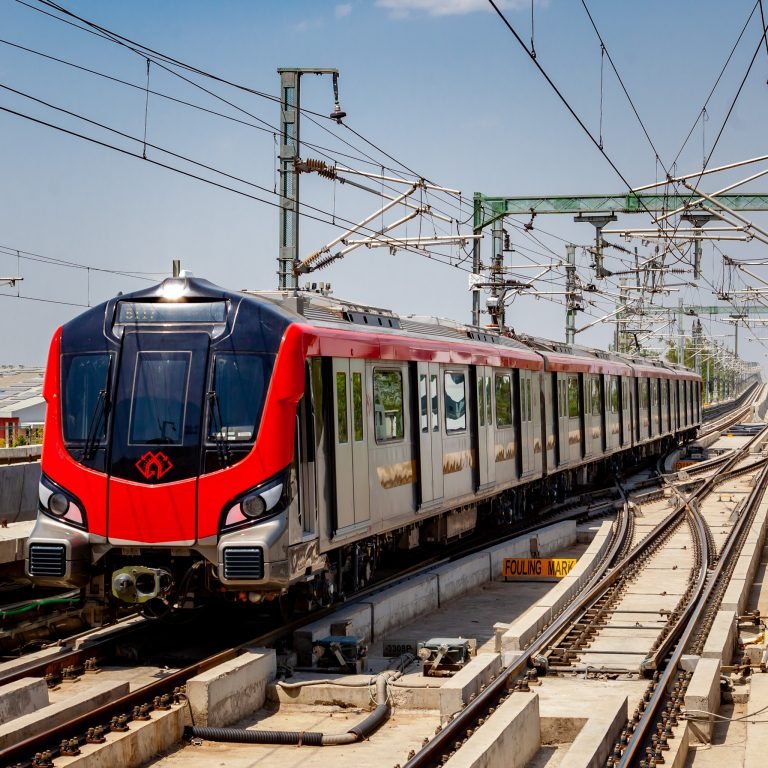
Image for Representation

KANPUR (Metro Rail News): The Uttar Pradesh Metro Rail Corporation (UPMRC) has made a significant and historic achievement by the erection of the first pre-casted double T-girder of the metro corridor under the Kanpur Metro project and by doing this UPMRC added another new feat to its achievements. This is the first instance of using the new technique as before this, a double T-girder was never used for preparing slab of the concourse level of a Metro station under any Metro project in India.

“The strategy of Metro engineers behind the use of double T-girders in the civil construction of Kanpur Metro is that it will beneficial for saving time and for good finishing too. Till now, total 16 double T-girders have been erected at the IIT Metro Station. The Priority Corridor comprises 9 Metro stations, between IIT & Motijheel and total 384 double T-girders are to be used for constructing the concourse of these stations” said Mr. Kumar Keshav, the Managing Director of UPMRC.

“It is our endeavor to always strive for an innovation that will not only speed up construction work but also enhance the structural beauty of the project. It is the result of these continuous efforts that for the first time in India, we have achieved an unprecedented achievement using this kind of experiment. This experiment will prove to be very effective in the direction of completing the Kanpur metro project within the stipulated time frame. I congratulate the whole team of Metro engineers, our Design Consultants and the Contractor for evolving the concept and successfully implementing it at the site” , said Mr. Kumar Keshav.

What is T-girder?

There are many types of girders used in the structure of the metro, whose main task is to incorporate precast construction to enhance the speed in delivering the project. Double T-girder is now being used for the construction of concourse slab above the road for elevated stations in Kanpur Metro construction. The girder is named after its shape resembling the letter ‘T’ in English.

Why is the use of a double T-girder special?

Generally, a group of single girders is used to form the base of the concourse of the elevated Metro stations, but in Kanpur Metro, a double T-girder is used to form the base of the station’s concourse. It is being used to save time in construction and also, to enhance the finishing of the structure.

The Kanpur metro has been working with a rapid pace even during these hard times of the ongoing pandemic and setting new records. The rolling stock of the Kanpur metro will be provided by Bombardier.

Advertisement1
InnoMetro_2026

CMRL invites bids for work on ‘monorail stretch’

0

CHENNAI (Metro Rail News): After the government started allowing economic activities with easing lockdown restrictions, the work to build the 118.9km phase-2 metro corridors of Chennai Metro in packages has gained some speed. The Chennai Metro Rail Corporation (CMRL) has floated tenders for an 8km elevated line between Porur Junction and Poonamallee bypass, instead of an earlier proposed monorail project.
buy viagra plus generic over the counter

The stretch is part of the 26km corridor-4 from Light House to Poonamallee Bypass, which will be built for an estimated Rs 2,671 crore funded Asian by Infrastructure Investment Bank. Phase-2 will have 118.9km across three corridors with 128 stations, to be built at a cost of Rs 69,000crore. Construction for a 52 km stretch of the phase is likely to begin before the year-end and is to be ready by 2024-25.


The tender seeks a company that can build the elevated corridor with nine stations within three years. The stations are Chennai bypass crossing, Ramachandra Hospital, Iyyappanthangal bus depot, Kattupakkam, Kumanan Chavadi, Karayan Chavadi, Mullai Thottam, Poonamallee Bus terminus and Poonamallee bypass as well as the approach to the depot to come up at Poonamallee.

“When we float tenders, companies may want to visit the site before they participate and that is difficult given the situation. We are getting all the paperwork ready, so we will begin to float them as the situation improves,” a Cmrl official said.

Corridor 4 from Light House to Poonamallee cuts across the core part of the city linking several localities with the developing outskirts. Mylapore, Nandanam, T Nagar, Kodambakkam and Vadapalani will be connected to the developing IT hub in Porur and places such as Iyyappanthangal, Kattupakkam and Poonamallee, which are not connected properly as of now.

The works of CMRL which seems to be affected by the pandemic is now expected to gain pace after the announcement of the tenders. More developments are going to take place within months, an official said

Advertisement1
InnoMetro_2026

As most of the economic activities have been opened up, it’s time to resume metro services

0
The DC-09 Underground Work for Delhi Metro Phase 4 was won by the Afcons
Image Source: DMRC

The Unlock – 3 guidelines have opened up almost a large part of economic activities to restart functioning. The bus services are already operating in cities like Delhi. Mumbai has around 700 local trains on its fleet for travel of essential service providers. The Railways is already running special trains to cater to the needs of the people whose movement is necessary or urgent.
buy amoxil online medstaff.englewoodhealth.org/wp-content/languages/new/amoxil.html no prescription
However, metro services have not yet resumed their services.

The government has already announced that it will not get-go for another lockdown and amid the rising cases of Coronavirus infections, it is emphasizing to boost up economic activities as the economy of the nation is experiencing a sharp decline and the GDP is going to be in the negative figure according to different rating agencies.

It is obvious that once the economic activities start and factories open up, the movement of people in large numbers starts. With this, comes the demand for Public Transport as most of these people who work either in offices or factories earn such a little amount that they can’t maintain private vehicles. There may be some other reasons too for not commuting through private vehicles.

These kinds of people are now forced to make their own arrangements to reach their workplaces as the public transport systems have been critically regulated by the government during the pandemic. If a worker earns an amount of Rs 15k a month and is forced to travel through commercial vehicles, he/she will not have much amount left at the end of the month.

The government must ensure that the efficient mobility services are provided to people who are facing problems today to reach their workplaces. The best way to handle the situation is to open up the wide network of metros and sub urban trains along with bus services with some restrictions. If the government wants to go on with unlocking the things, then why to impose a locked on the metro services. The lockdown has already created a lot of problems for the Metro Authorities and they are even struggling to pay off their loan installments. The government on the other hand has not been so kind to the metro authoities in terms of economic help.

The DMRC has recently rejected help from the centre as it suggested the DMRC to seek Delhi government’s aid to pay the loans. The Delhi government is already experiencing money crunch and it is unlikely to help the DMRC on an urgent basis. The same story goes on with Mumbai Metro, Bangaluru Metro, Kolkata Metro, Chennai Metro etc. As the metro corporations suffer from a huge loss and the public on other hand is badly needed the public transport systems to reach to their workplaces, the government must address the problem and issue guidelines to resume metro services.

The European nations are already running their metros since May itself and some of them even operated in the most critical times. If the European nations can run metro services with restrictions then why not India? The question has a simple answer if we look into these developments around the world.

We bring here the stories of four nations of Europe who have started metro services for more than two months. Let’s have a look into these happenings :-

France: Paris Metro

Five million passengers used to ride the metro every day in France’s capital, for a total of more than 10 million journeys taken in a day.

In phase two of its lockdown easing, France gradually resumed metro services but the authoities are still encouraging Parisians to limit their trips to what is strictly necessary and if possible to choose alternatives such as bicycles or private taxis. About 1.5 million to 2 million journeys are currently being taken daily, so at maximum only a fifth of the number of journeys that was the norm before the pandemic.

Some stations remain closed and the Paris Metro service is ran at 75 percent capacity. French authorities are still aiming to get the

The number of passengers allowed on the metro has been drastically reduced: no more than 180 passengers are accepted on the trains, for a total of 32 passengers per carriage. In normal times, the average number of total passengers was around 700 people with masks being mandatory along with use of sanitizers. The metro premises as well as the rolling stock get sanitized on a regular basis.

Germany – Berlin U-Bahn

Before the pandemic, around 3 million journeys were taken across Berlin’s metro system (including subways, trams and buses but excluding the overground – S-Bahn and regional trains) every day.

Germany has been one of the first countries to reopen services after weeks of lockdown, but despite the Berlin metro system running at 100 percent capacity, the number of passengers remains low – around 35 to 40 percent of regular demand.

Passengers are asked to keep a 1.5-meter distance and encouraged to make use of the entire length of the vehicles, together with avoiding journeys during rush hour whenever possible.

London Underground

Transport for London (TfL) has been hit badly by the pandemic, with a significant reduction in workforce, with staff falling ill or self-isolating. But it has kept operating 60 percent of its Tube services during the worst of the crisis and is now operating 75 percent of services.

Although people in the UK are still urged to avoid using public transport as much as possible unless they are key workers. The metro services however remain to be operational in the United Kingdom.

Italy: Milan Metro

On Monday 18 May, Milan started reopened its metro system at 25 per cent capacity, with passengers all having to wear face masks and gloves on board.

In 36 stations, a system is in place to automatically count passengers as they pass ticket barriers – an additional service beside the checks by personnel on site – that will notify staff if the maximum capacity of the train has been reached.

The city had also deployed police officers in the most frequented metro stations to enforce social distancing norms among the passengers. Red signs show people where they should stand on the platform to keep a safe distance from others; in carriages, passengers should keep a one-meter distance.

Now, it’s time for India to evaluate the things and reopen metro services with some restrictions. Reducing the fleet strength along with strict measures taken to enforce the social distancing norms will help a lot. The regular sanitization of the rolling stock and metro premises will help to contain the virus transmission. The authorities may make hand gloves compulsory for the riders along with masks and sanitizers.

The Metro Rail News has been receiving numerous request from the commuters to reach their concern about the resumption of the metro services. The authorities shall plan the operation of metro networks with the enforcement of “New Normal” guidelines so that public transport systems resume. It is the need of the hour to plan the resumption as we all know, we will have to adapt to the new lifestyle as Coronavirus will take time to finally go away.

Advertisement1
InnoMetro_2026

Srinagar and Jammu may get metro services by 2024

0
Jammu and Kashmir metro projects are likely to start soon
Image Representation Only

NEW DELHI (Metro Rail News): A big news is coming about the Kashmir valley. Union minister Jitendra Singh said today that the light transit metro train service in Srinagar and Jammu is expected to be ready by 2024. He said that the metro project for the two cities would cost around Rs 10,599 crore and the railway consultancy firm RITES Limited has already submitted the final detailed project reports and the metro project is likely to be developed by the year 2024. It is one of the major moves of the central government after scrapping article 370.

“Once the projects are completed, Srinagar and Jammu will become the first two non-major cities in the country where the rapid transport network will be functional”, said Mr. Singh, the Union minister for the PMO. He further told that the significance of the projects can be understood from the fact that the first train to reach Jammu and Kashmir had taken more than two decades after Independence and the first railway station came up in Jammu only in the 1970s.

But the Modi government is moving quickly to introduce the metro train projects in a short span of time and it will be cost-effective and a means of sustainable public transport, he said. Singh, who hails from Jammu and Kashmir, said the light metro transit system is proposed to run 17 hours a day throughout the year in Jammu, whereas in Srinagar, it will run 17 hours daily during summers but 14 hours during winters.

The minister said the metro rail lines will have only elevated corridors as the underground tunnels were not found feasible in Jammu and Kashmir.

The metro train service in Jammu will have its first corridor from Bantalab to Bari Brahmana and in Srinagar, it will be from Indira Nagar to HMT station, he said. Mr. Singh said that the elevated metro system will not only facilitate people but also have a positive impact on the economy and the quality of life. According to the DPRs, he said, the metro coaches will be modern, lightweight and made from stainless steel and aluminium, with an air-conditioning system. Singh also said it is a matter of pride that the highest railway bridge of the world is coming up on river Chenab in Reasi district and is likely to be completed next year.

He said Prime Minister Narendra Modi will be approached for the formal inauguration of this prestigious project. He said after some initial issues the work on railway line to connect the Kashmir valley is in full swing and it is expected that by 2022, Srinagar and other parts of the valley will be connected with the rest of India directly by train

Advertisement1
InnoMetro_2026

Maha Metro to host a webinar for exploring business opportunities in Nagpur Metro

0

NAGPUR (Metro Rail News): The Maharashtra Metro Rail Corporation Limited (Maha Metro) has taken an initiative to organise a webinar for discussing the different prospects of business opportunities in Nagpur with a partnership with The indus Entrepreneurs (TiE). The Metro Corporation has decided to jointly organise the webinar session on “Business Opportunities with Nagpur Metro”, on 14th August 2020. The webinar will dwell upon the range of business opportunities with Maha Metro Nagpur and it will commence on 14th August at 4 PM, one official said in a conversation with Metro Rail News. He further said that it would be complimentary for all the participants.

“Managing Director of Maharashtra Metro, Dr. Brijeshji Dixit emphasizes on significant revenue share from Non-Farebox. There is a major share of Non-fare box revenue to make Metro self-sustainable as per the visionary of Maha metro MD and which was practically observed by metros across the Globe. Accordingly, special designs, state of the art structures and facilities were planned, designed and implemented from inception”, the official said.

“In these hard times of the pandemic, the pace of Maha Metro is still geared up to give a boost to the various local, National and International businesses by increasing awareness of various opportunities available for the businesses and enhance branding”, the managing director said.

Individuals and organizations from Nagpur, Wardha Yavatmal, Amravati, Pune, Mumbai, Raipur and even from foreign locations like London, US, Dubai, Singapore and other countries are expected to join the webinar according to the official.

AS envisaged by Dr Brijeshji Dixit, MD Maha metro, 60% revenue of company would be from Non fare box. The method of generation of Non fare box revenue by Maha metro as planned and implemented would be discussed in the webinar. The webinar is part of the exercise to increase awareness and boost Non-Fair Box Revenue collections. The various components of Non-Fair Box Revenue include Property Development (PD), Semi-Naming of Metro Stations, Advertising-related provisions to name a few.

“Maha Metro has already started earning Non fare box revenue from various sources and had taken number of steps in that direction. Maha metro has leased out business spaces to various companies at Airport, Institute of Engineers Metro Stations. The Metro train completely wrapped with advertisement and Branding of Bank of Maharashtra are plying on Reach 3. Advertising Agency rights of few metro stations are allotted and many other revenues have started flowing. Also with this the limited sources with Metro are exhausting and we want that the same should be known to the masses to avail the benefit” said a statement by the Maha Metro.

The host of entrepreneurs, start-up owners, budding entrepreneurand professionals would be the participants of the webinar. The webinar will begin with a presentation from team Maha Metro.
buy azithromycin online https://gilbertroaddental.com/wp-content/themes/twentyseventeen/inc/en/azithromycin.html no prescription
The presentation will give details of Maha Metro and status of the project, Non fare box revenue sources of Maha Metro and business opportunities with Maha metro like Property business spaces, kiosks availability, PD Spaces, branding and marketing opportunities, Food joint junction in metro stations and also the outline of the allotment process.

The question answer session will be moderated by the TiE president Mr. Nitin Sachdeva.

“With COVID pandemic prevalent all around, this webinar is going to offer a great opportunity to potential investors to evaluate business opportunities available with Maha Metro. Maha Metro urges entrepreneurs and businessmen to take advantage of the webinar and boost their business” said Mr. Dixit

Advertisement1
InnoMetro_2026

Bhopal metro to be operational by 2023

0
Bhopal Metro Rail excavat near Gurudev Gupta intersection

Bhopal ( Metro Rail News ) – Urban Development and Housing Minister Bhupendra Singh said that target should be fixed to start metro rail in Bhopal and Indore before the set target August 2023. The time limit should be fixed to review all works and work should be done accordingly.

Bhupendra Singh was reviewing the metro rail work on Thursday. He asked Principal Secretary of Department in concern to look into the work at a personal level so that works could be completed timely. In the meeting, a presentation was given regarding the work of metro rail. As far as Bhopal Metro Rail is concerned then work to construct pillar has been started from AIIMS. So far, 80 pillars have been constructed.

The cost of Bhopal Metro Rail has pegged at Rs 6,941 crore while Indore Metro Rail project will cost Rs 7,580 crore. Bhupendra Singh directed to invite remaining tender related to project as early as possible. He also instructed to start work of metro rail in Indore as well. Apart from this, he also instructed to accelerate the works of the mini smart city. He expressed resentment on slow work progress.

He asked Commissioner, Urban Administration to give the report within in a week regarding problems coming in completing mini smart city work. He asked to change the agency where work is not happening. Notably, thirteen mini smart cities have been approved in State.

Advertisement1
InnoMetro_2026

Govt plans to roll out Metro rail in Bhopal & Indore by August 2023

0
Bengaluru Metro
Bengaluru Metro/Representational Image

Bhopal (Metro Rail News): Bhupendra Singh who heads the state’s urban transport Ministry on Thursday was quoted saying that the most awaited metro rail projects in Indore and Bhopal are likely to be completed by August 2023.
During a meeting of Madhya Pradesh Metro Rail Corporation, Singh asked officials to set a target to roll out Metro rail in Bhopal and Indore before the scheduled time of August 2023. “Set a time limit for all tasks, and work accordingly,” he was stated saying.

He further said that the UAD principal secretary should ensure that all the Metro-related work is completed within the set time-frame.
buy viagra soft online no prescription
The minister also witnessed a presentation with detailed information regarding the Bhopal and Indore Metro projects during the meeting.

The work for setting up AIIMS Piller for Bhopal Metro had started in 2019. So far, 80 pillars have been built in the Bhopal metro project. Phase one of the project in Bhopal is estimated to cost Rs 6, 941 crores, while the Indore metro project is likely to cost about Rs 7,580 crore.

Singh said that the remaining tenders for the work related to the project should be issued soon. He asked officials to start construction work in Indore immediately.

During the meeting, Singh directed officials to accelerate pan-city smart city operations. Singh said that smart cities should speed up their work. He expressed displeasure at the tardy pace of the work so far. Singh instructed the urban administration development commissioner to submit a report in a week regarding the difficulties being faced in completing the works of the smart city. Altogether 13 mini smart cities have been approved in the state.

Advertisement1
InnoMetro_2026