Home Blog Page 525

Centre asks DMRC for Delhi govt’s help to repay loans

0

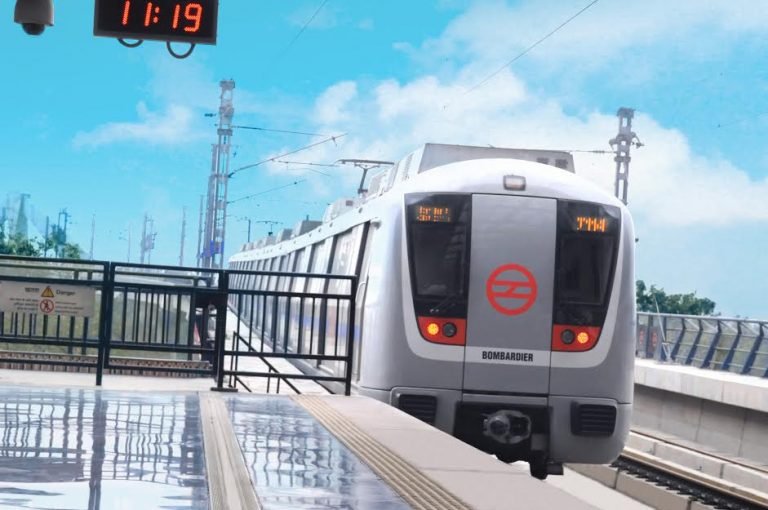
New Delhi (Metro Rail News) – The Union Ministry of Urban and Housing Affairs (MoHUA) has asked the Delhi Metro Rail Corporation (DMRC) to approach the Delhi government for financial aid for repayment of its loan instalments this year as non-operation of the metro network due to pandemic has reduced the revenue of the corporation. The DMRC is reported to have taken a soft loan of Rs 35,198 crore for construction work from Japan International Cooperation Agency (JICA).

With Metro shut since March 22 due to the Coronavirus pandemic, DMRC has suffered a revenue loss of about Rs 1,300 crore. Last month, it had written to the Centre, requesting it to defer the payment to next year.

Anuj Dayal, executive director, corporate communication, DMRC, was quoted saying that, “We have received such a communication from the ministry recently. The same is being examined and processed”. The DMRC is yet to approach the Delhi government for further progress in the matter.

DMRC has repaid Rs 3,337 crore of the loan to JICA. According to another DMRC official, Metro has to pay Rs 1242.83 crore as instalment for the financial year 2020-21 as per different media reports. However, a detailed figure from the DMRC about the matter is awaited.

According to a news report, “The Metro has paid Rs 79.19 crore on account of interest for this financial year and the balance liability of Rs 1163.
buy filitra online https://www.mydentalplace.com/wp-content/themes/twentytwelve/inc/en/filitra.html no prescription
64 crore is yet to be paid.”

The loan has been granted at a concessional rate of interest, varying from 1.2% to 2.3%, and has to be repaid in 30 years with a moratorium period of 10 years.

The Metro, which has a network of 389km with 285 stations, earns nearly Rs 3,600 crore from fare and by renting out its space at stations to commercial establishments.

Commercial establishments operating at metro stations had written to the DMRC to defer rental payments as there had been no business since March.

There are about 400 shops apart from property development at stations such as Nehru Place and HUDA City Centre, etc., which attracts a lot of crowd due to the restaurants. The DMRC is in the process of decision making. However, it has not initiated the process to reach out to the Delhi Government according to sources in the DMRC.

Advertisement1
InnoMetro_2026

Delhi Metro to record new heights in Phase-IV

1
Delhi Metro
Delhi Metro

NEW DELHI (Metro Rail News) – In its plan for further expansion across the national capital aside, the Phase IV project of the Delhi Metro is set to take the network to greater heights — literally. At the proposed Haiderpur Badli Mor section of the upcoming 28.92-km-long Janakpuri West-RK Ashram Marg corridor, trains will pass at a height of 28 metres — taller than an eight-storey building according to the country’s largest metro network.

The DMRC with a huge metro network across the National Capital Region (NCR), it is planning to make the corridor as an extension of the Janakpuri West to Noida Botanical Garden Magenta Line. The other two lines of Phase IV are Aerocity-Tughlaqbad (20.2 km) and Maujpur-Majlis Park (12.5 km). The Haiderpur Badli Mor platform will also be the highest of the network at 23.5 metres.

The current highest peak of the 389-km-long operational network of DMRC is at Dhaula Kuan, where trains pass through a 23.6-metre high section. Till 2017, a point near Karkardooma station at 19 metres used to be the peak. A Metro official said that the elevation of the point is due to the fact that it will be directly above the operational Yellow Line, which connects Samaypur Badli with Gurgaon’s Huda City Centre. The average height of the elevated section of the corridor will be 10 metres.

“However, the height of the piers will be 20 metres at Madhuban Chowk (crossing with Yellow Line) and 25 metres at Haiderpur Badli Mor where this line will again cross over Yellow Line. At Haiderpur Badli Mor, the rail level is going to be the highest at 28 metres,” DMRC was quoted saying in an official statement.

The platform of the Haiderpur Badli Mor station is coming up above the operational section, which handles passengers using the Yellow Line. Consequently, the new section will be at a height of 23.5 metres, nearly as high as the Metro’s current peak point at Dhaula Kuan.
The operational highest platform, however, is at Mayur Vihar Phase I. The Pink Line section of the station, which also falls on the Blue Line, is at a height of 22 metres.
buy zovirax online https://myhst.com/wp-content/themes/twentytwentytwo/inc/patterns/en/zovirax.html no prescription

Speaking about the challenges in vertical expansion, the DMRC’s engineers are planning a detailed plan to execute the project. “Construction of the pier and the subsequent launching of the spans will be done without impacting operations on the Yellow Line, which is one of Delhi Metro’s busiest corridors,” an official was quoted saying by a media agency.

Advertisement1
InnoMetro_2026

Eight long-distance trains connecting Kerala via Konkan route get diverted after landslide

0
Image for representation.

THIRUVANANTHAPURAM (Metro Rail News): After Heavy rains and landslide occurred in the state, the rail route along the Konkan has been damaged provoking the railways to divert eight long-distance trains connecting Kerala via Pune which use to run through this route.

The wall inside the Pernem tunnel between Pernem and Madure stations has collapsed due to the landslide as well as per the official sources. The railways have temporarily suspended rail services along the route.

The railways has provided a list of following trains whose operation has been affected due to the problem. They are :-

  • Train no 02617 and 02618 Ernakulam Jn – Hazrat Nizamuddin daily super fast diverted till August 20 
  • Train no 06346 and 06345 Thiruvananthapuram Central – Lokmanya Tilak Terminus daily special train diverted till August 20
  • Train no 02432 New Delhi – Thiruvananthapuram Central Rajdhani super fast triple weekly special train diverted on August 9, 11, 12, 16 and 18
  • Train no 02431 New Delhi – Thiruvananthapuram Central Rajdhani super fast triple weekly special train diverted on August  11, 13, 14,  18
  • Train no 02284 Hazrat Nizamuddin – Ernakulam Jn Duronto weekly special train diverted on August 8 and 15
  • Train no 02283 Hazrat Nizamuddin – Ernakulam Jn Duronto weekly special train diverted on August 11 and 18

The passengers are suggested to call 022-27587939, 10722 for any queries or problems.

Advertisement1
InnoMetro_2026

KMRC starts building shaft to pull out TBMs

0
Kolkata Metro
Kolkata Metro

KOLKATA (Metro Rail News) – The construction of the shaft for retrieving the two giant tunnel borers for the East-West Metro corridor at Durga Pithuri Lane, off Bowbazar, has been started by Kolkata Metro Rail Corporation (KMRC). It will take six months to complete the shaft as per recent media reports.

This is where the first tunnel boring machine Chundi, which was digging the westbound tunnel, hit an aquifer on August 31, last year, and is now lying defunct 16m below the ground. A 300m radius around the spot came to be known as the cave-in zone ever since. Several houses had collapsed when Chundi hit the sand aquifer. Water gushed into the tunnel, triggering large-scale subsidence.

The subsidence zone, strengthened with elaborate grouting, has now become an open space since 27 damaged houses in the area either fell or were razed for safety reasons. The retrieval shaft is being built in this open space to pull out both the machines, which were moving from Esplanade to Sealdah for the last leg of 2.5km East-West Metro tunnelling.

Rig machines from Austria have been roped in to build piles for the 22m deep retrieval shaft, 40m in length and 15m wide. The piles will be built for 130 piers of the retrieval shaft being dug directly on the line of the westbound tunnel.
Cutting the damaged TBM (Chundi) into pieces will be a challenge because its 9m-wide front shield is covered with concrete that was poured into seal the water leakage.

Along with the front shield, the first few metres of the concrete rings will also be pulled out of the shaft. And the wall created (in the tunnel) to prevent seepage of water will also be dismantled. A huge crane will be used to pull out the machine parts, each machine of which weighs around 300 tonnes. The second TBM, Urvi, building the east-bound tunnel, is now burrowing towards its destination, Sealdah station, from where it will make a U-turn and dig the rest of the affected tunnel and proceed back towards Durga Pituri Lane. There is a connection between the two tunnels in Sealdah. Urvi will U-turn through it.


Urvi should be able to reach Sealdah station by mid-September. It will be disintegrated inside a box at Sealdah station, reassembled and veered in the opposite direction, to Durga Pituri Lane and thus complete the underground link. By this time, the retrieval shaft will be ready. It would take a month to complete the retrieval of the two machines.
The 16km East-West Metro corridor will stretch between Salt Lake Sector V and Howrah Maidan and run under the Hooghly river.

Advertisement1
InnoMetro_2026

In Conversation with Mr. Sanjeev Sachdev, MD, Toshi Automatic Systems Pvt. Ltd.

0
Mr. Sanjeev Sachdev MD, Toshi Automatic Systems Pvt. Ltd

Our Managing Editor, Mr. Narendra Shah interacted with Mr. Sanjeev Sachdev, the Managing Director at Toshi Automatic Systems Pvt Ltd. He discussed the key issues related to going fully digital in the faring system of Metro Networks and other public transport systems. Mr Sachdev shared his views and gave his opinion about the possibilities in the NCMC scheme in future. We present here the conversation:-

N.S. – How do you think the COVID is going to affect the public transport system and what are the ways to tackle the problems arising out of it?

S.S. – As COVID is affecting every Individual small as well as large businesses. Many people have lost their jobs which has created many problems including financials as well as social.

As most of the public transport systems are still not working or partially working thus millions of people are unable to reach their workplaces through public transport systems like Metro train which is termed as the backbone of the local transport system within the urban centres like Delhi, Mumbai, Bangalore etc.

Stopping the operations of Metro is not the right solution. In fact, it should operate with enhanced safety strict protocols like social distancing as well as uses of masks and sanitizers is needed.  Sanitization of rolling stocks, stations, elevators etc. will help to avoid chances of getting an infection . A contactless ticketing and fare system including the use of metro cards, QR codes Etc. are needed in place of the existing RFID coins or paper tickets in order to avoid the spread of infection. 

N.S. – What are the possible changes which we will experience once we go back to use the metros and other modes of Public transport. What do you think about it?

S.S. – As said above, public awareness is a must and protocols related to personal sanitization, sanitization of  Stations along with making available common facilities at stations is need of the time. Contactless entry and exit from stations will also help to reduce chances of the spread of infections.

N.S. – The National Common Mobility Card scheme has been one of the ambitious projects of Mr. Narendra Modi led Central Government. How can the scheme benefit in going fully digital in the urban transport system especially in the metros?

S.S. – One of the biggest advantages of NCMC scheme will be binding the public mobility across the country with a single card. A  single travel card can be used throughout all public transport systems like Metros, Regional Bus services, ferries etc. It will also minimize the need to buy local tickets or travel card for different cities making it a hassle-free affair to travel beyond the boundaries of a single city.

N.S. –  How the new system and technology will affect Platform Screen doors and how do you think they can be managed effectively and efficiently?

S.S. – PSD or platform screen door is for the safety of the passenger at Metro & BRTS stations only.

It helps in creating a safety wall in between the passenger and the track or the road in case of BRTS to avoid accidents.

Because of the very high import cost of the PSD doors, the you may see  Metros installing only 40-50% PSDs  at  stations as compare to 100% in BRTS because of the make in India since 2009-2010.

Indegeniously designed PSD doors for BRTS are quite successful and are being used in more than eight BRTS projects in India since 2009 but none of the Indian companies have been given the opportunity to do so for Metro systems.

Once developed locally under Make In India, the PSD doors for Metros will help in reducing the production cost as well as it will provide 100% safety to the passengers travelling in metro trains.

N.S. – Do we need to change the existing AFC gates if we move further towards implementing the NCMC scheme in the metros across the nation?

S.S. – No,not. There is no need to change the existing AFC gate commissioned at Metro stations. A separate aisle can be created at every metro station for NCMC gate and this will help in Reducing the cost of the project along with fair trials for NCMC gates.

Gradually old AFC gates can be converted into NCMC gates in a phase wise manner.

N.S. – What will be the benefits of the scheme as far as your opinion is concerned ? Is it going to be feasible ?

S.S. – Certainly the scheme and the vision to bind the mobility sector with one common card is an ambitious long term plan and it will ease travelling in public transport across the country.

N.S. –  What are the various complications which we will have to face while implementing this? How much time will it take as per your assumptions?

S.S. – One is acceptance to the new system. Initially, there are few challenges whenever there is a transition from the older system to newer ones. In the next 3-4 years,  new aisles can be created at existing metro stations and in case of new projects, NCMC gates can be considered from the start.

N.S. – What will be the measures which you would like to suggest to the government and the agencies involved in the implementation of the project ?

S.S. – NCMC gate project needs hand holding from the central & state Govt. as well as acceptance of the same from DMRC and other metro authorities across India.

“Swagat” (NCMC fare gates) will have a very long term effect on public transport system by increasing the ridership through convenience.

N.S. – Is it going to boost the Make in India concept? Please provide with your opinions whether it is going to help in the recent campaign launched by the Central Government called Atmanirbhar Bharat ?

S.S. – Yes. It will  definitely boost the Make In India & Atmanirbhar Bharat conceps.t  It will provide immense opportunities to the Indian companies to grow their businesses in India and across the globe.

N.S. –  How do you think it will affect the public transport systems? Is it going to bring a revolutionary change in the metros across different states of our country?

S.S. – As I have already stated above, the public transport systems accepting the scheme will help to bring the whole transport system faring system under one umbrella which will surely help to become fully digital in fare collection. It will also help to decrease the chances of getting infections as it will decrease the chances of getting physical contacts.

N.S. –  It has already been more than one year of the launch of the NCMC Scheme but no adequate works have been done on the ground. What do you think about future possibilities in such a scenario?

S.S. – Yes, delay is certainly there but the future of NCMC scheme is very bright.

We hope that the implementation of NCMC gates starts very soon in various Metro projects across the nation. The move will create new opportunities for Indian business in this field.

N.S.-  The card is enabled with the indigenous Rupay payments system. How will it help to strengthen Rupay and NPCI if the scheme is fully implemented?

S.S. – The basic idea is to ease the way of ticketing and travelling on a public transport system so multiple  modes like Rupay QR NPCI etc acceptance is preferred. It will also help to increase the revenue generation for Rupay which will further help NCPI to make Rupay a global payment system.

N.S. –  Please share about your firm’s contribution towards Make in India and Atmanirbhar Bharat movements.

S.S. – Under Make In India and Atmanirbhar Bharat we at Toshi Automatic Systems P Ltd(TASPL) have started developing a lot of products. We were earlier importing them from European and different Asian countries.

We have developed 100% indigenous PSD doors for BRTS and have completed six major BRTS projects across India which includes  Ahmedabad, Surat,  Rajkot, Indore, Amritsar and New Raipur BRTS projects.

In Ahmedabad BRTS, we have supplied commissioned 550 AFC gates and 271 P gates along with PSD doors at 150 bus stations.

At Terminal 3 of IGI Airport,  automatic gates at immigration and visa on arrival have been supplied and installed by Taspl in 2016 & 2018.

We have also Worked with BEL & C-DAC to develop NCMC gates for them in 2018-19 and supplied few gates for trials. One set of the  gates was inaugurated by Hon. PM sir in 2019 at inauguration ceremony of  Ahmedabad metro.

Currently we are working on PSD door for metro application under Make In India and Atmanirbhar Bharat schemes.

N.S. – How can your firm work to help the government and metro corporations ? Kindly elaborate.

S.S. –  I would like to say that if the Government and Metro corporations help us and do the hand holding, We hope to serve them by developing AFC, NCMC & PSD Doors which can also save their substantial capex cost and O&M cost in the long run.

It’s a long way to go but without support from Govt and Metro Authorities we will not be able to deliver.

N.S. – I thank You for sharing your views and giving your precious time.

Advertisement1
InnoMetro_2026

Agra Metro gets bids for its 1st Section & a Depot

0
Agra metro
Image Source: Twitter

AGRA (Metro Rail News): In a recent development, the Uttar Pradesh Metro Rail Corporation Ltd. (UPMRCL) is reported to have initiated the bidding process for construction of the 29 km long Agra metro project which is supposed to have two different lines. According to a media report, the first elevated section of the 14.25 km Line-1 will be around 4 km long which will connect the Taj East Gate to the Taj Mahal Ramp with three stations at Taj East Gate, Basai and Fatehabad Road in eastern Agra.

It is also reported that the metro work is going to gain pace after the recent judgement of the Supreme Court of India which ruled in favour of the development of the metro project in the city of Taj. UPMRCL is also reported to have inviting bids for constructing Line-1’s train maintenance depot for its 

Uttar Pradesh Metro Rail Corporation Ltd. (UPMRCL) today initiated the bidding process for constructing the 29.40 km Agra Metro Phase 1 project which consists of 2 rail lines and 29 stations.

The first elevated section (Package AGCC-01) of the 14.25 km Line-1 is roughly 4 km long and will connect Taj East Gate to the Taj Mahal Ramp through 3 stations at Taj East Gate, Basai and Fatehabad Road in eastern Agra. West of the ramp, the line will run underground until Shastri Nagar on GT Road, with an interchange facility at Agra College for allowing passengers to switch to the 15.40 km Line-2 (Agra Cantt. – Kalindi Vihar).

In addition, UPMRCL has invited bids for constructing Line-1’s train maintenance depot for its rolling stock which is going to be supplied by Bombardier.

However, the tender notices are not yet available on UPMRCL’s website, a news report claims that it has gained access to the data. According to the news website, the bidding process is going to start soon with the following details:-

Package AGCC-01: Construction of elevated viaduct and 3 nos. elevated metro stations (viz. Taj East Gate, Basai & Fatehabad Road) including civil, architectural finished, water supply, fire fighting, fire detection, E&M works and PEB structures on Priority Corridor-1 of Agra Metro

Package AGCC-03: Civil, PEB and E&M works for construction of depot cum workshop, including O&M quarters & structural, architectural, plumbing, external development, VAC, firefighting, etc. at PAC Land Depot for corridor-1 of Agra Metro.

( Inputs received from a news website).

Advertisement1
InnoMetro_2026

Chennai Metro invites tenders for its Porur – Poonamallee Section

0
Metro Rail’s last stretch to be opened in February first week

CHENNAI (Metro Rail News): Chennai Metro Rail Limited (CMRL) invited bids on Thursday for the construction of a 7.945 km elevated section from Porur Junction to Poonamallee Bypass of Chennai Metro’s which will connect Light House with Poonamallee Bypass through 30 stations.

The 29 km long section consists of 9 stations along with a line to Poonamallee Maintenance Depot. According to a news report, the tenure of the tender will be for three years.

It has been reported that the Asian Infrastructure Investment Bank (AIIB) has provided a loan worth $356.65 million for the development of the metro project.

Although the tender has not been yet uploaded on its official website but According to sources and a news report, the tender has been finalised and it will float soon through online mode. This phase will further boost funding for the next projects for which the tenders are likely to be notified soon.

Advertisement1
InnoMetro_2026

Shops at metro stations demand rent waiver due to none business mode

1
Akshardham
Akshardham

NEW DELHI (Metro Rail News): Different Commercial establishments operating out of Metro stations have written to the Delhi Metro Rail Corporation (DMRC) to defer rental payments as no business has taken place since the last week of March when the nationwide lockdown was imposed to contain the spread of the coronavirus disease (Covid-19). The DMRC has formed a committee to look into these demands.

While public transport was allowed to resume in the national capital on May 20, under strict restrictions and rules, Metro services have been shut for almost five months now. The government is yet to announce the date for reopening Metro services.

There are about 400 shops operating out of 285 Metro stations, not to mention the property development at stations such as Nehru Place and Huda City Centre that before the lockdown used to attract a high footfall owing to the numerous restaurants located in these places. The Delhi Metro earns around ₹600 crore in rental income.

With a daily footfall of nearly 30 lakh on Metro network, it had been a lucrative proposition for commercial establishments to operate out of stations. But since the lockdown, these businesses has been suffering huge losses.

Anuj Dayal, executive director, corporate communication, DMRC was quoted saying, “The businesses of our tenants, including retail and commercial properties, have been badly affected. They have written to us asking that we defer rental payments. We are looking at the government guidelines on this. If we take coercive action against these tenants, some of them might be forced to shut down. We need to support them at this hour of crisis. The pandemic has still not settled down. So we are yet to take a call on the issue.”

Dayal further said, “In 2018-19, the earnings from non-passenger revenue was ₹594 crore, which include income from rentals and leases.”

Rentals from commercial spaces is one of the important sources of the Metro’s revenue. Apart from that, the DMRC also earns revenue from parking at stations, and leasing of advertisement space on stations and trains, among others. However, the main source of DMRC revenue is from Metro operations which is around ₹3,000 crore annually.”

Advertisement1
InnoMetro_2026

Indian Railways to provide 5% discount for container train movement

0
Indian Railway

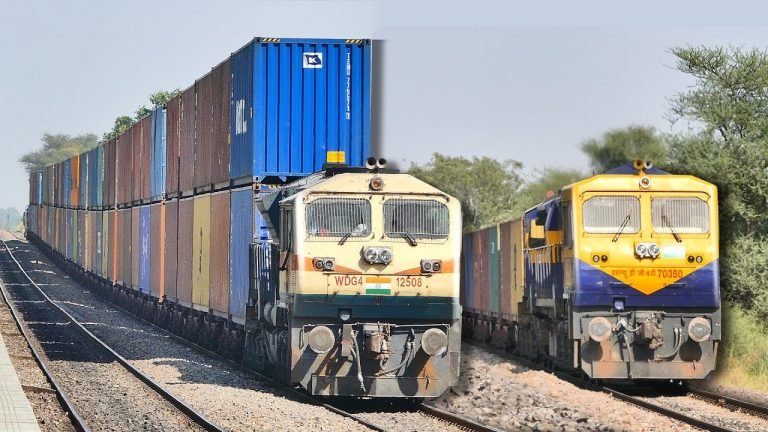
NEW DELHI (Metro Rail News): The Indian Railways in a move to boost the freight traffic by rail mode has decided to provide a discount of five per cent the rate it charges for the movements of loaded containers.

According to a circular issued by the Railway Board, it states that the “authority has decided to permit a discount of five per cent on Haulage Charge per 20-foot equivalent unit (TEU) rates for the movement of loaded containers”.

The discounted price will be valid from August 4 to the remaining part of this fiscal year i.e. April 3, 2021, said the circular.

This is another offer in a slew of incentives that the Indian Railways is offering to attract more freight to railways, during the time when India is facing lower demand due to COVID-19 pandemic.
buy zithromax online https://pridedentaloffice.com/wp-content/themes/twentytwentyone/inc/en/zithromax.html no prescription

Advertisement1
InnoMetro_2026

Indian Railways is set to complete ‘160 Kmph Speed’ project ahead of schedule

0
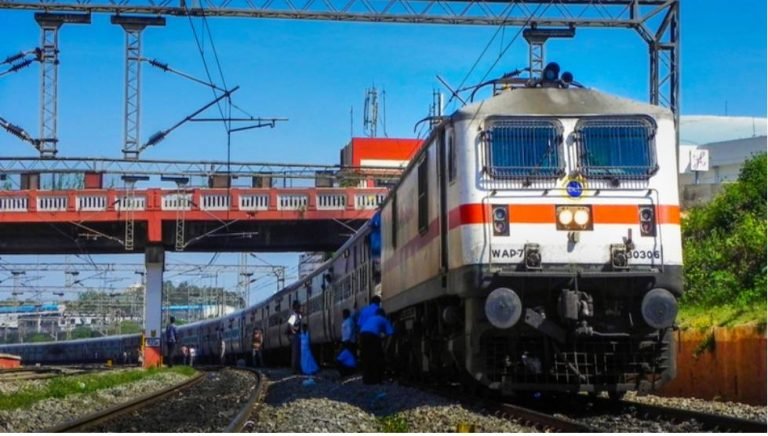
Image for representation.

NEW DELHI (Metro Rail News): In view of the less number of trains in operation, Indian Railways has decided to utilise the situation to complete the ambitious project of raising train speed to 160 kilometre per hour between the busy Delhi-Mumbai and Delhi-Kolkata routes by March 2022, much ahead of its scheduled target of September 2023.

In a letter to all departments concerned, Northern Railway has asked to start planning out the details for upgrading the infrastructure to operate trains at a speed of 160 kmph so that work starts from the next month in right earnest to meet the latest target.

In order to ensure the speedy implementation, the status of the 160 kmph project would be discussed in the railways weekly coordination meeting.

Railway Minister Piyush Goyal had recently reviewed the project after which all the zones concerned followed it up with necessary steps.

“It was desired that the work should be completed latest by September 2023 and preferably in the next 18 months,” the letter dated 3 August stated.

Similar instructions from other zones involved in the two major routes like North Central Railway are believed to have been issued to departments concerned including electrical, mechanical, civil engineering, signal and telecom to speed up the implementation of the over Rs 1,600 crore project approved by the Cabinet last year.

In view of the fact that a large number of passenger carrying trains are not running, the opportunity of availing longer blocks presently available should be utilised for doing the work, the letter said.

The 160 kmph project is crucial for running private trains as it would fulfill one of the key requirements of all bidders to join the race.

The work involves track and signalling upgrades, elimination of unmanned level-crossings and fencing along the two major trunk routes of 1,384 km Delhi-Mumbai corridor and 1,450 km Delhi-Kolkata route.

Departments should plan out the blocks to be taken so as to complete the work in next 18 months and start lining up the necessary resources including contractual agencies to start to block working from September 2020, the letter instructed.
buy ivermectin online www.parkviewortho.com/wp-content/languages/new/ivermectin.html no prescription

Fencing is a must for semi-high speed corridors as it prevents human or cattle crossings on the tracks and ensures higher speed and safety.

Advertisement1
InnoMetro_2026