Home Blog Page 441

Alstom bags €200 mn contract to supply 32 Coradia Continental regional trains to HLB

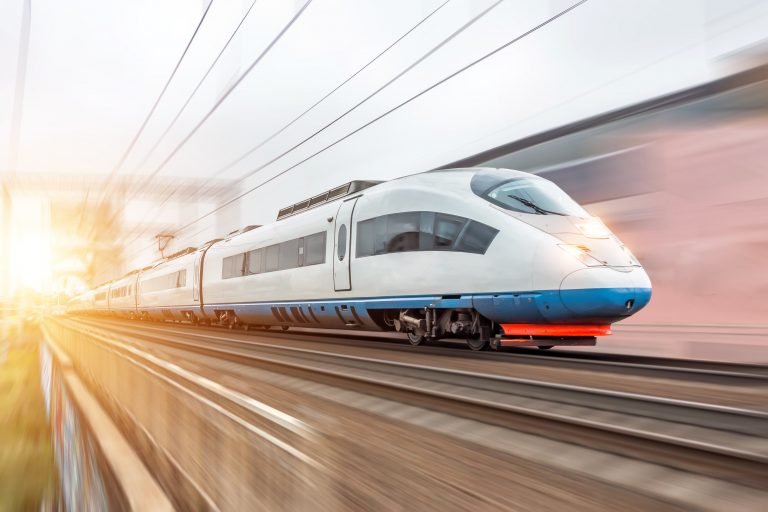
Alstom has announced a new order received from Hessische Landesbahn GmbH (HLB). Alstom said “Hessische Landesbahn GmbH (HLB) has ordered 32 Coradia Continental electric multiple unit from Alstom”. This order is divided into twelve 4-unit trains and twenty 5-unit trains, with a total value of roughly €200 million. Starting in December 2023, the trains will be deployed on the Central Hesse subnetwork managed by HLB and will run on the following lines:

Line RB37: Kirchain through Marburg and Giessen to Frankfurt Central Station.

Line RB40 connects Dillenburg with Frankfurt Central Station through Gießen;

 Line RB41 connects Schwalmstadt with Frankfurt Central Station through Treysa and Giessen.

Line RB49: Giessen via Freidburg to Hanau Central Station.

Alstom said “We are thrilled that Hessische Landesbahn has chosen our cutting-edge electric multiple units once more. The Coradia Continental is an excellent choice for regional transportation in Central Hesse. It is dependable, swift, and quiet, and it provides optimum passenger comfort as well as ample room for bicycles and baggage.

 Müslüm Yakisan, President of Alstom in Germany, Austria, and Switzerland also added , “I am very glad that HLB has renewed its faith in Alstom; 35 identical trains have been operating extremely reliably on HLB’s Southern Hesse-Untermain subnetwork since 2018,” The Coradia Continental can attain speeds of up to 160 km/h and is available in a variety of colours.

The Coradia Continental can attain speeds of up to 160 km/h and has 200 and 280 passengers in four- and five-section configurations, respectively. Various multi-purpose facilities provide enough space for wheelchairs, bicycles, and baby carriages. Because the trains’ driving machinery is on the roof, the cabin is generously spacious, with a broad, step-free corridor for improved passenger movement. An altered boarding height, in conjunction with extra sliding stairs, enables highly comfortable vehicle access. Wi-Fi, electrical ports for charging devices, video monitoring, and a real-time passenger information system that shows rail link information are all available aboard the Coradia Continental.

“In terms of maintenance, dependability, and passenger comfort, we have had a fantastic experience with this vehicle in southern Hesse. As a result, we are delighted to start employing the Coradia Continental trains in our new Central Hesse network in December 2023,” says Veit Salzmann, Managing Director of Hessische Landesbahn.

Alstom’s Coradia modular train series is the result of more than 30 years of continuous research and established technical solutions. More than 3,300 Coradia trains have been sold to date, with around 2,900 now in service in Denmark, France, Germany, Italy, Luxembourg, the Netherlands, Sweden, and Canada.

The role of public furniture in the art of peacemaking

“Placemaking is turning a public space from a place you can’t wait to get through, to one you never want to leave.” Fred Kent, Founder of Project for Public Spaces.

PLACEMAKING STARTS CONVERSATIONS, WHAT DOES IT MEAN?

“Placemaking” is everywhere these days and is much larger as we reimagine our public spaces following Covid 19 in design and urban planning. Perhaps a little explanation was required, we thought.

Placemaking is mostly the practice of transforming spaces into places, so let us first define spaces. Spaces have a shape and a purpose and represent the architect’s view. You want life, emotions, activities and memories to be filled. Spaces are abstract; they might be somewhere in a way.

2008 greenfurniture shootingbahnhofe 4036 0

THERE ARE MORE THINGS THAN SPACES Between PLACES.

Places are, in many respects, ‘more than’ spaces; they are about the human connection to a specific place, with a specific character and plot.

Places invite human connection. They are about individuals and community, a sense of pride in where and how we live. Places ask people to feel emotions and have experiences, with placemakers seeking to uplift and generate positive emotions. Placemaking tells the story of a place by including its unique history, local assets, character and culture.

Placemaking also deals with welfare, individuals as well as the environment. Sustainable and responsive architecture, biophily, and ecological modes are increasingly being focused by placemakers. Visitor welfare is a top priority for many public placemakers.

ascent beam seater airport bench gate seating 11 1

Places should be carefully crafted to return us to our senses and back to ourselves, including the concepts of multisensory attention. This means looking beyond the visual sense, through texture, tone, scent and taste (even though it is clean air), but also a sixth sense of ‘spirit of place,’ we all know that it feels amazing that we cannot always articulate it entirely.

The orientation inside and mobility around a position is a vital part of thoughtful architecture. Placemakers are looking for transparency, simple and intuitive movement and smooth interactions.

WELL-DESIGNED PUBLIC FURNITURE TELLS THE STORY OF A Place.

Furniture is an important part of placemaking because it can help to turn a’space’ into a ‘place.’ It can have architectural significance while still being responsive to the unique tale of the location in which it is located. Furniture has the ability to render a point. It can be one-of-a-kind, unexpected, and unforgettable, and it can help to improve the local character.

Placemaking furniture fosters interaction and enhances guest comfort. It recommends using space and living in place-specific ways, and it encourages personal knowledge. It may also serve as a cultural and community focal point, as well as an invitation to interact with others by providing seating, dining and meeting areas, and ways to get about.

ucsf library 3 lr 1

The materials and methods used to produce furniture reveal much about the maker’s core principles and long-term dedication to the places they create. Furniture will spark discussions about biodiversity and environmental justice, which have an effect on location. This is also true of the projects, especially if the design language is built on ecological forms and natural, biophilic concepts for indoor and outdoor spaces, or for places like health care facilities that want to bring the outside in.

Placemaking furniture is often adaptable and versatile, taking into account both meaning and individual preference. Understanding that people’s interest’s shift over the course of a day, year, or the lifetime of a human public space is key to designing for placemaking.

PLACEMAKING WITH GREEN FURNITURE CONCEPT

Most public places or waiting rooms nowadays have countless long, grey lines of seating. There is no warmth, no welcome, and no sense of place; only a room like any other. Green Furniture Concept wished to contradict this idea of what a public space could be, and to build something more people-friendly, something for all to enjoy. An island in the middle of the city. A meeting place where people could chat, laugh, think, and network. A forum to connect with others. Creating meeting places that go beyond spatiality to provide a sense of location, a sense of local character; inviting dialogue and establishing landmarks.

PEOPLE AND ENVIRONMENTAL WELLBEING

Nature is our inspiration at every point of the design and production process, as we are pioneers in timeless environmental design and biophilic furniture, placing people and the earth first.

The organic forms and natural materials, together with the differences in tone and texture, create an ease of use and movement, as well as a relaxed, mindful setting. They are suitable for waiting rooms, but have a broader scope of placemaking for overall wellness. The materials and finishes are often chosen with the visitor’s wellbeing and enjoyment in mind.

ESTABLISHING Exclusive COMMUNITIES

Green Furniture Philosophy promotes community building by constructing public benches with shapes that encourage physical activity and open dialogue. Lines flow and curl, allowing for ease of contact and relaxing.

Recognizing the role of simplicity and individuality in placemaking, the architecture is modular and adaptable; architects are incorporating this into their architectural toolbox when constructing public spaces.                                                                                                                                                                            Context is important. Airport lounges or stations can be overwhelming, with all of the tiredness and elevated feelings from a thousand separate journeys necessitating rest stops and a sense of peace. Schools, on the other hand, require inclusive seating and meeting places to help shy students gain trust and form classes.

PARTICIPATE Throughout THE CONVERSATION

Finally, placemaking is about bringing together a group of imaginative people to share a unique story. Green is an important member of such a team, transforming spaces into places by bold declarations in furniture design.

Construction Work began on underground stretch of Kanpur Metro

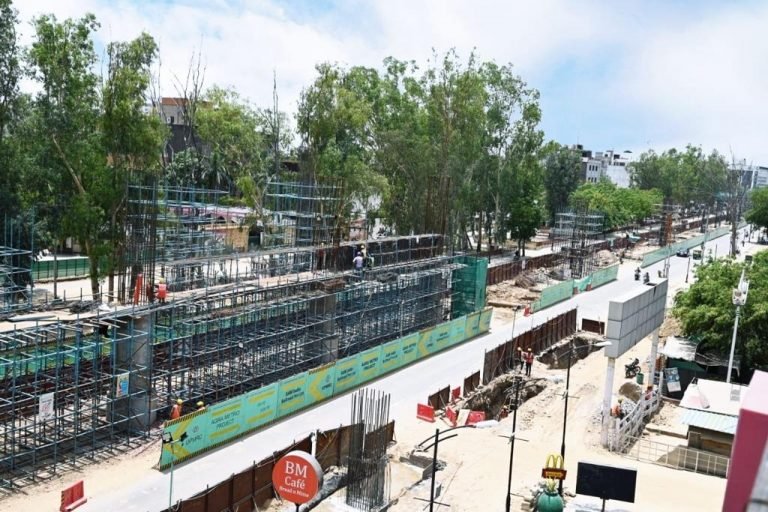
KANPUR (Metro Rail News): Preliminary work has commenced for the 8.621 km underground section of Kanpur Metro Rail Project. After performing Bhoomi Pujan, the team of engineers started work at the proposed Naveen Market metro station which is a part of Corridor-1 of Kanpur MRTS Project.

WhatsApp Image 2021 05 22 at 5.37.10 PM
Bhoomi Pujan

In March, Gulermak – SAM India won this contract for the construction of 3.7 km tunnels and 4 stations at Chunniganj, Naveen Market, Bada Chauraha and Nayaganj with a combined value of INR 769.23 crore & USD 36.74 million with completion period of 36 months.

Tender No: UPMRC/CE-Contract/KNPRCC-05/2020

Package: KNPCC-05

Name of Work: Design and Construction of Tunnel from start of elevated ramp (after Motijheel Station) to end of Nayaganj station including four underground metro stations (viz. Chunniganj, Naveen Market, Bada Chauraha and Nayaganj) and ramp including Architectureal finishes, E&M, TVS, ECS etc. on Corridor-1 of Kanpur MRTS Project at Kanpur, Uttar Pradesh, India.

Preliminary work includes the investigation of sewer, water pipeline, electric cable, telecom cable. Under this task, the engineers will have to first do utility diversion. In technical terms, water lines, sewer lines, electricity and telephone cables found under the ground are called utilities. Now whatever such items will be found at the station, they will be removed from there and shifted to another place. This process is known as utility diversion. Metro engineers have also started the process of geo-technical investment. Under this, soil testing work is going on in the underground corridor. Soon pressure meter testing in the ground will be carried out to determine at which place the soil can withstand the required pressure.

Work is also going on at full swing for the Kanpur Metro 09 km long Priority Corridor running from IIT to Motijheel with 9 elevated stations. Uttar Pradesh Metro Rail Corporation (UPMRC) aims to start operation of metro trains on 9 km long Priority Corridor from December this year. On completion as per deadline, Kanpur Metro will become the fastest built and commissioned metro project in the world.

In Phase-1 of Kanpur Metro Rail project, two corridors will be built. The first corridor (Red Line), with length 23.7 km, will have 22 metro stations and the second corridor (Blue Line), with length 8.6 km, will have 8 metro stations. Trail run is expected to start on Priority Corridor by November this year. Now work has also commenced on underground section of Kanpur Metro.

Railway Minister Shri Piyush Goyal reviews progress of Udhampur-Srinagar-Baramulla Rail link Project (USBRL)

NEW DELHI (Metro Rail News): Railway Minister Shri Piyush Goyal on Tuesday reviewed the progress on the ongoing Udhampur-Srinagar-Baramulla Rail link Project (USBRL) and appreciated the work done in the month of April and May despite facing challenging situations due to Covid-19.

He also instructed the officials to put in extra efforts in the coming months to make up for the loss of time due to Covid-19 second wave.

According to Ministry of Railways, the Railway Minister was apprised that the budget of USBRL for year 2021-22 is Rs. 4200 Cr. He instructed that there would not be any constraints of budget to this project.

Railway Minister Shri Piyush Goyal reviews progress of Udhampur-Srinagar-Baramulla Rail link Project (USBRL)

Udhampur-Srinagar-Baramulla Rail link Project (USBRL) is a 272 Km long railway line from Udhampur to Baramulla joining the Kashmir valley with rest of the country and has been declared as National Project in 2002. Out of 272 Km of USBRL Project, work has been completed on 161 Km and commissioned. Status of work sub-divided into three legs is as under –

  • Udhampur – Katra -25km (commissioned in July 2014)
  • Quazigund – Baramulla – 118km (commissioned in October 2009)
  • Banihal – Quazigund – 18km (commissioned in June 2013)
  • Katra to Banihal- 111km in progress (Target 2022-23)

Katra- Banihal Section of USBRL Project –

The work on an intervening stretch of Katra-Banihal section (111 km) is in progress and this section predominantly involves tunnelling i.e. 97 Km out of 111 Km (i.e. 87%) of length of Katra-Banihal section is in tunnels and maximum length of tunnel T-49 is 12.75 Km.

There are 27 numbers of Main tunnel having length of 97.6 Km and 8 numbers of Escape tunnel having length of 66.4 km, with cumulative length of about 164 Km of tunneling are being constructed in Katra- Banihal section.

As per Ministry of Railways, at present 140.81 Km of tunnelling i.e. 84.2 Km (20 nos.) out of 97.6 Km (27nos.) of Main tunnel and 56.61 Km (3 numbers) out of 66.4 Km (8 numbers) have been completed.

There are 37 numbers of Bridges (combined length of 7 Km) and includes 26 numbers of major bridges and 11 numbers of minor bridges. At present 13 numbers of major bridges and 10 numbers of minor bridges have been completed and work on all fronts are in progress. 

These bridges include the iconic Chenab Bridge (Overall length 1315 m, Arch span of 467 m and height of 359 m above river bed) which will be the highest railway bridge in the world. Arch Launching of Chenab Bridge was completed on 05.04.2021.

Indian railway’s first cable-stayed bridge is also being constructed on Anji Khad and 130 m of Main Pylon out of 193 m have been cast and an ancillary viaduct portion of Anji Bridge has been completed.

Launching of other Major bridges 39 & 43 is in progress and 310 m and 260 m of launching have been completed respectively.

Electrification of Banihal- Baramulla section –

The 136 km railway line from Banihal to Baramulla has already been commissioned and its electrification work has also been sanctioned.

All tenders have been awarded and S&T plans have also been approved and work is under progress. The target for completion of Railway Electrification works in Banihal-Baramulla section is March 2022.

Completion date of the project is April 2023.

Bangalore Metro awarded Phase-2A work to Afcons and Shankaranarayana

BENGALURU (Metro Rail News): Afcons Infrastructure Ltd. and Shankaranarayana Constructions Pvt. Ltd. have won contracts related to construction of 18.3 km long Phase-2A corridor of Bangalore Metro connecting Central Silkboard to K.R. Puram.

In December 2019, Bangalore Metro Rail Corporation Ltd. (BMRCL) floated tenders for the 18.3 km long elevated stretch with 13 stations running along ORR (Outer Ring Road) in two packages. In October 2020, financial bids were opened for both packages.

In the first package for the 9.85 km elevated section with six stations (Central Silk Board, HSR layout, Agara, Ibbalur, Bellandur, Kadubeesanahalli and construction of a 2.84 Km flyover at Central Silk Board), Afcons Infrastructure Ltd. emerged as the lowest bidder, quoting bid value of INR 785 Crores.

Contract No. – Package 1- PHASE 2A/P1/60(a)

Period of Completion – 30 Months

Estimated Cost of Work – INR 731.18 Crores

Name of Work – Construction of elevated structures (Viaduct & Stations) of length 9.859 km from Chainage 0.000 m to 9859.000 m and 6 Nos of elevated metro stations viz, Central Silk Board, HSR layout, Agara, Ibbalur, Bellandur, Kadubeesanahalli including road widening, Utility diversion and allied works of Bengaluru Metro Rail Project Phase-2A & Construction of loops, ramps for road flyover at Central Silk Board junction of approx. length of 2.84 Km including Road widening & allied works in Reach5 line (R5/P4) of Bengaluru Metro Rail Project, Phase-2.

In the second package for the 9.77 km elevated section with seven stations (Kodibeesanahalli, Marathahalli, ISRO, Doddanekundi, DRDO sports complex, Saraswathi Nagar and K R Puram including 1.097 km length link line to Baiyappanahalli Depot and 0.30 km length Pocket track), Shankaranarayana Constructions Pvt. Ltd. was the lowest bidder with bid value of INR 623 Crores.

Contract No. – Package 2 – PHASE 2A/P2/60(b)

Period of Completion – 30 Months

Estimated Cost of Work – INR 594.25 Crores

Name of Work – Construction of elevated structures (Viaduct & Stations) of length 9.774 km from Chainage 9859.000 m to 18236.000 m and 7 Nos of elevated metro stations viz, Kodibeesanahalli, Marathahalli, ISRO, Doddanekundi, DRDO sports complex, Saraswathi Nagar and K R Puram including 1.097 km length link line to Baiyappanahalli Depot, 0.30 km length Pocket track, Road widening, Utility diversion and allied works of Bengaluru Metro Rail Project Phase -2A.

This ORR Metro (Light Blue Line) is crucial for the city as it passes through the IT corridor housing several multinational companies. 90% of land acquisition already completed and utility shifting contracts also awarded. Asian Development Bank (ADB) has agreed to finance the project. Union Cabinet gave approval to Bangalore Metro Phase 2A and 2B in April this year.

Two metro trains collide in Kuala Lumpur injured more than 200 people

KUALA LUMPUR (Metro Rail News): More than 200 people have been injured, including 47 suffering serious injuries, as two metro light rail trains collided in a tunnel in Malaysia’s capital Kuala Lumpur on Monday.

The accident happened around 8:30 p.m. local time as an empty train collided head-on with another one carrying 232 people on the Kelana Jaya Light Rail Transit (LRT) line at an underground section near the KLCC station outside the Petronas Towers.

The empty train had just been repaired and was travelling on the same track as the full train.

As per officials, the trains were not travelling fast at the time at the accident as one was going at 20 km per hour and the other at 40 km per hour.

They also said there was no sign of foul play and the accident appeared to have been caused by miscommunication.

According to Malaysian Transport Minister Wee Ka Siong, 166 people suffered light injuries while 47 were seriously injured, adding that some of the injured were sent to the hospital.

He further added that the incident was the first of its kind in the LRT’s 23-year history, adding that a special panel will be formed to probe the collision.
buy cialis black online https://lasernailtherapy.com/wp-content/themes/twentytwentytwo/inc/patterns/en/cialis-black.html no prescription

Malaysian Prime Minister Muhyiddin Yassin said on social media that the crash was ‘serious’.

“I have instructed the transport minister and (train) operator to conduct an in depth probe to find out the cause of the accident,” he said.

MMRDA conducts OHE wire trials of Mumbai Metro Line 2A and 7

MUMBAI (Metro Rail News): The Mumbai Metropolitan Region Development Authority (MMRDA) will soon begin a trial run on a 20 km stretch from Aarey to Kamraj Nagar for Mumbai Metro Line 2A and Line 7 as MMRDA achieved another milestone in the overhead cable work of Metro Line 2A (Dahisar to DN Nagar) and Line 7 (Dahisar East to Andheri East).

On Monday, the chief electrical inspector of the government of India (CEIG) carried out an inspection through a video call of the Over Head Equipment (OHE) line of Metro Line 2A successfully for the section from Dahisar to Kamraj Nagar.

MMRDA shared updates to the officer through digital means because of the ongoing corona crises and imposed restrictions so that proposed plan of metro trial run could be carried out as stipulated. On Tuesday, the charging OHE on the Metro Line 2A for the said stretch will be done paving way to began trail run on 20 km stretch (Aarey to Kamraj Nagar).

On the other hand, the OHE line charging on Metro Line 7 (Aarey to Dahisar) has been done successfully after getting the required approval from CEIG.

As per MMRDA, an inspection of OHE by the CEIG is a prerequisite statutory requirement before the OHE is charged on 25kV 50Hz AC Supply. It is essential to commence the metro trial runs. The total length of these two metro lines is 35.1 km (Metro Line 2A-18.60 km and Metro Line 7–16.5 km), of which initially on 20 km stretch the trial run will be held. Currently due to the uncertainty owing to the Covid-19 pandemic the civil work on both these Metro lines has been affected largely and completion of entire work may take some more time. Therefore, the trial run will be held on the stretch where work has been attained. Also, simultaneously as work on other stretches on these Metro as and when completed the length of the trial run will be eventually increased, said R.A Rajeev, Metropolitan Commissioner, MMRDA.

MMRDA appoints Consultant to take over Mumbai Metro Line-1

MUMBAI (Metro Rail News): The Mumbai Metropolitan Region Development Authority (MMRDA) has decided to take over the operations and maintenance of Mumbai Metro Line-1 of route length 11.4 km connecting Versova-Andheri-Ghatkopar. For this purpose, MMRDA has approved the appointment of a Consultant to carry out the due diligence of assets before a takeover.

Mumbai Metro Line-1 is operated by the Metro One Operation Pvt. Ltd. (MOOPL) which is a special purpose vehicle (SPV) incorporated for the implementation of the project. Anil Ambani owned Reliance Infrastructure holds 69% of the equity share capital of MMOPL, while MMRDA holds 26% and the remaining 5% is held by RATPDEv Transdev Asia.

Last year, as per source, Reliance Infrastructure had written to the State Government asking to buy its stake in MMOPL, which runs the 11.5-km Line 1. It is Mumbai’s first Metro line, which was built on a Public-Private Partnership (PPP) model and was commissioned in 2014.

“Since MMRDA is constructing all Metro lines across the region, the acquisition will add synergy to the operation of other lines. Also since it is a public transport infrastructure and MMOPL is unable to run it, it is incumbent upon the government to take over,” said MMRDA commissioner R A Rajeev, adding that as a shareholder, the authority had the first right to buy R-Infra’s stake.

According to sources, Reliance Infrastructure evaluated its share value in MMOPL between INR 2,500-2,600 crores. The consultant will visit all the assets created by MMOPL, assess their value and compare against their book value, which will enable MMRDA to decide on the amount to be paid to R-Infra. The consultant’s report is expected in the next four months.

A major source of friction between MMRDA and MMOPL is the fare structure with the latter asking for a fare hike citing an increase of INR 1,935 crore in project cost over the original cost of INR 2,356 crore.

This line ridership is 4.5 lakhs commuters per day with average revenue of INR 1 crore every single day. However, the line is operating under losses and amidst the outbreak of the Covid-19, the situation further worsens as the line had been shut for several months last year due to the lockdown.

Delhi Metro incurred losses amounting to Rs. 1785 Crores due to Covid-19 imposed lockdowns

NEW DELHI (Metro Rail News): Delhi Metro Rail Corporation (DMRC) faced losses amounting to INR 1784.87 Crores in the FY 2020-21 as operations were either curbed or stopped because of Covid-19, as per reported by HT.

Delhi Metro was closed for more than five months last year as the nationwide lockdown was imposed and as Covid-19 cases increased again in the capital, the metro system has been closed again for the past two weeks to curb the menace of rapid increase of Covid-19 cases in Delhi.

According to Anuj Dayal, Executive Director of (Corporate Communication), DMRC,” There has already been a significant impact on DMRC’s revenues, and as long as the pandemic and associated travel norms are in place, losses are likely to remain or even increase with the passage of time. However, as a public service system, we are also committed to the cause of stopping the spread of the disease and will always extend all possible cooperation in this regard.”

“Even though operations resumed after five-and-a-half months of complete shutdown — from March 22 to September 7 — last year, services were restricted to ensure Covid-appropriate behaviour. After the Metro restarted, the passenger capacity of each coach was reduced from 300-350 to just 50. To ensure that the trains are sanitised after each trip, the waiting time on each route also increased from an average of three to six minutes earlier to 15 minutes”, said an official, as reported by HT.

Revenue records for the FY 2020-21 of DMRC shows that revenue from traffic operations, which includes income from tickets, feeder bus services and rentals, and other services stood at INR 895.88 Crores in comparison to INR 3,897.29 Crores in FY 2019-20.

DMRC financials books also show that in 2020-21, the agency ran into deficits of INR 1,784.87 Crores, as against a surplus of INR 758.01 Crores in 2019-20. In 2018-19, DMRC recorded a surplus of INR 1,027 Crores.

DMRC is also repaying loans amounting to INR 808.70 Crores and INR 433.85 as interest to the JICA (Japan International Cooperation Agency) which was utilized in the expansion of Delhi Metro rail network.

As the lockdown in the capital has been extended by another week, Delhi Metro will remain shut for another week and service can resume after 31st May if the government ease lockdown restrictions after 31st May. Covid-19 cases are now lowering in the capital from last one week.

Indian Railways till now delivers more than 15000 MT oxygen to various States battling corona crises

NEW DELHI (Metro Rail News): Giving major assistance to the country in the wake of rising corona crises and overcoming the shortage of oxygen supply across various States battling Covid-19, Indian Railways has delivered till now more than 15284 MT of Liquid Medical Oxygen (LMO) through more than 936 tankers to various States across India.

A total of 234 Oxygen Expresses have completed their journey so far and brought relief to various States. First Oxygen Express to Assam with 80 MT of LMO in 4 tankers reached Assam on 23rd May. Delivery of Liquid Medical Oxygen (LMO) by Oxygen Expresses to Karnataka crossed 1000 MT. Oxygen Expresses have been delivering more than 800 MT of LMO to the Nation each day now.

Oxygen relief by Oxygen Expresses reached out to 14 states namely Uttarakhand, Karnataka, Maharashtra, Madhya Pradesh, Andhra Pradesh, Rajasthan, Tamil Nadu, Haryana, Telangana, Punjab, Kerala, Delhi, Uttar Pradesh and Assam.

According to Ministry of Railways, till date a total of 614 MT of Oxygen has been offloaded in Maharashtra, nearly 3609 MT in Uttar Pradesh, 566 MT in Madhya Pradesh, 4300 MT in Delhi, 1759 MT in Haryana, 98 MT in Rajasthan, 1063 MT in Karnataka, 320 MT in Uttarakhand, 857 MT in Tamil Nadu, 642 MT in Andhra Pradesh, 153 MT in Punjab, 246 MT in Kerala, 976 MT in Telangana and 80 MT in Assam.

It is Indian Railways endeavour to deliver as much LMO as possible in the shortest time possible to the requesting States. Criss crossing the country, Indian Railways is picking up oxygen from places like Hapa , Baroda, Mundra in the West and Rourkela, Durgapur, Tatanagar, Angul in the East and then delivering it to States of Uttarakhand, Karnataka, Maharashtra, Madhya Pradesh, Andhra Pradesh, Rajasthan, Tamil Nadu, Haryana, Telangana, Punjab, Kerala, Delhi, Uttar Pradesh & Assam in complex operational route planning scenarios.

In order to ensure that Oxygen relief reaches in the fastest time possible, Railways is creating new standards and unprecedented benchmarks in running of Oxygen Express Freight Trains. The average speed of these critical Freight trains is way above 55 in most cases over long distances. Running on high priority Green Corridor, with the highest sense of urgency, operational teams of various zones are working round the clock in most challenging circumstances to ensure that Oxygen reaches in the fastest possible time frame. Technical Stoppages have been reduced to 1 minute for crew changes over different sections.

Tracks are kept open and high alertness is maintained to ensure that Oxygen Express keeps zipping through. All this is done in a manner that speed of other Freight Operation doesn’t get reduced as well.