Home Blog Page 442

Central Vista Project to have Delhi Metro connectivity

NEW DELHI (Metro Rail News): Under the final phase of Central Vista revamp project, 10 office complexes comprising the Central Secretariat will have connectivity to the existing Delhi Metro network after they are built.

According to an official of the Central Public Works Department (CPWD), the company that will win the tender for the development will only construct an underground tunnel for this purpose.

 The architectural consultant of the Central Vista project, the 10 office complexes of the Central Secretariat will emerge on the two parallel horizontal axes of the Rajpath. Designed along the lines of transit-oriented development (TOD), each complex will be interconnected through a loop and to the existing Delhi Metro lines (Yellow and Violet Lines), as per the design created by HCP Design, Planning and Management Pvt. Ltd.

During a presentation last year by Dr. Bimal Patel, head of HCP Design, Planning and Management Pvt. Ltd, “At the underground level, a people mover and an underground loop will connect to the Metro station. You get off the Metro and get inside the people-mover. It will go around in circles of the Secretariat and will be connected to the Metro. Such people-movers are seen in various international airports.”

A tender was floated in April, 2021 by CPWD for the first three secretariat office complexes which will emerge in front of the National Archives, where the Indira Gandhi National Centre for the Arts is situated and pre bid meetings with various firms also held in April end.

A total of seven firms participated in the pre bid meetings, they were Shapoorji Pallonji & Company Private Limited, MEP, L&T, JMC Projects (India) Ltd, Girdhari Lal Constructions Pvt Ltd, Montecarlo Ltd, and PSP Projects. The final date for submission of EOI (Expression of Interests) is June 15, 2021 and technical bids will open on May 25.

As per the notice inviting tender by CPWD, “ The work is estimated to cost (composite) Rs 34,08,81,22,602 (Civil & Horticulture component: Rs 21,12,09,34,804; Electrical & Mechanical component: Rs 11,57,18,41,562; Rs 1,39,53,46,236 for operation & maintenance for 5 years). This estimate, however, is given merely as a rough guide.”

The finalised plans for the three complexes show they would have two basement parking levels.

As per CPWD official,” The construction of the TOD will take time as the underground Metro network can be connected only when all Secretariat buildings are completed. This will be taken up in the last phase. Meanwhile, part of the underground tunnel for the Metro falling within the plot for buildings 1, 2 & 3 will be completed to avoid disruption at a later stage as these will be in use by then.”

The Government of India Policy Aatmanirbhar Bharat & Make in India

Since the announcement of the “Atmanirbhar Bharat Abhiyan”, to support the Make in India policy and for springing back the Indian economy and further boosting it to make our county, INDIA a Five Trillion Economy, there are various doubts in the minds of a common person, the industries, and even the bureaucracy who are directly not involved in the framing this policy, which need to be clarified.

The real work done by the Government of India, including the Ministry of Urban and Housing Affairs in coordination with the Ministry of Railways at RDSO, needs to be brought to the light and clarified for the better understanding and for the total involvement of a common Indian citizen, the upcoming entrepreneurs and the MSME industries for realizing the noble goal of self-reliant India, the Atmanirbhar Bharat.

Under the Ministry of Railways in RDSO Lucknow one directorate has been set up exclusively to deal with the Safety Certification and Technical Clearance of the upcoming Metro Systems over Indian Territory. This directorate is named as “Urban Transport and High-Speed Directorate”. This Directorate acts as a single window service provider to all the upcoming metro rail systems in India, at the very planning stage itself, for its ensuring that a safer Metro System is created, with international safety standards. By the end of the year 2020 this directorate at RDSO has given the approval of 14 different Metro systems in the different cities. The documents and data provided by these Metro systems were analyzed and it was found that none of these 14 metro systems is having similarity to the other. This is basically due to the lack of adequate standardization done for the Metro Systems at Central Government level, up to the year 2013.

Now let us first understand, various policies and the stimulus packages announced by the Government of India to push up the ongoing Indian economy , with the active participation of MSME industries , other Business Houses and the financial institutions which can play a decisive role in bringing back the desired rate of annual growth of the Indian economy and further keep it boosting to achieve the “Five Trillion Mark” and making our country as self-reliant specially in the core sectors and finally achieving the goal of Aatmnirbhar Bharat.

Five main pillars support the framework of Atmanirbhar Bharat Policy

Economy 2Infrastructure
SystemDemographyDemand
5 main pillars support the framework of Atmanirbhar Bharat
  1. Economy:  economy being its first pillar Government of India is looking for a Quantum jump instead of an incremental growth target is to make the Indian economy from existing 2 billion  5 billion by 2024
  2. Infrastructure:  when we say about the infrastructure it needs to be developed as per the world-class standards  and represents the picture of modern India
  3. Systems:  this system needs to be developed to boost the economy has to be e technology-driven so that it helps take a big leap and sustained growth.
  4. Demography:  India is the richest country in its vibrant demography, we have an ample amount of trained workforce and trained engineers and business executives who are at present performing lesser than their capacity e due to various bureaucratic hindrances.
  5. Demand: There is a huge demand of power supply I and also we have the capacity to upgrade the existing power plants to produce more Clean Energy to fulfil the requirements of industries to come up under Atmanirbhar Bharat.

Stimulus Packages for Atmanirbhar Bharat

Government of India has announced its stimulus packages for 5 different areas

Business including MSMEsPoor Including farmersPoor Including farmers
New Horizons of GrowthGovt reforms and Enable

Manufacturing and MSMEs

Here we will be concentrating the discussion only on the First Pillar : Business including the MSME,s.

MSMEs
  1. Government has announced Emergency Credit Line to Businesses/MSMEs from Banks and NBFCs up to 20% of entire outstanding credit as on 29.2.2020
  2. Borrowers with up to Rs. 25 crore outstanding and Rs. 100 crore turnover eligible
  3. Loans to have 4 year tenor with moratorium of 12 months on Principal repayment
  4. Interest to be capped
  5. 100% credit guarantee cover to Banks and NBFCs on principal and interest
  6. No guarantee fee, no fresh collateral7. 45 lakh units can resume business activity and safeguard jobs

8. Subordinate Debts.

Subordinate Debts
  • 1.Rs 20,000 Crs. Subordinate Debt for Stressed MSMEs : As after the jolt of Corona Wave Stressed MSMEs need equity support  , GoI will facilitate provision of Rs.20,000 Crs.as subordinate debt. From this about two lakh MSMEs are likely to be benefited. The  Functioning MSMEs which are NPA or are stressed will be eligible 
  • 2. Govt. will provide a support of Rs. 4,000 Cr. to CGTMSE , CGTMSE will provide partial Credit Guarantee support to Banks . Promoters of the MSME will be given debt by banks, which will then be infused by promoter as equity in the Unit.

9. Rs 50,000 Crs. Equity Infusion for MSMEs : MSMEs face Severe Shortage of Equity.  Fund of Funds with Corpus of Rs 10,000 Crs is set up.  Provide equity funding for MSMEs with growth potential and viability.  FoF  operated through a Mother Fund and few daughter funds  Fund structure  leverages Rs 50,000 cr of funds at daughter funds level Expand MSME size as well as capacity. Encourage MSMEs to get listed on main board of Stock Exchanges.

10. Revised Definition of MSMEs : Indian Government has redefined the definition of MSME,s , which is summarized below :

Revised Definition of MSMEs

11. No Global tenders up to the value of Rs 200 Crs :

Indian MSMEs and other companies have often faced unfair competition from foreign companies. Therefore No Global tenders in Government procurements up to Rs 200 Crs. Necessary amendments of General Financial Rules will be done. This is an important Govt. step towards Atmanirbhar to support Make in India Environment.This is expected to help MSMEs to boost their business by multifold.

12. Other Measures: On the request of the Government of India, RBI raised the Ways and Means advance limits of States by 60% and enhanced the Overdraft duration limits.

  1. Issued all the pending income-tax refunds up to ₹5 lakh, immediately benefiting around 14 lakh taxpayers
  2. Implemented “Special Refund and Drawback Disposal Drive” for all pending refund and drawback claims
  3. Both the above measures amount to Rs 18,000 crore of refund.
  4. Sanctioned Rs 15,000 crores for Emergency Health Response Package
  5. Provided Relaxation in Statutory and Compliance matters
  6. Extending last date for Income Tax Returns to June 30, 2020
  7. Extending filing GST returns to end of June 2020
  8. 24*7 custom clearance till 30th June, 2020
  9. Relaxation for 3 months for debit cardholders to withdraw cash free from any ATMs, etc
  10. Allowing payment before 15 May, 2020 for Motor Vehicle and Health Insurance Policies
  11. Mandatory Board meetings extended by 60 days till 30 September
  12. Allowing Extraordinary General Meetings through Video Conference with e-voting/simplified voting facility

13. Measures taken by Reserve Bank of India :

  1. Reduction of Cash Reserve Ratio (CRR) has resulted in liquidity enhancement of Rs.1,37,000 crores
  2. Targeted Long Term Repo Operations (TLTROs) of Rs.1,00,050 crore for fresh deployment in investment grade corporate bonds, commercial paper, and non-convertible debentures.
  3. TLTRO of Rs.50,000 crore for investing them in investment grade bonds, commercial paper, and non-convertible debentures of NBFCs, and MFIs.
  4. 4. Increased the banks’ limit for borrowing overnight under the marginal standing facility (MSF), allowing the banking system to avail an additional Rs.1,37,000 crore of liquidity at the reduced MSF rate.
  5. Announced special refinance facilities to NABARD, SIDBI and the NHB for a total amount of Rs.50,000 crore at the policy repo rate
  6. Announced the opening of a special liquidity facility (SLF) of Rs.50,000 crore for mutual funds to alleviate intensified liquidity pressures.
  7. Moratorium of three months on payment of instalments and payment of Interest on Working Capital Facilities in respect of all Term Loans
  8. Easing of Working Capital Financing by reducing margins
  9. For loans by NBFCs to commercial real estate sector, additional time of one year has been given for extension of the date for commencement for commercial operations (DCCOM)

14. Relief to the Contractors:

  1. Extension of up to 6 months (without costs to contractor) to be provided by all Central Agencies like Railways, Ministry of Road Transport & Highways, Central Public Works Dept, etc)
  2. Covers construction/ works and goods and services contracts
  3. Covers obligations like completion of work, intermediate milestones etc. and extension of Concession period in PPP contracts
  4. Government agencies to partially release bank guarantees, to the extent contracts are partially
  5. Completed, to ease cash flows

15. Extension of Registration and Completion Date:  For Real Estate Projects under RERA

  1. Adverse impact due to COVID and projects stand the risk of defaulting on RERA timelines. Time lines need to be extended.
  2. Ministry of Housing and Urban Affairs will advise States/UTs and their Regulatory Authorities to the following effect:
  3. Treat COVID-19 as an event of ‘Force Majeure’ under RERA.
  4. Extend the registration and completion date suo-moto by 6 months for all registered projects expiring on or after 25th March, 2020 without individual applications.
  5. Regulatory Authorities may extend this for another period of up to 3 months, if needed
  6. Issue fresh ‘Project Registration Certificates’ automatically with revised timelines.
  7. Extend timelines for various statuary compliances under RERA concurrently.
  8. These measures will de-stress real estate developers and ensure completion of projects so that homebuyers are able to get delivery of their booked houses with new timelines.

16. Rs 30,000 Crs. Special Liquidity Scheme for Financial Institutions ( NBFCs/HFCs/MFIs:

  1. NBFCs/HFCs/MFIs are finding it difficult to raise money in debt markets.
  2. Government will launch a Rs 30,000 Crs. Special Liquidity Scheme
  3. Under this scheme investment will be made in both primary and secondary market transactions in investment grade debt paper of NBFCs/HFCs/MFIs
  4. Will supplement RBI/Government measures to augment liquidity
  5. GoI will fully guarantee securities
  6. This will provide liquidity support for NBFCs/HFC/MFIs and mutual funds and create confidence in the market

17. Rs. 90,000 Cr. Liquidity Injection for DISCOMs:

  1. Revenues of Power Distribution Companies (DISCOMs) have plummeted.
  2.  Unprecedented cash flow problem accentuated by demand reduction
  3. DISCOM payables to Power Generation and Transmission Companies (GENCOs)  is currently ~ Rs.94,000 Crs.
  4. PFC/REC to infuse liquidity of Rs 90,000 Crs. to DISCOMs against receivables
  5. Loans to be given against State guarantees for exclusive purpose of discharging liabilities of DISCOMs  to GENCOs
  6. Linkage to specific activities/reforms: Digital payments facility by DISCOMs for consumers,
  7. Liquidation of outstanding dues of State Governments, Plan to reduce financial and operational losses. Central Public Sector Generation Companies shall give rebate to DISCOMs which shall be passed on to the final consumers (industries)

18. Rs 45,000 Crs.Partial Credit Guarantee Scheme: For NBFCs , NBFCs, HFCs and MFIs with low credit rating require liquidity to do fresh lending to MSMEs and individuals

  1. Existing PCGS scheme to be extended to cover borrowings such as primary issuance of Bonds/ CPs (liability side of balance sheets) of such entities
  2. First 20% of loss will be borne by the Guarantor i.e., Government of India.
  3. AA paper and below including unrated paper eligible for investment (esp. relevant for many MFIs)
  4. This scheme will result in liquidity of Rs.45,000 Crs.

19. Tax  Related Measures:

  1. Rs 50,000 Crs. liquidity through TDS/TCS rate reduction
  2. In order to provide more funds at the disposal of the taxpayers, the rates of Tax Deduction at Source (TDS) for non-salaried specified payments made to residents and rates of Tax Collection at Source (TCS) for the specified receipts shall be reduced by 25% of the existing rates.
  3. Payment for contract, professional fees, interest, rent, dividend, commission, brokerage, etc. shall be eligible for this reduced rate of TDS.
  4. This reduction shall be applicable for the remaining part of the FY 2020-21 i.e. from tomorrow to 31st March, 2021.
  5. This measure will release Liquidity of Rs. 50,000 Crs.

20. Other Direct Tax Measures:

  1.  All pending refunds to charitable trusts and non corporate businesses & professions including proprietorship, partnership, LLP and Co-operatives shall be issued immediately.
  2. Due date of all income-tax return for FY 2019-20 will be extended from 31st July, 2020 & 31st  October, 2020 to 30th November, 2020 and Tax audit from 30th September, 2020 to 31st  October, 2020.
  3. Date of assessments getting barred on 30th September, 2020 extended to 31st December,2020 and those getting barred on 31st  March,2021 will be extended to 30th September, 2021.
  4. Period of Vivad se Vishwas Scheme for making payment without additional amount will be extended to 31st December, 2020

21. Industry 4.0 : Directives of NITI Aayog on this issue are :

  1. Launch a major initiative to push industry to adopt Industry 4.0.  Industry 4.0 is characterized by increasing digitization and interconnection of products, value chains and business models.
  2. It will significantly impact sectors like automobile, pharmaceuticals, chemicals and financial services and will result in operational efficiencies, cost control and revenue growth.
  3. Experts feel that emerging markets like India could benefit tremendously from the adoption of Industry 4.0 practices.
  4. The development of industries that produce the key building blocks forming the basis of Industry 4.0 could be incentivized.
  5. Incentives could be focused on MSMEs that manufacture products including sensors, actuators, drives, synchronous motors, communication systems, computer displays and auxiliary electromechanical systems.
  6. Similarly, industries adopting Industry 4.0 standards could be provided support for a fixed period of time

22. Opportunities For Indian Industries:  Work Already  done by Metros and NHRCL :

MakeinIndia
  1. Delhi Metro has already Indigenized 18 Subsystem and 17 UNIT EXCHANGE SPARES costing 18.7 Lakh US $ and 34 Sub Systems costing 3.83 Lakh US $ are identified for Indigenization .
  2. Nagpur Metro is Looking forward for indigenization of 28 different items costing Rs.13.74 Crores per train set..
  3. National High Speed Rail Corporation Limited   has also identified various items, where Indian Industries can make a substantial Impact:

In Track Engineering related items, 12 items out of total 20  Items, Items required for Civil Engineering construction work  50 items out of total 52  Items, Items of Electrical Engineering, Signaling and Telecommunication Engineering  48 items out of total 78  Items and for Rolling Stock  6 items out of total 24 items, are identified and thrown open to the Indian entrepreneurs, for Make In India

23. Work Already Done By MoUHA with MoR :To facilitate further the Make in India initiative , Ministry of Urban Transport and Housing Affairs , in association with Ministry of Railways have taken following steps :

  1. The Std. of Rolling Stock and Signaling System of Metro Rails in India Have been notified in 2017, after the approval of Railway Board.
    1.  The Standards of Rolling stock fixes the Standards of the Civil structure.
    2. The Standards of Electrical System have been concurred by Railway Board and going to  be notified soon.
    3. Various Metro Rails have already started procurement as per notified standards.
    4. CBTC system is also developed by BEL ,C-DAC, DMRC, STQC Through MoUHA

24. Issues Which Further  Need To Be Addressed:

  1. To Further strengthen the efforts for Make in India MoUHA may consider floating of Unified Tender for Rolling stock and Signaling system for all new Metro Rails planned for next 10 to 15 years of requirements , and if not for all the metros but at least Metros Coming up in one state. This will give the minimum brake even quantities, which give the economic viabilities to the investors.
  2. Manufacturing of Rolling Stock can be taken up by Indian Railways Production Units like Modern Coach Factory , Raibereli, Integra Coach Factory , Rail Coach Factory Kapurthala with Transfer Of Technology  and Testing  and Validation facilities . This will not only lead to the reduction of coast of Metro Projects, but also facilitate export and utilization of installed capacities.
  3. Manufacturing of Propulsion System in INDIA may be taken up by Public Sector Units and Private Indian Industries like BHEL, BEL, L&T, Kirloshkar Electrical, Crompton Greaves, etc.
  4. Manufacturing of Signaling Systems in INDIA can be taken up by BEL, CDAC, BHEL, TCS.
  5. Teri can allocate licensed Communication frequencies for Train Control for better Security and Reliability.

25. Immediate future Need : There is an Urgent Needto propagate  the concept of : “ One Nation – One Metro System” . This is the time for consolidation of Indian Industries for manufacturing of Metro Rolling Stock in India.

As a starting step Pune Metro has given its order for manufacturing and supply of 102 Ultra-Modern Rolling Stock to a newly formed Indian Industry in collaboration with Italian Firm “TITAGARH FIREMA” while deciding its international bid. 

MoR and MoUHA are there for Facilitating the Investments, by Standardization.

NITI Aayog has already published its policy to help INDIAN Industries. Industries need to gear up itself for industry 4.0 standards 

26. Current and Future Trend of Indian Economy:

Current and Future Trend of Indian Economy
Current and Future Trend of Indian Economy | Image Copyright: India Today

Due to adverse impact of Covid-19 on the Indian Economy , the expected Economic growth for the Financial Year 2020-2021 is at best will be (-) 7.5% .

However considering various steps taken by the Government of India and various stimulus financial packages announced in the Revised Budget 2020 and General Budget 2021-22 , IMF has expected the Indian Economy to take a quantum jump and touch the mark of (+) 11.5% . We the Indian also believe that if we decide we will be Atmanirbhar. Let us break our inertia and the condition of inaction and start taking the steps forward towards the goal of Atmanirbhar Bharat.

CTC allocates funds for purchase of Light Rail Vehicles for Los Angeles

Los Angeles, California (Metro Rail News): The California Transportation Commission (CTC) in its May meeting has allocated a total of $924 million to improve transport infrastructure throughout the State including $27.8 million to purchase new light rail vehicles for the Los Angeles County Metropolitan Transportation Authority (L.A. Metro).

L.A. Metro will use this fund to buy 78 new light rail vehicles with an option to buy an additional 39. For the fiscal Year2022, the Los Angeles transit agency has proposed spending $92 million for light and heavy railcar purchases for replacement and expansion.

Other projects for which funds are allocated by CTC includes $6.5 million to purchase 05 zero-emission battery-electric buses and for the construction of charging infrastructure to create “a zero-emission over-the-road coach commuter route” between the Greater Long Beach area and the University of California, Los Angeles (UCLA).

Funds amounting to $5 million allocated to complete the environmental documentation for the Vermont Transit Corridor which will result in either a Bus Rapid Transit (BRT) or rail transit service between Hollywood Boulevard and 120th Street.

According to Toks Omishakin, Director of Caltrans, the State’s transportation department, “Caltrans is building a brighter future through a transportation network that serves all Californians.
buy kamagra gold online https://myhst.com/wp-content/themes/twentytwentytwo/inc/patterns/en/kamagra-gold.html no prescription
This significant investment will help us fortify and enhance our state’s vast network of highways, bridges, transit facilities, bikeways and pedestrian routes”.

Indian Railways records 59.38% increase in freight loading in the FY 2021-22

NEW DELHI (Metro Rail News) : In the FY 2021-22, Indian Railways registers a growth of 59.38% in freight loading. In the given year, Indian Railways total loading is 185.04 million tonnes (MT) which is 59.38% higher than the previous year loading figures of 116.1 MT for the same period and 10.37% higher compared to the year 2019 loading figures (167.66 MT) for the same period.

In this period, Indian Railways earned INR 18542.8 Crores from freight loading which is 4.92% higher than the year 2019 earning from freight which was INR 17674 Crores and 75.93% higher than the year 2020 (INR 10540.1 Crores) for the same period.

Indian Railways has maintained the momentum of highest ever loading in consecutive 09 respective months from September, 2020 to May, 2021. On mission mode, Indian Railways’ Freight loading for the month of May 2021 crossed 2019 & 2020 year’s loading and earnings for the same period.

Coal sector has shown a sustained growth. Indian Railways loaded 88.15 MT Coal in this FY 2021-22 which is a growth of 54.03% compared to the last year 2020 (57.23 MT) and 1.39% compared to the year 2019 loading (86.94 MT).

In the month of May 2021 (till date), Indian Railways loading was 73.45 million tonnes which is 44.99% higher compare to last year’s loading for the same period (50.66 million tonnes). It is 10.27% higher than the year 2019 loading figures (66.61 MT) for the same period.

Indian Railways loading was 73.45 million tonnes which includes 35.62 million tonnes of coal, 9.77 million tonnes of iron ore, 3.38 million tonnes of foodgrains, 2.22 million tonnes of fertilizers, 2.02 million tonnes of mineral oil and 3.15 million tonnes of cement (excluding clinker).

In May 2021, Indian Railways earned INR 7368.00 Crores from freight loading which is also 62.20% higher compared to last year’s earnings for the same month (INR 4541.21 Crores) & 4.93% higher compared to the year 2019 earning figures (INR 7021.75 Crores) for the same period.

It is worth mentioning that a number of concessions/ discounts are also being given in Indian Railways to make Railways Freight movement very attractive.

It may be noted that freight trains speed has also registered significant increase in the existing network. Covid-19 has been used by Indian Railways as an opportunity to improve all round efficiencies and performances.

Alstom only bidder for Delhi Metro Red Line Signal Upgradation

NEW DELHI (Metro Rail News): Alstom Transport India emerged as the single bidder for the supply and commissioning of Train Control and Signaling system along with Virtual Signal implementation for Delhi Metro’s Red Line (Line-1) from Shaheed Sthal to Rithala of length 34.4 km with 29 stations.

Delhi Metro Rail Corporation (DMRC) invited bids for this work in March 2021 with an approximate cost of work to be INR 90.
buy strattera online https://pavg.net/wp-content/themes/twentytwentyone/inc/en/strattera.html no prescription
27 Crores and completion of a period of 15 months. Technical bids were opened on Thursday which reveals Alstom as the only bidder for this contract. Red Line of Delhi Metro is presently equipped with Alstom’s Urbalis 200 Train Control and Signaling Solution.

Contract Number: CS56

Name of Work: Design, Manufacture, Supply, Installation, Configuration/Customization, Testing and Commissioning of Train Control and Signaling System for Short looping train movement along with Virtual signal implementation and Six car to eight car trains conversion along with Head stopping at all platforms of Line-1 and Integration of Train Control and Signaling system of Line-1 with Third Party ATS system.

DMRC initiated the process of signaling upgradation in 2019 on its Red, Yellow and Blue Lines with the purpose to identify glitches and upgrade systems as per requirement so that affected trains still runs at regular speeds of 33-37 km per hour along with providing smooth operations of trains and prevent stations from overcrowding.

For the Blue Line, the contract is awarded to Siemens with value of INR 86.21 Crores in June 2020 while for Yellow Line upgradation, there is also Alstom is the single bidder with financial bid opened in March 2021 and the award of contract for the same is still pending.

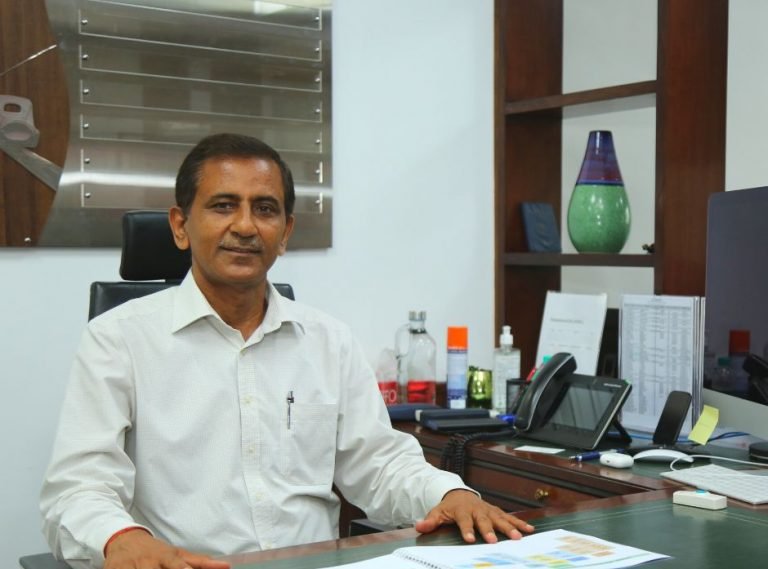
We are aiming for exponential growth, and we strive towards constructive and sustainable development: Sourajit Mukherjee, CEO, e2E Rail

Sourajit Mukherjee is a source of inspiration to an innumerable number of youth who want to succeed in their career and find an identity in the professional world after their education and learning. An engineering graduate and a post-graduate in business administration, Sourajit today is leading one of the fastest-growing railway infrastructure companies in India, e2E rail, as its Chief Executive Officer.

Sourajit, while talking to our Managing Editor Mr. Narendra Shah explicitly shared his views on various issues related to Urban Transport system in India, MRTS, Make in India, Atmanirbhar Bharat Abhiyan with an unambiguous and insightful view on the policies and plans of the present government towards growth and development of transport system in the country and strengthening the infrastructure.

The young technocrat has also been one of the key speakers in virtual tech forum InnoMetro – 2021 for a global discussion on MRTS, Urban Transport and tech Industry held by Symbroj Media Pvt. Ltd.

Below are the excerpts of the interview :

Q.1 (NS): At a young age, you have been on a number of important positions in different organizations of repute. How does it feel to be the CEO of e2E Rail?

Ans (SM): We are going through extremely unprecedented times. The world has turned upside down right now. Still, we are carrying on, each one of us are trying our best to keep the ball rolling, the industry is helping, the entire government machinery, and all of us are also trying to support.

However even during this challenging times, I appreciate the endeavour and the hard work done by your team in delivering positive and industrious news about the railway fraternity, assembling the stakeholders in such a wonderful forum like Inno Metro , and carrying out the railway journalism which can work as great perception building for railway industry across the masses.

So, coming back to your question about being the CEO of e2E Rail, I shall be frank to mention that designations or titles hardly matters to me. Since the day I started working till now, I always tried to believe that wherever I am working, I actually own that company. I always try to feel that whatever I am part of, I own that thing, I am part of that system, everything belongs to me as a person. Whatever happens, profit or loss, reputation or bad name, if I don’t feel that it is my own. I cannot succeed in that assignment. So be it an engineer, be a sales guy, marketing guy, a guy who is working at the back office or a designer or a CEO, the key thing is to be completely involved with the entity you are working for.

As far as e2E rail is concerned, we are a great team. I am just a team member.  But on  a candid note, it is not only a team; it’s a family for me. We have more than almost four hundred employees right now and another four hundred will be on a subcontractor basis. It’s a pretty large e2E Rail family, and it’s a huge privilege and honour that I have been given the opportunity to lead this fantastic team.

Q.2. (NS): What are your immediate plans and goals for your current organization towards its growth and development in a lead role?

Ans. (SM) e2E Rail is one of the fastest-growing railway infrastructure companies in India. We have grown through almost more than fifty percent CAGR over the last four years, and the same did not reduce even during first wave of pandemic. We have registered a growth rate of more than forty percent on revenue and the profitability have doubled with EBITDA figures touching at 15%.

It has been a continuous and sustainable growth rate on the backdrop of an impeccable execution record and strong order book. Our vision is to be the preferred end to end engineering and construction service provider for the railway infra projects in India. We look at a horizon of 2025 to take the company to a 800 to1000 crore level. In this journey we are contemplating expansion on horizontal as well as vertical scales of operation. This can contribute to the generation of an enormous number of opportunities for young professionals and generate significant employment opportunities. In this process we contribute towards nation-building and the concept of Atma Nirbhar Bharat.

Railways being the backbone of this nation it is imperative that a company like us when we are aiming for growth we aim towards a long term and sustainable growth and just not be myopic in our strategies. That’s why we have been continuously focussing on skill development and training to generate quality workforce.

Q.3. (NS): As we all know, e2E is one of the reputed certified organization providing rail engineering expertise to rail infrastructure projects for mainline and mass transit systems in India and abroad. Which key projects undertaken by e2E would you like to highlight as major accomplishments bringing about significant change in the public transportation system in India and abroad?

Ans. (SM):  In one of our Marketing banners we use a tagline which says that e2E Rail is everywhere. In Indian rail industry, if you go to any metros, any zonal railways across India, or even in the south-east asian countries in few places, there are hardly any say railway system where e2E rail have not contributed in some capacity.

Over the last eleven years of its existence, we have always been associated with most of the railway systems right now working in India either through focused engineering & design services, operations & maintenance vertical or through the direct tuenkey and EPC contracts which we take up on our own or as a partner of the OEMs. And when I talk about, I talk about mass transit as well as the mainline, plus we have always been extremely focused company towards infra development of the private railway yards and contribute towards the last mile connectivity.

We always felt that development on the freight transportation and the connectivity to the private yards are equally important as developing the passenger transportation routes. . It gives the right impetus towards the overall rail infrastructure growth and it provides the right impetus to increase the share of rail in the overall freight transport in India. Railway provides the cleanest, fastest and cheapest way of transporting freight compared to the other medium of transport but have still only 27% share currently. So, there is a huge scope of development in this area.

For example, we now all can realise the importance for commencement of the RORO services. If this service were not in place, we could not have got the oxygen express moving at such ease and emergency basis. Also, the medical equipment and essential commodities which are being now moved through the new dfcc corridor are helping the entire process at the time of pandemic.

e2E rail has always been present across the railway value chain and one of the most prominent works. I should say achievements for us were on the Signalling technology vertical where we have been the partner for implementing the first CBTC signalling system India for Hyderabad Metro.

We have been the partner with Thales from design to testing, commissioning, installation for the entire six phases of Hyderabad metro. We had a huge team just focused on this project. It has been a huge learning experience for our team and has been one of the most interesting projects we have ever taken up. This was a flagship project which led the way to adopt this technology for other metros in India. Right now, if you see, most of the Metros have adopted this technology and are being successfully running in all major metros. We are also working with the Nagpur metro, using the same CBTC signalling system for Siemens.

e2E rail is ready to contribute in all the upcoming railway systems, from high-speed rail to the NCRTC.

You can say that we are a complete end-to-end rail infra solution provider across verticals with high-quality engineering services for the rail industry.

Q.4. (NS: How do you see the future of urban transportation and MRTS in India, and what, according to you, should be immediate changes required in the public transport system in India?

Ans. (SM): That’s a huge policy question, and that’s a very important and pertinent question at this point of time, where we are talking about reducing carbon footprint, we’re talking about reducing the number of cars, we are talking about people moving much more seamlessly, much more in a faster pace and in a much safer way. So, that is the objective.

We go by rail; we go by car, go by bus, and go by anything. The result is that we should reach safely to our destination at the fastest time and the least amount of pollution without harming nature. We need to live without hurting nature, without destroying the environment; we involve the least possible resources that could harm our ecosystem. Today, the situations we have come in today are the aftereffect of all the wrong things we have done, and we can understand how nature is hitting back to us ruthless way.

So, saying about the urban transportation where more than half the 138 Cr population of the country rushes every day to cities and wants a fast and reliable mode of transport, the need of the hour is obviously developing a seamless and integrated transport system.

As more and more of the places getting urbanized, with industrial clusters coming up across geographies, it is absolutely pertinent right now to increase the connectivity without inflicting any further damage to the environment.

For me, the answer to this is developing a seamless multimodal urban transport connectivity. For example, today I stay in a place called Yelahanka of North Bangalore and if I want to go to a place near Indira Nagar, the nearest metro to me is at Jalahalli. That’s around seven-eight kilometres from where I am staying. So, to reach over there, either have to take my own vehicle or use a cab or auto. Then after parking the vehicle, I have to board the metro, get down at Indira Nagar metro station and again take a cab or an auto and go over to my actual destination.

However, if I don’t want take that headache of switching four modes of transport along with the waiting time for each and also the hassle of getting tickets for each, I can also take my own vehicle  and drive directly to my destination, however due to the traffic congestion it might take me more time, but as a common man the pain of going through availing 4 modes of service and their associated process is just too much hazard for me. However, if there was a complete seamless multimodal transport system with a single pass and last-mile connectivity, the chances of availing those public transport services increases significantly. This kind of developing a seamless connectivity requires inclusive planning which cannot happen by silo basis working by individual department of railways, metro or Bus MRTS systems.

Every developed country and now also most of the developing countries already adopted this multimodal transportation model, and that is how we have to aim.

That’s the future of urban transportation. If the policymakers can sit down together and reframe the policies to achieve this as a single objective, it can pave the way towards a revolution in urban transport in India. The NITI Aayog and the urban development ministry need to think more on these terms to give a seamless experience to the passenger; otherwise, it’s difficult to divert people to move away from the private and use public transport as their preferred medium. And obviously if people won’t go, the ridership won’t increase, and the commercial viability shall fade.

Classic example is Mumbai Monorail which had extremely limited connectivity and access modes were also inadequate, hence the public also refrained from using the service. But the local trains at the same time were overflooded. Why because the planning towards the monorail system has been not so great which includes the entire phase of the communication or the transportation medium and not exclusive to that mode.

Q.5. (NS): Are you satisfied with the plans and policies of the government presently in terms of its commitment to develop public transport system?

Ans. (SM):  I must say that the existing policies are a huge leap forward towards high quantum growth. Yes, the results can’t be achieved immediately but the intention and the objective are positive and based on long term vision. But said that we also need to consider that policies may be attractive however if there are gaps in practical plan for implementation, the overall objective shall get delayed or not achieved in its eniriety.

I have no complaints with the government as I believe they are immensely positive towards developing transportation systems and giving significant impetus to railways which is still the safest and least polluted mode of transport.

However, I believe the pace and the planning for implementation need to improve. It’s completely a personal opinion.

Q.6. (NS) What, according to you, had been the failure and drawbacks in Indian Transportation System in last many years? If according to you, there has been any negligence or lacuna in part?

Ans. (SM)See India is an enormous country; the infrastructure growth we have seen over the last few years has been extraordinary. Last year, more than seven thousand kilometres were electrified on the mainline itself, which is a huge achievement compared to our progress over the last few years. It is not easy. There are many hardships, there are wins but at the same time there shall be occasional failures. Being a part of this rail industry for the last ten years or more than a decade, I completely understand the challenges and are more than in sync with the effort to cross the hurdles. During my involvement with the rail industry, I have come across many events which might have been avoided or done differently but the practicality is too tough. Its easy to point out delays or failures but providing solution to those is the real challenge. For example, one can say that DFCC could have been finished much faster. But there were practical limitations, practical challenges. Lands were not getting acquired, there were challenges in the procurement of materials, there were so many odds the entire fraternity were working day and night to solve. It is extremely a tough task that the DFCC has achieved. When the DFCC started, I was part of it in some capacity. First time we adopted fully mechanized track laying process where a two-kilometre track was being laid in eight hours of time which was unheard earlier, but that also happened in real. There are hundreds of events like this that have been happening over the last seven to eight years, which has changed how we had been working and changed the conventions. Still, there is a huge scope of improvement, and I am a part of the system, part of that endeavour towards improving that system where things can go much faster and much in a smoother way rather than earlier.

For example, I can say that the last mile connectivity towards the ports, the development of the freight yards, private freight terminals, needs much more focus. The National Rail Plan, if you go through it, gives a huge impetus to this subject. It’s completely in the right direction we are going. The only area of improvement that I feel is that the planning to execution conversion needs to be a little faster and that the people who are the implementing agencies need to look at a holistic approach rather than only going by the conventional employer contractor kind of a relationship while implementing the projects.

We need to start building a partnership kind of an environment to boost up the stakeholders. When I was working in the US we had a partnership with union pacific railways where all the contractors used to sit with the implementing agency and form a common project team to execute the work. However what I have seen over the years in India is the gap and discrimination between the employer, implementing agency, and the execution guys and all work in silos and busy in safeguarding their scope of work which results in conflicts and delays eventually.

I really feel that if we want to increase our pace, we need to have much more the transparency on the tendering and contract management process right from the top; the way the contracts are made in India needs refinement. It needs to give independence to the contractor to implement better technologies and better work methodologies rather than compelling them to work as per book. Results should matter rather than our conventions which may be outdated.

But in this area also, there has been considerable progress by the Railway authorities and govt implementing agencies. We have recently seen that the tenders are changing from a silo-based model towards an EPC platform. This marks a huge leap forward towards how the tenders are being done and the contracts are being executed. However, we also need to consider that this should not lead to a monopolistic situation where only few large enterprises are eligible, and the smaller players shall just perish.

The small and medium enterprises are fighting every day and day out and has been significantly contributing to the GDP. We must frame policies that can provide a level playing field for all the stakeholders and foster an environment of healthy and quality competition. This shall result in better productivity and being about quality development.

Q.7. (NS): What is your opinion about the ‘Make in India’ initiative and the ‘Atmnirbhar Bharat Abhiyan’? Do you see these initiatives bringing about any significant change?

Ans. (SM): As per me this is the single most important step which this govt have brought in. Even if there are a lot of people who questions the effecicacy of the policy due to a sluggish start, however as a railway professional, as an engineer, as a part of the industry, I feel that’s the best thing which have been done in the recent years where we have the opportunity to become a manufacturing giant in the same line with China.,

There is no way that with so much skill, so many resources present in India, why we cannot do that? We can match anybody at any point in the world. I’m telling you the Make in India policy is going to change how the world looks at India. It’s how we shall be sitting at alongside the best manufacturing nations in the world.

Have you seen how fast India adapted to developing the PPE Kits when the COVID stuck?

There are companies that have changed overnight and started manufacturing. There is no dearth of talent over here, there are no dearth of resources over here, just the policy push and a little bit of support from the government, we are going to fly, and we are going to show the world how best quality things can be achieved with the most optimum level of price.

I am all in with the Make in India campaign. From our organisation perspective, we have serious plans going forward towards contributing to the Make in India model by supporting or partnering innovations and developing state of the art products for the rail industry.

Q8. (NS): e2E has a very strong team of board of directors. As the CEO of the organization what help and support you get from other senior members of the organization in decision making and other day to day activities?

Ans. (SM): It’s a very interesting question. Somebody after a long time asked me about my board of directors which feels great. I am really proud to be part of e2E Rail team and representing the board for day-to-day activities. We are a corporate entity with a professional board of directors who have guided this company over the last 10 years towards exemplary growth and sustainability.

I thank each one of them for showing us the path and steering this company to this level from where it can scale up exponentially in the coming years.

I believe they will keep supporting us. I am extremely honoured that they have given me this opportunity to lead this team.

I would obviously like to mention the name of Mr. Abhijeet Kudva, who has been my mentor and has been the representative of the board who believed in our abilities all through and played a significant role in bringing the company to this juncture where it can move from hundred crores to eight hundred crores in the coming five years.  Also, I must mention the man behind the financial stability of our company, our CFO and my best buddy Mr Suresh Maddali who held the fort together in the toughest of the times and sailed us through with his impeccable and meticulous planning and financial control.

This is a wonderful company with a blend of experience and youth. Our average age of this company is thirty-one, which is like you can understand that is very young company. A lot of energy, a lot of exuberance comes with a blend of highly experienced professionals who guide the young team, encourage them, train them, and prepare them to handle all sorts of challenges. This is what makes us unique and make us the fastest growing rail infra company in India.

Q.9. (NS): You have an engineering background with expertise in Marketing-Sales and Business Law. In what ways a diverse academic knowledge has helped you in your professional career? What challenges have you faced in your journey so far, and how did you overcome it?

Ans. (SM):  Pretty fascinating question; this takes me back to my college days. So, in India, the education system is very interesting. You never know where you will land up to and what you will do in the final years.

So, anyway, when I gave my entrance examination in engineering, I really didn’t know which stream I should go to. My acquaintances always told me that electronics and communications were supposed to be the best stream for getting a job easily. So, I took it, and hence the journey started.

I was always a little business-oriented guy rather than academic. I was not a good student anyways and kind of average types. I was never a brilliant, first-grade student. My marks have never been more than seventy-five percent ever in my entire career.

So, once I scored eighty-five, and I was surprised, I thought people would take back my paper and see again that no, its not eighty-five its seventy-five. Anyways, so that’s how the journey went. The interesting part is, say once you start working, you start to realize how to implement those learning that you have actually done in your academics, how aptly or how skilfully you can utilize those shall decide the extent of your success. It is extremely important to keep practising and learning. For me, it is all about learning continuously, and that’s how it has been till date.

I still feel this is the only way one can remain successful and relevant. In this continuous changing world, rather than being successful it is more important to be relevant and that can happen only by evolving yourself and learning. Continuous, knowledge is the keyword, and if we are going through the knowledge base there are no stopping. I am an Electronics engineer, but I started my work in a mechanical company. I have worked for civil companies, worked for civil components, worked for mechanical components, worked for electrical components, and handled electronic components.

But this has not been very easy or smooth sail always. Whenever you are taking up something new, you need to know that in entirety, you need to get a hold of that subject, you need to learn it the hard way, no shortcuts and that’s how it basically goes. Yes, the various diverse backgrounds helped me to understand business process better. Even when I am leading an organization, I am still a student. I am doing my master’s in business law. I took this challenge only because I want to learn the subject rather than just getting a certificate. Because to lead an engineering and construction organization there are several legal aspects to the business which I felt can better help by getting the know hows from this course which can help to tackle the everyday challenges more accurate way. So, that is how you need to be relevant in this ever-changing world by constantly learning and evolving, and whatever you do how much diverse you are; you always need to start from scratch when you’re studying that, so you need to learn to keep learning.

Q. 10. (NS) : Would you like to speak of any important project or assignment which you had been very closely associated with? What had been the outcome and a reason for a personal affinity?

Ans. (SM) : I’ll share you one project which is straight from my heart. That’s one thing which is the focus for us right now. Skill development in railway engineering is something which I have always felt that there’s a huge scope and can bring about manifold opportunities both for the students and the industry. I strongly feel this is requirement of the hour.

As a railway professional, I have moved across various projects; the maximum challenge what I have seen, our projects are delayed because there is a scarcity of skilled labour or due to faulty engineers who do not have the required skill sets to give quality work.   If you closely observe that while completion of any tasks, we come across that there are several snags which needs to be rectified. Why this snag list comes because there is inefficiency being built in the system, there are not enough skilled persons who can finish the work at one go with high precision.

So, skill development is a mission we have taken from e2E will train railway professionals, engineers, technicians, and students who aspires to make a career in rail industry.

I strongly feel that this skill development mission is one of the most key things right now required by the industry and from this interview forum I urge all my fellow, peers and colleagues from the large OEMS and my fellow contractors to invest on this, to invest on learning and development and bring more skilled people in this industry.

Because, when we look at right now, if we have to get skilled people now for any project either we have to poach each others manpower or we have to only look at Indian Railways for retired officers or employees. But, there is a huge-huge quantum of work which the private firms are doing. Where do we get people from then?? There has been an explosion of infrastructure development across the railway verticals, electrification, signalling, track, high speed railway, metros, urban transit…etc etc..name it and its being announced. But are we really giving a thought about who is going to implement that?

You cannot rotate the same people everywhere. One guy goes from here – a to b, b to c, c to d. He is obviously increasing his salary package but ultimately, there is a gap which is being created in the other works. How do you overcome that?

The only process overcoming that is by creating and investing into learning and development. Create more engineers, create more technicians, create more railway professionals who can deliver projects for you, who can deliver the required goods for you, for the industry.

We at e2E Rail have been running an institute called e2E rail village for the last 10 years, which has both online and classroom training and what we do over there in two part. One is obviously we train the fresher engineers and tehcnicans, who want to come into railway profession and the other is for upskilling of existing rail professionals.

We provide training on specific subjects like signalling, electrification or track or rolling stock. We have a small, simulated setup where there is a physical rail yard with a four hundred meter track with all the required equipments where they can have a practical hands on exposure to the real work.

But it is not in the scale of the big large railway institutes which are being run by Indian Railways but it’s an initiative to bridge the gap between the employers and the aspirants. I have appealed the government many times to help us building that on a PPP model to develop this on a much larger scale. However, we are still trying without much success on the Govt front. But, trust me this helps, say a technician, who are required in signalling projects, one normal ITI engineer cannot immediately be a wireman and start doing the wiring for a signalling relay rack. It’s impossible. They need to understand the basics. The railway is a very niche subject. We need to invest on learning and development. Hence this project which we have taken up is just not being run for profitability but rather on developing the talent pool for this industry.

I appeal to everybody, whoever have a requirement, even if, they do not want to invest themselves time and resources, please outsource. There are other institutes also. Please go to them, come to us. But, please invest in getting new professionals in this industry, rather than just focusing on poaching. That’s not how this industry can evolve, if we have to deliver faster. We have to look at that seriously.

We  also have started first-time in India a complete self-learning online portal called Swadhyaya, where people can choose the subjects they want to up skill and finish it at their own pace..

Along side our regular work it is imperative that we to upskill ourselves with the latest technologies and also if we want to diversify in our career. Hence this serves as a great platform for all existing professionals looking at career growth.

Please come forward and look at learning and development; otherwise, the plans, the policies, whatever is being made cannot be implemented in the stipulated amount of time. We are at the highest pace right now. We want to deliver fast and deliver best quality. Hence I ask all the people to please again shift their focus not only from just winning a contract rather than developing people, developing the greatest asset which is the people’s mind, nurture new talents and motivate them to get into this industry.

Q.11. (NS) : Which major position, task or organization would you reckon as the most significant in your career?

Ans (SM): My career is not much long. It’s like only 13-14 years now; I have been working. So, the most significant one, if I close my eyes, will always be the first company I worked with, which basically made steel from raw iron. The company’s name is Atlas Copco, where I learnt how business is done, what are the challenges of businesses and how to become a true professional, honest professional with integrity, and even with integrity and honesty how one can be successful.

So, that’s the first organisation where I was selected from the campus remains the closest from the heart. However, the biggest learning is obviously the e2E’s rail journey, where I joined as a head of business development and in four years, we all collectively have taken this company to a sustainable and successful position. So, that journey from business development to lead the team now as the CEO has been a massive learning. I am proud to say that I feel much more enriched today rather than four years back.

Q. 12. (NS) : Would you like to say anything about the job scenario and educational system in our country?

Ans. (SM): I already I think explain a little bit on the earlier question that the demand and supply does not match specifically for our industry if I am talking about as a say, if you can tell me as ambassador of the industry. I can tell you that there’s a huge demand-supply gap right now.  With the kind of projects which we are investing and planning to develop as per the National Rail Plan and then compare how many engineers actually get inducted into the rail industry every year, you can notice that there is absolutely no parity. How shall this enormous requirement be met? No one have any idea.

So, if the government or my fellow peers in the private sector do not focus on this, we will not reach our targets or goals in the kind of timelines we have planned for. We do not want to to go back to an era where there is a huge gap in the targeted and achieved timelines for completing the projects. Ideally, it should be like that if the project is targeted to be within three years, it has to be done in two and a half years. That’s how we are right now. We are the new generation. We are the new India where delays are not acceptable. We need to do fast and for that investing in human capital and training them is the most important subject right now.

There is no dearth of jobs. I was actually shocked to hear that 7.5 million people have lost jobs in the last month only, in India. It’s a huge-huge impact of the pandemic which is going on. But, I’m a pretty optimistic guy; I think that this is a storm, this is a tsunami which will pass. It has created a lot of ruckus, created a lot of bad effects in our lives. But, I still believe that the learning which we are getting from this is immense, which we could be reversed  if we realise that what are the wrongs we have committed. We will be prepared much better to face the coming days. The job scenario in India is not going anywhere; specifically, in our rail industry, there are huge job opportunities.

I urge the new age guys, the fresh engineers, the fresh professionals who want to make a career. Please come and join the rail industry. It will give you a fantastic career. It has huge opportunities to grow and be the best of yourself.

Q. 13 (NS): What would be your suggestions to youngsters aiming to build a successful career like you?

Ans. (SM): Its not about success in career, its always should be about contribution to the industry we are working and the society we are living. I am happy that I belong to the industry, and I am still relevant in the industry, that is the only success part of .it.

 However, to make a decent career, to contribute to the industry and to be what I should say relevant in this industry, we must focus, we must learn, we must invest our time constructively. We should be focused on keep up-skilling ourselves, know the facts and go in depth to what we are pursuing.

There is no short cut to success. We need to learn. We need to fail; otherwise, we will never be able to succeed. But, when I fail, I have to make sure I learn from those mistakes. If we just forget those mistakes. If we are not learning from the failures, it is a problem. Then we cannot succeed ever.

One of my trainers once told me that “when you commit one mistake at a time: it’s a mistake. You commit the same mistake, the next time it becomes a decision”. Because it becomes a choice for you. When you repeat same mistake, you are basically doing a crime; you are not making a mistake. So, be focused. Work hard, there is no shortcut available and keep up-skilling yourself. You will be relevant in this industry. You will be successful, there are opportunities. There is no scarcity of openings. This country is growing at the highest pace compared to the entire world. We have the youngest population in the world. We are going to dominate this era. So, no worries about it, just keep learning. Opportunities will come.

Q.14 (NS): You have recently participated in InnoMetro 2021 as a speaker; how was your experience?

Ans. (SM): It was a very interesting panel discussion on Workforce diversity & technical skills gaps. I thank you for getting us on that panel discussion. We had several eminent personalities, including Chris from Rail personnel and Sunil Srivastava from Barsyl. I was privileged to be part of the panel discussion.

It was an enriching experience of sharing and exchanging our ideas and areas of concerns and also find some solution to the concerns. In fact, I requested Chris to send across the presentation which he shared in the forum. It was a delightful experience, and I really liked how you guys obviously conducted the entire show and also arranged the simulated exhibition set-up.

I was feeling actually part of the exhibition sitting from the safety and comfort of home.

The panel discussion was extremely enriching, and the platform was awesome.

Q.15 (NS) Thank you, thank you so much and the last question of the interview, what is your opinion of Metro Rail News Magazine.

Ans . (SM): I have been a subscriber of this magazine for a pretty long now. My office is a subscriber and we have been using the reports as one of the most trusted medium of information which comes across. It covers most of the verticals and industry on a very thorough note.

The number of topics that are being covered, the people you guys are interviewing, and the notes you guys are putting in are all extremely informative and useful. It does not show anybody in a bad light, but despite that, there is constructive criticism also in lot of editorials

I recommend everybody to use this Metro Rail News Magazine because it is informative and provides correct news about the industry and also helps in the perception building for the rail industry.

Watch Here

#MediaInterview In a conversation with Mr. Sourajit Mukherjee, CEO, e2E Rail and shared his views on various issues related to the Urban Transport system in India, #MRTS, #MakeinIndia, #AtmanirbharBharatAbhiyan

UPMRC Recruitment 2021: Apply for the post of Managing Director

LUCKNOW (): Uttar Pradesh Metro Rail Corporation Limited (UPMRCL)invites applications from qualified and experienced candidates for the post of Managing Director.

Recruitment Details –

Name of the Post – Managing Director

Last date for submission of application – 15 June 2021 up to 17:00 Hrs

Eligibility – Age (as on 01/6/2021)

  • Minimum – 45 years
  • Maximum – 58 years

Qualification & Experience –

The applicant should be an engineering graduate, preferably from the Civil or Electrical Engineering discipline with good academic record from a recognized university/ institution. Persons with post-graduate qualification in Engineering, Project Management or Business Administration will have added advantage.

Applicants from Government or public sector should have a minimum of 26 years of experience in Group ‘A’ or equivalent executive grade. Applicants currently not in Government or public sector, but having earlier experience of at least 26 years in Group ‘A’ or equivalent executive grade in Government or public sector, shall also be eligible. Applicants who have worked for at least 2 years in the pay scale of Rs 1,80,000-3,40,000 (IDA) in Government/ PSUs will have an added advantage.

Applicants from private sector with a minimum of 5 years’ experience as CEO or a Director in an organization of repute and having handled multi-disciplinary engineering projects preferably in urban situations shall also be eligible.

Scale of the Post –

Rs. 2,00,000 – 3,70,000 (IDA Pattern) along with other allowances/ perks/ privileges as applicable to the post of Managing Director as per UPMRC rules.

Job Description & Responsibilities –

The Managing Director as the Chief Executive Officer will be responsible for overall functioning of the organization. He will be responsible for successful implementation of entire project within budget and time period. As leader of the team for implementation, successful commissioning and operation of upcoming Metro Projects of the company in various cities of Uttar Pradesh. He will be responsible for overall planning, design, construction scheduling, monitoring and controlling of these projects including mobilizing the necessary resources and coordinating the efforts of team to ensure delivery within estimated budget, timelines and to the desired standards and quality. This will include coordination with international funding agencies and Government for funding of the projects, arranging all the necessary statutory approvals and clearances for implementation of these Projects during construction as well as subsequent smooth operations and managing relationships with all internal and external stakeholders consistent to their expectations and deliverables.

He should plan Metro Operations with a vision of affordability of the service to the common man yet ensuring financial sustainability of the system on its own.

He will also be responsible for planning subsequent phases of various metro projects in various cities of Uttar Pradesh.

Duration of Appointment –

The appointment shall be for a period of 5 years or up to the age of superannuation, whichever is earlier, on a contractual or deputation basis, as the case may be. A further extension to tenure shall be with the approval of the Competent Authority. General age for superannuation will be 60 years unless extended otherwise by the Competent Authority.

For more details, applicants can download notification from the website – www.lmrcl.com

DPR of Delhi-Varanasi Bullet Train Project to be submitted by August to the Ministry of Railways

NEW DELHI (Metro Rail News): Delhi-Varanasi Bullet Train Project is progressing well as the ground survey work is completed for the project and based on data obtained from it, work on a detailed project report (DPR) is underway at present. Despite some hindrances to the work due to the ongoing corona crises, the DPR will be submitted by August to the Ministry of Railways.

National High-Speed ​​Rail Corporation Limited (NHSRCL) has started LIDAR (Light Detection and Ranging) survey for this project from January this year. LiDAR survey is a technique in which laser enabled equipment is mounted on a helicopter or plane to carry out ground survey. This technology gives accurate survey data and findings in less time. This modern technology has been used in the survey of the Delhi-Varanasi High-Speed ​​Rail Corridor after Ahmedabad-Mumbai High-Speed ​​Rail Corridor.

As per the survey, the entire roadmap of the railway project is being prepared and based on that, an accurate description of the proposed rail track and its surrounding area is collected. Data are collected on geographical location, nature of land, distance between two important places etc. Based on this, the requirement of land for the project is revealed. Along with this, the design of the structure, railway stations, loco depot and other important construction places are also marked. Similarly, other important decisions are taken on the basis of information received from the survey. 

As per NHSRCL (National High-Speed Rail Corporation Limited) officials, the draft report has been submitted to the Ministry of Railways. Now DPR will also be handed over soon. After the approval from the government, land acquisition and construction work will be started at the ground level.

Delhi-Varanasi high-speed rail corridor will pass through 22 districts of Uttar Pradesh and will have 12 stations on the route. Proposed stations are Delhi, Noida, Jewar Airport, Mathura, Agra, New Etawah, South Kannauj, Lucknow, Raibareli, Prayagraj, New Bhadoi, and Varanasi.

Once completed, bullet trains will operate on the corridor at a top speed of 300 km per hour and a journey of 865 km between Delhi and Varanasi will be completed in less than three hours.

Bangalore Metro’s Mysore Road-Kengeri Section launch postponed to July

BENGALURU (Metro Rail News): The launching of Mysore Road-Kengeri of Bangalore Metro has again postponed further to July in the wake of the rising corona pandemic and the resultant shortage of workers. After inspection made on Thursday at the Kengeri station on this line, the deadline now has been set as July 20 for its inauguration.

As per Bangalore Metro Rail Corporation Limited (BMRCL) Managing Director Rakesh Singh, “The lockdown in the city, as well as the shortage of labour by 40% during the last two months, has caused some delay. We are planning to open the line by July provided the severity of the pandemic wanes.”

BMRCL is facing shortage of workers and at present, there are only 3,500 workers compared to the workforce requirement of 8,000 workers. Many workers are also not reporting for work in present times as they are unwilling to risk themselves.

“Almost 90 to 95 per cent of the work has been completed in five stations, while 75% work has been completed in one station. Anywhere between June 15 and 20, all works will be completed. We will then apply to the Commissioner of Metro Rail Safety,” he added.

This section under Reach 2A/2B (Mysuru Road to Challaghatta) includes 7 elevated stations, namely Nayandahalli, Rajarajeshwari Nagara, and Jnana Bharathi, Pattanagere, Mailasandra, Kengeri Bus Terminal and Challaghatta with total route length of 8.81 km. The last station Challaghatta which lies across NICE Peripheral Road is expected to become operational by March 2022.

The contract for this section of Purple Line western extension is awarded in two parts. Reach 2A section of 3.94 km from Mysuru Road to Pattanagere was awarded to IL&FS Company for four stations at INR 327 crore and Reach 2B from Pattanagere to Challaghatta of 4.86 km to Soma Enterprise at INR 332 crore while Alstom has bag the contract for supply of electrification and signaling works.

Once operational, this section will reduce the travel journey time between Mysuru Road and Kengeri to 15 minutes and with expected daily ridership of 75,000 passengers on this section. This will be the second line under Phase-2 to become operational after the 6.29 km long stretch from Yelachenahalli to Silk Institute became operational on 14 January 2021.

Tata Projects won a contract worth Rs 2000 Cr from Chennai Metro

CHENNAI: TATA Projects Limited, one of India’s fastest-growing and most admired infrastructure companies, has received a Letter of Acceptance (LOA) from Chennai Metro for the contract related to the construction of 09 km long twin bored tunnels, totalling 18 km, from Venugopal Nagar Metro Station to Kellys Metro Station which is a part of Phase-2 (Line-3) of Chennai Metro Rail Project.

Although, Tata Projects did not reveal the contract value. However, according to the source, value of the contract is INR 1999 crores. The time period for completion of this work is four years.

The contract also involves construction of the diaphragm walls of the station box and entry/exit structures of the Madhavaram Milk Colony, Murari Hospital, Ayanavaram and Purasaiwakkam High Road stations, including launching and retrieval shafts as required at these stations.

Mr Raman Kapil, Vice President & BU Head – Metros & Tunnels – Tata Projects Ltd, said, “We are happy to have secured the ‘Letter of Acceptance’ for this prestigious order which will benefit the citizens of Chennai. Our company is executing underground metro projects in Mumbai and Pune while having successfully completed Lucknow’s underground metro line. This new order therefore reinforces our leadership position and top-notch expertise in undertaking and successfully executing
underground metro rail lines across India.”

On completion, this underground stretch will immensely benefit people of Chennai by providing comfortable, faster and eco-friendly mode of travel along with boosting local businesses in the areas as travelling to such locations will become easier and convenient.

Phase-2 of Chennai Metro comprises construction of three lines covering a total of 118.9 km, these lines are –

Line-3 from Madhavaram to Siruseri (45.81 km with 48 stations)

Line-4 from Light House to Poonamallee (26.1 km, 28 stations)

Line-5 fromMadhavaram to Sholinganallur (47 km, 46 stations)

Construction activities for Phase-2 are expected to start in next few months with whole phase is expected to be completed by 2026.