New Delhi: Prime Minister Narendra Modi has flagged-off the Delhi-Faridabad Metro Line that would allow hassle free travel for around two lakh daily commuters between the national capital and the industrial hub in Haryana.
The extension of the Delhi Metro connects Badarpur to Escorts Mujesar in Faridabad.
The total cost of the project from Badarpur to Escorts Mujesar is nearly Rs. 2,500 crore. Out of this, Rs. 1,557 crore was borne by the Haryana Government, the Centre contributed Rs. 537 crore, while the Delhi Metro provided Rs. 400 crore.
All these are elevated and located on either side of the Delhi-Mathura Road (NH-2).
“The nine-station metro corridor which was 95 per cent indigenously built will provide people a safe, affordable, quick, comfortable, reliable, environment-friendly and sustainable transport facility,” a Haryana government spokesperson said.
Haryana Chief Minister ML Khattar, addressing a press conference on Saturday, had thanked the Prime Minister for “gifting” the Metro service which would take the city to “another level of progress” with better connectivity with other NCR towns.
He had also said that the Prime Minister would be announcing the go-ahead for connecting Gurgaon with Faridabad by Metro.
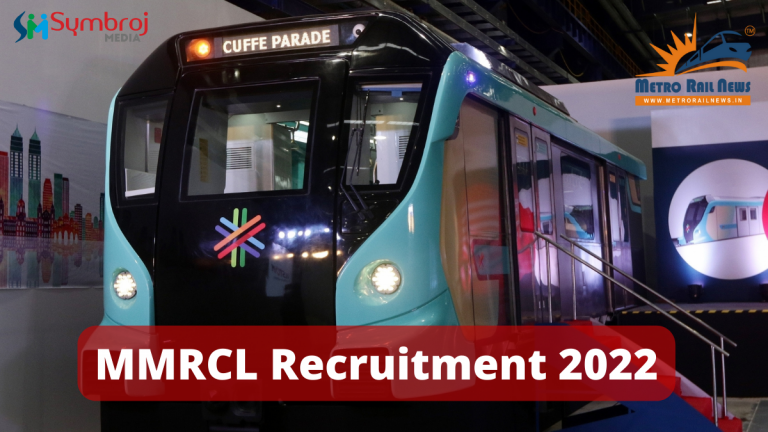
MUMBAI (Metro Rail News):Mumbai Metro Rail Corporation Limited (MMRCL) has opened applications for engineering and other posts on a contract/ deputation basis. Interested candidates can apply online only through MMRCL’s official website – mmrcl.com
The recruitment will be done for 27 posts and the last date to apply for these posts is April 15, 2022. If selected, the candidates can get a salary ranging from Rs 34,000 to Rs 2 lakh. buy viagra online no prescription
The posts for which the recruitment process is opening are as follows:
4. Once on the recruitment page, click on ‘Apply Online’
5. Enter your details and register
6. Submit the application form
No other modes of application will be accepted. Candidates are required to have a valid personal E-mail ID and mobile number, which should be kept active during the recruitment process.
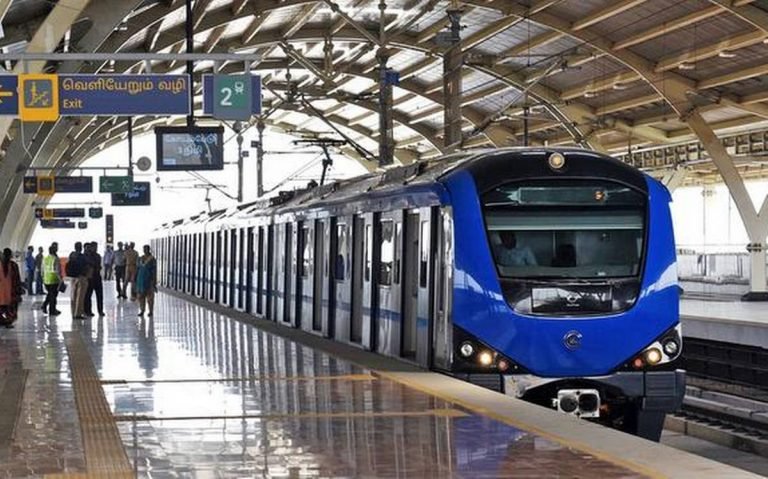
CHENNAI (Metro Rail News):Chennai metro rail’s phase-2 lines will open in about 4 years and it is assumed that the station at Alandur will be the busiest as it will be linking IT corridors at OMR and Porur as well as remote suburban localities with transport hubs like airport, Egmore and Central stations.
To make this possible a foot over-bridge is present which will help commuters switch between phase-1 and phase-2 stations at Alandur and take trains to their destination. During their journey, passengers can enjoy a panoramic view of the city as metro lines linking the station will built above Kathipara and phase-1 corridor at the height of a nine-storey building (nearly 33m). The deadline for the 118. 9km phase-2 is 2025.
Alandur metro station will be part of corridor 5 in phase-2 which is Madhavaram Milk Colony to Sholinganallur passing through poorly connected southern suburban localities like Madipakkam, Puzhuthivakkam and Medavakkam.
It already links the two corridors of phase-1, where commuters either physically switch between corridors or take a direct train that switches between them through a loop line at Alandur metro. The phase-2 metro will be built right behind the existing station.
A foot overbridge will link the ticketing level of phase-2 station with the lower track level of phase-1 station for commuters. “The station will be connected to corridor-5, phase-1 corridors as well as the urban square at Kathipara where buses will stop,” a CMRL official said.
Currently the commuters heading to the airport from IT corridors in Porur switch at Alandur from phase-2. For residents from Adambakkam, Madipakkam, Puzhuthivakkam and Medavakkam areas which are poorly connected until now, Alandur will be main station where they can switch between phase-2 and 1 stations.
Alandur will also be the station where commuters from places like Madhavaram and Poonamallee may have to shift between corridors to reach Central and Egmore stations and the airport. Commuters arriving in the city through outstation or local buses can disembark at Asarkhana or at the urban square under board trains at Alandur.
The alignment of the elevated corridor will pass over the two existing corridors and over Kathipara cloverleaf grade separator. From Alandur metro, the alignment passes through Inner Ring Road via St Thomas Mount where a aerial line is planned for metro services with MRTS.
Former director of CMRL, Mr R Ramanathan said that during phase-1 construction, a bus terminus with several bus bays was planned behind phase-1 Alandur station for commuters to switch between different modes. “The government could plan a bus stop instead. But the decision has to be made before construction for phase-2 begins. ”
Sivasubramaniam Jayaraman of the Institute for Transportation and Development Policy said “Alandur should be built like Central station where buses come inside the station”. Building facilities for all types of feeder services within the station alone can make Alandur a real multi-modal hub.
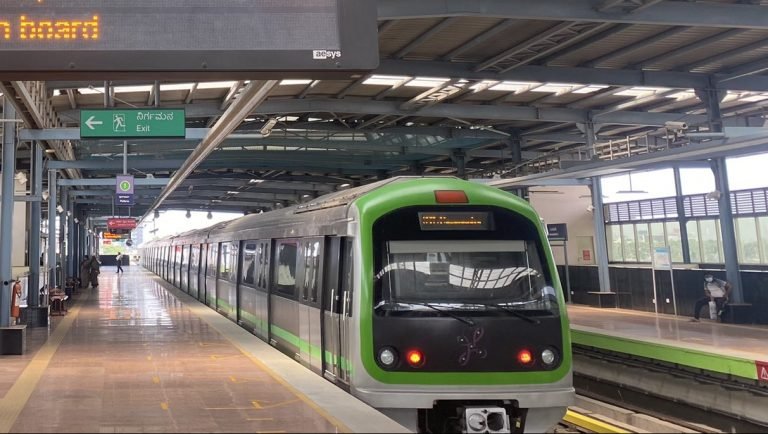
BENGALURU (Metro Rail News): BMRCL managing director Anjum Parwez believes that the escalators at Namma Metro stations in Bengaluru metropolis can be regulated to move at speeds in sync with practice timings.
Talking on the third version of ‘Future ICT for Sustainable Cities Forum’ on Thursday, 17th March 2022, Parwez said “Many issues could be completed with the assistance of Info and communications expertise (ICT). Not too long ago, an knowledgeable gave us a presentation on how we will management the velocity of escalators at Metro stations.”
“As an illustration, we will enhance the velocity of escalators when a practice is approaching so extra individuals will be capable of catch that practice. And when the Metro passes, we will cut back the velocity of the escalator so that individuals can transfer leisurely. This may be such a easy concept and is feasible with the mixing of information from totally different factors. This may very well be efficient for crowd management on the stations” he added.
“We are able to have an infrastructure which is speaking to the system and likewise offering info to individuals. We are able to share information with those that are able to improvements,” he said during his speech.
BMRCL is currently planning to introduce a Communication Based Train Control (CBTC) signaling system, which is referred to as ‘driverless expertise’. Until now Namma Metro is using DTG (distance to go) signaling system, during which the time hole between two trains is two-and-a-half minutes. However, CBTC can cut back train headways to lower than 90 seconds.
“As extra individuals are touring by Metro, we will run trains at a headway of 90 seconds. We’re additionally shifting to driver-free expertise though I’m not in favour of the thought as a result of it cuts down on employment alternatives. There’s a main debate on what’s the optimum extent of modernization however the facility goes to be there,” Parwez said.
“There’s at all times a battle in each motion which you do within the identify of improvement. So it’s not solely about driverless Metro. As an illustration, why are we utilizing a JCB for digging a pit? As an alternative of 1 JCB, we will have interaction 100 individuals. So, the query is whether or not we wish to stay in that period, or whether or not we wish to transfer forward. Whereas older variations of employment could cut back, on the similar time, new alternatives might open up. So, after we make metro trains driver-less, it positively impacts jobs. However it is going to create a brand new alternative for others to manage/function these trains because it is not going to be 100% automated . There are parallel alternatives that are going to be created so a distinct type of job might be generated” he added.
MUMBAI (Metro Rail News): The state government on 17th March 2022, Thursday transferred Ranjit Singh Deol from the post of Managing Director, Mumbai Metro Rail Corporation (MMRC). which is building the city’s first underground Metro line, the 33.5-km-long Colaba-Bandra-SEEPZ corridor.
Metropolitan commissioner SVR Srinivas will now handle the post as an additional charge of MMRCL. Deol is transferred 15-days ahead of the trial runs on Colaba-Bandra-Seepz underground corridor which is being constructed by MMRC.
1998 batch IAS officer Deol, took charge as MMRCL MD and vice-chairman in January 2020.
Mr Srinivas, IAS, reviewed the Metro-3 project & visited BKC Metro Station to inspect works with senior officials of MMRC. pic.twitter.com/lN3cf6DbYn
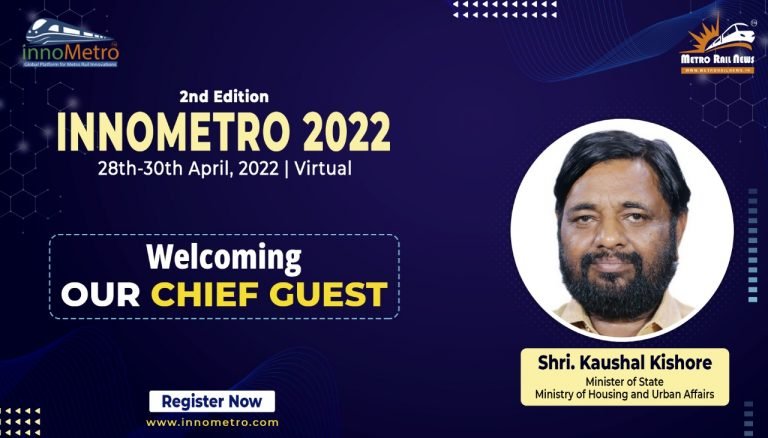
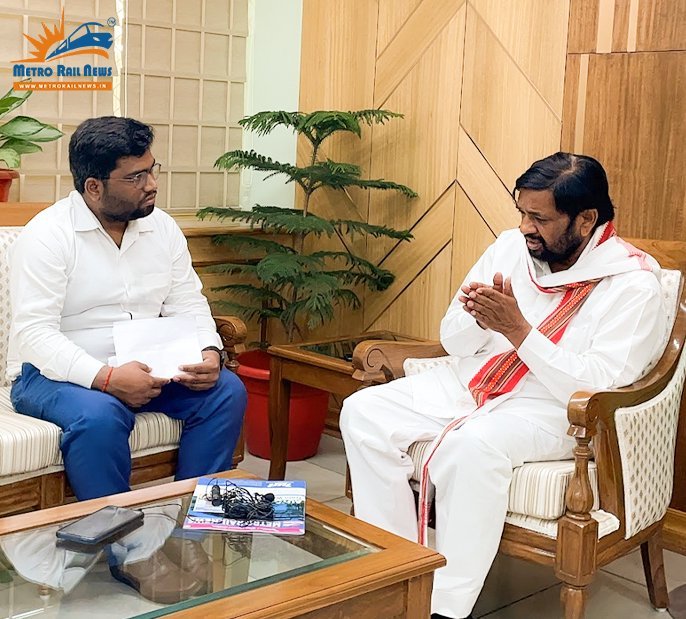
InnoMetro 2022 – 2nd Edition is pleased to welcome on board Shri. Kaushal Kishore, Minister of State for Ministry of Housing and Urban Affairs as our Chief Guest. InnoMetro is a three-day conference and expo to showcase the latest innovations and technology for the metro and railway industry.
Presenting Metro Rail News magazine.to Mr Kaushal Kishore
Shri Kaushal Kishore is an Indian politician of Bharatiya Janata Party (BJP), currently serving as the Minister of State for Housing and Urban Affairs, Government of India since July 7, 2021. He is an Indian Member of Parliament in Lok Sabha, representing Mohanlalganj constituency in District Lucknow, Uttar Pradesh. He had been State President of SC wing of Uttar Pradesh of Bharatiya Janata Party and has also served as National President of Parakh Mahasangh. Shri Kaushal Kishore is widely recognised across the nation for his activism related to issues of social justice and empowerment. He has also served as Minister of State during 2003-04 in the Government of Uttar Pradesh.
Mr Narendra Shah, Managing Editor, Metro Rail News with Shri Kaushal Kishore, MoS MoHUA
About InnoMetro
InnoMetro is a global event to showcase Innovation & Technology for the Metro, Railway, RRTS, High-Speed Rail & Allied Industries being organized by Metro Rail News from 28th-30th April, 2022 virtually.
It aims to bring experts from the industry in a line to witness the latest advancements in a three-day insightful conference & expo. With a vision to maximize penetration into the key trends affecting the urban mobility sector, the event serves as a global platform for ideation, discussion and presentation of the most innovative ideas and concepts giving a new dimension to the Rail and Metro Industry.
The event serves as a one-stop destination for leading brands to showcase their products, for experts to speak their minds and for delegates to experience the latest trends and technologies in the industry.
Many delegates from corners of the world will be gracing the event and will be speaking on topics such as:
• Realisation of Atmanirbhar Bharat • Make in India: Make for World • New modes of Transportation: Metro Neo, Metro Lite • Workforce diversity & Technical Skill Gaps in Metro & Railway • Covid Protocol & Difficulties in Rail Transport • Ticketing and Payment Innovations • Automated Train Examination System: ATES • Asset Maintenance and Predictive Analysis • Transport Infra Financing: Public-Private Partnership (PPP) • Indigenous exports of Rolling Stock • Advancements in Artificial Intelligence for Metro & Railway • Increased revenue systems and cost-cutting measures • Sustainable & Green Mobility • Improving Passenger Experience on ‘Moving Wheels’ • Metro railways: Promoting Low carbon Transportation in India • Data-driven Mobility System • MaaS- Increasing the sustainability of Transport System
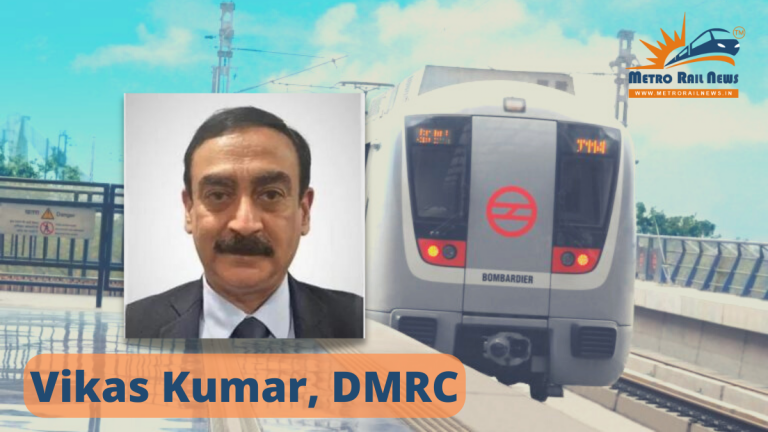
NEW DELHI (Metro Rail News): The Delhi government has selected Vikas Kumar as the Managing Director (MD) of the Delhi Metro Rail Corporation (DMRC) on Wednesday, 16th March 2022. He is an officer of the 1988-batch of the Indian Railway Traffic Service and was earlier working as the Executive Director of operations in the DMRC, prior to his current role i.e Director (Operation). Mr. Kumar was appointed on the post of Director (Operations) in DMRC on Dec 1, 2021.
“We found no better person to fit the role of MD, DMRC than the person who has been responsible for the entire operations of the Delhi Metro, which has the largest network in all of India. Now, the Union Ministry of Housing and Urban Affairs (MoHUA) is free to discuss the matter with us as we have sent the file to them informing about the Delhi government’s choice. But, it will be difficult for MoHUA also to deny Kumar the position because with the construction of most phases being over, the focus currently is on operations, monitoring and keeping up with the standards of the Delhi Metro,” said a senior Delhi government official, HT reported.
The official notification naming Kumar as the new MD was issued on Wednesday evening, Many government officials were confident that Kumar was likely to receive the nod even before the official notification was released. He will replace Mangu Singh, who will be retiring as MD on March 31, 2022. Singh was only DMRC’s second MD, after E Sreedharan, and took charge on December 31, 2011, and his tenure had been extended several times.
The selection and search for a new MD had to pass through controversies as the Centre had expressed its displeasure over having no representative in the selection committee. In fact last week, MoHUA wrote to the Delhi chief secretary stating that in the past, the selection committee did have representatives from the Centre, including the then secretary in Union ministry of urban development, the Delhi chief secretary and the incumbent MD, E Sreedharan. Whereas the present selection committee is chaired by Delhi deputy chief minister Manish Sisodia and includes the Delhi transport minister Kailash Gahlot, an additional chief secretary in the Delhi government and an independent expert.
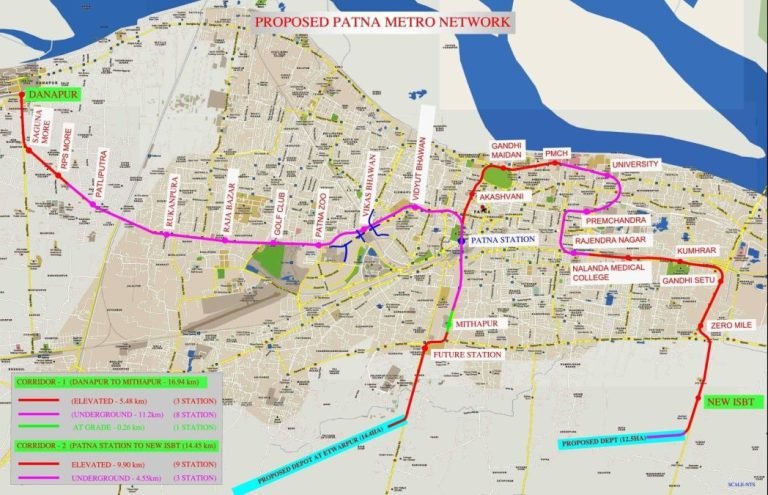
PATNA (Metro Rail News):Mr. Kaushal Kishore, Union minister of state for housing and urban affairs said that the physical and financial progress of the Patna Metro rail project was 1.6% and 2.79%, respectively, till February this year. Rs 615 crore has been spent till now on the construction work on the priority corridor between Malahi Pakri and Patliputra bus terminal.
The authorized cost of the project is Rs 13,365 crore, in which the central share is Rs 1,840 crore. A total of Rs 262 crore has already been given to the state government. The state government’s share is Rs 5,908 crore (including land acquisition) out of which 1,070 crore has been released.
The state government has made 4.26 hectares of land available out of 4.32 hectares which is required for the project. Japan International Corporation Agency (JICA) has been called on to take an early decision on a Rs 5,520 crore loan for this project. Out of the total Rs 1,070 crore received from the central and the state government, Rs 615 crore has been spent till now.
The partnership had turned up as the lowest bidder in mid-February for both cities’ underground work (KNPCC-06 & AGCC-02). This project is being financed by the European Investment Bank (EIB) through ODA loans.
Kanpur Metro: KNPCC-06
This 2nd underground package of the 23.785 km Line-1 (IIT – Naubasta) will connect Nayaganj Station and Transport Nagar Ramp via 3 underground stations at Kanpur Central, Jhakarkatti and Transport Nagar.
Financial bid values of the 6 technically qualified bidders for this were:
Firm
Bid (Rs. Crore)
Afcons Infra – SAM India JV
1819.79
JMC Projects – CAI JV Ltd.
1939.30
ITD Cementation India
2142.82
J Kumar Infra – NCC JV
2249.27
Larsen & Toubro (L&T)
2550.36
Gulermak Agir Sanayi Insaat ve Taahh. A.S.
2685.25
Completion Deadline: 36 months
UPMRC’s Estimate: Rs. 1250 crore
Final Contract Value: Rs. 1087.67 crore (INR 1062,02,00,000 + EURO 29,00,000)
This contract includes the design and construction of TBM tunnel, cut and cover tunnel, the underground ramp from Kanpur Central end of Nayaganj station to elevated ramp after Transport Nagar and three underground metro stations (viz. Kanpur Central, Jhakarkatti and Transport Nagar) including architectural finishes, E and M, TVS, ECS etc. on Corridor-1 of Kanpur MRTS Project at Kanpur, Uttar Pradesh, India.
Agra Metro: AGCC-02
This 7.93 km package of the 14.25 km Line-1 will connect RBS College Ramp and Taj Mahal Ramp. Twin tunnels will connect 7 stations at Taj Mahal, Agra Fort, Jama Masjid, SN Medical College, Agra College, Raja ki Mandi and RBS College.
Afcons – SAM will be required to deploy four TBMs. The financial bid values of the 7 technically qualified bidders were:
Firm
Bid (Rs. Crore)
Afcons Infra – SAM India JV
1819.79
JMC Projects – CAI JV Ltd.
1939.30
ITD Cementation India
2142.82
J Kumar Infra – NCC JV
2249.27
Larsen & Toubro (L&T)
2550.36
Gulermak Agir Sanayi Insaat ve Taahh. A.S.
2685.25
Completion Deadline: 48 months
UPMRC’s Estimate: Rs. 2200 crore
Final Contract Value: Rs. 1819.79 crore (INR 1773,27,00,000 + EURO 52,54,554)
This contract includes Design and Construction of Tunnel from start of underground ramp (near Fatehabad Road Metro station) to end of the ramp after RBS college Metro station including seven underground metro stations (viz. Taj Mahal, Agra Fort, Jama Masjid, S.N. Medical College, Agra college, Raja ki Mandi and RBS college) including Architectural finishes, E&M, TVS, ECS etc. on Corridor-1 of Agra MRTS Project at Agra, Uttar Pradesh, India.
CHENNAI (Metro Rail News): CMRL on Wednesday, 16th March 2022, announced that from Thursday Metro Rail services will start early by 5 am everyday instead of 5.30 am.
The official release of the CMRL said that Metro services will run on weekdays (Monday to Saturday) from 5 am to 11 pm with existing peak hour services from 8 am to 11 am in the morning and from 5 pm to 8 pm in the evening with 5 minute headway during peak hours and 10-minute headway during non-peak hours and from 10 pm to 11 pm with 15 minutes headway.
During Sundays and government public holidays, metro services will run on Sundays and government public holidays from 5 am to 10 pm with 10 minutes headway throughout the day and from 10 pm to 11 pm with 15 minutes headway. There will be no peak hour services in the holiday timetable schedule.
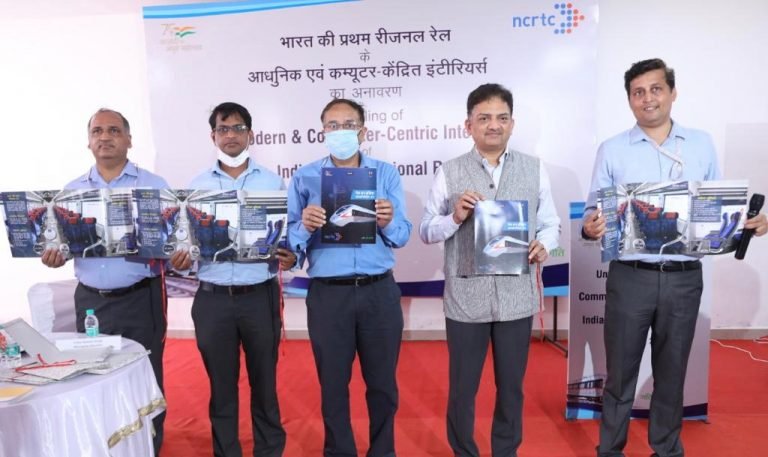
GHAZIABAD (Metro Rail News): Shri Vinay Kumar Singh, MD, NCRTC, today, unveiled the modern and commuter-centric interiors of India’s first Regional Rail at its Duhai Depot, Ghaziabad.
On this occasion, Shri Singh said, “we have always prioritized commuter convenience since the inception of the country’s first RRTS project. Our teams have studied the commuter needs for regional travel and worked on providing several customized amenities which will go a long way in providing a reliable mode of travel. The entire infrastructure, be it trains or stations, have been designed to ensure safety, ease of access, and travel comfort for commuters. RRTS will be the first choice of people for the safe and efficient regional commute.”
The modern RRTS trains will have ergonomically designed 2×2 transverse seating, wide standing space, luggage racks, CCTV cameras, laptop/mobile charging facility, dynamic route maps, auto control ambient lighting system, Heating Ventilation and Air Conditioning System (HVAC) and other amenities. The air-conditioned RRTS trains will have Standard as well as Premium class (one coach per train) along with one coach reserved for women commuters.
RRTS Train Driver CabinRRTS Train Front ViewRRTS Train Passenger SeatRRTS Train Side View
Under the Make in India guidelines, 100% of trainsets for RRTS are being manufactured in India. These world-class trainsets are being manufactured at an Alstom (earlier Bombardier) factory located in Savli, Gujarat.
The delivery of these semi high-speed aerodynamic trainsets, with distributed power, will start soon in the coming months. The manufacturing facility at Savli will be delivering a total of 210 cars for the first RRTS corridor. This includes trainsets for operating regional transit services on the Delhi-Ghaziabad-Meerut corridor and for local transit services in Meerut.
This year, NCRTC will begin trial runs on the Priority Section of the Delhi-Ghaziabad-Meerut RRTS corridor. RRTS is the first-of-its-kind system in which trains, with a design speed of 180 kmph, will be available every 5 – 10 minutes and cover the distance between Delhi and Meerut in 55 minutes with 14 stoppages.
NCRTC has taken the initiative of building a huge network of networks by seamlessly connecting the various public transit systems in NCR. RRTS stations will have seamless integration with Metro stations, railway stations, bus depots, wherever possible. RRTS will bring people and places closer across the National Capital Region and further enable sustainable and balanced development of the region.
Delhi-Ghaziabad-Meerut RRTS corridor is estimated to reduce -2,50,000 tonnes of carbon dioxide emissions per year. RRTS will prove to be the most energy-efficient futuristic transit system which will bring in a new era of seamlessly connected mega regions and set a new benchmark for similar projects in the future.
The work on the entire 82-km long Delhi-Ghaziabad-Meerut RRTS corridor is in full swing, which will have 25 stations in total, including 2 Depots at Duhai & Modipuram and 1 Stabling yard at Jungpura. Recently, the 22nd Launching Gantry was installed on the corridor and more than 14,000 workers and more than 1100 engineers are engaged in the construction work, day and night. NCRTC has completed about 80% of the foundation work of the elevated section. More than 1400 piers on a 40 km stretch and 18 km of viaduct have been constructed so far, most of which is in the Priority Section.
The 17 km Priority Section, between Sahibabad to Duhai, is targeted to be commissioned by 2023 and the full corridor by 2025. The civil work on the Priority Section, having a total of 5 stations, is nearing completion. Track laying activities along with Overhead Electrical Equipment’s (OHE) installation are going on the elevated viaduct. All the 5 RRTS stations in the Priority Section i.e., Sahibabad, Ghaziabad, Guldhar, Duhai, and Duhai Depot have started taking shape. The Delhi-Ghaziabad-Meerut corridor RRTS corridor is expected to have a daily ridership of around 8 lakh passengers.
Other commuter centric features of the country’s first RRTS trainsetsare:
Aerodynamic profile with long nose and plug-in-doors to reduce air drag at higher speeds.
Fully air-conditioned cars with wide gangways for maximized space for commuters for entry and exit.
Large window glasses with tint will give panoramic views of the outside.
Ergonomically designed 2X2 transverse seating, cushioned seats with overhead luggage racks.
One Premium Class car in every train to give a new level of comfort, convenience, and user-friendliness. Will have wider seats with more legroom, coat hangers. Equipped with vending machine facility.
One car is reserved for women.
Energy-efficient, auto control ambient lighting system. CCTV monitoring, Modern Passenger Announcement and Digital Passenger Information System (PAPIS), Onboard Wi-Fi
Mobile/laptop charging facility at every seat. Provision of wheelchair space for differently-abled and stretcher space for emergency medical transit Dynamic route map display, emergency communications facilities
Indoor and Outdoor Surveillance System. Compatible with advanced ETCS Level II Signalling, Automatic Train Operations and Platform Screen Doors (PSD) for improved safety. Design and Manufacturing based on International Safety Standards.
Appropriate SIL level based on safety and hazard assessment as per International Standards. Fire detection system for internal and external fire. Monitoring of Axle box temperature with Wayside equipment.