Home Blog Page 357

Dr Mangu Singh inaugurates India’s first ever Indigenous Automatic Train Supervision System

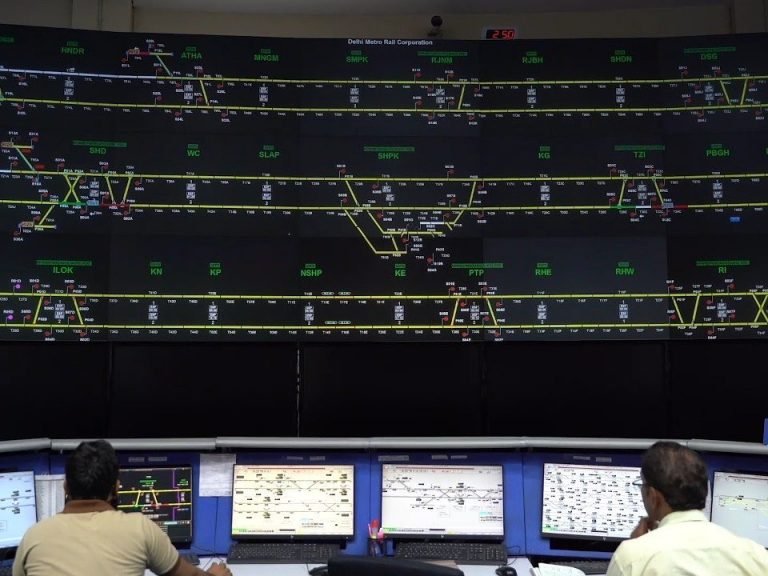
DELHI (Metro Rail News): Dr Mangu Singh, Managing Director inaugurated the final field trials of India’s first ever Indigenous Automatic Train Supervision System (i-ATS) on the red line virtually on Thursday, 24th March. The event happened in the presence of Directors and senior officials at Metro Bhawan.

DMRC meeting
https://twitter.com/OfficialDMRC/status/1506974614802497540

The i-ATS has been developed by a joint team of DMRC & Bharat Electronics Limited (BEL). This development will make DMRC more self-reliant in the field of Metro Train Signalling and will boost the Government of India’s ‘Make in India’ initiative.

Delhi Metro on December 24 last year had entered into the 20th year of its operations and marked the occasion by commencing a field trial of the i-ATS technology.

ATS is a computer-based system, which manages train operations. This system is indispensable for high density operations such as the metro, where services are scheduled every few minutes.

Bullet train to run every 22 minutes on Delhi-Varanasi High Speed ​​Rail Corridor from 2029

LUCKNOW (Metro Rail News): The Awadh crossing in the state capital, which connects the expressway and highway to the city, is likely to be the pit stop for the ‘bullet train’ planned to start cruises on the Delhi-Varanasi High Speed ​​Rail Corridor.DVHSR) by 2029.
Answering a question on February 11 in Rajya Sabha, The Ministry of Railways has announced plans to conduct a survey and prepare a Detailed Project Report (DPR) for seven corridors, including DVHSR.
According to government officials, the 813-km track will have 13 stations, including 12 elevated ones in Uttar Pradesh and one underground in Delhi, at which the train will run at a speed of 330 kmph. It will take at least 3 hours 33 minutes to reach Varanasi from the national capital with a limited number of stops. About 15 km long tunnel will be built for the underground station.

Since the route alignment of DVHSR is with Yamuna and Agra-Lucknow Expressway and the proposed Ganga Expressway to avoid forest and wildlife, the train is likely to have its station at Lucknow at Avadh crossing. “A total of 43 trains per day will reach Avadh crossing station every 22 minutes,” an official said.
Starting from Hazrat Nizamuddin, this train will stop at Noida Sector 146 Metro Station, Jewar Airport, Mathura, Agra, Etawah, Kannauj, Lucknow, Rae Bareli, Pratapgarh, Prayagraj, Bhadohi and will end at Manduadih (Varanasi). A Foot Over Bridge (FOB) will connect the station at Awadh Crossing to Singer Nagar Metro Station so that passengers can reach their destination in the city.

Similarly, FOB will be constructed from Prayagraj station to Phaphamau railway station. As per the proposed plan, 18 trains will run daily from Varanasi at an interval of 47 minutes. In Delhi, DVHSR underground station will be opposite Hazrat Nizamuddin railway station, while in Noida it will be opposite Sector 146 metro station. At Jewar, the DVHSR station will be part of the Jewar Airport transport network.

According to officials, another section of DVHSR has been proposed to connect Lucknow and Ayodhya, but it will depend on cost feasibility. Apart from the Delhi-Varanasi route, the survey will be conducted for Varanasi-Howrah, Delhi-Amritsar, Delhi-Ahmedabad. Mumbai-Hyderabad, Mumbai-Nagpur and Chennai-Mysore via Bangalore. Presently, the National High Speed ​​Rail Corporation Limited (NHSRCL) is working on the Mumbai-Ahmedabad corridor.

DMRC plans to use drones to observe elevated sections of Metro

NEW DELHI (Metro Rail New): Delhi metro which is spread in 400km with a big part constructed in 15 to twenty years in the past Delhi Metro Rail Corporation (DMRC) is now planning to switch the guide inspection by a drone survey.
“DMRC will use drones for inspection as an advance means for a greater view and entry, taking out the guide mode of inspection that takes extra time and labour,” a spokesperson mentioned. “The inspection will likely be completed in a phased method in any respect elevated sections,” the official said.

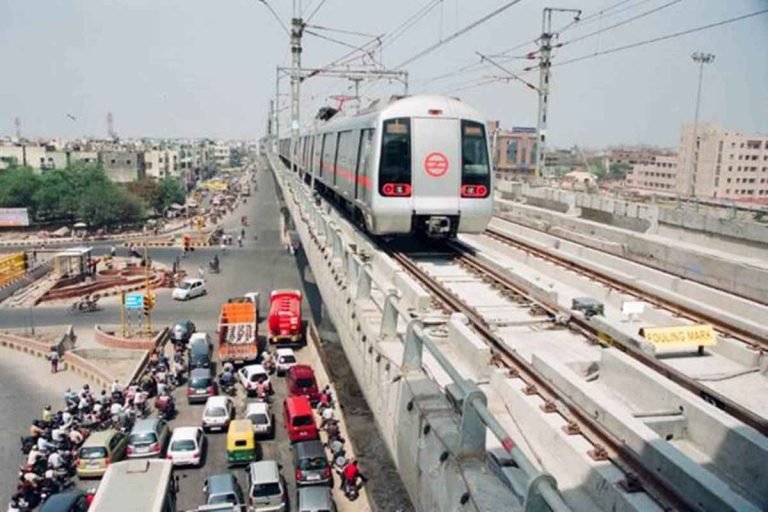
Around 65% of the Delhi metro is built on elevated sections, that are affected by the weather through the years. “With the passage of time, buildings are anticipated to be affected on account of a number of exterior elements similar to local weather, practice motion, materials life,” the spokesperson said, including that such an inspection would assist in analysing and rectifying the problems to make the buildings last more.
The inspection features a thorough checking of all minor parts associated to civil buildings, from bearings to viaducts. “This additionally contains elevated buildings like foot overbridges, piers, girders, ramps,” he mentioned. “This can be a routine train being carried out in all infrastructure tasks to maintain a examine on the security elements of civil buildings.”
DMRC will hire an organisation that uses drones appropriate for aerial surveys with high-resolution 4k calibrated cameras. The digital camera system will likely be fitted with gimbals to make sure it stays steady and captures clear photographs based mostly on the exact location given by World Navigation Satellites System.
The spokesperson mentioned numerous elements of the inspection including checking the security of buildings, discovering their bodily situation, detecting any abnormality or defects at an early stage, and figuring out precise and potential sources of an issue.
Such inspections will assist in documenting systematically and periodically the situation of the metro, which will allow DMRC to figure out any vital structural adjustments and defects, he official added.
The survey will assist DMRC’s plan and perform repairs, and strengthening and changing structural elements, the spokesperson mentioned. It is going to additionally present suggestions to designers and development engineers on the options creating upkeep issues, he added.
As soon as any abnormality or defect is detected through the drone survey, DMRC’s groups can see the precise spot with the assistance of skylifts, scaffoldings and trolleys to hold out an in-depth inspection.

Discussions to terminate the line at Sholinganallur instead of SIPCOT in Siruseri in a high-level meeting

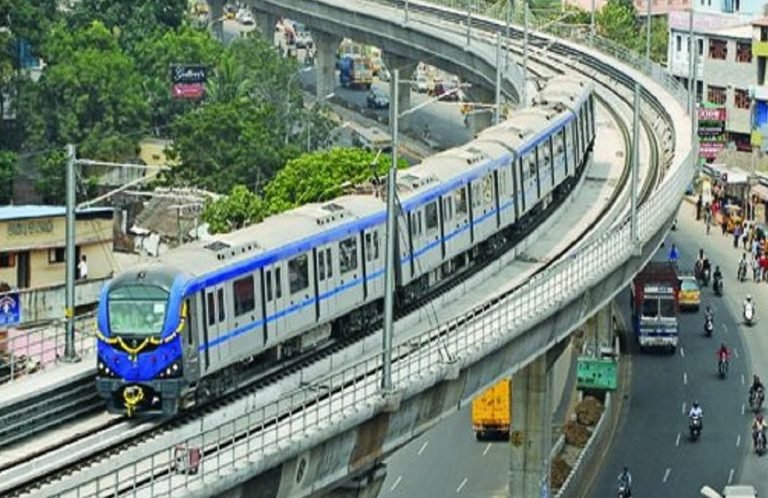
CHENNAI (Metro Rail News): Chennai Metro Rail Ltd. (CMRL) may take a re-look at Corridor 3 of its Phase II project. There is a probability of CMRL shortening the size of the project and terminating the line at Shollinganallur instead of SIPCOT in Siruseri. But this is not yet final.

The Phase II project is estimated to cost ₹61,843 crores and is a 45.3 km stretch. A high-level meeting that was held recently discussed the prospect of reducing the length of this stretch. “We are just mulling a possibility to build this stretch till Shollinganallur. No decision has been taken yet. We have to look at a host of issues and consult with the important stakeholders before taking any decision in this regard. There was a discussion about the difficulty in acquiring land along this stretch from Shollinganallur to SIPCOT and hence this option is being explored,” a source said.

Earlier ten stations were planned to be built between Shollinganallur and SIPCOT, which include Shollinganallur Lake, Sri Ponniamman Temple, Sathyabama University, St. Joseph’s College, Semmancheri, Gandhi Nagar, Navalur, Siruseri, SIPCOT-1 and SIPCOT-2. People in thousands which includes IT employees and students, travel to these areas from various parts of the city. Even when the number of commuters dipped during the pandemic, most of the restrictions have now been lifted and offices are opening up, sources said.

“This stretch has been planned as an elevated one and because of the road width, it is easy to construct viaducts and stations in these locations. Also, in future, since it will cater to a large population. In times of increasing traffic, it will ease commuting significantly for the students and working professionals,” the source added.

CMRL had previously planned a depot at SIPCOT but the proposal was dropped as part of measures to trim the cost of the project. Now the Phase II work is on at several locations between Madhavaram and Shollinganallur and Light House and Poonamallee.

BMRCL to enlarge the walls to avoid stone-pelting along train lines

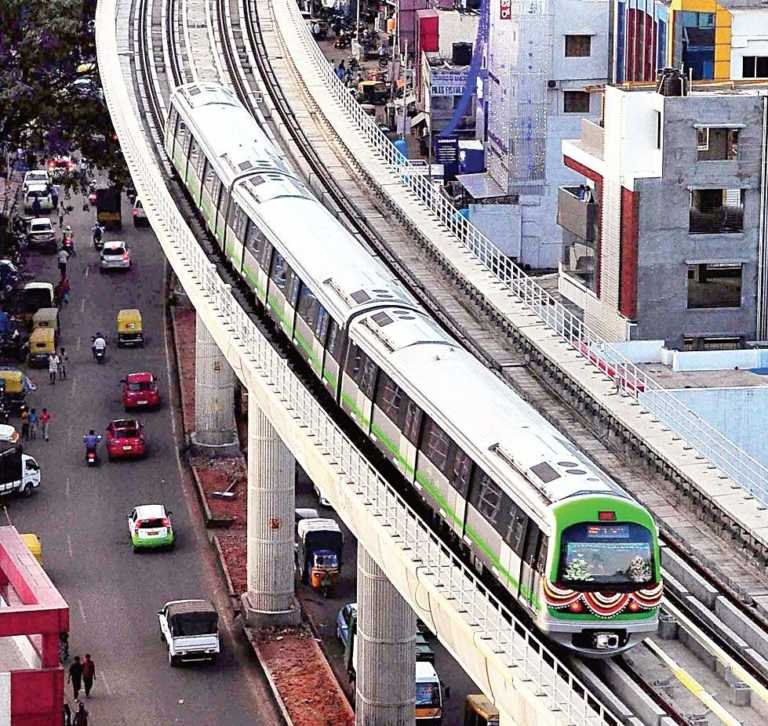
BENGALURU (Metro Rail News): The Bengaluru Metro Rail Corporation Limited (BMRCL) has decided to increase the height of walls near some metro lines after many incidents of stone-pelting by outlaws were reported on running Bengaluru Metro trains.

As per the senior BMRCL officials, five such incidents have been reported in the last few years where the outlaws throw stones on passing trains from outside the Metro compound walls. “The exact number of incidents has not been recorded, but at least five such incidents have happened in the last few years at a few stations. Magadi Road, Srirampura, Chickpet, National College and City Railway stations have recorded stone-pelting incidents in which the glass of the trains have suffered cracks,” officials said.

The officials also assured that these stones have not harmed any passengers or the Metro crew because the trains have double-glazed windows. BMRCL officials said they have deputed security personnel too at the spots where such incidents have been reported. “As an additional measure, the height of the walls would be increased soon,” an official added.

The officials said that the trains which were damaged by stone pelting will be immediately repaired and then only they will be back in operation keeping in mind the passenger safety.

HC directs CMRL to list reasons for which it can share CCTV footages under RTI Act

CHENNAI (Metro Rail News): The Madras High Court has asked Chennai Metro Rail Limited (CMRL) to list reasons for which the organisation could share its closed-circuit television (CCTV) camera footage with the people who seek it under the Right to Information (RTI) Act of 2005.

Justice Anita Sumanth asked senior counsel P.S. Raman who was assisted by CMRL’s counsel-on-record Jayesh Dolia, to provide a list by 5th April, of suggestions on how a mechanism could be devised and put in place. The judge said that this footage could be of great help to the citizens in some instances.

The orders were passed on a writ petition filed by CMRL challenging Tamil Nadu Information Commission’s (TNIC) direction to provide CCTV footage of the incidents that had been captured on a camera installed at Park Metro station between 10 p.m. and 10:45 p.m. on October 6, 2019. The TNIC at that time imposed a cost of ₹25,000 on CMRL because they were unable to provide a satisfactory reply to the RTI applicant V.
buy augmentin online https://herbalshifa.co.uk/wp-content/themes/twentytwentytwo/inc/patterns/en/augmentin.html no prescription
K. Mutharasu for over one year.

Mr. Raman argued that there was a possibility of a serious security threat if CMRL was forced to share CCTV footage with every other RTI applicant. he also mentioned that nearly one lakh CCTV cameras would be in operation after the CMRL completes phase II and someone with an ill intention in future could file multiple RTI applications seeking CCTV footage of different stations with the intension to piece them together and therefore could learn the entire operations of the metro.

He also specified a Supreme Court judgement in Pradyuman Bisht versus Union of India (2015) case in which it was held that the CCTV footage from court campuses could not be provided to all applicants under the RTI Act without the prior permission of the chaired officer concerned.

Finding evident force in his submissions, Justice Sumanth granted an interim stay of the TNIC’s order. She also ordered notices to the commission as well as the RTI applicant returnable by April 5 and said that the applicability of the apex court verdict to the present case would be decided later. However, the public had open access to Metro, and in some instances to help the public there must be some mechanism to see camera footage when needed, the judge asked Mr. Raman to come up with genuine suggestions.

CMRL invites bids for a feasibility study on MRTS in Tiruchy

TIRUCHIRAPPALLI (Metro Rail News): The Chennai Metro Rail Limited (CMRL) has invited bids to select a consultant to conduct a feasibility study for introducing Mass Rapid Transit System (MRTS) in Tiruchy, Tirunelveli and Salem cities. This step is taken to reduce the congestion in these cities which will result in smooth movement of traffic.
buy viagra pack online no prescription

The CMRL in the order said that based on the state’s direction, it has invited e-tenders on a single stage from suitable consultants, who should be a registered sole proprietorship firm or consultancy having a registered office in India and incorporated under the Company Act 1956/2013. These is the eligibility criteria for the preparation of a feasibility study report to introduce MRTS in these three cities. Interested parties shall submit the bid in two parts – technical and financial. The technical bid should include the details for fulfilling eligibility criteria as laid down in the tender document.

The e-tender has opened from March 21 to April 20 and the period of validity of the tenders counted from the deadline for receipt of Tenders is 180 days.

The CMRL had invited the consultants to conduct site visits for the execution of the services recently. The bidders are eligible to quote maximum of any two cities and any bidder, currently working with CMRL projects, will be eligible to quote anyone city only.
The residents of Tiruchy are very happy after listening to CMRL’s plan and have welcomed the move.

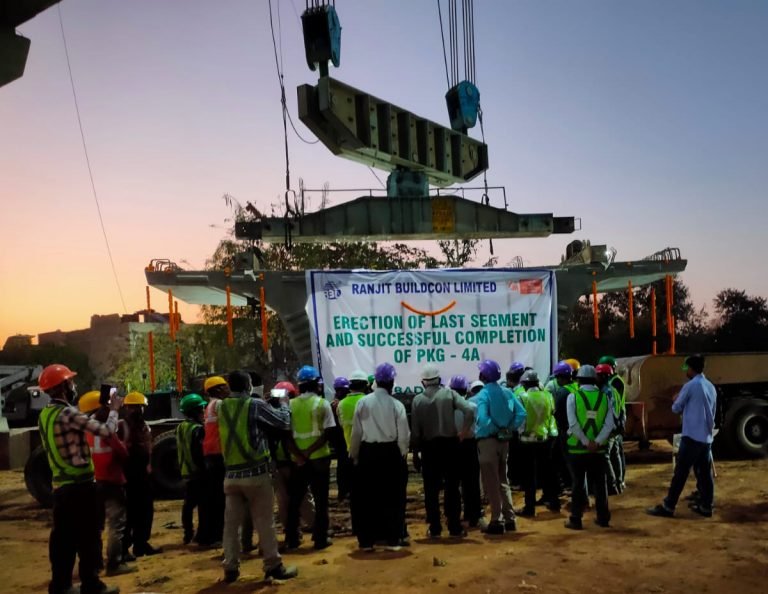
RBL celebrates the launch of Ahmedabad Metro Package 4A’s Final Segment

AHMEDABAD (Metro Rail News): Ranjit Buildcon (RBL) recently celebrated the launch of Ahmedabad Metro’s 4.85 km Package 4A which will connect Ranip – Motera. This package has been constructed in approximately 1500 segments and now the final construction has been completed.

This part of the 39.26 km Ahmedabad Metro Phase-1 project‘s Red Line comprises of a special open web girder steel bridge at Sabarmati and 5 stations at Ranip, Sabarmati Railway Station, AEC, Sabarmati and Motera.

RBL was awarded Package 4A’s construction contract in January 2016. The deadline for this package was tight 30 months but they’ve taken double the amount of time to execute.

Viaduct work is pending throughout all other packages of Phase 1. The last section to get completed and open up will be the Thaltej – Thaltej Gam section. That section was originally part of TPL-CCECC’s scope of work but removed due to land acquisition issues. It was re-tendered out in 2020 with DRA Infracon starting construction work in January 2021.

KMRL begins restoration work on problematic metro pier

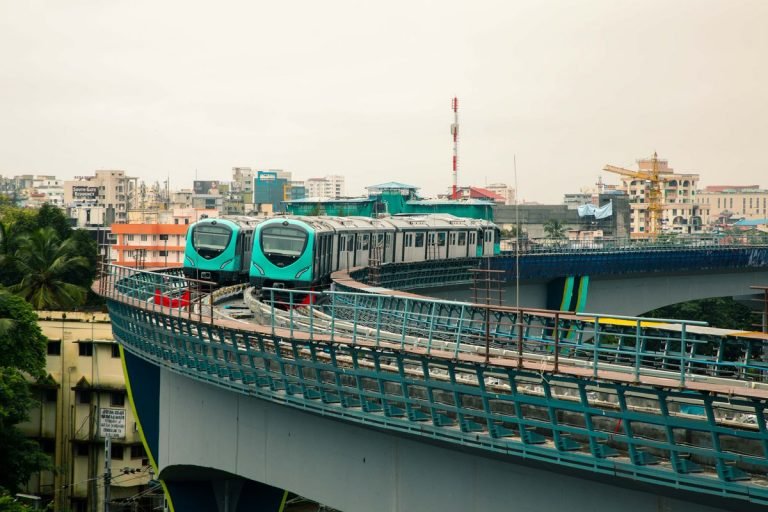
KOCHI (Metro Rail News): Kochi Metro Rail Limited (KMRL) begins the restoration work of pier 347 of the Kochi metro at Pathadipalam on Monday, 21st March 2022. The problem was reported over a month ago due to which the trains were operating at lower speeds. Now the restoration work has been finalised.

A geo-technical study revealed that there was a gap between the piles and rock beneath the pillar at Pathadipalam due to which this issue occurred. The repair work will be done day and night with a target to complete it as soon as possible. The authorities have the target to complete it before the onset of the monsoon.

L&T, which was assigned with the work, will provide additional piles and undertake the required mobilisation by next week. The work has been planned without affecting normal metro services, KMRL informed in a release. 

JMRC begins progress to revise DPR of metro phase-II

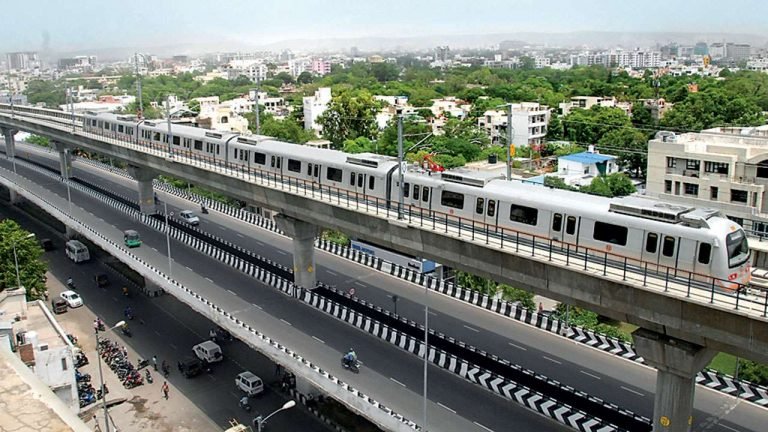
JAIPUR (Metro Rail News): Because the state authorities’ enthusiastic ‘ improvement of the crossroads’ project is creating discord in the establishment of the proposed Jaipur Metro Part-II (India Gate and Ambabari) on Tonk Highway, therefore, Jaipur Metro Rail Corporation (JMRC) has once again begun the planning to revise the detailed undertaking report (DPR).

The state authorities within the Price range didn’t make allocations for the long-pending Jaipur Metro phase-II, a 23.5 km hall, because the undertaking requires modification. A JMRC official mentioned, “The Jaipur Metro section II on Tonk street is conflicting with JDA’s signal-free undertaking. As some modifications are required, the DPR can be revised once more after the survey.”

The JMRC in its final revised DPR had proposed to construct 21 stations which include Rambagh, Tonk Pathak and B2 Bypass. Nonetheless, following the instructions of the Urban Development and Housing (UDH) minister Shanti Dhariwal, the JDA had additionally initiated the tasks for the development of underpass and semi-clover leaf buildings on identical or close by locations.

The JDA has proposed to build an underpass and an overbridge structure at Rambagh after spending Rs 130 crore. Likewise, the construction of an underpass proposed to be constructed at Laxmi Mandir with an estimated price of Rs 60 crore will start soon.
A JMRC official mentioned “On the similar areas, the Metro stations of Phase-II are proposed. The tasks are capital intensive and require revision in design at strategy planning stage to keep away from future confrontation.”

Sources on the division mentioned the state authorities in close to future is just not contemplating establishing the Part-II undertaking, nonetheless, protecting the availability for Metro on the arterial route, Tonk Highway is important.

“Prospects may also be explored to assemble the Metro Lite and Metro Neo service on the route that is a cheaper option and will be constructed and run at lower than half the price of the conventional metro rail”, a source said.
buy azithromycin online blackmenheal.org/wp-content/languages/new/us/azithromycin.html no prescription

“Furthermore, the state might obtain the centre’s assistance as funds for this rail service can be allotted individually for tier 2 cities, ” the source added.