Home Blog Page 267

NHSRCL invites applications to recruit various posts for Mumbai-Ahmedabad High-Speed Rail Project

0
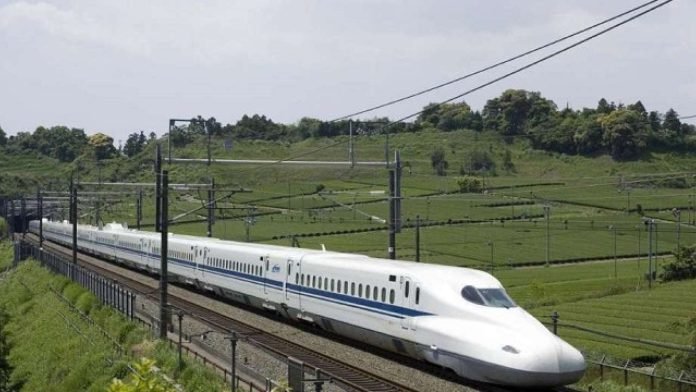
Representational Image

NEW DELHI (Metro Rail News): The National High-Speed Rail Corporation Limited (NHSRCL), responsible for implementing high-speed rail bullet train corridors in India, is seeking qualified and experienced candidates for various engineering and management positions for the Mumbai-Ahmedabad High-Speed Rail Project.

The vacant Position Details are as follows:

Senior manager (Rolling Stock)- 2 Posts

Senior Manager (Rolling Stock) Depot- 01 posts

Assistant Manager (Rolling Stock- Electrical)- 01 post

Assistant Manager (Rolling Stock- Electronics)- 01 post

Assistant Manager (Rolling Stock- Mechanical)- 01 post

DGM (Human Resource)-01 post

Deputy General Manager (S&T)-05 post

Deputy General Manager (IT)-01 post

Deputy General Manager (Ticketing System)-01 post

Senior Manager/ Manager (S&T)- 06 posts

Senior Manager/ Manager (IT)- 02 posts

Senior Manager/ Manager (Ticketing System)- 01 post

Senior Manager/ Manager (contracts S&T)- 01 post

To know more about the vacancy details, please visit the NHSRCL official website career section.


Advertisement1
InnoMetro_2026

Ahluwalia Contracts bags order to redevelop Chandigarh Railway Station

0
Ahluwalia Contracts bags order to redevelop Chandigarh Railway Station

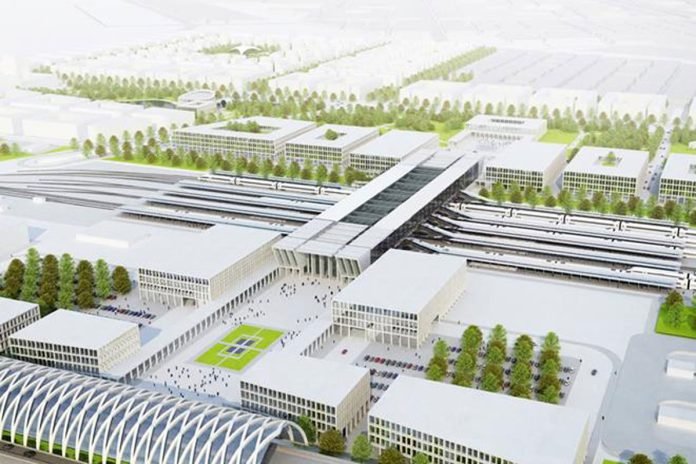
CHANDIGARH (Metro Rail News): The Rail Land Development Authority (RLDA) has granted Ahluwalia Contracts (India) Pvt Ltd. a letter of acceptance (LOA) for Rs 462 crore for the redevelopment of Chandigarh Railway station by the Indian Railways station redevelopment scheme. An EPC (engineering, procurement, and construction) model will be used to renovate the station. The redevelopment project is anticipated to be finished in 15 months.

“The RLDA has awarded the tender for the redevelopment of the Chandigarh Railway Station. The city will soon have a world-class redeveloped railway station with passenger amenities comparable to those found in international airports. The upgraded station will not only contribute to the city’s infrastructure growth story, but will also integrate the two sides of the city. providing a new terminal for Panchkula side and a roof plaza. The redeveloped station will act like a new city centre and play an important role in the city’s overall development.” said Ved Parkash Dudeja, Vice Chairman, RLDA

“The primary goals of station upgrades are to provide passengers with best-in-class amenities and to improve their travel experience. The redeveloped Chandigarh station will have separate arrival and departure areas to provide passengers with a comfortable and convenient travel experience. In addition, a 72-metre wide roof plaza is being provided over the platforms with food plaza and retail shops where passengers can wait for their trains in comfortable ambience,” he added.

As per the plan, two technologically advanced foot overbridges (FOB) will also be constructed to facilitate seamless passenger mobility. In addition, the refurbished railway station will be upgraded to a unified grid system to provide structural modularity and will be combined with other means of transportation whenever possible.

The station will be constructed to the same standards as world-class airports and will have modern lobby areas, a food court, a paid lounge, an information desk, and some office and retail space. The Ambala Division of the Northern Railway Zone includes the Chandigarh Junction, which serves the tri-city of Chandigarh, Mohali, and Panchkula.

Key characteristics of the station include:

72-meter-wide roof for a food court and retail stores.

Separate spaces for arrival and departure

New Panchkula-side terminal

Two modern foot overbridges

Paid lounge and information desk

Integrated with other forms of transport

The Rail Land Development Authority (RLDA) is a statutory authority within the Ministry of Railways (Govt. of India).


Advertisement1
InnoMetro_2026

Two new Mumbai Metro line 2A & 7 to be operational in January 2023

0
Mumbai-Metro/Representational Image

MUMBAI (Metro Rail News): According to the Mumbai Metropolitan Region Development Authority (MMRDA), the two new lines, 2A (Dahisar to Andheri West DN Nagar) and 7 (Dahisar East to Andheri East) of the Mumbai Metro are anticipated to be completely operational in January 2023.

The then Maharashtra chief minister Uddhav Thackeray flagged off the first phase of these lines in April this year, a 20-kilometre section between Dhanukarwadi (Kamran Nagar) and Aarey Colony in the western suburbs of Mumbai.

The Maha Mumbai Metro Operations Corporation Ltd (MMMOCL), in charge of operating and maintaining the metro rail, has calculated an average daily ridership of 30,000 for the segment with 18 stations.

According to MMMOCL officials, once the stretch of these two lines with 30 stations and a 35 km elevated corridor is operational, it can carry close to 3 lakh passengers daily. These two lines are anticipated to handle 11.37 lakh people by 2031. The new lines will also connect with the existing Metro One that runs between Ghatkopar and Versova at DN Nagar and Western Express Highway (WEH) stations.

To reduce traffic on the WEH, which has heavy traffic during morning and evening peak hours, the two new Metro lines will run side by side on the east and west sides of the area. In addition, the two lines should make Mumbai’s local trains less crowded while offering a considerably more comfortable alternative mode of transportation.

Mumbai Metro lines 2A and 7 are now under the control of the Commission of Metro Rail Safety (CMRS). Commercial operation will start along the entire line once CMRS certification of approval is received. The CMRS certification comprises supervision of the rails, signalling, electrical systems, and civil works before opening the corridor to passengers. The responsible authority methodically conducts a safety inspection.

The cost to complete the Metro line 2A project is Rs 6,410 crore, compared to Rs 6,208 crore for line 7. Asian Development Bank and National Development Bank are the financial sources for both lines.

Currently, a train set with six coaches, each having a capacity of 380 passengers, is travelling the 20-kilometre route. Bharat Earth Movers Ltd (BEML) has made 28 rakes available, allowing for the operation of both lines at a seven-minute interval. Both routes will have a car shed at Charkop.

Advertisement1
InnoMetro_2026

KMRL floats tender for Design and construction of Kochi Water Metro Project

0
Kochi Water Metro
Kochi Water Metro

KERALA (Metro Rail News): Kochi Metro Rail Limited (KMRL) has floated an e-Tender under two packet systems from eligible applicants for the Design and construction of a terminal at Mattancherry (Phase 1; Stage- 1C) for the Kochi Water Metro project (KWMP), Kochi, Kerala.

  1. Tender Reference Number: KMRL/PROC/TENDER/2022-23/126
  2. Name of Work: Design and construction of the terminal at Mattancherry (Phase 1; Stage- 1C) for the Kochi Water Metro project (KWMP), Kochi, Kerala.
  3. Tender Value: INR 12,29,00,000 Crore
  4. EMD: INR 11 Lakh
  5. Period Of Work: 301 Days
  6. Document Download / Sale Start Date: 10th December, 2022
  7. Document Download / Sale End Date: 30th January, 2023
  8. Pre–bid Meeting Date: 23rd December, 2022
  9. Bid Submission Start Date: 12th January, 2023
  10. Bid Submission End Date: 30th January, 2023
  11. Bid Opening Date: 01st February, 2023
Advertisement1
InnoMetro_2026

HAML commences to fast track Airport Metro Rail ground works

0
hyderabad airport metro
Hyderabad airport metro

HYDERABAD (Metro Rail News): Hyderabad Airport Metro Ltd (HAML) has decided to take on several tasks in a parallel processing style to commence the Airport Metro Rail ground works early and quicken the pre-construction activities.

Two survey teams have been hired to collect the ground data for deciding the location of metro pillars and stations, their heights, the profile of the viaduct, etc.

On 18th December, HAML MD NVS Reddy and a team of senior engineers examined the Airport Metro route from Raidurg Metro station to Narsingi Junction to begin the survey work and give the survey teams instructions.

During the inspection, the engineers and survey teams were instructed to plan the corridor for the city’s distributed growth and station locations closer to significant road junctions. In addition, as requested by Chief Minister K. Chandrashekhar Rao, it should accommodate reverse commutes so that even lower-income groups can stay in superior housing on the city’s outskirts and travel to job locations within 20 minutes or less.

The possibility of linking the extended blue line’s new terminal station and the Airport Metro station is being investigated while expanding the current corridor 3 (blue line) from Raidurg station to the new Airport Metro Raidurg station by roughly 900 metres. However, these two additional stations can be placed above each other due to space restrictions in front of the L&T building and the Aurobindo building behind Ikea.

The teams were informed that the metro viaduct spanning over the Biodiversity junction flyover must be built and constructed in a particular manner to make a unique way to facilitate integration for the future BHEL-Lakdi ka pul Metro corridor station.

Mr Reddy said the location of Nanakramguda station should be planned with arms/skywalks to benefit passengers from all directions, and the one near Narsingi Junction should cater to the growth requirements of high-rise commercial and residential buildings coming up in Narsingi-Kokapet and nearby areas/colonies.

HAML Chief Electrical Engineer DVS Raju, Chief Project Manager B Anand Mohan, GMs M Vishnuvardhan Reddy, Rajendra Prasad Naik, and senior engineers participated in the inspection.

Advertisement1
InnoMetro_2026

Delhi Metro Phase 4 TBM 367 and 372 pass Factory Acceptance Test

0
Delhi Metro Phase 4 TBM 367 and 372 passes Factory Acceptance Test

NEW DELHI (Metro Rail News): The 65.1-kilometre Delhi Metro Phase 4 project’s tunnel boring machine manufacturer Robbins finished the factory acceptance tests (FAT) on TBM 367 and TBM 372.

Afcons Infrastructure will use the 6.5 m diameter Earth Pressure Balance (EPB) machines that have been repaired. They were initially deployed to build Singapore MRT and brought to Robbins’ yard in Gurgaon’s Sector 74.

TBM 367 on Magenta Line

TBM 367 and 3 more Robbins machines will be deployed by Afcons to work on Package DC-05 of the 28.92 km Janakpuri West – RK Ashram extension of the Delhi Metro Magenta Line.

The 7.46 km subterranean section connects a ramp north of Derawal Nagar with RK Ashram with six stations—Derawal Nagar, Ghanta Ghar, Pulbangash (interchange with Red Line), Sadar Bazar, Nabi Karim, and Ramakrishna Ashram Marg.

Afcons won a contract of Rs. 2481.50 crores for Package DC-05 from Delhi Metro Rail Corporation (DMRC) in January 2022 with a 42-month deadline.

TBM 372 on Silver Line

Afcons will send out TBM 372, another Robbins machine, and two Herrenknecht machines to work on Package DC-07 of the 23.622 km Silver Line of the Delhi Metro, which connects 16 stations from Aerocity to Tughalakabad.

Package DC-07 would link the eastern end of Sangam Vihar Station and Sarita Vihar Depot through three stops at Maa Anandmayee Marg, Tughlakabad Railway Colony, and Tughlakabad, where it will interchange with the Violet Line station constructed in Phase 2.

Rs. 1669.20 crore contract for Package DC-07 was awarded in January 2022 with a 42-month completion period.

The other Robbins machine preparing for FAT for DC-07 is 364. According to reports, TBM S-1264 (Varada) from Bangalore Metro Phase 2 and TBM S-711 from Chennai Metro Phase 1 will be deployed by Afcons.

Advertisement1
InnoMetro_2026

Survey and preparation of DPR for seven HSR corridors have been undertaken

0
High-Speed Rail
Survey Begins for High-Speed Rail Corridor Between Delhi and Amritsar ( Representative Image only)

MUMBAI (Metro Rail News): Currently, the Mumbai-Ahmedabad High-Speed Rail (MAHSR) Project is the only sanctioned High-Speed Rail project in the country being implemented with technical and financial assistance from the Government of Japan. Further, the Survey and preparation of a Detailed Project Report (DPR) for the following seven (7) High-Speed Rail (HSR) corridors have been undertaken:

(i)    Delhi – Varanasi

(ii)   Delhi -Ahmedabad

(iii)  Mumbai-Nagpur

(iv)  Mumbai -Hyderabad

(v)   Chennai – Bangalore – Mysore

(vi)   Delhi – Chandigarh – Amritsar

(vii)  Varanasi – Howrah

Further, the Government has given “in-principle” approval for a pre-investment activity for the following two Semi High-Speed Rail (SHSR) Projects:-

(i)   Thiruvananthapuram to Kasargod Semi High-Speed Rail (SilverLine) Project on Standard Gauge; and

(ii)    Pune-Nasik Semi High-Speed Rail Project on Broad Gauge Line.

Both the Semi High-Speed Rail (SHSR) projects are to be executed by a Joint Venture company named Kerala Rail Development Corporation Limited (KRDCL) and Maharashtra Rail Infrastructure Development Corporation Limited (MRIDC) of the State Governments of Kerala and Maharashtra, respectively.

This information was given by the Minister of Railways, Communications and Electronic & Information Technology, Shri Ashwini Vaishnaw, in reply to a question in Rajya Sabha.

Advertisement1
InnoMetro_2026

USBRL : India’s long tunnel on Katra –Banihal section has a successful breakthrough

0
USBRL : India’s long tunnel on Katra –Banihal section has a successful breakthrough

NEW DELHI (Metro Rail News): The USBRL (Udhampur Srinagar Baramulla Rail Link) is a National project undertaken by the Indian Railways to construct a broad-gauge railway line through the Himalayas, intending to connect the Kashmir region with the rest of the country.

On December 15th, 2022, a significant milestone was achieved by executing the breakthrough of Escape Tunnel T-49 between the Sumber and Khari Stations on the Katra –Banihal section of the USBRL project.

The length of the escape tunnel is 12.895 km. This is the longest escape tunnel in India, and the line and level of the Tunnel are precisely achieved during the breakthrough of the Escape Tunnel. Shri S.P. Mahi, Chief administrative officer/USBRL, has achieved this breakthrough with his team of officials and staff.

It is a modified horseshoe shape tunnel connecting the Sumber Station yard on the Southside & Tunnel T-50 after crossing Bridge no.04 over Khoda Nallah on the North side, at Khoda village. The elevation of the South end at Sumberis is approx 1400.5 m and of the North end is 1558.84 m. The ruling gradient inside the Tunnel is 1 in 80. The boring was done from various faces from the South portal and north portal and through three Aditsi.e.Urnihal (323 m), HingniAdit (280m) & Kundan  Adit (739m).

The Tunnel T-49 is a twin tube tunnel comprising the Main Tunnel (12.75 Kms.) & Escape Tunnel (12.895 Kms.) connected with 33 numbers of cross-passages at every cross-passage. The primary tunnel mining was completed, and the final lining works are progressing rapidly. The Tunnel is constructed as per International standards, in which provision of an Escape Tunnel has been made to facilitate rescue and restoration works in emergency cases. The Escape Tunnel passes through the Ramban formation of the Young Himalayas, and besides this, various distributaries/Nallahs of Chenab River like Khoda, Hingni, Kundan Nallah etc. Cross all along the alignment, making mining more of a highly challenging task.

Several Challenges were encountered during construction, such as shear zone, perched aquifer, highly jointed rock mass, rock problems of excessive squeezing and heavy water ingress. On the north end, the tunnel alignment passes through a fragile shear zone of carbonaceous phillite. The tunnel mining was challenging, and several surprises were met during tunnelling. Excessive deformations were recorded during tunnelling at several locations between Kundan and Seeran, but these challenges were successfully tackled professionally. Also, a major cavity was encountered in the escape tunnel on 21.03.2021 at Ch. 12/538 near the north portal due to extremely poor rock mass; the strength of Rock mass was not more than 5 MPA and RQD (Rock quality designation) <10, with damp to wet Groundwater Conditions. The calculated RMR( rock mass rating ) is 18, GSI( geological strength index) is 26, and Basic RMR ( Rock Mass Rating ) is 16. The vertical overburden near the cavity location was 150 m. The size of the cavity was about 3 m long and 15 m high from the crown, continuous flow of mass was also witnessed, and tunnelling in E.T. ( Escape Tunnel) was subsequently suspended. The tunnel face was immediately stabilised, and the fate was sealed. A detailed investigation was carried out, and a detailed methodology was finalised to attend to the cavity. The work was successfully carried out by negotiating the cavity.

The Tunnel was constructed by the New Austrian Tunnelling Method (NATM), a modern technique of drill and blast processes. Although the boring work of the Tunnel started from both directions up to the hand-shaking point, the precision of both ends meeting at one point was flawless. This is the result of meticulous planning and precise execution of tunnelling work, the line and level of the Tunnel perfectly matched in both portions after the breakthrough.

The team of experienced engineers of Indian Railways successfully negotiated all challenges and achieved the major milestone of the breakthrough of the Escape tunnel. Moreover, during the construction activities of the Tunnel, more than 75% of workers from nearby villages were engaged in various construction activities, thereby ushering a positive change in the overall socio-economic landscape of the region.

It is worth mentioning that the T-49 Tunnel (12.75 km) from Sumber to Sheeran village in Khari Tehsil area of Ramban district of Jammu and Kashmir  UT is the longest transportation tunnel in the country. It is noteworthy to mention that there are three other tunnels on this project, the length of which are close to that of Tunnel T-49 and details for these are as follows :

  • Tunnel T48 = 10.20km(Breakthrough already achieved) between village Dharam- Sumber station
  • Tunnel T15= 11.25 km between Sangaldhan – Basindhadar stations
  • Pirpanjal   Tunnel= 11.2km between Banihal – Qazigund stations

Advertisement1
InnoMetro_2026

TBM Bhadra achieves first tunnel breakthrough for Bangalore Metro Phase- II

0
TBM Bhadra achieves first tunnel breakthrough for Bangalore Metro Phase- II

BANGALORE (Metro Rail News): The Tunnel Boring Machine (TBM), Bhadra, for the proposed Pink Line emerged at Shadi Mahal near Tannery Road on December 16 after tunnelling a distance of 1,066 metres. In June 2021, the machine was set up at Venkateshpura underground station to tunnel upward to K.G. Halli metro station.

According to Bangalore Metro Rail Corporation Limited (BMRCL) information, the machine finished the tunnel after 540 days. Tannery Road Station now features a 192-meter temporary tunnel for drive-through due to the machine.

The BMRCL is constructing a 14 km tunnel network from Dairy Circle to Nagawara as part of Phase II. The Namma Metro project’s contractors have operated nine tunnel boring machines. The line from Kalena Agrahara to Nagawara (Pink line) includes the tunnel system.

At Nagawara, this line will be integrated with the ORR airport line. The Pink Line is likely to be operational by 2024.


Advertisement1
InnoMetro_2026

RITES, KOEL sign MoU to explore business avenues

0
RITES CSO Mr. Manobendra Ghoshal & KOEL MD Ms. Gauri Kirloskar at the MoU-signing ceremony in Gurugram

GURUGRAM (Metro Rail News): RITES Ltd., the leading Transport Infrastructure
Consultancy and Engineering company signed a memorandum of understanding (MoU) with Kirloskar Oil Engines Ltd. (KOEL) to jointly explore business opportunities for
supplies/services in the Export of Railway Rolling Stock, Infrastructure and Urban Transport for domestic and overseas markets.

As part of the MoU, RITES will provide expertise in design, marketing, operation &
maintenance, and any other support required for tapping business opportunities, while KOEL will be responsible for developing and manufacturing customized products. Mr Manobendra Ghoshal, Chief Strategy Officer (CSO) at RITES, said, “The collaboration with KOEL will not only create a platform to explore business avenues around the globe but also facilitate knowledge sharing to strengthen each other’s operations in promoting smart and sustainable infrastructure.”
Mr Vinod Menon, Vice President, KOEL, said, “The strategic partnership between RITES
and KOEL leverages the strengths of both organizations. While we at KOEL are focused on developing world-class products and services, RITES has outstanding design, technical expertise, and marketing capabilities. We look forward to a long and fruitful association.”

About RITES Limited:
RITES Limited, a Miniratna (Category – I) Schedule ‘A’ Public Sector Enterprise, is a leading player in India’s transport consultancy and engineering sector, having diversified services and geographical reach. With experience spanning 48 years, the company has undertaken projects in over 55 countries across Asia, Africa,
South America, and the Middle East region. It is the export arm of Indian Railways for providing rolling stock overseas.
About KOEL:
Kirloskar Oil Engines (KOEL), a flagship company of the Kirloskar Group, is amongst the leading and most prominent manufacturers of diesel engines. With the most extensive service networks, the company has business interests in various sectors such as manufacturing, oil and gas, power, construction and mining, agriculture, industry and transport.

Advertisement1
InnoMetro_2026