Home Blog Page 247

Delhi Metro’s Magenta Line Gets Major Upgrade with Rs. 263.44 Crore Contract

0
Delhi Metro/Representational image

 DELHI (Metro Rail News): This week, ETA Engineering and Polycab India joint venture secured a contract worth Rs. 263.44 crores to set up electrical and mechanical systems, environment control systems, and tunnel ventilation systems at six underground stations of Delhi Metro’s Magenta Line (Line-8).

As part of Phase 4, Delhi Metro’s Magenta Line is expanding with the Janakpuri West – RK Ashram extension (28.92 km) through a combination of underground tunnels and viaducts. Afcons Infrastructure is constructing six stations as part of Package DE-09 in Civil Package DC-05 at Ghanta Ghar, Derawal Nagar, Pulbangash, Nabi Karim, Sadar Bazar, and Ramakrishna Ashram Marg.

In June 2022, DMRC invited tenders for Contract DE-09, which was funded by the JICA ( Japan International Cooperation Agency ). The contract had a deadline of 1081 days (2.95 years) and an unspecified estimate. In September 2022, technical bids were opened for the contract, followed by the opening of financial bids in January 2023. The final contract value amounts to Rs. 263,44,04,600.65.


Advertisement1
InnoMetro_2026

New Delhi Railway Station set for a Rs. 4,700 crore revamp in 3 phases

0
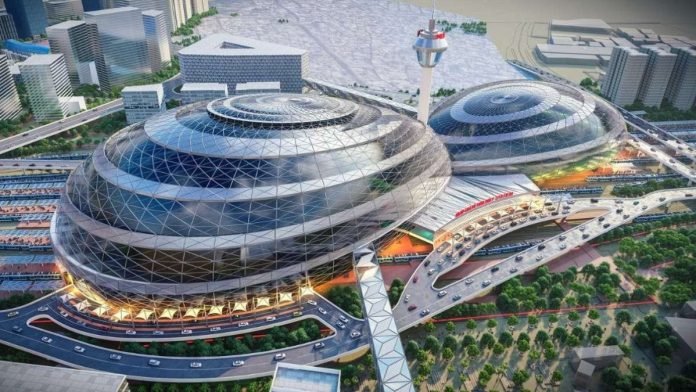
Proposed Model for redeveloped New Delhi Railway Station/ Image from Twitter, Ministry of Railways

New Delhi (Metro Rail News): New Delhi Railway station is set to undergo a significant renovation, which will be carried out in three phases this year. Initially, the station’s only platform was between Ajmeri Gate and Paharganj. Today, it is recognized as one of the most active stations in the country in terms of passenger movement and train frequency. It has a total of 16 platforms and 18 tracks, with platform 1 situated in Paharganj and platform 16 opening towards Ajmeri Gate.

The New Delhi Railway Station acts as the primary terminal station for numerous rail routes heading towards the East and South. In addition, it is linked to significant railway lines such as the New Delhi-Chennai Main Line, Howrah-Gaya-Delhi Line, New Delhi-Mumbai Main Line, and Delhi-Ahmedabad High-Speed Rail Corridor.

A railway official has disclosed that a redevelopment plan is scheduled to commence in 2023 after a gap of nearly 15 years. According to this plan, construction work will be carried out on platforms 1-5 during phase-1, on platforms 6-9 during phase-2, and on platforms 10-16 in phase-3. In addition, a senior Railway Board official has stated that the New Delhi Railway Station currently operates 300 passenger trains daily.

In 2022, the Indian government declared that the renovation of the New Delhi Railway Station would be carried out at an expected cost of Rs. 4,700 crore. The Union Cabinet had previously authorized Rs. 10,000 crore to fund the revamp of the railway stations in Delhi, Mumbai, and Ahmedabad.

According to the Indian Railways’ plan, the New Delhi Railway Station will feature 40-story twin towers, multi-level car parking, and designated pick-up and drop-off zones, among other amenities, after its redevelopment.

As stated by the government, the Railways will be allocated an area of 45,000 square meters for its office, in addition to the development of 91 bus bays, 1500 ECS parking, and a skywalk for pedestrians and metro commuters.

Based on the model, the office, hotel, and some retail shops will be located in the twin towers. In addition, the station will be designed to reflect both traditional and contemporary Indian culture, giving it a distinct identity. The main complex of the station will cover approximately 222,000 square meters and feature a six-floor building with two large signature domes. The Railways still need to set a specific timeline for this development. In addition, as per the Ministry of Railways’ modernization program, the New Delhi Railway Station and its surrounding areas will be enhanced and equipped with state-of-the-art amenities.

The New Delhi Railway Station redevelopment plan is complete, and the railway authorities are awaiting approval from the Delhi Urban Art Commission. The project is likely to be carried out on a Public-Private Partnership (PPP) basis. However, one obstacle in starting the project is the lack of approval of the Delhi Urban Art Commission for the master plan of the Railway Land Development Authority (RLDA).

Advertisement1
InnoMetro_2026

MMRDA Floats Tender for Kalyan-Taloja Metro line 12 for Better Connectivity

0
Navi Mumbai Metro
Representational Image

MUMBAI (Metro Rail News): Mumbai Metropolitan Region Development Authority (MMRDA) has recently floated the tenders for the Metro 12 corridor, which connects Kalyan to Taloja for better Connectivity. Maharashtra’s Chief Minister, Eknath Shinde, has announced funding of Rs. 1521 crore for the project and stated that work on the ground would commence shortly.

This upcoming extension of the Mumbai Metro’s Orange Line (Thane-Bhiwandi-Kalyan) is the Kalyan-Dombivli-Taloja line. This new corridor will span over 20.75 kilometres, encompassing 17 stations, providing a convenient and seamless mode of transportation to and from the upcoming Navi Mumbai International Airport.

MMRDA has floated tenders for nine stations on the 20 km long line which will have a total of 17 stations. The cost of the contract’s first phase is Rs 780 crore. MMRDA expects to operate trains of 3 or 6 coaches in this area depending on the demand. Upon operationalisation, the line will be integrated with Mumbai Metro line 5, benefiting citizens of Kalyan-Dombivli, Ambernath, Ulhasnagar, Badlapur Thane, Navi Mumbai and Panvel in large numbers.

As per the Detailed Project Report (DPR), the corridor passes through agricultural and barren land with comparatively fewer populations. The main aim of this corridor is to accelerate development activities and promote the relocation of people from crowded parts of the city to this area, as stated in the DPR. The project also aims to decongest Mumbai city by providing an alternative commute option. The initial services on this route will be operated with three-car coaches and later introduce six-car trains. The route will have a total of 15 rakes. MMRDA anticipates around 1.25 lakh passengers in the first year and a daily ridership of more than 2.6 lakh by 2031.

Advertisement1
InnoMetro_2026

Patna Metro gears up for High-Tech Revolution with CBTC Technology

0
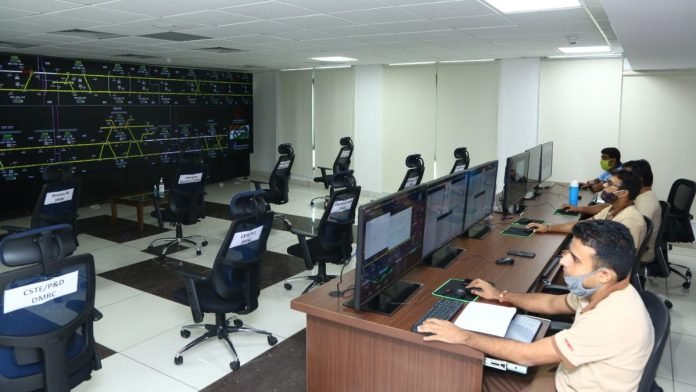
CBTC Control Room
CBTC Control Room

PATNA ( Metro Rail News ): CBTC stands for Communications-Based Train Control, which is a modern signalling system used in the operation of Metro Rapid Transit System (MRTS) to help control the movement of trains. It is a wireless communication to transmit information between trains and the control centre. It is the latest technology available worldwide and is being adopted by all new MRTS networks in India. DMRC is also planning to utilize it in Patna Metro project in near future.

Here are some of the benefits of CBTC for the commuters:

  1. Improved Safety: CBTC allows for real-time monitoring and control of train movements, which helps to prevent accidents and collisions. The system also automatically detects and reacts to any abnormalities or malfunctions in the train system, increasing the overall safety of the metro.
  1. Increased Capacity and Efficiency: CBTC can increase the frequency and speed of train operations, resulting in faster travel times and more efficient use of the metro system. This allows for more passengers to be transported in a shorter amount of time, reducing crowding and wait times.


  1. Reduced Maintenance Costs: CBTC systems can help reduce maintenance costs as the system constantly monitors and alerts the maintenance team to any potential issues or failures. This allows for preventative maintenance, reducing the likelihood of major failures or disruptions in train services.
  2. Enhanced Passenger Experience: CBTC allows for smoother and more predictable train operations, which can improve the overall passenger experience. Passengers can rely on a more efficient and punctual service, and the system can also provide real-time information on train schedules and delays.

In conclusion, this system reduces headway (waiting period between two trains) and increases transport capacity. The technology relies on continuous two-way digital communication between each train and the control centre. Each train transmits its location, direction and speed to the control system which makes necessary calculations for safe travel.

The implementation of Communications-Based Train Control (CBTC) technology in the upcoming Patna Metro project is expected to revolutionize the way passengers travel in the city. Patna Metro is poised to become a world-class transportation system that will enhance mobility, connectivity, and quality of life for the people of Patna.

Advertisement1
InnoMetro_2026

Revolutionizing Freight Transportation: India’s Dedicated Corridors Cover 1724 KM

0
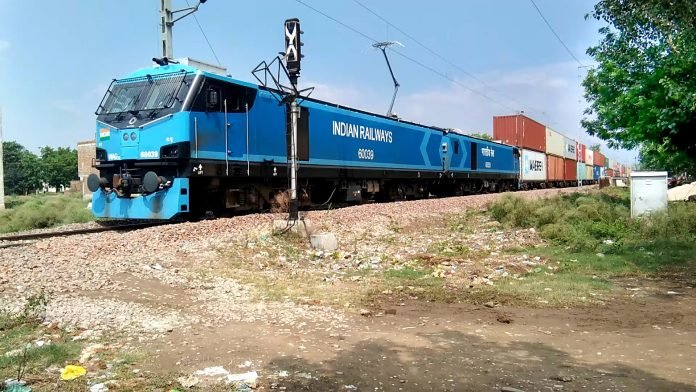
Western Dedicated Freight Corridor
Representational image only

NEW DELHI ( Metro Rail News): As of January 2023, 1724 kilometres of Dedicated Freight Corridors have been commissioned. The Ministry of Railways has constructed two such corridors, the Eastern Dedicated Freight Corridor (EDFC) and the Western Dedicated Freight Corridor (WDFC). The EDFC runs from Ludhiana to Sonnagar covering a distance of 1337 kilometres, while the WDFC extends from Jawaharlal Nehru Port Terminal (JNPT) to Dadri, spanning 1506 kilometres. The physical progress made on the EDFC and WDFC is 861 and 863 kilometres, respectively.

The Dedicated Freight Corridors will stimulate industrial activities, promote new industrial hubs and townships, and create direct and indirect employment opportunities through the development of new freight terminals, multimodal logistic parks, and inland container depots. The National Industrial Corridor Corporation (NICDC) under the Ministry of Commerce is overseeing the implementation of several projects along the corridors to facilitate the development of Integrated Industrial Townships.

As per the official statement, as of March 2014, there was no physical growth on either of the corridors. However, as of January 2023, a significant 1724 km has been commissioned. In addition, the expenditure ( including land) was Rs. 10357 crores during FY 2013-14. As of December 2022, the expenditure on the corridors has risen to Rs. 97,957 crores, indicating the financial investment being made to develop the DFCs.

Advertisement1
InnoMetro_2026

TBMs S-710 and S-1134 pass FAT for Delhi Metro Phase 4

0
TBM-S1134/Image by Afcons

DELHI ( Metro Rail News): This week, Herrenknecht, a manufacturer of tunnel boring machines, finished the factory acceptance tests (FAT) for TBMs S-710 and S-1134. These are to be used for the 65.1 km Delhi Metro Phase 4 project construction.

Afcons Infrastructure is now set to utilize both refurbished Earth Pressure Balance (EPB) machines, each with a diameter of Ø6.63m, alongside two additional machines, in order to construct twin tunnels for Package DC-05 of the 28.92 km Janakpuri West – RK Ashram extension of the Magenta Line.

In January, 2022, DMRC had provided 2481.50 crore contract for package DC-05 to Afcons with the deadline of 42 months.

Package DC-05 is an underground section that spans 7.46 km and will connect a ramp north of Derawal Nagar to RK Ashram. The section includes six stations located at Derawal Nagar, Ghanta Ghar, Pulbangash (which provides an interchange with the Red Line), Sadar Bazar, Nabi Karim, and Ramakrishna Ashram Marg (which provides an interchange with the Blue Line).

Afcons previously utilized TBM S-710 in Chennai between 2015 and 2017, where it was deployed for Phase 1’s Package UAA-01 between Egmore and May Day Park – Washermenpet. Later, the machine was brought to Ahmedabad between 2018 and 2020, where it was used for Phase 1’s Package-1 between East Ramp, Kankaria East, and Kalupur.

Advertisement1
InnoMetro_2026

Kolkata Metro Line-3 Underground Work Sees Bids from L&T, ITD, and Afcons

0
KOLKATA-METRO
KOLKATA-METRO/Representational Image

KOLKATA (Metro Rail News):  On Tuesday, three companies, namely Larsen & Toubro, ITD Cementation India, and Afcons Infrastructure, placed their bids for the UGI underground contract of the Kolkata Metro Purple Line. The contract is for a distance of 5.05 km, between Mominpur and Esplanade.

In July 2022, Rail Vikas Nigam Ltd. (RVNL) requested bids for this contract, which had an estimated value of Rs. 2571.28 crore and an undisclosed deadline.

The last 15.215 km section of Line-3 (Joka – Esplanade), located in the northern region, will have two twin tunnels and four underground stations – Kidderpore, Victoria, Park Street, and Esplanade. The contractor assigned to this project will need to utilize two new tunnel boring machines (TBMs) and have one TBM on standby.

The Joka-Esplanade metro corridor in West Bengal, India requires the design and construction of a ramp and underground railway works covering a 5.05 km stretch (from chainage 9063.00m to 14113.00m). The scope of work includes four underground stations – Khidderpore, Victoria, Park Street, and Esplanade, tunnel construction through tunnel boring machines and cut & cover methods, architectural finishing works, track works, and more.

All three bids are undergoing technical evaluation, which is expected to take a few months to complete. Once the technical evaluation is concluded, the financial bids of the qualified bidders will be opened to identify the lowest bidder and the most likely contractor for this package.

It is anticipated that a contractor will be assigned to begin tunnelling work on this project in mid-2025, with the expectation of assigning the contractor in the second half of 2023. However, delays in the tendering process will likely result in this section not being operational until 2028. This extended timeline will result in the recently opened 6.49 km Joka-Taratala elevated section functioning as a disconnected stand-alone line for an extended period of time.

Advertisement1
InnoMetro_2026

Ahmedabad Metro Phase 2 Package C3 gets its first Pier cast by RBL

0
Ahmedabad Metro Phase 2 Package C3 gets its first Pier cast by RBL

Ahmedabad (Metro Rail News): Last week, Ranjit Buildcon Ltd. laid concrete on the first pier (P13) for Package C3 of Ahmedabad Metro Phase 2, which connects Sector-1 to Mahatma Mandir in Gandhinagar. Dilip Buildcon (DBL) was awarded the contract for this 7.553 km elevated package in October 2022, valued at Rs. 723.45 crores, and later subcontracted the construction work to Ranjit Buildcon.

In January 2023, Ranjit’s team began the pile load testing works between Sector-1 and Sector 10A for Package C3 of Ahmedabad Metro Phase 2. The team later moved to the first step of the construction process, which is piling works, at the same site on February 1. This package comprises of seven elevated stations at Sachivalaya, Akshardham, Juna Sachivalaya, Sector-16, Sector-24, and Mahatma Mandir.

The third and final section of Phase 2 of Ahmedabad’s metro system, which spans 28.254 km, will extend the north-south Red Line by 22.838 km from Motera Stadium to Mahatma Mandir through 20 new stations. In addition, there will be a 5.416 km spur from GNLU to GIFT City, which will include two new stations.

Ranjit Buildcon casts first pier for Ahmedabad Metro Phase 2 Package C3 – Sector-1 – Mahatma Mandir

Advertisement1
InnoMetro_2026

L&T’s Tunnel Boring Machine ‘Lavi’ Achieves Final Breakthrough at RMS Station

0
TBM Lavi
TBM Lavi

BANGLORE (Metro Rail News): On Wednesday, Larsen & Toubro’s tunnel boring machine named Lavi (DZ672) achieved its second breakthrough at the Rashtriya Military School Station on the 21.386 km Pink Line (Reach 6) of the Bangalore Metro.

In May 2022, the CRCHI slurry machine, TBM Lavi, was commissioned to construct the 1134m down-line tunnel towards Rashtriya Military School Station after its initial breakthrough at MG Road Station in April 2022.

L&T has successfully completed the construction of the fourth tunnel, marking the final breakthrough as per the plans for the Bangalore Metro Phase 2 Project’s 2.755 km package RT-02. This tunnel will connect MG Road, Shivaji Nagar,  and Rashtriya Military School.
At the beginning of the drive, L&T estimated that tunnelling would take 331 days, but the job was completed in 260 days, exceeding expectations. Lavi has now completed its task, becoming the fourth of nine machines, following Varada, Avni, and Urja, to finish all of its tunnelling assignments.

According to BMRCL’s press release, about 72% of the tunnelling work for Phase 2, which has a total scope of 21,245 meters, has been completed. L&T’s TBM Vindhya is scheduled to make its breakthrough later this month at Shadi Mahal Shaft from Pottery Station, which will be the sixth and final breakthrough for Package RT-03 (Shadi Mahal Shaft – Shivajinagar).

So far, a total of 18 out of 26 tunnel breakthroughs have been recorded, with Afcons completing 5 on Package RT-01, L&T completing 4 on RT-02 and 5 on RT-03, and ITD Cementation completing 4 on RT-04.

Advertisement1
InnoMetro_2026

KSM wins contract to construct the Modipuram Depot for the Delhi-Meerut RRTS project

0
Rapidx Train/Representational image
Representational image

DELHI NCR ( Metro Rail News): KSM Bashir Mohammad & Sons was awarded a contract worth Rs. 265.71 crores to construct the Modipuram Depot and Workshop.


The Modipuram Depot, situated on a 34.94-hectare land parcel at the northern end of the first semi-high-speed line in Delhi NCR, has been designed to accommodate 20 sets of 9-coach Alstom RRTS trains and 36 sets of 3-coach Alstom MRTS trains. The depot will serve the local Meerut Metro services operating on a 20 km route between Partapur and Modipuram.


In October 2021, the National Capital Region Transport Corporation (NCRTC) solicited tenders for the construction of this depot, with an unspecified cost and a 700-day completion deadline. In January 2022, the technical bids were opened, revealing four bidders, and in April 2022, the financial bids were opened.


KSM completed the Polytechnic Depot for the Kanpur Metro in record time in 2021 and is currently constructing the Gandhi Nagar Depot for the Indore Metro.

The Duhai Depot (Package 5A), being built in the Ghaziabad District by KEC-VNC JV and a small stabling yard in Jangpura, Delhi, will primarily support the long-distance RRTS train operations.


Advertisement1
InnoMetro_2026