Home Blog Page 216

RCF in Kapurthala Records Significant Increase in LHB AC and MEMU Coach Production

0
Representational image only

NEW DELHI (Metro Rail News): The rail coach factory in Kapurthala has witnessed a significant increase in the production of LHB AC coaches and MEMU coaches. In the fiscal year 2022-23, the factory produced 1114 LHB AC coaches, a notable rise from the 471 coaches produced in 2020-21. Similarly, the production of MEMU coaches went from three to 213 in the same fiscal year.

The surge in the production of MEMU coaches was driven by a high demand from zonal railways. In 2021-22, the factory manufactured 22 coaches, and this number was increased to 213 in 2022-23.

On the other hand, the production of LHB non-AC coaches faced some challenges. The factory manufactured 1500 coaches in 2020-21, 1862 coaches in 2021-22, and 1651 coaches in 2022-23, indicating a decrease in production. Overall, the production rate in 2022-23 decreased compared to the previous year.

According to railway officials, the decrease in production in 2022-23 can be attributed to a major shortfall in the supply of trade items. The production was adversely affected from April to June 2022, and there was a serious shortage of wheels from May to September 2022. These factors contributed to the lower production compared to the previous year, which had set a record as the highest ever.

Advertisement1
InnoMetro_2026

MAHSR Project Attracts Bids from Four Firms for Thane Depot Construction

0
NHSRCL Completes 100 Km of Viaduct and 250 Kms of Pier Erection on the Mumbai-Ahmedabad Bullet Train Project

DELHI (Metro Rail News): Four companies, two of which are in a consortium, have submitted their bids to construct the Thane Depot (Package D-1) for the Mumbai-Ahmedabad High-Speed Rail (MAHSR Bullet Train) project. This depot, managed by India’s National High-Speed Rail Corporation Limited (NHSRCL), will be used for the storage and maintenance of Shinkansen train-sets on a 60-hectare land near Bharodi and Anjur villages. It will be the second-largest train depot, with the Sabarmati Depot in Ahmedabad being the largest.

In December 2022, NHSRCL invited tenders for the construction of the Thane Depot, with a construction deadline of 5.5 years. However, the estimated cost was not disclosed for the tender. The bidders for this project are Dineshchandra-DMRC JV, KEC International, Larsen & Toubro, and SCC-PREMCO JV. The scope of work includes designing and constructing the Thane Depot, which encompasses civil works, building works, inspection sheds, maintenance facilities, and the installation, testing, and commissioning of necessary equipment in Maharashtra.

The submitted bids will now undergo a technical evaluation process, which is expected to take a couple of months to complete. Once the evaluation is finished, the financial bids of the technically qualified bidders will be opened. This will determine the lowest bidder and the most likely contractor for this package.

Advertisement1
InnoMetro_2026

Obstacles in Manufacturing 120 Vande Bharat Trains as TMH-RVNL Partnership Faces Challenges

0
Vande Bharat Express
Representational image

NEW DELHI (Metro Rail News): Production of 120 Vande Bharat trains faces obstacles as TMH-RVNL partnership encounters challenges. The Russian transportation company Transmashholding (TMH) and Indian Rail Vikas Nigam Limited (RVNL) formed a joint venture to manufacture Vande Bharat Express train sets worth approximately $3.63 billion (Approx 30,000 crore). However, the recent sanctions imposed on Russia by several countries, who serve as suppliers for spare parts, have caused complications.

Earlier this year, the Indian Railways awarded the JV deal to the TMH-RVNL consortium. In order to ensure smooth progress of the project, which involves manufacturing 120 Vande Bharat train sets at a cost of approximately ₹120 crore each, RVNL has requested majority shareholding from TMH. However, TMH has not agreed to this and has consequently not provided the required bank guarantee of nearly ₹200 crore to initiate the project.

A senior RVNL official stated that many parts need to be imported from manufacturers in Western Europe and America. On May 22, the United States imposed sanctions on Metrovagonmash, a division of TMH responsible for manufacturing rolling stock and spare parts for the Railways.

RVNL holds a significant share in the JV but is striving for a majority stake to instill confidence in international suppliers and bankers. The official explained that these companies are cautious due to the sanctions imposed on Russia as a result of the Ukraine war and prefer dealing with an Indian company. RVNL aims to resolve this matter by obtaining a majority share.

The TMH-RVNL consortium has until June 2025 to prepare the first two prototype Vande Bharat trains for testing and trials. Once the prototypes are approved, the production will continue in a tapered manner, manufacturing 12 to 18 trains each year. The consortium will also provide maintenance services for the trains for 35 years. The Indian Railways has allocated $1.8 billion for the train sets and an additional $2.5 billion for maintenance. Payments will be disbursed gradually after the delivery of train sets to the Railways.

The official expressed confidence in the technical capabilities of the Russians but emphasized the importance of ensuring comfort in dealing with them. They assured that the issue would be resolved within a few days. The Russian Embassy did not respond to requests for comments, and both sides have committed to keeping the negotiations bilateral and confidential.


Advertisement1
InnoMetro_2026

Patna Metro: A Hassle-Free Transport System for the Ancient City of Patliputra

0
Representational image only

Introduction

Patna Metro is the first mass rapid transit system proposed for the capital city of Bihar, Patna. The Patna Metro Rail Corporation (PMRC), a public company established in February 2019, is developing the project. The final detailed project report for the first phase of the metro rail project was prepared by PMRC in collaboration with Rail India Technical and Economic Service (RITES). In February 2016 and 2019, the state and central government approved the project, respectively. The Metro Rail project’s foundation stone was laid in February 2019. The first phase of the project is scheduled to begin operations in 2024.

Need & Importance

Patna, with a population of 2.6 million, is a tier-two city. It has seen a growth in the registration of two-wheelers and cars, as well as significant urbanisation, which has resulted in increased traffic and congestion in the city. Existing public transit networks are insufficient to fulfil expanding transportation demand. Pollution from an increasing number of private vehicles needs to be addressed through the construction of new public transport infrastructure, such as metro rail. The Patna metro rail project is envisaged to minimise traffic congestion and hence the environmental impact.

Routes and Stations

Proposed route for Patna Metro

The first phase of the Patna metro rail project is projected to be 30.91kms long, with 26 metro stations spread across two corridors. The metro will have a 1,435mm standard gauge track. Corridor 1 will run 17.78 kilometres between Danapur and Khemni Chak stations. It will have 7.01 kilometres of elevated sections, 0.31 kilometres of elevated ramp, 0.29 kilometres of ramp U-type retaining wall, and 10.17 kilometres of underground sections. The Suguna-Danapur main road, Bailey Road, Fraser Road, Patna Junction station, Mithapur bus stand road, and Patna-Sitamarhi road will all be connected by the corridor. It will include 14 metro stations, six of which will be underground and eight of which will be elevated.

Corridor 2 would be 14.2 km long and will connect Patna Junction and the New ISBT stations. It will have 7.8 kilometres of elevated portions, 0.15 kilometres of elevated ramp, 0.30 kilometres of ramp U-type retaining wall, and 5.95 kilometres of underground sections. Corridor 2 will include 12 stations, six of which will be underground and remaining six will be elevated. Fraser Road, Gandhi Maidan Road, Ashok Rajpath Road, Moin Ul Haq, Rajendra Nagar station, Kankarbagh main road, Malahi Pakri road, 90 feet road, Patna-Sitamarhi road, and Bodhgaya road will be connected by the corridor. Patna underground station and the Khemni Chak elevated station have been planned to be the proposed interchange stations. A depot near the New ISBT station will also be built as part of the metro project.

Project Infrastructure

Construction of local bus stations, car and bicycle parking and signage is proposed to improve connectivity between the metro and existing public transportation. Except for the Khemni Chak station, all elevated stations will have comparable station sizes and concourse layouts. To assist passengers in distinguishing and identifying the stations, different colours are planned for the concourse interiors of each station. The underground stations will have an upper (concourse) and lower (island platform) level. The platform width will vary according to the passenger capacity of each station, and it is expected to be at least 3m wide.

Rolling stock

The train sets chosen for the Patna metro rail project would be composed of either stainless steel or aluminium. The trains will be available in three- and six-car combinations. Each train set will have a front emergency door as well as bi-parting sliding doors that shall be electrically operated. With eight people per m2, the maximum axle load will be 16t. The maximum train length will be 129 metres. The train’s design speed is planned to be 95km/h, with an operational speed of 85km/h.

Signalling and Telecommunication

The Patna Metro project will have AFC systems, an uninterruptible power supply (UPS), and communication-based train control (CBTC). CBTC will include automatic train protection (ATP), automatic train supervision (ATS), and automatic train operation (ATO) subsystems. A fibre optics transmission system (FOTS) and an IP-multi-protocol label (IP-MPLS) transmission system, telephone exchange, mobile radio communication system, public address system, centralised clock system (GNSS synchronisation), passenger information display system (PIDS), close circuit television (CCTV), central voice recording system (CVRS), digital voice recording system (DVRS), and central fault reporting system (CFRS) will be part of the telecommunications system.

Contractors involved

The Patna Metro rail project’s general consultant is the Delhi Metro Rail Corporation (DMRC), which operates the Delhi Metro. The construction division of Larsen & Toubro, an Indian engineering, construction, and manufacturing organisation, was appointed in December 2021 to design and build six underground metros, a 6km twin tunnel using the Shield tunnel boring machine (TBM), a tunnel by cut and cover, and an underground ramp at Rajendra Nagar. Architectural finishing, drainage, and sanitary works from New ISBT station to Patna station are also included in the contract scope.

In September 2020, Nagarjuna Construction Company (NCC), an Indian construction firm, was awarded the contract to design and build the elevated viaduct, elevated ramp and viaduct connections to the depot, elevated ramps at five elevated stations, stabling, and viaduct extension for Corridor 1 at Khemni Chak station. The contract for constructing elevated viaducts and ramps at seven metro stations in December 2021 was awarded to a joint venture of YFC Projects, an engineering and construction services provider and Montecarlo Construction, an infrastructure development company, both based in India.

In October 2021, KEC International, an engineering procurement and construction company based in India, was contracted to perform electrical works such as the design, installation, and commissioning of receiving-cum-traction and the main auxiliary substation, as well as high-voltage cabling from the grid substation for the project. In April 2022, the company was awarded a new contract for the delivery, installation, and testing of 25kV overhead systems, 33kV ring mains, and supervisory control and data acquisition (SCADA) systems for the depot and elevated and underground sections of Corridors 1 and 2.

AKS Ventures, an Indian construction services company, and Niranjan Enterprises, an Indian construction company, were awarded the contract for the supply, installation, and testing of South Bihar Power Distribution Company’s (SBPDCL) 33kV, 11kV, and low tension (LT) electrical utilities, as well as the dismantling and relocation of the high mast and streetlights in various sections of Corridors 1 and 2. Tuaman Engineering, an engineering procurement and construction firm, was chosen to carry out electrical and mechanical system work at elevated stations along the Patna metro rail project’s Corridors 1 and 2.

Summary

Patna Metro, with two lines and 24 stations, is an urban Mass Rapid Transit System (MRTS) being built by Patna Metro Rail Corporation Ltd (PMRCL) in Bihar’s capital and largest city, Patna. The Detailed Project Report (DPR) for the 30.91 km Patna Metro Phase 1 project was developed by RITES and approved by the state government on February 9, 2016. On September 25, 2018, the Bihar government approved the establishment of Patna Metro Rail Corporation Ltd (PMRCL) as the operator or special purpose vehicle for its implementation, and the Delhi Metro Rail Corporation (DMRC) was appointed as the General Consultant (GC) to assist with its implementation. The project was approved by the Central Government on February 6, 2019, and PM Modi laid the foundation stone of the project on February 17, 2019.

In November 2019, the DMRC announced a revision in the project’s Detailed Project Report (DPR) and alignment of both lines, resulting in the creation of a second interchange at Khemni Chowk, the deletion of Line-1’s depot at Aitwarpur, and the addition of two new stations at Ramkrishna Nagar and Jaganpura. The project has been planned to be partially funded by a Japan International Cooperation Agency (JICA) official development assistance (ODA) loan. NCC began the groundwork for Patna Metro’s Phase 1 in November 2020, followed by piling for construction in December 2020. The first segment of the Patna Metro is anticipated to be completed and opened in August 2024, beyond the original August 2023 deadline. Phase 1 is scheduled to be completed by 2027.

Project Detail & System Specifications

· Operational : 0 Km

· Under Construction: 22.1 Km

· Approved: 8.8 Km

· Estimated Cost: Rs. 13,365.77 Cr

· Estimated Ridership: 2.10 Lakh/Day (2026)

· Top Speed: 80 Kmph

· Average Speed: 34 Kmph

· Track Gauge: Standard Gauge (1435 mm)

· Electrification: 25 kV, 50 Hz AC OHE

· Signalling: Communication-Based Train Control (CBTC)

Phase 1 Route Information

Line 1 (East-West Line): Danapur Cantonment to Khemni Chak

· Length: 16.86 Km

· Type: Elevated & Underground

· Elevated: 9.36 Km with 8 Stations

· Underground: 7.5 Km with 6 Stations

· Number of Stations: Fourteen

· Stations: Danapur Cantonment, Saguna More, RPS More, Patliputra (formerly IAS Colony), Rukanpura, Raja Bazar, Patna Zoo (formerly JD Women’s College), Vikas Bhawan (formerly Raj Bhavan), Vidyut Bhawan, Patna Junction (interchange), Mithapur, Ramkrishna Nagar & Jaganpur and Khemni Chak (interchange)

Line-2 (North-South Line): Patna Junction Railway Station to New ISBT

· Length: 14.05 km

· Type: Elevated & Underground

· Elevated: 6 km with 5 stations

· Underground: 8 km with 7 stations

· Number of Stations: Twelve

· Stations: Patna Junction (interchange), Akashvani (formerly Dak Bungalow), Gandhi Maidan, PMCH, Patna University, Moin Ul Haq Stadium, Rajendra Nagar, Malahi Pakri, Khemni Chak (interchange), Bhoothnath, Zero Mile and New ISBT

Fare & Ticket Prices

The fare structure, ticket categories, and rules for Patna Metro are yet to be revealed. This will be finalised closer to the start of commercial operations. Patna Metro Rail Corporation proposes to adopt cutting-edge technology for its automatic fare-collecting (AFC) system, which will support QR codes and Near Field Communication (NFC) phones.

Latest Update

The long-awaited Patna Metro Logo unveiled by CM Bihar Mr. Nitish Kumar on 7 April 2023


Tunnelling work on the Patna Metro Rail Project began for the first time, when the first of four Tunnel Boring Machines (TBM) was dropped into the ground recently. According to media reports, the ‘Mahavir’ TBM was lowered 16 metres below the surface into the Moin-Ul-Haq metro station area.

The TBM would have a 1,494-metre drive length to the Patna University station. On February 17, 2019, Prime Minister Narendra Modi laid the groundwork for the project. The project is being built in two stages and is expected to cost Rs 13,365 crore. The first corridor would connect Danapur and Mithapur, and the second will connect Patna Railway Station and New ISBT. The TBM weighs approximately 420 megatons and has been designed and built by China Railway Construction Heavy Industry Corporation Ltd (CRCHI). ‘Mahavir’ is roughly 95 metres long, with a cutting head that is around 9 metres long. The machine can bore tunnels with a diameter of 6.65 metres. The cutter head, which is responsible for breaking down rocks, is one of the machine’s several components. The front, tail, and middle shields of the machine protect it from collapsing debris and sediment. It is also outfitted with backup gantries.

Following the completion of the first phase of the corridor, the boring machines will be dropped at Gandhi Maidan and tunnel 1,400 metres towards Patna Junction. The tunnelling work is projected to take 30 months to complete. The entire route will be 14.5 kilometres long. The corridor is expected to be completed by 2025. The project is being carried out by the Delhi Metro Rail Corporation (DMRC), with DMRC Director (Works) Daljit Singh recently requesting the staff & officials to speed up the project. Singh had been reviewing the progress of Corridor II’s four underground stations, which included Akashvani, Gandhi Maidan, PMCH, and Patna University.

Advertisement1
InnoMetro_2026

Metro Connectivity to Noida International Greenfield – Jewar Airport

0
Representational image only

On December 13, 2022, the Yamuna Expressway Industrial Development Authority (YEIDA) signed an agreement with the Delhi Metro Rail Corporation (DMRC) under which the latter shall prepare a detailed project report for Phase-2 of the proposed metro corridor between Noida’s Jewar Airport and Delhi’s IGI Airport. The Yamuna Expressway Authority submitted Rs 2 crore with DMRC in October last year for preparing the DPR. The planned Metro corridor, estimated to cost roughly Rs 15,000 crore, shall be funded by the Noida authority, Greater Noida authority, Yeida, the Uttar Pradesh government, and the central government.

A 66-kilometer metro corridor connecting the under construction Jewar airport to the New Delhi Metro Station is envisioned in the plan. Passengers will have options to interchange and take the airport express metro to reach IGI airport from NDLS metro station. There will be two metro rail stretches developed: one between Noida Airport and Knowledge Park in Greater Noida and the other from Knowledge Park to New Delhi Railway Station. There is already a connection to the Airport Express for Delhi Airport from New Delhi Railway Station.

Jewar, Sector 28, Sector 20, Sector 18, Sector 22D, Techzone, Pari Chowk (all in Greater Noida), Noida’s Sector 142, Botanical Garden, New Ashok Nagar, Yamuna Bank, and New Delhi will be among the 13 stations on the Jewar airport-New Delhi Metro station metro route. According to DMRC, once this new line is operational, the distance between Jewar Airport and IGI Airport can be travelled in one hour. The first phase of the route to the projected Jewar airport is expected to be completed by September 2024, shortly after the NCR’s second airport opens to the public.

Jewar Airport to be connected with NDLS via Metro

Construction on the Noida International Airport site is underway, with the goal of completing it by the end of 2024. The airport being developed in Greater Noida’s Jewar is going to cost the government thousands of crores. Once operational, the airport will serve passengers from different parts of Uttar Pradesh and relieve congestion at Delhi’s Indira Gandhi International Airport. Work is also being carried out to give easy access from such areas to the airport. Officials are attempting to connect the Jewar airport through metro or highways. The envisioned airport will also be linked to the Delhi International Airport through the yellow line of the Delhi metro.

The Metro Connectivity Plan

The link between the under-construction Noida International Airport and Greater Noida is a section of the metro corridor that will connect Jewar to the Indira Gandhi International Airport in Delhi through the Airport Express Line. Seven stations are planned for the proposed metro corridor between the upcoming Noida International Airport at Jewar and Knowledge Park-2 in Greater Noida, of which six stations have been envisaged to be elevated while the one has been planned to be underground. The Delhi Metro Rail Corporation (DMRC) prepared a detailed project report (DPR) for the metro link between Jewar Airport and Knowledge Park-2, which was submitted to the Yamuna Expressway Industrial Development Authority (YEIDA) last year and has now been forwarded to the Uttar Pradesh government for approval.

Between Jewar Airport and Greater Noida, there would most likely be seven stations. Noida International Airport in Jewar, International Film City, Techzone, and Knowledge Park-2 are expected to be four of these seven. The final three stations will most likely be built in YEIDA residential areas 18, 19, and 20, as well as industrial sectors 28 and 29. The Noida International Airport station has been planned to be underground.

The Knowledge Park-2 metro station will serve as an interchange station where passengers will be able to change onto the Noida-Greater Noida Aqua line metro. The 35.64-kilometer-long metro link between Jewar Airport and Greater Noida is part of the 72-kilometer-long Airport Express Line, which will connect the planned Noida International Airport with the Indira Gandhi International Airport in Delhi. The project would be completed in two stages: 35.64 kilometres from Jewar Airport to Knowledge Park-2 and 36.36 kilometres from Knowledge Park-2 to Delhi, where commuters can board the current Airport Express Line. Given the distance between the two airports, the full metro connecting link will be a high-speed rail service, with an expected one-hour journey time between the two airports. 

According to YEIDA officials, DMRC is also preparing the DPR for the Knowledge Park-2 to the New Delhi metro section, which is likely to be presented to YEIDA by June 2023. The total project cost, including both stages, is anticipated to be Rs 13,000 crore. According to a YEIDA official, the DPR for Knowledge Park-2 to Delhi Metro was supposed to be submitted by March 31 this year but was delayed by two months due to the requirement for more time to undertake surveys.

After examining the DPR for the Greater Noida-Delhi metro line, the YEIDA will submit it to the state government for approval. Work on both metro routes can only begin after approval from the state government. According to officials, YEIDA has signed an agreement with DMRC to develop a feasibility report for a metro link between IGI Airport and Noida International Airport in September 2021. They stated that phase one of the new airport is planned to begin in September 2024, so connecting the two airports and developing multimodal connectivity from Jewar to other sections of Greater Noida, Noida, and Delhi is necessary.

Jewar Metro DPR by June 2023

The detailed project report (DPR) for the Jewar Metro Link is now projected to be completed by June 2023, according to the Yamuna Expressway Industrial Development Authority. The comprehensive project report for the 36-kilometer Metro line from Greater Noida to New Delhi has been delayed because the Delhi Metro has requested extra time to finish survey work. The DMRC was paid Rs 1.87 crore in October 2022 to prepare and submit the DPR in six months. According to YEIDA officials, the DMRC has informed them that it will take some additional time to finish the survey work and that the DPR will be submitted only by the end of June. To finish the DPR, the DMRC must conduct two more surveys.

Summary & Conclusion

The Yamuna Expressway Industrial Development Authority (YEIDA) and the Delhi Metro Rail Corporation (DMRC) signed an agreement on December 13, 2022, under which the latter has been entrusted with the responsibility of preparing a comprehensive project report for Phase 2 of the metro corridor between Jewar Airport in Noida and IGI Airport in Delhi. The proposed route includes a 66-kilometer metro route that will connect the upcoming Jewar airport to the New Delhi Metro Station. Passengers can change trains at the NDLS metro station before taking the airport express metro to IGI Airport.

Metro Route & Stations

The route for this line has been planned into two sections. The first will cover the distance between Noida Airport and Knowledge Park, Greater Noida, while the second will cover the distance between Knowledge Park and New Delhi Railway Station. Seven stations have been proposed for the initial segment, which covers Knowledge Park and Noida Airport. Only one of the seven stations is supposed to be underground. According to officials, stations have been planned at these four destinations in Noida.

  1. The International Film City
  2. Techzone
  3. Knowledge Park-2
  4. Noida International Airport, Jewar

Sectors 18, 19, 20, 28, and 29 have been recommended as locations for the remaining three stations. The station at Noida International Airport will be underground, while the others will be elevated. Knowledge Park-2 metro station will serve as an interchange terminal for the Aqua line metro from Noida to Greater Noida.

Distance of the Metro Link

The total length of this metro line from the proposed Noida International Airport to the Indira Gandhi International Airport in Delhi is 72 km, with the first phase covering 35.6 km from Jewar Airport to Greater Noida. The remaining 36.4 km will be covered in the second phase, which will connect Knowledge Park to Delhi. The existing Airport Express Line will be used to travel the remaining distance to the IGI airport.

Project Cost & Travel Time

The entire metro connecting link is expected to be a high-speed rail service, with an expected journey time of one hour, considering the distance between the two airports. The project’s total cost, including both phases, is projected to be Rs. 13,000 crore.

Current Status

DPR Work for Gr. Noida – Jewar Airport Metro Line

The comprehensive project report for the 36-kilometer Metro line from Greater Noida to New Delhi, which is being developed by the Delhi Metro Rail Corporation (DMRC), has been delayed since the DMRC has requested extra time to finish survey work. The DMRC has stated that it will need extra time to finish the survey work and that the DPR will be submitted only by the end of June. In order to complete the DPR, the DMRC needs to conduct two more surveys.

This Metro line would connect Indira Gandhi International Airport to Jewar, where the Noida international greenfield airport is being built. The airport’s first phase is planned to begin operations by the end of 2024. The Yamuna authority already accepted the comprehensive project report for the 35.64km link between Jewar and Knowledge Park-2, which it had sent to the Uttar Pradesh government for approval in August 2022.

What remains is the DPR for the New Delhi-Greater Noida link. Once the DPR for the 36.36km Metro link between Greater Noida’s Knowledge Park-2 and New Delhi is completed, it shall be submitted to the Uttar Pradesh government and then to the central government for approval before construction can begin.

However, the ‘initial destination survey’ and ‘geo-technology survey’ are still to be completed by Delhi Metro in order to finalise the planned station placements. According to Yeida officials, these assessments will help in the identification of acceptable locations for the proposed Metro stations. Once these surveys are done, the DPR may be developed. Once both DPRs are approved, work can begin on a 72km long dedicated Metro route that would give direct access from Jewar to IGI airport through the airport line. Yeida intends to provide multimodal connectivity from Jewar Airport to IGI Airport and other key locations in the NCR.

Yeida signed a memorandum of understanding with DMRC on September 3, 2021, to develop a feasibility report for a Metro corridor to provide a direct connection between Indira Gandhi International Airport and the upcoming Noida international airport in Jewar. The 72-kilometer Metro link will cost approximately Rs. 13,000 crore to build. According to officials, the funding arrangement would be finalised at a later stage. The first phase of the new airport being developed is expected to become operational in September next year. The Yamuna Expressway will run parallel to the 35.6-kilometer stretch. According to initial forecasts, at least 17,000 passengers will be able to use the Metro service by 2024, when the Noida airport is also likely to open for business.


Advertisement1
InnoMetro_2026

Anand Vihar RAPIDX Station to Receive Dedicated Pedestrian Bridge Constructed by NCRTC

0
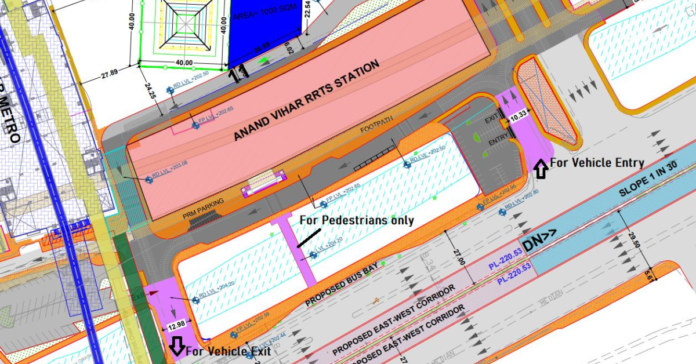
Proposed Model for Dedicated Pedestrian Bridge at Anand Vihar RAPIDX Station

DELHI (Metro Rail News): A dedicated pedestrian bridge is being constructed at Anand Vihar RAPIDX station of the Delhi-Ghaziabad-Meerut RRTS corridor. Apart from this, two separate bridges are also being built for segregated entry and exit of vehicles into the station premises as a part of multimodal integration with all existing modes of transport at this point. These 3 bridges will be built by NCRTC over the Ghazipur drain, passing between Anand Vihar RAPIDX station and Chaudhary Charan Singh Marg.

In these three bridges, the right bridge will be used for vehicular entry inside the Anand Vihar RAPIDX station, while the left bridge will be used as the vehicular exit. The middle one will be used only for the to-and-fro movement of pedestrians inside the station premises.

The bridge being constructed over the Ghazipur drain for the entry of vehicles into the Anand Vihar RAPIDX station is about 10 meters wide. Taxis, private vehicles etc., will be able to enter the premises from this entrance bridge and drop passengers at the station gate. Also, the exit bridge being constructed over the drain at the left end of the station is 13 meters wide and will enable these vehicles to drive back to the main road.

A dedicated pedestrian bridge is being constructed between these two, which will be about 5 meters wide. Lakhs of commuters travel daily from Anand Vihar via various modes of transport. It has often been observed that passengers have to go through a lot of trouble to change different modes of transport. They have to travel a long distance to reach another mode, battling congested, chaotic traffic. This leads to overcrowding near these public means, which hinders the movement of vehicles and leads to traffic jams on the road.

Keeping these problems in mind, NCRTC decided to construct separate entry and exit routes to ensure the smooth, convenient and safe travel of commuters. The location of the station has also been strategically planned in such a way that it is built as close as possible to existing public transport means.

This station is being integrated with 6 modes of public transport, which include Swami Vivekananda (Anand Vihar) inter-state bus stand, city bus stand, Uttar Pradesh State Road Transport Corporation’s bus stand at Kaushambi, two metro lines (Pink and Blue Line) and Anand Vihar Railway Station. Apart from this, a bus stop is also proposed to be built on the main road along these bridge routes. The commuters can get down here and enter the station through these bridges.

Along with this, stairs, lifts and escalators will also be provided to enhance the travel experience of the passengers by making their journey comfortable and convenient to reach the station. This commuter-centric station design and seamless integration between various modes of public transport and Anand Vihar RAPIDX station will provide a seamless, safe, comfortable and hassle-free travel experience to commuters and cut down on their travel time. This step of NCRTC will especially prove to be a boon for senior citizens, children, ladies and commuters travelling with luggage.

NCRTC aims to make the entire 82 km long Delhi-Ghaziabad-Meerut corridor operational by the year 2025. Before that, it will soon commission the 17 km long priority section of this corridor in 2023.

Advertisement1
InnoMetro_2026

Exclusive Interview with Mr. Chirag Sethi, Business Head- Railway Traction Power, Delta Electronics India

0
Mr. Chirag Sethi, Business Head- Railway Traction Power, Delta Electronics India

Metro Rail News team conducted an exclusive interview with Mr. Chirag Sethi, Business Head- Railway Traction Power, Delta Electronics India. 

Mr. Chirag Sethi is an IIT Delhi graduate and has a wealth of experience in sales & marketing. He has also worked with the renowned company Siemens as a Senior Manager – Marketing in the past. 

The interview mainly discusses Delta Electronics’ portfolio, plans for innovation in the mobility landscape, commitment to net-zero carbon emissions, and the acquisition of Universal Instruments Corporation.

Q.1. Please share the company’s portfolio amidst the economic slowdown and speculations of a global recession. What are the major orders on book across all segments the company is working? 

Delta Electronics is dedicated to supporting India’s efforts to mitigate climate change by aggressively expanding its portfolio of sustainable solutions. The company has been making significant strides in the EV charging segment, efficient power supplies, converters, UPS, and clean energy solutions. These product lines are critical in enabling the country to shift to more sustainable modes of energy consumption and combat the growing issue of climate change.

The company’s extensive portfolio of automation solutions also complements its sustainable offerings, helping businesses and individuals manage energy consumption more effectively while increasing productivity.

One key area of growth for Delta Electronics in India is its UPS business, which has been gaining significant momentum due to the proliferation of data centers across the country. These facilities require reliable and efficient power backup systems to prevent data loss and maintain uptime, making UPS an essential component of the data center infrastructure.

Additionally, the growth of 5G telecom infrastructure in India has been driving the demand for Delta Electronics’ telecom power solutions, which have remained a key contributor to the company’s business in the country. These solutions provide critical power management capabilities for telecom infrastructure, ensuring reliable and efficient communication services for consumers and businesses alike.

Overall, Delta Electronics is focused on providing sustainable solutions that align with India’s goals of mitigating climate change. The company’s portfolio of products and services, including EV charging, efficient power supplies, converters, UPS, and clean energy solutions, are complemented by automation solutions and driven by the growing demand for reliable power management solutions in data centers and telecom infrastructure.

Q.2. Mobility landscape is changing fast. Most of the companies are making significant investments in R&D for providing customized solutions. What are your preparations and plans in this regard?

Delta Electronics is committed to remaining at the forefront of innovation, and to achieve this, the company has invested heavily in research and development (R&D) activities. Delta Electronics recognizes the importance of staying up-to-date with the latest technologies and trends in order to provide the best possible solutions to its customers.

To this end, the company has a substantial R&D team in India, dedicated to both low-voltage (LV) and high-voltage (HV) technologies. In the coming years, Delta Electronics plans to strengthen this team even further, ensuring that it remains at the cutting edge of technological advancement.

For Delta Electronics, mobility is a crucial area of focus, and the company is actively developing solutions in both the EV charging segment and the Rail infrastructure portfolio. In response to the increasing demand for EV charging stations, Delta Electronics is developing a range of chargers to cater to different vehicle segments, including passenger vehicles, buses, and commercial fleets.

In addition, the company is developing power quality solutions to address the challenges that are likely to arise as a result of the growth in rail electrification and the complete shift to electric rolling stock. These solutions are designed to ensure that the power supply to the rail network is stable and reliable while also meeting the strict safety and regulatory requirements of the industry.

Overall, Delta Electronics’ strong focus on R&D, combined with its commitment to innovation and sustainability, has positioned the company as a leader in the development of cutting-edge mobility solutions. Whether it is through its EV charging segment or its rail infrastructure portfolio, Delta Electronics is committed to providing its customers with the latest and most innovative technologies in order to meet the evolving needs of the market.

Q.3. Delta Electronics is committed to Net-Zero carbon emissions. How is the company forwarding it? What are the major accomplishments?

Delta Electronics has a firm commitment to achieving Net-Zero carbon emissions and has taken significant steps to ensure that it makes progress towards this goal. One of its key initiatives is the investment in renewable energy sources such as wind and solar power. The company aims to generate 30% of its energy needs from renewable sources by 2025. Delta Electronics also prioritizes developing energy-efficient products across all its business segments, including power supplies, EV charging stations, and data center solutions, to help its customers reduce their energy consumption and carbon footprint.

The company has also implemented sustainable manufacturing practices to reduce its environmental impact, with a target of reducing greenhouse gas emissions by 56% by 2025 compared to its 2014 baseline. Delta Electronics has committed to offsetting any carbon emissions that it cannot eliminate through its renewable energy and energy-efficient product initiatives. To achieve this, the company uses carbon offset programs to invest in projects that reduce emissions, such as reforestation and renewable energy projects.

Delta Electronics has been recognized for its sustainability commitment, receiving awards and certifications such as the Carbon Trust Standard certification and the Dow Jones Sustainability Index inclusion for five consecutive years. In summary, Delta Electronics is well on its way to becoming a leader in sustainable technology solutions, making significant progress towards achieving its Net-Zero carbon emissions goal through its combination of renewable energy investments, energy-efficient product development, sustainable manufacturing practices, carbon offsetting initiatives, and recognition by various organizations. The company is committed to driving sustainable change across its operations to contribute towards a better future for the planet.

Q.4. How important has been the acquisition of the U.S based Universal Instruments Corporation, which has more than 500 automation-related patents to its name, by your company? In what ways has it benefitted Delta Electronics?

The acquisition of Universal Instruments Corporation by Delta Electronics has been a significant step for the company, as it has added a wealth of automation-related patents to its portfolio. Universal Instruments Corporation is a well-established player in the automation industry with a strong reputation for its innovative solutions.

The acquisition has enabled Delta Electronics to expand its automation offerings and strengthen its position as a leading provider of automation solutions. Delta Electronics has been able to leverage Universal Instruments Corporation’s expertise and patents to develop new products and solutions for its customers.

In addition to the patents, the acquisition has also brought Delta Electronics, a talented team of engineers and professionals with deep expertise in automation. This has enabled the company to accelerate its product development and innovation efforts and provide better service and support to its customers.

Overall, the acquisition of Universal Instruments Corporation has been a significant benefit to Delta Electronics, enabling the company to expand its offerings, improve its product development and innovation capabilities, and provide better service and support to its customers in the automation industry.

Q.5. Delta Electronics is already a major supplier of power components to tech giants like Apple & Tesla. What is the company’s strategy to explore newer markets in the Middle and South-East Asia with comparatively lesser technical know-how and upgrade?

Delta Electronics has a multi-pronged strategy to explore newer markets in Middle and south-east Asia with comparatively lesser technical know-how and upgrade. Firstly, the company leverages its extensive R&D capabilities to develop products and solutions that are tailored to the needs of these markets. For example, Delta Electronics has developed a range of energy-efficient and cost-effective solutions for the Indian market, including solar inverters, EV charging stations, and power supplies.

Secondly, Delta Electronics partners with local companies and organizations to build a strong presence in these markets. The company has established several joint ventures and collaborations with local partners across Asia, including India, Thailand, and Vietnam. These partnerships help Delta Electronics to gain a deeper understanding of local market needs and requirements, as well as to build strong relationships with key stakeholders in these markets.

Thirdly, Delta Electronics invests in local talent and resources to build a strong local presence. The company has set up several manufacturing facilities and R&D centers in Asia, which employ local talent and resources to drive innovation and growth. This approach not only helps Delta Electronics to better understand the local markets but also contributes to the local economy and community.

Overall, Delta Electronics’ strategy to explore newer markets in middle and south-east Asia with comparatively lesser technical know-how and upgrade involves leveraging its R&D capabilities, building strong partnerships with local companies and organizations, and investing in local talent and resources to build a strong local presence.

Q.6. How is Delta Electronics, India, partnering and contributing to the government’s efforts in transport and infra development? What are the major projects being undertaken? 

Delta Electronics is deeply committed to investing in India, and the company has already established a large infrastructure and manufacturing capability in the country. The Indian government has been focusing on driving development and growth in private-sector manufacturing, and Delta Electronics plans to utilize its factories to serve both the Indian and export markets. This move will also create significant employment opportunities in the country.

We have an extensive portfolio of power supply, automation, and infrastructure solutions. The company believes that it can contribute significantly to ongoing and upcoming infrastructure projects in the transportation domain. With its expertise and capabilities, Delta Electronics can provide innovative solutions for various transportation projects, such as railways, airports, and highways.

Delta is committed to supporting the Indian government’s vision of building world-class infrastructure in the country. Delta Electronics will continue to invest in the country, leveraging its manufacturing capabilities and expertise to support the growth of the Indian economy. The company aims to be a valuable partner for the Indian government and businesses, contributing to the development of sustainable and efficient infrastructure solutions.

Q.7. What are the latest developments by the company in rolling stock, traction power and other component solutions in rail, metros and LRTs to curtail project development, operational and management costs? What are the successful case studies on record?

Delta Electronics has established a strong presence in the Rail Infrastructure segment, offering a range of solutions for both Mainline and Urban/Metro Rail applications. The company has successfully developed and delivered Power Quality Solutions for 25kV 1-ph AC traction systems, which enable rail operators to reduce their traction energy bills, serve higher loads, reduce maximum demand, and improve voltage profiles. These solutions have been implemented in Mainline as well as Metro Rail applications in India and have been in successful operation for over three years.

In addition to Power Quality Solutions, Delta Electronics also provides Video Walls and Display Solutions for Operation Control Centres and Signaling applications. These solutions have been deployed in a majority of the Metro rail projects in India. With Delta’s Video Walls and Display Solutions, rail operators can have a better visual overview of their rail network, improving their ability to monitor and control operations in real-time.

Delta’s focus on providing innovative solutions to the Rail Infrastructure segment has enabled the company to establish itself as a trusted partner in the industry. With a proven track record of successful implementation and operation of its solutions, Delta is well-positioned to continue to provide cutting-edge solutions to meet the evolving needs of the rail industry.

Q.8. Please share your views about Metro Rail News. Any message for our readers?   

Dear Readers,

As a leading provider of innovative and sustainable technology solutions, Delta Electronics is proud to be a part of the rapidly developing Metro Rail segment in India. We understand the importance of reliable and efficient transportation systems, and our solutions are designed to address the unique challenges of this sector.

We appreciate the role of Metro Rail News in keeping the industry stakeholders informed about the latest developments, trends, and technologies in this domain. It is an excellent platform for exchange of knowledge and ideas that can help drive growth and progress.

We encourage the readers to continue to engage with Metro Rail News and stay updated on the latest trends and technologies in the Metro Rail segment. Delta Electronics remains committed to delivering cutting-edge solutions that address the challenges faced by this industry, and we look forward to contributing to the development of the Metro Rail ecosystem in India.

Best regards,

Delta Electronics Team  

Advertisement1
InnoMetro_2026

Freight Transportation in India: A Sustainable Approach Through Rail

0
Representational image only

The Indian logistics sector employs more than 22 million people, and upgrading the sector will result in a 10% decrease in indirect logistics costs, resulting in a 5 to 8% increase in exports, signifying that India will roll out a stronger economy with firmer infrastructure. Currently, the Indian logistics industry accounts for 14.4% of the country’s GDP, but its overall cost is 14% of GDP, compared to the BRICS average of 11%. Though various studies claim varying logistics costs ranging from 8-14% of GDP, it is still highly debatable at this stage of transition. However, there is still a significant gap to close in order to pull the economy back. 

When the Indian logistics market was valued at $250 billion US dollars in fiscal year 2021, it was anticipated that it would expand at a compound annual growth rate (CAGR) of 10 to 12 per cent, with a net worth of 380 billion in 2025. The economy has recovered since the pandemic, and the Reserve Bank of India (RBI) forecasted 7.2 per cent GDP growth for the fiscal year ending in March 2023., the actual of which remained around 7 per cent.

Logistics is the backbone of any strong economy, and it should have an unobstructed pipeline for a continuous flow of information and supply chain management and for India to be the world’s fastest-growing economy over the next few years, driving global growth, a single window clearance is required for logistics to move as smooth as possible.

  Logistics Landscape: Major Issues & Concerns 

Only 10% of Indian logistics is in the organised sector. It is one of the most fragmented and complex business entities in the country, with more than 20 government agencies, 40 PGAs, 37 export promotion councils, 10,000 products, and a market size of 160 billion dollars. It also includes 12 million employment bases, 200 shipping agencies, 36 logistics services, 129 ICDs, 168 CFSs, 50 IT ecosystems, and banks & insurance companies. EXIM also requires 81 authorities and 500 certifications. With almost all working as distinct corporations, sufficient to discourage any potential financing and investment. 

In India, the logistics sector has been a neglected and abandoned child. It has merely been a means of conveying products and services. Storage, monitoring, freight clearance, documentation, and carrier and container knowledge were never sought or considered. This resulted in serious mismanagement and delayed information sharing, and the sector was never able to reach its full potential. There was no connection between railways, aircraft, waterways, and roadways, crippling the sector and causing a slew of known and unseen inefficiencies. 

Additionally, the vast geographical diversity of India precluded the concentration of information in one location for quick perusal and seamless movement. However, this could have been sorted out, and the dissemination of information could have been simplified with a single point of contact. Needless to say, if this gets rolled out, both vendors and customers of logistics services will save a lot of time, shall remain informed about goods movement, and will be able to control various hidden expenses.

Compound Annual Growth Rate (CAGR). 

As demand for products grows, goods traffic is estimated to reach 15.6 trillion tonne-km by 2050. This activity will stimulate growth in all kinds of freight transport, but particularly in road freight transport. This will result in goods vehicles travelling more than three trillion km on Indian highways by 2050.

To fulfil this need, India’s logistics system has been constantly improved. Between 2007 and 2016, India improved its score on the Logistics Performance Index (LPI), a World Bank tool used to assess a country’s logistics capabilities, from 3.07 to 3.42. This advancement was made possible by developing infrastructure, implementing policies and programmes such as Make in India, and combining technological and digital advancements in the logistics supply chain. However, there is still work to be done. Despite being one of the largest and fastest-growing logistics businesses in the world, India’s LPI ranks 38th in the world currently. This ranking can be improved by focusing on the report’s opportunity areas.

Policy Environment

India has a set of policies and market trends that can hasten the transition to effective, cost-efficient & economical, clean, and secure goods movement.

  1. Make in India: Make in India is an initiative that provides focussed investments to boost domestic manufacturing of products and infrastructure. The strategy attempts to mitigate India’s dependency on other countries for manufacturing capabilities and infrastructure.
  2. Digital India: The flagship program and initiative Digital India aims to convert India into a digitally enabled society and knowledge economy. The program’s objective is to facilitate the digitalization of the supply chain, which shall be instrumental in improving logistical efficiency.
  3. Logistics efficiency enhancement program (LEEP): Through infrastructure, technology, and process interventions, LEEP aims to improve freight transportation efficiency by reducing associated costs, transportation time, and logistical practices such as goods transfer and tracking.
  4. National logistics policy (DRAFT): The National Logistics Policy aims to boost India’s economic growth by making the logistics sector more efficient, seamless, and integrated. It also strives to reduce logistical costs as a share & proportion of GDP.
  5. Faster adoption and manufacturing of electric vehicles (FAME II): FAME II is a government of India subsidy programme designed to encourage the production and use of electric vehicles. FAME II policies are envisaged to encourage the adoption of EVs and accompanying charging infrastructure for goods and freight EVs.
  6. Bharat Stage (bs) emission norms: The Bharat Stage Emission Norms are emissions regulations established by the Government of India to reduce the criteria pollutant emissions from motor vehicles and enhance vehicle efficiency. BS VI has been in effect since April 2020.

Various other initiatives to improve logistics and infrastructure scenario in the country

  • The Sagarmala Project
  • The Bharatmala and Golden Quadilateral
  • The Jal Marg Vikas Project (JMVP)
  • National Infrastructure Pipeline
  • UDAAN Scheme
  • Hydrogen Energy Mission

PM Gati Shakti

The PM Gati Shakti, also known as the National Master Plan for Multi-modal Connectivity, is an ambitious plan unveiled by the Government of India in October 2021 for the creation of ‘Holistic Infrastructure’ across the country. The plan intends to break down departmental silos and implement more holistic and integrated project planning and execution in order to address multi-modal and last-mile connectivity challenges and issues. The plan envisions an ecosystem with synchronised and syndicated data flows that will raise productivity, improve supply-chain management, and create conditions for economic growth. 

It promises to reshape the development of modern infrastructure through planning, implementation, and monitoring, while also reducing project time and cost overruns. It has been launched and established with the primary objective of bringing together seven economic engines, namely railways, roads, ports, waterways, airports, mass transportation, and logistics infrastructure, on a single platform for economic growth and sustainable development. The Master Plan’s benchmark is to have world-class modern infrastructure and logistics synergy among multiple means of movement – both of people and commodities – and project location. All plans under PM Gati Shakti have been proposed to untangle the logistics weave between the GoI and the State departments.

The Indian Chambers of Commerce believes that logistics is an ever-important area, from providing vital supplies to initiating and establishing international trade. The sector’s expansion and strengthening are a sign of a more promising future.

Unified Logistics Interface Platform (ULIP) 

Following the pandemic, or perhaps before it, the industry’s business model was changing, gradually converging and becoming digitalized. ULIP is an indigenous API integration platform developed by exploiting the NICDC’s logistics Data Bank project, with the goal of creating a nationwide single window logistics platform for end-to-end visibility, and is in line with ‘PM GatiShakti’s vision. The virtual gateway has successfully linked with 30 systems from seven different Ministries via 100+ APIs, covering over 1600 fields. 

It has reduced logistics costs and time, as iterated by Finance Minister Nirmala Sitharaman in her Budget Speech, and has removed time-consuming documentation. It is bringing efficiency and transparency to the logistics industry, making India more cost-competitive and ‘Atmanirbhar’ in the logistics sector.

The world today appears to consider India as a pioneer in strengthening the Logistics Industry, owing to its approach and perseverance. India ranks second overall in the ‘Agility Emerging Markets Logistics Index 2022’. Its ranking in the various parameters of this index, such as 14th for business fundamentals, 2nd for Domestic and International Logistics Opportunities, and 5th for Digital Readiness, demonstrate its growth momentum, accomplishments, and reliance on the sector in developing world-class industry-oriented infrastructure.

Sustainable Freight Transportation: The Railways

India, one of South Asia’s fastest-growing economies, is expanding its logistics infrastructure. The Indian government has begun an ambitious rail freight project aimed at helping the country in making a significant transition from highways to railways for freight transport. Additionally, the government’s Rail Logistics project serves as an incentive for more private-sector investment in the rail freight sector. Apart from improving inland cargo transportation efficiency, India’s revitalized rail freight sector is also improving sustainability by cutting greenhouse gas emissions.

Rail Freight Infrastructure: Modernisation

In India, the transport and logistics sector employs around 22 million people and accounts for about 5% of the country’s net GDP. Roadways currently account for a bigger share of inland freight movement in India, but the government has taken a number of important initiatives to bring a change in that. The World Bank has granted India a loan of $245 million USD to modernise its rail freight infrastructure. The new scheme would also benefit passenger trains in India as the rail lines will be decongested with goods trains travelling on dedicated routes. Integrating railways with the broader logistics ecosystem is also vital for lowering India’s high logistics costs, which are far higher compared to developed countries. The initiative is expected to increase the competitiveness of Indian firms.

Rail Logistics Project: The Scope

India has the world’s fourth-largest railway network. Nonetheless, trucking accounts for a whopping 71% of inland cargo transportation in the country. Aside from being time-consuming, road freight contributes to greenhouse gas emissions, accounting for nearly 95% of the country’s net carbon emissions from the freight transport sector. Trains account for only one-fifth of vehicle CO2 emissions. As a result, the rail freight industry reform will enable India to keep its pledge of becoming a zero-carbon emitter over the next ten years. The switch to rail freight is expected to reduce the emissions of 7.5 million tonnes of CO2 and other greenhouse gases. Massive investments in rail freight infrastructure shall help in increasing cargo speed, dependability, and sustainability.

Rail Freight Reinforcement

The Indian government is taking multiple steps to enhance the share of rail freight. To begin, they have increased the length of goods trains, increased axle loads, and increased locomotive speed. This contributes to the improvement of the current rail freight network. Further, the massive investment in the creation of a dedicated freight corridor is the most important step towards increasing the sector’s efficiency. In addition, modal integration across rail, road, and sea freight, as well as investments for better train-port-road integration, are important factors supporting the Indian rail freight industry. Finally, robust private sector investments and government-private partnership for project financing are seen as significant steps in this direction.

Dedicated Freight Corridors

The Indian government is investing in the development of dedicated freight corridors, which would allow freight trains to operate on exclusive tracks without having to wait for passenger trains to pass. The dedicated freight routes shall gradually reduce the cost of cargo transportation by deploying more powerful electricity-powered trains. The use of electric locomotives will also significantly minimise the environmental impact of the logistics industry.

Indian Railways intends to convert 10,000 kilometres of rail lines into high-speed dedicated freight lanes. This project will cost a total of $320 billion USD. There are at present, plans for five specific freight corridors, some of which are already operational and others which are still in the development stages.

The Western Dedicated Freight Corridor, which spans 1504 kilometres, is already partially operational. It begins in Dadri and concludes in the Port of Nava Sheva. The Eastern DFC, which spans 1873 kilometres, has already started operations. This corridor commences in Ludhiana and ends at Dankuni. In addition, the government announced the creation of three more dedicated freight corridors in the last union budget of 2021-2022: the East-West DFC, the North-South DFC, and the East Coast DFC. The Indian government has also suggested building a Southern DFC that will connect Goa and Chennai.

Summary & Conclusion

Logistics is crucial for a country’s economy. It refers to the overall method of controlling how resources are gathered, stored, and supplied to their final destination. Logistics management includes determining the efficiency and accessibility of prospective distributors and suppliers. With the underlying assumption of a robust logistics industry, it is a differentiating sector that can have a substantial impact on any country’s exports, hence contributing a significant competitive edge. The logistics industry encompasses all supply chain activities, namely transportation, inventory management, information flow, and customer service. It not only establishes the success of the country’s supply chain, but also has an impact on it on a global scale. The effectiveness of logistics contributes to the degree to which organisations can meet demand. 

The logistics sector in India is predicted to account for 14.4% of GDP. The unorganised sector accounts for more than 90% of the logistics industry. Among the BRICS countries, the average logistics cost per GDP has been 11%. In the case of India, however, the cost share per GDP is 14%. Within the next five years, India plans to raise its ranking in the Logistics Performance Index to 25 and reduce logistics costs from 14% to 8% of GDP, resulting in a reduction of about forty per cent.

The National Logistics Policy established these objectives. This would ensure that the logistics industry serves as a growth engine for the country and plays a vital role in India’s transition to a USD 5 trillion economy. The government has taken several initiatives to enhance the logistics sector, including the following:

  • Logistics Master Plan: The initiative adopts a geographical approach rather than an industrial approach. Under the strategy, several projects and activities are incorporated into the plan in order to broaden the mix of intermodal and/or multimodal transportation. A coordinated construction of required infrastructure (gas and utility pipelines, optical fibre cable networks) is correspondingly planned.
  • National Logistics Policy: The goal of the proposed policy is to improve both the nation’s economy and corporate competitiveness by developing an integrated, seamless, effective, and cost-efficient logistics network that leverages best-in-class tools, procedures, and qualified staff. The strategy is expected to create a single-window e-logistics market and envisages to prioritise MSME skill development, competitiveness, and employment.
  • National Logistics Law: A national logistics law has been drafted and is currently being reviewed. A unified legal framework for the concept of One Nation, One Contract would promote the One Nation, One Market purpose while also providing a flexible regulatory environment (one bill of lading across modes). The provisions of the law shall allow assigning of a unique logistics account number in place of time-consuming registration processes.
  • National Multimodal Facilities and Warehousing: The National Grid of Logistics Parks and Terminals is being planned in order to promote intermodal and Multimodal Logistics Parks (MMLPs) as a distinct class of infrastructure.
  • National Logistics Workforce Strategy: The government is establishing a national logistics workforce strategy to support the integrated skill development of professionals in the logistics sector. Building on the existing framework of skill development centres, which are currently based on modes of transportation, it is planned to enable cross-sectoral exchange of ideas and best practices, as well as create a workforce of professionals who shall be the driving force behind the nation’s logistics development. The approaches include a collaborative effort to examine and address current issues.

Shift to a Sustainable and clean freight transport system

Under a business-as-usual (BAU) scenario, India’s cumulative energy consumption from goods transport is expected to be around 5.8 billion tonnes of oil equivalent (TOE) between 2020 and 2050. However, under an efficient scenario, India can reduce its energy consumption by half through three potential opportunities:

  • Increasing the share of rail transport
  • Optimising truck use
  • Promoting use of fuel-efficient vehicles and alternative fuels

These opportunities will also lead to the following benefits:

  • Reduced logistics Costs – India has set an objective of minimising logistics expenses as a share of GDP from 13 per cent to 7.5 per cent over the next five years, which could save up to INR 10 lakh crore.
  • Reduced carbon emissions and improved air quality – By 2050, India can save 10 gigatonnes of CO2, 500 kilogrammes of particulate matter (PM), and 15 million tonnes of nitrogen oxide (NOx) caused due to freight transportation.
  • Lesser truck traffic on roads – Improved mode share and effective logistics can lower vehicular-freight activity by forty-eight per cent in 2050 compared to the BAU scenario.

This new freight paradigm will also result in better economic growth, more job opportunities, improved public health, and more logistics productivity, all of which will help India achieve many of its development goals.

Increasing Rail Network Capacity

Rail’s proportion of freight transportation in India has been seen declining since 1951. It was only 18% in 2020, compared to 71 per cent for roads. This has been because of insufficient rail capacity, particularly on some high-density routes. Several factors indicate that rail could be a cost-effective and efficient option for a significant portion of India’s freight transportation:

  • Commodities mix with a large proportion of bulk goods, that is ideal for rail’s bulk-handling capabilities.
  • Freight travel is frequently across longer distances, which lends itself to rail’s economies of scale over vehicle transport.
  • Between the two low-carbon freight modes, rail and coastal, India’s geography makes rail more feasible in many areas of the country than coastal regions.

The importance and function of rail transportation are not only confined to large-scale freight. Rail can compete for a market share of higher value, non-bulk products by combining rail and road transport for containerized goods, a practice known as intermodal.

To increase the mode share of rail transport, India can prioritise the following solutions:

  • Increase the capacity of the rail network
  • Increase the proportion of multimodal transportation.

The following actions can support the deployment of these solutions:

  • Improve existing network infrastructure by boosting axle loads, extending train length, and allowing trains to go faster.
  • Develop specialised heavy-haul routes and dedicated freight corridors to expand network capacity.
  • Identify and improve corridors with strong multimodal transport potential.
  • Improve modal integration across rail, road, and water.


Advertisement1
InnoMetro_2026

Light Rail Transit: Thiruvananthapuram Light Metro

0
Representational image only

Introduction

Thiruvananthapuram (Trivandrum) Light Metro, with one line and nineteen stations, is a Light Rail Transit (LRT) system approved for construction in Kerala’s capital, Thiruvananthapuram (Trivandrum). The Phase 1 project of the Trivandrum Metro will be carried out by Kerala Rapid Transit Corporation Limited (KRTL), a special purpose vehicle of the Kerala government. The Delhi Metro Rail Corporation (DMRC) was chosen as an interim consultant in January 2016, but DMRC left the project in 2018 due to the slow progress of the project works. The project was put on hold in 2017 due to its high cost and poor ridership forecasts, which did not align with the Government of India’s new Metro Rail Policy. A revised DPR developed by the DMRC was accepted by KRTL’s board in October 2020 and by Kerala’s state government in February 2021.

Key Information

  • Operational : 0 Km
  • Under Construction : 0 Km
  • Approved: 21.82 Km
  • Estimated Cost: Rs. 4673 Crore

Phase 1 Routes

Line 1: Technocity – Karamana

  • Length: 21.821 km
  • Estimated Cost: Rs. 4219 crore
  • Number of Stations: Nineteen
  • Stations: Technocity, Pallipuram, Kaniyapuram, Kazhakoottam, Kazhakoottam Junction, Kariavattom, Gurumandiram, Pangapara, Sreekaryam, Ulloor, Kesavadasapuram, Pattom, Plamoodu, Palayam, Secretariat, Thampanoor (Trivandrum Central Railway Station), Killipalam, Karamana


Timeline & Development Phase

Thiruvananthapuram’s first attempt to establish a fast transport system for the city failed in the 2000s, when its proposal to build a metro rail system was denied by the Delhi Metro Rail Corporation (DMRC). The Kerala Government then entrusted the National Transportation Planning and Research Centre (NATPAC), an autonomous research body under the State Government, for conducting a feasibility study on the plan to create a monorail system in Thiruvananthapuram. A core team of five NATPAC scientists and other survey teams conducted the feasibility study. The study’s key components were topographic studies, station identification, and surveys. The state government initially requested the state transport department to provide a detailed project report (DPR). However, the task was later assigned to the DMRC. On December 11, 2012, DMRC principal advisor, Er. E. Sreedharan submitted the DPR to Chief Minister Oommen Chandy. In October 2012, a special purpose vehicle (SPV) was created. On November 26, 2012, the Thiruvananthapuram Monorail project was assigned to KMCL. Prior to that, the government had passed and handed over the Kozhikode Monorail project to the KMCL.

On June 12, 2013, the state cabinet approved the signing of an agreement between KMCL and DMRC. According to the agreement, DMRC would be paid 3.25% of the Rs. 55.81 billion in general consultant costs (Rs. 35.90 billion for Thiruvananthapuram and Rs. 19.91 billion for Kozhikode). The agreement between the parties was signed on June 19, 2013.

Global bids were issued for the Thiruvananthapuram Monorail project. The deadline for technical bids was extended to October 15 from October 01. However, the only company that declared an interest before the deadline was a consortium led by Bombardier Transportation. Japanese firm Hitachi, Malaysian firm Scomi, and firms from the United Kingdom, South Korea, and China also submitted pre-bid queries. Because the proposed project received only one bid, a second tender was required. Therefore, the deadline for the bids once again was extended until April 15th.

In the second round of tender submissions, Bombardier Transportation, Hitachi, Afcons, Scomi, and Larsen & Toubro all showed interest. On February 20, 2014, a pre-bid meeting was held in New Delhi. However, bidding for both the Kozhikode and Thiruvananthapuram projects was delayed due to the model code of conduct coming into effect ahead of the 2014 Lok Sabha elections. Additionally, due to cost overruns, the State Government opted to select Metro instead of Monorail in Thiruvananthapuram and Kozhikode on August 28, 2014. Though slightly costlier, metro has certain advantages, such as easy raising of capacity, greater durability, lesser maintenance etc., compared to other modes of urban rail transit like Metrolite and MetroNeo.

Monorail Proposals & Track Elevation Development

Hyundai Rotem representatives proposed in 2012 that the city should develop a mass rapid transport network using Maglev technology. The state government, however, on August 28, 2014, opted to build a conventional rail metro rather than a monorail, like with the then-under-construction Kochi Metro, in both Thiruvananthapuram and Kozhikode, owing to exorbitant costs indicated by prospective manufacturers.

The Trivandrum City Corporation faced significant problems in building the city’s elevated Viaduct. This was because most city suburbs had narrow roads. In July 2019, Kerala Chief Minister Pinarayi Vijayan stated that the route will not follow the NH 66 (Kovalam Bypass) but rather enter Thampanoor via Sreekariyam, Kesavadasapuram, and Pattom, three of Trivandrum’s busiest suburbs.

Personal Rapid Transit

INKEL Ltd had suggested a Personal Rapid Transit (PRT) system in Thiruvananthapuram. The new approach is estimated to attract 40% of vehicle and auto rickshaw passengers. The PRT shall serve as a feeder mode of transit, supplementing the metro. The project will be executed in two stages. The first will run from Pallipuram to Thampanoor, while the second would stretch from Thampanoor to Neyyattinkara.

The track will traverse via Vellayambalam, Palayam, Statue, Overbridge, East Fort, and Thampanoor, with 35 stations proposed. 

The project is expected to cost Rs. 60 crore per km and will take 24 to 30 months to complete. In the 2012-13 State Budget, Finance Minister K.M. Mani allotted Rs. 2.5 million for preliminary work on the PRT in Thiruvananthapuram and Kottayam. From the date of commencement, the project is anticipated to be completed in 24 months. 

The Metro Plan

The Thiruvananthapuram line is scheduled to operate from Technocity to Karamana, spanning a distance of 22.537 km, including 19 stations along the existing NH 47. For the proposed flyovers at Kazhakuttam, Sreekaryam, and Ulloor, minor modifications have been made. At Railway Km 221/6-8, special spans have been proposed where the line crosses the railway line.

The car depot is situated on 12.5 hectares of government land near the Pallipuram CRPF Camp. The project is scheduled to be developed in three phases. Technocity, Pallippuram, Kaniyapuram, Kazhakootam Junction, Karyavattom, Gurumandiram, Pangappara, Sreekariyam, Pongumoodu, Ulloor, Kesavadasapuram, Pattom, Plamood, Palayam, Secretariat, Thampanoor, Killipalam, and Karamana would all have stations. The line shall be built in three stages.

RouteTerminalsLength (km)StationsOpening date
Route 1TechnocityKariavattom7To be announced
Route 2KesavadasapuramKaramana8
Route 3KariavattomKesavadasapuram8
Total22.20192025

Route 1 shall cover a distance of seven kilometres from Technocity to Kariavattom. It is scheduled to be completed 30 months after the contractor is selected. The metro shall have options for extension towards the south up to Neyyattinkara as well as towards the north to Attingal. Another suggestion is to extend the network all the way to Thiruvananthapuram International Airport.

Funding & Cost

Based on April 2012 prices, the project cost was Rs. 27.0256 billion (US$340 million), excluding taxes of Rs. 4.75 billion (US$59 million). Each kilometre of metro construction was projected to cost Rs. 1617.1 million. The Design-Build-Operate-Transfer (DBOT) mode was proposed. The State and Union governments were to contribute 20% of the cost, with the remainder to be financed by other investors such as banks.

Finance Minister K. M. Mani allocated Rs. 200 million (US$2.5 million) towards the Thiruvananthapuram project in the 2012 State Budget. The project will be funded in part by a 5% state government tax on fuel and diesel sales. The surcharge is estimated to generate Rs. 2.50 billion in revenue every year. The operation and maintenance costs are divided into three major categories: staffing expenses, maintenance costs (which include expenditure for system and consumable upkeep and maintenance), and energy costs. The Technocity – Karamana segment cost was revised to Rs. 4,219 crore in 2015.

Latest Update

The decision on whether to develop a light metro, metrolite, or conventional metro in Thiruvananthapuram is likely to be delayed because the Urban Mass Transit Company Limited (UMTC) has not yet submitted the study report on the comprehensive mobility plan (CMP) and alternate traffic analysis (ATS) to the Kochi Metro Rail Limited (KMRL), the project’s executing agency. Although the fact that the deadline for submitting the report was March 31, the study is yet to be completed and submitted, according to media outputs.

In this context, UMTC officials met with KMRL and requested a time extension for submitting the report. Following the delay, the KMRL stated that they had had a conversation with UMTC and requested clarifications. KMRL officials also stated that the report had not been submitted. They did, however, meet with UMTC officials for further development and timely submission of the reports. The UMTC noted that they had some concerns, and the study is nearing completion. More than 90% of the study’s work has been done, and the report shall be delivered soon.

The KMRL has started preparing for project execution since the Centre previously advised the state government that a single company should be ideally selected to supervise the state’s metro projects. The Union government earlier had advocated a metrolite concept rather than a light metro in the city. However, the state government is opposed to the metrolite idea because the system is yet to be implemented anywhere in the country, making its installation an experiment.

KMRL MD Mr. Loknath Behera earlier said that he had written to the district collector and the mayor of Trivandrum, requesting help and cooperation in completing the project. According to District Collector Mr. Geromic George, the UMTC presented an interim report last month indicating that the study was underway.

The Trivandrum collector stated that representatives from the UMTC attended the January stakeholders meeting. The company presented the current situation of the study and stated what was required to be done at the meeting. They even provided him with an interim status report. According to information from sources, the study is nearing completion, and the report will be submitted to the KMRL soon. 

Following the submission of the study report, a detailed project report (DPR) shall be prepared. The DPR will be submitted for approval to the state government and then to the Union government, which is the sanctioning authority for metro rail. There is also a plan to develop an underground metro in some regions of Thiruvananthapuram.


Advertisement1
InnoMetro_2026

Mumbai Suburban Railway: The Busiest Commuter Rail System in the World

0
Representational image only

Introduction

The Mumbai Suburban Railway (also known as local trains or locals) consists of exclusive inner suburban railway lines supported with commuter rail on main lines serving outlying areas to provide service to the Mumbai Metropolitan Region. The suburban railway, which spans more than 400 kilometres and serves over 7.5 million commuters daily, offers nearly 3000 train services. Daily commuters make up roughly 40% of Indian Railways’ daily commuters. The Mumbai Suburban Railway is one of the busiest commuter train systems in the world, with around 2.64 billion yearly riders. However, despite mammoth passenger traffic and huge number of commuters travelling daily by the system, the Mumbai Suburban Railway is often criticized for safety concerns and infrastructural development of the rail system. In the last two decades, a number of passengers faced severe casualties and fatalities while travelling on Mumbai local trains. The lack of any significant upgrade in safety rules, infrastructural development or future lookout for the last two decades has been the cited reasons for it. Nevertheless, Mumbai Suburban Railway is the first suburban rail network in India, and it has the highest passenger density of any urban railway system in the world.

Background

The Mumbai Suburban Railway is an offshoot of the British East India Company’s first passenger railway, and it is also Asia’s oldest railway system. On 16 April 1853, at 15:35, the Great Indian Peninsula Railway (now Central Railway) ran the first train between Bori Bunder (now Chhatrapati Shivaji Maharaj Terminus) and Thane, a distance of 34 km. The 34-kilometer voyage in the 14-coach train took 1.25 hours, with a stop at Bhandup to refill the train’s water tanks.

The Bombay, Baroda and Central India Railway (now Western Railway) ran the next important train between Virar and Churchgate in April 1867. This line also included Colaba, which was eventually decommissioned. On 3 February 1925, the first EMU service began on the Central line from Victoria Terminus (now Chhatrapati Shivaji Maharaj Terminus) to Coorla Harbour (now Kurla), using 1.5 kV DC traction. On 5 January 1928, service also began on the Western line from Churchgate to Borivali. The entire network had been converted to 25 kV 50 Hz AC traction by 2016.

Network

Indian Railways’ two zonal divisions, Western Railways (WR) and Central Railways (CR), operate the Mumbai Suburban Railway system. The fast commuter train routes on Central and Western Railways are shared with long-distance and freight trains, while inner suburban services operate on dedicated parallel tracks. The Western Line is operated by WR, whereas the Central Line, Harbour Line, Trans-Harbour Line, Vasai-Roha Line, and Neral-Matheran & Panvel-Karjat Line are operated by CR.

Central Line

The Central Line in Mumbai comprises three primary corridors that split when they approach suburban satellite towns. The Central Railway’s two corridors (one local and one through) from Chhatrapati Shivaji Maharaj Terminus (CSMT) to Kalyan (53 km), where it splits into two lines, one to Kasara (67 km) in the North-East and the other to Khopoli (61 km) in the South-East. These two corridors make up the ‘Main’ Central Line. There is also a 36-kilometer corridor between Kurla and Kalyan stations for exclusive usage of outstation and cargo trains.

The Central Line connects to the Western Line at Parel and Dadar, and to the Harbour Line at Sandhurst Road and Kurla. The rolling stock is a fleet of new AC and alternating current Bombardier and Siemens EMUs. Kurla and Kalwa are the main car sheds located on this route. Locals are both rapid and slow. Slow locals stop at every station, while Byculla, Dadar, Kurla, Ghatkopar, Vikhroli, Bhandup, Mulund, Thane, Diva, Dombivali, and Kalyan are the stations where fast locals stop. All trains that travel beyond Kalyan are slow trains. The train here stops at every station.

Western Line

From Churchgate, the Western Line follows the Western Railway northwards parallel to the West Coast. Local services by electric multiple units (EMUs) run on exclusive parallel tracks between Churchgate and Dahanu (124 km) up to Virar (60 km), while MEMUs operate the portion beyond Virar to Dahanu Road (64 km). EMU was extended up to Dahanu Road on April 16, 2013. MEMUs are additionally operational through a branch route from Bhiwandi Road to Vasai Road between Dahanu Road and Panvel. EMU car sheds are available at Mumbai Central, Kandivali, and Virar. Virar is home to Asia’s largest EMU car shed. At Mahalaxmi, there is an EMU repair shop.

The EMU fleet of Western Railway is totally powered by alternating current (25 kV). The rolling stock comprises of a fleet of new AC and alternating current Bombardier EMUs. EMUs are 12- or 15-car formations that are classified as slow or fast locals. Slow trains stop at all stations, whereas rapid trains stop at Mumbai Central, Dadar, Bandra, Andheri, Borivali, Bhayander, Vasai Road, and Virar and are preferable across longer distances.

Harbour Line

The Harbour Line goes from Chhatrapati Shivaji Maharaj Terminus (CSMT) to Goregaon and Panvel as part of the Central Railway. All Harbour Line services are slow. The line leaves from two distinct platforms at CSMT, and the tracks cross over the mainline at Sandhurst Road to reach stations along Mumbai’s Eastern dock region. The Wadala Road branch line connects with the Western Line at Mahim and continues towards Goregaon. Further work is being done to extend the Western Line branch to Borivali.

The Harbour Line connects with the mainline in Kurla, where it heads East towards Navi Mumbai. The Harbour Line is further divided at Vashi into two lines, one of which rejoins the main lines at Thane while the other continues to Panvel. The shed for these trains is at Sanpada. From Sandhurst Road to Cotton Green, a segment of the Harbour Line is elevated.

Trans-Harbour Line

The Central Railway also includes the Trans-Harbour Line, which connects Navi Mumbai and Thane. It extends from two distinct platforms in Thane to Nerul, where it connects with the Harbour line upto Panvel, and a small and minor branch line from Turbhe to Vashi that runs parallel to the Harbour line. All services on the trans-harbour line are all-stop. Freight trains share the railway and tracks from Airoli to Koparkhairane through a bypass, then to a siding in Turbhe for the APMC market godowns.

Vasai Road-Roha Line

The Vasai Road-Roha line is a Mumbai Suburban Railway Intersection chord rail bypass line that connects the Western line, Central line and Harbour line of the Western Railway (WR) with the Central Railway (CR). It connects Panvel and the Konkan Railway and runs from Vasai Road to Roha. This line is currently used to bypass goods trains, express trains and MEMU passenger trains. The MRVC is additionally developing a separate Suburban Corridor along this route to improve connection.

Nerul-Uran Line

The Nerul-Uran line, commonly known as the Port line, is another section of the Central Railway that connects Navi Mumbai to Uran, which is also located in Navi Mumbai but to the Southwest. It also operates from two distinct platforms in Nerul and one in CBD Belapur to Uran, with direct access to JNPT in Navi Mumbai.

Services & Facilities

Trains on the Mumbai Suburban Railway have four main designations:

  • Slow trains (denoted by S) stop at all stations. These are intended for daily commuters.
  • Fast trains (denoted by F) run fast and as express (skipping stops and mostly heading to railway junctions) until they reach a specified station and proceed to operate like a slow train after that station. These trains are generally meant for daily commuters as well as express connectivity to the rest of the Indian Railways outbound trains.
  • Air Conditioned trains (denoted by AC) which are air-conditioned and can be either fast or slow.

Travel Classes

The suburban fleet has 12 and 15 coach rakes. There are two main types of travel classes: the first class and the second class. As most office employees have a first-class transport pass provided by their employer, the first class fare is approximately 8 times more expensive than the second class fare and thus tends to be less crowded during non-rush hours, though it is sometimes equally or more crowded than the general compartments during rush hour. Cushioned seating is also available in first class and senior citizen compartments, while the rest of the seats are generally plastic. 

There are also women-only cars (referred to as ladies special) and, since 1992, Ladies Special trains with all seats reserved for female passengers. A semi-ladies special is a train that has a few coaches specifically for women. These distinctions can be used with fast, slow, and other keywords to use combinations like Slow Ladies Special.

Air-conditioned

The open doors and windows of the Mumbai Suburban Railways are well-known. This is because the trains have no ventilation system and rely on natural air ventilation. This was implemented as a cost-cutting solution, as an air-conditioning system would be rendered unimportant during rush hour. Leaving the doors open also enables for a quick boarding process and combat congestion as the trains only stop for 10 seconds at most of the stations. The Indian Railways produced the first local train for travel (especially for the hot and humid summer season) in 2016. The Integral Coach Factory in Chennai manufactures this rake. It contains various novel features, including linked vestibules, cushioned seats, and sliding doors. It travels from Virar to Churchgate and from Kalyan to Chhatrapati Shivaji Terminus. AC trains are fast and slow locals that began service on the WR on December 25, 2017, and on the Central Line in 2021.

Ticketing

The Mumbai Suburban Railway has a fare collection mechanism based on proof of payment. Tickets are available at all train stations. Travelling without a valid ticket is an infringement that can result in a fine if caught. Passengers travelling in first class without a valid ticket face a higher penalty.

CVMs and ATVMs

To save time, a Coupon Booklet can be purchased, and the coupons can be punched for the designated fare using Coupon Validating Machines (CVMs) located at each station. The authorities decided in early 2015 to phase out CVMs with effect from April 1, 2015. This decision was made owing to widespread coupon duplication and a lack of openness. There was also no method to track the coupons.

There are also Smart Cards that can be topped up (recharged with a certain amount) and used to print tickets from an Automatic Ticket Vending Machine (ATVM). One can purchase a season ticket if commuting regularly. The validity of these tickets ranges from one month to three months to a year. For regular commuters, season tickets are the most cost-effective and time-efficient option and alternative. Recently, in 2022, the ATVM received a new feature: it now accepts more payment methods. Initially, it only accepted the Railway Smart Card as a payment method. However, with the introduction of new payment methods, ticketing has become much faster. It has two features: the first is BHIM UPI QR CODE (Paytm), and the second is BHIM UPI QR CODE (Freecharge).

Mobile App

There are generally long lines at the ticket counters. In order to address this issue, the then railways minister, Mr. Suresh Prabhu, launched the UTSOnMobile app in December 2014 at Dadar railway station. The app was initially released for Android and Windows Phone, with an iOS version following and developed later. Initially, the app-booked tickets had to be printed from the ATVMs. Commuters found this process annoying and criticised it. Later, in July 2015, an upgrade to the app was released that allowed e-tickets. The upgrade also offered technical modifications, such as the ability to book tickets only within 30m to 5 km of the origin station instead of from the platform. This decision was well appreciated by commuters, with over 50,000 downloads on the first day.

Major Concerns

Doors

The open doors and windows of the Mumbai Suburban Railway are well-known. This is due to the lack of a ventilation system on the trains, which rely on natural air ventilation. This was implemented to save money because an air-conditioning system would be rendered worthless during rush hour.

Leaving the doors open also allows for a quick boarding process and turnaround time to combat overcrowding, as trains stop for only 10 seconds and are mostly 5 minutes apart. Passengers frequently end up hanging off the edge of the footboard or off door sills, and during rush hour, they can lose their balance and fall, resulting in serious injuries and even death. Teenagers and adults have also been observed attempting doorway stunts and door ladders, putting their lives in danger. There are also numerous reports of persons stumbling and falling down while getting on and off the train while it is moving, resulting in injuries.

Overcrowding

The Mumbai Suburban Railway has the most severe congestion in the world due to its vast reach across the Mumbai Metropolitan Region and its intensive use by the local urban population. During peak hours, a 12-car or 15-car rake can carry over 4,500 passengers, far exceeding its rated carrying capacity of around 2,000. This leads to what is termed as a Super-Dense Crush Load of 14 to 16 standing passengers per square metre of floor space.

Fatalities

On the Mumbai Suburban Rail network, approximately 2,000 people die each year; between 2002 and 2012, more than 36,152 people died, and 36,688 people were injured. In 2008, a total of 17 persons died on the city’s suburban railway network every weekday. Overcrowding is one of the causes of accidents and deaths. Passengers crossing the tracks on foot to avoid footbridges is another reason of fatalities. Some passengers are killed when they perch on train roofs to avoid crowds and are electrocuted by overhead electric cables or when they fall while clinging to the door and window bars. However, fatality rates have gone down since 2018. Longer platforms and more frequent trains are being implemented to lessen the danger of such fatalities.

Central Railways, in collaboration with a behavioural architecture firm, implemented psychology-based interventions at the Wadala station, which reduced mortality by almost 75%. The success of this experiment was reported in the Times of India. In 2010, Western Railway stated that if ‘even a single passenger’ is found travelling on the roof, the train will be stopped.

Since 1996, the Western and Central Railways have been using the Auxiliary Warning System (AWS), a form of Train Protection & Warning System (TPWS), which is identical to England’s Automatic Warning System. The Central Railway and Western Railway implemented a Blue Light (Virtual Gate) idea, in which a blue beam light unit is put on the top of each gate, guiding commuters for safe boarding, avoiding overcrowding, and ensuring safe clearing in the platforms. It also contributed to a cultural shift in commuter behaviour.

Expansion

The Ministry of Railways and the state government of Maharashtra have jointly envisioned the formation of a distinct corporate entity to operate the Mumbai Suburban Railway in order to fulfil the ever-increasing passenger traffic demands. The Mumbai Railway Vikas Corporation (MRVC), a public sector unit of the Government of India under the Ministry of Railways, was established on 12 July 1999 under the (Indian) Companies Act, 1956, with an equity capital of Rs. 250 million to implement the rail component of an integrated rail-cum-road urban transport project, referred to as the Mumbai Urban Transport Project (MUTP). The cost of the rail component of the project has been planned to be shared and split equally between the Ministry of Railways and the Government of Maharashtra.

The Harbour Line has been completed by MRVC upto Goregaon as part of the Mumbai Urban Transport Project-II. The further extension of this line has been approved under MUTP-III until Borivali. CR has proposed building a 22.5-kilometer line connecting Nerul / CBD Belapur and Uran. There would be ten stations on the proposed line. CR has proposed a service from Kalyan to Nasik Road, which will benefit commuters to and from Nasik, as there are now only three Intercity trains from Mumbai (Godavari Express, Panchvati Express, and Manmad Rajya Rani Express) to Manmad. This regular distance of 132 kilometres meets the Indian Railways standards for EMU services. CR has stated that they shall conduct the trial runs; however, this would be challenging due to the Kasara Ghat tunnels.

Recent Study

mumbai suburban rail

For decades, Mumbai’s suburban train network has been referred to be the city’s lifeline. For many years, it remained the most popular mode of transportation in Mumbai, but the trend now seems to be changing. According to the most recent estimates, Mumbai’s local train network witnessed a twenty per cent decline in its daily traffic and ridership. According to Railways data, the suburban network handled 76.34 lakh commuters in the fiscal year 2019-2020 prior to the covid epidemic but only 61.95 lakhs this year, representing a 14.39 lakhs commuter drop.

The Central Railway (CR) witnessed a decline of 6.09 lakhs passengers in the last fiscal year. The passenger count was 41.47 lakh in FY20, which has fallen to 35.38 lakhs in FY23. The Central Railway (CR) witnessed a decline of 6.09 lakhs passengers in the last fiscal year. The passenger count was 41.47 lakhs in FY20, which has fallen to 35.38 lakhs in FY23. Similarly, the number of commuters on Western Railway (WR) declined from 34.87 lakhs in FY20 to 26.57 lakhs in FY23, revealing a drop of 8.30 lakhs passengers. The main reasons for the significant decline in ridership range from the use of other means of travel to the fall and overall drop in the quality of suburban services.The main reasons for the significant decline in ridership range from the use of other means of travel to the fall and overall drop in the quality of suburban services by the commuters.

It may be noted that the ridership is calculated based on the number of tickets sold. Some may argue that the passenger count may be higher than the data provided by Railways because many commuters also travel without tickets. However, experts believe that the fall has some specific reasons for it. The introduction of the Metro network on important corridors has been one of the key changes that has influenced ridership of Mumbai local trains, particularly on the Western Line. 

For example, a considerable shift has been observed following the introduction of Metro Lines 2A and 7. The number of commuters from Andheri and Dahisar stations has considerably decreased in the suburban network after the opening of the route. The quality of the Suburban fleet that remains a major concern can be stated to be one of the other reasons for the decreasing ridership in the suburban train. Many commuters have been complaining about the poor quality of local train services, especially since the introduction of more comfortable services by the Mumbai Metro and BEST bus.

According to analysts, some establishments in the city have started providing transport services to their employees, at least at night, which is also cited as one of the reasons for the falling ridership in commuter rail system. Additionally, following the pandemic, many professionals shifted to personal vehicles. Moreover, a significant number of customers continue to avoid local trains because they are concerned about social distancing. In general, the country’s railway networks saw a twenty-four per cent decline in ridership.

 

Advertisement1
InnoMetro_2026