Home Blog Page 201

NCRTC Organizes Workshop on Transit Oriented Development with Global Experts

0
Shri Vinay Kumar Singh, Managing Director, NCRTC; Shri Manoj Joshi, Secretary, Ministry of Housing & Urban Affairs and Mr. Takeo Konishi, Country Director, ADB at Transit Oriented Development Workshop

NEW DELHI (Metro Rail News): National Capital Region Transport Corporation (NCRTC) hosted an international two-day Workshop on Transit Oriented Development (TOD), a pivotal event aiming to revolutionise urban planning practices. The workshop, supported by the World Bank and the Asian Development Bank, witnessed the global participation of esteemed speakers, panelists, and participants from around the world, including heads of various urban transport corporations across the country, to foster knowledge-sharing and collaboration in creating sustainable, inclusive, and livable cities.

Shri Manoj Joshi, Secretary, Ministry of Housing & Urban Affairs, Government of India, lamp lighting at workshop on Transit Oriented Development

TOD offers compelling solutions to the challenges posed by rapid urbanisation, emphasising the integration of land use and transportation to create compact, mixed-use developments centred around efficient public transit systems.

Speaking on occasion, Shri Manoj Joshi, Secretary, Ministry of Housing & Urban Affairs, Government of India, said, “I am happy that NCRTC took the initiative of organising this Workshop as a Knowledge sharing platform for TOD which is a very important aspect of Urban Development. I am confident that the collective wisdom and constructive discussions that will take place during this Workshop will inspire a transformative change in our urban planning practices and would benefit future transit projects.”

“This workshop organised by NCRTC is intended to provide a platform to share the experiences of implementing TOD policies and the challenges faced during this journey by organisations across the globe. By promoting Transit Oriented Development, we can effectively reduce urban sprawl, congestion, and pollution while enhancing accessibility, affordability, and the overall quality of life in urban spaces.,” said Shri Vinay Kumar Singh, Managing Director, NCRTC.

On the occasion, Shri Manoj Joshi, Shri Vinay Kumar Singh, and Mr. Takeo Konishi, Country Director, ADB, also unveiled a Knowledge Product on Transit Oriented Development produced by Team NCRTC.

In 2017, the Ministry of Housing and Urban Affairs released the National TOD Policy and National Value Capture Financing (VCF) Policy Framework, recognising the significance of TOD adoption in the development plans of Indian cities. However, challenges still exist in the implementation of TOD policies, hindering their full potential. The workshop aims to identify and address these challenges to foster successful TOD implementation at the state and regional levels.

This workshop saw participation by leaders of several transit agencies from across the country, including Delhi Metro Rail Corporation, Uttar Pradesh Metro Rail Corporation, Gujarat Metro Rail Corporation, Haryana Mass Rapid Transport Corporation, Maharashtra Metro Rail Corporation, and Rail Land Development Authority.

The workshop also featured an array of diverse speakers, panelists, and experts providing insights into successful TOD projects and outlining challenges specific to their projects. This included several eminent speakers from along the globe, Mr. Takeo Konishi, Country Director, ADB; Mr. Hiroaki Suzuki, Urban Finance & Development Expert, World Bank; Mr. Kano Junkichi, Director, International Business, Urban Renaissance Agency Japan; Mr. Andrew Newsome, Partner & MD- Boston Consulting Group, Australia; Mr. Richard de Cani, Global Cities, Planning & Design Leader– ARUP; Mr. Steven Segerlin, Director, Real Estate and Station Area Plg. WMATA Washington DC; Mr. Guido Bruggeman, Senior Urban Transport Expert, Netherlands, among others.

With the Regional Rapid Transit System (RRTS) Corridors being implemented by NCRTC, traversing four states in the National Capital Region, this international workshop provides an opportunity for state governments and development authorities to collaborate and tailor TOD policies to their unique contexts. NCRTC has been working closely with stakeholders, including state governments, development authorities, and multilateral funding agencies such as the Asian Development Bank and the World Bank, to ensure financial sustainability through the operationalisation of TOD and Value Capture Financing Instruments.

Advertisement1
InnoMetro_2026

Pune Metro Line 3: 622 Piers Erected on Hinjawadi-Shivajinagar Route

1
Pune Metro Line 3 completes the erection of 622 piers on Hinjawadi-Shivajinagar route
Pune Metro Line 3 completes the erection of 622 piers onHinjawadi-Shivajinagar route

PUNE (Metro Rail News): The progress on the ‘Puneri Metro’ project, connecting the bustling IT hub of Hinjewadi, with the central business district of Shivajinagar, is moving ahead at a steady and impressive pace. Especially noteworthy is the rapid construction of piers along the route, which is advancing significantly. Today (Friday), the 622nd pier for the ‘Puneri Metro’ on the Hinjawadi- Shivajinagar route has been successfully erected on Ganeshkhind road, marking a remarkable achievement. To date, a total of 600 piers have been completed.

It is worth mentioning that the journey began with the casting of the first pier on Ganeshkhind Road back in April 2022. In just one year and three months since then, the developers of Pune Metro Line 3, jointly undertaken by Tata Group and PMRDA under the Public Private Partnership (PPP) model, have surpassed a significant milestone by completing 600 piers.

Pune IT City Metro Rail Limited established as a special purpose vehicle (SPV) company by Tata Group, is diligently managing the work of Pune Metro Line 3 on the Hinjewadi to Shivajinagar route.

“The construction of the piers, forming the backbone of the entire metro structure, is considered to be the most crucial stage of any metro train project. The Puneri Metro has planned to construct a total of 922 piers on the Hinjewadi to Shivajinagar route. Having completed 622 piers in just over a year is a testament to the dedication and expertise of the team. The Pune Metro Line 3 piers, with a unique circular shape and a diameter of 2000 mm, are designed to meet the stringent parameters of the metro rail system, strictly adhering to all construction safety guidelines outlined in the Bureau of Indian Standards (BIS) manual,” informed Mr. Alok Kapoor, Chief Executive Officer of Pune IT City Metro Rail Ltd.

Once completed, the metro between Hinjewadi and Shivajinagar will offer an easy, convenient, and affordable public transportation option, significantly improving the lives of citizen commuters. Tata Group’s commitment to quality and safety remains unwavering throughout all phases of this project, a true testament to its dedication to serving the community.

About Pune Metro line 3:

The Pune Metro Line III is a ~23 Km elevated Metro rail project connecting the IT hub of Hinjawadi to the Central business district of Shivajinagar. It is a Public Private Partnership (PPP) project awarded by the Pune Metropolitan Region Development Authority (PMRDA) to a consortium consisting of Tata Group’s TRIL Urban Transport Private Limited (TUTPL) and Siemens Project Ventures GmbH. The Project would be developed & operated on Design, build, finance, operate & transfer (DBFOT) basis by a special purpose vehicle (SPV), Pune IT City Metro Rail Limited (PITCMRL), for a Concession Period of 35 years, including the construction period.

Advertisement1
InnoMetro_2026

Indian Railways to Exclusively Use LHB and Vande Bharat Coaches Within 6 Years

1
Vande Bharat Express
Representational image

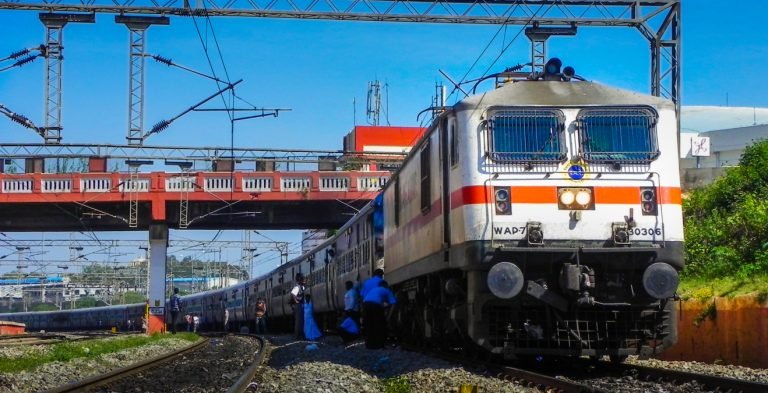
NEW DELHI (Metro Rail News): Indian Railways is making significant changes to its passenger coaches to manage maintenance costs effectively. It plans to reduce the types of coaches from 28 to just two: Linke Hofmann Busch (LHB) and Vande Bharat. As per the top government official, in the next 5-6 years, there will be only LHB and Vande Bharat type coaches on the Indian Railways. This move is inspired by successful airlines that use a similar approach with their aircraft to lower upkeep costs.

According to the official, the maintenance costs can drop by 40% with standardizing the coaches.

Additionally, to cater to lower-income passengers, particularly migrants, the Railways will introduce new non-air conditioned trains. These trains will focus on routes with high demand for affordable tickets and will run from Assam, Punjab, Eastern UP, Bihar, Jharkhand, Odisha, and West Bengal to Gujarat, Maharashtra, and Delhi. These will be permanent trains, not seasonal services, aimed at reducing pressure on other routes.

Moreover, the Railways is committed to passenger safety and plans to improve the design of LHB coaches. It aims to eliminate open doors during the journey and retrofit the coaches to minimize harm to passengers during accidents.

In the Budget 2023-24, Rs. 9792.88 crore has been allocated for Materials for Repairs and Maintenance, showcasing the Railways’ dedication to cost-effective and safe transportation for the nation.

Advertisement1
InnoMetro_2026

South Central Railway to Construct a New Yadadri Station Building for MMTS Extension

0
Yadadri Station
Representational image only

HYDERABAD (Metro Rail News): The South Central Railway (SCR) has planned to construct a brand new station building at Yadadri for the upcoming ₹430 crore 33-km MMTS suburban train extension from Ghatkesar. The new station will be on the eastern side as part of the MMTS extension, while the existing station on the western side will also undergo upgradation under the ‘Amrit Bharat‘ station scheme.

Following an inspection with his senior officials, SCR General Manager Arun Kumar Jain announced on Thursday that contracts for the existing station’s redevelopment has been awarded. The works to be undertaken include the construction of cover-over platforms, facade development and building improvements, among other things.

In 2016-17, the MMTS Phase-II extension from Ghatkesar to Yadadri was approved with an estimated cost of ₹330 crores. The project aims to add an extra 33 km line between Ghatkesar and Yadadri (Raigir) in addition to the existing two lines. Additionally, the project includes building new infrastructure at the stations and yards at Ghatkesar, Bhongir, Bibinagar, and Yadadri.

Originally planned as a joint venture with the Telangana government, the work is now being executed by the Railway Board itself without government assistance, with a revised cost estimate. The officials believe that building the new station closer to the Yadadri temple will be more convenient for pilgrims, eliminating the need for road travel.

According to Mr. Arun Kumar Jain, the completion of both works will significantly enhance the train connectivity for pilgrims visiting the important temple town.

Advertisement1
InnoMetro_2026

CMRL Signs Contract Agreement for OCC Construction at Madhavaram Depot in Phase 2

0
Contract signing ceremony between CMRL and URC Construction Pvt. Ltd.

CHENNAI (Metro Rail News): Chennai Metro Rail Limited (CMRL) has signed a Contract Agreement with M/s URC Construction Pvt Limited. The agreement with contract No. CP28A-OCC, was officially signed on 20/07/2023.

The Letter of Acceptance (LOA) had been issued to M/s URC Construction Pvt Limited for the tender, identified as Tender No. CMRL/CON/PHASE-II/CORR-5/CP28A-OCC/2023, on 08/06/2023. The total value of the contract amounts to INR 65.80 crore, which includes the Provisional Sum and GST.

The scope of work for the contract encompasses the Design and Construction of the Operation Control Centre (OCC) at Madhavaram Depot. This entails various aspects, such as Civil, Architecture, MEP, VAC, and all the associated works.

The contract was signed in the presence of Thiru. T. Archunan, the Director (Projects) of CMRL. The Contract Agreement was signed by Thiru. T. Livingstone Eliazer, the Chief General Manager (PP&D) of CMRL, and Thiru. P. Ramprasath, President Projects from M/s URC Construction Pvt Limited.

The signing ceremony was attended by other officials as well, including Tmt. Rekha Prakash, Chief General Manager (PD) and representatives from CMRL and GC.

Advertisement1
InnoMetro_2026

Tricity Metro Network Expands: Phase 1 Reaches 77 Kilometers

0
Haryana Metro
Image for representational purpose only

CHANDIGARH (Metro Rail News): In a recent meeting, the governments of Punjab and Haryana, along with representatives from Chandigarh administration, made some important decisions about the Metro network in the Tricity. They have now expanded the first phase of the Metro from the earlier planned 66 kilometers to approximately 77 kilometers.
During the meeting, the three administrations agreed to assign the task of creating a detailed project report and an annual analysis report for the project to RITES. While most of the Metro project is expected to be overground, a final decision on this will be made during the preparation of the DPR, said a senior official of the UT administration.

Under the new plan, the Metro network in Phase 1 will cover 35 kilometers in Chandigarh, 11 kilometers in Panchkula, and 31 kilometers in Mohali/New Chandigarh. The construction for this first phase will take place from 2027 to 2037.

The meeting also led to the inclusion of more areas in Phase 1. Approximately 6 kilometers from Paroul in New Chandigarh to Sarangpur, and around 5 kilometers from Panchkula ISBT to Panchkula Extension in Sector 20 have been approved to be part of the Metro rail project. This addition of 11 kilometers will cover several significant destinations in the region.

The states will cover 20% of the project’s cost, the Center will contribute another 20%, and the remaining 60% will be financed by a lending agency. The overall project is expected to cost around Rs 10,570 crore.

RITES has provided an estimate that the preparation of the detailed project report will cost Rs 6.54 crore. It anticipates completing the DPR by March 2024, after which it will seek the required permissions to initiate the construction phase.

Advertisement1
InnoMetro_2026

TN Government Funds Chennai Metro’s Phase II Project While Awaiting Center’s Approval

0
Chennai Metro
Representational image only

CHENNAI (Metro Rail News): The Chennai Metro Phase II project, valued at Rs 61,843 crore, is currently awaiting approval from the Cabinet Committee on Economic Affairs (CCEA). Despite receiving approval from the Public Investment Board two years ago, the project’s clearance is still pending. The Tamil Nadu government has been funding the project in the hope of eventual approval from the center. However, if the funds are not released on time, the project may face obstacles.

The Phase II project aims to construct 128 stations and three rail corridors covering a total length of 118.9 km. The corridors include Corridor 3 (Madhavaram to SIPCOT for 45.8 km), Corridor 4 (Lighthouse to Poonamallee Bypass for 26.1 km), and Corridor 5 (Madhavaram to Sholinganallur for 47 km). The state government has already given its approval, seeking matching funding from the center and financial assistance from bilateral/multilateral agencies.

The Japan International Cooperation Agency (JICA) has offered a loan of Rs 20,196 crore for a 52.01 km stretch of Phase II, connecting Madhavaram to Sholinganallur (35.67 km) and Madhavaram to CMBT (16.34 km). Additionally, in-principle approval has been secured for funding the remaining 66.89 km through multilateral banks like the Asia Development Bank (ADB).

Chennai Metro Rail’s Managing Director, M A Siddique, confirmed that the proposal is with the Union government, and the state is permitted to proceed with the project pending CCEA’s decision. According to the officials, once the clearance is received, the state is expected to receive a matching equity contribution from the center. The commissioning of the entire Phase I is estimated to be completed by the end of 2025 or 2026, while Phase II has a deadline of 2028 for completion.

Advertisement1
InnoMetro_2026

L&T Secures Rs. 15,697 Crore Contract for Mumbai-Ahmedabad High-Speed Rail’s Package C-3

2
Mumbai-Ahmedabad bullet train
Mumbai-Ahmedabad bullet train/Representational image

DELHI (Metro Rail News): The National High-Speed Rail Corporation Ltd. (NHSRCL) has awarded Larsen & Toubro (L&T) a substantial contract worth Rs. 15,697 crores for Package C-3 of the Mumbai – Ahmedabad High-Speed Rail (Bullet Train) project. The longest elevated Package C3 (135.45 km) in Maharashtra will connect Shilphata to Zaroli and will include three stations at Thane, Virar, and Boisar.

The contract signing ceremony is expected to take place later this month.

L&T emerged as the winner among three other bidders when the financial bids for Package C-3 were opened last month. The construction deadline for this project is set at 1704 days (approximately 4.66 years).

The scope of the contract covers designing and Construction of Civil and Building Works, including Testing and Commissioning on Design Build Lump Sum Price Basis for Double Line High-Speed Railway including Viaducts as well as  Bridges (excluding fabrication and transportation of steel truss girder components), Maintenance Depot, Earth Structures, Tunnels, and Stations (Thane, Virar and Boisar), between Shilphata in the State of Maharashtra and Zaroli at Maharashtra-Gujarat border from MAHSR Km 21.150 to MAHSR Km 156.600 [excluding Thane Depot] for the Project for Construction of Mumbai-Ahmedabad High-Speed Rail.

With this latest contract, L&T is now responsible for constructing 469.32 km (approximately 92.35% of the main-line) from Shilphata Ramp on the outskirts of Mumbai to Ahmedabad’s southern outskirts. This is the final civil package of the entire main-line to be awarded, marking a significant milestone in the project’s progress. The first package of the main-line, 237.1 km Package C4, was awarded in November 2020.

The completion of this package will bring the project closer to its much-anticipated realization, enhancing connectivity and travel efficiency between Mumbai and Ahmedabad.

Advertisement1
InnoMetro_2026

PMC Likely to Approve Khadakwasla to Hadapsar Metro DPR

0
pune metro
Representational Image

PUNE (Metro Rail News): Pune may soon get a new metro route from Khadakwasla to Hadapsar as the Pune Municipal Corporation (PMC) is likely to approve the detailed project report (DPR) in the next general body meeting. The Pune Unified Metropolitan Transport Authority (PUMTA) has already given its approval to the project.

Once approved by the PMC and the state government, the proposal will be submitted to the Centre for final approval. The Centre will share the financial burden with the Maharashtra government and the PMC.

Both the Tata Group and Maha Metro have expressed interest in developing the metro route. The PMC needs to decide between the two for speedy execution.

In the previous year, Maha Metro submitted proposals for various metro routes in Pune, including Vanaz to Chandni Chowk, Ramwadi to Wagholi, Khadakwasla to Swargate, SNDT to Warje, Hadapsar to Kharadi, Swargate to Hadapsar, and the high-capacity mass-transit route (HCMTR) in the city center. The Tata Group, along with the Pune Metropolitan Region Development Authority (PMRDA), is jointly working on metro line 3 (Hinjewadi to Shivajinagar) under a public-private partnership (PPP) model.

The expansion of metro line 3 to Civil Court and Hadapsar is planned. However, the Swargate to Katraj metro route is still awaiting approval from the central government before Maha Metro can begin work on it.

Advertisement1
InnoMetro_2026

RVNL and TMH Resolve Differences, Sign Agreement for 120 Vande Bharat Trains

0
New colored Vande Bharat Train
Vande Bharat Train/ Representational image only

NEW DELHI(Metro Rail News): Indian Railways PSU, Rail Vikas Nigam Ltd (RVNL), and Russian rolling stock manufacturer, Transmashholding (TMH) have settled their differences and signed a shareholders agreement for producing 120 Vande Bharat trains with sleeper coaches. The joint venture had been declared as the lowest bidder for this project.
The resolution allows the JV to proceed with submitting the bid security amount to Indian railways for contract signing. RVNL announced the share purchase agreement with TMH subsidiary-Metrowagonmash and Russian equipment supplier, Locomotive Electronic Systems (LES), in its BSE filing.

Previously, RVNL had requested a greater share in the JV, which TMH had rejected.

The dispute over majority shareholding in the JV was a major crisis threatening to derail the TMH’s awarded contract. However, with intervention from top government officials, the issue was resolved, as TMH engaged with senior government authorities and railways.

Advertisement1
InnoMetro_2026