Home Blog Page 175

MoHUA Felicitates Delhi Metro and UP Metro at UMI Conference, 2023

0
DMRC & UPMRC awarded at UMI Conference

NEW DELHI (Metro Rail News): The Urban Mobility India Conference being conducted in Delhi culminated on Sunday with an award ceremony to felicitate the Metros running in India for their continuous and committed service. 

With the same endeavour, the Delhi metro & Lucknow metro was awarded an Excellence Award in Public Transport in the category of “ Metro Rail with Best Passenger Services & Satisfaction”. 

DMRC, in a tweet, said, ” Delhi Metro today received the ‘Award of Excellence in Public Transport’ in the ‘Metro Rail with Best Passenger Services and Satisfaction’ category at the 16th Urban Mobility India Conference and Expo, 2023 organised by the Ministry of Housing and Urban Affairs, Govt of India”. 

DMRC awarded at UMI 2023
DMRC awarded at UMI Conference, 2023.

UPMRC, in a tweet, said, “ Lucknow Metro won the National award from the Government of India for its excellent Passenger service and satisfaction and Best Performance which means going the extra mile for passenger comfort, punctuality, reliability, convenience, benefit, engagement and safety”. 

Lucknow metro awarded at UMI 2023
UPMRC awarded at UMI Conference, 2023.

The three-day Urban Mobility India Conference was organised by MoHUA in Manekshaw Centre and culminated on Sunday. 


Discover the endless possibilities of our city’s Metro at InnoMetro, our flagship Expo and Conference. Be an active participant in shaping its future towards a more sustainable tomorrow. Stay informed and join us to take a step towards a brighter future.

Advertisement1
InnoMetro_2026

INDIAN RAILWAYS AS A GREEN TRANSPORTER

0
Indian Railway
Indian Railways (Representational Image)

NEW DELHI (Metro Rail News): Indian Railways (IR), the world’s fourth largest railway network, endeavours to become a green transporter by mitigating its carbon footprint. In 2020, the energy consumption of IR was estimated to be 18,410 million units for traction and 2,338 million units for non-traction load. IR has taken great measures to minimise its carbon footprints and fuel expenses, and India is committed to being a ‘net-zero’ carbon-emitting country by 2030. Some of its key and principal decarbonisation measures include complete electrification of the railway’s broad gauge network, reductions in energy use, and meeting energy demand with renewable energy.

IR currently has 220 MW of renewable energy capacity, with over 3,450 MW of renewable energy capacity in the development pipeline. It is also expected that the use and consumption of renewable energy in the transportation industry will reduce greenhouse gas (GHG) emissions by nearly forty per cent. With 115,000 track kilometres, 8,500 stations, and operations of around 12,000 trains per day, IR is known to be one of India’s biggest consumers of fossil fuels, consuming approximately 2.7 billion litres of diesel yearly.

One of the world’s largest railway networks, Indian Railways, has set an ambitious goal of being a net-zero carbon emitter by 2030. The project is part of the country’s overall goal of limiting and reducing carbon emissions and mitigating the effects of climate change. The Indian Railways, which operates over 13,000 passenger and goods trains, contributes for 4% of GHG emissions from India’s transportation industry, which accounts for nearly fourteen per cent of the country’s greenhouse gas emissions. 

The railway network has made several steps to lessen its carbon footprint. Shri Ashwini Vaishnaw, Minister of Railways, Communications, and Electronics and Information Technology, revealed in a written reply to a question in Lok Sabha that the use of energy-efficient technologies, such as switching entirely to the production of three-phase electric locomotives with regenerative features, the use of head-on generation (HOG) technology, the use of LED lights in buildings and coaches, star-rated appliances, and afforestation, are some of the initiatives. Additionally, switching from diesel to electric traction, boosting energy efficiency, and afforestation have been mentioned as essential approaches for attaining the Net Zero Carbon emission targets.

Indian Railways is projected to have an energy demand of roughly 8,200 Mega Watt (MW) by 2029-2030. It is estimated that around 30,000 MW of renewable energy capacity will be required by 2029-2030 to achieve net zero carbon emissions. As of February 2023, around 147 MW of solar power plants (both on rooftops and on land) and approximately 103 MW of wind power plants have been operational. In addition, approximately 2150 MW of renewable energy capacity have been planned and committed to be developed.

Further, IR has also planned to gradually meet its future energy requirements by acquiring renewable energy through various power procurement policies and strategies. The railways have set and established the target of generating 20 GW of solar energy by 2030. As of today, Indian Railways have solarised around 960 stations. Indian Railways’ objective is to totally migrate to a ‘Green mode of transportation’ by using solar energy to meet its traction power requirements. This is consistent with the Prime Minister’s 2020 directive to solarise train stations and utilise unused railway land for renewable energy (RE) projects. According to reports, around 142 megawatts of solar plants and 103 megawatts of wind power plants have been commissioned till October 31, 2022.

In addition, the Indian Railways is taking steps to enhance the usage of green fuels. It uses a 5% biofuel blend in traction diesel fuel. The railways are also taking steps to minimise carbon emissions from goods and freight trains, which have been for long among the leading contributors to pollution. Finally, the Indian Railways’ initiative to become a net-zero carbon emitter by 2030 marks and constitutes a significant step towards lowering India’s carbon emissions and minimising the effects of climate change. The railways have taken several steps towards lowering their carbon footprint, including electrifying the railway network, using renewable energy sources, and reducing energy use. 

The Government of India has set a target of 33% reduction in emissions intensity as part of its Nationally Determined Contributions (NDCs), with transport being one of the principal sectors with significant mitigation potential. One of the most important transport emissions mitigation plans agreed to by the Government of India has been to raise Indian Railways’ share of freight movement from 35-36% to 45% by 2030. Indian Railways plays a significant role in contributing to India’s NDC to address climate change through a number of different approaches, including:

  • To increase the railways’ share of total land-based freight transit from the current thirty-six per cent to forty-five per cent by 2030. Dedicated Freight Corridors (DFCs) are being built across India by Indian Railways. Over a 30-year period of time, the first phase of the project is expected to cut emissions by 457 million tonnes of CO2.
  • Increase the proportion of renewable energy in the country’s energy mix. Railways to boost and enhance energy efficiency for both diesel and electric propulsion, allowing the country to reduce GHG emissions. The PAT Scheme is to be introduced and implemented in the railway sector. Use of a five per cent biofuel blend in traction diesel fuel.
  • Improve and enhance water usage efficiency by up to twenty per cent by 2030. Planting trees to boost carbon sink. Pollution control and waste management. Adopting best practices for green buildings, industrial units, and other establishments for resource and infrastructure management in order to promote environmental sustainability in the growth of IR. 
  • Contribution to the ‘Swachh Bharat Mission’. IR has set and established the target of becoming a ‘Net Zero’ organisation by 2030 through the electrification of its rail network. Additionally, the railways have also introduced bio-toilets in all its trains with OBHS (Board housekeeping service) facilities.

Indian Railways has taken advances to streamline its environmental management operations, with noticeable programmes and initiatives, including Energy Efficiency Management, Renewable and Alternative Energy Sources, Water Conservation, Afforestation, Water Management, and Green Certifications. The reforms carried out by Indian Railways in recent years can be broadly classified as follows:

(i) Carbon Emission: 

IR plans to make every possible effort to reduce its carbon consequences, primarily through obtaining its energy needs from renewable sources. The projected requirement for renewable capacity installation by 2029-30 is expected around 30 GW. IR has installed 142 MW of rooftop solar capacity and 103.4 MW of wind energy capacity till August 2022. Other measures for becoming a Net Zero emitter include electrification of its lines, switching from diesel to electric traction, promotion of energy efficiency, developing Dedicated Freight Corridors, Green certification of Railway Establishments, and so on.

IR has electrified 52,508 RKM out of a total BG network of 65,141 RKM (80.61%). With hundred per cent electrification, power demand is expected to rise to almost 72 BUs by 2029-30, up from 21 BUs in 2019-20. Carbon emissions are anticipated to be 60 million tonnes by 2029-30 as per business and in the usual mode, which has been planned to be mitigated by different IR initiatives.

(ii) Issuance of water policy for effective water management: 

Water Policy 2017 has been disseminated to all Zonal Railways and Production Units for implementation in Railway Stations, Trains, and Railway Colonies, among other places. This is part of the Government of India’s broader aim to reduce water consumption as part of its Nationally Determined Contribution. 

The main goal of this strategy is to promote water use efficiency through better demand and supply management, the installation of water-efficient devices, and the establishment of Water Recycling Plants on railway land.

(iii) Creation of Additional Carbon sink by Afforestation

Railway departmentally carries out afforestation on vacant railway land and in between sections. As part of the railways’ commitment to environmental betterment and sustainable development, state forest departments are involved in tree planting, maintenance, and disposal.

Since 2017, IR has been planting approximately 1 crore trees every year. During the years 2021-22, 72 lakh seedlings had been planted.

(iv) Waste Management:

More than 250 waste management stations have waste-to-energy/compost/biogas plants/material recovery facilities. Separate containers for dry and moist trash have been installed for waste categorisation at the source.

(v) Green certification/Consent to operate from the State Pollution Control Board

Around 700 railway stations have been accredited for ISO:14001 environmental management system implementation. Over 545 stations have received permission to operate (CTO) from their respective State Pollution Control Boards. Green accreditation has been granted to 31 railway buildings (including offices, training institutes, hospitals, and schools), 32 stations, and 55 workshops/PUs.

(vi) Policy for allocating one per cent cost in all sanctioned works for executing environment-related works:

To reduce the environmental impact of activities and to protect the environment, a policy was announced in May 2016 that provided for a 1% cost allocation in all sanctioned Works for executing environment-related activity.

(vii) Cleanliness of Trains & Railway Stations:

Cleanliness of trains and railway stations has gained prominence in the last few years, as the number of mechanised cleaning contracts at stations and coaches in trains, rag picking and garbage disposal contracts at stations, and On Board Housekeeping Service (OBHS) contracts have increased.

(viii) Environment-friendly Bio–Toilets for Passenger Coaches:
Indian Railways (IR) and the Defence Research and Development Organisation (DRDO) have collaborated to develop environmentally friendly bio-toilets for passenger waggons. 

Up till March 2014, 9,587 bio-toilets were installed in 3,647 coaches. The task of installing bio-toilets in all passenger-carrying coaches on Indian Railways has been completed with the installation of 2,58,990 bio-toilets in about 73,110 coaches up to March 2021.  

In accordance with the ‘Swachh Bharat Mission,’ direct discharge of human waste from trains has thus been prohibited.

(ix) Third-party Audit/Survey, including Passenger feedback on Cleanliness:

Third-party audit cum survey on cleanliness of major stations began in 2016 and has been carried out every year since then. In 2018, the first-ever third-party audit cum survey on the hygiene of major trains was conducted. Such surveys enable independent evaluation while also instilling a healthy feeling of competition in improving cleanliness in passenger interaction areas.

(x) Standard Bid Document for Housekeeping of Stations & Trains & General Conditions of Contract for Services:

To increase the effectiveness of housekeeping/cleaning contracts, the Standard Bid Document (SBD) (Aug 2017) and General Conditions of Contract for Services (GCCS) (Feb 2018) have been developed and issued, with a special focus on passenger contact areas. 

The Other Recent Developments

Indian Railways, the country’s largest electricity consumer, has set the lofty aim of being a net-zero carbon emitter by 2030. The programme was announced with a focus on the importance of industry participation and collaboration in reaching this common goal. With plans and aspirations to extend its presence and influence in the solar sector and capture clean power, Indian Railways strives to become the world’s newest, finest, and safest rail system. Indian Railways, being aware of its considerable contribution to the nation’s energy usage (about 2% of the total), is actively seeking a clean energy transition. Recognising the environmental risks posed by its energy usage, the corporation has taken great steps to reduce its carbon footprint by implementing renewable energy sources.

Solar Projects on the Rise

Indian Railways has made significant strides in incorporating solar energy into its infrastructure. As part of its commitment to renewable energy, the organisation launched a 5 MW solar power project across multiple stations in New Delhi. These photovoltaic systems and solar power plants on the rooftops of the railway stations in Hazrat Nizamuddin, New Delhi, Anand Vihar, and Delhi are like shining representations of Indian Railways’ commitment to renewable energy. By embracing solar energy, the corporation not only reduced its reliance on fossil fuels, but it has also demonstrated the potential and benefits of renewable energy adoption in the transportation sector.

Additionally, as part of its ambitious goal of obtaining 5 GW of solar capacity, Indian Railways has set its sights on developing large-scale solar power projects, both on rooftops and ground-mount systems. Indian Railways can tap into the enormous potential of solar energy and contribute considerably to the country’s renewable energy goals by capitalising on available infrastructure and space. These solar projects will not only assist in cutting carbon emissions but shall also provide a long-term and sustainable source of power for the rail network.

As part of its commitment to sustainability, the Kolkata Metro, in recent times, has made considerable efforts towards incorporating solar electricity into its network. The installation of solar power plants on rooftops throughout the metro railway’s network has become a cornerstone of the organisation’s sustainable energy strategy. The Kolkata Metro currently generates an astounding 2189.50 Kwp of solar power. This comprises the installation of 657 Kwp solar power plants along the North-South Corridor, 1519 Kwp solar power plants along the East-West Corridor, and 13.5 Kwp solar plants at the Metro Railway’s Tapan Sinha Memorial Hospital.

The solar power plants have been extremely advantageous to the Kolkata Metro. These projects have been carried out in a Public-Private Partnership (PPP) mode, having the metro rail authorities providing the rooftop areas and the solar power developer in control of the entire design, procurement, installation, testing, and commissioning work. The solar power developers are in charge of the operation and maintenance of these installations. The Metro Railway’s solar power generation system is monitored using a cloud-based monitoring system to maintain optimal performance and efficiency. External computers and smart devices use built-in metres and data loggers to analyse plant performance, providing vital information for ongoing maintenance and enhancements.

In the future, the Kolkata Metro has significant plans for solar power generation. The metro has set a target of increasing solar power capacity by 2792 Kwp in fiscal year 2023-24. This development comprises the erection of a 500 Kwp capacity plant at Central Park Depot’s Stabling Bay Line Workshop, a 92 Kwp capacity plant at Belgachia, a significant 1400 Kwp capacity plant at Joka Depot, and an 800 Kwp capacity plant at Kavi Subhash Carshed. A proposal has also been submitted for the development of a 654 Kwp solar power generating plant at Jessore Road station.

Setting up a 1 GW Solar Power Park

The Indian Railways has also announced its plans to build a gigantic 1 GW solar power facility in the state of Madhya Pradesh. This ambitious project demonstrates the company’s dedication to renewable energy and sustainability. The Rewa Solar Park, known for its low tariffs and favourable solar conditions, has piqued the interest of Indian Railways as an ideal location for this ground-breaking initiative.

A solar power park of this size will not only supply clean energy to run the railway system but will also demonstrate India’s commitment to renewable energy on a global scale. Indian Railways would be able to generate a huge amount of electricity and significantly lower its carbon footprint by utilising the plentiful solar resources available in Madhya Pradesh. The development of this solar power park will be an outstanding instance of India’s commitment to clean energy, as well as a catalyst for future solar power advancements in the country.

Indian Railways is seeking to attain energy self-sufficiency and lessen its dependency on conventional energy sources through extensive deployment of solar power. By incorporating solar energy into its operations, the railway system will not only help to green the environment but will also save money in the long run. Once established, solar power provides a consistent and predictable source of energy, lowering energy price volatility and the company’s vulnerability and responsiveness to price variations in the fossil fuel market.

Additionally, excess energy generated through the railway system can be fed back into the grid, improving the nation’s overall energy security. This excess power might be used during high-demand hours or in areas with low solar power generation capabilities. Indian Railways shall play an important part in grid stabilisation and promoting the optimal use of renewable energy resources by functioning as a net energy exporter.

Solar power integration into Indian Railways operations extends beyond lowering carbon emissions and achieving energy self-sufficiency. It displays the organisation’s dedication to sustainable practices, developing an environmental stewardship culture. Indian Railways is setting a pattern and standard for other companies and organisations to follow by embracing solar energy on a large scale, demonstrating that a clean energy transition is not only feasible but also economically sustainable.

Collaboration with Industry Stakeholders

Railways Minister Ashwini Vaishnaw has stressed the necessity of industry cooperation in meeting Indian Railways’ ambitious targets. Recognizing that great things in business are never completed by a single person, Shri Ashwini Vaishnaw has emphasized the importance of collaboration between the railways and a number of industry stakeholders. This collaboration includes solar developers, technology providers, legislators, and other stakeholders. These stakeholders can accelerate the transition to renewable energy by pooling their experience, resources, and innovative ideas. The combined efforts of industry participants will be critical in overcoming problems, recognising opportunities, and implementing long-term solutions that are consistent with Indian Railways’ vision and goals.

Partnerships, collaborative ventures, and knowledge-sharing platforms are all examples of collaboration. Indian Railways can exploit the different perspectives and strengths of its industry partners by establishing a collaborative atmosphere, paving the road for a sustainable future. Indian Railways can build a synergy between sustainability and passenger comfort by utilising technology improvements and embracing innovation. Integration of renewable energy systems, for example, can power charging stations for electric trains, increasing the adoption of cleaner transportation and lowering dependency on fossil fuels.

The commitment of Indian Railways to becoming a net-zero carbon emitter by 2030 represents a significant step towards a more sustainable and green future. The railway system may substantially reduce its carbon footprint and contribute to the nation’s environmental goals by capturing solar power and embracing sustainable energy options. With industry involvement and an emphasis on innovation, Indian Railways is on course to become one of the world’s newest, finest, and greenest railway networks.


Discover the endless possibilities of our city’s Metro at InnoMetro, our flagship Expo and Conference. Be an active participant in shaping its future towards a more sustainable tomorrow. Stay informed and join us to take a step towards a brighter future
Advertisement1
InnoMetro_2026

Jewar To New Delhi High-Speed Metro Line For Enhanced And Advanced Commuting

1
Chandigarh metro (Representational image)

NEW DELHI (Metro Rail News):

Overview

On December 13, 2022, the Yamuna Expressway Industrial Development Authority (Yeida) signed an agreement with the Delhi Metro Rail Corporation (DMRC) under which the latter had been assigned with the responsibility of preparing a detailed project report for Phase-2 of the proposed metro corridor between the Jewar Airport in Noida and the IGI Airport in Delhi. The Yamuna Expressway Authority paid Rs 2 crore to DMRC in October last year to prepare the DPR. The projected Metro corridor project, estimated to cost approximately Rs 13,000 crore, is anticipated to be financed and funded by the Noida authority, Greater Noida authority, Yeida, the Uttar Pradesh government, and the Central government.

A seventy-two-kilometre metro route has been planned and proposed to be constructed to connect the forthcoming Jewar airport to the New Delhi Metro Station. In the designed corridor, passengers shall have the option to change trains at the NDLS metro station and take the airport express metro to the IGI Airport. The intended metro rail corridor shall feature two metro rail stretches, one between Noida Airport and Knowledge Park in Greater Noida, and the other from Knowledge Park to New Delhi Railway Station. There is already a connection from New Delhi Railway Station to the Airport Express for Delhi Airport.

Jewar Airport Metro stations

Although the Jewar airport-New Delhi Metro Station Metro route was originally planned to have 12 stations, officials now claim that it may only have six in order to cut travel time. According to DMRC, once this new line is operational, the distance between Jewar Airport and IGI Airport could be traversed in one hour. The first phase of the projected Jewar airport is expected to be completed in September 2024, shortly after the NCR’s second airport opens to the public.

Jewar Airport to be linked with Bulandshahr

The Yeida has also agreed to construct two new expressways and a rail link to connect the Chola Railway Station in Bulandshahr to Jewar, which is the proposed site where the Noida International Greenfield Airport is currently being developed.

Stations between Jewar airport and Greater Noida

The Airport Express Line would connect Jewar to the Indira Gandhi International Airport in Delhi via the link between the future Noida International Airport and Greater Noida. Seven stations are planned for the proposed metro rail corridor between the upcoming Noida International Airport at Jewar & Knowledge Park-2 in Greater Noida. According to sources close to the project, it has been slated that six of the seven metro stations shall be elevated while the remaining one is expected to be underground.

The Delhi Metro Rail Corporation (DMRC) prepared a detailed project report (DPR) for the metro link between Jewar Airport and Knowledge Park-2, which was submitted to the Yamuna Expressway Industrial Development Authority (YEIDA) last year and has now been forwarded to the Uttar Pradesh government for approval.

As per the sources, ‘there are likely to be seven stations between Jewar Airport and Greater Noida. Four of these seven are likely to be Noida International Airport in Jewar, International Film City, Techzone and Knowledge Park-2. The remaining three stations are expected to come up in YEIDA residential sectors 18, 19 and 20 and industrial sectors 28 and 29,” including that the station at Noida International Airport will be underground.

Building Jewar – India’s Transport Hub

The Knowledge Park-2 metro station will serve as an interchange station for travellers switching to the Noida-Greater Noida Aqua line metro. The 35.64-kilometre-long metro link between Jewar Airport and Greater Noida is part of the 72-kilometre-long Airport Express Line, which will connect the planned Noida International Airport with the Indira Gandhi International Airport in Delhi. The project would be completed in two stages: 35.64 kilometres from Jewar Airport to Knowledge Park-2 and 36.36 kilometres from Knowledge Park-2 to Delhi, where commuters can use the current Airport Express Line.

According to sources, given the distance between the two airports, the entire metro connecting link will be a high-speed rail service, with a one-hour journey time between the two airports. According to YEIDA officials, DMRC is also preparing the DPR for the Knowledge Park-2 to New Delhi metro line, which is scheduled to be filed soon. The total project cost, including both stages, is anticipated to be Rs 13,000 crore. The DPR for Knowledge Park-2 to Delhi Metro had been scheduled to be submitted by March 31 of this year; however, it had been postponed and delayed by a few months owing to the requirement to have more time to carry out surveys.

The YEIDA shall be submitting the DPR for the Greater Noida-Delhi metro line to the state government for approval after reviewing and examining it. Work on both metro corridors can begin only after approval and acceptance from the state government. According to the officials, YEIDA signed an agreement with DMRC to perform a feasibility study for a metro link between IGI Airport and Noida International Airport in September 2021. They stated that phase one of the new airport is planned to begin in September 2024, so connecting the two airports and developing multimodal connectivity from Jewar to other sections of Greater Noida, Noida, and Delhi is vital and important.

Metro to link two NCR Airports: DPR for New Delhi-Greater Noida Metro Corridor

The Delhi Metro Rail Corporation (DMRC) has submitted the comprehensive project report for the proposed metro route between New Delhi railway station and Greater Noida Knowledge Park-2 to the Yamuna Expressway Industrial Development Authority (YEIDA). According to project officials, the detailed project report (DPR) has recommended roughly seven stations along this section of the metro network. This proposed corridor is part of a larger metro network intended to connect the National Capital Region’s (NCR) two international airports, the future Noida International Airport (NIA) in Jewar and the Indira Gandhi International Airport (IGI) in Delhi. The DPR had also been submitted to the government of Uttar Pradesh for assessment and final clearance.

According to the CEO of Yeida, the DPR for the Knowledge Park-2 to New Delhi segment has been prepared and has been sent to the state government for clearance. The DPR has proposed seven metro stations connecting Knowledge Park-2 to New Delhi. The government’s approval and orders for further project advancement are awaited. Officials said that the government shall take the final decision on the number of stations and the funding scheme. In February 2023, the DMRC began work on preparing the DPR for the development of this metro link. However, Yeida officials indicated in April that the process is being delayed because DMRC has requested more time to finish the survey work.

Linking The Two Airports

In December 2022, the DMRC and YEIDA signed a memorandum of understanding (MoU) for the compilation of the full project report for the development of the metro rail link. The 72-kilometre planned metro connectivity would be divided into two phases: a 36.36-kilometre link between New Delhi Station and Greater Noida’s Knowledge Park-2, and a 35.64-kilometre link between Knowledge Park-2 and Jewar. According to officials, the Knowledge Park-2-Jewar link has already received approval from the Yamuna authority for its DPR in August 2022 and is now awaiting approval from the Uttar Pradesh government. After the two stages are completed, this metro line will feature a total of 13 stations between Jewar Airport and New Delhi Railway Station. There is already a connection from New Delhi railway station to the Airport Express for IGI airport in Delhi. This proposed rail link is part of the Uttar Pradesh government’s intention to provide last-mile metro connectivity to Noida International Airport.

Summary

The high-speed Metro project connecting Noida International Airport with Delhi’s Indira Gandhi International Airport is slated to include only six stations on the 72km route in order to improve connectivity and assure smooth and quick journeys. The Uttar Pradesh government hopes to reduce travel time between Jewar and New Delhi stations to half an hour.

Reduced Number of Stations

The Delhi Metro Rail Corporation (DMRC) previously envisioned 12 stations along the route, beginning at the New Delhi Metro interchange and extending to the Noida airport in Jewar. However, in order to maintain high speeds, Uttar Pradesh government officials who chose anonymity insist on restricting the number of stations to six. This decision intends to make travel between the two airports more convenient and efficient. A high-level meeting had been organised, and attended by the Uttar Pradesh Chief Secretary, DMRC, Yamuna Expressway Industrial Development Authority (Yeida), Noida International Airport Limited (NIAL), Yamuna International Airport Private Limited, and the Ministry of Civil Aviation. The main purpose of the meeting has been to finalise the stations for the Metro line project and to debate the funding arrangement.

Project Implications

The construction of a high-speed Metro link between Noida International Airport and Indira Gandhi International Airport is required to meet the requirements of the agreement signed by Zurich International AG, Yamuna International Airport Private Limited, and NIAL. According to the agreement, the multimodal connection between Jewar and IGI airports must be constructed before operations at Noida airport begin in September 2024.

Upcoming Phases

Other than the 72-kilometer Metro link between Jewar and the New Delhi Metro station, two further stages are being considered. The first phase, which has already been approved, consists of a 35.64km Metro project from Jewar to Greater Noida’s Knowledge Park-2. The second phase, which is pending Yeida’s finalisation of the DPR, includes a 36.36km Metro link connecting Knowledge Park-2 and New Delhi. These future phases shall ultimately conclude the seventy-two-kilometre Metro project, providing passengers with seamless connectivity.

Conclusion

The projected high-speed Metro project connecting Noida International Airport and Delhi’s Indira Gandhi International Airport demonstrates the Uttar Pradesh government’s commitment towards strengthening and enhancing the infrastructure and connectivity in the region. With fewer stoppages and an emphasis on shorter journey times, this project intends to provide effective transportation alternatives for passengers while also contributing to the broader development of the area.


Discover the endless possibilities of our city’s Metro at InnoMetro, our flagship Expo and Conference. Be an active participant in shaping its future towards a more sustainable tomorrow. Stay informed and join us to take a step towards a brighter future

Advertisement1
InnoMetro_2026

Raipur Meterolite- A Distant Dream to be Accomplished

0
METROLITE
METROLITE (Representational Image)

NEW DELHI (Metro Rail News):

Introduction

The Raipur Metropolitan Region, also known as the Raipur Metropolitan Area and Greater Raipur, is an urban agglomeration in the state of Chhattisgarh that includes Raipur-Naya Raipur and some of Durg Bhilai. The Raipur Development Authority, Raipur Municipal Corporation, and Nava Raipur Vikas Pradhikaran are in charge of the area. The overall population of the Raipur metropolitan region was 2,343,334 according to 2011 census data, which includes the population of Raipur-Bhilai-Durg, which has a total urban area of 800.02 Kms.

Raipur LRT

Raipur Light Metro, also known as Metrolite, is a light rail transit (LRT) system proposed by the state’s Urban Administration and Development to be developed in Raipur, Chhattisgarh. Since 2019, when the state government signed an agreement with Nuam Technopreneur Pvt Ltd, an unknown entity, to create a line linking Shastri Chowk and Tatibandh, a light rail system has been in the works. The company suggested covering the entire cost of the project and operating contemporary battery-powered trains with a capacity of 1068 people for 30 years. That project never came to fruition.

Hardeep Singh Puri, India’s Union Housing and Urban Development Minister, asked the Chhattisgarh state government to draft and submit a Detailed Project Report (DPR) for financial consideration in February 2021.

Project Details & Key Information

  • Operational: 0 km
  • Under Construction: 0 km
  • Approved: 0 km
  • Proposed: unknown
  • Project Completion: Not announced (to be declared)
  • Expected Completion: 2028 (if approved by central & state government in 2023).

Latest Update

In the state budget announced on March 7, the Chhattisgarh government made a strong push for metro and aviation connectivity. Chief Minister Bhupesh Baghel announced the introduction of Metro Lite services from Nava Raipur Atal Nagar to Durg in his presentation of the Chhattisgarh Budget 2023.

Metro Lite is a popular means of public transport in smaller cities. This system, which can be built for roughly forty per cent of the cost of a high-capacity metro system, is more viable and sustainable due to lower capital, operation, and maintenance costs. Durg, located approximately 40 kilometres from the state capital, is Chhattisgarh’s second-largest urban area after Raipur.

The Chief Minister also announced Rs 28.26 crore for the new Chhattisgarh Bhawan in New Delhi’s Chanakyapuri. The budget also includes funding for the construction of a new airfield in Baikunthpur and a commercial airport in Korba. A provision has been designed and developed for the establishment of an Aerocity near Raipur Airport to promote professional and commercial activities.


Discover the endless possibilities of our city’s Metro at InnoMetro, our flagship Expo and Conference. Be an active participant in shaping its future towards a more sustainable tomorrow. Stay informed and join us to take a step towards a brighter future

Advertisement1
InnoMetro_2026

Secured Transportation On Wheels-Automatic Train Control

0
ATCS
Representational image

NEW DELHI (Metro Rail News): Automatic train control (ATC) is a broad category of railway train protection systems that incorporates a speed control mechanism in response to external inputs. For example, if the driver does not respond to a danger signal, the system may apply the emergency brakes. ATC systems typically incorporate multiple cab signalling mechanisms and use more granular deceleration patterns rather than the rigid and stiff stops witnessed with former automatic train stop (ATS) technology. ATC, which can also be utilised with automatic train operation (ATO), is typically regarded as the most crucial safety component of a railway system. 

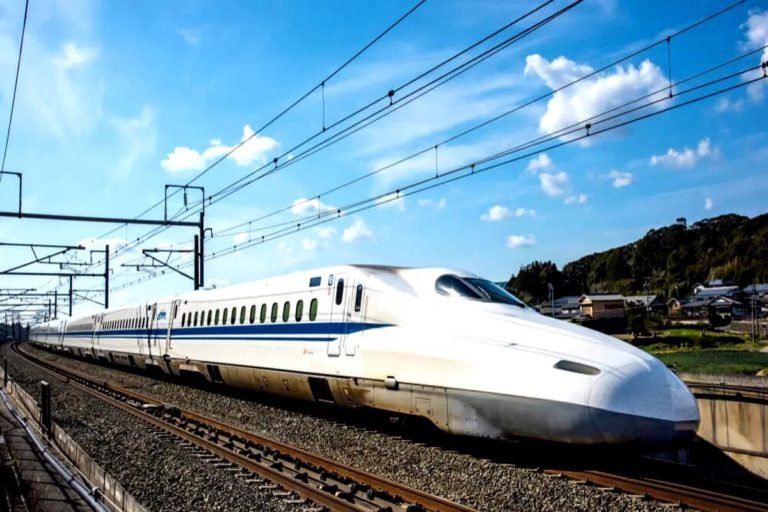
Over time, there have been various alternative ‘automatic train control’ safety systems. The Great Western Railway developed the first experimental machinery on the Henley branch line in January 1906, although it is now been designated as an automated warning system (AWS) because the driver retained full control of braking. The word is notably common and prevalent in Japan, where ATC is used as a replacement for ATS on all Shinkansen (bullet train) lines and several conventional rail lines.

Analogue ATC

ATC-1, ATC-2, ATC-3 (WS-ATC), ATC-4 (CS-ATC), ATC-5, ATC-6, ATC-9, ATC-10 (New CS-ATC), ATC-L are the various types of Analogue ATC mostly used on high-speed metro lines.

Digital ATC

The digital ATC system detects the presence of a train in the section using track circuits and then transmits digital data from wayside equipment to the train on the track circuit numbers, the number of clear sections (track circuits) to the next train ahead, and the platform that the train will arrive at. The received data is compared to track circuit number information kept in the train’s onboard memory, and the distance to the next train ahead is calculated. Data about track grades and speed limits across curves and points are also saved in the onboard memory. All of the aforementioned data is used by ATC to make decisions and make judgements about managing the service brakes and stopping the train.

The running pattern defines the braking curve to stop the train before it enters the next track section occupied by another train in a digital ATC system. When the train approaches the braking pattern, an alarm rings, and the brakes are applied if the braking pattern is exceeded. The brakes are applied mildly at first to improve ride comfort, then more forcefully until the desired deceleration is achieved. When the train speed reduces to a predefined speed below the speed limit, the brakes are applied more lightly. By controlling the braking force in this manner, the train can decelerate in accordance with the braking pattern while maintaining riding comfort.

There is also an emergency braking pattern outside of the standard braking pattern, and the ATC system deploys the emergency brakes if the train speed exceeds this emergency braking pattern. There are several advantages to using a digital ATC system:

The use of one-step brake control allows for high-density operations because there is no idle running time owing to operating delay between brake releases at the intermediate speed restriction stage.

Trains can operate at their maximum speed without having to begin early deceleration because braking patterns for any type of rolling stock can be developed based on data from wayside equipment indicating the distance to the next train ahead. This allows for the combined running of express, local, and goods trains on the same track at maximum possible speed.

When running faster trains in the future, there is no need to replace the wayside ATC equipment.

To date, the following digital ATC systems are used:

D-ATC: Some East Japan Railway Company (JR East) lines use it on non-high-speed routes. The abbreviation stands for Digital ATC. The key difference between this and prior analogue ATC technology is the transition from ground-based control to train-based control, which allows braking to reflect each train’s ability while also enhancing comfort and safety. Its ability to enhance speeds and provide denser timetables is vital for Japan’s congested railways. D-ATC is utilised with the Taiwan High Speed Rail’s THSR 700T, which debuted in early January 2007.

DS-ATC: Implemented on JR East’s Shinkansen routes. Digital communication and control for Shinkansen-ATC. The Thoku Shinkansen, Hokkaido Shinkansen, Joetsu Shinkansen, and Hokuriku Shinkansen all use it.
RS-ATC: As a fallback level from DS-ATC, it is used on the Tohoku, Hokkaido, Hokuriku, and Jetsu Shinkansen. In essence, RS-ATC is similar to GSM-R in that radio signals are used to manage train speed limits, as opposed to trackside beacons and/or transponders on other types of ATC.

ATC-NS: ATC-NS (ATC-New System) is a digital ATC system based on DS-ATC that has been used on the Tkaid Shinkansen since 2006. The Taiwan High Speed Railway and the San’y Shinkansen both use it.

KS-ATC: Since 2004, it has been used on the Kyushu Shinkansen. Kyushu Shinkansen-ATC is an abbreviation for Kyushu Shinkansen-ATC.

ATACS

ATACS is a CBTC-style moving block ATC system designed by RTRI and first installed by JR East on the Senseki Line in 2011, followed by the Saiky Line in 2017, the Koumi Line in 2020, and the Jban Line local tracks in 2021. It is regarded as Japan’s equivalent to ETCS Level 3.

The ATC system in various metro and rail systems:

Japan: The Automatic Train Control (ATC) system was developed in Japan for high-speed trains such as the Shinkansen, which run at such a pace that the driver has almost no time to perceive and acknowledge trackside signs. Despite the fact that the ATC system delivers AF signals, including information regarding the speed limit for each track section along the track circuit. When these signals are received on board, the train’s current speed is compared to the speed limit, and if the train is travelling too fast, the brakes are immediately applied. As soon as the train slows below the speed limit, the brakes are released. This technology provides a higher level of safety by preventing collisions caused by driver error, hence it has been placed on heavily used lines such as Tokyo’s Yamanote Line and some underground lines.

Although the ATC automatically applies the brakes when the train exceeds the speed limit, it cannot adjust the motor power or train stop position when approaching stations. However, the automatic train operation (ATO) system can handle station departure, speed between stations, and stop position in stations automatically. Some subways have it installed. However, ATC has three drawbacks. First, the idle running time between releasing the brakes at one speed limit and applying the brakes at the next slower speed limit prevents the headway from being extended. Second, the brakes are deployed as the train reaches top speed, resulting in a less comfortable ride. Third, if the operator wishes to run faster trains on the line, all essential roadside and on-board equipment must first be replaced.

Denmark: Denmark’s system of ATC (officially designated ZUB 123) is different from that of its neighbours. From 1978 until 1987, the Swedish ATC system was trialled in Denmark, and a new Siemens-designed ATC system was implemented between 1986 and 1988. As a consequence of the Sorø railway accident, which occurred in April 1988, the new system was progressively installed on all Danish main lines from the early 1990s onwards. However, all systems are now been gradually replaced by the modern and worldwide CBTC signalling standard as of 2023.

Norway: Bane NOR, the Norwegian government’s railway infrastructure organisation, uses the Swedish ATC system. Trains, in general, can cross the border without being properly modified. However, unlike in Sweden, the ATC system used in Norway distinguishes between partial ATC, which ensures that a train stops whenever a red signal is passed, and full ATC (FATC), which ensures that a train does not exceed its maximum allowed speed limit in addition to preventing overshooting red signals. In Norway, a railway line can have either DATC or FATC installed, but not both at the same time. ATC was initially tested in Norway in 1979, four years after the Tretten train tragedy, which was triggered by a signal passed at risk (SPAD). Between 1983 and 1994, DATC was first deployed on the segment Oslo S – Dombs – Trondheim – Grong, and FATC was first implemented on the Ofoten Line in 1993. FATC has been used on the high-speed Gardermoen Line since its inception in 1998. Following the tragic disaster in 2000, the Rros Line’s development of DATC was accelerated and intensified, and it became operational in 2001.

Sweden: ATC development in Sweden began in the 1960s (ATC-1) and was formally implemented in the early 1980s alongside high-speed trains (ATC-2/Ansaldo L10000). However, as ATC-2 is generally incompatible with ERTMS/ETCS (as is the case with the Bothnia Line, Sweden’s first railway line to use ERTMS/ETCS), and with Trafikverket’s ambition of eventually replacing ATC-2 with ERTMS/ETCS over the next few decades, a Special Transmission Module (STM) has been developed to automatically switch between ATC-2 and ERTMS/ETCS.

The United Kingdom: The Great Western Railway in the United Kingdom developed a technology known as ‘automatic train control’ in 1906. GWR ATC is referred to as an automatic warning system (AWS) in modern context and terminology. This was an intermittent train protection system that relied on an electrically energised (or de-energised) rail that ran between and above the running rails. This rail was called as an ATC ramp because it sloped at each end and made contact with a shoe on the underside of the passing locomotive. The ramps were available at distant signals. However, a version of the design intended for use at stop signs was never realised.

Canada: The Toronto Transit Commission began implementing ATC on Line 1 Yonge-University in 2017, at a cost of $562.3 million. With the contract awarded to Alstom in 2009, the TTC is now able to shorten the headway between trains on Line 1 during rush hours and increase the number of trains operating on Line 1. ATC was implemented in stages, commencing with a test between Dupont and Yorkdale stations in November 2017. It was first introduced permanently in December, 2017, with the opening of the Toronto-York Spadina subway line between Vaughan and Sheppard West stations. The technology was installed on the remaining sections of the line during weekend closures and at night when the subway remained closed. The project had delays, with schedules for the complete conversion of Line 1 being pushed back several times until 2022. The Finch station’s ATC upgrade was completed in September 2022. 

Converting Line 1 to ATC necessitated the construction of 2,000 beacons, 256 signals, and over one million feet of wire. ATC is also scheduled to be deployed on the soon-to-be-opened Line 5 Eglinton line; however, unlike Line 1, the system on Line 5 will be provided by Bombardier Transportation and will use its Cityflo 650 technology. The TTC intends to convert Line 2 Bloor-Danforth and Line 4 Sheppard to ATC in the future, subject to budget availability and the ability to replace non-ATC compatible trains on Line 2 with trains that are, with a completion date of 2030.

The United States: In the United States, ATC systems are nearly commonly integrated with existing continuous cab signalling systems. The ATC is supported by electronics in the locomotive that apply some type of speed control based on cab signalling system inputs. An overspeed alarm sounds in the cab if the train speed exceeds the maximum speed allowed for that section of track. If the engineer fails to lower speed and/or apply a brake to reduce speed, a penalty brake application is automatically applied. Due to the sensitive handling, delicate manoeuvring and control concerns with North American freight trains, ATC is almost exclusively deployed in passenger locomotives in both intercity and commuter service, with freight trains using cab signals without speed control. Some high-volume passenger railroads, such as Amtrak, Metro North, and the Long Island Rail Road, require freight trains that run on all or part of their networks to use speed control.
While cab signalling and speed control technology have been around since the 1920s, ATC deployment became a concern after a series of major incidents several decades later. After a pair of fatal accidents caused by ignored signals, the Long Island Rail Road introduced its Automatic Speed Control system within its cab-signalled region in the 1950s. Following the Newark Bay Lift Bridge disaster, New Jersey mandated the use of speed control on all major passenger rail operators inside the state. While speed control has been implemented on many passenger lines in the United States, it is usually voluntary on the part of the railways that own the lines.

India: The Delhi Metro Rail Corporation (DMRC) introduced the country’s first Train Control and Supervision System. It is the nation’s first in-house designed Train Control and Supervision System. It is a computer-based system that manages and supervises train operations, including basic functions such as commencing, accelerating and stopping. The DMRC and Bharat Electronics Limited (BEL) collaborated to build the i-ATS as part of the Government of India’s ‘Make in India’ and ‘AatmaNirbhar Bharat’ Metro Rail Transit System projects. The system has been developed to reduce and lower the metro’s reliance on foreign vendors for metro operations. With this accomplishment, the country has taken a significant step towards developing an indigenously developed CBTC (Communication-Based Train Control)-based signalling system for the Metro line.

The i-ATS technology has been designed to be adaptable enough to interact with the systems of other signalling vendors with little modifications. Because the ATS is an integral component of the CBTC signalling system, the invention of i-ATS is a big step forward in the CBTC (Communication Based Train Control) signalling system for metro railways. With the introduction of i-ATS, India became the sixth country after France, Germany, Japan, Canada, and China to have its own ATS products. Additionally, Indian Railways has created its own automatic train protection system known as ‘Kavach’ to improve the safety of moving trains.

The Research Design and Standards Organisation (RDSO) developed Kavach in collaboration with three Indian manufacturers. When a loco pilot jumps a signal (Signal Passed at Danger – SPAD), which is one of the primary reasons of train collisions, the ‘Kavach’ system alerts. When it detects another train on the same line within a certain distance, the system can immediately inform the loco pilot, take control of the brakes and bring the train to a halt. The Kavach system has been developed to assist loco pilots not just in avoiding signal passing at risk and over-speeding, but also in train operation during bad weather such as dense fog. As a result, Kavach is expected to improve the safety and efficiency of train operations.

Kavach trials were undertaken on the South Central Railway’s Lingampally-Vikarabad-Wadi and Vikarabad-Bidar sections, covering a distance of 250 km. Three vendors have been recognised and approved for additional developmental orders on the Indian Railways network following satisfactory trials. The total amount spent on the development of Kavach is Rs 16.88 crore. Kavach has been planned to be installed on the New Delhi-Howrah and New Delhi-Mumbai sections, with a completion deadline of March 2024. The initial implementation’s experience will be used to guide future expansion.

Conclusion

Thousands of people use railways to travel from city to city, across huge landscapes with abundant countryside. Nowadays, railway operators are collaborating with technology to realise intelligent railway operations, allowing them to do more than just monitor rolling stock status and passenger and equipment safety. Transport operators dedicate a significant amount of time and effort to examine and analyse potential hazards in order to proactively schedule preventive maintenance in terms of railway safety, cost, and operational efficiency. In recent times, the majority of these are handled by an automatic train control (ATC) system. It needs to be emphasised that an automated train control (ATC) system integrates all important and non-vital operations that ensure train safety. It is divided into three subsystems, which include onboard and off-board equipment:

  1. Automatic Train Supervision (ATS)
  2. Automatic Train Operation (ATO)
  3. Automatic Train Protection (ATP)

Together with a full interlocking system, these sub-systems accomplish the following functions:

  1. Signalling
  2. Automatic train protection
  3. Traffic management

Automatic train control encompasses automatic train operation functions as well. This comprises a number of rail components that must work in conjunction with and in close proximity to automatic train control systems. The Auxiliary Power System, Train Status, Railway Track Status, and Wayside Signal Status are all important components of on-train safety monitoring system coverage. On-train management systems must have the following secure and fault-resistant capabilities to achieve any time, all year round, rolling stock, wayside, signal, power, obstacle detection, monitoring, and data collection.

Sensing: Enables and allows real-time rolling stock motoring of pantographs, bogies, train axles, wheels, and important equipment on the wayside, such as signals and the tracks. For diagnostics and prognostics, acquires and collects data on distances, speeds, inclinations, curvatures, and horizontal/vertical parameters.

Diagnostics: To achieve 24/7 rolling stock monitoring, the onboard subsystem must have both measurement and diagnostic capabilities, as well as dependable connectivity to transmit diagnostic results to the cloud or data centre for synchronisation with trackside diagnostic devices.

AI scalability: As railway transportation trends towards autonomous operations, systems require extremely reliable automation solutions. Advanced wireless technologies transfer on-train data, pictures, images and video to control centres for real-time analysis by high-end AI capable of making quick decisions and taking action.

Wireless Expandability: The system may figure out potentially abnormal instances where some maintenance may be required, and engineers can know the specific place where tracks need to be repaired through the use of on-train technologies to monitor equipment status and track location through GPS. This is where high-speed, low-latency wireless networking comes into play. Additionally, the various other on-train solutions for secured railway transportation are as under:

Railway Power Supply Monitoring: This is accomplished using a pantograph monitoring system. Data collected from cameras and sensing devices can be collected, analysed, monitored, and stored by a pantograph monitoring system. The data is then graphically shown so that operators can dynamically analyse the health of the equipment and report any irregularities.

On-board Train Safety Protection: For on-board train safety protection assessments, axle box vibration and a train track switching monitoring system are used. Data from axle boxes, locomotive adhesion coefficients, and railway track switching sites are collected, stored, and analysed by an axle box and train track switching monitoring system. The data can be used to generate diagnostic reports in order to keep trains running. The solution eliminates the high expense and risk associated with manual human investigation while also achieving the goal and purpose of predictive maintenance.

Rail Track Monitoring: Intelligent software and hardware solutions collect and analyse data from rail tracks, allowing maintenance teams to troubleshoot, repair, and schedule preventive maintenance. Data can even be utilised to improve driving behaviour, equipment efficacy, and overall railway safety, operations, and scheduling efficiency.


Discover the endless possibilities of our city’s Metro at InnoMetro, our flagship Expo and Conference. Be an active participant in shaping its future towards a more sustainable tomorrow. Stay informed and join us to take a step towards a brighter future
Advertisement1
InnoMetro_2026

Hardeep S Puri inaugurates 16th Urban Mobility India (UMI) Conference cum Expo 2023

0
Press Conference at 16th Urban Mobility India (UMI) Conference cum Expo 2023

NEW DELHI (Metro Rail News): Minister of Housing & Urban Affairs and Petroleum & Natural Gas, Shri Hardeep Singh Puri, said that the approach of the government towards issues pertaining to Urban Transport has witnessed a significant change after 2014. Rapid urbanisation has been embraced as an opportunity rather than a challenge during this period, he said.  

The Minister was speaking at the inaugural session of the 16th Urban Mobility India (UMI) Conference cum Expo 2023 here today. Shri Pradeep Singh Kharola, Chairman and Managing Director of India Trade Promotion Organisation, Shri Manoj Joshi, Secretary of the Ministry of Housing & Urban Affairs (MoHUA), and Shri Vikas Kumar, Managing Director of Delhi Metro Rail Corporation Ltd. were also present at the event.

During the event, Shri Hardeep Singh Puri shared his thoughts on the major transformation that the country has gone through in the field of rail-based rapid transit systems. Speaking about the metro rail’s journey in India, he said that the pace of growth of the metro network in the country has seen an unprecedented increase in recent years. In 2014, only 248 kms of metro rail was operational in India. Merely in 9 years, 895 kms of metro lines are operational in 20 different cities today, he said. 

The Minister said that, at present, India’s metro network is the 3rd largest in the world. In the next 2 to 3 years, our metro network will surpass the operational length of the USA metro network and become the 2nd largest metro network in the world, he added. 

Shri Puri said that the metro network has brought comfort, stability and security to the lives of our citizens. “I am happy to note that the metro network has a daily ridership of around 1 crore”, he said. He said that the ridership number is going to increase with the ease of last-mile connectivity and other factors.

The Minister also noted the importance of the Regional Rapid Transit System (RRTS) and Vande Bharat Trains in regional and inter-city connectivity.

Highlighting the efforts of the Government of India to overhaul Urban Transport in the country, the Minister said that a beginning in this direction has been made through initiatives such as FAME- I, FAME-II and PM-eBus Seva Scheme. He said that the PM-e-bus Sewa scheme will augment city bus operations; while giving priority to cities that lack organised bus services. Adding further, he said that 10,000 e-Buses would be deployed on a PPP model in 169 cities alongside support for associated infrastructure, bus depots and behind-the-meter power infrastructure. The scheme also envisages environment-friendly initiatives like bus priority infrastructure, multimodal interchange facilities, National Common Mobility Card (NCMC) based Automatic Fare Collection System (AFCS), Charging infrastructure, etc., under Green Urban Mobility Initiatives (GUMI).

Sharing his thoughts on the development of sustainable Urban Transport, Shri Puri highlighted that besides promoting Green Mobility through e-vehicles, the focus has also been placed on biofuel blending, clean energy alternatives -biogas, Green Hydrogen, etc. 

16th Urban Mobility India (UMI) Conference cum Expo 2023

The 16th UMI Conference & Exhibition 2023 is being organised by the Ministry of Housing and Urban Affairs through the Institute of Urban Transport (India) and with the support of Delhi Metro Rail Corporation Ltd. from 27th – 29th October 2023 at the Manekshaw Centre, Parade Road, Delhi Cantt., New Delhi. The Conference was inaugurated today by the Union Minister of Housing and Urban Affairs, Shri Hardeep Singh Puri, in the presence of other dignitaries and delegates. Senior officers from Central and State Governments, policymakers, Managing Directors of Metro Rail Companies, Chief Executives of transport undertakings, International experts, professionals, academicians and students are also participating in this event.

This year, the Conference is focusing on the theme of “Integrated and Resilient Urban Transport”. It will emphasise on designing and implementation of efficient, high-quality, integrated and resilient Urban Transport systems in the cities. Rapid climate change and its impact on the city transport system calls for an integrated and resilient transport system to meet the mobility needs of the public. The innovations have led to a wide range of transport options emerging, thereby widening the choices available to commuters. The need of the hour is to strengthen the resilience of transport systems right from the planning stage. 


Discover the endless possibilities of our city’s Metro at InnoMetro, our flagship Expo and Conference. Be an active participant in shaping its future towards a more sustainable tomorrow. Stay informed and join us to take a step towards a brighter future
Advertisement1
InnoMetro_2026

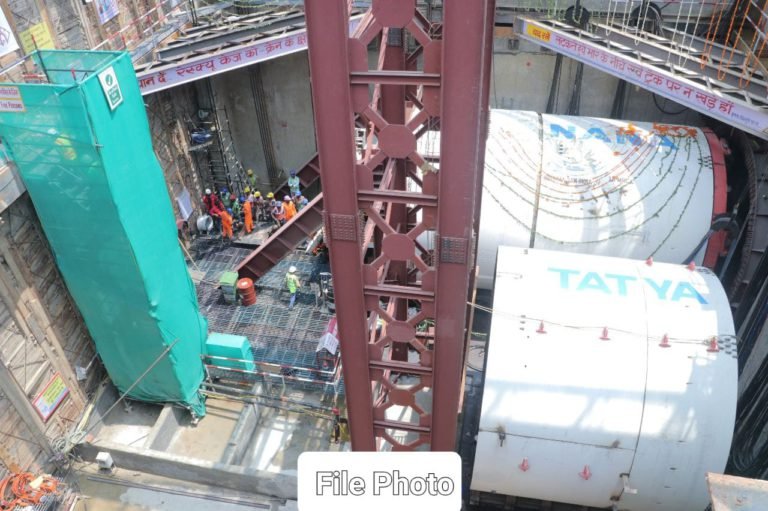
Bangalore Metro’s Rudra TBM Records Final Breakthrough 

0
Bangalore Metro’s Rudra TBM Records Final Breakthrough

BANGALORE (Metro Rail News): In a recent unfolding in the Bangalore metro, TBM Rudra recorded a breakthrough at the Langford Town Station of the Pink Line

This is the last breakthrough of the eight breakthroughs planned for the Bangalore Metro Phase 2’s 3.65 Km Package RT-01 connecting Rashtriya Military School Station- Dairy Circle South Ramp. 

The Tunneling machine has so far achieved three breakthroughs: 

  1. South Ramp to Dairy Circle Station – 613m
  2. Dairy Circle to Lakkasandra- 746m
  3. Lakkasandra to Langford Town – 718m 

With this, the twin tunnels on the Punk Line connecting South Ramp to Venkateshpura have been completed, approximately 10 Kilometers. 

Bangalore Metro’s Pink Line connects Kalena Agrahara Station in the South with the Nagwara Station in the North. There are a total of 18 stations on the Pink Line, out of which 12 are underground, and six are elevated along with an interchange with the Purple Line at MG Road metro station.


Discover the endless possibilities of our city’s Metro at InnoMetro, our flagship Expo and Conference. Be an active participant in shaping its future towards a more sustainable tomorrow. Stay informed and join us to take a step towards a brighter future.

Advertisement1
InnoMetro_2026

Shri Anil Kumar Lahoti joins the Editorial Advisory Board of Metro Rail News 

0
Mr. Anil Kumar Lahoti

NEW DELHI (Metro Rail News): Sh Anil Kumar Lahoti joins the Editorial Advisory Board. During his career spanning 36  years in Railways, he has served in various capacities, from Chief Engineer in Northern Railways to the CEO of the Railway board. 

Mr Lahoti has been an indispensable part of the Indian Railways since the beginning of his career and has been at the forefront of innovation and productivity. His versatile expertise in different departments of the Indian Railways, ranging from Tracks to Stations, has been highly commendable. 

Mr Lahoti comes from the Indian Railway Service of Engineers, 1984 batch. He completed his Bachelor’s in Civil Engineering in 1983 from Madhav Institute of Technology & Science and his Master’s in Structural Engineering from IIT Roorkee in 1986. 

He has also studied the development of stations in Hong Kong, Japan, the UK, and Germany, along with commercial development on railway land.  

Metro rail News express extreme gratitude and Delight in welcoming Mr Lahoti to our esteemed Editorial Advisory Board. This also brings new hope of rejuvenated innovation and forefront leadership to our esteemed monthly news portal to have such a dignitary on board. 


Discover the endless possibilities of our city’s Metro at InnoMetro, our flagship Expo and Conference. Be an active participant in shaping its future towards a more sustainable tomorrow. Stay informed and join us to take a step towards a brighter future.

Advertisement1
InnoMetro_2026

Phase 1 Trials of The Mumbai Metro Line 3 Likely to Begin in November

0
Mumbai Metro
Representational Image

MUMBAI (Metro Rail News): The Mumbai Metro Rail Corporation Limited (MMRCL) is nearly ready to begin the Phase 1 trials for the Underground Mumbai Metro Line 3 with a very short tracklaying work pending on the line. 

Earlier, a 17 km trial run from MIDC to Vidyanagari metro station and back to SEEPZ was held. Tracklaying work on a very short distance of the Aqua Line is not complete. 

Once the track-laying work is completed, the overhead power cables will be charged in both directions to facilitate the trial run for Phase 1, writers Indian Express. MMRC will hopefully be operationalising Phase 1 by the end of this year. 

The Mumbai Metro Line 3, also referred to as the Aqua Line is expected to run between Navy Nagar in the far south to Aarey depot in the North centre. It will be fostering metro accessibility & connectivity in Financial hubs like Colaba, BKC and Aarey. 

It is a 33.5 Km-long line, also referred to as Aqua Line 3 or Colaba-Bandra-SEEPZ line, which is also the first underground Metro Line of Mumbai. 


Discover the endless possibilities of our city’s Metro at InnoMetro, our flagship Expo and Conference. Be an active participant in shaping its future towards a more sustainable tomorrow. Stay informed and join us to take a step towards a brighter future.

Advertisement1
InnoMetro_2026

Delhi Metro to Increase Its Daily Trips by 40 to Combat Pollution

0
Delhi Metro
Photo Copyright: DMRC

DELHI (Metro Rail News): Delhi Metro Rail Corporation, in a tweet, told about the increase in trips to be made by the Delhi metro under the GARP-II stage to combat pollution in Delhi. 

Delhi metro will increase the number of trips by 40, which means taking down the waiting time at platforms from 7-8 mins to 5-6 mins & 5-6 mins to 2-3 mins. It is being done to increase people’s reliance on Public Transport and decrease the use of Private Vehicles. 

DMRC, in a tweet, said, “ As part of the various measures being adopted by the Delhi government to combat pollution under GRAP-II stage, DMRC will run 40 additional train trips on weekdays (Mon-Fri) across its network starting Wednesday, i.e, 25.10.2023.” 

The additional trips will run only on weekdays to facilitate commutation and decrease carbon emissions in the capital. Currently, Delhi metro makes 4300 trips every day. 

GARP is a set of guidelines implemented to combat pollution in Delhi and NCR regions. 


Discover the endless possibilities of our city’s Metro at InnoMetro, our flagship Expo and Conference. Be an active participant in shaping its future towards a more sustainable tomorrow. Stay informed and join us to take a step towards a brighter future.

Advertisement1
InnoMetro_2026