Home Blog Page 141

Pune Metro Line 3: First Segment Launched for Double-Decker Viaduct Construction

0
Ongoing work of Pune Metro Line 3.

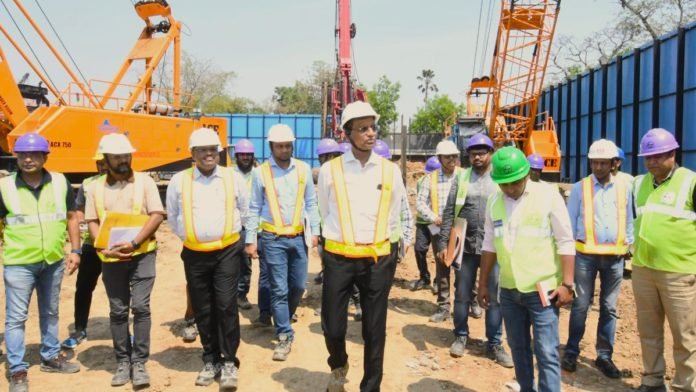
PUNE (Metro Rail News): Pune Metro IT City Metro Rail Ltd. workers initiated the launching of 8.5-meter-wide segments for the construction of a double-decker viaduct on the Pune Metro Line-3 project last week on Ganeshkind Road towards Pune University. The 1.6 km viaduct will connnect Aundh Road and RBI Chowk.

WhatsApp Image 2024 04 01 at 11.27.45 7e10c3aa
Photo credit: Devesh Shah

The estimated cost of construction is Rs. 570 crores. Pune Metropolitan Region Development Authority (PMRDA) and Pune Municipal Corporation (PMC) are sharing the costs.

PMRDA is developing the city’s new Line-3 on a PPP (Public-Private Partnership) mode through a 35-year concession agreement signed with Tata’s TRIL Urban Transport Private Limited and Siemens Project Ventures GmbH.

WhatsApp Image 2024 04 01 at 11.27.45 6f274a08 1
Photo credit: Devesh Shah

Pune Metro Line-3 (Megapolis Circle—Civil Court) is being built after demolishing two flyovers at the Savitribai Phule Pune University (SPPU) Chowk and E-Square Carnival intersections.

Operator(s): PMRDA (Pune Metropolitan Region Development Authority)

Length of the Metro Line23.3 km (14.5 miles)
Elevated/UndergroundElevated
Number of Stations23
Line Colour Red
Metro TypeRapid Transit
Estimated Project Completion CostRs. 8,100 crore
Estimated Project Completion DateMarch 2025

Pune Metro, a mass rapid transit system, serves the twin cities of Pune and Pimpri-Chinchwad in India. It comprises three lines with a combined length of 54.14 km. Currently, 24.12 km across two lines are operational, connecting key areas like PCMCSwargate, and more.


Discover the endless possibilities of our city’s Metro at InnoMetro, our flagship Expo and Conference. Be an active participant in shaping its future towards a more sustainable tomorrow. Stay informed and join us to take a step towards a brighter future.

Advertisement1
InnoMetro_2026

Maha Metro to Commercialize Pune Metro’s Stations’ Names

0
Pune Metro's Ruby Hall Clinic Metro Station Board.

PUNE (Metro Rail News): Maha Metro, the authority managing the Pune Metro System, has an innovative strategy to boost revenue by commercializing the names of metro stations. The Pune Metro System currently displays names of companies and organizations on its six stations, resulting in an annual addition in total revenue ranging from Rs. 55 to Rs. 72 lakh/station.

Stations 

Some of the station names whose entrances currently feature names of these entities are Pune Railway Station, Ruby Hall, Phugewadi, Nal Stop, Garware College, and Kalyani Nagar.

MahaMetro plans to extend these initiatives beyond existing stations, using station names for advertising at upcoming stations such as Mandai, Budhwar Peth, Khadki, and Yerwada.

Untitled design 2024 03 30T165755.144
Pune metro stations.

Maha Metro Objectives

Recognising the challenges posed by maintaining low ticket prices, MahaMetro prioritises alternative revenue streams to compensate its passenger traffic income. In addition to station name commercialization, MahaMetro is exploring advertising opportunities on metro trains to bolster non-fare box revenue.

These efforts align with MahaMetro’s broader strategy to explore various sources of non-fare box revenue and increase the share of non-fare box income in its total earnings. By integrating the names of well-known companies and organizations in Pune Metro, MahaMetro has successfully converted it into an advertising hub.

This approach of diversifying revenue sources shows MahaMetro’s commitment to financial sustainability and operational efficiency in managing Pune’s metro system. The initiative secures MahaMetro a steady income. It presents businesses with a unique advertising platform, fostering a mutually beneficial relationship that contributes to Pune’s metro infrastructure’s overall growth and success.


Discover the endless possibilities of our city’s Metro at InnoMetro, our flagship Expo and Conference. Be an active participant in shaping its future towards a more sustainable tomorrow. Stay informed and join us to take a step towards a brighter future.

Advertisement1
InnoMetro_2026

Kolkata Metro: CCRS Inspects Beleghata-Hemanta Muk. Stretch

0
Chief Commissioner of Railway Safety (CCRS), inspection.

KOLKATA (Metro Rail News): Shri Janak Kumar Garg, Chief Commissioner of Railway Safety (CCRS), inspected the newly built Beleghata to Hemanta Mukhopadhyay stretch of the Orange Line and undertook a trolley inspection of this stretch, on March 29. CCRS inspection and approval are mandatory for commissioning the Hemanta Mukhopadhyay-Beleghata stretch of the Kolkata Metro Orange Line. 

HGFD

Metro services are available from Kavi Subhash to Hemanata Mukhopadhyay Metro stations on this corridor. This route will be 29.87 km (18.56 mi) long and connect the southern and eastern parts of the city with Kolkata Airport.

Kolkata Metro Line 6 map.svg
Orange line

During the inspection, CCRS checked the Entry and Exit Gates, AFC-PC Gates, Ticketing System, Escalators, Lifts, Signage Boards, Station Control Room, Electronic Interlocking (EI) System, Signal Equipment Room, Booking Counters, Fire Detection and Suppression System, and other passenger amenities at Beleghata, Barun Sengupta, Ritwik Ghatak, and VIP Bazar stations.

CCRS had also held a high-level meeting with Metro Railway and Rail Vikas Nigam Limited (RVNL) officials.

Untitled design 2024 03 30T113708.981
Trolley Inspection.

Shri Janak Kumar Garg started his inspection from Beleghata Metro station and inspected tracks, points, viaduct, girders, ramp, etc. while undertaking a trolley inspection o­n this stretch up to Hemanta Mukhopadhyay station.

Apart from this, a speed trial o­n this stretch from Hemanta Mukhopadhyay to Beleghata station and back was also conducted in his presence.

During this inspection, Shri V.K. Srivastava, Principal Chief Engineer and Additional General Manager (AGM), other high-level Metro Railway officials, Shri Amit Roy, PED, and other officials of RVNL accompanied him. Shri Garg expressed his satisfaction after completion of the inspection.


Discover the endless possibilities of our city’s Metro at InnoMetro, our flagship Expo and Conference. Be an active participant in shaping its future towards a more sustainable tomorrow. Stay informed and join us to take a step towards a brighter future.

Advertisement1
InnoMetro_2026

Patna Metro: DMRC’s Advisor Reviews Construction Progress

0
Shri Daljeet Singh, Advisor (Special Works), DMRC, inspecting construction sites of Patna Metro Rail Project.

PATNA (Metro Rail News): Shri Daljeet Singh, Advisor (Special Works), Delhi Metro Rail Corporation (DMRC), took stock of the construction sites of Patna Metro Rail Project and inspected the ongoing civil, electrical and track-related works at the construction sites. He said that the Metro is committed to operate safely within its assigned timeline. 

Major inspection sites: Malahi Pakdi, Khemnichak, Bhootnath Road, ISBT Depot, RPS Mor, Sagunamore, Patliputra Station, etc.

GJwnI cWEAAECXu

Objectives

The purpose behind conducting inspections on construction sites from time to time is to ensure that construction is carried out safely and smoothly, besides speeding up the construction work.

Shri Singh said that the Metro is committed to minimum inconvenience to public along with quality work as well as safety of citizens in the areas around the Metro construction sites. 

GJwnohRXQAAmlha

Inspection & Enquiry

Besides inspecting the progress works of Patna Metro Rail Project, he also inspected public safety in and around the construction sites, removal of encroachments from the narrow roads parallel to the construction sites, arrangement of parallel roads to avoid traffic jams around the metro construction sites, expediting the construction works. 

Shri Singh also inquired about the progress of the ongoing construction work of the 1.5 km long underground heritage art tunnel (Art Tunnel) being constructed by DMRC, connecting Bihar Museum to Patna Museum and also the future execution plans and progress of work at other Patna metro construction sites. 

GJwnoe WUAAGyo5

Direction & Suggestion

Advisor (Special Works), directed the DMRC officials to ensure compliance by the contractors with respect to cleanliness, safety issues, providing proper zebra crossing facilities for pedestrians at places of diversions due to construction. 

He also directed the officials about speeding up the construction work of the metro and also directed them to expedite metro construction works safely.


Discover the endless possibilities of our city’s Metro at InnoMetro, our flagship Expo and Conference. Be an active participant in shaping its future towards a more sustainable tomorrow. Stay informed and join us to take a step towards a brighter future

Advertisement1
InnoMetro_2026

Kanpur Metro: TBM Azad Achieves Breakthrough at Nayaganj for Package KNPCC-06

0
EVM Azad. Picture credit: Atul Singh Yadav

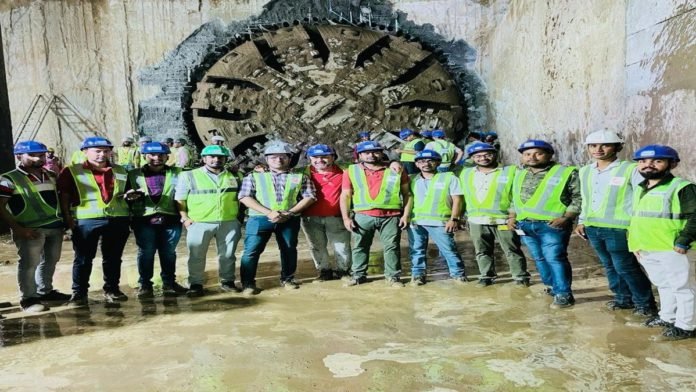
KANPUR (Metro Rail News): Afcons—Sam India Consortium’s TBM S-640B, nicknamed Azad, achieved its first tunnel breakthrough for Kanpur Metro’s Phase I project at Nayaganj station on March 28 under package KNPCC-06. Afcons—Sam India Consortium was awarded the 4.65-km Package KNPCC-06, connecting Nayaganj Station and Transport Nagar Ramp, by UPMRC on 14.03.2022.

Anubhav Kumar Upadhyay 1 1 edited
Picture credit: Anubhav Kumar Upadhyay

TBM and Breakthrough

TBM Azad (S-640B) is a Herrenknecht Earth Pressure Balance machine commissioned in October 2023 to construct Kanpur Metro’s underground package KNPCC-06. For its first assignment of Kanpur Metro, it built a 1250m long underground tunnel from Kanpur Central Station to Nayaganj Station. Afcon Infrastructure had previously deployed Azad to build Kolkata Metro’s 16.34 km Line-2 in June 2017.

Anubhav Kumar Upadhyay 2
TBM Azad’s head. Picture credit: Anubhav Kumar Upadhyay

TBM Vidyarthi (S-639) was also commissioned in December 2023 as Afcon’s second and Kanpur’s fourth TBM for constructing a parallel down-line tunnel.

A total of 7 breakthroughs for Kanpur Metro’s Phase 1 project have been achieved after Gulermak – Sam India Builtwell JV’s TBM Tatya (S92) finished its sixth and final breakthrough for Line-1’s MacRobertganj Ramp – Nayaganj section for Package KNPCC-05.

The Package

  • Tender Ref. No.: KNPCC-06 [EIB Funded]
  • UPMRC’s Estimate: Rs. 1250 crore
  • Final Contract Value: Rs. 1087.67 crore
  • Awarded date: 14.03.2022
  • Completion Deadline: 36 months

The scope of the contract includes the Design and Construction of the TBM Tunnel, Cut and Cover Tunnel, an underground ramp from Kanpur Central end of Nayaganj station to the elevated ramp after Transport Nagar and three underground metro stations, i.e. Transport Nagar, Jhakarkatti, and Kanpur Central, including Architectural finishes, E & M, TVS, ECS etc. on Corridor-1 of Kanpur MRTS Project.

Dhanumjay vadakoppula 1
Picture credit: Dhanumjay vadakoppula

Kanpur Metro Phase I Line I

The Kanpur Metro Phase I’s Line I is 23.785 km long and spans from IIT Kanpur to Naubasta. It features 15.164 km of elevated and 8.621 km of Underground routes. 

The stations are IIT Kanpur, Kalyanpur Railway Station, SPM Hospital, CSJM Kanpur University, Gurudev Chauraha, Geeta Nagar, Rawatpur Railway Station, Lala Lajpat Rai Hospital, Moti Jheel, Chunniganj, Naveen Market, Bada Chauraha, Nayaganj, Kanpur Central, Jhakarkatti, Transport Nagar, Baradevi, Kidwai Nagar, Vasant Vihar, Baudh Nagar and Naubasta.


Discover the endless possibilities of our city’s Metro at InnoMetro, our flagship Expo and Conference. Be an active participant in shaping its future towards a more sustainable tomorrow. Stay informed and join us to take a step towards a brighter future.

Advertisement1
InnoMetro_2026

Kochi Water Metro Gearing Up For Trials on Fort Kochi Route

0
Kochi Water Metro
Kochi Water Metro

KOCHI (Metro Rail News): The trials on the long-awaited Fort Kochi route of Kochi Water Metro are likely to commence soon, as terminal work at Fort Kochi is nearing completion.

Fort Kochi is the city’s major tourist centre. The commencement of operations between the High Court and Fort Kochi is expected to give a major boost to the city’s tourism sector.

“The trial run on parking boats near the floating pontoon at Fort Kochi terminal has been completed, and the boats will be tested on the route between High Court and Fort Kochi in the coming days,” said Loknath Behera (Managing Director, KWML). 

Installation of concrete floating pontoons

Kochi Water Metro Ltd. (KWML) has built concrete floating pontoons and a marine platform at the Fort Kochi Water Metro terminal.
The Fort Kochi terminal is at the meeting point of the Arabian Sea and backwaters, and installing ordinary floating pontoons may risk the safety of passengers. Hence, concrete floating pontoons are constructed at all the boat jetties of the ferry services. The installation of concrete floating pontoons allows convenient and safe onboarding and deboarding, irrespective of high or low tide.

Kochi Water Metro Route
Kochi water metro route map

Construction of a marine platform

Construction of a marine platform for receiving boats has already been completed as part of the final phase of the terminal.
Construction work for the terminal building is also in the finishing stage.

Operational routes

Currently, Kochi Water Metro Ltd. (KWML) uses 13 boats to operate services on the following routes:

  • High Court – Bolgatty
  • High Court – Vypeen
  • High Court – South Chittoor
  • South Chittoor – Cheranelloor
  • Vyttila – Kakkanad

Soon, one more boat will be delivered by the Cochin Shipyard to KWML.

Kochi Water Metro

The Kochi Water Metro Project aims to reduce pollution and traffic congestion in Kerala’s commercial capital, Kochi. Its plan is to connect 10 islands with 15 routes spanning 78 km, benefiting over 33,000 islanders. 


Discover the endless possibilities of our city’s Metro at InnoMetro, our flagship Expo and Conference. Be an active participant in shaping its future towards a more sustainable tomorrow. Stay informed and join us to take a step towards a brighter future.

Advertisement1
InnoMetro_2026

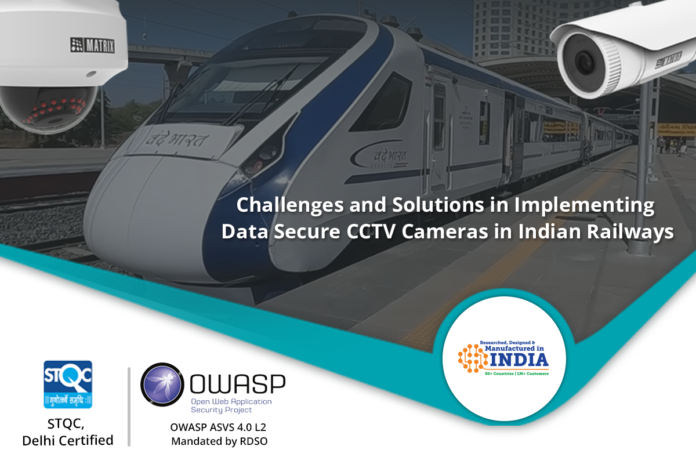
Challenges and Solutions in Implementing Data Secure CCTV Cameras in Indian Railways

0
Matrix IP Cameras
Matrix IP Cameras

The absence of CCTV cameras at most railway stations and coaches poses significant security challenges within the Indian Railways network. Despite the Ministry of Railways’ approval to install CCTV cameras at all stations and doorway areas of coaches, progress has been limited. As of now, only 557 air-conditioned (AC) coaches under the Southern Railway are equipped with surveillance cameras, a fraction of the total coaches in operation.

Moreover, rural railway stations remain largely devoid of security cameras, exacerbating security concerns. The delay in implementing video surveillance systems at stations further underscores the pressing need to address these security gaps. This article examines the challenges faced in deploying data-secure CCTV cameras across Indian Railways and proposes strategic solutions to enhance security measures within the railway network.

Challenges in Implementing Data-Secure CCTV Cameras

Legacy Infrastructure: Indian Railways grapples with the challenge of legacy surveillance systems, often lacking inbuilt data security features.These outdated systems, prevalent across stations and trains, present vulnerabilities susceptible to cyber threats. According to Inc 42, India witnessed 13.9 Lakh cybersecurity incidents in 2022, emphasizing the urgent need for modernization.

Scale and Complexity: The vast expanse of India’s railway network, spanning over 65,000 kilometers, poses unique challenges in maintaining uniform data security standards. With thousands of stations and surveillance points distributed across diverse terrains, ensuring consistent security measures becomes a daunting task. The complexity of railway networks makes them prime targets for cyber attacks, underscoring the critical need for robust data security measures.

Regulatory Compliance: Indian Railways grapples with navigating a multifaceted regulatory landscape, particularly concerning video surveillance, data security and privacy standards. Compliance with stringent regulations such as OWASP ASVS 4.0 L2 for Data Security, RDSO 6.0 for video surveillance systems installed on stations, and RDSO 2.1 for CCTV cameras installed in railway coaches, adds layers of complexity. Ensuring adherence to these regulations is paramount, as failure to comply can lead to legal repercussions. Therefore, railway authorities must prioritize regulatory compliance to uphold the integrity and security of their surveillance systems.

Complex Procurement Processes: Procuring modern surveillance equipment and hiring cybersecurity experts often involves complex procurement processes in the Indian bureaucracy. Lengthy procedures and bureaucratic hurdles may delay the allocation of funds and hinder timely implementation of cybersecurity initiatives.

Human Factor: The human element remains a critical aspect of challenges faced by Indian Railways. Resistance to change, coupled with a lack of cybersecurity awareness among staff, poses significant risks. Insider threats, whether intentional or unintentional, also contribute to the vulnerability of surveillance systems.

Solutions and Strategies for Implementing Data Secure CCTV Cameras

Modernization Efforts: To address the challenge of legacy infrastructure, Indian Railways must prioritize modernization efforts aimed at upgrading surveillance systems with advanced cybersecurity features and protocols. This includes replacing outdated equipment with modern CCTV cameras that incorporate robust security measures such as encryption, secure authentication mechanisms, and regular software updates.

Risk-Based Approach: Implementing a risk-based approach to cybersecurity is particularly pertinent for Indian Railways when it comes to their video surveillance systems. By conducting thorough risk assessments specifically tailored to these systems, railway authorities can identify vulnerabilities and threats unique to video surveillance infrastructure.

For instance, risks may include unauthorized access to surveillance footage, data breaches involving sensitive passenger information, or tampering with surveillance equipment. By analyzing these risks in the context of video surveillance systems, railway authorities can prioritize resources and efforts to address the most critical security concerns effectively. This tailored approach ensures that cybersecurity measures are aligned with the specific challenges and requirements of video surveillance systems, thereby enhancing their resilience against potential threats.

Training and Awareness: Railway staff should be made aware of the potential cyber threats that video surveillance systems may face, such as hacking attempts, malware infections, or physical tampering with cameras. Training programs can educate them on recognizing and responding to these threats, including reporting suspicious activities or security incidents promptly. Given that video surveillance systems capture and store sensitive data, including footage of passengers and railway assets, it’s crucial to educate staff on data security best practices. This includes ensuring the secure handling, storage, and transmission of surveillance footage to prevent unauthorized access or data breaches.

Budgetary Requirements: Railway authorities must allocate funds for the procurement of modern surveillance equipment with built-in cybersecurity features, such as encryption and secure authentication mechanisms. Additionally, budgetary allocations should cover cybersecurity training programs tailored to staff involved in operating and managing video surveillance systems, ensuring they have the necessary skills to mitigate security risks effectively. Lastly, funds should be allocated for hiring cybersecurity experts or engaging third-party cybersecurity firms to conduct regular audits and assessments of the video surveillance infrastructure.

Timely Execution: Top-level commitment within Indian Railways is essential to prioritize data security initiatives, reflected in strategic planning and budget allocation processes. This commitment ensures adequate budgetary resources are allocated for acquiring modern video surveillance equipment and data security solutions through streamlined procurement processes. This involves establishing dedicated procurement teams and leveraging digital technologies for efficient procurement. Concurrently, robust monitoring mechanisms are implemented to track the execution of video surveillance systems, ensuring compliance with budget allocations and assigning accountability for outcomes. Regular reviews and audits further enhance the effectiveness of video surveillance systems and strategies.

Why Matrix IP Cameras Are an Ideal Choice for Indian Railways?

Matrix IP Cameras adhere to OWASP ASVS 4.0 L2 for cyber-secure surveillance, a standard endorsed by the RDSO. The cameras have been certified by STQC Delhi Lab for compliance with RDSO 6.0, ensuring cyber-secure surveillance products for the Indian market.


When you invest in Matrix CCTV Cameras you can rest assured for

  • Data Privacy and Protection: Video surveillance systems collect a vast amount of data. It is critical to ensure privacy and protect the data while storing, analyzing, and sharing it.
  • Network Vulnerabilities: Video surveillance systems are susceptible to hacking attempts due to Weak passwords, outdated firmware, and unpatched software.
  • Potential for Exploitation: Cybercriminals manipulate video feeds or gain unauthorized access to cameras, leading to privacy breaches or physical security threats.
  • Legal and Regulatory Compliance: Many regions have strict regulations regarding the use of surveillance systems, Non-compliance can lead to legal consequences.

In conclusion, prioritizing data security for Indian Railways’ extensive video surveillance systems is imperative for several reasons. The increasing awareness of data privacy concerns, coupled with regulatory requirements, emphasizes the need for robust cybersecurity measures. The evolving cyber threat landscape and integration with IT networks expose vulnerabilities that demand proactive measures.

Furthermore, adherence to industry best practices and standards is crucial for developing cyber-secure solutions. Choosing Matrix IP Cameras, endorsed by RDSO and complying with OWASP ASVS 4.0 L2, ensures a reliable defence against potential threats. Safeguarding data privacy, addressing network vulnerabilities, preventing exploitation, and maintaining legal compliance is pivotal in securing the railways’ surveillance infrastructure.

To stay informed, also read: .

Advertisement1
InnoMetro_2026

Surat Metro Phase I: TBM Narmada Achieves Breakthrough At Central Warehouse Station

0
TBM Narmada breakthrough at Central Warehouse Station

SURAT (Metro Rail News): Gulermak – Sam India Builtwell JV achieved a tunnel breakthrough at the Central Warehouse Station on Line-1 (Sarthana – Dream City) of Surat Metro Phase 1 under Package CS2 / UG1 on Tuesday.

A refurbished Terratec EPB (Earth Pressure Balance) Machine S78, nicknamed Narmada, travelled roughly 600 m toward the central warehouse three months after mining at Labheshwar Chowk metro station box. As per Deniz Buyukgokmen (Project Manager, Gulermak), Narmada has erected 1642 precast rings to build a 2298m long tunnel.

surat metro braekthrough 4

Gujarat Metro Rail Corporation (GMRC) awarded Package CS2 / UG1 in March 2021, which involves building six tunnels spanning 3.46 km from Kapodra to Surat Railway Station. Tunnel boring machines S94 (Tapi) and S78 (Narmada) are on duty. This is Narmada’s second and third tunnel breakthrough for the project.

surat metro braekthrough 1

TBM Narmada completed its first assignment, building a 1.5 km tunnel from Kapdra to Labeshwar Chowk in January 2024. However, the breakthrough was hidden as the soil excavation was still underway. So, this is the first time the face of S78 Narmada is visible after it started its journey in December 2022. 

surat metro braekthrough 3

Contract

  • Tender No: GMRC/CONS/UG-1/PKG-CS2/PH-1/2020.
  • Issue Date: 10th July 2020.
  • Estimated Tender Value: Rs 929.46 crore.
  • Security Money Deposit: Rs 9.29 crore.
  • Work Completion Period: 40 months.

Scope of the project

The project’s scope involves the design, construction, and completion of underground stations and tunnels, along with finishes, spanning 3.46 km from Kapodra Ramp to Surat Railway Station. Construction of underground tunnels between the Northern Ramp and Surat Railway Metro Station. 

The project also includes constructing three underground stations: Kapodra, Labheshwar Chowk, and Central Warehouse, with entry/exit points and connecting subways.

TBM Narmada’s next and final assignment will be building an extension to Surat Railway Station’s eastern shaft of 388m. 

Surat Metro Phase I

Phase I encompasses the construction of two corridors totalling 41.93 km and featuring 38 stations, 32 elevated and 6 underground. Maintenance facilities, solar energy utilization, and advanced ticketing and train operations technologies are key components of this transformative metro project.


Discover the endless possibilities of our city’s Metro at InnoMetro, our flagship Expo and Conference. Be an active participant in shaping its future towards a more sustainable tomorrow. Stay informed and join us to take a step towards a brighter future.

Advertisement1
InnoMetro_2026

Kolkata Metro Hits the Tracks for Trials on Noapara-Dum Dum Stretch

0
Kolkata Metro
Kolkata Metro

KOLKATA (Metro Rail News): Metro Railway Kolkata tweeted information about a trial run conducted between the Noapara and Dumdum Cantonment Metro stations (Yellow line) for the first time on March 24 at 18:18 hrs. The designated trial rake completed two round trips in the presence of top Metro officials, ensuring operational standards and safety protocols. 

According to sources, the trial run achieved 74km/h speed.

The Project and Challenges

The Metro Railway Kolkata decided to extend its service from Dum Dum to Noapara with a length of 2.091 kms of metro line on 10th July 2013. The construction contract for building a viaduct between Kestopur Khal (Canal) and the pre-existing ramp of the former Circular Railway’s viaduct was awarded to Senbo Engineering at Rs. 127 crore in June 2011.

This route has encountered numerous hurdles, including land acquisitions along the canal’s path and encroachments.

Purpose of The Project

The purpose of conducting this journey by a Medha train in Kolkata was primarily to validate the Schedule of Dimensions (to specify the maximum height, width, and other dimensions for trains to ensure they can safely pass through tunnels, bridges, platforms, and other infrastructure without any issues) clearances and to observe how the train interacted with the surrounding civil structures. 

The aim was to ensure no physical obstructions along the route.


Discover the endless possibilities of our city’s Metro at InnoMetro, our flagship Expo and Conference. Be an active participant in shaping its future towards a more sustainable tomorrow. Stay informed and join us to take a step towards a brighter future.

Advertisement1
InnoMetro_2026

URC Commence Construction on Line 3 of Chennai Metro Phase II

0
Pooja at Thousand lights metro crossover

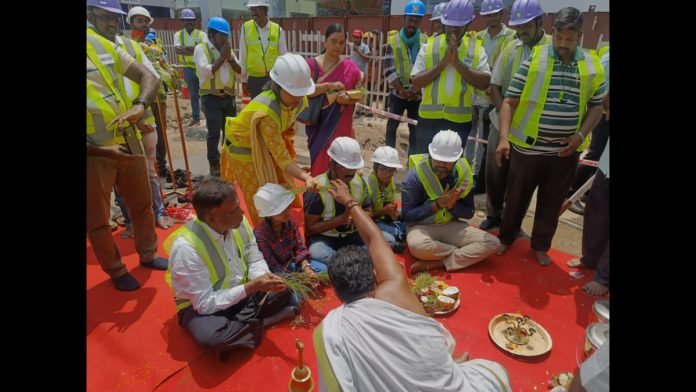
CHENNAI (Metro Rail News): URC Construction Pvt. Ltd. kickstarts the construction work on Metro Line-3 of Chennai Metro Phase II with a Pooja ceremony at Thousand Lights Metro Crossover under Package UG03. The diaphragm wall (D-wall) construction has already begun at Thousand Lights metro Crossover using a Trench cutter, tweeted by Rail Vikas Nigam Limited on March 25.

GJhV8B6XMAAFvqc.jpeg

Rail Vikas Nigam Limited (RVNL) has subcontracted the construction work to URC for an undisclosed amount after the Chennai Metro Rail Limited (CMRL) awarded RVNL the contract under Package UG03-RT01 for Rs. 1328.89 crore in July 2023, with a 1725-day (4.72 Years) deadline.

Scope of Package:

The package’s scope entails the complete civil construction of five underground stations: KMC (Kilpauk), Sterling Road Junction, Nangambakkam, Gemini, Thousand Lights, and Thousand Lights Crossover. Partial work on two stations entails the construction of a diaphragm wall (D-wall) at Chetpet Metro and Royapettah Govt. Hospital.

New Interchangeable connection:

KMC’s new station box will be interchangeable with the Green Line (Line 2-22 km), which connects St. Thomas Mount to Chennai Central, and a new station box at Thousand Lights will be interchangeable with the Blue Line (Line 1-23.10 km), which connects Wimco Nagar to Chennai Airport.

Fv71rNWXoAELOQS
Chennai Metro

CMRLS’s phase 2 project deadline is December 2025. It’s part of Chennai’s metro expansion endeavour, promising efficient and eco-friendly transportation. It will also ease the city’s long-standing traffic congestion issue.


Discover the endless possibilities of our city’s Metro at InnoMetro, our flagship Expo and Conference. Be an active participant in shaping its future towards a more sustainable tomorrow. Stay informed and join us to take a step towards a brighter future.

Advertisement1
InnoMetro_2026