New Delhi: Prime Minister Narendra Modi has flagged-off the Delhi-Faridabad Metro Line that would allow hassle free travel for around two lakh daily commuters between the national capital and the industrial hub in Haryana.
The extension of the Delhi Metro connects Badarpur to Escorts Mujesar in Faridabad.
The total cost of the project from Badarpur to Escorts Mujesar is nearly Rs. 2,500 crore. Out of this, Rs. 1,557 crore was borne by the Haryana Government, the Centre contributed Rs. 537 crore, while the Delhi Metro provided Rs. 400 crore.
All these are elevated and located on either side of the Delhi-Mathura Road (NH-2).
“The nine-station metro corridor which was 95 per cent indigenously built will provide people a safe, affordable, quick, comfortable, reliable, environment-friendly and sustainable transport facility,” a Haryana government spokesperson said.
Haryana Chief Minister ML Khattar, addressing a press conference on Saturday, had thanked the Prime Minister for “gifting” the Metro service which would take the city to “another level of progress” with better connectivity with other NCR towns.
He had also said that the Prime Minister would be announcing the go-ahead for connecting Gurgaon with Faridabad by Metro.
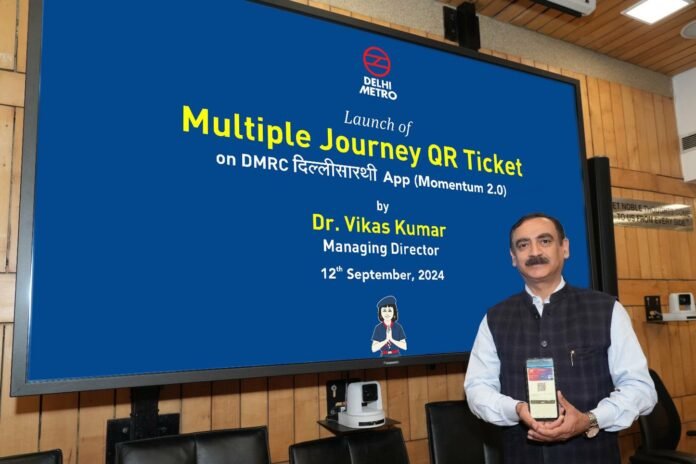
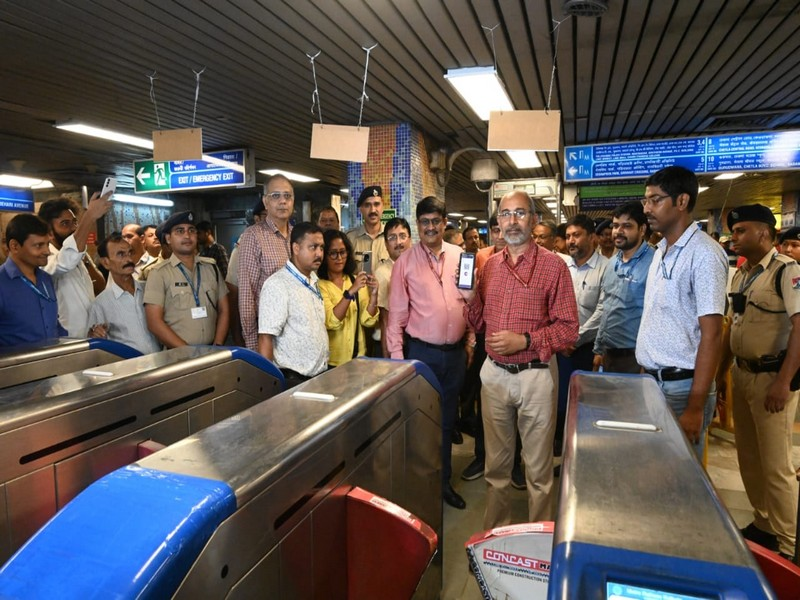
Delhi (Metro Rail News): As part of its ‘Ease of Booking’ initiative, the Delhi Metro Rail Corporation (DMRC) has introduced the Multiple Journey QR Ticket (MJQRT), which aims to enhance passenger convenience by removing the need for daily QR ticket purchases. DMRC’s Managing Director, Dr. Vikas Kumar, launched the feature at Metro Bhawan, accompanied by senior officials.
Key Features and Benefits of DMRC’s MJQRT:
Registration and Recharge
Users must register on the DMRC Momentum Delhi Sarthi 2.0 mobile app to use the MJQRT.
An initial recharge of ₹150 is required to start using the MJQRT for metro travel.
No security deposit is needed for the MJQRT.
Users can add funds in multiples of ₹50 through digital payment methods like UPI, credit cards, and debit cards.
The maximum balance that can be maintained is ₹3,000.
Discounts and Travel
Travelers using the MJQRT will get a 10% discount during peak hours (8 AM to 12 PM and 5 PM to 9 PM).
A 20% discount is offered during off-peak hours.
A minimum balance of ₹60 is required to initiate travel using the MJQRT.
Benefits
The MJQRT provides a cost-effective and eco-friendly alternative to traditional smart cards.
In case of theft, loss, or damage to the mobile device, the remaining balance is retained, and users can access their MJQRT on another device.
The MJQRT offers more flexibility and ease of travel, joining other fare media options like single journey QR tickets, NCMC, and DMRC smart cards.
Photo Copyright: DMRC
Key Differences
The Multiple Journey QR Ticket (MJQRT) differs from a normal QR ticket in several key aspects:
MJQRT: Designed for multiple journeys, allowing users to travel multiple times without needing to purchase a new ticket for each journey.
Normal QR Ticket: Typically intended for single journeys, requiring passengers to buy a new ticket for each trip.
Recharge and Balance:
MJQRT: Users start with an initial recharge (minimum ₹150) and can maintain a balance up to ₹3,000, allowing for seamless travel across multiple journeys.
Normal QR Ticket: Usually requires a one-time payment for each journey, with no balance or recharge feature.
Discounts:
MJQRT: Offers discounts of 10% during peak hours and 20% during off-peak hours, making it more economical for frequent travelers.
Normal QR Ticket: Typically does not provide discounts.
App Integration:
MJQRT: Available exclusively through the DMRC’s Delhi Metro Sarathi (Momentum 2.0) app, which allows users to manage their journeys and recharges digitally.
Normal QR Ticket: This can often be purchased at stations or through different apps but does not integrate with a balance system.
Security Features:
MJQRT: In case of theft or loss of the mobile device, the remaining balance is retained and can be accessed from another device.
Normal QR Ticket: Generally does not have any such feature, as it is a one-time use ticket.
With the launch of MJQRT, DMRC reaffirms its dedication to enhancing passenger experiences through digital innovation, making metro travel more convenient and environment friendly.
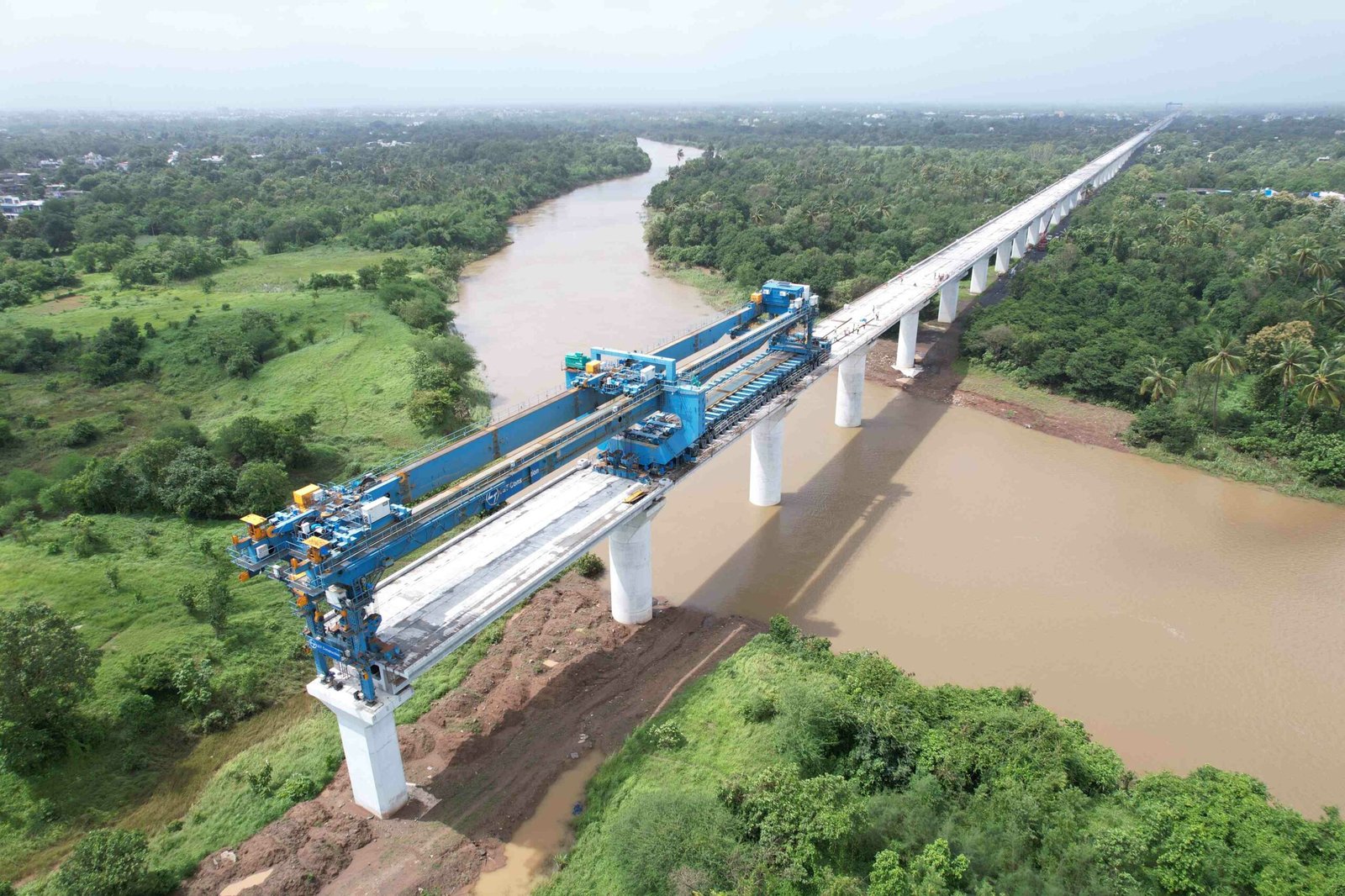
(Metro Rail News): Another milestone has been achieved in the Mumbai-Ahmedabad Bullet Train Project. On 25th August, NHSRCL completed a 120-metre bridge on the Kaveri River (Navsari district in Gujarat). This bridge is located between Vapi and Bilimora Bullet Train stations.
About River Bridge
According to the NHSRCL’s press release, this 120-metre-long bridge consists of 3 full-span girders, each 40 m long, while the height of piers varies between 13 to 21 metres.
Till date, this is the 11th bridge completed out of 20 bridges planned in Gujarat for the Bullet Train Project.
Other completed river bridges include the bridges on :
Par (Valsad district)
Purna (Navsari district)
Mindhola (Navsari district)
Ambika (Navsari district)
Auranga (Valsad district)
Venganiya (Navsari district)
Mohar (Kheda district)
Dhadhar (Vadodara district)
Kolak River (Valsad district)
Vatrak River (Kheda district)
Over 1,75,000 Noise Barriers Installed Along Bullet Train Corridor
The installation of noise barriers along the Mumbai-Ahmedabad Bullet Train Corridor is in progress.
So far, More than 1,75,000 noise barriers have been installed over a stretch of 87.5 km in Gujarat on either side of the viaduct.
The noise barriers are installed at a 2-metre height from the rail level, and each noise barrier is about 830-840 kg heavy.
The noise barriers are meticulously engineered to distribute the aerodynamic sound generated by the train and provide passengers with a more comfortable journey.
Stepping towards a more digitalised world, the Kolkata metro introduces a mobile-based QR ticketing system on trial Basis.
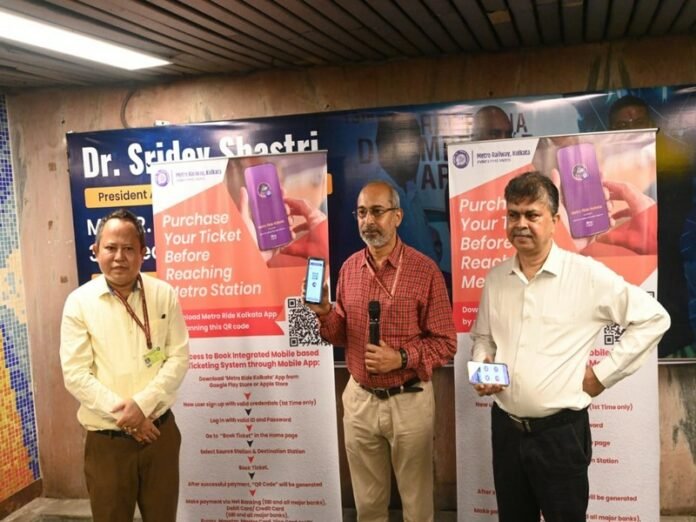
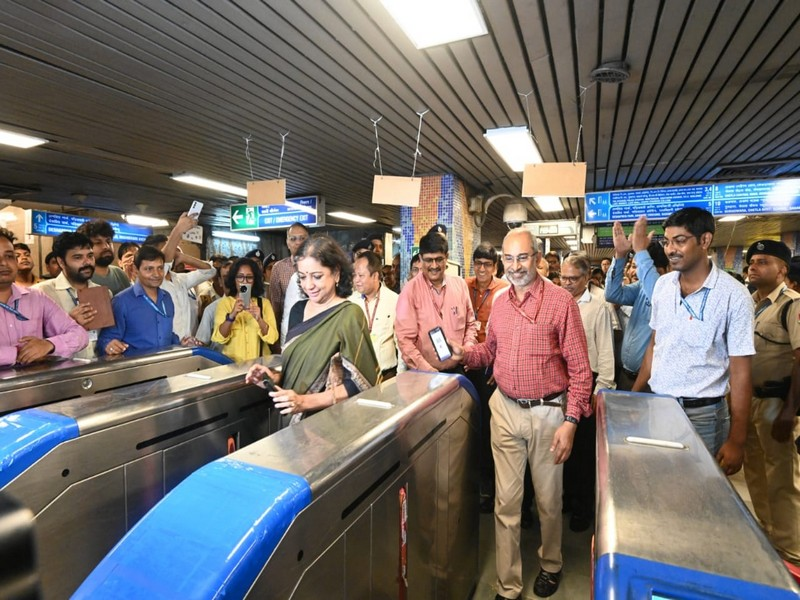
On the 11th of September,2024, Shri P. Uday Kumar Reddy, General Manager of Metro Railway, introduced this new ticketing system at Kalighat metro station with the presence and gratitude of other senior officials.
Shri Reddy expressed that the new ticketing system will greatly benefit Metro commuters by allowing them to purchase tickets at their convenience, eliminating the need to stand in queues or navigate through different corridors for interchanges.
The General Manager urged everyone to download the ‘Metro Ride Kolkata’ app from the Google Play Store and App Store to conveniently access and use this ticketing system.
He added that this system, introduced on on a trial basis, will make commuting in the Metro during the forthcoming Puja days more comfortable and enjoyable.
This Facility will be Available on Kolkata Metro’s 3 Corridors
The AFC (Automatic Fare Collection) gates of different Blue Line and Orange Line stations have been upgraded to support this new ticketing system. Centre for Railway Information Systems (CRIS) has developed this ticketing solution, which is expected to gain popularity in the coming days.
In conclusion, adding more versatility to this alternative Integrated Mobile Based QR Code Ticketing System has been initiated on a trial basis in Blue Line, Green Line and Orange Line.
From now on, passengers will be able to travel to any station across these Corridors by interchanging through seamless standard paid-to-paid connectivity using the duplicate Mobile Based QR Code Ticket by purchasing it from home, office or on the go. With this, passengers can avoid the long queues at the booking counters. This paperless ticket will remain valid for 12 hours on a calendar date after purchase. Now, the commuters no longer need to carry any physical ticket to travel in the Metro.
(Metro Rail News): Gujarat residents are going to witness a significant development in the public transportation sector.
On 16 September, PM Narendra Modi will inaugurate the second phase of the Ahmedabad Metro and the first-ever Vande Metro Train in Gujarat.
The Vande Metro train has completed its trials successfully and will operate between Ahmedabad and Bhuj.
The Ahmedabad Metro Rail Extension Project, led by the Gujarat Metro Rail Corporation (GMRC) in coordination with the state and central governments, focuses on expanding the city’s metro network. This project is designed to extend existing metro lines to improve urban connectivity and address the growing demand for public transportation in Ahmedabad.
Ahmedabad Metro Phase 2
On 19 February 2019, the Indian Government approved the Ahmedabad Metro Phase 2 project at an estimated budget of Rs. 5384.17 crores. Phase 2 is currently under construction and is expected to be completed by 2026.
The Red Line spans 22.838 km (approx), connecting Motera Stadium station to Mahatma Mandir station through 20 elevated stations.
Line-3
Line 3 stretches about 5.416 km, connecting Gujarat National Law University station to Gujarat International Finance Tec-City station through 3 elevated stations.
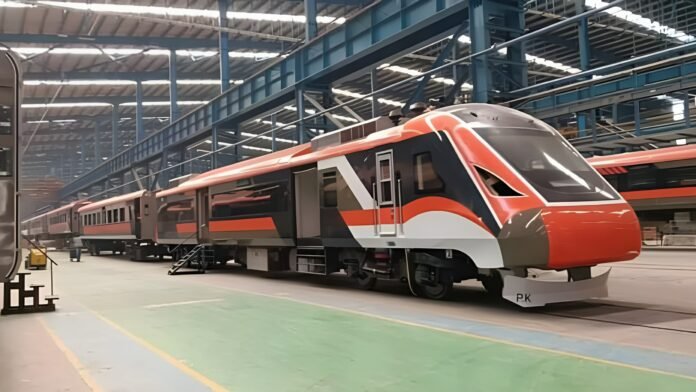
This development will streamline the connectivity in the region. The Vande Metro is a new initiative by Indian Railways which aims to facilitate short-distance intercity travel. It will have a top speed of 130 km/h. The Vande Metro will be equipped with KAVACH train anti-collision system for enhanced safety.
Alstom-built Trains & CBTC System Kick in as Agra Metro Begins its Operations
Agra ( Metro Rail News): Recently, Larsen and Toubro (L&T) was awarded the package AGCC-07 for 15.09 km long Line 2 of Agra Metro Phase 1, which connects Agra Cantonment to Kalindi Vihar featuring 14 elevated stations.
A month before, Uttar Pradesh Metro Rail Corporation (UPMRC) declared L&T as the lowest bidder for the package AGCC-07. The total cost of the package is Rs.1244.79 crore, and this contract comes with a deadline of 24 months.
This Package AGCC-07 will also be financed by the European Investment Bank (EIB) by a €450 million loan.
Representational image only
Package AGCC-07 (Line 2)
Package AGCC-07’s work scope includes the civil construction of the entire Line 2’s viaduct with 14 elevated stations, 530m viaduct to Line-2’s Kalindi Vihar Depot, and interestingly a 2.61 km viaduct from north of Sadar Bazar metro station to Line-1’s PAC Depot station.
UPMRC’s work description for AGCC-07
UPMRC has issued a notice to declare L&T as the awarded contractor with some work descriptions.
Work includes the design and construction of the main line elevator from Agra Cantt. Metro Station to Kalindi Vihar Metro Station [Chainage (-77m) to 15016m] including Viaduct Connection with Ramp (Chainage 0.00m to 2610m) from (nearby) Sadar Bazar Metro Station to existing Corridor-1 Depot at PAC ground & Corridor-2 Depot Entry/Exit lines Viaduct with Ramp (Chainage 0.00m to 530m) and Civil, Associated Ancillary Structures, Architectural Finishes, Water Supply, Sanitary Installation, Drainage, External Development, Fire Fighting, Fire Detection, E&M works and PEB structures in Corridor-2 of Agra Metro at Agra, Uttar Pradesh, India.
The 14 elevated stations included in the project are:
Agra Cantt
Sadar Bazar
Pratap Pura
Collectorate
Agra College
Hariparvat Chauraha
Sanjay Place
M.G. Road
Sultanganj crossing
Kamla Nagar
Ram Bagh
Foundary Nagar
Agra Mandi
Kalindi Vihar metro station
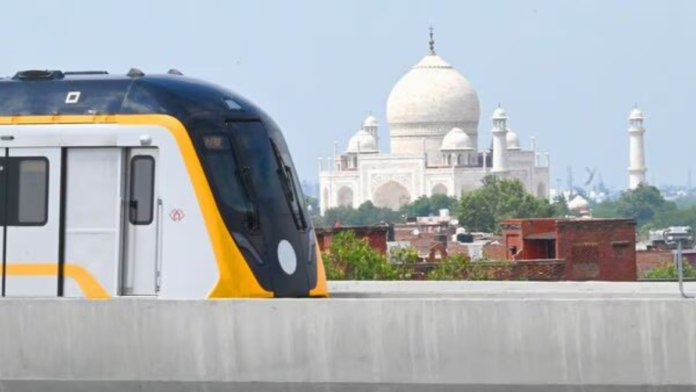
Agra Metro’s 5.2km section from Taj East Gate to Mankameshwar (Jama Masjid) was inaugurated in March 2024. The entire Phase 1 project is expected to be completed in 2026.
Most of the stations of the Agra Metro will connect tourists to famous historical spots like the Taj Mahal, Captain Shubham Gupta, Fatehabad Road, Taj Mahal, and Mankameshwar Temple.
The Regional Rapid Transit System (RRTS) is a semi-high-speed, high-capacity commuter rail service, which aims to connect key areas within the National Capital Region (NCR) of India.
The Beginning of RRTS
The RRTS Project was proposed in 2005 by a Task Force from the Planning Commission, chaired by the Secretary of the Ministry of Urban Development (MoUD), with the goal of improving regional transportation through an integrated transit network.
RRTS was incorporated in the Integrated Transport Plan for NCR 2032, which focused on connecting regional centers. The appointed Task Force identified eight corridors and prioritised three corridors for implementation in the first phase:
Delhi-Meerut RRTS
Delhi-Panipat RRTS
Delhi-Alwar RRTS
Features of RRTS
Design Speed
180 km/h
Operation Speed
160 km/h
Average Speed
100 km/h
Time to Travel 100 km
60 minutes
The implementing authority of RRTS is the National Capital Region Transport Corporation (NCRTC). NCRTC is a joint venture between the central and state governments of Delhi, Uttar Pradesh, Haryana, and Rajasthan.
Funding of the RRTS Project
The partial financials of the RRTS are being handled through an official development assistance (ODA) loan from the Asian Development Bank and the Asian Infrastructure Investment Bank.
The Need for RRTS in India
Rapid Urbanisation: The rapid population growth in the National Capital Region (NCR) has resulted in severe traffic congestion and increased pollution levels, which necessitated a robust public transportation system.
Environmentally Beneficial: RRTS would help shift many people from private vehicles to public transportation. This would help to reduce the traffic on roads. It will also be environmentally sustainable as a large population will be shifted to public transport.
International Model: The design and operational strategy of the RRTS drew inspiration from successful global transit systems, such as the RER in Paris and the Regional-Express trains in Germany.
Economic Development Goals: The National Capital Region (NCR) serves as a major hub for economic activities. The Regional Rapid Transit System (RRTS) is designed to enhance economic productivity by improving access to jobs and services throughout the NCR. By enabling faster commutes, the RRTS is expected to stimulate economic growth in suburban areas, contributing to more balanced regional development.
Corridors in RRTS Project
RRTS is different from conventional Railways as it will provide reliable, high-frequency, and point-to-point regional travel at high speed along a dedicated pathway.
DPR Approval: Uttar Pradesh State government approved the DPR in May 2017 and and Government of India approved it in February 2019.
Foundation Stone: Prime Minister Shri Narendra Modi laid the foundation stone of this line in March 2019.
Commercial Operations: The 17 km priority stretch of the Delhi-Meerut RRTS corridor, which spans from Sahibabad to Duhai Depot, was inaugurated by Prime Minister Modi on October 20, 2023. In March 2024, Prime Minister Narendra Modi inaugurated an additional 17.1 km of the RRTS route, extending between Duhai and Modinagar North.
Delhi – Meerut RRTS Route Information
Length: 82. 15km
Type: Elevated and Underground
Depot: Duhai EPE and Modipuram
Total Stations : 22
The RRTS has a total of 22 stations: Nizamuddin / Sarai Kale Khan, New Ashok Nagar, Anand Vihar, Sahibabad, Ghaziabad, Guldhar, Duhai (EPE), Murad Nagar, Modi Nagar South, Modi Nagar North, Meerut South, Partapur, Rithani, Shatabdi Nagar, Brahmapuri, Meerut Central, Bhaisali, Begum Pul, MES Colony, Daurli, Meerut North, and Modipuram.
Out of these, eight stations—Partapur, Rithani, Brahmapuri, Meerut Central, Bhaisali, MES Colony, Daurli, and Meerut North—are dedicated to MRTS metro-only services.
The civil construction of the viaduct in the Delhi Section is nearly complete. The NCRTC is likely to conduct trial on Delhi Section in the last quarter of 2024.
Operations and Management
DB RRTS Operations India Pvt Ltd. is responsible for operating and maintaining the line for 12 years through a Rs. 1493.08 crore contract awarded in May 2022.
Rolling Stock
Alstom
Estimated Cost
Rs. 30,274 crore
Entire Corridor Deadline
The entire corridor is expected to open by mid-2025.
Recent Update
NCRTC has planned to install environmental control systems on the RRTS corridor. It is done to regulate the temperature and circulation of fresh air in the underground stations.
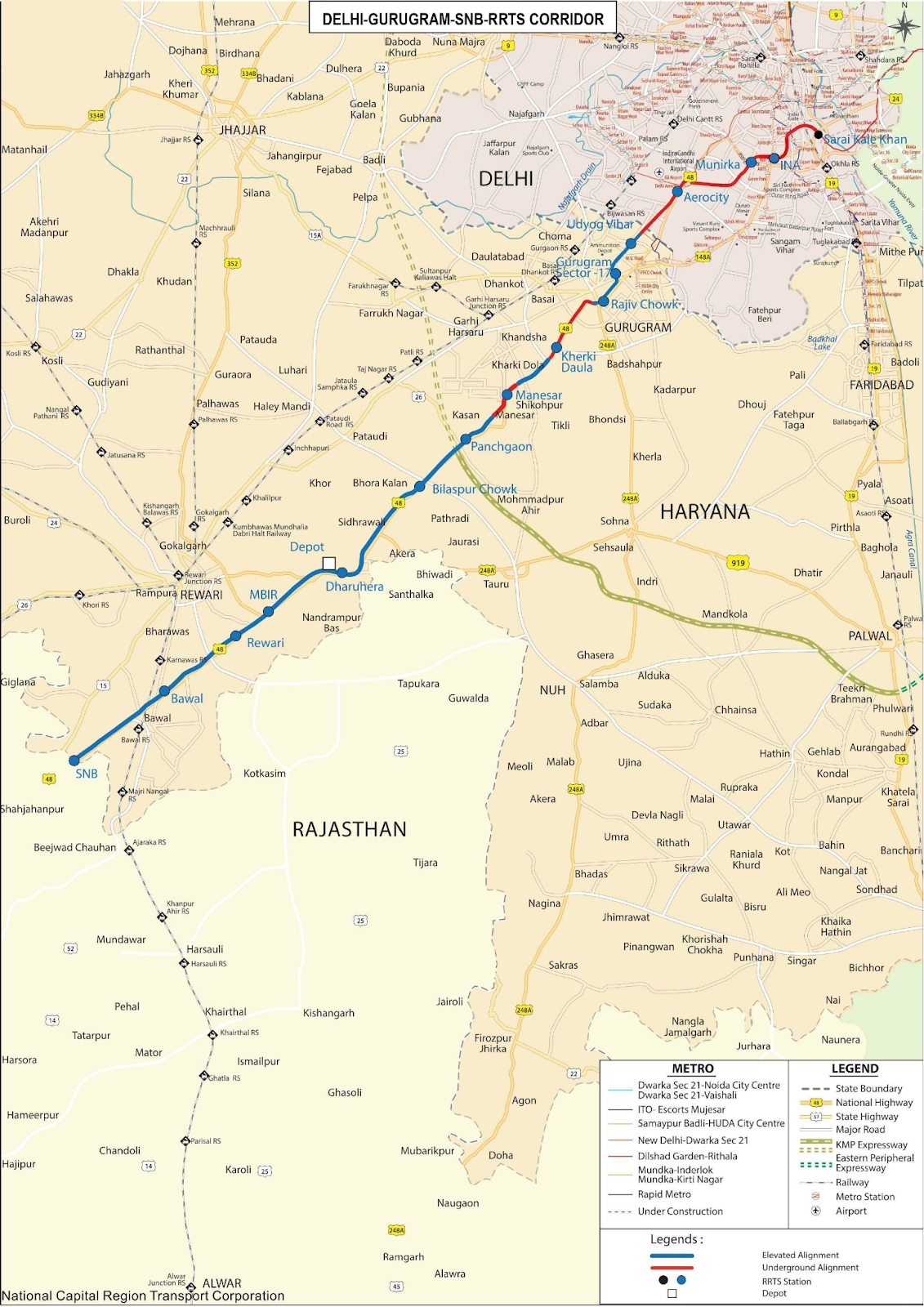
Delhi – Gurugram – SNB – Alwar RRTS
The Delhi-Gurugram-Shahjahanpur-Neemrana-Behror (SNB)-Alwar RRTS corridor is one of the three corridors being developed under Phase I of the Regional Rapid Transit System (RRTS) to improve connectivity in the National Capital Region (NCR) of India.
This line will start from Sarai Kale Khan in Delhi, and reach Alwar while connecting Munirka, Aerocity and move via Gurugram, Sotanala and Rewari.
Operational: 0 km | Under Construction: 0 km | Approved: 96 km | Proposed: 93 km
Stations on Spur Line (4): Shahjahanpur, Neemrana, Behror, Sotanala
DPR Approved
Approved by NCRTC’s board in December 2018, the Haryana Government in February 2019, and the Rajasthan Government in June 2019.
Estimated Cost
Rs. 37,000 crore
Expected Daily Ridership
8.5 lakh passengers
Deadline
Not yet announced
Phases
Phase 1: Sarai Kale Khan – Gurgaon – Dharuhera
70.72 km
Phase 2: Dharuhera – SNB
36 km
Phase 3: SNB – Behror – Sotanala
35 km
Phase 4: SNB – Alwar
58 km
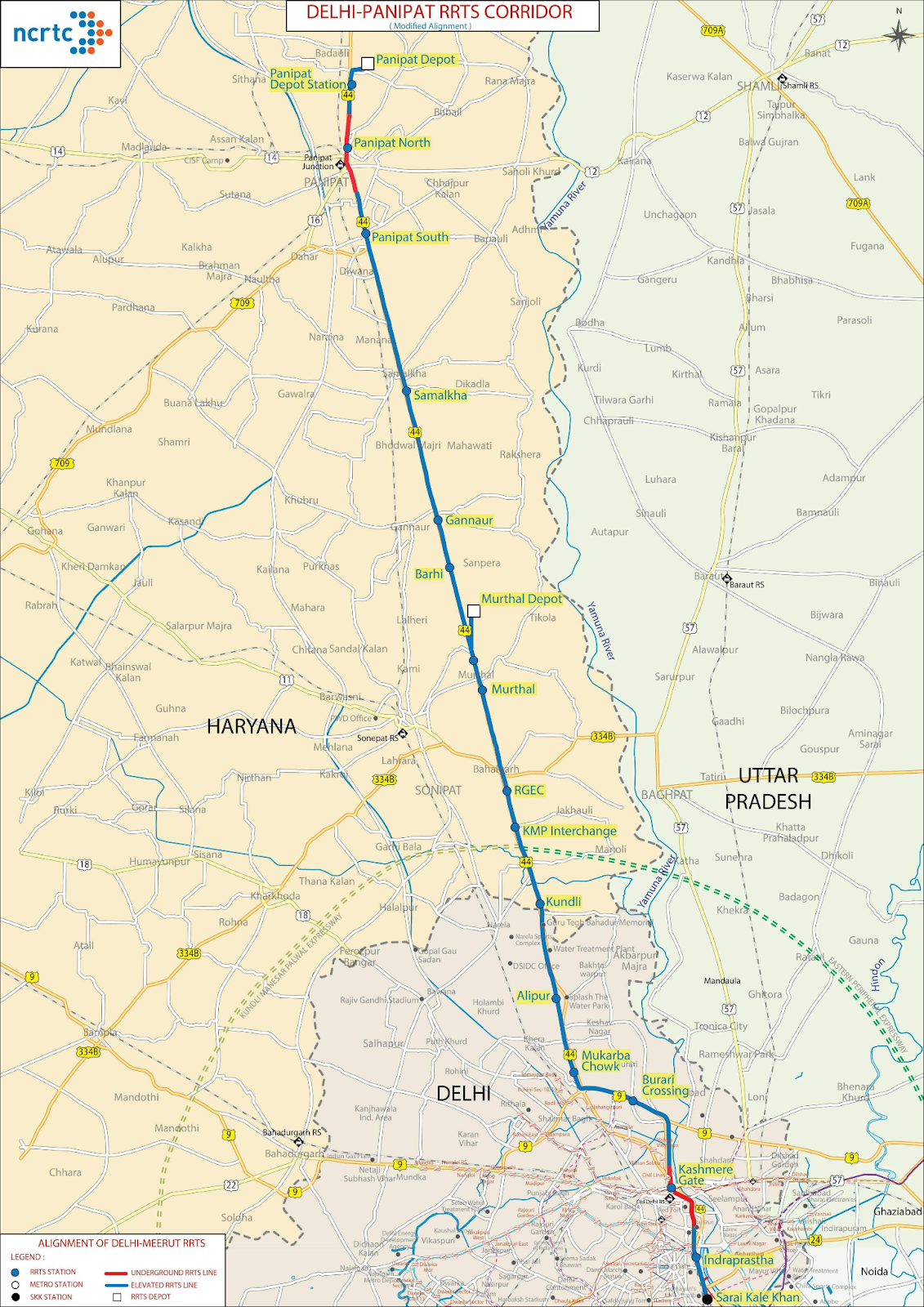
Delhi – Sonipat – Panipat RRTS
This RRTS line will originate from Sarai Kale Khan, and connect to Kashmere Gate ISBT. It will continue to head north along National Highway 44 through Sonipat, Gannaur, and Samalakha to connect Panipat in Haryana.
Operational: 0 km | Under Construction: 0 km | Proposed: 103 km + 25 km
Stations on Proposed Karnal Extension (3): Gharunda, Madhuban and Karnal
DPR Approved
Haryana Government approved the DPR of this project in December 2020.
Estimated Cost
Rs. 21,627 crore
Estimated Daily Ridership
7.79 lakh passengers
Deadline
Not yet announced
In January 2020, the Haryana government decided to extend the line from Panipat to Karnal, covering a distance of approximately 25 kilometers from the Panipat Depot Station. However, the Detailed Project Report (DPR) for this extension is still awaiting approval.
Future Extension Plans for RRTS
Route
Length
Recent Updates
Delhi – Jewar Airport
72 km
In April 2024, Detailed Project Report (DPR) of Ghaziabad – Jewar Airport RRTS was submitted to Yamuna Expressway Industrial Development Authority (YEIDA).
Delhi – Faridabad – Ballabgarh – Palwal
60 km
Ghaziabad – Bulandshahr – Khurja
83 km
Delhi – Bahadurgarh – Rohtak
70 km
A future extension is planned for Hisar.
Ghaziabad – Hapur
57 km
Delhi – Shahdara – Baghpat – Baraut
56 km
Delhi – Jewar Airport RRTS
Deadline
It is expected to be completed by 2041.
Estimated Cost
Rs. 20,043.6 crore
Construction in 2 Phases
Phase 1:Line: Ghaziabad – Kasna Distance: 39.39 km Stations: 7 RRTS and 11 Metro Stations Vishvakarma Road (Sidharth Vihar/Pratap Vihar in Ghaziabad), Taj Highway, Char Murti Chowk, Greater Noida Link road (Knowledge Park-V), and then turns onto Surajpur-Kasna Road, ending at Ecotech VI in the Kasna Phase 1 will integrate with the Delhi Metro at Ghaziabad, the Aqua Line at Char Murti Chowk, and the Alpha I station of the Aqua Line near Pari Chowk to enhance connectivity across the region.
Phase 2:Line: Kasna – Jewar Airport Distance: 32.9 km Stations: 4 RRTS; Provision of 1 RRTS and 9 Metro Stations Dankaur, Dhanauri, Kanarsi, Bhatta, Parsaul, Rabupura, Dayanatpur, and Kishorpur, Ground Transport Center near Terminal 1 of Noida International Airport.
Namo Bharat Trains:
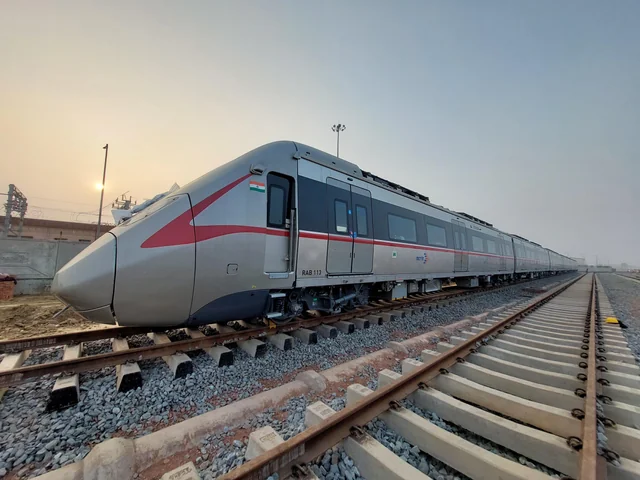
The Namo Bharat train (formerly known as RapidX) is an Indian Electric Multiple Unit (EMU) designed specifically for the Regional Rapid Transit System (RRTS).
Key Specifications of Namo Bharat:
Design Speed
180 km/h
Operational Speed
160 km/h
Average Speed
100 km/h
Track Gauge
Standard Gauge: 1435 mm
Rolling Stock
Alstom has got a contract to supply 210 coaches for the Delhi – Meerut line
Signalling
European Train Control System (ETCS) Level 2 of ERTMS
Traction
1 x 25 KV AC overhead catenary (OHE)
Seating Arrangement
Transverse
Classes
Economy and Business (1 coach per train)
Challenges faced by RRTS
Land Acquisition
Due to the high population of Delhi and Meerut, it became difficult for the NCRTC to acquire land for the construction of RRTS. Compensation and negotiations created a delay in the construction and completion of the RRTS project.
Pollution Control
As the pollution in Delhi NCR is rising rapidly, smog mitigation became a huge challenge during the construction of the Delhi-Merut RRTS. Several measures like sprinkling of water and deployment of anti-smog guns were done to ensure a reduction in dust.
Advantages of RRTS
Rise in Economic Activities
RRTS focuses on improving the pattern of movement and development across different regions. As RRTS offers travel with high speed, the total time taken to reach the destination is reduced, enhancing the productivity and overall economic activities of the region.
Employment Opportunities
RRTS would open up new opportunities for the people in the country. With the development and commencement of the RRTS, new businesses and shops would open up in the regions, creating job opportunities for the people. It would improve the travel conditions for the people.
Reduction in Cost
A faster travel with RRTS would free up people’s time for productive activities. Offering travel at an affordable price would help people save, increasing their disposable income, and improving their quality of life.
Environmental Benefits
The majority of the energy requirement of the RRTS is met through renewable energy. Solar panels are being installed across the RRTS depots and station buildings, making it beneficial for the environment.
Improved Safety
RRTS is equipped with the best in class command and control systems, offering safe and reliable public transportation to move across Delhi and NCR.
Reduced Road Congestion
Compared to any other public transportation, RRTS helps a large number of people to travel every hour. RRTS aims to switch a large amount of traffic from road to rail, freeing up the space on the road and reducing the road congestion on the highways.
Conclusion
The Regional Rapid Transit System is a significant step to enhance the access of India’s public transportation infrastructure, aiming to reduce traffic congestion and enhance regional connectivity. By offering high-speed and reliable travel options, RRTS is set to transform commuter experiences and economic dynamics across the Delhi NCR region.
The development of RRTS promises reduced travel times and operational efficiency besides leading to economic growth and environmental benefits. As more corridors are completed, RRTS will play a crucial role in connecting metropolitan areas, supporting urban expansion, and improving the quality of life for millions of residents.
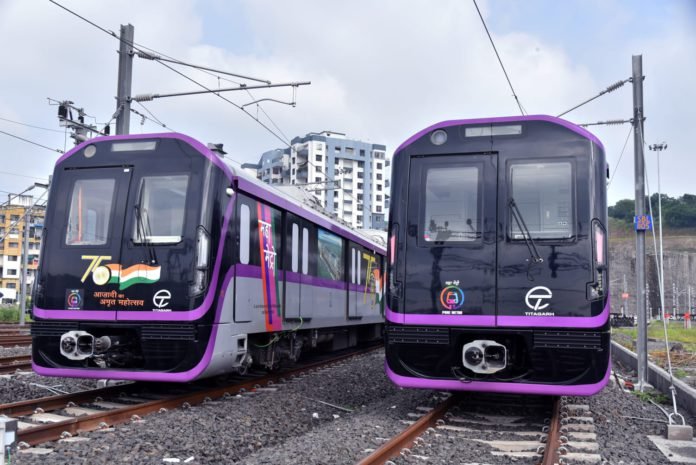
Pune (Metro Rail News): MahaMetro, or Maharashtra Metro Rail Corporation, appointed Structcon Design Pvt. Ltd. as a Proof Checking Consultant for Pune Metro’s 4.519 km long viaduct of Purple Line Phase 1A.
RVNL was the civil contractor of the package – PIA-C-01, which included the construction of a viaduct connecting Pimpri Chinchwad Municipal Corporation (PCMC) to Nigdi (Bhakti Shakti) via 4 elevated stations with an estimated cost of Rs.910.18 crore.
Structcon will execute its work around the same viaduct of Pune Metro Phase 1A (PCMC to Nigdi) under Package – P1A-PC-01.
Work description
The main course work of Structcon includes proof-checking all detailed structural designs of the viaduct’s substructure whether it is open, pile or well foundation. The Superstructure is a pier, pier cap, pedestal & any other structure up to the pedestal level.
In June 2024, Structcon became the lowest bidder for the 4.519 km Purple Line extension (PCMC to Nigdi ) under package – P1A-PC-01. There were four bidders in the line for the same project.
LKT Engineering Consultants
Shirish Patel and Associates Consultants
Spectrum Techno Consultants
Structcon Designs (L1)
Moreover, the construction work of the extension of the Pune Metro is going quickly with all the planning and arrangements. Some of the major packages and contractors are given below. Please have a glance over them.
One of the largest and oldest rail networks in the world, the Indian Railways was established in 1853. Covering over 1,32,310 kilometres of track, the Indian Railways is known for its connectivity to almost every corner of the country. Over the years, the railways have undergone numerous technological advancements to offer better services to their customers.
Indian Railways, the country’s second-largest employer, provides jobs for over 1.2 million people. Beyond its role as a passenger railway service, it offers a diverse range of services, including rail freight transport, parcel delivery, catering, and tourism.
Railway Automation System
Introduction
Railway automation refers to implementing advanced technologies and systems to manage and control train operations with minimal human intervention. This includes automated train control, scheduling, monitoring systems, and passenger services. The goal of railway automation is to enhance safety, improve efficiency, reduce operational costs, and offer a better travel experience for passengers.
The journey of railway automation began with the advent of steam engines in the 19th century and has evolved through numerous technological advancements, including electric trains and computerised systems. Innovations such as Automatic Train Protection (ATP) and Centralised Traffic Control (CTC) have substantially contributed to the development of modern automated systems.
Key Components of Railway Automation
GPS and Tracking Systems
Global Positioning System (GPS) technology is critical for real-time train tracking. It allows railway operators to monitor the location and speed of trains accurately. This data is essential for scheduling, ensuring trains run on time, and managing traffic flow on busy routes.
Communication Systems
Effective communication is vital in railway automation. Technologies such as GSM-R (Global System for Mobile Communications – Railway) facilitate communication between trains and control centers. This ensures that train operators receive real-time updates about track conditions, weather changes
Signaling systems
Signaling systems play a crucial role in enabling automation and safe operations in modern railway networks. It contributes to railway automation by various ways such as:
Automatic Block Signaling
Moving Block Systems
Interlocking Systems
Train Control Systems
These include Automatic Train Protection (ATP) and Automatic Train Operation (ATO) systems that control train speeds, braking, and other functions.
Passenger Information Systems
These are the automated systems for real-time updates on train schedules, delays, and other information.
Track Monitoring Systems
These systems use a variety of sensors and techniques to continuously monitor the condition of tracks and detect potential issues before they become serious problems.
Investment
The Union Budget 2023-24 allocated around Rs. 2.4 lakh crore for Indian Railways, with a significant portion dedicated to modernization and automation projects.
Indian Railways’ Moving Steps Towards Automation
Indian Railways is striving to streamline its operations through automation and instrumentation, particularly in maintenance practices which aims to enhance safety, reliability, and efficiency.
Key Initiatives in Automation
Online Monitoring of Rolling Stock System (OMRS): OMRS is a way-side inspection system that incorporates technologies like Acoustic Bearing Detectors (ABD) and Wheel Impact Load Detectors (WILD) to monitor the health of train components in real-time. This system detects faults in bearings and wheels, allowing for timely corrective actions before failures occur.
Implemetation of OMRS: In Phase 1, Indian Railways has installed 25 OMRS systems at 20 locations across its network. These locations were chosen by a high-level, multi-disciplinary committee from the Railway Board. Indian Railways installed the first OMRS system at Panipat in the Ambala-Delhi section of Northern Railway in November 2017. In March 2018, authorities set up a Central Control Room, named the “National Command Centre (NCC),” at Delhi Kishanganj to monitor all OMRS sites.
Smart Yards: Indian Railways is developing “Smart Yards” equipped with automated systems for predictive maintenance of freight wagons. These yards will use technologies such as Hot Box Detectors and Wheel Profile Recorders to identify potential issues like hot axles or defective wheels before they result in operational failures
Implementation of Smart Yard: In the first phase, Indian Railways will convert 40 identified yards into Smart Yards. COFMOW, a unit of Indian Railways, has been assigned the responsibility for overseeing the Smart Yards project.
Digital Railway Solutions:
The digital railway program focuses on integrating digital signaling technology to improve safety and efficiency in train operations. By centralising data from various systems, Indian Railways aims to enhance real-time communication and operational efficiency across the network.
Major Roadblocks in Implementing Automation in Indian Railways
Implementing automation in Indian Railways presents several challenges that need to be addressed for successful integration and operation of these advanced systems:
Infrastructure Limitations: The existing railway infrastructure is often outdated and may not support the advanced technologies required for automation. Upgrading tracks, stations, and signaling systems to accommodate automated operations is a major challenge, especially given the vastness of the railway network.
Financial Constraints: The cost of implementing automation technologies is substantial. Indian Railways faces budgetary constraints that may limit the extent and speed of technological upgrades.
Integration of Technologies: Combining new automated systems with existing manual operations is challenging. It requires careful planning, execution, and training to ensure smooth operation.
Regulatory and Compliance Issues: Introducing automation technologies may necessitate changes to existing regulations and compliance standards.
Public Acceptance and Safety Concerns: There may be public resistance to automated systems, especially regarding safety. Building trust in these systems is crucial, as incidents or failures could lead to backlash against the technology.
Benefits of Automation
The adoption of automated systems is expected to bring several advantages to Indian Railways:
Enhanced Safety: Early detection of defects helps reduce the risk of accidents and boosts overall train operation safety.
Increased Efficiency: Automated systems streamline maintenance processes, cut down turnaround times, and improve the efficiency of rolling stock.
Cost Savings: Predictive maintenance minimises unplanned repairs and optimizes resource allocation, leading to cost reductions.
Improved Passenger Experience: Better operational efficiency and safety enhance service reliability which ultimately contributes to overall passenger experience.
iCBTC
Integrated Communication-Based Train Control (ICBTC) is an advanced signaling system that builds upon the principles of Communications-Based Train Control (CBTC). This system is designed to improve the safety, efficiency, and capacity of railway operations
Overview of Integrated Communication-Based Train Control (ICBTC)
ICBTC combines various subsystems and technologies into a cohesive framework, integrating train control, supervision, and management functions. This integration allows for more efficient operations, improved safety, and enhanced communication across the entire railway network.
Key Features of ICBTC
Uninterrupted Communication: ICBTC systems use high-capacity, bidirectional communication links between trains and trackside equipment. This allows for real-time data exchange regarding train positions, speeds, and operational statuses, which eliminates the reliance on traditional fixed block signaling systems.
Integration with Other Systems: ICBTC integrates multiple functionalities, including Automatic Train Protection (ATP), Automatic Train Operation (ATO), and Automatic Train Supervision (ATS). This holistic approach ensures continuous communication and coordination among different components of the railway system.
Automatic Train Protection (ATP): The system incorporates ATP functions that prevent collisions and ensure safe train operations. By continuously monitoring train movements and conditions, ICBTC can automatically adjust train speeds and spacing to maintain safety.
Dynamic Headway Management: One of the primary objectives of ICBTC is to reduce the time interval (headway) between trains. This is achieved through Moving Block Technology, which enables trains to operate closer together, increasing rail line capacity without requiring additional infrastructure.
Technical Aspects of iCBTC
ICBTC systems use modern communication technologies, including radio and digital networks, to enable high-speed data transmission. This technology allows for precise tracking of train positions and speeds.
The key components of an Integrated Communication-Based Train Control (ICBTC) system are:
Wayside Equipment
Zone Controllers: Provide train detection, calculate safe separation distances, determine Movement Authority for trains within their assigned area, and apply temporary speed restrictions.
Interlocking Controllers: Manage wayside devices such as switches and signals to ensure safe train movements.
Onboard Equipment
Automatic Train Protection (ATP): This system ensures that trains operate within the Movement Authority limits specified by wayside controllers. ATP uses data on train features and regulatory requirements to enforce safe speeds, preventing operations outside of authorized parameters.
Automatic Train Operation (ATO): ATO manages automatic control of traction and braking systems to adhere to the speed profile set by ATP.
Communication System
Train-to-Wayside Communication: Provides continuous, high-speed, bidirectional communication between trains and wayside equipment via radio links, generally operating in the 2.4 GHz or 5.8 GHz frequency bands.
Antennas, Transponders, and Beacons: Support train-to-wayside communication by transmitting and receiving signals between trains and trackside equipment.
Automatic Train Supervision (ATS)
Traffic Management Center: Offers the human-machine interface for operators to monitor and control train movements, using interconnected workstations on a LAN.
Event and Alarm Management: Manages alarms and events reported by the ICBTC system, ensuring timely responses to operational issues.
These components collectively ensure continuous communication, automatic train protection, and efficient operation.
Benefits of ICBTC
Increased Capacity: ICBTC reduces headways, which allows more trains to operate on the same track and effectively.
Enhanced Safety: Continuous monitoring and automatic adjustments improve safety by reducing the risk of accidents.
Improved Energy Efficiency: By optimizing train movements, ICBTC helps reduce energy consumption and operational costs.
Implementation of iCBTC:
Delhi Metro: The Delhi Metro is in the front for implementing iCBTC technology. The Delhi Metro’s Phase III expansion, for instance, uses iCBTC to manage the increased traffic and ensure smooth operations.
Indigenous Communication-Based Train Control (I-CBTC) system:
Bharat Electronics Limited (BEL) and the Delhi Metro Rail Corporation (DMRC) have signed a Memorandum of Understanding (MoU) to develop the I-CBTC system jointly.
This initiative aligns with the government’s “Atmanirbhar Bharat” (self-reliant India) mission.
The project is being carried out under the Ministry of Housing and Urban Affairs (MoHUA), Government of India.
Growth of iCBTC
iCBTC technology is being adopted at an increasing rate in urban rail transit systems. It is implemented to address the challenges of high passenger density and frequent train operations. As Indian cities expand and urban rail networks grow, the demand for efficient and reliable signaling systems like iCBTC has increased.
Kavach
Kavach is an Automatic Train Protection (ATP) system developed by the Research Designs and Standards Organization (RDSO) for Indian Railways. Certified to Safety Integrity Level 4 (SIL-4), Kavach is a pivotal component of the Train Collision Avoidance System (TCAS) project, initiated in 2012 to eliminate train collisions across India’s rail network.
Currently operating on version 3.2, Kavach is slated for an upgrade to version 4.0 to expand its capabilities. Version 3.2 received certification in 2021, with deployment commencing in late 2022 on high-traffic routes such as Delhi-Mumbai and Delhi-Howrah.
Key Components of Kavach
Kavach Towers: Infrastructure supporting the communication and operation of the system.
Optical Fiber Network: Ensures reliable data transmission across the rail network.
Data Centers: Central hubs for processing and storing operational data.
Loco Kavach: Onboard equipment installed in locomotives to interact with the trackside infrastructure.
Trackside Equipment: Positioned along the rail tracks to monitor and control train movements.
Functionality and Features
Kavach enhances rail safety and operational efficiency through the following functionalities:
Automatic Braking: Applies brakes automatically in critical situations to prevent collisions.
Automated Whistling: Signals at level crossings (LC gates) and provides line-side signal information in foggy conditions at high speeds.
Continuous Movement Authority Update: Ensures real-time updates of movement permissions.
Emergency Stop Feature (SOS): Activates to prevent accidents and mitigate risks promptly.
Inter-Loco Communication: Facilitates direct communication between locomotives to enhance coordination and safety.
Safety Features
Signal Passed at Danger (SPAD) Detection: Kavach issues warnings if a locomotive violates SPAD signals, which are critical in preventing train collisions.
Collision Avoidance: Automatically activates brakes when detecting another train within a specified distance on the same track, mitigating collision risks.
Adverse Weather Adaptation: Continuously monitors train movements and communicates potential hazards like fog to locomotive crews, ensuring safe operations even in challenging weather conditions.
Recent Updates on Kavach
Call for Tenders
Indian Railways has issued tenders for deploying Kavach across 10,000 kilometres of railway tracks. A tender has been awarded for a 6,000-kilometer route and 139 locomotives, including Electric Multiple Unit (EMU) rakes, on the South Central Railway zone. The system is designed to accommodate different train types based on their operational requirements.
Successful Installation
As of December 2023, Indian Railways has achieved several milestones in deploying Kavach:
Installed 3,040 kilometres of optical fiber cables.
Erected 269 Kavach towers along 827 kilometres of railway tracks.
Established data centres at 186 stations.
Equipped 170 locomotives with Kavach systems.
South Central Railway (SCR) Zone
In the SCR zone, Kavach has been implemented on 121 locomotives, including EMU rakes, covering 1,465 route kilometres across various sections:
Lingampalli – Vikarabad – Wadi and Vikarabad-Bidar section (265 km)
Manmad-Mudkhed-Dhone-Guntakal section (959 km)
Bidar-Parbhani section (241 km)
Projects Under Construction
Kavach deployment projects are currently underway on the Delhi-Howrah (1,447 km) and Delhi-Mumbai (1,384 km) corridors. Detailed estimates for a 6,000-kilometer route are also in progress.
Approved OEMs
Indian Railways has approved three Original Equipment Manufacturers (OEMs) to facilitate the deployment of Kavach:
HBL PowerSystems
Kernex Microsystems
Medha Servo Drives
Further OEM approvals are anticipated in upcoming tenders to expedite the nationwide implementation of Kavach.
Benefits of Implementing Advanced Train Technology
Increased Efficiency
By preventing accidents and ensuring compliance with signals, Kavach reduces operational disruptions. This leads to fewer delays and interruptions in train services, contributing to a more reliable and efficient railway network. iCBTC allows for control over train movements, enabling tighter scheduling and reduced headways.
Incresed Safety
Automation systems reduce the reliance on manual control, minimizing the risk of human error. They handle critical functions such as train control, signaling, and collision avoidance, enhancing overall safety. iCBTC systems continuously monitor train positions, speeds, and signal compliance through real-time communication between trains and control centers. Kavach’s primary benefit is its ability to prevent train collisions.
Enhanced Passenger Experience
Automation system ensures that trains run on time and according to schedule, improving the overall reliability of the service and enhancing the passenger experience. The improvement in safety measures improve public confidence in rail travel, encouraging more people to use trains as a preferred mode of transportation.
Conclusion
The ongoing advancements in railway technology, including Kavach, iCBTC, and automation systems, are redefining the future of Indian Railways. These innovations are enhancing safety and operational efficiency besides improving passenger experience. By minimizing human error, optimizing train scheduling, and preventing collisions, these technologies are creating the way for a more reliable and secure rail network.
As Indian Railways continues to modernise, the integration of these systems will play a crucial role in fulfilling the growing demands of the transportation sector, ensuring that rail travel remains a safe, efficient, and preferred mode of transport for millions of people across the country.
Bengaluru (Metro Rail News):The long-awaited Bengaluru Metro’s Yellow Line has reached another milestone, with the start of Oscillation Trials of train sets.
On 9 September, the Research Design and Standards Organisation (RDSO), Lucknow, finally initiated the oscillation and Emergency Braking System (EBS) trials on the Yellow Line, which spans 19.15 km connecting RV Road and Bommasandra within Bengaluru Metro Phase 2.
Process ahead
Once oscillation trials are completed, which might take about 12-15 days, and the Research Design and Standards Organisation (RDSO) submits its report, the Bangalore Metro Rail Corporation Limited (BMRCL) will seek technical approval from the Railway Board.
Subsequently, The BMRCL will proceed with the final inspection of the yellow line which will be conducted by CMRS.
Driverless Train Sets for Bengaluru Metro’s Yellow Line
Initially, the BMRCL and CRRC Nanjing Puzhen Co Ltd signed a contract in 2019 for the rolling stock of Yellow Line.
The contract between Bangalore Metro Rail Corporation Limited (BMRCL) and CRRC Nanjing Puzhen Co. Ltd. faced delays in delivering the rolling stock due to various challenges. To mitigate these delays, CRRC signed a memorandum of understanding (MoU) with Titagarh Rail Systems.
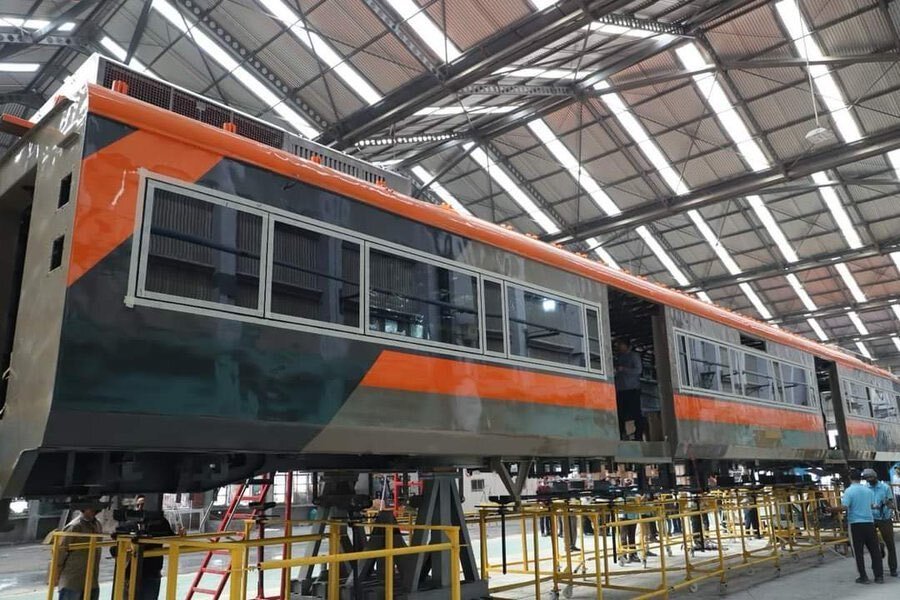
Under this MoU, Titagarh will manufacture 34 trainsets (each comprising six coaches) out of 36 to help meet the project’s deadlines.
In February, the prototype of a six-coach train set was supplied by China’s CRRC Nanjing Puzhen Co Ltd. for the yellow line.
On 8 May 2024, Titagarh Rail began the production of trainsets and is expected to deliver its first trainset soon.
Coimbatore, a major metropolitan city in Tamil Nadu, is located on the banks of the Noyyal River. Known as the ‘textile capital’ of South India, Coimbatore is surrounded by the western ghats. With a population of around 16 lakh, it is the third-largest city in the state.
Coimbatore is a major hub for manufacturing, education, and healthcare and is among India’s fastest-growing tier-II cities. Coimbatore has more than 25,000 small, medium, and heavy industries, with primary industries in textiles and engineering. It is known as the ‘Manchester of India’ due to the extensive textile industries, fed by the surrounding cotton fields. The city’s heavy industrialisation base has led to the growth of trade unions.
Coimbatore is known for its tourist attractions, ranging from science centres and museums to gardens and amusement parks. It also has a few well-known temples. You can explore the regional science centre, Indira Gandhi Wild Life Sanctuary and National Park, Maharaja Theme Park, and a few places of worship like Subramaniasamy Temple, Arulmigu Patteswarar Temple, and Masaniamman Temple.
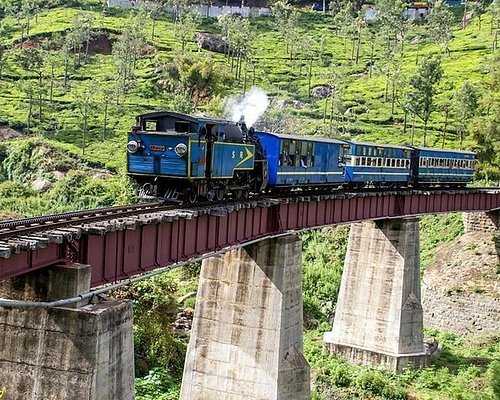
Coimbatore is an entry and exit to Kerala and Ooty, a popular hill station in South India. People often take a mountain train from Mettupalayam to Ooty which is only 35 km away or take a road trip from Ooty which is 70 km away from Coimbatore. The route offers scenic views.
Overview of Coimbatore Suburban Railways
Coimbatore Broad Gauge Metro Railway Cum Coimbatore Suburban Railway is planned for Coimbatore. Coimbatore Suburban Railways also known as Kovai Metro Cum Suburban Railway, is a circular line. This circular line connects the crucial parts of Coimbatore city, helping to reduce road congestion.
Proposed Stations: Bothanur, Singanallur, Peelamedu, Vadakovai, Periyanayakanpalayam, Karamadai, and Mettupalayam
This is a circular as well as an urban line that has been proposed for both metro and mainline routes.
Key Specifications of Coimbatore Suburban Railway
Speed and Track
Operating Speed: 110 km/h
Track Gauge: 5 ft 6 in (1,676 mm) broad gauge
Safety and Electrification
Signalling: Railway Signalling
Electrification: Coimbatore Suburban Railways operate on a 25 kV, 50 Hz AC through overhead catenary.
Challenges Faced By Coimbatore Suburban Railways
1.Dedicated Tracks
Coimbatore suburban railways face challenges as it does not have dedicated tracks for the local or suburban railways. These suburban railways run on the mainline tracks. It results in delays and affects the frequency of the trains.
Restoring the Defunct Stations
The locals demand the restoration of defunct stations- Chettipalayam, Nallatipalayam, Koilpalayam and Tamaraikulam. It would help the residents of these particular areas to access public transport, and improve the connectivity between Coimbatore and the neighbouring regions.
Benefits of Coimbatore Suburban Railways
1.Population Growth
The population of Coimbatore is rising rapidly. As it has a good industrial base, many people migrate to the city in search of job opportunities. Suburban Railways was initiated due to the rising population and to enhance the city’s connectivity with its suburban areas. People could then travel via public transport and reach their destination on time. It is also a positive step towards the environment.
2.Industrial Growth
Coimbatore has a rapidly rising industrial base, and most of the industries are set up on the city’s outskirts. With more industries and job opportunities, there is a demand for effective transportation facilities. It would help to commute goods and services easily. The suburban railways made travel easy and raised the output of people.
3. Congested Roads
Coimbatore’s roads are congested and reaching a destination makes it difficult and frustrating. The high usage of private transport also leads to air pollution. The suburban railway helps to reduce road congestion, easing travel for the people.
4.Connecting Neighbouring Cities
Suburban Railways connect the city with the suburban regions. It promotes regional development and economic growth of the city.
Conclusion
The Coimbatore Suburban Railways is a transformative step for the city’s transportation infrastructure. The suburban railways address important issues such as road congestion and environmental impact and are a crucial development to enhance urban mobility and connectivity. With its broad gauge, electrified tracks, and well-planned routes, the Coimbatore Suburban Railways are set to meet the demands of the growing population and industries.
By linking key areas within Coimbatore and connecting them to neighbouring cities, this rail network will facilitate smoother daily commutes and lead to regional economic development. As Coimbatore continues to expand its industrial and demographic footprint, the suburban railways will play an essential role in sustaining the city’s growth, improving the quality of life for its residents, and achieving environmental sustainability goals.