New Delhi: Prime Minister Narendra Modi has flagged-off the Delhi-Faridabad Metro Line that would allow hassle free travel for around two lakh daily commuters between the national capital and the industrial hub in Haryana.
The extension of the Delhi Metro connects Badarpur to Escorts Mujesar in Faridabad.
The total cost of the project from Badarpur to Escorts Mujesar is nearly Rs. 2,500 crore. Out of this, Rs. 1,557 crore was borne by the Haryana Government, the Centre contributed Rs. 537 crore, while the Delhi Metro provided Rs. 400 crore.
All these are elevated and located on either side of the Delhi-Mathura Road (NH-2).
“The nine-station metro corridor which was 95 per cent indigenously built will provide people a safe, affordable, quick, comfortable, reliable, environment-friendly and sustainable transport facility,” a Haryana government spokesperson said.
Haryana Chief Minister ML Khattar, addressing a press conference on Saturday, had thanked the Prime Minister for “gifting” the Metro service which would take the city to “another level of progress” with better connectivity with other NCR towns.
He had also said that the Prime Minister would be announcing the go-ahead for connecting Gurgaon with Faridabad by Metro.
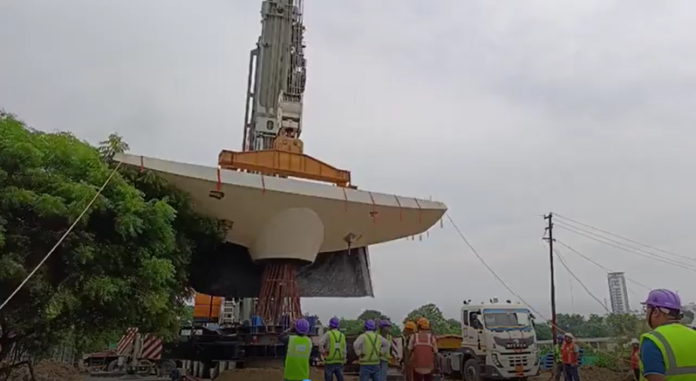
Kanpur (Metro Rail News): Ceigall India launches first pier cap for 8.38 km long Line 2 of Kanpur Metro phase 1 under package KNPCC-12.
This achievement of installing 1st pier cap out of 121 has been recorded under package KNPCC-12 near the ramp area of the Agriculture College Metro station.
#KanpurMetro: कॉरिडोर-2 के एग्रीकल्चर यूनिवर्सिटी-बर्रा-8 एलिवेटेड सेक्शन में शुरू हुआ पियर कैप परिनिर्माण (इरेक्शन); कंपनी बाग चौराहा के पास रखा गया पहला पियर कैप। लगभग 4.50 किमी लंबे एलिवेटेड सेक्शन में रखे जाने हैं कुल 121 पियर कैप्स। #UPMetro:साकारहोतेसपने@MoHUA_Indiapic.twitter.com/RgMXW83yHh
— Uttar Pradesh Metro Rail Corporation (@OfficialUPMetro) September 9, 2024
Have a glance of launching 1st Pier Cap
In March 2024, Uttar Pradesh Metro Rail Corporation (UPMRC) awarded Ceigall the KNPCC-12 package. The project’s total cost is Rs.427.11 crore, and the deadline is 30 months.
Ceigall India initiated pier casting work in June 2024. The width of the pier caps is 9.5m. From July onwards, casting work started for 27.90 m U-girders. All the work is being done at their yard in Nabubasta’s Hanspuram.
Package- KNPCC-12
Package KNPCC-12 comes under line 2( connecting the Agriculture college to Barra-8) of Kanpur metro phase 1 and consists of 2 disjointed elevated sections on both sides of underground Package KNPCC-11 (Agriculture Depot – Double Pullia Ramp).
The southern section of KNPCC-12’s viaduct will be connecting with Double Pullia Ramp and Barra-8, including four elevated stations:
Vijay Nagar Chauraha
Shastri Chowk
Barra-7
Barra-8.
Additionally, work for the package is going on rapidly, and achievements started recording just after the six months of the award.
Line 2
Currently, Line 2 of Phase 1 is under construction. The line features 8 stations.
Two firms are already engaged in the construction work:
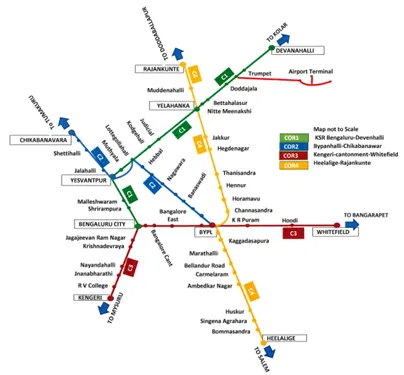
Bengaluru (Metro Rail News): Two firms, NCC Ltd. & Rail Vikas Nigam Ltd. (RVNL) have each submitted two bids for two separate civil construction packages, C4A & C4B, of the Bengaluru Suburban Rail Project (BSRP), which stretches about 149 km through 18 stations.
In July 2024, Karnataka’s Rail Infrastructure Development Company (K-RIDE) invited bids for both civil contracts with a 2-year deadline. On 9 September, technical bids were opened to reveal the bidders.
Package C4A and C4B are a part of the Kanaka Line (Corridor 4). This Line spans 46.88 km, connecting Heelalige station to Rajanukunte station.
Bengaluru Suburban Rail’sPackage C4A
The estimated cost for the package C4A is Rs. 504.11 crores.
The scope of work under this package includes the construction of 1 elevated station and 8 at-grade stations, including civil structural, PEB works, Architectural finishes and E&M Works and Detailed Design & Engineering (DDC).
The following stations will be covered in Package C4A:
Heelalige
Singena Agrahara
Huskur
Ambedkar Nagar
Carmelaram
Bellandur
Marathahalli
Doddanakundi
Kaggadasapura
Package C4B
The estimated cost for the package is Rs. 528.05 crore.
The scope of work under this package includes the construction of 1 elevated station and 8 at-grade stations, including civil structural, PEB works, Architectural finishes and E&M Works and Detailed Design & Engineering (DDC).
The following stations will be covered in Package C4B:
Channasandra
Horamavu
Hennur
Thanisandra
R. K. Hegdenagar
Jakkur
Yelahanka
Muddanahalli
Rajankunte
Process Ahead
The bids submitted for these packages will undergo technical evaluation. Subsequently, the financial bids of technically qualified bidders will be revealed in the coming months to identify the L1 (Lowest Bidder) for these packages.
Freight transportation, a critical component of the economy, plays a crucial role in the supply chain management of businesses across various industries. Freight transportation refers to the movement of goods and materials from one place to another with the help of various modes of transportation such as trucks, aeroplanes, trains, and ships.
There are various types of freight transportation and each has advantages and disadvantages. These transportation facilities help businesses make informed decisions about the movement of their goods.
1.Road Transport
Road transport is the most common way of freight transportation. The vehicles used for this purpose are trucks, cars, autos, and more, depending on the size and weight of the cargo transported.
Freight transportation via roads allows flexibility and door-to-door delivery. However, the road transportation can be affected by the traffic congestion and extreme weather conditions.
The Road Transport sector accounts for 60% of the freight traffic movement in the country.
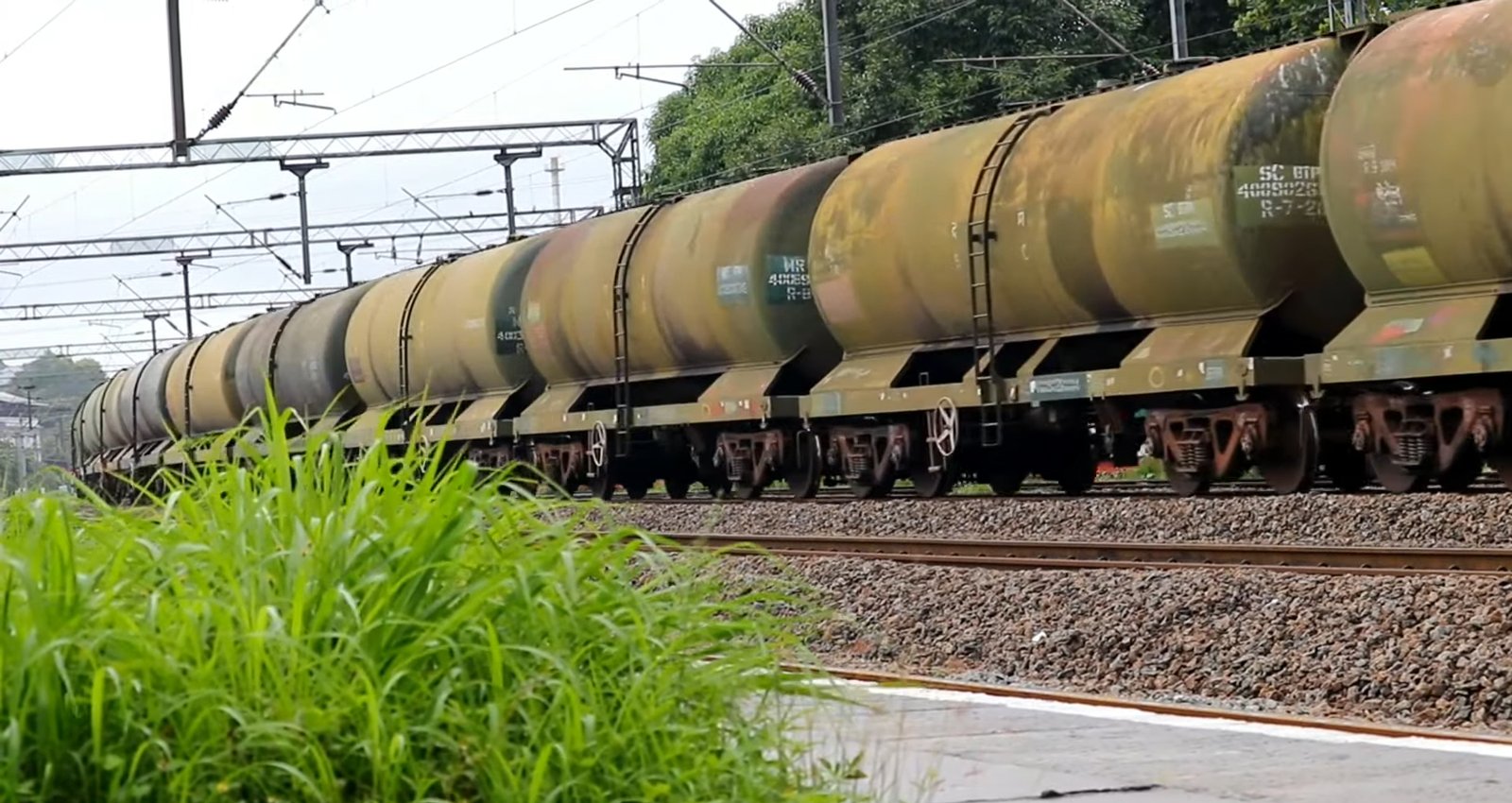
2. Rail Transport
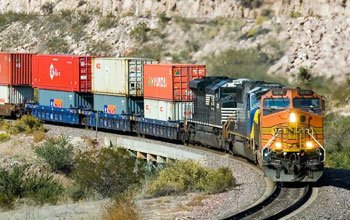
Rail transport involves using trains to transport goods over a long distance. The trains can carry a large amount of goods efficiently and cost-effectively. As rail transport produces less emissions, it is more environmentally friendly.
However, it is less flexible and requires a lot of rail lines and terminals.
As of April 2024, the share of railways in the freight transportation is 27%. It is expected to go up to 45% by 2030.
3. Air Transport
Air transport is among the fastest modes of freight transportation, as it carries goods long distances. It is the best transportation in case of emergency however, these are expensive compared to the other modes of transportation.
Air transportation can be affected by extreme weather conditions and flight cancellations leading to delays in the supply chains.
Air transport shares only about 1-2% of the freight transportation.
4.Water Transport
Usually used to transport goods from one country/ continent to another, water transport is a cost-effective method for freight transportation for long distances.
However, freight transportation through ships, tankers, or bulk carriers can take more time in comparison to air transport.
Water freight transportation shares only 2% of freight transportation, however, the government plans to increase share to 5% by 2030.
Impact of Freight Transportation on the Indian Economy
1.Backbone of Trade
Freight transport is the backbone of trade, helping to transport goods both domestically and internationally. The trucks, trains, vans, ships, and aeroplanes move goods from one place to another, facilitating commerce on a global scale and helping to raise the economy. Without effective transportation facilities, the supply chains would be disrupted and market access would be reduced.
2.Employment Opportunities
The freight transportation industry is a major source of employment opportunities. It provides job opportunities in various categories like drivers, warehouse workers, logistics professionals, and maintenance personnel. Freight transportation is a wide network offering employment opportunities in multiple roles.
3.Supply Chain Efficiency
For businesses to grow, it is essential to have an efficient supply chain. Freight transport ensures that raw materials reach factories and finished products reach customers. An efficient and optimized supply chain reduces overall costs and enhances competitiveness in the market.
4.Global Trade
Freight transportation helps to transport goods and services not only within the country but also on a global scale. This helps the local industries to access global markets and the economy to raise their foreign exchange reserves.
5.Economic Growth
Investments in infrastructure and logistics systems, such as highways, railways, and ports, raise economic growth. These investments create more job opportunities, increase economic activity, and enhance competitiveness.
India’s logistics industry contributes 14.4% to the country’s GDP.
Historical Background: Evolution of Freight in Railways
Post-independence, 90% of the freight was composed by the Indian Railways.
1966
The first freight service was started with containers between Bombay and Ahmedabad.
1997
Freight services began on the Konkan Railway.
2001
In January, freight services between India and Bangladesh resumed officially after a gap of 25 years on the Petrapole-Benapole BG link.
2021
Prime Minister Narendra Modi launched a 306 km route from New Rewari to New Madar.
Current Infrastructure of Freight Transportation
Rail transport in India consists of both passenger and freight shipments. The national rail network has a total route length of 68,907 km, with more than 1,29,000 km of track and 8,000+ stations. The Indian rail network is the fourth-largest in the world.
Freight Trains
According to the 2024 report, the Indian Railways has 9,146 freight trains.
Freight Earning
Freight earnings in June 2024 stood at Rs 14,798.11 crore.
Freight Loading
In June 2024, the Indian Railways achieved the highest freight loading of 135.46 million tonnes.
Freight Corridors
Two Dedicated Freight Corridors (DFC):The western route (Jawaharlal Nehru Port to Dadri) Length: 1504 kmIt covers Haryana, Rajasthan, Gujarat, Maharashtra and Uttar Pradesh.The project is funded by the Japan International Cooperation Agency. The Eastern route (Ludhiana to Dankuni)Length: 1861 kmIt covers Punjab, Haryana, Uttar Pradesh, Bihar, Jharkhand and West BengalThe majority of the project is funded by the World Bank.
Freight Terminals
The freight terminals include- Kanpur Central in Uttar Pradesh, Barkakana in Jharkhand, Bhusaval in Maharashtra, and Chennai Egmore and Okhla in Delhi. During 2022-23, 30 freight terminals were created.
Freight Train Speed
The average Freight Train speed has increased to 44.36 kmph during 2021-22 compared to 42.97 kmph during 2020-21
Alstom has successfully delivered 300 electric locomotives to the Indian Railways. It will help Indian Railways to meet the freight targets as these locomotives will allow faster delivery of the goods. As part of its contract worth €3.5 billion, Alstom is supplying 800 high-powered double-section locomotives of 12,000 HP (9 MW) for freight service. Designated as WAG-12B by Indian Railways, these locomotives are capable of hauling approximately 6,000-tonne rakes at a top speed of 120 km/hr.
Operational Aspects
The Dedicated Freight Corridor Corporation of India Limited (DFCCIL) is a public sector undertaking that plans, develops, and mobilises the financial resources and handles the construction, maintenance and operation of the Dedicated Freight Corridors. On October 20, 2006, DFCCIL was registered as a company under the Companies Act 1956.
Challenges Faced
Infrastructure Development and Financial Investments
To enhance rail freight transportation, there is a need to strategise infrastructure upgrades besides financial investments. The railways require a comprehensive set of infrastructure, including tracks, tunnels, terminals, and stations. Apart from expansion, there is a need for regular maintenance and improvements in the existing infrastructure. Infrastructure challenges also include the establishment of new security systems within the railway network. The authorities should emphasize reliable power supplies, communications networks, and strategically located access points.
Operational Inefficiencies
Railway systems face challenges in operational efficiency such as scheduling, routing, and handling of goods. Advanced technology plays an important role in enhancing the speed, accuracy, visibility, and traceability of railway transportation. Competition from other modes of transportation and the high costs associated with infrastructure investments show that ageing railway infrastructure is a common issue. This impacts capacity and access, demanding the booking of time slots and limiting the availability of slots for freight trains.
Regulatory Compliance
From safety to environmental regulations, the regulatory framework impacts railway freight providers and their operations. Cross-border freights extend the problem as it requires understanding and compliance with various policies and regulations. The regulatory framework advances regularly due to technological advancements, requiring new modes of transport and regular updates. This requires new permits and licenses which are both expensive and lengthy.
Capacity Limitations
The capacity of rail freight is comparatively less than the of sea freight. These capacity constraints become difficult to handle during peak demand periods. The locomotive vehicle availability and the shortage of infrastructure make it difficult to fulfil the present and future demands, as well as the expectations of the shippers. The capacity limitation and issue of congestion can affect the performance and competitiveness of railway transportation during crisis and crisis management.
Rail Freight VS Other Transportation Facilities
1.Cost Efficiency
Rail freight transportation is three to four times more affordable than road transport facilities like trucks. A truck can handle only about 1 to 2 containers per trip but the trains can carry a few hundred containers per trip making it cost efficient. Air freight transport is much more expensive as compared to the other transportation modes due to fuel cost
2.Door-to-Door Delivery
Road transportation facilities like vans and trucks usually allow for door-to-door delivery services, however, it is not possible in the case of rail freight transportation. The freight transportation via rail or air reaches a specific destination which further needs to be transported via local transports to the destination
3.Flexibility
The trains and aeroplanes have proper schedules and they leave according to their set schedule. However, trucks and vans offer flexibility as they leave the destination according to the demands and can wait a few minutes during delays.
4.Traffic Congestion
The trucks and vans are prone to get affected due to road congestion, leading to delays in delivery of goods. However, trains and air transport are not affected by any traffic congestion and allow for timely delivery of goods.
Future Prospects of Freight Transportation in Indian Railways
Freight Traffic
By 2031, the freight traffic is expected to cross 8,220 million tonnes.
Aim to raise freight to 3.3 billion tonnes by 2030
In the 2024 Budget, Finance Minister Nirmala Sitaraman announced that 3 major economic railway corridors will be implemented-Energy, Mineral, and Cement CorridorsPort Connectivity CorridorsHigh Traffic Density Corridors
Conclusion
Freight transportation plays a crucial role in the Indian economy, with rail transport being a crucial component of freight transportation. Despite facing numerous challenges, Indian Railways aims to increase freight traffic to 8,220 million tonnes by 2031 and develop high-capacity freight corridors.
With investments in infrastructure and technology, rail freight can become even more efficient, cost-effective, and environmentally friendly. As the backbone of trade, freight transportation will continue to drive economic growth, employment, and global trade. By addressing operational inefficiencies and regulatory compliance, India can achieve its full potential in freight transportation. Freight transportation in Indian Railways has a bright future with a major focus on development.
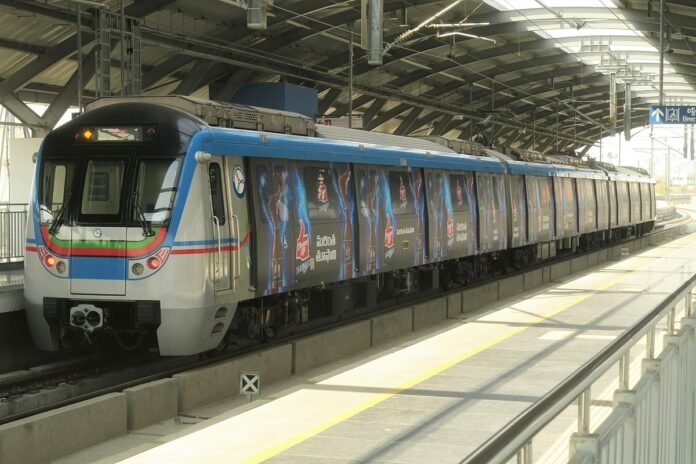
Hyderabad, the capital of Telangana, occupies 650 square kilometres of space in the Deccan Plateau. Known as the ‘city of Nizams’, Hyderabad is known for its rich cultural heritage, blending unique cultures with a touch of modernity. Celebrating a mix of religions, the Hyderabadi people celebrate every occasion with a north-south mix.
With a population of around 11,068,877, Hyderabad is the fourth most populous city in India. The city is well-known for its artistic work such as Golconda and Hyderabad painting styles which are branches of Deccani painting.
Showcasing the blend of culture, Hyderabad is one of the most visited cities due to its culture, cuisines, and educational hubs. It is an important learning centre in South India. Hyderabad metro is a saviour for locals and tourists to travel around and explore the city.
The Beginning of Metro in Hyderabad
Hyderabad is one of the most loved cities in India. Due to the rising population and tourists in the city, there was a pressing need for a transport system which led to the rise of Hyderabad Metro.
As Hyderabad’s population continued to rise, the state government of Telangana, in partnership with South Central Railway, introduced the Multi-Modal Transport System (MMTS) to address the growing demand for public transportation. Despite plans for MMTS Phase 2, the city’s rapid growth soon exceeded the system’s capacity. Recognising the need for a more comprehensive solution, the Union government approved the Hyderabad Metro Rail project in 2003.
Overview of Hyderabad Metro
Initially established under the Andhra Pradesh Municipal Tramways Act of 2008, the project was later brought under the Central Metro Act. This transition allowed for adjustments in fare structures and operational regulations.
Unique Features of Hyderabad Metro
After the Delhi Metro and Namma Metro, the Hyderabad Metro is the third longest operational metro network in India.
Hyderabad Metro is recognized as the world’s largest elevated metro rail system. The Hyderabad Metro is based on the DBFOT model, that is, Design, Build, Finance, Operate, and Transfer.
Planning and DPR of Hyderabad Metro
The Delhi Metro Rail Corporation (DMRC) was tasked with surveying the proposed lines for the Hyderabad Metro and preparing the Detailed Project Report (DPR). This comprehensive report included an assessment of feasibility, technical specifications, and financial projections, which laid the groundwork for the project’s development.
Funding and Construction of Phase 1
The estimated cost of the Hyderabad Metro Phase 1 is Rs. 18,800 crore. In 2007, the central government approved Rs. 1,639 crore as monetary aid through the Viability Gap Funding Project. In April 2012, the construction of Hyderabad Metro’s Phase 1 was started by L&T Metro Rail Hyderabad Limited. L&T Metro Rail Hyderabad Limited was established by the construction company Larsen & Toubro to develop the Hyderabad Metro Project.
Hyderabad Metro Project Underway
Phase 1 of Hyderabad Metro was scheduled to be fully operational by December 2015, however, the construction ended in February 2020. Phase 2 of Hyderabad Metro is currently in the proposal stage.
Bidding and Financials for Hyderabad Metro
In July 2008, the bidding process for the Hyderabad Metro concluded, and Maytas won the contract. However, by March 2009, Maytas failed to secure financial closure, leading the state government to cancel the project.
During the rebidding process in July 2010, Larsen & Toubro (L&T) won the project with the lowest bid of Rs. 121.32 billion. Against the approved funds of Rs. 48.53 billion, L&T offered to take on work for around Rs. 14.58 billion as viability gap funding.
The Hyderabad Metro project eventually received full financing from a consortium of 10 banks led by the State Bank of India. At the time, this arrangement represented the largest funding for a public-private partnership project in India, excluding power infrastructure.
Lines of Hyderabad Metro
Operational: 67 km | Under Construction: 0 km | Approved but Unbuilt (Phase 1): 5 km | Proposed (Phase 2): 70 km Estimated Cost of the Operational Project: Rs. 18,800 crore
Hyderabad Metro’s Operational Lines
Phase 1 (67 km)
Line 1 (Red Line): Miyapur – L B Nagar
Distance: 29.21 km
Stations: 27
Status: Operational since 2017
Elevated Stations (23)
Underground Stations (4)
Miyapur, JNTU College, KPHB Colony, Kukatpally, Balanagar, Moosapet, Bharatnagar, Erragadda, ESI Hospital, SR Nagar, Lakdikapul, Assembly, Nampally, Gandhi Bhavan, Osmania Medical College, MG Bus Station, Malakpet, New Market, Musarambagh, Dilsukhnagar, Chaitanyapuri, Victoria Memorial, L B Nagar
Raidurg, HITECH City, Durgam Cheruvu, Madhapur, Peddamma Gudi, Jubilee Hills Check Post, Road No 5 Jubilee Hills, Yousufguda, Taruni Madhura Nagar, Ameerpet, Begumpet, Prakash Nagar, Rasoolpura, Paradise, Parade Ground, Secunderabad East, Mettuguda, Tarnaka, Habsiguda, NGRI, Stadium, Uppal, Nagole
Hyderabad Metro’s Proposed Lines
Phase 2
The plan of Phase 2 of Hyderabad Metro is currently in the proposal stage. The DPR of the Phase 2 Hyderabad Metro was prepared by Delhi Metro Rail Corporation Limited and submitted to the Telangana Government in February 2020. The DPR was finalized in January 2024 by Telangana Chief Minister.
The construction of Hyderabad Metro’s Phase 2 is solely handled by the state government of Telangana. Hyderabad Metro’s Phase 2 will include 6 elevated corridors. These corridors will be the extensions of the existing lines of Phase 1.
Mallardevpally – Aramgarh – New High Court at Rajendra Nagar
Distance: 4 km
With a length of 70 km, the Detailed Project Report (DPR) of Phase 2 is ready. It will be put in the state cabinet for approval and later on to the Central government for sanctioning of funds.
Airport Metro Express Line
Also known as Corridor IV, the Hyderabad Airport Metro Express Line is a proposed semi-high-speed rail line that is planned to connect Mindspace Junction and Rajiv Gandhi International Airport in Shamshabad via 10 stations. The DPR of the Airport Metro Express Line is prepared by the Delhi Metro Rail Corporation (DMRC).
It is a 31 km Line that will be funded by the Telangana Government and executed by HAML (Hyderabad Airport Metro Ltd).
The Airport Metro Express Line was scrapped in 2024 but currently, it has again received a green light.
The foundation stone of the Hyderabad Metro Airport Express line was laid by the Chief Minister of Telangana.
2023
April
SYSTRA – RITES – DB Engineering JV declared as the preferred bidder for the contract of General Consultant.
July
Larsen & Toubro was declared as the lowest bidder of civil construction and system procurement of the Airport Express Line.
Hyderabad Metro Project’s Timeline
Date
Line
Distance
2017
November 29
Nagole – Ameerpet (Blue Line)
17.60 km
November 29
Miyapur – Ameerpet (Red Line)
12.20 km
2018
September 24
Ameerpet – LB Nagar (Red Line)
16 km
2019
March 20
Ameerpet – HITEC City (Blue Line)
8.5 km
November 29
HITEC City – Raidurg (Blue Line)
1.5 km
2020
February 7
JBS Parade Ground – MGBS (Green Line)
11 km
Contractors List
Contractor Name
Contract Details
Larsen & Toubro
90%
The Government of Telangana
10%
Key Specifications of Hyderabad Metro
Speed and Track
Maximum Speed: 80 km/h
Average Speed: 35 km/h
Track Gauge: Standard Gauge Track measuring 1435 mm
Safety and Electrification
Electrification: The metro is powered by a 25 kV, 50 Hz AC overhead catenary (OHE).
Signalling: The metro’s signalling system will be based on Communication-based Train Control (CBTC).
Rolling Stock
171 coaches (57 train set x 3)Hyundai Rotem
Daily Ridership
As of July 2024, the daily ridership of Hyderabad metro is 5,36,000.
Budget 2024 Updates
The Hyderabad Old City metro project has received an allocation of Rs. 500 crore in the State Budget announced by the Telangana government. The state government has also announced an allocation of Rs. 100 crore for the metro extension to the Airport.
Challenges Faced by Hyderabad Metro
1.Engineering Challenges
Engineers of Hyderabad Airport Metro are facing technical difficulties in the alignment of the airport metro. There are issues as the station falls on the critical stretch from Raidurg to Nanakramguda station. Engineers had to undergo a deep study to understand the route’s area that is, flyovers, underpasses, and high-rise buildings.
2. Poor Frequency
The Green line faces frequency issues. The daily ridership of the Green Line is around 25,000 passengers, while that of the Blue Line is 32,000 passengers. The green line experiences lower frequency due to the time frame of 13 to 20 minutes between metros.
Benefits of Hyderabad Metro
1.Reduced Road Congestion
Metro is considered as an efficient public transport. It is the best alternative to reduce traffic on the road as people prefer the metro for mobility due to convenience. Due to the Hyderabad Metro, more people travel easily to avoid traffic and reach their destination on time.
2.Economic Growth
Metro has helped to raise the GDP of the city. With the metro as a transport facility, many people migrated to the city due to education and job opportunities. With the rise in the metro, there is also a rise in educational institutions, healthcare centres, and job opportunities for both individuals and businesses.
3.Impact on Real Estate
The residents and businesses have benefited the most from the construction of the metro in the city. There is a significant rise in property values, mostly in the areas having access to the metro.
Conclusion
The Hyderabad Metro has significantly contributed to the city’s infrastructure. It offers a reliable, fast, and eco-friendly mode of transportation while addressing the needs of a rising population. The metro project supports the city’s ambitious growth plans. As new phases and extensions are on the way, including the links to the airport and other critical areas, the metro system will continue to play a crucial role in enhancing connectivity, reducing travel times, and supporting sustainable urban development.
With the commitment to improve its service and expand its reach, the Hyderabad Metro is a cornerstone of the city’s transit network, driving its economic and social progress into the future.
Known as the financial capital of Uttar Pradesh, Kanpur is a large industrial city located in the central-western part of Uttar Pradesh. Founded in 1207 A.D., Kanpur is situated on the south bank of the river Ganga and is home to historical monuments such as the Jamuna Ghat, Bhitargaon Temple, Nanarao Park, and European Cemetery.
Kanpur is known for attractions such as Green Park, Allen Forest Zoo, JK Temple, and Jagannath Mandir, the city attracts many tourists. The city is also famous for its street foods such as Sultani Daal, Shami Kebabs, and Basket Chaat.
Known as India’s 12th most populous city, the 2011 census revealed Kanpur’s population to be 45,81,000 and the projected population as of 2024 is 32,86,000. The city is known for its well-established educational institutions such as IIT Kanpur. These institutions attract more students in the city and provide job opportunities to many people.
The Need for Metro in Kanpur
As of June 2017, Kanpur had the highest number of vehicles. It had 1.6 million vehicles registered under the Regional Transport Office (RTO). The concerns were on the rise for the exponential increase in the registered number of vehicles but the stagnant growth in the road network and transport facilities.
Due to the rising population and an urgent need for a safe and convenient public transportation facility in Kanpur, the Uttar Pradesh government initiated the Kanpur Metro project. The project began to make travelling around the city easy for the people.
Kanpur Metro Overview
Kanpur Metro is an under-construction urban Mass Rapid Transit System (MRTS) with 2 lines and 30 stations by Uttar Pradesh Metro Rail Corporation Limited (UPMRCL).
Approval
RITES prepared the Detailed Project Report (DPR) of 32.385 km route of Kanpur Metro. In March 2016, the DPR got approval from the state cabinet and by the central government on February 28, 2019.
The estimated cost for the project is Rs. 11,076.48 crores and 5 years were given for the completion of the project.
Funding: Phase 1 of Kanpur Metro is financed by the Government of India and the Government of Uttar Pradesh on a 50:50 basis. Also, India has taken a loan of EUR 650 million from the European Investment Bank which covers rolling stock and construction of Line 1 and Line 2 of the Kanpur metro. The loan was approved on July 15, 2020.
Opening of Priority Corridor
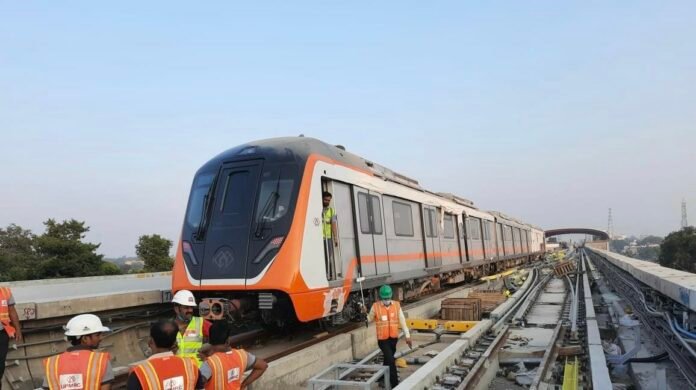
On November 15, 2019, the construction of the Kanpur Metro began. In December 2021, commercial operations began on 8.98 km long priority section which runs from IIT Kanpur to Motijheel. This section is a part of Orange Line.
Key Specification Of Kanpur Metro
Speed and Track
Maximum Speed: 80 km/h
Average Speed: 34 km/h
Track Gauge: Standard Gauge Track measuring 1435 mm
Safety and Electrification
Electrification: The metro is powered by a 750V DC Third Rail.
Signalling: The metro system will use communication-based train control (CBTC).
Rolling Stock
Alstom Transport will supply 39 trains. The trains will have CO2 sensor-based air conditioning system to ensure energy savings during the train operations.
Daily Ridership
As of 2024, the daily ridership of Kanpur metro is around 8000-10,000 passengers.
Estimated Cost
Rs. 11,076.48 crore
Train Length
3 coaches
Lines of Kanpur Metro
Operational: 8.728 km | Under Construction: 19.357 km | Approved: 4.08 km
Line 1 (Orange Line): IIT Kanpur – Naubasta
Distance: 23.8 km
Type: Elevated (15.164 km) & Underground (8.621 km)
Chunniganj, Naveen Market, Bada Chauraha, Nayaganj, Kanpur Central, Jhakarkatti, Transport Nagar, Baradevi, Kidwai Nagar, Vasant Vihar, Baudh Nagar, Naubasta
On July 10, the third rail system installation on the Up-line of the Chunniganj – Nayaganj section was completed. This advancement highlights the readiness of a approximately 14 km route on the up-line extending from IIT Kanpur to Naubasta. On July 12, 2024, UPMRC began a trial run of the Kanpur Metro from Moti Jheel to Nayaganj. The trial run was conducted at a low speed to test the interaction between the trains and the tracks.
Line 2 (Blue Line): Agriculture University – Barra-8
Updates- The project will be financed through a loan taken from the European Investment Bank.Tunnelling works are expected to begin in mid-2025.Piling work of the section started on July 2, 2024.
Kanpur Metro Project’s Timeline
Year
Details
2015
RITES prepared a detailed project report (DPR) for Kanpur Metro after conducting the feasibility study of the project.
2016
The state cabinet approved the DPR.
The central government approved the DPR.
2017
The Central government proposed a few changes in Line 1.
2018
The Uttar Pradesh cabinet approved the central inputs.
The finance ministry approved the Kanpur metro project.
2019
The Uttar Pradesh government allotted Rs. 175 crore to reinforce the preliminary work of Line 1.
Prime Minister Narendra Modi laid the foundation stone of the Kanpur Metro.
Afcons Infra was finalised to construct 9 stations of the Kanpur metro.
Yogi Adityanath, the Chief Minister of Uttar Pradesh, laid the foundation of the civil work for the Kanpur metro.
2020
The Chief Minister of Uttar Pradesh allocated Rs. 358 crore for the establishment of Kanpur Metro’s Line 1.
2021
Finance Minister Suresh Khanna made a provision of Rs. 597 crore for the Kanpur Metro.
Prime Minister Narendra Modi inaugurated the 8.7 km priority corridor of Kanpur Metro. The corridor is from IIT Kanpur to Moti Jheel.
2024
The rest of the corridor of Line 1 is expected to be completed by November.
KNPCC-02(R1): Construction of IIT Kanpur – Moti Jheel
Sam (India) Builtwell Pvt. Ltd.
KNPCC-04: Architectural finishing at 9 stations between IIT Kanpur – Moti Jheel
Gulermak – Sam India JV
KNPCC-05: Construction of 3.9 km tunnels and 4 stations at Chunniganj, Naveen Market, Bada Chauraha and Nayaganj (Line 1)
Afcons – SAM India JV
KNPCC-06: Construction of 4.6 km tunnels and 3 stations at Kanpur Central, Jhakarkatti and Transport Nagar (Line 1)
Kalpataru Projects International Ltd (KPIL) (formerly JMC Projects)
KNPCC-07: Construction of 5.4 km elevated viaduct and 5 stations at Baradevi, Kidwai Nagar, Vasant Vihar, Baudh Nagar & Naubasta (Line 1)
KPIL – Gulermak JV
KNPCC-11: Construction of 3.2 km tunnels and 3 stations at Rawatpur, Kakadeo and Double Pullia (Line 2)
Ceigall India Ltd. (CIL)
KNPCC-12: Construction of 4.3 km viaduct 5 stations at Agriculture College, Vijay Nagar Chauraha, Shastri Chowk, Barra-7 Station and Barra-8 (Line 2)
KSM Bashir Mohammad & Sons
KNPCC-14: Construction of Agriculture Depot (Line 2)
Sterling Wilson – GSC JV
KNPE-1&2: 750 Volts DC Third Rail Rail Traction System, 33kV Cable Network, ASS, TSS & SCADA System
Larsen & Toubro
KNPAGT-3: Supply of ballastless track for Kanpur Metro
HFCL Ltd.
KNPAGS-1: Telecommunications (Telecom)
State Bank of India (Aurionpro)
KNPAFC-01: Automated Fare Collection (AFC) System on PPP
Recent Updates
Kanpur Metro saved approximately Rs. 12 lakh in July by implementing an innovative cost-reduction model. The model involves booking slots on the Indian Energy Exchange to secure electricity at fixed lower rates with a powered source from the National Grid based on availability.
Introduction of GoSmart Card
State Bank of India and UPMRC have introduced the GoSmart Card to allow hassle-free travel to passengers. The EVM chip-based card can be recharged with a minimum amount of Rs. 100. The passengers using the card will get the benefit of a 10% discount on every ride.
Challenges Faced by Kanpur Metro
1.Low Revenue Generation
The Kanpur Metro estimated daily ridership to be around 6 lakhs around 2023-24. However, the daily ridership of Kanpur metro is 8000-10,000 passengers. This impacts the revenue of the metro and leads to losses.
2.Traffic Rerouting
Due to the construction of various metro lines, especially the elevated lines, there is a need to reroute the traffic to facilitate construction activities and avoid any accidents.
3.Increasing Demand for Line 2
Currently, the Kanpur Metro operates between IIT Kanpur and Motijheel. However, there is public demand for extending access to Line 2 (Agriculture University to Barra 8), which is still under construction. Also, Line 1 already had a well-established public transportation system and constructing a metro on that route on a priority basis did not prove to be a good move.
Benefits of Kanpur Metro
Impact on Real Estate Prices
Kanpur is one of the largest cities in India with various industrialists and businessmen. Due to the high population and private vehicles on the roads, the city experiences road congestion regularly. The Kanpur metro has helped to reduce road congestion and the real estate business to grow. The prices of properties near the stations have gone up by 8-10%.
Impact on Real Estate Prices
The Kanpur metro aims to enhance the mobility within the city. People can reach their destination on time while avoiding the traffic congestion. The metro will boost public transportation, majorly in Corridor 2 of the Kanpur metro.
Conclusion
The Kanpur Metro is a significant step towards the urban infrastructure of Uttar Pradesh’s largest and most vibrant city, Kanpur. With its intricate network of elevated and underground lines, the metro system is set to reduce the traffic congestion on the Kanpur roads. Though the project has faced challenges such as lower-than-expected ridership and traffic disruptions during construction, its potential benefits are substantial.
By enhancing mobility and reducing travel times, the Kanpur Metro aims to improve the daily lives of residents and boost economic activities. The project is also expected to have a positive impact on real estate values and contribute to a more sustainable urban environment. As the metro system continues to expand, it will play a crucial role in shaping the future of Kanpur, making it a more connected, efficient, and dynamic city.
Delhi ( Metro rail news ): In August, YFC launched the first U-Girder for the 23.63 km long Golden line of Delhi metro phase 4 under package DC-04.
In August 2020, YFC started casting U-girders package DC-04 in their yard at Pushp Vihar. The length of the U-girder is 28m long.
Package DC-04 (DMRC)
Package DC-04 is 4.28 km long and connects Saket G Block to Sangam Vihar. The U-Girder has been installed at the ramp area of Saket city’s Forest. This ramp will connect the 6.51 km underground package DC-09 under the contract of Larsen and Toubro.
Package DC-04 is the only elevated package on the Golden Line of the Delhi Metro, including a 2.4 km double-decker for vehicles and a metro on Mehrauli Badarpur Road between Sangam Vihar and Ambedkar Nagar metro station.
In December 2019, Delhi Metro Rail Corporation (DMRC) awarded Package-04 to the YFC with an estimated cost of Rs. 726.08 crore with a deadline of 3 years.
Work description
YFC’s work scope includes building an underpass at Saket G-Block, 2 lane underpass from Mehrauli-Badarpur Road to Lal Bahadur Shastri Marg, emergency siding lines and 4 elevated stations at Sangam Vihar, Khanpur, Ambedkar Nagar and Saket G Block.
Moreover, the Golden Line (Line 10) of the Delhi Metro connects Aerocity to Tughalakbad, featuring 15 stations ( 4 elevated and 11 underground) and connecting to other lines of Delhi Metro.
The Golden Line is under construction and witnessing many developments so far.
Thane( Metro Rail News): On 5 September 2024, STUP Consultants Pvt. Ltd grabbed the Design Consultant (DDC) contract for the 29 km Thane Metro project by Maharashtra Metro Rail Corporation Ltd. (MMRCL).
Scope Of Activity
The scope of work under this contract includes the detailed design consultancy services for Thane Metro’s 6 elevated stations:
Dr. Kashinath Ghanekar Natyagraha
Manpada
Dongripada
Vijay Nagari
Waghbil
Waterfront
Maha-Metro invited bids for the DDC-01 contract in August with an estimated budget of Rs. 3.82 crore and a deadline of 36 months. In August, Technical bids were opened, revealing 5 bidders who submitted proposals for the contract.
Financial Bids Received
The financial bids received for the tenders are:
Company
Bids Received
STUP Consultants
1.35 Cr
LKT Engineering Consultants
2.11Cr
Enia Design – Mahendra Raj Consultants
3.51Cr
SYSTRA MVA Consulting (India)
3.75 Cr
RITES
3.85 Cr
Thane Metro
Thane Metro, also referred to as Thane Integral Ring Metro Project, was approved for construction in August by the Central Government’s Cabinet with an estimated budget of Rs. 12,200 crore with a 2029 deadline.
Thane metro project consists of single corridor spanning for 29 km with 20 elevated stations and 2 underground station
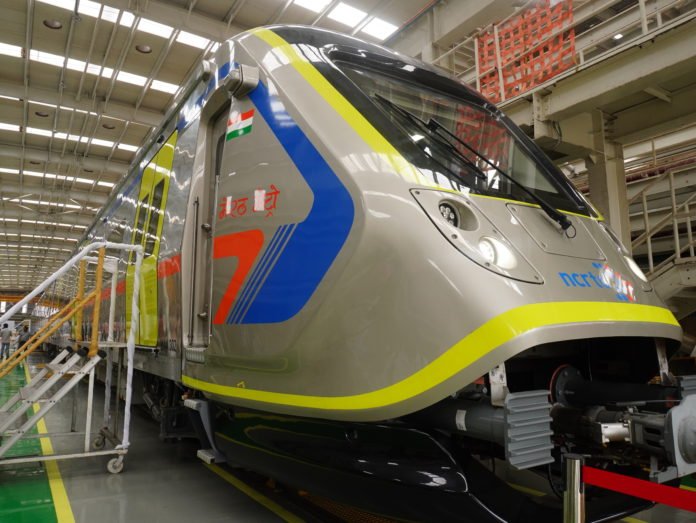
Shri Shalabh Goel, Managing Director, NCRTC, unveiled the modern, commuter-centric features of Meerut Metro, today, at RRTS Depot, Duhai, Ghaziabad. Meerut Metro, a pioneering urban Mass Rapid Transit System (MRTS), aims to provide a safe, fast, and modern mobility solution for the residents of Meerut, Uttar Pradesh.
NCRTC MD Shalabh Goel
On this occasion, Shri Shalabh Goel said, “Meerut Metro will revolutionize the city’s transportation, enhancing connectivity, productivity, and overall quality of life. By providing a modern, reliable, and fast transit system, it will reduce travel time, alleviate traffic congestion, and foster economic growth. NCRTC has focused on understanding the commuter needs in detail and customized the features of this new-age transit mode, to ensure utmost comfort and efficient journeys for the people.”
Under the Make in India guidelines, 100% of the trainsets for Meerut Metro are being manufactured in India. M/s Alstom (formerly M/s Bombardier) was awarded the manufacturing contract, under which they will deliver the three-car trainsets for the Meerut Metro, bundled with rolling stock maintenance for 15 years. These world-class trainsets are being manufactured in Savli, Gujarat. To date, five Meerut Metro trainsets have been handed over to NCRTC
Key Specifications of Meerut Metro
The Meerut Metro train will have a design speed of 135 kmph and a maximum operational speed of 120 kmph. The trainsets, with their sleek and state-of-the-art modern light weight design, built with stainless steel, are energy efficient and equipped with a regenerative braking system. They are also compatible with Automatic Train Protection (ATP) and Automatic Train Operations (ATO)
Commuter-Centric Features of Meerut Metro Trainsets
Meerut Metro’s design embodies a modern aesthetic, prioritizing passenger comfort, safety, and security. The coaches are air-conditioned, having luggage racks, grab handles, CCTV cameras, USB mobile charging facilities, dynamic route maps, and many other modern conveniences.
Meerut Metro are three-car trainsets with ergonomically designed 2×2 transverse and longitudinal seating arrangements with comfortable cushioned seats. More than 700 passengers can travel in a train, with a seating capacity of 173.
Prioritizing safety, Platform Screen Doors (PSDs) will be installed at all stations synchronized with metro operations and also help in ensuring crowd management. Selective door opening via push buttons reduces energy consumption.
Safety measures like passenger emergency communication system, fire extinguishers, alarms, and talk-back systems are integrated.
There will be a specific reserved seating arrangement in each coach of the metro train for women passengers and senior citizens.
Both stations and trains are universally accessible, with dedicated space for medical stretchers/ wheelchairs in emergencies. The metro stations also have spacious lifts to accommodate medical stretchers and wheelchairs.
The exterior of Meerut Metro trainsets sports an attractive and modern color combination of fluorescent green, blue, and orange that conveys technological advancement and the aspirations of the people of a ‘New India.’
In an innovative approach, the Meerut Metro will operate on the same RRTS infrastructure from Meerut South to Modipuram. This integration is vital for providing a holistic and seamless new-age public transit mode for the people of western Uttar Pradesh. At four of these stations, commuters will be able to switch to Namo Bharat train services and vice versa. These stations will be Meerut South, Shatabdi Nagar, Begumpul, and Modipuram. This innovative approach has led to significant savings in terms of construction cost of infrastructure viz OHE, viaduct, track, signalling etc.
The Meerut Metro corridor spans 23 km with 13 stations, including 18 km of elevated and 5 km of underground sections. Nine stations are elevated, three are underground, and one station (depot station) will be at grade. This 23 km distance will be covered by these modern trainsets within 30 minutes. The stations are Meerut South (elevated), Partapur (elevated), Rithani (elevated), Shatabdi Nagar (elevated), Brahampuri (elevated), Meerut Central (underground), Bhaisali (underground), Begumpul (underground), MES Colony (elevated), Daurli (elevated), Meerut North (elevated), Modipuram (elevated), and Modipuram Depot (at grade).
Speaking on the occasion, Shri Shalabh Goel added, “The RRTS and Meerut Metro project is progressing at a rapid pace, and we are confident of delivering the project for the people of the region as per schedule. We are thankful to the Government of India and Government of Uttar Pradesh for their continuous support for the project and also creating an encouraging development-focused ecosystem.”
Construction of the Meerut Metro corridor is progressing rapidly, and all the stations have started taking shape. Underground tunnel construction has been completed, and finishing works are being done at all the underground stations. Track laying activities are currently in progress on already completed tunnels and viaducts. Out of the 18 km long elevated section, viaduct construction is almost completed till Modipuram station.
On October 20, 2023, the Hon’ble Prime Minister inaugurated India’s first Regional Rapid Transit System and flagged off the first Namo Bharat train. With this, the 17-kilometer-long Priority Section between Sahibabad and Duhai Depot was operationalized for the public. Currently, about a 42 km long section between Sahibabad and Meerut South is operational for commuters, with 9 RRTS stations. The entire RRTS corridor along with Meerut Metro is expected to be operational by 2025.
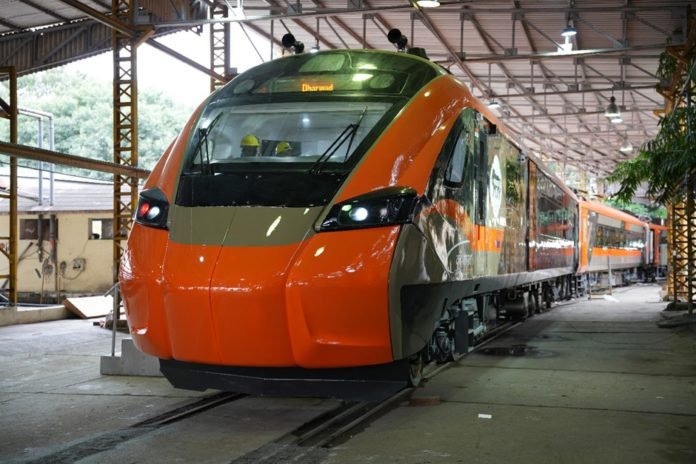
Jindal Stainless, India’s leading stainless steel manufacturer, has delivered stainless steel for the Vande Bharat sleeper coaches, the prototype of which was unveiled by the Minister of Railways, Shri Ashwini Vaishnaw, in Bengaluru recently. Jindal Stainless has supplied high-strength tempered 301L grade austenitic stainless steel for this prestigious government project. The coaches are manufactured by Integral Coach Factory (ICF) and Bharat Earth Movers Limited (BEML). The Vande Bharat sleeper train is designed for overnight journeys covering 800 km to 1,200 km.
Apart from providing better performance and durability, the tempered 301L austenitic stainless steel used to manufacture these coaches ensures lower life-cycle costs due to its corrosion resistance characteristics, resulting in long-term reliability. It also enhances passenger safety with its superior crash and fire resistance properties, maintaining the safety standards in railway transport.
In a Press Release,, Managing Director, Jindal Stainless, Mr Abhyuday Jindal, said “The Vande Bharat sleeper train is set to mark a new era of innovation in Indian Railways, and we are proud to play a pivotal role in this transformative project that will revolutionise long-distance travel in India. The use of tempered 301L austenitic stainless steel will lead to reduction in the weight of each coach by approximately 2 tonnes. This weight reduction will lead to improved energy efficiency and a lower carbon footprint, aligning with the sustainability goals of modern rail transport. The enhanced safety and aesthetic appeal of this new train symbolises innovation and engineering excellence of the Indian Railways.”
With the capability to achieve speeds of up to 160 km/h, these coaches will provide an unparalleled combination of mobility, comfort, and contemporary amenities. The first batch of coaches is scheduled for dispatch from BEML’s Bengaluru plant on September 20, 2024, with an official launch anticipated by December 2024.
Jindal Stainless is one of the leading global companies capable of manufacturing and supplying the highly-coveted 2J, No. 4, and DLT-DF special-finish stainless steel, required for metro and railway coach production. The company has delivered stainless steel for some of the most prestigious Indian railway projects, including Vande Metro, Kolkata’s underwater metro, the first train set of India’s first Regional Rapid Transit System (RRTS), and Mumbai metro, among others. The company has been supplying stainless steel to the Indian Railways since 1998 for wagons, coaches, infrastructure, etc.
About Jindal Stainless
India’s leading stainless steel manufacturer, Jindal Stainless, had a consolidated annual turnover of INR 38,562 crore (USD 4.7 billion) in FY24 and is ramping up its facilities to reach 4.2 million tonnes of annual melt capacity by 2026. It has 16 stainless steel manufacturing and processing facilities in India and abroad, including in Spain and Indonesia, and a worldwide network in 12 countries, as of March 2024. In India, there are ten sales offices and six service centres, as of March 2024. The company’s product range includes stainless steel slabs, blooms, coils, plates, sheets, precision strips, wire rods, rebars, blade steel, and coin blanks.
Jindal Stainless relies on its integrated operations to enhance its cost competitiveness and operational efficiency. Founded in 1970, Jindal Stainless continues to be inspired by a vision for innovation and enriching lives and is committed to social responsibility.
Jindal Stainless remains focused on a greener, sustainable future, fuelled by environmental responsibility. The company manufactures stainless steel using scrap in an electric arc furnace, which involves lower greenhouse gas emissions and enables recyclability with no reduction in quality.
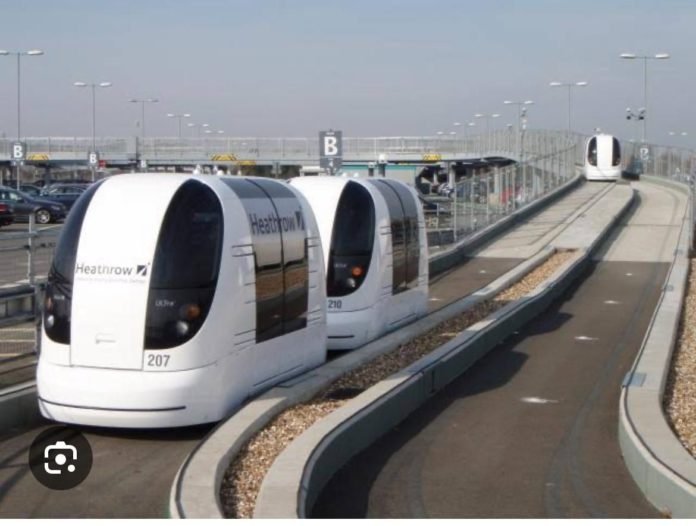
Mumbai (Metro Rail News): To streamline the connectivity in the Bandra-Kurla Complex (BKC) region and address the needs of the 4 to 6 lakh commuters who travel daily to and from the business district, Mumbai Metropolitan Region Development Authority (MMRDA) is planning to launch an Automated Rapid Transit System (Pod Taxi).
Representational Image
Sai Green Mobility Pvt Ltd, with M/s. Ultra PRT, as the technology partner, is likely to execute this project on a public-private partnership basis, with MMRDA providing the right way and the concessionaire bringing in the entire project funding. This initiative branches from a comprehensive Techno-Economic Feasibility Study (TEFS) commissioned by MMRDA, which studied several technologies operational across the globe.
Significance of Project
The study, which was peer-reviewed by Tata Consulting Engineers, strongly recommended implementing the Pod Taxi system for the Bandra Kurla Complex (BKC). This recommendation was based on a detailed analysis of the region’s topography, which is well-suited for such a system, as well as projections of traffic growth in the area. The Pod Taxi system was identified as an ideal solution to efficiently manage the anticipated increase in transportation demand while integrating with the existing infrastructure.
Fares for Pod Taxi System
Fares for the Pod Taxi system have been decided based on surveys that MMRDA conducted among current auto and bus passengers. Currently, commuters pay Rs. 15.33 per km for metered autos and Rs. 30 to 40 for shared auto rides per person to reach BKC from Bandra or Kurla. Taxi users are charged Rs. 18.67 per km, while Ola and Uber drivers frequently impose dynamic rates ranging from Rs. 80 to 100 for short 2-3 km journeys from the stations to BKC.
The surveys indicated that approximately 70% of auto users and 36% of bus passengers are ready to pay Rs. 21 per km for the Pod Taxi service. Consequently, the TEFS study suggested setting the fare at Rs. 21 per km, with a 4% annual increase to cover inflation and operational costs.
Approval From MMRDA
On March 6, 2024, MMRDA approved this project with an estimated cost of Rs. 1016.34 crore on a Public-Private Partnership (PPP) basis.
TEFS consultant developed the financial model for this project, which was further reviewed by M/s. TCE. The model anticipates a three-year construction period and a 30-year concession period, including provisions for a fixed concession fee and a percentage of revenue sharing with MMRDA.