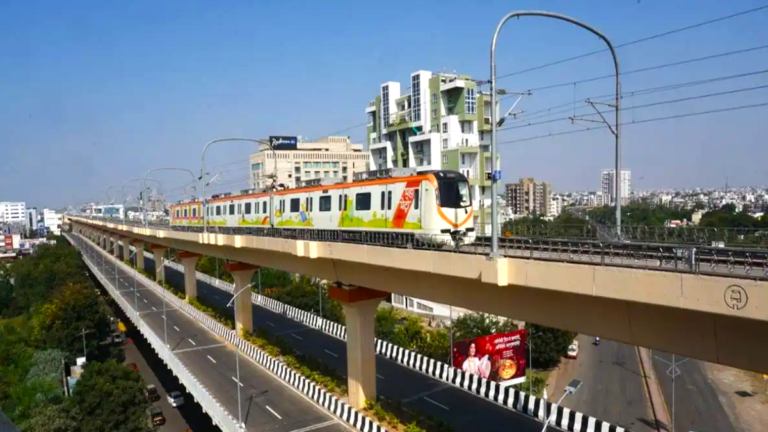
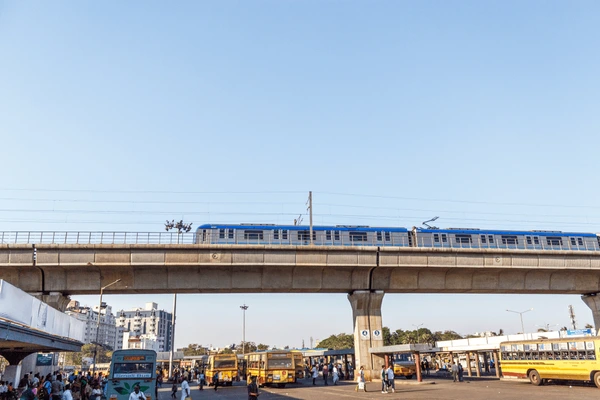
New Delhi: Prime Minister Narendra Modi has flagged-off the Delhi-Faridabad Metro Line that would allow hassle free travel for around two lakh daily commuters between the national capital and the industrial hub in Haryana.
The extension of the Delhi Metro connects Badarpur to Escorts Mujesar in Faridabad.
The total cost of the project from Badarpur to Escorts Mujesar is nearly Rs. 2,500 crore. Out of this, Rs. 1,557 crore was borne by the Haryana Government, the Centre contributed Rs. 537 crore, while the Delhi Metro provided Rs. 400 crore.
All these are elevated and located on either side of the Delhi-Mathura Road (NH-2).
“The nine-station metro corridor which was 95 per cent indigenously built will provide people a safe, affordable, quick, comfortable, reliable, environment-friendly and sustainable transport facility,” a Haryana government spokesperson said.
Haryana Chief Minister ML Khattar, addressing a press conference on Saturday, had thanked the Prime Minister for “gifting” the Metro service which would take the city to “another level of progress” with better connectivity with other NCR towns.
He had also said that the Prime Minister would be announcing the go-ahead for connecting Gurgaon with Faridabad by Metro.
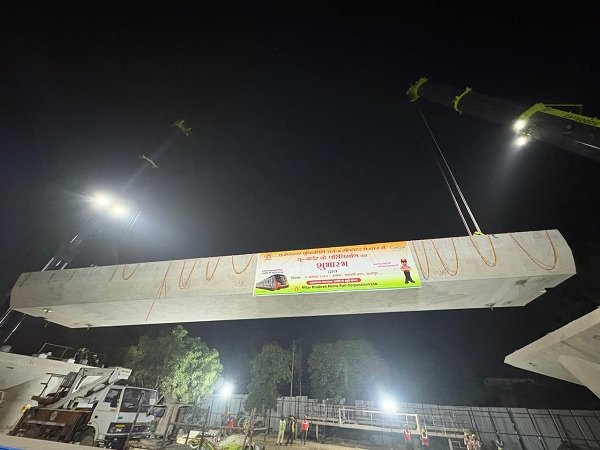
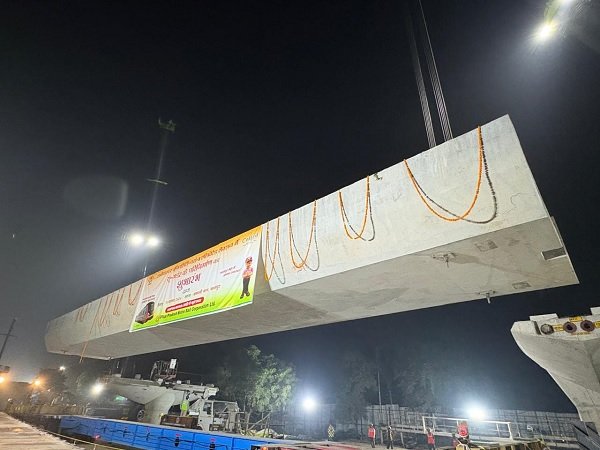
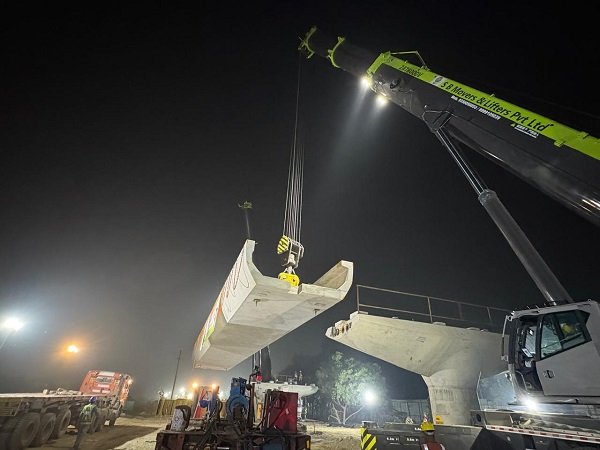
Kanpur (Metro Rail News): On November 11, Ceigall India successfully launched the first of 184 U-girders for Package KNPCC-12 on Kanpur Metro’s Line-2. The Line 2 spans 8.38 kilometres and connects Agriculture University to Barra-8 via eight stations. This milestone was achieved in the ramp area near the Agriculture Metro station and depot, which is currently under construction under Package KNPCC-14.
Package KNPCC-12 Of Kanpur Metro
Ceigall India was awarded package KNPCC-12 from UPMRC at Rs. 427.11 crore in March 2024 with a 30-month deadline. The scope of work under this package includes two separate elevated sections on either side of the underground package KNPCC-1, which connects the Agriculture Depot to the Double Pullia Ramp.
The southern portion of KNPCC-12 features a 3.75 km elevated section extending from Double Pullia Ramp to Barra 8 with 4 elevated stations at Vijay Nagar Chauraha, Shastri Chowk, Barra-7 Station and Barra-8. Additionally, to the north, beyond the Rawatpur Interchange Station, a shorter viaduct spanning 557.8 meters will be constructed, including an elevated station at Agriculture University adjacent to Line-2’s Agriculture University Depot.
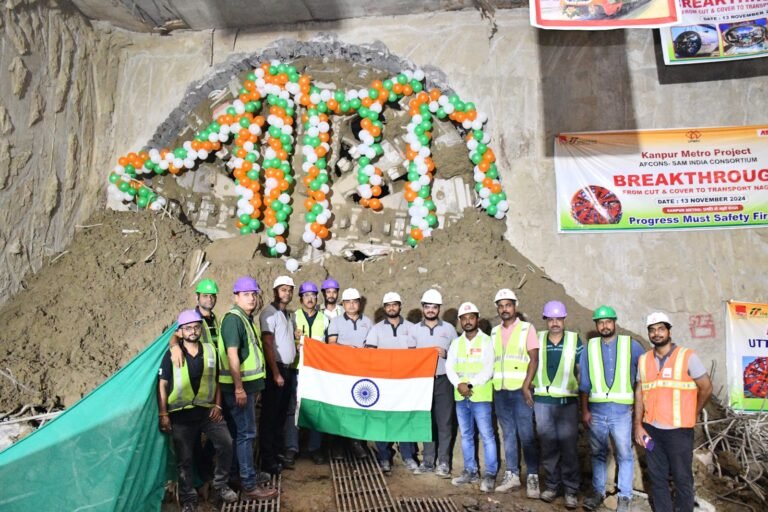
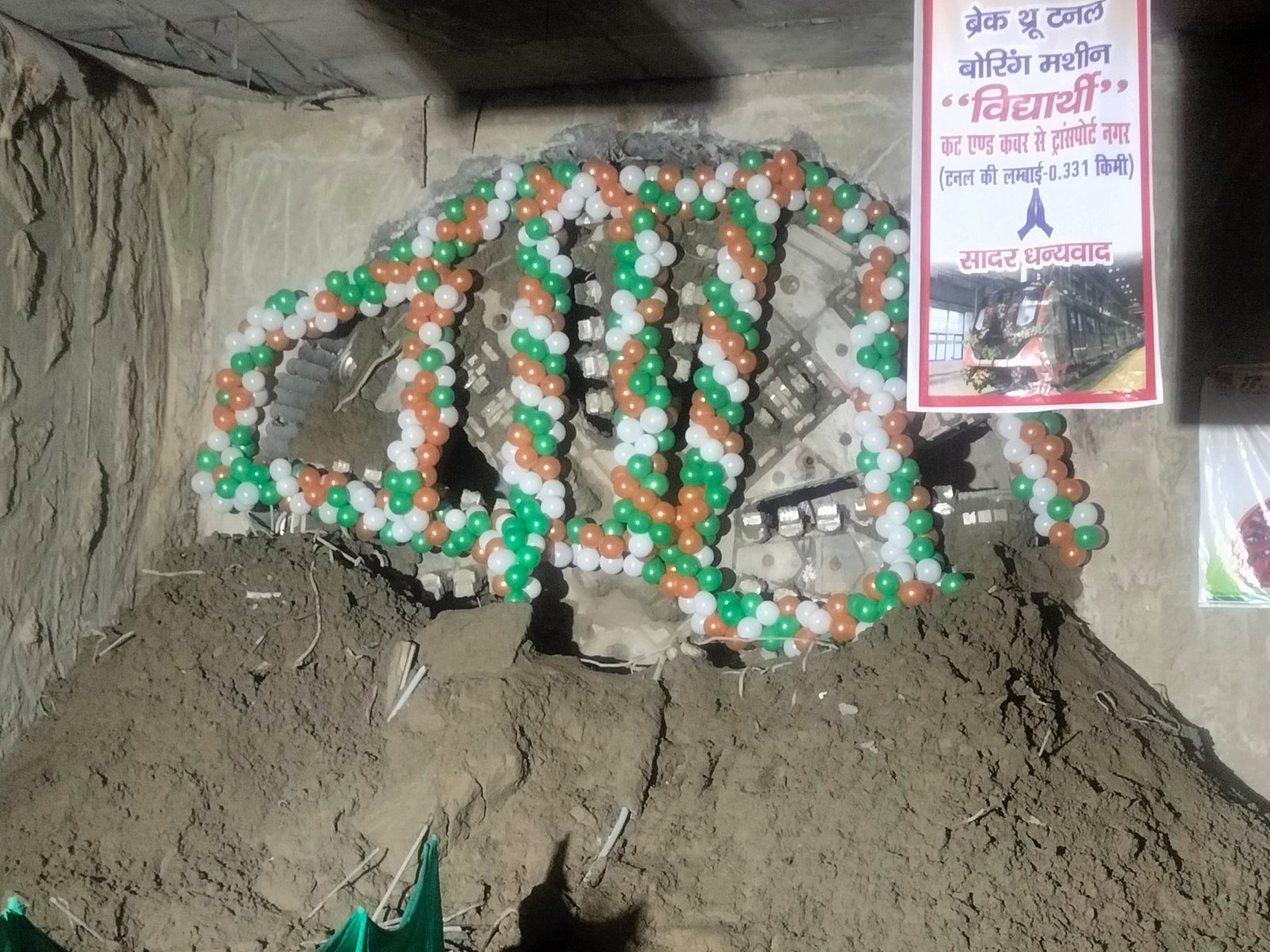
Kanpur ( Metro Rail News): Another milestone has been achieved for Kanpur Metro phase 1 as Afcons-Sam India Consortium’s TBM Vidyarthi recorded its second breakthrough at Transport Nagar Station of Line 1 under Package KNPCC-06.
This is the overall 4th breakthrough out of 8 breakthroughs planned under Package KNPCC-06.
TBM Vidyarthi’s Journey
TBM S-639B, nicknamed Vidyarthi, started its journey in December 2023 as the fourth TBM deployed for the construction of downline underground tunnels on Line 1 spanning 23.78 Km from IIT Kanpur to Naubasta.
Afcon Sam India Consortium grabbed package KNPCC-06 spanning 4.65 km approx from UPMRC at Rs. 1087.76 cores with a 36-month deadline.
The scope of work under this package includes the construction of underground tunnels at 3 stations from Nayaganj Station to Transport Nagar Ramp for Line 1 of Kanpur Metro.
#KanpurMetro: कानपुर सेंट्रल की तरफ बढ़ रही ‘विद्यार्थी‘ TBM ने ट्रांसपोर्ट नगर स्टेशन तक पूरा किया टनल निर्माण। डाउनलाइन पर 331 मी. लंबी टनल का निर्माण पूरा करने के बाद अब TBM को स्टेशन पर किया जाएगा 'ड्रैग'; झकरकटी स्टेशन होते हुए कानपुर सेंट्रल की दिशा में बढ़ेगी आगे। pic.twitter.com/tDLzLGgdb3
— Uttar Pradesh Metro Rail Corporation (@OfficialUPMetro) November 13, 2024
Stations:
Kanpur Central
Jhakarkatti
Transport Nagar
Future Prospects:
TBM Vidyarthi will be dragged from Transport Nagar Station towards Jhakarkatti for its third and final breakthrough for Package KNPCC-06.
Nagpur (Metro Rail News): On 12 November, Maha Metro opened the bids for package C-09 of the 43.8 km Nagpur Metro phase 2 project, revealing YFC Projects – BBG Infrastructure JV as the sole bidder for the contract.
Scope of Nagpur Metro Package C-09
The appointed contractor for this contract will be responsible for the construction of 8 elevated stations on Reach 1A, which is an extension of the Orange Line. The 8 stations are:
Ashokvan
Dongargaon
Mohgaon
Meghdoot CIDCO
Butibori Police Station
MHADA Colony
MIDC KEC and
MIDC ESR
Bidding Process
Maha Metro initiated the bidding for contract C-09 in April 2024 with an estimated cost of Rs. 258 crore and a 2.5-year deadline.
Funding Mechanism
Package C-09 will utilise funding from a $ 200 loan that was sanctioned by the Asian Development Bank in July 2024 for Nagpur Metro Phase 2.
The viaduct that will connect the stations on this package will be constructed by GR Infraprojects (GRIL) under package C-02, which is worth Rs. 903.53 crore.
The Process Ahead
It is likely that the bid submitted by YFC-BBG JV will undergo technical evaluation. Following the successful technical evaluation Maha Metro will reveal the financial bid for the contract.
Enia Design became the lowest bidder for the DDC-03 contract, which includes the development of various designs for all 8 stations.
Chennai (Metro Rail News): Chennai Metro Phase 2 advanced as Aurionpro Solutions, a leading technology provider in the transit and fintech space, grabbed the contract to supply Automated Fare Collection (AFC) systems for Phase 2 by Chennai Metro Rail Corporation Limited (CMRL).
The President & Global Head of Tech Innovation Group Sanjay Bali said “We are thrilled to announce this significant win and grateful to CMRL for entrusting us with this opportunity. This project further reaffirms our commitment to “Make in India”, with automated swing gates to be manufactured at our Ghaziabad facility. It positions us as the leading end to end provider of smart mobility solutions supporting the rapid development of India’s metro infrastructure and setting new standards for excellence in urban transit systems.”
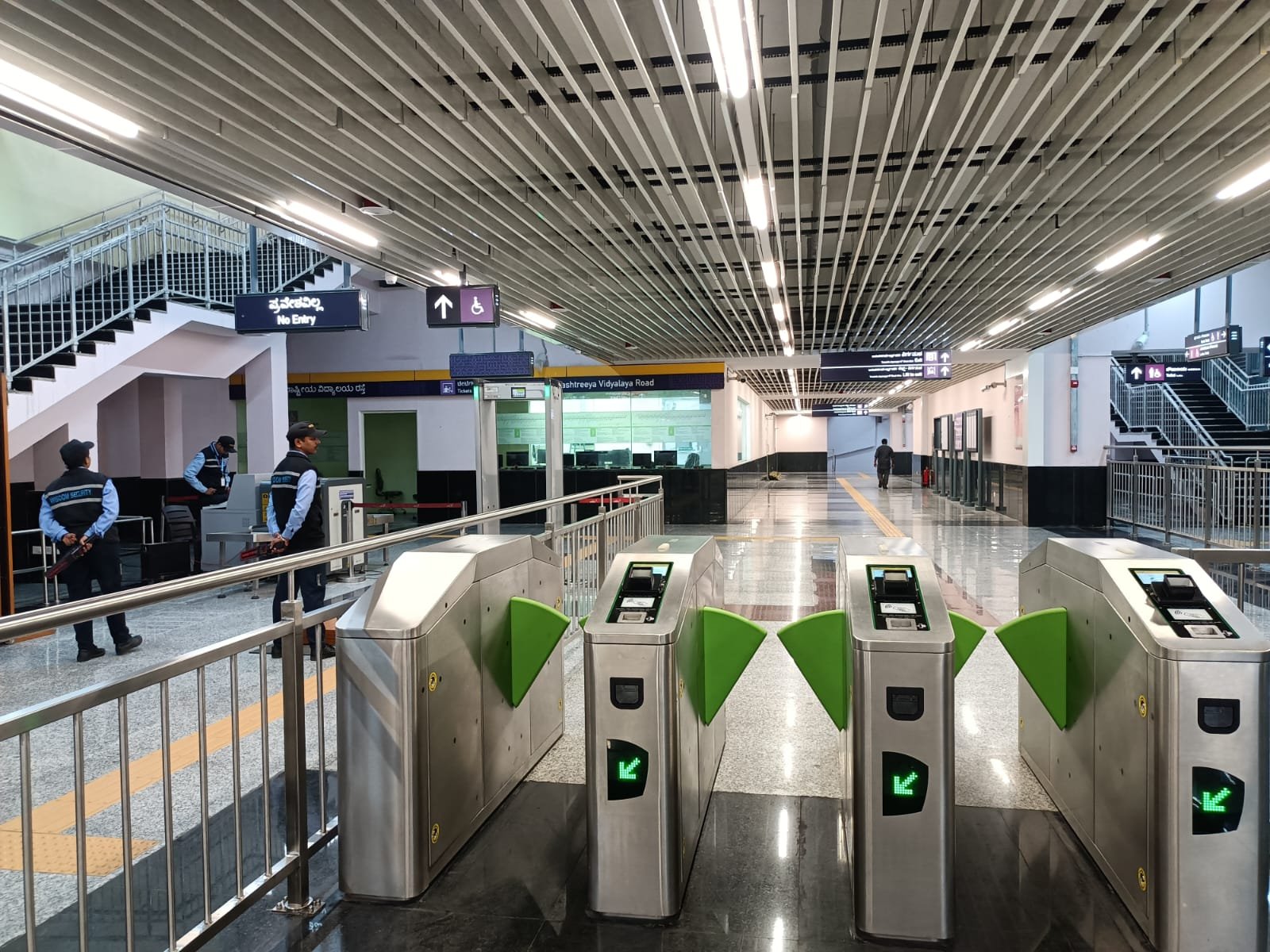
AFC system/Representational image, Photo by: Rohit Padole
Scope of work:
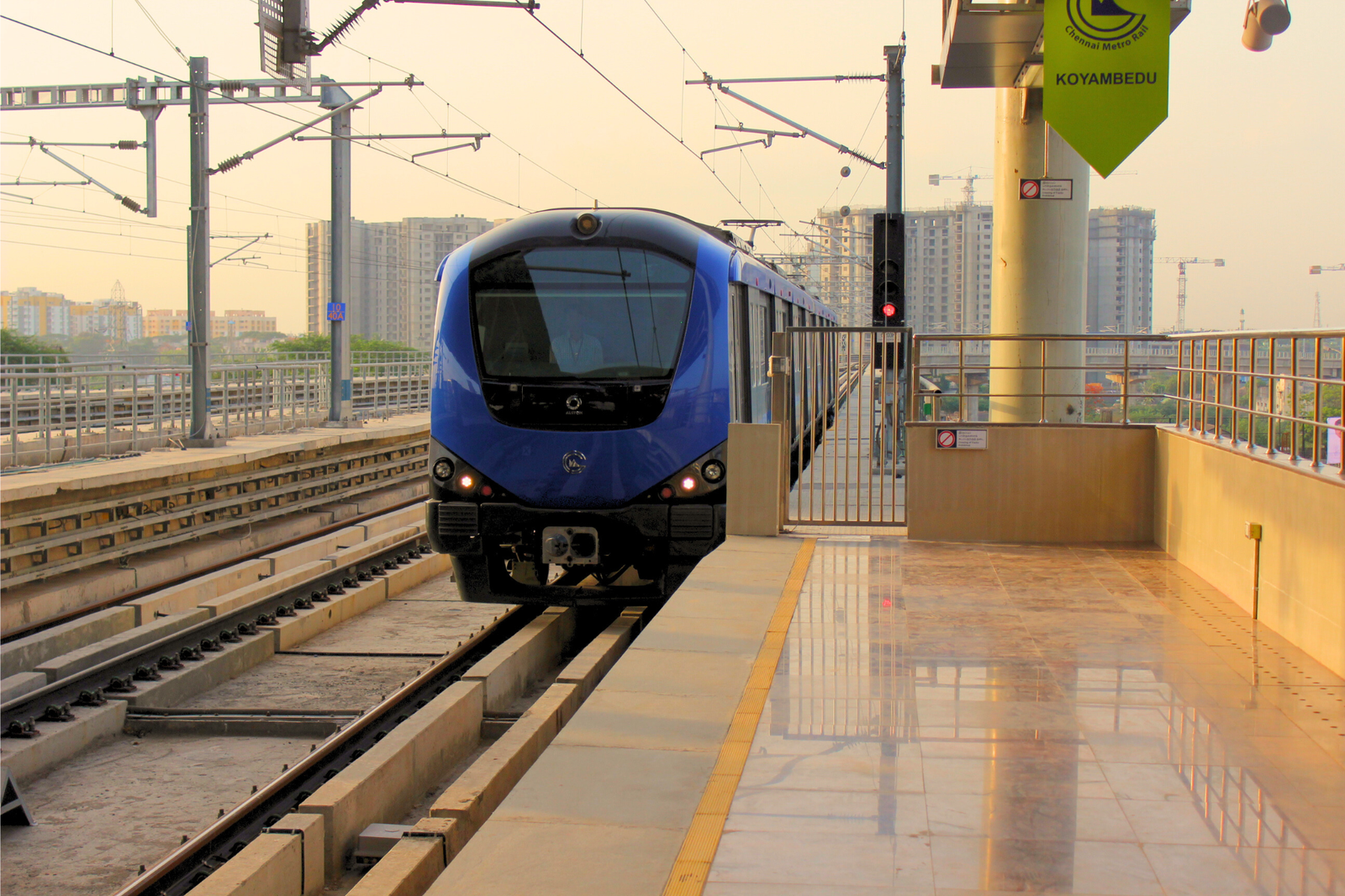
As per the Release, The scope of work under this contract includes the end-to-end delivery of station-level Automated Fare Collection (AFC) systems, encompassing design, manufacturing, supply, installation, testing, commissioning, training, and ongoing maintenance for Corridor 3 from Sholinganallur to Sipcot and Corridor 5 from Koyambedu to Elcot Park.
Aim of the Contract:
The AFC system will enhance the operational efficiency and passenger convenience by managing the large number of passengers by advanced, streamlined ticketing and fare management solutions.
The CMRL has been planning to increase the passengers convenience
Aurionpio has been aiming to support CMRL in setting a new standard of operation efficiency and passenger convenience by integrating innovative technology with seamless service.
Chennai Metro Phase 2
Chennai Metro phase 2 consists of 3 corridors spanning 116.1 km . The phase 2 was approved by the Tamil Nadu government in 2019 at an estimated cost of Rs. 69,180 crore.
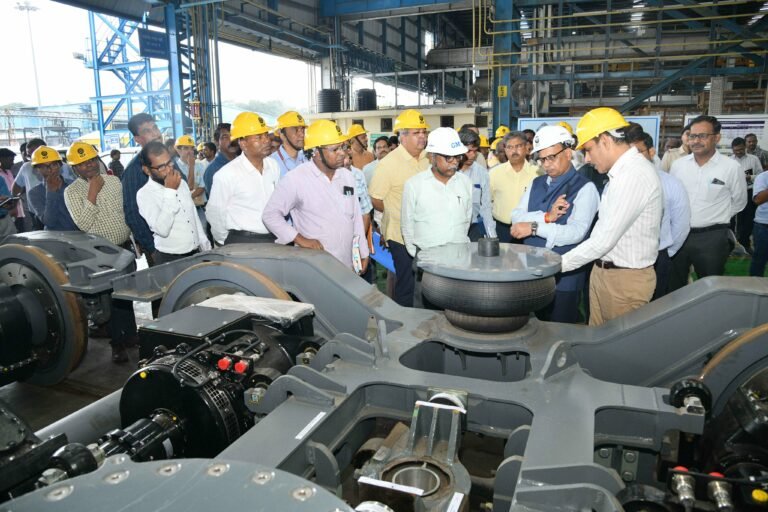
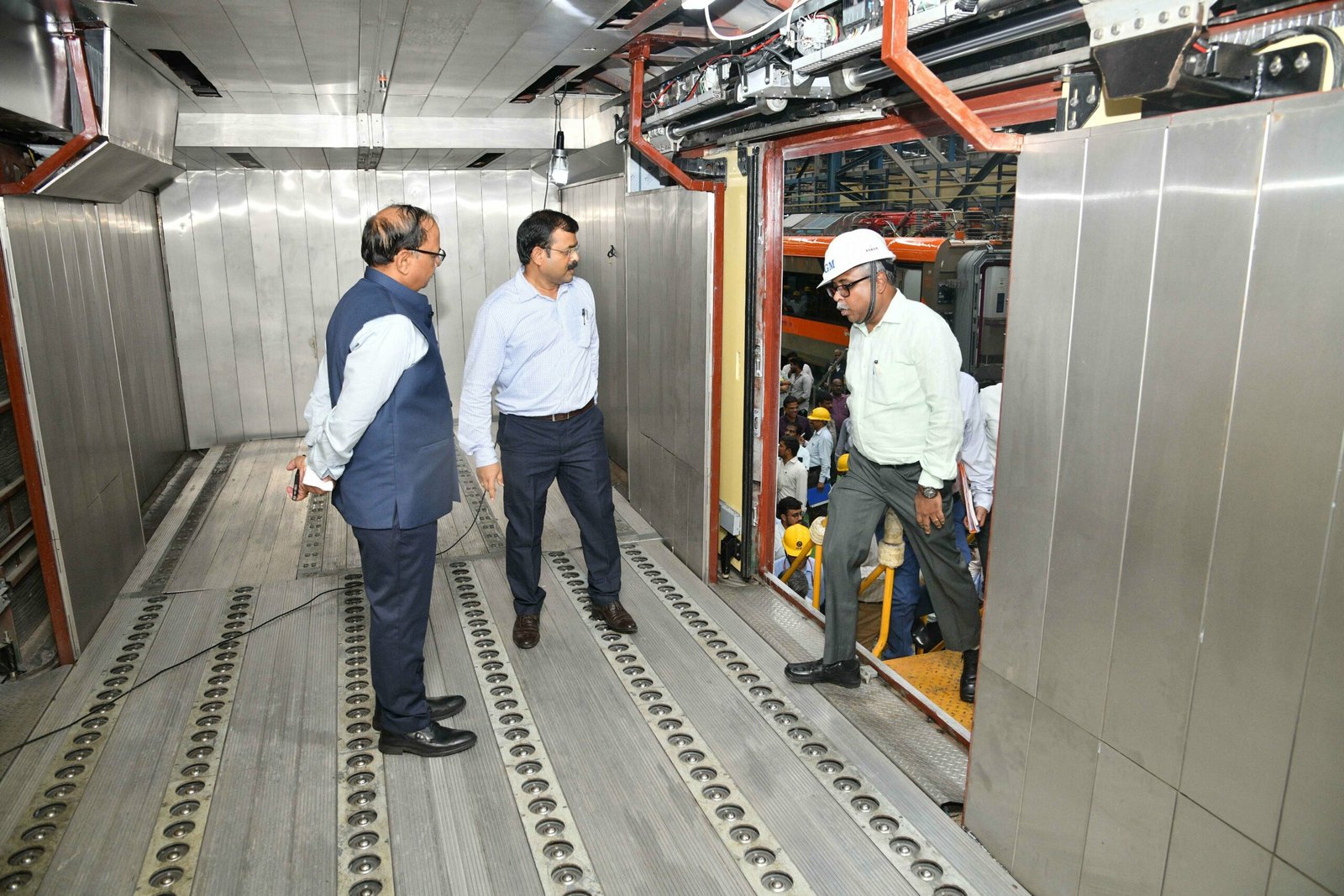
Chennai (Metro Rail News): Shri Braj Mohan Agrawal, Member of Traction & Rolling Stock of the Railway Board, conducted an inspection at the Integral Coach Factory situated in Chennai.
The inspection mainly focused on the Vande Bharat, Freight EMU, and Hydrogen Train manufacturing processes.
The inspection includes brief reviews about the Vande Bharat sleeper rakes and Amrit Bharat Coaches.
He also inspected the Hydrogen Train DPC Shells and Amrit Bharat (Version 2.0) coaches in the DPRS shed.
Shri Agarwal’s inspection reinforced the Railway Board’s commitment towards innovation and modernisation in Indian Railways.
(Metro Rail News): Sona BLW Precision Forgings Ltd. (Sona Comstar), a leading provider of global mobility technology solutions, has entered into a ₹1,660 crore agreement to acquire the Railway Equipment Division (RED) of Escorts Kubota Ltd. (EKL).
This acquisition not only increases Sona Comstar’s commercial value but also signifies its entry into the railway components market.
Mr. Vivek Vikram Singh, MD & Group CEO of Sona Comstar, mentioned “We are delighted to step into the railways components sector with the signing of the agreement to acquire the Railway Equipment Division of EKL. The proposed acquisition of the Railway Equipment Division aligns with our vision statement as we expand into the broader mobility sector. Once completed, the ‘Railway Equipment Division’ acquisition will enhance our clean mobility product offerings by adding a market-leading railway components business. The railway industry presents long-term growth opportunities, and with the ‘Railway Equipment Division’ business, we see significant potential to broaden our product range by incorporating advanced technology and engineered products”.
The transaction will involve the acquisition of RED as an operational entity through a slump sale. The Railway Equipment Division (RED) of Escorts Kubota Ltd. (EKL) is a well-known provider of railway components. It made INR 950 crore in revenue and INR 179 crore in EBIT in FY24. From the first year of operation, Sona Comstar should see an increase in earnings as a result of the acquisition.
Strategic Importance:
Given India’s growing railway infrastructure, fast urbanization, and rising investment in the industry, Sona Comstar’s debut in the Indian Railways Components market offers promising growth opportunities.
Brief about RED in the Market
With more than 60 years of experience in the field, RED has long been a reliable partner for private OEMs and Indian Railways.
It is the only domestic company with silver-grade IRIS certification for brake systems and one of the few in India that have various products certified by Indian Railways.
RED specializes in the design, development, and testing of several vital railway components and has a 600,000-square-foot plant in Faridabad.
Growth Dynamics:
HVAC systems, electrical control panels, vacuum evacuation systems, and automated plug doors are just a few of the new goods that RED is producing in large quantities.
The company is a market leader in India because of its wide range of products, which includes brakes, couplers, suspension systems, and friction and rubber goods.
Over the last five years, RED has demonstrated remarkable development, with sales rising at a compound annual growth rate (CAGR) of 19% and EBIT growing at a CAGR of 18%.
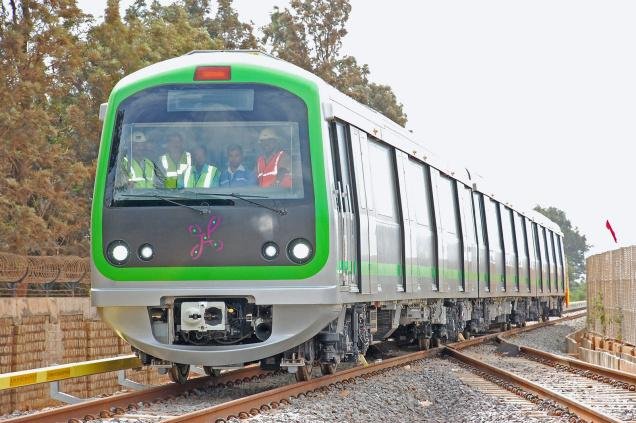
Bangalore (Metro Rail News): The operations on the much-awaited Nagasandra -Madavara extension of the Green Line of the Bangalore metro finally began on 7 November. However, the official inauguration will be held later.
As per the Release, the Hon’ble Deputy Chief Minister, Government of Karnataka, along with Hon’ble MP, Bengaluru South, Hon’ble MLAs & other dignitaries travelled in Metro Train from Yeshvanthpur to Madavara and inspected the Reach 3 Extension line of 3.14 km and three stations from Nagasandra to Madavara (BIEC).
Deputy CM @DK Shivakumar, Bangalore South MP @Tejasvi Surya, and other dignitaries travelled on the Nagasandra-Madavara metro line before its public launch. The 3.14 km stretch opens today, with fares from ₹10 to ₹60, running 5 AM to 11 PM. pic.twitter.com/u0rEwuRYf4
Bangalore Metro’s Green Line Nagasandra- Madavara extension spans 3.7 km, covering 3 stations and was constructed at a cost of Rs 298 crore.
Stations covered:
Manjunath Nagar
Chikkabidarakallu (formerly Jindal Nagar)
Madavara (BIEC)
Additional Information:
As per the BMRCL press release, the passenger services will start on 7 November, with the first train departing from Madavara at 05.00 am, while the last train will be leaving at 11:00 pm.
The travel time on the Madavara – Nagasandra section will be 10 minutes. However, this will not interrupt train operations on the other section of Green Line.
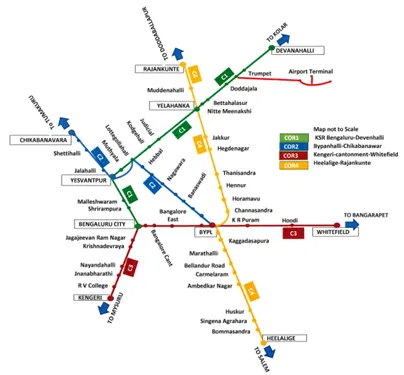
Bengaluru (Metro Rail News): The Bengaluru Suburban Rail Project progressed as Rail Vikas Nigam Ltd. (RVNL) – Rithwik Projects JV has been declared as the lowest bidder for the Package C4A for Kanaka Line ( Line 4 ) between Heelalige and Rajanukunte on 5 November.
Karnataka Rail Infrastructure Development Company (K-RIDE) floated tenders for Package C4A in July 2024 with a Rs. 504.11 crore estimate and a 2-year deadline. Furthermore, the technical bids were opened in September to announce the names of bidders for the contract.
Financial Bid Values
Firm
Bids
RVNL – Rithwik JV
613.00 Crore
NCC Ltd.
627.35 Crore
Scope of work:
The scope of work under this package includes the construction of a total 9 stations, one elevated station and 8 at-grade stations on Kanaka Line ( Line 4 ) between Heelalige and Rajanukunte with installation work like electrical & mechanical (E&M), pre-engineered building (PEB) roof, and architectural finishing.
Stations:
Heelalige
Singena Agrahara
Huskur
Ambedkar Nagar
Carmelaram
Bellandur
Marathahalli
Doddanakundi
Kaggadasapura
BSRP’s Line-4 and Bangalore Metro’s 56 km Blue Line in Phase 2B will have an overlapping alignment of approximately 500 metres between Benniganahalli and Channasandra.
Lucknow, the capital of Uttar Pradesh is a multicultural city located at the northwestern bank of the Gomti River. Lucknow is adjacent to rural towns and districts, making it a central hub in the Indus-Gangetic Plain. The city majorly covers an area of 2,528 square kilometres . Historically referred to as the “City of Nawabs,” Lucknow’s significance was elevated in 1528 when it came under the control of Babur, the founding Mughal emperor.
Lucknow serves as a critical centre for various industries, including education, commerce, pharmaceuticals, and technology.
The city is covered with numerous railway stations in different parts. The major long- distance railway station is Lucknow railway station situated at Charbagh.
Kanpur, a major industrial city located in the central-western region of Uttar Pradesh, is recognised as the financial capital of the state. Often referred to as the “Manchester of the East,” Kanpur is prominent for its colonial architecture, well-maintained gardens, and distinctive local dialect. The city is also a key centre for IT parks and is renowned for producing high-quality leather, plastic, and textile products. The city is the crucial financial and industrial base of North India, snuggled on the banks of the Ganga River.
As per the 2011 census, Lucknow ranks as the eleventh most populous city in India, while Kanpur is the 12th most populous city. In Uttar Pradesh, Kanpur is the most populous city, followed by Lucknow in the second position. Both cities feature a dense railway network.
Glimpse of Suburban Railways
In India, urban rail transit is a crucial component of intra-city transportation, particularly in densely populated metropolitan areas.
Suburban rail networks play an essential role in the public transportation systems of many major Indian cities. They are vital for commuters, offering an efficient and reliable mode of transportation. By linking suburban towns and peripheral areas to central urban zones, where employment opportunities are concentrated, suburban rail systems provide passengers with a fast and comfortable alternative to road-based transportation. As a result, they are widely regarded as a preferable option for reducing car dependency and alleviating urban congestion.
Inception and Early History of Lucknow-Kanpur Suburban Railway
To enhance connectivity between Uttar Pradesh’s administrative capital, Lucknow, and its economic and industrial capital, Kanpur, the Lucknow-Kanpur Suburban Railway was inaugurated on 23 April 1867.
Originally developed and operated by the Indian Branch Railway Company, the line later became part of the Oudh and Rohilkhand Railway network.
Currently, the operations of the Lucknow-Kanpur Suburban Rail Line are jointly managed by Northern Railway, North Central Railway, and North Eastern Railway.
Route & Stations
The Lucknow-Kanpur Suburban Railway line (formerly known Cawnpore-Lucknow line), spans approximately 72 kilometres (about 45 miles) between Lucknow Junction and Kanpur Central. This critical connection facilitates efficient travel between the two cities, serving as a backbone for daily commuters.
Travel Time and Train Services
The journey from Lucknow Junction to Kanpur Central typically takes between 1 hour 15 minutes and 1 hour 50 minutes, depending on the type of train service. The Shatabdi Express is the fastest, covering the distance in approximately 1 hour 15 minutes, while other intercity trains complete the journey in around 1 hour 30 minutes.
Shared Track Operations
The suburban services are not operated on dedicated tracks; instead, they share tracks with long-distance trains.
The stations along the Lucknow-Kanpur Suburban Railway routes are: Lucknow Junction, Amausi, Piparsand, Harauni, Jaitipur, Kusumbhi, Ajgain, Sonik, Unnao Junction, Magarwara, Kanpur Bridge Left Bank, Kanpur Central.
Rolling Stock
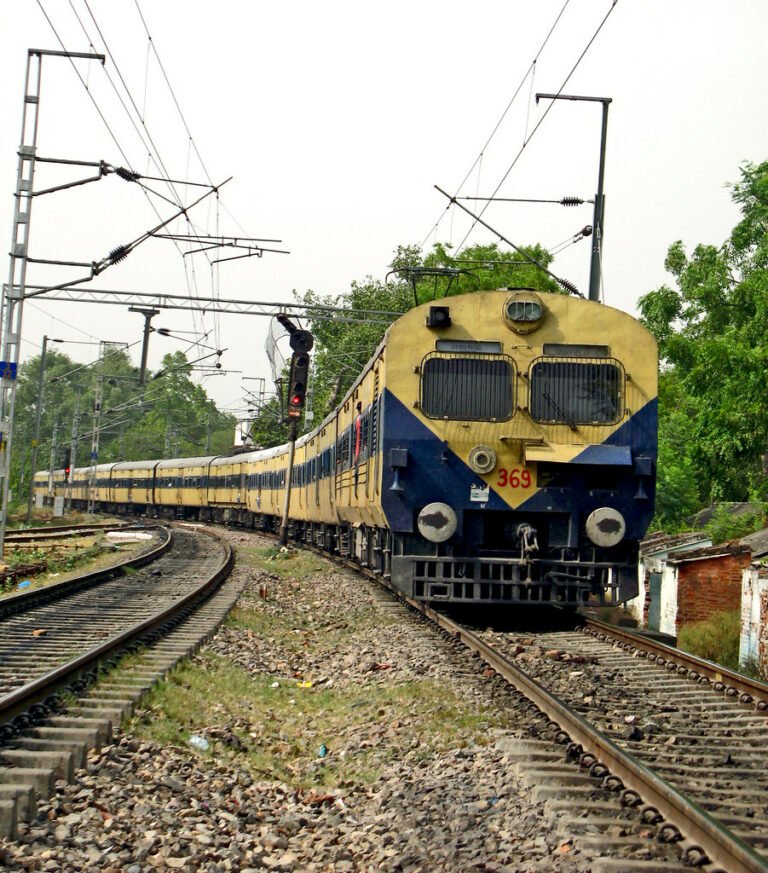
The Lucknow-Kanpur Suburban Railway predominantly utilises Electric Multiple Unit (EMU) and Mainline Electric Multiple Unit (MEMU) trains, ensuring efficient and reliable service for commuters.
EMU and MEMU Trains
Electric Multiple Units (EMU) and Mainline Electric Multiple Units (MEMU) are self-propelled train systems widely used in India for suburban and regional rail services. Both systems are electrically powered, eliminating the need for separate locomotives and offering a more environmentally friendly alternative to diesel-powered trains.
Electric Multiple Units (EMU)
EMU trains are designed for shorter, high-frequency routes, particularly in urban and suburban areas. They operate using electric traction motors integrated within the carriages, allowing for a distributed power system across multiple coaches.
Mainline Electric Multiple Units (MEMU)
MEMUs are designed to cover longer distances than EMUs and are designed to operate on mainlines. They are mainly employed to serve rural and semi-urban areas.
Track length
72 km
Track gauge
5 ft 6 (1,676mm) Indian gauge
Electrification
25 kV 50 Hz AC overhead catenary
Benefits of Lucknow Kanpur Suburban Railways
Efficient Commuter Connectivity
The Lucknow-Kanpur Suburban Railway provides a reliable and efficient mode of transportation for daily commuters. This efficiency makes it a crucial link for individuals travelling for work, education, or other daily needs.
Economic Growth
By enhancing accessibility between Lucknow, the administrative capital, and Kanpur, the industrial capital, the suburban railway plays a major role in supporting economic activities. It facilitates the smooth movement of workers from the corner of the city, which not only increases employment opportunities but also promotes the economic growth of the city.
Reduction in Traffic Congestion
By providing a viable alternative to road transport, the suburban railway helps alleviate traffic congestion on major highways and urban roads. This not only reduces travel times but also contributes to lower pollution levels.
Environment friendly
Lucknow-Kanpur suburban railways employ EMU and MEMU trains which are more environment friendly as they are fueled by electricity. This reduces the carbon footprints as compared to roads, contributing to a more sustainable urban transport system.
Integration with Other Transport Modes
The suburban railway complements other public transport systems, including the Lucknow and Kanpur metro networks. This integration creates a cohesive and efficient transport system, enhancing overall mobility and accessibility for residents across the two cities.
Support for Urbanisation
As urban areas continue to expand, the suburban railway serves as a critical infrastructure component in managing this growth. It provides a structured and sustainable public transport option that supports orderly urbanisation and reduces the environmental impact of increased urban density.
Cost-Effective Travel
The suburban railway offers an affordable and practical transportation solution for a large number of daily commuters. Compared to private vehicles or taxis, it provides a cost-effective alternative, which makes it accessible to a broader population.
Challenges faced by Lucknow Kanpur Suburban Railways
Absence of dedicated tracks
The Lucknow-Kanpur suburban railways don’t have dedicated tracks. It shares tracks with long-distance trains which leads to overcrowding and delays. This absence of dedicated tracks affects the operation frequency of suburban trains which results in reduced commuter satisfaction and also increases the risk of accidents.
Deteriorating Infrastructure
Most of the amenities and rolling stocks are deteriorating, which can result in periodic malfunctions and service intervention. Modernizing the infrastructure is crucial for enhancing safety and dependability.
Capacity Constraints
The existing train services are not sufficient to handle peak-hour demand, leading to overcrowding and discomfort for passengers.
Funding and Investment
Adequate funding is crucial for the upgradation of existing infrastructure. Limited funding prevents the implementation of the required improvements.
Technological Advancement
Keeping up with technological advancements in railway operations, signaling, and safety systems is essential. The lack of modern technology affects the operational efficiency of suburban trains.
Conclusion
Being one of the oldest suburban rail networks, Lucknow Kanpur Suburban Railways is a vital commuter rail service owned by Indian Railways. This suburban rail system not only strengthens the economic ties between Lucknow and Kanpur but also plays a pivotal role in reducing traffic congestion, supporting urbanisation, and promoting environmentally sustainable transportation. However, challenges such as the absence of dedicated tracks, deteriorating infrastructure, and capacity constraints pose hurdles to its optimal functioning.
To fully utilise the potential of this suburban rail line, it is imperative that ongoing efforts focus on infrastructure modernisation, technological upgrades, and securing adequate funding for enhancements.
By addressing these challenges, the Lucknow-Kanpur Suburban Railway can continue to serve as a backbone for regional development, offering a cost-effective, efficient, and sustainable transportation solution for the growing urban population. As cities expand and the demand for reliable public transport rises, the importance of this suburban railway will only increase, making its development a priority for future growth and prosperity in the region.
Established in 1639, Chennai, formerly known as Madras, is often referred to as the Gateway of South India. The city is located along the Coromandel Coast and features a rich cultural heritage,and was home to powerful dynasties like Chola, Pandya, Pallava, and the Vijayanagar Empire.
Chennai experienced steady growth during British colonial rule in the 17th and 18th centuries and was officially renamed from Madras to Chennai in 1996. Throughout the 20th century, the city continued to expand, eventually becoming the capital of Tamil Nadu.
Over the last two decades, Chennai has undergone a massive transformation in terms of population growth, infrastructure development, and economic advancement. Despite its well-established infrastructure, the rapid pace of urbanisation has outstripped the city’s capacity to meet its demands. This necessitated the conceptualisation of the Chennai Metro Project to address the growing transportation and urban infrastructure needs.
The Need for Chennai Metro
Chennai’s transport system, once well-established, began facing challenges as the city’s population and infrastructure expanded, overwhelming the existing network. Several key factors necessitated the development of the Chennai Metro:
Growing Population:
In 2001, Chennai’s population stood at approximately 4.34 million. By 2011, this figure surged to 6.75 million, marking a growth rate of 55.4% over the decade.
Projections estimate the population will reach 8.11 million by 2031, necessitating an efficient and reliable transportation system to accommodate this growth.
Urbanisation and Infrastructure Development:
The geographic area of Chennai expanded from 176 square kilometers in 2001 to approximately 426 square kilometers post-2011.
As the city expands, connecting its outer regions to the central hubs became essential, with the metro system expected to play a critical role in achieving this.
Economic Growth:
Chennai has emerged as a economic hub in South India, known for its automotive industry (earning the title “Detroit of India”), IT parks, and manufacturing sectors.
The metro system would enhance connectivity within the city, while also strengthening economic development and creating employment opportunities for residents.
Overview of Chennai Metro
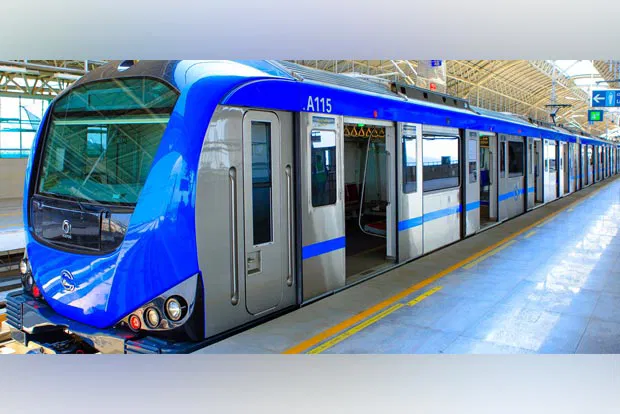
Chennai Metro is a rapid transit system operated by Chennai Metro Rail Limited, a joint venture between the Government of India and the Government of Tamil Nadu. Planning for the metro began in 2006-07, with construction starting in 2009. Currently, the system consists of:
2 Operational Lines: Green and Blue Lines. (Phase 1)
3 Lines Under Construction: Purple, Orange, and Red Lines. (Phase 2)
The Chennai Metro system aims to address the city’s growing transportation needs while supporting its continued urbanization and economic growth.
Key Specifications of Chennai Metro
Total length
54.1 km(Phase 1 + Extension of Phase 1)
Total stations
40 stations
Track gauge
Chennai metro runs on a 1,435 mm standard gauge.
Ridership
Daily: 0.3 million (2023-24)
Annual: 110.3 million (2023-24)
Electrification
Chennai Metro operates on a 25KV AC traction catenary system.
Speed
Average Speed: 75 Km/h
Maximum Speed: 120 km/h
Lines of Chennai Metro
Operational: 54.15 km | Under Construction: 102.97 km | Approved: 15.93 km | Proposed: 15.3 km
Chennai Metro Phase 1
The Delhi Metro Rail Corporation (DMRC) was assigned the task of preparing a detailed project report for the Chennai Metro. In December 2007, Chennai Metro Rail Limited (CMRL) was formed as a joint venture between the Government of India and the Government of Tamil Nadu to manage and execute the project. Phase 1 of the Chennai Metro spans a total length of 45.1 km, covering two main corridors. With an additional extension of 9 km, the overall length of the project now totals 54.1 km.
Funding
The estimated base cost of the first phase was Rs 3770 crore.
57% of the funding was provided through a loan from the Japan International Cooperation Agency (JICA).
The remaining 43% of the funding was contributed by the Central and State Governments.
Blue Line: Chennai International Airport to Washermanpet
Length: 23.10 km
Status: Operational
Stations: Chennai International Airport,Meenambakkam, Nanganallur Road (OTA), Alandur, Guindy, Little Mount,Saidapet, Nandanam,Teynampet, AG-DMS, Thousand Lights, LIC, Government Estate, Chennai Central, High Court, Mannadi, Washermanpet.
Green Line:Chennai Central to St. Thomas Mount
Length: 22km
Status: Operational
Stations: St. Thomas Mount, Alandur, Ekkattuthangal, Ashok Nagar, Vadapalani, Arumbakkam,CMBT (Central Mofussil Bus Terminus), Koyambedu, Thirumangalam, Anna Nagar Tower, Anna Nagar East, Shenoy Nagar, Pachaiyappa’s College, Kilpauk Medical College, Nehru Park, Egmore, Chennai Central.
Phase 1 Extension
In 2014, the Government of Tamil Nadu announced a 9 km (5.6 mi) northern extension of the Blue Line.
The extension runs from Washermanpet to Wimco Nagar, consisting of 9 stations.
Construction began in July 2016.
The extended section was officially opened for passenger operations on 14 February 2021.
This extension increased the total operational length of the Chennai Metro system to 54.1 km (33.62 mi).
Stations: Sir Thiyagaraya College, Tondiarpet, New Washermenpet (formerly Tondiarpet), Tollgate Metro, Kaladipet Metro (formerly Thangal), Thiruvottriyur Theradi (formerly Gowri Ashram), Thiruvottriyur Metro, Wimco Nagar Metro, Wimco Nagar Depot Station.
List of Contractors of Phase 1
Contractor Name
Contract Details
Delhi Metro Rail Corporation
Detailed Project Report (DPR) Preparer and Interim Consultant till September 2014
Egis Rail – Egis India – Maunsell Consultants Asia – Balaji Rail Road Systems – Yachiyo Engineering JV
General Consultancy Services
Alstom India Ltd.
168 Coaches (Rolling Stock)
Larsen & Toubro – Alstom Transport, SA – Alstom Projects India Ltd.
Design and Construction of Track Work in Viaduct, Tunnel, Underground and Depot in Corridor – I & II
Emirates Trading Agency – ETA Engineering Pvt. Ltd.
Design and build tunnel Ventilation System
Voltas Ltd.
Underground station’s air conditioning system
Timeline of Chennai Metro Phase 1
2007
November
The government of Tamil Nadu approved the first phase of Chennai Metro.
2008
April
The Planning Commission granted in-principle approval for the project.
2009
January
Final approval from the Union Cabinet of the Government of India.
2015
June
Koyambedu – Alandur (Green line): 10 km
2016
September
Airport – Little Mount (Blue Line): 8.6 km
October
Alandur – St. Thomas Mount (Green line): 1.3 km
2017
May
Koyambedu – Nehru Park (Green line): 8 km
2018
May
Little Mount – AG-DMS (Blue Line): 4.8 kmNehru Park – Central (Green line): 2.6 km
2019
February
AG-DMS – Washermenpet (Blue Line): 9.8 km
2021
February
Washermenpet – Wimco Nagar (Blue Line): 9 km
2022
March
Wimco Nagar – Wimco Nagar Depot
Chennai Metro Phase 2
In July 2016, the Government of Tamil Nadu announced Phase 2 of the Chennai Metro project, consisting of three lines covering 104 km (65 mi) with a total of 104 stations.
In July 2017, the state government announced an extension to Phase 2, which would add a new section extending from Lighthouse to Poonamallee, intersecting the Madhavaram–Sholinganallur line at Alwarthirunagar.
With the extension, the total length of Phase 2 would increase to 118.9 km (73.9 mi), incorporating 128 stations.
The stations in Phase 2 were designed to be smaller than those in Phase 1 to optimise both construction costs and construction time.
Reduction in Phase 2’s Length
In May 2023, the length of the Chennai Metro Phase 2 project was reduced from 118.9 km to 116.1 km, along with a reduction in the number of stations from 128 to 118.
Specific Changes:
Corridor 3 (Madhavaram to SIPCOT): reduced from 45.8 km to 45.4 km.
Corridor 5 (Madhavaram to Sholinganallur): reduced from 47 km to 44.6 km.
Corridor 4 (Lighthouse to Poonamallee): remained unchanged at 26.1 km.
The overall project cost was revised down from ₹69,180 crore to ₹61,843 crore, due to the reduction in station sizes and modifications in some construction elements.
Rolling Stock
Alstom will be providing a total of 108 coaches for Chennai Metro’s Line 4.
CMRL declared BEML the lowest bidder to supply 210 coaches for the 116.1 km Chennai Metro Phase 2’s Line 3 and 5.
Lines in Phase 2
Line 3 (Purple Line): Madhavaran Milk Colony – Siruseri SIPCOT station
The modifications for the line’s alignment were approved in mid-2017, and Poonamallee will now be connected via Vadapalani and Porur. Stations planned at Foreshore Road and Natesan Park have been dropped. Estimated Project Cost: USD 2174.53 million Financing Plan: AIIB: $356.65 million (16%)Unassigned Co-Financer: $1,165.52 million (53.6%)Govt. of TN: $652.36 million (30.4%)
Line 5 (Red Line): Madhavaram – Sholinganallur
Distance: 44.6 km
Stations (48): Station Names: Madhavaram Milk Colony (interchange with Line-3), Venugopal Nagar, Assisi Nagar, Manjambakkam, Velmurugan Nagar, MMBT, Shastri Nagar, Reteeri Junction, Kolathur Junction, Srinivasa Nagar, Villivakkam Metro, Villivakka, Bus Terminus, Nadhamuni, Anna Nagar Depot, Thirumangalam, Kendriya Vidyalaya, Grain Market, Sai Nagar Bus Stop, Elango Nagar Bus Stop, Alwartiru Nagar, Valasaravakkam, Karabakkam, Alapakkam, Porur Junction, Mugalivakkam, DLF IT SEZ, Sathya Nagar, CTC, Butt Road, Alandur (interchange with Line-1 and Line-2), St Thomas Mount (interchange with Line-2), Adambakkam, Vanuvampet, Puzhuthivakkam, Madipakkam, Kilkattalai, Echangadu, Kovilabakkam, Vellakkal, Medavakkam Koot Road, Kamraj Garden Street, Medavakkam Junction, Perumbakkam, Global Hospital, Elcot, Sholinganallur
The stretch connecting Porur and Poonamallee is anticipated to be the first section to open by the end of 2025
Estimated Project Cost: $708.64 millionFinancing Plan: AIIB: USD 438.75 million (62%)ADB: USD 114.1 million (16%)Govt. of TN: USD 155.88 million (22%)
Proposed Lines
In 2022, the state government planned an extension for Phase 2.
Line 4: Poonamalee to Parandur
Distance: 43.6 km
Total Stations: 19
Status: Planned
Line 5: Koyambedu to Avadi
Distance: 16.1 km
Total stations: 15
Status: DPR to be prepared
List of Contractors of Phase 2
Contractor Name
Contract Details
CEG – AECOM JV
Line-3: Detailed Design Consultant (DDC)
LEED SMEC (underground section) and AECOM (elevated section)
Line-3 & Line-5: Full Height Platform Screen Doors at 29 underground stations between Madhavaram Depot Station and Tharamani Station, and Line-5’s 5 underground stations between Kolathur Junction Station and Nathamuni Station (Villivakkam MTH Road) – Package ASA11
Technical Bid Evaluation Underway
Line-3 & Line-5: Half Height Platform Screen Doors at 10 elevated stations of Line-3 (Nehru Nagar – Sholinganallur) and 10 elevated stations of Line-5 (Assisi Nagar – Koyambedu) – Package ASA09A
Challenges Faced by the Chennai Metro
Cancellation of Tenders
In 2021, Chennai Metro Rail had to cancel six tenders floated for station construction along a part of Corridor 3 (Madhavaram to Taramani) due to steep prices quoted by bidders. This resulted in a delay of several months to re-bid and award the contracts, pushing back the commencement of station construction in this stretch.
Technical Glitches and Service Disruptions
Chennai Metro Rail services have faced disruptions due to technical glitches, such as issues with the overhead electric line near Guindy Metro station. This has caused hundreds of passengers inconvenience, especially during rush hours.
Parking and Last-Mile Connectivity Issues
Regular commuters face hassles parking at busy stations like the airport, Meenambakkam, and Thirumangalam. Many stations need more options for last-mile connectivity, discouraging commuters from using the metro. While CMRL has launched some last-mile connectivity services, many were discontinued during the pandemic and have not resumed.
Natural calamities
Cyclone Michaung caused significant damage to Chennai Metro Rail, resulting in losses of around ₹254 crore. The rains, wind, and flooding affected various equipment, such as cranes, point machines, and station roofs.
Lack of Road Space and Utility Diversions
Lack of Road Space and Utility Diversions
The double-decker Metro construction on Arcot Road, part of Corridor 4, faced challenges such as lack of road space and multiple diversions of many utilities. Cranes could not be used for erecting the U-girders due to space constraints, necessitating the use of a launching girder
Benefits of Metro in Chennai
Boost to Real Estate:
The metro passes through major commercial sectors, significantly increasing property prices in nearby areas.
Property values are expected to rise by 10-20%, presenting excellent investment opportunities.
Environmental Benefits:
By encouraging the use of public transport, the metro will help reduce carbon emissions and improve air quality in the city.
This shift towards sustainable transportation supports global efforts to mitigate climate change and reduce pollution.
Economic Development:
The project will generate a substantial number of employment opportunities, stimulating economic growth in Chennai.
Various sectors involved in the construction and operation of the metro will contribute to the city’s overall economic development.
Integration with Other Transport Systems
The proposed integration of the metro with other transport systems (like buses and suburban trains) will create a seamless public transport network. This interconnectedness will facilitate easier transfers between different modes of transport, further promoting public transit use over personal vehicles.
Conclusion
Chennai Metro is currently under construction. Phase 1 is fully operational, while Phase 2 is under construction with more proposed plans. Serving India’s sixth-most populous city, the Chennai Metro provides a desperately needed high-capacity mass transit solution to improve connectivity and reduce growing traffic problems.
The project aims to offer public transport appropriately integrated with other public and private transport forms, including buses and suburban trains, in heavily populated areas. Chennai Metro won a big race and has overridden many challenges but settled as a benefit over some loss.