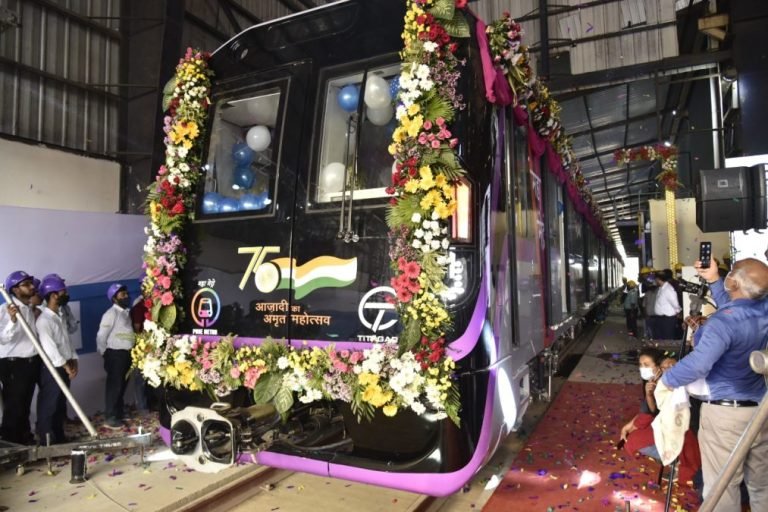
Railways plans to bring out improved Vande Bharat fleet soon

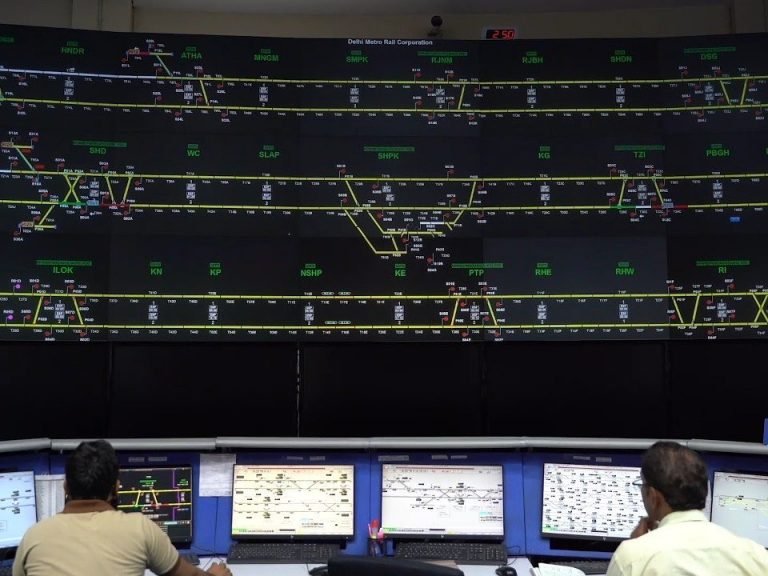
DELHI (Metro Rail News): The railways have decided to manufacture version 3 of Vande Bharat trains, with major improvements in comparison to the existing fleet of these semi-high-speed rails. The bidding for the tender of 200 such trains, with 16 coaches each, has already started.

An official from the railway ministry said that the tender for this will roll out soon. He added that some of the units could be manufactured in the Marathwada Rail Coach Factory in the Latur district. The new version of the self-propelled Vande Bharat, with AC-1, AC-2 and AC-3 and sleeper facilities, is likely to slowly replace Rajdhani and Duronto services.

The new features which the railways have planned to include in these new trains are that they will be comparatively lighter than the present Vande Bharat trains as well as energy-efficient with more modern features, including additional passenger amenities.

Currently, the manufacturing process of Vande Bharat version 2 trains is on. The ministry of railways has already awarded the contracts to Medha Servo Drives for manufacturing 44 trains and is in the process for procuring 58 more such trains.

Bangalore Metro shifts focus on non fare revenue as operation cost rise

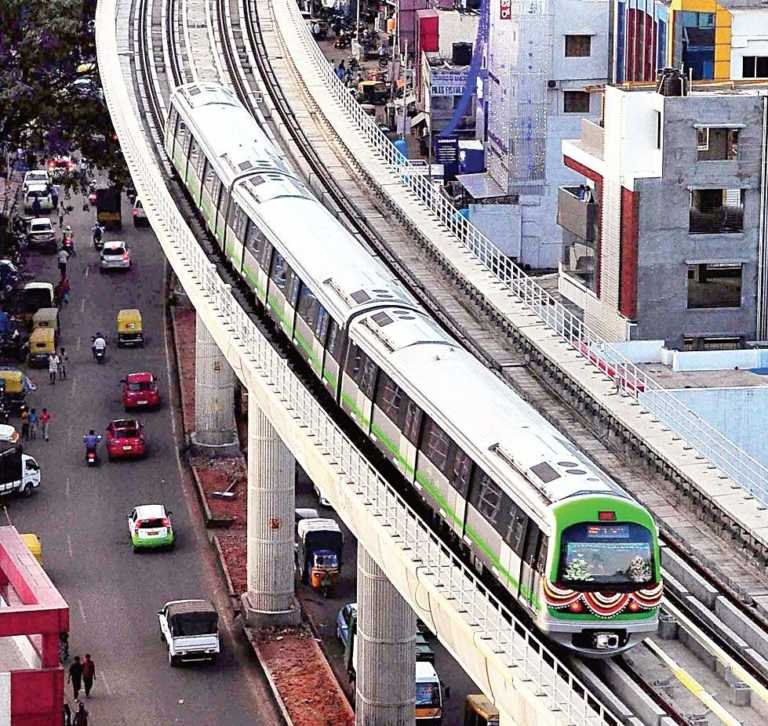
BANGALORE (Metro Rail News): The Bangalore Metro Rail Corporation Limited (BMRCL) has decided to cast its real estate by expanding the commercial space at metro stations to 2.20 lakh square feet. This decision came after BMRCL’s soaring expenses with revenues yet to reach pre-Covid levels.

A BMRCL official said that “At present, there are about 16 retailers renting a total of 21,000 square feet, which we want to expand”. Officials set Rs 50 crore as the non-fare revenue target for the financial year 2022-23 amidst a slow return to pre-Covid ridership and increased expenses due to the restoration of normal services.

Though the average daily ridership figures have crossed the 3-lakh mark recently but it is still about 35%-40% lower than the 4.5-5 lakh seen during the pre-pandemic days. As per the revenue details for the month of February, the daily fare revenue has come down by Rs 50-70 lakh.
buy stendra online https://www.ecladent.co.uk/wp-content/themes/twentyseventeen/inc/en/stendra.html no prescription
The main sources for BMRCL were the license fee or rent from retail outlets, ATMs, parking spaces and others after the non-fare revenue dropped from Rs 41.92 crore in 2019-20 to Rs 24 crore in 2020-21.

After waiving the rent for shops during the lockdown, the BMRCL linked the rent of the commercial space with ridership, adopting a model first implemented by Delhi Metro. Uninspected financial results for last year show the BMRCL earned Rs 60 crore from operations and Rs 74 lakh from other sources. Although the situation is improving yet officials believe that the recovery is a long way ahead. One of the major hindrances to non-fare revenue in Bengaluru is the ban on advertisement hoardings. According to officials advertisements have the potential to increase annual revenue by Rs 100 crore.

Maha Metro introduces ‘Pune Metro’ App

PUNE (Metro Rail News): Maha Metro has designed an app for seamless travel and contactless ticketing for the citizens of Pune. The app is called as ‘Pune Metro’ App. It is available in the Play Store for Android users and the App Store for iPhone users. 

To access the app, user registration is required. The customer is requested to provide basic details like First Name, Last name, mobile number, email ID, gender, Date of birth. Based on the details received, a customer profile is created in the system. The user will be required to enter a mPIN for using this application. While the user can remain signed into the mobile application, they may be prompted for the mPIN for every ticket booking transaction. 

Pune Metro app has many useful features such as Book Ticket, Fare Enquiry, Feeder Services etc. Through Book Ticket tab, a person can book one way, return or group tickets (Above 10). Through this feature, the person can decide and select the station and journey that he/she wants to go for. On selection total fare will be shown for the selected journey.

To book ticket the commuters shall be able to buy QR code tickets on the mobile application. The server shall generate a QR code on mobile which will act as the digital ticket for Metro travel. The readers at the gates will read the QR code image on the mobile screen and validate it before allowing him to pass through the gates and hence it is named as Tap & Go experience.  The mobile app will allow commuters to make payments via all types of payment options like UPI payment, Any Bank Credit/Debit Card, Net banking supported for 40+ banks and Wallets like Paytm, Freecharge, PhonePe etc. It is compatible with Mobile and web-based transactions.

In view ticket section a person can view active as well as past trip tickets. Tickets that were purchased using the card, Pay U, Daily and weekly data of the tickets purchased would be available in View Tickets. Fare Enquiry: The fare chart for the PCMC to Phugewadi and Vanaz to Garware college metro station will appear here. The minimum fare is Rs 10 and the maximum is Rs 20 as of now for both the corridors. PCMC to Sant Tukaram Nagar and Bhosari is Rs 10 whereas PCMC to Kasarwadi and Phugewadi is Rs. 20. Similarly, from Vanaz to Anand Nagar and Ideal Colony is Rs 10 & Vanaz to Nalstop and Garware College is Rs 20. The fare for the return tickets between the terminal stations is kept at Rs 30. 

The App also provides an option for a feeder service located nearest to you. Feeder services from Station to the nearest Railway station, Airport, Bus stop with facilities of e-Bike rental services, Redbus, e-Auto services etc. The feeder services include Bus, E-bikes, Cycles, Cabs etc with various registered partners such as PMPML, parking, Svida, Jeev Mobility etc are just a few to mention. The feeder service will help in first and last-mile connectivity for end-users.

Exclusive Interview with Dr. Sujatha Narayan, Sr. Vice-President, Wabtec India

Metro Rail News conducted an email interview with Dr Sujatha Narayan, Sr. Vice-President, Wabtec India region for our Women’s Day edition. Dr Narayan talked about Wabtec’s manufacturing capacity, strategy and her professional journey so far. Here are the edited excerpts:-

Q.1. Please tell us something about your merger with GE transportation. Do you see the merger in 2019 as one of the major breakthroughs for the company?

Yes, of course. Wabtec doubled in size and moved ahead in the product chain from being a sub-system supplier to a rolling stock supplier which made us one of the largest Rail technology companies in the world. Wabtec and GE Transportation came together had tremendous synergies, which we are leveraging to our great success. This was not only in products and services but also in our people, processes and systems. Its been a great journey, especially in these tough Covid years, and we have emerged as a high performing One Wabtec!!

Q.2. Wabtec manufactures products for locomotives, freight cars and passenger transit vehicles. What other major capabilities do you have for railway industry disciplines globally?

Do note that apart from products for locomotives, Wabtec is the leading manufacturer of full Diesel locomotives in the world. In India, we manufacture and deliver to Indian Railways 100 locomotives a year have done so successfully for the last three years. In addition, we have state of the art maintenance sheds for these locomotives. These locomotives were designed in India, are largely localized from a component perspective and fully manufactured in India in our factory in Marhowrah, Bihar, which makes it even more special. Wabtec also has a large Digital Electronics business that helps railroads, shippers, miners, ports and terminals to improve efficiency, unlock productivity and create pathways to automated operations while enabling safer operations. You may not be aware of the fact that Wabtec also has a significant business in numerous areas such as:

1. RAIL INFRASTRUCTURE – Track Products & Materials, Signal Wayside Components, Vehicle Equipment, Electric Power Supply

2. MINING –

a. Digital Mine- Environmental Health & Safety, Advanced Monitoring & Sensing, Asset Performance Management, Operations Performance Management, Services Management, Value Chain Optimization, Workforce Transformation

b. SURFACE EQUIPMENT – Electric Drive Systems Power & Data Transfer;

3. DRILLING – AC Water Cooled Motors, DC Motors, Packaging Options

4. MARINE SOLUTIONS – Marine Diesel Engines, Marine Fenders, Onshore Power Supply

5. HEAT TRANSFER & ENERGY SOLUTIONS – Diesel & Gas Engine Cooling Generator, Motor & Transformer, Coolers, High-Temperature Applications

6. ELASTOMERS for Rail and Industrial Applications

Q.3. Wabtec is known for building new commuter and low-horsepower, low emissions switcher locomotives. What is the idea and concept behind it? Why in the fast-paced world still focus on low-horsepower locomotives. See for e.g. India is indigenously manufacturing 12K HP electric hauls for freight transportation?

Generally, Switcher locomotives are used in yards to move rail cars to form the train, conduct maintenance or perform light freight service. These locomotives are optimized for this application hence they’re not high on horsepower but have high starting tractive effort. Currently, the switcher fleet is pretty old around the world as operators have been focused on investing in the mainline fleet. As we see increased operators’ interest in cleaner technology in this space, we’re at the forefront of addressing this Market with very diverse product offerings. Our current products in this space include a wide range of zero-emission battery locos (will supply to UP), hybrid with battery & diesel combination (NYCT & Nordco shuttle wagons) as well as highly emission optimized diesel locomotives (supplying to Kazakhstan). These products also come with an option of a suite of onboard safety & remote monitoring digital solutions. As an innovation-driven and environmentally responsible corporate, we believe we’re in a leading position to help our customers modernize this space with greener, smarter and safer solutions.

Q.4. Please tell us something about your deal with New Delhi – based railway friction business, Masu recently. Should investors see your step as your efforts for consolidating your base in the Indian sub-continent?

The Railway friction business of Masu that we have acquired is a strategic acquisition for Wabtec as we are one of the world leaders in railway friction with a variety of brake pads and blocks to serve the needs of our customers. In India, while we were manufacturing all our braking systems, we did not manufacture friction products.

The acquisition helps us build local design and manufacturing capability to serve the unique needs of the Indian Market of Indian Mainline locomotives, coaches and wagons as well as Metros. We will also be able to serve the global markets from India. We are pleased that we will have now state-of-the-art friction manufacturing capabilities on every continent and will better serve operators and car-builders around the world, reducing operating costs while improving performance.”

Q.5. How do you see the Market in India? What in your opinion should be the major policy-level changes required for the growth and development of tech and locomotive industries operating in India?

The Indian rail transportation market is one of the largest and fastest growing markets in the world and is definitely the most exciting in terms of the modernization initiatives driving safety, availability, cleanliness, comfort, punctuality and sustainability in Indian Railways and the aggressive plans to introduce Metros in many Indian cities.

The National Rail Plan draft published by IR in the end of 2020 transparently shared the network information with its readers as well as the challenges faced today as well as the desire to develop capacity upto 2050 by 2030. The challenges and needs are clear and the strategies are getting put in place, and its now a matter of agile, unwavering and efficient execution. We saw the union budget allocation for Railways very much in sync with the NRP which was positive.

There are a few elements that can make these ambitions come to fruition. Firstly, it is vital that these strategies should not be changed with changes in Railway ministry or Railway Board. This has been a challenge in the past. Secondly, RDSO vendor approval, onboarding and inspection policies need to be revamped. I see this beginning to happen and I feel optimistic. I believe there is also a lot of confusion about procurement policies in the different production units and Zonal railways that should be cleared up. Also, tenders that try to bring in new technologies take too long to progress. Lastly, I feel, it is critical that Suppliers be treated more as partners than simply companies that bid and win tenders. We have a lot to contribute to the IR and Metro modernization journey, and we should be leveraged.On the Metro side, apart from Delhi Metro, we see concerns with ridership in the small cities and lack of progress on projects in cities like Mumbai and Bangalore due to various “non-technical” issues. 2021 for example, did not see a single Metro projected awarded. Projects that have been awarded to car manufacturers are being delayed or cancelled. Companies tend to lose a lot of money, and the Indian entity loses credibility with its global counterparts. The Ministry of Urban Development and Metro authorities need to figure out ways to avoid this if they want technology and investment to come to the country.

Q.6. How do you see the performance of Indian locomotive companies towards the efforts of Indian Railways trying to become a modern and better transport system?

I assume you mean Railway equipment companies who provide equipment for Rolling Stock. I think historically, these companies have played a critical role whether it maybe the Diesel locomotive fleets, electric locomotive fleets or LHB coaches produced by Indian Railways. These are all products that were brought to India by global Multinational companies and TOTs provided to Indian Railways.

On modernization, we have seen in the recent past with 100% electrification or replacement of all ICF coach production with LHB coaches, companies like Wabtec have majorly enabled this modernization by investing heavily and quickly scaling up to support IR. Companies have always been ready with technologies that can solve many of the problems but it took some serious clarity in strategy and an execution mindset that is making this now a reality. While ‘Make in India” and “Atma Nirbhar Bharat” are necessary for the country, only desire I would have is to not distinguish between “Indian origin” companies Vs “Multinational companies” that are heavily invested in India.

We see some disturbing trends to increase vendor base and onboard some Indian origin companies that are compromising on quality, due process for homologation as well as required financial strength to support IR in the long term. For companies like Wabtec who have strongly invested in India with >2500 employees, 5 factories, 2 maintenance sheds with a total operational footprint of >1M sq feet and an absolute focus on Safety, Quality and Compliance, the expectation is simply to have a level playing field.

Q.7. What other major initiatives and projects Wabtec Locomotives is working for in India. Is there any other private venture or project apart from Masu?

We should be simply referred to as Wabtec or Wabtec India. We have our hand in really everything going with rail transportation market in India. We are one of leading sub-system suppliers to Metros and continue to vie for every project that is ongoing. The recent highlight is our win of brake systems and a number of other systems for the prestigious first of its kind RRTS project. On the Indian railway’s side, apart from our locomotive project and the large brake systems business we have in LHB coaches and Electric locomotives, we have just introduced the High Reach Pantograph, which was a product designed in India specifically for the Indian market which we are proud of.

We are currently developing automatic doors specifically for LHB coaches and Trainsets. We anticipate that Trainsets will be a great platform for us for a number of our sub-systems. We have a long list of projects and products in India we are working on all the time. Globally, sustainability is a huge trend in railways, and we have some major innovations happening globally, including the first Battery Electric Freight Locomotive, Green HVACs and low dust friction products. With India’s and Indian Railways’ sustainability goals, Wabtec looks forward to contributing to this Journey.

The digital electronics business I mentioned before is an exciting area for us to bring to India as Indian railways are just starting their Digitalization journey. Products such as OMRS (Online Monitoring of Rolling Stock), ATP (Automatic Train Protection), Movement Planner,Machine Vision etc. form the Wabtec portfolio, I believe can bring a lot of value to IR and help our growth. I see a continued Win-Win relationship with the Rail Transport market in India.

Q.8. From being a health professional, working for 3M India heading the R&D and running the new product development function of the company to lead one of the largest locomotive companies of the world in India. Your career shows a multi-role diversity. Kindly share something about your education, career and future goals?

I was very fortunate to grow up in the IIT Madras campus as my Father was a Professor there. The campus and the school I attended afforded me a strong academic and extra-curricular environment which I believe moulded me for my future. I got caught up in the “Engineering or Medicine” culture of the time I grew up and decided to pursue an entrance into IIT. Fortunately, I cleared the JEE (Joint Entrance Exam) and joined IIT Delhi for a BTech in Textile Engineering.

That gave me exposure to Polymer Science and I went on to do a Master’s and a PhD in Polymer Science and Engineering which I absolutely loved. When I got my Doctorate degree, I joined a company called Roger Corporation, a speciality materials company, as a technologist developing products. I figured early that I was very passionate about delivering technology to solve problems in the Market. At Rogers, I developed multiple products and filed patents and then moved on to lead R&D for one of the three businesses of the company. In 2007, my family and I decided to move back to India for personal reasons and hence, I left Rogers Corp. Interestingly, it was my hardest and best life decision.

After settling my family down in India, I joined the 3M India R&D centre. I set up their healthcare R&D team and infrastructure. My highlight there was to build the 5-year product plan for the business which was a great success resulting in creating an entire manufacturing campus for the healthcare business of 3M in India. 2014 was a pivotal year in my career when I was offered to run one of their larger businesses and since then my career as a business leader has taken off. My career at Wabtec started as the Managing Director of the Transit business, also called Faiveley Transport. 2017-2021 were very exciting years with tremendous growth in the business. I learned so much during these years from my entire team as well as customers, suppliers and other external partners. In February 2019, when GE Transportation was merged with Wabtec, I was appointed as Regional General Manager for Wabtec in India along with being MD of the Transit business. In September 2021, I was appointed as Senior Vice President and Regional Leader responsible for Wabtec business in the India region, including India, Srilanka and Bangladesh. I have never really been ambitious for designations or roles but what really drives me is to have more and more impact on the organization that I work for and to have the influence on the company in a meaningful way.

Q.09. You truly are an inspirational figure for women’s empowerment. What would be your message to our readers on International women’s Day?

Thank you for the kind words. I believe “Empowerment” comes truly from inside of you, and I urge women to focus on the three “C” s – Competence, Confidence and Courage. Being good at what you do is the core foundation of professional success and there are no shortcuts. This comes from hard work and great work ethic and building subject matter expertise. Once you have this, you need to have confidence in your own capabilities and not doubt yourself.

Finally, you need to have the courage to take risks in your career by going after new opportunities with confidence in your competence. This entire battle of empowerment is to be fought inside of you, and you shouldn’t expect somebody else to make this happen for you. All of this is within you to drive and possible if you have faith in yourself.

Q.10. Please share your views about Metro Rail News?

Metro Rail News is an emerging publication that has a good update on the industry in general and specific to the Metro sector. The combination of offline and online also helps readers engage. We regularly are able to read updates in the sector on the portal.

This interview is published in our Metro Rail News magazine, March edition.

Taj East Gate Metro Station infrastructure ready, finishing work begins

AGRA (Metro Rail News): The work of Agra Metro at Tajnagari is being done at a high speed. The Agra team of UPMRC has completed the civil construction work of the first station Taj East Gate in just 15 months. At present, finishing work is now being carried out after the infrastructure of Taj East Gate metro station is ready. Shri Kumar Keshav, Managing Director, UP Metro has complimented the Agra Metro team for this achievement.

Shri Kumar Keshav, Managing Director, UPMRC said that Agra metro work is being done at a fast pace. At present, finishing work is being carried out at the Taj East Gate. He added that the work of the oscillator, lift etc. system will start in April.

After the launch of Agra Metro Rail Project through virtual medium by PM Narendra Modi on 07th December 2020, UP Metro construction has been completed at full speed. In just 15 months, the infrastructure of the first station Taj East Gate has been completed. Along with this, the other two stations of the elevated part of the priority corridor, Basai and Fatehabad Road, are being constructed at a high speed as well.  

At present, finishing work is being carried out after the construction of the station control room and tom room on the concourse floor of Taj East Gate.  Along with this, stairs are being constructed to go from the ground floor to the concourse floor. At the same time, the platform is being constructed after the completion of track beam work at Basai Metro station. At Fatehabad Road Metro station also, platform level is being constructed after construction of the concourse.

Tajnagari will include a metro network of two corridors of 29.4 km long, which will have 27 stations. The construction of the first corridor of 14 km long between Taj East Gate and Sikandra is going on at a fast pace. 13 stations will be constructed in this corridor. There will be 6 elevated and 7 underground stations. About 16 km between Agra Cantt to Kalindi Vihar, a second corridor will be constructed which will have 14 elevated stations. A depot will be constructed in Kalindi Vihar area for this corridor.

CMRL first in India to set up Micro-plasma Oxidation system in metro stations

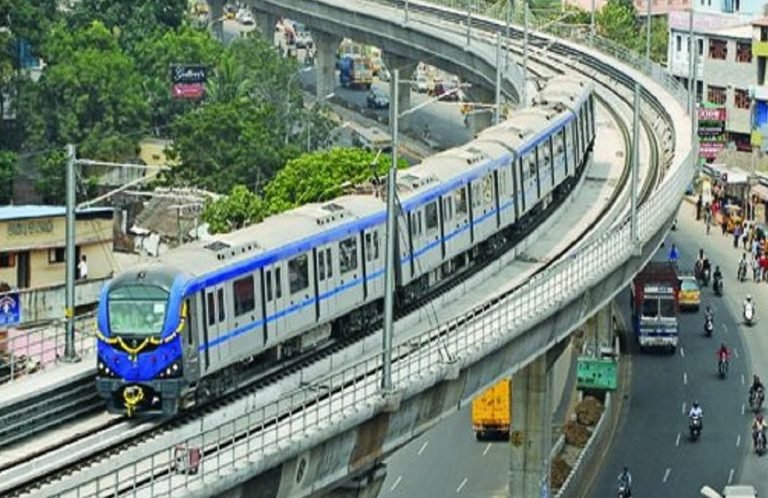
CHENNAI (Metro Rail News): Chennai Metro Rail Limited (CMRL) has become the first Metro Rail in India to install Micro-plasma Oxidation (COSMO) system in Metro Stations. This Micro-plasma Oxidation (COSMO) provides complete sterilization for air and surface disinfection at Metro Stations and Metro Trains. This air and surface disinfection system helps destroy viruses, bacteria, moulds etc.

Through proper dilution of micro-plasma oxidation in water, the air through the ventilation system in the Metro stations is sterilized and safe. The main advantage of this technology is that it uses tap water as input. The system is a chemical-free, environment friendly, sustainable disinfection methodology to mitigate infections that spread through air and surfaces. This mechanism is primarily used in hospitals and healthcare settings to combat novel contaminants in air, water and environment with a disinfection efficacy of more than 99%.

CMRL studied and tested the disinfection system which has shown reduction of 99% in the microbial load, such as bacteria, fungi, viruses, protozoa and bacterial and fungal spores by mounting the System to Air Handling Units (AHU) of the centralized air conditioning system in underground station. Cleaning the Surface with Gas-Phase Oxidizing Disinfectant ensure clean surfaces at the Metro Stations.

The Micro-Discharge Plasma Technology, which is the backbone of the system, has been validated and listed by National Science Foundation, USA and also supported by the Department of Science and Technology, Government of India. This innovative disinfection process is safe & harmless to humans but effective in killing viruses and bacteria.

CMRL hopes that passengers can now rest easy while travelling in the Metro Trains as the Environment inside the Metro Stations and Trains are Sterilized and Clean for travelling.

Hyderabad metro awards 3 year contract extension to Keolis

HYDERABAD (Metro Rail News): L&T Metro Rail Hyderabad (L&T), has awarded a three-year extension to Keolis for the operation and maintenance of the 69 km automated metro system.

The new contract begins on November 29 2022 and there is an option for a possible three-year extension. Keolis has been working with L&T from 2012 whereas the commercial operation of the metro commenced in 2017. The 69km-long network consists of three lines and 57 stations, used by 250,000 passengers every day.

L&T Construction Awarded contract for its Heavy Civil Infrastructure Business from DMRC

MUMBAI (Metro Rail News): The Heavy Civil Infrastructure business vertical of L&T Construction has won a significant order from the Delhi Metro Rail Corporation Limited (DMRC), to design and construct the Underground Metro Project of Phase-IV of Delhi MRTS. 

The major scope of work for the project comprises Design and Construction of 5 Km of Twin Tunnel (Up & Down Line) by Shield Tunnel Boring Machine (TBM), Cut and Cover Tunnel box, Underground Ramp and four Underground stations namely Chhattarpur, Chhattarpur Mandir, IGNOU and Neb Sarai with associated works of Aerocity to Tughlakabad Corridor of Phase-IV of Delhi MRTS. A major part of work is in South Delhi and must be completed within the duration of 42 months. 

The project is funded by JICA. L&T has significantly enhanced its capability of building faster and more reliable mass transit systems and this project is in line with L&T’s strategic goals.

Hyderabad Metro Rail Wins FTCCI Award for ‘Gender Parity’

Hyderabad (Metro Rail News): L&T Metro Rail (Hyderabad) Limited (L&TMHRL) won The Federation of Telangana Chambers of Commerce and Industry (FTCCI) Award 2022 for Gender Parity. This coveted award was given away by Sri Jayesh Ranjan IAS, Principal Secretary of the Industries & Commerce (I&C) and Information Technology (IT) Departments of the Telangana government to Ms. Anindita Sinha, Head – Corporate Communications, L&TMRHL, during the ‘Conference on Gender Equality for a Sustainable Tomorrow’ on International Women’s Day 2022.

Speaking on this recognition, Mr. KVB Reddy, MD & CEO, L&TMRHL, said, “We are thankful to FTCCI for recognising our efforts towards bringing in gender parity in our organisation. L&TMRHL is committed to providing a safe and efficient work environment for its women employees. We have robust internal processes to ensure equal and merit-oriented career progression for our women employees. We provide well-structured processes and a well-grounded mentoring and talent development system to ensure we nurture every woman’s talent and lead them to explore their full potential and grow in their career amidst a right mix of work-life balance.”

Hyderabad Metro Rail, the urban transportation icon of the city of Hyderabad, which is the second-largest metro network in India is providing the right track for women who want to grow in their professional life. Since its inception in 2017, Hyderabad Metro Rail has attracted people from across the country and has been providing all its employees, irrespective of their genders equal job opportunities and career growth. There are over 130 women staff who are serving Hyderabad Metro Rail encompassing general management, train operations, station controlling, train systems, and office management, among others.

All women employees get equal involvement and opportunities in learning and development activities. The company also offers strong HR practices that help women employees get opportunities devoid of any gender biases and grow up the corporate ladder. A robust system of safety and security for all women and male employees is in place at all the work locations within the organisation.

Apart from the regular benefits such as maternity leaves and easy access to the insurance claim system, Hyderabad Metro Rail also cares for the health of its employees and has offered a fully equipped gymnasium with equal hours to both women and men at its Admin office at Uppal Depot. There is a robust POSH (Prevention of Sexual Harassment) system in the place with a well-structured Internal Committee which takes care of women employees and protects their welfare within the organisation.

KEC turn up as the lowest bidder for Electrification Contract of Delhi Metro Phase 4

DELHI (Metro Rail News): KEC International on Tuesday won the electrification contract for the Delhi Metro Phase 4 project as the organisation emerged as the lowest bidder for commissioning receiving and auxiliary main substations including high-voltage cabling works (Package DE-04).

Delhi’s 65.1 km phase 4 project is already under construction and includes the new silver line and also the extension of the Magenta Line (28.92 km Janakpuri West – R.K.Ashram) and Pink Line (12.58 km Mukundpur – Maujpur). Madhuban Chowk, RK Ashram, Sangam Vihar and Vasant Kunj will be built as news substations while existing substations at Mukundpur, Indraprastha and Rithala will be augmented.

DMRC had invited bids for package DE-04 in June 2021 worth Rs. 297.90 crore with a 36-month completion deadline.  The scope for this project is Design, Detail Engineering, Supply, Installation, Testing & Commissioning Of Receiving And Auxiliary Main Substation Including High Voltage Cabling From Grid Substation For Phase-IV Of Delhi Metro Rail Project. The Technical bids for this project were opened in November 2021 to reveal 6 bidders, where during evaluation Linxon and Sterling & Wilson were disqualified.

The financial bids by each organization are as follows:

FirmBid (Rs. Crore)
KEC International Ltd.267.98
Siemens Ltd.277.21
Larsen & Toubro (L&T)292.73
IRCON International Ltd.327.35

Japan International Cooperation Agency (JICA) will be financing this package through an Rs 8,390 cr. loan which will be put towards financing 44 civil & system packages.

Shri. S.V.R.Srinivas IAS inspects Dahisar and Dahanukarwadi Metro Stations

MUMBAI (Metro Rail News): Shri. S.V.R.Srinivas IAS, Metropolitan Commissioner inspected the Dahisar and Dahanukarwadi Metro Stations on March 8, 2022, as well as inspected SCRMS(Station Control Room Monitoring System), CCTV Control, TVM, Signaling Systems. After the inspection, he interacted with Metro train Drivers and accessed the ground situation.

He evaluated Charkop Metro Depot’s newly ready control room via metro train and had a detailed review with MMRDA, M3OCL & DMRC officials.

Metro-2A operations are scheduled to begin partially by the month-end with the first service being opened between Dahisar and Dahanukarwadi station. The Yellow Line 2 of the Mumbai Metro is an under-construction metro line in the city of Mumbai connecting Dahisar in the northwest with Mandale in Mankhurd in the east.

Construction on the first section of the line, called Metro 2A (between Dahisar and D.N. Road), began in November 2016 and is expected to be completed in May 2021. This section will be 18.589 km (11.551 mi) long and comprises 17 of the 39 stations that form part of this route.

Recently the Mumbai Metropolitan Region Development Authority (MMRDA) decided to rename 15 of the total 17 stations on the Dahisar-DN Nagar Metro-2A line. According to the officials, station names were changed in response to demands from citizens and to make them more location-specific.

For instance, the Upper Dahisar station was renamed as Anand Nagar station on the demand of the residents of the Anand Nagar area, where the station is located.

Larsen and Toubro wins Agra Metro’s electrification contract AGE-1 & 2

AGRA (Metro Rail News): After Uttar Pradesh Metro Rail Corporation (UPMRC) opened financial bids, Larsen & Toubro emerged as the lowest bidder for the 750 V DC Third Rail electrification system of the Agra Metro Phase 1 project. Agra Metro’s AGE-1 & 2 is one of the few packages that has been tendered separately, with the rolling stocks, tracks, etc., getting bundled along with the newly operational Kanpur Metro.

UPMRC invited bids for this tender in October 2021 with an Rs. 450 cr estimate and 36-month deadline funded by the European Investment Bank (EIB) through a 450 million Euros loan.

The scope of UPMRC includes Design, Supply, Installation, Testing and Commissioning of Receiving cum Aux Main Substations Including HV Cabling from Grid Substations, 750 V DC 3rd Rail Traction System, 33kV Cable Network, ASS, TSS and SCADA Sys for Corr-1 and 2 of Agra Metro Rail Project UP.

Technical bids were opened in January to reveal 5 bidders.

Financial Bid Values:

FirmBid (Rs. Crore)
Larsen & Toubro Ltd. (L&T)453.29
Linxon India Pvt. Ltd.491.90
Siemens Ltd.497.36
Alstom – KEC JV595.75

UPMRC has set down a 12-month electrification completion deadline for the 3 km elevated portion of Line-1’s Priority Corridor between Taj East Gate – Fatehabad Road. That section is under construction by SAM India Builtwell and Lisha Engineers (PAC Depot).

DMRC to acquire more driverless trains; all new lines under Phase 4 to be UTO-compliant

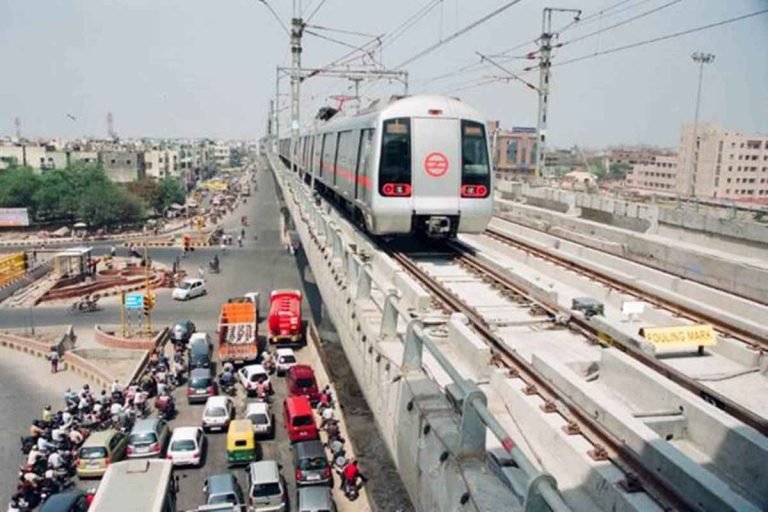
NEW DELHI (Metro Rail News): Delhi Metro, in a bid to expand its network, plans to acquire 52 new trains, including the silver line coming in phase IV, which will be fully compliant with the “Unattended Train Operation” (UTO). The unattended train operation means that the operation of the trains will be without drivers. Delhi Metro Rail Corporation (DMRC) officials gave this information on Monday.

According to DMRC officials, 39 trains will be for the existing Pink Line (Majlis Park-Shiv Vihar) and Magenta Line (Botanical Garden-Janakpuri West) while the remaining trains will be for Silver Line or Line-10. Line-10 is being constructed between Aerocity and Tughlakabad.

A DMRC official said,”The tenders for the same were floated long back and it is in the process. But the tender has not been awarded so far. Also, all these 52 trains to be purchased will be UTO-mode trains.’’ PM Narendra Modi had inaugurated the operation of such trains by flagging off India’s first driverless train on the Magenta Line (Line-8) of the Delhi Metro on December 28, 2020. Apart from this, the operation of the driverless train on the 59-km-long Pink Line was started on November 25 last year which has proved to be another milestone in the history of DMRC.

SAIL provides 8800 Tons of Steel for Pune Metro Rail Project

NEW DELHI (Metro Rail News): Steel Authority of India Limited (SAIL) which is a government-owned company has contributed its best towards the prestigious Pune Metro Rail Project.

SAIL who is one of the largest steel producers in India has supplied 8800 Tons of Steel for the Project, which is launched by PM Narendra Modi on Sunday, 6th March 2022.

SAIL is India’s fastest growing Public Sector unit and the 20th largest steel producer in the world. The hot metal production capacity of the company will further increase and is expected to reach a level of 50 million tons per annum by 2025. Pune metro has two corridors. Vanaz to Ramwadi 15.7 KM (all elevated & 16 stations) & PCMC to Swargate 11.4 KM (6KM underground and rest elevated) with 14 stations. PCMC to Phugewadi section (7KM, five stations) of PCMC to Swargate corridor & Garware to Vanaz section (5 KM & 5 stations) of PCMC to Swargate. The total cost of this metro project is over Rs 11,400 crore. From March 6, the train is operating on 10 stations for commuters with the timings being 8 am to 9 pm, with a 30-minute frequency.