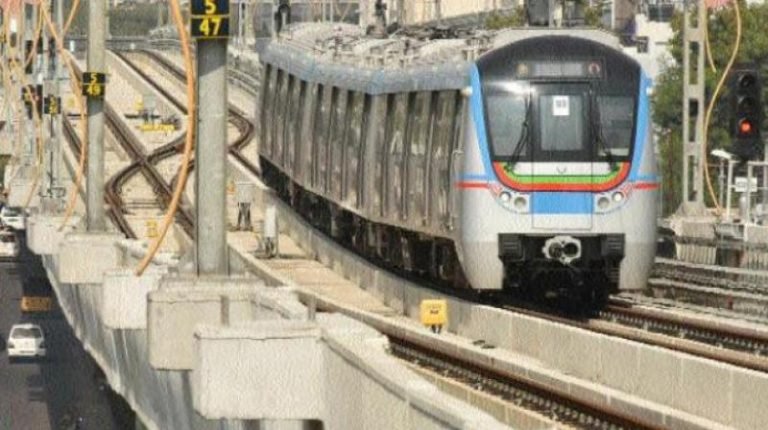
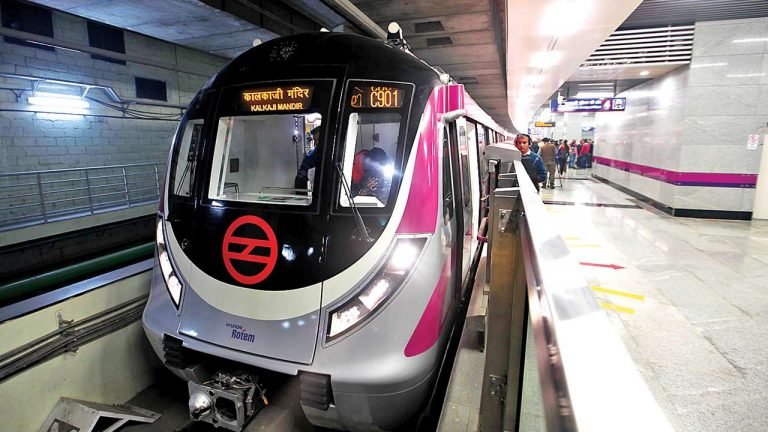
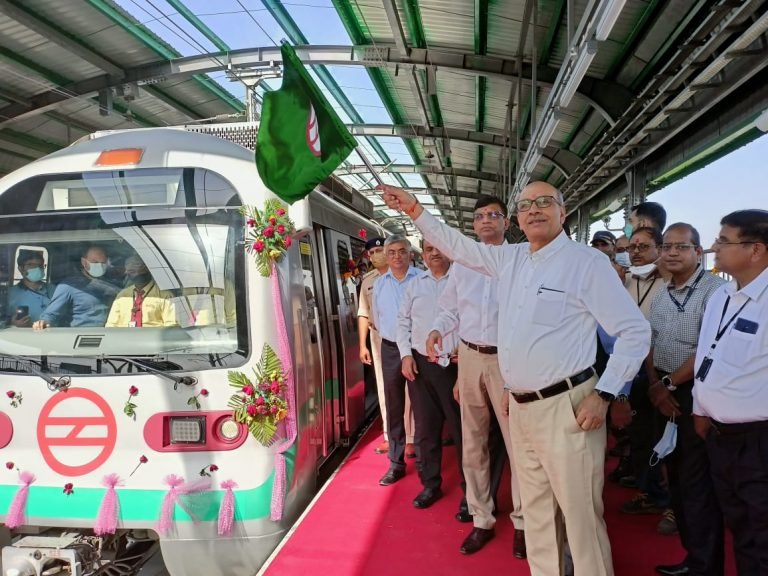
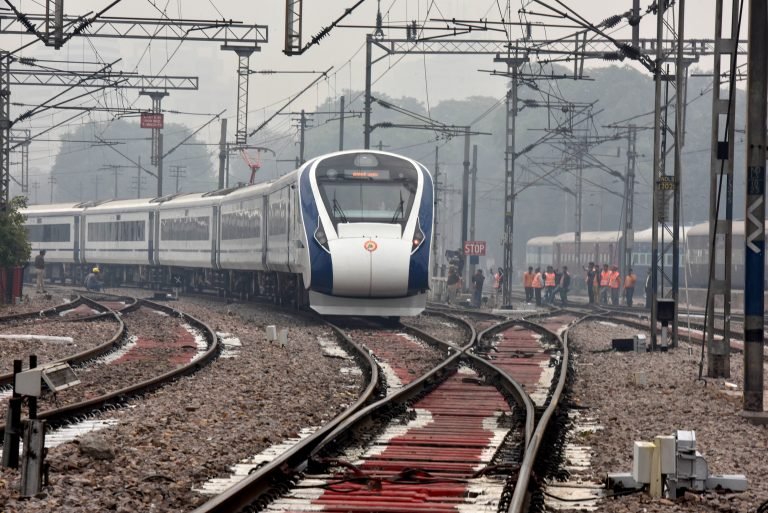
New Delhi: Prime Minister Narendra Modi has flagged-off the Delhi-Faridabad Metro Line that would allow hassle free travel for around two lakh daily commuters between the national capital and the industrial hub in Haryana.The extension of the Delhi Metro connects Badarpur to Escorts Mujesar in Faridabad.The total cost of the project from Badarpur to Escorts Mujesar is nearly Rs. 2,500 crore. Out of this, Rs. 1,557 crore was borne by the Haryana Government, the Centre contributed Rs. 537 crore, while the Delhi Metro provided Rs. 400 crore.The nine stations in this section include, Sarai, NHPC Chowk, Mewala Maharajpur, Sector 28, Badkal Mor, Old Faridabad, Neelam Chowk Ajronda, Bata Chowk and Escorts Mujesar. buy kamagra polo online https://lasernailtherapy.com/wp-content/themes/twentytwentytwo/inc/patterns/en/kamagra-polo.html no prescription
All these are elevated and located on either side of the Delhi-Mathura Road (NH-2).“The nine-station metro corridor which was 95 per cent indigenously built will provide people a safe, affordable, quick, comfortable, reliable, environment-friendly and sustainable transport facility,” a Haryana government spokesperson said.Haryana Chief Minister ML Khattar, addressing a press conference on Saturday, had thanked the Prime Minister for “gifting” the Metro service which would take the city to “another level of progress” with better connectivity with other NCR towns.He had also said that the Prime Minister would be announcing the go-ahead for connecting Gurgaon with Faridabad by Metro.
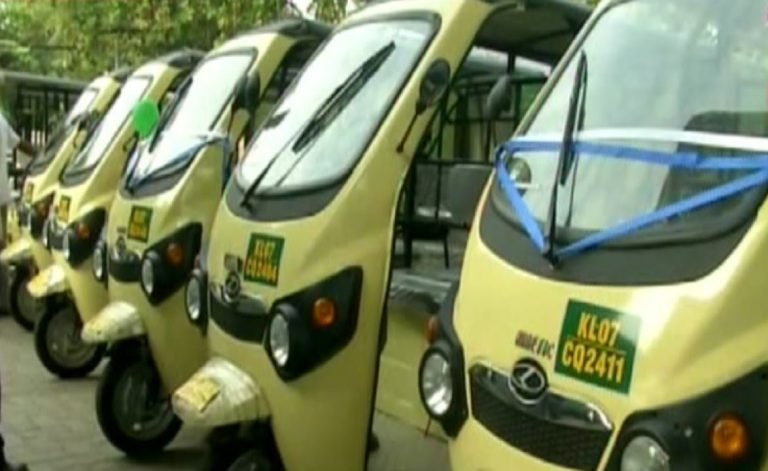
KOCHI (Metro Rail News): Kochi will be getting its first fleet of e-autos soon as Ernakulam Jilla Autorickshaw Drivers Cooperative Society (EJADCS) are set to launch 80 e-autos while Kochi Metro Rail Limited (KMRL) readying to launch another 200 in coming months.
The first 80 e-autos will have swappable batteries and these will operate in the city and in West Kochi, whereas the 200 e-autos that KMRL will roll out will provide first-and last-mile connectivity from metro stations and make the journeys of passengers more comfortable.
A metro official has said that the process for procurement of 200 autos has begun. “KMRL will purchase them, while EJADCS will operate them. Many rounds of discussions were held with them (driver’s society), and the terms and conditions, including revenue sharing, are being finalised. We have recommended that a group of 100 women drivers be trained and deployed to operate half the fleet of 200 autos as part of efforts to bring about gender parity,” he added.
These new autos will have company-fitted batteries, and recharging stations will be built in the coming months. KMRL and EJADS had agreed on a pact in September 2021 according to which they decided to operate 100 e-autos from metro stations on the 25-km Aluva-Pettah metro stretch, from November 1 which is celebrated as Kerala Day but the work was not concluded due to the pandemic situation. buy viagra super active generic over the counter
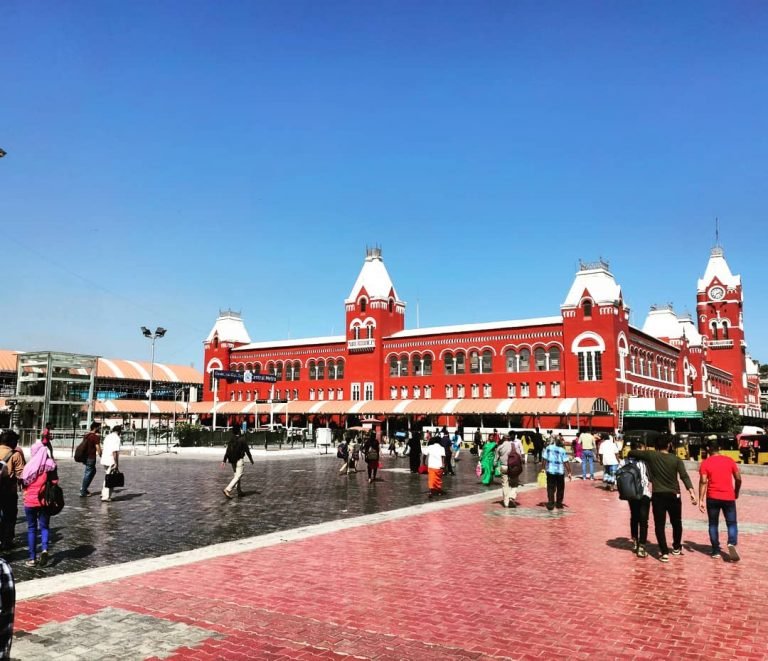
CHENNAI (Metro Rail News): Chief Minister M. K. Stalin on Wednesday, 30th March, inaugurated the Central Square which is built at a cost of ₹400 crore. The facility is close to Puratchi Thalaivar Dr. M.G. Ramachandran Central Railway Station and its aim is to connect important buildings located in this area.
According to officials of Chennai Metro Rail Limited (CMRL), one of the important aspects of this square is the new subways equipped with escalators. “Thousands of people enter and exit this area everyday and our aim is to make walking and travel for passengers seamless. Many who were earlier using the pedestrian crossing will now switch to the subways,” an official said.
Many transport options such as suburban trains, MRTS services, Metro trains and buses are available for the commuters who land at the railway station. These transport hubs are now interconnected. Important buildings such as Rajiv Gandhi Government General Hospital, Victoria Hall and Ripon Buildings are now linked as well with these subways.
Some of the features of this square include pathways for easy walking, a pedestrian plaza with seating arrangements for commuters to rest and relax in between their journey, landscaping with greenery and fountains, revamped bus bays and subways.
An underground multi-level car parking is also coming up as part of this facility which would be able to hold about 2,000 vehicles and this is located opposite the Central Metro station. CMRL is also planning to use a building here as a museum to show commuters how this mass rapid transit took shape and display pictures and miniature machines.
MUMBAI (Metro Rail News): In a press conference on Thursday, MMRDA’s metropolitan commissioner SVR Srinivas said, “Mumbai metro line 3 will take at least another two to two-and-a-half years to complete as a lot of works remain other than the depot.”
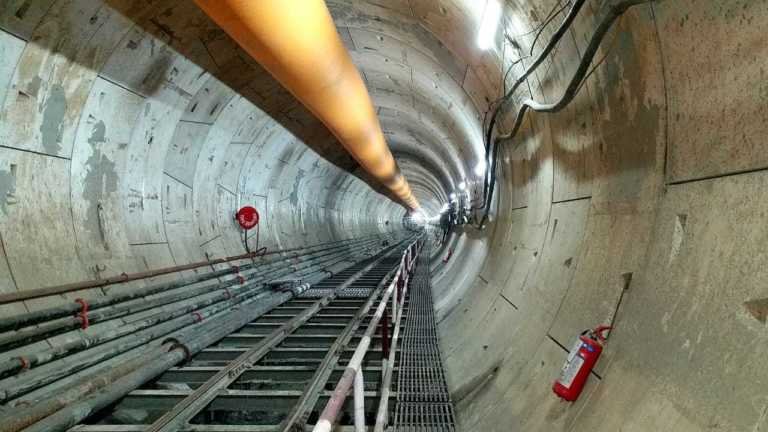
“Another 1.5 km-long tunnel boring work on the 33.5 km line is pending, apart from construction of the stations and other works like signalling, telecommunications, overhead wires, and control center, among other things,” he added. buy cialis pack online https://pridedentaloffice.com/wp-content/themes/twentytwentyone/inc/en/cialis-pack.html no prescription
Mumbai’s Colaba-SEEPZ Metro rail line-3 could take upto two more years to complete as several tasks including some part of the tunnel boring work as well construction of stations, are still pending, a senior official of the Mumbai Metropolitan Region Development Authority (MMRDA) has said.
Once completed, this first underground metro line of the city will provide connectivity to the city airport from south Mumbai and western suburbs, and reduce the burden on the locals living in nearby areas.
Srinivas informed that the MMRDA is conducting a study to extend the Chembur -Wadala -Jacob Circle monorail corridor by another 200-250 meters for connecting it with Mumbai metro line 3. ‘We will take decision about it within a month,’ he said.
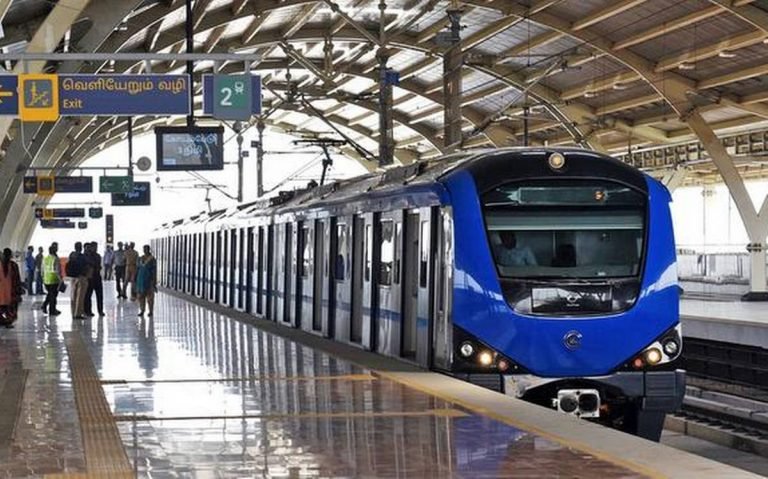
CHENNAI (Metro Rail News):Japan International Cooperation Agency (JICA) has signed a loan agreement with the Government of India to provide Japanese Official Development Assistance (ODA) loan amounting to ₹4,710 crores for the construction of the Chennai Metro Rail Phase II project.
Rajat Kumar Mishra, Additional Secretary, Department of Economic Affairs, Union Ministry of Finance and Saito Mitsunori, Chief Representative, JICA India, signed the agreement.
The aim of this project is to interconnect existing metro networks to provide a seamless ride to commuters and also to solve increased traffic congestion and road accidents in the city. Moreover, regional economic development will be promoted by expanding the mass rapid transportation system in the Chennai region.
This project is predicted to develop an additional Metro Rail System network of approximately 51 km, which includes Corridor 3 from Madhavaram Milk Colony to Sholinganallur and Corridor 5 from Madhavaram Milk Colony to CMBT which would help in cutting down the increasing road traffic, leading to a shift in the public transportation system. This will reduce traffic-related pollution.
Mr. Mitsunori, Chief Representative, JICA India office, said, “Upon completion of the project, the Chennai Metro would ensure comfortable, reliable and greener transport for the citizens. JICA is proud of its partnership with CMRL. As traffic congestion in Chennai is increasing, Chennai Metro will play a pivotal role in addressing vehicular pollution and traffic accidents by further promoting the modal shift from road traffic to public transportation. We strongly hope that the new loan supports CMRL in strengthening its operational structure, providing a convenient mode of transportation to the citizens.”
HYDERABAD (Metro Rail News): The Hyderabad Unified Metropolitan Transport Authority (HUMTA) has invited proposals from experienced firms to carry out a ‘pre-feasibility study’ for the proposed semi-high speed rail connectivity between Hyderabad to Warangal and Hyderabad to Vijayawada.
This project is a part of the Regional Rapid Transit System (RRTS) which is proposed by the State government. It is different from the ordinary railways and the Hyderabad Metro Rail Limited services. RRTS aims at exact regional travel at higher speeds. “The project will offer a safe and hassle-free commute,” a Hyderabad Metropolitan Development Authority (HMDA) official commented.
“Like Delhi is the epicentre in the projects connecting multiple States in the North, in this project proposed by the Telangana government, we want Hyderabad to be the epicentre,” said a HMDA official. Officials from HMDA also said that as the number of commuters on this proposed route is high that is why the semi-high speed rail was proposed in these corridors. HUMTA was formed with the purpose to deal with issues related to traffic and transportation in HMDA jurisdiction.
DELHI (Metro Rail News):DMRC chief Mangu Singh, on Thursday said that the Delhi Metro is not facing any major delay or additional cost for the phase 4 project, and some of the sections of two of the three priority corridors are planned to be opened by March next year.
He said that the fourth phase of the project completion may get extended to March 2025, though the urban transporter is still working with the December 2024 completion timeline. The work on phase IV was started in December 2019 but it was halted due to the COVID-19 pandemic in March 2020 in Delhi.
Currently, the DMRC is undertaking construction work on 65.2 km of three priority corridors which include 45 stations under the project — Janakpuri West-RK Ashram Marg (28.92 km), Majlis Park-Maujpur (12.55 km), which are extensions of Magenta Line and Pink Line, and Tughalakabad-Aerocity (23.62 km) that will be the ‘Silver Line’, connecting the operational Violet Line and Airport Line from the respective ends.
Singh said, “At this stage, I don’t foresee any major delay, and no major cost overrun either. The systems are in place, things are moving quite ok, and the time loss during the pandemic, I am very hopeful, we will catch up. And, maybe within a year’s time, we will start opening the phase 4 sections one by one, part by part”.
“So, small sections of both Line 7 (Pink Line) and Line 8 (Magenta Line), which are being built as part of phase 4 priority corridors, would probably be operational in a year’s time from now, or by March 2023,” he added.
In March 2019, the Centre approved three out of the six corridors of the Delhi Metro’s phase 4 which will further improve connectivity in the national capital.
In the report, it is mentioned that the minimum rate is Rs 2.75/km whereas the rate specified while estimating revenue generation is Rs 3.91/km. People are questioning the numbers, especially the projected expense and the income, in the DPR. There is also a doubt about whether the two estimates were prepared separately.
If the revenue is evaluated based on the lower minimum fare in the DPR, then it will be Rs 1,602 crores during the 2025-26 period. Whereas, if the other rate is considered for the evaluation, then the revenue will be Rs 2,276 crores. Meanwhile, the report also estimates that the minimum fare will be Rs 3.58/km after five years of operation. According to that, revenue will be Rs 2,451 crores. But for that period report estimates the revenue as Rs 4,504 crores by considering the rate at Rs 6.58/km.
It is important to note that the difference may be an accidental error. Previously, it came to light that the number of estimated passengers in primary and final versions of DPR had a huge difference.
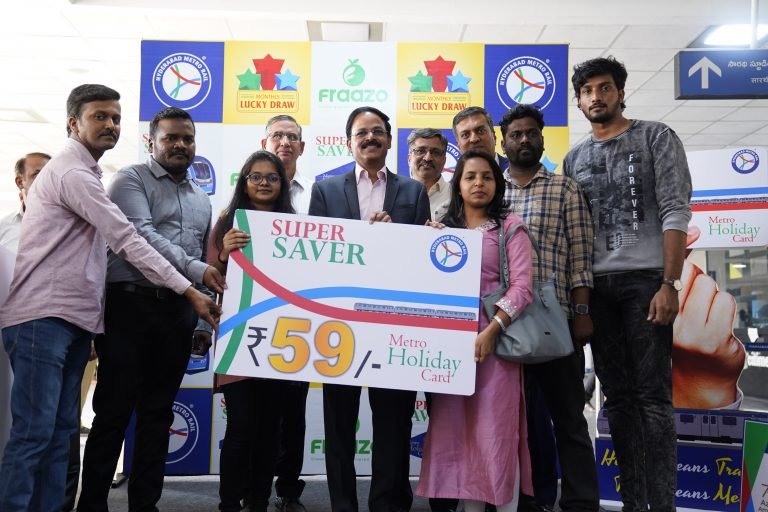
HYDERABAD (Metro Rail News): Starting this Ugadi, L&T Metro Rail (Hyderabad) Limited (L&TMRHL) is spreading holiday cheer among Hyderabadis with its first of its kind Super Saver Metro Holiday Card, which offers to provide unlimited metro travel across 57 metros stations and three corridors on 100 applicable holidays* during the year. The Super Saver Metro Holiday Card was unveiled, by Mr KVB Reddy, MD&CEO, L&TMRHL during an event at Ameerpet Metro Station on 31st March amidst the presence of passengers and metro officials. The Super Saver Metro Holiday Cards would be available for sale from Ugadi,2nd April onwards.
Any passenger can buy Super Saver Metro Holiday Card from 2nd April onwards from any of the metro rail ticket counters by paying a one-time non-refundable cost of Rs. 50/- and a top-up value of Rs. 59/- only. The top-up value will be valid only on the date of recharge of any applicable holiday and can be used throughout the day for unlimited travel across the metro network during the operational hour.
Mr. NVS Reddy, MD, HMRL, said, “What a better Ugadi offer to our passengers than a Super Saver Metro Holiday Card! This power-packed card will not only trigger our passengers to opt for unlimited metro travel on a holiday but also be lighter on their wallets. With such offers in place, people will be motivated to use the metro more often for their city commute.”
Mr. KVB Reddy, MD & CEO, L&TMRHL, said, “We are happy to launch this pocket-friendly Super Saver Metro Holiday Card commencing from the auspicious day of Ugadi. Now with a nominal recharge of Rs. 59/-, passengers can avail of unlimited metro travel on any listed holidays. This special offer reinforces our commitment to provide best in class travel options for passengers.”
Highlights of the Super Saver Metro Holiday Card:
Super Saver Metro Holiday Card is on sale at all ticket counters of Hyderabad Metro Rail
The card comes at a one-time cost of Rs. 50/- (non-refundable)
Recharge the card with a top-up value of Rs. 59/- at any metro station on the day of travel
The card is ready to be used within operational time across the metro network on the recharge day
The card is non-transferable and for ‘one card one traveller’ use
The super saver card will allow travel on the metro network on specified holidays only, on other days the AFC (Automatic Fare Collection) system will not accept this card
The list of Holidays includes (Sun, 2nd & 4th Sat & Govt holidays – a total of 100 days)
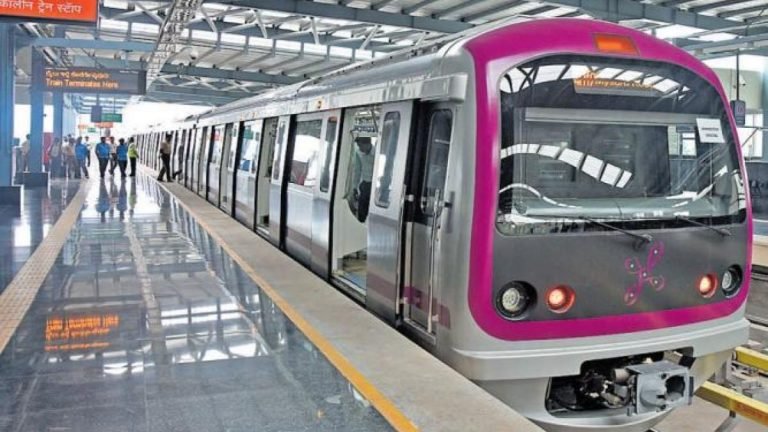
BANGALORE (Metro Rail News):The Bangalore Metro Rail Corporation Limited (BMRCL) has decided to launch one-day and three-day passes for commuters which will be beginning from April 2. It will also refund unclaimed amounts on online smart card recharges and top-ups.
As per BMRCL’s release, the one day pass is valued at Rs 200 whereas the three days pass amounts to Rs 400. Both of them include a refundable security deposit of Rs 50. It allows for unlimited travel in Namma Metro for three days from the date of purchase.
The passes will be available at station ticket counters, and the deposit would be refunded to commuters when the smart card is returned at the Customer Care Centre at any station, the release said. The smart card must be in good working condition, it added.
Recharge of smart cards can be done online through the website or mobile apps and can be updated by tapping at the Automatic Fare Collection gates after one hour, and within seven days from the time of recharge. It can also be done at Card Top-up Terminals any time in under 15 days from the time of recharge. If commuters are unable to update the balance amount on their smart cards within 15 days, such amounts will be refunded through the same channel they topped up, with a deduction of the cancellation fee of 2.5 per cent of the recharge amount.
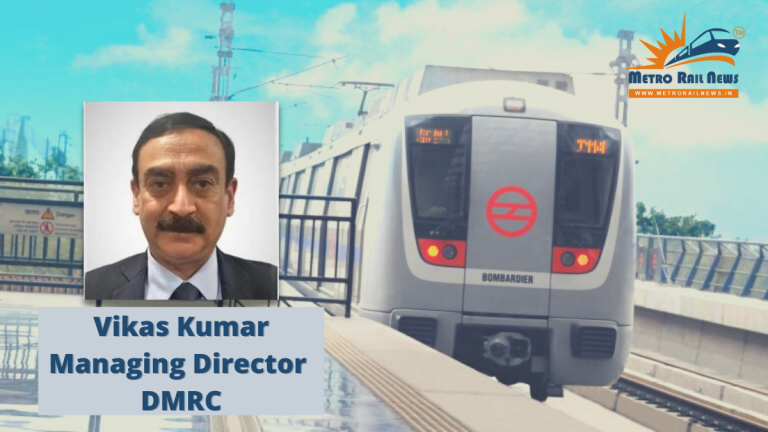
New Delhi (Metro Rail News): Vikas Kumar has been selected as the managing director of the Delhi Metro Rail Corporation (DMRC) for five years after the approval of the Centre on Wednesday.
Vikas Kumar is a 1988 batch Indian Railway Traffic Service (IRTS) officer. Prior to this, he was appointed as Director (Operations) in December 2021. He is an electrical engineering graduate from IIT-Roorkee (1987) and did his M.Tech from IIT-Delhi in 1989.
The approval letter by Yogesh Antil, deputy secretary with the Union Ministry of Housing and Urban Affairs (MoHUA) stated, “I am directed to convey the concurrences of this ministry to the proposal of the Government of NCT of Delhi for the appointment of Vikas Kumar as the Managing Director of Delhi Metro Rail Corporation Pvt Limited (DMRC) for a period of five years with effect from April 1.”
Vikas Kumar is presently the director of operations at the DMRC and has worked as executive director for many years before being appointed to the post in 2021. He was selected and nominated by the selection committee formed by the Delhi government previously. The Delhi government had forwarded its proposal to Lieutenant-Governor Anil Baijal for his approval before sending it to the Ministry of Housing and Urban Developments for a final nod. buy viagra soft online no prescription
Mangu Singh who was the MD before Kumar’s appointment will be retiring from the post on March 31. Mr Singh was appointed as DMRC MD in 2012.
After the Centre’s approval, the Delhi government said it has appointed Vikas Kumar as the DMRC MD. “The government of GNCTD is pleased to appoint Vikas Kumar as Managing Director of DMRC in accordance with terms of Article 130 of the memorandum and Article of Association of association of DMRC for a period of five years,” stated the circular issued by Ashish Kundra, principal secretary and commissioner, Transport.
NEW DELHI (Metro Rail News):Dr Mangu Singh, MD/DMRC, inaugurated a new interchange station at Punjabi Bagh which will provide interconnectivity between the green and pink lines of the Delhi Metro, on Tuesday, 29th March.
Delhi Metro Rail Corporation (DMRC) has built such a station that connects two operational corridors for the first time. These two lines previously crossed each other but there was no halt facility due to which there were demands from the commuters to provide an interchange provision at the intersection.
Additional Interchange Station at Punjabi Bagh Connecting Green & Pink Line Inaugurated!
A new interchange station on Green Line, providing interconnectivity between Green & Pink Line at Punjabi Bagh West station (Pink Line) was inaugurated today by Dr. Mangu Singh, MD/DMRC. pic.twitter.com/YEJNJpN8dh
— Delhi Metro Rail Corporation (@OfficialDMRC) March 29, 2022
The platforms are connected by a foot overbridge, which connects the platforms with the Punjabi Bagh West metro station on the pink line (Majlis Park-Shiv Vihar).
A senior DMRC official said that this new interchange station on the Green Line is not a regular station, and was built despite engineering challenges to help connect the two lines. The entry and exit will be done through Punjabi Bagh West station of the pink line only, he added.
There will be boarding and deboarding facilities available at this station. As a result, passengers desirous of interchanging trains between the green line and the pink line will be able to use the facility. The platforms are connected by a foot overbridge (FOB), which connects the platforms with the Punjabi Bagh West metro station on the pink line. The FOB is 212 metres long, the DMRC said.
This step has been taken with the aim to provide interconnectivity between the pink and the green lines. This facility will greatly benefit the passengers travelling to and from the satellite city of Bahadurgarh and other outer Delhi areas such as Mundka and Nangloi. People will be able to travel to various locations in the 59-kilometre-long Majlis Park Shiv Vihar pink corridor.
The new platforms are 155 metres in length and are connected with the FOB by two extra-large lifts which have a capacity of 26 passengers each, as well as staircases.
InnoMetro 2022 – 2nd Edition is pleased to welcome on board HYT Engineering Company Pvt Ltd as ‘Bronze Partner’ for the three-day conference and expo to showcase the latest innovations and technology for the metro and railway industry.
HYT Engineering Company Pvt Ltd started its operation in 1977 with manufacturing drilling machines and lathes. Since then, the company has grown into a technology-driven organization that has manufactured over 900 machines adopting international standards.
They have an Ultra-Modern Facility of 16000 square metres for the design, manufacturing and testing of machines. Having a service set up in PAN India with a dedicated team of 150 Service Engineers, HYT has also developed and established agencies for maintaining their machines on the global platform as well.
With a belief in providing turnkey solutions from design, manufacturing to after sales maintenance, HYT is widely acclaimed for its design excellence, innovation and customer centric attitude. To know more, visit: https://hytwheellathes.com/
About InnoMetro
InnoMetro is a global event to showcase Innovation & Technology for the Metro, Railway, RRTS, High-Speed Rail & Allied Industries being organized by Metro Rail News from 28th-30th April, 2022 virtually.
It aims to bring experts from the industry in a line to witness the latest advancements in a three-day insightful conference & expo. With a vision to maximize penetration into the key trends affecting the urban mobility sector, the event serves as a global platform for ideation, discussion and presentation of the most innovative ideas and concepts giving a new dimension to the Rail and Metro Industry.
The event serves as a one-stop destination for leading brands to showcase their products, for experts to speak their minds and for delegates to experience the latest trends and technologies in the industry.
Many delegates from corners of the world will be gracing the event and will be speaking on topics such as:
• Realisation of Atmanirbhar Bharat • Make in India: Make for World • New modes of Transportation: Metro Neo, Metro Lite • Workforce diversity & Technical Skill Gaps in Metro & Railway • Covid Protocol & Difficulties in Rail Transport • Ticketing and Payment Innovations • Automated Train Examination System: ATES • Asset Maintenance and Predictive Analysis • Transport Infra Financing: Public-Private Partnership (PPP) • Indigenous exports of Rolling Stock • Advancements in Artificial Intelligence for Metro & Railway • Increased revenue systems and cost-cutting measures • Sustainable & Green Mobility • Improving Passenger Experience on ‘Moving Wheels’ • Metro railways: Promoting Low carbon Transportation in India • Data-driven Mobility System • MaaS- Increasing the sustainability of Transport System
MUMBAI (Metro Rail News):Mumbai Metro 7 and Metro 2A metro lines will be inaugurated on April 2 by Chief Minister Uddhav Thackeray. Gudipadva day is also falling on this date, making it an auspicious start.
Both lines are fully elevated and Metro 2A, running from Dahisar west to D.N. Nagar (Andheri west), and Metro 7, from Dahisar east to Andheri east, will hugely benefit the people in the north-western suburbs.
The MMRDA has been granted the final nod of the Commissioner of Metro Rail Safety after following all the requirements for the project which has crossed several tentative deadlines since October 2021 for launching commercial operations. Metro 7 is 33.50 km long with 29 stations and Metro 2A will be 18 km long with 17 stations.
Running parallel to the Western Express Highway, the Western Railway suburban section, the S. V. Road and the Link Road, the aim of two new Metro Lines is to reduce road congestion and overcrowding in the local trains which will provide major relief to the commuters.
Chief Minister Uddhav Thackeray, Deputy Chief Minister Ajit Pawar and Revenue Minister Balasaheb Thorat had flagged off the trial runs of these two lines last May.
Mobility pattern of women in India: Causes, Safety Concerns
According to the 2011 Census of India, women and girls make up close to 50 percent of our urban population. They comprise only 19 percent of ‘other workers’ ie, workers other than agricultural labourers, cultivators, and home-based workers and this is the only category of people we have mobility information for. Yet, 84 percent of women’s trips are by walking, cycling, or public transport. National Sample Survey Organisation (NSSO) data also shows that more than 60 percent of both rural and urban households use the bus as their primary mode of transport, followed by auto-rickshaws. This clearly shows that women primarily depend on public transportation for their travel needs, and a bad public transit system can have a direct and disproportionately higher negative impact on women.
Women’s formal workforce participation is low at 14.7 percent. Women are mostly employed in the informal sector in our country, due to which most workplaces that women travel to are not in the central business districts of cities. Women’s trips also tend to be during off-peak hours. Owing to their care work responsibilities, women often leave the house after the men have left for work and before the children come back from school—hours during which the frequency of public transport is lower, thus increasing their waiting time. Hence, transport planning typically caters to the needs of men employed in the formal sector, who travel from periphery to centre in the morning and back in the evening. It does not cater to the travel patterns and needs of a large portion of women, particularly those working in the informal sector.
Women’s travel is also characterised by ‘trip-chaining’. They generally combine multiple destinations in one trip because of a double burden of economic activities and care-related activities. For example, going to the office might involve dropping off children at school on the way, and coming back from a leisure trip might involve picking up groceries. Due to this, women’s trips are generally shorter, more in number, and often require that they travel in the opposite direction of the final destination, diverting from the most direct route, and/or breaking the whole journey into multiple legs. Public transport agencies typically set up fares such that multiple short trips cost more than a single long trip. Women end up paying more than men because of the difference in travel patterns.
Mobility is the primary connection between women and opportunities for economic independence and bears a huge impact on women’s empowerment. The World Bank states that women’s mobility is affected by restrictive socio-cultural norms, a lack of safe and sufficient transport infrastructure, gender-blind planning and governance, and a lack of access to information and communication technology.
Women’s forced mobility and immobility
Women step out of the house for multiple reasons. In some cases, mobility is even forced. For example, women living in lower-income settlements or areas that lack basic facilities such as water and sanitation are often compelled to travel to access sanitation facilities or collect water. However, the opposite of this forced mobility is forced immobility, which is caused by a number of factors including but not limited to economic poverty, time poverty, social norms, and the perception of safety.
Economic Poverty: Research at the intersection of women’s economic poverty and mobility highlights the fact that for the urban poor and women, transport plays a dual role—as a service to be consumed, and as a connection to opportunities. In cases where expendable income is not available, women are forced to reduce the number of trips and when that is not an option, they primarily depend on walking because there is no direct economic cost to it. Though cycling is a good alternative, usage is quite low due to social stigma and/or harassment faced on the street.
Time poverty: Women also face time poverty, which is the lack of time for rest and leisure after accounting for time spent working (in the labour market or performing domestic tasks), and on other activities. Women’s greater domestic responsibilities coupled with their weaker access to household resources can result in the use of less expensive and slower modes of transport, especially when they are from lower-income groups. This means that if compelled to wait too long they may have to give up on the whole trip. Women often plan their trips more strictly than men since their trips are also interlinked with children’s school timings and the times at which family members return home.
Societal norms: Societal norms that dictate that the man in the family is the breadwinner are also likely to lead to women becoming the first to give up on trips that cost money and time (especially if it allows the husband to go to work). In many cases, children’s school timings and locations also prevent women from having their own travel plans because women are still held responsible for the care of children.
A study by the Asian Development Bank states that women turn down better-paying jobs if the travel conditions are not safe, require travel at odd times of the day, or do not satisfy other lifestyle conditions. Apart from safety, women also place importance on comfort and quality because they often travel with children and elderly whose physical safety depends on it.
Perception of safety: The final element of forced immobility is also probably the most important because it is something that is imposed upon women by society, and by women upon themselves. The lack of safety in public spaces and public transport remains the most concerning aspect of mobility. Even in cases where individual women have not faced any direct form of violence, the fear of what might happen continues to be a deterrent. This limits women’s movement and the distances they travel alone.
The risk of sexual harassment also has a major impact on women’s mobility, accessibility, and confidence. Multiple studies conducted by organisations in Delhi, Mumbai, Guwahati, Bengaluru, and Chennai show disturbing trends of high levels of sexual harassment faced by women while waiting for or using public transport. The harassment that women face is normalised. It has become an everyday phenomenon that everyone assumes to be the norm. Apart from the actual victimisation, the fear of it can also have a crippling effect.
Need for gender-responsive mobility planning
Freedom of movement, mobility rights, or the right to travel is a basic human right, as declared in Article 13 of the United Nations’ Universal Declaration of Human Rights. The question is then, why are women in India not as mobile as men?
The answer to that is a simple one. A report by the OECD states that ‘Gender is one of the key socio-demographic variables that can influence travel behaviour, but it is often the least understood.’ Whether it is for education, employment, or regular household chores, women stepping out of the house is a decision that is thought through carefully. Mobility planning is not as well thought out, considering the specific needs of women. In other words, it is not gender-responsive in nature.
Women are forced to make strategic decisions to overcome this lack of planning. They are put in a position to demonstrate that they deserve a certain level of safety, whether it is by travelling in groups, wearing only certain kinds of clothes, not being in public spaces after a certain time, and so on. This prevents them from accessing educational opportunities, jobs, and in some cases, even healthcare.
Mobility is the fulcrum that connects women to economic independence, which will in turn ultimately take us closer to the goal of women’s empowerment. Hence, it is of critical importance that we ensure that mobility planning is gender-responsive and accommodates the needs of the most vulnerable sections of society.
As a public transporter steps taken by Indian Railways for women’s safety
Indian Railway issues guidelines to prevent incidents of Crime against women in trains and in railway premises. Twenty three (23) million passengers travel through the Indian Railways everyday out of which 20% i.e. about 4.6 million are women. In the recent past, the incidents of crime against women in trains and railway premises has been a major area of concern. Therefore, the following steps as part of a focused effort across Indian Railways to collectively strive for safety of women passengers and to mitigate atrocities against women in railways:
It may be noted that as per Indian Railways the action plan suggested to be implemented should be classified in Short Term & Long Term Plan. Short Term plan should be implemented immediately from the existing resources on priority without any delay. It may include keeping watch on suspects, regular visit to vulnerable spots by duty officers & staff during their rounds. However, Long Term Plan which may include improvement of Basis Infrastructure, CCTV, Light Masts, etc. which may take a reasonable time, should be chased with concerned authorities on regular basis and till such time it is completed, focus should be kept on temporary minor works that can be effective in improving the situation, which may be worked out and got implemented with bare minimum expenditure or with available resources.
The various preventive measures suggested & planned to be adopted are as under:
Proper lighting arrangements should be ensured covering all vulnerable places identified in Railway Stations, Circulating area, Parking, FOBs, approach roads, ends of platforms, Yards, Washing lines, DEMU / EMU Car sheds, Saloon Sidings, Maintenance depots, etc.
Abandoned structures in platforms/yards, abandoned quarters, buildings at isolated places which remain unguarded/ unattended should be demolished immediately in consultation with engineering department. Till such time that they are demolished, they should be regularly checked as part of the beat of on duty staff especially during night time or period when the presence of people is minimal.
Unauthorised entries/ exits should be closed.
Yards / pits/ nearby railway area of stations must be kept clean of unwanted vegetation which may provide cover for concealment. View cutters such as these may offer opportunity to offenders to commit crime.
Waiting rooms should not remain unattended and persons should be allowed to enter the waiting rooms after proper entry, particularly in nights and at times when there is minimum presence of passengers. It should be cross checked by the duty officer at odd hours.
Proper Police Verification and Identity Cards of staff engaged on contractual basis engaged in services related to passengers should be ensured as per SOP & GCC. No staff without Identity Cards may be allowed in trains and railway premises.
No unauthorised person may be allowed to move in Yard and coaching depots where the coaches are stabled. There should be controlled entry system.
Before the empty rakes are moved to washing lines, it should be ensured that the coaches have been checked properly by the C&W and Electrical staff and locked. The condemned coaches kept in yards/ sick lines must be kept locked and checked from time to time.
After cleaning & other activities pertaining to maintenance of coaches, again it should be checked properly and locked in the washing line and brought to the platform in locked condition.
Proper basic security arrangement should be ensured in coaching yards & depots.
Surveillance system should also be enforced in coaching depots & yards.
Encroachments particularly in/ near passenger area should be removed on priority following legal process and unauthorised entries to railway premises should be closed.
Railway is providing free internet services to the passengers. It should be ensured in coordination with the service providers that the porn sites are not accessible through this service.
Unwanted /Unauthorised persons in the railway premises should be rounded and prosecuted and railway station, yards & trains should be kept free from unwanted 8s unsocial elements.
Special drives may be launched to apprehend and prosecute persons consuming alcohol in railway stations and trains
Exemplary action should be taken against railway staff involved in such offences.
The cases of crime against women must be followed up till their logical conclusion.
Sensitisation activities:
Sensitisation of all railway employees and contractual staff may be done. Staff engaged in checking of rolling stocks, porters and hawkers/vendors should be encouraged to report the incident without loss of time to Police/ RPF or the Station Master. Help of NGOs may also be obtained for this purpose.
It has been noticed that generally cases of eve teasing, if remain unattended, lead to increase in incidents of molestation or assault on women. As a measure to prevent such crimes, GRP/RPF officials shall promptly take necessary action on receiving complaints regarding any type of ‘Crime against women’.
Regular briefing of staff at mounting and debriefing at the time of dismounting should be ensured by the Post Commander/Duty Officers/ Shift In-charge.
All Zonal railways may utilise cultural troupes for Nukkad Nataks etc to sensitise railway passengers towards cleanliness, respect for women, legal provisions for security of women and children and penal provisions for violation of these laws.
Railway personnel across all departments should be sensitised regarding their duty towards women and children through soft skill and gender sensitisation training in various training institutes. They should be trained to identify women in distress or children in need of care and protection and respond properly. Special sensitisation programs should be arranged in ZTI/Training Centers where Railway Employee or RPF undergoes initial/periodical trainings.
Sensitisation sessions may be conducted for women to come forward and report incidents of misbehavior against them.
Surveillance over the identified vulnerable area:
CCTV surveillance system should be used effectively. Time to time audit of the cameras installed and the area covered by them should be done. It should be ensured that all the persons visiting the Railway Platform/ Passenger area are caught on the cameras.
The vulnerable places identified for such crime should mandatorily be covered under the CCTV surveillance. While planning for location/ relocation of CCTV it should be kept in mind.
The position of women’s coaches should be fixed at the platform and CCTV camera to be especially installed on the platform at that point so as to provide adequate coverage of these coaches.
CCTV feed should be monitored by officers regularly.
Crime Intelligence Branch & Special Intelligence Branch should be utilised to ensure surveillance of the area identified to be vulnerable for rape and other heinous crime related to human body (women) in addition to being done regularly by concerned RPF executive staff.
Use of National Database on Sexual Offenders (NDSO) may be made for keeping surveillance of offenders residing in that area.
Special measures to be adopted for prevention of crime in trains:
Escort parties to be briefed properly about the steps to eradicate chances of such heinous crime in train. They should be extra cautious during the night.
Toilets are the most common place where the incidents have been reported in past. As such any gathering of persons near the toilets should be removed.
Usually Coach attendants/AC Mechanic remains at their allotted seats near the entry/exit gates which can be helpful to have surveillance over the space. Escort party should ensure briefing of these staff and pantry car staff who are moving in the trains, taking them in confidence to report any suspected activities or probabilities of such crime to them and the escort staff should act on it properly.
Proper care should be taken for Security of lady passengers travelling alone or with small children by focusing on proper implementation of Meri Saheli initiative.
Escorting staff should be briefed to be courteous with passengers especially with ladies passengers.
Train Captain/ Suptd. should be asked to cross check the identity cards of all out sourced staff working in the train. PCSCs/ Sr.DCC should coordinate with their counter parts of Commercial, Electrical, S&T and Mechanical dept. counterparts to ensure good coordination between all staff on board and ensure that all the outsourced staff bears Identity Card issued after proper Police Verification. Cross checking should be ensured by these departments also.
It should be ensured that the CCTV cameras and Emergency Response System installed in the coaches are in working condition and are attended properly.
Usually, ladies coaches are near/with the train Guard in the tail end of trains which at many places remains outside the Platform area. Escort parties and station RPF/ GRP staff should ensure that they are attended properly at the halting stations.
Staff deployed in train escort & in yards should be careful when the train approaches or leaves the station where the speed of train is restricted and criminals usually jump out from the running train. They must ensure that the persons jumping from the trains are apprehended and questioned for further necessary action.
Notice for passengers:
Though, the details of helpline numbers are printed on the reverse of train tickets, helpline numbers provided by railways should be widely publicised.
People should be made aware of Pan India Emergency Response System and other important forum and calling facilities available for reporting offences and particularly offences against women in that area.
People should be made aware of “One Stop Centre (OSC) which is exclusively designed to provide integrated services such medical aid, police assistance, legal counseling/court case management, psychological, social counseling and temporary shelter to women affected by violence under one roof.
Proper advertisements educating the passengers should be published in various print, electronic and social media platforms.
Guidelines issued by Indian Railways advised All Zonal Railways and Production Units that these instructions are merely indicative and not exhaustive and acting proactively, field units may implement various other mechanisms to ensure safety of women depending upon local conditions and circumstances.
Few additional measures taken by Indian Railways for the safety of women passengers
Policing on Railways being a State subject, prevention of crime, registration of cases, their investigation and maintenance of law and order in Railway premises as well as on running trains are the statutory responsibility of the State Governments, which they discharge through Government Railway Police/District Police. However, Railway Protection Force supplements the efforts of GRP to provide better protection and security of passenger area and passengers. Cases of Indian Penal Code crime in Railways are registered and investigated by the concerned Government Railway Police. However, following measures are being taken by the Railways in coordination with Government Railway Police to ensure security of passengers including women passengers:-
On vulnerable and identified routes/sections, 2200 trains (on an average) are escorted by Railway Protection Force daily in addition to 2200 trains escorted by Government Railway Police of different States daily. Security Help Line number 182 is made operational (24X7) over Indian Railways for security related assistance to passengers in distress.
Through various social media platforms viz. twitter, facebook etc., Railways are in regular touch with passengers including women to enhance security of passengers and to address their security concern. Drives are conducted against entry of male passengers into compartments reserved for women passengers and persons apprehended are prosecuted under section 162 of the Railways Act, 1989.
Ladies Special trains running in Metropolitan cities are being escorted by lady RPF personnel. In other trains, where escorts are provided, the train escorting parties have been briefed to keep extra vigil on the lady passengers travelling alone, ladies coaches en-route and at halting stations.
Frequent announcements are made through Public Address System to educate passengers to take precautions against theft, snatching, drugging etc. Regular coordination is made with the State Police/GRP authorities at all levels for prevention of crime, registration of cases, their investigation and maintenance of law and order in Railway premises as well as on running trains.
An Integrated Security System (ISS) consisting of surveillance of vulnerable stations through Close Circuit Television Camera Network, Access Control etc. has been sanctioned to improve surveillance mechanism over 202 railway stations.
In order to increase representation of women in RPF to the level of 10%, women RPF personnel are continuously being empanelled. CCTV cameras have been installed at 501 Railway stations and in 2019 coaches. There is a provision for installation of CCTV cameras at 6124 Railway stations and in 58276 coaches. Work for installation of CCTV at 6124 stations and 7020 coaches has been completed (Phase-1).
Emergency Talk Back system and Closed Circuit Television Surveillance Cameras have been provided in all newly manufactured Electrical Multiple Unit (EMU), Main line Electrical Multiple Unit (MEMU) coaches and Air conditioned rakes of Kolkata Metro. This system is also being provided in all newly manufactured air-conditioned EMU rakes and underslung MEMU rakes.
Railways have already provided Emergency Talk Back system and CCTV in ladies compartments/coaches of existing 12 EMU rakes and 150 EMU/MEMU rakes respectively. Further, flasher lights are also being provided in ladies coaches in 15 nos. of EMU rakes in South Eastern Railway. When the alarm chain of the coach will be pulled, these lights will start blinking and buzzer will start sounding till resetting of alarm chain.
Special provision by IR in travel of women passengers
Indian Railways reserves berths in the sleeper class of long-distance Mail/Express trains for female travellers
A reservation quota of berths in third-tier AC coaches of Garib Rath/Rajdhani/Duronto/fully air-conditioned Express trains have been allocated for female passengers.
Indian Railways has introduced new measures to ensure the safety and security of female passengers in long route trains.
According to the IR, berths are being reserved in the sleeper class of long-distance Mail/Express trains and a reservation quota of berths in third-tier AC (3AC) coaches of Garib Rath/Rajdhani/Duronto/fully air-conditioned Express trains are being done for female passengers, irrespective of their age, travelling alone or in a group.
Also, combined reservation quota of six to seven lower berths per coach in sleeper class, four to five lower berths per coach in 3AC and three to four lower berths per coach in 2AC coaches (depending on the number of coaches of that class in the train) have been earmarked for senior citizens, female passengers aged 45 years of and above and pregnant women.
In terms of safety and security measures for women passengers, the IR states that Railway Protection Force (RPF) has been directed to supplement the efforts of GRP/District Police to provide better protection and security of passengers. Although ‘Police’ and ‘Public Order’ are state subjects under the Seventh Schedule of the Constitution of India, additional steps are being taken by the Railways in coordination with GRP for the safety and security of passengers in trains and at stations.
The Railway Protection Force (RPF) has also launched a pan India initiative ‘Meri Saheli’ on October 17, 2020, with the objective to provide enhanced safety and security to lady passengers travelling by trains for their entire journey from boarding to de-boarding. The focus of the initiative is to provide security to lady passengers especially those travelling alone. The RPF is also training teams of lady officers and staff for the initiative.
Additionally, on vulnerable and identified routes/sections, trains on daily basis are being escorted by RPF and GRPF (Government Railway Police Force) of different States. Railway Help Line number 139 is operational 24×7 over the entire network of Indian Railways for security-related assistance to passengers in distress. The Railways also addresses to a passenger’s concerns if raised through various social media platforms i.e. Twitter, Facebook etc.
Lady RPF personnel have been deployed, who are escorting the Ladies Special trains. The train escorting parties have been briefed to keep an extra vigil on the lady passengers travelling alone, ladies coaches en-route and at halting stations.
To ensure women passengers’ safety, drives are conducted against the entry of male passengers into the compartments reserved for ladies. In addition to this, CCTV cameras have been provided in 4,934 coaches and 838 railway stations for enhancing the security of passengers.
An emergency talkback system and closed-circuit television surveillance cameras have been provided in ladies compartments/coaches of all newly manufactured Electrical Multiple Unit (EMU) and Air-conditioned rakes of Kolkata Metro. State Level Security Committee of Railways (SLSCR) has also been constituted for regular monitoring and review of security arrangements of the Railways.
Metro Rail News is conducting a 2nd Edition InnoMetro 2022 on 28-30 April 2022, virtually focusing on Seamless Mobility. Join InnoMetro 2022 for a detailed discussion on the topic “Women Safety in Public Transport System: Role of National Transporter”.