

Mumbai Metro Lines 2A & Line 7 receives RDSO safety certificate for operations
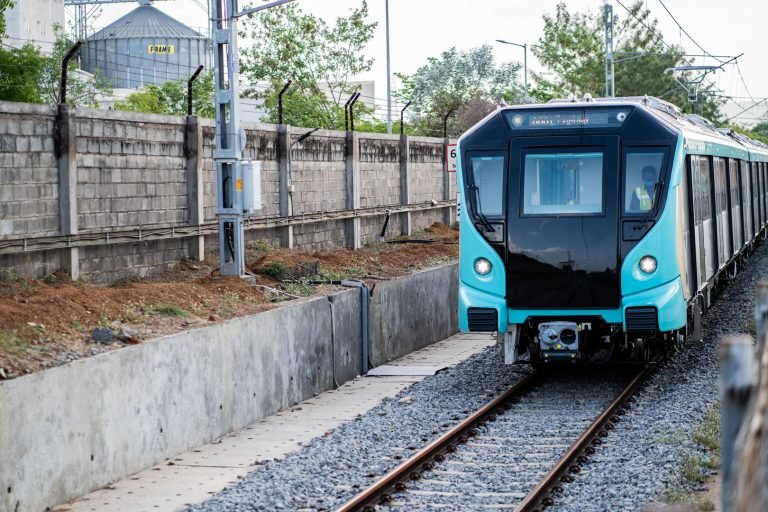
MUMBAI (Metro Rail News): The MUMBAI Metro Lines 2A (Dahisar to DN Nagar) and Line 7 (Dahisar East to Andheri East) have cleared testing by the Research Designs and Standards Organization and will now undergo testing for signalling, according to an MMRDA official.
RDSO authorization is an important first step for any Metro rail before it can begin operation for commercial purposes.“The RDSO test is an important milestone that has been achieved. In the next few days, the certification will be issued. Now the target to finish the remaining safety clearance is we are processing, so that commissioning of the remaining stretch by the end of this year is achievable,” the official added, requesting anonymity.The Maha Mumbai Metro Rail Operation Corporation Ltd (MMMOCL) received a 20 km stretch between Aarey and Dhanukarwadi from the MMRDA, the nodal agency for the construction of Metro Lines 2A and 7, as well as other Metro lines in MMR, with the exception of underground line 3 between Colaba-Bandra-SEEPZ, only in April.
It handles the Metro corridor’s maintenance and operation.Commuters are responding well to the partially opened Metro Lines 2A and 7, with an average of 80,000 commuters per month on an average.
Once fully operational, these two Metro lines, which have 30 stops and pass through the major Link Road and Western Express Highway, are anticipated to lessen traffic on the road and decongest the overcrowded local trains on suburban stretches.
By 2031, Metro Line 2A and Line 7 are anticipated to carry 11.37 lakh daily passengers.
Girder Erection for Pune Metro Line 3 begins with a full speed
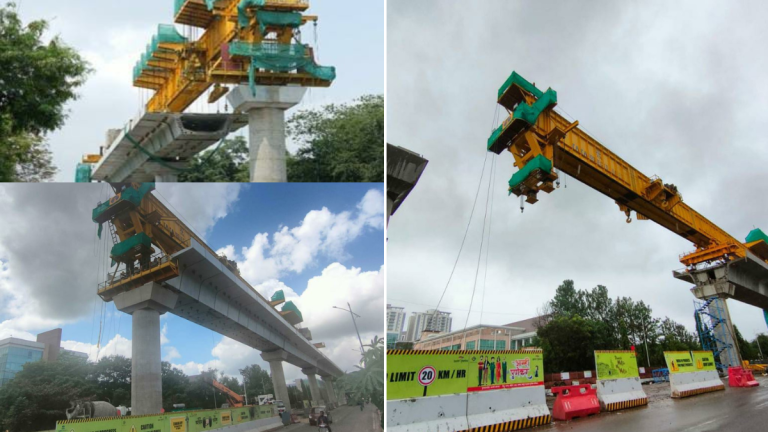
PUNE (Metro Rail News): Work on Pune Metro Line 3 connecting the IT hub of Hinjewadi to the central area of Shivajinagar is taking shape at a fast pace. After erecting a total of 112 pillars last week, Puneri Metro has now started the crucial work of Girder Launching (popularly known as "LG erection") on the pillars.The work of Pune Metro Line 3 on the Hinjewadi to Shivajinagar route has been jointly undertaken by Tata Group and PMRDA on the basis of the Public Private Partnership (PPP) and Tata Group has established Pune IT City Metro Rail Limited as a special purpose vehicle (SPV) company for its implementation.At present, girder launching work has been undertaken at various places on this route of a total distance of 23.3 km. The length of each of these girders is about 70.5 meters. A total of eight such girders are going to be launched for the entire project of Pune Metro Line 3. Out of these, three girders at Hinjewadi Phase Three and Balewadi Stadium have now been completed. Also, the work of connecting the fourth girder at Sindh Society on Baner Road has been started on 13th October.
After the LG erection, all the accessories will be installed and segment lifting would be the next step. Hence, girder launching is considered one of the crucial tasks in the construction process.
What is LG erection?
Launching Girder (popularly mentioned as LG) is also known as Launching Gantry. The launching gantry is used to lift and support bridge segments or girders as they are placed while being supported by the bridge piers instead of the ground. A launching girder is in general a design-and-built machine used in precast post-tensioned bridge construction. It consists of lifting devices and a supporting structure for lifting precast beams and precast bridge segments in position for assembling.
About Pune Metro line 3:
The Pune Metro line III is a ~23 Km elevated Metro rail project connecting the IT hub of Hinjawadi to the Central business district of Shivajinagar. It is a Public Private Partnership (PPP) project awarded by the Pune Metropolitan Region Development Authority (PMRDA) to a consortium consisting of Tata Group’s TRIL Urban Transport Private Limited (TUTPL) and Siemens Project Ventures GmbH. The Project would be developed & operated on Design, build, finance, operate & transfer (DBFOT) basis by a special purpose vehicle (SPV), Pune IT City Metro Rail Limited (PITCMRL) for a Concession Period
of 35 years including the construction period.
Yeida pays DMRC Rs 1.87 crore for DPR of new Metro corridor
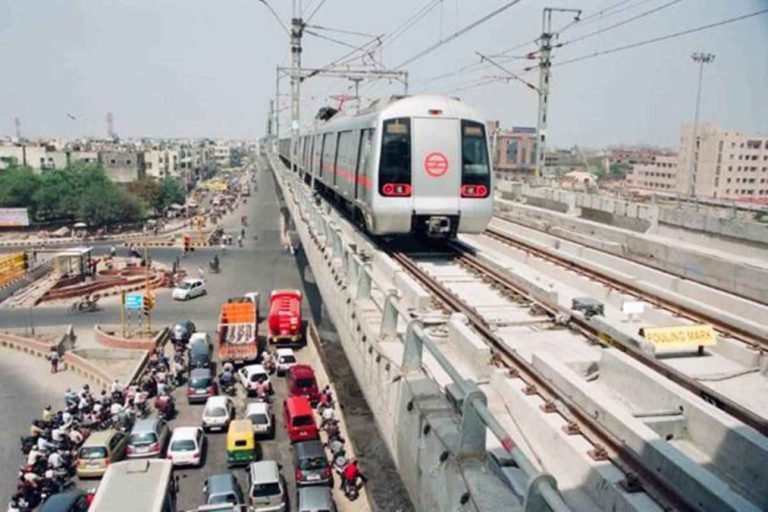
NEW DELHI (Metro Rail News): The Yamuna Expressway Industrial Development Authority (Yeida) on 11th October stated that they had paid Rs 1.87 crores to the Delhi Metro Rail Corporation (DMRC) for preparing a detailed project report (DPR) to connect Greater Noida’s Knowledge Park II to New Delhi railway station.The Yeida already has a feasibility report from the DMRC for the vital link that seeks to offer direct connectivity from Jewar airport to Delhi’s Indira Gandhi International Airport. In the upcoming six months, the DMRC will develop and submit the DPR to Yeida, according to officials.“The DMRC will start work on the DPR immediately because it has to complete the job in six months. We need to build a Metro corridor that will connect the upcoming Noida International Airport with the Indira Gandhi International Airport directly,” said Arun Vir Singh, Yeida chief executive officer (CEO).“We have already approved the DPR of the 35.64-km Metro corridor between Jewar and Knowledge Park II and sent the same to the Uttar Pradesh government for final approval in the month of August. Once the DPR of the 36.36-km Metro corridor between Knowledge Park II and New Delhi is complete, we will approve it and will send the same to the state government and Union government for their approval. The 72-km Metro corridor from Jewar to New Delhi roughly requires ₹13,000 crore in funding. The funding pattern will be finalised at a later stage,” said CEO Singh.In order to create direct connectivity between the Indira Gandhi International Airport and the upcoming Noida International Airport at Jewar and another Metro Corridor from Greater Noida to Jewar, Yeida and DMRC signed a memorandum of understanding on September 3, 2021. The Greater Noida to Jewar Metro Corridor is expected to receive the necessary clearances by the end of this year, paving the way for construction to begin in 2023, according to the DPR.
KMRL launches free wifi service inside Kochi Metro Rail
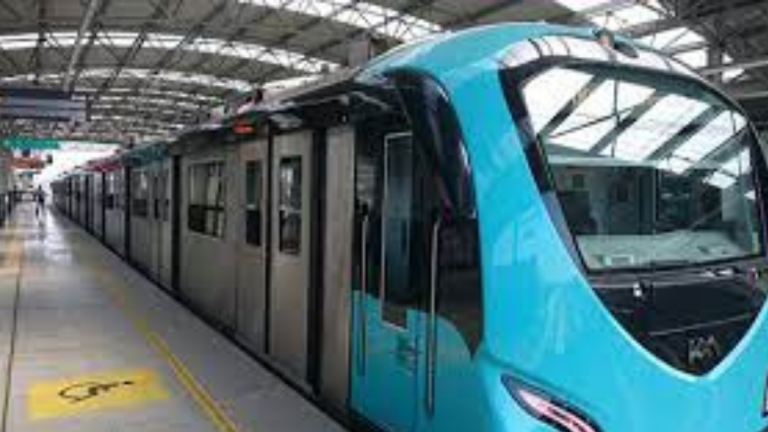
KOCHI (Metro Rail News): The long-awaited free Wi-Fi connectivity has finally been readied in Kochi Metro Rail, and commuters will be able to download data at a speed of 5 to 10 Mbps while traveling in the Kochi metro trains. The service will be available on all 23 trains of the Kochi Metro.Addressing the media here on 11th October, the Kochi Metro Rail Limited (KMRL) managing director Loknath Behera said commuters could utilize their travel time either for working online or for entertainment. “At present, a 4G network is being used to provide Wi-Fi connectivity. It will be upgraded to a 5G network once the service is widely available. Aimed at ensuring user data privacy, care has been taken not to share user credentials with any outside agency as per statutory guidelines. Provision for seamless Wi-Fi inside trains will enhance the overall travel experience of commuters,” he added.The project was being implemented by KMRL to promote the Digital India Campaign, in association with a Thiruvananthapuram-based company, a registered operator under the Department of Telecommunications, to offer Wi-Fi services to the public, he said.Instructions on how to use the free Wi-Fi are displayed on all the trains. Commuters can turn on Wi-Fi and choose “KMRL Free Wi-Fi” from the list of available networks on their mobile devices. With the OTP, they can register and use the free Wi-Fi. There are no content restrictions and the system includes all security safeguards.The 12-km Aluva-Palarivattom metro corridor was opened in 2017, and that same year the proposal to introduce Wi-Fi was first floated. Its goal was to attract young people and tech-savvy commuters to the public transit system. The initial strategy was to increase
The original idea was to prolong the service free of charge for a period of time before charging a minimal fee for the remaining journey. Delhi metro was the first metro in the nation to offer free Wi-Fi to commuters.Loknath Behera said the first batch of five water metro ferries will be commissioned after conducting trial runs on the High Court-Vypeen corridor. “Since it is for the first time that we are using the fleet of battery-powered ferries, an extensive trial will be conducted before launching the water metro service,” said Behera. .
Indian Railways to install EV charging points at major stations in next 3 years
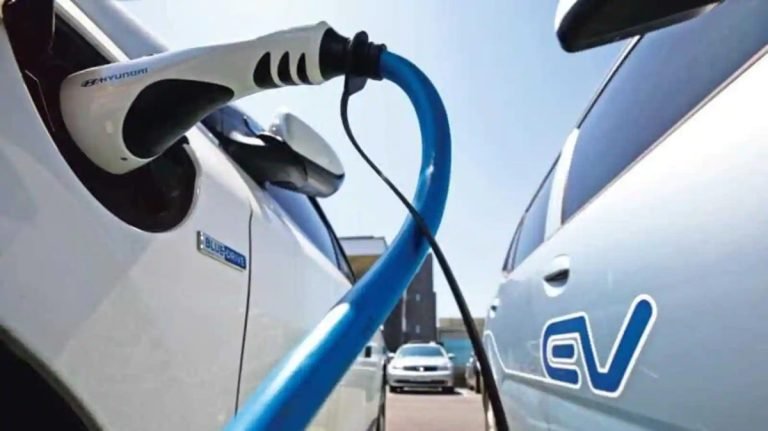
NEW DELHI (Metro Rail News): The Indian Railways will install electric vehicle (EV) charging points at all major stations throughout the nation over the course of the next three years, according to a new policy to promote e-mobility.Railway stations in megacities with a population of more than four million each will be used for the first phase of the installation of charging points for electric vehicles.According to a document, the Indian Railways envisages the installation of EV charging stations in Mumbai, Delhi, Bengaluru, Hyderabad, Ahmedabad, Chennai, Kolkata, Pune, and Surat by December 2024, the report stated.As the Indian Railways aims to become a net zero carbon emitter by 2030, the move aims to reduce the use of internal combustion engine (ICE) vehicles for internal use by 2025.The railways have reportedly put forth a two-pronged strategy, one of which focuses on EV adoption and the other on the expansion of accessible and affordable charging infrastructure at Railway stations.All major cities with a population of more than a million people and the remaining megacities will be included in the second phase of the plan, which will come to an end in December 2025.The Indian Railways will install the EV charging stations on the remaining stations by December 2026, based on feasibility studies by the zonal railways on a case-by-case basis.According to the report, the EV charging points will either be set up through a budgetary grant with the zonal railway owning the stations, or, under the developer mode. Under the developer mode, EV charging points will be installed by the investments of charge point operators, with a license rent payment to the railways.
Shivaji Nagar metro station to be the first underground metro station
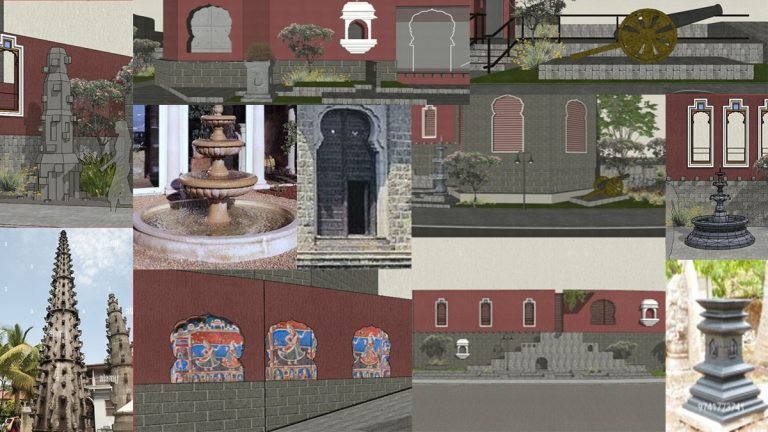
PUNE (Metro Rail News): The Shivaji Nagar metro station is the first underground metro station to be completed, overall 85% work has been completed. The station is planned with Multi-Modal Integration. The station’s entry/exit is integrated with Shivaji Nagar Railway station, PMPML & MSRTC bus depots, and with Hinjewadi metro line.Shivaji Nagar underground station is 200 meters away and located under the road connecting Sakhar Sankul to Akashwani Bhavan (AIR). Station-related buildings are coming up at the road level in 200X20 meters area. The road dug up for UG station, will be restored. Maha Metro proposed to give this entire area along with 200X20 meters area the new look and feel of the period of the Chhatrapati Shivaji Maharaj area.
The Facade of the station will depict the prestigious heritage of Shri. Chhatrapati Shivaji Maharaj era- fort, which will align with the name of the station, Shivaji Nagar Metro Station.
The Pedestrian subway network connects the old Mumbai-Pune Highway at Akashwani (AIR) Pune & Shivaji Nagar railway station. The two subways are proposed to increase the reach of the metro station. One of the subways leads towards Shivaji Nagar Railway station and another to interchange entry/egress at Dr.Kapote Junction.
The Shivaji Nagar metro station will have 5 lifts of which 3 lifts have been installed and 12
escalators of which 6 have been installed. The Tunnel Ventilation (TV) & Environmental Control System (ECS) are in the final stage of commissioning.
The road and traffic junctions will be redesigned at Shivaji Nagar with a modern look.Maha Metro is constructing two metro corridors with a total length of about 30 Km in Pune.
Corridor-1 (North-South Corridor) starts from PCMC to Swargate and corridor-2 (East-West
Corridor) starts from Vanaz to Ramwadi with 24 Elevated and 5 Underground stations. Two
depots are planned for the project, one of them is located near Range Hill and the second is
located at Vanaz station. The underground stretch is part of Corridor-1 and starts from Range Hill Depot towards Swargate. There is a total of Five Underground Stations planned, namely Shivaji Nagar, Civil Court, Budhwar Peth, Mandai, and Swargate.
Ashwini Vaishnaw,Minister of Railways lays Foundation Stone for Development of Coach Maintenance Facilities at Aurangabad Railway Stations
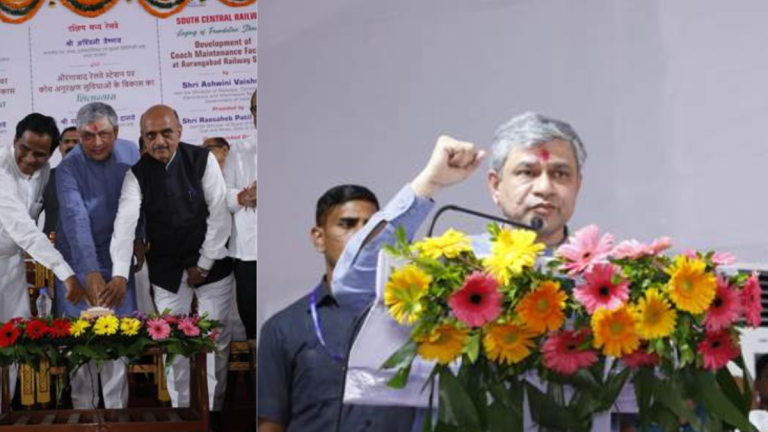
AURANGABAD (Metro Rail News): Shri Ashwini Vaishnaw, Hon’ble Minister of Railways, Communications and Electronics & Information Technology, Govt. of India laid the foundation stone for the development of coach maintenance facilities in a function held at Aurangabad Railway station on 03rd October 2022. Shri Raosaheb Patil Danve, Hon’ble Minister of State of Railways, Coal and Mines, Govt. of India presided over the function and Dr. Bhagwat Karad, Hon’ble Minister of State of Finance, Govt. of India graced the occasion as Distinguished Guest. Shri Arun Kumar Jain, General Manager (In-Charge), SCR, Shri Upinder Singh, Divisional Railway Manager, Nanded Division and other senior Railway officials were also present on the occasion.Speaking on the occasion, Shri Ashwini Vaishnaw, Hon’ble Minister stated that Indian Railways is focused on providing enhanced Rail connectivity to the people of India. He stated that under the leadership of our Hon’ble Prime Minister Shri Narendra Modi, Railways is progressing in all fields towards achieving New India – New Railways. He remembered Hon’ble Prime Minister’s vision of transformation of Indian Railways on par with world-class infrastructure and facilities, which will be pertinent to the development of the Nation even up to the next 50 years. Further, the Hon’ble Railway Minister informed that the Government is undertaking various initiatives for the development of Railways in the State of Maharashtra including the Marathwada region. Recently, Railways has also announced the redevelopment of 199 Railway stations across the Nation. These will be iconic stations developed with the concept of intelligent building, he added. The Hon’ble Minister informed that out of these 199 stations, tenders have been issued for 47 stations and Master planning and design for the remaining is underway. Work is progressing fast for 32 stations, he stated.In addition, the Hon’ble Railway Minister stated that Indian Railways will introduce 400 new Vande Bharat trains. Out of these, 100 Vande Bharat trains will be manufactured at Rail Coach Factory in Latur, Maharashtra, he said. Further, he stated that the development of Coach Maintenance facilities at Aurangabad Railway Station not only facilitates maintenance of trains at the station but also enhances the potential to operate more number of Passenger trains and Parcel trains, thereby strengthening Rail connectivity for the people of Marathwada region and also benefiting the freight customers, simultaneously. He stated the new pit line may also facilitate scheduled maintenance of Vande Bharat trains in the near future.Addressing the gathering, Shri Raosaheb Patil Danve, Hon’ble Minister of State of Railways, Coal and Mines stated that the development of coach maintenance facility at Aurangabad Railway station will strengthen the Rail infrastructure in Marathwada region. He stated that passengers from Aurangabad frequently travel to important cities such as Mumbai, New Delhi, Hyderabad, Bengaluru etc.,. The new pit line with design of 16 coach length will facilitate introduction of more originating passenger trains, which will be beneficial for the people of Aurangabad. The pit line will also facilitate effective maintenance of passenger coaches, he added. Further, the Hon’ble Minister of State of Railways informed that the Government has prioritized development of Rail infrastructure. In this regard, several infrastructure works have been completed and commissioned in the Marathwada region in the past 8 years including doubling, tripling and electrification of important sections, he stated.During the welcome address, Shri Arun Kumar Jain, General Manager (In-Charge), SCR stated stated that the development of coach maintenance facility at Aurangabad will facilitate smooth operation of passenger train services and improve coaching operations in the region. The Automatic coach Washing Plant will also immensely help in modernization of coach cleaning and improves aesthetics. I am sure the enhanced Rail facilities will meet the aspirations of rail users, he added.Aurangabad railway station situated on Secunderabad – Manmad rail route is a tourism hub with popular tourist destinations like Ellora & Ajanta caves, Daulatabad fort, Grishneswar temple, Bibi ka Maqbara etc. Currently, Aurangabad station handles few passenger train services which originate from here. As part of the upgradation of coaching facilities, Indian Railways has proposed for construction of new CAMTECH design pit line at Aurangabad Railway Station with an estimated cost of around Rs 30 crores. The new Pit Line will facilitate maintenance of Passenger Trains, Parcel Trains, Full Tariff Rate (FTR) trains and will also improve the rolling stock maintenance and provide the opportunity to operate more number of train services.
Salient Features of new Pit Line at Aurangabad Railway Station:
1. one Pit line with CAMTECH design of 16 coach length (400 M)2. Automatic Coach Washing Plant for exterior cleaning of coaches with modern technology.3. Service building for Carriage &Wagon and Train Lighting / AC Staff4. Synchronised jacks, High pressure coach cleaning machine, Air compressors along with overhead tank facility to store water.5. Facility for inspection, cleaning, charging and watering of the coaches.6. Highest standards in Coach cleaning with the introduction Automatic Coach Cleaning MachinesShri Sandipan Bhumare, Hon’ble Minister for Employment Guarantee Scheme & Horticulture, Govt of Maharashtra & Guardian Minister, Aurangabad District; Shri Abdul Sattar, Hon’ble Minister for Agriculture, Govt of Maharashtra; Shri Atul Save, Hon’ble Minister for Co-operation and Other Backward Bahujan Welfare, Govt of Maharashtra; Shri Syed Imtiaz Jaleel, Hon’ble MP, Aurangabad; Shri Ambadas Danve, Hon’ble Leader of Opposition, Legislative Council, Maharashtra; Hon’ble MLC – Shri Satish Chavan; Hon’ble MLAs – Shri Sanjay Shirsat; and Shri Haribhau Bagde also participated in the program at Aurangabad.Seven out of Eight RRTS stations of Ghaziabad to make pedestrians friendly
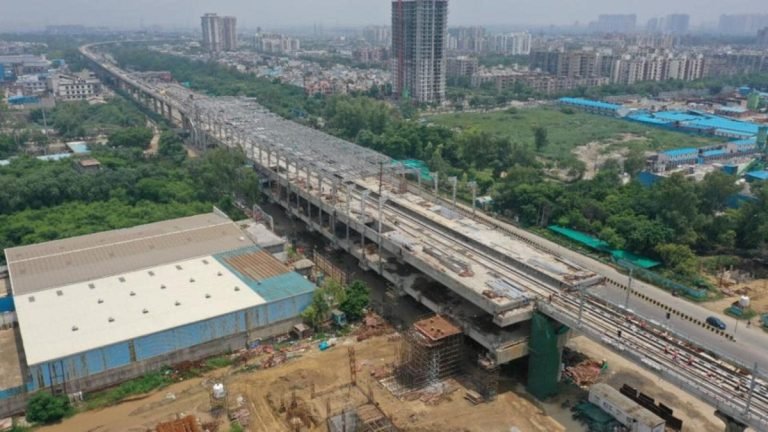
GHAZIABAD (Metro Rail News): The Regional Rapid Transit System (RRTS) project passing through Ghaziabad will have a footbridge facility for passengers as well as regular pedestrians at seven out of the eight stations in the district.
Eight RRTS stations in the area are currently in advanced phases of construction before the 82-kilometer-long project gets commissioned in March 2025.A high-speed train network with a planned speed of 180 kilometers per hour (kmph) will connect the three cities of Delhi, Ghaziabad, and Meerut as part of the project, which is estimated to cost Rs.30,274 crore. As a part of the project, a 17-km section in Ghaziabad with five RRTS stations is being planned as a “priority section” and will be the first RRTS section in the nation to be operational in 2023.“Ghaziabad has eight stations including the one at Duhai depot which is not located on any major road and is at a considerable distance from the Delhi-Meerut Road. Of the eight stations, seven elevated stations are getting developed with entry/exit points on both sides so that the stations are accessible to passengers from either side of the road,” said Puneet Vats, chief public relations officer, National Capital region Transport Corporation (NCRTC), the agency that has undertaken the RRTS project.“The entry/exits at seven stations in Ghaziabad are getting designed on both sides of the roads. This will help passengers to cross over busy roads such as the Link Road and the Delhi-Meerut Road. These entry/exits will be accessible not just for RRTS passengers but also for pedestrians who can use them to cross major roads without entering the paid area of the RRTS stations. We have incorporated a pedestrian-friendly feature and it will help in the safe movement of pedestrians and also help in crowd management at stations,” Vats added.Sahibabad, Ghaziabad City, Guladhar, Duhai, Duhai Depot, Modinagar (north), and Modinagar (south) are the eight stations in Ghaziabad.According to NCRTC officials, the RRTS project will carry a ridership of 800,000 passengers daily once fully operational.Fourth Vande Bharat is likely to start operations between Delhi and Una
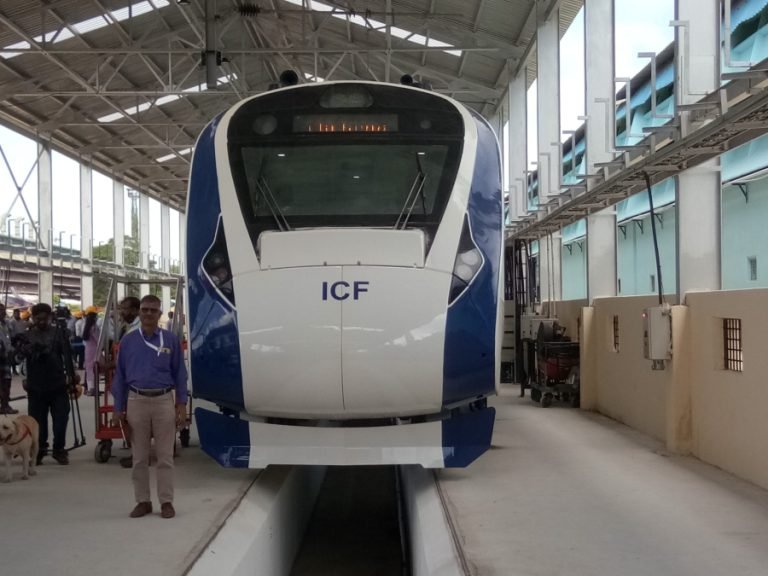
GUJARAT (Metro Rail News): The fourth semi-high-speed Vande Bharat train after Gujarat, which will depart from the railways’ Integral Coach Factory in Chennai, is most likely to be pressed into service for poll-bound Himachal Pradesh. Within the next two weeks, the trainset or rake will probably be prepared.According to sources, the train would do a test run between Delhi and Una (in Himachal Pradesh), passing through Chandigarh. The government would probably choose to run the train on the route between Delhi and Una or Delhi and Kalka. Kalka is also known as the entrance to Himachal Pradesh. Currently, express trains travel the distance between Delhi and Una in about 7-8 hours. The deployment of this train would cut down on overall journey time.Recently, Prime Minister Narendra Modi had flagged off the third Vande Bharat train, which can run at a top speed of 160 kmph, from Gandhinagar station. Every state wants to get the Vande Bharat trains, say officials.They stated that the testing for the new train will last for a few days because the prototype train has already undergone thorough testing on the Mumbai-Ahmedabad route to receive the chief commissioner of railway safety’s (CCRS) approval. Testing needs to be done on the overhead equipment (OHE) and other crucial components.The 16-coach Vande Bharat train would be hauled to Delhi in accordance with the schedule, and would then undergo a brief test run on the Delhi-Una route.Compared to the two first-generation trains now operating on the Delhi-Varanasi and Delhi-Katra routes, the second-generation Vande Bharat has better amenities and is faster.
ETCS Level 2 Signalling Over LTE Successfully Tested on Delhi-Meerut RRTS by NCRTC
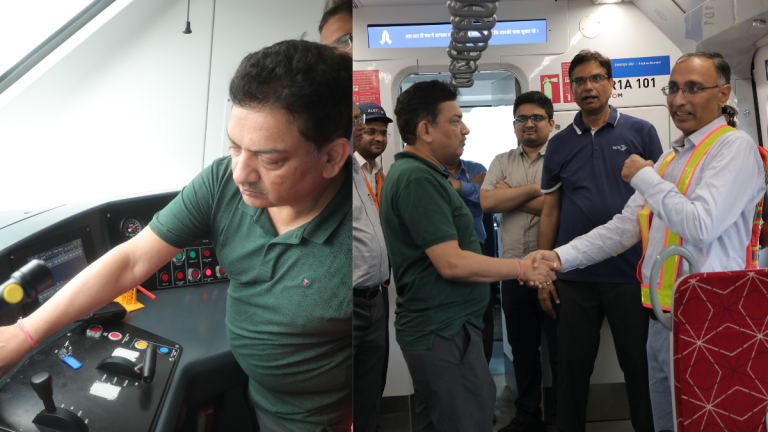
NEW DELHI (Metro Rail News): Shri Vinay Kumar Singh, Managing Director, NCRTC, on-board RRTS trainset along with all the Directors and other senior officials of NCRTC, recently initiated the first dynamic test run of the RRTS trainset with the European Train Control System (ETCS) level 2 signalling over LTE communication network, on the test tracks in Duhai Depot. The test run was successful and the Signalling system and the RRTS trainset operated with each other as per the technical expectations.ETCS technology is widely deployed globally on GMS-R communication networks in Europe and other countries. GSM-R technology will become obsolete in near future.It is for the first time in the world that standard ETCS technology is being deployed by NCRTC on the LTE communication backbone for RRTS.LTE provides a high throughput communication link which will be used for mission-critical data, voice, IoT, important video and other important message exchanges between the train to the trackside and the operation control centre. The Department of Telecommunication (DOT) has temporarily allocated a spectrum in the 900 MHz band for the commissioning of the LTE network for the priority section of Delhi-Meerut RRTS. For the allocation of spectrum in the 700 MHz band permanently, a reference has been made by DOT to TRAI and the recommendation of TRAI is expected soon.Commuter-centricity being a core value of NCRTC, it has strategically planned for interoperability between all three priority corridors of Phase 1 and the adoption of ETCS Level 2 signalling technology was crucial for enabling it. ETCS Level 2 signalling is vendor agnostic and there it is not essential to go back to the same vendor for future extensions of the corridor. Adopting this technology, which is suitable for the design speed of 180 Kmph of RRTS, will allow the RRTS trains to move seamlessly from one corridor to another. This will help passengers travel comfortably without the hassle of changing trains and promote a modal shift to public transport. ETCS signalling will be integrated with the Platform Screen Doors at all the RRTS stations of the corridor. PSD will safeguard commuters on the platform by providing a barrier between the platform and the track.While congratulating the team NCRTC and engineers of Alstom and Nokia, Shri Vinay Kumar Singh, MD, NCRTC said “This is for the first time in the world that a combination of the latest ETCS Level 2, having Automatic Train Operation (ATO) over Long-Term Evolution (LTE) radio is being deployed. I am happy that despite this technological challenge and serious supply-chain constraints posed by the pandemic, NCRTC successfully procured the ETCS Level 2 Signalling system under Make in India guidelines and implemented it within the stipulated timelines.” He also said that “this step will be instrumental to create indigenous capacity for similar systems in the country.”
 ETCS signalling will be integrated with the Platform Screen Doors at all the RRTS stations of the corridor. PSD will safeguard commuters on the platform by providing a barrier between the platform and the track.While congratulating the team NCRTC and engineers of Alstom and Nokia, Shri Vinay Kumar Singh, MD, NCRTC said “This is for the first time in the world that a combination of the latest ETCS Level 2, having Automatic Train Operation (ATO) over Long-Term Evolution (LTE) radio is being deployed. I am happy that despite this technological challenge and serious supply-chain constraints posed by the pandemic, NCRTC successfully procured the ETCS Level 2 Signalling system under Make in India guidelines and implemented it within the stipulated timelines.” He also said that “this step will be instrumental to create indigenous capacity for similar systems in the country.”
China debuts World’s fastest Maglev train
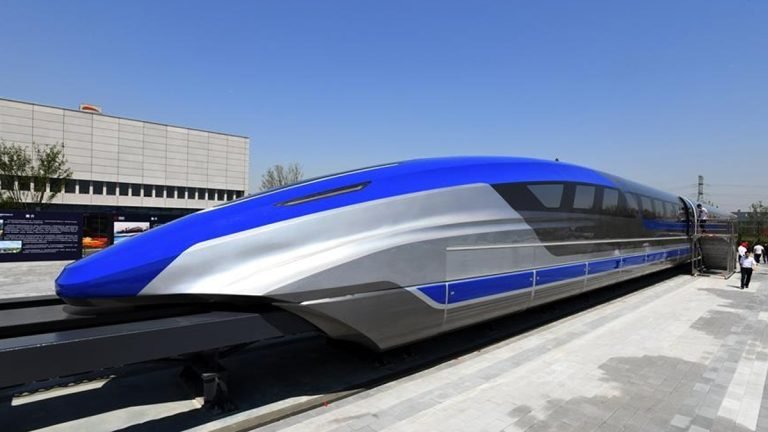
BERLIN, GERMANY (Metro Rail News): China has introduced the world’s fastest train, the maglev, which is capable to attain a top speed of 600 km/h. The high-speed train was unveiled by China’s train maker CRRC during a trade fair for the railway sector in Berlin, Germany. The manufacturing company claims that China’s indigenous technology was used to develop the train. It claimed that a successful test run of the train prototype had already been conducted in China.Since the 1980s, some commercial trains have used magnetic levitation, or “maglev,” which accelerates or pulls objects using an electrified magnetic field. Nowadays, South Korea, China, and Japan all use maglev trains.Shanghai in China already has a functional Maglev train service that links the main city with the airport. Maglev or Magnetic levitation uses electromagnetic force to literally “levitate” the whole train above the track with no physical contact between the rail and the body, which produce no friction. The magnets on the track and those on the train’s body repel one another with a powerful force, which causes the train to be levitated.Besides Maglev, China already has a network of 37,900 km of high-speed rail (HSR or bullet trains). Its plans to almost double the network in the next 10 years.Chinese researchers are working on automotive maglev technology as well. Recent road tests for modified passenger cars that use magnets to float 35 millimeters above a conductor rail were done by researchers at Southwest Jiaotong University in Chengdu, Sichuan Province.
IREPS floats tender for earthwork construction of new line from Daulatpur Chowk to Kartoli Punjab
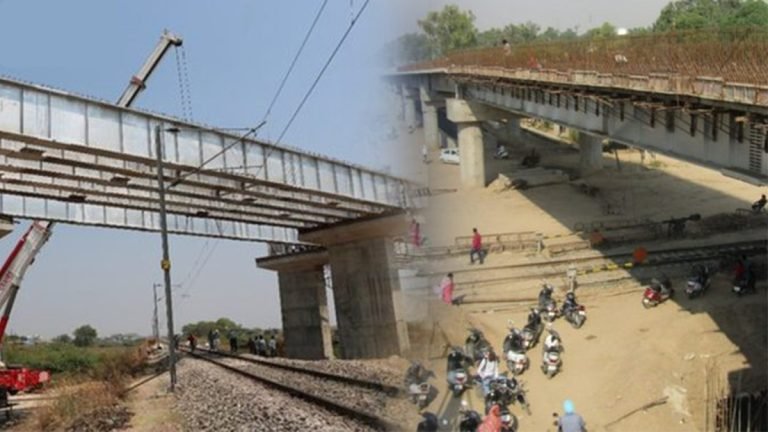
CHANDIGARH (Metro Rail News): IREPS is the official website of Indian Railways for the procurement of materials. The site is developed by CRIS using the latest technology and security features. IREPS Northern Railway, Chandigarh acting for and on behalf of the President of India invites e-tender under Two Packet System for the Earthwork in cutting/filling, Blanketing, Viaduct (from Km 61.400 to Km 66.270), RUBs, ROBs, minor bridge, protection works and other allied works between Km 60.200 to Km 66.270 within Himachal Pradesh area for construction of a new line from Daulatpur Chowk to Kartoli Punjab block section of Nangal Dam- Talwara new B.G. Rail link.About IREPS: The site provides a secure platform to users for online transactions for procurement. Railway users can upload their tender documents and can open tenders online. Vendors can access the tender documents through this site and submit their bids
online duly encrypted at their end. The site was initially developed to cater to
requirements of 8 Zonal Rlys. (NR, CR, WR, NCR, WCR, SR, SC, SECR) and 5
Production Units (RCF, ICF, DLW, DMW, RWF). The facility has been subsequently
extended/rolled out to other 8 Zonal railways (ECoR, ECR, ER, NER, NFR, NWR, SER
and SWR) and 1 Production Unit (CLW). The site can be used for material procurement by
COS/PCE of Zonal Railways and COS of Production Units.Name of work: Earthwork in cutting/ filling, Blanketing, Viaduct (from Km 61.400 to Km 66.270), RUBs, ROBs, minor bridge, protection works and other allied works between Km 60.200 to Km 66.270 within Himachal Pradesh area for construction of new line from Daulatpur Chowk to Kartoli Punjab block section of Nangal Dam- Talwara new B.G. Rail link.Tender Notice No. : 2-W-C-275-CDG-IApprox. Cost of the work /Bid Security: Rs.289.63 Crores /Rs 1.00 CrorePeriod of Completion: 24 MonthsDocument Download Start Date: 06th October 2022Document Download End Date: 28th October 2022Bid Submission Start Date: 14th October 2022Bid Submission End Date: 28th October 2022Bid Opening Date: 28th October 2022Similar nature of work:“Civil Engineering work involving construction of Railway/ Road bridge of clear span of 12.2m or more. The work should have sum of spans more than 1000 m”.“The tenderer should have successfully executed steel work of more than 2000 MT in steel superstructure in Road/Rail bridge under one or more agreements in completed/ongoing works in the previous three financial years”For JV firm, either the ‘JV in its own name & style’ or ‘Lead member of the JV’ shall satisfy the technical eligibility as defined at (i) above”.Each other (non-lead) member(s) of JV, shall have technical capacity of minimum 10% of the cost of work i.e., each non-lead member of JV must have satisfactorily completed or
substantially completed during the last 07 (seven) years, ending last day of month previous to the one in which tender is invited, one single work of “Civil Engineering work involving
construction of Railway/Road bridge of clear span of 12.2 m or more”, for a minimum of 10% of advertised value of the work.Also, technical criteria as defined in (ii) above, may be fulfilled by any member of the Joint Venture individually.
Third Vande Bharat hits cattle
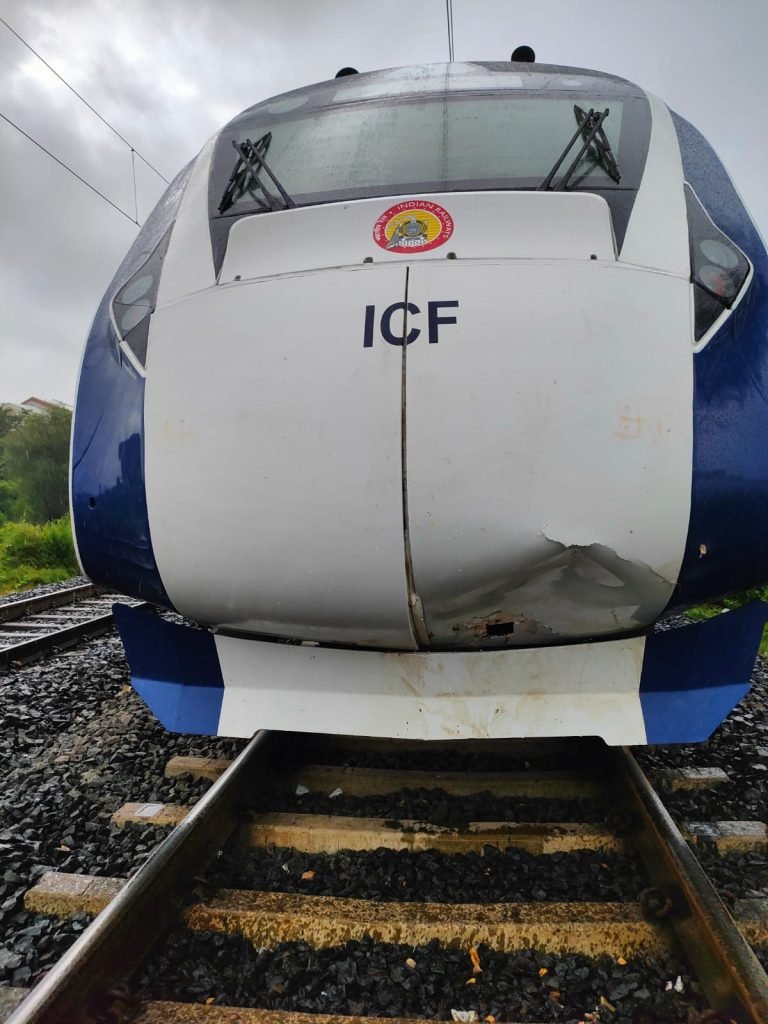
GUJARAT (Metro Rail News): The newly launched semi-high-speed train hit a cow between Kanjari and Anand stations in Gujarat on 7th October, resulting in minor damage to the train’s nose panel, one day after the Gandhinagar-Mumbai Vande Bharat Express collided with buffaloes.The Gandhinagar-Mumbai Vande Bharat Express after it hit four buffaloes on the way, its nose cone had to be replaced.The incident on 7th October took place at 3.45 pm near Anand, about 432 km from Mumbai. “The Mumbai train ran over into a cow that came in its path. The incident took place around 3.45 pm. There is not much damage and the train had to halt for about 10 minutes. It is presently on its way to Mumbai,” an official at the Western Railways, Vadodara stated.On 6th October, panels on the nose of the express train’s engine were damaged. Officials said the train resumed its journey to Gandhinagar after an eight-minute halt and arrived there as per scheduled.“Three-four buffaloes that suddenly appeared on the tracks while the Vande Bharat train was heading towards Gandhinagar damaged the FRP (fiber-reinforced plastic) panels on the nose of the engine. These panels are lightweight and so got damaged…it did not impact the functioning of the train. The train left the spot after an eight-minute halt [for the removal of buffalo] carcasses and continued on its journey,” said a western railway spokesperson.According to a railway official, the most recent incident resulted in only a small dent on the nose cone panel and no other significant damage to the train.
Modi boarded the Vande Bharat Express train at Gandhinagar station on September 30 and rode it to Ahmedabad. In the nation, this is the third Vande Bharat train.
RailTel floats tender for design, construction and signalling with electronics interlocking at 5 stations of Firozpur division
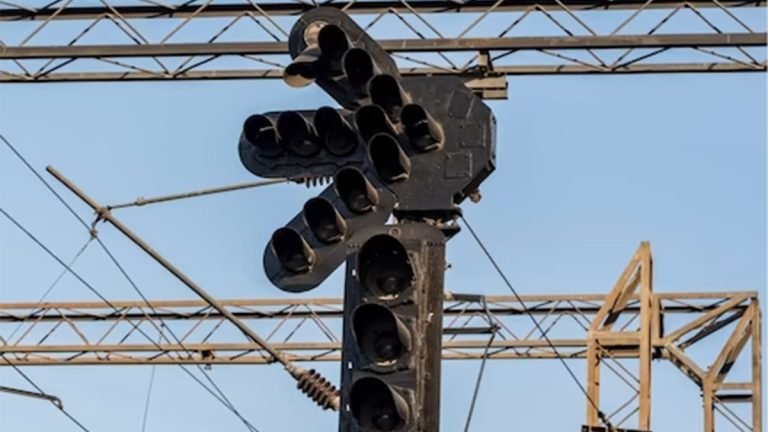
NEW DELHI (Metro Rail News): RailTel Corporation of India has floated tenders for Survey, design & construction of service buildings and associated civil works including electrification works of buildings in connection with the upgradation of signaling from Std-I to Std-II with Electronics interlocking 5 stations (i.e Dhariwal, Gurdaspur, Dinanagar, Jakolari and Sarna) on ASR-PTK section of Firozpur Division.Name of Work: Survey, Design & Construction of EI buildings at 4 Station (i.e Malaysian
Shahkot, Nakodar, Nurmahal & Bilga in connection with upgradation of Signalling from Std1 to Std – II with Electronics interlocking at 5 Stations (i.e Dhariwal, Gurdaspur, Dinanagar,
Jakolari and Sarna) on ASR-PTK section of Firozpur Division including internal
Electrification of Buildings.Tender Notice No: RCIL-SIG-DHW-SRM-OT-1-01Approx. cost: Rs. 3,37,75,029/-Completion period: 06 (Six) monthsEarnest money amount: Rs. 6,75,600/-Sale/availability of tender document on Rly. Website: Tender documents will be available on IREPS website i.e. www.ireps.gov.in from 26th September 2022 to 18th October 2022 up to 15:00 hrs.Last date/Time of upload of tenders: Tender will be closed on 18th October 2022 at 15:00 hoursDate and time of opening of tender: 18th October 2022 at 15:30 hrsScope of Work: The work involves survey, design and construction of EI buildings at
Dhariwal, Gurdaspur, Dinanagar, Jakolari and Sarna) on ASR-PTK section of FZR Division. The building plans are as per N.Rly N.R. H.Q.E.Plan No HQ/02/02-2021, HQ Type Plan No 0-99/2021.