

GMRC floats tender for providing security services for project offices and sites of GMRC
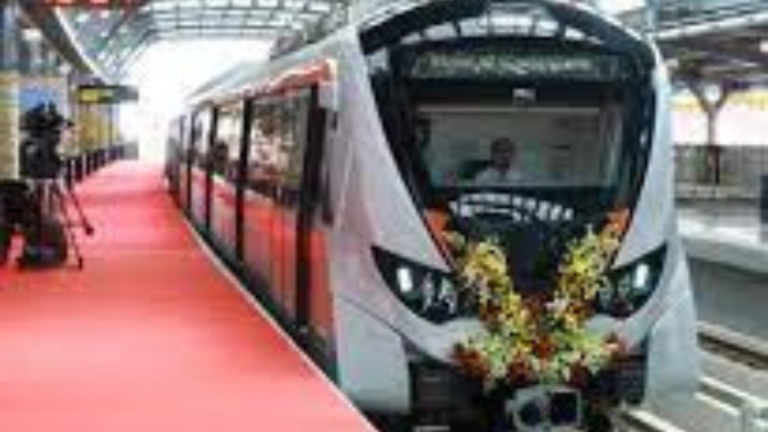
GUJARAT (Metro Rail News): Gujarat Metro Rail Corporation (GMRC) Limited invites Open Tenders under single stage, two-packet system from Agencies, who fulfill qualification criteria as stipulated in Minimum Eligibility Criteria, for the work, “PROVIDING SECURITY SERVICES FOR PROJECT OFFICES AND SITES OF GMRC”.Tender No.: GMRC/ADMIN/SECURITY SERVICES/2022Name of Work: “TENDER FOR PROVIDING SECURITY SERVICES FOR PROJECT OFFICES AND SITES OF GMRC”.Estimated Amount of Work: INR 1.86 CroreTender Fees: INR 5,000/- onlyE. Tender Security /EMD: Amount of EMD:‐ INR 1,86,000/‐Last Date and time of submission of E-Tender: 09 November 2022, 15:00 HrsOpening of Technical Bid: On the day of submission of the Filled-In Technical Bid at
15:30 Hrs.Date and Time of opening of online Financial bid: Will be intimated later to technically qualified bidders through e-mail/ phone.Tender validity: 180 days from its submission date.Bid Security validity: 180 + 60 = 240 days from the last date of submission of
technical bid.Performance Guarantee: 3% of Contract Value.Contract Period: One year from the date of award of contract and further extendable upto two years if performance of agency is found satisfactory
General Manager Central Railway inspected Pune Railway Station and Reviewed the Developmental Works
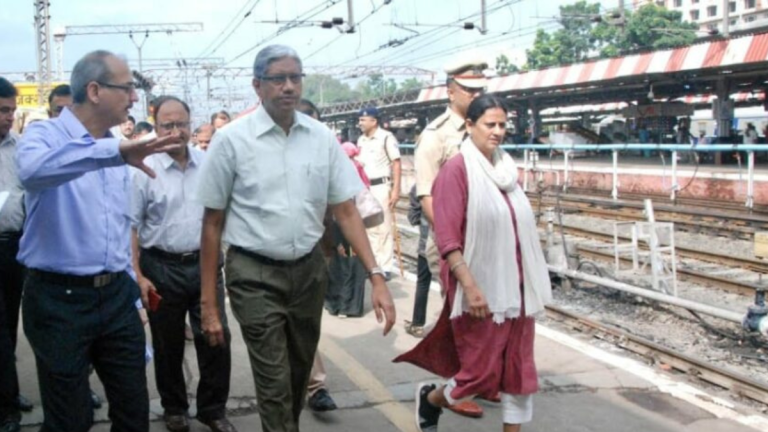
PUNE (Metro rail News): Anil Kumar Lahoti, General Manager, Central Railway inspected Pune Railway Station along with Smt. Renu Sharma, Divisional Railway Manager, Pune Division and Principal Head of the Departments of central Railway on 14th of October. He also conducted meeting with Officers of Headquarters and Branch officers of Pune division.The General Manager inspected the Pune Railway Station premises and the station yard layout in connection with the Redevelopment of Pune Station. Mr. Lahoti also inspected various passenger amenities, and developmental works also inspected the quality of catering items and inquired about the services being provided to the passengers. After the inspection, Anil Kumar Lahoti, General Manager, Central Railway held a meeting with the Principal Head of the Departments of Central Railway and Branch officers of Pune Division and reviewed the on-going developmental work, infrastructure Projects and works related to various passenger amenities of Pune Division and gave necessary instructions to complete the projects on time with a special emphasis on speeding up all the works related to safety of the passengers.Smt Renu Sharma, Divisional Railway Manager, Pune Division, Principal Heads of Departments and Branch officers from Division were also present during the inspection and meeting.
Power Supply & Traction Works Requirement for Pune Metro completed
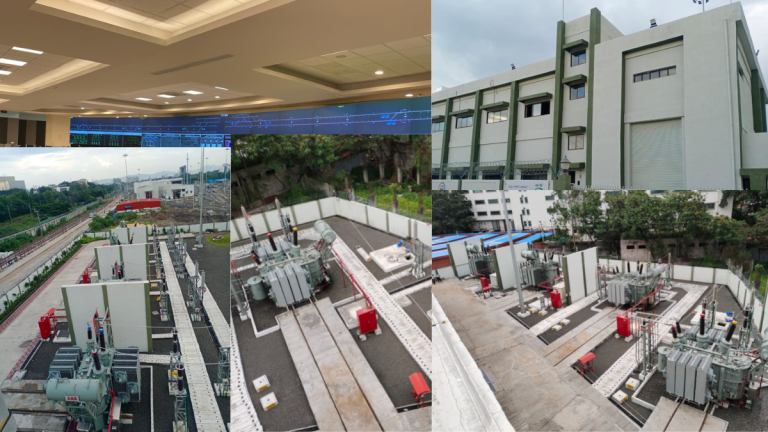
PUNE (Metro Rail News): The Metro Train runs on electricity and is therefore an eco-friendly urban transport mode. A large amount of electricity is required to run metro trains. Carrying out structural works related to uninterrupted power supply for Metro is a challenging task. In the near future, a large number of passengers will travel by metro, so it is important to provide a continuous power supply for 17 to 18 hours of metro service and related facilities.Recently, Pune Metro has completed the power supply work required to run the metro along the entire 33.2 km route. For continuous power supply, MSEDCL (Maharashtra State Electricity Distribution Company Limited) has taken electricity supply from three grids. It is called Receiving Sub Station (RSS). The power supply is taken from the Chinchwad grid for receiving substation at Pimpri-Chinchwad station, the Ganeshkhind grid for Range hill receiving substation, and the Parvati grid for Vanaz receiving substation. For this, 5 to 6 km long 133 kV power cables have been laid using the latest technology. Due to this, in case of any technical failure in one grid, it will be possible to continue the metro service by providing electricity from the other grid. The receiving substation at Range Hill has been built with the capacity to supply electricity to both corridors of the metro simultaneously.Four transformers have been installed in each receiving substation and the 132 kV power supply has been stepped down to 25 kV, 25 kV, 33 kV, and 33 kV. 25 kV power supply is used for traction and its feed is released in train Overhead Electric Wires (OHE). The 33 kV power supply has been given to all metro stations. For this, electric cables of 33 kV capacity have been laid along the entire 33.2 km route. An Auxiliary Sub Station (ASS) is constructed at each station. This power is supplied to elevators, escalators, air conditioning (AC), and electrical systems in the station through the auxiliary substation.Pune Metro has planned to generate solar power on a large scale. Solar power generation sets have been installed on the roofs of each station and on the roofs of buildings. Through this, it will be possible to generate 11 megawatts of solar power. Integration of solar-generated energy with the power supply system is done. This will save a lot of energy.A SCADA system has been installed to control all receiving substations (RSS), auxiliary substations (ASS), and OHEs. The entire traction and power supply system can be controlled through this SCADA system. The main computer of the SCADA system is installed at OCC at Range Hill. Complete traction and power supply information is available online on the display at OCC. So it is easy to control.On this occasion, the Managing Director of Maha Metro, Dr. Brijesh Dixit said, “World-class traction and power supply systems have been installed for Pune Metro. Therefore, it is planned that Pune Metro will continue to get uninterrupted power supply.”
WR Commissions new Foot Over Bridge at Khar Road Station
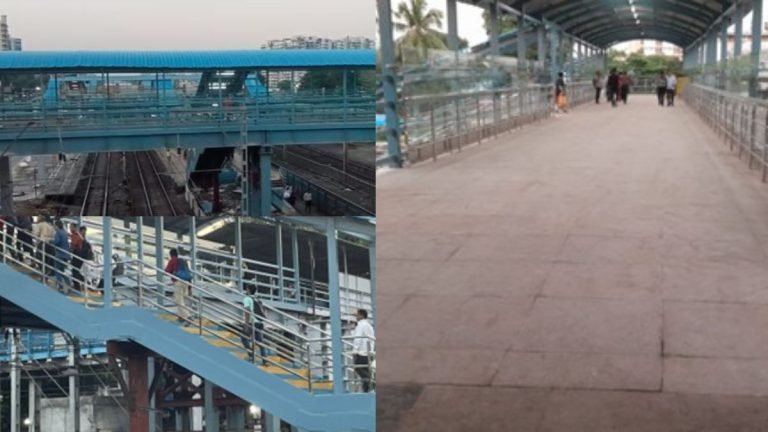
MUMBAI (Metro Rail News): Western Railway has successfully undertaken various infrastructural upgradation and augmentation works for the convenience of passengers. In continuation to this, a new Foot Over Bridge (FOB) has been commissioned on 15th October of 2022 at Khar Road station in the Mumbai suburban section, for the convenience as well as safety of passengers.
According to a press release issued by Shri Sumit Thakur – Chief Public Relations Officer of Western Railway, a new Foot Over Bridge has been commissioned & opened for public use at Khar Road station on the south side.
The new FOB is 44 m long and its width is 6 metres. This new FOB has been constructed at a cost of Rs. 4.55 crores. This FOB has been rebuilt on a replacement account as per IIT audit report.Shri Sumit Thakur stated that with this new FOB, total 11 FOBs have been commissioned in the financial year 2022-23 between Churchgate & Dahanu Road, taking the total to 144 nos. These efforts will go a long way to control the menace of trespassing as well as combat the problems such as overcrowding on bridges, etc. Western Railway urges its valued customers to care for their precious life and not to trespass railway tracks. Always use FOB, Subway, Escalators & Lifts to crossover and change platforms.KMRC starts fixing steel props for cracked building in Bowbazar’s Madan Dutta Lane
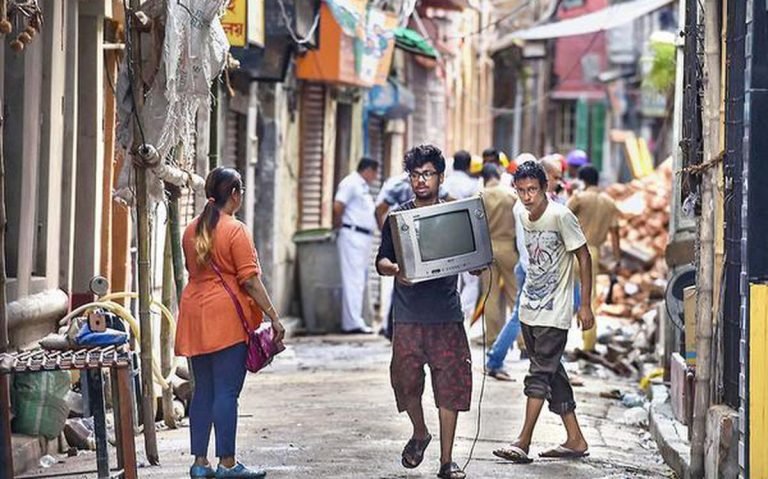
KOLKATA (Metro Rail News): The Kolkata Metro Rail Corporation (KMRC), the implementing agency of East-West Metro, has started fixing steel props to avoid further deterioration of the crack-ridden buildings in Bowbazar’s Madan Dutta Lane, officials of the agency said.The agency is also grouting its foundation, in an effort to prevent future tilt because of subsidence.However, a number of the engineers working on the East-West Metro project and other Metro tunnelling projects have stated that such precautions should have been taken before beginning to build the “cross passageways” that connect the two tunnels.In order to pump concrete mix under the foundations of certain houses that were cracked first shown on the 14th of October morning due to subsidence caused by Metro work, pumps with lengthy hose pipes were set up on the 17th of October in the narrow road.Senior officials stated that the foundation’s grouted concrete mix would fill in any gaps beneath the structures and stop the soil beneath them from sliding further. This will guarantee that the structures don’t get any additional cracks.“We want to repair some of the buildings in Madan Dutta Lane where minor cracks have appeared and ensure the residents return home at the earliest,” said N.C. Karmali, director, projects, KMRC.“A team of consultants has already assessed the condition of the affected buildings. After repairs, we plan to invite them to revisit the buildings and identify those where residents can return.”“Since two similar disasters had taken place in the area since 2019, the authorities should have taken additional precautions. They should have fixed props for the old buildings before starting work on cross passages,” said an engineer involved in the project on another stretch.A team of experts from Stup, a consulting agency, has assessed over 10 buildings where cracks appeared on Friday, said a KMRC official. “There was no deliberate delay after the cave-in.”The KMRC has said it would pay Rs 5 lakh each to the house owners who cannot return home within 30 days from Friday. The affected shop owners whose establishments measure less than 100sq ft will receive Rs 1.5 lakh as compensation. The ones with establishments measuring above 100sq ft are entitled to Rs 5 lakh as compensation.“Work inside the Metro tunnel cannot be put on hold for long. We want to start it as soon as the shifting of loose soil stops and the area has completely stabilised,” said a KMRC official.
Nippon Express (Shanghai) introduces temperature-controlled containers
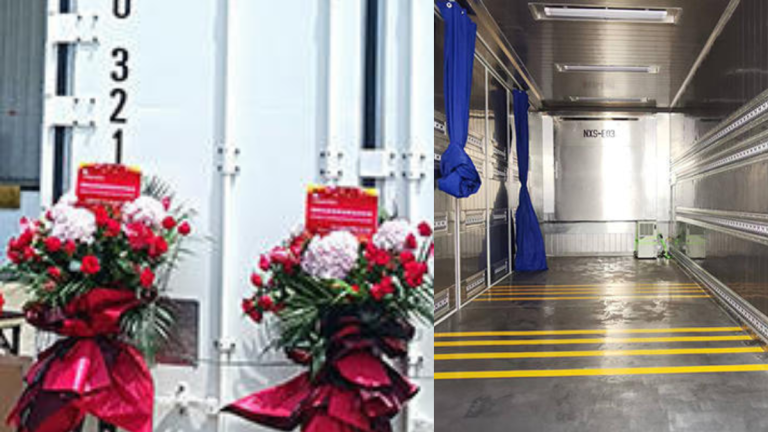
SHANGHAI (Metro Rail News): Nippon Express (Shanghai) Co., Ltd. (Toru Naono, President; hereinafter, “NX Shanghai”), a group company of NIPPON EXPRESS HOLDINGS, INC. (Mitsuru Saito, President), has introduced six new temperature-controlled containers suitable for transporting precision equipment such as semiconductor-manufacturing equipment requiring strict temperature and humidity control.
Semiconductors are built into all kinds of electronic devices such as smartphones, PCs, and automobiles and are indispensable to modern industry and society, making the stable supply of semiconductors extremely important. In addition, the equipment and precision instruments used to manufacture semiconductors are becoming increasingly larger, and they require strict temperature and humidity control during transport.
NX Shanghai has recently introduced six new wide and tall containers equipped with temperature- and humidity-control devices that maintain a temperature of 21°C to 25°C and a humidity of 60% or less inside the containers and has launched a new international ocean freight service to transport semiconductor-manufacturing and other precision equipment requiring strict temperature and humidity control.
For the time being, the service will be made available for shipments aboard RORO vessels (high-speed ferries) between China, South Korea, and Japan, with hopes of introducing additional containers and expanding routes for greater convenience as this business grows.
Maha Metro MD Dr Brijesh Dixit Presents Awards at Construction World Event
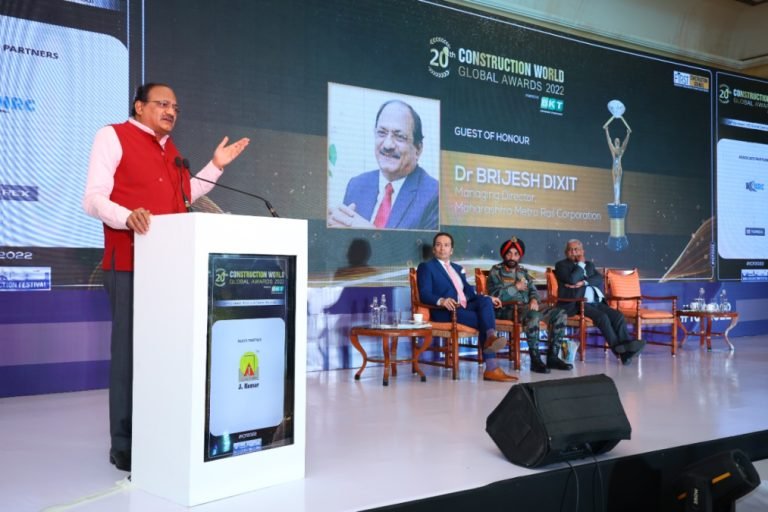
PUNE (Metro Rail News): The 20th Construction World Global Awards (CWGA) 2022 were presented at a glittering ceremony held at ITC Grand Central in Mumbai on 14th October.Part of the 8th India Construction Festival and organised by the FIRST Construction Council, the CW Global Awards honours companies from the universe of construction, contracting, engineering and building materials, for their
outstanding work.Maha Metro MD Dr Brijesh Dixit, graced the event and gave awards to the winners. It may be recollected that Dr Dixit was recipient of the Construction World’s Person of the Year for 2020 and as per the tradition, he gave away awards to this year’s winners. Dr Dixit was presented with the award in 2020 for his outstanding work in the field of infrastructure and metro rail development.Speaking on the occasion, MD Dr Brijesh Dixit said that Maha Metro has used technology extensively in our construction projects and am happy that it is now the norm of this industry. The use of technology has not just helped in cutting down the time and overheads, it has also enhanced the work quality. Over a period, Maha Metro has successfully provided one of the best infrastructural facilities in the cities of
Nagpur and Pune, he said.Speaking further, he said “I am amazed at the platform that Construction World provides and despite having been in the industry for over 30 years I am discovering several companies here which have done remarkable work.” Dr Dixit greeted all the winners and appreciated Construction World and FIRST Construction Council for all their efforts in the field of infrastructure and development.The award for Construction World Person of the Year in the Public Sector Category was given to Shri Awanish Awasthi, Advisor to Chief Minister of Uttar Pradesh. In his thanksgiving speech, he highlighted the opportunities that Uttar Pradesh presents to the development of the country. Infrastructure plays a key role in development, be it metros, high-speed metros, roads, highways, expressways, irrigation, sports infrastructure and more, he added.In his welcome note, Shri Tanveer Padode, Business Head-Digital, ASAPP Info Global Group, highlighted shared his perspective on the award functions and companies highlighted as a result. In his welcome address, Shri Pratap Padode, Founder & President, FIRST Construction Council said, “The infrastructure construction industry with a ₹ 3 trillion market cap deserves to be protected. Technology would help grow this industry to help India claim its spot as the third fastest growing construction market in the
world.’’
Shri Ashwini Vaishnaw inaugurates India’s First Aluminum Freight Rake – 61 BOBRNALHSM1 at Bhubaneswar Railway Station

BHUBANESWAR (Metro Rail News): Union Minister for Railways, Communications and Electronics & Information Technology, Shri Ashwini Vaishnaw inaugurated India’s First Aluminum Freight Rake – 61 BOBRNALHSM1 at Bhubaneswar Railway Station on 16th October. The rake’s destination is Bilaspur.This is a dedicated effort for Make in India program as it has been fully designed and developed indigenously in collaboration with RDSO, HINDALCO and Besco Wagon.
Features of Aluminium Rake:
- Fully Lockbolted construction with no welding on superstructure.
- The tare is 3.25 tons lower than normal steel rakes, 180 ton extra carrying capacity resulting in higher throughput per wagon.
- Higher payload to tare ratio 2.85.
- The reduced tare will reduce carbon footprint as lower consumption of fuel in empty direction and more transport of freight in loaded condition. A single rake can save over 14,500 tonnes of CO2 over its lifetime.
- 80% is resale value of the rakes.
- Cost is 35% higher as the superstructure is all aluminium.
- Lower maintenance cost due to higher corrosion and abrasion resistance.
- Iron industry consumes a lot of Nickel and Cadmium which comes from import. So, proliferation of Aluminum wagons will result in less import. At the same time, this is good for local aluminum industry.
GDA plans two new metro routes in Ghaziabad

GHAZIABAD (Metro Rail News): The Ghaziabad Development Authority (GDA), plans to create a detailed project report (DPR) in order to connect Noida Sector 62 Metro Station with Sahibabad and Mohan Nagar Metro Station with Vaishali through Metro Lite, in the city of Ghaziabad, Uttar Pradesh which is likely to get two new metro routes.Metro Lite is an urban transit system that acts as a feeder system for the city’s current metro systems with lower projected ridership.The Delhi Metro Rail Corporation (DMRC) submitted the GDA with a project report in January 2020 that included an estimated expenditure for both routes. For the Sector 62 and Sahibabad route, it estimated a budget of Rs. 1,517 crores, while for the Vaishali and Mohan Nagar route, it estimated a budget of Rs. 1,808.22 crores.The GDA also received a DPR in 2021 for a ropeway project with a projected 80,000 weekly ridership.
Due to funding concerns with the authority, both the ropeway and Metro Neo projects were dropped, which has hampered the development of a multimodal transportation system.“We will now prepare a DPR for the two routes with the Delhi Metro Rail Corporation (DMRC). The official communication will be sent to DMRC this week. They will find it easy to prepare the DPR as they have already conducted detailed studies for the two routes,” Rakesh Kumar Gupta, chief engineer, GDA told the newspaper Hindustan Times.“Once the DPR is prepared, we will send it to the state government for approval and also seek funding. The per kilometer cost of Metro Lite is about Rs. 150 crores, lower in comparison to Metro. The passengers per hour per direction (PHPDT) of Metro Neo is about 8,000 and about 15,000 for Metro Lite. Hence, we are now looking to prepare a DPR for Metro Lite. The ropeway project is not being considered at present,” he added.The residents and everyday commuters between Ghaziabad, Delhi, and Noida have made the connection of the relevant metro routes a top priority.“The authority has no funds and the two metro routes cannot be connected with any other mode of transport. The GDA must try to get their pending infrastructure development funds from the state government and execute the project,” Rajendra Tyagi, councilor, Raj Nagar, told Hindustan Times.“The GDA is just trying to confuse people by jumping from one project to other. They must wait till their financial position improves and build metro connectivity so that commuters don’t need to break their journey midway,” said Sanjay Singh, councilor, Shipra Sun City, Indirapuram.
CMRL floats tender for consultant for feasibility study for introduction of air conditioned coaches in Chennai suburban line
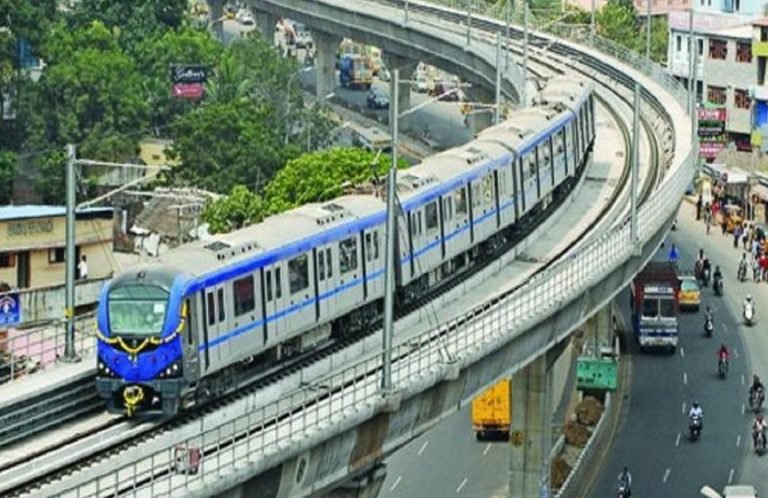
CHENNAI (Metro Rail News): Chennai Metro Rail Limited (CMRL) has invited digitally signed open e-tender through e-procurement portal for the Selection of consultant for preparation of feasibility study for introduction of Air conditioned coaches in Chennai suburban line (Chennai Beach-Tambaram-Chengalpattu).Tender Reference Number: CMRL/PLNG/631/1/2022- DFR StudyName of Work: Selection of consultant for preparation of feasibility study for introduction of Air conditioned coaches in Chennai suburban line (Chennai Beach-Tambaram-Chengalpattu).EMD: INR 05 LakhPeriod of Work: 150 DaysDocument Download / Sale Start Date: 12th October, 2022Document Download / Sale End Date: 14th November, 2022Pre Bid Meeting Date: 27th October, 2022Bid Submission Start Date: 07th November, 2022Bid Submission End Date: 14th November, 2022Bid Opening Date: 15th November, 2022Chennai Suburban Railway is a commuter rail system in the city operated by Southern Railway. Existing Sub urban Rail consists of four different lines covering a total network length of 200 kms,Existing Sub urban Rail consists of four different lines covering a total network length of 200 kms. The average daily ridership is 10.3 lakhs. The sub urban rail network detail is as follows:South Line: Chennai Beach to Tambaram –Chengalpattu (60km)Southwest line: Chennai Central to Arakkonam (69 km)Northeast Line: Chennai Central to Gummidipoondi (47 km)MRTS Line: Chennai Beach to Velachery (19 km)
Indian Railways accomplishes electrification of 81.51% of the total BG network
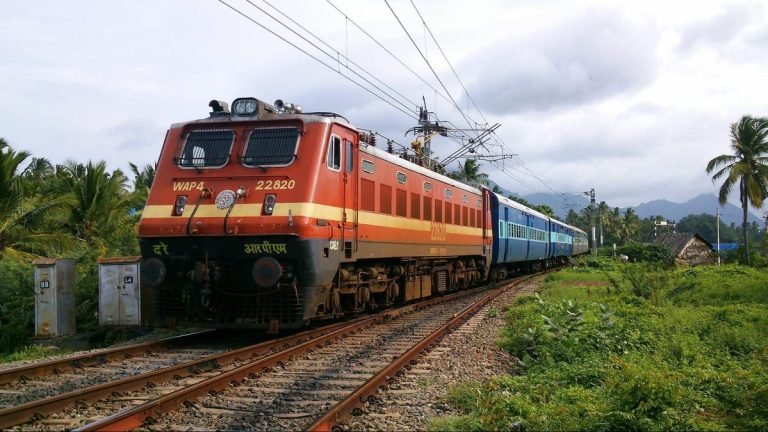
NEW DELHI (Metro Rail News): Indian Railways has embarked upon an ambition plan of electrification of its complete Broad Gauge network which would not only result in a better fuel energy usage resulting in increased throughput, reduced fuel expenditure but also savings in precious foreign exchange.During the FY 2022-23, till September 2022, Indian Railways has achieved 851 Route Kilometers (RKMs) as compared to 562 RKMs during the corresponding period of FY 2021-22. It is 51.4% more than the previous year figures of the corresponding period. The target set for electrification during this Financial Year is 6500 RKMs.It is worth mentioning that record electrification of 6,366 RKMs was achieved in Indian Railways’ history during 2021-22. Earlier, highest electrification was 6,015 RKM during 2020-21.As on 30.09.2022, out of 65,141 RKM of BG network of IR (including KRCL), 53,098 BG RKM have been electrified, which is 81.51% of the total BG network.
Tamil Nadu CM inaugurates Phase II CMRL tunnelling work
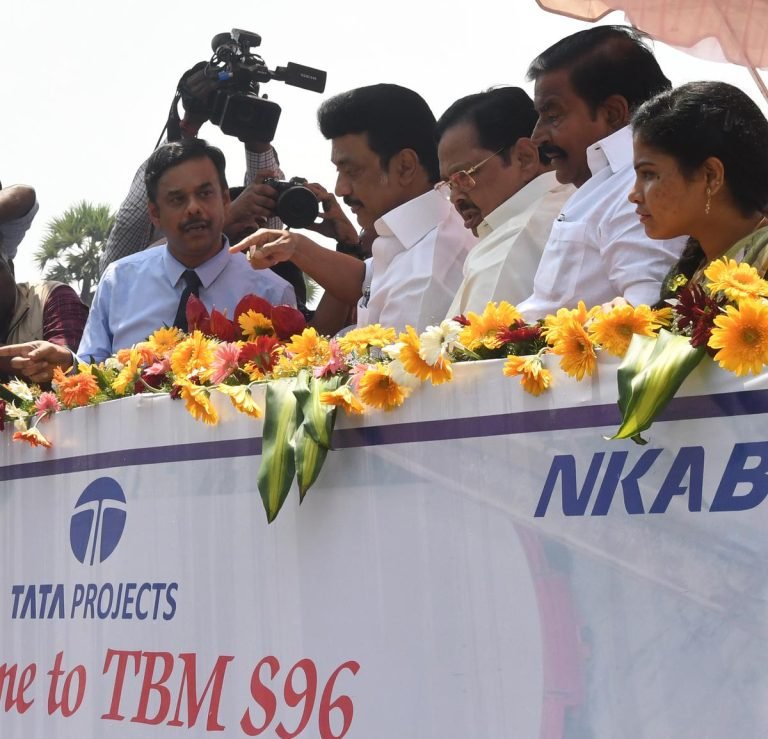
CHENNAI (Metro Rail News): M K Stalin, the chief minister of Tamil Nadu, inaugurated the construction of tunnel under the second phase of the Chennai Metro Rail project at Madhavaram Milk Colony on 14th October.The State government has approved the construction of three metro rail corridors for a length of 118.9 kilometres under Phase II of the Chennai Metro Rail project.The corridors 3 and 4 from Lighthouse to Poonamalle Bypass (26.1 km) and corridor 5 from Madhavaram to Sholinganallur (45.8 km each) make up the 128-station Phase II extension (47 km).The project is expected to cost Rs 63,246 crore. The plan is under process and approved by Central government. By the end of 2026, the project is proposed to be finished.Funding for a portion of Chennai Metro Rail in Phase II i.e. for 52.01 km – from Madhavaram – Sholinganallur of Corridor 3 and Madhavaram – CMBT of Corridor 5 has been tied up with the Japan International Cooperation Agency (JICA) as State Sector Project, a release said.The finance of the remaining 66.89 km stretch through multilateral banks such as the Asia Development Bank (ADB), Asian Infrastructure Investment Bank (AIIB), and New Development Bank (NDB) has been given clearance in principle.
PM flags off Vande Bharat Express from Una in Himachal Pradesh to New Delhi

NEW DELHI (Metro Rail News): The Prime Minister, Shri Narendra Modi flagged off the inaugural run of the new Vande Bharat Express from Amb Andaura, Una to New Delhi, on 13th October.The Prime Minister inspected the train coaches of the Vande Bharat Express and took stock of the onboard facilities. Shri Modi also inspected the control centre of the locomotive engine of Vande Bharat Express. He also inspected Una railway station.The Prime Minister was accompanied by Chief Minister of Himachal Pradesh, Shri Jai Ram Thakur, Governor of Himachal Pradesh, Shri Rajendra Vishwanath Arlekar, Union Minister of Railways, Shri Ashwini Vaishnaw and Union Minister of Information & Broadcasting, Shri Anurag Singh Thakur when he arrived at Amb Andaura Railway Station in Una district of Himachal Pradesh.The introduction of the train will help boost tourism in the region and provide a comfortable and faster mode of travel. The travel time from Una to New Delhi will be reduced by two hours. Running from Amb Andaura to New Delhi, it will be the fourth Vande Bharat train to be introduced in the country and is an advanced version compared to the earlier ones, being much lighter and capable of reaching higher speeds in a shorter duration. Vande Bharat 2.0 is equipped with more advancements and improved features such as reaching a speed of 0 to 100 kilometres per hour in just 52 seconds, and a maximum speed of up to 180 kilometres per hour. The improved Vande Bharat Express will weigh 392 tons when compared to the previous version of 430 tons. It will also have a Wi-Fi content on-demand facility. Every coach has 32” screens providing passenger information and infotainment compared to 24” in the previous version. Vande Bharat Express will also be environmentally friendly as the ACs will be 15 per cent more energy efficient. With dust-free clean air cooling of the traction motor, travel will become more comfortable. A side recliner seat facility provided only to Executive Class passengers earlier will now be made available for all classes. Executive Coaches have the added feature of 180-degree rotating seatsIn the new design of Vande Bharat Express, a photo-catalytic ultraviolet air purification system is installed in the Roof-Mounted Package Unit (RMPU) for air purification. As recommended by Central Scientific Instruments Organisation (CSIO), Chandigarh, this system is designed and installed on both ends of RMPU to filter and clean the air free from germs, bacteria, viruses etc. coming through fresh air and return air.The Vande Bharat Express 2.0 offers a myriad of superior and aircraft-like travelling experiences. It is equipped with advanced state-of-the-art safety features including an indigenously developed Train Collision Avoidance System – KAVACH.
Indian Railways Revenue Earnings up by 92% in Passenger Segment
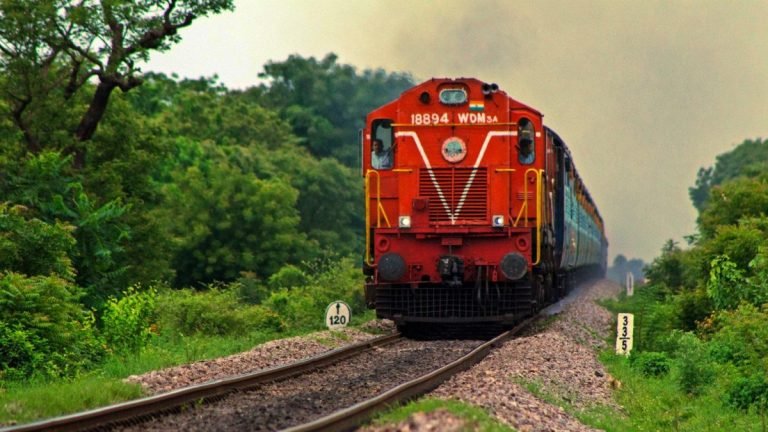
NEW DELHI (Metro Rail News): The total approximate earnings of Indian Railways on originating basis during 1st April to 08th October 2022 is Rs. 33476 Crore, registering an increase of 92 per cent in comparison to Rs. 17394 Crore achieved during the same period last year.In reserved passenger segment, the total approximate numbers of passengers booked during the period 1st April to 08th October 2022 is 42.89 Crore as compared to 34.56 Crore during the same period last year, showing an increase of 24%. The revenue generated from reserved passenger segment during the period 1st April to 08th October 2022 is Rs 26961 Crores as compared to Rs 16307 Crores during the same period last year, showing an increase of 65%.In Unreserved passenger segment, the total approximate numbers of passengers booked during the period 1st April to 08th October 2022 is 268.56 Crore as compared to 9.57 Crore during the same period last year, showing an increase of 197%. The revenue generated from Unreserved passenger segment during the period 1st April to 08th October 2022 is Rs 6515 Crores as compared to Rs1086 Crores during the same period last year, showing an increase of 500 %.