

Indian Railways to achieve net-zero carbon emissions by 2030

NEW DELHI (Metro Rail News): The Indian Railways intends to achieve net-zero carbon emissions by 2030 while also concentrating on expanding network capacity according to a statement released by the Ministry of Railways on 7th October.According to the report, the nation’s railway network is being electrified in an effort to reduce pollution and conduct transportation in an environment-friendly manner.The Railways will attempt to reduce its carbon footprint primarily by sourcing its energy requirements from renewable energy sources, the ministry said. Other strategies include taking a multi-pronged approach to electrification of its routes, shifting from diesel to electric traction, promoting energy efficiency, construction of dedicated freight corridors, green certification of railway establishments, etc.“Indian Railways has planned to gradually reduce its carbon footprint and become Net Zero Carbon Emitter by 2030,” the ministry said.A 30 GW installation of renewable capacity is anticipated to be needed by 2029–2030. Up until August 2022, Indian Railways had installed 142 MW of rooftop solar capacity and 103.4 MW of wind energy till August, it added.The railways have electrified 52,508 RKM out of a total BG network of 65,141 RKM (80.61%), the ministry said.With complete electrification, the demand for electricity will rise from 21 BUs in 2019–20 to approximately 72 BUs in 2029–30.
Railways to float 16 stations redevelopment tender udder PPP model
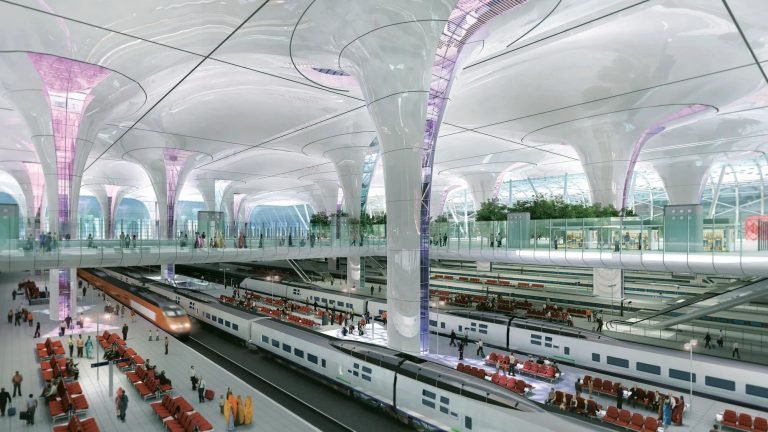
NEW DELHI (Metro Rail News): The railways will float tenders for 16 stations under the public-private partnership (PPP) model for redevelopment purposes. Tenders are being floated over the next two months, sources said on 7th October.The stations to be redeveloped are Anand Vihar Terminal, Tambram, Vijayawada, Dadar, Kalyan, Thane, Andheri, Coimbatore Jn, Pune, Bangalore City, Vadodara, Bhopal, Chennai Central, Delhi Hazrat Nizamuddin, and Avadi. The railways intend to float bids for these stations this year.These railway stations will be updated to provide better accessibility and fundamental amenities for travellers. Various monetisation models are being investigated to support the private sector.As many as 199 stations with a footfall of 50 lakh per day are planned to be redeveloped in the first phase.Railway Minister Ashwini Vaishnaw at a press briefing earlier this month had said that the designs of the redeveloped stations will include a spacious roof plaza with all passenger amenities in one place along with spaces for retail, cafeterias, and recreational facilities.While the tender for 47 stations is out, work is underway at 32 stations, Vaishnaw said, adding the target is to complete the redevelopment of the New Delhi station in three and a half years.This marks a significant shift in the method used by the railways to renovate stations after using the “engineering, procurement and construction” (EPC) route to redevelop New Delhi, Ahmedabad, and CST Mumbai stations the railways will now go the PPP way.This could result in an increase in the cost of platform tickets and other railways conveniences.
New Metro corridors in Gurugram to get approval soon

GURUGRAM (Metro Rail News): The two proposed Metro corridors for the city, where the current urban rail network is only 17 kilometres long and has not been expanded since 2017, may be put on the track at the next cabinet meetings of the state and federal governments.One of the two planned lines is an 8.4 km corridor that runs from Palam Vihar to Dwarka and connects Gurugram and Delhi. For intra-city transportation, a metro line will run 29.8 kilometres between Huda City Center and Cyber City. Although both projects have been conceptualised, they have not yet been approved.Haryana Mass Rapid Transport Corporation officials announced on 4th October that Chief Minister Manohar Lal Khattar has approved a revised proposal for the Palam Vihar Dwarka line.
The final 1.5 km of the corridor in Delhi should be built underground stated by CM after reviewing an earlier DPR in May.The original plan called for three stations in the capital (Dwarka (sector 28), Dwarka (sector 25), Dwarka (sector 21), and four stations spanning 4.4 km in Gurugram (Rexang La Chowk, Choma, Sector 110, and Sector 111).The next step is to get cabinet approval. “The proposal will now be placed before the Haryana cabinet from where, if approved, it will go to the Ministry of Housing and Urban Affairs,” said a senior HMRTC official. He added that officials of the central government have been briefed about the Delhi- Gurugram corridor, and they have agreed in principle that it is a good line.” The DPR for the intra-city Metro lines has been under evaluation by the Union Housing Ministry for months, despite being approved by the state cabinet in August 2020. The Institute of Urban Transport, which is part of the Government of Urban Development, requested clarifications in September 2021 even though it had originally been delivered to the ministry in February of last year.“As per the latest update, the DPR is now being considered by PIB. Once it is approved there, it will be placed before the Union Cabinet. We are very optimistic that the approval will come soon,” said the official quoted above.According to the DPR, the elevated Huda City Centre Cyber City line will include 27 stations.It will pass through some of the city’s busiest crossroads and most inhabited regions: Sector 45, Cyber Park, Sector 47, Subhash Chowk, Sector 48, Sector 72 A, Hero Honda Chowk, Sector 10, Sector 37, Basai Village, Sectors 9,7,4 and 5, Ashok Vihar, Sector 3, Bajghera Road, Palam Vihar Extensions, Palam Vihar, Sector 23 A, Sector 22, and Udyog Vihar -4, -5 and -6.
RailWire, RailTel’s retail broadband connection, is now available at 6105 Indian Railway Stations

NEW DELHI (Metro Rail News): RailTel’s retail broadband RailWire customers can now use their home broadband plans on RailTel’s High-Speed Wi-Fi network across 6105 Rly Stations.RailWire Subscribers need not buy prepaid Wi-Fi plans at Rly Stations and can use their RailWire FTTH subscription on RailTel’s Wi-Fi network at Rly Stations.
To avail of this facility, they just need to use their Smartphone, switch on Wi-Fi, select RailWire SSID and click the hyperlink provided on the Captive Portal (log-in screen) to punch RailWire User ID and Password.
RailTel’s Wi-Fi at Rly Stations is spread across India and is one of the single largest integrated Public Wi-Fi networks, globally, which gets accessed by more than 10 lacs of unique users every day.
Currently, RailWire has 4.82 lakh subscribers across India and the number is only growing. Recently, RailTel introduced “RailWire SATRANG”, Multi-Faceted Multi Screen Broadband Entertainment Package to redefine new age Digital Experience of Streaming OTT (Over-The-Top) Entertainment Content “On The Go” (subscribe through RailWire and Use anywhere), a response that has been very encouraging. OTT content can now be enjoyed on any of the 6105 Rly Stations using Stations Wi-Fi network while family members may enjoy OTT at Home broadband at the same time. The OTT bundled RailWire broadband plans start from 499/- per month with 14 OTTs, which is quite affordable and is available across country.RailWire has internet penetration in rural areas with more than 50% of subscribers in semi urban/rural areas. Talking about it, Shri Sanjai Kumar, CMD-RailTel said, “RailTel is committed to strengthening its RailWire infrastructure, spreading deeper into data-starved areas, unleashing more infotainment offerings and improving value propositions for its RailWire customers in near future. Making home broadband plans available at Station WiFi network across India is a unique value proposition for our esteemed RailWire customers”Your home broadband RailWire WiFI connection is now available at 6105 Rly Stations.#railwire #railtel #homebroadband #wifi #railwaystaion #railtel #digitalindia #digital@RailWireIndia @RailTel @CMDRailTel pic.twitter.com/QgCGfXPORj
— RailWire Official (@RailWireIndia) October 4, 2022
Three new Metro routes gear up for Gr Noida and Noida to improve connectivity

NOIDA (Metro Rail News): The authorities in Noida and Greater Noida are preparing to expand Metro rail connectivity in the twin industrial cities for the advantage of citizens residing in interior pockets. In order to enable a seamless commute from Greater Noida to Delhi, the process of directly connecting the Aqua Line with the Blue Line has already been started, sources stated.
The construction of three corridors was going at a slow pace as they needed approvals from various bodies in Uttar Pradesh and the Union government. The Uttar Pradesh government approved the detailed project report (DPR) of the 14.5-km Aqua Line expansion corridor in 2019, but the Union government has not yet given its final permission, officials stated.Similarly the Greater Noida authority approved the DPR for the 2.6-km Aqua Line extension from Knowledge Park-V to Bodaki and forwarded it to the UP government for approval in September of this year.The alignment of the proposed Metro link, which would connect the Botanical Garden Metro station, which is on the Blue Line, to Sector 142 of the Aqua Line, has not yet been decided by the Noida authorities and the Noida Metro Rail Corporation (NMRC).“The central government is likely to give its nod for the 14.5-km Metro line extension from Noida’s Sector 51 to Greater Noida’s Knowledge Park-V any time next month as the work on the project is on a fast track. We aim to start work on the ground by the end of November. The 2.6-km corridor from Aqua Line’s Knowledge Park-V to Bodaki in Greater Noida has also been approved and work will start soon. We are about to finalise the alignment on the third corridor connecting Botanical Garden to Sector 142,” said Ritu Maheshwari, chief executive officer (CEO) of the Noida and Greater Noida authorities and managing director, of NMRC.CEO Maheshwari further added, “We had a meeting with all stakeholders, residents and industrialists. We discussed the route options to connect Delhi Metro’s Blue Line with Noida Metro’s Aqua Line. They have expressed their views and we will soon finalise the alignment and start work on ground.”
The authorities are working on three Metro corridors, including a 14.5-km line branching from Sector 51 on the Aqua Line in Noida to Knowledge Park-V in Greater Noida, a 2.6-km corridor from Knowledge Park-V to Bodaki in Greater Noida, and an extension of the Metro link from the Botanical Garden Metro station on the Blue Line to Sector 142 Metro station, which is on the Aqua Line.
European Investment Bank Officials Visit Nagpur Metro Project
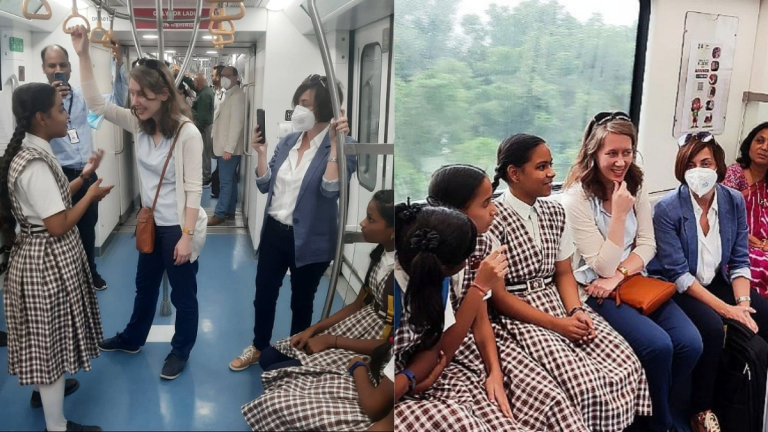
NAGPUR (Metro Rail News): A 3-member team of European Investment Bank (EIB) Officials visited Nagpur Metro Project. The team was on a two-day visit to Nagpur Metro Rail Project, which was concluded on 4th October. The team included Ms Heloise Gornali, Senior Loan Officer (Public Sector Operations), Global Partners Department, Mr Zoltan Donath, Senior Transport Specialist and Mrs Angeliki Kopsachelli, Transport Economist, Mobility Department.The team discussed the Nagpur Metro Project at length with Maha Metro
MD Dr Brijesh Dixit also reviewed the proposed Second Phase. The
European Union’s (EU) investment bank and is owned by the EU Member
States. It is one of the largest supranational lenders in the world. The team
was briefed about the various aspects of the Nagpur Metro Rail Project and
was given a detailed presentation.
The team of officials visited Khapri and Lokmanya Nagar Metro Stations. The officials inspected Ticket Counter, Parking Areas, Multi-Modal Integration (MMI), Emergency Services, Bio-Digester, and Water Recycling Plant. They also sought information about Digital Ticketing and Feeder Services. The EIB officials were also briefed about the several steps regarding the Property Development (PD) taken by Maha Metro. The team visited Metro Bhavan and saw the various initiatives like Exhibition Centre, Experience Centre and Operational Control Centre (OCC) taken by Maha Metro. The team was given a presentation about the various aspects of the Nagpur Project. The Director (Project) Shri Mahesh Kumar, Director (Rolling Stock, System and Operations) Shri Sunil Mathur, Director (Strategic Planning) Shri Anil Kokate and Director (Finance) Shri Harinder Pandey was present on the occasion.• European Investment Bank Officials Visit Nagpur Metro Project
— Nagpur Metro Rail (@MetroRailNagpur) October 4, 2022
• 3-Member Officials’ Team Visits Stations, Discusses Project Aspects
Read more on – https://t.co/k1MUdZXYxE#MahaMetro #infrastructure #infrastructuredevelopment #TransformingNagpur pic.twitter.com/JUg8qT21eg
CMRL to introduce driverless trains in Phase II by 2026
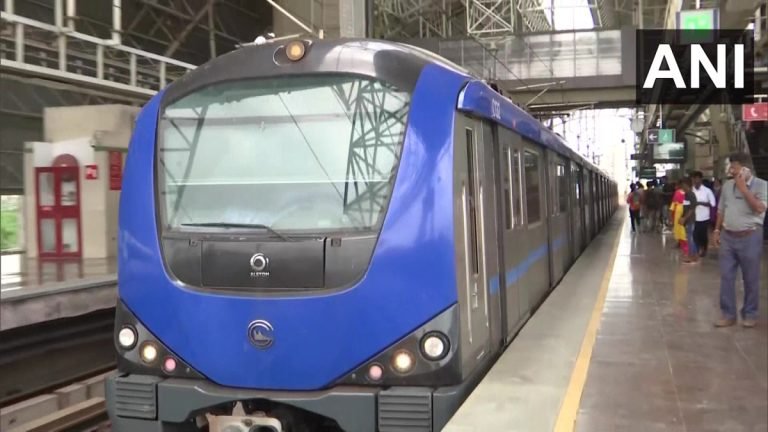
CHENNAI (Metro Rail News): The second phase of Chennai Metro Rail is currently under construction and is progressing quickly. It will feature driverless trains that only rely on signals.For the Phase II extension, a 118.9 km network with 128 stations has been planned. There are three of them: Corridor 3, which runs 45.8 kilometres from Madhavaram to SIPCOT, Corridor 4, which runs 26.1 kilometres from the lighthouse to the Poonamalle Bypass, and Corridor 5, which runs from Madhavaram to Sholinganallur (47 km). The project is expected to cost Rs. 63246 crore.
This proposal is under the process and approval of the Government of India. According to a statement released by Chennai Metro Rail, the project is anticipated to be finished by the end of 2026. Prime Minister inaugurated the Phase-I extension of the Chennai Metro on February 14 last year.“Work for phase II of Chennai Metro Rail is going at a very fast pace. Phase II will be totally based upon Unattended Train Operation. There won’t be any drivers; trains will run on signals”, according to Rajesh Chaturvedi, Director (Systems-Operations), Chennai Metro Rail.
The project was completed at a cost Rs. 3,770 crores. The 9.05 km extension connected the Airport and Central Railway Station to north Chennai. The fourth Railway line between Chennai Beach and Attipattu was also inaugurated by him.This 22.1 km section, which cost Rs 293.40 crores to build, runs through the districts of Chennai and Thiruvallur. The governor of Tamil Nadu, Banwarilal Purohit, the chief minister, Edappadi K. Palaniswami, and the deputy Chief Minister O.Panneerselvam were also present during the inauguration.Chennai Metro Phase II work is going at a very fast pace. Phase II will be totally based upon Unattended Train Operation. There won't be any drivers, trains will run on signals stated by Rajesh Chaturvedi, Director (Systems & Operations), Chennai Metro Rail. pic.twitter.com/BHItTXtwBY
— Metro Rail News (@smmetrorailnews) October 7, 2022
Darshana Jardosh flags off superfast train from Udhna to Banaras
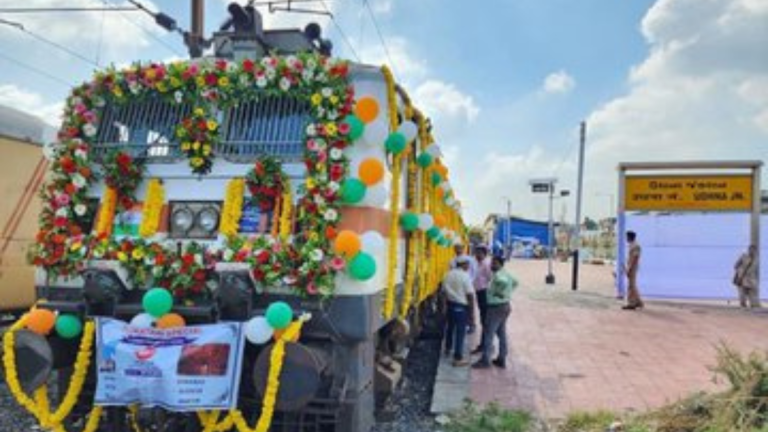
SURAT (Metro Rail News): Union Minister of State for Railways Darshana Jardosh on 4th October flagged off a superfast train from Surat’s Udhna station to Banaras in Uttar Pradesh. The train, which will be operational from October 11, will help Banaras and Surat’s textile merchants, Union Minister stated.
The train departed from the Udhna station on 4th October at 10.30 am and reached Banaras on 5th October at 1.45 pm.
Addressing a gathering at the Udhna railway station, Jardosh, who is also the BJP MP from Surat city, said, “The western railway has approved the demand of people of Surat, to start special superfast train from Surat to UP. The special train will also lead to growth in economic activities between both cities. The textile traders staying in both Surat and Banaras will be benefited from this train. This train will also benefit people going for religious pilgrimage.”Every Tuesday, a train will run between Surat and Banaras. It will leave Surat at 7.25 am and arrive in Banaras at 10.50 am. It will leave Banaras on Wednesday at 17:50 and arrive at the Udhna Railway Station at 8:35 the following evening.During the inaugural run on 4th October,2022, this train will run as Train No. 09013 Udhna – Banaras Superfast Express.
— Western Railway (@WesternRly) October 3, 2022
Booking of the inaugural run of Train No. 09013 is open at PRS counters and on IRCTC website. pic.twitter.com/vzoladh3Nt
DMRC floats tender for Licensing Of Built up, Bare, and Parking Space for commercial utilization
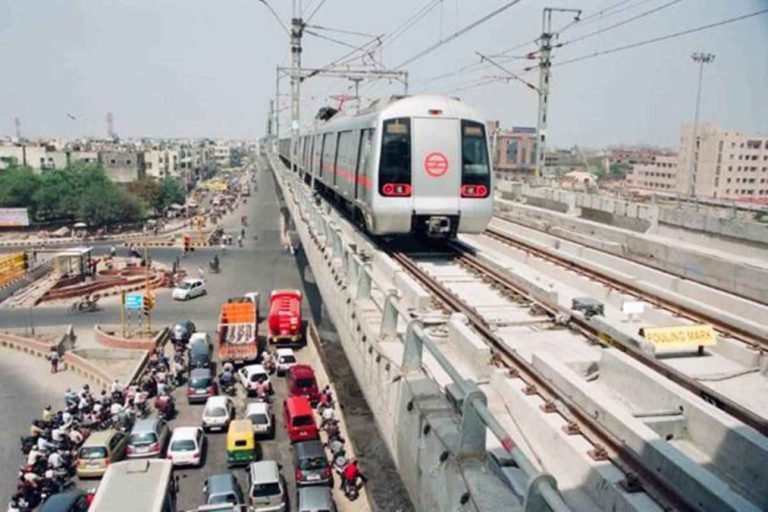
NEW DELHI (Metro Rail News): DMRC invites open E-Tenders or bids from suitable Bidders for Licensing Of Built up, Bare, and Parking Space for commercial utilization as Warehouse/ Storage purpose at Badli Depot of Line-2.Start of sale of Tender Document: From 27th September 2022 to 07th November 2022 (up to 1500hrs).Cost of Tender Document: Non – Refundable Tender Document Cost of Rs. 23,600/.Bid Security / Earnest Money Deposit: Rs. 11,94,000/Pre-Bid Conference: The pre-bid meeting shall be conducted offline on 11.10.2022 at 1100
hrs at 3rd Floor, A-wing, Metro Bhawan, Barakhamba Road, New Delhi.Last date of receiving queries: 1700 hrs on 10.10.2022DMRC’s response to queries by : 1700 hrs on 21.10.2022Start date and time of submission of bid (online only): 1700 hrs on 27th October 2022.Last Date & Time of Submission of Bids: Latest by 1500 hrs of 09th November 2022Date & Time of Opening of Bids : 1500 hrs on 10th November 2022.Validity of Bids: 180 days from bid submission date.
Scope of the work:
Successful bidder shall have the rights to utilize the said Built up, Bare, and Parking Space for utilization as a warehouse at Badli Depot of Line-2 of DMRC.DMRC floats tender for indoor advertising rights inside FoB connecting New Delhi Railway station and Metro station
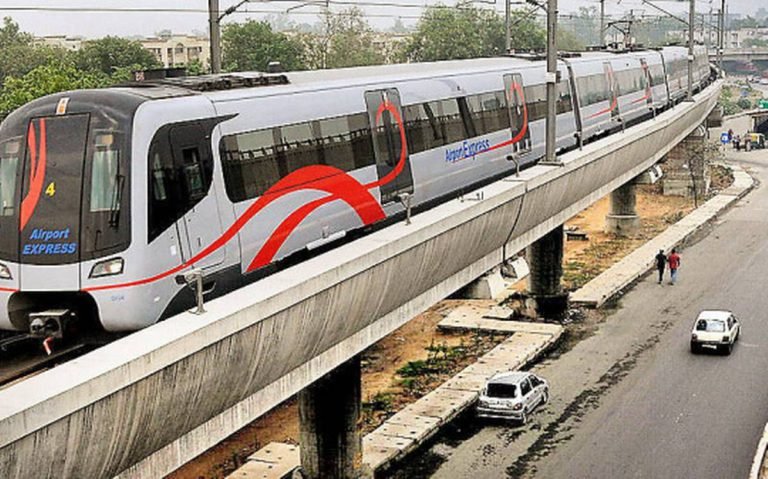
NEW DELHI (Metro Rail News): Delhi Metro Rail Corporation Ltd. (DMRC) has invited open e-tenders from eligible applicants, who fulfil the qualification criteria for awarding exclusive indoor advertising rights inside Foot Over Bridge connecting New Delhi Railway station and New Delhi Metro station of Airport Express line.The work includes Exclusive Indoor Advertising Rights inside Foot Over Bridge Connecting New Delhi Railway Station and New Delhi Metro Station of Airport Express Line.
Tender Details:
Cost of Tender Document: Rs. 5900/- (Rs. 5000/- + 18% GST)Bid Security/EMD: Rs. 2, 00, 000/-(Rupees Two Lakh only) to be accepted online in form of RTGS/NEFT/IMPSSale of Tender Document: 27th September 2022 to 31st October 2022 (up to 1500 hrs.)Pre-Bid Conference: The pre-bid meeting shall be conducted on 07th October 2022, 1100 hrs at 3rd Floor, A-wing, Metro Bhawan, Barakhamba Road, New Delhi.Last Date of receiving written queries by DMRC: 06th October 2022 up to 1700 hrsDMRC’s response to queries latest by: 17th October 2022Start Date & Time of Submission (e-tender) of Bid: 21st October 2022 from 1500hrsLast Date & Time of Submission (e-tender) of Bid: 31st October 2022 up to 1500hrsDate & Time of Opening of Technical Bids online: 01st November 2022 at 1500hrsObjectives of the Tender are :
To augment the non-operational revenue of DMRC through advertisements.Position Delhi Metro as one of the most sought-after locations for advertising.Contribute to the aesthetical view of the Delhi Metro through high-quality advertising comparable to world-class Airports & Metro Railways and other leading destinations.Provide value to the Corporate that advertises in Delhi Metro.To promote Delhi Metro as the gateway to Tourism in Delhi by highlighting Delhi’s heritage and cultural beauty.Mitsui wins contract to supply head hardened rails for CMRL Phase II project
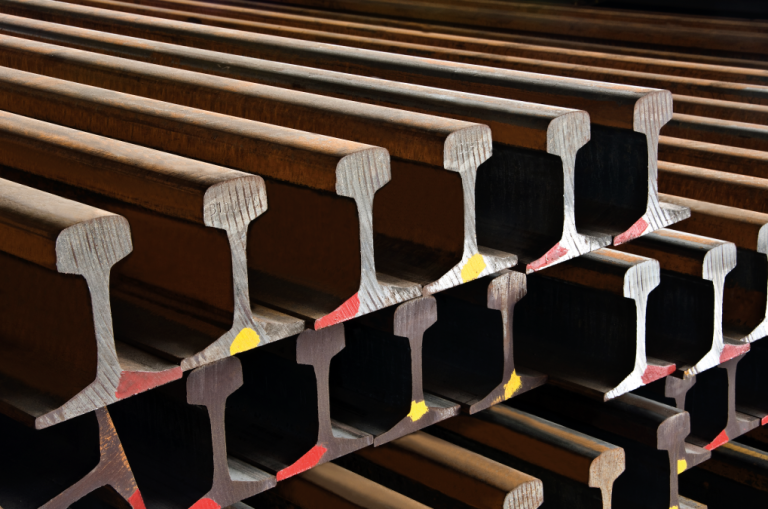
CHENNAI (Metro Rail News): Chennai Metro Rail Ltd. (CMRL) has finalised the deal for the delivery of head-hardened rails for two stretches of its Phase II project.The order for head-hardened rails has been awarded to the Japan-based company, Mitsui & Co Ltd. These rails, which will be utilised to lay tracks on two sections of the Phase II project, will be provided by the Japanese firm.According to CMRL officials, the two stretches are Madhavaram to Shollinganallur, which is a section of the Madhavaram to SIPCOT corridor that travels through Purasawalkam, Mylapore, and Adyar (Corridor 3), and Madhavaram to CMBT, which is a section of the Madhavaram to Sholinganallur corridor that touches CMBT, Vadapalani, Porur, and Madipakkam.“The rails will be specially designed and will require minimal maintenance with a longer lifespan. In the Phase I project, the contractor who was chosen to carry out track work purchased the rails. But for Phase II, we floated separate contracts and one firm will provide the rails and another will execute the track work. It was done specifically to cut the overall cost of the project,” an official said.
The official stated that “These two stretches of the Phase II project are likely to be completed within five years. In three years, the first stretch of the Phase I project, Poonamallee to Power House, which forms a section of Poonamallee to Light House via Nandanam (Corridor- 4), will be ready”, the officials added.
Linxon emerges as lowest bidder for CMRL’s electrification work
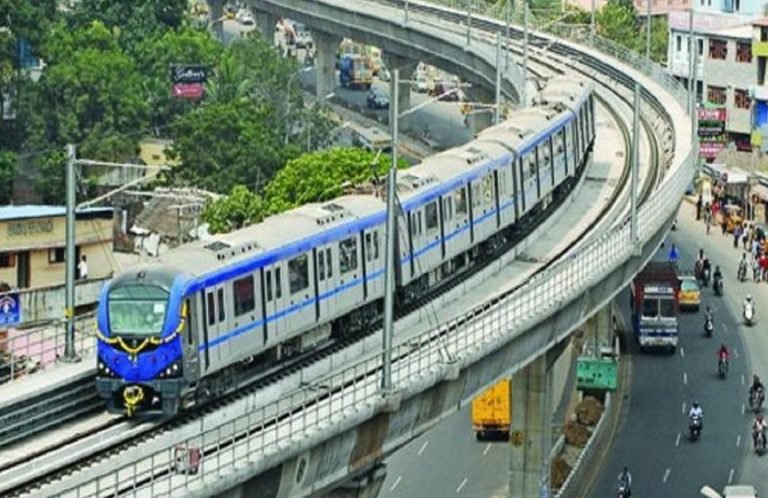
CHENNAI (Metro Rail News): Chennai Metro Rail has now finalised one more contract, with Linxon being the lowest bidder for carrying out the overhead electrification work on two lines, as the enormous phase II project rapidly picks up speed across the city.According to the officials of Chennai Metro Rail Limited (CMRL), the contract will be awarded shortly to the firm after some formalities. “This company will provide the design, manufacturing, installation of substations, overhead electrification work, SCADA (supervisory control and data acquisition) for two stretches in the phase II project, which include CMBT to Shollinganallur and Shollinganallur to SIPCOT,” an official said.The phase II project would consist of three corridors that will cover a total distance of 118.9 km and cost 61,843 crores each: Madhavaram to SIPCOT (corridor 3), Light House to Poonamallee (corridor 4) and Madhavaram to Shollinganallur (corridor 5).The electrification contract in this award includes two stretches that are part of two corridors. The Madhavaram to Shollinganallur corridor will cover the CMBT to Shollinganallur stretch. The Madhavaram to SIPCOT corridor however,will cover the stretch from Shollinganallur to SIPCOT.Sources said the contractor will be given nearly three years to finish the work. “The work will begin only after the construction of stations and the viaduct and the laying of tracks,” another official said.Though the construction work is in progress across the city at present, Chennai Metro Rail’s primary focus will be on completing the work between Poonamallee and Power House on priority as this stretch will be the first one to be opened to the public in three years. Meanwhile, the tunneling work between Madhavaram and Kellys too shall begin in a few weeks for building the underground stretch, officials said.
North Western Railway floats tender for railway station building facilities
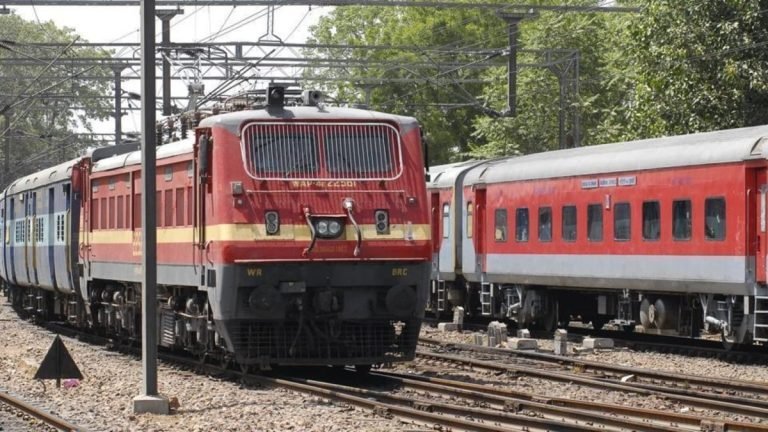
GUJARAT (Metro Rail News): North Western Railway has invited bids for the construction of railway station building facilities at Ambaji, Gujarat.
Tender ID: 56858549
Brief: Construction of the railway station building, facilities for passenger/pilgrim stay (yatri niwas), platforms, underpasses, p/f shelters, passenger facilities, circulating area and other misc. works at Ambaji in connection with Taranga hill – Ambaji – Abu road new line project.
The estimated value of the work is Rs 202.56 crore with completion period of 36 months.
Last date of submission of bids: 25 November 2022.
Bids opening date: 25 November 2022.
NCRTC unveils revamped website with commuter-centric features

NEW DELHI (Metro Rail News): National Capital Region Transport Corporation (NCRTC) Managing Director, Vinay Kumar Singh on Monday unveiled the new look of the organisation’s corporate website, an official statement said.The website is dotted with commuter-centric features like Regional Rapid Transit System (RRTS) project information and an interactive map of the corridor among others, it said.The NCRTC is implementing the country’s first RRTS, a high-speed rail-based transit corridor, between Delhi and Meerut via Ghaziabad.
The statement stated that as the country’s first RRTS project has moved to advanced stages of implementation, a need for a comprehensive platform with a modern look and feel was felt to showcase the journey and updates about the project. Technology and commuter-centric features are the highlights of this new website, it said.“The NCRTC has developed and is using some of the most advanced technologies in the RRTS, many of them being used for the first time in the country. This website provides insights into these technologies,” the statement said. It further stated that there is a separate section on construction updates as well as a pictorial journey of the RRTS stations.The revamped website also showcases an interactive map of the first RRTS corridor with detailed information about the stations, providing an immersive experience for the users. This user-friendly website provides detailed information about how the first-of-its-kind RRTS project will prove transformative for the National Capital Region, the statement said.Shri @VKS_irse MD, NCRTC, unveiled the new look of the organization’s corporate website. Commuter-centric features and #technology are the highlights of this new look of the website. Please Visit – https://t.co/LFSHLl4YA7 @ADB_HQ @NDB_int @AIIB_Official pic.twitter.com/3kma9NJRos
— National Capital Region Transport Corporation Ltd. (@officialncrtc) October 3, 2022
The Delhi-Ghaziabad-Meerut RRTS corridor is 82-km-long and will have around a 70-km-long elevated section and a 12-km-long underground section. According to NCRTC officials, the trial runs of the RRTS train will first be conducted on the priority section between Sahibabad and Duhai and is likely to start by the end of this year.
The 17-km-long priority section between Sahibabad and Duhai is targeted to be commissioned by 2023 and the full corridor by 2025, they said. The priority section of the Delhi-Ghaziabad-Meerut RRTS corridor has five stations — Sahibabad, Ghaziabad, Guldhar, Duhai and Duhai Depot.