

Delhi Metro Phase 4 TBM 367 and 372 pass Factory Acceptance Test
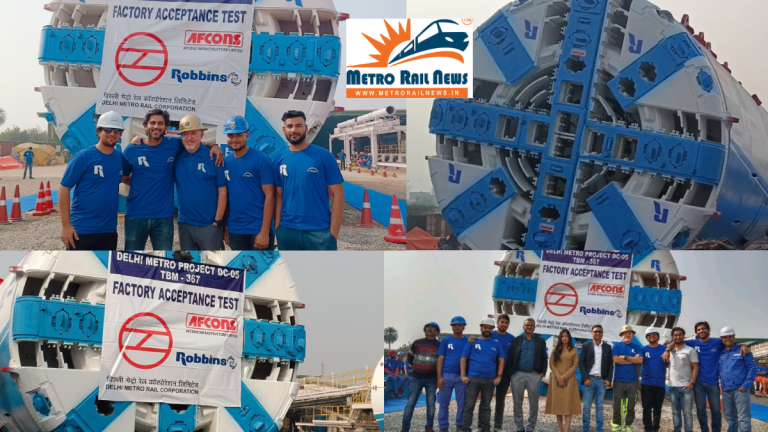
NEW DELHI (Metro Rail News): The 65.1-kilometre Delhi Metro Phase 4 project’s tunnel boring machine manufacturer Robbins finished the factory acceptance tests (FAT) on TBM 367 and TBM 372.Afcons Infrastructure will use the 6.5 m diameter Earth Pressure Balance (EPB) machines that have been repaired. They were initially deployed to build Singapore MRT and brought to Robbins’ yard in Gurgaon’s Sector 74.TBM 367 on Magenta LineTBM 367 and 3 more Robbins machines will be deployed by Afcons to work on Package DC-05 of the 28.92 km Janakpuri West – RK Ashram extension of the Delhi Metro Magenta Line.The 7.46 km subterranean section connects a ramp north of Derawal Nagar with RK Ashram with six stations—Derawal Nagar, Ghanta Ghar, Pulbangash (interchange with Red Line), Sadar Bazar, Nabi Karim, and Ramakrishna Ashram Marg.Afcons won a contract of Rs. 2481.50 crores for Package DC-05 from Delhi Metro Rail Corporation (DMRC) in January 2022 with a 42-month deadline.TBM 372 on Silver LineAfcons will send out TBM 372, another Robbins machine, and two Herrenknecht machines to work on Package DC-07 of the 23.622 km Silver Line of the Delhi Metro, which connects 16 stations from Aerocity to Tughalakabad.Package DC-07 would link the eastern end of Sangam Vihar Station and Sarita Vihar Depot through three stops at Maa Anandmayee Marg, Tughlakabad Railway Colony, and Tughlakabad, where it will interchange with the Violet Line station constructed in Phase 2.Rs. 1669.20 crore contract for Package DC-07 was awarded in January 2022 with a 42-month completion period.The other Robbins machine preparing for FAT for DC-07 is 364. According to reports, TBM S-1264 (Varada) from Bangalore Metro Phase 2 and TBM S-711 from Chennai Metro Phase 1 will be deployed by Afcons.
Survey and preparation of DPR for seven HSR corridors have been undertaken
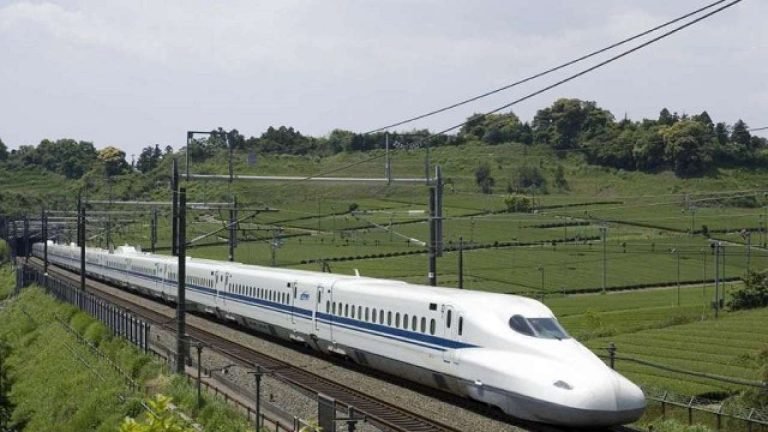
MUMBAI (Metro Rail News): Currently, the Mumbai-Ahmedabad High-Speed Rail (MAHSR) Project is the only sanctioned High-Speed Rail project in the country being implemented with technical and financial assistance from the Government of Japan. Further, the Survey and preparation of a Detailed Project Report (DPR) for the following seven (7) High-Speed Rail (HSR) corridors have been undertaken:(i) Delhi – Varanasi(ii) Delhi -Ahmedabad(iii) Mumbai-Nagpur(iv) Mumbai -Hyderabad(v) Chennai – Bangalore – Mysore(vi) Delhi – Chandigarh – Amritsar(vii) Varanasi – HowrahFurther, the Government has given “in-principle” approval for a pre-investment activity for the following two Semi High-Speed Rail (SHSR) Projects:-(i) Thiruvananthapuram to Kasargod Semi High-Speed Rail (SilverLine) Project on Standard Gauge; and(ii) Pune-Nasik Semi High-Speed Rail Project on Broad Gauge Line.Both the Semi High-Speed Rail (SHSR) projects are to be executed by a Joint Venture company named Kerala Rail Development Corporation Limited (KRDCL) and Maharashtra Rail Infrastructure Development Corporation Limited (MRIDC) of the State Governments of Kerala and Maharashtra, respectively.This information was given by the Minister of Railways, Communications and Electronic & Information Technology, Shri Ashwini Vaishnaw, in reply to a question in Rajya Sabha.
USBRL : India’s long tunnel on Katra –Banihal section has a successful breakthrough

NEW DELHI (Metro Rail News): The USBRL (Udhampur Srinagar Baramulla Rail Link) is a National project undertaken by the Indian Railways to construct a broad-gauge railway line through the Himalayas, intending to connect the Kashmir region with the rest of the country.On December 15th, 2022, a significant milestone was achieved by executing the breakthrough of Escape Tunnel T-49 between the Sumber and Khari Stations on the Katra –Banihal section of the USBRL project.The length of the escape tunnel is 12.895 km. This is the longest escape tunnel in India, and the line and level of the Tunnel are precisely achieved during the breakthrough of the Escape Tunnel. Shri S.P. Mahi, Chief administrative officer/USBRL, has achieved this breakthrough with his team of officials and staff.It is a modified horseshoe shape tunnel connecting the Sumber Station yard on the Southside & Tunnel T-50 after crossing Bridge no.04 over Khoda Nallah on the North side, at Khoda village. The elevation of the South end at Sumberis is approx 1400.5 m and of the North end is 1558.84 m. The ruling gradient inside the Tunnel is 1 in 80. The boring was done from various faces from the South portal and north portal and through three Aditsi.e.Urnihal (323 m), HingniAdit (280m) & Kundan Adit (739m).The Tunnel T-49 is a twin tube tunnel comprising the Main Tunnel (12.75 Kms.) & Escape Tunnel (12.895 Kms.) connected with 33 numbers of cross-passages at every cross-passage. The primary tunnel mining was completed, and the final lining works are progressing rapidly. The Tunnel is constructed as per International standards, in which provision of an Escape Tunnel has been made to facilitate rescue and restoration works in emergency cases. The Escape Tunnel passes through the Ramban formation of the Young Himalayas, and besides this, various distributaries/Nallahs of Chenab River like Khoda, Hingni, Kundan Nallah etc. Cross all along the alignment, making mining more of a highly challenging task.Several Challenges were encountered during construction, such as shear zone, perched aquifer, highly jointed rock mass, rock problems of excessive squeezing and heavy water ingress. On the north end, the tunnel alignment passes through a fragile shear zone of carbonaceous phillite. The tunnel mining was challenging, and several surprises were met during tunnelling. Excessive deformations were recorded during tunnelling at several locations between Kundan and Seeran, but these challenges were successfully tackled professionally. Also, a major cavity was encountered in the escape tunnel on 21.03.2021 at Ch. 12/538 near the north portal due to extremely poor rock mass; the strength of Rock mass was not more than 5 MPA and RQD (Rock quality designation) <10, with damp to wet Groundwater Conditions. The calculated RMR( rock mass rating ) is 18, GSI( geological strength index) is 26, and Basic RMR ( Rock Mass Rating ) is 16. The vertical overburden near the cavity location was 150 m. The size of the cavity was about 3 m long and 15 m high from the crown, continuous flow of mass was also witnessed, and tunnelling in E.T. ( Escape Tunnel) was subsequently suspended. The tunnel face was immediately stabilised, and the fate was sealed. A detailed investigation was carried out, and a detailed methodology was finalised to attend to the cavity. The work was successfully carried out by negotiating the cavity.The Tunnel was constructed by the New Austrian Tunnelling Method (NATM), a modern technique of drill and blast processes. Although the boring work of the Tunnel started from both directions up to the hand-shaking point, the precision of both ends meeting at one point was flawless. This is the result of meticulous planning and precise execution of tunnelling work, the line and level of the Tunnel perfectly matched in both portions after the breakthrough.The team of experienced engineers of Indian Railways successfully negotiated all challenges and achieved the major milestone of the breakthrough of the Escape tunnel. Moreover, during the construction activities of the Tunnel, more than 75% of workers from nearby villages were engaged in various construction activities, thereby ushering a positive change in the overall socio-economic landscape of the region.It is worth mentioning that the T-49 Tunnel (12.75 km) from Sumber to Sheeran village in Khari Tehsil area of Ramban district of Jammu and Kashmir UT is the longest transportation tunnel in the country. It is noteworthy to mention that there are three other tunnels on this project, the length of which are close to that of Tunnel T-49 and details for these are as follows :
- Tunnel T48 = 10.20km(Breakthrough already achieved) between village Dharam- Sumber station
- Tunnel T15= 11.25 km between Sangaldhan – Basindhadar stations
- Pirpanjal Tunnel= 11.2km between Banihal – Qazigund stations
TBM Bhadra achieves first tunnel breakthrough for Bangalore Metro Phase- II
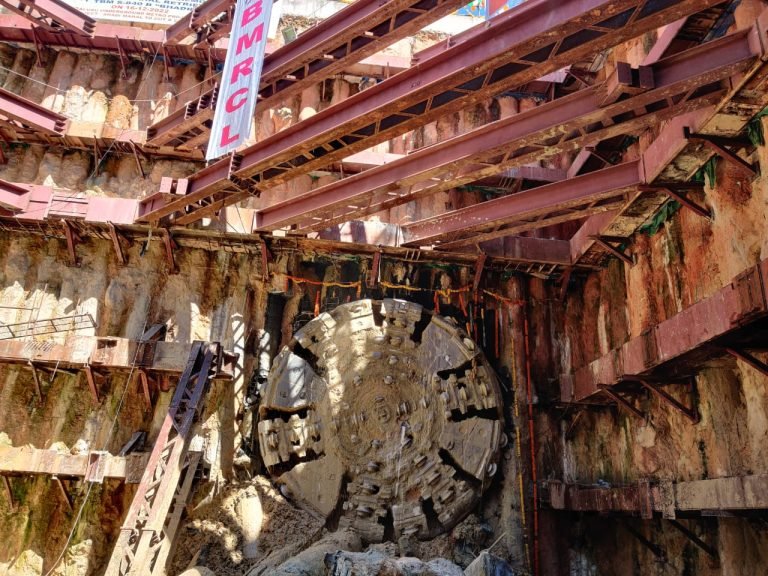
BANGALORE (Metro Rail News): The Tunnel Boring Machine (TBM), Bhadra, for the proposed Pink Line emerged at Shadi Mahal near Tannery Road on December 16 after tunnelling a distance of 1,066 metres. In June 2021, the machine was set up at Venkateshpura underground station to tunnel upward to K.G. Halli metro station.According to Bangalore Metro Rail Corporation Limited (BMRCL) information, the machine finished the tunnel after 540 days. Tannery Road Station now features a 192-meter temporary tunnel for drive-through due to the machine.The BMRCL is constructing a 14 km tunnel network from Dairy Circle to Nagawara as part of Phase II. The Namma Metro project’s contractors have operated nine tunnel boring machines. The line from Kalena Agrahara to Nagawara (Pink line) includes the tunnel system.At Nagawara, this line will be integrated with the ORR airport line. The Pink Line is likely to be operational by 2024.
RITES, KOEL sign MoU to explore business avenues
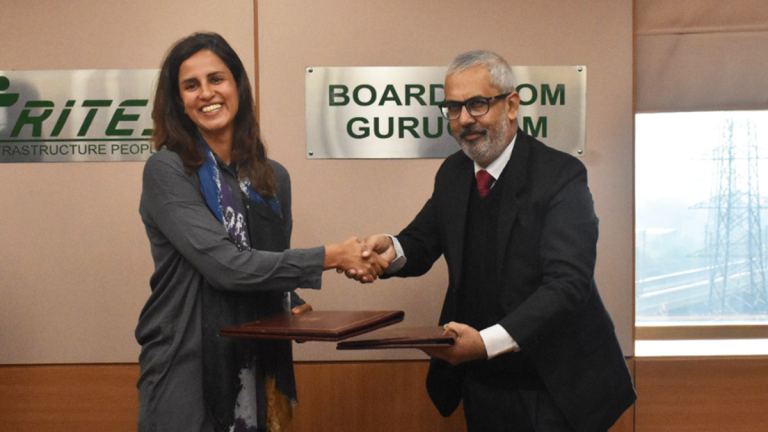
GURUGRAM (Metro Rail News): RITES Ltd., the leading Transport Infrastructure
Consultancy and Engineering company signed a memorandum of understanding (MoU) with Kirloskar Oil Engines Ltd. (KOEL) to jointly explore business opportunities for
supplies/services in the Export of Railway Rolling Stock, Infrastructure and Urban Transport for domestic and overseas markets.As part of the MoU, RITES will provide expertise in design, marketing, operation &
maintenance, and any other support required for tapping business opportunities, while KOEL will be responsible for developing and manufacturing customized products. Mr Manobendra Ghoshal, Chief Strategy Officer (CSO) at RITES, said, “The collaboration with KOEL will not only create a platform to explore business avenues around the globe but also facilitate knowledge sharing to strengthen each other’s operations in promoting smart and sustainable infrastructure.”
Mr Vinod Menon, Vice President, KOEL, said, “The strategic partnership between RITES
and KOEL leverages the strengths of both organizations. While we at KOEL are focused on developing world-class products and services, RITES has outstanding design, technical expertise, and marketing capabilities. We look forward to a long and fruitful association.”About RITES Limited:
RITES Limited, a Miniratna (Category – I) Schedule ‘A’ Public Sector Enterprise, is a leading player in India’s transport consultancy and engineering sector, having diversified services and geographical reach. With experience spanning 48 years, the company has undertaken projects in over 55 countries across Asia, Africa,
South America, and the Middle East region. It is the export arm of Indian Railways for providing rolling stock overseas.
About KOEL:
Kirloskar Oil Engines (KOEL), a flagship company of the Kirloskar Group, is amongst the leading and most prominent manufacturers of diesel engines. With the most extensive service networks, the company has business interests in various sectors such as manufacturing, oil and gas, power, construction and mining, agriculture, industry and transport.
DMRC raises rights issue to generate Rs 7,131.28 crores for DAMEPL
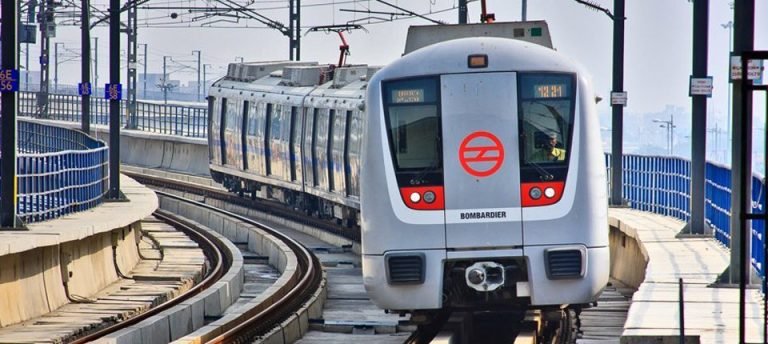
NEW DELHI (Metro Rail News): The Delhi Metro Rail Corporation (DMRC) has started a rights issue to generate Rs 7,131.28 crore to pay Delhi Airport Metro Express Private Ltd (DAMEPL) by the arbitration award.The metro rail corporation has decided to issue shares with a face value of Rs. 1,000 each for a total of Rs. 7.13 crore. The rights issue has begun and will end on January 11, next year. The corporation announced the rights issue for both of its equity partners, the Government of India (GOI) and the Delhi government, according to the minutes of the 147th meeting of the Board of Directors of DMRC. The DMRC has so far declined to comment on the situation.According to the meeting minutes, the DMRC, a joint venture between the Delhi government and the Government of India, has asked both parties to contribute Rs 3,565.64 crore each as equity. A company can generate more capital by issuing new equity shares to its current shareholders through a rights issue. At its meeting on December 13, the DMRC Board of Directors approved the rights issuance.The GOI and Delhi government did not respond to DMRC’s proposal to share the entire arbitration award as CAPEX cost, leading to initiating the rights issue.On September 9, 2021, the Supreme Court affirmed a Rs 7,000 crore arbitration judgement in favour of DAMEPL. The DMRC reportedly attempted to obtain bank loans to pay DAMEPL its award money but then warned the Delhi High Court that doing so would put the business in danger of falling into a debt trap because it would be unable to pay back the loans with its income.According to reports, the DMRC asked the Delhi and GOI governments for financial support.Payment to DAMEPLDMRC launched a Rights issue of Rs 7,131.28 crThe DMRC decided to offer 7.13 crore shares with a face value of Rs 1,000 each to equity stakeholders- Government of India (GOI) and the Delhi government.Both stakeholders are to infuse Rs 3,565.64 crore each through their equity contribution.The same proceeds will be used to pay DAMEPL against the arbitration award.
Alstom will supply an additional 49 Coradia Stream trains to Renfe in Spain
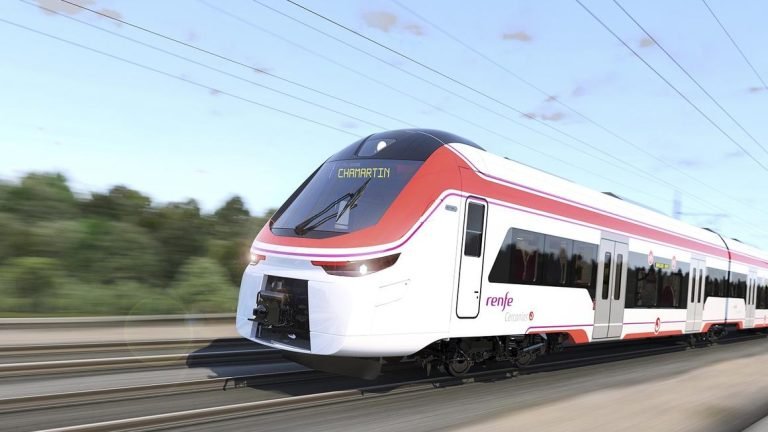
SPAIN (Metro Rail News): Alstom, a global leader in smart and sustainable mobility, has been awarded a contract worth nearly €370 million to supply 49 additional Coradia Stream high-capacity trains to Renfe in Spain. These trains will supplement the 152 trains already ordered in March 2021. The two orders totalled €1.8 billion for 201 trains (including the supply of spare parts and the maintenance of 56 trains for 15 years).All trains will be manufactured at the manufacturing site of Alstom’s Santa Perpetua, Barcelona. To carry out this project, the site is undergoing an unprecedented investment and digitalisation plan, including creating the biggest automatised workshop within the Alstom Group.Leopoldo Maestu states, “This is a historical project for Alstom in Spain, not only because of its scale, but also because it is a project built on a global sustainability concept – beginning at the tendering and design phase.”“This is a historic project for Alstom in Spain, not only because of its scale, but also because it is a project built on a global sustainability concept – beginning at the tendering and design phase. The trains are fully accessible, designed with all passengers in mind, sustainably developed according to eco-design criteria, and replete with innovative features both in the design and the manufacturing process. In a few short years, we will see these trains running in our cities, but their social, environmental and economic impact is already a reality,” says Leopoldo Maestu, Managing Director of Alstom Spain and Portugal.The trains, part of Alstom’s Coradia proven platform, will allow Renfe to transport at least 20% more passengers per hour through the country’s busiest railway hubs, including Madrid and Barcelona. They will each be 100 metres long and have a total capacity of 900 passengers. In addition, they boast an innovative mixed-configuration design, with both single and double-deck cars designed specifically to meet the evolving mobility needs of major urban centres.Designed to optimise capacity, availability and sustainabilityThe design of the new trains enables maximum capacity for passengers, thanks to innovative interior configuration and flexible spaces. Numerous access doors and large distribution halls facilitate the entry and exit of passengers, allowing a decrease in station stop times. In addition, the trains offer universal accessibility, Wi-Fi connectivity and dedicated areas for bicycles and pushchairs. Alstom’s proven technology also expands availability and line usage via more efficient traction systems and the latest generation of train control technology.Fully developed in line with eco-design criteria, from the selection of the raw materials to traction systems, all the new trains for Renfe will be a benchmark in sustainable operations, thanks to optimal energy efficiency during operation and a recyclability rate of over 98% at the end of its service life.With more than 3,000 employees, Alstom in Spain has a long industrial and technological history, including four industrial centres, four technology sites and a presence in more than twenty maintenance workshops. Among others, Alstom has an industrial plant in Barcelona dedicated to the manufacture of all types of rolling stock, a propulsion system factory in Bizkaia, and in Madrid, different technological innovation centres for the development of programmes and projects in the fields of railway safety, signalling, maintenance and digital mobility.Alstom’s Coradia series of modular trains benefit from more than 30 years of continuous development and proven technical solutions. Around 3,900 Coradia regional trains have been sold, and more than 3,000 are currently operating in Denmark, France, Germany, Italy, Luxembourg, the Netherlands, Sweden and Canada. The platform offers a full range of emission-free solutions, including battery or hydrogen versions for non-electrified lines.
Ashwini Vaishnaw appoints as first Chancellor of Gati Shakti Vishwavidyalaya, Vadodara
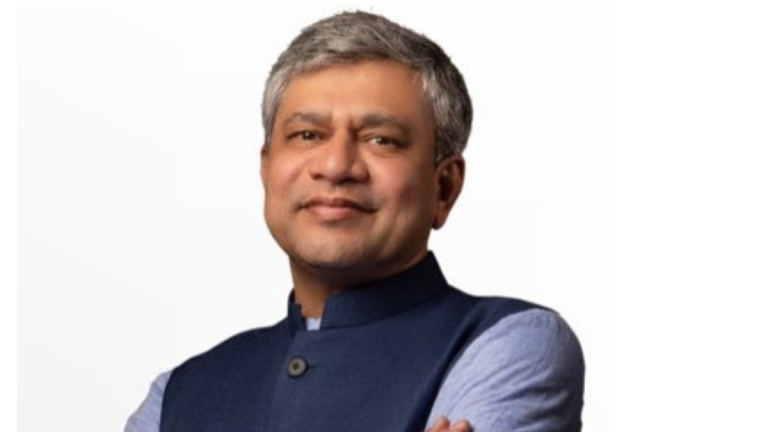
MUMBAI (Metro Rail News): Ashwini Vaishnaw, Hon’ble Minister of Railways, Communications, Electronics & Information Technology, Govt. of India, has been appointed as the Chancellor of Gati Shakti Vishwavidyalaya, Vadodara, by Hon’ble President Smt. Draupadi Murmu. It is noteworthy to mention that Shri Ashwini Vaishnaw will be the first Chancellor of Gati Shakti Vishwavidyalaya.
Hon’ble President has appointed Dr Manoj Chaudhary as the first Vice Chancellor of Gati Shakti University, Vadodara. Dr Chaudhary is a Professor in the Electrical Engineering Department and Dean of International Alumni and Corporate Relations at IIT Jodhpur. He is currently an invitee member of the 6G Task Force in the Department of Telecom, Govt. of India, and a Member of the Management Council of the Semiconductor Laboratory in the Ministry of Electronics and IT. In addition, he holds the post of Director of the Jodhpur DISCOM Board.
As per the Central University Act, 2009, Dr Manoj Chaudhary will hold the position of Vice Chancellor of Gati Shakti University for five years from the date he assumes office.
TBM S88 achieves its first tunnel breakthrough at Meerut Central of Delhi-Meerut RRTS project
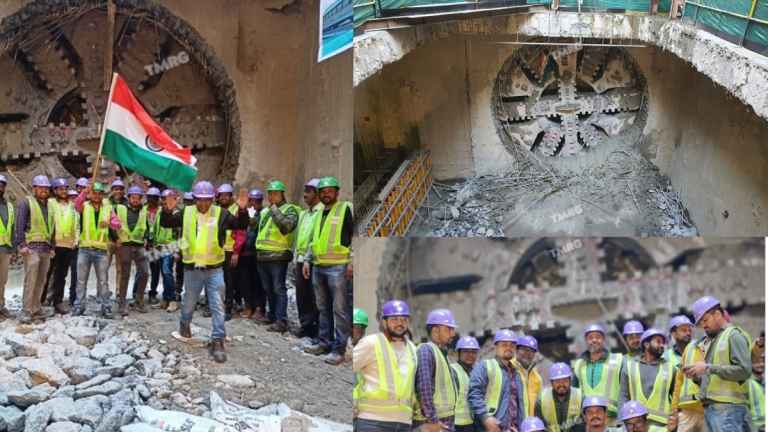
NEW DELHI (Metro rail News): Afcons Infrastructure, on 15th December, celebrated the first tunnel breakthrough of tunnel boring machine S88 at Meerut Central RRTS Station for the 82.15 km Delhi-Meerut RRTS project.The Sudarshan 8.1 Earth Pressure Balance (EPB) machine, manufactured by Terratec, was installed at the Bhaisali RRTS Station in March 2022. It then travelled 1823.39 metres which is the longest tunnelling drive of Package 8, in the direction of Meerut Central Station. On the route, it made a pit stop at a mid-shaft 695.85 metres south of Bhaisali Station.Afcons received the Rs. 1529.10 crore contract for Package 8 with a 1310-day (3.6 years) deadline in November 2020. Their scope involves constructing three underground stations using the cut-and-cover method at Meerut Central, Bhaisali, and Begumpul, along with six twin tunnels from Brahampuri DN Ramp to Begumpul UP Ramp.This was the second milestone for Afcons Infrastructure and the first for S88. TBM S90 (Sudharshan 8.3) made its first breakthrough for Package 8 at Begumpul Station in the middle of October after tunnelling around 750 metres from Begumpul UP Ramp located at Gandhi Park.With this advancement, Afcons has four more pending breakthroughs. First, TBM S88 will be dismantled, transported back to Bhaisali, and launched to construct a 1 km tunnel toward Begumpul.This was the third significant development for the RRTS project overall. Early in October, 5.6 km Package 4 contractor Shanghai Tunnel Engineering Co. Ltd. (STEC) secretly announced the first breakthrough for the whole project at mid-shaft south of Anand Vihar RRTS Station.
Swastikoverseas bags contract of Rs. 31.80 Cr. for testing & commissioning of CMRL’s Poonamallee Depot
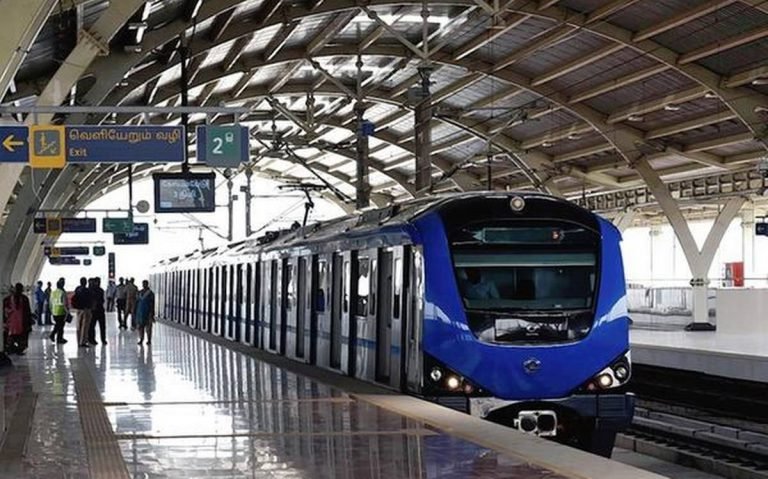
CHENNAI (Metro Rail News): Swastikoverseas has been declared the L1 bidder for the CMRLs tender for design, manufacture, supply, installation, testing and commissioning of Machinery and Plant Poonamllee Depot and Training of Personnel on a Turnkey basis and has been awarded the contract to complete the work in the stipulated time of 600+730 (DNP)days as per the bid document. Renmakch India Pvt. Ltd., Siemens Ltd. and Hyt Engineering Company Pvt. Ltd. stood L2, L3 & L4 bidder simultaneously for the e-procurement tender under National Competitive Bidding invited by Chennai Metro Rail Limited.The details of the price quoted by eligible bidders is as under:
The tender as advertised by CMRL :
| Sr. No. | Bidder Name | Amount (In Rs) | Bid Rank |
| 01. | Swastikoverseas | 318046212.11 | L1 |
| 02. | Renmakch India. Pvt. Ltd. | 435373541.53 | L2 |
| 03. | Siemens Limited | 458261247.75 | L3 |
| 04. | Hyt Engineering Company Pvt. Ltd. | 629760100.00 | L4 |
| CHENNAI METRO RAIL LIMITED CHENNAI 600107, INDIANIT No: CMRL / PHASE – II / SYS / C4-DM100 / 2022e-procurement Tender National Competitive BiddingCMRL invites digitally signed open e-tender through e-procurement portal from reputed, experienced, financially sound, eligible applicants, who fulfill the qualification criteria as mentioned in the tender through National Competitive Bidding (NCB) under Single Stage two Envelope (Technical & Financial) system for the works as detailed below: | ||
| 1. | Name of work | Tender No: C4-DM100“Design, Manufacture, Supply, Installation, Testing & Commissioning of Machinery and Plant at Poonamallee Depot and Training of Personnel on turnkey basis” |
| 2. | Bid validity | 180 days from the date of submission of tender. |
| 3. | Bid Security Amount (EMD) | a) Amount: The total bid security / EMD amount shall be equivalent to INR 37,77,000 (Indian Rupees, Thirty Seven lakhs Seventy Seven thousand Only) or USD 50,763 (US Dollars Fifty Thousand Seven hundred and Sixty Three Only) and to be submitted in the form of Bank Guarantee (BG) or via RTGS / NEFT transactions or via demand draft (DD) to the below mentioned CMRL Bank account.Validity: In case of BG, EMD shall be valid for 208 days i.e. up to 26-02- 2023 or laterb) Submission of Originals: Tender Security in case of BG / Demand Draft (in originals) as per clause BDS 21.1 & BDS 21.2 shall be accepted only up to 15:00 Hrs on 02- Aug -2022 in the office of AGM (RSO) at the address mentioned hereinafter.c) In case of RTGS / NEFT transactions, bidders shall upload the scanned copies of the transaction of payment at the time of online bid submission and a copy of the same shall be submitted at the office of AGM (RSO) at the address mentioned hereinafter. |
| 4. | Duration of Contract (Completion period of the work) | 600 + 730 (DNP) days |
| 5. | Details of NIT / Bid Document | NIT publication on CMRL website: 04-04-2022Tender Notice Publication date in Newspapers: 05-04-2022The Tender documents can be downloaded from the CPP PORTAL http://eprocure.gov.in/eprocure/app from : 04-04- 2022 @ 18:00 hrs onwards |
| 6. | Cost of Bid Documents (Non-refundable) | There will be a non-refundable cost of tender document of INR 32,000/- (Rupees Thirty Two Thousand only) including GST to be paid by RTGS / NEFT / Demand Draft.A scanned copy of transaction of payment / DD shall be uploaded at the time of online bid submission and the copies of transaction of payment/Original DD shall be submitted at the office of AGM (RSO) at the address mentioned hereinafter. |
| 7. | CMRL Bank Account Details | a) Beneficiary name: M/s Chennai Metro Rail Limitedb) Beneficiary bank: Canara Bank, Teynampet Branch, Chennai-600 018c) Current Account No.: 0416214000030d) IFSC Code: CNRB0000416 |
| 8. | Pre-bid Meeting | 19-05- 2022Place: Rolling Stock shed conference room, CMRL Koyembedu depot @ 11:00 Hrs (In case of any change in schedule will be informed in advance) |
| 9. | Last date of seeking clarification | 26-05-2022 upto 18:00 hrs |
| 10. | Start date of submission/uploading of bid (online) | 22-07-2022 @ 11:00 hrs onwards |
| 11. | Bidders barred from bidding for this work | Those bidder or JV partners, who have been debarred by Multilateral and bilateral funding agencies/ Government of India/ Railway Administration/ Metro rail corporation/ any state Government undertaking as on the due date of submission of bid, are NOT ELIGIBLE to participate in this tender. |
| 12. | Authority and place for submission of Bid Document cost, Tender Security amount & seeking clarifications etc. | Office of Addl. General Manager (Rolling Stock & Operations), Chennai Metro Rail Limited, Administrative Building, CMRL Depot, Poonamallee High Road, Koyambedu, Chennai 600 107Tel No.+91-44-2379 2000, Extn: 22687Fax No.+91-44-2379 2200, Email id: satheeshprabhu.s@cmrl.in |
| 13. | Last Date and Time of submission/uploading of Bid (online) | 02- 08 -2022 up to 15:00 hrs |
| 14. | Date and Time of opening of Bid (Technical Bid) (online) | 03- 08 -2022 at 15:00 hrs |
| 15. | Website from which any additional information can be obtained | https://eprocure.gov.in/eprocure/app www.chennaimetrorail.org |
Afcons Casts first batch of Tunnel Segment for Delhi Metro Silver Line
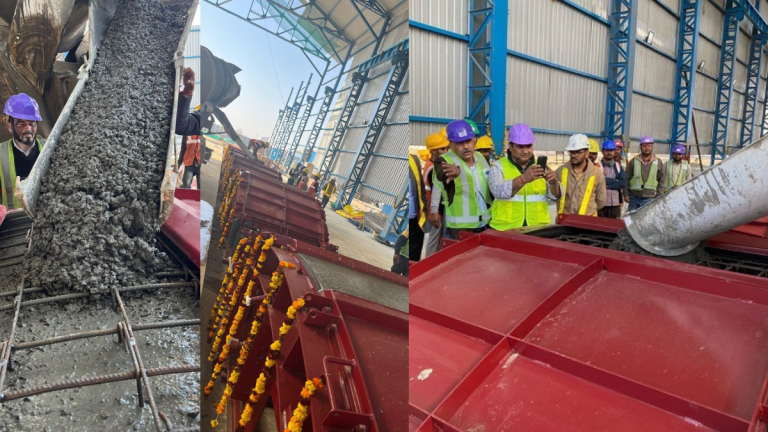
NEW DELHI (Metro Rail News): Afcons Infrastructure starts pouring concrete to cast the first batch of tunnel ring segments for Delhi Metro’s 23.622 km Silver Line, connecting Aerocity and Tughalakabad via 16 stations.The company is in charge of constructing the 6.981 km Package DC07 of the 65.1 km Delhi Metro Phase 4 project, which would link the eastern end of Sangam Vihar Station and Sarita Vihar Depot. The Delhi Metro Rail Corporation (DMRC) granted them a contract worth Rs. 1669.20 crores with a 42-month deadline in January 2022.Cooper Turner Beck group and Afcons have partnered to supply accessories to their casting yard.Afcons scope includes the construction of three underground stations at Maa Anandmayee Marg, Tughlakabad Railway Colony, and Tughlakabad, where they will interchange with the station for the Violet Line constructed in Phase 2.Afcons will construct a total of 8 tunnels, and the DMRC needs to deploy at least five tunnel-boring machines (TBMs). However, according to the source, only four machines, a combination of refurbished Robbins and Herrenknecht machines, will be used.
BMRCL to complete extended Namma Metro line to Whitefield

BANGALORE (Metro Rail News): The Bangalore Metro Rail Corporation Limited (BMRCL) has begun constructing an open web girder over a railroad track in east Bengaluru. The Erection of an open-web girder is a part of Phase II of Namma Metro‘s extended metro line from Baiyappanahalli to Whitefield.BMRCL has begun a trial run on a 15-km metro line between K.R. Puram and Whitefield. The trial runs on the section from Baiyappanahalli to K.R. Puram only after constructing the open web girder after laying tracks and installing signalling equipment.BMRCL started work after getting clearance from South Western Railway (SWR). Additional Divisional Railway Manager of SWR Kusuma Hariprasad said that work related to the metro is permitted per the guidelines laid down by the Indian Railway Schedule of Dimensions and A.C. Traction Manual. “The erection work will be carried out under the power block. During the power block, train movement will be suspended temporarily. The BMRCL will execute the work under railway supervision,” the official said.Chief PRO of the BMRCL B.L. Yeshwanth Chavan said, “Erection of an open web girder is being carried out between Baiyappanahalli and Benniganahalli metro stations. This will provide a link to Baiyappanahalli depot as well as the station. It is a complex operation as it is being carried out across a busy railway track. The BMRCL is executing the work after getting clearance from the SWR.”
Wabtec expands its transit manufacturing capabilities in India to meet demand
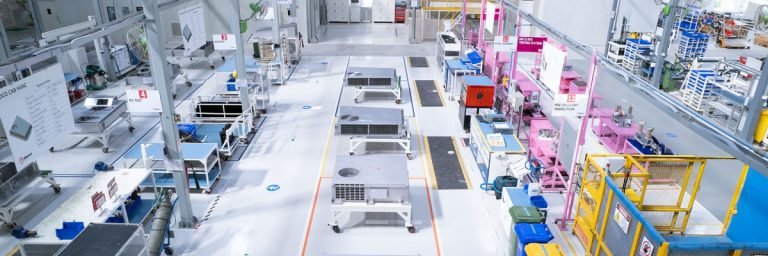
NEW DELHI (Metro Rail News): Investment in rail infrastructure is growing in India as it looks to enhance its capability to move people and products across its network efficiently. Wabtec‘s extensive footprint in India is also growing. The company expanded one of its critical plants in Hosur, which serves the transit rail industry.The 80,000-sq-ft expansion of the Hosur plant is intended to meet the growing demand for transit rail products and solutions. For example, the Hosur plant manufactures brake systems, doors and couplers for Vande Bharat Express. The team at the facility also produces brakes for a new generation of electric locomotives, high-reach pantographs, passenger information systems, and relays that Wabtec offers for Indian Railways.“We are seeing steady growth in orders from various customers in the railway and transit markets, and this expansion allows us to keep up with demand,” said Ajay Mani, Managing Director of Wabtec’s Transit business in India. “Many of these product lines are also part of the ‘Make in India‘ initiative and meet the charter of localized, customized products.”Wabtec utilized Lean design workshops to establish the most efficient production layout for the site expansion. The new factory layout optimizes material movements, creates product-centric focused work areas, and enhances storage space for raw materials and finished goods. The expansion also provides new office space with a seating capacity of 150.A significant factory enhancement focused on relays, which are part of Wabtec Transit’s electrical solutions portfolio. These relays will be assembled and manufactured from the Hosur location for customers worldwide.“Wabtec is known for superior quality relays. With new trains being launched every year, we see an addressable market for the product line,” said Asif Shaik, Executive Director – of Operations Wabtec Transit. “The increase in operational footprint, LEED certification of the facility in Hosur are all in line with our growth ambitions and sustainability goals.”The expansion also focused on making the facility more environmentally friendly. As a result, the buildings at Wabtec’s Hosur facility achieved gold certification from the United States Green Building Council (USGBC). LEED-certified buildings adhere to energy, water, waste, transportation, materials, health, and indoor environmental quality and reduce the carbon footprint. The plant features 400KW of solar power, and an additional 400KW is planned. Additionally, the rainwater harvesting facility was upgraded to a water-positive site wherein 23K Cu.m is drawn, and 28K Cu.m has recharged annually. Rainwater harvesting is one of the most promising alternatives for supplying freshwater in the face of increasing scarcity and escalating demand in rural and urban areas.In operation since 1980, Hosur serves as Wabtec’s primary manufacturing facility for Transit products in India. Solutions include brake systems, couplers, HVAC, pantographs, electronic products, and more.
 The plant features 400KW of solar power, and an additional 400KW is planned. Additionally, the rainwater harvesting facility was upgraded to a water-positive site wherein 23K Cu.m is drawn, and 28K Cu.m has recharged annually. Rainwater harvesting is one of the most promising alternatives for supplying freshwater in the face of increasing scarcity and escalating demand in rural and urban areas.In operation since 1980, Hosur serves as Wabtec’s primary manufacturing facility for Transit products in India. Solutions include brake systems, couplers, HVAC, pantographs, electronic products, and more.
Agra Metro: TBM ready for launch soon
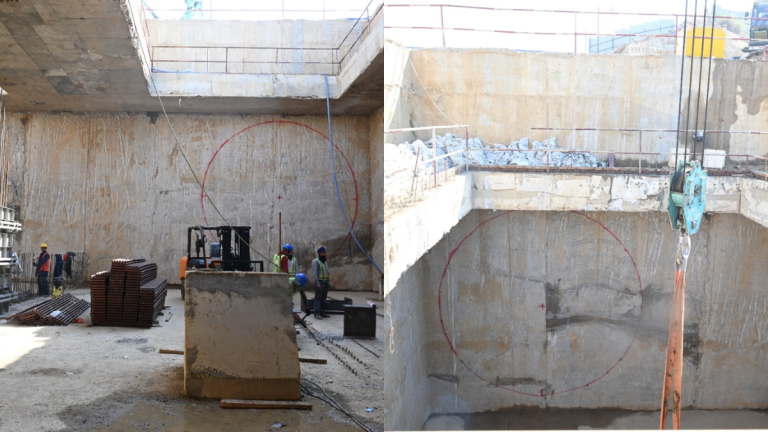
AGRA (Metro Rail Metro): The tunnel boring machine, which is being assembled for the construction of underground stations in Ramlila Maidan near the crossover section, is ready for launch as preparations for the launch are in full swing.Speaking on the same, MD UPMRC Shri Sushil Kumar said, “The TBM machine will operate in an automated mode which is quite interesting, as the machine operates several feet deep into the ground, and there is little room for any error or discrepancies.”The route is automatically set beforehand by entering the location’s coordinates, and TBM follows that route for tunnel construction.Movement of the TBM:
While the cutter head moves forward, cutting the debris and initiating the movement, the TBM’s last part, called the ring erector, erects ring segments in a circular motion, making a tunnel.This entire process is all the more interesting because there is only one window for launching the TBM, i.e. the launch shaft in the beginning and retrieval shaft at the end, and in between, the movement of the TBM has to be ensured with utmost accuracy.The TBM launch is anticipated soon, and a team of engineers from UPMRC continuously monitors the entire process.The TBM usually places 10-14 rings per day, and the length of one ring is 1.4 m, thus, moving a distance of 14-20m per day.There are seven underground stations for Agra Metro Rail Project, which will use TBM machines for the tunnel construction work.