

NMRC floats tender for Ticket Vending services at NMRC stations
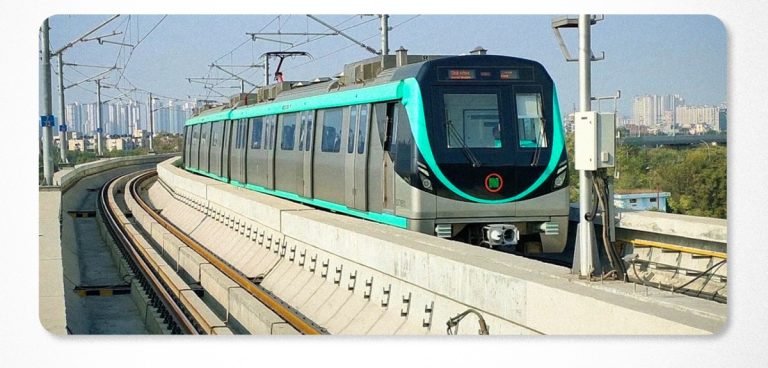
NOIDA (Metro Rail News): Noida Metro Rail Corporation (NMRC) Ltd. has floated online open e-Bids from interested Bidder/s to submit proposals per provisions for Ticket Vending services at NMRC stations.Tender Reference Number: NMRC/TVS/232/2022Name of Work: Request For Proposal (RFP) for Ticket Vending services at NMRC stations.Approximate Cost of Work: INR 22,73,10,817 CrorePeriod of Contract: 04 YearsEMD: INR 22,73,108 LakhsBid Validity Period 180 daysDocument Download / Sale Start Date: 02nd December 2022Document Download / Sale End Date: 26th December 2022Pre-bid Meeting: 08th December 2022Bid Submission Start Date: 02nd December 2022Bid Submission End Date: 26th December 2022Bid Opening Date: 27th December 2022Scope of Work:The Contractor shall be required to execute the Ticket Vending Services with a uniformed and trained workforce with the specifications determined by NMRC. In addition, NMRC will approve the design and shade of the uniforms.The services may be required at the metro stations and other locations, as deemed fit, by NMRC. The brief of the required services, working requirements and area of deployment is detailed as under;To issue QR Code / Contactless Smart Cards from Ticket Office Machines (TOMs) / other authorized mediums installed at the stations / other locations of NMRC. The personnel so deployed may be asked to perform associated/related works. In addition, they will be required to ensure cleanliness in and around their workplace.The person-day (deployment) is for a 9-hour shift, including a 01-hour break for Lunch, Tea and Rest.NMRC shall fix the requirement of Ticket Vending Services Personnel and Supervisor from time to time depending on the requirement/traffic pattern at different stations/locations of NMRC.
Naresh Chandra Karmali appoints as MD of KMRCL

KOLKATA (Metro Rail News): Naresh Chandra Karmali, an IRSE (Indian Railway Service of Engineers) officer from the 1990 batch, has been appointed by the Railway Board, Ministry of Railways, to the post of Managing Director at Kolkata Metro Rail Corporation Ltd. (KMRCL). He is promoted within the same organisation from Director (P&P) to Managing Director.Karmali began serving as KMRCL’s new managing director. After Chandeswar Nath Jha, the former managing director of KMRCL, retired on November 30, 2022, the position became vacant.Karmali, an IIT-Kharagpur graduate in civil engineering, oversaw crisis management during Bowbazar’s three subsidence occurrences. He served as general manager (civil) until February 2021, overseeing the rolling stock that passed complex oscillation tests, the depot in Central Park, and the 6 km elevated segment. In February 2021, he was promoted to Director (Project & Planning).He will now direct the remaining stretches of Kolkata Metro’s Line 2’s East-West Metro Corridor.The East-West Metro Corridor, which will include an underground tunnel crossing the Hooghly River, is being implemented by KMRCL. By 2023, the Kolkata undersea tunnel is anticipated to be in use.
Trail Run Conducted in Pune Metro’s underground Section
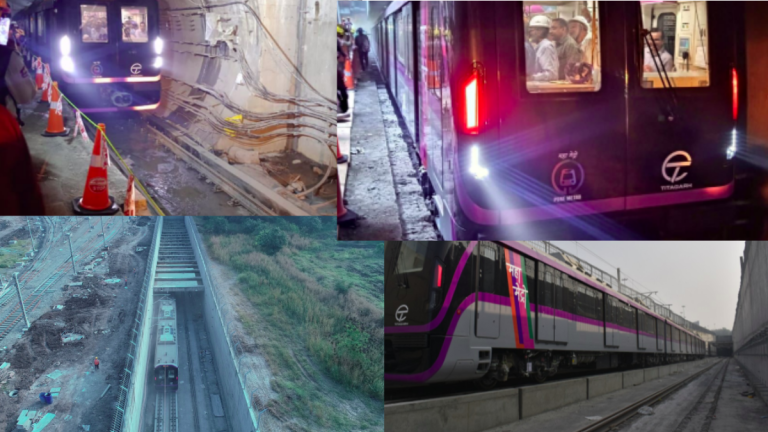
PUNE (Metro Rail News): In the 17.4 km route from Pimpri Chinchwad Municipal Corporation (PCMC) Metro Station to Swargate of Pune Metro, the 6 km route from Shivajinagar to Swargate is underground. The tunnel work of this underground route was completed on 4th June 2022 with the help of the tunnel boring machine (TBM). In addition, tracks, overhead electric wires (OHE), and signalling work were carried out in the metro tunnels. On 6th December 2022, a 3 km metro train trial was conducted from Range Hill Car Depot to Range Hill elevated metro station. From Range Hill elevated metro Station to Shivajinagar Metro Station and Civil Court Interchange Metro Station.Among the critical stages of Pune Metro, this stage is critical from the technical point of view. 85% of the work of Pune Metro has been completed, and the remaining works are in full swing. With every passing day, Pune Metro is trying to achieve one milestone every day.Underground works are technically very challenging. During the tunnel construction, large quantities of debris were brought up from 70 to 80 feet below the ground and disposed of properly at the right place. Also, cut and cover technology is used for subway stations, and pits must be dug and constructed from below. Shivaji Nagar, Civil Court, Budhwar Peth, Mandai, and Swargate are very crowded places and transporting goods/materials from these areas is very dangerous. Transport vehicles bring goods/materials to and from this place only between 12:00 am and 5:00 am. Working under such challenging conditions, Metro has completed the underground line from Range hill to Civil Court, making our underground metro trial possible.On 6th December trail run began at exactly 3:20 pm from the Range Hill Car Depot. From Range Hill Car Depot to Range Hill elevated metro station, the train reached the station by moving on the ramp. There the driver changed his compartment, and then from Range Hill elevated metro station, the metro train reached the Shivaji Nagar underground Metro Station; crossing the Shivaji Nagar metro station, it reached the Civil Court Interchange Underground Station. For this trail run, all the departments of Metro, including tracks, electricity, signalling, maintenance and operations, have been continuously working since last week. This trial run took 30 minutes, and the test was carried out as planned and scheduled.The Managing Director of Maha Metro, Dr Brijesh Dixit, said, “Underground metro trial run was technically very challenging and complex. The employees of Pune Metro were working round the clock for this trial run. I congratulate them all. 85% of the work of Pune Metro has been completed,, and is progressing towards completion step by step. In the next few months, the Phugewadi to Civil Court and Garware to Civil Court routes will be completed and opened for passengers.”
Hitachi Rail bags contract to run automatic Metro train operations: CMRL
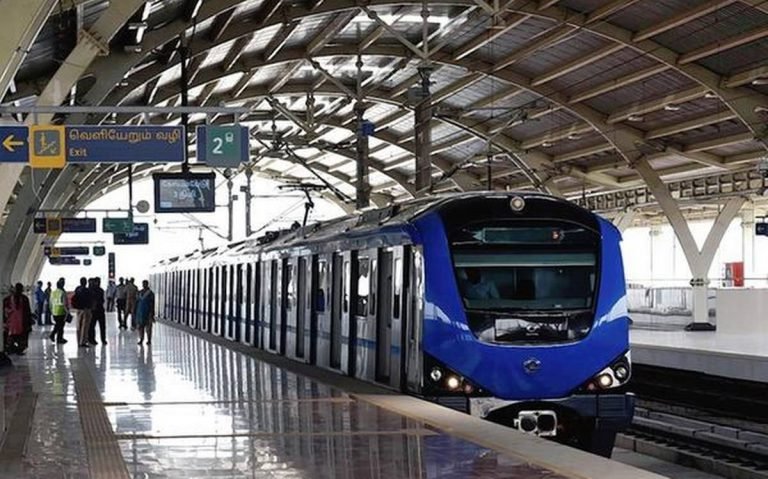
CHENNAI (Metro Rail News): The Chennai Metro Rail Ltd announced on 6th December that a consortium led by Hitachi Rail had won the largest signalling tender, valued at Rs 1,620 crore, which would enable autonomous train operations.The advanced communication-based train control system would enable Chennai Metro rail to implement driverless train operations without the requirement of a driver.The contract for the “design, manufacture, supply, installation, testing and commissioning of signalling, train control and video management system” has been granted to Hitachi Rail STS SPA and Hitachi Rail STS India Pvt Ltd, according to a statement from Chennai Metro Rail.The system would combine the metro rail technology now in use worldwide. The agency’s phase two project is estimated at Rs 1,620 crore.“This is the largest signalling tender being executed”, CMRL said.The system will undergo intensive testing on several safety factors to transport passengers safely. Finally, an independent safety assessment team will certify it as having the highest level of safety by international standards.The trains would be allowed to run with a minimum gap of 90 seconds under the new arrangement. In addition, the facility would incorporate, among other things, the operations of the platform screen doors, automatic train movements in the depot, and passenger information and display systems.It said that the system provides real-time monitoring and control from a centralised facility.
Kanpur Metro marks first tunnel breakthrough at Nayaganj Station
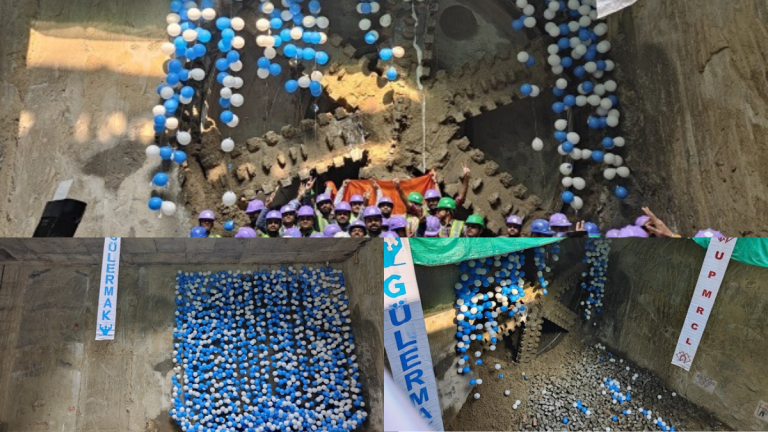
KANPUR (Metro Rail News): Gulermak – Sam India Builtwell JV’s on 6th December marked the first tunnel breakthrough through tunnel boring machine (TBM) S93 at the Nayaganj Station site on Package KNPCC-05 of the 32.4 km Kanpur Metro Phase 1 project.The Nana Terratec TBM, named after Nana Saheb Peshwa and measuring 6.52 metres in diameter and 120 metres long, was launched from Bada Chauraha Station in July 2022 and travelled 1025 metres to construct the up-line tunnel.Uttar Pradesh Metro Rail Corporation (UPMRC) awarded the 3.619 km Package KNPCC-05 contract to Gulermak – Sam India in March 2021 for a total of Rs. 769.23 crores and USD 3.674 million.Along with creating two tunnels, they are also building four 215m long stations at Chunniganj, Naveen Market, Bada Chauraha, and Nayaganj.According to the tunnelling schedule, TBM Nana will now be disassembled and transported to Permat Ramp, where it will begin digging a 414-meter tunnel toward Chunniganj Station.According to reports, the second TBM (S92, dubbed Tatya) for the Kanpur Metro has dug more than 700 metres of the down-line tunnel since it began operating in August 2022. Early in 2023, It is anticipated to arrive at Nayaganj Station.
Siemens bags contract to manufacture 1,200 electric locomotive of 9000 HP
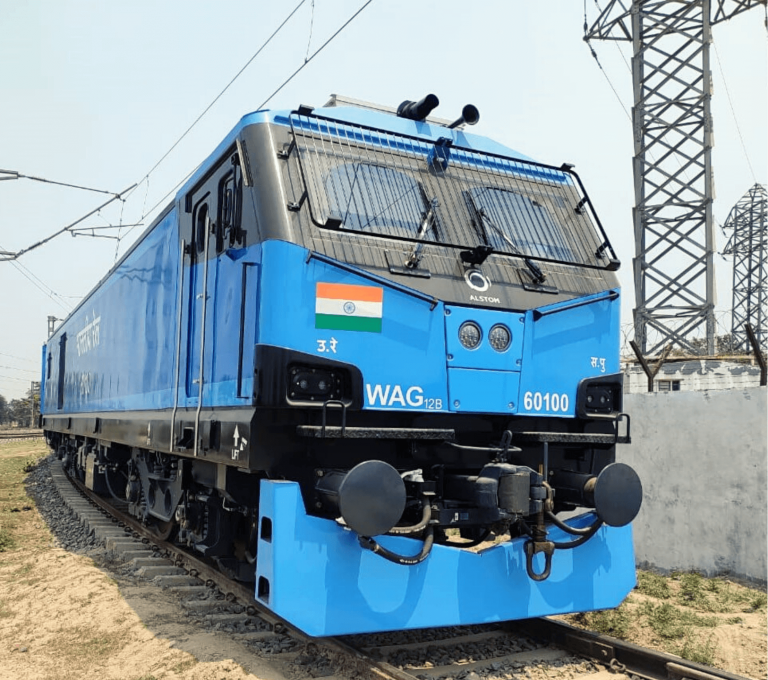
GUJARAT (Metro Rail News): The engineering firm Siemens won a contract to manufacture 1,200 electric locomotives with 9000 HP (horsepower) at Dahod in Gujarat for more than Rs 20,000 crore.In April, Indian Railways floated a tender for manufacturing and maintaining 9,000 HP electric locomotives in Dahod. Alstom and Siemens were the participants.“Siemens Limited has emerged as the lowest bidder (L1) for the 9000 HP electric locomotives project in Dahod, Gujarat, India,” a BSE filing said.In April, Prime Minister Narendra Modi laid the foundation for the project to build 9,000 HP electric locomotives at the Dahod Railway production site.The project was expected to cost about Rs 20,000 crore.The Dahod workshop, founded in 1926 for routine steam locomotive maintenance, is being transformed into an electric locomotive manufacturing unit. As a result, over 10,000 individuals are anticipated to receive direct and indirect jobs.The Dahod facility will produce 1,200 locomotives over 11 years, from 2023–2024 to 2033–2034. The winning bidder will provide five locomotives in the first year and 35 in the second. The third and fourth years will see annual deliveries of up to 80 locomotives.In the fifth and sixth years, manufacturing will be expanded to 100 locomotives annually. After that, until 2033–2034, 160 locomotives will be produced annually.A single 9000 HP, six-axle Co-Co locomotive will be used on all Indian Railways routes to haul loads weighing 4,500 tonnes at an average speed of 75 kmph.The designated government depots for maintenance would be located in Kharagpur (West Bengal), Visakhapatnam (Andhra Pradesh), Raipur (Chhattisgarh), and Pune (Maharashtra), each having a holding capacity of 300.Indian Railway anticipates receiving its first locomotive from the Dahod site in the first quarter of 2024. The locomotive will be produced using green energy and will bear a tag that says “green manufacturing.” Dahod is a railway station on the Delhi-Mumbai route.
ITD Cementation India Ltd. casts first tunnel ring segment of Chennai Metro Line-4
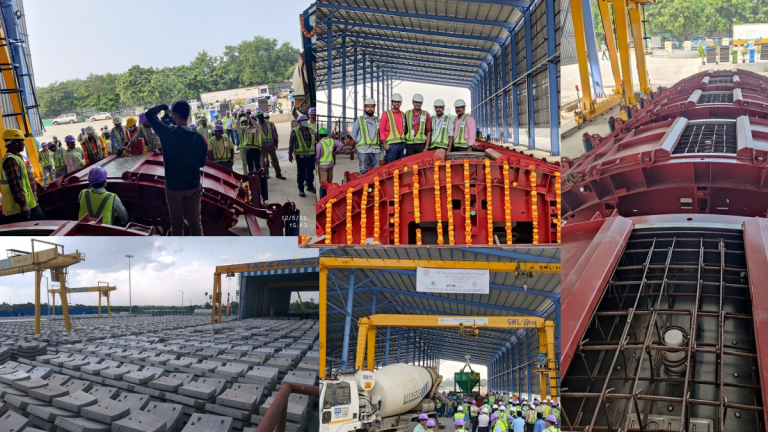
CHENNAI (Metro Rail News): ITD Cementation India Ltd. started pouring concrete on 5th December to cast their first tunnel ring segment to construct Chennai Metro Line-4,10 km underground portion between the Power House Ramp and Light House Station.The yard in Muthukadu along ECR road will be used to cast almost 9000 tunnel ring segments. To construct the 5.15 km Package UG-01 (Bharathidasan Route Station to Light House) and 4.877 km Package UG-02 (Kodambakkam Flyover Station to Bharathidasan Road Station) of the 118.9 km Chennai Metro Phase 2 project.In January 2022, Chennai Metro Rail Ltd (CMRL) awarded ITD both packages of civil contracts totalling Rs. 3743.24 crores with a 48-month timeline.The inside diameter of the twin tunnels for the Chennai Metro will be 5.6 metres. On UG-1, the first section cast on 5th December will be used.ITD intends to use four tunnel boring machines (TBMs). Three of those would be renovated as part of the UGC-04 Package for Mumbai Metro Line-3 (Herrenknecht S1073, S1074 and S1075). A new TBM will also be purchased from Herrenknecht, and all four of them will undergo factory acceptance testing at the company’s Tamil Nadu plant in the upcoming months.
West Bengal to get its first Vande Bharat Express

DARJEELING (Metro Rail News): Raju Bista, a member of parliament from Darjeeling, stated on 5th December that West Bengal is expected to receive its first Vande Bharat Express shortly.The train would connect Sealdah station in Kolkata with New Jalpaiguri station in the north Bengal city of Siliguri, the member of parliament added while speaking at a programme at the Siliguri Junction railway station.The train, developed by the Integral Coach Factory (ICF), Chennai, has an intelligent braking system, enabling better acceleration and deceleration.“People will be able to reach their destinations much faster when the Vande Bharat expressed is launched on the Sealdah-New Jalpaiguri route. It will begin a new chapter in the region’s development,” the BJP MP said. Siliguri’s BJP MLA Shankar Ghosh and senior railway officials were present at the programme.Automatic doors, a GPS-based audio-visual passenger information system, onboard Wi-Fi, and comfy seats are features shared by all coaches. In addition, the chairs in the executive class rotate.
MRIDC floats tender for civil works of South East Central Railway

MAHARASHTRA (Metro rail News): The Maharashtra Rail Infrastructure Development Corpn. has floated bids for the construction of civil works, including earthwork, blanketing, major & minor bridges, and RUB between the Itwari & Nagbhir section (195) in the division of South East Central Railway.Tender Reference Number: MRIDC/PROJ/e-TENDER/EW/2022/195Name of Work: Construction of civil works, i.e. earthwork, blanketing, major & minor bridges, wildlife mitigation structures, Road Under Bridges (RUB)/ Limited Height Subway (LHS), retaining walls, drains, ground improvement works, cement concrete lining, cross drainage works, relocation of existing roads & utilities, providing & fixing of Over Head Equipment mast etc. including all Chord lines, shunting, isolations/sand hump/crossovers etc. in all the station yards in connection with gauge conversion work between Itwari and Nagbhir section in Nagpur division of South East Central Railway.The estimated cost of the work: INR 228,90,85,660 CroreEMD: INR 1,15,95,500 CroreCompletion Period: 10 months.Document Download / Sale Start Date: 30th November 2022Document Download / Sale End Date: 21st December 2022Pre-Bid Meeting: 12th December 2022Bid Submission Start Date: 30th November 2022Bid Submission End Date: 21st December 2022
DFCCIL floats tender to connect New Rewari-Kishangarh Balawas
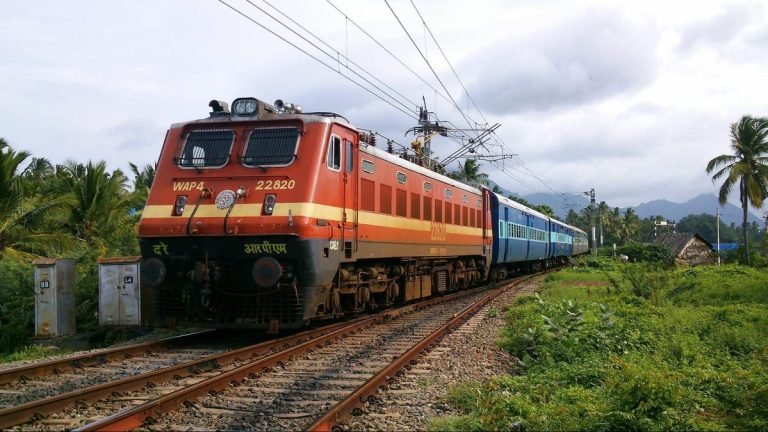
NEW REWARI (Metro Rail News): Dedicated Freight Corridor Corpn of India has floated tenders for the construction of embankments, minor bridges, rubble, and other infrastructure, as well as the supply of P-Way items and track laying, to provide connectivity between Chainage 5.2 km (on the New Rewari Kishangarh Balawas Connecting Line) and Kumbhawas Station.Tender Reference Number: JP-EN-REJN-KMBHS-Con-LineName of Work: Construction of embankment, minor bridges, RUBs etc., including supply of P-Way items & track laying for connectivity between chainage 5.2 km (on New Rewari – Kishangarh Balawas connecting line) to IR Kumbhawas station under jurisdiction of CGM/JP.Tender Value: INR 1,25,23,17,120 CroreEMD: INR 64,11,600 LakhCompletion Period: 15 MonthsDocument Download / Sale Start Date: 28th November 2022Document Download / Sale End Date: 28th December 2022Pre-Bid Meeting: 06th December 2022Bid Submission Start Date: 14th December 2022Bid Submission End Date: 28th December 2022Tender Opening Date: 28th December 2022
BMRCL to add 3 new Namma Metro stretches in 2023

BANGALORE (Metro Rail News): Three additional Namma Metro stretches will be added to Bengaluru’s network by the Bangalore Metro Rail Corporation Limited (BMRCL) in 2023, linking the city’s various neighbourhoods and easing commuting times.Purple LineThe Whitefield to Baiyappanahalli section of the purple line of the metro will be operational by February or March 2023. In October, the trial runs went off without a problem. The following locations will be visited along this stretch: Mahadevapura, Garudacharpalya, Hoodi Junction, Seetharama Palya, Kundalahalli, Nallurhalli, Sri Sathya Sai Hospital, Pattandur Agrahara, Kadugodi, Channasandra, and Whitefield.Green LineThe current green line, which runs from Nagasandra to the Bangalore International Exhibition Centre (BIEC), is currently being extended. Additional stops along the route will be made at Manjunath Nagar, Chikkabidarakallu, and Madavara.Yellow LineIn June 2023, the public is expected to be allowed access to the Electronics City section of the metro. It links Bommasandra with the incredibly busy Central Silk Board. There will be stops at several locations, including R V Road, Ragigudda, Jayadeva Hospital, BTM Layout, Central Silk Board, Bommanahalli, Singasandra, Electronic City, and Bommasandra.Blue LineThe Blue Line of the Namma Metro, which will be 37 kilometres long and have 19 stops, would connect the city to Kempegowda International Airport (KIA) near Devanahalli. However, only in 2025 is it expected to be put into operation.
PM Modi to flag- off 6th Train-18 on 11th December
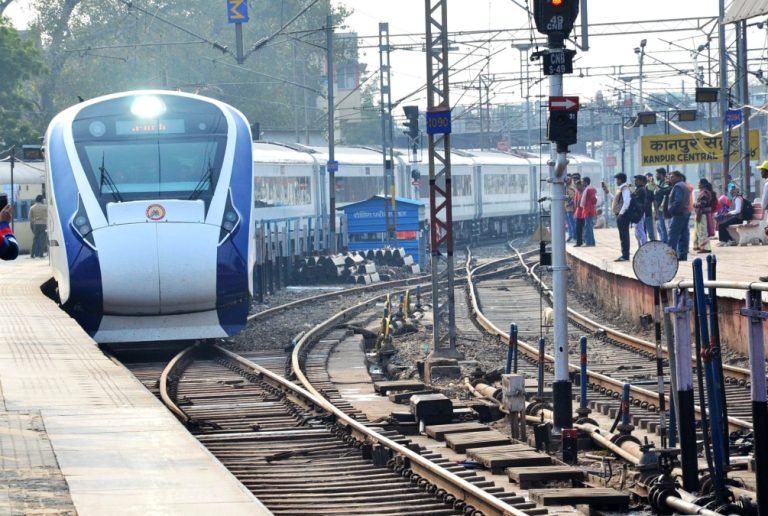
CHATTISGARH (Metro Rail News): Indian Railways officials acquainted with the situation said Prime Minister Narendra Modi would inaugurate the nation’s sixth semi-high-speed Vande Bharat train on December 11, which will run on the Bilaspur (Chattisgarh)-Nagpur (Maharashtra) line.According to the official, the train will run six days a week and complete one leg of the journey in about five-and-a-half hours.“The Bilaspur- Nagpur Vande Bharat train will be inaugurated on December 11 by Prime Minister Narendra Modi in Nagpur,” the official said.“This train will leave Bilaspur at around 6.45am and reach Nagpur at around 12.15pm. Similarly, the train will leave Nagpur at 2pm to reach Bilaspur at 7.35pm. Currently superfast trains take around seven hours to reach Nagpur, however this train will cover the distance in around five-and-a-half hours,” said the official.According to a second official familiar with the matter, the train will be operated by the Southeast Central Railways (SECR) and will have scheduled stops at Raipur, Durg and Gondia.The source added that another Vande Bharat train between Secunderabad and Vijayawada will start running in 2023. The official continued, “This will be the second train in south India and the first indigenously-built semi-high-speed rail in South Central Railway (SCR).”On the Mumbai-Ahmedabad route, a new-generation Vande Bharat train debuted in October this year. By August next year, the Railways will launch 75 Vande Bharat trains.The semi-high-speed train’s coaches are all outfitted with automatic doors, a GPS-based audiovisual passenger information system, an onboard hotspot for Wi-Fi, and comfy seats.The inaugural Vande Bharat Express train was signalled out on the New Delhi-Kanpur-Allahabad-Varanasi line on February 15, 2019.
L&T construction bags order to construct Sabarmati Depot for MAHSR
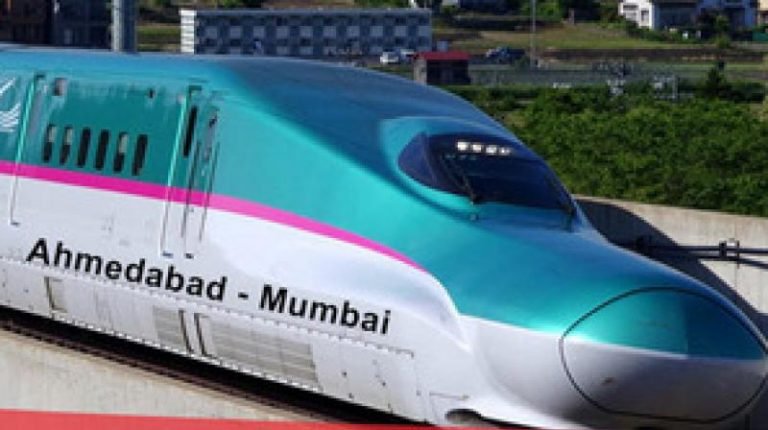
MUMBAI (Metro Rail News): The construction division of Larsen and Toubro has obtained a contract from the National High-Speed Rail Corp. Ltd. (NHSRCL) to build the Sabarmati Depot (MAHSR – D-2) in Gujarat for the Mumbai-Ahmedabad High-Speed Rail (MAHSR) project through a consortium led by the Japanese company Sojitz Corporation.“The scope of the MAHSR -D-2 package project involves design, supply, construction and testing. It also involves commissioning the depot spread over approximately 82 hectares, including various specialized equipment required to inspect and maintain the rolling stock based on the proven Shinkansen technology. Upon completion, this will be the biggest depot in India for this purpose,” L&T said in a press release.The Mumbai-Ahmedabad High-Speed Rail (MAHSR), often known as the Bullet Train Project, is a high-speed rail line that runs from Mumbai to Ahmedabad. In May 2022, NHSRCL awarded the railways division of L&T Construction the contract to build 116 route kilometres of high-speed ballastless track works (Package No: T3).L&T is the industry leader in India for the ballastless track, with competence in a variety of ballastless track forms, including plinth track, slab track, low vibration track, floating slab track, PORR type precast slab track, and, as of recently, the Shinkansen type precast slab track system.Currently, the company is working on many ballastless track projects for metro systems in India and elsewhere, including those in Mauritius, Dhaka, Mumbai, Kanpur, Agra, Ahmedabad, and the semi-high-speed (180 KMPH) rapid rail transit system project between Delhi and Meerut. In addition, Ballastless Track Projects were previously completed by it in Riyadh, Delhi, Hyderabad, and Chennai.
Mumbai’s 1st underground Metro line to commission in December 2023

MUMBAI (Metro Rail News): The longest underground Metro line in Mumbai, one of the city’s most expensive transportation infrastructure projects, will finally be ready for commissioning in December 2023 after overcoming significant obstacles and a two-year delay.
The Mumbai Metro Rail Corporation (MMRC) completed all the tunnelling work on 30th November. The Supreme Court cleared the way around the same time for the construction of the metro car shed at Aarey, which has been the subject of a heated political debate in the state for more than five years.“As of now, the overall project is 77 per cent completed. We recently got the clearance for the depot and now the first phase will be commissioned by December 2023 and second phase will be functional after a lag of six months, i.e in June 2024,” said S.K. Gupta, Project Director, MMRC.The 33.5 km Metro-3 line connects Colaba, Bandra, and Seepz. Additionally, it is the city’s first underground corridor for the new metro system. 26 of the line’s 27 stops will be subterranean. It aims to unite Mumbai’s northern and southern economic sectors, including the Bandra-Kurla Complex (BKC). Additionally, connecting to the Chhatrapati Shivaji Maharaj International Airport will be the Metro line.The route would also be convenient for commuters because it will connect with the trains, the Maharashtra State Road Transport Corporation (MSRTC), and other metro lines still being developed at eight locations.The trains running underground will have to coordinate with the signalling systems, and all technologies must communicate with every other part, which will be a challenge, said Gupta.