

Metro service from Vanaz station to Garware College station will be partially suspended on 27th &28 December 2022
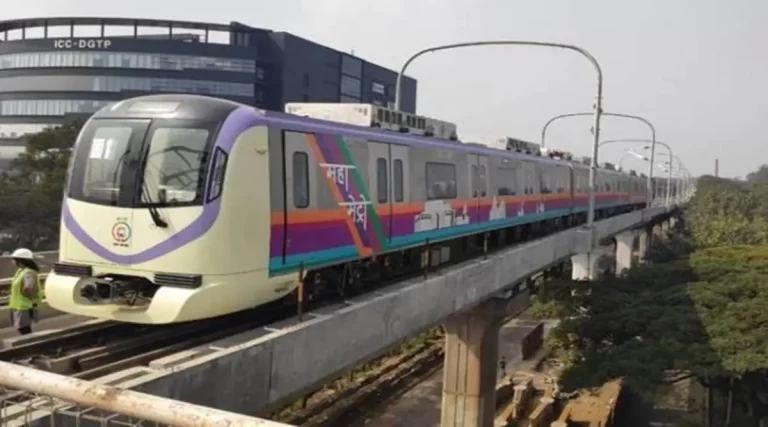
PUNE (Metro Rail News): Pune metro services will be partially suspended because of signalling work testing on 27 Dec 2022 and 28 Dec 2022 from 6 am to 2 pm. It will be taken from Vanaz metro station to Garware College metro station.Therefore, on 27th Dec 2022 and 28th Dec 2022, the passenger service from Vanaz metro station to Garware College metro station will be partially suspended from 8 am to 2 pm and the service will resume from 2 pm up to 8 pm on both dates.However, revenue services on PCMC to Phugewadi route will be available normally from 8 am to 8 pm on all days as per the normal schedule and timetable.Pune Metro regrets the inconvenience caused to the passengers.
India’s fastest constructed elevated metro
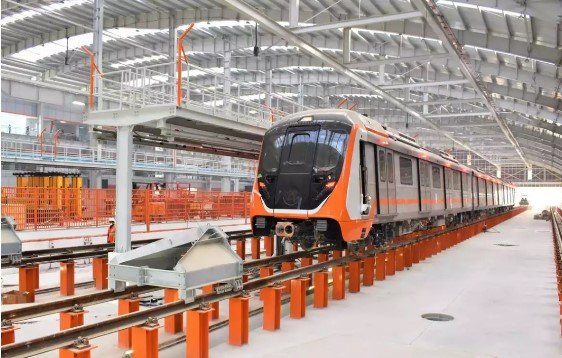
KANPUR (Metro Rail News): The Central Government of India approved the Kanpur Metro project in February 2019, and the Kanpur Metro Rail Project began in November of the same year. The Uttar Pradesh Metro Rail Corporation manages this public transportation system throughout Kanpur. The Kanpur Metro route covers 8.9 km from Motijheel to IIT Kanpur Metro Station. The main reason for providing a metro rail service to a small city like Kanpur was to lessen the suffocating traffic that builds throughout the city’s length and breadth due to inadequate traffic services. The Kanpur Metro will offer a top-notch transportation option to the city’s residents once it is fully operating. The industrial city of Kanpur, which has a population of over 41,000, desperately needs a well-connected metro network. Even though building a top-notch infrastructure in a disorganised city like Kanpur is complex, the result of the Orange Line is beyond satisfactory. And it seems even more promising that the Blue Line project will proceed.
Operational metro stations
Currently, Orange line corridor is operational for the public. The 8.9 km-long corridor connects IIT Kanpur and Motijheel. The Uttar Pradesh Government plans to build 12 more stations on the Orange Line during Phase 1 while simultaneously constructing a brand-new Blue Line corridor. Phase 1’s net construction expenses are expected to total about INR 11,076.48 crores. The Blue Line will extend from Agriculture University to Barra-8, and the Orange Line will extend from IIT Kanpur to Naubastra.Line-I (Orange Line)
The Orange Line itself will have a total of 21 stations under Phase 1, with the Orange Line’s length being increased to 23.8 kilometres.
Further developments will extend the Orange Line route from IIT Kanpur to Naubastra. The Orange Line comprises 14 elevated and eight underground metro stations. The route will be established so that the metro line passes through the city centre while covering an array of significant nodes and educational centres of Kanpur city. The Orange Line’s construction will be finished by December 2024.Operational Stations of line 1
IIT Kanpur, SPM Hospital, Vishwavidyalaya, Gurudev Chauraha, Geeta Nagar, Rawatpur, LLR Hospital, Kalyanpur, Moti Jheel.Under construction Station of Line 1
Chunniganj, Naveen Market, Bada Chauraha, Nayaganj, Kanpur Central Railway Station, Jhakarkati Bus Terminal, Transport Nagar, Baradevi, Kidwai Nagar, Vasant Vihar, Baudh Nagar, Naubasta.Line II (Blue Lline)
The Uttar Pradesh government is also constructing a brand-new route for the Kanpur Metro line II, the Blue Line. This metro service’s 8.9 km track will contain eight stops from Agriculture University to Barra-8. The tender for this line is still pending. One of these eight stations, Rawatpur, will serve as a mutual or interchange point for the current Orange Line and the upcoming Blue Line. Although ambitious, the project’s tender has yet to be approved. There will be both elevated and underground metro stations along this section. This corridor’s objective is to cover the city’s densely inhabited areas and bus and railway stations.Blue line stations
Agriculture University, Rawatpur (Interchange Station for Orange Line and vice versa), Kakadeo, Double Pulia, Vijay Nagar, Shastri Chowk, Barra 7, Barra 8.The place to visit for tourists near Kanpur Metro
One can discover Kanpur’s main attractions and popular tourist destinations because of the Kanpur metro route, which travels through various city regions. IIT Kanpur is a prestigious educational institution located in Kanpur. Additionally, if one wants to relax, one can go to Buddha Park and the tranquil Motijheel in Kanpur by taking the Kanpur Metro. One can use the Kanpur metro to get to the swanky Rave Moti Mall or the buzzing Swaroop Nagar Market and Naveen Market. The serene J.K. Temple is another place one can go. Kanpur Metro is also near GSVM College and Hallet Hospital (LLR). Additionally, one can watch the newest movie show at Miraj Cinemas to round off your day.Timings
The Kanpur metro rail now travels at 90 km/h. The Kanpur Metro has made travelling more accessible and faster by significantly reducing traffic in Kanpur City. The first Kanpur metro train departs at 6 AM, while the final departs at 10 PM.The Kanpur Metro is available every 5 minutes, allowing One to catch the train following one timetable. Suppose one takes the train from Kanpur Metro Station. In that case, it will take four minutes to go to Vishwavidyalaya Metro Station, ten minutes to get to Geeta Nagar Metro Station, and thirteen minutes to get to LLR Metro Station.Fare
The Kanpur Metro is not only efficient in terms of speed but also in terms of cost. Using the Kanpur Metro allows one to travel more affordably and get to the city’s major attractions more quickly. Children under 3 feet are not needed to use tokens or cards.The Kanpur Metro’s Orange Line has a minimum fare of INR 10 and a maximum fare of INR 30. If one can take the metro from the IIT Kanpur Metro Station, one can pay INR 15, INR 20, and INR 30 to get to SPM Hospital Metro Station, Gurudev Chauraha Metro Station, and Motijheel Metro Station.Amenities
Kanpur Metro announcements for stations and trains are made in English and Hindi, respectively, with the relevant display text appearing in the same order. Kanpur Metro would feature regular and higher priority stations like any other city’s metro service. As a result, more services for the public’s convenience, such as food courts, shops, ATMs, etc., will be available. Kanpur Metro prohibits eating, smoking, drinking, and chewing gum.Contractors
| Contract | Contractor |
| General Consultant | TYPSA-Italferr JV |
| Line-1 Detailed Design Consultant | SYSTRA – SYSTRA MVA Consulting (India) Pvt. Ltd. JV |
| Line-2 Detailed Design Consultant | SYSTRA – SYSTRA MVA Consulting (India) Pvt. Ltd. JV |
| Construction of IIT – Moti Jheel (8.728 km elevated viaduct, 9 stations) | Afcons Infrastructure Ltd. |
| Construction of Line-1’s Govt Polytechnic Depot & Workshop | K.S.M. Bashir Mohammad & Sons |
| Architectural finishing at 9 stations between IIT Kanpur – Moti Jheel | Sam (India) Builtwell Pvt. Ltd. |
| Construction of 3.9 km tunnels and 4 stations at Chunniganj, Naveen Market, Bada Chauraha and Nayaganj | Gulermak – Sam India JV |
| Construction of 4.6 km tunnels and 3 stations at Kanpur Central, Jhakarkatti and Transport Nagar | Afcons – SAM India JV |
| Construction of 5.4 km elevated viaduct and 5 stations at Baradevi, Kidwai Nagar, Vasant Vihar, Baudh Nagar & Naubasta | JMC Projects |
| Construction of Residential, Non Residential and Institutional buildings at Kanpur and Multi Storied Officers Colony of UPMRC inside Kanpur Metro Depot | Vishnu Saran and Company |
| Supply of 201 standard gauge cars (rolling stock) including Train Control & Signalling System for Agra & Kanpur metro projects | Alstom (won by Bombardier Transportation) |
| CNC Under Floor Pit Wheel Lathe Machine | HYT Engineering Company Pvt. Ltd. |
| Battery Operated Road Cum Rail Vehicle (Electric Bogie Tractor) | ZAGRO Bahn-und Baumaschinen GmbH |
| Synchronized Pit Jacks & Mobile Jacks | Pfaff Verkehrstechnik GmbH |
| Bogie Turn Table | Lai Yew Seng (India) Pvt. Ltd. |
| Re-railing Rescue Equipment | Tender Cancelled |
| Rescue Vehicle | Phooltas Transrail |
| Automatic Train Washing Plant | Cyclosystem India Pvt. Ltd. |
| Elevators / Lifts (machine room-less for both lines of Kanpur Metro & Line-1 of Agra Metro) | Johnson Lifts Pvt. Ltd. |
| 750 Volts DC Third Rail Rail Traction System, 33kV Cable Network, ASS, TSS & SCADA System | Sterling Wilson – GSC JV |
| Supply of 17,700 MT Head Hardened Rails for Agra & Kanpur metro projects | East Metals AG |
| Supply of Standard Gauge UIC 60 Turnouts, Scissor Crossovers, Check Rails etc. for Kanpur and Agra Metro | Voestalpine VAE VKN India Pvt. Ltd. |
| Supply of ballastless track for Kanpur & Agra metros and fastening systems (viaduct, underground & depots) | Larsen & Toubro |
| Supply of 1620 MT Rails (UIC 60 / 60E1 IRS-T-2009, 880 grade, class A) for Kanpur & Agra Metro | Tender Cancelled (SAIL was only technically qualified bidder) |
| Telecommunications (Telecom) | HFCL Ltd. |
| Automated Fare Collection (AFC) System on PPP | State Bank of India (Aurionpro) |
Timeline
2015
Kanpur Metro Rail Corporation was founded in 2015. RITES and LMRC provided a report on the necessity and urgency of construction for Phase-1 to the State Government of Uttar Pradesh. 2016 Uttar Pradesh State Government authorised the Phase-1 plan.The central government has approved the Phase-1 Kanpur Metro project.Mr M. Venkaiah Naidu, a former urban development minister, and Mr Akhilesh Yadav, a former chief minister of Uttar Pradesh, founded the project. 2017Civil Work started Indian Government’s new suggestions were implemented for the planning of Phase 1.2018 The Uttar Pradesh Cabinet authorised the Central Inputs. The Finance Ministry approved the Kanpur Metro Project.2019 The Uttar Pradesh Government allotted Rs. 175 crores to strengthen the initial Phase-1 work. The Center accepted the budget. Prime Minister Narendra Modi laid the foundation stone of Kanpur Metro. Afcons Infra bags the contract to construct the nine stations of the Kanpur Metro.Uttar Pradesh, Chief Minister Yogi Adityanath laid the foundation for the civil work of Kanpur Metro.2020 Uttar Pradesh, Chief Minister Yogi Adityanath funded INR 358 crores to construct Kanpur Metro Phase 1. The project received 650 million euros from the EIB. 2021 The Kanpur Rail Project received INR 597 crore from the Uttar Pradesh State Budget. The Foundational work of the Kanpur Metro began with the construction of the underground corridor. The Uttar Pradesh Metro Rail Corporation (UPMRC) laid the tracks. India’s Prime Minister Narendra Modi inaugurated Kanpur Metro Phase 1 project’s 8.728 km Priority Corridor connecting IIT Kanpur – Motijheel. 2022 Gulermak – Sam India Builtwell JV’s on 6th December 2022 marked the first tunnel breakthrough through tunnel boring machine (TBM) S93 at the Nayaganj Station site on Package KNPCC-05 The tunnel Boring Machine (TBM), dubbed “Nana”, completed the 84-meter-long tunnelling procedure of the Kanpur Metro in August 2022. The tunnel construction work was inaugurated on July 4, 2022 by Sushil Kumar, Acting Managing Director, Uttar Pradesh Metro Rail Corporation (UPMRC).The first phase of the Kanpur Metro route’s construction is currently in full swing. The first slab casting starts At Kanpur’s Naveen Market Metro Station on 8 April 2022.Conclusions
The Kanpur Metro has made travelling easier by reducing traffic in the city. In addition, city residents may now take advantage of top-notch amenities while travelling from one area to another because of the Kanpur Metro route.Anil Kumar Lahoti to be the next railway board chairman and CEO from January 1

NEW DELHI (Metro Rail News): Anil Kumar Lahoti has been appointed as the Chairman and CEO of the Railway Board. He has been working as a member of the Infrastructure Committee of the Indian Railway Board. He will start his work as a chairman on January 1 2023.Shri Anil Kumar Lahoti took over as General Manager of Central Railway on July 30 2021. Before joining as General Manager, he was Chief Administrative Officer (Construction) at Northern Railway. He is a 1984 batch Indian Railway Service of Engineers (IRSE) officer with a Master of Engineering (Structures) from IIT Roorkee (erstwhile University of Roorkee)
Shri Anil Kumar Lahoti has varied experience in Railways. He joined the Central Railway and worked in various capacities over Nagpur, Jabalpur (Now on West Central Railway), Bhusaval divisions, and Central Railway headquarters from 1988 to 2001. He has also worked as Officer on Special Duty to Member Engineering, Railway Board, Chief Engineer (Construction), Northern Railway, Executive Director (Track Machines), Railway Board and Principal Chief Engineer of North Central Railway.He has played a vital role in planning for developing New Delhi station as a world-class station, including the commercial development of land and air space and the development of the Public Private Partnership model. He has also planned and constructed a new directional terminal in Delhi at Anand Vihar to decongest Delhi and development of the iconic second entry to New Delhi station. As a Chief Administrative Officer (Construction), Chief Engineer (Construction), he has executed several infrastructural projects of new lines, doubling, yard remodelling & essential bridges.He was also part of the team in formulating policy on safety, maintenance, rehabilitation and upgradation of permanent way, as policy on the operation of higher axle loads and higher speeds on track as Executive Director Civil Engineering (Planning), Railway Board. As a member of the committee on Track Maintenance Criteria, he was instrumental in developing an objective policy on objective maintenance criteria based on electronic track measurements to make the track maintenance regime efficient and effective. He has extensively worked in the mechanisation and automation of track maintenance and was instrumental in laying a comprehensive Master Plan for the complete mechanisation of track maintenance on Indian Railways. As Divisional Railway Manager, Lucknow, he dealt with several challenges related to passenger and freight operations and infrastructure upgradation in Lucknow Division.
He has training in Strategic Management Indian School of Business, Hyderabad, the Executive Leadership Programme from the Bocconi School of Management, Milan, Italy, an Advanced Leadership and Strategic Management Programme from Carnegie Mellon University, USA and Contactless Track Recording in the USA. On official assignments, he has travelled to the USA, Germany, UK, Switzerland, Austria, Italy, Hongkong, Japan, and China.
UITP is focused on all modes and all topics across public transport: Mohamed Mezghani
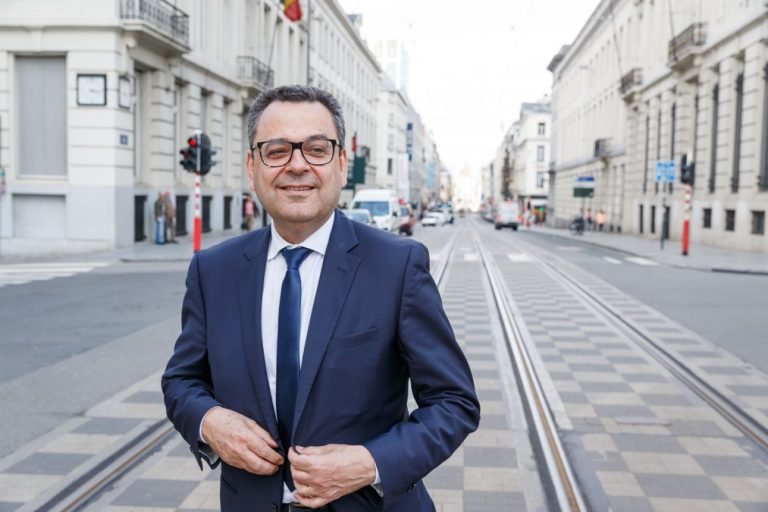
NEW DELHI (Metro Rail News): Metro Rail News conducted an email interview with Mohamed Mezghani, UITP Secretary General. In the interview, he discussed planning and organising the UITP Global Public Transport Summit 2023.Mohamed Mezghani has worked for more than 30 years in public transport and urban mobility-related fields. He has been the Secretary General of the International Association of Public Transport (UITP) since 1st January 2018. He has been Deputy Secretary General of UITP from January 2014 to December 2017.
Until then, he has worked at UITP as Senior Manager (1999-2001) and Knowledge Director (2001-2006), chairing the department developing knowledge-related services for UITP members: professional training, research projects, thematic studies, technical advice, conferences, networking activities, information centre, etc. From 2006 to 2013, he worked as an independent consultant and Adviser to UITP on several technical assistance and training projects in Africa and the Middle East. He managed several projects involving numerous experts and multidisciplinary teams. Before joining UITP, M. Mezghani worked as a consultant in the French group BCEOM (from 1990 to 1999), particularly in urban mobility. He has managed and carried out projects including policy definition, technical assistance and research activities in several European countries, sub-Saharan Africa, and Arab countries.
During his collaboration with the French Agency for Environment and Energy Management, ADEME (from 1988-1990), M. Mezghani carried out actions to identify and evaluate transport energy efficiency projects likely financed by the Agency in France.
He has been graduated in Industrial Engineering (1987) from Ecole Nationale d’Ingénieurs de Tunis, Tunisia and has a Master in Transport (1988) from Ecole Nationale des Ponts et Chaussées, Paris, France. Here are the edited excerpts: Mohamed, the UITP Global Public Transport Summit is heading to Barcelona next year (4-7 June) for the 2023 edition. What can you tell us about the planning and organising at this stage? It’s an exciting time at UITP, that’s for sure! There’s an extra amount of energy around when we’re in the UITP Global Summit planning stage. It’s a huge undertaking to bring an event of this size and prestige to the stage. There won’t be a member of the UITP team who won’t contribute to the Summit, and a group leads our dedicated team of colleagues from each department to coordinate our efforts and to plan best. Many ideas are flowing, and solid plans are being made, and I am more than confident that we are on schedule to bring you an edition to remember. We are also working closely with the three local partners, who are lovely and excellent UITPs, and their enthusiasm for welcoming the sector to Barcelona is evident. The road to Barcelona is set, and I’m excited and confident we’re well on track. What can you share about the programme and exhibition at this stage? Do you have any news to share on the topics? Our programme is coming together at an impressive speed. You know, putting together a Congress programme for a global Summit takes a lot of focus and consideration. UITP is focused on all modes and all topics across public transport, and when hosting an event that brings the entire sector together, we need to ensure that we’re covering the whole gambit of the conversation. As the Summit has a truly global dimension, it attracts names and faces from across the globe eager to participate. UITP brings together all sector stakeholders, and that is on full display at each Summit. It may sound cliche to say there’s something for everyone, but there truly is a topic, a session, and a direction for every interest. We have developed a focus built around two pillars – Cities and People. And from that, we are defining the tracks underneath those pillars that will present individual focus and topics. We know that public transport defines our cities, and we also know that it should always be for those who work in it and use it. By determining a direction from those two pillars, we will have a relevant, informative programme, and crucially, it will help move the needle on what the sector should be talking about going forward. There is much expectation around the conversations that will take place during the Summit, as people are looking for answers to their concerns, ready to share priorities, and keen to observe the latest developments. That means there is a challenge to create a programme fit for the current climate and one that covers both public transport fundamentals, current trends, and issues such as the energy crisis, the impact of inflation, staff shortages, and more. We are also well on track to fill more halls and offer more space than ever for our exhibition. The exhibition is a phenomenal showcase of recognisable names and faces from across the sector, all around the world. You can see modes on display and new apps being presented. And all of it led by those who have brought it all to the Summit. It is something to see. The 2023 edition theme is “Bright Light of the City”. Can you expand for our readers the thinking behind that approach? Since the Global Summits had a theme assigned to them, we’ve always worked to make it a relevant and exciting statement on where the sector is. In the last few years, we’ve moved that idea closer to creating a theme well-connected to our host city. The city that has the honour to host the largest gathering of its kind in urban mobility plays a crucial role in the Summit. The Summit is a fantastic economic opportunity for the host city and a significant cultural and societal benefit to the local area. So, when we are fortunate to visit another great city, we feel we should connect the sector and the city to our theme. We saw this to incredible success with the 2019 edition in Stockholm and how “The Art of Public Transport” and our visual campaign saw our delegates showcase the beauty of their metro stations and the surroundings in and around the city. With the theme set for the next edition in Barcelona, we will ask the sector to show us some new enthusiasm for 2023 with “Bright Light of the City”. The thinking behind this edition’s theme is rooted in both what public transport offers and the city of Barcelona itself. Public transport is a guide. It navigates a way around a city. For workers, visitors, for everyone. When that takes place in a city like Barcelona, renowned for its incredible artistry, historical landmarks, and stunning architecture, it is easy to find beauty in your surroundings. And with a well-connected public transport system across all modes, movement is easy, and public transport should always be the bright light of any city. I’m excited to discover new parts of the city when we arrive next June! With the next Summit heading to Barcelona – a city renowned for its impressive public transport and accessible living – are you excited to see the world of urban mobility gather there in June? This leads us perfectly from the conversation on our theme to our host city! We’re very fortunate at UITP to receive passionate and incredibly detailed bids from many international cities hoping to become our next Summit host. I have and would love to continue visiting all of them myself. With Barcelona selected for 2023, we’ll arrive in a city with an imposing public transport system. The ease of access offered to people as they move around their surroundings is incredible, and the city plans to develop that in the years ahead. For the next edition, we also have our three local partners – FGC, TMB and Renfe – representing the region (Catalonia), the city (Barcelona) and the state (Spain). We were fortunate to co-host a local launch with all three in the city and to see their passion for the Summit and the local, regional, and national players they brought together who shared their excitement. Public transport is full of passionate people with an energetic approach to the future, and to see a strong level of engagement and interest from the local partners and those in Barcelona and beyond gives us strong encouragement for next year.
This is the first UITP Global Summit since the 2019 edition in Stockholm. A great deal has changed since that gathering. Has this impacted the direction of the Barcelona edition? Public transport is certainly by no means alone as a sector impacted by the global pandemic. It was, unfortunately, badly impacted by ridership and finances hit since COVID began. These have been tough times. But I have been heartened throughout it by the strength of community across public transport that has come to define our sector. From the beginning, we came together knowing that a path through the tough times would be found in sharing ideas and experiences and working on solutions. UITP was in the position to be able to bring the sector together digitally at first and then, when appropriate, in person. Now that we can put into practice the best ways to rebuild and reposition ourselves for the future, hosting the Global Summit allows us to drive forward a direct fit for that future. Public transport has changed, and as we work on the Barcelona programme and listen to the views of our Committees, Boards and Working Bodies and Groups, we know that it’s a crucial time to put fresh ideas into place and come out the other side stronger and in best positioned for tomorrow. This will be a Summit that features all of what our audience recognises, but it will also be a Summit that discusses what recent times have shown us and how building back can make for a better public transport sector for everyone. The global pandemic significantly impacted almost every sector worldwide, with public transport facing tough times during these past few years. As we look down the road towards Barcelona, where would you say the sector is right now? The sector is rebuilding; this we know. But we also know that it is redefining itself. We are all aware that many sectors will be in different positions than before the pandemic. There’s no bouncing back; instead, it is building back. The sector is in a much better position than in 2020 and 2021; ridership has increased in many cities but remains slower to return in some locations. The political incentive was not as strong as it should have been during the pandemic, and public transport has had to fight hard to be seen and heard by decision-makers. However, I am an optimist, and I know those working in public transport will never stop fighting for its future. Of course, what must also be considered is that the pandemic has not, and is not, the only issue public transport faces. We are dealing with issues from the pandemic, ongoing conflicts, and economic issues worldwide. We are facing staff shortages; the energy crisis impacts public transport. The climate crisis continues to impact society, as does the ongoing issues with inflation. These all hurt daily functioning, and although public transport cannot solve these problems, we can find solutions to best suit our needs and concerns. It is safe to say that the public transport sector is experiencing a paradoxical situation. Everyone agrees that public transport is essential and part of the solution, but political and financial support is lacking. I hope to address these concerns during the Summit, as the best and brightest minds in the sector will come prepared to debate the challenges. It’s the biggest event of its kind in public transport and urban mobility; just how vital is the UITP Summit to the sector?Critical would be the short answer! It’s not difficult for me to talk about how vital and valued the UITP Global Public Transport Summit is to the sector. It is valued and valuable. The UITP Summit goes back to 1886, with the first edition hosted in Berlin, one year after UITP was created. That means it has been organised for more than 135 years! It’s part of the life of public transport and mobility professionals, but it also attracts more policymakers. I often hear from our members that it is the highlight of their calendar and, for many, the jewel in the crown of urban mobility gatherings. It is not by accident or an act of chance that we welcome hundreds of exhibitors, speakers, delegates, and tens of thousands of visitors across three days. It’s the defining event in public transport, and with the many networking and social events, alongside detailed technical visits, the Summit is the place to be when it is in town! Hundreds of exhibitors, speakers and delegates, and thousands of visitors will be in attendance over the three days. What can they expect to see and experience?Well, the first thing a delegate or visitor will see upon arrival is the welcoming faces of the UITP team on our registration desks! And after that, they will see a massive and awe-inspiring venue full of energy and excitement – packed with exhibitors, speakers, and delegates from across the globe. Our exhibition has crossed the 80% space sold by the close of November and is well on track to sell the remaining space at speed. There will be more than 300 speakers in our Congress, over 15000 visitors can be expected across three days, and all this activity will be covered by upwards of 150 international press and media representatives. It’s unlikely that a corner of the world will be covered in some form during the Summit. We are passionate about building an experience for those in attendance. For some, this may be the only event they attend, each edition of its size. Some UITP teams won’t have experienced an event like the UITP Global Summit. I’m determined that whatever the experience is, and for whoever it is, they enjoy it and take something away from it. Yes, we are all there to showcase public transport, present innovations, and find solutions, but we’re also there to learn and enjoy. It must be an experience to treasure – and I want that for everyone joining us in Barcelona. What do you hope those in attendance – delegates, visitors, and more – take away from this edition?I hope they take many things away from their time at the Summit in Barcelona. When they reflect on it and ask themselves what their experience was like, I hope what comes to mind is positive. The feedback we receive after our Summits is always far and away highly positive. And what is shared with us to improve, we always strive to build upon. No one is complacent, but we know that through hard work and a strong focus, we have a special event on our hands. I also hope that those in attendance are inspired to advance on their professional projects and personal development. The Summit is a human experience – an opportunity to connect with others during the Congress, the Exhibition, and the many networking events. I hope they feel the warmth in the public transport sector. We all have many friends across this community, and having the opportunity to come together like this for the first time in what will be four years is not something to take for granted. It’s an experience I will always cherish. And finally, describe the UITP Global Public Transport Summit in three words.You’ve given me a tricky question to conclude with! I could give you 30 or 300 words! How about I finish by reflecting on how I’ve presented the UITP Global Public Transport Summit in our conversation so far? “An Inspiring Experience”. I hope it’s one many people want to discover for themselves. See you all in Barcelona!
Wabtec Corporation Leverages UKG to Empower Employees, Support Business Growth
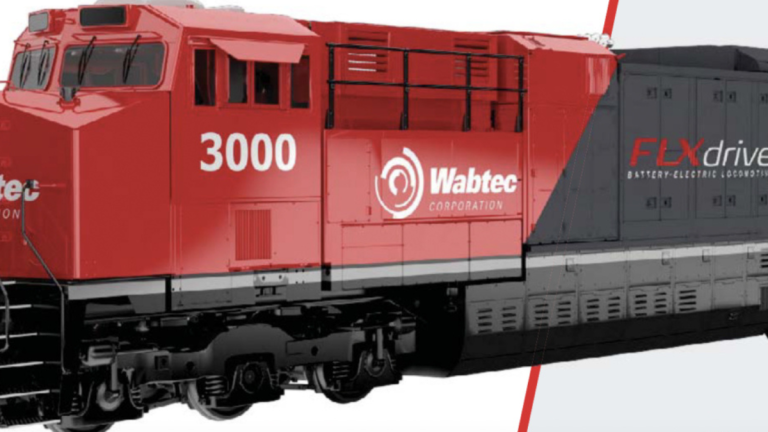
BENGALURU (Metro rail News): UKG, a leading provider of HR, payroll, and workforce management solutions for all people, on 26th December announced that Wabtec Corporation, a leading global provider of equipment, systems, and digital solutions to the Indian Rail Transportation sector, is using UKG to help support its rapid growth in the Indian market.
A UKG customer of almost a decade, Wabtec is gaining a significant foothold in the region via rapid expansion and multiple acquisitions. With this business success comes a wide range of workforce challenges that the company has looked to UKG to help manage, such as better visibility into workforce utilisation, improved employee experience by accommodating flex-work times, empowering employees with self-service scheduling options via the UKG mobile app, and enhanced workforce efficiency through condition-based auto-approvals.Furthermore, UKG is assisting Wabtec with centralised visibility across multiple locations to optimise the workforce management processes under one central system.“Continuing our partnership with UKG and upgrading to its cloud platform has given us the opportunity to expand and align to our growth plans, while saving costs, enhancing employee experience, and driving better compliance,” said Kopal Sarin Raj, vice president of IT and India CIO at Wabtec Corporation. “The flexible platform seamlessly integrates with the other applications in the environment by providing access to all workforce-related information on a single platform. We look forward to continuing to expand our relationship with UKG as we grow across locations in India.”Wabtec plans to broaden its use of UKG solutions to other sites as it expands across India to centralise scheduling, improve efficiency among shop-floor visibility, maintain compliance with minimum manual involvement and increase employee engagement.“Wabtec’s business is experiencing a strong tailwind powered by India’s growth of infrastructure, which means that balancing workforce costs and productivity while ensuring flexible working conditions will be a significant differentiator,” said Sumeet Doshi, country manager of India at UKG. “Our UKG workforce management solutions help organisations achieve this, and we take pride in working with organisations like Wabtec on their digital workforce transformation journey.”Our technology is making data more accessible and more visible and the solutions more dynamic and immersive: Steve Cockerell

LONDON (Metro Rail News): Metro Rail News Managing Editor Mr. Narendra Shah conducted a one-on-one interview during his visit to London for Bentley System‘s Year in Infrastructure Conference and Going Digital Awards 2022 with Steve Cockerell. During the interaction, Mr. Cockerell talked about the sustainable urban rail transit system.Steve Cockerell is an Industry Marketing Director – Rail and Transit, Cities and Campuses. Steve Cockerell joined Bentley Systems in 2002 through the acquisition of Infrasoft and has since worked as part of a team delivering knowledge and expertise to its users in the transportation industry.Cockerell has more than 20 years of industry experience, which he began by studying civil engineering and working as a highway designer for the local government in the U.K. He joined MOSS Systems in 1990 as an application engineer demonstrating functionality and highlighting the benefits of CAD-based design applications for highways, rail, and land development projects. Following Infrasoft’s acquisition of MOSS Systems, Cockerell served as channel marketing director, where he helped develop and launch Arenium. This engineering collaboration product enabled multi-user access to MX 3D design models. This paved the way for technology that supports building information modelling processes now demanded by industry and governments worldwide.Here is the edited excerpt: Metro Rail News (MRN): What is Bentley’s significant development towards integrated rail solutions in recent years across all rail communities? How is inspection & predictive maintenance through Bentley innovations helping to help railways across all verticals? Mr. Steve Cockerell: What we’ve provided for the rail community worldwide over many years is the ability to design any type of rail line or network, be it mass transit, metro, commuter, or high-speed rail. Our products enable the design of track and catenary to different speeds and standards, along with the related civil and associated infrastructure.For track design, we have OpenRail Designer, for catenary OpenRail Overhead Line Designer, and on the bridge side, we have an OpenBridge Designer. These products allow engineers and designers to design the track alignment, including geometry for switches and turnouts, and then share this data with other disciplines. For example, taking the track alignment from OpenRail into OpenBridge, where it in can be used to first model, then analyse and design the bridge. We then further enable construction (of the track, bridges, and related infrastructure), by allowing the use of design information in our SYNCHRO products.Associated with this process, is the management and sharing of data among team members and stakeholders through ProjectWise, which we have announced today is now powered by iTwin, our digital twin technology. We also have a suite of products under the AssetWise brand that targets the optimization of the railway’s performance and reliability. So users are able to understand when, for example, the track is wearing out, when there might be a failure, and then use that insight to work a little bit smarter by targeting the right maintenance activities, in the right place at the right time. The primary reason for this being to help organisations provide safe and reliable rail networks, and avoid, as far as possible, unplanned downtime. The latter, in addition to costing time and money, inconveniences passengers, and can result in damage to the reputation of network owner operators.Now the final point is to bring the topic back to updates we’ve provided today. In particular, our announcement of Bentley’s Infrastructure Cloud, which combines ProjectWise, AssetWise, and SYNCHRO, as a cloud-based solution that integrates design and collaboration with construction and operations. Bentley’s Infrastructure Cloud powered by iTwin, ensures that data created in one phase of the asset lifecycle, can be managed and shared continuously, with all the project participants, regardless of their location.MRN: With the world looking towards customised rail solutions with increased speed and safety, what, in your opinion, can be the significant developments using technologies for a more sustainable urban rail transit system? Mr. Cockerell: One of the most significant ways we are helping organisations is by enabling them to do more with less. By that, I mean we are optimising the activities the different professionals involved perform, to achieve the best business outcomes.As an example this might include enabling organisations to leverage in-house expertise, regardless of whether they are based locally to the project, or somewhere else in the world, so that their teams can work smarter to deliver infrastructure of higher quality, faster and cheaper.The ability to access and understand the assets that exist across a network is therefore key, so making information our users can trust and use to improve the decisions that lead to more sustainable urban rail transit systems, is an essential component of our solution development.MRN: How is technologies like Digital Twins, Agile Cloud Networking, LIDAR surveys etc., helping modern-day railway transportation? Is there any integrated or customised solution for these features?Mr. Cockerell: I’d like to step back slightly on this, away from customization (for specific organisations or country standards), and towards open and integrated applications. I think the ability for our solution to adapt to the different challenges encountered within projects anywhere in the world, when working to the different standards involved, is essential. However, instead of creating bespoke solutions for individual organisations or countries, our technology, including the digital twin enhancements we’ve announced here, Bentley is providing platform level improvements that enable engineers and designers across the different disciplines involved, to complete projects faster, better, and cheaper.We also need to look at improving sustainability as one of the key criteria on future projects, particularly in urban environments, as rail and transit is key to combating pollution, and the current climate emergency. I feel this is a key objective for all the metro projects around India, as getting as many people out of their cars and off their bikes, on to public transport, not only drives economic growth, but the reduction in pollution improves people’s lives by making journeys more efficient, healthier and safer.Providing technology that enables more sustainable design and project delivery is increasingly important. So our partnering with EC3, announced last week, which enables organisations to leverage digital components that have the carbon cost of the materials or assets embedded, will provide significant advantages in this area. These technology improvements, as part of our open and integrated rail and transit solution, will enable users to address the urgent environmental and climate challenges we all face, and help deliver new projects, or network upgrades, in a more sustainable fashion.MRN: How do you contribute to the Digital India campaign, which is one of the flagship programs of govt. Of India. What is the contribution of Bentley systems in developing the economy of India?Mr. Cockerell: I can’t comment on how Bentley is contributing to the Digital India campaign specifically, but I do think the way our technology, enables organisations to let their data drive decisions, will help the Indian infrastructure business, and in turn, the country’s economy.Why? Because even with the best technology in the world, and I believe that Bentley’s is truly world class by the way, it is access to data they can trust, at the right time, from wherever they are located, that is key. Bentley contribution then, is through its dynamic and immersive technology, that is making data more visible, accessible, and actionable, allowing the professionals involved to complete tasks more effectively and efficiently.Providing solutions that deliver increased insight into decision making across the asset lifecycle, and ultimately letting the data drive decisions, helps the organisations and professionals involved, improve business outcomes, and in turn contributes to a more digitally enabled Indian infrastructure industry and workforce of the future.MRN: We’re making considerable investments in a no. of projects around the country. What would be your insights on project management through massive technology projects like station redevelopment, metros, running of high-speed trains etc.?Mr. Cockerell: We’re in a situation today where many consultants and contractors worldwide have almost got too much work than their teams are able to deal with, some are even being forced to turn away jobs. For these organisations, embracing technology offers the ability for their teams to do more work, in less time, and leverage their limited resources in different, and more profitable ways.An example of what this might look like is, applying technology to re-use the time, effort, and expertise invested on the design of regularly encountered assets, across different or similar scenarios. Using ProjectWise Components Center, Bentley users can search their cloud-based library of digital objects, for example an over-bridge or under-pass, before inserting it in the required locations within a design model. At this point, our authoring applications – in this scenario it might be OpenBridge Designer, would then be used by the engineer or designer to optimise its form and attributes based on local requirements and criteria.Digital workflows like this have the potential to cut the design time of regularly encountered assets on projects from days to hours, but its ability to increase efficiency and quality doesn’t stop there. The intelligent objects stored by organisations in ProjectWise Components Center can be accessed and leveraged across any, and all, the projects they are working on, which means teams can design an object once and use it many times, speeding up design, and offering the potential to standardise manufacture and procurement, and optimize construction.MRN: Just for the concern that data is there. One can use ML (Machine learning), and then based on the previous decision (that I can decide on previous inputs), can we expect the problem with the people to get resolved with the ecosystem? Mr. Cockerell: In the future, I believe the opportunity to apply AI and ML as a means of optimising business outcomes across the infrastructure asset lifecycle will increase significantly. However, Bentley is very clearly already on that journey, announcing here our iTwin Capture, iTwin Experience, and iTwin IoT products.A great example of this at work is within our bridge monitoring and inspection solution which transforms traditional bridge management by leveraging digital twin workflows. It uses iTwin Capture to create a 3D digital twin of any bridge or structure using drone or handheld photography, and iTwin IoT to incorporate real-time data and insights on the structure gathered from field sensors.The combination means users can utilize a reality mesh to augment inspection processes, apply condition notes to the asset directly in a 3D environment, and enable remote review of the condition of the structure. From there, AI and ML defect detection then enables automatic identification and classification of defects in the field. These digital workflows, including the ability to share the operational insights gained within our design tools, enables organisations to take rehabilitation projects to the next level.
The key to organisation is providing an open platform that allows people to do the core work but also push beyond and do more : Mr. Ian Rosam

LONDON (Metro Rail News): Mr Narendra Shah, Managing Editor of Metro Rail News, conducted a one-on-one interview during his visit to London for Bentley System‘s Year in Infrastructure Awards 2022 with Ian Rosam, Director of Project Management, Bentley Systems. In the interview, Ian Rosam talked about the latest technology and software of Bentley Systems.Ian Rosam graduated in Civil Engineering from Brighton Polytechnic in 1991. He worked as a Graduate Civil Engineer in Norfolk County Council, Norwich, UK, for nearly 6 years (Sep 1991 – Jun 1997)· And after that, he joined MOSS / Infrasoft Ltd as an Application Engineer working on desktop design applications through to the company’s acquisition by Bentley Systems in early 2002. Ian moved into a Product Management role later in 2002 and now with over 20 years in Product Management currently works as a Director of Management at Bentley Systems. Here are the edited excerpts: – Q.1. Our first question is, What is Bentley’s OpenRoads Technology? In what ways is it different from other technologies in a similar capacity?Mr. Ian Rosam: I like to take a step back to consider how we’ve approached our modelling in the past and how we’ve come to be where we stand today. As part of Bentley’s growth, we acquired various companies and capabilities InRoads, GeoPAK and MX. So Bentley started out with three great sources of civil modelling applications, all based in different locations around the world. These solutions were market leaders but the industry was evolving and wanted more, with greater efficiency, modernisation, extended capability, automation and more to address industry directions. The solution was to develop new capability and consolidate the existing products with a more intelligent design system that is now know as OpenRoads. What we have set out to try and achieve with OpenRoads is an intelligent design system that carries more information and provides more value to the designers throughout the life cycle, and this technology underpins products like Opensite Designer, OpenRoads Designer, OpenRail Designer and OpenBridge Modeller. We have tried to incorporate a rule-based system that allows a designer to capture his design inputs and intent (a phrase we use). Building rules into the design allows for intelligent and predictable updating of the model that allows propagation of change in the model for efficiency in design. In real terms, the rules is where the significant advantage comes in. It provides an intelligent up-date model where as the design changes, relationships are automatically propagated instead of going through manual processes for updating helping to achieve efficiency, automation, reducing human error, for a streamlined and predictable update process for change. The other important aspect here is that technology changes. Where technology stands today and where it was fifteen or twenty years back is very different from a hardware capability, we are seeing much more with AI/MC in our everyday lives at our fingertips with mobile devices. If we look at the design software being used at the 2000’s prior to OpenRoads, we’ll see that it’s not really very different from what it was in the nineties or possibly even back to the eighties. It means the technology’s been evolving but to software hasn’t really been keeping pace, especially when looking at industry trends with the evolution of BIM process, and obviously, that’s still evolving with the advent of Digital Twins. Ultimately what these evolving practices required, was a greater level of detail and attribution in the modelling processes to address the demands on the design. So at a simple level, the need for say quantity extraction may need to be extended with richer attribution of the model, this has been observed as an evolving processes with moving from a simple file based CAD system to 3D modelling with BIM processes managing the data. This is where all that OpenRoads modelling technology comes together because it provides a level of detail and attribution that was not previously possible and marks a significant advancement. The old products were not individually capable of delivering the intelligence to allow for the required increased detailed design processes, to ultimately deliver the attributed model data and service BIM requirements. So, it’s been an evolution of technology and we developed the OpenRoads technology based on the requests of the then existing users but also future-proof against what turned out to be called BIM technology and BIM processes. Q.2 Bentley’s CAD, ConceptStation, InRoads, GEOPAK, MXroad, PowerCivil etc., have already been popular and compatible tools. How is a new application an improvement? Mr. Rosam: All the previous design systems we had with GEOPAK, InRoads, MXroad and PowerCivil were typically sixteen-bit technologies as they were developed way before the current standard sixty-four-bit technologies. So they had their inherent limitations on things like performance, scalability but also had operating system and common development dependencies issues. As a result, while they were servicing in the early BIM world, they didn’t scale as the industry demanded more, that’s why we’ve developed and delivered to service BIM capability as it evolves beyond with Digital Twins.All those older products have a legacy with the new OpenRoads Technology with products likes OpenRoads Designer and OpenRail Designer, because they have fed into the new technology, steering that new product based on numerous industry experts feeding the legacy knowledge into the OpenRoads technology.Conceptstation was a new breed of product we launched in 2016. It’s based on a new platform from the traditional CAD desktop; so it’s not an evolution of anything other than experience / technology. It was developed as a new product to service the conceptual design space, that requires rapid prototyping and multiple model assessment with cost analysis to provide a more informed choice for clients. Q.3. To what extent do you think Bentley’s acquisition of Infrasoft corporation has benefited the company in terms of business scale-up and technological up-gradation?Mr. Rosam: Both Stephen and I come from the Infrasoft acquisition so I may be biased (laughs). But the goal of any acquisition is betterment and growth in many areas, with technology, client base, domain expertise etc. So yes it’s been one of many acquisitions over the years that has supported Bentley’s growth to where it is today and we are still acquiring companies to build out the breadth. Each acquisition brings with it the inherent knowledge of the market through the industry expertise with its staff, the software and the feedback for the technologies / software in the market, which helps expand the benefits of the acquiring organisation. Q.4. You are the world’s leading provider of infrastructure software. Could you please state something about your feature software and recent R&D? Mr. Rosam: This is a great Segway to talk about iTwin. How that is progressing and how it’s going to help. The industry has in the past needed system of file delivery that we have developed but we are seeing a significant shift in delivery focus as we’ve already discussed. Everybody is expected to do more with less and with greater efficiency, which relates back to what we discussed in terms of improved modelling technology –providing capability for intelligent updating so that the design process can be more efficient. Allowing greater model attribution in the design phase automatically, which carries through the lifecycle process, reducing the amount of manual entry that people have to put in place and that feeds through file management systems inherently with the processes we are dealings with now, but also future-proofing that with cloud technologies, specifically with our iTwin technologies and making the critical mindset shift from files to data approach. What we can liken this as a more data-centric approach than file centric, where the model attribution is carried with it in an intelligent model. This compares to current / previous approaches were attributions were typically held externally from the models and managed separately. Now it’s inherent and carried with the data through the processes, ultimately delivered and made accessible to more people. So, it’s raising visibility on that data. Q.5. Bentley is also trying to provide an ecosystem for the design, construction, education, maintenance and refurbishment. What would be your comment on that? Mr. Rosam: This speaks to our corporate mission statement to service the infrastructure industry. But realistically we don’t have the resources, knowledge, or understanding in all markets to deliver everything ourselves. So, we must provide an ecosystem that allows people to self-serve, and that’s fundamental to the openness of what we’re doing with iTwin that allows people to use the data they have and benefit from the data they have for the used spaces they need because we can’t envisage. We see it here with all the projects submitted for awards at Year in Infrastructure. The way our user stretch the software and push it beyond the limits of what we potentially perceive and do some incredible things with it. To us the key success to the organisation is providing an open platform that also allows people to do the core work but also push beyond and do more. Q.6. All global companies have manpower constraints, and the projects are going big. For a developing country like India, which is making huge investments, what, in your opinion, can be the best strategy for using the Bentley software and technology for several sectors the company is providing its services to be used by a common group that somewhat lacks that level of technical know-how. Any development by the company in this segment? Mr. Ian Rosam: Fundamentally, ease of use, training material, general accessibility and mobility with the resources are the keys. You must be able to resource from whichever region you belong to; breaking down those country-level barriers and providing accessibility to skills is fundamental. That’s something we’re trying to facilitate with our training material, improvements to software and with the likes of Projectwise, making data accessible. It does allow inter-country work to be able to redeploy and resource on projects internationally. We’ve seen great examples in the projects submitted here for Year in Infrastructure of work undertaken entirely remotely, and it’s been encouraging to see companies based in Italy, or Austin Texas never even going on the site.The concept of never setting foot on site is something we see more with the availability of Reality Modelling with Context Capture. The technology to capture the site and provide remote access to the data at high-level of detail and reality facilitates detail design remotely; it makes things better and more convenient. This is an improvement we have developed, making things easier for all walks of society. Possibly the challenge you face with remote design is local standard knowledge when you’re redeploying workforce in another country; it’s that local standards knowledge and compatibility which becomes necessary in being a success. Mr. Narendra Shah: Thank you very much for your precious time and one-to-one interaction.
SDGs as our most strategic priority over the next ten years: Rodrigo Fernandes
LONDON (Metro Rail News): Metro Rail News Managing Editor Mr Narendra Shah conducted a one-on-one interview during his visit to London for Bentley System‘s Year in Infrastructure Conference and Going Digital Awards 2022 with Rodrigo Fernandes. During the interaction, Mr Fernandes talked about Sustainable Development goals and recognised infrastructure.Rodrigo Fernandes is Director, ES(D)G – Goals at Bentley Systems from August 2021. He is also working as an Environmental Engineering Industry Expert from October 2020 to till now. He completed his Ph. D in Environmental Engineering from Instituto Superior Técnico from 2012-2018, and after that, he got a certificate in Sustainable Business Strategy from Harvard Business School Online. He worked as a Scientific Researcher, Project Manager, and Environmental Engineer and joined Bentley Systems as a Senior Consultant in November 2017. Q How can the construction sector address climate change amidst sustainable development goals and recognised infrastructure? Ans: In the construction sector, we consider two main topics that interconnect with each other but need different approaches. One is decarbonising construction. That’s one of the significant challenges, and the other one is climate adaptation and resilience. We consider both points to be adopted in parallel or together, but from a decarbonisation point of view, we need to start leveraging the low-hanging fruits of quick wins. Bentley, as a company and many of the technologies we have around, work on efficiency, circularity, and reducing water and material usage by designs. Considering machine learning, AI, cloud technologies, and digital twins, we can effectively reduce carbon footprint of infrastructure projects, which is a critical approach that we consider. The other thing that can still be mentioned in decarbonisation, is open collaboration and open ecosystem partnerships. We believe that no single company, vendor, or organisation will be able to tackle climate change and decarbonisation alone. We have a lot of challenges managing data in large infrastructure projects such as managing multiple industries, disciplines and organisations. For instance, we are handling a railway project; we shall need infrastructure managers, and we will need to work with multiple companies and disciplines many times because this infrastructure shall stay with us for a long time. The only way to address this is through a digital platform which can work in an open environment, where we can bring all the vendors and all the data formats together, federating all the data. In many cases, we also depend on materials supplied by others. This can also affect our business. For instance, we will be affected if we depend on materials that will become unavailable due to a shortage of resources. An open platform allows us to work with stakeholders at different levels, even in the supply chain; going upstream-downstream, we need to handle that. An ecosystem of collaboration is strategic for addressing decarbonisation. Then there is also climate resilience and adaptation, which is something where we can also leverage quick wins and many of the technologies that are available today for planning and to adopt a proactive approach for climate resilience. This is possible using technology for better studying and quantifying the impacts, giving suitable options, and helping in what-if scenarios, so if there’s a flood, drought, heat wave or anything else that might happen.Still, we also need disruptive technologies so that we can meet the number of challenges that we can face. We still need to work on innovation, research and technology for instance in green mobility options, or carbon capture usage and storage in sectors where we cannot decarbonize easily.Q How does the Bentley system help India to empower sustainable development goals through Bentley software and services? Ans: ES(D)G is Empowering Sustainable Development Goals. We have three ES(D)G main priorities for us. One is mobility, another is the grids, and the last is environment. On grids, we include anything related to clean energy transition, including reducing energy consumption and increasing efficiency in energy production. So, we have solutions to empower all these, not only by producing and diversifying the portfolio of renewable energy with solar, wind, hydroelectric, geothermal, or green hydrogen but with technology for transmission and distribution because this infrastructure is essential for electrification. It doesn’t matter if you produce a lot of energy; it is useless if you cannot distribute it. So, we have technologies like SPIDA and OpenUtilities that are used for managing electric grid digital twins. When we move to the environment, there’s a direct link with grids. We often need rare-earth metals or materials for new-age technologies like EVs, vehicles, or even turbine blades. For these special rare metals needed, we also need to do responsible mining, where Seequent (the Bentley Subsurface Company) can help. In the environment, we also include all the water infrastructure, water supply, sanitation, groundwater detection, saline water intrusion, floods, droughts, and heat waves; all these are part of our solutions and technologies for the environment. Similarly, in the transport sector, I would say that fifty per cent of the world’s population still doesn’t have safe and convenient access to public transport. We don’t need highways everywhere, for sure. But we need collective transport means, a priority, like a rail & metro, that’s strategic. We also need micro-mobility to help people run scooters and bikes for individual mobility, reducing congestion. But then again is a problem of vehicular emissions, reducing carbon footprints, saving the environment, opting for eco-friendly solutions, etc. So there’s a lot of discussion for a sustainable urban transport system. We also have mobility simulation tools to better plan how to avoid vehicle congestion in the future. Finally, we have software for pedestrian simulation, to increase the efficiency of time taken by people to walk across different modes of public transport. It would also help in multi-modal and last-mile connectivity.Q Indian Railway has planned to gradually reduce its carbon footprint and become net zero carbon by 2030. In what ways can Bentley’s system contribute to achieving this goal? Ans: We are talking about massive projects, and it is challenging to manage large infrastructure projects. We need to talk about open collaboration again for this. To reduce carbon footprint, companies need tools in the early stages of design; they need to start planning in the early stages on how they can reduce the carbon footprint from the materials, from the construction, they need to model it, they need to digitally quantify things in advance. Suppose organisations start planning and quantifying things in the early stages. In that case, they will be successful, reducing not only the carbon emissions but, in the other lifecycle stages like operations, management etc. For example, we have partnered with Building Transparency to enable carbon calculations in the iTwin platform (our digital twin platform) at no cost, based on an open source carbon calculator – EC3. This will be a game changer for better designing and construction, and even procurement, because it will allow the infrastructure managers to choose less impactful options in terms of carbon. Similarly, when you go to operations, we have established a partnership with Microsoft, Microsoft Cloud for Sustainability, to understand and to find ways for monitoring, reporting and analysing what’s going on in terms of carbon footprint during the operational stage. So, that’s one of the things that I think is important because we can only manage what we can measure; there is no possibility of reducing if we are unaware of our impacts. Therefore, in my opinion, digital tools can be beneficial in quantifying, estimating and ultimately reducing carbon in these infrastructure projects for transport.Q What, in your opinion, are the possible solutions through which Bentley system technology shall benefit India in increasing production efficiency and providing significant energy and cost-saving solutions? Ans: From the perspective of increasing production efficiency and providing significant energy and cost-saving solutions, we’ll like to discuss things in the realm of two major SDGs – SDGs 07, focused on energy and clean energy transition and SDG 12, which focuses on responsible consumption., resulting in less waste, and less impacts on the natural environment and resources which is essential for all of us because. This one is much focused on efficiency and circular principles. So, suppose we want to achieve success and maintain performance with the minimal resources possible and know how to use technology and work together. In that case, Bentley has an answer to all, which is part of our business strategy. Many of our solutions are focused on that. We have solutions for operational analytics, software solutions for asset reliability, etc. We can give an example or multiple examples. For instance, let’s think about infrastructure. Let’s think of an offshore wind platform. They must regularly do inspections. So, there are a lot of steps involved, such as how to plan the inspections By using our software, they can analyse the historical data and safely reduce inspections by x per cent or by extending the number of days without inspection. This process can save energy, carbon, and cost by optimising and rationalising these operations. I gave an example of an offshore wind platform. The exact process can be replicated for manufacturing and process industries as these industries also have reliability problems. So, this is an important way of doing the required maintenance or maybe an up-gradation using our software. Similarly, our solutions can be used for the water sector. The water leakages can be identified; the system can detect anomalies using operational analytics on our operations software. So, if we can reduce the wastage of water, we save resources and money We can also help optimizing water pumps to reducing energy consumption. These are just examples of how efficiency can be increased.Q Based on the learning at the event, can we say that Bentley is touring the cloud and preparing sets of goals that can be used by another project based on the client’s experience and the project studies? What would be your views on that? Ans: It’s interesting. Because at Bentley, we work for innovations, and when we think about the following stages, we make efforts for the same. We have seen things moving from a file-centric perspective to a data-centric perspective. So, moving to the cloud in a way that we not only work with files but can also work with data available on the cloud. The main idea is about efficiency and circularity because when we talk about reusing data, it is just closing the infrastructure loop. Similarly, we always try to create a loop between planning, designing, construction, operations, and maintenance when discussing infrastructure and lifecycle stages. In many cases, we also need to include the decommissioning and repurposing. In several cases, we have an old infrastructure, which we must repurpose into a new one. But, it should be a closed loop as much as possible, avoiding all the loss of materials, energy and data. Because if we collect data, and don’t reuse it, it means a waste of time and energy in the cloud, which makes no sense. Hence, we are trying to close the loop, the circular approach we see more and more.Q Delhi Metro has been a massive success in India. But, now we have no. of cities in the country that want the metro. So, what would your insights on data use in developing city transport systems be? Does it ease system development? Can data of one system be fully replicated in another? Ans: Not the exact same data, but the methodologies can be replicated. In many cases, the data from one project might be used in another one, but in many cases, that’s not possible to reuse it. So, I would rather say that an infrastructure digital twin, in many cases, can be independent of the other depending on the circumstances.When we talk about going digital for developing city transport systems, we need to think big, proove small and scale fast; this is all about what’s being discussed. So, once we think big by envisioning the desired digital transformation , we need to start proving small with a small pilot project. We can scale it to a more extensive area if it works.Similarly, once it has been done for a medium project, a city, or an infrastructure, it will be easier to apply to another city. Again, the learning would help in expediting things. One will be available with learning and enough data collection to scale up the project, expedite all the processes of achieving results and manage the infrastructure. However, we cannot agree on reusing all data for a different project because there are always specificities in each project. The data from a specific project might not be replicable hence, in a different project of similar capacity. But data can – and should – be reused in the different lifecycle stages. The data from design can then be used in construction, can be used in operations, and used in maintenance. You should not lose time building new digital models in every lifecycle stage.Q Bentley is known for their initiative, where they help start-ups by funding them. Similarly, manpower availability is a significant issue in most companies today. So, do you have any training or learning program for students at your educational and research institutes where you can teach Bentley, software to students in college? Ans: We have Bentley Education. I shall try to give you an overview. Bentley education provides licensing to universities and tries to establish partnerships with universities under a specific agreement. Also, Bentley research in many cases might be involved in sponsoring Ph. Ds and research studies in many of these cases. So, if they are aligned with our vision for infrastructure digital Twins and our main objectives, that can also be part of our strategy. Then we have iTwin ventures that focus on making minority investments in companies aligned with our digital Twin strategy for infrastructure. The idea is to help and incentivise start-ups to work on our ecosystem of infrastructure digital Twins. We also have iTwin partner programs where the idea is to work closely with start-ups without minority investments, but to help them use the iTwin platform as part of their business strategy and accelerate the adoption and integration of iTwin. In the past, we saw Bentley as The infrastructure digital twin company, but not anymore. Because we know that’s not possible. There won’t be one company capable of addressing all infrastructure challenges alone. We now envision Bentley as The infrastructure digital twin platform company. We want to empower other companies, independent software vendors, engineering firms, start-ups, and whosoever works with infrastructure digital twins to build their businessesusing our platform as a service and build their solutions with their own intellectual property. But we also simplify things if you are a user or a practitioner and don’t want to build your own tool, or you don’t have time to develop: you can use our commercial products, powered by the iTwin platform in the background. So, the iTwin platform is supporting us (our products) and others simultaneously. So, this is the ecosystem collaboration. We think this will be the key to increase efficiency and accelerate digital transformation – as equally, sustainable transition. The only other thing that I want to add is how important it is to acquire and retain talent and resources. With the main challenges the world is facing right now or maybe in the next twenty years, empowering sustainable development goals is our most strategic priority for the next ten years. So, if we act on it and can explain our purpose, I believe we will be readier to get new talent and motivate people to work at Bentley. If we are disconnected from what is happening in the world right now, I believe that people coming from a university will look for another company that is more aligned with the vision of the future. So, we are preparing ourselves to get new people through all these.
ADB and JICA starts evaluating loan proposals for Delhi – SNB RRTS line
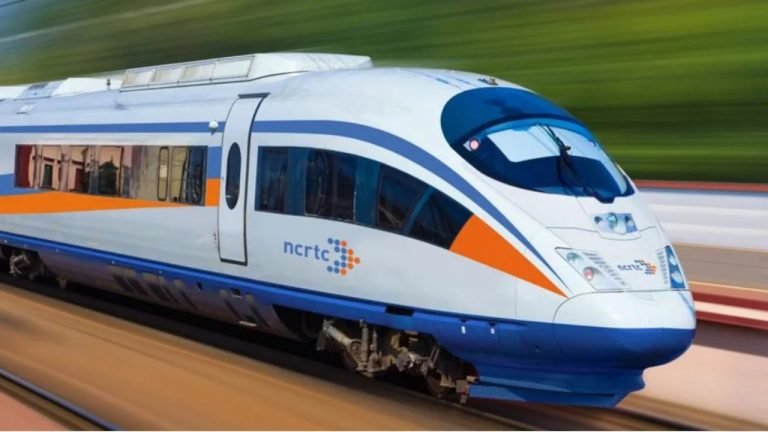
NEW DELHI (Metro Rail News): The Asian Development Bank (ADB) and Japan International Cooperation Agency (JICA) this year saw the start of loan proposal evaluations for the 106.5 km Delhi – SNB (Shahjahanpur – Neemrana – Behrod) Regional Rapid Transit System (RRTS) line.These loans are in addition to the $457 million proposal from the World Bank. Their name first appeared in the Environmental and Social Impact Assessment (ESIA) procurement form in 2020 as a project financer.
ADB: $1.3 Billion Loan
According to the Asian Development Bank’s updates, on October 11, its team approved a concept proposal to lend the project USD 1,382 million.ADB finances the 82.15 km Delhi-Meerut RRTS line due to a $1.049 billion loan approved by its board in August 2020.Their proposed Loan of approximately Rs. 11,416 crores would be applied for the construction and system procurement of a second semi-high-speed rail line in Delhi-NCRs.The line to SNB will have a design speed of 180 km/h and an operating speed of 160 km/h, just like the Meerut line. It will eventually be expanded 35 km to Sotanala and 58 km to Alwar in the south.$890 million Loan from JICAThe NCRTC and the Japan International Cooperation Agency (JICA) have also communicated since at least 2019. According to the World Bank’s project information document, JICA is appraising a loan for it at USD 890 million (Rs. 7352 crore).This line will consist of these stations at INA, Sarai Kale Khan, Munirka, Aerocity, Udyog Vihar, Gurugram Sector 17, Rajiv Chowk, Kherki Daula, Manesar, Panchgaon, Bilaspur, Dharuhera, MBIR, Rewari, Bawal, and Shahjahanpur – Neemrana – Behrod (SNB).According to ADB, their team will conduct a fact-finding mission between March 13 and March 23, 2023, and then hold a management review meeting (MRM) before seeking board approval.The Central Government must approve that final board decision, which is anticipated would happen just before the Lok Sabha elections in 2024.SYSTRA – Egis Rail – Consulting Engineers Group JV was chosen as the preferred bidder for the line’s General Consultant (GC) contract back in July. It is anticipated that a contract will be signed with the National Capital Region Transport Corporation (NCRTC) after the project approval to help with its speedy implementation.RVNL wins contract for construction of Surat Metro’s Bhesan Depot
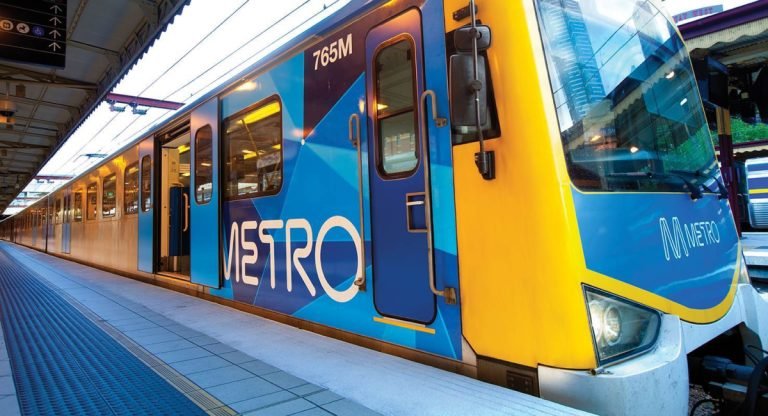
SURAT (Metro Rail News): Rail Vikas Nigam Ltd. (RVNL) has been given a contract worth Rs. 198.93 crores for the civil construction of the Bhesan Depot (Package DC2) for the 41.93 km Surat Metro Phase 1 project, as per NSE filing.The 19.26 km Line-2 of the Surat Metro, which will connect Bhesan and Saroli via 18 elevated stations, would be supported by the Bhesan Train Maintenance Depot. The facility will be connected via 10.559 km Package CS5 (Bhesan – Majura Gate) that Ranjit Buildcon – Dilip Buildcon JV won in June 2022.This is the last contract for civil construction in Surat Metro’s Phase 1. In April 2022, GMRC issued a proposal request with a 20-month deadline.
- Final Contract Value: Rs. 198,93,34,549.77
- Package: DC2
- Tender Notification: GMRC/CONS/DC 02/SURAT/PH-1/2022
NHSRCL floats bid for Thane Rolling Stock Depot of MAHSR Corridor

MUMBAI (Metro Rail News): NHSRCL invites bids for Thane Rolling Stock Depot (Package MAHSR D-1). This package includes the Design and Construction of Thane Depot in the State of Maharashtra for the Mumbai Ahmedabad High-Speed Rail Corridor. The design of the depot is based on Japanese Shinkansen Depots.The Government of India has received a loan from the Japan International Cooperation.
Agency (JICA) towards the cost of the Project for Construction of the Mumbai – Ahmedabad High-Speed Rail.The work includes the Design and Construction of Thane Depot, including Civil Works, Building Works, Inspection Sheds, Maintenance Depot, and Installation, Testing and
Commissioning of Maintenance Facilities, and other Associated works in the
State of Maharashtra for the Project for Construction of Mumbai-Ahmedabad High-Speed Rail.Package No: MAHSR-D-1The cost of bidding documents is INR 236,000.00 (Indian Rupee Two Hundred and Thirty-Six Thousand only), including GST.Document downloading starts date: 23rd December 2022.Document download end data: 26th April 2023.
Shifting focus to Last Mile Connectivity through NMT
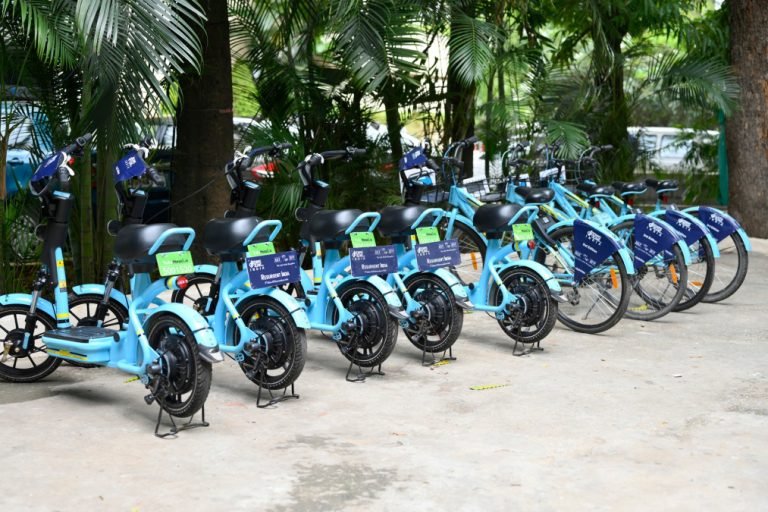
India’s growing urbanisation has boosted the demand for transportation in cities and surrounding areas, with commuters making many long daily trips. This has resulted in an increased demand for public transportation. Public transportation accounts for 30% of journeys in cities with populations of one to two million, 42% in cities with populations of two to five million, and 63% in cities with more than five million populations.However, due to the insufficiency of public transit in fulfilling demand, reliance on private vehicles has grown tremendously. As a result, between 1961 and 2011, the number of cities in India expanded threefold (from 2,363 to 7,935), and the urban population increased fivefold (from 79 million to 377 million), while the number of private vehicles climbed 200 times (from 0.7 million to 142 million). Metropolitan cities account for most of this private vehicular expansion, with New Delhi at the forefront.In Indian cities, intermediate public transportation (IPT) modes such as auto-rickshaws, cycle rickshaws, battery rickshaws, and taxis account for up to 8% of daily trips. IPT modes are convenient but expensive to utilise; frequently, they cost the commuter more than 50% of the overall fee. Furthermore, compared to public transportation systems, they can only convey a limited number of commuters, taking up more road space.Commuters may also encounter site-specific difficulties. For example, public transit may be too far to reach, necessitate navigating uneven footpaths and dangerous street crossings, or may not be safe, particularly for female passengers. Furthermore, an unfavourable and dangerous pedestrian environment forces commuters to rely on private vehicles.The extra time and hassle involved in travelling from home to a transit station and from the station to the destination is an essential disincentive to public transportation. This is aggravated further by a lack of physical integration for multiple modes at transit terminals, resulting in accessibility concerns that create a mental barrier to public transportation. Deterrents include a need for more information about parking availability, public transportation schedules, and traffic signage.Low-income groups, those with disabilities, the elderly, women, and people with debilitating medical conditions are among India’s most vulnerable public transportation users. Furthermore, walkways and other pedestrian facilities are not universally accessible, thus discouraging economic, social, and cultural participation.To address issues and promote public transportation, urban planners and managers have recognised the necessity to develop a city-wide integrated and multimodal transportation system. In India, however, multiple independent agencies plan, administer, and run various kinds of transportation. These agencies need to be accountable to each other and frequently need coordination. At the same time, organisations have yet to be mandated to integrate various public transportation systems and private modes, which is a considerable challenge.Commuters may use one or more modes of transportation to complete a journey. However, commuters must finish the initial and last portions of their excursions on their own—they must walk, drive, or be driven to the nearest station. Public transit organisations usually provide bus and train services that may constitute the core of such trips. This is known as the ‘first and last mile of the user’s journey, or ‘last-mile connectivity.’ Last-mile connectivity improves a public transportation system’s overall efficiency.Last-mile connectivity emphasises the importance of planning for an improved commuter environment in the larger context of the station catchment area, as opposed to the existing myopic strategy of station-centric infrastructure.Last-mile connectivity is critical for shifting private car users to public transportation. Public mass transit systems meet an expanding city’s economic and social needs. As a result, all efforts should be directed at increasing ridership and making it easier for commuters to switch to their preferred mode of transportation. Poor last-mile connectivity forces commuters to rely on private automobiles, exacerbating traffic congestion and increasing journey times, fuel consumption, and pollution.NMT – The Global ScenarioPolluted air, economic losses, and higher stress levels caused by traffic congestion make it critical for communities worldwide to minimise the number of private cars and establish efficient public transportation solutions. However, while metro, bus, and tram networks serve to alleviate traffic congestion, they must also be financially viable for commuters and operators.Globally, several new ways are being used to plan for greater transport network access, focusing on NMT (Non-Motorized Transportation). For example, Singapore is implementing its National Cycling Plan (NCP) to use bicycles to offer last-mile connectivity for mass rapid transit systems in Asia. Given the country’s limited land resources, Singapore facilitated a smart first and last-mile strategy by constructing a cycling network as part of the NCP and redesigning streets to allow walkers, cyclists, buses, and cars to cohabit. The Land Transport Authority (LTA) intends to triple the country’s bike route network to 1,000 by 2040, up from a 2013 commitment to build 700 kilometres of cycling lanes by 2030. The LTA’s ambition of establishing a ’45-minute city with 20-minute towns’ includes expanding Singapore’s bike path network (where commuters need only a 45-minute journey to get to work and 20 minutes to reach amenities within residential towns).Similarly, the UK is investigating the ‘travel hub’ concept as an alternative to the usual ‘park and ride’ notion of leaving private automobiles in a designated facility and utilising public transportation for the remainder of the route. A travel hub is a bus, tram, metro, or train station that provides more amenities than existing public transportation stops, with walking and cycling being the primary ways of access. In addition, it offers simple access to public transportation and interchange between different types of transportation.It also provides regular public transportation and clear and thorough travel information. Importantly, when major car parks are required to accommodate private automobiles that are the predominant or exclusive form of access for ‘park and ride facilities, this requirement is eliminated with the ‘travel hubs idea since connection by other modes such as cycling is strengthened.The European Union supported pilot projects for ‘BiTiBi’ in Barcelona (Spain), Milan (Italy), Liverpool (UK), and Ghent (Belgium) between 2014 and 2017. As a result, according to data, approximately 10% of bicycle parking users at railway stations were formerly automobile users for the entire distance. In comparison, 15% to 20% stopped driving to the train station.Another project that helps towns develop better transportation strategies is Europe’s Sustainable Urban Mobility Plan (SUMP). A city-specific SUMP analyses the entire functional urban area and anticipates collaboration across policy areas, levels of government, locals, and other key stakeholders. It provides various sustainable transportation solutions for commuters and commodities while considering locals and the urban environment.Metro Rail SystemsThe metro rail system has played an essential role in alleviating urban transportation concerns such as traffic congestion, air and noise pollution, and accidents. It is also a more efficient and secure means of mass transportation. As a result, numerous Indian cities have built or planned to build metro rail transit systems.At the same time, despite a growing need for transit options, most of the country’s existing metro systems have remained within their planned ridership. Fare increases, poor last-mile connectivity, a lack of integration and operational improvements, and permissive policies for private-vehicle use have all contributed to this deficit (such as the availability of economical or free parking and subsidised road taxes for cars).While feeder services (shared autos, minibuses, shuttle cabs, or app-based bikes and vehicles) exist for functioning metros, they are limited to a few locations. Last-mile connection is primarily fulfilled via IPT services, which can be costly and limited to specific regions. Furthermore, the infrastructure surrounding metro stations, which comprise the last-mile connectivity system, is outside the purview of metro authorities, posing accessibility challenges for travellers. The lack of dedicated walking and cycling pathways complicates access to metro stations even further.Although metro agencies have begun to integrate innovative technology and economic models to improve the level of service at metro rail transportation systems, most of these are small-scale pilot projects that provide feeder services to metro systems. There is also a need for more data on the influence of last-mile connectivity services on metro systems or reducing private vehicle usage. This makes determining the relevance of last-mile connectivity for Indian cities difficult.Last-Mile Connectivity: The Policy framework in India While India’s principal transportation policies emphasise public transportation, multimodal integration, and non-motorised transport (NMT), they are generally silent on the issue of last-mile connectivity. As more communities across the country establish metro networks, regulations must prioritise the role of last-mile connections in consolidating the benefits of public transportation and achieving sustainable mobility goals.The 2014 National Urban Transport Policy (NUTP) prioritises human transportation over vehicle movement. First, the movement of pedestrians and people with disabilities, which accounts for zero emissions, is prioritised, followed by NMT (bicycles), public transportation, IPT users, and those who use private modes of transportation. According to the NUTP, this priority structure will assist in minimising congestion and pollution caused by private transportation.Similarly, for metro networks, pedestrians and NMT modes are preferred for first and last-mile connectivity, and the NUTP mandates that these modes be accessible within 50 metres of metro stations. The following essential element is feeder service pick-up and drop-off facilities (should be positioned fewer than 100 metres from metro station entry and exit structures), followed by IPT stops, private car pick-up and drop-off facilities and parking spaces.The 2017 Metro Rail Policy of the MoHUA aims at enhancing metro commuters’ last-mile connectivity. The ministry has emphasised feeder bus services, e-rickshaws, clever rentable cycles, e-scooter services, and collaborations with cab aggregators as part of the existing last-mile connectivity measures. Another goal is to ensure that the cheapest mass transit mode is chosen and employed for public transportation. Furthermore, the policy requires that every metro rail design contain plans for feeder networks that increase the catchment area of each metro station by at least five kilometres. The provision of last-mile connectivity via pedestrian walkways, NMT infrastructure, and the inclusion of facilities for IPT modes are necessary prerequisites for receiving any central aid for the planned metro rail projects. To go beyond traditional practises, metro rail executing agencies such as the Delhi Metro Rail Corporation (DMRC), Bengaluru Metro Rail Corporation Limited (BMRCL), and Mumbai Metropolitan Region Development Authority (MMRDA) are beginning to adopt plans focused on first and last-mile connections.
- The DMRC offers various options to improve last-mile connection, which is essential given the city’s and neighbouring areas’ increasing vehicular congestion and pollution. The DMRC promotes electric mobility through agreements with companies such as YULU (a micro-mobility vehicle company), SmartE (a provider of e-rickshaws), cab aggregator Uber, and others. In addition, the Delhi Transport Corporation currently operates 174 non-AC CNG buses on 32 routes available at 69 metro stations. However, commuter usage is low due to the transient nature of such feeder bus service, particularly during peak hours. This problem can be solved by assessing all routes’ demand levels to improve coverage and operational efficiency.
- In Bengaluru, the BMRCL has introduced low-cost transit choices such as e-cycle rentals and e-bikes to the city’s current bus service, which is run by the state-owned Bengaluru Metropolitan Transport Corporation (BMTC). The BMTC manages metro feeder bus services that serve 17 metro stations with 1,981 trips per day. In addition, the Bengaluru-based bike-sharing business Bounce operates keyless scooters, while YULU offers e-bikes at numerous metro stations.
- Similarly, last-mile connectivity in Mumbai is expected to improve because new innovative solutions are applied across the city’s currently running Metro Line-1. Before more lines became operational, the MMRDA, World Resources Institute India, and Toyota Mobility Foundation developed the Station Access and Mobility Program to foster public-private partnerships through innovative data and technology-based solutions to improve crowd management and last-mile connectivity to the Mumbai metro. As a result, three startups were chosen to roll out solutions at Metro Line-1 stations: Orbo.ai, MYBYK, and AllMiles. While Orbo.ai employs artificial intelligence to shorten journey time through fare collection gates, MYBK and AllMiles offer app-based transportation for last-mile connection. As a result, Mumbai Metro One Private Limited, the operator of Metro Line-1, collaborated with MYBYK to establish a bicycle-rental business to improve last-mile connectivity.
A Silverline Project to connect entire Kerala
The 529.45 km (south to north) Thiruvananthapuram – Kasaragod Semi High-Speed Rail (SilverLine) Project will connect Thiruvananthapuram to Kasaragod through 11 districts and 11 stations. After the project is finished, the trip from Kasaragod to Thiruvananthapuram will take less than 4 hours at a speed of 200 km/h. The current journey time on the Indian Railways network is 12 hours. The project, whose completion date is 2025, is managed by the Kerala Rail Development Corporation Limited (KRDCL). The Kerala government and the Union Ministry of Railways collaborated on establishing the Kerala Railway Development Corporation Limited (KRDCL), also known as K-Rail, to implement significant railway initiatives. SYSTRA MVA Consulting submitted and created the project’s feasibility report to K-Rail in May 2019 and its detailed project report, including alignment, in March 2020. The DPR for the line was accepted by the K-Rail Board of Directors on April 16, 2020, with the inclusion of a new station at Kochi’s Cochin International Airport. The DPR was then submitted to the Kerala government for approval. The DPR for the line was authorised by the Kerala state cabinet on June 10, 2020, with a slight alteration to the alignment. As a result, Mahe will no longer be traversed by the railway, contrary to the feasibility report’s original recommendation. The line is anticipated to be extended to Mangaluru in Karnataka.
 The DPR for the line was accepted by the K-Rail Board of Directors on April 16, 2020, with the inclusion of a new station at Kochi’s Cochin International Airport. The DPR was then submitted to the Kerala government for approval. The DPR for the line was authorised by the Kerala state cabinet on June 10, 2020, with a slight alteration to the alignment. As a result, Mahe will no longer be traversed by the railway, contrary to the feasibility report’s original recommendation. The line is anticipated to be extended to Mangaluru in Karnataka.
 Motives of SilverLine
Urban policy scholars predict that Kerala’s old rail system won’t be able to keep up with demand. Due to the numerous turns and twists in the current route, most trains go at 45 km/h. The government anticipates that the SilverLine project will speed up commuter travel, relieve considerable traffic from the existing portion, and reduce road accidents.The government claims that the line will contribute to a decrease in greenhouse gas emissions, an increase in Ro-Ro services, the creation of jobs, the linking of airports and IT corridors, and a faster pace of development in the regions it passes through.Project Details
Deadline for Kerala Silver Line: 2027The estimated finishing date: 2030Cost of the Project: Rs. 63,941 croresFunding Pattern
Indian Government: 10%State Government of Kerala: 28%Bilateral Loan: 53%Miscellaneous: 9%Route information
Length of the route: 530.6 km Station Type: At-Grade (primarily), Elevated & UndergroundNumber of Stations: 11Station Names: Thiruvananthapuram, Kollam, Chengannur, Kottayam, Ernakulam (elevated), Kochi Airport, Thrissur, Tirur, Kozhikode (underground), Kannur, Kasaragod (elevated).System Specifications
- Top Speed is 200 kmph
- Average Speed is 130 kmph
- Track Gauge: Standard Gauge is 1435mm
- Rolling Stock is 9/12 coach trains
- Traction is 25 KV AC overhead catenary (OHE)
- Signalling is ETCS Level-2 of ERTMS
Features of SilverLine
According to K-Rail, the project will use Electric Multiple Unit (EMU) trains with nine cars that may be expanded to 12. Based on the daily average of 80,000 passengers, a 9-car set is estimated to carry 75 passengers per train. The railway line will connect Thiruvananthapuram with the cities of Kottayam, Ernakulam (Kakkanad), Kollam, Chengannur, Cochin Airport, Kozhikode, Kannur, Thrissur, Tirur, and Kasaragod, with stations in each of those cities. There are 1,383 hectares available for purchase, 1,198 of which are designated private land. The Kerala Infrastructure Investment Fund Board (KIIFB), the government’s central investment arm, has provided the project with Rs 2,100 crore.Project facing opposition
Environmentalists are concerned that the train line would affect the ecosystem, but the state cabinet believes it will help reduce greenhouse gas emissions. However, they are concerned about the state’s wetlands, rice fields, and streams suffering permanent harm. They predict that this will increase future flooding and landslides.No designated locations, such as wildlife refuges, biosphere regions, national parks, or other environmentally sensitive areas, are traversed by the SilverLine line.The Western Ghats, one of the major biodiversity hotspots, is parallel to the alignment. Thus, the effects on biodiversity must be carefully examined. They consist of Madayipara, Ponnani, Kadalundi, and Thirunavaya villages. K- Rail stated that 9,314 structures would have to be destroyed. It is anticipated that at least 10,000 families will need to relocate. This amount might double if the Environment Management Plan (EMP) is completed.Major Contracts of the Silver Line Project
| Contract | Contractor |
| Feasibility and Detailed Project Report Preparer | SYSTRA MVA Consulting India Pvt. Ltd. |
| LiDAR and Geotechnical Survey Report | GeoKno India Pvt. Ltd. |
| Environment Impact Assessment (EIA) Study | EQMS India |
| Hydrographic and Topographic Survey of Important Bridges, Major Bridges, Minor Bridges | RITES |
| Architectural Design of 10 Stations | LKT Engineering |
Current Updates
After getting approval from the Cabinet in June, the state government started the land acquisition procedure. The 1,198 hectares that must be purchased are all privately owned land. The government’s main investment arm, the Kerala Infrastructure Investment Fund Board (KIIFB), has also received administrative permission for Rs 2,100 crore from the Cabinet. Regional revenue and K-Rail authorities are putting down boundary markers and defining the boundaries of the land as part of the initial acquisition process. This is done to provide authorities with a rough figure for how much private land will be bought and how many homes will need to move. Despite CM Vijayan’s letter to PM Narendra Modi asking for his “personal support,” the programme has only gained clearance in principle from the Centre. The governments of Kerala, the central government, and various global financial institutions will partly fund the line’s construction.Kerala Chief Minister Pinarayi Vijayan made it clear on 8th December that his government’s ambitious Silver Line project has not been put on hold and that the Railway Ministry is still reviewing its Detailed Project Report (DPR), despite calls from the opposition Congress-led UDF for him to revoke its notification as soon as possible.The dynamic period of growth, setting the trend for future mobility
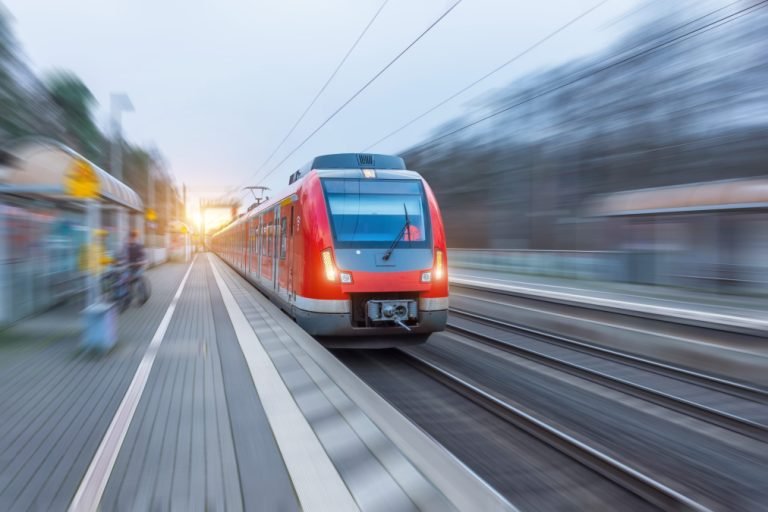
NEW DELHI (Metro Rail News): The Indian Railway is going through a dynamic period of growth, with new advancements providing world-class freight and passenger transit services. The achievements include moving toward greater mobility on the high-density network (HDN) and highly used network (HUN) as per the National Rail Plan to comply with the Indian Railway’s Vision 2024 with 100% railway electrification to meet carbon neutrality by 2030, improving capacity by integrating Automatic Block Signalling with Traffic Management systems (TMS/CTC) by raising sectional speed and increasing overall safety by eliminating manned level crossings.Implementing technology solutions such as safety enhancements, infrastructure upgrades, train operations effectiveness, passenger experience movement, and organisational capability enhancement will be essential for Indian Railways to move closer to world-class railway operations. Allowing Foreign Direct Investment (FDI), Public Private Partnership (PPP), and Private Operations of Passenger and Freight Trains for its current asset monetisation is integral to revamping the Indian Railways infrastructure through technological improvement. There are many technologies which are now changing the landscape of the Railways & Metro Projects globally. The few most prominent technologies are discussed as under:
- Cyber Security: Cybersecurity is becoming more relevant than ever. Cyber threats are increasingly targeting railway systems and operators. The primary function of cyber security is to protect the devices, systems, and services we use – both online and at work. Ticketing, freight operations, train operations, and asset management are just a few potential applications. All of these systems are vulnerable and require security. Recognised IT industry standards must establish cyber security measures. This would entail developing best practices for protecting critical infrastructure from cyber attacks, establishing an emergency response system to reduce the application’s vulnerability to such threats, and developing a policy/mechanism to ensure adequate measures. Although Indian Railway IT programmes have been created with suitable security safeguards based on these basic principles, recent worldwide cyber attacks illustrate that we can never be complacent.
- The digitalisation of the Ecosystem: The integration of digital technology into all elements of a business, radically changing how you operate and give value to clients, is known as digital transformation. It also necessitates firms constantly challenging the existing quo, experimenting, and modernising their operations to keep up with changing times. Coach design, signalling and traffic control, freight management, train services, personnel management, and customer management all use digital technologies. Railways and metro projects are fully embracing digitalisation in their entire system, including digital project planning, BIM engineering, digital twin models, better passenger safety, predictive maintenance, data analytics for management, and system modernisation.
- Contactless Travel: Pandemic made contactless travel essential for all travellers. QR codes are embedded in the new contactless tickets. The QR code is generated and delivered to passengers who order their tickets online or at the counters, and it is sent to the passengers’ mobile phones. At the station, the codes are scanned, and the information is updated and confirmed against the database. To make passenger commutes easier and safer, the system uses QR code-enabled tickets on handheld devices and mobile phones at stations and aboard trains.
- Green Energy: As a prominent user of energy resources, Indian Railways need to identify cost-effective energy system choices with the most negligible environmental impact. Railways have proposed to use its unused vacant railway land to build land-based solar plants on vacant and unused land parcels and along railway tracks. Railways are trying to become the world’s largest Green Railways and to become a ‘net zero carbon emitter’ by 2030. Railways have started setting up solar plants in various locations and have been a pioneer in green energy acquisition. It has begun energy acquisition from various solar projects and has already commissioned additional projects on various Indian Railways stations and buildings.
- Artificial Intelligence: Railways are making use of artificial intelligence in a variety of ways. Customer experience, process optimisation, and asset upkeep are examples of how Artificial Intelligence technologies and techniques can help. In addition, artificial intelligence (AI) can aid in route optimisation, real-time train movement monitoring, crew development, optimising rail freight pricing, and boosting logistics chain integration. Railways strive to increase operational efficiency across its whole system by leveraging artificial intelligence and data analytics.
- Biometric Token System: The Biometric Token Method (BTS) is a system in which passengers travelling in the general carriage, where seats are not allocated, are handed a token around three hours before the train’s departure. The data is generally used to analyse crowd patterns and the number of individuals who utilise trains. The Western and Central Railways zones have inaugurated the Biometric Token System (BTS), which aims to simplify the procedure of boarding unreserved coaches.
- Driverless Train Operations: Driverless trains, also known as autonomous trains, run without human involvement and are monitored from a control station. The Driverless Train Operation (DTO) can increase train flexibility while decreasing human interventions and errors. It also contributes to an increase in the availability of coaches for service. The DTO service was installed on the Magenta Line in 2020, bringing the Delhi Metro into the elite league of the world’s 7% Metros that operate fully automated metro networks. In addition, DTO was recently introduced on Delhi Metro’s 59-kilometre-long Pink Line (Majlis Park to Shiv Vihar).
- Head-on Generation (HOG) System: This method is available in End On Generation trains with power cars equipped with DG sets at both ends. The system is thought to provide coaches with a cost-effective, dependable, and energy-efficient power supply system. Implementing the HOG system in LHB coaches results in significant savings in diesel fuel consumption of power vehicles. In addition, railways have implemented an energy-efficient power supply system in which electricity is drawn from Over Head Equipment (OHE) via converters installed in electric locomotives (WAP-7/WAP-5) for coach AC, lighting, and fans, among other things. This saves money on electricity use as well.
- LiDAR Technology: LiDAR is a light detection and remote sensing technique that measures distances to a target by using light in the form of a pulsed laser. The ground survey is essential for any linear infrastructure project since it offers precise details about the areas surrounding the alignment. For its projects, National High-Speed Rail Corporation Limited is using Light Detection and Ranging Survey (LiDAR) technology, which offers full ground features and data. Furthermore, NHSRCL has been tasked with preparing detailed project reports for seven (7) high-speed rail corridors, and the LiDAR survey technique will be employed for ground surveys in all of them.
- Online Monitoring of Rolling Stock (OMRS): OMRS monitors the health of each piece of rolling stock and detects faulty bearings and wheels. A real-time alarm is generated to allow corrective action before the rolling stock’s line failure. The Indian Railways is expanding the use of these maintenance technologies to achieve predictive maintenance. Indian Railways has adopted OMRS, comprising the following subsystems: Before reaching the state of the hot box, the Acoustic Bearing Detector (ABD)/ Bearing Acoustic Monitor (RailBAM) provides an early warning on any faults in the bearing box. The Wheel Impact Load Detector (WILD)/Wheel Condition Monitor (WCM) device measures wheel impacts on tracks to assess the flat surface of Rolling Stock wheels. The wheel impacts are measured using an accelerometer device in this system. The PhotoTAG system employs a visual (photographic) identifying technology for vehicle identification.
- Virtual & Augmented Reality: Using virtual reality (VR) and augmented reality (AR) to study across many technology platforms that overlay data and graphics on the physical world adds a new dimension to trains. The interactive presentations of AR/VR and allied technologies disturb the order to acquire, create, store, and make the most effective use of data. For example, augmented reality is now being used in India, where new software allows travellers to book their tickets while examining the coach and seats, as well as their excellent minds and comfort.
- Connected Mobility: E-mobility technologies are already transforming India’s transportation network. Railways are making it easy for customers to travel by metro and train. The primary purpose is to keep connected and up to date with their life, as well as to make travelling easier for travellers and to plan their excursions from door to door. People can connect their lives and go from one location to another using a single standard solution or standard mobility card.
- 3-D Printing: This technology is derived from additive manufacturing, and the level of 3D printing has significantly increased in recent years. As a result, the training industry is increasingly resorting to 3D printing. The technology will lower their production by up to 95%. This technology aids in the visualisation of designs before manufacture. Also, some of the spare parts necessary are no longer manufactured, and because the batch size is small, it makes no economic sense to request that they be manufactured. As a result, 3D printing can play an essential role in producing spare parts. More and more companies in the railway industry are using 3D printing technology in their manufacturing and maintenance activities, potentially transforming the railway industry.
- Drones: Drones can be used to monitor the progress of a project’s construction and development. A drone is a flying robot that can be controlled remotely using software-controlled flight plans incorporated into its system and GPS. Drones use cutting-edge technology such as infrared cameras, GPS, and lasers. It will also be controlled by a remote ground control system (GSC), among other things. These drones can also be utilised for various railway activities, such as track and infrastructure maintenance. Drones are currently being used in India to monitor railway construction, assist in crowd management, and oversee maintenance work across its zone. It is also used to assess the readiness of non-interlocking (NI) works, manage crowds at fairs, identify scrap, and conduct aerial surveys of station yards.
- Cyber Security: Cyber security depends entirely on consulting, with agencies and businesses receiving standard-based cyber security services. The railway sector is urged to digitise and transition from electromechanical to digital IP-enabled technology. Cyber-security can be used to safeguard railway data systems from being hacked and to prevent their vulnerability. This means that railway communication systems are being strengthened in terms of security, and new technology and process measures are being deployed. Cyber security becomes an essential component as the railway industry implements new technologies. It demands the railway community be open to new Cyber security measures. Such approaches are now being studied in India’s railways and metro sectors.
- Geographic Information Systems: A geographic information system (GIS) is a system that is used to design and display various sorts of geographic data. GIS is used to map numbers and densities, find what is within and nearby, and map change. Its accuracy is also affected by the data source. Digitisation is the most popular way of creation. Railway operations encompass a large geographical area. All rail assets can be mapped to create the Indian Railways GIS Portal.
- Green Transportation: Global trends are gradually shifting toward greener modes of transportation, which impacts the railway business. These diverse trains are now being developed worldwide, and they include three essential components: hydrogen fuel cells in trains, engines, and liquidised gas. India Railways uses approximately 3 billion litres of fuel every year. Natural gas will replace a small portion of that, and increasing electrification is also a goal of the Indian Railways. This investment will aid in developing zero-emission, ultra-efficient, and cost-effective alternatives to trains.
- High-Speed Rail: This technology allows trains to travel much faster than current rail traffic by utilising an integrated system with specialist rolling stock and dedicated tracks. People would travel to distant destinations in less time, and the high-speed train will travel at an average speed of 320 kilometres per hour. NHSRCL is working on a high-speed railway corridor project that will span 508.17 kilometres. The Mumbai-Ahmedabad HSR line will cross two states, Maharashtra and Gujarat, and one union territory, Dadra and Nagar Haveli. Further developments, such as semi-high-speed corridors, are also being made.