Changing travel landscape through payment & ticketing innovations

Public Transport Ticketing System: An Overview

NEW DELHI (Metro Rail News): Ticketing is a tool for implementing a price strategy while keeping operational, commercial, and social goals in mind. The ticketing system converts fares into actual means of payment (for the passenger) and collects fares (for the operator).Several types of tickets are used in public transportation networks (ticket-based price discrimination). In other words, the price depends on the ticket type used. Ticket-based pricing discrimination is pure price discrimination. It makes little difference to an operator’s production costs whether a passenger uses a single ticket, a carnet, or a season ticket to make a trip. Indeed, it costs the same for the operator to transport a student, an older person, or a full-fare client. Differential pricing for such tickets is a strategy to segment the market and maximize income – “airline-style pricing.”In general, the following types of tickets are used in the public transportation network:
  • Single ticket: one journey (no time limit)
– Single Zonal ticket-Single Destination ticket
  • Single ticket: Several journeys within a limited duration
  • Single-mode / Single-operator ticket
  • Multi-mode / Multi-operator ticket
  • Return ticket
  • Multi-journey ticket (5, 10, 20)
  • Season ticket (day, week, month, year)
  • Value ticket (Pay-as-you-go)
  • Off-peak ticket / Night ticket
  • Combined ticket (ex: Park & Ride)
  • Group ticket / Family ticket
  • Special event ticket
Ticketing media include: 
  • Cash
  • Tokens
  • Paper tickets
  • Magnetic strip ticket
  • Contact-based smartcards
  • Contactless cards
  • Mobile ticketing
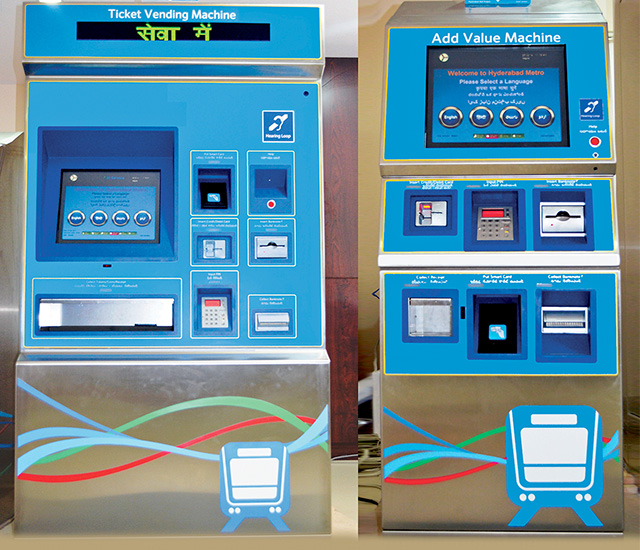
Onboard vehicles (typically only for single tickets), vending machines, counters, retail shops, the internet, via phone, or through affiliates are all possible sales outlets. Whatever the fare structure and payment scheme, the system’s usability is typically the most significant factor for the passenger. In this regard, harmonizing and unifying tariffs and tickets will make public transportation more accessible. An integrated ticketing system is one in which it makes no financial difference if a passenger needs to board more than one public vehicle to finish their journey. Fare integration encourages travellers to travel because public transportation is considerably easier to use and more accessible. Electronic Ticketing in Public TransportFour consecutive generations of ticketing systems coexist in the world today, sometimes even in the same city:
  • The oldest system of tokens or paper tickets is still widely used worldwide.
  • The magnetic ticketing system that was introduced in the 70s can be classified into two categories: 
– Ticketing with automatic belt drive (the most common format)– Ticketing with a manual sweeping motion of the ticket by the passenger.
  • In the 1990s, contactless ticketing became popular. The technology has numerous advantages and rapidly supplants the other two ticketing methods. Some public transportation systems are replacing their first ticketing-generating system with a contactless one, bypassing the magnetic ticket-generation stage. Contactless ticketing communicates between the card and the validation device via Radio Frequency Identification (RFID) or Near Field Communication (NFC) technology.
  • Mobile ticketing systems rely on the passenger’s mobile phone to pay for travel expenses. SMS (short text message) or mobile barcodes are used to issue mobile tickets. First, the ticket is selected by sending an SMS to the background system, either with a designating text or to a specific phone number for each conceivable ticket. The user is then sent an electronic ticket through SMS. Users can also use mobile phones to purchase tickets like they can with contactless smartcards by embedding RFID technology inside the device’s battery casing.
In public transportation, e-ticketing systems are more than just payment methods; they also process massive amounts of data, opening up many possibilities for making public transportation easier to use, administer, and regulate. They also provide chances to construct integrated pricing structures that are difficult to achieve with traditional payment methods. The payment method used for electronic ticketing systems is categorized. The closer the card is to the payment system, the more reliable the transaction, but the more limited the user’s options. As a result, the long-term goal is for customers to be able to pay for public transportation without showing or validating any card, depending on entirely automatic fare payment systems. In this context, the following ‘distance range’ possibilities can be differentiated:
  • Contact-based technologies are mainly based on standardized communication between user devices (only memory or smart cards) and access systems according to the ISO 7816 standard.
  • Proximity technologies are often based on contactless communications according to the different sub-standards of ISO 14443, which results in theoretical transmission distances of about 10 cm. 
  • Vicinity technologies are related to ISO 15693 and usually cover transmission distances of up to 1m.
  • Long-range (or wide-range) technology combines inductive coupling with radio frequency data transmission and requires a battery in the user device (card). While the first communication technique activates the user device while entering a transport vehicle, the second provides contactless data transmission across all locations within the vehicle, including electronic access components at the vehicle’s ceiling. In addition, the system includes anti-collision measures to prevent electronic transactions from colliding, which would otherwise occur.
Multimodal Integrated Ticketing System Customers’ changing expectations have altered the way transit ticketing works. Tokens, smart cards, and mobile apps have replaced paper tickets worldwide. India, too, plans to build a cashless fee payment method that will function across all of the country’s public transportation networks and day-to-day retail payment systems. Approximately 80% of Indians have bank accounts, and approximately 845 million debit cards are in circulation. Customers will benefit from enhanced mobility and a more seamless travel experience if old cards are replaced by National Common Mobility Cards (NCMCs). NCMC being an open-loop smart card, users also receive various rewards/loyalty points and cash backs. NCMCs also follow the Reserve Bank of India (RBI) policy of processing near-field communication (NFC) transactions below a specific threshold value (currently INR 2,000) without requiring a personal identification number (PIN). Key Points for NCMC
  • Bank-issued standard and secure payment method based on dual interface and EMV+ standard.
  • Service area (reserved space) on the card for storage of passes and last-tap information.
  • Common payment standard, applicable for prepaid/debit and credit cards.
  • Provision of stored value (money) cards which can be accessed offline and speed up transactions.
Major EcosystemsThe multimodal integrated ticketing system is getting increasingly popular. Some of the famous and successful examples are cited as under:Singapore 
  • Policies have been drafted to have transit systems integrated with new commercial development.
  • The metro network is connected to the bus network.
  • TransLink enables the usage of a standard fare card across all modes.
Australia
  • The project is called the Australian Integrated Multimodal Ecosystem (AIMES).
  • Tap-and-go payments can be made through existing NFC-enabled cards.
  • Data on where and how people are moving is collected.
  • The connectivity of all modes of transport, including walking, is considered.
Key Considerations for PTOsCurrently, transit fare payment systems are dispersed across most Indian cities and are not cost-viable for public transportation operators (PTOs) and banks. Transit operators have recently recognized the necessity of developing a multimodal transit system that is compatible between cities. Thus, transit payments are gaining pace, and the concept of an interconnected multimodal transport ecosystem has gained hold in a few places thanks to innovative fare media that uses RuPay EMV card technology. All PTOs and banks must use the same technology. This will prevent PTO fragmentation and the implementation of non-standardized fare collecting. Standardization will also operate as a catalyst, lowering costs through economies of scale.To deploy a multimodal integrated ticketing management system, PTOs/transport authorities/the transit industry must address several essential factors.(i) Acceptance of transit cards issued by multiple issuing entities: Transport operators implementing NCMCs are enrolling a single issuing bank with 3-5 years of exclusivity to stabilize the system and provide the bank with an opportunity to make more revenue during this period. This strategy is cost-effective for PTOs since it allows the bank to submit a lower bid during the tendering process and split a portion of the profits with the transport operator as royalty income. Transport operators may require several onboard participants or accept NCMCs issued by other banks or PTOs when implementing an ITS. If transportation operators begin accepting transit cards produced by other issuing bodies, they will be responsible for paying the merchant discount rate (MDR) to cover the following:(a) Payment Scheme Switching Charges(b) Interchange Amount to the issuer(ii) Set-up of Acquiring Bank: The acquiring bank’s primary duty is facilitating an acceptance infrastructure. Because this is primarily a back-office activity, it is up to the operator to select an acquiring bank that minimizes operational costs while maximizing transaction efficiency. PTOs can investigate the following alternative possibilities for delivering integrated fare payment systems, which give a fundamentally different paradigm:(a) Common single acquiring bank: A fully connected and efficient ITS design would necessitate the appointment of a joint acquiring bank for the Special purpose vehicle (SPV) responsible for all acquiring transactions through the transit ecosystem for the entire state/region. In this situation, the SPV appoints a single acquirer bank to handle all ITS transactions, while multiple banks are authorized to issue scheme-specific cards to clients.(b) Transport operator-wise acquiring bank: Alternatively, each PTO might work with a different acquiring bank. Though the SPV will manage the ITS scheme, its obligations should be limited to planning, testing, certification, and specification issuance. While this allows individual operators operational independence, the overall scheme will only support smart card interoperability without an ITS.(iii) Blacklist Management: One of the most difficult challenges for transportation providers is conveying information about blocked cards to validators via the central scheme player. Aside from executing transit transactions, a system must be developed to transport the list of banned cards from the issuer bank to the central scheme, then from the scheme to the acquiring bank, and finally to the validators. The parties must also agree on the development of a risk management system.(iv) Revision in Settlement Process : The settlement procedure may be altered to account for the many parties, such as schemes, PTOs, issuing banks, and acquiring banks. It must cover the interchange cost, switching fee, fare transaction sharing fee, top-up fee, card issue fee, and other fees charged by PTOs and banks for transit and non-transit transactions.(v) Data Analytics: The vast amount and variety of data supplied by numerous transit sources are particularly important for service planning and management. This data is generated in real-time and can be used to plan future routes or implement new fare rules such as flat rates and integrated fares. This information can also be monetized.(vi) Management of Card Service Area: When a multimodal transportation system is implemented, one card will be used in several metro gates. While standard single-journey validations may work, the service area on the EMV card must be tailored to the PTO to issue different period passes. Passengers may utilize particular period passes to access metro services if such passes can be used for separate services. This could aid in the analysis of metro station trips.(vii) Merchant Discount Rate: The transport operator must consider the acquirer’s costs for host management, scheme fees, and interchange fees when determining the MDR.(viii) Non-Fare Box Revenue: Apart from transit revenue, PTOs may consider obtaining non-fare money from advertising on station premises and through the mobile app, branding of station names, over-the-counter/app-based selling of event tickets, and the allocation of parking spots to cab aggregators.Delhi Metro AFC GatesLatest Developments– India is about a decade behind in mass transit payment systems. Card-based payments have been deployed by several public sector enterprises, including Kochi Metro and Delhi Metro; however, they are ‘closed-loop’ payment instruments. Startups seek to change this by creating more open-loop payment cards that can be used in buses and metros, local stores, and auto-rickshaws. In addition, cities such as London, Dubai, and Hong Kong have created their own “mobility payment cards” that operate on an open-loop payment concept and have been in use for over a decade.– As India gradually restores public transportation, financial businesses such as CityCash and Chalo focus on mass transit payment products. While Covid-19 forced consumers to buy everything from groceries to electronics to clothing online, cash remained the primary mode of payment for mass transit or public transportation systems such as buses, trains, and metro rail.– Payment firms are negotiating with state-owned bus corporations and waterways to mass-adopt NFC-enabled, ‘open loop’ prepaid cards for transit ticketing. According to industry estimates, more than 68 million commuters use public transportation daily.– Following the Reserve Bank of India’s notification permitting online payments even in places with intermittent internet access, mass transit payment startups can experiment with hitherto unrecognized concepts.– There is a vast market opportunity for open-loop payment cards in the bus ticketing space. Almost 200 million Indians use public transportation each year, with 70-80 million using it daily. However, the majority of these payments are done in cash. Since its launch in September 2019, CityCash has issued around 3 million cards to customers and is accepted in 20,000 buses in Maharashtra.– Chalo, a mass transit payment startup, approaches the mobility payment challenge from all angles. It provides payment gear such as an NFC-enabled point-of-sale device, a mobile app that tracks buses and routes in real-time, and an NFC-enabled prepaid card for offline transactions.– Chalo also provides an electronic bus pass that can be obtained through the Chalo smartphone app. It is now available in Indore, Bhopal, Patna, Guwahati, Kolkata, Thiruvananthapuram, Madurai, Vijayawada, and Udupi. The startup is also looking into accepting card-based payments from e-rickshaw drivers. It is also in discussions with the Kochi water transport authority about installing GPS in their water ferries and accepting Chalo cards.– A unified mobility card for Mumbai’s local trains, Metro Rail, BEST buses, and other means of transportation has been suggested for several years. There is anticipation that the project will get off to a good start this year. BEST is the first transport company in Mumbai to formally announce that its whole system is now compliant with the National Common Mobility Card (NCMC) and that an NCMC smartcard may be tapped on its portable machines for seamless travel in all AC and non-AC buses.– The Metro rail (Versova-Ghatkopar corridor) may soon follow, with its systems modernized and rendered NCMC-compliant. According to one official, in two months, a standard mobility card may be introduced at all entry/exit gates along the corridor. The Mumbai Railway Vikas Corporation (MRVC) has appointed a consultant to speed up the joint mobility card project, which is expected to begin soon.– IRCTC currently uses I-PAY as its in-house payment gateway. I-PAY permits purchases of the train, bus, and air travel tickets, as well as tour packages, through the IRCTC website and mobile app. This implies that IRCTC already has a user base that may be interested in using its payment gateway. Potential partnerships with retailers could broaden the reach of the railway PSU.– According to the IRCTC’s annual general meeting, as a payment aggregator, it will provide, promote, develop, create, and carry on the business of all sorts of electronic and virtual payment system services, payment gateway and aggregator services, prepaid and post-paid payment instruments, payment systems including open, closed, and semi-closed payment instrument systems in India and overseas.– The IRCTC gateway will also serve as a bill payment gateway, accepting payments for utility bills, levies, and municipal taxes by the Bharat Bill Payment System (BBPS) rules.ConclusionTo increase public transportation usage, communities should strive to make the ticketing system appealing and straightforward to grasp everyone. The price structure should be consistent and accessible, with sufficient tickets to meet the users’ needs. Fares should be straightforward to understand. Tickets and payment options, for example, should be publicly available.
  • At sales points distributed throughout the city
  • At ticket vending machines at various places (e.g. at park and ride stations, at central bus stops or in vehicles)
  • On the internet (e.g. subscription for intelligent card holders) • Via mobile phones Integrated ticketing and tariff policies between different public transport operators (e.g. local public transport and the national railway) should be offered to make tickets valid for all public transport modes and the whole region.
  • Via Mobile Phones
Multiple public transportation operators should supply integrated ticketing and tariff policies (e.g., local public transportation and the national railway) to make tickets valid for all modes of public transportation and for an entire region.Payment alternatives that are simple and appealing should be available. For example, innovative, intelligent card systems can be built and used for contactless payment of integrated fares. They may also play a significant role in public transportation marketing. Smart payments can also provide valuable data on user behaviour and mobility trends.

WB first Vande Bharat train to be flag-off by PM on 30th December

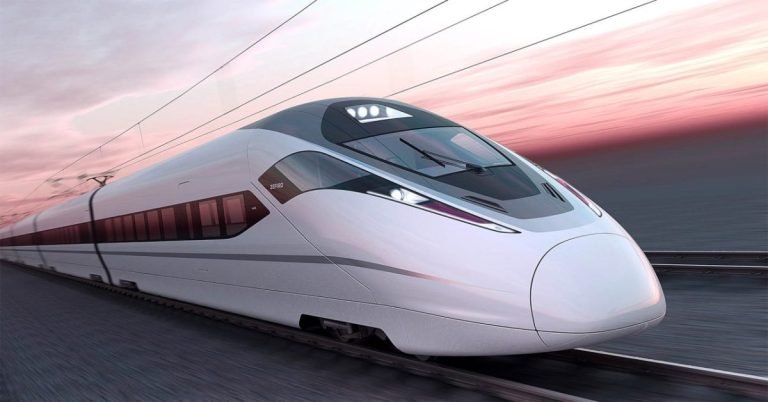
KOLKATA (Metro Rail News): On December 30, Prime Minister Narendra Modi will inaugurate a new Vande Bharat Express train that will run from Howrah to New Jalpaiguri, providing a second, speedier connection between the state capital Kolkata and northern Bengal. The PM is to visit Kolkata for a National Ganga Council meeting.The train is anticipated to travel faster than the current Shatabdi Express, which runs roughly 550 km between these two stations in just over 8 hours. A precise timetable is awaited.It will be the eighth Vande Bharat Express overall and the first in eastern India. The first semi-high-speed train Vande Bharat Express was launched in 2019. The finishing touches are being made to the parking and maintenance facilities at Howrah, the Indian railway station with the highest number of platforms.This train has more amenities and improved comfort compared to other similar trains. It can reduce travel time by 25% on some routes. 400 Vande Bharat trains with improved energy efficiency will be created and constructed in the next three years, according to an announcement by Union Finance Minister Nirmala Sitharaman in the budget for the current fiscal year.Automatic doors and Wi-Fi internet access are included on all coaches.

All you need to know about India’s Frist Hydrogen Train: Vande Metro

NEW DELHI (Metro Rail News): The Indian Railways are now manufacturing the Vande Metro train. The design would replace the design created in the 1950s and 1960s. Vande Metro will be the first hydrogen train designed and manufactured domestically. It would debut in December 2023.Hydrogen trains make very little noise and emit no pollution, emit just steam and evaporated water.Railways are designing, and the design should be available anywhere by May or June. It would be a world-class Vande Metro, a tremendous leap forward.The production of these Vande Metro trains in such vast quantities across the nation that it could replace the 1950s and 1960s designs.The middle class and the underprivileged can use Vande Metro. It is not only made for rich people.Rich people can always take care of themselves. So with Vande Metro govt.  especially focusing on individuals from the middle and lower classes who cannot afford it.Vande Metro would have a profoundly transforming impact on every Indian’s life. Indian engineers are designing it.The design process is already underway, and it should be able to roll out the first hydrogen train in the nation by December 2023.Governments and energy companies worldwide are betting on clean hydrogen to play a significant part in reducing greenhouse gas emissions. However, its uses in future and costs are still unknown.Germany was the first country that started operating hydrogen-powered trains for the first time in the world in August. These trains make very little noise and emit no pollution. It only emits just steam and evaporated water.

Better travel through improved Passenger Information System

NEW DELHI (Metro Rail News): A passenger information system (PIS) is a cutting-edge technology that offers tailored solutions for various traffic management and transportation systems. Furthermore, it enables consumers to be well-informed and use transportation networks in a more structured, intelligent, and safe manner. PIS intends to improve traffic quality by reducing congestion. This technology gives the user prior information regarding their travel, such as real-time bus/train running information, seat availability and traffic, and improves their safety and comfort.Traditional information systems, especially transportation, are being pushed to their limits in today’s fast-paced technology environment. Today’s public transportation systems rely on passenger information systems to offer real-time service and fleet status information. A properly working passenger information system is a valuable asset to any public transportation service since it provides a plethora of data that benefits not only commuters but also transit administrators, planners, operators, and supervisors. These technologies’ data is essential in developing a safer, more dependable, and seamless transit system that benefits everyone.Passenger Information SystemThe passenger information system (also known as the passenger information display system) is a digital information system that permits real-time observation, surveillance, and processability of passenger data. PIS can be implemented in a transportation company or operated via web-based browser applications or a specialised intelligent phone app. The Passenger Information System (PIS) can estimate arrival and departure times and assess delays and disruptions. The passenger information system is used in a variety of ways at various levels, as under:PIS at a bus stop or train station
  • It can be used to provide passengers with information and general advice
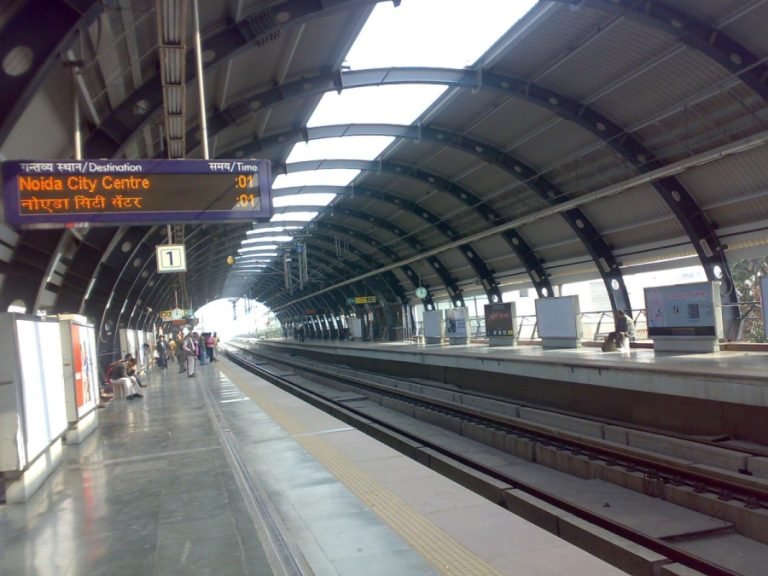
  • Display departure and arrival times
  • It can be used to display the following vehicle’s transport route and destination
  • It can be used to inform the waiting passengers about the expected arrival time of the scheduled bus or train.
PIS inside a bus or train
  • It can display advanced information like train numbers, number of stations covered, etc.
  • Used to display next or previous stops/stations
  • Information related to Wi-Fi, catering services inside the train, emergency contact numbers, etc.
  • Comparison between the scheduled arrival/departure time and the delayed time.
Key Benefits
  • Enhance Customer Satisfaction & Reduce Complaints: According to the most recent NRPS (National Rail Passenger Survey), train delays are one of the most prevalent complaints that TOGs or train operating groups receive. Several companies, including different forms of transportation, have reported a drop in complaints since implementing PIS services. Public transit systems can reduce passengers’ perceived and actual wait times by providing real-time departure and arrival information. Passengers can better plan their time if they discover a train is running late. They may, for example, depart later, tell work or the person with whom they’re meeting that they’ll be late, or make alternate travel arrangements. Passengers would rather know in advance that their train will be late than wait and wonder why it hasn’t come yet. It allows people to be more active with their time and make superior use of their time.
  • Better service usage: Passenger information systems can make travel more convenient and seamless. This could encourage many more individuals, whether first-time or repeat travellers, to use public transportation. For example, suppose a passenger obtains outstanding service from a travel firm due to quick service and a passenger information system. In that case, they are more likely to recommend the company to others. As a result, new business will increase through word of mouth. However, the global market for passenger information systems saw a steep decline due to the COVID-19 pandemic.
  • Improve planning schedule, Update primitive approach: The days of depending entirely on manually printed paper timetables or even the display boards in the station’s main entrance to advise passengers of the next train’s arrival time are long gone. These schedules were similarly predicated on the assumption that there would be no delays and that there would always be an acceptable amount of passengers on board. Passengers can view a real-time version of their train schedule using passenger information systems, allowing them to make immediate changes and better manage their time.
  • Awareness regarding the arrival time of trains/buses: Some public transportation systems are infamous for being late. This is especially undesirable for passengers who may be told about the delayed arrival of their bus/train and spend their time in a cafe or store instead of waiting at the stop/platform. Accurate real-time information allows tourists to plan their trips better and reduce wait times, resulting in a more enjoyable travel experience. Today, ridesharing companies such as Lyft and Uber are profoundly changing the transportation industry by creating intense competition.
They’ve already outsmarted the taxi industry and are attempting to supplant public transportation. Although the train and bus are quite distinct types of transportation, they both face competition from similar sources. Some passengers like the comfort, dependability, and availability these ridesharing companies provide to their consumers. To keep up, government public transit agencies must upgrade their transportation networks. In addition, their passengers must act appropriately and be aware of potential delays. PIS systems can assist these organisations in improving their services.Integrated Passenger Information SystemThe Integrated Passenger Information System (IPIS) is a computer-based single control and data entry system that provides audio and visual information to passengers via a PC-based announcement system and various Train Indicator Boards that span the entire station and have the capability of networking and operating from a centralised location. As a result, this system is more convenient for both the operator and the passengers.Passengers get all train-related information via the Passenger Information System (PIS), which includes the Interactive Voice Response System (IVRS), Pre-recorded Announcement and Auto Announcement System, Train information display, Coach navigation display, and so on.Components / System ArchitectureThe IPIS consists of the following units/subsystems :
  • Central Data Controller (CDC)
  • Platform Data Controller (PDC)
  • PC-based Announcement System
  • Platform Display Board (PDB)
  • Multi-line Display Board (MLDB)
  • At-a-glance display Board (AGDB)
  • Coach Guidance Display Board (CGDB)
  • LED/LCD Display
Central Data ControllerThe CDC Rack is often mounted at the railway station’s enquiry in a 19″ 42U rack with correct earthing. It is made up of two CPUs (PCs) that are linked by a Central Data Switch (CDS) for data synchronisation. A Keyboard-Video-Mouse (KVM) switch connects one 17″ (minimum) colour LCD/TFT display. An audio/video selection device with a speaker and microphone is provided for live announcements. The properly isolated audio output provided by the A/V selection device can be linked to the audio amplifier of the public address system. It also supplies video signals for the PIS’s LED/LCD. Both CPUs are pre-loaded with the required software, having options for data entry for train no., timetable of trains, and PF. No., and expected arrival/departure time, among other things.The database, such as train information, text messages, pictures, etc., can be uploaded from the CDC to the display board(s) via the display controller over the same communication channel used for train arrival/departure display boards.Central Data SwitchThe CDS is a Layer-3 Ethernet Switch that provides Ethernet connectivity for data transfer between the station’s CPUs and multiline display boards, platform display boards, and data controllers. It also links the IPIS system to the railway network and NTES port access.Platform Data ControllerPlatform Data Controllers control Platform and Coach Guidance Display Boards. The Platform Data Controller is built around a 32-bit microprocessor. The PDC routes data/instructions from the Central Data Controller to the downstream display devices and health/diagnostic data from the display devices to the CDC. Depending on the site requirements, the PDC unit receives data from the CDC via an optical fibre connection or copper Ethernet port and distributes it to the attached PFD or CGD. A single PDC can manage two platforms.PC-Based Announcement System
  • The system is Windows 7 or higher GUI based, wholly designed to announce all types of passenger-carrying trains via the crucial board.
  • Fixed audio messages are recorded in a soundproof studio with a minimum sample resolution of 16 bits.
  • Recording and playing back of new messages are only accessible from CDC utilising the microphone and speaker provided by CDC and the Windows standard sound recording tool.
  • There are three main types of announcements. one for a train coming on the platform, one for a train arriving and one for a train departing from the platform in English, Hindi, and a regional language. If the Platform No./Train No. Changes, the announcement can be updated.
Display Boards Platform Display BoardThe Platform Display Board shows the train schedule for that platform’s arrival/departure, including the train number, name, and time of arrival/departure. PDB should be hung from the platform’s roof in appropriate locations on platforms/foot-over bridges.Multi-line Display BoardThe MLDB displays the train number, name, arrival/departure time, and platform number. In addition, it displays information from numerous trains at the same time. Major stations should have two separate display boards for arrival and departure, but minor wayside stations can have a single display board that displays arrival and departure information. The multiline display boards should be positioned at the station’s main entrance/concourse and platform display boards at appropriate locations on platforms/foot-over bridges.At-A-Glance Display BoardThe information about the train arriving/departing from that platform and the coach composition is displayed by AGDB. AGDB is generally installed at the main entrance, footbridge, or station.Coach Guidance Display BoardFor passenger guidance, CGDB displays the Train Number and Coach Number of the train scheduled for arrival/departure from that platform. When there is no train on the platform, the screen displays either the station code or the zonal railway code, or it can be left blank. Both sides of the coach guide display boards must have displays.Geographic Information System The Indian Railways owns a considerable number of assets, including land, which must be adequately monitored, managed, and maintained. As railway operations have broad geographic coverage across the country, GIS mapping of various assets on Indian Railways can be utilized to enhance asset management.All Indian Railways assets will be mapped, and the data will be used to build the Indian Railways’ GIS webpage. GPS-based mapping of Indian Railways assets, including land assets, is currently underway on a GIS platform. A Memorandum of Understanding (MOU) has been signed with the Centre for Railway Information Systems (CRIS) for that purpose, and CRIS is building this Application. Land plans of Indian Railways will be available for viewing superimposed on various types of Maps/Images in this Application. ISRO Bhuvan Platform satellite imagery/maps are being used for this. A Memorandum of Understanding (MOU) has been signed between the Ministry of Railways and ISRO to collaborate in several areas.Planning for enhancement/augmentation of various facilities such as new lines, doubling/multiple lines, traffic facilities, and others may well be done after creating a GIS portal. It would also assist in identifying the growth of new encroachments around a station and other regions by comparing Satellite Images from different times, which are updated at regular intervals by ISRO.GIS – DefinitionA Geographic Information System (GIS) is a system that connects elements such as buildings, trains, roads, and land parcels to the information to which they are related. GIS enables us to explore, analyse, query, interpret, and visualise data in various ways, revealing correlations, patterns, and trends through maps, globes, reports, and charts. It can also be used to plan and monitor projects by employing drone recordings at appropriate intervals and effective disaster management to provide prompt assistance/support during accidents/natural calamities.The Various Components
  • Infrastructure Development
  • Rail Yard Management
  • Safety & Security Management
  • Land Management
  • Environment Management
  • Disaster Management
  • Engineering, Drawing & Records Library
  • Asset Management
Asset ManagementA comprehensive GIS-based railway assets database is expected to give vital information throughout the asset’s life cycle, effectively managing these assets, maximising throughput, assuring safety, and avoiding disturbance/delays to traffic. With this in mind, Indian Railways is developing a GIS system to support several types of railway asset management, such as:(i) Track related assets, including bridges, tunnels, level crossing, etc.(ii) Communication and Signalling networks(iii) Electric Power Distribution networks(iv) Rail Yards and other Campus facilities(v) Land management(vi) Project planning, design and implementation monitoring(vii) Production Units & WorkshopsDisaster ManagementTime and input data availability are necessary for disaster management and rescue planning and implementation. Disaster Management System based on GIS: –(i) Helps in location of accident site and provides its accessibility information.(ii) Helps in finding out the optimum routes between resource locations and the accident site etc.(iii) Provides simple means of alarming the resources to initiate rescue operations.(iv) Provides continuous monitoring of rescue activities and facilitates dynamic planning of strategies.(v) Can also be used to build & update database of critical facilities such as hospitals, fire stations, police stations, etc(vi) Can integrate data from various sources into a common platform to make it readily accessible to various stakeholders.Passenger Information & FacilitationGIS-based applications will serve Indian Railways passengers in a number of ways, like live train movement information and 3D mapping of all stations, allowing passengers to search for, visualise, and navigate to desired areas on the stations. Decision Making & PlanningA Geographic Information System (GIS) and a Geospatial database of IR assets and facilities would reduce the amount of human effort required to obtain geographical information and would play an important role in improving decision-making capacity, efficiency, and long-term management of Railway assets. ConclusionThe passenger information system is used to deliver real-time information on public transportation to passengers. These details are provided by automated vehicle positioning systems. For improved data transfer, the transportation industry has absorbed some major advancements from the telecommunications industry, such as cloud and big data technology. This adoption has made it easier for passenger information systems to perform properly and deliver reliable real-time transportation information to passengers.The operational procedures of passenger information systems are complex, owing to the integration of many components. These components raise the overall installation cost of the passenger information system. These significant factors are expected to stifle market expansion in the near future. Furthermore, the scarcity of experienced staff to operate these systems is another notable factor that is expected to limit market expansion.

Ahmedabad’s Rapidly Expanding Metro System: Connecting the City and Beyond

AHMEDABAD (Metro Rail News): The Ahmedabad Metro system is built for rapid transit in the Ahmedabad City of Gujarat. Through the two-phase plans, Ahmedabad metro route will eventually connect the urban city Gandhinagar and the modern GIFT city. The Ahmedabad Metro is considered to be India’s eighth-best metro system. As per the planned routes for the Ahmedabad Metro, two lines with 32 stations will be completed during Phase 1, and two lines with 22 stations will be built during Phase 2.

Objective

The Ahmedabad Metro was constructed to improve commuter convenience and lessen traffic on congested roadways. The goals of the Ahmedabad Metro are as follows: –
  • Offers safety to commuters while travelling.
  • Affordable transportation to the commuters. The metro smart card with a 10% discount offer.
  • Reduce traffic and travel times on the roadways.
BackgroundThe 6.53 km (4.0 mi) long Ahmedabad Metro route between Vastral Gam and Apparel Park opened for service on March 6, 2019. The six stations along the East-West Corridor are currently operational of the Ahmedabad Metro The remaining portions of Phase 1 of the Ahmedabad Metro will become operational in October 2022. In January 2021, work on Phase 2 of the project began. Phase 2’s first line, which connects GNLU and GIFT city, is anticipated to be operational in the first half of 2024.  The highest speed of the operational metro and planned metro trains is 80 km/h (50 mph), with an average speed of 33 km/h (21 mph). 

System Information

 Top Speed: 80 kmphAverage Speed: 33 kmphTrack Gauge: Standard Gauge – 1435 mmElectrification: 750 V DC Third RailSignalling: Communication-based Train Control (CBTC)Ahmedabad Metro Route Map

Key Figures


Operational: 37.86 km (Phase 1) | Under Construction: 21.42 km (Phase 1, Phase 2) | Approved: 7.41 km (Phase 2)

Daily Ridership: 40,000 /day (October 2022)Rolling Stock: 96 coaches (32 train sets x 3) supplied by Hyundai Rotem

Route Map

Operational Lines of Ahmedabad Metro  (Phase 1)

Line-1 – Blue Line: Vastral Gam – Thaltej (19.38 km, 16 stations)Line-2  – Red Line: Motera – APMC (18.522 km, 16 stations)

Under Construction Lines of Ahmedabad Metro (Phase 1, Phase 2)

Line-1 – Blue Line: Thaltej – Thaltej Gam (1.4 km, 1 station)Line-2  – Red Line: Motera – GNLU – Gandhinagar Sector 1 (14.60 km, 13 stations)Line-3 (Eastern Spur of Line-2): Gujarat National Law University (GNLU) – GIFT City (5.416 km, two stations) Blue Line is also known as East-West Line. Red Line is also known as North–South Line.

Phase 2 approved lines 

Line-2 – Red Line: Gandhinagar Sector 1 to Mahatma Mandir (7.41 km, seven stations) 

List of Metro Stations

Eastern-Western Corridor (only six are operational, the rest are under construction). Soon, more stations will be operational for commuters.

Thaltej Gam, Commerce Six Road, Thaltej, Doordarshan Kendra, Gurukul Road, Gujarat University, Stadium, Shahpur, Old High Court (Interchange Station with North-South Corridor), Gheekanta, Vastral, Kalupur Railway Station, Kankaria East, Vastral Gam, Apparel Park Depot, Apparel Park, Amraiwadi, Sabarmati River, Rabari Colony, Nirant Cross Road.

Under Construction station of North-South Corridor

Motera stadium, AE6, Sabarmati Railway Station, Ranip, Vadaj, Vijay Nagar, Old High Court Interchange, Gandhigram, Sabarmati, Paldi, Shreyas, Rajiv Nagar, Jivraj Park, APMC, Usmanpura, Gyaspur (depot)

 Extension of North-South Corridor 

Motera stadium, Koteshwar Road, Narmada Canal, Vishwakarma College, Tapovan Circle, Koba Circle, Juna Koba, Koba Gam, GNLU, Randesan, Dholakuva Circle, Infocity, Sector-1, Sector-10A, Rayson, Akshardham, Juna Sachivalaya, Sector-16, Sachivalaya, Sector-24, Mahatma MandirGNLU- GIFT City Branch Corridor of Ahmedabad metro two stations under constructionPDPUGIFT City 

Interchange Station 

The Old High Court Metro Station, which serves as the intersection of the East-West and North-South Ahmedabad Metro route corridors, is the only interchange station you will pass through while travelling. An elevated Metro station still under construction is the Old High Court station. The Old High Court Metro Station’s amenities, nearby attractions, Ahmedabad Metro schedules, and details on the entry and exit gates are all available to commuters.

Fare 

The Ahmedabad Metro officials have provided an anticipated fare because the route is still substantially under construction.
  • The Ahmedabad Metro route’s first 2.5 km would cost Rs 5, and up to 7.5 km would cost Rs 10.
  • It will cost INR 10 to travel the first 6.5 km between Vastral Gam Metro Station and Apparel Park Metro Station.
  • The Ahmedabad Metro price will range from INR 5 to INR 15 for the 21-kilometre run from Vastral Gam to Thaltej.
  • The metro fare is INR 5 for the first to third metro stations, while the smart card fare is INR 4.5.
  • The metro fare increases to INR 10 after three stations, while the smart card fare is INR 9.

Fares terms and conditions

The permitted fares for travel on the GMRC network are as follows:Smart Card, provisional paper ticket (used when the AFC system fails) and Token.Only children under 3 feet (90 cm) tall on the Ahmedabad metro route are permitted with an adult. The purchased token will be usable on the business day of purchase. The working day shall be treated by the relevant Ahmedabad Metro revenue service hours.Only unused Smart Cards may be refunded within 30 minutes of the time of issue.The commuter is permitted to bring 25 kilos of luggage that cannot exceed 80 cm by 50 cm by 30 cm (length x width x height).

Timetable

Recent data indicate that the Ahmedabad Metro timetables are consistent daily. But occasionally, the last scheduled train departs at 5 pm on Sundays and weekends, and Ahmedabad Metro timetables can change. Because of the uncertainty of this information, one should double-check the timings before beginning their weekend excursion.From 10 AM until 6 PM, one can ride on the available Metro trains.According to Ahmedabad Metro timetables, it takes 12 minutes and 53 seconds to travel from Vastral Gam to Apparel Park. Going in the opposite direction takes about 12 minutes and 22 seconds.

Third-Party Audit

The Metro Railway Safety Commissioner (CMRS) has requested an external audit. The Commissioner requested confirmation of the Ahmedabad metro’s structural strength and the quality of the tunnel and viaduct. Piers of the elevated metro segment also opened on September 30. The authority has already completed one level of auditing and discovered numerous flaws, including failing to protect piers from possible train derails in a part that crosses a railway line. The Commissioner requested the Gujarat Metro Rail Corporation to take the correct action. As part of Gandhi Jayanti, the North-South and East-West corridor routes have been opened since October 2, 2022. One of the measures is limiting the Ahmedabad metro’s top speed in some areas to 45 kph.

Ahmedabad Metro Frequency increased by GMRC.

The Ahmedabad metro’s frequency has increased by GMRC (Gujarat Metro Rail Corporation). This modification applies to corridors with heavy passenger traffic.Passengers responded enthusiastically to the Ahmedabad Metro’s North-South and East-West corridors, especially on weekends. GMRC once ran metro trains every 30 minutes. However, the GMRC altered the timings from 30 to 15 minutes due to the heavy passenger traffic throughout the Diwali holidays.The Ahmedabad metro timetable from 9 AM to 8 PM won’t alter, according to a senior GMRC official, as these hours are set for metro train drivers. The frequency change from 30 min. to 15, 18, or 20 min. Must remain consistent to account for traffic changes.Within 23 days of opening, 6.39 lakh passengers passed via the Ahmedabad Metro’s East-West corridor. Likewise, 2.25 lakh passengers passed through the North-South route 18 days after it opened. This indicates that 8.64 lakh passengers used the GMRC’s East-West and North-South corridors. Additionally, it brought in Rs 1.37 crores in revenue for the city.

Contractors

  • Hyundai Rotem has produced 96 rolling stock coaches for the Ahmedabad Metro route.
  • Nippon Signal Co. Ltd. of Japan created the signalling system.
  • Apparel Park Depot’s contractor was URC Cooperation.
  • Gannon Dunkerly – PSPO JV obtained the contract from Gyaspur Depot.
  • Kumar Infraprojects has constructed the Moving forward, Vastral Gam – Apparel Park Viaduct (6-kilometre).
  • Vastral Gam, DRA, and CICO JV constructed Apparel Park (6 Stations).
  • Tunnels & 2 Stations of 2.45 km from East Ramp – Kalupur is attributed to Afcons Infrastructure’s construction.
  • Larsen & Toubro construct the Tunnels & 2 Stations of 4.38 km from Kalupur – West Ramp.
  • Tata Projects – CRCC JV completed the Viaduct & 7 Stations of 8.21 km from Thaltej Gam – West Ramp.
  • Simplex Infrastructure built the Viaduct and 6 Stations for the 8.94 km Shreyas-Ranip route.
  • Ranjit Buildcon built the 4.85-kilometre Motera-Ranip Viaduct.
  • Ranjit JV has constructed Motera – Ranip (5 Stations). Pratibha
  • Tata and CCECC Joint Venture completed the 8.21 km, Thaltej Gam to West Ramp (Viaduct, Sabarmati Bridge, and seven stations).
  • Siemens India -Siemens AG, Germany, provides the electrification.
  • Nippon Signal Co. Ltd, Japan, assists with the automatic fare collection system.

Updates

India’s Prime Minister, Narendra Modi, inaugurated the first phase of the Thaltej to Vastral section of the Ahmedabad Metro Rail Project on September 30, 2022. The PM left the Gandhinagar railway Station and arrived at the Kalupur Station in the brand-new Vande Bharat Express train 2.0.After the inauguration of the Ahmedabad Metro, the state department of urban development has begun creating an action plan for prospective metro connectivity in Ahmedabad neighbourhoods. The prime minister instructed the government to plan metro connectivity to the outlying areas. Work for mapping services has begun with the goal of mapping every area in the city’s eastern and western halves. SG Road, SP Road, and other places are only a few where the Ahmedabad metro could be added.The public could now use the 21-km section of the Ahmedabad Metro project between Thaltej and Vastral as of October 2. The proposal also includes a 6.6 km underground portion with four stations, according to the GMRC (Gujarat Metro Rail Corporation).On October 6, 2022, Gujarat Metro began commercial operations. The length of this corridor is roughly 18.87 kilometres. It is also referred to as the North-South Corridor. This line is fully elevated.With the opening of the Ahmedabad metro, India’s metro network surpassed Japan in terms of the functional length of the metro network in India. India now has 810 km of metro rail network overall. India now has 982 Km of metro rail routes under construction in addition to the operational network. India will surpass South Korea and the USA after this construction is finished. The length of this corridor is roughly 18.87 kilometres. It is also referred to as the North-South Corridor. This line is fully elevated.With the opening of the Ahmedabad metro, India’s metro network surpassed Japan in terms of the functional length of the metro network in India. India now has 810 km of metro rail network overall. India now has 982 Km of metro rail routes under construction in addition to the operational network. India will surpass South Korea and the USA after this construction is finished.On March 4, 2019, the PM inaugurated a 6.5 km section of phase 1 that connects Vastral to Apparel Park. In 2014, approval for the Metro Rail project was given.According to GMRC, Phase 2 of the project will link Ahmedabad with Gandhinagar. It will primarily involve phase 1’s extension. Two corridors are anticipated: one from the 5.4-km route with two stations from Gujarat National Law University to GIFT City and the other from the 22.8-km stretch with 20 stations from Motera Stadium to Mahatma Mandir. Phase 2 of the project’s route will be completely elevated.Phases 1 and 2 are each expected to run for 40.03 and 28.26 kilometres, respectively. Six stations from Phase 1’s first section have already been built and are functional. Phase 2 and the remaining portion of Phase 1 are still under construction. A Blue Line designates the Ahmedabad Metro route’s East-West Corridor, the North-South Corridor by Red Line, and the GNLU-GIFT City Branch with a Purple Line.The GMRC (Gujarat Metro Rail Corporation) managed the Ahmedabad Metro Rail Project. GMRC was established to oversee the construction of Gujarat’s metro rail due to a government initiative to develop the metro in Gujarat.

Feasibility studies for some routes of Diamond Quadrilateral undertaken

NEW DELHI (Metro Rail News): Ministry of Railways has undertaken feasibility studies for some routes of the Diamond Quadrilateral, namely Delhi-Mumbai, Delhi-Kolkata, Mumbai-Chennai, Mumbai-Nagpur and Chennai-Bengaluru-Mysuru.Further, the Survey and preparation of a Detailed Project Report (DPR) for the following Seven (7) HSR Corridors have been undertaken:-
  1. Delhi-Varanasi
  2. Delhi- Ahmedabad
  3. Mumbai- Nagpur
  4. Mumbai- Hyderabad
  5. Chennai-Bengaluru-Mysore
  6. Delhi- Chandigarh-Amritsar
  7. Varanasi-Howrah
However, being highly capital intensive, the sanction of any High-Speed Rail Project depends on several factors such as technical feasibility, financial viability and availability of financing options etc.Till now, Government has sanctioned only one project of High-Speed Rail, namely the Mumbai-Ahmedabad High-Speed Rail (MAHSR) Project, with the technical and financial assistance of the Government of Japan. A Special Purpose Vehicle (SPV), National High-Speed Rail Corporation Limited (NHSRCL), has been formed to implement this project. The present status of the Mumbai-Ahmedabad High-Speed Rail (MAHSR) project is as under:-
  1. The Final Location Survey and Geotechnical investigation were completed. Alignment finalized.
  2. Statutory Clearances relating to wildlife, Coastal Regulation Zone (CRZ) and Forest clearance obtained in Gujarat.
  3. Out of total land requirement of approx. 1392.6 ha, 1374.2 Ha of land has been acquired.
  4. The project work has been divided into 28 Contract Packages, including Training Institute at Vadodara. Currently, 19 packages have been awarded, 01 is under evaluation, a Notice Inviting Tender (NIT) has been published for 03 packages, and for the balance of 5 packages, NIT is yet to be published.
  5. Out of a total of 352 Km length of projects located in Gujarat and Dadra & Nagar Haveli, Civil works in 352 Km length have started in different phases from December 2020 onwards. By the end of November 2022, out of a total of 352 km elevated viaduct, approx.  212.3 km of piling, 129.2 km of foundation, 113.3 km of the pier, and 14 km of the superstructure have been completed
  6. 1596 out of 1651 utilities have been shifted.
This information was given by the Minister of Railways, Communications and Electronic & Information Technology, Shri Ashwini Vaish, in a written reply to a question in Lok Sabha today.

About 80% of reserved Railway tickets are being booked online

NEW DELHI (Metro Rail News): The digitalisation of railway services and databases is ongoing. The Information Technology applications of Indian Railways cater to transportation services (passenger and freight), fixed infrastructure (project, operations and maintenance), Rolling stock (manufacture, operations and maintenance) & resource management (finance, materials and human resources).The digital initiatives and on-ground services are seamlessly integrated through well-documented instructions and manuals. Training of staff is also organised on a need basis.Regular campaigns are organised for the rural and urban populations to create awareness for digital initiatives through various media. Online ticketing through mobile and website is available globally. About 80% of reserved tickets are being booked online. Mobile applications on various platforms are also available for booking reserved and unreserved tickets and providing other railway services.This information was given by the Minister of Railways, Communications and Electronic & Information Technology, Shri Ashwini Vaishnaw, in a written reply to a question in Lok Sabha on 21st December.

Govt. requests Metro Rail Corporations to register for carbon credits

NEW DELHI (Metro Rail News): The Union Ministry of Housing and Urban Development has requested metro rail corporations to register for carbon credits for the government’s goal to reach net zero carbon emission status.The development occurred when the parliamentary housing and urban affairs standing committee recommended that the government put pressure on metro rail corporations to register for carbon credits.A carbon credit is a tradable permit or certificate granting the right to emit one tonne of carbon dioxide or the equivalent amount of another greenhouse gas.In a recent report detailing the government’s response to the committee’s recommendations, the ministry said that registering for carbon credits is only encouraged, not required, for metro networks.“M/o Housing and Urban Affairs has requested metro rail corporations, who have not yet registered for carbon credits, to explore economic benefits of registration,” the ministry quoted to the panel.The committee has said that being the nodal ministry for metro operations, the housing and urban affairs ministry can do much more. For example, the upcoming metros can be persuaded to register carbon credits to lower GHG (greenhouse gas) emissions.“The committee, therefore, recommends the ministry to make GHG emission mandatory for all upcoming metros, apart from persuading metros in operation,” it said.The committee noted the fact that several metro projects had registered for applications to reduce greenhouse gas (GHG) emissions under the UNFCCC’s Clean Development Mechanism (CDM) and the Gold Standard Registry (GS).The Delhi Metro has reported earning 4.4 million carbon credits through CDM and GS projects. In contrast, Kochi and Lucknow’s metro rail corporations have stated that the registration for carbon credits is in progress. The standing committee stated in its report that Nagpur Metro would apply for it following the project’s commissioning. On the other hand, Bhopal and Indore have informed us that their stations and depot are being planned or designed for India Green Building Council (IGBC) Platinum rating, leading to carbon credits in due course.According to the committee, since several metros are either using or planning to use renewable energy to a considerable extent to meet their requirements, the committee feel that it is essential to ensure that all these metro rail networks are registered for carbon credits so that they earn benefits for being environmentally friendly.The panel said that as the registration for carbon credits is not mandatory, several metro networks have not yet registered for it.

5 bidders emerge for General Consultant contract of Hyderabad Metro Airport Line

HYDERABAD (Metro Rail News): Five consortia have submitted pre-qualification bids for the General Consultant contract on the Airport Express Line of the Hyderabad Metro, connecting ten stations between Mindspace Junction and Rajiv Gandhi International Airport.The Telangana Government will provide funding for this 32 km semi-high speed rail line of the Hyderabad Metro Phase 2 project, which will be executed by HAML (Hyderabad Airport Metro Ltd). On December 9, 2022, Telangana’s Chief Minister laid the foundation stone.Hyderabad Airport Metro Ltd. (HAML) invited expressions of interest (EOI cum RfQ) on December 1, 2022. They anticipate that the allocated consultant will work with them for 36 months and help with design, supervision, safety, quality control, and contract management to execute this line quickly.

Bidders are as follows:

  • AECOM India + Egis Rail (France) + Egis India
  • Ayesa (Spain) + Nippon Koei (Japan) + Aarvee Associates
  • Consulting Engineers Group + Korea National Railway(South Korea)
  • Systra (France) + RITES + DB Engineering (Germany)
  • TYPSA (Spain) + PINI Group (Switzerland)
Now each of the five applications will be evaluated. Finally, the Request for Proposal (RfP) papers for the next stage of the bidding process will be issued to qualified consortiums in the upcoming months.This mostly elevated route along the Outer Ring Road (ORR) at the airport inside Hyderabad Aerocity will travel 2.5 kilometres underground. It is anticipated that it will take 20 minutes to travel from Gachibowli in the city to RGIA, with trains moving at a top speed of 120 kmph.TS Police Academy, Rajendranagar, Shamshabad, Bio-Diversity Junction, Nanakramguda, Narsingi, Manchirevula, Airport Cargo station, and RGIA Terminal are some of the stations on the route.

MMRCL invites applications for various position

MUMBAI (Metro Rail News): Maharashtra Metro Rail Corporation Ltd. is seeking applications from qualified and experienced candidates of Indian Nationality for various positions of Manager, Station controller, and Junior Engineer for different projects in Metro, Railway, PSUs, Govt. Organizations, PSUs/ Metro Related Infrastructure Industries in Nagpur Metro Rail Project, Pune Metro Rail Project, and Navi Mumbai Metro Line-1.According to Maharashtra Metro Rail Recruitment’s official notification, there are 18 vacancies for these positions. The last date for the application is 3rd January 2023.Nagpur Metro Rail
Project Name- Nagpur Metro Rail
PositionsVacancies
General Manager1
Manager (Transactions)1
 Navi Mumbai Metro
Project Name- Navi Mumbai Metro
Post NameVacancies
Senior Deputy General Manager1
Deputy Chief Project Manager1
Depot Controller3
Station Controller1
 Pune Metro Rail
Project Name- Pune Metro Rail
Post NameVacancies
Deputy Chief Project Manager1
Deputy Chief Project Manager (Electrical)3
Manager (Property Development)1
Manager (AFC)1
Manager (Civil)1
Assistant Manager (Telecom)1
Junior Engineer (Civil)1
 
To learn more about the vacancy, log on to Maharashtra Metro Rail Official Website.

NCRTC Organises Community Awareness Program in Partnership with ADB Under JFPR initiative

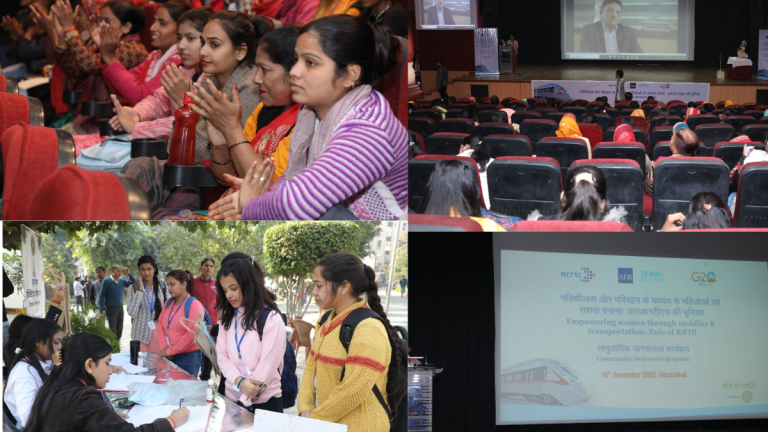
NEW DELHI (Metro Rail News): NCRTC organised a Community Awareness Program in Muradnagar, Ghaziabad. This program was conducted under the aegis of the Japan Fund for Prosperous and Resilient Asia and the Pacific (JFPR) initiative provided to NCRTC in conjunction with an ADB loan for the Delhi-Ghaziabad-Meerut RRTS project. The theme of this program was ‘Empowering Women Through Transport and Mobility’, with particular emphasis on the role of RRTS in such empowerment.The participants primarily comprised female students and women residing in nearby rural areas. NCRTC conducted a session to make them aware of various women-friendly provisions in RRTS and how India’s first Regional Rail will help empower them through improved access and increased opportunities apart from safe travel.Despite being a part of the National Capital Region, the people, especially women of this region, are often deprived of the professional, economic, social, and health-related opportunities and facilities offered due to the unavailability of adequate transportation. In addition, safety concerns often make it difficult for them to pursue their dreams and result in not only their loss but a loss of talent and resources for the country.RRTS, with a design speed of 180km/hr, would offer commuter transit services which would be safe, comfortable, and reliable and reduce the commuter journey time to one-third in the region. Furthermore, with an unprecedented focus on Multi-Modal-Integration, NCRTC is creating a vast network of networks by integrating RRTS stations with Railway Stations, Inter State Bus Terminals (ISBTs)/Bus Depots, Airport and Metro Stations, wherever possible, enabling seamless commuter movement.Commuter-centricity is paramount for NCRTC, so every RRTS train has a coach designated for women commuters. Stations and Trains will be monitored 24×7 through CCTV cameras. Trains will be operationalised through a Centralised Operation Control Room, and Platform Screen Doors (PSD) will be installed at every RRTS station. Trains will run only after both the train doors and PSDs are closed.The participants were zealous about the RRTS project, especially for having such safe, high-class services and appreciated the various efforts being made by NCRTC to ensure commuter comfort for regional travel. To address and provide solutions to the women’s safety concerns, a special session was conducted on the ‘Apps to use in distress situations’, primarily to assist safely in public transportation. The participants appreciated this valuable and informative session and applauded the team. Working professionals and students found it most beneficial, especially those who often have to travel alone at odd hours. Some other sessions on the benefits of Economic Empowerment, Microfinancing Opportunities and Benefits of Access to Health Services were also conducted at this community awareness program.NCRTC organises such community awareness programs from time to time to make people aware of India’s first regional rail and how it will unlock the region’s potential. It also encourages them to switch from their private vehicles and choose RRTS as a preferred mode of public transport once it begins its revenue operations.

Second Train of Mumbai Metro Aqua Line 3 will reach Aarey in next 10 days

MUMBAI (Metro Rail News): The second train of the Aqua Line 3  of the Mumbai Metro underground line has left the manufacturing unit in Sri City, Andhra Pradesh, and it is travelling 1,400 kilometres via road to Mumbai. The Colaba-Bandra-Seepz Line is another name for the underground line.In August 2022, the MMRC got a prototype rake and is currently conducting a trial run on one track between Sariput Nagar, Aarey, and Marol Naka stations. With the addition of the second rake, trail runs are now possible on both tracks of the twin tunnel.According to a Mumbai Metro Rail Corporation (MMRC) official, the rake with eight coaches will reach the facility centre at Aarey within the next ten days.The official added that it would be assembled there over the next 15-20 days and added to the fleet for trial runs.The MMRC would extend the trial run section till Sahar station once the crossover track is ready. The crossover track work is progressing, as per the official.

Anil Kr. Lahoti appointed as Member (Infrastructure), Railway Board by Ministry of Railways

NEW DELHI (Metro Rail News): Shri Anil Kumar Lahoti, a member of the IRSE (Indian Railway Services of Engineers) batch of 1984 and general manager of Western Railways was appointed as a Member (Infrastructure), Railway Board by the Ministry of Railways on December 17, 2022.Lahoti Post graduated from IIT Roorkee (erstwhile University of Roorkee) with a Master of Engineering (Structures).He has a wide range of railways experience. From 1988 until 2001, he worked for the Central Railway in various positions in the divisions of Nagpur, Jabalpur (now on the West Central Railway), Bhusaval and Central Railway headquarter.Additionally, he has held positions as Railway Board Chief Engineer (Construction), Officer on Special Duty to Member Engineering, Executive Director of Northern Railway (Track Machines), Railway Board and principal chief engineer of North Central Railway.He worked at Northern Railway as the Chief Administrative Officer (Construction).

Naveen Gulati promoted as a Member (Traction and Rolling Stock), Railway Board

NEW DELHI (Metro Rail News): S. Srinivas, an Indian Railway Service for Mechanical Engineering (IRSME) officer from the 1986 batch, has replaced Naveen Gulati and taken additional charge as General Manager of ICF. Mr Gulati has been promoted as a member (Traction and Rolling Stock), Railway Board.The President is pleased to approve the appointment of Shri Naveen Gulati, General Manager, Integral Coach Factory, Chennai, as Member (Traction & Rolling Stock), Railway Board and Ex-officio Secretary to the Government of India, in Pay Level-17 of IRMS.Mr Srinivas, ICF’s Principal Chief Mechanical Engineer, took charge as General Manager of ICF on December 17.Mr Gulati has experience in designing and production of Railway Coaches.