
Smart Technologies in Railways for Enhanced Transportation

The emergence of the Internet, which has been available not only to just a handful of corporate users but also to individual private users since the 1990s, has been a crucial driving force in digitisation. According to Global Digital Snapshot, there were over 4 billion internet users globally in January 2018, accounting for 53% of the world’s population. The advancement of web-based technology has significantly altered the communication patterns of corporations, organisations, communities, and individuals. As interactive Web 2.0 Internet-based applications, social media has emerged as a dominating medium for information sharing. The number of social media users driving the growth of other industries has surpassed 05 billion.

People-to-people (P2P), people-to-machine (P2M), and completely automated data exchange between machines (M2M) interaction patterns are all facilitated by hyper-connectivity. Cisco identifies the beginning of the Internet of Things (IoT) era as the point when the number of devices linked to the internet surpassed the world’s population, which was reported in 2009. When seen as an ecosystem, Internet of Things delivers new services through P2M and M2M interactions rather than improving internet accessibility.

The Internet of Things is quickly expanding. According to McKinsey, around 127 new devices are connected to the internet every second, and the global number of connected devices is expected to rise to 43 billion by 2023, nearly tripling from 2018. While many innovative applications, such as smart-home systems and connected vehicles, have been targeted at consumers, others help companies in optimising processes ranging from production to customer segmentation. In coming years, IoT shall be the most valuable disruptive technology, surpassing mobile Internet, knowledge-work automation, cloud-computing, and advanced & intelligent robotics. According to the McKinsey Global Institute, connecting the physical and digital worlds could provide up to $11.1 trillion in economic value every year by 2025. IoT will also drive the development of new business models. Meanwhile, in order for IoT to provide corporate value, the suitable methodology for data analysis and automation must be used. Today, IoT is one of the primary facilitators of information and transformation processes around the world.

Mobile Revolution

The so-called mobile revolution occurred globally in 2014, with users gaining access to the internet through mobile devices outnumbering the users gaining internet access with a desktop computer. The number of mobile devices in use worldwide in 2021 was nearly 15 billion, up from just over 14 billion the previous year. The number of mobile devices is predicted to reach 18.22 billion by 2025, representing a 4.2 billion device increase over 2020 levels. The number of smartphone and tablet users seeking and sharing information, making purchases, and making bank payments online is constantly expanding, with an average user utilising about 23 GB of data monthly today. In recent years, the percentage of web traffic occurring from mobile devices has increased.

Overall, mobile devices are estimated to contribute more than sixty per cent of all internet traffic today. The Internet of Everything is a new concept that refers to a network of objects, data, processes, and humans that are constantly connected to the internet via devices such as computers, tablets, and smartphones, as well as software that supports continuous connectivity and sensors, both in individual households and in industrial periphery and context. The terms Internet of Things, Services, and People (IoTSP) are among the most frequently and widely used terminology in recent years. The Internet of Robotic Things (IoRT) will most likely be the next stage in the evolution of the notion of IoT.

Cloud Computing

Cloud computing, a technique based on diffused data processing in which services are offered by other entities and are available at any time and rescale based on demand, is predicted to facilitate data processing. This option to owning data centres necessitates no further investment in one’s own IT infrastructure. Private, public, and hybrid cloud computing are the three forms of cloud computing. To meet the requirements of all customers, the following cloud computing models are available:

  • Software as a Service (SaaS). This model allows for the renting of services provided by applications created by the solution’s supplier and consumed by consumers. This service not only provides hardware and software platforms upon which one can deploy personalised applications, but it also provides ready-to-use applications and programmes hosted by the operator of each solution.
  • Platform as a Service (PaaS). This approach provides IAAS with a greater level of superiority: it includes a hardware platform, operating system software, and all associated servers such as application servers, databases, and so on. As a result, it provides an all-encompassing and complete software platform on which one can develop and construct or migrate individual or one’s own applications.
  • Infrastructure as a Service (IaaS). This package provides a scalable computing capacity. Its interface level is concerned with the operating system. It can then be used in its own way by installing server software, databases, and applications.

XaaS and BdaaS

Anything as a Service (XaaS) is another accessible paradigm that uses cloud computing in conjunction with one of the other models or a combination of them. As the amount of data collected, transferred, and stored grows, so does the demand for advanced analytical tools (data analysis tools) and Big Data as a Service (BdaaS). According to Gartner, an increasing number of suppliers provide a device mesh, which is an ever-expanding set of end points used to provide access to applications and information or to communicate with others in order to stay in touch with social communities, governments, and enterprises.

Industry 4.0, IoT & IIoT

The combination of IT technologies, operational technologies (OT), and IoT has paved the way for the emergence of concepts such as Industry 4.0 and the Industrial Internet of Things (IIoT), which assume that automated production based on real-time data exchange with the use of a variety of technologies will result in a reduction of overall operational costs, improved performance, and the ability to offer advanced products and services, while still observing the behaviour and preferences of the consumers.

The concept of the Industrial Internet of Things necessitates the integration of IT and OT systems. The former is in the role of managing company processes and customer relations, as well as facilitating important decision-making, whilst the latter is in charge of monitoring automated production, as well as facilitating controls and relevant processes. IT and OT use independent software and are designed to handle various requirements and industry-related standards and operate in different ways.

Rail Transportation

In terms of meeting the needs of business and society, digitalisation includes a number of potential challenges. To overcome these issues, the rail sector has grown in all aspects of its operations, from production to infrastructure management and to transportation operations. Railways have been using TICT technologies since the 1970s. Digital goods and passenger car codes, for example, which had been adopted and introduced about fifty years back, are still in use today. After 2010, the same approach was introduced and implemented for rail traction vehicles only. Computer-aided design of rolling stock became a widespread practice in the subsequent stages of rail digitisation, as it corrected weight distribution while enhancing the vehicle durability.

The continual evolution of design tools has also allowed for improvements in the design of powertrains and all auxiliary systems, making modern vehicles more energy-efficient. Remote monitoring and predictive maintenance are made possible by digital data recorders and digital steering of specific subsystems as well as the entire vehicle, significantly enhancing rolling stock availability through fault reduction. However, a true breakthrough in digitalising maintenance is only expected to occur when a rising number of systems are interconnected not just within a single vehicle but also across the infrastructure and suprastructure, the entire train ecosystems.

The following are the key areas of digital technology deployment and implementation in rail transport:

  • Providing connected railways by ensuring dependable connectivity for safe, efficient, and enticing rail systems and networks.
  • Improving customer experience by providing better and additional value for customers.
  • Increasing capacity through improved railway dependability, efficiency, and performance.
  • Increasing rail competitiveness through the use of transport data.

Rail transport is being increasingly digitalised, which is assisting rail operators in ensuring safe and dependable train operations. The most recent examples of the digitisation revolution in railways can be stated as follows:  

Connected Commuter (Digital services for passengers): Significant advances in modelling open and direct communication with passengers have been made in recent years. Following are the various developments:

  • Websites that are more informative and user-friendly
  • Mobile applications that provide real-time information regarding vehicles in motion, as well as the ability to purchase and issue tickets and perform other functions.
  • Services for on-board information and entertainment.
  • Implementation of dynamic passenger and timetable information at stations and stoppages.

MaaS (Towards Intermodal Urban Mobility):  Each of the new mobility models is linked, which means that it gives quick access to the internet and ICT systems that provide real-time route information, as well as the ability to plan subsequent journeys, make reservations and bookings and purchase tickets. Mobility as a Service (MaaS) refers to such solutions which are based on electronic platforms and applications. Each of the new mobility models is linked and connected, which means that it gives quick access to the internet and ICT systems that provide real-time route information, as well as the ability to plan subsequent journeys, make reservations and bookings and purchase tickets. Mobility as a Service (MaaS) refers to such solutions which are based on electronic platforms and applications.

 PMaaS (Digital Services for Rolling Stock Predictive Maintenance): The use of digital data processing is revolutionising infrastructure and rolling stock maintenance. Analytics can detect impending part faults based on millions of data points recorded from sensors on important train components, ensuring that maintenance is only performed when required and necessary, specifically before a defect arises. Reliable information of which parts are likely to fail in the near future enables near-perfect and cent per cent availability, as defects are fixed and repaired when units are not in use, removing and avoiding breakdowns. This increases system reliability because the customary operating fleet reserves of 5-15% held as a backup in the event of a malfunction can now be lowered and controlled, improving effective capacity. Manufacturers of rolling stock are now able to provide a wide range of new digital services by merging and consolidating quantities of maintenance data with business processes and IT systems and leveraging cloud computing, such as:

  • Fault Detection as a Service
  • Predictive Maintenance as a Service (PMaaS)
  • Simulation as a Service.

GOA4 (Automation and Integration of Train Control Systems): The progress of autonomous systems in rail transport has been remarkable, particularly in public transport services such as driverless metro lines, light rail transit (LRT), people movers, and automated guided transit (AGT). Automation in these systems refers to the process by which responsibility for train operation management is transferred and shifted from the driver to the railway control system. There are four Grades of Automation (GoA) according to International Electrotechnical Commission (IEC) standard 62290-1. The highest level, GoA 4, specifies a system improvement in which vehicles operate completely autonomous without the presence of any operating staff.

 The various grades of automation and train control systems-

(i) GoA 1 – Driver in Cab (Type of Train Operations: Automatic Train Protection – ATP, Driver Advisory Systems – DAS)

(ii) GoA 2 – Driver in Cab (Type of Train Operations: Automatic Train Operation – ATO)

(iii) GoA 3 – Crew Member On-Board (Type of Train Operations: Driverless and Unattended Train Operation – DTO/UTO)

(iv) GoA 4 – No Crew On-Board (Type of Train Operations: Driverless and Unattended Train Operation – DTO/UTO)

Since the introduction of the first automated metro lines over thirty years ago, the growth rate for driverless metro has doubled in each decade – an exponential growth that is expected to quadruple in the coming and future decades. As of the beginning of 2018, there were about 1,000 km of automated metro in service, divided into 62 lines that served 41 cities in 19 countries. According to current projections based on projects approved for implementation, there shall be nearly 2,300 km of completely automated metro lines in operation by 2025.

Digital Interlocking

In recent years, digital interlocking has developed as a critical component for Automated Train Operations. The dispatcher’s switching commands are delivered to the points, signals, and track connections using network technology in the new interlocking system, being one of the important characteristics of the new interlocking architecture. As a result, the previously required individual connections to the various interlocking components and elements, partially via kilometre-long cable bundles, have been eliminated. With modern network links via a data line, signals and points can now be managed from considerably longer and wider distances.

Intelligent communication networks, as well as the associated standardised and modularised technology, are setting up the trend for the future and coming years. These enable to operate rail transport more economically, conserving resources and assuring higher efficiency for clients and customers. The new interlocking technology is thus a watershed moment in the digitalisation of rail infrastructure, establishing foundations for increased capacity and enhanced punctuality in rail transportation.

Internet of Trains (Creating Value for Multiple Stakeholders): The Internet of Trains, or the Connected Train, is an example of how the Internet of Things concept is implemented in rail and train transportation, in which the train’s smart subsystems connect data to the central data platform via cloud computing. To use the functionality of the Internet of Trains, reliable and uninterrupted communication is required between three different networks: one connecting train components to on-board controls, one used by the crew on-board (for example, VLAN-based), and one broadband mobile internet connection service offered to passengers.

SC Seeks Details of Advertising Funding as Delhi Govt. Fails to Fund RRTS Project

NEW DELHI (Metro Rail News): The Delhi government led by Arvind Kejriwal faced criticism from the Supreme Court on Monday for claiming to have no money to fund the construction of two Regional Rapid Transit System (RRTS) corridors. The court emphasized the importance of this development project. The RRTS project aims to connect Delhi with Meerut, Alwar, and Panipat through semi-high speed rail corridors. The project is being carried out by the National Capital Region Transport Corporation (NCRTC), a joint venture between the central government and the respective states.

While the Delhi-Meerut corridor is already underway, the Kejriwal government agreed to pay ₹1,180 crore for its share of the costs. However, the government refused to share the financial burden for the remaining two stretches, citing a lack of funds. In response, the Supreme Court provided the Delhi government 2 weeks to present the details of its advertising expenses.

The Delhi government’s counsel informed the court that the paucity of funds hindered its ability to contribute to the RRTS projects connecting Delhi with Alwar and Panipat. The court then requested information on the funds allocated for advertisements over the past three financial years. The Delhi government’s lawyer stated that the government had requested the Centre to bear its share of approximately ₹5,000 crore for the two corridors.  There are no funds available due to financial constraints worsened by the COVID-19 pandemic and the discontinuation of GST compensation from the centre, said the government’s lawyer.

The Delhi government had previously used funds from the environment compensation charge (ECC) collected from polluting trucks and goods vehicles to contribute to the Delhi-Meerut corridor. The government proposed using the same funds for the remaining project corridors, but the court was not inclined to approve this approach.

In March 2019, the Delhi government had paid ₹265 crore from the ECC fund as the first installment for the Delhi-Meerut corridor, and the court had allowed an additional withdrawal of ₹500 crore in April. However, this time, the court directed the Centre and all concerned state governments to allocate suitable budgets for the entire project.

The RRTS aims to provide swift and reliable travel across the National Capital Region while reducing vehicular pollution. The project is monitored by the court as part of the MC Mehta case addressing air pollution in Delhi.

The Delhi-Meerut corridor is expected to be operational by 2025, while the Delhi-Alwar corridor is awaiting approval from the Centre and the Delhi-Panipat corridor is awaiting the nod from the Delhi government.

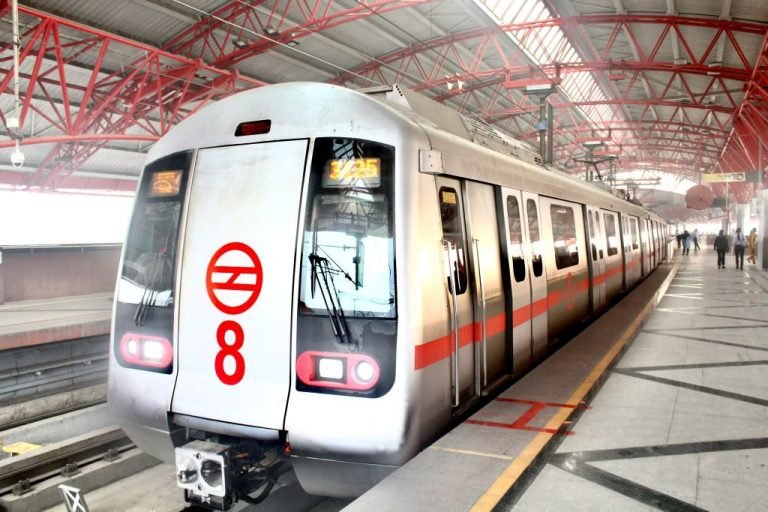
DMRC: HUDA City Centre Metro Station Renamed as Gurugram City Centre

NEW DELHI (Metro Rail News): On Monday, the DMRC announced that the HUDA City Centre metro station will undergo a name change and be known as Gurugram City Centre. The station is situated in Gurugram, in the state of Haryana.

The DMRC made the announcement on its official Twitter handle stating, “A decision has been taken to rename the HUDA City Centre Metro station on Yellow Line as Gurugram City Centre. Accordingly, the process of changing the name in all official documents, announcements, signageetc has been started and shall be changed gradually.”

The Centre, as well as the Haryana government have requested the renaming of the station, the sources informed.

RLDA Offers Leasing of 2128 Sqm Railway Land at Kota Junction, Rajasthan

NEW DELHI (Metro Rail News): The Rail Land Development Authority (RLDA) of Indian Railways has invited bids to lease a 2128 sqm vacant plot at Kota Junction, Rajasthan. The land is located near Platform number 1 in the Kota Division of the West Central Railways. The lease period is for 45 years, with a reserved price of Rs. 8.20 crore.

On June 16, 2023, a pre-bid meeting was held online, which saw the participation of several local and national-level developers who showed their interest in the project. August 1, 2023, has been set as the deadline for the submission of e-bids.

Accessing the land from the Circulating area of Kota Railway Station is convenient, as the area currently has a width of 18 meters and is planned to be widened to 22 meters The land is bordered to the north by the Railway Colony, to the east by Kota Junction, to the south by the Circulation Area of Kota Junction, and to the west by the commercial and residential area of Bhimganj Mandi.

This land has great economic potential and is expected to undergo significant commercial development in the near future. It is a focal point for trade and commerce and has excellent connectivity with all regions of Kota. The area also offers extensive local public transport facilities, making it an attractive investment opportunity for developers.
Furthermore, being part of the RLDA integrated ecosystem, developers will be able to benefit from the commercial growth in the region. The Vice Chairman of RLDA, Ved Parkash Dudeja, mentioned that Kota is a commercial hub with diverse demographics. Every year, the city attracts numerous engineering and medical college aspirants from all over the country.

The commercial development of the land will make it more convenient for students and their families to pursue their dreams. Additionally, as Kota and its surroundings are developed, tourism in the region is expected to flourish as more people visit to experience the rich cultural heritage of the city.

Delhi-Meerut RRTS Corridor: LG Grants Approval for Land Allotment in Jangpura

NEW DELHI (Metro Rail News): Shri V K Saxena, Lieutenant Governor (LG) of Delhi has given his approval for the allotment of 297 sqm of land in Jangpura for the Delhi-Meerut RRTS corridor project. This land, which belongs to the Delhi Urban Shelter Improvement Board (DUSIB), had been pending for the past two years. The approval is crucial for the implementation of the Regional Rapid Transit system (RRTS) project. The RRTS corridor will provide a faster rail service between Delhi and Meerut, reducing travel time significantly. The project is being led by the NCRTC.

The allotment of the land is in line with the national importance and public interest associated with the Delhi-Ghaziabad-Meerut RRTS project, according to a senior official. The land is needed to establish connectivity between the stabling yard at Jangpura and the Ring Road at Nehru Nagar, as part of the ongoing construction of the 82.15-km semi-high-speed rail corridor.

While other government agencies have already transferred their land to the NCRTC (National Capital Region Transport Corporation), the DUSIB had not completed the transfer until now. The approval from the LG paves the way for the project to move forward smoothly.

Initially, there was some confusion regarding the approval process, with the urban development minister stating that it did not require the approval of the LG. However, the chief secretary clarified that since land matters fall under reserved subjects, the approval of the LG was necessary.

The proposal, despite not being routed through the urban development department and not being forwarded by the minister and chief minister, was deemed by the LG as significant to the public interest. Consequently, it was approved.

South Eastern Railway’s General Manager Assumes New Role at Rail Wheel Factory

NEW DELHI (Metro Rail News): In a series of transfers for senior officials following a tragic triple train accident on June 2 that claimed the lives of over 290 people, the general manager of South Eastern Railway has been transferred to the Rail Wheel Factory in Yelahanka, Karnataka as general manager. The Railway Board had previously transferred five senior officials, including the assistant general manager and the divisional railway manager.

Based on the Railway Board‘s recommendation, the Appointments Committee of the Cabinet has appointed Anil Kumar Mishra, an officer of the Indian Railway Service of Electrical Engineers, as the new general manager of South Eastern Railway. This position was previously held by Archana Joshi, a 1985-batch officer of the Indian Railway Traffic Service (IRTS).

Archana Joshi, who took charge as the general manager of South Eastern Railway on July 30, 2021, will now assume the role of general manager at the Rail Wheel Factory in Yalahanka, Karnataka. Before her appointment as the general manager, she served as an additional member in tourism and catering at the Ministry of Railways, Railway Board. Notably, she was the first woman IRTS officer to become a general manager.

Chennai Metro Rail Partners with NLC India for Green Power Solutions

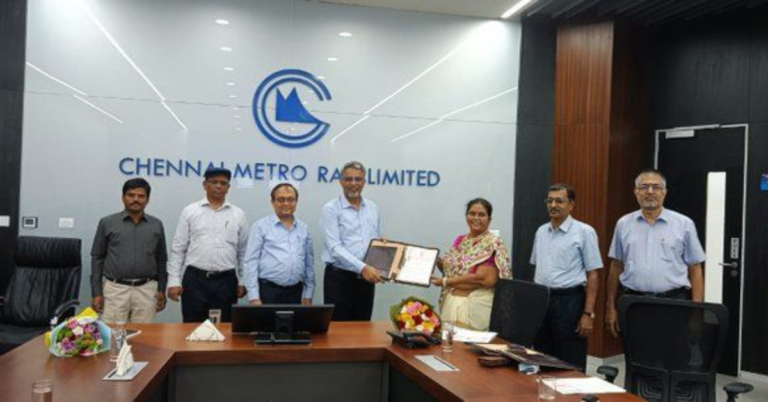
CHENNAI (Metro Rail News): Chennai Metro Rail Ltd (CMRL) has recently entered into an agreement with NLC India Limited (CAT1 Licensee) to tap into power through open access. This strategic partnership aims to optimize CMRL’s power procurement costs while ensuring access to green or environmentally-friendly power sources. The power will be sourced from the Indian Power Exchange, providing CMRL with a reliable and sustainable solution.

The contract agreement was officially signed at MetroS, Nandanam, Chennai, in the presence of esteemed officials from both CMRL and NLC India Limited. Thiru. Rajesh Chaturvedi, Director (Systems and Operations) of CMRL, along with Tmt P. Vasughi, General Manager (Commercial) of NLCIL, signed the agreement. Also, Dr Prasanna Acharya, Director Finance of CMRL, and other distinguished representatives were present at the ceremony.

The partnership between CMRL and NLC India Limited marks a noteworthy development in the pursuit of sustainable and cost-effective power solutions for Chennai’s metro rail network.

K T Rama Rao Unveils Ambitious Plans for Hyderabad’s Future Development

TELANGANA (Metro Rail News): On Thursday, the Telangana Municipal Administration Minister K T Rama Rao unveiled the government’s ambitious plans for the future development of Hyderabad during a gathering of realtors.

The minister emphasized the expansion of the Metro network to 250 km in the city. One of the key projects announced by the minister is the introduction of the new Airport Express Metro, spanning 31 km from Shamshabad to Raidurg.

Additionally, the phase 2 expansion of the Hyderabad Metro Rail Limited from BHEL to Lakdi-ka-pul (26 km) and Jubilee Bus Station to ECIL will further enhance the existing network of the HMRL, which currently stands at 71 km.

Minister KTR emphasized that the Airport Express Metro is not solely intended for air travellers but will also open up the southwest corridor of Hyderabad.

The removal of GO-111, a government order that previously restricted development in the catchment areas of Osman Sagar and Himayat Sagar lakes, has cleared the path for construction projects in the region.

In addition to the metro expansion, Minister KTR discussed various other initiatives planned for Hyderabad’s growth. He highlighted the upcoming Pharma City, located 30 km south of the airport, which is expected to spur economic development in the southern and southeastern parts of the city.

Furthermore, the minister mentioned the potential for the electronics and aerospace industries in Kongarakalan, Adibatla, and Ghatkesar to contribute to developing the eastern regions of Hyderabad.

RITES Ltd. Invites Tenders for Supplying & Erecting Structural Steel Works for BMRCL Metro Depot

BENGALURU (Metro Rail News): RITES Ltd. has invited open tenders for supplying, fabricating, and erecting structural steel works, including roofing, for the proposed Bangalore Metro Rail Corporation Limited (BMRCL) Metro Depot at Challaghatta.

The tender notice, with tender No. RITES/BMCRL-CHALLAGHATTA/OT/01/2023 was issued on 27 June 2023 at an estimated cost of Rs. 66.28 crores.

The bid process will follow a Two Packet System, allowing participants to submit their online percentage rate bids. The tender document costs Rs. 18,000/-, and an Earnest Money Deposit (EMD) of Rs. 1,00,00,000/- is required.

The project is expected to be completed within 9 months. The last date for bid submission is 18 July 2023 by 17:00 hrs.

RITES Invites Bids for 25 KV OHE System in Maheshpur Colliery Railway Siding

JHARKHAND (Metro Rail News): On 29 June 2023, the General Manager of RITES Ltd, acting as the Project Unit Head, issued an invitation on behalf of Bharat Coking Coal Ltd. (BCCL) for online percentage rate bids. For a significant project, bids are being requested on a two-packet system.

The project involves the design, drawing, supply, erection, testing, and commissioning of a 25 KV OHE (Overhead Equipment) system for the Maheshpur Colliery Railway siding.

The Tender number No. 04/OT/RITES/PU-RNC/BCCL/Maheshpur is open at an estimated cost of Rs. 11,40,70,139.

For the 10-month completion duration, bidders are required to make an earnest money deposit of Rs. 22,82,000.

Additionally, the system will incorporate a rapid loading system near Sonardih station on the Dhanbad Division of the East Central Railway.

The deadline for bid submission is 21 July 2023 Upto 14:30 hrs.

UP Cabinet Approves Proposal to Charge ‘Metro and RRTS Cess’ on Developers in Ghaziabad & Meerut

GHAZIABAD (Metro Rail News): On Wednesday, the Uttar Pradesh (UP) cabinet approved a proposal that will require developers in cities with upcoming metro and Rapid Rail Transit System (RRTS) services to pay a ‘metro and RRTS cess’. Initially, this charge is expected to be implemented in Ghaziabad and Meerut, where the construction of the RRTS corridor, known as the RapidX corridor, is underway.

The cess is expected to be implemented in Ghaziabad within a 1.5 km radius of the RapidX or metro track. Former chief town planner Asheesh Shivpuri commented, “Nothing has been finalized yet, including the exact area where the cess will be implemented and the rate at which developers will be required to pay.

The Ghaziabad Development Authority (GDA) will likely consider a 1.5km area along the two corridors to impose the cess.”Developers stand to immediately benefit from these projects, he continued. A system should be in place to put the cess into effect. Once a rule is established, the specifics will become more obvious.

In 2014-15, the development authority had previously announced a metro and Hindon elevated road cess of Rs 750/sqm to be imposed on builders. However, 27 builders challenged this move in the Allahabad High Court.

In 2021, the high court ruled in favour of the developers, instructing the GDA to refund approximately Rs 50 crore it had collected until then while approving building layouts.

Gaurav Gupta, the secretary at Credai’s NCR chapter, recalled how the GDA had previously imposed a cess on areas along the Hindon elevated road and the Delhi Metro’s Red Line, asserting that builders in localities such as Raj Nagar Extension would benefit directly from these projects.

“However, the decision was unexpected, which prompted us to move the high court. Nevertheless, the cabinet has now approved the proposal, indicating that it is a policy decision that will likely be implemented in other districts as well. It is not solely the concern of the GDA,” Gupta explained.

He said they haven’t decided whether to return to court yet. “At this time, we are not certain about our choice. Even the possibility of contesting such a judgement is debatable. We will therefore wait for the formal notice,” Gupta said.

Madurai Metro Rail: 27 Stations Planned for the Project, DPR to be Submitted by 15 July

MADURAI (Metro Rail News): The Madurai Metro Rail Project, connecting Tirumangalam with Othakadai, is set to have a total of 27 metro stations. Chennai Metro Rail Managing Director M.A. Siddique provided details about the project during a press conference after a meeting with various officials at the Madurai Collectorate. The proposed plan suggests one metro station for every kilometre on the elevated structure and one for every 1.5 kilometres in the underground structure.

During the meeting, Mr. Siddique assured the media that the detailed project report (DPR) would be prepared soon and submitted to the government on July 15, along with the DPR for the Coimbatore metro project. According to his statement, three out of the total 27 proposed metro stations in Madurai will be located underground. These underground stations are planned to be situated near Madurai railway junction/Periyar bus stand, Meenakshi Sundareswarar Temple, and Goripalayam. The station close to the temple is expected to be constructed either beneath North Masi Street or North Avani Moola Street, and further evaluation is currently underway.

Mr Siddique also addressed concerns about the impact of the metro line and station on the heritage buildings and temple car processions. He assured that necessary measures would be taken to ensure minimal disruption to these cultural aspects.

Once the DPR is submitted, approved by the government, and funds are allocated, the construction of the Madurai Metro Rail Project will commence. The elevated structure, spanning 27 kilometres, is estimated to take approximately 3.6 years to complete, while the underground structure, covering 5 kilometres, will take around 4.6 years. Government officials.

The field study of multiple places in the city for the project implementation has also been done by the officials. The meeting was attended by Collector M.S. Sangeetha, Chennai Metro Rail Director (Projects) T. Archunan, Corporation Commissioner K.J. Praveen Kumar, District Revenue Officer R. Sakthivel, and others.

Techno Feasibility Study Commences for Ballabhgarh-Palwal Metro Rail

CHANDIGARH (Metro Rail News): On Tuesday, a team of experts from Haryana Mass Rapid Transit Corporation (HMRTC) and Rail India Technical and Economic Services (RITES) commenced a techno feasibility study for the Ballabhgarh-Palwal metro rail.The study was directed by Chief Minister ML Khattar on June 26.

The proposed Ballabhgarh-Palwal corridor will be approximately 24 km long and will have 10 stations. It aims to provide connectivity to the industrial areas of Sector 58-59, Sikri, Prithla, Alhapur, Baghola, Softa, and Palwal.

During the study, alternative options for the metro rail system will be explored. The alignment of the corridor will be determined through discussions with NHAI and other stakeholders. There are plans to integrate Ballabhgarh railway station, Raja Nahar Singh metro station, Ballabhgarh bus stand, and Palwal bus stand.

The techno-feasibility study, conducted by RITES Limited, is expected to be completed in the next few days. In addition, preparations are underway to develop a comprehensive mobility plan for Palwal.

According to the spokesperson, “The metro rail corridor is planned to be elevated and is estimated to cost around ₹180 crore per kilometer. The entire project is expected to cost approximately ₹4,320 crore.”

Chief Minister Khattar announced on Sunday that government had given the green light for a metro link between Ballabgarh and Palwal. He emphasized that this development would enhance connectivity and accelerate the area’s progress.

Indian Railways’ “Hydrogen for Heritage”: 35 Hydrogen Trains for a Greener Future

NEW DELHI (Metro Rail News): Under the ‘Hydrogen for  Heritage’ project, the Indian Railways have unveiled their ambitious plan to operate 35 hydrogen trains, marking a significant step towards reducing carbon emissions in the transportation sector.

With the introduction of these innovative trains, the railway network in India is set to make substantial progress in creating a more sustainable and eco-friendly future.

By using hydrogen fuel cells instead of conventional diesel engines, the Hydrogen for a Heritage initiative hopes to revolutionize the railway sector.

The project aims to minimize harmful pollutants by embracing clean energy sources and setting an example for sustainable transportation practices.

In response to a question posed in the Rajya Sabha, Union Minister Ashwini Vaishnaw confirmed the project’s development and revealed that the prototype train would undergo field trials on the Jind-Sonipat section of the Northern Railways.

For the necessary ground infrastructure, the project’s initial phase will cost an estimated Rs. 80 crores for each train and Rs. 70 crores per route.

In a remarkable move, the Indian Railways has already awarded a pilot project worth Rs. 111.80 crores for retrofitting a hydrogen fuel cell on an existing Diesel Electric Multiple Unit (DEMU) rakes, along with the associated ground infrastructure.

The trials for these revolutionary trains are scheduled to commence in March 2024, as announced by Shobhan Chaudhry, the General Manager of Northern Railway. With full momentum behind the initiative, the Indian Railways is on track to test and validate the feasibility and efficacy of hydrogen-powered trains.

These trains hold immense potential to significantly reduce carbon emissions, marking a monumental step towards a greener and more environmentally friendly future for India’s railway network.