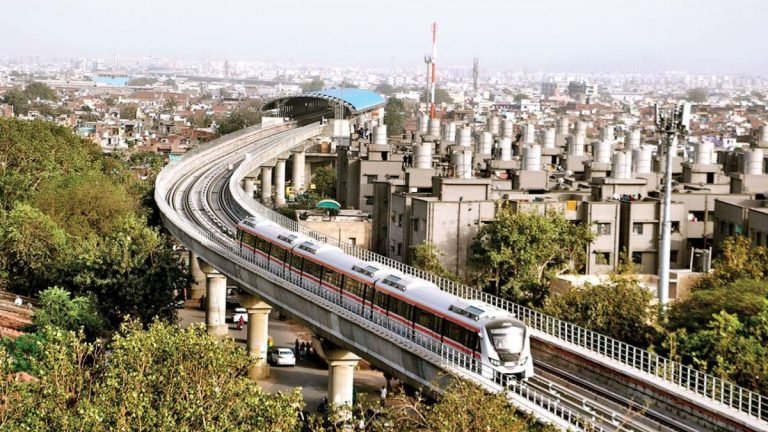
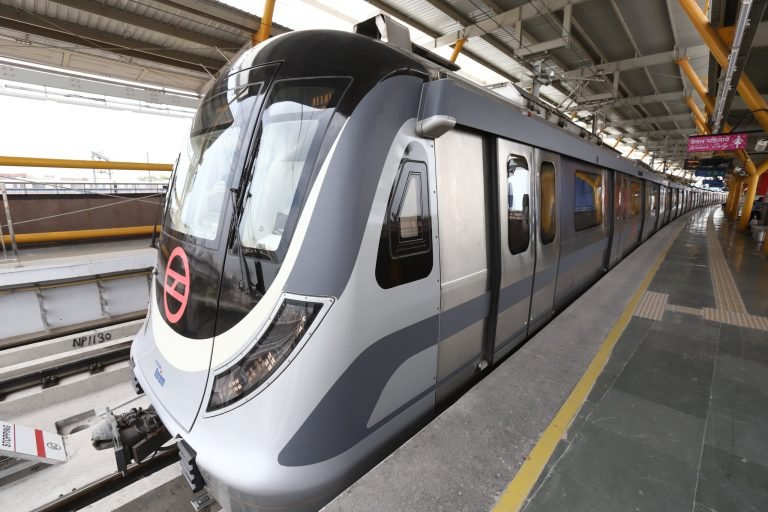
New Delhi: Prime Minister Narendra Modi has flagged-off the Delhi-Faridabad Metro Line that would allow hassle free travel for around two lakh daily commuters between the national capital and the industrial hub in Haryana.The extension of the Delhi Metro connects Badarpur to Escorts Mujesar in Faridabad.The total cost of the project from Badarpur to Escorts Mujesar is nearly Rs. 2,500 crore. Out of this, Rs. 1,557 crore was borne by the Haryana Government, the Centre contributed Rs. 537 crore, while the Delhi Metro provided Rs. 400 crore.The nine stations in this section include, Sarai, NHPC Chowk, Mewala Maharajpur, Sector 28, Badkal Mor, Old Faridabad, Neelam Chowk Ajronda, Bata Chowk and Escorts Mujesar. buy kamagra polo online https://lasernailtherapy.com/wp-content/themes/twentytwentytwo/inc/patterns/en/kamagra-polo.html no prescription
All these are elevated and located on either side of the Delhi-Mathura Road (NH-2).“The nine-station metro corridor which was 95 per cent indigenously built will provide people a safe, affordable, quick, comfortable, reliable, environment-friendly and sustainable transport facility,” a Haryana government spokesperson said.Haryana Chief Minister ML Khattar, addressing a press conference on Saturday, had thanked the Prime Minister for “gifting” the Metro service which would take the city to “another level of progress” with better connectivity with other NCR towns.He had also said that the Prime Minister would be announcing the go-ahead for connecting Gurgaon with Faridabad by Metro.
PUNE (Metro Rail News): Wabtec Corporation (NYSE: WAB) announced today a brake system order from Alstom Transport India Ltd. to support Pune IT City Metro Rail Limited and Pune Metro Rail Development Authority for the Metro Line 3 project. The order will supply the latest braking technology for the line’s new trains, which will improve performance, efficiency, and safety. “This order reinforces Wabtec’s continuous commitment to deliver high performance and safety critical products for the metro rolling stock segment in India,” said Preetam Ganguly, Sales and Marketing Director, Wabtec Transit, India. “This braking system also has a substantial ‘Make in India’ content and is primarily designed by our in-country engineering team.” Wabtec will deliver the braking system to Alstom, which is building the trains for the new line. The high-performance brake system will equip the trains with critical safety features, high reliability, and reduced maintenance intervals. The company already supplies similar brake systems for other Indian metro projects in Chennai, Kochi, Lucknow, and Mumbai, making Wabtec a preferred brake supplier for the SMART Metro Platform. The order covers 22 trains consisting of 66 cars in a three-car configuration. Alstom is building the cars at its Sricity plant in India. The trains will run on the 23-km Hinjewadi-Shivajinagar elevated Metro Line 3, which will connect the IT hub of Hinjewadi to central district of Shivajinagar. The project is expected to be completely operational by April 2025. Wabtec’s Transit business in India is primarily based out of Hosur, Tamil Nadu. It develops and builds major subsystems for the transit industry including brake systems, pantographs, couplers, air-conditioning systems, and passenger-access doors. The company’s large engineering presence in Bangalore provides technical and service support. About WabtecWabtec Corporation (NYSE: WAB) is focused on revolutionizing the way the world moves for future generations. The company is a leading global provider of equipment, systems, digital solutions and value-added services for the freight and transit rail industries, as well as the mining, marine and industrial markets. Wabtec has been a leader in the rail industry for over 150 years and has a vision to achieve a zero-emission rail system in the U.S. and worldwide.
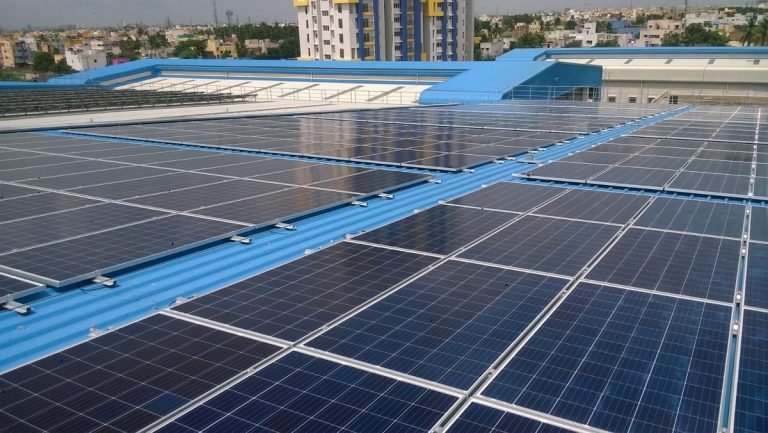
GHAZIABAD (Metro Rail News ): According to officials from NCRTC (National Capital Region Transport Corporation ), a solar power plant installed on the rooftop of a receiving substation near Ghaziabad RRTS station has begun producing electricity.The plant has a capacity to generate 25,000 units of electricity annually, and NCRTC intends to fulfill 70% of its auxiliary power requirements for RRTS operations using renewable energy, primarily solar power. The receiving substation rooftop now houses 54 solar panels, each approximately 1mX2m in size, which will generate the aforementioned amount of electricity.Under the RESCO model, the NCRTC will purchase the energy generated at a mutually-agreed rate from the service provider company that has installed the solar power plants at specified locations. The energy generated from the solar power plant will be utilized to meet demand at stations and buildings, and NCRTC has recognized the potential for nearly 11 MWp of solar power on the rooftops of stations and buildings along the RRTS corridor, anticipating the generation of 10 million units of electricity to fulfill auxiliary consumption needs.
Surat (Metro Rail News): Rahee Infratech has been awarded a contract worth Rs. 136.66 crore to provide and set up standard gauge rails for Line-2 of Surat Metro. The line will stretch over 19.26 km and will connect Bhesan-Saroli. The Surat Metro Phase 1 comprises a 40.35 km corridor with 18 elevated stations that are being constructed through two civil packages: CS5 and CS6. The Gujarat Metro Rail Corporation (GMRC) had invited bids for the systems contract, financed by Agence Française de Développement (AFD) in May 2022, and technical bids were opened in September 2022.Six bidders had submitted their financial bids in January 2023. These bidders were Apurvakriti infrastructure ( bid of 151.94 cr.), Texmaco Rail and Engineering ( bid of 141.74 cr.) , Rail vikas Nigam Ltd. ( bid of 148.03 crore), KEC International ( bid of 143.93 cr. ), Larsen & toubro ( bid of 139.78 cr. ) and Rahee Infratech ( bid of 133.66 cr.).Rahee Infratech emerged as the lowest bidder and was awarded the contract. The contract entails the installation, design, testing, supply, and commissioning of ballastless track from Bhesan to Saroli in the elevated section, as well as connecting lines to Depot, and ballasted/ballastless/embedded standard gauge track for Corridor-II of Surat Metro Rail Project, Phase 1. In January, GMRC had awarded another track-work contract worth Rs. 166 crore to RVNL-ISC JV for 22.77 km Line-1.
NOIDA (Metro Rail News): Delhi Metro Rail Corporation (DMRC) has issued a letter of acceptance (LOA) to a consortium of Autometers Alliance Limited from India and 2XM consult Pty Ltd from Australia for the retrofit work in RS-1 trains of the Delhi Metro. The contract, with a total cost of INR 80,12,20,000, includes all central/state/local taxes, duties, levies, cess and other incidental charges required to fulfill the tender conditions, including statutory deductions such as TDS towards income tax, GST and labor cess.The consortium will proceed with the assigned work and is directed to complete it within two years from 29th March 2023. The retrofit work includes the installation of new and improved technology in the RS-1 trains of the Delhi Metro, which will enhance the overall safety, efficiency and comfort of the passengers.The DMRC is committed to providing world-class services to its passengers, and the retrofit work in the RS-1 trains is part of this mission. The new technology will improve the performance of the trains and provide passengers with a better travel experience.
GUWAHATI (Metro Rail News): The Indian Railways is planning to expand its railway network to Tawang in Arunachal Pradesh and other areas of the northeast frontier state to support India’s security strategy along the Line of Actual Control (LAC) with China. The goal is to aid the Indian Army in deploying personnel and equipment to the border. Anshul Gupta, the General Manager of Northeast Frontier Railway, has stated that the final site survey report has been sent to a higher authority. The Defense Ministry has also approved two additional projects, namely Bame-Aalo up to Mechuka and Pasighat-Parshuram-Wakro, and their surveys have been completed. The Pasighat New line work is targeted for completion in March 2025.Anshul Gupta also mentioned that there has been a delay in the Imphal connectivity project due to the Tupul incident, and they are working on precautionary measures to complete the project by December 2024. The Sikkim works are also set to be finished by December 2024. The railway project work of Serima to Kohia is scheduled to be completed by March 2024.Moreover, an umbrella project worth Rs. 1.20 lakh crore has been launched to connect important towns and border areas of Arunachal Pradesh, Manipur, and Sikkim. Anshul Gupta added that they are working with the state government, various organizations, and the Indian army to accomplish this goal.
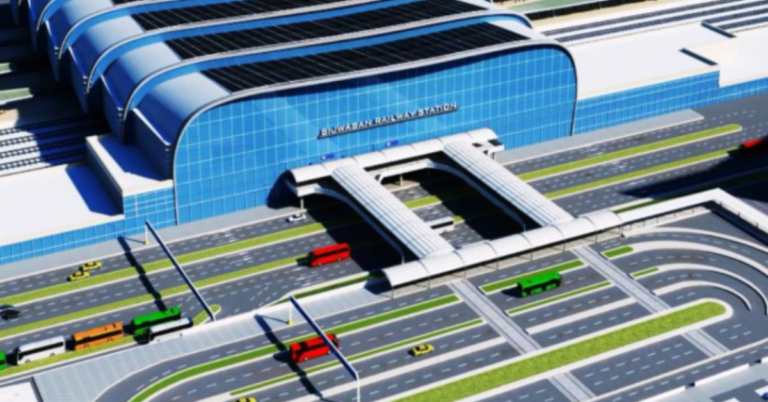
NEW DELHI (Metro Rail News): B.L. Kashyap and Sons, a civil engineering construction company, has announced that it has won an order worth approximately Rs 313 crore from the Railways Land Development Authority. The project involves the development of the Bijwasan Railway Station in New Delhi and is expected to be completed in around 15 months.According to an exchange filing, the order is from a domestic unrelated client and the company’s total order book as of now is approximately Rs 2,402 crore. The Delhi headquartered company is known for its large industrial, residential, and commercial construction projects and provides integrated engineering, procurement, and construction services.The Bijwasan Railway Station development project is a significant win for B.L. Kashyap and Sons, and the company’s management is confident of delivering it within the stipulated timeline. With this order, the company has added another feather to its cap and is well positioned to leverage the growing demand for construction projects in India.
GURUGRAM( Metro Rail News): After a brief setback due to poor participation in the original round, the Gurgaon Metro’s 28.5km new line connecting HUDA City Centre to Cyber City is finally gaining momentum. The Haryana Mass Rapid Transport Corporation Ltd (HMRTC) has re-invited bids for the Detailed Design Consultant contract (GGNCCDD-01) for the project’s civil architectural and E&M works. The elevated new corridor will form a ring line through Gurugram and Old Gurugram via 27 stations, and will also include a spur from Basai Village to Dwarka Expressway.The project’s final Detailed Project Report (DPR) was approved by the Haryana Government’s cabinet in August 2020 at an estimated cost of Rs. 6821.13 crore. The re-invitation of bids for the consultancy contract comes with a 48-month completion deadline and an estimated cost of Rs. 17.68 crore. The pre-bid meeting is scheduled for March 28, 2023, and the bid submission and opening dates are set for April 17, 2023.The project has been highly anticipated by the people of Haryana, as it will significantly improve connectivity and reduce travel time between two of the state’s most important commercial hubs. The successful completion of this project will mark a major milestone in the state’s efforts towards developing a modern and efficient public transportation system. HMRTC,
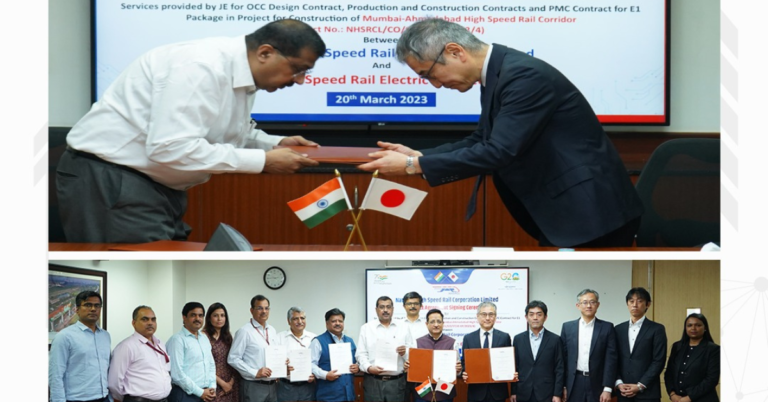
MUMBAI (Metro Rail News): The Mumbai-Ahmedabad bullet train network has taken a significant step forward in its development, as the National High-Speed Rail Corporation Ltd signed a memorandum of understanding with the Japan government on Monday. Under the agreement, The core work related to the safety and punctuality of the high-speed rail corridor, which involves the Shinkansen technologies, will be executed by the Japan High-Speed Rail Electric Engineering Co. Ltd.For the bullet train corridor, the Japanese company will handle tasks related to the operation control center, design contract, production and construction contracts, as well as PMC contracts for the E1 package. According to the nodal agency, this will accelerate the work while maintaining the same level of safety and quality as the Shinkansen, a bullet train network in Japan, in accordance with the practices observed in that country.
As a distinct development, the National High-Speed Rail Corporation Ltd, the authority responsible for the bullet train work, has entered into an agreement with Megha Engineering & Infrastructure Ltd and Hindustan Construction Company Ltd, a joint venture, for the purpose of designing and constructing the underground Mumbai high-speed rail station at Bandra Kurla Complex.These latest developments bring the ambitious Mumbai-Ahmedabad bullet train project closer to reality, and further progress is expected as work continues apace.
Bengaluru (Metro Rail News): The civil construction work of Aiport Depot at Doddajala of Bangalore Metro Blue Line has been awarded to J Kumar Infraprojects – AIC Infrastructures Pvt. Ltd (J Kumar – AICPL JV) by Bangalore Metro Rail Corporation Ltd. (BMRCL) for a contract worth Rs. 182.33 crore.In the joint venture, J-Kumar’s share in the project is 55%, which amounts to approximately Rs. 100,28,69,838/- excluding GST. The new 57 km Blue Line in Phase 2B, connecting Central Silk Board – KR Puram – Bengaluru International Airport, will be served by this Airport Depot. BMRCL had estimated the project cost to be Rs. 204.68 crore, with a 1.5 year (548 days) deadline. The Asian Development Bank (ADB) is financing this contract with a USD 500 million (approx. Rs. 3680 crore) loan approved in December 2020.The Purple Line’s operational Baiyappanahalli Depot will also support operations on the Blue Line and will be changed in a phased manner to serve the Blue Line in the future. The Detailed Design Consultant (DDC) contract for both depots, valued at Rs. 3.94 crore, was awarded to PADECO Co. Ltd. – Ardanuy India Pvt Ltd. JV in September 2021. As part of a 318 coach contract funded by the Japan International Cooperation Agency (JICA), both depots will accommodate 222 new coaches. BMRCL received four bids for this contract in February 2022, and technical bid evaluation is currently underway.
MUMBAI (Metro Rail News): Blue Star has announced that it has received orders worth ₹575 crore for railway electrification work, which is a significant milestone for the company’s entry into the railway segment. The orders have been received from the Kolkata Metro Rail, West Central Railway, and Central Organisation for Railway Electrification (CORE). In a statement released on Tuesday, the refrigerants and cooling company stated that it has successfully expanded its presence in this segment and consolidated its position in the projects business space.The orders comprise the design, supply testing, and commissioning of a 132/55 kV traction substation, sectioning posts, and sub-sectioning posts of 2X25 kV at the feeding system for the Gangapur city. Additionally, the orders also include the design, supply, and commissioning of a 750 V DC substation and upgrading of the power supply system at Geetanjali and Esplanade, along with the renovation of Noapara traction substation of the metro railway in Kolkata.B Thiagarajan, Managing Director of Blue Star, expressed his satisfaction with the company’s contribution to the growth and development of the railway infrastructure in India, which is a key focus area for the Indian Government. He added that Blue Star is well-equipped to take advantage of the increasing prospects in the Railway Electrification sector, thanks to its exceptional project management skills and extensive background in working on diverse HVAC&R and MEP projects.
PATNA (Metro Rail News): The First of four Tunnel Boring Machines (TBM) of Patna Metro Project, nicknamed “Mahavir”, was lowered on Monday in Patna at Moin-Ul-Haq Station with a drive length of 1494m towards Patna University station. TBM Mahavir bearing serial number DZ1090 weighs around approx. 420 Metric Ton. The underground tunnelling work in Patna Metro Project will be done with the TBM machine. The lowering of the TBM is the first step of tunnelling for Patna Metro, which has commenced at Moin-Ul-Haq Stadium. Other parts of the TBM, which will be assisting in muck disposable, feeding of the tunnel segments shall be done subsequently; that is, after lowering the main part of the TBM, the process of complete assembling of the TBM takes about 2 to 3 weeks’ time. Once TBM is assembled in totality, the drive will start. The TBM, if compared to that of the weight of an African Elephant; one elephant’s weight is approx. 7 Metric Ton, so the weight of TBM equals to that of 60 elephants’ weight. This is the second in DMRC after Delhi that TBM was assembled first at the ground, and the same is lowered with the help of Mega Lifts on the cradle. TBM assembly was lifted with the cradle using strand jacks with a capacity of 325 Metric Ton each. Four-strand jacks are being used to lower the TBM at MUH. The Mega lift will lift the cradle and then push it up to TBM lowering position (Launching Shaft). Then TBM will be lowered into the shaft, which is approx. 16m below the ground level after skidding. Patna is located on the south bank of the Ganges River in eastern India, which has alluvial soil. The groundwater level is also very high. As per the soil strata, soft soil Earth Pressure Balance (EPB) TBMs have been designed and manufactured for Patna Metro by CRCHI (China Railway Construction Heavy Industry Corporation Ltd.) The TBM shall first be launched from Moin Ul Haq Station towards Patna University station. What is TBMThe Earth Pressure Balance (EPB) Tunnel Boring Machine (TBM) comprises a cutter head, front shield, middle shield, and tail shield, along with the backup gantries. The main body length of the TBM is approx. 9m with EPB full length of 95m approx. The excavation diameter is 6650mm, with the precast ring lining with an outer diameter of 6350mm and inner diameter of 5800mm. Approximately 49cum of the earth will be mined for every ring installed. Grouting behind the segmental lining shall be carried to ensure that full and immediate support is given to the rings as they emerge from the rear of the TBM. Thus, a continuous process of mining, grouting, and ring building, with ground monitoring information analysis, will be applied during the operation of the TBM.
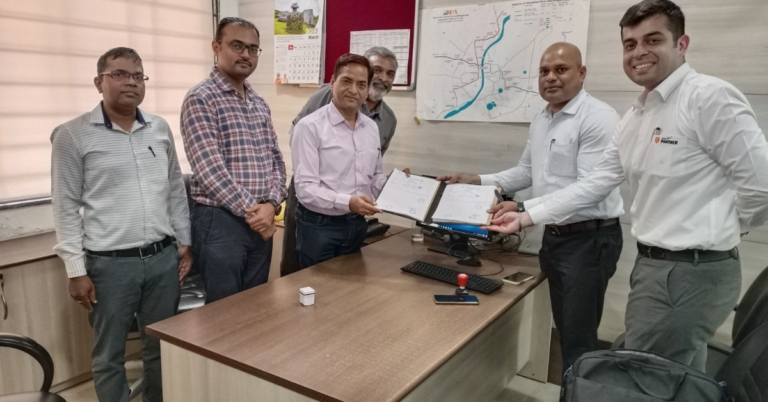
GUJARAT (Metro Rail News): Jindal Steel and Power (JSP), a leading Indian steel and power company, has signed track rail supply contracts worth Rs. 244 crore with Gujarat Metro Rail Corporation Ltd. for the second phase of the Ahmedabad Metro and the first phase of the Surat Metro.Under the terms of the agreement, JSP will be the sole supplier of head-hardened rails for the mainline application and R260 rails for maintenance depots. This marks a significant achievement for JSP, as it becomes the only domestic supplier of HH rails, which are a major import substitution product under the “Make in India” campaign.The head-hardened rails, which are made using a specialized heat treatment process, are designed to withstand high wear and tear, making them ideal for use in high-speed rail systems. These rails are a critical component of any metro system, ensuring smooth and safe operation of trains.The deal with Gujarat Metro Rail Corporation Ltd. represents a significant step forward for JSP in its efforts to support India’s strategic infrastructure development goals. The company is committed to contributing to the country’s vision of building a world-class metro network, and this contract is a testament to its expertise and capability in this field.
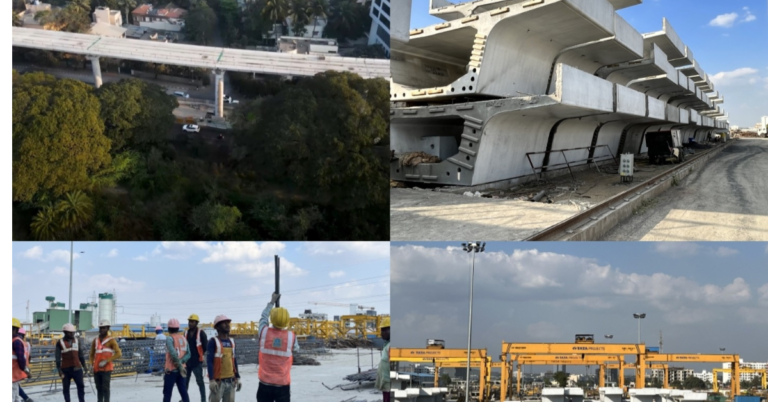
PUNE (Metro Rail News): The construction of Pune Metro Line 3 on the Hinjawadi to Shivajinagar route is making steady progress across all phases. According to Sameer Godse, who works with Tata Realty, the work has picked up speed in three sections: Section One (Mann Gaon to Baner), Section Two (Baner to University Circle), and Section Three (University Circle to Shivajinagar Court).The 2 km stretch between Balewadi and Baner has been completed, giving a fresh look to the area. Additionally, the casting yard has an impressive quantity of segment stocks ready for installation, while metal caging work is progressing in full swing.Numerous essential works such as segment installation, spanning, pier erection, viaduct, and caging are advancing quickly on this route. To provide an overview of the progress made so far, here are a few selected photographs from Sections One and Two.Caging Metal workCasting YardSegments stock readyViaduct work at Baner RoadThis project will boost public transportation options in Pune and is expected to make commuting much easier for people in the region. The government and stakeholders have been working tirelessly to ensure that the project is completed on time and that it meets all safety and quality standards.
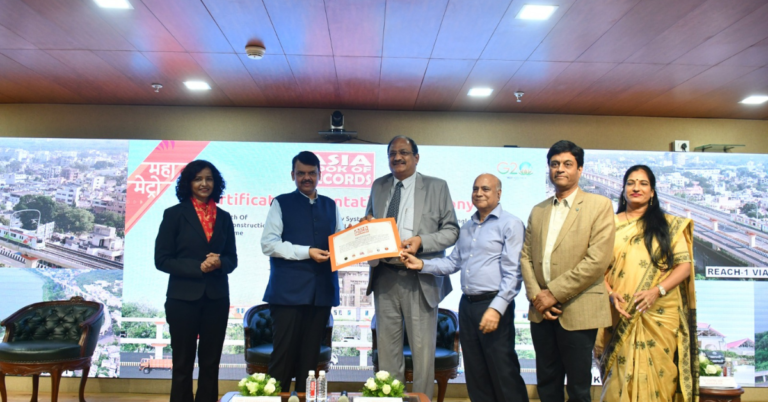
NAGPUR (Metro Rail News): Having being awarded Guinness World Records and two Asia Book of Records earlier, Maha Metro Nagpur was honored with the prestigious Asia Book of Records certification for three different categories on March 19th. The certification and citation were presented by Hon’ble Deputy Chief Minister of Maharashtra, Shri Devendra Fadanvis, at Metro Bhawan.The categories for which Nagpur Metro was presented with Asia Book of Records certification are `Longest Length of Metro Rail Corridor Construction in Shortest Time’, `First Solar PV System in a Metro Rail Project for Integrated Consumption’ and `Heaviest Single Span Double Decker Steel Bridge Truss over Railway tracks in Urban Area’, in Asia. The citation and medal were handed over to Maha Metro MD Dr Brijesh Dixit by Shri Fadanvis. Director (RSS&Op) Shri Sunil Mathur, Director (SP) Shri Anil Kokate, Maha Metro officials and Asia Book of Records Adjudicators – Dr Sunita Dhote and Dr Chitra Jain were present on occasion.• In his note, *Deputy Chief Minister Shri Devendra Fadanvis* praised Maha Metro for its work. Maha Metro has done amazing work in the field of creating metro corridors and urban infrastructure in the past few years. It has many achievements to its credit which include the development of the fastest Metro Corridor and also creating the longest Double Decker Bridge, to name a few.The work done under the leadership of Hon Prime Minister Shri Narendra Modi in the entire country has inspired all of us, and Maha Metro, under the leadership of Dr Brijesh Dixit and its entire team, has created this state-of-the-art infrastructure which is not only the finest aesthetically but absolutely people friendly. I am very happy to be associated with Maha Metro since its inception and look forward to seeing many more wonderful creations from Maha Metro.Metro Bhawan is also a Platinum Rated Building and a centre of excellence. I once again congratulate the team Maha Metro for the wonderful work it has done in the state of Maharashtra.1. *Longest Length of Metro Rail Corridor Construction in Shortest Time:* Maha Metro executed the construction of 24 km long length of Metro rail Corridor in a record span of 51 months, thus laying almost one km of track every two months. Of the 40 km, the work of 24 km, including At-grade & Viaduct sections, 3 At-grade stations and 5 elevated stations, has been completed and commissioned in 51 months. This Corridor includes Reach-1 from Sitabuldi Interchange to Khapri Metro Station on the North-South Segment, which is 13.50 km long and Sitabuldi Interchange to Lokmanya Nagar Metro Station on the East-West Segment, which is 10.60 km long.2. *First Solar PV System in a Metro Rail Project for Integrated Consumption:* Maha Metro has designed Integrated Roof Top, Grid Connected, Net Metered Solar Power system with the potential of up to 50% of energy requirements of Metro. The Solar PV generates 415 V AC and utilizes at various levels from 48 V DC to 132 KV AC for Traction, Stations and EV Charging. Already 5 MWp has been commissioned, and another 5.5 MWp is under process. In all, 33 Lac units (KWh) have been generated till now, and ₹ 5.5 Cr has been saved in the process.3. *Heaviest Single Span Double Decker Steel Bridge Truss over Railway tracks in Urban Area:* The Steel Bridge Truss at Gaddigodam is unique, the first of its kind in India in terms of design, transportation and adopting state-of-the-art fabrication and launching technique. This 1634-ton steel bridge is made of high-strength steel, and the assembly, erection, and launching have been carried out in the urban area with utmost precision and accuracy near Gaddigodam. This four-layer transport section is located in a densely populated urban area, making the Metro Rail level on truss one of the highest in all four corridors. The structure is one of its kind anywhere on a Metro Rail system which not only serves Highway Flyover and Metro Rail but also accommodates an existing road, RuB and busy Indian Railway tracks.It may be recalled that Wardha Road Double Decker – which was constructed by Maha Metro Nagpur, was chosen for the prestigious Guinness World Record. It has been identified as the `Longest Double Decker Via-Duct (Metro)’ by Guinness World Records across the world on 5th December last year. Similarly, Union Road Transport & Highways Minister Shri Nitin Gadkari, on 10th July 2023, had felicitated Maha Metro for the prestigious Asia Book of Records and India Book of Records certification for constructing the `Longest Via-duct with Highway Fly-over and Metro Rail Supported on Single Column Piers’ and `Maximum Metro Stations Constructed on a Double Decker Via-Duct’, in Asia. Thus, Maha Metro has its credit, one Guinness World Record certification and five certifications each of Asia and India Book of Records in five different categories.



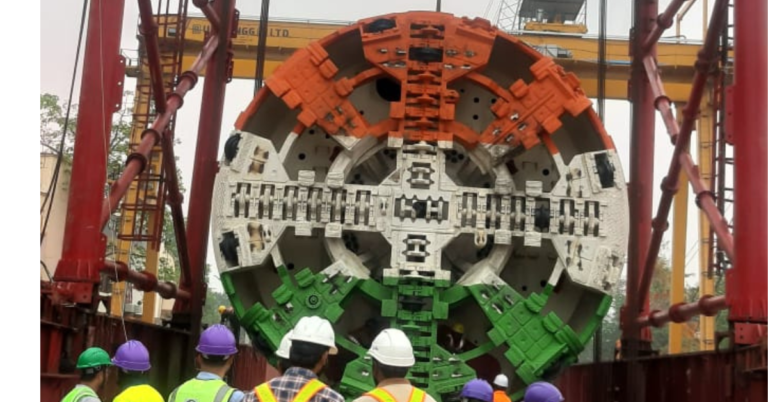
 The TBM, if compared to that of the weight of an African Elephant; one elephant’s weight is approx. 7 Metric Ton, so the weight of TBM equals to that of 60 elephants’ weight.
  This is the second in DMRC after Delhi that TBM was assembled first at the ground, and the same is lowered with the help of Mega Lifts on the cradle. TBM assembly was lifted with the cradle using strand jacks with a capacity of 325 Metric Ton each. Four-strand jacks are being used to lower the TBM at MUH. The Mega lift will lift the cradle and then push it up to TBM lowering position (Launching Shaft). Then TBM will be lowered into the shaft, which is approx. 16m below the ground level after skidding.
  Patna is located on the south bank of the Ganges River in eastern India, which has alluvial soil. The groundwater level is also very high. As per the soil strata, soft soil Earth Pressure Balance (EPB) TBMs have been designed and manufactured for Patna Metro by CRCHI (China Railway Construction Heavy Industry Corporation Ltd.) The TBM shall first be launched from Moin Ul Haq Station towards Patna University station. What is TBMThe Earth Pressure Balance (EPB) Tunnel Boring Machine (TBM) comprises a cutter head, front shield, middle shield, and tail shield, along with the backup gantries. The main body length of the TBM is approx. 9m with EPB full length of 95m approx. The excavation diameter is 6650mm, with the precast ring lining with an outer diameter of 6350mm and inner diameter of 5800mm. Approximately 49cum of the earth will be mined for every ring installed. Grouting behind the segmental lining shall be carried to ensure that full and immediate support is given to the rings as they emerge from the rear of the TBM. Thus, a continuous process of mining, grouting, and ring building, with ground monitoring information analysis, will be applied during the operation of the TBM.
 The TBM, if compared to that of the weight of an African Elephant; one elephant’s weight is approx. 7 Metric Ton, so the weight of TBM equals to that of 60 elephants’ weight.
 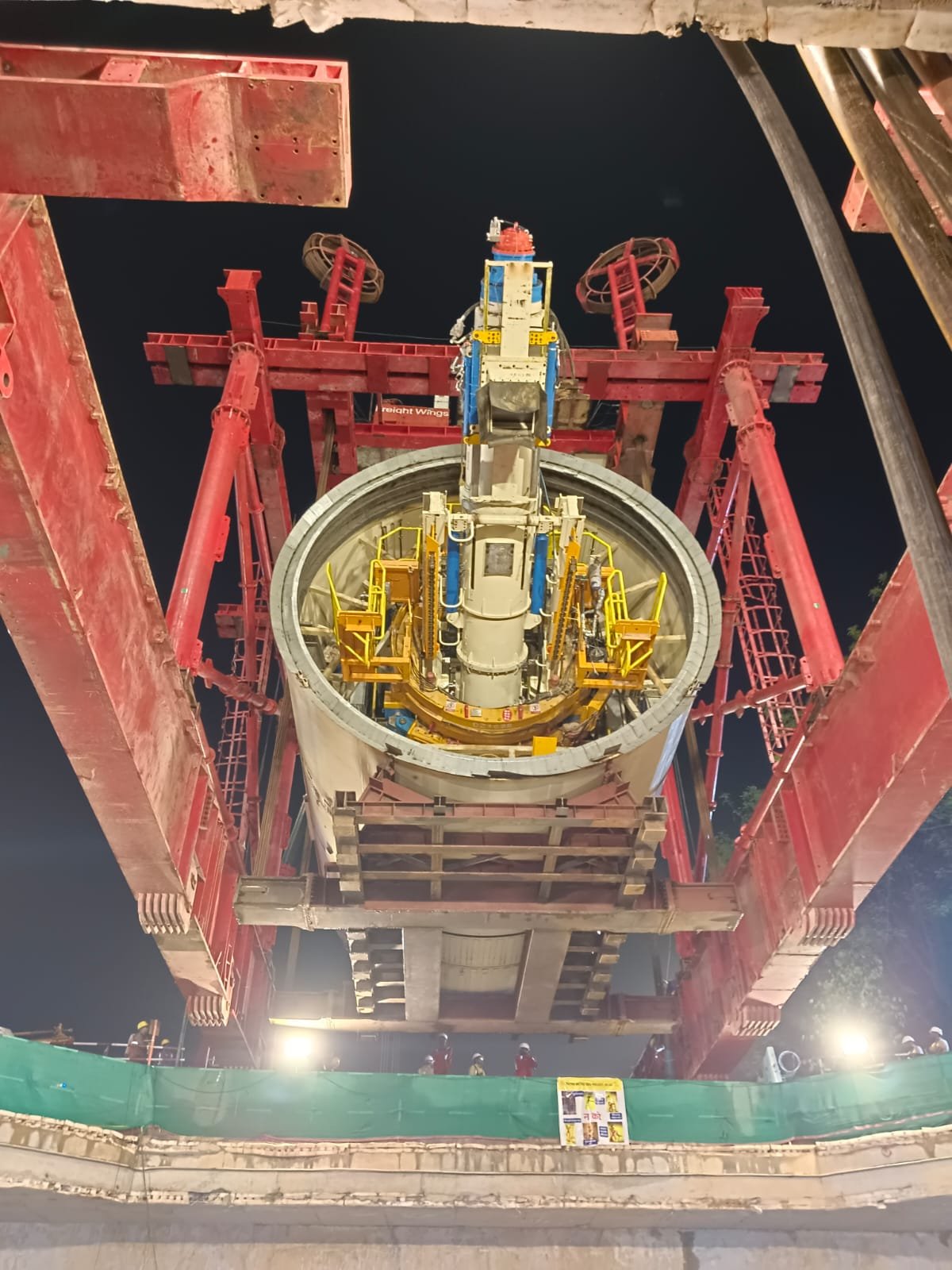 This is the second in DMRC after Delhi that TBM was assembled first at the ground, and the same is lowered with the help of Mega Lifts on the cradle. TBM assembly was lifted with the cradle using strand jacks with a capacity of 325 Metric Ton each. Four-strand jacks are being used to lower the TBM at MUH. The Mega lift will lift the cradle and then push it up to TBM lowering position (Launching Shaft). Then TBM will be lowered into the shaft, which is approx. 16m below the ground level after skidding.
 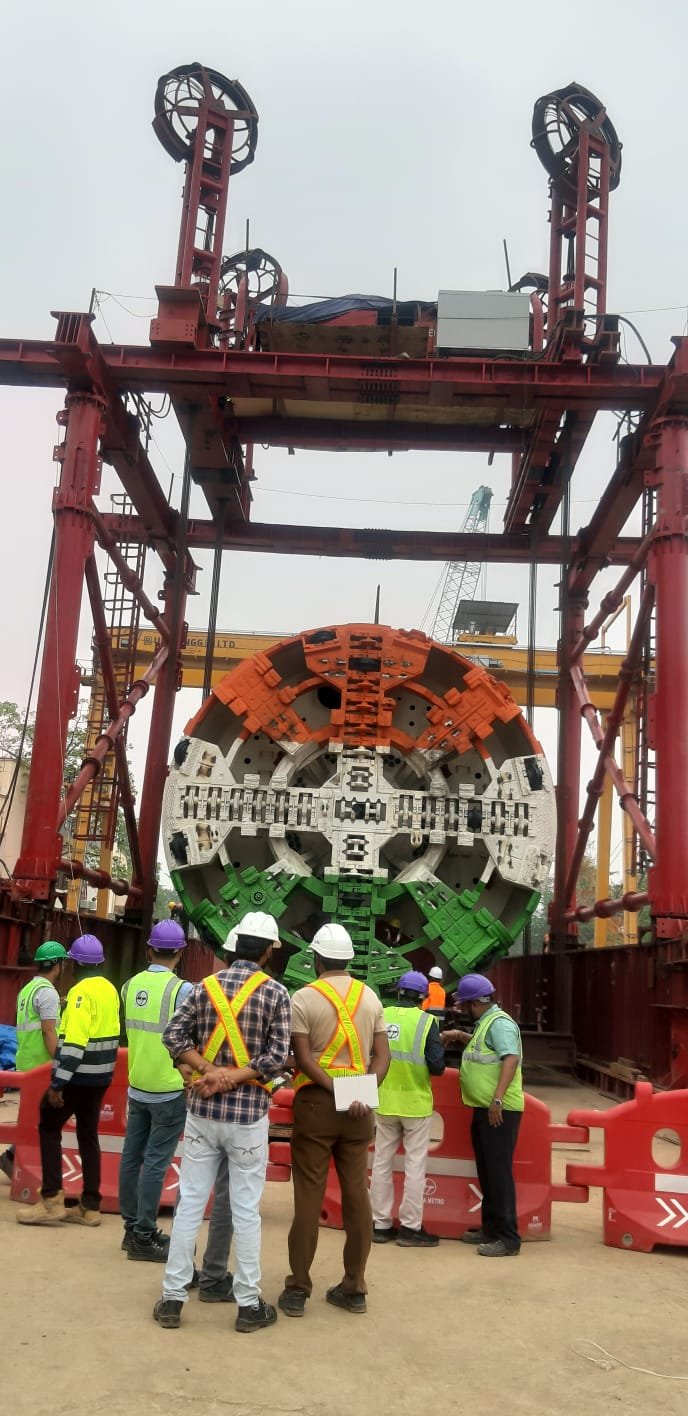 Patna is located on the south bank of the Ganges River in eastern India, which has alluvial soil. The groundwater level is also very high. As per the soil strata, soft soil Earth Pressure Balance (EPB) TBMs have been designed and manufactured for Patna Metro by CRCHI (China Railway Construction Heavy Industry Corporation Ltd.) The TBM shall first be launched from Moin Ul Haq Station towards Patna University station. What is TBMThe Earth Pressure Balance (EPB) Tunnel Boring Machine (TBM) comprises a cutter head, front shield, middle shield, and tail shield, along with the backup gantries. The main body length of the TBM is approx. 9m with EPB full length of 95m approx. The excavation diameter is 6650mm, with the precast ring lining with an outer diameter of 6350mm and inner diameter of 5800mm. Approximately 49cum of the earth will be mined for every ring installed. Grouting behind the segmental lining shall be carried to ensure that full and immediate support is given to the rings as they emerge from the rear of the TBM. Thus, a continuous process of mining, grouting, and ring building, with ground monitoring information analysis, will be applied during the operation of the TBM.