Pune Metro Line III Receives Special Commendation Certificate at International Forum

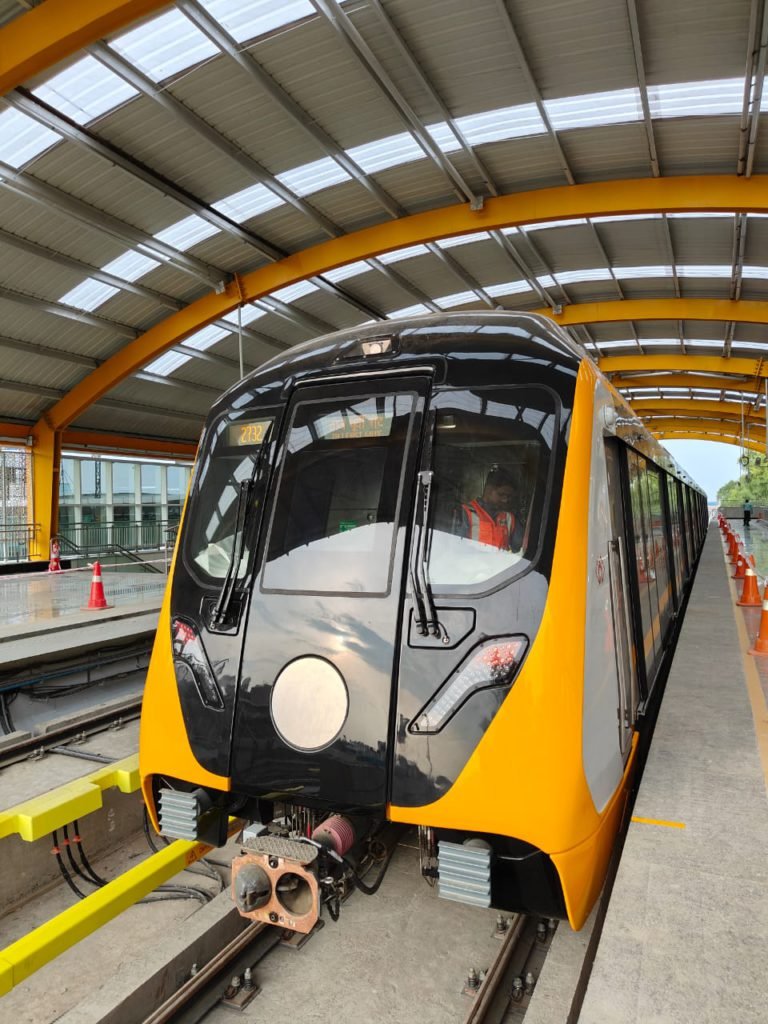
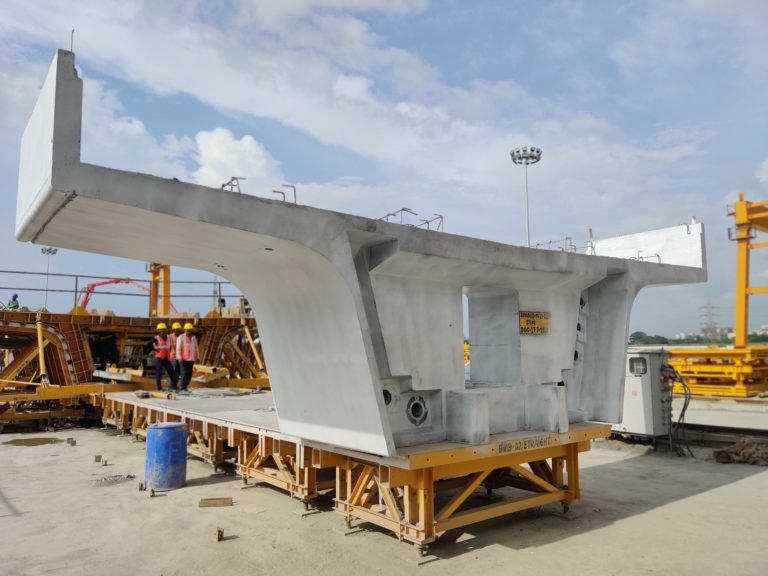
PUNE (Metro Rail News): Pune Metro Line III, also known as Puneri Metro, recently received the prestigious Skoch Award 2023 for urban development at the national level and has now been honoured with a “Special Commendation Certificate” at the Public-Private Partnerships forum held in Athens, Greece.This commendation is a recognition of the project’s significant achievements in Access & Equity and Environmental Sustainability & Resilience. It results from the tireless efforts of the Puneri Metro teams, notably the EHS (Environment, Health, and Safety) team, with unwavering support from the Civil, Business, and other departments, under the guidance of the finance team.A 23-kilometre elevated metro train project called Pune Metro Line III links Shivajinagar’s leading commercial sector with Hinjawadi, a centre for information technology. The project is being executed as a PPP initiative awarded by the Pune Metropolitan Region Development Authority (PMRDA) to a consortium comprising Tata Group’s TRIL Urban Transport Private Limited (TUTPL) and Siemens Project Ventures GmbH. Pune IT City Metro Rail Limited (PITCMRL), a particular purpose vehicle (SPV), has been established to develop and operate the project on a Design, Build, Finance, Operate & Transfer (DBFOT) basis for a concession period of 35 years, including the construction phase.Alok Kapoor, the Chief Executive Officer of Pune IT City Metro Rail Ltd, expressed his delight, saying, “Being acknowledged at a global platform by esteemed organizations such as UNECE serves as an inspiration for supporting outcome-based projects aligned with the Sustainable Development Goals (SDGs), like Pune Metro Line III. The construction of this metro will offer the public easy, convenient, and affordable transportation options. The Tata Group is committed to maintaining the highest quality and safety standards at every project phase. We look forward to a long and strengthened partnership with the people of Pune to develop quality and sustainable infrastructure in the city.”

Gurugram Gets Green Signal for 28.5km Metro Line: Boost to Urban Connectivity

NEW DELHI (Metro Rail News): In a landmark decision, the Union Cabinet, led by Prime Minister Narendra Modi, has given the green signal for the construction of a new metro line in Gurugram. This 28.5-kilometer elevated line, equipped with 27 stations, will link HUDA City Centre to Cyber City, with a spur from Basai village to Dwarka Express.The project, estimated to cost ₹5,452.72 crore, will be implemented by the Haryana Mass Rapid Transport Company. It is expected to be ready in 4 years from the date of sanction. This metro line will significantly enhance urban connectivity between old and new Gurgaon. By the year 2026, it is anticipated that the metro line will cater to a daily ridership of approximately 5.34 lakhs passengers. Currently, Gurgaon relies on the Yellow Line of the Delhi Metro Rail Corporation (DMRC) and the 11.6-kilometer Rapid Metro for transportation. The introduction of this new metro line will further improve connectivity to and from Gurgaon, providing a seamless commuting experience.It’s worth noting that the entire project will be elevated, offering an efficient and hassle-free travel experience. This new metro line is set to boost Gurugram’s growth and development, bringing improved urban connectivity to the city.

Delhi Metro Phase 4 Expansion Faces Delay in Key Corridors

NEW DELHI (Metro Rail News): The expansion of Delhi’s Metro network under Phase 4 has encountered delays, affecting the completion dates for three corridors. The fourth phase of the project would bring 46 elevated and underground metro stations totaling 65.20 kilometres to Delhi.The corridors affected by the delay are Janakpuri West-RK Ashram Marg, Majlis Park-Maujpur, and Tughalakabad-Aerocity. The Janakpuri West-RK Ashram Marg corridor was supposed to be completed by September 2025 but will now be operational by March 2026. Likewise, the Majlis Park-Maujpur corridor, originally set for November 2024, will be finished by March 2025. The completion date for the Tughlakabad-Aerocity corridor has been shifted from September 2025 to March 2026.The Delhi government approved six metro corridors for phase 4 expansion in December 2018; however, only three got the Union Cabinet’s approval in March 2019. The Construction work began in December 2019 but faced delays due to the Covid-19 pandemic.To move forward with phase 4, DMRC signed a contract with Alstom Transport India in December 2022 to acquire 312 Metro Coaches. These trains will be manufactured at Alstom India’s facility near Chennai. The Janakpuri West-RK Ashram Marg corridor will get 144 coaches, while the Mukundpur-Maujpur extension of the Pink line will be equipped with 90 new coaches. Furthermore, the Aerocity-Tughlakabad corridor is set to have 78 new coaches, enhancing the capacity and efficiency of these metro lines.

Four Metro Lines by November in Bengaluru: Deputy CM DK Shivakumar

BENGALURU (Metro Rail News): Deputy Chief Minister D K Shivakumar revealed exciting news about Bengaluru’s metro system during a recent review of the Namma Metro project. By November, the city will see the addition of four metro lines, bringing enhanced connectivity to its residents and visitors.During his visit to the offices of Bangalore Metro Rail Corporation Limited (BMRCL), Mr. Shivakumar discussed ways to speed up metro construction, increase non-fare revenue, and introduce new lines. These discussions aim to expedite the expansion of the metro network.The upcoming lines include the Baiyappanahalli-KR Pura line, which covers 2.1 kilometres and is expected to open in July. Additionally, the Kengeri-Chellaghatta line, covering 1.9 kilometers, will be completed by August or September. The Nagasandra-Madavara line, spanning a distance of 3 kilometres, has been under construction since 2017 and is expected to be opened to the public in either September or October. Finally, the RV Road-Bommasandra line (19.14 kilometers), connecting Electronics City, will be operational in October or November. Moreover, a 58-kilometer Silk Board-KR Pura-Airport line is planned for completion by June 2026.Mr. Shivakumar also emphasized the importance of making the metro financially profitable. Currently, most of its earnings are allocated to operational expenses. To address this, he proposed strategies to boost non-fare revenue, such as removing advertisement restrictions. Additionally, he recommended the adoption of a group captive model to reduce the metro’s power bill.Regarding future plans, Shivakumar mentioned that the Phase 3 Detailed Project Report (DPR) of the metro has been forwarded to the union government. He would travel to Delhi and discuss it with the concerned minister for approval. Phase 3A will consist of a 12-kilometre line from Hosahalli to Kadabagere and a 43-kilometer line from Hebbal to JP Nagar Fourth Phase. Moreover, surveys are being conducted for Phase 3B (Sarjapur-Hebbal), and Shivakumar emphasized the need for surveys on new lines.Although a BMRCL official declined to comment, clarifying that the meeting was solely a review session, Bengaluru’s residents can look forward to significant improvements in the city’s metro infrastructure with the forthcoming metro lines and ongoing efforts to enhance revenue and efficiency.

BMRCL Awards Track Contracts Worth Rs 501 cr to L&T for Phase 2A & 2B

BENGALURU (Metro Rail News): In an important development for the Bangalore Metro Project, Bangalore Metro Rail Corporation Ltd. (BMRCL) has awarded a contract to M/s Larsen & Toubro Limited for two packages related to the Bangalore Metro Project, Phase 2 A & 2B. These packages involve designing, supplying, installing, testing, and commissioning ballasted/ballastless tracks of standard gauge.Package-1 focuses on the elevated viaduct section from Silk Board Metro Station to Krishnarajapuram Metro Station and from Krishnarajapuram Metro Station to Kempapura Metro Station. It also includes the Baiyappanahalli Depot. On the other hand, Package-2 covers the elevated viaduct section from Kempapura Metro Station to Airport Metro Station, along with the Airport Depot.The accepted contract amount for Package-1 is INR 2,684,685,571/-, and for Package-2, it is INR 2,324,802,577/-. Both packages have a completion period of 36 months. The two works packages are as follows:• Package 1: This package includes the design, installation, testing, supply, and commissioning of ballastless tracks of standard gauge (57 KM Apx. ) in the elevated viaduct section. The section stretches from Silk Board Metro Station to Krishnarajapuram Metro station and from Krishnarajapuram Metro Station to Kempapura Metro Station. It also includes the Baiyappanahalli Depot.• Package 2:This package involves the design, supply, testing, installation, and commissioning of ballastless tracks of standard gauge ( 51 KM Apx) in the elevated viaduct section. The section extends from Kempapura Metro Station to Airport Metro Station. It also includes the installation of ballasted tracks in the Airport Depot of the Bangalore Metro Rail Project, Phase-2B.In October 2022, BMRCL invited tenders for these works under the reference number BMRCL/Phase-2A and 2B/Track Work/2022/93. This contract award is a crucial step in the progress of the Bangalore Metro Project.

Dr. Sanjay Mukherjee Assumes Role as the New Commissioner of MMRDA

MUMBAI  (Metro Rail News): In a bureaucratic reshuffle, Dr. Sanjay Mukherjee, IAS has been selected as the new commissioner of the MMRDA (Mumbai Metropolitan Region Development Authority). Dr. Mukherjee, a 1996-batch IAS officer, was previously in charge of the City and Industrial Development Corporation of Maharashtra Limited (CIDCO). He assumes the role previously held by SVR Srinivas, who has been designated as the officer on special duty (OSD) for the Dharavi Redevelopment Project.The state government has also made transfers of five other senior officials. Anil Diggikar, a 1990-batch IAS officer, has been posted as Vice Chairman and Managing Director of CIDCO, Mumbai, replacing Dr. Mukherjee. Manisha Patankar-Mhaiskar, a 1992-batch IAS officer, has been appointed as Additional Chief Secretary of the Public Works Department, along with additional responsibilities as Chief Protocol Officer in the General Administration Department, Mantralaya, Mumbai.Furthermore, Dr. K H Govinda Raj, an IAS officer from the 1995 batch who previously held the position of Additional Metropolitan Commissioner of MMRDA, Mumbai, has been designated as the Principal Secretary of the Urban Development Department at Mantralaya, Mumbai. Asheesh Sharma, a 1997-batch IAS officer, who held the position of Principal Secretary in the Urban Development Department, Mantralaya, Mumbai, has now been assigned as Additional Metropolitan Commissioner of MMRDA, Mumbai.

Environment-Friendly Modern Coaches for Mumbai Metro’s Line 3 Underground Corridor

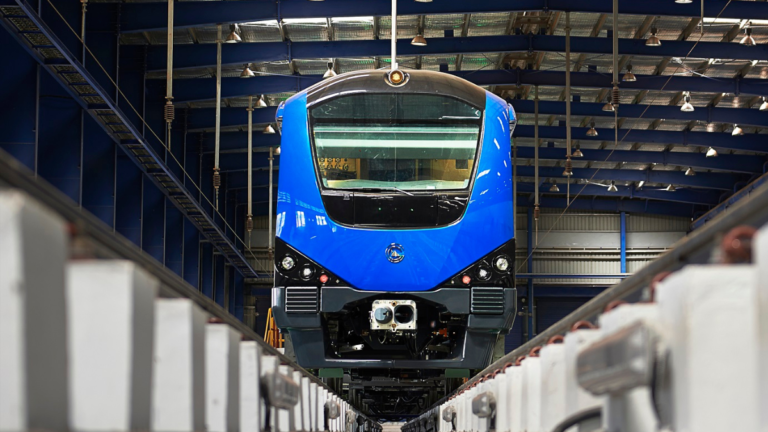
MUMBAI (Metro Rail News ): Mumbai is getting its first fully underground metro project, known as the Colaba-Bandra-SEEPZ Metro Line 3. Alstom, a French rolling stock manufacturer, has designed and built 31 lightweight and fully furnished passenger train sets for this project. Each train set consists of 8 cars and is expected to reduce 35% of overall traffic, as well as decrease air and noise pollution.The Metropolis trainsets from Alstom are renowned for their energy-saving capabilities and safety measures. They are built on the idea of “Dynamic Fluidism,” drawing influence from the city. These trains have a configuration that maximises internal space efficiency and allows each trainset to transport 3,000 people in a single journey. With a unique design and various configurations, it offers excellent performance using reliable components and innovations. The trains also adhere to eco-design standards, with 99% recoverable and 96% recyclable materials and components.Here are the eco-design achievements of the Mumbai Line 3 project:Efficient Energy Utilisation: The trains require 8.40 kWh per passenger per kilometre. Alstom aims to reduce energy consumption by 25% for all its product lines by 2025.Noise Level Reduction: Alstom has successfully reduced the noise levels below the approved limit of 82 dBA at a speed of 75 km/h.Environmentally Friendly Design: According to calculations based on the ISO 22628 standard, the trains are 96% recyclable and 99% recoverable.Sustainable Material Usage: The project adheres to applicable regulations and does not use any prohibited substances.Additionally, Alstom is installing Urbalis 400, the most recent CBTC signalling system, on the line. This technique lowers energy usage by 30% while increasing average capacity in staffed services and unattended railway operations by 30%.The day-to-day operations of the metro line, including management of stations, trains, and maintenance, will be handled by the Delhi Metro Rail Corporation (DMRC). With over 20 years of experience running and maintaining the Delhi Metro, the DMRC has been a pioneer in the Indian metro rail industry. It will be governed by key performance indicators (KPIs) to ensure clean, hassle-free, and efficient services for the people of Mumbai. This operation and maintenance contract marks a significant milestone for the Mumbai Metro Rail Corporation (MMRC) in operationalising the line.

Bentley Systems Unveils iTwin Activate: Empowering Infrastructure IoT

EXTON, Pa. (Metro Rail News): Bentley Systems, Incorporated (Nasdaq: BSY), the infrastructure engineering software company, today announced the launch of iTwin Activate, a 20 week co-development program designed to accelerate early-stage startups in infrastructure engineering software. The program, which is organized in cohorts aligned to industry sectors, is managed by Bentley iTwin Ventures, a $100 million corporate venture capital fund that fosters innovation by co-investing in startups and emerging companies.

The iTwin Activate program supports startups in scoping and building industry relevant solutions by leveraging or interoperating with Bentley technology through program and co-development funding, solutions architecture support, and access to Bentley executives for commercial insights. Tom Kurke, Bentley’s Vice President of iTwin Ventures, said, “Our first cohort was a small, invitation-only group of four startups focused on the electric grid industry. We were excited to see the innovative solutions that the startups built incorporating our technology. The projects serve as powerful examples of new capabilities that arise from these collaborations, and in some cases we are already seeing our shared users benefit from these new tools and the efficiencies they unlock.”

iTwin Activate Cohort #1 – Grid supported four startups: Spatial Data.AI, Virtual Technology Simplified, Rebase Energy, and SurPlus Maps.

Spatial Data AI’s solution automates the processing of LiDAR data from point clouds into ready-to-use vector formats, including SPIDAcalc models and various other CAD formats. This project focused on building a connector to Bentley’s pole analysis solution (SPIDAcalc). Spatial Data founder Doug Culbert said, “Participating in the iTwin Activate program supported the automated development of a design-centric digital twin for electrical distribution and telecommunications companies. The outcome of this initiative advanced our technical solution and expanded our service offerings in these markets. Spatial Data would like to thank the Bentley team for this accelerator program and is excited to continue co-developing products and services, enabling digital transformations across the infrastructure sector.”

Virtual Technology Simplified (VTS) enables tablet and phone data capture of utility assets and developed a data mobility and visualization solution on the iTwin Platform. John Chwalibog, founder and CEO of VTS, said, “For us at VTS, two things particularly jumped out. One was that the VTS development team had access to Bentley’s team of SME’s who could help us identify problems and collaborate with us to find solutions to any technical issues that came up throughout the project. Second was the team of people that came together over the course of the cohort. They were able to address the challenges all startups face when going from startup to funded company. We would highly recommend the program to other startups in the geospatial community as the experience was extremely positive for the entire VTS team.”

iTwin Activate Cohort #2 will focus on solutions for Infrastructure Internet of Things (IIoT) use cases and is open for all interested parties to apply. Cory Baldwin, Bentley’s Vice President of Infrastructure IoT, described his goals for this cohort. “We are excited to work with startups in the IoT space and build technology and partnerships together to solve the needs of the infrastructure sector. We are particularly interested in working with teams focused on creating predictive analytics or deriving insights from the sensor data federated in the iTwin Platform, as well as those creating novel sensors or sensing technologies that can be brought into our digital twin ecosystem as part of a software-led motion.”

If you are a team building infrastructure IoT solutions and would like to be considered for participation in the iTwin Activate Cohort #2, it is advised to apply at https://bentleyitwinventures.com/itwinactivate/. Applications will be open through June 16, 2023, and we anticipate notifying participants of their application status by June 23, 2023. We expect to announce iTwin Activate Cohort #3, focusing on generative artificial intelligence for infrastructure use cases, in summer of 2023.

Spatial Data AI created an export tool that outputs digital twin models of powerline assets for immediate use in SPIDAcalc, accelerating the analysis of electrical infrastructure.

Video: 360capture + OpenTower

VTS integrated its reality-captured data into an iTwin Viewer-enabled application, OpenTower iQ, to allow users to take manual measurements of assets and export PDF reports of those measurements.

About Bentley Systems

Bentley Systems (Nasdaq: BSY) is the infrastructure engineering software company. We provide innovative software to advance the world’s infrastructure – sustaining both the global economy and environment. Our industry-leading software solutions are used by professionals, and organizations of every size, for the design, construction, and operations of roads and bridges, rail and transit, water and wastewater, public works and utilities, buildings and campuses, mining, and industrial facilities. Our offerings, powered by the iTwin Platform for infrastructure digital twins, include MicroStation and Bentley Open applications for modeling and simulation, Seequent’s software for geoprofessionals, and Bentley Infrastructure Cloud encompassing ProjectWise for project delivery, SYNCHRO for construction management, and AssetWise for asset operations. Bentley Systems’ 5,000 colleagues generate annual revenues of more than $1 billion in 194 countries.

Agra Metro Rail Project Achieves Landmark Breakthrough at Agra Fort Station

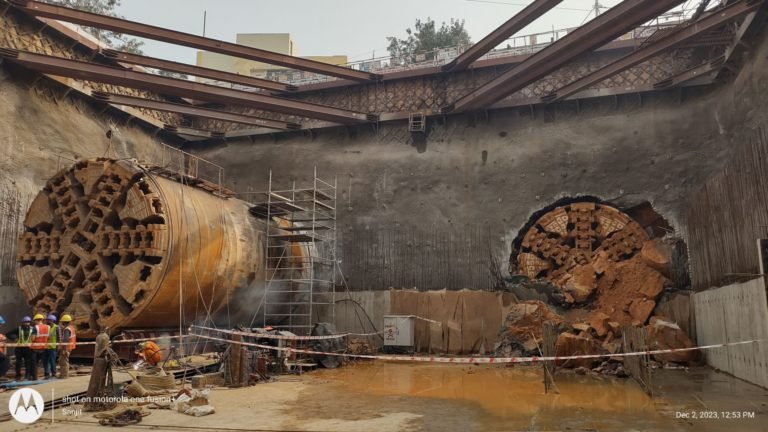
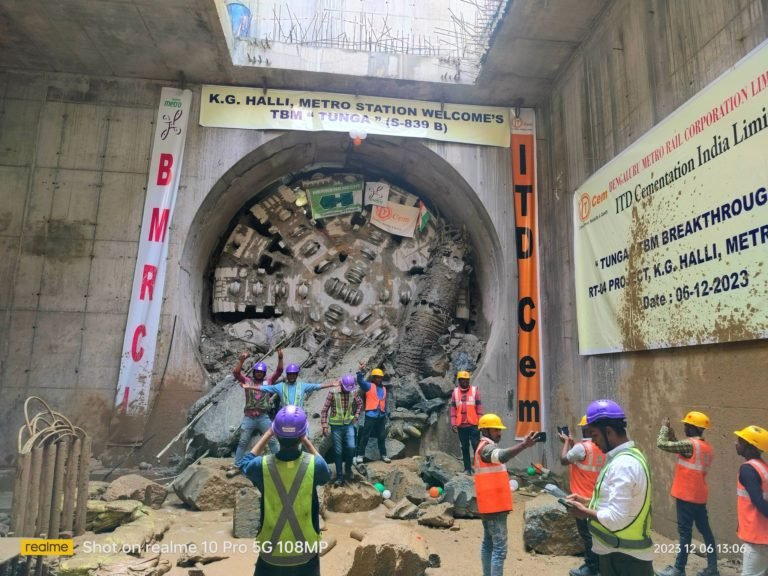
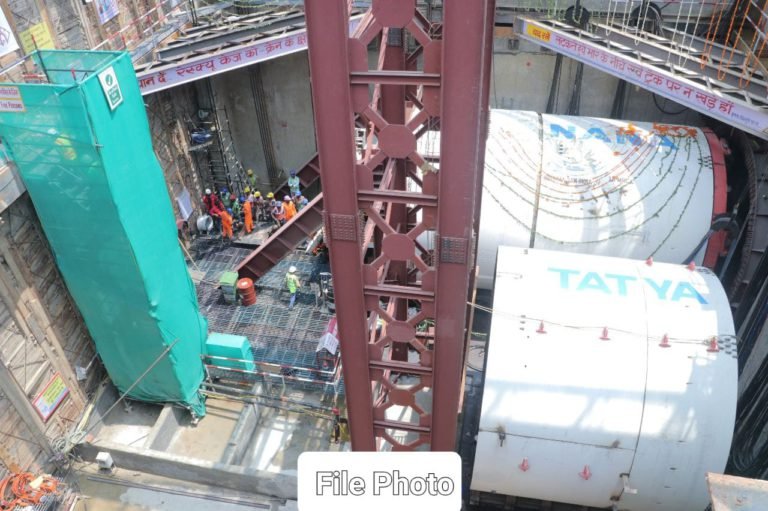
AGRA (Metro Rail News): Agra’s Metro Rail Project has reached another milestone with the achievement of the first breakthrough at Agra Fort Metro Station by the Agra Metro TBM named ‘Ganga’. The construction work for the underground section of the project is progressing rapidly, and this breakthrough is a major step towards completing the underground section.TBM GangaThe construction of underground stations is already in full swing, and the tunnel work is being carried out using a Tunnel Boring Machine (TBM). MD UPMRC, Shri Sushil Kumar, expressed the importance of this achievement, stating that the completion of the first tunnel section out of three is an important milestone. The aim is to start metro operations six months ahead of schedule, in March 2024 instead of the original deadline of August 2024. The three elevated stations and the train depot are nearly ready, and the testing and commissioning of three trains are currently underway at the high-speed test track in the train depot.TBM breakthroughs are highly challenging and require the utmost precision and accuracy in a metro project. UPMRC has a track record of completing projects ahead of schedule, as seen in Lucknow and Kanpur, and is continuing this legacy in Agra as well. After completing its breakthrough at Agra Fort Metro Station, the TBM will continue to construct the tunnel until the Taj Mahal Metro Station.

Exclusive Interview with Mr. Ramana, Vice President, Envision Enterprise Solutions Pvt Limited

“Metro Rail News” Fireside chat with Mr. Ramana, Vice President, Envision Enterprise Solutions Pvt Limited, a leading Automation solution provider for Metro Rail Operators and Owner. Envision has several Metro Rail customers in India and outside India. With more than 14 Metro Rail customers, Envision is bringing innovative solutions for their customer engagements. Q.1. How did Envision build a strong competency in the metro rail segment? What made you successful? Envision is predominantly focused on Asset Life Cycle Management solutions since its inception in 2006. Our teams worked in various industry verticals like power generation, oil & gas, airport and sea port. During Delhi Metro initial days, we got an opportunity to interact with industry experts. This helped us to understand the need for automation solutions for metro asset life cycle management. We formed a core team and started building demonstratable pilots. We are proud of the work done in the last one decade. We have several customer engagements in India, Asia Pacific, the Middle East and Africa regions. Q.2. What are the major factors attributed by asset management software to the transportation industry? The transportation industry is a very regulated industry for public safety and performance reliability. Metro Rail is the nerve centre for urban transportation. Being a critical infrastructure requires the highest level of governance, safety, and passenger comfort. Having a robust maintenance system is a key factor in accomplishing these goals. Envision brings immense domain expertise for the successful implementation of best practices for an existing Metro rail operator and upcoming Metro networks. Q.3. How do you rate significant contributions that enable the industry to look upon Envision as a dependable collaborator? Envision believes in an immense value proposition for its customer engagements. This is the best way to prove our commitment to our customers. We took conventional Asset Management to the next level. Today we have IOT based digital solution for predictive maintenance and reliability improvements. We invested heavily in building solutions like Crew Roster and Train Operations Management. Non-Fare revenue management, Incident Management, Workforce Management. We are expanding our portfolio.Q.4. Describe Envision’s roadmap in helping the Metro industry to meet the sustainability goals. Globally, all enterprises are having stringent sustainability targets. Metro industry is already contributing to sustainability goals by reducing carbon emissions in urban commuting. We can take this to the next level by enabling metro rail to have sustainable maintenance management practices and extending the life cycle of assets. Q.5. What are the major plans for metro rail customers and stakeholders?We have a long pipeline of product offerings under development for the Metro rail industry. We see there is a tremendous opportunity to enable this industry with best-of-the-breed solutions. Our goal is always to provide cost-effective, indigenously developed solutions.Q.6. Tell in brief about envision and your vision to customers.Since its inception in 2006, Envision always focused on delivering more value for our customers. We continue to strive to keep up our commitment to our customer success.

Exclusive interview with Mr. Kumar Keshav, CEO, Deutsche Bahn (DB RRTS Operations India Private Limited)

Metro Rail News conducted an exclusive interview with Mr. KUMAR KESHAV, Chief Executive Officer (CEO), DEUTSCHE BAHN (DB RRTS Operations India Private Limited).Shri Kumar Keshav is an IRSE (Indian Railway Service of Engineers) officer and a gold-medalist engineer from IIT- Kanpur (M.Tech) and IIT-Roorkee (B.E.). Shri. Kumar Keshav with his vast experience of implementing Lucknow and Kanpur Metro in record time is now leading the DB RRTS Operations India team for efficient and cost-effective operations & maintenance of India’s first ‘Delhi- Ghaziabad-Meerut’ RRTS corridor.Q.1. What, in your opinion, can be the best strategy to execute metro and infra projects in the country in a speedier way seeing the need and urgency of developing transport and infra projects on a gigantic scale in the nation?To accelerate the development of transportation and infrastructure projects on a large scale, several effective strategies can be implemented. Firstly, Public-Private Partnerships (PPP) can be utilized to involve private sector players who can bring in additional resources and expertise, resulting in more efficient project execution. Additionally, standardizing designs and processes can expedite project execution by reducing the time and effort required for project planning, design, and construction.Secondly, efficient project management is critical to delivering projects on time and within budget. Robust risk management strategies, project management tools, and regular monitoring and evaluation of project progress are all essential elements of effective project management.Thirdly, streamlining approval processes for obtaining permits and clearances can significantly reduce project timelines. Governments can establish a single-window clearance system for infrastructure projects to expedite the approval process.Fourthly, technology such as Building Information Modelling (BIM), Geographical Information Systems (GIS), and project management software can enhance the efficiency and speed of infrastructure projects by streamlining project workflows and improving project delivery.Lastly, engaging local communities and stakeholders in infrastructure projects can help speed up project implementation by reducing resistance and delays caused by protests and public objections. By implementing these strategies, the execution of metro and infrastructure projects can be accelerated to meet the urgent need for development in the country.Q.2. You are accredited and admired for accomplishing metro projects like Lucknow and Kanpur Metro in the record and due time. What other major achievements did you highlight for yourself as a rail technocrat during your 40 years of long professional career? These projects have fulfilled my professional aspirations and personal goals. With over 40 years of experience as a rail technocrat, I have been fortunate to contribute to multiple metro projects across India. One of my notable accomplishments was completing the Lucknow and Kanpur Metro projects within a record time frame.I believe that metros play a critical role in the transportation mix of urban centers, particularly in India. The energy required per passenger-kilometer in a metro system is significantly lower than that required by cars or two-wheelers. However, the development of mass transit projects such as the metro requires significant investments that cannot be provided solely by the government.Private participation is essential to ensure the financial viability of such projects. Private players bring expertise, skills, and technological upgrades that can improve the overall quality of the project.One of the primary challenges in any metro project is to gain public support and address their concerns and expectations through consistent stakeholder engagement and community interaction programs. The execution and implementation of the Lucknow Metro project was more challenging than that of the Delhi Metro due to various engineering hurdles. However, with the enhanced skill set, expertise, and technological upgrades brought in by private players, we completed the project 36 days ahead of schedule.Overall, developing metro projects in India has faced many obstacles, but the success of projects like the Lucknow Metro proves the necessity of this urban mass transit system. It has always been about the work itself and the impact it can have on the world. I am proud to have worked with dedicated teams on these projects, and the recognition they have received is a testament to the incredible work we have done together.Q.3. Metro Rail Policy 2017 advocates the need for private sector participation in regional rail and metro projects in India. In what ways do you think it shall promote rail activities in the country? The Metro Rail Policy 2017’s advocacy for private sector participation in regional rail and metro projects in India can promote rail activities in the country in several ways:Increased investment: Private sector participation can attract significant investments from domestic and international companies, thereby providing the necessary capital for the development of rail infrastructure in the country.Technology transfer: Private sector participation can bring in advanced technologies and innovative solutions to the rail industry, leading to modernization and up-gradation of existing infrastructure.Improved efficiency: Private sector participation can improve the efficiency of rail projects through the introduction of new management practices, streamlined processes, and specialized expertise.Employment generation: The involvement of private players can lead to job creation, both directly and indirectly, through increased demand for labour and support services.Reduced burden on the government: With private sector participation, the government can share the financial and operational risks of rail projects, thereby reducing the burden on the government and freeing up resources for other development activities.Q.4. DB India is a subsidiary of Deutsche Bahn AG, the National Rail Company of Germany. As CEO of the foreign group, what are your role & responsibilities? Which major goals and priorities are you focussing on holding the coveted position?As CEO, my primary objective is to oversee the transit system’s overall performance and ensure that the public receives secure, dependable, and efficient transportation services, along with the transfer of cutting-edge rail technology from Germany to India.To achieve this goal, we have developed and implemented strategic plans, policies, and procedures while managing financial resources, ensuring compliance with relevant laws and regulations, and establishing effective communication channels with stakeholders and partners.As a world leader in the operation and maintenance of railway projects in different countries, Deutsche Bahn (DB) is paving the way for the transfer of knowledge, best international practices, and managerial services available around the globe to the Indian metro and rail O&M industry.Our vision for DB RRTS Operations India Pvt. Ltd. is to establish it as a world -class provider of efficient, safe, and sustainable transportation services. Leveraging Deutsche Bahn’s global expertise in railway operations and maintenance, we aim to set the highest standards of safety and reliability for the RRTS corridor while keeping it cost-effective and environmentally sustainable.Q.5. Indian Railways is going through a transformational phase. How do you envision railways in coming years amidst the government’s efforts to transform the national transporter in an equitable way for all classes? Is there any suggestion you shall like to highlight?The expanding metropolitan regions and rising population in India pose significant transportation challenges, which the government is addressing through initiatives such as “Make in India” to boost domestic production capability for transportation systems. This has created interesting opportunities for global rail companies to participate in the growing market.Rail transportation will play a major role in India’s development, helping to tackle challenges related to carbon dioxide emissions and sustainable development. Green Urban Mobility Partnership with Germany is being discussed to improve sustainable urban mobility infrastructure, and companies like Deutsche Bahn can share technological solutions for immense benefits, DB being the world leader in railway technologies.Q.6. What would be your message to young aspirants willing to make a career in railways?To all the young engineers and management professionals aspiring to build their careers in the Rail & Metro sectors, I have a simple message for you: go for it!The Rail & Metro sectors are exciting and dynamic industries that play a crucial role in the efficient movement of people and goods. These sectors offer a wide range of career opportunities across various disciplines, from engineering and construction to operations and management.If young aspirants are passionate about technology, innovation, and making a positive impact on society, the Rail & Metro sectors are the perfect place for them to build their careers. With rapid urbanization and the increasing demand for sustainable transportation, these sectors are experiencing significant growth, which means there will be plenty of opportunities for you to grow and develop your skills.My advice to you would be to remain curious, embrace a willingness to learn, and never be afraid to take on new challenges. Building a robust network of mentors and peers is essential, so seek out opportunities for training and professional development. Keep in mind that success is not just about individual achievement, but also about collaboration and teamwork.Therefore, if you’re passionate about the Rail & Metro sectors and have a drive to make a difference, pursue your dream career with confidence. The world needs more talented professionals like you to help shape the future of transportation.

Coimbatore and Madurai Metro Project’s DPR to be Finalised by Month End: CMRL

TAMIL NADU (Metro Rail News): The Chennai Metro Rail Limited (CMRL) officials have announced that the detailed project reports (DPRs) for the proposed Coimbatore and Madurai Metros will be finished by the end of June. The CMRL was assigned the task of hiring consultants to prepare feasibility reports and DPRs for constructing mass rapid transit systems in these two cities due to the increasing traffic congestion.In the feasibility report, it was suggested that a 31-kilometer network be established in Madurai to connect Othakadai with Tirumangalam. Similarly, for Coimbatore, a stretch of 40 kilometers was proposed, which would consist of two corridors in phase I. The first corridor would run from PSG Foundry to Ukkadam Bus Stand, and the second corridor would connect Collectorate to Valiyampalayam Pirivu.For Madurai, the State government received the feasibility study a few months ago, and the DPR work started after additional instructions from the government. Although the feasibility report and the DPR were finished in the instance of Coimbatore, officials in the State government had conversations and determined that a number of adjustments needed to be made. As a result, the DPR was re-modified and started some months ago.Over the past few months, CMRL officials have conducted discussions with stakeholders from various departments in both cities. According to officials, the DPR project is almost finished, and the reports will be ready by the end of this month. Once submitted to the State government and approved, the next steps such as land acquisition, utility diversion, and construction work can begin in the upcoming years.

Exclusive Interview with Mr. Shree Harsha, Global Sales Strategy Director – Supply Chain & Logistic, Dassault Systemes

Metro Rail News team conducted an exclusive interview with Mr. Shree Harsha, Global Sales Strategy Director – Supply Chain & Logistic, Dassault SystemesShree Harsha is an accomplished professional with over two decades of experience in international business consulting, management consulting, technical expertise, and sales and marketing. Currently serving as the Logistics & Supply Chain Global Sales Strategy Director at Dassault Systemes, he has played a crucial role in developing sustainable innovations aligned with the UN Sustainable Development Goals. He has worked extensively with companies in India and across the globe, including strategic customers in Japan, China, Germany, France, and North America. Narendra ShahWhat have been the major solutions and brands for Dassault Systemes in recent times, being a pioneer for 3D product design, simulation, manufacturing and other 3D-related products?Shree Harsha: Dassault Systemes have been in India for a quite a long time now. We call ourselves as the 3DEXPERIENCE Company with a mission to build the entire economic, value creation process using the Dassault Systemes product portfolio. We call it as virtual universes, and we work towards building virtual universes for manufacturing infrastructure and life sciences sector. That is how we look at the business at a very macro level. We are a French-listed company, and we have been in India for almost 20 plus years now. We have a significant presence in India with more than six office locations across the country, with headquarters in Bangalore and Delhi and R&D labs in Pune and Bangalore. For proximity towards the customer, we have offices in Ahmedabad, Calcutta, Chennai, Bangalore, Mumbai and Pune. We are growing in India, and we have roughly around 4,000 plus people currently working in the country with the second largest user base after Paris. We are around 5.5 billion Euro revenue company with the business interest across different industries. Railways and Ports are two industries which cover us with most of the things around logistics. So, logistics is one of the core businesses for us in the way we cater to our customers, and therefore, we feel really proud to be associated with different logistics projects in India today, especially the GatiShakti project. The ambition of the Gatishakti is to reduce the cost associated with logistics when compared with the percentage of GDP ranging from 14% to 18%. This is happening through better coordination, better alignment with regard to clearances of the processes, and making sure that there are less bottlenecks with regard to the delays for the clearances from one department to the other in getting approvals. We believe in having a single repository of information like single source of truth, what we generally refer to as a 3DEXPERIENCE platform to build the entire logistics virtual twin to be able to cater to the needs of rail and ocean freight, trucking, last mile connectivity and primarily what is referred to as intermodal logistics which is basically multimodal logistics with urban planning done in a better fashion. If one wants to send goods today from point A to point B, many customers may not opt for one route. In this situation, we provide a virtual twin platform for them to able to plan, simulate, optimise and to be able to deliver these experiences to the customers using a 3DEXPERIENCE platform. That’s our larger ambition in the way, what we cater to the market.Narendra Shah: Being a French company, what is the Dassault’s vision and mission in India?Shree Harsha: Our primary mission is to make sure that our customers, in their journey of innovation, work with Dassault Systemes in their product development strategy. We help our customers build better experiences eventually for their customers. We do that through our 3DEXPERIENCE universes, which enable to innovate better, reduce cost and optimise the working efficiency of the interdepartmental workflow together so that the customers acknowledge and remember the services and products that are delivered in a better fashion. We do that by having long-term partnerships with our customers. We build relationships for five, ten, fifteen-year horizons, and some of the relationships we have with companies like Boeing, for an example, have been for more than the last thirty, forty years. We are working very closely with almost 10,000 plus Indian customers today. Globally, we are around more than three lakh customers using Dassault Systemes products. In India, we are also working quite closely with academic institutes. It means we have more than 1000 finer education institutes teaching Dassault Systemes product portfolio every day, along with the domain skill sets necessary. We align with the national agenda of skill development in India, which is the first aspect. The second alignment is that we work very closely with the start-ups in India through our 3DEXPERIENCE lab, which is our start-up incubator.We support the Indian start-ups in various business sub-segments so that, they provide the most innovative products which are sustainable, take lesser resources and have minimal carbon footprints to make sure that we help in the course of making India and designing India through this journey. We are very much focused in aerospace, defence, automotive and industrial equipment. That’s our core bread and butter in terms of revenues. While we are diversifying quite a lot into CPGR, which is consumer package goods and retail, we are into high-tech businesses because of the new interests in terms of the new economy which we see in India. The last one is the business services. We are witnessing huge investments coming in the logistics aspect in the Indian economy assets. Hence, we work, bring in our knowledge and expertise and help Indian customers to build better products and services and use lesser resources so that they are much more sustainable in their innovation journeys.Narendra Shah: Especially for the transportation sector like metros and railways, what have been the biggest achievements so far being the global sales strategy director of supply chain and logistics at Dassault system?Shree Harsha: At a very macro level for railways and rail business, we have two sites of the business operations. One at the upfront, which is the design and the manufacturing of the rail components, the rail coaches, the rolling stock, the infrastructure and the interiors. Most of the companies like Alstom, Rotem, and Bombardier, who are supplying these coaches to Indian railways, use Dassault Systemes tool sets to design, manufacture, and do the quality checks and balances. They use AR, VR and use digital twins to deliver the best quality product at the right time and price for Indian railways to leapfrog in railway investments and go best in world-class in whatever expenditure is being made. Whether it is electric trains, new investments coming in hydrogen-based locomotives and trains, we are amongst the cutting-edge technology research projects today which are working with quite a lot of Indian business units under railways helping them to localise their components in their design and manufacturing journey. That’s the upstream of it. The downstream of it is the rail freight operations. It is the most profitable business for Indian railways. Nearly eighty per cent of Indian rail revenue comes from its freight operations. If we look at what is being transported by freight trains in India, we’ll see that sixty to seventy per cent is chemicals, coal and a little bit of automotive. The challenge with freight operations in India lies across its more than 68,000 kilometres of railway tracks to transfer the goods from point A to point B, with a number of constraints like passenger and goods train running on the same track. We are, therefore, working closely in solving these kinds of complex operational research challenges. We help not only railways in solving these kinds of complex logistics puzzles worldwide but different companies in freight, crew, service requirement or the entire intermodal planning of the marshalling and managing the railway yards and even managing the connectivity across all of these together. Globally, we work with quite a lot of players who are leaders in this particular segment, and we’re trying to bring this sort of technology so that we can help Indian railways to maximise the revenue, reduce the operational cost, improve safety elements and get much more confidence on their maintenance activity because we are in the journey of helping customers in the predictive maintenance as well. Narendra Shah: You have 3DEXPERIENCE platform. Could you please explain how it can be beneficial for the Metro Rail operators in our country?Shree Harsha: A 3DEXPERIENCE platform specifically is a business experience platform. It connects the various stakeholders in any business function to be able to streamline them and perform day-to-day activities. Coming to the Metros as a specific example, when we look at a metro line being developed in a city, we find there are a number of processes associated with it. Somebody needs to look at the city’s urban planning environment, envisage the key congestion location, identify the areas where the Metro line and stations need to be created and then create a DPR, a detailed project report.We help our customers with all these planning activities. An example that we have with us is Singapore, where we worked quite closely in these kinds of urban planning scenarios in terms of identifying the locations, the areas where the metro lines could be put up and other planning activities. In India, we have worked quite closely with Jaipur Urban Development Authority in doing this sort of urban planning. So, developing a metro system, once we have a DPR, a model in our mind, then we need to visualise the number of lines and stations needed for the Metro, the signalling and the various other aspects. Thereafter, one needs to create a project report for it and look for a tender process to be able to procure the rolling stock like coaches. So, we need to create that specification document which we are helping many of the customers worldwide to build in 3D so that there is no confusion regarding the specification of the Metro Systems being developed. Once that’s done, companies who bid for this project may deliver the bridges, the quotation for station construction, rolling stock and locomotives, and then finally, we have an operational metro train available. Then comes workforce management. How to manage the workforce for the operational Metro system, manage the timetable, the service timetable and the maintenance schedule of the Metro are the areas where we help the metro operators. Some lines may break, some repairs might come in and the rail operators need to rearrange the line accordingly and also see if there is a spare locomotive available. So, the operational aspects of running a metro line are the areas which we take care of using our platforms for the customers. We have the de facto partner in rail systems worldwide because customers see us as a partner of choice in their journey of technology and operational efficiency improvement, and that’s exactly what we’re trying to do in India.Narendra Shah: What are the latest trends in the transportation and mobility industry? Seeing the rapid urbanisation of cities globally, what can be the best approach to sustainable public transport systems?Shree Harsha: It’s a valid question. Sustainability is at the heart of Dassault Systemes‘ product vision strategy and our operations. In fact, we have declared our science-based target initiatives on even reducing our own CO2 emissions with regard to our day-to-day operations. We are on par aligned with the UN sustainable development goals on the journey of sustainability and helping many of our customers in their sustainable journey as well. We are a trusted partner of our customers in this segment. The three areas where we help our customers with sustainability are product, process and operations. Any company which manufactures goods uses a lot of raw material, water, energy etc. We help them to reduce it using our software so that they are able to manufacture the goods and convert the raw materials used by them into final product by using lesser energy. Second, comes the process. When we say process, it means the various steps involved in converting raw material into a finished good or a product. Let’s say, raw steel to the final product as an output. During the process, there are a lot of non-value-adding activities, inefficiencies, energy consumptions etc. going on as a part of the process. It is where we help our customers. We have complete tool sets to help our customers navigate their sustainability charter altogether. That’s number two. Last but not the least is the operations. If calculated, we see that sixty per cent of the cost involves energy consumption while sending the goods through ship, train or trucks based on fossil fuels. This can be improved. We help our customers to make this kind of informed decision so that they can optimise the transport making the travel much more sustainable. During the course of the journey, if someone doesn’t want to use the fossil fuel and wants to switch to electric, we help the customers in their transition towards the electrification journey. That’s a valid aspect of our sustainability goal. So very importantly, we are the leaders in the sustainable journey for many of our customers worldwide.Narendra Shah: The Indian government is making huge investments on the transport and infrastructure development. What are the major products and customised solutions offered by Dassault Systemes?Shree Harsha: Seeing the huge investment the Indian government is making, especially in the projects like GatiShakti and different aspects in which the Indian infrastructure currently lacks, we are trying to help build India’s virtual twin of logistics so that we have the most efficient successful logistics network in India in compliance with all the safety and the regulatory norms associated with the government departments. The safety and regulatory norms can be related to safety & signalling and warehouses which is being built across Pan India. We even help managing and digitising various constraints being faced by different sectors in India and optimise everything around. So that we get the most optimised roads, freight, and workforce, which helps in the direction of reducing the logistics cost to the 8% of the GDP. We are the technology partner of choice for most of the companies in this logistics segment, and we want to bring that to India and be partnered with this journey which we are trying to achieve by 2030. This is what, in brief, for our major products and customised solutions. Narendra Shah: In what ways virtual twin is different from digital twin? What are the major sectors that benefitted from the technology to provide multidisciplinary and multiscale solutions?Shree Harsha: More and more world today is changing towards what we call a cyber-physical system. It technically means multidiscipline, mechatronic-centric subsystems, and we are developing Dassault Systemes tool sets, the CATIA apps available with us and the design apps on top of the 3DEXPERIENCE platform, which is helping in model-based systems, engineering to build cyber-physical systems. We presently are leaders in the model-based systems engineering space worldwide with our Catia portfolio, which is the de facto tool globally for any high-tech design. Nearly ninety per cent of the cars and almost ninety-five per cent of the planes are designed using the Catia tool sets, which we are trying to see how we can further work on it. We are also working with logistics twin, which we pioneer with our systems and multidiscipline systems engineering approach altogether. Connecting back to what’s being said earlier, i.e., the difference between the Virtual Twin and the Digital Twin, I would say that both technologies are quite similar with respect to the multidiscipline systems engineering approach. Digital twin can be just a 3D representation of any particular object. With virtual twins, we have various additional elements associated. We can have the behaviour element, the time element and the schedule element associated with it so that it is much more reactive to data and insights, and it can also learn automatically with artificial intelligence and machine learning. Learning through the real-time environment, we apply to the virtual so that we are much more confident in the way we deliver the outcomes of execution.Narendra Shah: What are the complete advantages of being with the Dassault systemes compared with the other companies in the market in the same domain?Shree Harsha: Dassault Systemes is a long-term thinking company considering the way we operate and work with our customers. We have a very unique value engagement consultative approach with our customers. We sell a product portfolio for a particular need in the market where we understand the challenges faced by the customers and help them charter their digital journey. We put up a roadmap of a few years and have some key milestones with the right KPIs in place so that we can realise the ROI for the technology investments. Defining the roadmap together with the customer, we see the success, and then we go into the much larger scale in terms of deployment. Many customers in India, like Ashok Leyland, Eicher Motors, and Mahindra, have been with us for more than twenty years. So, our partnering with major companies for technology and other support for a longer period has been one of our major achievements and key difference which keeps us apart from other companies.The other one I would say is, we are the only company in the world to provide a 3DEXPERIENCE platform with all the apps, which gives a modular approach to our clients so that they can scale up their technology investments. It means that our clients can address different challenges simultaneously. Challenges in manufacturing, design, sales, operational efficiency and others can be addressed and scaled up to a higher level. Most of the companies like Renault in India, Alstom worldwide use our system tool sets for the design and development of their products. So, we can say that we are the leaders in this particular space and we are a kind of innovation partner for many of our customers, being with them in the journey of digitisation.Narendra Shah: Any message for our readers? We would also like to know your views on our magazine.Shree Harsha: I follow your magazine. I think you guys are doing a fantastic work with regard to three things. Number one, you are delivering the best news on various sets of investments, which is quite beneficial for companies like us and also for people, academic institutes and for students as well. That’s a fantastic job, and I should really congratulate you for the work you’re doing. And number two, I think you’re also helping quite a lot of new companies which are trying to enter India because this is the most happening industry presently. The metros, the railways, track maintenance, and the infrastructure are supposed to be the most promising industries today. You have a wealth of knowledge to share with a lot of companies coming to India. So, hats off and thank you for your efforts. And last but not the least, I think you people are also building awareness about this sector which is quite promising and disseminating the message that India, in its Amrutkal and development spree, will have a lot of investment in infrastructure, and there would be new opportunities, emerging opportunities in the area of infrastructure.Also, thanks to your website, which many people are discovering for their information. So, we shall be really happy to contribute in any way possible with our use cases and case studies, which can be beneficial for your readers.Narendra Shah: Thank you so much for your kind words, and we’ll try to give our best in terms of information that can be authentic and that can be without any influence. We do provide the services to the people who want to set up the businesses in India through our information dissemination approach and event platforms. So, we owe our commitment to try and bring forward the best job in the market today, across the industry and various people around. Thank you for your time.

Systra JV Successfully Completes Commissioning of EDFC-2’s Final Segment

UTTAR PRADESH (Metro Rail News): In a major milestone, the Eastern Dedicated Freight Corridor (EDFC-2)’s final segment, spanning 27 KM from New Pt. Deen Dayal Upadhyay Junction to New  Ahraura Rd, has successfully been commissioned by Systra JV on May 31, 2023.Having achieved this notable milestone, the commissioning of the complete EDFC-2 has been accomplished, successfully connecting the 1875 km long route from Sonnagar, Bihar to Ahmedabad, Gujarat. This development has led to a  reduction of approximately 15 hours in the transit time for coal transportation.
The commissioning of EDFC-2 also involves a 422 RKM stretch from New Bhaupur to New Pt. Deen Dayal Upadhyay Junction. This section features a 2x25KV Electrified Double Line and Automatic Signalling, enabling smoother operations and improved connectivity. Systra JV had previously commissioned a 351 km section from New Bhaupur to New Khurja of DFCCIL in 2020.
The successful commissioning of the EDFC-2 sections marks a significant advancement in improving freight connectivity throughout India and influencing its future.