Home Blog Page 851

Six types of People you meet in Delhi Metro

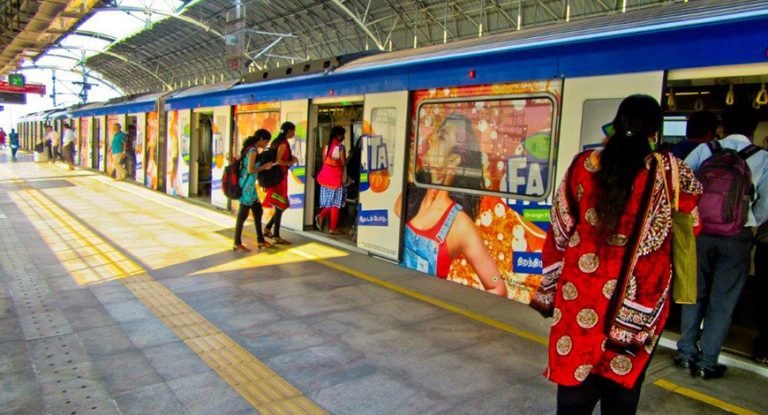
Hilarious it is, but you must have definitely encountered the following types of people while travelling in Delhi metro. They are quite a bunch to look out for and I am sure their absence would make the journey less interesting.

1. I love reading and you should too

These are the book-lovers of the Delhi metro, who read despite standing in the crowd, flipping through the pages, appearing deeply engrossed in the story. You can make an entire list of ‘To Be Read Novels’ just by noticing the titles of the ones being read by your fellow passengers. If you are not the one who enjoys reading, you definitely will become a forced book lover (grin again).

2. Blah, Blah & you know Blah!

These gossip mongers are of two types; ones who draw their phones closes to their mouth while speaking (implying speaking with boyfriend/girlfriend) and the others who speak so loudly that probably people in other compartment can also hear them (implying speaking with a friend, family member or colleague). Their talk seems endless and they go on non-stop, compelling you to pick up your phone and call someone too.

3. Yawn! I haven’t slept in ages

These are the ones who travel by Delhi metro especially to SLEEP. From the minute they step on the train to the time they reach their destination, you will find their eyes closed. Their heads will take turns resting on the shoulders of fellow passengers, first left then right. It’s hard to miss the frown on the person whose shoulder is the victim here; I comprehend their expression as “Excuse Me! Resting on my shoulder is chargeable at Rs. 100 per second”.

4. Please don’t stop the music

One, two, three…goes on endlessly, when you start counting the number of people listening to music in the metro. No wonder they would have specially created a playlist called “Listen when travelling in metro only”. Not only do they listen to music and go into the flow, with their heads swaying and foot tapping; they also make sure the fellow travellers get a sneak-peak into their ‘Happening’ choice of music.

5. This is the last train of my life

Well, these types of Delhi metro travellers are most commonly found (pun intended). They are the ones who though, transform into Milkha Singhs the minute the train stops at the platform. The hustle and bustle then makes you wonder if no other train will run after that (grin).

6. Are you talking to me?

These are the people who by chance or purposefully occupy the reserved seats of senior citizens and women. The minute someone walks upto them to claim the seat, they either hide their faces in the book they are reading or turn up the volume of the song they are listening to. It is amusing to see the change in their expression; going from “Yo” to “Oh No!”

(By: Ms. Kirti Sinha, A Regular Traveller)

Readers can also share their experience and articles via e-mail to metrorailnews@gmail.com. The selected article will be published at www.metrorailnews.in 

Mumbai Metro: The new destination for filmmakers to shoot in Mumbai

Mumbai: Film and advertisement makers have found a new destination to shoot in Mumbai. Earlier, the shootings were limited to suburban railway or sets at the Film City. But now Mumbai Metro has also been added to the list with as many as eight production houses already have shot at the Versova-Andheri-Ghatkopar Metro rail premises.

From these eight production houses a total revenue of Rs 85,68,731 has been generated by the Mumbai Metro One Private Limited (MMOPL) — the Special Purpose Vehicle formed for the metro project. The sum is only the amount received by the companies excluding taxes.

In the financial year 2014-15, two production houses came forward with their shooting proposals, wherein a sum of Rs 46,14,988 was earned by MMOPL. The following year, that is in 2015-16, six others paid Rs 39,53,743 to the metro agency. The data sought by media under the Right to Information Act is between the duration of July 2014 to January 2016. The Versova-Andheri-Ghatkopar line was inaugurated on June 8, 2014.

Until now, in Mumbai, the production houses had the options of either suburban railway premises or sets inside the film city to shoot train or station related sequences. If the script required a modern interiors or exteriors of train, but budget did not permit international locales, then at times they used to prefer Delhi Metro or Airport Express in Delhi.

In fact, Mumbai Metro stations and trains are even being utilised by Bollywood to promote their movies with star cast taking a metro ride. Therefore, serving dual purpose of the film producers as well as of MMOPL to promote their metro service.

Delhi Metro | DMRC Employee Stabbed, Robbed of Rs. 12 Lakh inside Rajendra Place Stn

New Delhi: A Delhi Metro employee was stabbed and robbed of Rs. 12 lakh by unidentified men at the Rajindra Place Metro station today.

Police said the suspects attacked the official with a knife at the control room of the station, where the ticket counter is located and looted the cash.

At around 05:15 AM today, two unidentified persons entered into the paid area of Rajendra Place Metro station on Line-3/4 (Dwarka Sec-21 to Noida City Centre/Vaishali) through AFC Gates by using Gate No. 2. Thereafter, they entered forcibly into the Station Control Room located at Platform No. 2 on the pretext of a complaint and grabbed the on duty Station Controller Sh. Kunal Kishore, stabbed him and took away station earning of approx. Rs. 12 Lakhs. At around 05:34 AM, both persons exited the station through Gate No.1.

A case of robbery has been registered at Rajori Garden Metro Police station.

Later, Sh. Kunal Kishore was admitted to Sir Ganga Ram Hospital for medical assistance. A senior Delhi Metro Rail Corporation (DMRC) official said that the employee is “out of danger” now.
buy temovate online https://www.facebeautyscience.com/wp-content/themes/twentyseventeen/inc/en/temovate.html no prescription

Why I Love riding on the Women-Coach of Delhi Metro

Last week, Germany announced that it will introduce train cars for women and children only to provide a secure space for female passengers.

That’s an idea that other countries have tried. And it’s not always a popular plan. An essay in Quartz published in 2014 argued that the women’s car confines women to the “periphery of public spaces” and reinforces gender roles.

I’m a regular passenger in a women’s car. And I disagree.

The Delhi metro rail is by far my favorite mode of transportation in the city, thanks in part to the ladies’ car. Each train has either six or eight coaches, of which one is reserved for women. It is the only public space in the city where men are on the periphery. It is a joy to see so many women, most of them young — students and working professionals — and from all economic backgrounds, traveling together, free from the male stares and aggressions that assault them elsewhere in the city.

The body language of women in this car feels different. They look carefree. Some listen to music on their headphones or read a book or newspaper, rarely looking up. They don’t have to worry about being groped or stared at by creepy men. Women traveling in groups often speak loudly as they catch up with friends or colleagues, gossiping, laughing, discussing school, work or family problems, even taking selfies! Some will strike a sexy pose, smiling and tilting their heads in ways they wouldn’t dare to outside the women’s car.

Safety is why this car exists. On a daily basis here, women in public spaces are disrespected by men. On buses, men push women or pretend to fall on them, says Neetu Singh, 27, a primary school teacher and a regular user of the metro rail system. It is a pretext to touch women inappropriately. This is common in other Indian cities, which is why commuter trains in Mumbai and Kolkata have had women’s cars for decades. Here in Delhi, the metro rail system was launched in 2002, but the women’s car wasn’t added until 2010, after complaints of sexual harassment.

Some women who commute on the metro think men behave better on the metro than on the streets and buses. This may be true. The stations and trains are new and well-maintained, unlike the streets of Delhi. Perhaps that puts people on their best behavior. Besides, the stations have heavy security and surveillance cameras.

Still, there are incidents of sexual assault. “I’ve been groped in the general compartment,” says Jyoti Kulchander, 23, a student and a regular commuter. She did not feel comfortable sharing details. There are no data on sexual assault on the metro, but occasionally some women do report an incident.

There is an unintended consequence of the women’s car. Some men think women simply shouldn’t ride in the general compartment.
buy amitriptyline online https://sextherapyhawaii.com/wp-content/themes/twentytwentyone/inc/en/amitriptyline.html no prescription

But to me, the women’s car asserts women’s right to having their own space in public. This is a new concept in this city, as evident from the many men who often end up in the women’s car, unaware that it is illegal for them to ride there. Maybe they missed the signs in pink. Or maybe they can’t read.

I once watched with irritation as two groups of men rode along in the women’s car. In my hometown, Kolkata, this would have led to yells and probably physical violence by the female passengers, who no doubt would have tried to push the men out. But none of the women in this car asserted their right to this space. Disappointed at this lack of protest, I walked over to the men and told them to leave. The younger men, who seemed to be in their 20s and looked like recent migrants to the city, left immediately. The older men stared at me and remained sitting. I called the metro police. As I left the train, I watched a policeman enter the car and talk to the men, asking them to leave or be fined 250 rupees (about $4). I couldn’t see how the men reacted, but I was satisfied.

It would be wonderful if men learned to accept women’s presence in public spaces without feeling the need to harass them. We wouldn’t need the ladies’ compartment then. But until they do, the women’s car is one good way for us to assert our right to public spaces. I can’t speak for my sisters in Germany, but women here in India’s capital love the women’s car. They don’t have to worry about wearing a sleeveless shirt, or how loudly they laugh or talk. The space is theirs, and they feel safe and comfortable.

(By: Ms. Ritu Chatterjee, A regular commuter)

Noida Metro | Noida – Greater Noida Metro Rail Project races to set world record

Noida: The civil works on the Noida-Greater Noida Metro track is about 40% complete. Announcing this on Saturday, Delhi Metro Rail Corporation (DMRC) officials said the Metro corridor was likely to roll by the end of next year and also set a world record as no Metro line has been commissioned in a span of two and a half years.

Earlier on Saturday, Dr Mangu Singh, MD, Delhi Metro Rail Corporation (DMRC), conducted an inspection of the corridor and expressed satisfaction with the pace of work, which began in May last year.

Singh’s inspection of the corridor started at 9am and continued till 1pm. During the four hours, he carried out a detailed scrutiny of the track quizzing DMRC officials. Singh also issued directions for procurement of two additional cranes to expedite work on the track. Now a total of six cranes will be deployed for work on the link. The MD also visited the facilities – rest room, training room and cafe – put in place for the labour working on the track and shared space with them.

According to DMRC officials, work on the Metro line is progressing at a fast pace. Till now, out of a total 1,800 U-girders, 90 U-girders have already been cast. Piling work on stations is also being carried simultaneously at all 21 stations along the track. Piling work has been completed in 19 ot the 21 stations. Currently, concourse casting is being done at those stations which have completed piling work. Concourse casting has also been completed at seven stations and platforms will be cast next. The first station to be completed will be the Sector 72 Metro station in Noida, which is likely to be in place by the end of May. The second station to follow will be the Delta station in Greater Noida, officials said.
Officials further told Media that they had also completed 70% work on the depot in Greater Noida. The depot will cater to the requirements of the corridor and is to be used for maintenance and servicing of the Metro coaches that will run on the route. The depot will be environment-friendly and its boundary wall and building will be equipped with solar panels. The electricity generated by the panels will be used by the depot for lighting its building. Coming up across 50 acres of land in Greater Noida, it will also house a ‘Metro security park’.
The MoU between DMRC and Noida & Greater Noida Authorities was signed in October 2014 and the construction is being executed by CEC-SAM India JV. Once the track, costing Rs 5,533 crore, is in place it would not only provide a fast link between the two townships but also bring these places closer to the national capital.

Delhi Metro | Sreedharan hails ‘integrity’ of DMRC officials

New Delhi: ‘Metroman’ E Sreedharan today vouched for integrity of Delhi Metro officials claiming that despite being awarded many high-value contracts, “not a single allegation of misuse of funds” has been levelled against them.

The former chief of Delhi Metro Rail Corporation (DMRC) said its officials maintain “99.95 percent punctuality” and other businesses must take inspiration from the organisation.

Speaking at a day-long workshop titled ‘leading businesses with ethics and integrity’, Sreedharan highlighted four principles which fuel functioning of DMRC- “punctuality”, “integrity”, “professional competence” and “social responsibility”.

It has gained enough experience to systematically and efficiently run the sprawling system in the national capital and can also take up the role of advisers in upcoming Metro rail projects in tier-2 cities in India, he said.
buy levitra professional online https://pridedentaloffice.com/wp-content/themes/twentytwentyone/inc/en/levitra-professional.html no prescription

Citing the falling standards in ethics and values in business sector, he suggested the next-gen leaders not to compromise on ethics at any cost and stick to high moral values.

The workshop was organised by a non-governmental think tank, Foundation for Restoration of National Values (FRNV), which Sreedharan heads.

Delhi Metro | DMRC’s new driverless train getting ready for operations from Mukundpur

New Delhi: DMRC’s proposed automated train will be equipped with an obstruction deflection device (ODD) which will push away small obstacles on the track that can cause derailment.

Delhi Metro Rail Corporation is working on unmanned train project and the plan is not likely to fructify before 2017. These trains will be initially run manually before the auto-pilot modes are enabled, officials said.

Public safety will be the utmost priority and it will not be compromised before running these unmanned trains, DMRC’s Managing Director Mangu Singh told reporters. “The trials for the proposed project will itself take a year and until we are ready, we will not start the project,” he said.

“The construction work of Phase 3 is progressing satisfactorily and we should be able to complete the civil construction work and commence signaling trials on most of the stretches within this year. This new phase will have new trains and signaling technology called Communication Based Train Control (CBTC). The construction work of Phase 3 has been more challenging than the first two phases because this time, bulk of the construction is taking place within the city while in the last phase, the corridors were primarly moving out of the city to the NCR areas. The quantum of underground construction (55 kms) is also more than the underground work carried out in the last two phases. In terms of length also, the volume of work in Phase 3 is almost equal to the combined construction length of the first two phases,” Mr. Mangu Singh said.

Describing the features, Singh said, the trains will have all basic modern-day facilities like wi-fi, and LED screens besides three CCTV cameras. The trains will have two of them installed in the driver’s cabin. One of them will help officials keep a tab on any untoward incident that may occur.

“Eventually, these trains will not have a driver’s cabin and hence will increase the carrying capacity of the coach. The features in these trains are so many that you can operate these trains without drivers,” DMRC spokesperson Anuj Dayal said.

Once the project becomes a reality, each and every basic function of these trains will be automated thanks to a two-way communication between the operation control centre (OCC) and the train, he said.

“The train will be monitored by our men at the OCC, and we have stations every 1 km so immediate assistance is possible,” Dayal said. Unmanned metro rail networks exist in cities like Barcelona in Spain and Vancouver in Canada.

Delhi Metro | DMRC to conduct online Customer Satisfaction Survey

New Delhi: The Delhi Metro Rail Corporation (DMRC) is conducting an online ‘Customer Satisfaction Survey’ through its website – www.delhimetrorail.com, from tomorrow, the 4th of April till the 1st of May, 2016.

The questions will try to cover all aspects of Metro’s functioning to assess how the services can be further improved. The aspects which the survey shall cover are – overall satisfaction, availability, accessibility, ease of use, information prior to and during travel, reliability, customer care, comfort, crowding, security etc.

This survey is being conducted in association with the two main global bodies for Metro systems – CoMET and NOVA. The survey will be conducted by using the ‘Survey Monkey’ web platform and the questions will be objective type with multiple options so that the respondents can finish the questionnaires within three to five minutes.

This survey will be unique in nature as, similar customer satisfaction surveys will also be simultaneously conducted by many other Metro systems across the world. After the completion of this almost month long survey, these organizations will compare the results and share the feedback received globally so that better services can be provided to the Metro commuters worldwide.
buy clomiphene online https://healthcoachmichelle.com/wp-content/themes/twentytwentyone/inc/en/clomiphene.html no prescription

DMRC has been participating in similar surveys since the year 2014. In the survey conducted last year, DMRC was ranked 1st in ‘Information during travel’ and 2nd in ‘Train cleanliness and comfort’ among 20 member Metro systems of the CoMET and NOVA groups.

The survey, available in both English and Hindi will cover all major aspects of Metro functioning such as availability, accessibility, ease of use, reliability, crowding, security etc.

Lucknow Metro | European Investment Bank to lend $512 million for Lucknow Metro Project

Berlin: The European Investment Bank will give 450 million euros ($512 million) in loan to India to finance the construction of Lucknow’s first 23 km-long metro rail line and purchase a fleet of new trains.

An agreement on the first tranche of the credit was signed in Brussels on Wednesday during the 13th EU-India summit attended by Prime Minister Narendra Modi.

The loan represented the largest project financing by European Union’s official bank, also the world’s largest international public bank, in India since its engagement in the country began more than 20 years ago and the most significant investment in sustainable public transport outside Europe, Luxembourgbased European Investment Bank (EIB) said.

The 450 million euro ($512 million) long-term loan – expected to cover half of the total project cost for the Lucknow Metro – will be used to finance the first metro line in Lucknow, including both construction of the 23 km-long new metro line and a fleet of metro trains.

The line is the first part of a broader metro network planned for Lucknow, the capital city of Uttar Pradesh. When it becomes operational, the new metro is expected to increase the use of public transport from 10 per cent to an estimated 27 per cent in the city of three million people, the bank said in a statement.

EIB president Werner Hoyer said the bank would expand its support for long-term investments in India and unveiled plans to open a regional representation for South Asia in New Delhi by the end of this year.

The EIB has supported long-term investment across India that has helped the country harness renewable energy, strengthened industry and reduced carbon emissions.

The bank recognises that the time is right to increase its engagement in India, Hoyer said.

“The first metro line in Lucknow is a flagship project not only for Uttar Pradesh and India, but also for the bank’s strengthened global commitment to support transformational investment,” Hoyer said.

The loan agreement was signed by India’s Ambassador to Belgium, Luxembourg and the EU Manjeev Singh Puri and EIB Vice President for Asia Jonathan Taylor in the presence of Modi, European Commission President Jean-Claude Juncker and European Council President Donald Tusk.

The EIB had committed loans totalling more than 1.34 billion euros for longterm investment in India since the cooperation began in 1993.

Nagpur Metro | NMRC gets Rs 3,800 crore loan from German development bank KfW

Nagpur: The Nagpur Metro Rail Corporation Ltd (NMRCL) — purportedly the nation’s first green metro — will get a loan of €500 million from the German government’s development bank KfW. The loan will be utilised in several key packages of the project, like rolling stock (the various carriages and engines to be used in the Metro), track, signalling, telecommunication and civil work, NMRCL Executive Director Ramnath S told the Media.

“This will be the nation’s first green Metro where 14 MW of power will be generated from rooftop solar panels,” said Ramnath, adding: “We expect to save 65 percent of our power costs with this move. Power takes up 35 percent of the operating cost of a Metro. We will be able to repay a good part of the loan by saving on this head as well as other cost increases.”

He told that several other steps had been taken to make the project sustainable. “Floor-Space Index (FSI) on either side of the project has been increased from 1.33 to 4. Part of the revenue generated from this will be redirected to the NMRCL, as will be the case with the stamp duty and registration,” he said.

FSI is effectively the ratio between the total floor area of a building to the size of the land it is built on. It is generally limited in urban areas so as to prevent tall buildings from coming up in congested areas, which could be a logistical and infrastructural nightmare in several ways.

Meanwhile, the loan, which translates to around Rs 3,800 crore and is being given for a period of 20 years with a moratorium of five years, will be disbursed over three years, depending on the progress of work. “We will get this loan twice a year — in the first and second half,” Ramnath told Media.

“Civil work — creation of viaducts — is currently underway in a 12-km stretch of the project, and the tender for similar work on another 8-km stretch of the project, which will stretch over 38 km, will be awarded next week,” he said.

“We are looking to complete the work by end 2018,” said Ramnath of the Rs 8,680-crore project, on which work had begun in May 2015.