Home Blog Page 764

Pune Metro | Maha Metro to begin a part of metro corridor for public in 2018

3

Pune: The Pune Metro service could begin operating in parts of Corridor One within a year, officials from Maharashtra Metro Rail Corporation Limited (MAHA-Metro) said on Wednesday.

Officials cited the example of the Metro service in Nagpur, where they managed to carry out a test within 27 months of starting work on the project. “… Pune Metro will be marked in the next year, or in a little over a year,” said Brijesh Dixit, general director of MAHA-Metro.

Last week, Dixit had said that work at Pune Metro was progressing at a faster pace than work at Nagpur Metro.

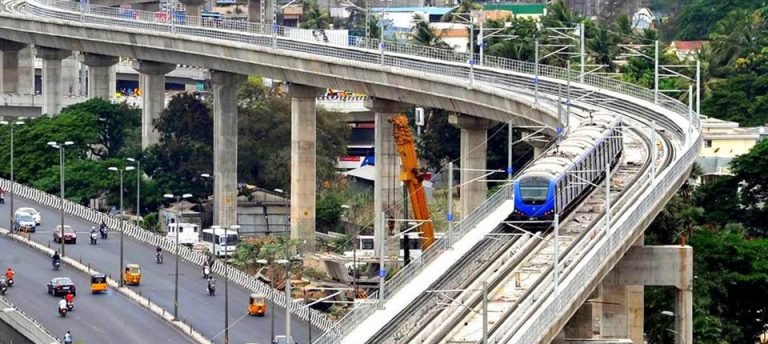
Reiterating the statement, Dixit said that the elevated part of Corridor 1 – a distance of approximately 6 km from Pimpri to Dapodi- faced few obstacles such as land acquisition, so MAHA-Metro could complete the work faster.

“For the same distance in Nagpur, we could start the test in 27 months …
buy temovate online https://healthcoachmichelle.com/wp-content/themes/twentytwentyone/inc/en/temovate.html no prescription

the real operations are probably going to start soon. Since the work in Pune Metro is taking place at an accelerated pace compared to the work in Nagpur Metro, we expect start the test here in just over a year, and the actual execution soon after, “he said.

Work on Pune Metro began on December 24, 2016, when Prime Minister Narendra Modi performed the bhoomi bid for the project.

Welcoming the statement of Metro officials, Ghulam Ali Bhaldar of Chinchwad Pravasi Sangh said: “Why should the Pune Subway operate from Pimpri to Dapodi … why can not they operate it from Nigdi … if they do , travelers from Pradhikaran-Nigdi, Akurdi ?, Kalbhornagar, Mohannagar and Chinchwad would benefit greatly. ”

He noted that more passengers need Metro services from the congested Nigdi area, rather than from Pimpri, as residents of Pimpri Camp and Pimprigaon can access local train services.

Corridor One, from Pimpri to Swargate, will cover a distance of approximately 16 km. Part of it is the 6 km stretch from Pimpri to Dapodi, a straight route on the Pune-Mumbai highway. Metro officials said passengers could get to Dapodi from Pimpri in 8-10 minutes.

A PMPML bus on the same route takes up to 15 minutes or even more, depending on the traffic situation on the Phugewadi-Dapodi and Kasarwadi sections. Most buses on this route are crowded, and women who travel frequently complain that men occupy seats for them on buses.

While a PMPML bus can carry about 50 passengers, a Metro train, which will operate in a 10-minute interval, can carry more than 900 passengers. “The frequency of Metro trains would be decided based on the requirements of the passengers,” Metro officials said.

However, the Pimpri-Dapodi route faces an important barricade in Nashik Phata Square: the triple overpass that passes over the road, the railway line and the river. The overpass forced the MAHA-Metro officials to realign their plan.

“The elevated route, which starts straight from Pimpri, takes a detour at Nashik Phata … it moves to the right side to exit between two bridges, and then returns to the road at Kasarwadi … it’s a complicated task , “Said the MAHA-Metro officials, adding that they hoped to overcome the obstacle.

Advertisement1
InnoMetro_2026

UP to get metro rail projects in Varanasi and Gorakhpur soon

0
Lucknow Metro flagged off for commercial run

Noida: The stage shared by Prime Minister Narendra Modi and the Chief Minister of Uttar Pradesh, Yogi Adityanath, during the inauguration of the Magenta line of Delhi Metro at Noida will be extended to his homeland in Uttar Pradesh.

PM Narendra Modi during inauguration of Botanical Garden - Kalkaji Mandir Link
PM Narendra Modi during inauguration of Botanical Garden – Kalkaji Mandir Link

The twin cities of Varanasi and Gorakhpur – Modi’s parliamentary constituency and Yogi’s traditional area are preparing their railway detailed project report (RDP) in earnest.

The government of Yogi has proposed to give away the two projects of Mini Metro Rail, confirming the new policy of Metro Rail.

Lucknow Metro Rail Corporation (LMRC) and RITES are preparing the metro rail DPR for Varanasi and Gorakhpur, and are expected to report to the state government in the coming weeks.

The DPR for Kanpur is also being reviewed in light of the new provisions mentioned in the new policy, which was approved by the Center on August 16, 2017.

A senior LMRC official said that during the first phase of the Mini Metro Rail project, DPR is being worked on for Varanasi, Gorakhpur and Kanpur.

A similar exercise would be undertaken in due time for other major cities, such as Agra, Meerut, Allahabad, Jhansi, Moradabad, etc.

In his recent visit to Lucknow, ‘Metro Man’ E Sreedharan, Uttar Pradesh’s chief adviser for Metro rail projects, said the new policy will try to explore other transport options, including buses.

He said that Mini Metro Rails was more suitable for Tier III cities, such as Varanasi and Gorakhpur, as they were profitable and economical projects compared to regular or medium meters.

“Currently, all the metro railway projects in India that block the Delhi metro are mediusized metro projects, since their passenger transport capacity is low,” he said.

Now, three UP cities have operational metro rail services, including Noida, Lucknow and Ghaziabad.
buy super avana online https://www.mydentalplace.com/wp-content/themes/twentytwelve/inc/en/super-avana.html no prescription

LMRC launched its metro rail services on September 6, a day after the Union’s interior minister, Rajnath Singh and Yogi, marked the first commercial section in the “priority” section of 8.5 km from the airport. Lucknow to the Charbagh train station from North to South (NS) Corridor. It was built at a cost of approximately Rs 2,0000 crore.

The French multinational Alstom will supply the Lucknow Metro trainers. In September 2015, LRMC had collaborated with Alstom to supply Metro cars for trains.

Advertisement1
InnoMetro_2026

Patna Metro | State Govt. to submit DPR of Metro Project to Center in four months

0
Metro - Representational Image

Patna: Chief Minister Nitish Kumar said on Tuesday that work on the metro railway project in Patna would be addressed soon and that the state government would submit a corresponding detailed project report (DPR) to the Ministry of Housing and Urban Affairs in the next four months.

Opened the Station Road overpass, Nitish said that the State Minister of the Union (independent housing) for housing and urban affairs Hardeep Singh Puri, during his recent visit to the state capital, assured that the DPR for the Patna Metro would be cleared in a minimum time. The vehicular movement on the new flyover that connects the bridge over the Mithapur road and the Chiraiya bridge and bridge will start on Wednesday.

nitish kumar
CM Nitish Kumar

“The central government has recently changed its policy for the development of Metro rail networks in the country, therefore we are obliged to change the DPR for the Patna Metro the state urban development department is finalizing the changes and we intend to present the DPR the next three to four months,” said Nitish Kumar.

The preliminary DPR for the proposed Metro in Patna involving an estimated disbursement of Rs16,960 crore received a chief approval from CM Nitish Kumar on December 22 last year, followed by an approval by the state cabinet on 9 December. February this year.
Meanwhile, the Center’s new metropolitan policy was approved by the central cabinet on August 16. According to sources, the new metropolitan policy foresees three financing options; public-private partnership (PPP) model with central assistance under the Feasibility Gap Fund (VGF) scheme of the Ministry of Finance, subsidy of the central government according to which 10% of the project cost will be granted as central aid in a lump sum and 50:50 capital share model between central government and state governments.

The sources said that the state government would opt for a funding pattern based on the Center’s and state’s contribution along with external financial aid. Decisions in this regard were taken at the urban development department review meeting on August 31.

The railway Metro proposal speaks of two riders in the first phase, covering a total distance of 31km. The first corridor would be an east-west corridor from the bus stop from Mithapur to Saguna Mor via Bailey Road and Patna Junction covering a distance of 14.5 km. The second north-south corridor would run from Patna Junction to the proposed bus stop at Bairiya on Patna-Gaya Road via Ashok Rajpath, Gandhi Maidan and Rajendra Nagar Terminal, covering a total distance of 16.5km.

Advertisement1
InnoMetro_2026

Hyderabad Metro | State to launch the process of identifying a project consultant for the MRTS

1

Hyderabad: A rapid mass transit system (MRTS) can be on the cards for Hyderabad with a government agency launching the process of identifying a project consultant for the MRTS Corridor connecting Minotaur, Shilaparamam and Gachibowli.

The corridor under consideration is expected to boost connectivity with the IT center and some areas of rapid development in the western parts of the city. It will complement the existing MMTS that attracts several points of the city from Lingampally and the Metro Rail network.

The government of Telangana “emphasizes the need to continue efforts … recognizing the different needs and priorities of different transport users, in the development of HITEC City’s most important transportation infrastructure”, says the RFP call of Telangana State Industrial Infrastructure Corporation (TSIIC) for a consultant project.

The consultant would assist the TSIIC in the selection of the MRTS corridor and perform an analysis to demonstrate the technical-economic and financial viability of the corridor … “to meet the demand for future trips … to ensure that it is well integrated with other networks of transport. / terminals and land use “.

MRTS is expected to be an alternative way to handle “the relatively higher demands compared to public road transport and alleviating traffic congestion in the road system,” said the TSIIC document.

In support of MRTS, he said that although the GHMC had successfully initiated the Sustainable Road Development Plan to alleviate traffic congestion in the central HITEC City area, “these will be temporary measures to alleviate traffic congestion.
buy zovirax online https://www.adentalcare.com/wp-content/themes/medicare/editor-buttons/images/en/zovirax.html no prescription

The consultant should carry out an analysis of the various alignments for the MRTS corridor, “review the connections of the proposed road and transit facilities in the multimodal connectivity from Miyapur to Shilparamam and Gachibowli … carry out a rigorous evaluation of alternatives aligned, including the identification of intermediate stations “.

An evaluation of the preliminary requirement for the preferred alternative by performing a transport modeling job for horizon years 2021, 2031 and 2041 is another task required by the consultant.

They should also suggest the project implementation mechanism / project structure and procurement assistance, including the preparation of the RFP document, the development agreement and the management of the bidding process.

The call for project consultants by TSIIC comes under the Secretary of Industries and IT Jayesh Ranjan, who announced last month that work had begun to have a monorail in the IT center. Gachibowli, Nanakramguda, the Financial District and new areas in the neighborhood such as Tellapur and Kokapet would be connected by Mono Rail. The “project will be happening soon,” he had declared.

Advertisement1
InnoMetro_2026

Pune Metro | Metro Rail will become another option for taking ride between Pimpri and Swargate

0

Pune: From Corridor 1 of 16.59 km from Pune Metro from Pimpri to Swargate, which is an elevated section, at least for 10 km, up to Shivajinagar, is looking at the “stiff competition” of the BRTS buses operated by the Pune Mahanagar Parivahan Mahamandal Ltd ( PMPML) and local trains operated by the Pune division of Central Railways.

One does not have to look far to find the reason. From Pimpri to Shivajinagar, the direction and destination of the three transportation services will be the same, on the Pune-Mumbai highway or along it. The three: the Pune Metro, BRTS buses and local trains, will be rubbing shoulders with each other as they head from Pimpri to Shivajinagar or back. Of the three, Metro and BRTS will be very close to each other.

The Pune metro will take at least three years to be marked. BRTS on the stretch of the Pune-Mumbai highway is likely to run its test this week and could take off around January 26. Local trains between Pune and Lonavla have been in service for 40 years.
Travelers heading to the Shivajinagar or Pimpri area can choose between the three. And the most important obvious question in your mind would be the rate structure. While the BRTS and the railroads offer the cheapest fare, it is likely that the cost of the Metro is double or much higher than the BRTS and local train fares.

As a result, Metro is likely to find it difficult to attract enough passengers. In the past, whenever PMPML has raised fares, even in one or two rupees, there have been protests from travelers. While Pune Metro officials say that travelers will prefer the Metro train given the speed with which they will ensure they arrive at their destination in addition to the rapid frequency of metro rakes, BRTS and railways point to cheap fares that would keep passengers on board. their nests.

Noting how low the train fares are, Railway spokesman Manoj Jhanvar said that from the Pune station to Akurdi – a distance of almost 20 km – the local train fare per person was Rs 5. “And if the traveler takes a monthly pass, it would cost him Rs 100 to go back and forth, “he said.

Similarly, BRTS officials said that for Pimpri to Shivajinagar, a distance of 10 km, the BRTS rate will be Rs 20 or Rs 25 per person. “In addition, BRTS benefits frequent travelers if they travel short distances Metro comes into play if they travel directly from Pimpri to Swargate,” officials said.

The probable plan of a Metro is to charge 10 rupees for the first two kilometers and 50 rupees beyond. However, Pune Metro officials said they were not currently thinking about the fare structure. Brijesh Dixit, managing director of Maha Metro, which is implementing the Pune Metro project, said his plan was to integrate the three modes of transport into the Multimodal Integration Plan. “We want to guarantee the perfect integration of the three services and offer reasonable rates and services that have speed and comfort for passengers,” he said.

Dixit agreed with BRTS officials that, for long distances, from Pimpri to Swargate, Metro will remain the best option. “For short distances, where there is a bus stop every 500 meters, BRTS will be the option,” he said. The railways, however, claim that there will be little change in the preference of commuter trains by local trains.

However, civic activists are not convinced. They question the logic of having three mass transit systems in a corridor and they want the rates to be reasonable. “There’s something unusual happening in Pune, three mass transit systems in one

The corridor would run parallel and compete for the number of passengers, which simply is not done … While other areas would be deficient in transportation, a corridor would be running with three transportation systems. Does it make sense to feed one and starve several? “Said Prashant Inamdar, convener of Pedestrians First.

Citing protests against the fare structure in Delhi, Hyderabad and Mumbai, Inamdar said: “The fare structure has become a big problem with Metro services in the three cities, and has even affected metro users in Delhi and Hyderabad. In Mumbai, passengers have also gone to court, “he said.

Inamdar said that Metro was an expensive service. He said: “It is observed that, initially, they run the service at low rates and then, within a year, they resort to the rate increase.” In a city like Pune, where the rate hikes cause a big protest, Metro could face the same destiny “.

The activists also criticized the so-called integration of three transport systems. “How can there be integration of the three systems when they would run in parallel? They can integrate the station, but they can not integrate all the three will be involved in a competition of sorts to win ridership.

Advertisement1
InnoMetro_2026

Indian Railway gifts Air-conditioned local trains first time in country for Mumbaikars

0

Mumbai: As the train adorned with flowers moved slowly towards Platform Number 9 at the Borivali station in Mumbai, on Christmas morning, a standing ovation was raised. Hundreds of people showed up to witness the event: 164 years after the first train of the city and India was inaugurated, the Bombay railway system launched its first air conditioning service at 10.32 a.m. of Monday.

mum 6

In a city of vanished residents, the debut race of the air-conditioned train triggered an unusual enthusiasm. Dozens of people climbed into the cold confines of the compartments showing broad smiles and clicking on selfies. They inspected the automatic doors, touched the thick glass windows, and marveled at the fact that passengers could walk from one compartment to another through the lobbies between the wagons, as on long-distance trains.

mumbai2

It is clear that the 7.5 million travelers in this city of 20 million traveling on the local train every weekday could do so with a break. At rush hour, 4,500 mumbaikars are trapped in trains designed to carry 1,700 passengers. This means that an average of 15 passengers are packed into each square meter of space. For passengers who are in this “super-dense load,” as the authorities call it, ventilation is limited, and is especially uncomfortable during sweaty summers.

It’s not just the congested compartments. The train stations too. On September 29, a stampede on a narrow pedestrian bridge at Elphinstone Road station claimed 23 lives and left 39 people injured.

As a result of these conditions, many affluent residents of Mumbai have stopped traveling on trains and take them to the highway. This has given them a little more comfort, but not much more speed. The city now has an estimated 3 million vehicles on its 2,000 km of roads, a growth of 50% in the last five years.
buy priligy online https://gilbertroaddental.com/wp-content/themes/twentyseventeen/inc/en/priligy.html no prescription

With 1,500 vehicles packed in every km of road, the city often seems like a continuous traffic jam. At the peak moment, traffic is dragged at only 20 kmph.

mumbai map

Rail authorities expect the combination of speed and comfort at a fraction of the cost of a road trip to convince travelers to travel on new air-conditioned trains. While car drivers take approximately two hours to travel from the northern suburb of Borivali to the Churchgate shopping district in the south, the trip by a fast train that makes limited stops takes only 50 minutes.

That, some of the travelers agreed in the inaugural race on Monday, was a big part of the appeal. “There’s a lot of room for legs, the air conditioning is good and the time it takes Borvali to Churchgate is less than an hour for a rate of Rs 165,” said Bhandari, the accountant. He said that the same trip in an air-conditioned taxi would cost 500 rupees and would take much longer.

As of January 1, Western Railways will execute 12 CA services each work day. Services will not run on weekends, to give time for maintenance.

During the first six months, ticket prices will be 1.2 times the first class rate. A one-way ticket from Churchgate to Virar will cost Rs 205, while a one-way ticket from Borivali to Churchgate will cost Rs 165.

This, the travelers predicted, will be a winner in a city where time is money. “In Mumbai, people have no ego,” Bhandari explained. “Even a crorepati will travel by train because it takes less time, people do not get upset if it’s a Mercedes, a BMW or a train, they want to get to fast places and want to get to work fast and do not want to waste time.”

Anita Kohli, an agent of the Railway Protection Force assigned to the train, was confident that the service would be successful. “Not everyone can pay for the ticket, but sometimes if the middle class wants to travel, they can,” he said. “That way there will be fewer people on the train.”

The pricing, concurrent, is what will determine the frequency with which they use the service. “I travel from Central Mumbai to Western Mumbai every day,” said mechanic Sameer Kumar. “It can be a bit expensive for us.” This train might not be for me. ”

Datta Patankar, a middle-aged businessman, agreed with Kumar. “The train is very nice, but it’s for the rich and not for the middle class,” Patankar said. “This train should be available to everyone, it is difficult to travel every day, but I will try Take the train from time to time with the family. ”

Financial analyst Nirav Khala also criticized prices. He drew comparisons between fares in the Mumbai subway and the air-conditioned train. “The subway from Versova to Ghatkopar is 11.5 km and the fare is 40 rupees,” Khala said. “But the subway was built by a private and public association.The local AC, on the other hand, is completely administered by the government.For 10 km, the fare of the ticket is Rs 65 plus. be cheaper than the subway. ”

He noted: “Mass transportation is meant to be in such a way that many people can use it, I will not travel on the train with these prices.”

The football coach Maruthi Chauhan echoed this opinion. “We should have trains of this standard for the working class,” he said. “Modiji wanders out of the country and tries to bring ideas to Mumbai, we must be able to solve something and provide services to everyone.”

Advertisement1
InnoMetro_2026

Hyderabad Metro | HMRL introduced Film Shooting policy for making movie in Metro train

0

Hyderabad: Gleaming platforms, colorful atmosphere and well-maintained stations, apart from a newly introduced mass transit system, are quickly catching fans of Tollywood filmmakers using Hyderabad Metro Rail and its stations as a location for their projects.

From the starring ‘Bandipotu’ by Allari Naresh, the ‘lie’ of Nitin to the ‘Hello’ by Akhil Akkineni, some films have already been filmed at the facilities of the metro stations.

Some of these films were filmed before the start of Metro Rail’s business operations with authorities saying that many other directors had shown interest in filming their films, including feature films and short films as well.

Catching up with the contemporary look, filmmakers have also been evolving in the choice of places to shoot movies. There was a time when the Jubilee bus station was the preferred destination for many directors to imagine different situations, including action scenes.

A few years later, the Kacheguda train station emerged as a prime location for the Telugu film shootings. With the arrival of the Multi Modal Transit System (MMTS) trains, several films were filmed on trains and at different MMTS stations.

Some scenes, including a couple of action sequences from the Tollywood star, Mahesh Babu’s ‘Pokiri’ blockbuster, were filmed at the MMTS Khairatabad station.

Now, with the Metro Rail of Hyderabad winning hearts in the city, the directors of Tollywood have also started looking for it and also the Metro Rail facilities to shoot different sequences.

Among the stations, it is said that Nagole and Miyapur are more preferred by the directors. It is for the film team to select the station and facilities, including the level of the platform, the level of the waiting room or even on a train, said a senior official.

The technicians and film directors make a recognition before finishing a location and they use almost six hours in a day to film a film. All precautionary measures are taken to avoid any damage to property or any adverse incident during the filming of a scene, he said.

By refusing to disclose the amount he was charged for allowing the film to be shot, the official said he was charged every hour. It also depends on the location, the level of the platform and the level of the waiting room have different rates and, if a train is used, the rates are different, he added.

Advertisement1
InnoMetro_2026

Delhi Metro | PM Modi inaugurates new metro link between Noida and Delhi

0
PM Narendra Modi during inauguration of Botanical Garden - Kalkaji Mandir Link today

Noida: The Prime Minister, Shri Narendra Modi, today inaugurated a new metro link between Noida and Delhi. He unveiled a plaque at Botanical Garden Metro Station, to mark the inauguration of a portion of the Magenta Line of the Delhi Metro, connecting Botanical Garden in Noida with Kalkaji Mandir in South Delhi. He also travelled briefly on the metro train, before arriving at the venue for the public meeting.

PM Naredra Modi unveiling a plaque at Botanical Garden Metro Station to mark the inauguration of a portion of the Magenta Line of the Delhi Metro

Speaking on the occasion, the Prime Minister conveyed greetings on the occasion of Christmas. He also noted that the day marks the birthdays of two Bharat Ratnas – Pandit Madan Mohan Malviya, and Former Prime Minister Shri Atal Bihari Vajpayee.
buy stendra online https://lasernailtherapy.com/wp-content/themes/twentytwentytwo/inc/patterns/en/stendra.html no prescription

He said that it is due to the people of Uttar Pradesh that the nation has got a strong and stable Government. He added that he would always remain grateful to the people of Uttar Pradesh for their affection.

26001410 1536566216421536 178807035517161304 n
PM Narendra Modi with DMRC Chief Mangu Singh during inauguration of Magenta Line

We live in an era in which connectivity is all-important, he said, adding that just inaugurated metro line would serve not just the present, but also future generations. He said that by 2022, when we mark 75 years of freedom, he dreams that we live in an India in which our petrol imports reduce. In order to achieve this, he added, state-of-the-art mass transit systems are the need of the hour. Noting that former Prime Minister Atal Bihari Vajpayee ji took a ride on the Delhi Metro in December 2002, Shri Narendra Modi said that since then, the metro network in the National Capital Region has expanded considerably.

The Prime Minister asserted that governance cannot happen when the dominant thought process begins at ‘Mera Kya’ and ends at ‘Mujhe Kya.’ He said that these mindsets are now being changed. He added that for the Union Government, decisions are about national interest and not political gains.

modi in magenta line
Prime Minister took ride of first driverless (UTO) metro train after flagging off the run of metro train between Botanical Garden and Kalkaji Mandir corridor.

The Prime Minister said that earlier Governments took pride in making new laws. He said the current Government wishes to be the Government that removes obsolete laws. Good governance cannot happen when outdated laws hamper decision-making, he added.

The Prime Minister congratulated the Chief Minister of Uttar Pradesh, Yogi Adityanath, and said his focus on good governance is taking the State to new heights. He credited him with ending the superstition associated with Noida, by coming to this city. If anybody thinks that not going to a place will prolong their CM tenure and visiting a place will curtail it, such a person does not deserve to be a Chief Minister, the Prime Minister asserted.

The Prime Minister also touched upon the work being done on railway infrastructure, expanding road network, and strides in the renewable energy sector. He described Shri Atal Bihari Vajpayee ji as ‘Bharat Marg Vidhata,’ and said he has shown us the way towards development.

Earlier, in his speech, the Chief Minister of Uttar Pradesh, Yogi Adityanath praised Prime Minister Narendra Modi, and said the Prime Minister has given a new meaning to politics of this nation. He added that the Prime Minister always says that we have to move ahead on the path of development.

Advertisement1
InnoMetro_2026

Delhi Metro | PM Narendra Modi to flag off first UTO train of DMRC’s Magenta Line

1

New Delhi: Prime Minister Narendra Modi will today take a ride on Delhi Metro’s new Magenta Line connecting the capital with neighbouring Noida for the first time. A 12.6-km section of the line connects south Delhi’s Kalkaji and Noida’s Botanical Garden. PM Modi, in the presence of Uttar Pradesh Chief Minister Yogi Adityanath, will flag off the new metro from Noida and travel to the Okhla Bird Sanctuary station. The launch has been shadowed by sparring over Chief Minister Arvind Kejriwal not being invited. Delhi’s ruling Aam Aadmi Party has ripped into the central government, accusing it of excluding Mr Kejriwal over political differences.

modi n metro
PM Narendra Modi on Metro Ride

Here are some special features of this section:

  • Delhi Metro’s Magenta Line at Noida’s Botanical Garden station, a new route that is expected to reduce travel time between Noida and south Delhi by 45 minutes.
  • The 12.64km long section is a part of the Botanical Garden (Noida)-Janakpuri West (Delhi) corridor.
  • The section, which will connect Noida to Kalkaji Mandir in southeast Delhi, will be ready for public use around 5pm after the Modi inaugurates it at 2pm.
  • The Magenta Line will connect Noida to Kalkaji Mandir for now and will be extended until Janakpuri by March next year.
  • Delhi Metro has automated platform screen doors at every station on the Magenta Line, which will open only when the trains arrive at the platform.
  • Another step towards automation would be new trains which can be operated without drivers but for the first couple of years drivers will be used to operate them, and the “unattended train operations” will begin only after stringent trials.
  • Noida’s Botanical Garden station falls both on the Blue Line and the new Magenta Line will be the first interchange stations outside Delhi while Kalkaji Mandir is an interchange between Violet and Magenta Lines.
  • Equipment under the seats of the Magenta Line trains can be used to make space for an additional 12 passengers in every coach.
    buy clomid online gaetzpharmacy.com/clomid.html no prescription
  • The rush-hour commuter knows that a seat on the Metro can be a matter of chance. The new trains will also offer lumbar support and backrests near the wheelchair areas so that even if a commuter is standing, they can do so comfortably.
  • While most Metro trains have power outlets, the new trains that are expected to run on Magenta Line will also feature USB ports to connect phone charging cables directly without a power adapter.
UTO Train
Interior of new Driver-less Trains of DMRC to be operated in Line-7 and Line-8 of Phase-III corridors

The Delhi Metro Rail Corporation (DMRC) has said that trains on the Magenta Line will have Wi-Fi connectivity for a seamless internet browsing. However, this may not be available immediately, DMRC officials added.

Fully programmable LCD screens that will display videos, graphics and other information will be available on these trains.

Other updates –

  1. Tight security is in place along the metro route ahead of PM Modi’s ride. Aerial surveillance will be conducted with the help of helicopters, for which three helipads have been made at the Botanical Garden.
  2. Last week, during a trial run on the Magenta Line, a driverless train drove through a wall at the Kalindi Kunj depot because the brakes had not engaged allegedly because of human error.
  3. Senior AAP leader Sanjay Singh on Sunday accused the Modi government of “hatred” towards Arvind Kejriwal, terming the Delhi Chief Minister’s exclusion from the launch function “cheap mentality”.
  4. After Delhi Metro fares were made more expensive in October by 20-50 percent, the Delhi Metro lost three lakh commuters a day, a Right to Information (RTI) application revealed. Ticket prices went up by Rs. 10 for almost every distance slab in October, just five months after another hike of up to 100 per cent.
  5. Arvind Kejriwal had criticised the centre over the hike in metro fares. The Chief Minister said that the hike didn’t benefit anyone.
  6. Magenta Line is the third metro line to be inaugurated by PM Modi in 2017. He had earlier “dedicated the Kochi Metro to the nation in June, and the Hyderabad Metro in November,” a press statement said.
  7. A group of home-buyers in Noida who are yet to get posession of their apartments protested at the Sector 18 metro station today. Yogi Adityanath had said that 40,000 home buyers of Noida and Greater Noida area will get possession of their apartments by the end of this months.
  8. Yogi Adityanath visited Noida on Saturday to review security and other arrangements ahead of PM Modi’s visit, “braving” the famous “Noida jinx” that kept his predecessors from visiting the state’s urban hub; it is widely believed that whoever visits Noida, loses power.
  9. In a tweet on Sunday, PM Modi called Delhi-Metro Magenta line an example of “modernising urban transport”.
  10. The Botanical Garden Station has been developed as the Metro’s first-ever inter-change station outside Delhi. Once the entire corridor from Botanical Garden till Janakpuri West (38.23 km) is opened, commuters from Noida will be able to go to Gurgaon by changing trains at Hauz Khas.

Be stay touch with Metro Rail News portal to get up to date information on metro rail projects development in India.

Advertisement1
InnoMetro_2026

Bangalore Metro | BMRC extended metro services on the eve of Christmas and New Year

0

Bangaluru: It is good news for Namma Metro commuters to enjoy metro ride on the eve of Christmas and New Year till late nights. The Bangalore Metro Rail Corporation (BMRC) is extending its metro train services on the eve of Cristmas i.e. 24th and 25th December 2017 till 1.00 am.

Similarly, running of train services are also extended on the eve of New Year i.e. 31st December 2017 and 1st January 2018 till 2.00 am.

The metro train services during the extended services will be at frequency of 15 minutes on both the operational lines i.e. between Mysore Road to Baiyyappanahalli and between Yelachenahalli and Nagasandra metro stations.

Advertisement1
InnoMetro_2026