Home Blog Page 728

MMRDA launches two girders for the metro-7 corridor

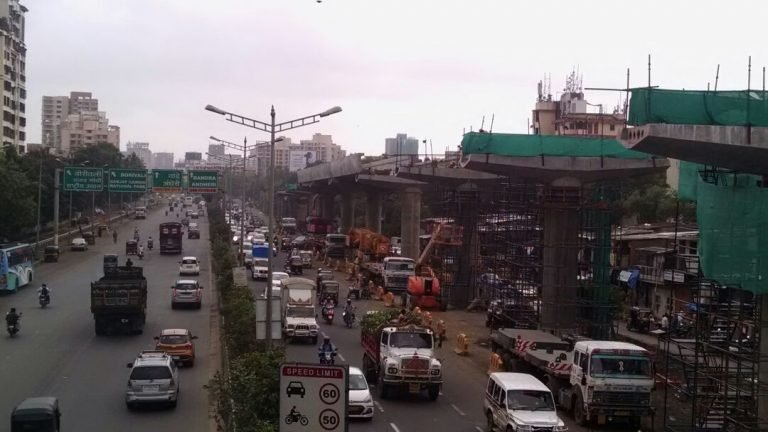
MUMBAI: On 1 July the Mumbai Metropolitan Region Development (MMRDA) launched two heavy duty girders in limited hours from 3 AM to 6 AM, on the Andheri (East) Dahisar (East) metro-7 corridor.

With the help of two cranes having a capacity of 400 and 350 tones, the girders were successfully launched. The girders weight was 150 tones each 25 m long and 5.
buy finasteride online https://myhst.com/wp-content/themes/twentytwentytwo/inc/patterns/en/finasteride.html no prescription

25 m wide. The girders were placed on the pier which is 8 m high near Thakur Complex, Kandivali.

One day before at the site these two huge cranes and the girders were carried from Bandra casting yard and was set up in the right place near pier P 169-170 and was done on the same night with the weight to crane counter and that is also a huge task.

Shri. Tanaji Bhosale, Chief Engineer, Shri. P. R. K. Murthy, Director (Metro PIU), Shri. R. K. Sharma, Director (System), were present on the spot to coordinate the things.

In spite of the heavy rain, the heavy-duty activity was carried out successfully. As this was a crucial task which was needed to be completed within a limited time slot. During the launch of these girders the supporting technical staff with the general consultant safety team, the MMRDA senior officer Director project, chief engineer all were present at that time.

To take a block from TATA power for safety purpose was necessary as the double circuit of 110kV Borivali-Malad heavy transmission tower lines of TATA Power company was passing on this pier location.

Mr. Dilip Kawathkar, Joint project director, MMRDA said We thank Railways, Police, MCGM, TATA Power, Reliance Infrastructure and Citizen of this area. MMRDA, Of course, cannot make light of the cooperation of the residents in the surrounding area. “They realize that the Metro is for them”.

Mr. Dilip Kawathkar, Joint project director, MMRDA said We thank Railways, Police, MCGM, TATA Power, Reliance Infrastructure and Citizen of this area. MMRDA, Of course, cannot make light of the cooperation of the residents in the surrounding area. “They realize that the Metro is for them”.

Delhi Metro | Time for Delhi metro to think about traffic congestion in South Delhi

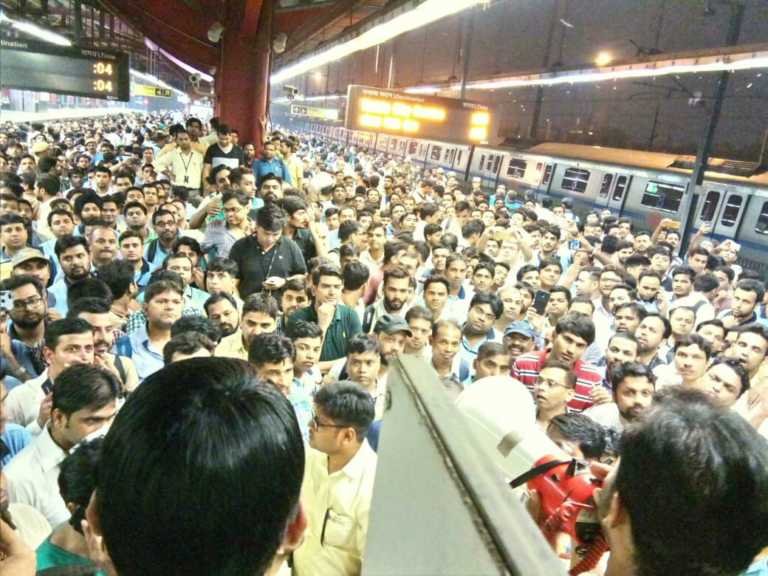
New Delhi: Delhi is facing heavy traffic congestion particularly at peak hours in South Delhi, meeting points of roads going towards Gurugram, Vasant Kunj and other areas of south Delhi, the Chhatarpur Metro station is considered the main cause of traffic congestion. South Delhi is an administrative district which connects Delhi to the south towards Haryana, Gurgaon to the south-west part of Haryana.

The last mile connectivity such as rickshaw, e-rickshaw, busses, autos and Grameen Seva used by Delhi Mero users adds to chaos whereas private cars use the road beneath the elevated corridor of the yellow line to reach metro parking and there are bus stops on either side of the station where public transport coaches stops in a careless manner.

Commuters complaining about the noticeable traffic problem, redevelopment project is in mind of both station and Delhi Metro Rail Corporation (DMRC) that not only promises smooth flow of traffic but also a green plaza. “ A large vacant patch between the compound wall and slip road was available, it was not fully utilized, so it will now become the green plaza with pedestrian walkways” said by a spokesman. A new toilet block will also be created.

screenshot of twitter of people complaining about rush at chhatarpur metro station

“ A large vacant patch between the compound wall and slip road was available, it was not fully utilized, so it will now become the green plaza with pedestrian walkways” said by a spokesman.

DMRC is planning more organized pathways as well because of random and chaotic movement of pedestrians. A DMRC spokesperson said “traffic circulation is being reoriented as part of its multimodal integration plan. It intends to put in place another entry /exit towards Mehrauli-Gurugram road for easy access to para-transit users  like autos and to enable easy approach for pedestrians.”

“Parking bays have been created for autorickshaws, Grameen Seva, and feeder buses. Cycle rickshaw will also be provided space.” Said by DMRC spokesperson “The movement of busses will be regulated under the new plan so that the junction towards Vasant Kunj is decongested”

“Parking bays have been created for autorickshaws, Grameen seva, and feeder buses. Cycle rickshaw will also be provided space.” Said by DMRC spokesperson “The movement of busses will be regulated under the new plan so that the junction towards Vasant Kunj is decongested”

The current chaos is the result of the rushed work oh Chhatarpur metro station because DMRC had to meet the deadline before the start of Commonwealth Games 2010. As a result, there could not have been much planning regarding multimodal integration of transport providing last mile connectivity.

Chennai | Police arrests the freelancer for copying the CMRL website

CHENNAI: A man who made the fake website and had post fake recruitment got arrested on Saturday. He is a native of Malappuram district of Kerala. He is a 34-year-old freelancer for some IT firm in Kerala. He copied the Chennai website and the Chennai Metro Rail Ltd (CMRL) official complaint about the fake information that he gave to the people to fool them through their website.

He allegedly created a fake website www.cmrclo.org and fool many job seekers with a fake advertisement for recruitment. After investigation process, the name The man is now in the hands of police and the police said: “ The arrested man has later remanded a judicial custody”. After Investigation the name (Sreejith) of person came out in front of public who has created a website and he had copied the design and photos and even the content from the official website of CMRL www.chennaimetrorail.org and had fooled many job seekers by inviting them for the interviews.

He used social media platform and targeted job seekers by his website. One of the CMRL officials stated that some job seekers about the status of an application. Some of them paid 4000 as an application fee. He put many advertisements on his website regarding the recruitment and fool many people and earned money from it.

More investigation is still in the process as the police are trying to find out that whether he conducted the fake interview or do something more to fool people.

The police officer said that “he took resumes from candidates and also issued appointments’’.

CMRL had admonished people about the people to get cautious about the misleading advertisement at local and social media platforms.

Sometimes Freelancer and some consultancy call or target people who needed the man is now in the hands of police and the police said “ The arrested man has later remanded a judicial custody”.he job and assure them they will surely get a job for them and they charge some amount of money and conduct fake interviews these people are cheaters. People should lodge the complaint against them without any fear.

The man is now in the hands of police and the police said: “ The arrested man has later remanded a judicial custody”.

The man is now in the hands of police and the police said: “ The arrested man has later remanded a judicial custody”.


Delhi HC retrains Delhi metro staff from going on strike, extends order

New Delhi: With Delhi Metro staff threatening to go on strike with the demand on pay scale revision and other things, Delhi High Court has restrained them from going on strike. The Delhi High Court has stated that closing down on metro services will cause a lot of inconvenience to the commuters. High Court has extended the order and restrained the metro staff from going on strike.

As per current data, approximately 13,000 are employed in Delhi Metro and there is over 11,000 non-executive staffs.

Justice Pratibha Rani extended the interim order has directed the metro employees not to go on strike till further orders and sought their response on a petition by the Delhi Metro Rail Corporation seeking that they be restrained from going on a strike.

The High Court in an ex-parte interim order on June 29, had restrained DMRC staff from going on their planned strike starting from June 30. The stay has been order by HC stating that it will cause huge inconvenience to commuters.

The matter is no listed for further hearing on September 4. HC has issued notice to officer bearers of DMRC staff council who were not served notice earlier.

The court wanted to know from Additional Solicitor General (ASG) Sandeep Sethi, appearing on behalf of DMRC, whether the petition would be infructuous currently as the planned strike date of June 30 is over.

Sethi in his reply has stated that the pleas cannot be infructuous as the employees have given three notices stating that they will go to strike if their demands are not fulfilled.

Advocate Rajeev Mishra, appearing for some of the office bearers of the staff council, urged the court to direct the DMRC to file an affidavit that it will stand by the terms of settlement arrived at between the employer and the employees in 2017.

The court on the other stated that it was a subject of arguments and would be dealt with afterwards. It had passed the interim order during summer vacations holding that, prima facie, the action of the metro staff does not seem to be reasonable or lawful.

The court has said that DMRC is operating a public utility service that is used by over 25 lakh commuters in Delhi. These commuters hail from middle class background and use metro for daily commute. Sufficient notice has not been given to the DMRC and the conciliation proceedings are still in progress.

The court has said that DMRC is operating a public utility service that is used by over 25 lakh commuters in Delhi. These commuters hail from middle class background and use metro for daily commute. Sufficient notice has not been given to the DMRC and the conciliation proceedings are still in progress.

It had said Delhi Metro Rail Corporation (DMRC) is running a public utility service which caters to around 25 lakh citizens of Delhi, who come largely from the middle-income group, on a daily basis and sufficient notice has not been given to the DMRC and the conciliation proceedings are still in development.

The DMRC has challenged three notices given by DMRC staff council and DMRC employees union of June 14, 18 and 20 respectively and sought direction to pin them down from going on strike.

A previous correspondence was furnished showcasing understanding between the corporation and employees. Minutes of meeting held involving its representatives and the DMRC staff council which clearly hinted that a settlement was arrived at between them on July 23 last year.

The court had said it seems that there were disputes concerning execution of the terms of the settlement and it is the claim of the employees that the terms of the settlement have not be completely implemented to date. However, the DMRC maintained that the staff council was raising additional demands that were unjustified.

As per records DMRC’s total liability stands at around Rs 38,685.03 crore to date.

Metro staff members had also staged demonstrations at various metro stations including the Shahdara and Yamuna Bank stations from June 19. The protest was to gain support for their eight-point demand list that they had put forward to DMRC.

The council members have been protesting on several issues. These include modification of the DMRC Staff Council as an employees union, revision of pay scale to conditions on sacking employees.

Pune Metro | Entry and exit of underground tunnels identified by Maha Metro

Pune: The entry and exit point of all five underground metro stations have been identified  for Pune Metro Rail Project by the Maharashtra Metro Rail Corporation. Station length is also decided by the officials as notified by the authority on Friday.

The Budhwar Peth will be the shortest at on 140 meters whereas the Mandai station will be at 240 meters in the terms of length it’s on the top of the chart and the other three station Civil Court, Swagate and Shivajinagar will vary between 170 meters and 200 meters.

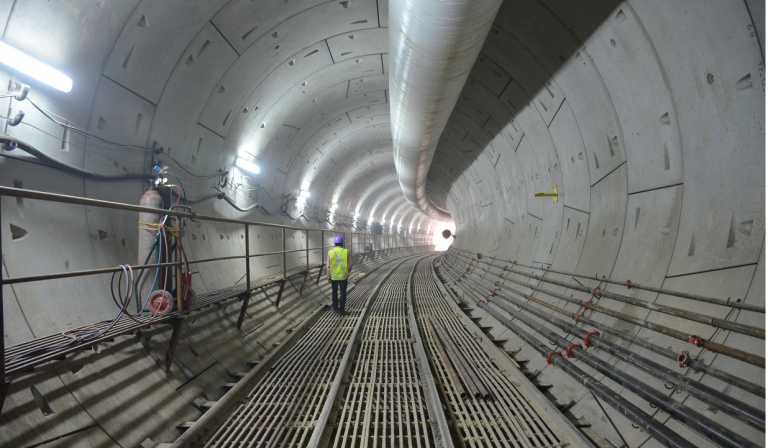
The underground stations which are part of Pimpri-Swargate route will begin after Range Hills go through Shivajinagar, Civil Court, Budhwar Peth, and Mandai and culminate at the multimodal transport hub Swargate.

Pune metro has also invited tenders for tunnel work as well started a survey of building around the metro route. As per the officials, the survey has been completed.

“We are expecting a report in the next few days. However, it appears that the underground metro work will not cause any damage to the buildings above the ground, as the track has been aligned at a safe distance from ground level. The alignment of stations is between 16 to28 meters underground. At this level, buildings are unlikely to take any structural damage. The details of the report will be out soon, and should through some light on structural stability” explained by a Maha Metro official

“We are expecting a report in the next few days. However, it appears that the underground metro work will not cause any damage to the buildings above the ground, as the track has been aligned at a safe distance from ground level. The alignment of stations is between 16 to28 meters underground. At this level, buildings are unlikely to take any structural damage. The details of the report will be out soon, and should through some light on structural stability” explained by a Maha Metro official

An official said the tunnel work may start at the begging of next year “we will try and finish it by 2022” an official said

At the moment the work has started on the falling number of vertical staff which will be working on to lower tunnel boring machine (TBM).

Last year MMRC has started work on the overhead metro stretch on the Vanaz to Civil Court section which is in between Vanaz-Ramvadi route.

And Maha Metro also announced the appointment of Pramod Ahuja and Atul Gadgil as executive director of Pune Metro rail project. Atul Gadgil will look after underground project whereas Pramod Ahuja will manage the Vanaz-Ramvadi stretch.

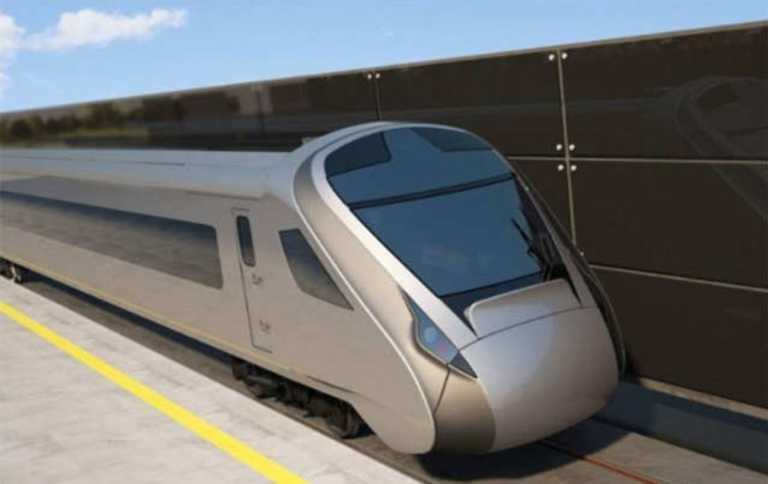
Semi-high speed 160 kmph Train 18 ‘Make-in-India to run from September

New Delhi: Train 18 – the code name given to the India’s ambitious semi high-speed train that is a ‘Made in India’ initiative will soon roll out by September. The train that is made by Integral Coach Factory (ICF) based in Chennai has the capacity to run at the speed of 160 Kmph. Here are some photographs of new ‘Train 18’ series semi high train shared by the Indian Railways lover via twitter-

The luxury train was previously scheduled to come out in July has not been postponed to September. Sudhanshu Mani, the general manager of ICF Chennai clarified that there is no delay but only change has been the anticipated turnout time. ICF is made to promote Make in India initiative.

Mani added that there is no delay in meeting the deadline. The rain has been built in the expected time of 16 months. He also shared that it takes over three years to make such train anywhere across the work. Mani also said that the turnaround time was July earlier, now it is September.

The special feature of Train 18 will not need an engine but will run on run self-propelled on electric traction like the metro trains. It will substitute existing intercity express trains including the popular Shatabdis. ICF will be building six such train sets and two of them will be have sleeper coaches.

The ambitious train has amazing feature that will take passenger comfort to all new levels. One of the most striking features of the coaches of Train 18 is the inter-connectivity by fully sealed gangways to facilitate passenger movement from one coach to another.

There is more to this ‘Made in India’ wonder. Here are some highlight feature of the train that will soon take on the tracks:

  • Automatic doors with retractable footstep.
  • Modular toilets with bio-vacuum structure.
  • Onboard Wi-Fi and infotainment.
  • GPS-based passenger information method.
  • Improved centre couplers to lessen jolt or jerk shock.
  • Electro-pneumatic brake system with brake discs mounted directly on wheel discs to condense the braking distance.
  • Continuous window glasses for modern-day look.
  • The executive class with rotating seats that can be aligned in the direction of travel.
  • Modular luggage rack with glass foundation.
  • All coaches are AC chair-car type (executive class as well as second class) including the driving cab
  • New bogie plan with fully suspended traction motors.
  • Roller blinds and diffused LED lighting.
  • Halogen-free rubber-on-rubber flooring.
  • Adequate Space for wheelchair.
  • Accessible toilet for persons with disability or handicap.

Commuters hail Rapid Metro Gurgaon, give a thumbs up for the service

Gurgaon: With view to attract commuters, Rapid Metro Gurgaon has kick-started interesting campaign ‘Cool confines of metro’. They have been tweeting about the benefits of traveling in metro, one of them being beating the summer heat as metro coaches are air conditioned.

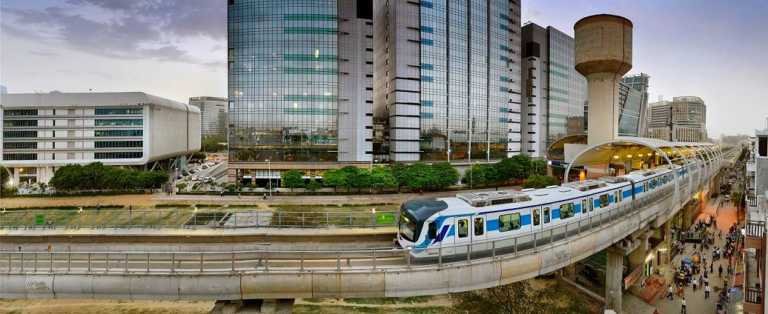
Rapid Metro that is built by IL&FS Rail is India’s 1st fully privately financed metro connecting Delhi Metro to Cyber City in a 11.7km network with 11 stations. The metro officials have been highlight the features of metro coaches – right from the colourfull coaches, cool ambiance to drinking water facility offered to commuters.

Riders who have been traveling in Rapid Metro have been tweeting positive feedback about their experience. Many have liked the clean an

Here are some of the tweets that tells how ‘cool’ it is to travel in Rapid Metro:

For those who still have not taken their first ride in Rapid Metro should wait no further. They should take the ride and we are sure that they would prefer metro over other public or private transport.

To keep yourself updated on metro railway and urban transport news across the country follow us on @MetroRailNewsIN

Kochi Metro | KMRL launches cheaper passes for regular passengers

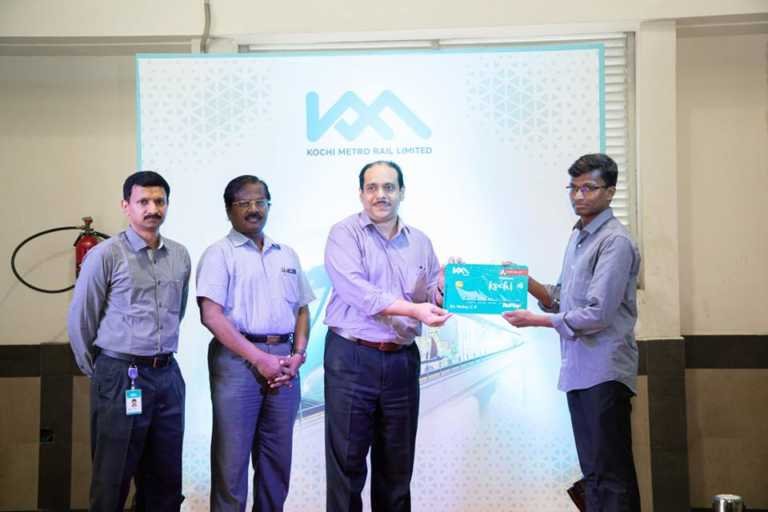
KOCHI: An ease for regular customers as the Kochi Metro Rail Limited (KMRL) launched passes at discounted rates, Aluva, Edappally, and Maharaja are initially the three stations from where the passes will be issued. There will be two types of passes like one pass for 30 trips, which will be valid for 30 days and the second will be of 60 trips having a 60 days validity.

Nuba CR, a rider the one who one who is logged maximum trips in the last year was handed a 60 trips pass by the KMRL MD Mohammed Hanish at the Edappally metro station at 11:30 am.

Sanjeev Moghe, Executive VP Cards and Merchant Acquiring Business, Axis Bank, which is partnering KMRL in Kochi-1 card said that “This new offer will enable Kochiites to avail greatly discounted tickets and amazing deals, making it a great value proposition for them.”

Sanjeev Moghe, Executive VP Cards and Merchant Acquiring Business, Axis Bank, which is partnering KMRL in Kochi-1 card said that “This new offer will enable Kochiites to avail greatly discounted tickets and amazing deals, making it a great value proposition for them.”

The pass can be issued only in a valid Kochi-1 card with sufficient store value. While the pass for 30 trips will be given at a 25 percent discount, the pass for 60 trips will have a 33 percent discount.

The validity of the pass shall start from the day it is issued. In case if there is no sufficient balance in Kochi-1 Card for pass purchase, top up needs to be done.

Only one pass can be added on one Kochi1 Card at a time. The Pass can be issued between any two stations chosen by passengers (say Station A and B) at the time of issue and the trip will be deducted when the passenger travels between the two stations said by the KMRL authorities.

Only one pass can be added on one Kochi1 Card at a time. The Pass can be issued between any two stations chosen by passengers (say Station A and B) at the time of issue and the trip will be deducted when the passenger travels between the two stations said by the KMRL authorities.

If someone enters from a particular station and exits from the same then also one trip will be deducted. The stored value amount will be used if the entry is made from either station A or B and the exit is beyond the other station. Similarly, the stored value will also be deducted if the entry is made at any station other than the station A or B.


As per the rules that are applicable for Kochi 1 card the surcharge and penalty amount will also be deducted.

Tender out for the first bullet train by NHSRCL to meet deadline

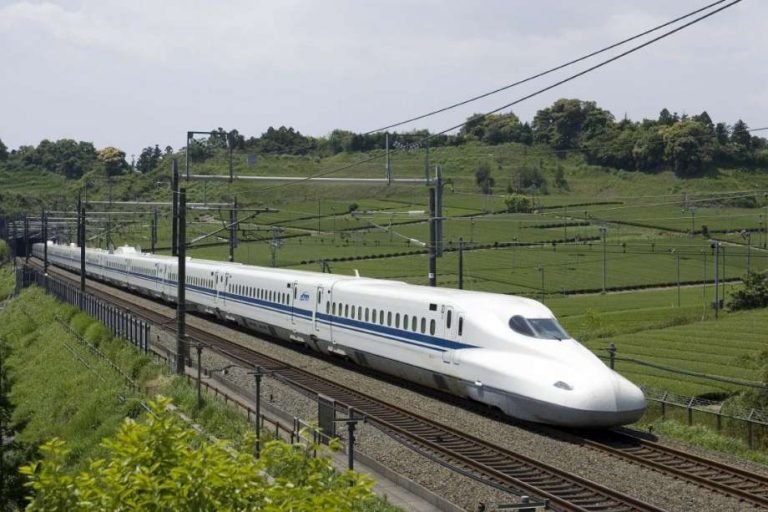
New Delhi: The central government is eyeing to roll out country’s first bullet train by August 2022. This is advancing the deadline which was fixed in 2023. In order to speed up work, National High Speed Rail Corporation Limited (NHSRCL) has already floated the first tender for the Bullet Train project.

Central government is still facing resistance from locals for land acquisition in Maharashtra and Gujarat. As per the details the first tender is for constructing a bridge in Navsari district of Gujarat. NHSRCL officials are also engaged with residents to amicably resolve the land acquisition issue. This first bridge is part of the 60 bridges planned on the 508-km high-speed corridor.

NHSRCL is optimistic that the land acquisition issue is closer to being resolved. They feel that there is a gradual end to the stalemate over the issue. The first ray of hope is coming from Palghar in Maharashtra. It is here that the NHSRCL officials have been facing resistance from farmers with support from Shiv Sena and MNS.

It was an advertorial in Saamana magazine – a Sena mouthpiece that highlighted that benefits of the bullet train as well as compensation packages offered. The write hinted for a possible breakthrough in the long deadlock between the residents and authorities.

In a innovative move, NHSRCL decided to rope in women from the 73 villages where land has been identified for the project. These women are trained to interact and counsel villagers on compensation packages offered by the officials. They are also an important link between the villagers and NHRSCL engineers.

A 15-member women team from different blocks has been set up to give details on the compensation packages being offered and the exact land prerequisite.
buy clomid online https://www.parkviewortho.com/wp-content/languages/new/prescription/clomid.html no prescription

NHSRCL spokesman, Dhananjay Kumar shared that they have been able to establish dialogue with all the concerned people in the villages. This is to ensure there are no misunderstandings and also they know what the officials are offering in terms of compensation.

NHRSCL are happy that the method is working as they now get entry into villages where they were barred from entering.

On the other hand women are engaged in documentation task enlisting the needs of the villages with regards to NHSRCL project. These include taking care of medical facilities to constructing a boundary wall around water bodies that act as a source of irrigation for multiple villages.

Out of the 1,400 hectares of land, NHSRCL has only acquired 0.9 hectares of land. The officials feel they will be able to stick to the timeline as they expect to begin civil works by December 2018-January 2019. In Palghar, the project require around 300 hectares of land. The total land acquisition cost has been set at approximately Rs 10,000 crore.

NHSRCL has decided to disclose the compensation matrix to all land owners and offer time to them to come up with necessary corrections.  The NHSRCL has also decided to offer a one-time compensation to agricultural workers as well as those who employmed in shops which are likely to be negatively impacted.

Navi Mumbai metro project delayed, commuters may start ride in 2020.

Mumbai: The city and Industrial Development Corporation (CIDCO) has announced that by Navi Mumbai first phase of the metro project will be ready by May 2019. Commuters will take the first ride only by April 2020, said on Wednesday.

A senior official said that The project has been delayed by a year as the planning agency has not been able to finish the development of the metro stations on time.

The first package includes six stations, the second package has five stations. For the first phase of the project, almost 11 stations are ready.

Senior public relations officer of Cisco, Mohan Ninawa said “The contract of building platforms was given to a consortium of Sanjose-Mahavir-Supreme. But we terminated the contract last year as the work was slow and they were unable to finish work in stipulated time”. “The contract of building platforms was given to a consortium of Sanjose-Mahavir-Supreme. But we terminated the contract last year as the work was slow and they were unable to finish work in stipulated time”.

In the second packages, there are three sub packages. In which 1st sub package consists of stations 7 and 8, in the second sub-package station 9 and 11 and station 10 is in the third one.

Ninawe said that “We have received a few responses after we divided the second package. All formalities of awarding the contract should be over by this month-end or mid-August”.

The companies will take at least 10 months to finish work after the contracts are awarded, said by the officials from the engineering department.

He said “We have received a few responses after we divided the second package. All formalities of awarding the contract should be over by this month-end or mid-August”.

Navi Mumbai Metro project is divided into four phases. A total length of this route is 11.10 kilometers. The first phase is now under implementation it starts from Belapur railway station and ends at Pendhar near Taloja.

Apart from eleven stations this route at Taloja a depot cum workshop is being built. 3063.63 crore is the approximate budget allocated for this phase. The second phase has been planned in between Taloja MIDC to Khandeshwar. The third phase will connect between Pender and Taloja MIDC and the fourth phase will connect Khandeshwar and upcoming Navi Mumbai International Airport (NMIA) near Pannel.

Ninawe said “In the first phase we have completed 100 percent works of the viaducts (the bridges that connect the stations). The work of the railway crossings are going on in full swing and those will be ready by February, next year”.

Mrinali Sharma, 35, a resident of Taloja said The local residents are upset as Cisco is delaying with the project. “It takes around an hour to reach my office at Belapur by bus. Cidco is saying that by metro trains it will take just 18 minutes to reach Belapur from Taloja.”

Cidco was supposed to finish the first phase last year. Earlier this year, they said that it would be ready by May 2019. “And now they are delaying by another year. We hope this deadline will not change,”