Home Blog Page 686

Metro Projects are rolled out without proper assessment of economic viability and the transportation needs of cities, India need to think

0

After the first metro project in Kolkata, it took two decades for India to plan and execute its second metro rail project in Delhi in 2002. But afterward, there was a surge in metro rail projects across Indian cities. In the past decade, more than 13 cities in India have sanctioned for metro rail systems and many more States are still vying to seek clearance from the Central government for metro rail projects.

While State governments and even the Central government political leaders are touting metro rail systems as a one-size-fits-all solution to traffic congestion and environmental problems of Indian cities, the ground reality is incongruous with both international experiences on metro rail systems, and the so far generated returns by metro systems in India.

Despite the lack of evidence in support of metro rail projects to effectively contribute to public transportation needs in developing countries, there is a rush amongst States to adopt metro rail systems for their cities. This can be attributed to what political economists have described as an increased competition for investments between States after the liberalization of the economy in the 1990s, whereby States seek opportunities to attract investments within their territory often through infrastructure development.

Metro systems also cater to the visions of Indian urban elites and political class as a means of transport that is both “ultra-modern” in its appeal and provides the comfort of air-conditioned travel that is infused with values of “discipline” and “cleanliness.” There, thus, seems to be an aesthetic segregation that operates between the adoption of metro systems over the expansion of other travel modes such as buses.

Implementing metro rail projects come with significant economic costs, however. They are among the most expensive forms of mass rapid transit systems and involve extensive land use changes for their implementation. As a result, metro projects require significant leveraging of financial and administrative resources for their execution.

Based on evidence from my own research study of two metro projects in Karnataka and Kerala, along with findings gleaned from previous studies on urban transport in developing countries, there is the need for a more thoughtful consideration of the adequacy of metro systems prior to their adoption. The current trends in implementation of metro systems across various Indian cities, irrespective of the city size and population mark, point in the direction of a rather hasty approach towards urban planning that lacks earnest assessment and consideration of public transportation needs of our cities.

Question about applicability:

The studies on transport projects from both developed and developing countries have raised questions on the universal applicability of metro rail projects as a mode of public transport that, in itself, can lead to the decline in the use of private vehicles. While there is a mix of success and failure rates, most studies suggest that metro rail projects can be advantageous only when carefully implemented in integration with other public conveyance modes.

Furthermore, the effective utilization of metro systems depends on the spatial attributes of cities such as the concentration of business districts and population size and density. However, even the most extensive and densely networked metro system in India, the Delhi Metro, has not fully incorporated related measures of inter-transport integration. This has led to underutilization of its capacity — at least 20 percent less than its available capacity. There are other projects, such as the Chennai metro, which runs way below their carrying capacity, to an extent that certain stations are almost deserted. Similarly, most metro projects in other cities have fallen short of expected ridership capacity.

In terms of economic viability, owing to high investments, all over the world metro systems generally receive subsidies from the state. This stands true for India as well, where the government has substantially contributed to metro projects through subsidies and equities. Revenues have also been leveraged through loans from international donor agencies. For instance, for both Bengaluru and Kochi metro systems, the government has contributed through equities and loans, and additional financial assistance has been sought from agencies like the Japanese International Cooperation Agency.

Expensive for the masses:

However, as long as the public transport needs are met by the projects, the subsidies and debts are justified. But then, the mass of urban poor in

However, as long as the public transport needs are met by the projects, the subsidies and debts are justified. But then, the mass of urban poor in India cannot afford to travel by metros. Even amongst the middle-class users of private vehicles in the country, the use of metro systems is not very encouraging. Moreover, in practice, the construction of metro projects in developing countries tends to drive out investments from other cheaper modes of public transport such as bus systems, which cater to the majority of lower middle and urban poor segments. Also, for the same amount of expenditure the bus systems can cover a much larger area.

The entitlement of huge subsidies to metro projects also comes at the cost of other welfare schemes. The debts incurred from external agencies often pile up as projects are delayed due to land acquisition or other legal issues. Private participation in the projects must also be considered warily. In the absence of robust land regulations, private participation can lead unbridled conversion of public lands adjoining metro corridors for commercial purposes as private actors would seek to maximize their gains.

For instance, for Bengaluru and Kochi metro projects, land parcels have been acquired in addition to project requirements that are converted for profit generating real estate activities primarily targeted at higher income groups.

Again, the diversion of significant resources as land occurs at the cost of welfare activities such as affordable housing, education or healthcare systems. Elsewhere, corrupt practices pervade public-private partnerships in metro projects in India due to the inefficiency of the State to regulate such partnerships.

Metro rail systems, once executed, are difficult to dismantle and the incurring operational costs are high and, in practice, irretrievable. Although the government has issued guidelines for the evaluation of metro systems, the rate at which metro projects are being sanctioned seems to defy any of these guidelines.

Hence, incorporation of assessment systems to gauge the need of metro systems, which should be based on requirements of individual cities, must also be accompanied by a comprehensive follow-up system to ensure these assessments find a place in actual policy implementation.
buy suhagra online https://blackmenheal.org/wp-content/themes/twentytwentytwo/inc/patterns/en/suhagra.html no prescription

There must also be an effort to develop and strategize urban planning schemes that are based on holistic visions of transportation needs of cities through the adoption and integration of different modes of conveyance within cities. Lastly, investments must be channeled to enhance the capacity and efficiency of low-cost transport modes that can cater to the vast majority of urban residents, rather than diverting substantial investments in pursuit of high-end infrastructure projects that can cater to limited segments of the urban population.
Source: THBL

Advertisement1
InnoMetro_2026

Lucknow Metro | LDA, Ropeway will run instead of Metro in Gorakhpur-Varanasi

0

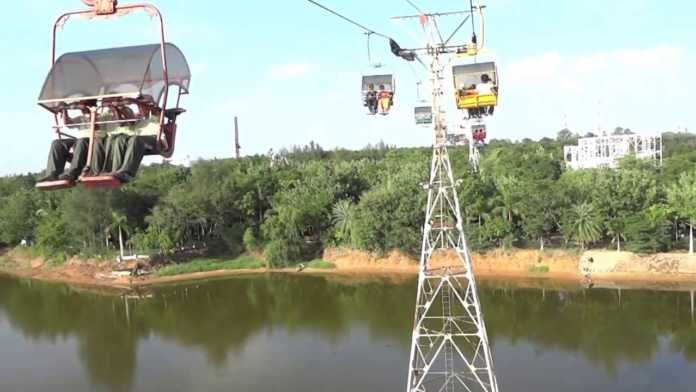
Lucknow:  Rope wheel/cable car will be run in Varanasi and Gorakhpur. Its exercise has been accelerated very rapidly. Lucknow Development Authority (LDA) on the directions of the government had sought the offer from the companies for its survey. A company has come up for study in both cities. RITES is doing the work of Metro survey and DPR in Varanasi.

Prime Minister Varanasi and Chief Minister Yogi Adityanath’s proposal to run the first metro in Gorakhpur area was ready but now with this rule, the government is also searching for the option of the ropeway.

The Housing Department of the Government had given responsibility to the LDA to find a company for the survey of ropeways in Gorakhpur. The LDA invited Tender for this. A company has come forward for this.

In the meeting held on October 17, it was decided to give the responsibility of preparing the Ropeway Survey, a railway project working in Metro Project in Varanasi and DPR. However, there was no desire to survey the Roots Rope Way. At present, in both cities, the focus of the Metro is being focused on Rope Way. After the report of both Metro and Rope reports, the government will take a final call on this. Officials say that there is no authority in this country nor any policy has been made for this.

Cost of construction of ropeway will be 10 times lower than metro

The construction of ropeway will cost less than the metro. The LDA superintendent, Engineer Chakresh Jain, said that the cost of construction of Metro is very high, while Sky Taxi / Ropeway can be constructed within 10 times of Metro. That’s why the ropeway is going on. Studies are being done in both the cities of Gorakhpur and Varanasi. After the report comes the picture will be clear.

Advertisement1
InnoMetro_2026

Mumbai Metro | MMRC awards Escalators Works contracts for 14 Stations for Metro Line-3

0
Mumbai Metro with four coaches
Mumbai Metro Update: Rahee Emerges as the Lowest Bidder for Track Work on 11.38 Km-long Line 9 (Representational image)

Mumbai: The Mumbai Metro Rail Corporation (MMRC) awarded Contract for the Escalators works for 14 Stations (Siddhivinayak to Cuffe Parade) for Colaba-Bandra-Seepz Metro 3 project after obtaining clearance from JICA as per procurement norms, on 9th October.

M/s Johnson Lifts Pvt Ltd. India & M/s SJEC Corporation, China Consortium’ has been awarded the Escalators works for Package 16A (Lot-2) being the most competitive amongst the respective prequalified bidders.

For the 14 stations, the works consist of design, manufacture, supply, installation, testing and commissioning along with other associated works for 205 nos. of Escalators.

The Escalators are being planned in such a way for heavy duty, with compact size having Variable Voltage Variable Frequency (VVVF) Regenerative Drives for power saving, Radio Frequency Identification (RFID) based system for real-time web-based monitoring and maintenance with the latest technology in the field of Escalator systems.

While commenting on the same, escalators works is a critical component of Metro 3 implementation for Passenger comfort and safety. Need to aim to implement robust and technologically advanced Escalator system for Metro-3 and complete the works in time so that Line-3 project can be completed in stipulated timelines, said, Managing Director MMRC, Ms. Ashwini Bhide.

Recently Mumbai Metro also flagged for civil work to install 10 TBM machine. Mumbai’s people are facing lots of noise and pollution problem due to civil work. But are waiting for good results when Mumbai Metro project-3 will be completed, will provide the best transport facility to commuters.

Mumbai Metro Managing Director tweets this successful commissioning of 10th TBM to people through her twitter account.

Mumbai Metro line-3 also referred to as the Colaba-Bandra-SEEPZ line. This is a part of the metro system for the city of Mumbai. The metro line-3 will connect Cuffe Parade business district in the extreme south of the city to SEEPZ in the north-central with 26 underground and one at-grade station.

Advertisement1
InnoMetro_2026

Delhi Metro | AAP Government may finally clear Phase-IV Plan In 10 Days

0
Electrification system in Metro Railways

New Delhi: Delhi Metro’s phase IV, which has been long pending clearance with the Delhi government, may be approved by the state in the next 10 days.

Delhi Chief Minister Arvind Kejriwal, on the sidelines of his door-to-door campaign for the 2019 Lok Sabha elections, said phase IV of the Delhi Metro will be approved by his administration.

According to the report, Kejriwal said that approval will be given to “all” proposed corridors of phase IV, but it was not clear whether all six proposed corridors will be given the go-ahead or just the three corridors which were found viable by the government.

Earlier, the state government had deemed three corridors – Tughlaqabad-Aerocity (20.20 km), Rithala-Narela (21.73 km), Inderlok-Indraprastha (12.58 km) – proposed under the phase IV financially unviable.

The government found – Janakpuri West-RK Ashram (28.92 km), Lajpat Nagar- Saket G-Block (7.96 km), Mukundpur-Maujpur (12.54 km) – viable financially.

Delhi government had, in January 2017, given in-principle approval for phase IV of the Delhi metro project, but the Delhi Metro Rail Corporation (DMRC) is still awaiting final approval and financial commitment by the state government for the project.

Phase IV will cost Rs 55,208 crore and both the Delhi government and the Union government have an equal stake in the DMRC. The Central government can only approve the project after it is approved by the Delhi government.

The central government given the in-principle approval for phase-IV projects. But still seeking state government approval. Now two years had over but Delhi government is not responding to the projects.

About Metro Phase-IV:

The phase-IV consists 104-kilometer network proposed in this phase is expected to cater to 1.5 million passengers daily.

delhi metro phase 4 iv map 2

The 104 Km extension includes different station viz. Rithala to Narela (21 km), Inderlok to Indraprastha (12 km), Tughlakabad to Aerocity (20 km),Lajpat Nagar to Saket G-Block (8 km), Janakpuri to RK Ashram (28 km), Mukundpur to Maujpur (12 km) ,HUDA City Centre to Gurgaon Railway Station (29 km) ,IFFCO Chowk to Dwarka Sector 21 (12.5 km), Gurgaon Railway Station to Palam Vihar (23 km)

Advertisement1
InnoMetro_2026

Job opportunities in India’s first High Speed Rail (bullet train) project

7
India Bullet Train Project
Image for representation purpose only copyright: respective Authority

New Delhi: There is good news for the job seekers who want to work with India’s first High Speed Bullet Train project that the National High Speed Rail Corporation Limited (NHSRCL) has advertised recruitment notification for appointment for the following technical and non-technical posts:-

Vacancy details:

  1. Assistant Manager/Safety & Health – 06 posts
  2. Consultant/HR – 01 post
  3. Assistant Manager/Environment – 06 posts
  4. Assistant Manager/Manager (S&T) – 02 posts
  5. Manager/Senior Manager (Design) – 01 post
  6. Dy. Chief Project Manager (PS&TL/OHE) – 02 posts
  7. Assistant Manager/Manager (OHE/PS&TL) – 04 posts
  8. Assistant Manager/Manager (Finance) – 06 posts
  9. Assistant Manager/Manager (Contract) – 01 post
  10. Assistant Manager/Manager (Civil) – 14 posts
  11. Assistant Manager/Manager (Electrical) – 03 posts
  12. Manager (OHE/PS&TL) – 03 posts
  13. Dy. CPM (Civil/Bridge Work/Building Work/Planning) – 08 posts
  14. Manager/Senior Manager (S&T) – 02 posts
  15. Joint General Manager/Deputy General Manager (Design) – 01 post
  16. Manager/Senior Manager (Rolling Stock Design) – 01 post
  17. Manager/Senior Manager (Electrical-General & Substation) – 01 post
  18. Manager (Track) – 04 posts
  19. Manager/Senior Manager(Civil) – 06 posts

The last date for submitting the application: 31.10.2018.

How to apply

Eligible candidates may forward their application in prescribed proforma to-

The General Manager (HR),
National High Speed Rail Corporation,
Asia Bhawan, Road No. 205, Sector -9, 
Dwarka, New Delhi-110077

Shortlisted candidates will be called for personal interview.

For more details please visit the official website of the National High-Speed Rail Corporation.

Advertisement1
InnoMetro_2026

Hyderabad Metro | Metro Rail extension from Hitech City to Raidurg to begin soon

0

Hyderabad: Work on extension of the Metro Rail from Hitech City to Raidurg completing the much awaited Ameerpet-Hitech City stretch of the Hyderabad Metro Rail, and  will commence next week.

For completion of the 8.5 km stretch from Ameerpet to Hitech City in Corridor III (Nagole-Hitech city – 27 km) by June next year, Municipal Administration and Urban Development Minister KT Rama Rao’s gave  instructions.

The point to point inspection of the stretch over the last two days, apart from inspecting the modalities of the Metro’s 1.5 km extension up to Raidurg was carried out by Hyderabad Metro Rail Limited (HMRL) managing director NVS Reddy.


While inspecting the stretches along with HMRL officials, police and engineers of L&TMRHL, Reddy first resolved the issues pertaining to the remaining five pillars in Yousufguda.

Mr. NVS Reddy said that to take up the pillars in Yousufguda initially on the left hand side where the five-storied Hero Honda building is under demolition.

Issuing directions to ensure that traffic movement was not disrupted, Reddy wanted the remaining 21 spans of the viaduct in Yousufguda Basti, Krishnanagar Transtroy building and Sirisampada Apartments in Jubilee Hills to be completed by January end. This would enable track, electrical traction and signaling works to be taken up and completed by June.

He has also directed the Town Planning, Police and Land Acquisition wings of HMRL to facilitate construction of the remaining few entry/exit points of Peddamma temple, Madhapur and Durgam Cheruvu Metro stations.

Routemap

He also asked them to complete it in two years against the normal expected time of three years.The 1.5 km extension from Hitech City station to Raidurg Station also involves erection of 49 pillars.

The 1.5 km of viaduct and the Raidurg Metro terminal station.  While Inspecting all the pillar locations along with Cyberabad Traffic police, L&TMRHL Project Director MP Naidu and other structural engineers, Reddy finalized the exact location and type of foundations for all the pillars and the Raidurg station design as well.

Advertisement1
InnoMetro_2026

Mumbai Metro | Protests against Metro-2B will result in cost escalation of project

0
Mumbai Metro
Mumbai Metro

Mumbai: While protests by citizens and court cases have slowed down the pace of civil construction work on DN Nagar-Mandale Metro-2B, the Mumbai Metropolitan Region Development Authority (MMRDA) opines that the delay may cost them a loss of Rs 3 crore per day. Currently, the civil construction work is delayed by around three to four months at least.

High Court’s stay on construction work except that for utilities and conducting soil testing has led to the delay. If its delayed further, it may result in cost escalation of Metro-2B, fears MMRDA.

“After residents from Bandra, Khar and Juhu challenged the construction of Metro-2B on the ground instead of underground, the matter is with the HC. The case is in court since May 2018, and this has delayed our work by around 3-4 months. We will have to bear the cost of around Rs 3 crore daily as contractors are not able to do piling work in places which have been barricaded,” an MMRDA official said.

The total project cost of Metro-2B is Rs 10,986 crore of which civil construction is funded by MMRDA, and rest is being funded by the Asian Development Bank in form of a loan.

The construction of Metro-2B has courted controversy after residents from Bandra, Khar and Juhu challenged the construction of Metro-2B on the ground instead of underground.

The Metro-2B DN Nagar-Mandale corridor is 23.5-km-long and the DN Nagar-Mandale Metro corridor is a part of the Metro-2 (Dahisar-Charkop-Bandra-Mandale), which was earlier planned underground but was later turned into an elevated corridor. The line was also divided into two parts namely Dahisar-DN Nagar Metro-2A, DN Nagar-Mandale Metro-2B.

COSTING TONNES

  • Meanwhile, earlier the same issue of cost escalation due to legal tangles was also faced by Mumbai Metro Rail Corporation (MMRC) constructing the Colaba-Seepz Metro-3 underground corridor. Due to a stay on felling of trees for the project, the MMRC had claimed it suffered a loss of Rs 4 crore daily.
  • The total cost of Metro-3 is estimated to be around Rs 23,000 crore that is funded by Japanese International Cooperation Agency.
  • MMRDA also scrapped the plan to purchase platform screen doors for the Metro stations of Metro-2B as they fear that civil construction will be delayed
Advertisement1
InnoMetro_2026

Delhi Metro | DMRC repeatedly hiking the price of metro ticket placing the metro beyond the reach

1
DELHI METRO
DELHI METRO

New Delhi: The Metro ushered in with the promise of changing the way Delhi travels, has reneged on that promise by constantly harping on decreasing profitability and repeatedly hiking the price of tickets and placing the metro beyond the reach of those who need cheap transport the most.

The metro has ridden roughly shod all across the city, caring little for students in Jamia University and disturbing the sleep of millions as its trains zip through the middle of the university and amidst thickly populated residential areas and all this because it chose to stay over the ground to save construction time and money.

These objections might be brushed aside as the cost that one has to pay for development, but how is it that those that remain untouched by this development pay the most for it while the sleep of those who benefit the most from this model of development is never disturbed. The metro gently goes underground as it approaches the sanctified arena of the VIP district, the place where the planners sleep, emerging at the other end while its pylons, air-conditioning, and exhaust ducts, steel and glass gates overshadow everything and obscure the sky on all sides of the charmed circle of the VIP district.


The metro is never going to be short of funds, not unless it slips on its delivery targets. The costs are being met through a loan from the government of Japan routed through Japan Bank for International Cooperation (JBIC), now known as the Japan International Cooperation Agency (JICA). 60% of the costs for phase I, 54.47% of the costs for Phase II and 48.57% of the costs for phase III were financed through a soft loan incurring an annual interest rate of a little over 1.4 % to 2.3 % or thereabouts.

The balance was met through a 50:50 partnership between the Government of India and the Government of NCR Delhi. The DMRC was to mobilize about 7% of the total cost by developing the property. It would acquire land for developing such property through a government-provided subsidiary loan roughly equal to 5% of the cost of the project.

So, if the Delhi Metro Rail Corporation (DMRC) used the subsidiary loan amounting to 5% of the cost of the project to acquire land and developed it properly, it will have substantial savings from this one head alone after contributing its share of 7% to the common kitty. Even someone unable to go beyond simple addition will tell you that land when developed into malls, shops and kiosks is always a hugely profitable operation. At least for the builder and DMRC is the builder in this case.

Advertisement1
InnoMetro_2026

Metro | Indian Railways plans to manufacture metro rail coaches

0
Rail Coach Factory (Representation Image)

New Delhi: Indian Railways plans to manufacture metro rail coaches at its Rae Bareilly facility as part of the Make In India programme.

Railway Board member Rajesh Agarwal said that robots will be deployed to manufacture these coaches, which are expected to be on par with those currently in service manufactured by Bombardier.

They are expected to be 40% cheaper than those bought from China and other countries.

“They are expected to be 40% cheaper than those bought from China and other countries.”

These coaches will also include safety features such as door control, signaling,  train management systems, and advanced surveillance gadgets.

The special features is that these coaches will be manufactured by robots and also will be on par with those being manufactured by Canadian firm Bombardier, currently being used by metro trains in the country.

This is a great initiative taken by the Indian Government. This will boost up the Make In India projects, boost the Indian Manufacturing Company as well as provide greater employment opportunity.

Agarwal told the news agency: “We are making a total of six metro coaches as of now.”

The cost of each coach is expected to be would be Rs80m ($1m), while those procured from overseas cost around Rs120m ($1.6m).

The Railway Board has decided to manufacture standardized coaches and has sought investment from the Research Designs & Standards Organisation (RDSO) and the Modern Coach Factory (MCF).

Agarwal said: “We already have had two meetings with the government on producing metro coaches. The Maharashtra government has given its approval for coaches for two metro trains.

This will be the first factory in the country where coaches will be produced by robots

The $65m expansion of MCF will be completed by the end of this year.Inian

Advertisement1
InnoMetro_2026

Ahmedabad Metro | After Centre objects, Metro rail link to GIFT City shortened by 6 km

0
MEGA Metro Rail Project
MEGA Metro Rail Project (Ahmedabad and Gandhinagar)

Ahmedabad: After the Centre objected to the proposal of extending the Ahmedabad Metro rail deep into the GIFT City campus, the route for phase-II has been shortened by over six kilometers.

As per the revised detailed project report (DPR) that has been sent to the Union Ministry of Urban Development for approval, there will now be only two stations on the Metro line linking the main phase-II route with GIFT City, sources said.

As per the initial plan for phase-II of the Metro project — which was approved by Gujarat government on October 2017 — the route had a total length of 34.59 km, wherein a separate line was to be built from Pandit Deendayal Petroleum University (PDPU) to GIFT City for providing necessary connectivity to the campus housing the country’s first International Financial Services Centre (IFSC). The plan also included building three metro stations inside the GIFT City campus.

“The ministry was against the proposal of taking the metro rail deep inside the GIFT City campus. The earlier proposal involved covering a significant portion of the area within the GIFT City campus. It meant additional costs. So once objections were raised, we had to revise the entire route, and now we will build only one metro station just 300 meters on the periphery of the GIFT City (which is spread over 800 acres) after crossing the Sabarmati river,” said a senior official from MEGA (Metro Link Express for Gandhinagar and Ahmedabad Company Limited) which is implementing the phase-I and phase-II of the project connecting the cities of Ahmedabad and Gandhinagar, sources Indian Express.

MEGA is a 50:50 special purpose vehicle of Government of India and Government of Gujarat.

As per the revised DPR for phase-II, the route length has been shortened to 28.26 km. It will have two corridors — the first one having a length of 22.84 km will link Motera with Mahatma Mandir and the second one about 5.42 km-long branch from GNLU (Gujarat National Law University) and linking PDPU and GIFT City.

However, despite shortening of the route, the project cost for the second phase has been revised upwards from Rs 6,758 crore in October 2017 to Rs 6,769 crore. “Delays in project cycles increase the cost of the project,” the official said, adding that MEGA has sought a loan of Rs 3400 crore for phase-II from Japan International Cooperation Agency (JICA). “The cost of land, rehabilitation, and resettlement for this phase are pegged at Rs 194 crore,” the official added.

Once approved by the Union urban development ministry, the project is expected to be completed in four years.

At present, 90 percent work on the first six kilometers of the phase-I of the Ahmedabad Metro project has been completed. The first trial runs on this section is expected to take place by December 2018. The phase-I, which has a route length of almost 40 km, is being built at a cost of Rs 10,773 crore

Advertisement1
InnoMetro_2026